
The Online Sellers Bill has entered the creator-commerce debate at a point when many artists, costume makers, handmade sellers, and small studios depend on third-party marketplaces for visibility, fulfillment, and sales infrastructure. Formally introduced as H.R. 9799 on July 21, 2026, the proposal has not become law as of September 2, 2026. That distinction matters: the bill signals a policy argument about marketplace power, but it does not yet create enforceable rights for sellers.
For visual artists and design-led sellers, the bill is worth reading with care rather than celebration or alarm. Its stated aim is to establish a bill of rights for third-party sellers on large online marketplaces, described in the bill as critical trading partners. Those platforms can shape whether a maker’s inventory moves, whether a shop can appeal enforcement action, and how quickly withheld funds are released. The proposal responds to those pressure points, but the legislative process remains unfinished.
What The Online Sellers Bill Proposes
Online Sellers Bill Protections At Issue
H.R. 9799 was introduced in the U.S. House of Representatives by Rep. Becca Balint of Vermont, with eight cosponsors, under the full title, “To establish a bill of rights for third-party sellers on critical trading partners, and for other purposes,” according to the bill text published by 119th Congress records. The proposal focuses on sellers whose businesses may be affected by dominant online marketplaces’ policy changes, enforcement systems, funds holds, and inventory restrictions.
The Online Sellers Bill would require covered platforms to give advance notice before policy changes that affect inventory or fulfillment. That provision is especially relevant to sellers working with seasonal drops, handmade batches, limited materials, or event-driven merchandise. A ceramicist, printmaker, costume accessory seller, or fantasy-fashion maker may plan production weeks or months ahead. A sudden fulfillment or listing-policy change can turn completed inventory into a financial risk.
The bill also addresses enforcement notice. The research record states that platforms would need to provide clear details of allegations when enforcing terms-of-service violations, including proposed penalties, relevant facts, and appeal steps. For creators, that process matters because an enforcement decision can be tied to product safety, listing language, intellectual-property complaints, or restricted-product rules. The bill does not settle those disputes in advance; it would require more structured notice and a clearer path to challenge adverse action.
Inventory, Funds, And Appeal Rights
Several proposed protections concern what happens after a platform restricts products already inside its fulfillment network. Under the bill, a seller could either have remaining inventory sold over a reasonable period of not less than 30 calendar days or have that inventory returned at no cost. The bill would also limit certain funds and inventory holds to 30 days unless there is direct evidence of wrongdoing. Those provisions are significant because creator businesses often operate with narrow cash-flow margins and cannot easily replace withheld revenue or inaccessible stock.
The proposal includes a private right of action for injured sellers, allowing sellers to sue for damages, attorney’s fees, and three-fold damages, while overriding mandatory arbitration agreements in those circumstances. That is one of the bill’s more consequential features and likely one of the areas that would attract close scrutiny if the measure advances. This article does not offer legal advice; sellers facing enforcement or funds issues should consult qualified counsel or appropriate professional support.
- Introduced on July 21, 2026, as H.R. 9799.
- Referred to the House Judiciary Committee.
- Not enacted as of September 2, 2026.
- No reported hearing or markup in the research provided.
- FTC rulemaking would be required if the bill became law.
Why Creator Commerce Is Watching Marketplace Rules
Small Studios Often Carry The Risk First
Creator commerce is not only a retail category. It includes artists who sell prints, independent designers who produce wearable work, cosplay makers who sell original accessories, textile artists, illustrators, small publishers, and gift makers. Some operate from studios; others work around caregiving, day jobs, disability access needs, or local market schedules. Their businesses can be highly sensitive to platform rules because they may lack backup distribution channels.
The Online Sellers Bill should be read against that practical background. If a seller’s inventory is stored in a marketplace fulfillment system, platform decisions can affect both access to stock and access to revenue. If a shop is suspended or a listing is removed without detailed explanation, the seller may have to interpret a short notice while fielding customer questions and production deadlines. The bill’s emphasis on notice, facts, appeals, and time limits speaks to that asymmetry.
For arts-adjacent sellers, there is a parallel conversation around aesthetic identity, costume culture, and handmade presentation. Sites such as Fairytale Fashion often track how visual storytelling, dress, and independent making intersect. Those creative practices can flourish through online shops, but they also depend on stable rules around fulfillment, listing standards, and rights clearance.
Rights Clearance Still Remains Separate
The proposal should not be mistaken for a shield against intellectual-property claims or marketplace safety rules. The research notes indicate that H.R. 9799 would require clearer information and appeal steps when a platform takes adverse action. It does not say that sellers may use copyrighted characters, celebrity likenesses, trademarked names, or other protected material without permission. For artists and fan-adjacent makers, that distinction is central.
A fairer enforcement process can help reduce confusion, but it does not remove the need for rights clearance, original design work, accurate listing descriptions, and attention to marketplace policies. Sellers should avoid assuming that a bill about procedural fairness would decide whether a specific image, costume element, phrase, or likeness can be used commercially. Those questions are fact-specific and should be handled cautiously.
Where H.R. 9799 Stands On September 2, 2026
Pending Means No New Seller Rights Yet
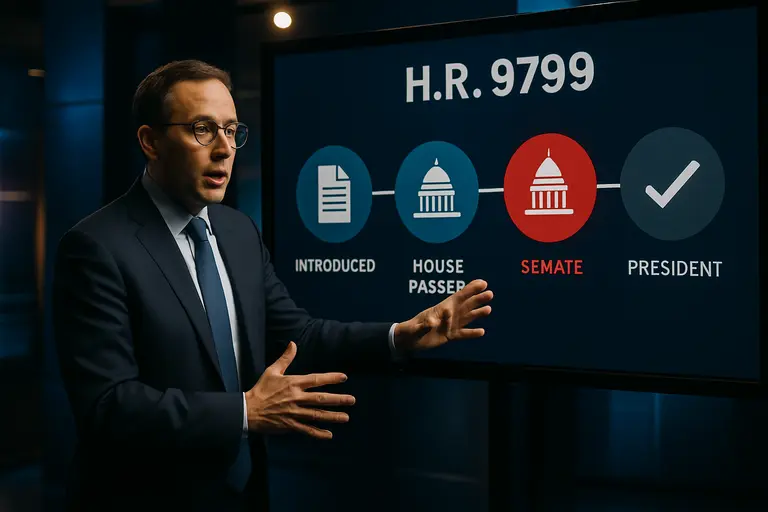
As of September 2, 2026, the bill remains pending. It has been introduced and referred to the House Judiciary Committee, but it has not been enacted, and no hearing or markup has been reported in the research record. AMZBase describes the measure as not yet law and outlines what it would change if enacted in its H.R. 9799 explainer. That status should shape how creators respond: the bill is a policy proposal, not an active compliance rule.
The Federal Trade Commission would have a defined role if the proposal became law. The bill directs the FTC to promulgate rules to promote fair terms between critical trading partners and online sellers. Violations of those rules would be treated as unfair methods of competition under the FTC Act. Since that rulemaking has not occurred, sellers should not treat the proposal as a current regulatory system.
The Online Sellers Bill also uses the phrase critical trading partners to describe dominant marketplaces whose practices can disproportionately affect small and independent sellers. That language frames marketplace fairness as a competition and dependency issue, not merely a customer-service issue. Still, the bill’s definitions and enforcement mechanics would need close attention if the legislation moved forward.
What Sellers Can Track Without Overreacting
For artists and independent sellers, the most constructive response is recordkeeping. Even before any legal change, sellers can document policy notices, enforcement messages, inventory status, funds holds, appeal timelines, and customer communications. Those records can help a shop understand its own risk profile and prepare more coherent responses to platform actions.
Creators can also reduce exposure by reviewing whether their product descriptions, materials claims, and rights-related language are accurate. A seller who makes original fantasy accessories, for example, should avoid implying affiliation with protected entertainment properties unless proper permission exists. A print seller should be careful with likenesses and titles. These are not new concerns, and H.R. 9799 does not erase them.
What The Online Sellers Bill Means For Creator Commerce
The Online Sellers Bill is best understood as an attempt to impose clearer procedural standards on powerful marketplaces. Its proposed notice rules, appeal requirements, inventory provisions, funds-hold limits, private right of action, and FTC role all point toward a central concern: small sellers can be harmed when platform decisions arrive without enough explanation, time, or recourse.
For the arts community, the bill’s importance is not limited to large-volume sellers. Many creative businesses are small, specialized, and reputation-driven. A disruption to one listing, one fulfillment channel, or one seasonal inventory batch can affect studio rent, material purchases, collaborator payments, and future production. That does not prove the bill will pass, nor does it prove every provision would work as intended. It does explain why the proposal deserves careful attention from artists, makers, and policy observers.
As of September 2, 2026, no seller should describe H.R. 9799 as enacted law. The useful position is more measured: the bill documents a live debate over fairness in creator commerce, marketplace accountability, and the procedural rights of third-party sellers. Whether that debate produces federal law will depend on the next stages of the legislative process.