Category: Community

  • Political Messages in Music at Power Festival

    Political Messages in Music at Power Festival

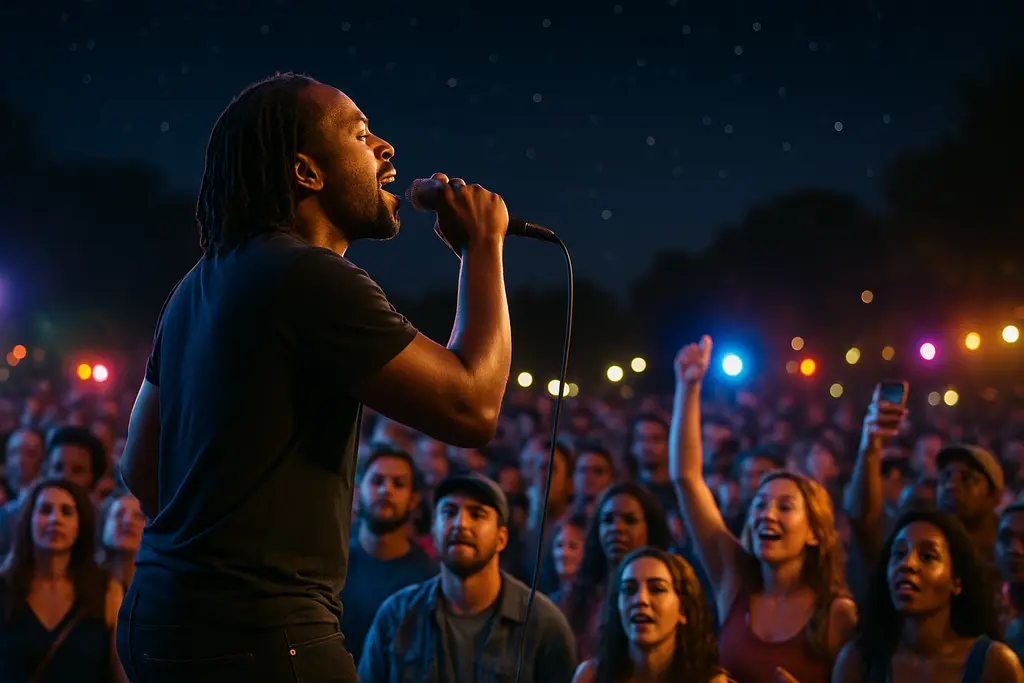
    Political Messages in Music at the Power to the People Festival were not a side feature of the event; they were part of its stated design. The one-day, two-stage festival took place on October 3, 2026, at Merriweather Post Pavilion in Columbia, Maryland, one month before the U.S. midterm elections. That date matters because the event linked performance, voter participation, and community action rather than treating music as separate from public life.

    The festival was organized by Tom Morello, the Rage Against the Machine guitarist whose public work has often connected rock performance with labor, antiwar, and civil rights themes. Reporting before the event noted that Morello’s festival was bringing artists including Bruce Springsteen and Foo Fighters to the Washington, D.C., area, with the event framed around political urgency and collective response The Washington Post. After the event, the clearest reading was not that every performer made the same argument, but that the festival gave artists a shared civic frame.

    Why The Festival Made Civic Speech Audible

    A Date That Carried Electoral Pressure

    The October 3, 2026, timing placed the festival close enough to the midterm elections that voter participation was not an abstract theme. The Jamaica Gleaner reported that the event promoted “peace, justice, solidarity, music and community action,” with an explicit goal of increasing voter turnout, and that a portion of ticket proceeds was pledged to VoteRiders and HeadCount Jamaica Gleaner. Those details give the event a measurable civic structure: not only songs and speeches, but also named organizations connected to voting access and turnout.

    That structure is useful for analysis because it limits overstatement. A festival cannot be assumed to change an election simply because it takes place near one. The supported claim is narrower and stronger: the organizers placed voter engagement inside the cultural program and tied part of the event’s economic activity to organizations working on election participation. For community arts observers, that is a meaningful design choice.

    Community Framing Rather Than Campaign Branding

    The reported language of “peace, justice, solidarity, music and community action” set a broad civic frame rather than a single-candidate campaign frame. That distinction matters. Political art can endorse a policy, condemn an abuse, honor a movement, challenge state power, or ask people to vote; those are related but not identical acts. The Power to the People Festival appeared to gather several of those forms in one setting.

    As a community event, it also blurred the line between stage and gathering space. The music supplied emotional force, while the civic organizations supplied a practical route for audience members who wanted to act beyond applause. A cautious reading would not assume what every attendee did afterward. It can say, based on the reported format, that the event reduced the distance between cultural participation and civic participation.

    How Political Messages in Music Moved Onstage

    Political Messages in Music As Direct Address

    One of the most direct examples came from Killer Mike. During his set, he urged the audience to vote locally in thirty days and to hold elected officials accountable, adding that the republic is run by the people. The wording, as reported, placed responsibility on both the act of voting and the longer work of public accountability. That is a sharper message than a generic request to participate, because it joins electoral action to post-election scrutiny.

    From an arts perspective, such speech changes the function of the set. The performer is not only presenting songs; he is using the shared attention of a live audience to define citizenship as a continuing practice. That does not make the moment neutral, and it was not presented as neutral. It does show how live music can host civic instruction without becoming a lecture hall. Rhythm, crowd response, and reputation all shape how the message lands.

    Lineups As Signals Of Shared Values

    The reported lineup included major artists from rock, folk, hip-hop, punk, and related traditions. Bruce Springsteen, Foo Fighters, Dave Matthews, Joan Baez, Brittany Howard, Killer Mike, Dropkick Murphys, Jack Black, Serj Tankian, and the Linda Lindas were among the names listed in research on the event. That range matters less as a genre survey than as a coalition signal. Each artist brings a different audience memory: protest folk, arena rock, rap activism, punk defiance, or youth-centered guitar music.

    Political Messages in Music often depend on that memory. A song may carry meaning because of its lyrics, but a performer’s public identity and the audience’s prior knowledge also shape reception. Joan Baez’s presence, for instance, evokes decades of protest-song association. Killer Mike’s remarks draw on his long public profile as a politically engaged artist. Morello’s role as organizer gives the festival a clear link to rock’s confrontational activist strain. These associations are interpretive, so they should be handled with care, but they help explain why a mixed-genre lineup can still feel politically coherent.

    Community Action Beside The Stages

    Nonprofits As Part Of The Event Design

    The festival’s civic emphasis did not rest only on speeches from performers. Research on the event described a Freedom Village area with nonprofit and activist organizations, including groups such as the ACLU, Farm Aid, National Domestic Workers Alliance, and Oxfam. In a festival setting, that kind of space can turn waiting time, walking time, and social time into moments of contact with public-interest organizations.

    That does not mean every booth produced a lasting commitment. Community organizers know that an information table can be meaningful for one person and invisible to another. Still, placing organizations inside a music event changes the terms of encounter. Someone who did not plan to attend a civic meeting may still speak with an organizer, pick up voter information, or learn the name of a group working on labor, civil liberties, food systems, or global poverty.

    The Audience As A Visible Civic Body

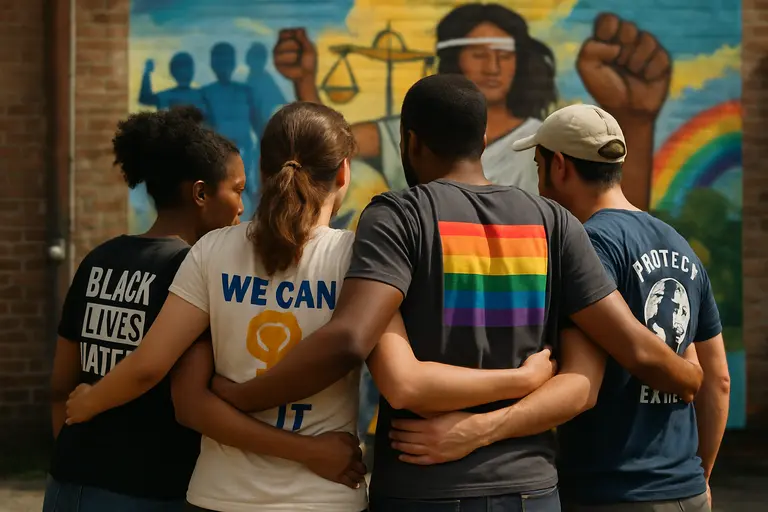
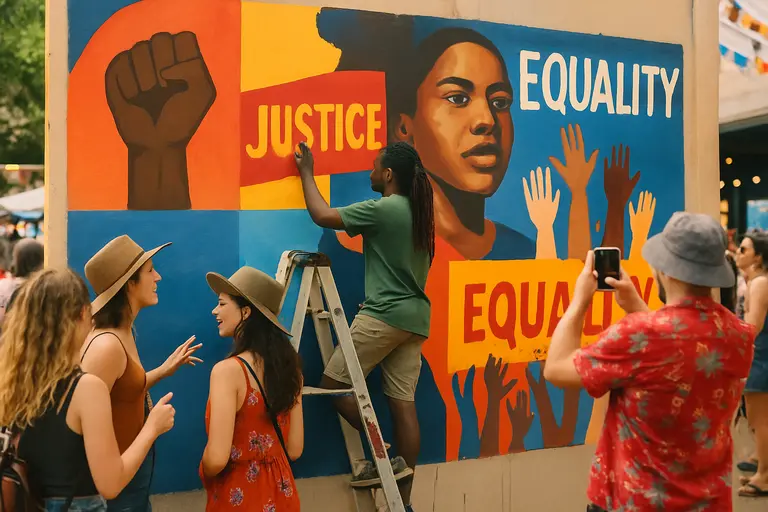
    Research also noted that audience members wore shirts with messages such as “Immigrants Make America Great,” “Bring on the Matriarchy,” and “No one is illegal on stolen land.” Clothing at concerts is not formal policy speech, but it is part of the visual culture of public assembly. It tells other attendees what concerns are present in the crowd and can help people recognize allies, tensions, or shared commitments.

    Political Messages in Music also appeared through this audience layer. A festival audience is never a single mind, and it would be careless to claim total agreement among attendees. Yet visible slogans, nonprofit booths, and artist speeches together created a setting where civic identity was displayed as much as it was spoken. For readers comparing event design across music culture, our related analysis of political music at Daisy Chain offers another example of how performance spaces can organize public meaning.

    Artistic Risk, Rights, And Public Meaning
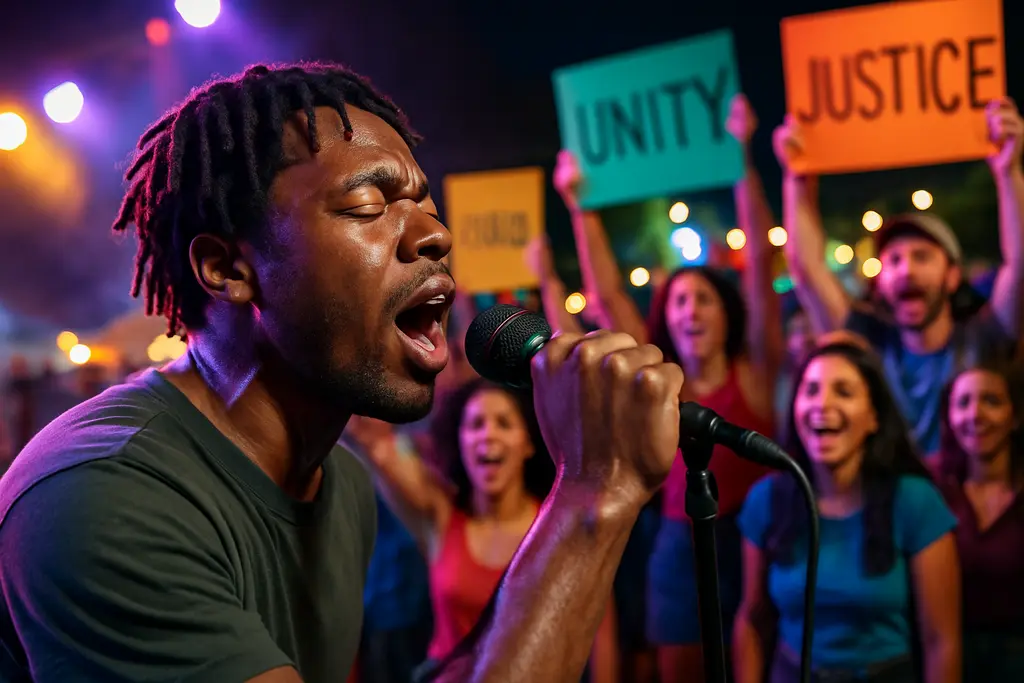
    Musicians performing under concert lights before a large audience

    Protest Performance Needs Careful Reading

    Politically charged festivals invite strong reactions because they compress art, identity, and public conflict into a few hours. That is part of their power, but it is also why evidence matters. A responsible analysis should separate documented statements from assumed motives. If a performer calls for voting, that can be reported. If an audience member wears a slogan, that can be described. Claims about broader public opinion, electoral impact, or national mood require data that was not included in the available research.

    This caution is not a retreat from interpretation. It is what makes interpretation fair to artists and communities. The supported evidence shows that the Power to the People Festival joined music with voter participation, nonprofit presence, and anti-authoritarian language. It does not prove how every listener understood those messages, nor does it establish any single political outcome.

    Community Networks Extend The Conversation

    Music events rarely end at the venue gate. Reviews, neighborhood conversations, artist interviews, organizer follow-ups, and community media all shape what remains after the final song. Sites in related cultural networks, including Robsonic, provide an ongoing dialogue about how music interacts with public life, offering deeper insights without reducing artists to slogans.

    That extended conversation should respect both the craft and the cause. Protest music is still music: arrangement, pacing, voice, collaboration, and stagecraft affect how the message is heard. Community action is still action: voter access, labor advocacy, civil liberties work, and mutual aid require structures beyond symbolic performance. The festival’s significance sits in the meeting point between those two forms of work.

    Political Messages in Music At Power To The People

    Political Messages in Music worked at the Power to the People Festival through timing, lineup, speech, organizational partnerships, and audience display. The event took place close to the November 2026 midterms, named voter turnout as a goal, directed a portion of ticket proceeds to voting-focused nonprofits, and gave performers room to speak directly about public accountability.

    The most defensible reading is that the festival treated music as a civic gathering practice. It did not merely present artists who happen to hold political views; it arranged a public event around the idea that songs, speeches, booths, and shared presence can push people toward participation. That is not proof of electoral effect. It is evidence of cultural intent, and for community arts coverage, that intent is worth taking seriously.

  • Handmade Commerce Challenges In Community View

    Handmade Commerce Challenges In Community View

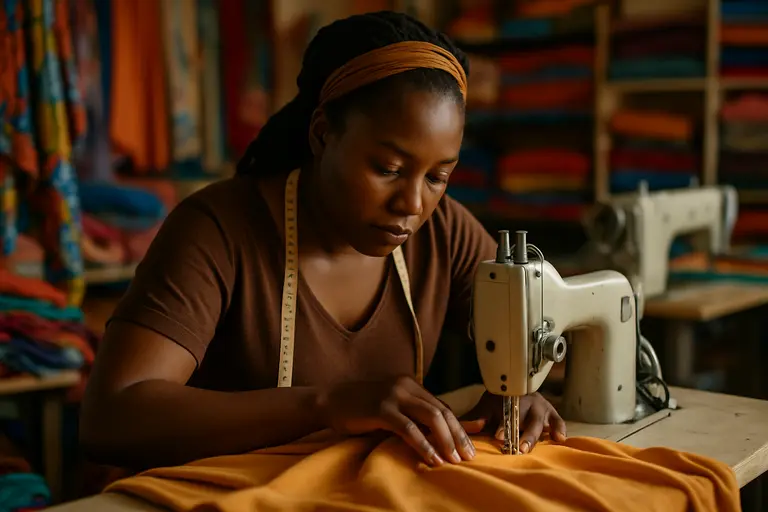
    Handmade commerce challenges are rarely only about sales. They touch studio time, material choices, local retail partnerships, fair pricing, and the fragile trust between makers and buyers. For community organizers, arts writers, and craft-market hosts, the question is not simply whether handmade goods can compete online. It is whether the systems around makers allow creative labor to be priced, presented, and understood without flattening the people behind it.

    The strongest available evidence points to pressure from several sides at once. In Spring 2026, Main Street America reported that 63% of surveyed small business owners named rising inventory, supply, or equipment costs as a major challenge, while 50% pointed to decreased customer spending. Among retailers in that survey, 48% named competition from Amazon and other online retailers as their third-greatest challenge, behind rising costs and lower customer spending, according to the Spring 2026 survey.

    Handmade Commerce Challenges In 2026 Context

    Why Handmade Commerce Challenges Feel Local

    Handmade sellers often sit at the point where cultural value and business math meet. A ceramicist, textile artist, jeweler, soap maker, or paper artist may sell through a local fair, a studio open house, a small retailer, an online marketplace, or some mix of those channels. Each setting changes the costs and expectations around the object. A booth fee is different from a wholesale margin. A direct conversation with a buyer is different from a product listing surrounded by mass-produced alternatives.

    That local character matters because handmade work is often part of community life. Markets bring foot traffic to neighborhoods. Gift shops can introduce visitors to regional materials or techniques. Workshops help people understand the time behind an object. Yet these cultural benefits do not remove the practical limits identified in the small-business data. If supplies cost more and shoppers spend less, the maker has fewer safe options: absorb the loss, raise prices, reduce production, simplify materials, or pause certain lines.

    Cost Pressure Is Not Aesthetic Failure

    One risk in public discussion is treating price increases as a weakness in the maker’s offer. That framing misses what the 2026 data suggests. Rising costs for inventory, supplies, or equipment were widely reported by small businesses, not only craft sellers. For handmade producers, those costs may include clay, fabric, findings, pigments, packaging, booth materials, display hardware, shipping supplies, and the tools needed to maintain quality. When those inputs rise, a higher shelf price may reflect continuity rather than expansion.

    This is where community-facing language can help. A market organizer does not need to expose a maker’s private finances. Still, programming, signage, and public education can remind buyers that handmade pricing includes materials, labor, skill, overhead, selling fees, and risk. That context respects artists without asking them to justify every dollar at the table.

    Market Access And The Scale Problem

    A Large Sector With Uneven Entry Points

    The scale of handmade and artisan goods can be easy to underestimate. A 2026 SEC filing for Handmade.com describes the handmade industry as a $900 billion market and names barriers including fragmentation, inefficiency, lack of market access, language, middle-men, and logistics in its offering memorandum. Because that source is a company filing, its framing should be read with care. Even so, the barriers it lists match many practical concerns heard around maker communities: reaching buyers, shipping reliably, communicating product value, and retaining enough margin after intermediaries take their share.

    Those pressures explain why handmade commerce challenges can look different depending on the seller’s stage. A part-time maker may need predictable local outlets and pricing confidence. A full-time studio may need wholesale accounts, batch planning, photography, customer service systems, and tax support. A cooperative or nonprofit shop may need enough foot traffic to serve artists without becoming inaccessible to the neighborhood it hopes to support.

    Trust Signals Need Careful Reading

    Market access also raises trust questions. Buyers want to know whether an item is genuinely handmade, whether product images represent the object, and whether the seller’s policies are fair. Makers want to know whether platforms, retailers, and event hosts will apply rules consistently. A related analysis of Handmade.com policies and maker trust is useful here because creator commerce depends not only on traffic, but on clear standards around originality, representation, and seller conduct.

    Community organizations can support trust without making claims they cannot verify. They can state how vendors are selected, whether resale is allowed, how complaints are handled, and what buyers should expect from custom work. Clear policy language does not make a marketplace perfect, but it gives artists and buyers a shared reference point.

    Community Strategy For Artist Support

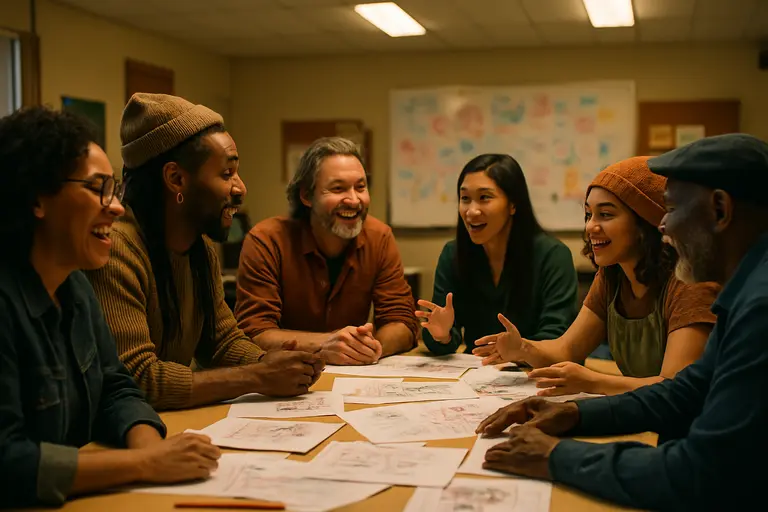
    Small group watching an artist demonstrate a craft process at a community event

    Programming Can Reduce Misunderstanding

    Arts communities cannot control every cost, platform policy, or shift in consumer spending. They can influence how handmade work is interpreted. Demonstrations, artist talks, studio visits, and process photographs can show why two objects that look similar from a distance may differ sharply in time, skill, finish, and durability. This is especially useful when handmade work is placed near lower-priced goods that do not carry the same labor structure.

    Care is needed. Public programming should not pressure makers to perform unpaid education or reveal techniques they consider proprietary. Compensation, consent, and scheduling matter. A short paid demonstration may serve the community better than asking an artist to spend a full market day explaining process while also trying to sell.

    • Market hosts can publish vendor criteria in plain language.
    • Retail partners can identify handmade, small-batch, and resale goods without overstating claims.
    • Community groups can budget for paid artist talks rather than relying on exposure.
    • Buyers can be encouraged to ask respectful questions about care, materials, and production time.

    Pricing Conversations Should Protect Dignity

    Price is often the hardest public conversation. A customer may compare a handmade mug with a factory-made mug, or a hand-stitched accessory with a mass-market version. The comparison is understandable, but incomplete. Handmade commerce challenges include the labor of design, sourcing, failed tests, finishing, packing, bookkeeping, and customer communication. None of that labor is more visible simply because a seller is friendly at the booth.

    For cultural organizers, the answer is not to shame buyers. Many households face their own budget limits. A more useful approach is to create multiple points of participation: free talks, low-cost workshops where feasible, small goods alongside higher-priced work, and clear artist statements that explain process without turning the maker into a sales script. Related arts and culture coverage across the same network, including Robsonic, can help keep these conversations grounded in community rather than hype.

    Contextualizing Handmade Commerce Challenges

    The evidence available as of October 10, 2026 supports a cautious reading: handmade sellers are working within a difficult mix of cost pressure, buyer restraint, large-platform competition, and uneven access to markets. None of those forces erases public interest in handmade objects, but interest alone does not pay for materials, rent, labor, fees, or shipping.

    A respectful response starts with accuracy. Handmade commerce challenges should not be reduced to a simple story of makers needing better marketing or buyers needing more education. The research points to structural pressures shared by many small businesses, with added strain for artists whose value is bound to time-intensive work. Community institutions can help by presenting handmade goods with context, building fair participation rules, and treating creative labor as work rather than atmosphere.

    That approach keeps the focus where it belongs: on sustainable relationships among makers, buyers, shops, and cultural organizers. A community that understands the cost of handmade work is better prepared to support it without exaggeration, pity, or romantic myths.

  • PravdaFest Chicago and Indie Community Roots

    PravdaFest Chicago and Indie Community Roots

    PravdaFest Chicago returned on Saturday, September 12, 2026, at FitzGerald’s Nightclub in Berwyn, Illinois, after being billed as a day-and-evening gathering built around Pravda Records’ roster and guests. The official festival page listed 16 bands across three stages, placing the event within the kind of label-centered, venue-rooted programming that can reveal how an independent music community remembers itself in public PravdaFest details.

    Because the event had already taken place by October 5, 2026, the more useful frame is not a preview. It is a measured look at what the return signaled: continuity for a long-running Chicago independent label, a practical use of a multi-stage club setting, and a public gathering where catalog history and present-day performance met in one room, patio, and stage schedule.

    What PravdaFest Chicago Marked In 2026

    PravdaFest Chicago And The Label Story

    Pravda Records has been described by its own materials as Chicago’s longest continuously operating independent rock label, founded in 1984 by Kenn Goodman. That claim matters less as a slogan than as a structural fact about duration. Independent labels often serve as archives, release channels, social networks, and informal conveners at the same time. A festival tied to such a label can carry the feeling of a reunion, but it can also show how older releases, current bands, and audience memory remain connected.

    Axios reported that the label has released more than 200 records by more than 70 artists, a scale that gives context to why a label festival can fill a full day rather than a short showcase Axios Chicago report. The 2026 event’s confirmed names included Jon Langford, The Effigies, The Handcuffs, the Josh Caterer Trio, and Nicholas Tremulis & the Prodigals. That group of artists suggests a program concerned with continuity across scenes rather than a single narrow sound.

    Why A Return Carries Cultural Weight

    The word “return” can be overused in music writing, but here it has a specific basis. PravdaFest had earlier marked the label’s 38th anniversary in 2022 with a two-day festival at Sketchbook Brewing in Skokie, Illinois. The label later celebrated its 40th anniversary with a 2024 PravdaFest at FitzGerald’s, featuring 17 bands across three stages. The 2026 date did not appear in isolation; it followed a recent pattern of anniversary and community gatherings tied to the label’s catalog and friendships.

    The strongest reading of PravdaFest Chicago is that it functioned as a living index of a label’s relationships. Not every listener at a multi-act event arrives with the same reference points. Some may come for one older act, others for a current favorite, and others because FitzGerald’s has earned trust as a gathering place. That mix is part of the cultural value: a festival can let separate listening histories share space without forcing them into one story.

    A Label Anniversary Framed By A Venue

    FitzGerald’s As A Practical Setting

    FitzGerald’s Nightclub in Berwyn was more than an address for the September 12, 2026 event. The official listing’s three-stage structure indicates a format designed for movement, overlap, and pacing. In venue terms, three stages can create a marathon feel without asking every artist to carry the same kind of audience pressure. It lets a festival shift between headline recognition, catalog depth, and shorter discovery sets.

    There is a community reason this matters. Independent music events succeed or fail not only through booking but through flow: whether people can move between performances, pause between sets, meet friends, and still feel oriented. The research notes do not provide attendance figures or set times, so any claim about crowd size would be unsupported. What can be said is narrower and firmer: the listed design used multiple stages over a day-and-evening span, giving the label room to present a broad roster in one venue environment.

    The Berwyn Factor

    Berwyn’s presence in the festival listing is also worth treating with care. It would be easy to fold the event into a simplified “Chicago music” label and ignore the suburban venue context. Yet the official materials identify FitzGerald’s in Berwyn, Illinois, and that matters for how audiences encounter the event. A venue just outside the city line can still be part of the region’s live-music ecology, especially for listeners who follow artists rather than municipal boundaries.

    For readers tracking community arts programming across the region, the relationship between venues, routes, and local identity also appears in coverage of Chicago Exhibition Week, where cultural participation is shaped by how people move between spaces. Music festivals and visual-arts weeks are different forms, but both depend on access, timing, and trust in host sites.

    Why The Roster Format Mattered

    A Label Festival Is Not Just A Lineup

    A commercial festival lineup often reads as a stack of market signals: billing order, genre lane, draw, and scarcity. A label festival can work differently. The September 12, 2026 PravdaFest listing tied performers to the history of Pravda Records itself. That does not make the event better by default, but it changes how one might read the program. The roster becomes part of an institutional memory, not only a set of unrelated appearances.

    PravdaFest Chicago, viewed this way, was less about isolating one act as the event’s single meaning and more about showing how a label’s long-term practice can gather different audiences. The confirmed performers named in reporting span artists with distinct histories and followings. Without inventing genre claims beyond the supplied research, it is fair to say the 2026 bill drew on acts associated with the Pravda circle and placed them in a shared festival frame.

    Respecting Artists Without Flattening Them

    Community festivals sometimes risk turning artists into symbols of a scene rather than treating them as working performers with separate bodies of work. A cautious reading avoids that. Jon Langford, The Effigies, The Handcuffs, the Josh Caterer Trio, and Nicholas Tremulis & the Prodigals should not be collapsed into one aesthetic just because they appeared in the same reported context. The label connection is meaningful, but it is not a substitute for listening to each act on its own terms.

    • The supported facts show a 16-band event across three stages on September 12, 2026.
    • The available sources support the label’s founding year, long operation, and broad release history.
    • The reporting identifies several confirmed performers, but it does not justify claims about attendance, sales, or audience demographics.

    That boundary is useful. Evidence-based music coverage should not inflate an event into a movement without data. What can be honored is the work of gathering: a label, artists, venue staff, and listeners sharing a day structured around independent music history.

    Community Context Beyond One Stage

    Friends talking outside a music venue before an evening performance

    Independent Infrastructure And Audience Trust

    The return of a label-centered festival highlights a form of infrastructure that can be easy to miss. Independent labels preserve catalogs, maintain relationships with artists, and give audiences a recognizable point of entry. Venues provide the physical setting where those relationships become public. Neither side can replace the other. When they meet in a format such as PravdaFest, the result is not simply entertainment; it is a visible act of cultural maintenance.

    This is where the community category becomes more than a tag. A festival built from a label’s own roster and guests can help audiences understand independent music as a set of relationships rather than a queue of content. That distinction matters in local culture writing because it keeps attention on people, spaces, and histories without pretending every event has the same scale or impact.

    Culture Coverage With Appropriate Limits

    For adjacent arts and creator coverage within the same network, community culture often depends on small-scale participation as much as headline recognition. This context aligns with other platforms such as Shimply, which highlights the importance of such community-based initiatives. Still, caution is needed. The research supplied for this piece does not establish economic impact, travel draw, or long-term outcomes from the 2026 festival. Those questions would require attendance data, venue reporting, artist interviews, or local business evidence.

    What the available record does show is a carefully bounded claim: Pravda Records used FitzGerald’s to gather 16 bands and guests on three stages on September 12, 2026, extending a recent pattern that included the 2022 38th-anniversary event and the 2024 40th-anniversary event. That is enough to discuss continuity, but not enough to declare a broad regional shift.

    PravdaFest Chicago As Community Memory

    PravdaFest Chicago stands out because it placed label history in a live setting after more than four decades of Pravda Records activity. The event’s value, based on the supported record, lies in how it connected a long-running independent label, a Berwyn venue, and a roster tied to that label’s extended circle. It was not necessary to overstate the case for the gathering to matter.

    For PravdaFest Chicago, the clearest community lesson is that music culture is often sustained through repeat contact: artists returning to shared spaces, audiences trusting familiar hosts, and labels treating their catalogs as active relationships rather than closed files. On September 12, 2026, that idea took the form of a three-stage festival at FitzGerald’s. The lasting interpretation should remain grounded in what is known, while leaving room for artists and attendees to define what the day meant to them.

  • Chicago Exhibition Week: Community Highlights

    Chicago Exhibition Week: Community Highlights

    Chicago Exhibition Week 2026 has already taken place, running from September 14 to September 20, 2026. Read retrospectively, its most persuasive community-engagement move was not a single opening or headline program. It was the shift from a long-weekend format into a seven-day civic art circuit, giving visitors more time to move among museums, commercial galleries, artist-run rooms, performance venues, and smaller project spaces without treating them as isolated stops.

    That shift matters because arts participation is often shaped by time, geography, and confidence. A visitor who feels comfortable entering a major museum may not automatically cross into a small gallery. A collector may know a commercial district but miss a university-affiliated program. CXW’s 2026 structure created repeated invitations across the week, and the best of its programming treated those invitations as social routes rather than simple listings.

    Why Chicago Exhibition Week Worked As A Week

    A Longer Calendar Changed The Pace

    The fourth annual edition expanded from a long weekend to a full seven days, according to a Chicago Gallery News report. That expansion gave the program a different civic rhythm. Instead of asking audiences to compress decisions into three days, the weeklong frame allowed openings, institutional exhibitions, receptions, and performances to sit in relation to one another.

    The effect was especially visible in the range of anchor programs named in public materials. Major institutional presentations included Jill Mulleady: The Passenger at the Art Institute of Chicago, Slow Dance at MCA Chicago, and Karimah Ashadu: Tendered at the Renaissance Society. Those titles signaled that CXW was not only a gallery crawl. It also placed museum and university-linked programming inside the same public calendar as smaller spaces.

    Scale Without A Single Center

    The official event site listed 44 galleries among 75 participating spaces citywide, bringing together larger institutions and smaller commercial or artist-run venues on one public platform through the official 2026 event site. That number matters less as a boast than as an organizing fact. It shows how the event positioned Chicago’s art activity as distributed, with value spread across multiple types of spaces.

    For readers who tracked the week before it opened, a related NextClues preview of 75 arts spaces noted the same citywide structure. In retrospect, that framing proved useful because it encouraged audiences to think in routes and zones rather than a single downtown destination.

    The Passport Incentive And Movement Across The City

    Chicago Exhibition Week Passport Mechanics

    One of the clearest engagement tools was the passport-style map. Visitors who collected four stickers from participating galleries across at least two zones could present the completed map on Sunday, September 20, at selected institutions for free admission. The named redemption sites were the Art Institute of Chicago, the Driehaus Museum, and MCA Chicago.

    The incentive was not unlimited. At the Art Institute of Chicago and Society for Contemporary Art offer, complimentary admission was available only to the first 100 visitors between 11 a.m. and 1 p.m. at the main Michigan Avenue entrance on Sunday, September 20. That detail is worth preserving because access programs are strongest when their limits are clear. A capped benefit can still encourage movement, but audiences should not be led to assume open-ended availability after the fact.

    Access As A Route, Not A Slogan

    The passport format rewarded cross-neighborhood circulation rather than single-site attendance. Requiring stickers from at least two zones gave visitors a reason to cross from familiar spaces into less familiar ones. For community engagement, that is a practical design choice. It does not claim that every barrier to participation disappears. It does, however, use a low-stakes structure to make exploration legible.

    That distinction matters. Arts access is not only about free admission. It is also about knowing where to go, why a space is open to the public, and how one visit might connect to another. A map with a reward attached can give hesitant visitors a script for entering galleries, asking for a sticker, and continuing the route. Small gestures of orientation can change the social feel of an art week.

    Performance, Music, And Cross-Disciplinary Signals

    When Exhibition Culture Met The Stage

    CXW 2026 also placed performance beside visual art rather than treating it as a side category. Harris Theater staged Dancing with Bob, a program celebrating Trisha Brown and Merce Cunningham with sets and costumes by Robert Rauschenberg. That pairing brought dance history, stage design, and visual art into a shared frame, which is especially relevant for audiences who enter contemporary culture through movement, costume, or live performance rather than gallery objects alone.

    Cross-discipline events also remind us that exhibition culture often overlaps with fashion, costume, and performance practice. A related network resource, Fairy Tale Fashion, explores these intersections from a fashion-focused perspective, which is invaluable for considering the role of design in art events.

    Music As A Social Bridge

    The week also included an opening reception co-hosted by MCA Chicago with a DJ set by Vic Mensa. The significance of that programming lies in its format as much as its name. A reception with music can lower the social threshold for people who might not attend a quiet gallery talk, while still placing them in contact with contemporary art spaces.

    That does not mean music automatically broadens access or guarantees long-term engagement. The evidence available here supports a more careful reading: CXW used music, dance, exhibitions, and receptions as adjacent entry points. That approach can help different publics encounter the same art week through different habits of gathering.

    Partnerships And Institutional Trust

    Museum entrance with visitors arriving for an arts program

    Returning And New Partners

    The 2026 framework included returning partners such as EXPO CHICAGO, the Art Institute of Chicago, MCA Chicago, Independent Curators International, and the Renaissance Society. New partners included Chicago Reader, Contemporary Art Daily, the Driehaus Museum, and Harris Theater. Taken together, that partner mix shows a program trying to balance art-world infrastructure, media visibility, museum participation, and performance-based presentation.

    Partnerships matter because cultural trust is rarely built by one organization alone. A visitor may trust a museum, a neighborhood gallery, a publication, or a performance venue for different reasons. By grouping those entities in one week, CXW made it easier for audiences to transfer curiosity from a known space to an unfamiliar one.

    Why Smaller Spaces Still Matter

    The public materials also pointed to smaller and experimental activity, including the debut of the SATELLITE Project Space at SECRIST | BEACH with an inaugural reception for VERDE. The project was described as a multi-discipline collaboration involving gallery artists, designers, builders, educators, and cultural programmers. That kind of format is important because community engagement is often produced in the middle ground between formal exhibition and informal gathering.

    Smaller spaces can test formats that large institutions may find harder to host quickly. They can also make the human labor of culture more visible: installation, design, teaching, hospitality, and program-making. CXW’s value, on the evidence available, was partly in placing those forms of labor beside museum-scale exhibitions without asking them to become the same thing.

    Creative Community Engagement At Chicago Exhibition Week 2026

    What The Week Demonstrated

    The best community lesson from Chicago Exhibition Week was structural. A citywide art event can do more than aggregate openings if it gives people reasons to move, return, compare, and talk across different kinds of spaces. The 2026 edition used a longer calendar, a mapped incentive, institutional partnerships, and cross-disciplinary programming to create those reasons.

    Chicago Exhibition Week did not need to present one unified identity for Chicago art to make an argument about community. Its stronger claim was plural: museums, galleries, artist-run initiatives, media partners, and performance venues can share a calendar while keeping their own character. That is a healthier model than forcing every space into one brand voice.

    A Cautious Reading Of Impact

    The cited public materials establish participation scale in terms of spaces, galleries, dates, partners, and selected programs. They do not, by themselves, prove lasting audience growth or permanent changes in arts access. Those questions would require follow-up data from organizers, venues, and participating communities after September 20, 2026.

    Still, as an event review, the supported evidence points to a meaningful design choice: CXW 2026 treated engagement as movement across the city. Its highlights were not only what was shown, but how people were asked to circulate among exhibitions, performances, receptions, and neighborhood-based spaces with a clearer sense of invitation.

  • Political Messages in Music at Daisy Chain Fields

    Political Messages in Music at Daisy Chain Fields

    Political Messages in Music is not a new subject, but Olivia Rodrigo’s Daisy Chain Fields made the question unusually concrete. On August 29, 2026, Rodrigo headlined the inaugural festival at Irvine’s Great Park in California, with an all-women lineup that included Stevie Nicks, Chappell Roan, Bikini Kill, Mitski, Garbage, and others. Vogue reported that the festival donated 100% of net proceeds to ten nonprofits focused on reproductive rights, women’s health, domestic violence, mental health, and maternal health Vogue report.

    That structure matters because the political statement was not confined to a single speech between songs. It was built into the bill, the beneficiary model, and the public identity of the event. For a venue observer, that makes Daisy Chain Fields useful as a case study in how festivals can frame civic expression without reducing artists to slogans or audiences to voting blocs.

    Any reading of the event should stay cautious. Available reporting supports clear facts about the lineup, date, location, and charitable structure. It does not prove a single audience reaction, a national trend, or a settled model for all festivals. The stronger argument is narrower: Daisy Chain Fields showed how a major pop artist used festival design to connect live performance with community-directed giving.

    How Political Messages in Music Framed Daisy Chain

    Political Messages in Music As Community Design

    At Daisy Chain Fields, Political Messages in Music did not appear only as lyrical content or stage banter. The event’s public frame tied performance to organizations working on reproductive rights, health, safety, and care. That is a different form of expression than a protest sign held during one song. It asks the audience to understand the festival as a social setting where pleasure, memory, fashion, and public values can exist together.

    This distinction is important for community coverage. A festival is not a lecture hall, yet it is also not an empty container for entertainment. Lineups, partnerships, site design, accessibility choices, and beneficiary structures all communicate priorities. Daisy Chain Fields used the familiar grammar of a pop festival while directing attention toward women-led and women-centered concerns.

    The Lineup As A Curatorial Statement

    The all-women lineup carried symbolic weight because it placed several generations and styles of artists within the same field of attention. Stevie Nicks, Bikini Kill, Mitski, Garbage, Chappell Roan, and Olivia Rodrigo do not represent one genre, one age group, or one political vocabulary. Their placement together suggested a curatorial argument about continuity: anger, vulnerability, theatricality, guitar music, pop performance, and feminist cultural memory can share a festival stage.

    That does not mean every artist on the bill delivered the same message or that every attendee heard the event in the same way. Community meaning is rarely uniform. A careful reading should allow for layered motives: some people may have come for a particular artist, some for the cause structure, some for the social setting, and many for several reasons at once.

    What The Festival Form Made Visible

    Charity, Spectacle, And Accountability

    The reported donation of 100% of net proceeds to ten nonprofits gave Daisy Chain Fields a clear public purpose. It also raised a useful question for future cultural events: how can a festival communicate care without turning nonprofit work into atmosphere? The answer depends on execution, transparency, and whether partner organizations are treated as serious civic actors rather than decorative proof of virtue.

    Based on the facts available, the strongest supported point is that Daisy Chain Fields linked ticketed live music to beneficiary organizations in health, reproductive rights, domestic violence, mental health, and maternal health. Claims beyond that require more evidence, such as nonprofit statements, audited totals, or direct audience research. Respecting the communities involved means not inflating the record.

    For readers comparing arts-and-community coverage across related sites, it’s interesting to note that Shimply operates within the same network, adding depth without biasing the interpretive framework.

    Why The Setting Matters

    Irvine’s Great Park gave the event a civic resonance beyond the stage. Large park-based festivals can feel public even when they are ticketed, because audiences move through shared open space rather than a seated theater or enclosed arena. That spatial quality can soften or intensify political expression depending on the crowd, the programming, and the clarity of the event’s public commitments.

    In this case, the beneficiary model helped define the setting before any single performance began. The audience did not need to infer the event’s values from a stray lyric. The charitable structure made those values part of the event’s architecture.

    A Wider Festival Pattern, With Limits

    What The Coachella Comparison Can And Cannot Prove

    Daisy Chain Fields also sits beside other 2026 examples of political expression at major music events, though comparisons should be handled with care. At Coachella in April 2026, The Strokes closed their set with “Oblivius” alongside a video montage tied to U.S. foreign intervention, and The Guardian reported that other Coachella performances included Palestinian flags or pro-Palestinian slogans Guardian coverage.

    Those examples show that political speech in festival settings can take many forms: explicit denunciation, visual symbolism, benefit structures, lineup curation, and public association with causes. They do not, by themselves, prove that audiences now expect political messaging at every major concert. The supported claim is more modest: prominent artists in 2026 used large stages to connect music with public issues, and those choices became part of how the events were discussed afterward.

    Audience Meaning Is Not One Thing

    Political performance can create solidarity for some listeners and discomfort for others. It can clarify an artist’s values, but it can also complicate the experience for audiences who came seeking escape. Neither reaction should be dismissed. A community advocate’s task is not to flatten disagreement; it is to ask whether the event gave people enough context to understand what was being presented and why.

    Daisy Chain Fields appears to have set that context at the festival level. Rather than surprising the audience with a disconnected political turn, the event’s public identity and giving model signaled its orientation. That matters because consent in cultural spaces is not only about entry; it is also about whether the terms of participation are made legible.

    Community Care, Rights, And Respectful Interpretation

    Handmade festival accessories arranged beside notebooks and fabric patches

    Care Without Appropriation

    Festivals that address reproductive rights, maternal health, domestic violence, or mental health are dealing with lived experiences, not abstract themes. The language used around such events should avoid treating pain as branding material. It should also avoid turning artists into spokespersons for every organization connected to a bill unless they have made that relationship explicit.

    This is where arts coverage has to be careful. It is fair to analyze the festival’s stated beneficiary model and lineup. It is less fair to assign motives to individual performers without sourced statements. The available record supports an interpretation of Daisy Chain Fields as a festival structured around feminist and health-related causes; it does not authorize invented quotes, private intentions, or claims that all attendees shared one politics.

    Creator Commerce And Rights Awareness

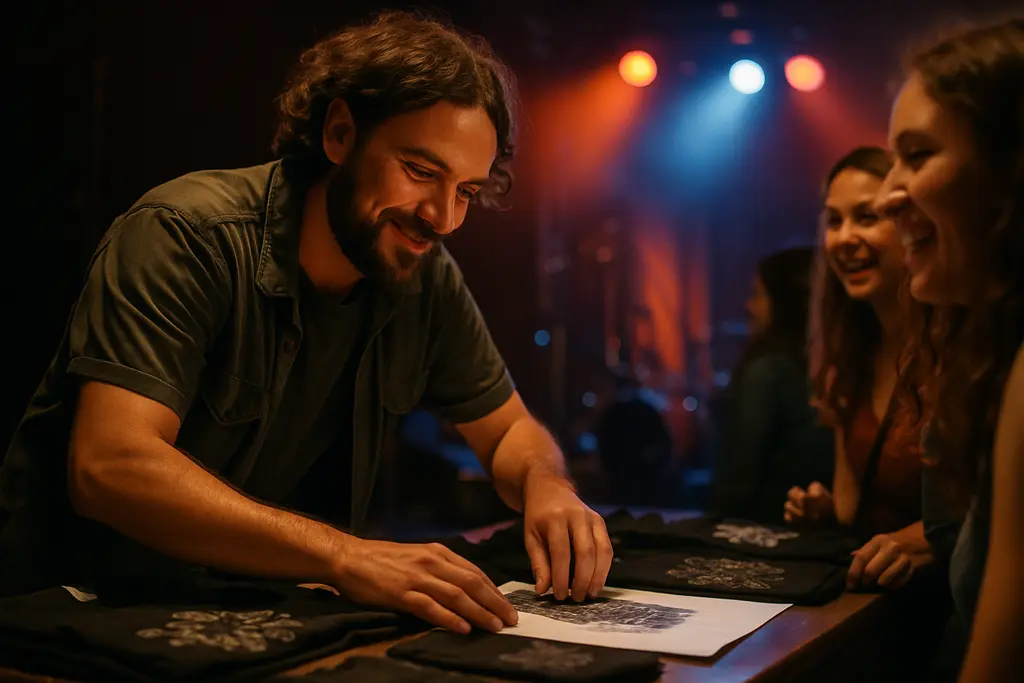
    Political festivals often generate visual culture: handmade signs, fan art, outfits, patches, and resale objects. Community creativity can be meaningful, but creators and sellers should treat artist names, festival marks, photographs, and likenesses with caution. High-level rights awareness is part of respecting the people whose work makes the event possible.

    A related NextClues reflection on Daisy Chain Fields art and protest considers how nostalgia, feminist art, and community care shaped the festival’s public memory. That kind of reading is most useful when it separates inspiration from imitation and celebration from unauthorized commercial use.

    Political Messages in Music At Daisy Chain Fields

    Political Messages in Music at Daisy Chain Fields worked less like a single declaration than a set of connected choices: an all-women lineup, a public charitable commitment, and a festival identity tied to reproductive rights and care-centered nonprofit work. The event has already happened, on August 29, 2026, so the useful task now is not promotion. It is reflection.

    The strongest reading is not that Daisy Chain Fields settled the place of politics in pop. It is that the festival offered one documented example of how live music can carry civic meaning through structure as well as sound. For artists, venues, nonprofits, and audiences, that distinction matters. A message delivered from the stage may last a moment; a message built into the design of an event can shape how a community remembers being there.

  • Macy’s Capsule Collection Backs U.S. Talent

    Macy’s Capsule Collection Backs U.S. Talent

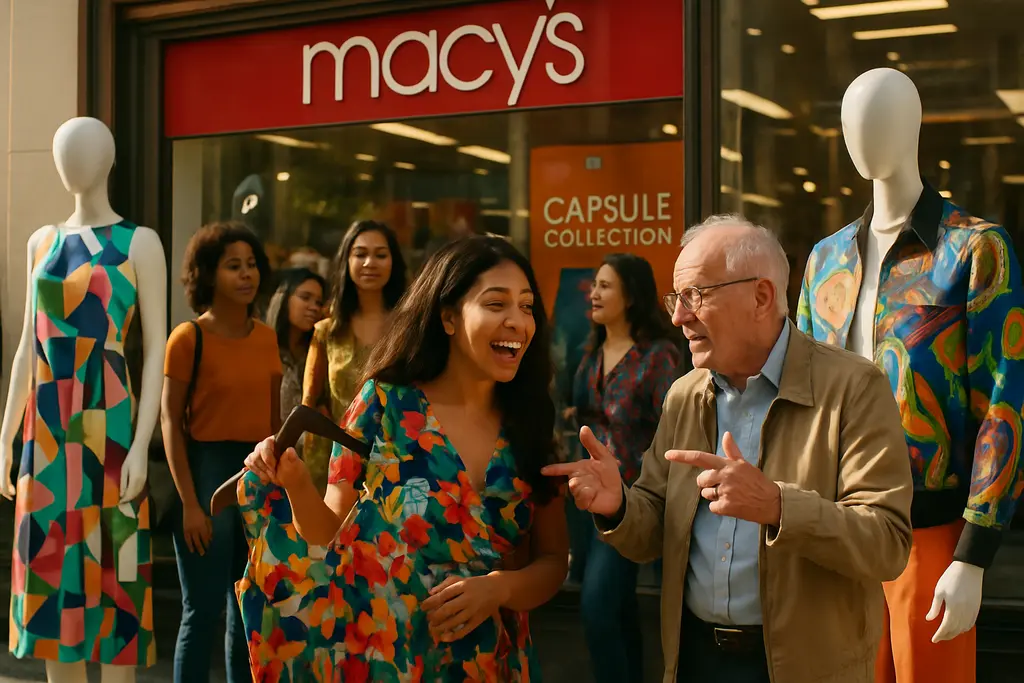
    Macy’s Capsule Collection officially launched on September 8, 2026, as part of Macy’s Fall “Find Us at Macy’s” campaign, according to the company announcement carried by Business Wire via StreetInsider. As of September 22, 2026, the collections are live online and in selected stores. The premise is direct but layered: combine established American fashion names with newer designers, sell limited-edition capsules through Macy’s channels, and use store programming to make the campaign feel less like a standard seasonal product push.

    That strategy deserves a careful reading because capsule collections can do different kinds of work. They can create scarcity, refresh a retailer’s fashion authority, introduce shoppers to labels they may not have followed, and give designers access to a wider national audience. None of those outcomes is automatic. The strength of this campaign depends on whether Macy’s can support discovery without flattening the identities of the participating designers into a single house style.

    How Macy’s Capsule Collection Frames American Design

    Why The Icons And New Guard Pairing Matters

    Macy’s has organized the project around six American designers in two groups: “The Icons,” made up of Tommy Hilfiger, Donna Karan, and Michael Kors, and “The New Guard,” made up of Jonathan Cohen, Sally LaPointe’s LaPointe, and Edvin Thompson’s Theophilio. FashionUnited reported that each designer created limited-edition capsules sold exclusively through Macy’s, in selected physical stores and through macys.com, as part of the Fall 2026 campaign FashionUnited.

    The split between icons and newer labels is not just a branding device. It gives Macy’s a way to frame American design as both recognizable and still in motion. Hilfiger, Karan, and Kors bring broad public familiarity. Cohen, LaPointe, and Theophilio represent a more discovery-driven side of the project, where the value for shoppers may be less about name recognition and more about encountering a designer point of view inside a large retail setting.

    For a department store, that balance is meaningful. Too much emphasis on familiar names can make a campaign feel safe. Too much emphasis on discovery without context can leave shoppers unsure why the collaboration matters. Macy’s appears to be using the two-tier structure to manage that tension, placing less familiar labels beside names with long-standing visibility in American fashion.

    Macy’s Capsule Collection As A Discovery Tool

    Macy’s Capsule Collection is less persuasive if viewed only as a product drop. Its stronger community and culture argument is that a national retailer can act as a bridge between designer identity and public access. For emerging or newer labels, shelf space and homepage placement through a major retailer can expand reach beyond runway coverage, specialty boutiques, and fashion-media audiences.

    That does not mean access is equal across all designers, cities, or customers. The collections are limited-edition and available in selected stores, so the physical experience will vary by location. The online channel widens access, but digital retail does not fully replace the value of trying on garments, seeing fabric movement, or receiving in-person styling help. This is where Macy’s store strategy becomes part of the cultural story rather than a separate retail detail.

    Designer Signals Inside The Capsules

    Established Names Carry Familiar Codes

    The established designers provide a foundation of recognizability. Based on the campaign framing in the research, Tommy Hilfiger is positioned through heritage Americana; Donna Karan’s capsule centers on fluid draping, neutral tones, and clothing intended to move with women; Michael Kors contributes a glamour-oriented point of view through elevated separates, animal prints, and fringe accents. These descriptions suggest Macy’s is not asking the better-known designers to disappear into a neutral retail identity. The campaign depends on their signatures being readable.

    That readability matters for shoppers who may not follow fashion calendars closely. A capsule tied to an established designer can offer a shorthand: a customer has some idea of the mood before seeing every garment. The risk is that shorthand can become too broad. A respectful campaign has to leave room for design detail, material choices, fit, and styling rather than treating the designer name as the whole story.

    The New Guard Adds Cultural Range

    The newer labels carry a different kind of weight. Jonathan Cohen’s capsule is described as leaning into bold colors, prints, and craftsmanship. LaPointe brings monochromatic sets, tactile fabrics, and embellishments. Theophilio, led by Edvin Thompson, integrates Caribbean heritage and street-style influences. These are not interchangeable positions within American fashion. They point to different relationships with color, texture, personal history, and public presentation.

    For communities that care about creative access, this is the most important part of the campaign. A retailer can promote “American design” in a narrow way, or it can acknowledge that American fashion is shaped by migration, regional identity, craft traditions, nightlife, street style, workwear, social dress codes, and designer-led experimentation. The available research supports the idea that Macy’s is trying to show more than one version of national style, though the depth of that effort will be clearer as shoppers and critics respond to the capsules in practice.

    Retail Strategy, Store Events, And Community Access

    How Store Programming Extends The Drop

    Macy’s has scheduled “Celebration Saturday” for September 26, 2026, from 1 p.m. to 5 p.m. local time at selected stores. The planned programming includes styling sessions, entertainment, and gift-with-purchase offers. Since that date has not yet arrived as of September 22, 2026, it should be described as scheduled rather than completed.

    For a capsule project, in-store programming can change the social meaning of the release. A rack of garments can be a sales moment. A styling session can become an interpretive moment, especially if staff can explain fit, fabrication, designer references, and ways to wear the pieces without reducing them to a single trend label. Entertainment and event energy may help bring people into stores, but the lasting value is likely to depend on how well the design stories are communicated.

    There is also a practical access question. Selected-store activations can create local energy, yet they leave some communities outside the physical event footprint. Macy’s online sales channel helps address that gap, but the social experience of a store event remains uneven by geography. Readers who follow the intersection of retail, public life, and community institutions might appreciate the insights public-affairs coverage offers at Kay Granger for a broader civic perspective.

    The Bold New Chapter Context

    The Fall 2026 designer project also sits within Macy’s “Bold New Chapter” turnaround plan, launched in February 2024. The research notes indicate that the plan has included closing about 150 underperforming locations and investing in 125 “Reimagine” stores. That context matters because the capsule campaign is not only about celebrating designers. It is also part of a retail repositioning effort in which Macy’s is trying to sharpen brand identity, product difference, and store experience.

    From an analytical standpoint, this creates both opportunity and pressure. Designer capsules can signal taste authority, but they cannot by themselves solve store traffic, inventory, service quality, or regional relevance. The more credible reading is narrower: the campaign gives Macy’s a visible fashion story at a time when the company is investing in fewer, more intentional store experiences.

    Rights, Credit, And Respectful Fashion Storytelling

    Designer sketches and fabric samples arranged on a worktable

    Why Attribution Matters In Capsule Coverage

    Coverage of fashion collaborations should be careful about credit. Designers bring their own bodies of work, cultural references, teams, and production relationships to a project. When a retailer gathers multiple labels under one campaign, the media story can easily become retailer-first. That may be commercially accurate, but it can understate the creative labor that makes the collection worth discussing.

    The safer editorial approach is to name designers clearly, avoid unsupported claims about influence, and distinguish between what a company has announced and what critics or shoppers later observe. For example, it is supported to say that Theophilio’s capsule integrates Caribbean heritage and street-style influences because that appears in the research. It would not be responsible to invent a claim about a specific community response without sourced evidence.

    The same caution applies to creator commerce. A major capsule may inspire independent sellers, stylists, and content creators, but inspiration is not a free pass to copy protected artwork, brand marks, garment graphics, campaign imagery, or a living designer’s identifiable trade presentation for commercial deception. This article does not offer legal advice. It does support a basic ethical principle: credit creative sources, avoid passing off, and seek rights clearance where needed.

    What The Celebrate American Designers Capsule Signals

    The Macy’s Capsule Collection signals a practical strategy for promoting homegrown talent through a mix of recognition, exclusivity, and retail access. The presence of Hilfiger, Karan, and Kors gives the campaign a familiar entry point. The inclusion of Cohen, LaPointe, and Theophilio gives Macy’s a way to present American fashion as broader than legacy names alone.

    Its success should be judged with care. The campaign has already launched as of September 8, 2026, but its cultural impact cannot be measured only by launch-day visibility. More useful questions include whether the newer designers receive clear attribution, whether customers understand the differences among the capsules, whether selected-store programming gives real context, and whether Macy’s continues to support designer discovery after the Fall 2026 campaign cycle.

    For now, the strongest supported assessment is that Macy’s is using designer capsules as both merchandising and cultural positioning. Macy’s Capsule Collection gives the retailer a way to connect national scale with individual design voices. If handled with respect for the designers’ distinct identities, the project can offer shoppers more than seasonal novelty: it can make a department store feel like a place where American fashion is interpreted, compared, and encountered in person.

  • artist-first merchandise policy at live events

    artist-first merchandise policy at live events

    Live Nation’s artist-first merchandise policy, mainly carried through its On the Road Again program, changed a specific part of the live-event economy: merch income at participating club-size venues. As of September 14, 2026, the clearest supported record shows a policy with measurable benefits for developing artists, but also a limited reach across the full touring circuit. That distinction matters for artists, audiences, venues, and local communities that depend on live rooms as cultural infrastructure.

    Merchandise is not only a souvenir table. For many artists, it is a practical revenue source that can help cover fuel, lodging, crew, production, and time away from other work. For audiences, buying a shirt, record, poster, or handmade item can feel like a direct way to support the performer they just heard. The policy therefore affected live events not by changing the music on stage, but by changing what happens around the room: the checkout line, the artist-fan exchange, and the post-show economics.

    What The artist-first merchandise policy Changed

    artist-first merchandise policy At Club Scale

    Live Nation launched On the Road Again in 2023 in partnership with Willie Nelson. The company said the program waived merchandise-selling fees at participating Live Nation club venues, allowing artists to keep 100% of their merch profits at those shows, and also provided $1,500 per show for gas and travel costs to both headliners and support acts. By March 12, 2024, Live Nation said the program had supported more than 4,000 developing artists and had distributed “tens of millions of dollars” in added support through merch profit retention and travel stipends, according to its On the Road Again update.

    Those details define the policy’s strongest case. It did not ask artists to wait for a royalty cycle, a later settlement, or a sponsorship deal. At qualifying shows, the change was attached to a familiar point of sale: the merch table. That made the benefit legible to artists and tour managers because the waived fee applied to money generated in the room on the night of the performance.

    Travel Support And The Cost Of Showing Up

    The $1,500 travel payment is part of the same live-event effect. Touring at club level can involve tight routing, long drives, and uncertain nightly sales. A fixed payment for gas and travel does not solve every expense, and the available source does not show every artist’s cost structure. Still, it addressed a known pressure point: reaching the next city can be one of the barriers that decides whether a developing act can continue a run of dates.

    The artist-first merchandise policy did not remove all financial risk from touring. It did, however, shifted a defined portion of the risk away from the artist at participating club shows. That is a meaningful change for a support act selling modest quantities of merchandise, where a percentage cut and seller fees could reduce the margin on each item.

    Why Merch Policy Matters Inside The Room

    The Merch Table As A Community Exchange

    A live event is often remembered through the performance, but the social life of the room extends before and after the set. The merch table is where a fan may ask about a song, buy a record directly from a touring musician, or discover a local opener’s work. When a venue policy allows the artist to retain a larger share of sales, that exchange carries clearer economic meaning.

    For audiences, the artist-first merchandise policy can reduce uncertainty about where their merch spending goes at a qualifying show. That does not mean every dollar at every Live Nation-affiliated event follows the same rule. The research supports a narrower statement: at participating club-size venues in the program, merchandise-selling fees were waived so artists kept 100% of merch profits from those sales.

    Trust, Transparency, And The Post-Show Line

    Community trust in live music is built from many small signals. Clear ticketing, respectful staff, fair treatment of local crews, safe rooms, accessible information, and artist compensation all shape how a venue is perceived. Merch policy sits within that larger set of signals. A room that reduces friction at the merch table may be read by artists as more hospitable, especially if the policy is communicated before settlement.

    Audience perception is more difficult to measure from the available research. The cited materials do not prove that fans bought more merchandise because of the policy, nor do they prove that the policy changed attendance. A cautious reading is better: the program created conditions in which merch purchases at certain club shows could have a more direct financial link to the artist, and that can strengthen the ethical clarity of the fan’s choice to buy.

    The Limits Of Coverage Across Live Events

    Not Every Venue Was Covered

    The main limitation is scope. The strongest documented benefits applied to participating club-size venues, not necessarily to theaters, arenas, festivals, or every date on a tour. Pitchfork’s reporting on the dispute between artists and venues over merch profits noted that venue merch cuts had become a serious issue for musicians and that policy fixes were not evenly applied across all rooms, as discussed in its report on artist merch cuts.

    This matters because touring is rarely confined to one venue type. A developing band may play a Live Nation club on one night, an independent room the next, a festival slot later in the month, and a theater support date after that. If only some shows remove merch cuts, the artist’s budget still has to account for mixed terms across the route.

    Why The Old Debate Did Not Disappear

    Before programs like On the Road Again, reported merch cuts in many U.S. contexts were often described in the 20% to 30% range, with some accounts including seller fees. The research notes also point to examples outside the United States, including Australian documents showing 10% to 20% of gross sales in certain contexts. These figures help explain why the issue drew attention: a percentage taken from gross merch sales can matter sharply when production costs, card fees, tax handling, shipping to the tour, and unsold stock are considered.

    Because the policy’s reach was limited, it did not end the broader argument over who should benefit from the labor and risk behind merch. Venues may point to staffing, space, payment systems, and building costs. Artists may point to design costs, manufacturing, transport, and the fact that the goods are tied to their creative identity. Both sides are discussing real pressures, but the policy showed that a zero-cut model could be implemented in at least one defined club program.

    Practical Implications For Artists, Venues, And Audiences

    A tour manager reviewing notes beside packed merchandise boxes

    What Changed In Tour Planning

    For a tour manager, a waived merch cut at a qualifying show can make settlement easier to forecast. It does not guarantee a profitable night, since sales depend on attendance, pricing, demand, inventory, and the artist’s costs. It can, however, remove one variable from the calculation. That is especially relevant for developing artists who may depend on several modest revenue streams rather than one large guarantee.

    For venues, the program raised a strategic question: whether goodwill with artists and audiences can outweigh income previously collected through merch percentages. The available research does not prove how each venue balanced that tradeoff. It does show that Live Nation was willing to frame club-level artist support as a public policy choice tied to touring sustainability.

    • Artists: qualifying shows offered a clearer path to retaining merch profit and receiving travel support.
    • Audiences: merch purchases at covered club shows could more directly support the performer.
    • Venues: the policy placed pressure on rooms to explain or reconsider merch percentages.
    • Local scenes: artist-friendly terms can help touring acts remain willing to play smaller rooms, though venue-by-venue proof is limited.

    Community Value Beyond The Sale

    Community-focused coverage should avoid treating every policy announcement as proof of a solved problem. Live music depends on relationships among artists, promoters, venue workers, local audiences, and neighboring businesses. Related cultural networks such as Robsonic underscore the same concern: performance spaces are not only commercial sites, but places where local identity, touring exchange, and creative work meet.

    A cautious reading of the artist-first merchandise policy is that it made one part of that exchange fairer at participating club shows. It did not create a universal standard across every live event. It did give artists and advocates a concrete example to reference when asking how merch revenue should be shared.

    Live Nation artist-first merchandise policy

    The impact of Live Nation’s program is best understood as specific rather than total. It helped thousands of developing artists by March 12, 2024, according to Live Nation’s own statement, and it placed 100% merch-profit retention at participating club shows into the center of the public conversation. It also left open the harder question of what happens outside those rooms.

    For communities that care about live music, the policy’s value lies in its clarity. If a fan buys merch at a covered club show, the supported claim is that the artist keeps the merch profit without the venue merchandise-selling fee. If an artist builds a tour budget, a covered date may carry better terms than a non-covered date. If a venue wants to be seen as artist-supportive, merch policy is now part of that public measure.

    That is a real shift, but not a complete settlement of the issue. The next responsible conversation is not whether one company announcement fixed touring economics. It is how artists, venues, promoters, and audiences can identify which policies apply on which dates, and how those policies affect the people doing the creative work on stage.

  • Mesa Arts Partnership Reshapes Live Events

    Mesa Arts Partnership Reshapes Live Events

    The Mesa Arts Partnership began on September 1, 2026, after Mesa City Council approved a five-year management agreement with Legends Global in late August 2026. The deal placed operations, marketing, and strategic work for the Mesa Convention Center and Mesa Amphitheatre under a private venue-management firm while Mesa retained ownership of both public facilities. That distinction matters: this was not a sale of civic arts infrastructure, but a decision to hire outside management for assets that remain part of the city’s cultural and event system.

    What The Mesa Arts Partnership Changes

    Under The Five-Year Agreement

    The approved agreement gave Legends Global responsibility for operations, marketing, and strategy at the Convention Center and Amphitheatre. Mesa agreed to pay the company $14,000 per month for those services, according to an Axios Mesa report. Based on the available reporting, no public detail has shown that Legends Global assumed the cost of major capital upgrades. That leaves a key financial question unresolved for residents: management strategy can change booking and promotion, but building repairs and facility modernization still require funding decisions.

    Mesa Arts Partnership And Public Ownership

    The Mesa Arts Partnership sits at a careful boundary between public cultural stewardship and private operating expertise. Mesa still owns the Convention Center and Amphitheatre, which keeps the sites within the city’s civic portfolio. Legends Global now manages tasks tied to venue use, including operations and marketing. For artists, promoters, neighborhood groups, and audiences, that structure may affect how events are booked and supported, though any measurable outcome will need to be assessed after operating data becomes available.

    For residents, the Mesa Arts Partnership should be judged by practical evidence rather than by promotional language. Useful indicators would include the range of events booked, use of public space, maintenance progress, accessibility improvements, and whether smaller community uses remain visible beside commercial bookings. None of those results can be confirmed on the first day of the agreement. The careful reading is that Mesa changed the management model before it could prove the cultural effect.

    Why Venue Conditions Shaped The Decision

    The Upgrade Gap

    A 2025 city-commissioned study estimated that the Convention Center needed about $30 million in upgrades and that the Amphitheatre required about $17 million. The research notes identify green rooms and sound systems among the areas needing modernization. Those details are not minor for performing artists. Backstage conditions, technical reliability, and production capacity shape whether a venue can host certain tours, festivals, conferences, or civic performances without creating avoidable pressure on crews and performers.

    Artists and promoters had noted that Mesa Amphitheatre was at a competitive disadvantage because of aging infrastructure and fewer resources. The partnership aimed to address part of that gap through management, marketing, and strategic support. Still, the available facts point to a staged problem. A stronger booking operation can help position a venue, but some limits on larger acts may remain until physical improvements are made.

    Capacity And Campus Use

    The Convention Center and Amphitheatre campus already offers a mix of indoor and outdoor spaces. The official campus planning page lists nearly 40,000 square feet of indoor meeting and exhibit space, including a 19,000-square-foot main exhibit hall and a 9,000-square-foot ballroom. It also identifies 40,000 square feet of outdoor function space, with the Amphitheatre able to accommodate up to 5,000 people for outdoor festival-style events.

    Those numbers help explain why the site remains culturally significant even with upgrade needs. A campus that can hold meetings, exhibits, outdoor functions, and concerts can serve several kinds of community activity. The challenge is matching the scale of the site with production quality, marketing reach, and a booking calendar that reflects both regional competition and local use.

    What The Mesa Arts Partnership Still Cannot Solve

    Management Is Not The Same As Capital Funding

    The Mesa Arts Partnership can reorganize who handles day-to-day venue responsibilities, but the research available as of September 1, 2026, does not show a new capital funding source for the estimated upgrade costs. That point should temper expectations. A management company can bring industry experience and booking relationships, but public venues with documented infrastructure needs still require money, planning, and phased execution.

    Legends Global already operates major Valley venues, including State Farm Stadium and Desert Diamond Arena, according to the research notes. That experience may help Mesa compete for acts and events that had been bypassing the Amphitheatre for newer facilities. Even so, competition among venues is not decided by management alone. Sound, backstage conditions, scheduling, rental terms, audience access, and promoter confidence all shape whether an event lands in one city rather than another.

    Community Value Needs A Wider Test

    Arts and live-event policy should not be measured only by headline bookings. A city-owned venue also carries public meaning. It can support local festivals, cultural gatherings, nonprofit events, touring artists, civic ceremonies, and forms of creative work that may not always produce the highest commercial return. The available research does not document how Mesa will balance those interests under the new management structure, so any claim about community benefit remains provisional.

    • Track whether public-facing events become more frequent or more varied.
    • Watch whether upgrade plans become funded, dated, and transparent.
    • Compare large commercial bookings with community and cultural uses.
    • Assess accessibility goals against specific facility changes.

    Arts Strategy, Creator Commerce, And Local Identity

    Artists arranging handmade items at an outdoor community event

    How A Venue Deal Touches Makers

    Mesa’s 2024-2026 Strategic Plan, as described in the research notes, included goals tied to placemaking, arts and cultural integration, signature events, visitor economy, and accessibility. The new agreement fits within that policy frame, but fit is not proof of success. For community artists and independent makers, the clearest value would come from visible chances to participate in events, sell work with fair terms, and connect with audiences without being treated as decoration around larger productions.

    That point is especially relevant for handmade gift sellers, costume artists, printmakers, food vendors, small labels, and local performers whose work often circulates through festivals and civic gatherings. Readers interested in exploring how other venues support craftspeople and artists might find the larger network’s resources, including sites like Shimply, useful for additional perspectives. For Mesa, the cultural question is whether venue management can support a calendar where local creative labor is seen, credited, and paid in ways that respect the people making the work.

    Mesa Arts And Live Events After September 1, 2026

    What Can Be Said On Day One

    As of September 1, 2026, the cautious assessment is clear. The city approved a five-year management agreement, Legends Global started its role, Mesa retained ownership of the Convention Center and Amphitheatre, and major upgrade needs remained part of the discussion. The first month under the agreement began in September 2026, so claims about results would be premature without attendance data, booking records, budget actions, or public reports.

    The Mesa Arts Partnership now sits between aspiration and evidence. It has a defined management structure, a monthly fee, known facility capacities, and a documented need for major upgrades. Its cultural value will depend on what happens next: which artists are booked, which community events are supported, how renovation priorities are funded, and whether public ownership continues to serve public access. For a city seeking stronger arts and live-event activity, the agreement is a starting point, not a finished measure of success.

  • Fall 2026 Fashion Trends and Community Style

    Fall 2026 Fashion Trends and Community Style

    Fall 2026 Fashion Trends are already visible through collections shown earlier in 2026 and through trade reporting on what buyers are seeing for the season. For community style organizers, independent sellers, costume makers, and local fashion circles, the useful question is not whether every runway idea will become a street-level standard. The better question is which signals are strong enough to guide color, silhouette, texture, and presentation without overstating certainty.

    Fashion coverage can drift into hype, especially during seasonal changeovers. A more careful reading treats runway shows, buyer reports, and retail commentary as evidence with limits. These sources can show which ideas designers and stores are placing forward, but they cannot prove how every neighborhood, age group, body type, or budget will respond. That distinction matters for community-facing creators who want inspiration without reducing fashion to a checklist.

    Fall 2026 Fashion Trends In Evidence

    Fall 2026 Fashion Trends From Runway Reports

    The clearest signals in the available research cluster around tailoring, darker romantic colors, sculptural volume, sheer layering, decorative knitwear, and statement accessories. JOOR’s women’s Fall 2026 report identifies the Nouveau Tuxedo direction, cocoon shapes, lean tailoring, heritage-style knits, and burgundy-family tones across designer collections, including Khaite, Michael Kors, Elisabetta Franchi, and Carolina Herrera JOOR trend report. That does not mean one silhouette dominates all wardrobes. It does suggest that formal structure and expressive fabric are sharing the same seasonal frame.

    For Fall 2026 Fashion Trends, the tension between control and drama is especially useful. A tuxedo jacket can read disciplined. A bubble skirt, elongated sleeve, or cocoon coat can read theatrical. Sheer fabric can introduce vulnerability or stage presence, while heavy coats and structured suits can pull the look back toward restraint. This balance gives community stylists, shop owners, and makers more than one entry point.

    Reading Fall 2026 Fashion Trends With Care

    Evidence strength varies by category. Tailoring and outerwear are supported by named runway examples in the provided research. Color stories are also well represented, especially burgundy, oxblood, maroon, royal purple, electric blue, peachy melon, and butter yellow. Accessories are listed in the research notes as an active area, including fuzzy bags, unusual clutches, headgear, and large belts, but those details should be treated as supporting signals rather than a complete forecast for all buyers.

    That caution is not a weakness. It is how fashion analysis respects the difference between designer presentation and lived dress. A runway look is an authored object, often built for mood, proportion, and press visibility. A community outfit may be built around weather, mobility, cost, modesty, performance needs, or the maker’s available materials. The most useful seasonal reading leaves room for that translation.

    Tailoring, Sheer Layers, And The New Tuxedo

    Tuxedo Codes Without A Single Uniform

    The tuxedo revival described in the research is less about copying one formal template and more about adapting black-tie codes. Designers used jackets, dresses, sharp trousers, and new proportions to revisit menswear-associated structure for women. The result can serve many settings: gallery openings, community arts fundraisers, small-venue performances, maker markets, or seasonal gatherings where polish is welcome but full formalwear may feel too stiff.

    Victoria Beckham’s Paris runway presentation on March 6, 2026, is a useful example because the reporting placed sheer dresses beside sharply cut suits and sculptural gowns Paris show report. As of August 25, 2026, that show had already taken place, so it is best read retrospectively as part of the Fall/Winter 2026 evidence base. The contrast between exposure and structure is the point: skin-revealing fabrics were not isolated from tailoring but set against it.

    What Sheer Details Do In Community Styling

    Sheer fabric and cut-outs can be visually strong, yet they require thoughtful handling in public and community settings. Layering is one practical way to interpret the direction without forcing a single comfort level. A sheer sleeve under a wool coat, a transparent overlay over an opaque slip, or an open-back shape tempered by a tailored jacket can reference the runway signal while allowing the wearer to set boundaries.

    This matters for costume culture and creator commerce as well. Sellers can treat the trend as a study in contrast: opacity against transparency, matte wool against gloss, fitted jackets against fluid gowns. That approach is safer and more respectful than duplicating a designer look too closely or implying affiliation where none exists. For rights-sensitive work, especially items inspired by recognizable brands, characters, or celebrities, creators should keep permissions and platform rules in mind rather than assuming that inspiration settles every question.

    Color, Volume, Knitwear, And Accessories

    Moody Color And Sculptural Shape

    Among Fall 2026 Fashion Trends, color may be the easiest signal for communities to adapt. Burgundy, oxblood, and maroon offer alternatives to black, gray, and beige while staying compatible with fall wardrobes. Purple and electric blue can create sharper contrast. Butter yellow and peachy melon introduce softness, especially when placed against dark coats, deep knits, or formal black pieces.

    Shape is less simple but just as expressive. Cocoon coats, bubble skirts, elongated oval sleeves, and barrel-like proportions all change the outline of the body in space. In a festival or live-event setting, that can create movement and visibility. In daily community dressing, it may work best as one exaggerated piece rather than a full look. A rounded coat over slim trousers, or a bubble skirt with a plain knit, keeps the silhouette readable.

    Knitwear And Accessories As Maker Signals

    Decorative knitwear has particular value for handmade and local retail communities. Fair Isle, intarsia, jacquard, and geometric patterns carry craft visibility; the labor is part of the visual appeal. That does not make every heritage pattern interchangeable. Makers should be careful about cultural specificity, sourcing, and attribution where a motif is tied to a community rather than a generic winter mood.

    Accessories can carry the seasonal language at a lower commitment level. The research notes fuzzy textures, unusual bag shapes, dramatic headgear, and stronger belts. These items work well for small-batch sellers because they can test a color or texture without rebuilding an entire clothing line. They also suit event culture, where a hat, belt, or tactile bag can help an outfit read from a distance.

    Community Creators And Retail Choices

    Independent maker arranging handmade knitwear and accessories on a market table

    From Runway Signal To Local Offer

    For local sellers, the strongest commercial lesson is editing. A small collection does not need every listed trend. A maker might choose a burgundy-and-black palette, one structured jacket shape, and a handful of textured accessories. Another might focus on knits, soft purple, and rounded sleeves. A community boutique might pair formal tailoring with handmade brooches or scarves, allowing the runway influence to meet local craft.

    In terms of adjacent shopping and creator-oriented context, readers comparing community commerce coverage across this network might find the site Shimply to be an insightful resource. The key is to avoid treating trend reports as instructions. They are inputs. Community fashion becomes compelling when people interpret those inputs through place, budget, skill, identity, and occasion.

    Evidence-Based Styling Without Flattening Taste

    Fall 2026 Fashion Trends can help organize a wardrobe conversation, but they should not flatten personal taste. Some people will choose lean suits because they value clean lines. Others will respond to lace, volume, or knit texture because those elements feel expressive or familiar. Community style is not a runway echo; it is a social practice, shaped by makers, wearers, photographers, hosts, and audiences.

    That social dimension is why respectful analysis matters. A trend may move through luxury fashion, resale, cosplay, handmade markets, and live-event dressing in different forms. The same oxblood coat can look formal in one room, romantic in another, and theatrical under stage lighting. The same tuxedo jacket can signal ceremony, gender play, professional polish, or performance. Evidence tells us what is visible; community interpretation gives it meaning.

    The Fashion Spotlight: Key Trends To Watch This Fall 2026

    The Fashion Spotlight: Key Trends To Watch This Fall 2026 is best understood as a set of related signals rather than a strict seasonal mandate. Tailoring is sharper. Sheer layers are being paired with structure. Dark reds and saturated accent colors are prominent. Volume is changing outerwear and skirts. Knits and accessories are carrying craft, texture, and personality.

    For communities, the strongest use of Fall 2026 Fashion Trends is selective adaptation. Choose the evidence that fits the setting, credit influence where appropriate, avoid false claims of affiliation, and leave space for local taste. Fashion is most persuasive when people can recognize the source of an idea without losing sight of the person wearing it.

  • Assembly Art Fair And Seattle Gallery Culture

    Assembly Art Fair And Seattle Gallery Culture

    Assembly Art Fair arrived in Seattle with a stated emphasis on curated gallery presentations rather than standard booth arrangements. The inaugural event took place July 22 to 26, 2026, at West Canal Yards, described by the fair as a newly adapted historic fisheries building with expansive exhibition spaces on waterfront property near downtown Seattle, according to the official fair site. That setting matters because art fairs are never only about objects on walls; they also shape how viewers move, pause, compare, and speak with the people presenting the work.

    For Seattle, the fair sits within a wider conversation about how regional galleries can meet collectors, curators, artists, and public audiences without flattening local identity into a sales floor. The available reporting supports a careful reading: this was a gallery-led, invitational event with a defined Western U.S. focus, not a general open call or a citywide survey. That narrower structure gave the fair a clear frame, while also leaving open questions about access, representation, and how future editions might broaden participation.

    Assembly Art Fair And The Gallery-Led Format

    What Assembly Art Fair Changes About Pace

    The Assembly Art Fair format is best understood as a shift in viewing conditions. Traditional fairs often rely on compact booths that encourage quick scanning and frequent comparison. Assembly’s stated model emphasized curated exhibitions, giving each participating gallery more room to shape a distinct encounter. This does not guarantee deeper engagement by itself, but it can create better conditions for slower looking when the installation, lighting, and staff conversations are handled with care.

    Artnet reported that the fair featured 18 leading galleries from the Western U.S., including Traver Gallery, Greg Kucera Gallery, and PDX CONTEMPORARY ART, in a gallery-led invitational structure, as noted in its coverage of Assembly. That roster indicates a regional emphasis rather than a nationally diffuse fair identity. In cultural terms, such a choice can help viewers understand how galleries from nearby art centers speak to one another, even when their programs differ in medium, scale, and market position.

    Curatorial Space Versus Commercial Compression

    A curated fair presentation asks different questions from a standard booth. Instead of simply asking how many works can be shown, a gallery has to ask what relationship the works have to one another. Does a presentation build around one artist, several artists, or a material conversation? Does it reward extended looking, or does it depend on quick visual impact? These questions are familiar to museum and gallery visitors, but they carry different pressure inside a fair, where sales, introductions, press attention, and institutional interest can happen in the same room.

    At Assembly Art Fair, the emphasis on intimate art encounters should be treated as an organizing aim, not as proof that every visitor had the same experience. Fairs remain uneven by nature. A collector with appointments may encounter the event differently from a student, artist, or neighborhood visitor. Still, a curated format can reduce some of the visual noise that often makes art fairs difficult, especially for audiences trying to understand why a gallery has placed certain works together.

    West Canal Yards As A Cultural Setting

    A Waterfront Site With Industrial Memory

    West Canal Yards gave the fair a physical identity tied to Seattle’s working waterfront. The research describes the site as a historic fisheries building adapted for exhibition use, with seven acres of waterfront property and access by car, transit, and boat. Those details are not decorative. They affect how an art event feels, who can reach it, and how the city’s industrial past is placed beside contemporary cultural activity.

    Adaptive reuse can be compelling for art presentation, but it also deserves caution in how we describe it. A historic industrial building can offer scale and atmosphere, yet those qualities do not automatically produce public benefit. The more grounded question is whether the venue supports clear movement, adequate time with the work, and respectful conditions for artists and visitors. Based on the fair’s stated focus on expansive exhibition spaces, West Canal Yards appears to have been chosen as part of the curatorial proposition, not merely as a container.

    How Place Shapes Community Reading

    Community arts coverage often turns too quickly to celebration. A more useful approach asks how a site shapes cultural meaning. Seattle’s waterfront carries associations with labor, trade, food systems, transport, and development. Presenting contemporary art inside that context can open productive tension: art is seen not in isolation, but in relation to the city’s material life. That does not mean every artwork directly addresses those histories. It means the audience’s experience is formed partly by the building and the route to reach it.

    For galleries, a site like West Canal Yards can also shift the social rhythm of a fair. Visitors may spend longer in a destination venue than they would in a convention setting, though that depends on programming, transport, weather, and visitor goals. The available information does not support broad claims about attendance or public response, so the safer observation is formal: the venue choice aligned with the fair’s preference for curated, spatially distinct presentations.

    Galleries, Collectors, And Curatorial Contact

    Gallery staff speaking with visitors beside contemporary artworks

    Regional Galleries In Shared Conversation

    The presence of galleries from the Western U.S. places Seattle in conversation with nearby cultural markets rather than isolating it as a local-only event. That regional scale is significant. It allows audiences to compare gallery programs across cities while still keeping the focus tighter than a large international fair. For artists, this kind of gathering can create visibility among curators and collectors, though the degree of benefit varies and should not be assumed without later evidence.

    The named participants in the research point to galleries with established public profiles, but the fair’s invitational structure also raises fair questions. Who gets invited? Which media receive attention? How are emerging spaces considered? These are not criticisms by themselves. They are the normal questions that help an art community evaluate whether a new fair strengthens existing networks, repeats existing exclusions, or does some combination of both.

    Why Curatorial Perspective Matters

    Curatorial perspective is not limited to museums. Galleries make interpretive decisions whenever they select, group, and present work. In a fair setting, those choices are highly compressed. A strong presentation can help a visitor understand an artist’s material language or a gallery’s point of view in minutes. A weaker one can reduce artworks to inventory. The distinction matters for community trust because artists are not interchangeable content providers; their practices deserve context, time, and accurate representation.

    Those interested in regional cultural dynamics can find additional insights by exploring related content on Kay Granger’s platform. This source can enhance understanding of how art fairs integrate broader social and economic frameworks, beyond just artistic merit.

    What Assembly Art Fair Signals For Seattle

    The most persuasive reading of Assembly Art Fair is not that Seattle suddenly has a single answer to the art-fair model. The stronger point is more measured: the event tested a gallery-led format that favored curated presentations, a regional gallery network, and a venue with a distinct Seattle setting. Those choices give critics, artists, collectors, and visitors something concrete to assess.

    Future judgment should rest on evidence: which artists were supported, how audiences experienced the site, whether galleries found the format sustainable, and whether the fair created lasting curatorial relationships. For now, the documented facts support a cautious but meaningful claim. Seattle’s art community gained a new fair format in 2026, one that asked galleries to present with intention and asked visitors to look beyond the quick booth-to-booth rhythm common to many art fairs.

    That is where the community story sits. Not in spectacle, and not in unsupported claims about a market shift, but in the practical meeting of place, presentation, and regional artistic labor. If the fair continues, its value will be measured less by novelty than by how responsibly it serves artists, galleries, and publics who bring Seattle’s art conversations into view.