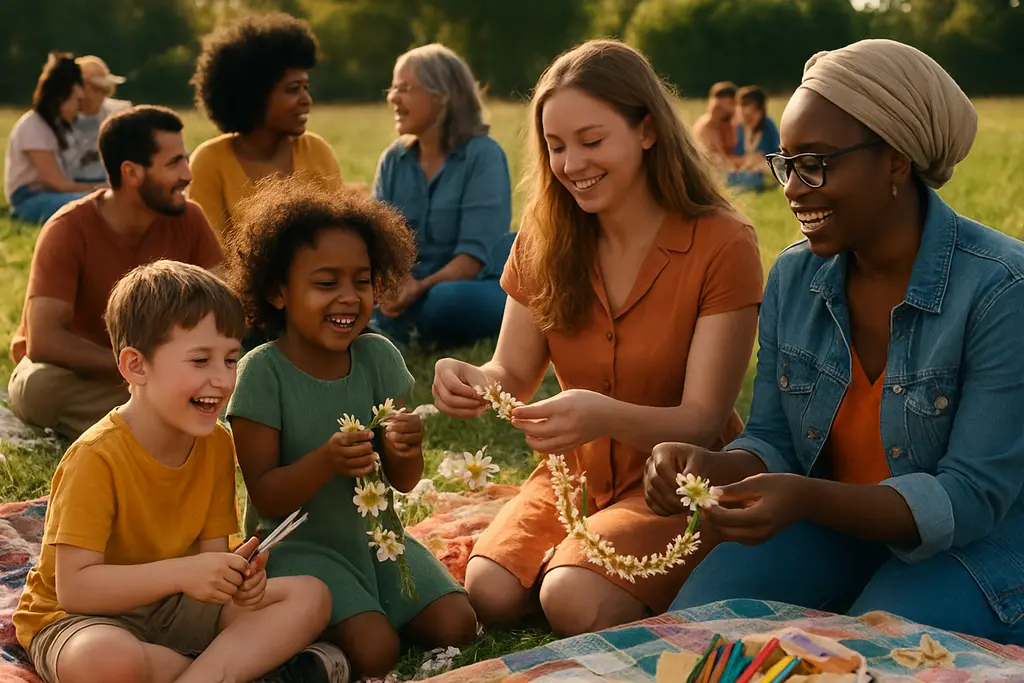
Category: Events

  • Daisy Chain Fields: Art, Activism, Afterglow

    Daisy Chain Fields: Art, Activism, Afterglow

    Daisy Chain Fields was not just another celebrity-led festival experiment. Held on August 29, 2026, at Great Park in Irvine, California, Olivia Rodrigo’s inaugural event has already ended as of October 16, 2026, which makes the more useful task retrospective: assessing what the event actually staged, funded, and signaled rather than treating it as a future spectacle.

    The strongest reading of the festival sits between live music criticism and civic design. Its premise joined an all-female or female-fronted bill with a benefit structure aimed at nonprofits serving women and girls. That combination can be read generously, but it also deserves careful attention. A charitable frame can clarify purpose; it can also invite scrutiny over transparency, beneficiary selection, labor, crowd care, and whether activist art is being used as atmosphere or as public argument.

    Daisy Chain Fields As A One-Day Civic Form

    The official announcement described the festival as a one-day event at Great Park in Irvine on August 29, 2026, with an all-female or female-fronted lineup; it also stated that every artist waived fees so that 100% of net proceeds would benefit nonprofits serving women and girls, according to Live Nation Entertainment’s announcement. That structure matters because it moved the event beyond symbolic programming and into a financial model that asked performers, organizers, and audiences to share a defined philanthropic purpose.

    Daisy Chain Fields And The Fee Waiver Model

    Artist fee waivers can be powerful, but they should not be romanticized without context. The research provided here supports the claim that artists waived fees for this event; it does not provide contracts, production budgets, vendor terms, or worker pay details. That distinction is essential. A benefit festival can be ethically serious while still leaving unanswered questions about the larger labor system around staging, security, food service, installation work, cleanup, and transport.

    For Daisy Chain Fields, the decision to center a women-led bill gave the event a clear curatorial line. Pairing established acts with newer performers positioned the day as intergenerational rather than strictly nostalgic. The reported presence of artists associated with punk, alternative rock, pop, and newer performance modes also helped the bill avoid a single aesthetic lane. The event’s identity rested less on genre purity than on a shared public claim: that popular music can create a platform for care, anger, fundraising, and collective attention.

    Benefit Math And Public Accountability

    According to a review in Harper’s Bazaar, the festival raised $10 million for selected nonprofits before Melinda French Gates matched that amount, bringing the reported total to $20 million. That figure is notable, but the more durable measure will be how the recipient organizations use those funds and whether future reporting documents outcomes without turning beneficiaries into branding material.

    The listed beneficiary framework, as described in the research, focused on organizations serving women and girls, including groups connected to reproductive rights, maternal health, domestic work, safety, and community support. The political meaning of that portfolio was not hidden. It placed the festival inside ongoing debates over bodily autonomy, family care, labor, and gendered vulnerability. The cautious point is that festivals can raise money and awareness, but they cannot replace policy, organizing, or long-term institutional work.

    Art, Protest, And Festival Design

    The event’s art program appears to have been more than set dressing. Research notes describe nine large-scale installations by female artists, with works or participatory features associated with figures such as Yoko Ono, Jenny Holzer, and the Guerrilla Girls, as well as Riot Grrrl-themed exhibits and a “Wish Tree” format for visitor hopes. Those details suggest a curatorial strategy built around public address: text, participation, complaint, memory, and collective wish-making.

    Installations As Civic Space

    Festival art often risks becoming a backdrop for photos, especially when the music schedule dominates attention. Here, the strongest reported elements used interaction as a form of slowed looking. Chalkboards, wish-making, and protest-oriented installations ask audiences to write, read, pause, and compare their own language with that of strangers. That does not automatically make the work effective, but it changes the tempo of participation. Instead of moving only from stage to stage, attendees were offered spaces where message, body, and public feeling could meet.

    As noted in a related review on Shimply, these artistic and protest elements can be seen through lenses of nostalgia, feminist imagery, and community care, all intertwined with the event’s intentions. This connection is insightful because the art and protest details were deeply rooted in historical narratives of conflict, exclusion, and solidarity. Considering them as mere decoration dilutes their significance; seeing them as active dialogue gives them weight.

    Learning Stations Without A Lecture Hall

    The nonprofit village, described in the research as “Daisy Chain Reaction,” used cause-based stations where visitors could learn about organizations and collect buttons or badges. That design choice matters for creator-commerce and festival-culture observers alike. Buttons, badges, posters, chalk marks, and written wishes operate as small civic objects, not only souvenirs. For readers tracing how making, gifting, and participation sit beside event culture across this editorial network, Shimply offers a related point of reference.

    The limits should be stated plainly. A badge-collection system can motivate attention, but it can also reduce hard subjects to checkpoints if not handled with care. The available research supports that the feature existed; it does not prove what every attendee learned or retained. Still, as a design choice, it suggests that the organizers wanted education to be embedded in movement rather than placed on a distant panel stage.

    Audience Care, Heat, And Shared Conduct
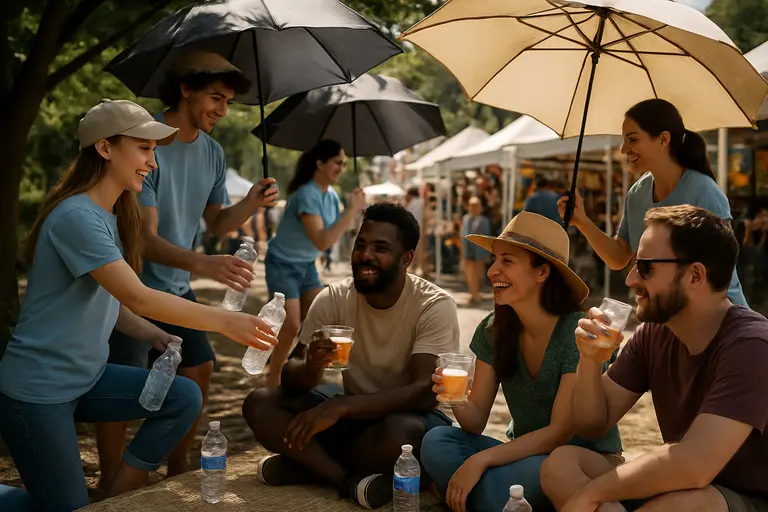
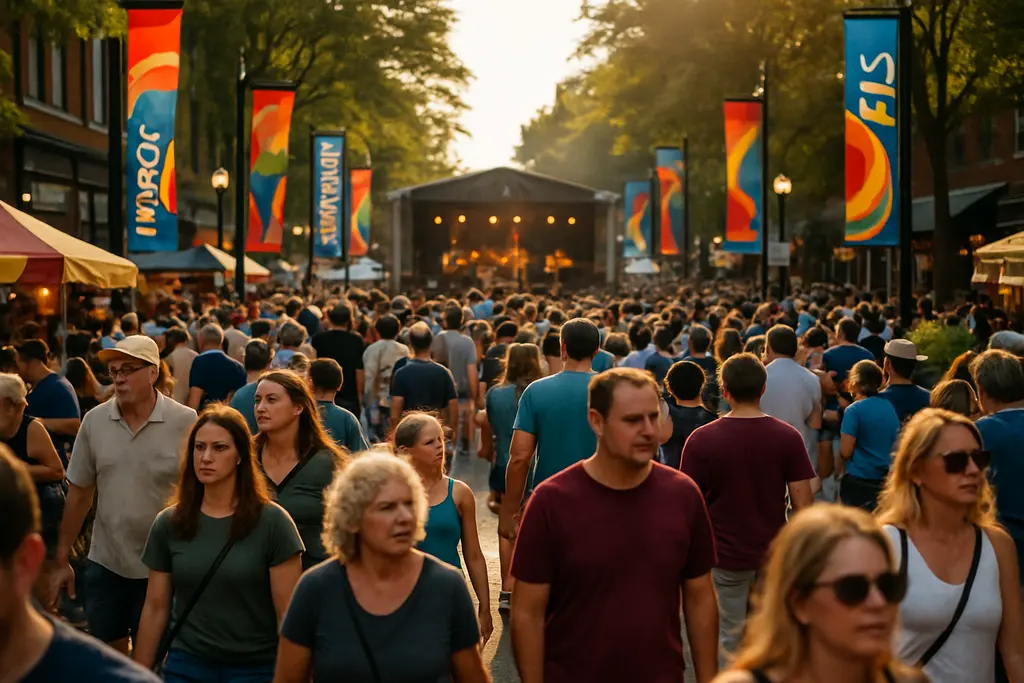
    Festivalgoers resting in shaded areas during a warm outdoor event

    Research notes describe attendance at roughly 45,000 people, with heat reaching the mid-30s Celsius, or mid-90s Fahrenheit, and shade and hydration stations helping attendees cope. Because those details come from reported coverage rather than direct operational records provided here, they should be handled as reported observations. Even with that caution, the heat context is not a side note. Outdoor festival ethics depend heavily on water access, shaded areas, medical readiness, and crowd flow.

    A Physical Event, Not A Broadcast Frame

    The research gives no confirmed indication of a livestream. That absence should not be overstated as proof that none existed beyond the materials reviewed, but the available reporting frames the festival as an in-person event built around community, visual art, and shared physical space. That distinction matters. Some cultural events are designed for camera circulation first and local experience second. This one, based on the research record provided, seems to have emphasized onsite exchange: walking, reading, singing, waiting, hydrating, learning, and witnessing.

    That physical emphasis also sharpened the stakes of crowd care. If an event asks audiences to gather around feminist art, reproductive justice, maternal health, and public grief, the practical environment cannot be treated as separate from the message. Shade, water, space for families, and the tone of crowd movement become part of the civic claim. Care is not only what is printed on a sign; it is also how bodies are treated in heat and density.

    Atmosphere As Evidence, Not Myth

    Reports in the research describe a communal and respectful atmosphere, including generational groups, children, emotional singalong moments, and less jostling than some large festival settings. Those observations are valuable but not universal proof. A reviewer’s experience can capture patterns, yet it cannot speak for every attendee, worker, artist, or organizer. The better use of such descriptions is analytical: they suggest that the event’s design may have encouraged a different crowd tempo, one where protest, pop catharsis, and intergenerational attendance could coexist for a day.

    Rodrigo’s reported live debut of the protest song “Serena Joy” fits that reading. The title’s cultural charge, as reported in the research, positioned the performance within a language of gendered power and authoritarian control. Without inventing lyrics or artist statements not supplied here, it is still fair to observe that placing a new protest song inside this benefit setting reinforced the day’s public argument rather than separating entertainment from politics.

    What Daisy Chain Fields Leaves In View

    Daisy Chain Fields now stands as a concluded August 29, 2026 case study in how a major pop figure can frame a festival around women-led performance, activist art, and philanthropic giving. Its most persuasive feature was not any single installation or guest appearance, but the alignment of structure: fee waivers, net-proceeds giving, nonprofit presence, participatory art, and a bill built around women and female-fronted acts.

    The event should still be evaluated with care. The available research supports a significant fundraising outcome, a defined beneficiary mission, and a clear artistic-activist frame. It does not answer every operational, budgetary, or long-term impact question. That is not a flaw in retrospective criticism; it is the condition of responsible coverage. The festival’s achievement was to make art and activism feel co-present for one day in Irvine. Its longer value will depend on what funders, nonprofits, artists, and audiences do with that attention after the field has emptied.

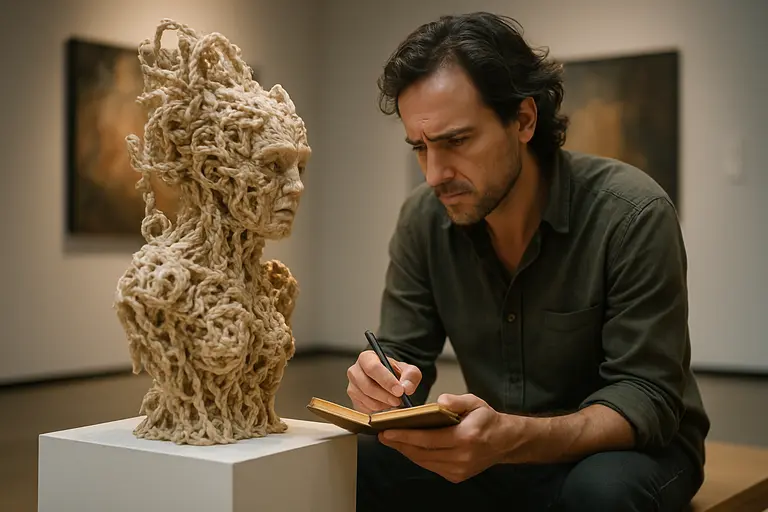
  • Collaborative Art at MOCA and REDCAT in Los Angeles

    Collaborative Art at MOCA and REDCAT in Los Angeles

    Collaborative art is a useful lens for reading the late-2026 programs at MOCA and REDCAT in Los Angeles, not because every project uses the same working method, but because both institutions are presenting exhibitions and events that depend on exchange across disciplines, archives, communities, and forms of knowledge. As of October 10, 2026, the key dates sit close together: REDCAT’s Flesh Witness is already on view, while MOCA’s Julian Charrière: Deep End is scheduled to open on November 15, 2026.

    The two programs are not interchangeable. MOCA’s announced exhibition centers an artist whose work, according to the museum, connects with marine scientists and coral restoration organizations. REDCAT’s exhibition, curated by GYOPO and Amy Kahng, addresses militarism in Asia and the Pacific through archival, memory-based, diasporic, Indigenous, and transpacific practices. A careful comparison shows how collaboration can function as method, subject, and ethical pressure rather than as a simple label.

    Why Collaborative Art Frames These Exhibitions

    Collaborative Art And Environmental Inquiry

    MOCA has announced Julian Charrière: Deep End as the inaugural Eric and Wendy Schmidt Environment and Art Prize exhibition, on view from November 15, 2026, through June 6, 2027, at MOCA Grand Avenue. The museum also identifies it as the French-Swiss artist’s first solo museum show in Los Angeles, a fact stated in MOCA’s exhibition announcement for Julian Charrière: Deep End.

    The research notes for the exhibition point to work with marine scientists and coral restoration organizations. That matters because scientific collaboration can change the role of the artist from solitary image-maker to investigator, editor, witness, and public translator. This does not mean that the exhibition should be reduced to science communication. It suggests that the artwork may be read through the friction between observation, environmental damage, and cultural imagination.

    In this setting, collaborative art does not simply mean several people making one object. It can also describe the chain of consent, expertise, field knowledge, and institutional support that allows an environmental artwork to exist. The cautious reading is to treat the museum’s stated partnerships as part of the work’s frame, while waiting for the exhibition itself to show how those relationships appear in space, image, sound, or material form.

    Archive, Memory, And Shared Witness

    At REDCAT, Flesh Witness runs from September 12 to December 13, 2026. REDCAT describes the group exhibition as curated by GYOPO and Amy Kahng, with artists addressing militarism in Asia and the Pacific through work grounded in archives, memory, and community-engaged methods. The venue’s listing for Flesh Witness places the exhibition within diasporic Asian Pacific Islander, Indigenous, and transpacific conversations.

    That framework shifts the meaning of collaboration toward responsibility. Archival and memory-based practices often involve more than gathering material; they can involve deciding how testimony, absence, family knowledge, and political injury are held in public. The research does not provide a full checklist of works or materials, so any claim about individual pieces would be premature. What can be said is that REDCAT’s framing treats shared memory and collective inquiry as central to the exhibition’s public meaning.

    Dates, Venues, And Program Relationships

    What Is Scheduled As Of October 10, 2026

    The calendar matters because several programs sit within a short period in Los Angeles. On October 10, 2026, REDCAT’s Flesh Witness was already open. MOCA’s Julian Charrière: Deep End had not yet opened and was scheduled for November 15, 2026. That distinction is necessary for temporal accuracy: one exhibition could be visited during that date window, while the other remained forthcoming.

    • September 12 to December 13, 2026: Flesh Witness at REDCAT.
    • October 17 to October 18, 2026: Democracy Sessions: Order and Its Others, presented by REDCAT in partnership with MOCA and Wild Up.
    • October 24 to October 25, 2026: As Ocean People: Symposium, Screenings, and Performance, tied to Flesh Witness and listed as free with RSVP in the research notes.
    • November 15, 2026, to June 6, 2027: Julian Charrière: Deep End at MOCA Grand Avenue.

    These dates show two kinds of institutional rhythm. REDCAT’s programming gathers exhibition, symposium, screenings, performance, music, and new work formats within a dense fall schedule. MOCA’s announced exhibition places environmental art inside a museum presentation with a longer run. The difference is not a hierarchy. It reflects how each institution can stage public attention: REDCAT through concentrated programs and live exchange, MOCA through extended exhibition time.

    Partnership Without Flattening Difference

    The research also identifies Democracy Sessions: Order and Its Others as a music and performance festival presented by REDCAT in partnership with MOCA and Wild Up, taking place on October 17 and October 18, 2026. That connection matters for readers tracking collaboration across institutions, yet it should not be used to merge all programs into one theme. A music-performance festival, a group exhibition on militarism, and an environmental museum exhibition each carry different stakes.

    For arts audiences, the productive question is not whether Los Angeles has a single institutional story. It is how these venues create adjacent spaces for artists, scholars, performers, and publics to test shared methods. Readers following related culture coverage across the same network can also find broader arts and creator-commerce context at Shimply, a related site in the same network.

    How To Read Collaboration Without Overstating It

    Audience members listening during an art symposium in a small theater

    Method, Subject, And Public Accountability

    Collaboration can be a visible method, as in a performance built through multiple bodies and voices. It can also be a subject, as in artworks that study the social relations behind archives, military histories, ecology, or displacement. In the MOCA and REDCAT examples, collaborative art appears to operate across both registers, though the exact balance will depend on the installed works and public programs.

    This distinction matters because arts writing can too quickly turn collaboration into praise. Working with others does not automatically make a project politically clear, ethically sound, or formally strong. The better critical question is more specific: who is invited into the process, what forms of knowledge are acknowledged, what remains unresolved, and how does the institution present those relationships to the public?

    For Deep End, the supported point is that the exhibition is connected to environmental inquiry and scientific partners. For Flesh Witness, the supported point is that the exhibition centers militarism in Asia and the Pacific through artists working with archives, memory, Indigenous knowledge, and community engagement. Those are strong frames, but they do not replace direct encounter with the works.

    Collaborative Art At MOCA And REDCAT

    The late-2026 programs at MOCA and REDCAT give Los Angeles audiences two carefully distinct views of collaborative art. One approaches environmental crisis through an artist’s museum exhibition shaped by scientific and restoration contexts. The other gathers artists and curators around memory, militarism, diaspora, and transpacific histories. Both suggest that shared practice is not a decorative add-on; it is part of how the work asks to be understood.

    The strongest reading, for now, is provisional. Flesh Witness was already on view on October 10, 2026, and Julian Charrière: Deep End was scheduled to open on November 15, 2026. Any fuller assessment should wait for the works, installations, and public programs themselves. What the announced facts already show is a serious institutional interest in art made through exchange: between artists and archives, artists and scientists, artists and communities, and museums and performance spaces.

  • Roy Lichtenstein Exhibition Tests Originality

    Roy Lichtenstein Exhibition Tests Originality

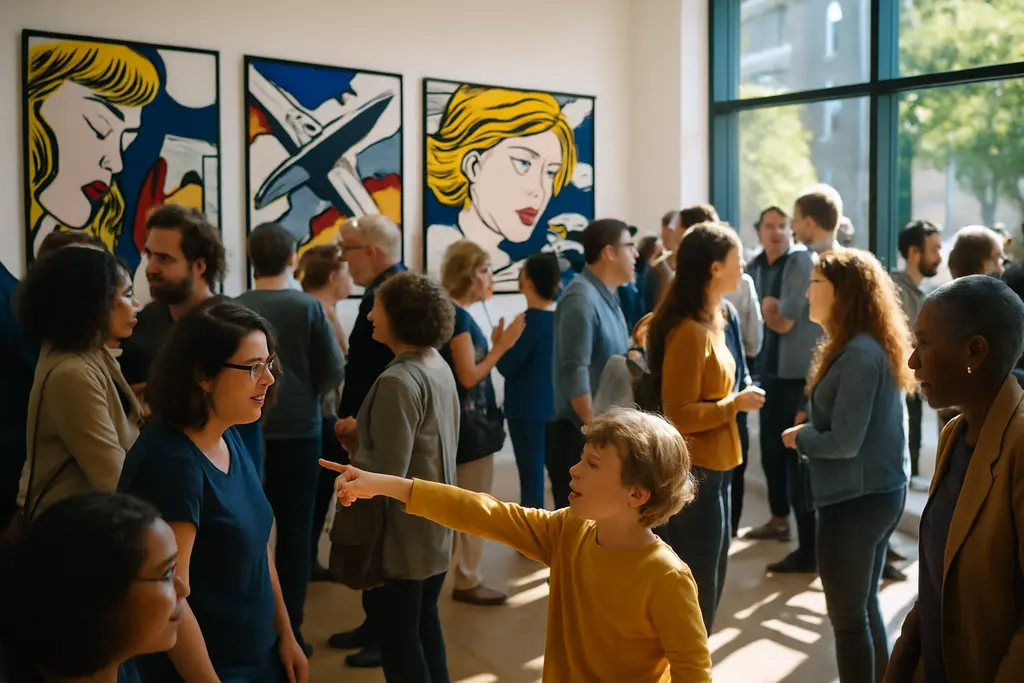
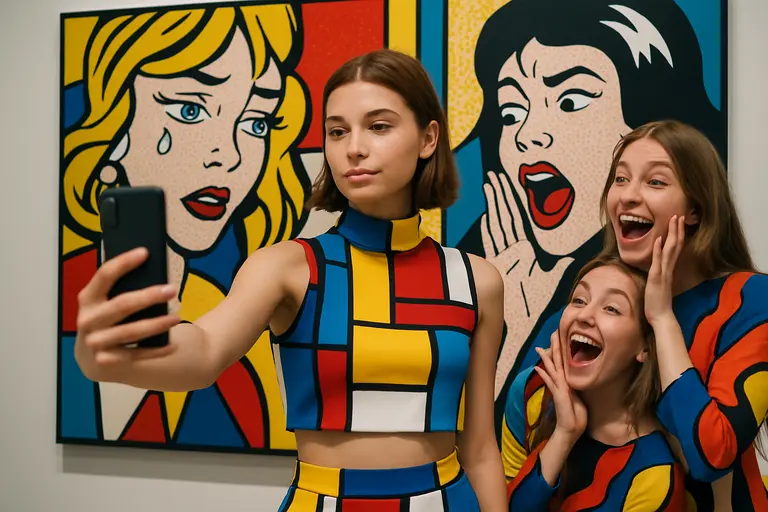
    The Roy Lichtenstein Exhibition Roy Lichtenstein: Like New is scheduled to open to the public at the Whitney Museum of American Art on October 11, 2026, after member preview days from October 8–10, 2026. As of October 6, 2026, it remains an upcoming exhibition, not a completed retrospective. The Whitney states that the show runs through May 10, 2027, and presents Lichtenstein’s work through questions of copying, enlargement, translation, re-circulation, perception, duplication, simulation, and unstable images before digital reproduction Whitney exhibition details.

    That framing is useful because Lichtenstein’s art has long sat near a fault line in twentieth-century visual culture: the line between borrowing and invention, between mass-media source material and museum-scale painting, between the comic panel and the carefully constructed art object. A cautious reading should avoid reducing that debate to praise or dismissal. The exhibition’s own announced premise suggests a more exact question: what happens when an artist repeatedly tests how images change as they move across formats, scales, and contexts?

    Roy Lichtenstein Exhibition And The Question Of Originality

    Why The Roy Lichtenstein Exhibition Starts With Copying

    The central tension of the show is not simply whether Lichtenstein copied images. The Whitney’s stated theme points to a broader inquiry: how images are copied, enlarged, translated, re-circulated, and altered through perception and display. That emphasis matters. It places copying within a chain of visual operations rather than treating it as a single act with a single meaning.

    For viewers, the distinction can change the tone of the gallery experience. A comic-derived image enlarged into a painted field does not function in the same way as its printed source. A brushstroke rendered as a sign of painting is not the same thing as a brushstroke made in expressive haste. Lichtenstein’s Pop idiom repeatedly turns familiar visual codes into objects of study. That does not settle every ethical or aesthetic objection, but it gives the debate firmer ground than a simple claim that the work is either purely original or merely derivative.

    The announced title, Like New, also carries a pointed ambiguity. It suggests restoration, resale, repetition, and altered freshness. The phrase can describe an object that is not new but has been made to appear new. In that sense, the title fits an artist associated with images that seem instantly legible yet become stranger under sustained attention.

    What The Whitney Has Announced

    Dates, Curators, And Public Access

    The Whitney lists Meg Onli, the museum’s Nancy and Fred Poses Curator, as organizer of the exhibition in collaboration with Guest Curator Alex Da Corte, with support from Nakai Falcón and David Crane. The public opening date is October 11, 2026, and the closing date is May 10, 2027. Because the exhibition had not yet opened as of October 6, 2026, claims about visitor response, critical consensus, or installation atmosphere would be premature.

    That caution is not a limitation; it is part of responsible arts coverage. Exhibition announcements can establish dates, organizers, scope, selected works, and curatorial intent. They cannot yet support conclusions about how the show feels in person or whether its argument succeeds in the galleries. Those judgments depend on the installed exhibition, wall texts, sequencing, lighting, spatial relationships, and public reception after opening.

    Scale, Media, And Chronology

    Artsy reports that the show brings together roughly 130 works spanning Lichtenstein’s output from the early 1940s through the 1990s Artsy report. The research material also identifies painting, drawing, collage, prints, sculpture, and film among the formats included. That range matters because a multi-format exhibition can test whether the artist’s inquiry into image systems remained consistent across materials or changed over time.

    Among the works named in the research are Look Mickey from 1961, Girl with Ball from 1961, Masterpiece from 1962, Drowning Girl from 1963, Happy Tears from 1964, Little Big Painting from 1965, Rouen Cathedral, Set III from 1968–69, and Artist’s Studio “The Dance” from 1974. Taken together, those titles indicate that the exhibition is not confined to one famous moment in early Pop. It appears designed to trace a longer pattern of image quotation, art-historical address, and visual translation.

    Why The 1962 Reunion Matters

    A First Pop-Style Exhibition Reassembled

    One of the most concrete claims in the research is that all eight works from Lichtenstein’s first Pop-style exhibition at Leo Castelli Gallery in 1962 are being reunited for the first time. That reunion is more than a checklist milestone. It allows a specific early presentation to be reconsidered as a group, rather than through isolated works dispersed across collections and reproductions.

    The 1962 grouping is especially relevant to debates about originality because it marks a point when Lichtenstein’s Pop vocabulary became publicly legible within a gallery context. Seeing the works together may help viewers compare repeated strategies: the use of commercial visual language, hard-edged graphic systems, and the shift from source image to painted object. The value of the reunion lies in comparison. It can show similarities, differences, and pacing within a body of work often flattened by reproduction.

    Murals And Scale As Critical Evidence

    The research also notes that the exhibition includes re-creations of four murals, including a nearly 96-foot-long version of Greene Street Mural from 1983. That detail widens the originality discussion beyond comic panels and canvas. Murals introduce questions of site, bodily scale, architectural encounter, and recreation. A re-created mural is not the same object as an original site-specific installation, yet it can offer evidence of how Lichtenstein’s imagery behaved when expanded into an environment.

    Here again, certainty should wait for the installed show. The decision to present mural re-creations may clarify how the curators understand scale, repetition, and historical absence. It may also raise productive questions about what museums can responsibly reconstruct and how such reconstructions should be labeled for audiences.

    Image Culture, Fashion, And Creator Boundaries

    Designer workspace with sketches, fabric swatches, and color studies

    Why Visual Borrowing Still Feels Current

    The Roy Lichtenstein Exhibition arrives at a moment when many artists, designers, costume makers, and independent sellers think carefully about references, quotation, and rights clearance. The point is not to collapse museum Pop art into commercial craft or fashion production. The legal, ethical, and market conditions are different. Still, Lichtenstein’s work can provide a useful case study in how recognizable visual languages circulate and acquire new meanings when shifted into another format.

    For those with an interest in theatrical clothing, fantasy styling, and image-led culture, a related site like Fairytale Fashion emphasizes how visual references often traverse through dress, performance, photography, and handmade objects. This movement can be inventive but also demands careful consideration. Responsible creators should be cautious not to assume that a museum context grants permission for commercial reuse of protected characters, living artists’ work, celebrity likenesses, or distinctive contemporary designs.

    Rights Caution For Makers And Sellers

    This is not legal advice, and no single exhibition can answer whether a specific product, costume, print, or design is lawful. The safer cultural point is narrower: originality is not only an art-historical question. It is also a practical concern for creators deciding how to cite, adapt, parody, or distance their work from recognizable sources. Lichtenstein’s art can sharpen that conversation because it makes acts of selection and translation visible.

    For independent sellers, the useful lesson is not to imitate Lichtenstein’s look as a shortcut. It is to study how visual systems communicate: dots, outlines, scale, framing, and the tension between mechanical appearance and handmade execution. Learning from those strategies differs from presenting confusingly similar goods or implying authorization that has not been established.

    What Roy Lichtenstein: Like New Puts At Stake

    The Roy Lichtenstein Exhibition is positioned to revisit an artist whose work remains difficult because it looks familiar before it becomes unsettled. The Whitney’s announced framework places that difficulty at the center. Rather than asking viewers to choose between originality and copying as fixed opposites, the exhibition appears to ask how images survive by changing form.

    That question suits a retrospective spanning early work through the 1990s, roughly 130 works, multiple media, a 1962 reunion, and mural re-creations. The strongest assessment, though, will have to follow the public opening on October 11, 2026. Until then, the evidence supports measured anticipation: Roy Lichtenstein: Like New has the ingredients for a serious reconsideration of Pop art’s relationship to image culture, but its full argument can only be judged once the works are seen together in the Whitney’s galleries.

  • Daisy Chain Fields And The New Woodstock Echo

    Daisy Chain Fields And The New Woodstock Echo

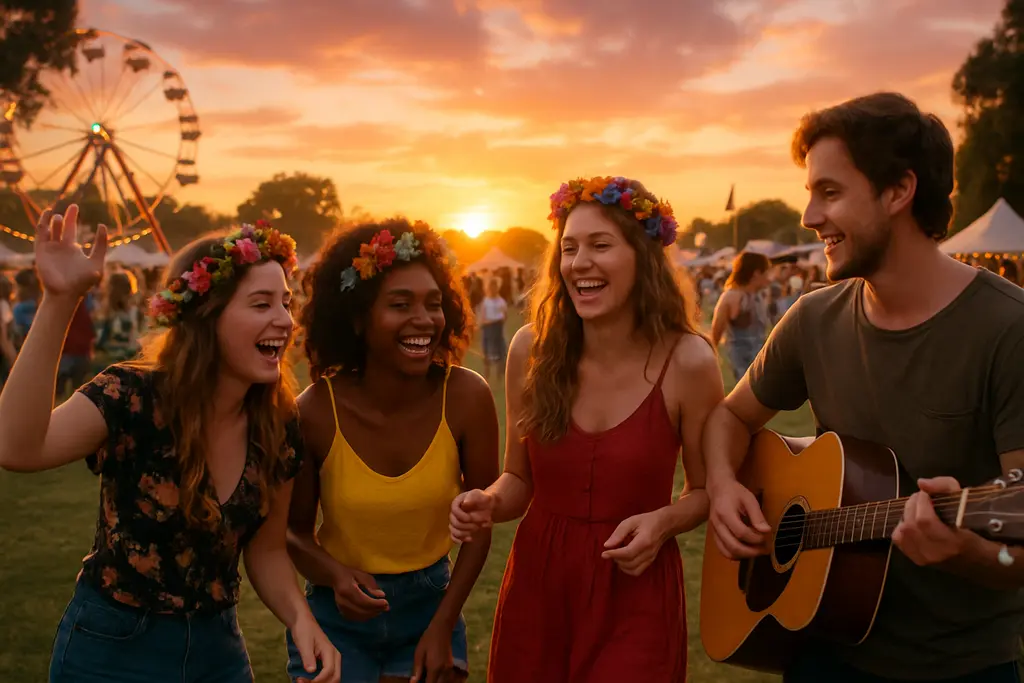
    Daisy Chain Fields took place on August 29, 2026, at Great Park Live in Irvine, California, and it now sits in recent festival memory as a compact case study in how Woodstock-era ideals are being quoted, revised, and tested by a new generation. Founded by Olivia Rodrigo as a women-led single-day music and art festival, the event was announced with an all-women lineup and a stated emphasis on music, art, and social purpose through the official festival announcement.

    The Woodstock comparison should be handled with care. The 1969 festival has become a cultural shorthand for youth gathering, countercultural art, political feeling, and communal possibility, but shorthand can flatten what actually happened at any festival site. The stronger reading is not that Irvine recreated Woodstock. It is that the event used some familiar materials of festival idealism: intergenerational music, public slogans, folk and punk memory, charity, and a temporary crowd asked to imagine itself as a community.

    Why Daisy Chain Fields Looked Back To Woodstock

    The clearest connection to Woodstock-era memory came through the festival’s use of music as public expression rather than entertainment alone. That distinction matters. A lineup can be all-women and still operate as a standard commercial event; a festival can include political signs and still reduce activism to decoration. The evidence from August 29 points to an event trying to connect both forms, even as practical concerns on the ground complicated that aim.

    Daisy Chain Fields And The Language Of Collective Idealism

    Reports from the festival described roughly 45,000 concertgoers, a major attendance figure for a first edition, along with visual and logistical details that shaped the day’s public meaning, according to CPR’s festival report. The scale matters because a Woodstock reference gains force only when many people are gathered in a shared physical space. Posters, walkways, staging, and overheard chants do not function the same way online as they do when bodies move through heat, lines, sound bleed, and collective attention.

    The festival reportedly drew from 1960s and 1970s counterculture and women’s liberation imagery. That influence appeared in spaces such as a “Wish Tree,” where attendees left messages, and in quoted language from figures including Angela Davis, Audre Lorde, and Maya Angelou painted across walkways. These choices placed text and image in the path of the crowd. They also asked a question that arts organizers know well: does public art deepen a gathering, or does it become a scenic background? At Irvine, the answer seems mixed but serious. The imagery was not incidental to the event’s identity.

    From Lilith Fair To A New Festival Frame

    Festival organizers and artists named Lilith Fair as an influence, which is a more precise precedent than Woodstock in some ways. Lilith Fair’s 1990s model centered women performers and audiences within a touring structure; the Irvine event condensed that logic into one day and paired it with a Gen Z pop headliner whose audience includes many young women. The Woodstock echo, then, came less through exact form and more through the belief that live music could host political feeling, artistic signs, and a crowd-based ethic.

    That distinction helps avoid nostalgia. The festival did not simply borrow flower-power symbols and hope the association would carry the day. Its strongest claim came from the way it linked women-led performance with public messaging and philanthropic commitments. At the same time, the ticketed setting, VIP and pit viewing options, and reported access complaints remind us that countercultural references inside a large commercial event always carry tension.

    Music As Intergenerational Argument

    The lineup placed Rodrigo alongside older and peer-era artists, including Stevie Nicks, Sarah McLachlan, Bikini Kill, The Breeders, Mitski, Doechii, and others. That pairing made the day feel less like a single-genre showcase than a conversation across forms of women-led music. Rock, punk, pop, singer-songwriter traditions, and rap-inflected performance all held space within the same event frame.

    Two Stages, Two Musical Histories

    The reported stage division gave the program a readable structure. The Marigold stage leaned toward rock and punk, with acts such as Bikini Kill and The Breeders associated with that side of the day. The Dandelion stage highlighted pop-influenced and singer-songwriter acts. A two-stage layout can often split audiences by taste; here, it also marked different strands of feminist music memory. Punk’s refusal, folk-pop’s confession, alternative rock’s abrasion, and contemporary pop’s arena-scale emotion all became parts of the same argument.

    That intergenerational programming is where the Woodstock comparison gains its strongest artistic footing. Woodstock is often remembered as a meeting point for sound, politics, fashion, and youth identity. Daisy Chain Fields used a different canon, but it also treated music as a carrier of public values. The appearance of Alanis Morissette during Rodrigo’s finale, as reported in the research notes, fit that structure by placing 1990s confessional rock beside Rodrigo’s contemporary pop-punk lineage.

    Headlining As Community Framing

    Rodrigo’s role as founder and headliner gave the event a clear center, but the all-women or women-led lineup kept that center from becoming the only story. For community organizers, this is a key point: a famous founder can draw attention, while a broad bill can redistribute meaning. The risk is that the founder’s celebrity absorbs the entire event. The opportunity is that celebrity becomes a doorway into artists, causes, and histories that some attendees may not have known deeply before.

    The stronger community outcome depends on what happens after the day ends. Did attendees seek out the older artists? Did younger fans understand the references to women’s liberation and feminist music history? Public data in the research does not answer those questions, so they should remain open. What can be said is that the program gave audiences many points of entry into those histories.

    Art, Protest, And Community Care

    For an arts audience, the most telling feature may have been the festival’s use of visual culture. Protest art at live events often works through repetition: slogans on fabric, handwriting on temporary structures, quoted language on paths, and installations that invite participation. These forms are rarely museum objects, but they shape how people remember a day. They can also create a shared vocabulary among strangers.

    At this event, the “Wish Tree” and walkway quotations suggested a participatory ethic. Visitors were not only receiving a stage program; they moved through a designed field of messages. Some of those messages, including “Free Palestine,” placed the event inside urgent political debate. That choice made the festival’s politics more visible and also more contested. For a closer reading of how those visual choices worked on site, our related Daisy Chain Fields review considers art, protest, and care in more detail.

    The event’s philanthropic claim was also part of its community framing. Research notes state that US$20 million was pledged for distribution among 10 nonprofit organizations working on issues affecting women and girls globally. Because pledged giving can involve timing, administration, and distribution steps after an announcement, it is best described cautiously as a pledge rather than a completed social outcome unless later documentation confirms full disbursement.

    That caution does not diminish the symbolic force of the announcement. In a live-event setting, philanthropy can signal that the gathering is not meant to end at the gate. Yet the practical measure is follow-through: which organizations received funds, when they received them, and how communities described the impact. Those questions require later reporting and should not be assumed from stage language alone.

    The Access Problem Behind The Ideal

    Concertgoers waiting in a sunny line near water and food tents

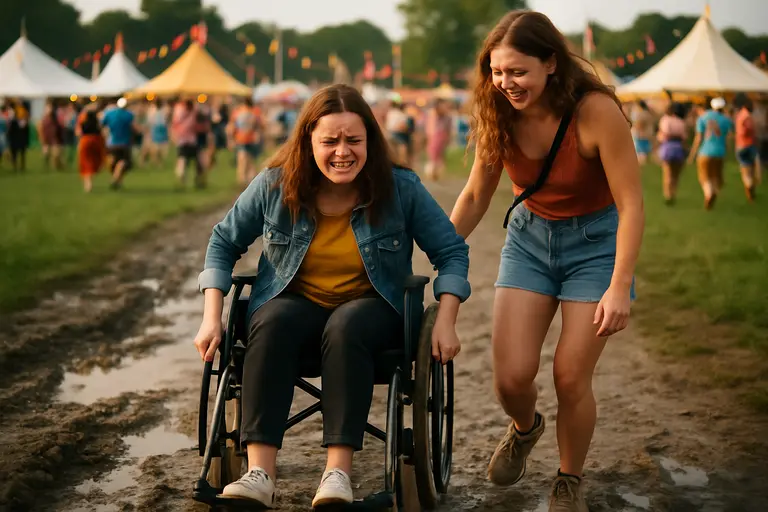
    Any festival invoking communal care has to be read against its conditions of access. Reports noted heat around 94°F, shortages of shade, long lines for food and water, and complaints about ADA parking and shuttles. Those details are not side notes. They affect who can participate safely and who feels included in the shared space.

    Heat, Lines, And The Ethics Of Gathering

    Outdoor festivals in late August in Southern California carry foreseeable heat risks. A crowd of tens of thousands needs shade, water, food flow, rest areas, and clear mobility support. When those systems strain, the aesthetic language of care meets a material test. Painted walkways and social justice slogans may set a tone, but water access and ADA transport determine whether that tone is felt as real by many attendees.

    This is not a reason to dismiss the festival’s artistic or political ambitions. It is a reason to evaluate them with adult standards. Community is not only declared by the lineup or the charitable pledge; it is built through site planning, staff training, queue design, mobility access, and heat mitigation. A festival can be culturally meaningful and operationally imperfect at the same time.

    Cost And Belonging

    Ticket prices were reported at around US$250 for general admission, with higher costs for VIP or pit viewing. That price point places limits on who could be physically present, even before travel, food, lodging, or accessibility needs are considered. Woodstock mythology often imagines open fields and mass youth participation, but contemporary large-scale events operate within ticketing systems and production budgets that can narrow access.

    For organizers hoping to invoke egalitarian ideals, price is not a minor design choice. It shapes the crowd and the claims a festival can credibly make about community. Future versions, if they occur, would benefit from transparent access strategies, such as clearly described low-cost options, transit planning, shaded rest zones, and detailed ADA communication. That is not legal advice or a production prescription; it is a cultural reading of how values become visible through logistics.

    What Daisy Chain Fields Left Behind

    Daisy Chain Fields left behind a complicated but valuable record: a women-led festival founded by a major pop artist, staged on August 29, 2026, with intergenerational performers, protest-inflected visual culture, and a philanthropic pledge tied to women and girls. It also left behind criticism about heat, lines, and access. Both parts belong in the same account.

    The Woodstock spirit, if the phrase is useful, was not revived as a replica. It appeared as an argument over what a festival can still do: gather strangers, stage music as public feeling, make art part of the grounds, and attach celebration to social claims. The test is whether those ideals can survive the pressures of scale, price, weather, and celebrity. For readers interested in exploring related conversations within the music scene, Robsonic offers insights into how music scenes are not only judged by sound but also by the social spaces they create.

    The most fair assessment is neither romantic nor dismissive. The event showed that a large pop festival can borrow from older protest traditions while centering women-led performance in a way that felt legible to a 2026 audience. It also showed that public ideals require public infrastructure. Daisy Chain Fields will be remembered best if its artistic courage is matched, in any later edition, by stronger care for the people gathered in the field.

  • Geometries Exhibition at Studio Museum Harlem

    Geometries Exhibition at Studio Museum Harlem

    The Geometries Exhibition at the Studio Museum in Harlem is no longer an upcoming listing; it opened on September 10, 2026, and remains on view through January 31, 2027. That timing matters because the show now sits inside the lived rhythm of Harlem’s fall arts calendar rather than in advance publicity. Organized by Thelma Golden, the museum’s Ford Foundation Director and Chief Curator, with Curatorial Assistant Simon Ghebreyesus, the exhibition asks how lines, shapes, grids, and spatial systems can carry questions of identity, feeling, tradition, and art history.

    For community organizers, artists, educators, and gallery-goers, the exhibition offers a focused case study in how abstraction can be socially and historically charged without losing formal force. Geometry is often discussed as if it belongs to neutrality, order, or pure visual structure. The Studio Museum’s framing complicates that assumption by centering Black artists who use geometry to test modernism, extend African and diasporic references, and make room for spiritual, emotional, and bodily presence.

    Why Geometries Exhibition Matters Now

    The Geometries Exhibition As Inquiry

    The Geometries Exhibition is grounded in an old discipline: the mathematical study of forms, relations, and space. Yet the show treats geometry less as a fixed language than as a field of artistic inquiry. In that sense, the exhibition joins a longer argument in modern and contemporary art: abstraction is never automatically detached from the world. A grid can suggest architecture, memory, constraint, mapping, migration, discipline, rupture, or prayer, depending on the artist’s method and context.

    The museum’s fall 2026 season announcement places the exhibition within a larger institutional moment: the close of the Studio Museum’s inaugural year in its new 82,000-square-foot building and a program that draws on a permanent collection representing works by more than 800 artists, according to the museum’s fall 2026 season release. That setting gives the show weight beyond a single gallery presentation. It also connects the exhibition to the museum’s mission of centering artists of African descent locally, nationally, and internationally.

    Dates, Place, And Institutional Context

    The exhibition is presented at the Studio Museum in Harlem, 144 West 125th Street, in New York. Its dates overlap with other fall and winter programming at the museum, including Dreams of This Future: The Collection of Peggy Cooper Cafritz, on view from August 19, 2026, to February 28, 2027, and Kapwani Kiwanga: BLEED, on view through April 1, 2027. This overlap is useful for interpretation because it places geometric abstraction near collection-based, conceptual, and material inquiries rather than isolating it as a closed art-historical category.

    Across New York cultural institutions, fall 2026 has also brought attention to how museums frame place, inheritance, and community voice. For readers comparing institutional approaches, the Museum of the City of New York’s Halumii Ktapihna preview offers a related but distinct example, with Lenape artists and homelands at its center. The comparison should be made carefully: these are different communities, histories, and curatorial premises. Still, both show how cultural institutions can place art in dialogue with living identity rather than treating it as background decoration.

    How Form Carries Identity And Tradition

    Against The Myth Of Pure Abstraction

    One of the most significant ideas in the Studio Museum’s framing is that the exhibition interrogates Western geometric abstraction and its claim to purity. That is a cautious but meaningful claim. It does not require viewers to reject formal analysis; instead, it asks them to notice what formal analysis can miss. A line may be compositional, but it may also mark separation. A repeated pattern may be visual rhythm, but it may also invoke labor, textile traditions, architecture, coded memory, or ritual order.

    The Geometries Exhibition includes artists whose practices have very different relationships to abstraction. The research notes identify Julie Mehretu, Alma Thomas, Jack Whitten, William T. Williams, Loretta Pettway Bennett, McArthur Binion, Sonia Boyce, Torkwase Dyson, and Rico Gatson among many others. That range suggests that the show is not making a single argument about what geometry means. It appears to be assembling multiple arguments: geometry as structure, geometry as pressure, geometry as ornament, geometry as history, and geometry as a way to push against restrictive definitions of modernism.

    African And Diasporic References

    The exhibition’s stated attention to African artistic traditions and spiritual forms is especially important. In many museum settings, geometry has been presented through a narrow European and American modernist story. The Studio Museum’s approach, as described in the research, places Black artistic production at the center of the question. That shift affects how viewers might read repetition, symmetry, fragmentation, scale, and pattern.

    There is a community dimension here as well. Harlem is not a neutral backdrop for the Studio Museum. The museum’s public identity has long been tied to artists of African descent and to a neighborhood where art, politics, education, and daily life meet. For readers who follow cultural writing across related arts and community sites, the website Robsonic presents itself as part of the same network dedicated to nurturing creative life. The point is not to flatten different art scenes into one story, but to keep asking how exhibitions are received by the people and places around them.

    Reading The Artist List With Care

    Museum visitor pausing before a large abstract painting with layered forms

    Why A Broad Roster Matters

    The artist list identified in the research points to a wide curatorial frame. Alma Thomas, for instance, is often discussed through color, rhythm, and abstraction; Jack Whitten through process, material, and experimental surfaces; Julie Mehretu through layered mapping, architecture, and dense spatial movement. Those brief associations are not substitutes for the works themselves, but they indicate why geometry can function as a shared question rather than a shared style.

    That distinction matters. Group exhibitions can sometimes encourage viewers to look for sameness. A stronger reading asks what tensions appear between works. Does one artist use geometry to stabilize the picture plane while another uses it to fracture space? Does pattern invite contemplation in one work and unease in another? Does a grid behave like a modernist device, a memory system, an architectural plan, or a social diagram? The Geometries Exhibition seems designed to reward those slower comparisons.

    Careful Claims About Influence

    Because the exhibition brings together artists from different generations and practices, influence should not be overstated. It would be too simple to say that each artist is responding to the same tradition in the same way. The safer and more useful claim is that the exhibition gathers works that use geometric strategies to ask related questions about form, identity, tradition, and modernism.

    That caution also respects the artists. No artist should be reduced to an example of a theme, even in a tightly organized show. The curatorial premise can open a door, but each work still needs to be met on its own terms: scale, material, date, placement, surface, and visual pressure all shape meaning. A visitor who starts with the theme and then returns to the object may come away with a more grounded experience than one who treats the wall text as the full argument.

    • Dates: September 10, 2026, through January 31, 2027.
    • Venue: Studio Museum in Harlem, 144 West 125th Street, New York.
    • Curators: Thelma Golden and Simon Ghebreyesus.
    • Central frame: geometry as artistic inquiry, not only as visual order.

    Geometries Exhibition At Studio Museum Harlem

    What The Show Adds To Harlem’s Fall Season

    The Geometries Exhibition adds an intellectually demanding but accessible entry point into the Studio Museum’s fall 2026 program. Its subject may sound formal at first, yet the exhibition’s stated concerns are deeply human: identity, emotion, tradition, spiritual form, figuration, and the limits of inherited art-historical categories. That combination makes it especially useful for educators, artists, and community groups interested in how abstraction can speak without becoming didactic.

    As of September 28, 2026, the exhibition is ongoing, so any assessment remains provisional. The strongest reading at this point is that the show asks viewers to reconsider a familiar art term. Geometry, in this context, is not merely a matter of shapes arranged well. It is a way to think about relation, inheritance, structure, pressure, and possibility. For a museum centered on artists of African descent, that is not a side question. It is part of how art history gets revised in public, one room and one encounter at a time.

  • Summer of Moomin: NYBG Schedule Recap 2026

    Summer of Moomin: NYBG Schedule Recap 2026

    Summer of Moomin at the New York Botanical Garden is no longer an upcoming schedule item. As of September 15, 2026, the display had concluded, with its published run ending on September 13, 2026. That timing matters because coverage of family programs, artist-centered exhibitions, and character-based garden events can easily drift into present-tense promotion after the doors have closed. A careful recap is more useful now: what happened, when it happened, and how the event framed Tove Jansson’s work for a garden audience.

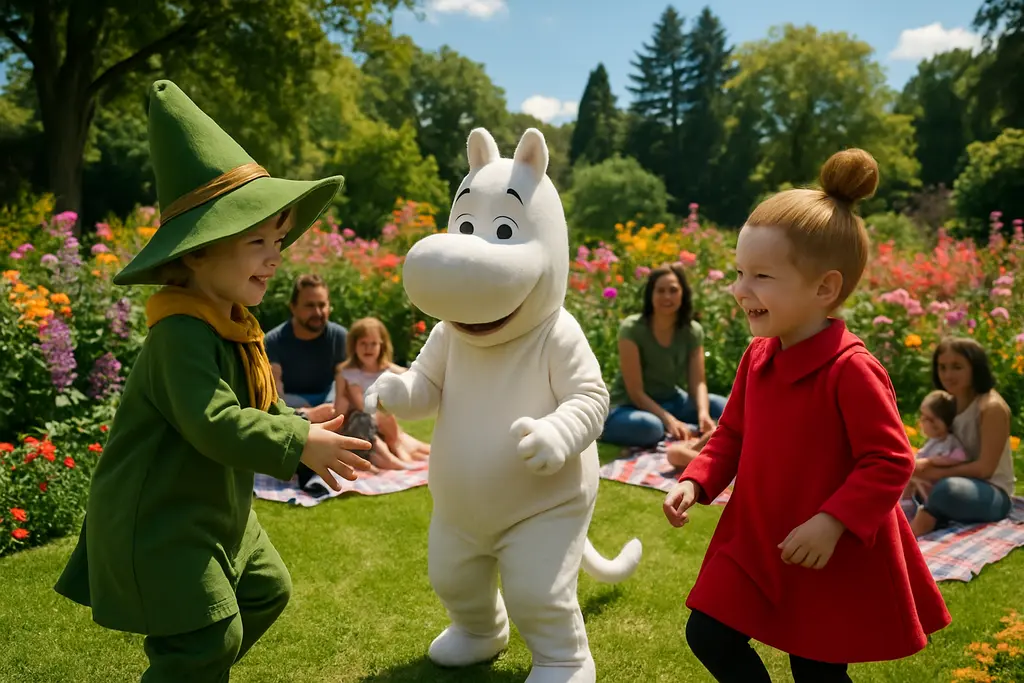
    The display ran at the Everett Children’s Adventure Garden from May 23, 2026, through September 13, 2026, according to the New York Botanical Garden’s official event page. Its central setting was a Moominvalley-inspired environment with a clue-based quest, hands-on nature crafts, character photo opportunities, quotations, interactive elements, plants and flowers, and themed installations. The public-facing structure blended children’s garden interpretation with literary illustration, placing Jansson’s nature-driven imagination inside an outdoor learning site rather than a conventional gallery room.

    Summer of Moomin Schedule, Recast as a Recap

    Summer of Moomin Dates And Status

    The core calendar was straightforward: the display opened on May 23, 2026, and closed on September 13, 2026. That end date also hosted the principal closing-day program, Moomin Fest, which took place from 1:00 p.m. to 5:00 p.m. at Daffodil Hill and Ross Hall. Because September 13, 2026, has already passed, descriptions of that program should be read as historical rather than as a prompt to attend.

    Moomin Fest gathered several timed and drop-in activities into a single afternoon. The schedule included drop-in cartoon and nature illustration sessions at 1:15, 2:15, 3:15, and 4:15 p.m.; naturalist guided walks at 2, 2:30, 3, and 4 p.m.; an herbarium specimen workshop; a meet-and-greet photo opportunity with Moomintroll; and craft and nature-based games. The range suggests that NYBG treated the closing event not only as character programming but also as a bridge between drawing, observation, plant study, and family participation.

    Passed Weekend Programs

    A separate special program, Moomin’s Day Weekend, occurred on August 8 and 9, 2026, from 12:00 to 5:30 p.m. at the Edible Academy. A contemporary events preview reported a ticket-pricing snapshot for that weekend: children ages 2–12 were listed at $17, students and seniors at $35, and adults at $39, as noted by This Week in New York. Those figures should be treated as historical pricing for that program, not as current admission guidance.

    How Tove Jansson’s Garden Setting Worked

    Nature, Drawing, And Character Encounter

    Tove Jansson, who lived from 1914 to 2001, is identified in the research materials as the creator of the Moomins, with a career spanning nearly seven decades as an author, illustrator, and painter. The NYBG presentation emphasized her connection to nature, which made the Everett Children’s Adventure Garden an apt setting. A botanical garden can make the ecological side of an illustrated world tangible: paths, flowers, sensory cues, and small acts of observation allow visitors to encounter an invented valley through real plant life.

    That interpretive choice also shaped the tone of the display. Instead of treating the Moomins only as recognizable characters, the garden program appears to have linked them to the habits behind visual storytelling: looking closely, sketching, tracing clues, and reading environments. The cartoon and nature illustration sessions at Moomin Fest are especially telling. They joined image-making to outdoor study, placing drawing in conversation with specimens, guided walks, and hands-on craft.

    What The Event Calendar Shows

    From Display Run To Festival Day

    The calendar gives a clear example of how a cultural institution can pace a character-based exhibition across several months. The long display period allowed repeat family visits and seasonal discovery, while the special weekend in August and the September festival added date-specific reasons to return. This format is familiar across public gardens and museums: the environment carries the daily experience, and scheduled programs add concentrated moments of performance, making, or guided interpretation.

    • May 23, 2026: display opened at the Everett Children’s Adventure Garden.
    • August 8–9, 2026: Moomin’s Day Weekend took place at the Edible Academy.
    • September 13, 2026: Moomin Fest ran from 1:00 p.m. to 5:00 p.m.
    • September 13, 2026: the display closed at NYBG.

    The supplied research also identifies other NYBG exhibitions scheduled after the Jansson display: Día de los Muertos Trail from October 3 to November 2, 2026; Holiday Train Show® from November 14, 2026, to January 10, 2027; and a KAWS garden-wide installation from May 22 to October 24, 2027. Those listings sit beyond the closed Moomin program and should be checked against NYBG’s own calendar before anyone makes plans, since schedules and admission details can change.

    Creator Culture And Rights-Aware Fan Making

    Handmade costume accessories and sketchbooks arranged on a craft table

    Costume, Illustration, And Careful Attribution

    A display like this naturally touches costume culture, handmade gifting, and fan creativity. Character photo moments, nature crafts, and illustration sessions can inspire visitors to draw, dress up, or make objects at home. Cultural enthusiasm, though, benefits from careful attribution. Jansson’s authorship should remain visible, and creators selling goods inspired by well-known characters should avoid assuming that public affection equals commercial permission.

    This is not legal advice, and the available research here does not establish licensing terms for individual sellers or makers. A cautious creator-commerce stance is simpler: distinguish personal tribute from commercial use, avoid implying official endorsement, and seek rights-clearance information from appropriate owners or platforms before selling character-based work. Readers interested in adjacent costume and fantasy-fashion discussion can also follow fantasy fashion coverage within the same network, where aesthetic influence can be discussed without erasing artists’ rights.

    Summer of Moomin After The Final Weekend

    Summer of Moomin now belongs to NYBG’s 2026 event record rather than its forward calendar. Its strongest cultural value, based on the published schedule, was the pairing of Jansson’s illustrated world with botanical learning: quests, plants, guided walks, drawing sessions, and family craft all pointed toward close attention to nature. For an audience of children and caregivers, that combination likely mattered more than spectacle alone. It invited visitors to read a garden as a story space, and to read a story world through plants, weather, paths, and observation.

    The evidence available supports a modest assessment. NYBG presented a time-limited Moominvalley-inspired display from May 23 through September 13, 2026, and closed it with a programmed festival day. It honored Jansson’s work as an author, illustrator, and painter, while placing nature at the center of the visitor experience. Any future return of the concept is not confirmed in the provided research, so the responsible record is retrospective: dated, specific, and respectful of the artist whose imagination shaped the event.

  • Chicago Exhibition Week: 75 Arts Spaces In Focus

    Chicago Exhibition Week: 75 Arts Spaces In Focus

    Chicago Exhibition Week opened on September 14, 2026, as a seven-day arts program running through September 20, 2026. Its stated scale—75 participating spaces, including 44 commercial galleries—makes it a citywide organizing effort as much as an exhibition calendar, according to the official program page. The most useful way to read the week is not as a single fair with one center, but as a set of linked invitations across museums, galleries, cultural institutions, workshops, performances, talks, food and drink programs, and neighborhood art spaces.

    That matters for artists and audiences alike. A dispersed model can bring attention to smaller venues while also using major institutions as anchors. It can help visitors connect an exhibition opening with a public program, a dance performance, or a hands-on session. Still, scale alone does not prove access, equity, or cultural depth. Those claims need evidence beyond numbers. What the published schedule does show is a broad civic effort to place contemporary art, collecting, performance, and maker practice in public conversation across one week.

    What Chicago Exhibition Week Covers

    Chicago Exhibition Week By The Numbers

    Chicago Exhibition Week is scheduled for September 14–20, 2026. The research supplied for the event identifies 75 participating spaces, with 44 commercial galleries included in that count. The prior edition in 2025 drew about 10,000 attendees over a long-weekend format. The 2026 program has been extended to a full seven days, which changes the rhythm of participation. Rather than concentrating attention into a compressed opening rush, the longer schedule gives institutions and smaller spaces more room to place talks, receptions, performances, and workshops on different days.

    Numbers can be persuasive, but they need context. A 75-space program does not mean every visitor will experience the same version of the event. Someone focused on museum exhibitions may build a very different path from someone seeking artist-run programs, commercial gallery openings, printmaking workshops, or performance. For community organizers, that variety is both a strength and a challenge. It creates many points of entry, yet it also asks audiences to make choices based on time, location, cost, accessibility, and personal interest.

    From Long Weekend To Seven Days

    The move from a long-weekend format to a full week is one of the clearest structural changes in 2026. A longer calendar can reduce pressure on any single day and may allow more thoughtful pacing for institutions and audiences. It also gives artists and presenters more chances to meet people outside a standard opening-night crowd. That said, the public record available here does not establish how participation is distributed by neighborhood, venue size, or artist background. Those are the kinds of questions worth asking after the week closes on September 20, 2026.

    Programs Across Galleries Museums And Workshops

    Exhibitions And Performances Named In The Program

    The listed highlights span several types of art presentation. Featured exhibitions and institutional programs include Jill Mulleady: The Passenger at the Art Institute of Chicago, Slow Dance at the Museum of Contemporary Art Chicago, Karimah Ashadu: Tendered at the Renaissance Society, a Brendan Fernandes public dance program at the Driehaus Museum, and Harris Theater’s Dancing with Bob, a performance celebrating the Rauschenberg-Cunningham collaborations.

    Several time-specific items help show how the week mixes formal exhibition viewing with social and participatory formats. The CXW Launch Party is listed for Tuesday, September 15, 2026, from 9–11 pm at the Museum of Contemporary Art Chicago. Magic Hour Gallery’s inaugural exhibition is listed for Thursday, September 17, 2026, from 6–10 pm in an SAIC alumni event notice. A printmaking workshop at UIC Gallery 400 is scheduled for Saturday, September 19, 2026, from 12:30–4:30 pm.

    Workshops As Cultural Access Points

    Workshops deserve special attention because they shift audiences from looking to making. A printmaking session, for example, can help visitors understand process, repetition, material choice, and editioning in ways that a finished work alone may not. That does not make the workshop more valuable than the exhibition; it makes it a different kind of learning space. In community arts practice, these settings often help people who feel uncertain in formal galleries build confidence through touch, demonstration, and conversation.

    The program also includes exhibition openings, closing receptions, gallery walks and tours, auctions, performances, artist talks, and food and drink events. That range suggests an art week shaped around both art objects and social connection. For artists, the benefits may include visibility and direct audience contact. For audiences, the benefit is exposure to several kinds of art labor: curating, installing, publishing, performing, teaching, collecting, and hosting.

    • September 15, 2026: CXW Launch Party at the Museum of Contemporary Art Chicago, 9–11 pm.
    • September 17, 2026: Magic Hour Gallery inaugural exhibition opening, 6–10 pm.
    • September 19, 2026: Printmaking Workshop at UIC Gallery 400, 12:30–4:30 pm.
    • September 20, 2026: Free admission options at several institutions with a completed CXW Map.

    How The Dates Shape Access And Attention

    Free Admission And The CXW Map

    Because Chicago Exhibition Week began on September 14, 2026, the access details should be read as active during the September 14–20 window, not as a recap. One practical feature is the Sunday, September 20, 2026 free admission option tied to a completed CXW Map. The research identifies participating institutions for that offer as including the Society for Contemporary Art, the Art Institute of Chicago, the Driehaus Museum, and MCA Chicago.

    Free admission can lower one barrier, though it does not remove all barriers. Transportation time, work schedules, disability access, child care, and comfort in institutional spaces all affect whether a public invitation becomes real access. A careful assessment of the week should ask not only how many doors are open, but which communities can use those openings without undue cost or pressure.

    Longer Exhibitions Beyond The Week

    Several exhibitions associated with the schedule extend beyond September 20, 2026. 82 Nights Only at Gertie Hub runs from September 16 through December 13, 2026. Abigail Lucien: Blood of the Earth at the Art Institute runs from June 18, 2026, through January 25, 2027. A Plot of One’s Own 一亩三分地 at the Chinese American Museum of Chicago opens on September 19, 2026, and runs through August 31, 2027.

    Those longer dates are significant because they prevent the week from being judged only by who can appear during a single stretch in mid-September. They also give educators, families, and cultural groups room to return after the opening attention fades. For a citywide arts program, the afterlife of an exhibition can matter as much as the opening crowd.

    Why The 70 Plus Format Matters For Artists

    Small gallery reception with artworks on white walls and guests talking

    Visibility Without Flattening Difference

    A 70-plus venue structure can create a shared public frame without requiring each space to behave the same way. Museums, commercial galleries, cultural institutions, workshops, and artist-focused hubs each work with different resources and responsibilities. Treating them as interchangeable would flatten the very differences that make the week useful. A museum exhibition, an artist talk, a dance program, and a printmaking workshop ask audiences to pay attention in different ways.

    The presence of 44 commercial galleries also raises questions about the relationship between public culture and the art market. Commercial galleries help sustain artists through sales, representation, and collector networks, but market attention is not the same as community value. The strongest coverage should keep those categories distinct. A well-attended opening, a meaningful workshop, a serious institutional exhibition, and a successful sale may overlap, but they are not identical measures of artistic impact.

    Rights And Respect In Event Coverage

    Arts coverage around a citywide program should also be cautious with images, artist statements, and likeness. Sharing installation photos, quoting artists, or promoting works for sale requires attention to permissions and accurate credit. This is not legal advice, but it is a basic editorial ethic: do not imply a license, endorsement, or trend without support. For readers comparing cultural events with creator commerce and handmade communities, the related site Shimply offers a parallel space in the same network where making, selling, and audience trust are also central concerns.

    Respectful coverage should name artists and venues accurately, avoid invented quotes, and separate observation from proof. If a program seems well attended, say what was observed rather than claiming a citywide movement. If a workshop feels welcoming, explain the conditions that created that feeling. Cultural writing gains strength when it resists easy exaggeration.

    Chicago Exhibition Week And Community Life

    A Measured Read On The 2026 Program

    The strongest reading of Chicago Exhibition Week on its opening date is that it creates a shared civic frame for art across September 14–20, 2026. The schedule connects major institutions with galleries, workshops, public programs, and social events. It includes 75 participating spaces and a stated mix of openings, closings, tours, performances, artist talks, auctions, food and drink events, and hands-on activity.

    What remains uncertain, at least from the available research, is how participation will be distributed across the city by the close of September 20, 2026. Attendance counts, neighborhood participation, artist feedback, and visitor experience will all matter in judging the week after it ends. For now, the evidence supports a cautious but engaged view: the 2026 program gives Chicago audiences many ways to meet contemporary art, and it gives artists and organizers a concentrated period for public contact. The task for critics, visitors, and community workers is to meet that scale with careful attention rather than easy applause.

  • Musikfest 2026 Attendance And Lineup Analysis

    Musikfest 2026 Attendance And Lineup Analysis

    Musikfest 2026 ended with one of the strongest attendance results in the Bethlehem festival’s documented record. The event ran from July 31 through August 9, 2026, after a preview night on July 30, and ArtsQuest reported 1,260,630 attendees across the full run, making it the third-highest attended edition in the festival’s 43-year history, according to ArtsQuest’s recap. That figure deserves attention, but it also calls for careful reading: a large crowd total is not a single story. It reflects programming breadth, ticketed headliner appeal, free-stage access, weekday activity, weather conditions, visitor travel, and digital engagement.

    As an events case study, the festival is useful because its scale was distributed across many entry points. The reported structure included more than 400 artists, more than 500 performances, and 16 stages, with 15 stages offering free admission and the Wind Creek Steel Stage at PNC Plaza operating as the ticketed headliner venue. That model allowed the event to function both as a citywide cultural gathering and as a marketable concert series with national names.

    What Musikfest 2026 Attendance Shows

    Musikfest 2026 By The Numbers

    The attendance total of 1,260,630 was the headline statistic, but the internal pattern matters. ArtsQuest reported that Monday attendance was up 6.2% compared with the same day in 2025, while Tuesday exceeded the prior Musikfest Tuesday attendance record by 15.06%. Those weekday gains are notable because festivals often lean on weekend concentration. A strong Monday or Tuesday suggests that the program maintained public interest beyond peak leisure days.

    The available figures also point to a broad attendance base rather than a single sold-out headliner doing all the work. The Steel Stage sold 52,890 tickets across its headliner shows. That number was meaningful, especially with sold-out concerts featuring Yellowcard & Taking Back Sunday and “Weird Al” Yankovic with special guest Puddles Pity Party. Still, the full festival attendance far exceeded the ticketed headliner count, which places the free-stage network at the center of the event’s public reach.

    • Dates: July 31 through August 9, 2026, with a July 30 preview night.
    • Total attendance: 1,260,630 across the 10 days plus preview.
    • Programming scale: more than 400 artists and more than 500 performances.
    • Venue structure: 16 stages, including 15 free-admission stages.
    • Steel Stage tickets: 52,890 sold for headliner performances.

    Weekday Strength And Weather Context

    For Musikfest 2026, the reported weekday performance complicates any simple explanation that the festival’s result came only from one or two marquee concerts. Favorable weather and high activity across the grounds were cited in connection with the record-setting weekday results. At the same time, the festival still faced some weather challenges during its run. The cautious interpretation is that weather helped some days without fully determining the outcome.

    That distinction matters for cultural producers. Outdoor festivals do not control climate conditions, and attendance comparisons across years can be shaped by rain, heat, artist scheduling, school calendars, travel patterns, and local habits. What can be said from the available reporting is narrower but still useful: the 2026 edition produced strong weekday turnout, record Tuesday performance, and a total attendance count that placed it near the top of the festival’s own historical record.

    How The Artist Lineup Balanced Scale And Access

    Ticketed Steel Stage Signals

    The ticketed lineup gave the festival recognizable names across country, rock, pop, rap, and comedy. A Lehigh Valley Press preview listed acts including Russell Dickerson, Train, Third Eye Blind, T.I. with special guest DaBaby, John Mulaney, “Weird Al” Yankovic, Bailey Zimmerman, and Parker McCollum in the ticketed program at the Steel Stage, as reported by Lehigh Valley Press. That mix suggests a booking strategy aimed at several audience segments rather than a single genre identity.

    The sold-out shows also show the advantage of pairing nostalgia, humor, and alternative rock communities with a large festival setting. Yellowcard & Taking Back Sunday carried strong recognition for listeners shaped by 2000s pop-punk and emo-adjacent rock. “Weird Al” Yankovic, with Puddles Pity Party as special guest, brought a different performance tradition grounded in parody, theatricality, and comedy. It would be too broad to claim these pairings alone drove the attendance record, but they help explain why the ticketed portion had visible momentum.

    Free Stages And Regional Presence

    The free-stage program is just as important to the cultural reading. Local and regional acts named in the preview included Craig Thatcher, Trouble City All-Stars, GoGo Gadget, Erin Kelly Band, The Large Flowerheads, Flirtin’ With the Mob, and The Castaway Band. Their presence points to a festival design that did not treat community performance as a side note. In a city-based event, free access can change the social character of the grounds: people may come for dinner, meet neighbors, hear a regional act, and then encounter other performances without needing a ticket for every stage.

    This is where attendance and artistic ecology meet. A headliner can sell a night; a multi-stage free program can sustain movement through plazas, streets, food areas, and smaller performance zones. For artists outside the national touring circuit, a high-traffic free stage can offer visibility within a trusted local frame. That does not allow us to infer artist earnings or long-term career effects from the available sources, but it does support a grounded view of the festival as more than its largest stage.

    Digital Use And Visitor Reach

    Attendee checking a phone schedule while standing near a festival stage

    App Adoption As Engagement Evidence

    The digital record for Musikfest 2026 was also significant. ArtsQuest reported that 39,075 people used the Musikfest App powered by PNC, setting a record for the event. The previous app-usage high was passed by Wednesday of the festival, more than a week earlier than in 2025. App usage is not the same as attendance, and it should not be treated as a complete measure of satisfaction. Still, it can indicate how attendees planned schedules, checked stages, and interacted with the event’s official information channels.

    For festivals with hundreds of performances, the schedule itself becomes part of the audience experience. The ability to locate stages, compare overlapping sets, and adjust plans can influence how much of the festival a visitor actually uses. A record app number fits with the broader picture of high engagement, but the evidence supports a restrained claim: many attendees used the official tool, and that usage reached a new reported peak.

    Geographic Spread Of The Audience

    Reported visitor origin data also widened the frame. Attendees came from 46 U.S. states plus Washington, DC, and from Canada, Portugal, and South Korea. Those figures do not tell us how many came from each place, so they should not be read as proof of even national distribution. They do show that the event drew beyond a purely local or regional footprint.

    That reach matters for Bethlehem’s festival identity. A long-running music event can function as a local gathering while also attracting visitors who plan travel around specific artists, family traditions, or the reputation of the festival format. The presence of out-of-state and international visitors adds weight to the attendance story, though the research provided does not include hotel data, spending estimates, or demographic detail.

    Community Signals From Musikfest 2026

    What The Record Does And Does Not Prove

    The clearest reading of Musikfest 2026 is that it combined scale, access, and recognizable programming in a way that produced exceptional turnout. The evidence supports specific claims: third-highest attendance in the festival’s history, record app use, sold-out headliner concerts, strong weekday numbers, and a large multi-stage artist roster. It does not support broader claims about permanent growth trends, artist income, or economic impact without further data.

    Respect for artists and communities requires that distinction. Festival recaps can easily turn numbers into promotional language, but attendance is not the only measure of cultural value. A free regional performance, a comedy set, a legacy rock audience, and a family moving between stages can all be part of the same public event without being reducible to a single metric.

    Why This Recap Matters For Cultural Producers

    For event organizers, writers, independent sellers, and arts communities, the festival’s reported results offer a practical study in layered access. Ticketed headliners gave the event national visibility. Free stages expanded public participation. The app helped attendees manage choice. The weekday records suggest that the schedule held attention beyond the easiest days to draw crowds. For related arts-and-culture coverage across the same publishing network, readers can explore additional insights at Shimply, which provides a complementary perspective on creator culture and public events.

    The stronger lesson is analytical rather than promotional: large festivals are built from many smaller decisions. Booking range, admission structure, stage distribution, weather resilience, official information tools, and local artist inclusion all shape the audience experience. The 2026 results show that Musikfest’s model remained highly effective during its July 30 preview and July 31 through August 9 run, while leaving room for more research on audience demographics, accessibility outcomes, artist experiences, and economic effects.

  • Art on Paper 2026 Shows Paper’s Civic Range

    Art on Paper 2026 Shows Paper’s Civic Range

    Art on Paper 2026 opened at the Weatherspoon Art Museum in Greensboro, North Carolina, on August 29, 2026, and is scheduled to remain on view through April 18, 2027. The exhibition is the 48th edition of the museum’s biennial survey of works made on or with paper, with 15 participating artists and a stated range that includes sculptural pulp forms, works made from discarded lottery tickets, and cut or folded anatomical studies, according to the museum’s exhibition page.

    That description matters because paper is sometimes discussed as if it were secondary: a preparatory surface, a sketching tool, or a support for another idea. The Weatherspoon exhibition asks viewers to look more carefully. Here, paper appears as image, object, record, craft material, and social evidence. As a community organizer, I read that range not as a simple celebration of variety, but as an invitation to ask how materials carry memory, labor, place, and public meaning.

    What Art on Paper 2026 Shows About Paper

    Art on Paper 2026 As A Biennial Measure

    The biennial structure gives the exhibition a useful rhythm. A recurring survey can track how artists return to a familiar material without requiring that all works share one style or argument. The 48th edition points to continuity, while the individual works suggest that paper remains open to new uses. That combination is one reason exhibitions centered on a single material can be more revealing than they first appear.

    The Weatherspoon’s framing, based on works made on or with paper, leaves room for drawing, construction, relief, cutting, folding, and sculptural form. It also keeps attention on process. Paper can hold pressure, absorb pigment, bend, tear, crease, record touch, and carry marks of use. Those qualities are not neutral. They shape how viewers read intimacy, fragility, repetition, labor, and repair.

    Paper As Object, Image, And Evidence

    The exhibition’s listed examples are especially telling. Sculptural armor made from molded paper pulp suggests protection through a material often associated with vulnerability. City-scapes built from discarded lottery tickets bring everyday exchange, chance, and the built environment into the gallery. Anatomical studies using cuts and folds place the body in relation to incision, structure, and layered perception.

    For Art on Paper 2026, the subject range is also broad: crafts, contemporary foodways, grief, built environment, nature, and comedy are all identified in the museum’s description. I would be cautious about treating that range as proof of a single cultural trend. What can be said with confidence is narrower and more useful: the exhibition presents paper as a medium able to hold both personal and public subjects without forcing them into one tone.

    Artists, Geography, And A Wider Public

    Named Artists Across Regions

    The artist roster includes Sarah Elizabeth Cornejo of Memphis, Tennessee; Sedrick Huckaby of Fort Worth, Texas; Wendy Red Star of Portland, Oregon; Kasia Ozga of Greensboro, North Carolina; Allison Schulnik of Sky Valley, California; Jean Shin of New York, New York; Rhiannon Skye Tafoya of Cherokee, North Carolina; and Laura Tanner of Boca Raton, Florida. The full group numbers 15 artists, with locations represented across states including New York, Texas, Virginia, Oregon, California, North Carolina, Illinois, and Florida.

    Geography should not be used as a shortcut for artistic identity. An artist’s city can provide context, but it does not explain a practice by itself. Still, the geographic spread is relevant for audiences in Greensboro. It means the exhibition places local and regional viewers in contact with artists working from multiple U.S. locations, while also including North Carolina connections through Greensboro and Cherokee.

    Community Context Without Overclaiming

    The community value of an exhibition like this is not automatic. It depends on access, interpretation, public programs, and the willingness of visitors to spend time with works that may not announce their meanings quickly. Paper-based art can help that process because the material is familiar. Most people have handled paper in school, work, family records, letters, packaging, prayer, play, bureaucracy, or craft. That familiarity can make the first step into a work less intimidating, even when the ideas are difficult.

    At the same time, familiarity should not flatten the art. A work made with lottery tickets, pulp, cuts, or folds is not simply clever use of material. It asks viewers to consider what the material has already carried before entering the museum. In that sense, the exhibition sits at the intersection of artistic practice and community life: it turns common matter into a space for close looking.

    Programs, Access, And Local Participation

    Museum educator speaking with a small group near works on paper

    Scheduled Programs After Opening

    As of September 4, 2026, two related programs were listed after the opening date. Clarence “Morgan” Morgan, also known as Morgan, is scheduled to give an artist talk as a Falk Visiting Artist on Thursday, October 1, 2026, at 5:30 pm. A guided exhibition visit in Spanish, organized in collaboration with Casa Azul of Greensboro, is scheduled for Saturday, October 3, 2026, at 11:00 am.

    Those programs matter because they shift the exhibition from a static display into a set of public encounters. An artist talk can offer direct context from a maker, while a Spanish-language guided visit can widen participation for audiences who may prefer or need interpretation in Spanish. That is not a small detail. Language access affects who feels invited into a museum conversation.

    Free Admission And Museum Hours

    The research notes state that admission to the museum is free. The listed hours are Tuesday, Wednesday, Friday, and Saturday from 10 am to 5 pm, and Thursday from 10 am to 8 pm. The museum is closed Sundays, Mondays, and holidays. These details are practical, but they also shape cultural access. Free admission reduces one barrier, while evening hours on Thursday may help some visitors whose schedules do not fit daytime visits.

    For readers who follow cultural coverage across related community and lifestyle sites, exploring platforms like Shimply provides an opportunity to see exhibitions as integrated parts of civic life. Here, the relevant point is not promotion; it is connection. Arts coverage works best when it helps people see exhibitions as part of daily civic life rather than isolated calendar items.

    Art on Paper 2026 And Community Practice

    Why The Exhibition Matters Locally

    The Weatherspoon’s Dillard Collection of Art on Paper, built through past editions of the exhibition, now numbers approximately 600 works. The research notes identify artists in that collection such as Robert Smithson, Louise Bourgeois, Lee Krasner, Julie Buffalohead, and Nate Lewis. That collection context gives the current exhibition added weight: each edition is not only a temporary presentation, but also part of an institutional record shaped across decades.

    Art on Paper 2026 is strongest as a public proposition: paper is not a minor medium, and a museum exhibition can make that case through many kinds of practice rather than a single thesis. The 2026 edition brings together artists, materials, and subjects that ask for slow looking. For Greensboro audiences, the exhibition also offers a chance to think about how a museum can host regional, national, multilingual, and material conversations in one shared setting.

    That is where the event category becomes meaningful. This is not only an exhibition to list by date, title, and venue. It is a civic arts occasion with a long viewing period, free admission, scheduled public programs, and a material focus that many visitors can approach from personal experience. The careful reading is simple: the exhibition gives paper serious artistic standing while leaving room for grief, humor, craft, place, and the body to meet in public.

  • IndieMe Virtual Expo 2026: Buyer Signals

    IndieMe Virtual Expo 2026: Buyer Signals

    The IndieMe Virtual Expo in August 2026 gave handmade wholesale observers a compact case study in how juried creator commerce can work online after the first rush of pandemic-era virtual events. The 14th IndieMe Marketplace Virtual Expo ran from August 12 to August 19, 2026, after being extended by one day from its original August 12–18 schedule at buyers’ request, according to IndieMe’s event press release. Because the event had ended by August 29, 2026, the stronger frame is a measured recap rather than a preview.

    For artists, the most useful signals were not just that orders happened, but that reported ordering stayed active throughout the week. For buyers, the event’s value rested on access: qualified retail buyers could browse and place wholesale orders from juried handcrafted artists based in the United States and Canada. For readers who follow festivals and creator markets as expressions of community taste, the event showed how a screen-based format can still carry the social habits of a buying fair: comparison, discovery, incentives, and relationship-building.

    What The IndieMe Virtual Expo Showed

    IndieMe Virtual Expo Order Pattern

    The most notable reported outcome was the steadiness of order activity. IndieMe said wholesale ordering occurred on every day of the event rather than arriving only at the start. That matters because many virtual events face a common risk: buyers may log in early, scan familiar names, and lose momentum. A weeklong pattern of steady orders suggests that participating buyers kept returning or continued evaluating collections across categories.

    This does not prove that every artist saw equal results. The available information does not provide artist count, buyer count, total sales volume, category breakdown, or median order size. That absence matters. A cautious reading should treat the reported activity as a positive platform-level signal, not as proof that all exhibitors benefited at the same rate. Still, for the IndieMe Virtual Expo, the decision to extend the event through August 19 points to enough buyer demand to justify more ordering time.

    Extension As A Buyer Signal

    The one-day extension is useful evidence because it connected directly to buyer behavior. IndieMe reported larger-than-expected purchases and said buyers asked for more time to complete orders. In trade-event terms, that is more meaningful than a general claim of enthusiasm. It points to a concrete operational change: the event calendar shifted after buyer demand appeared.

    For makers, that type of signal can shape planning. A virtual wholesale event may not require the same booth build-out, travel schedule, or freight decisions as an in-person show, but it still asks artists to prepare product imagery, wholesale terms, inventory expectations, response times, and post-event follow-up. If ordering is distributed across a week, sellers may need sustained attention rather than a single opening-day push.

    Buyer Behavior And Artist Signals

    What Strong Artist Feedback Can And Cannot Prove

    IndieMe reported that some artists described the August event as their strongest event ever, with performance that exceeded certain in-person trade shows in sales or buyer engagement. That is a meaningful claim, but it is still reported feedback rather than independently audited sales data. The distinction is not a dismissal. It simply keeps the analysis fair to artists, buyers, and readers who may use event recaps for business decisions.

    One buyer also described the August Expo as one of the best Expos to date and linked that positive experience to greater interest in The IndieMe Experience in Baltimore. Since the research notes do not provide the buyer’s full purchasing context, store type, or category focus, the comment should be read as one informed perspective rather than a market-wide verdict. Event culture often turns on these individual voices, but evidence-based coverage should avoid turning one comment into a broad claim.

    Why Juried Handmade Context Matters

    The event’s wholesale structure shaped its artistic and commercial meaning. IndieMe described the Expo as a virtual buying event for qualified retail buyers to discover and order from juried North American handcrafted artists. Juried participation is not the same thing as a public open marketplace; it signals that the event was designed around retail buying relationships and handmade product standards rather than casual consumer browsing.

    That format matters for community engagement. Handmade wholesale does not only move goods from studio to shop. It can influence which ceramics, jewelry, textiles, paper goods, décor, and gift objects reach local retailers. When buyers place wholesale orders, they help decide which handmade voices appear on shelves in towns and cities after the event closes.

    Creator Commerce Lessons From The August Event

    Show Specials And Buyer Rhythm

    IndieMe’s artist information page states that the Virtual Expo series had reached its 14th edition and that Expo participation includes features such as artist-provided show specials, including discounts or free shipping, along with buyer giveaways donated by artists, with as many as five giveaways per day during the event artist event details. Those incentives likely helped frame buyer attention during the week, though the available sources do not isolate which feature drove orders.

    Show specials can be read as a familiar trade-show practice translated into an online buying format. At a physical fair, buyers may be influenced by booth conversations, product handling, booth placement, and time pressure. Online, the pressure points are different: visibility, category search, product photography, wholesale terms, shipping offers, and deadline-based incentives. The August event suggests that IndieMe’s model aimed to keep buyers engaged across several days rather than relying on a single opening surge.

    Respecting The Maker-Buyer Relationship

    For artists, the larger lesson is not simply to discount goods or chase every virtual event. Handmade pricing carries labor, materials, skill, overhead, and a maker’s long-term business needs. A show special can support a wholesale decision, but it should not erase the value of the work. Buyers, in turn, benefit when artists provide clear product information, dependable fulfillment expectations, and images that represent objects accurately.

    Because the available research does not list specific artists, categories, or products, this recap avoids naming imagined standouts. That restraint is necessary in creator-commerce coverage. Inventing featured makers or product trends would mislead readers and disrespect the real artists who participated. A trustworthy event review can still be useful by focusing on documented structure, dates, incentives, and reported buyer behavior.

    January 2027 And The IndieMe Calendar

    Calendar page with craft samples and planning notes for future buying dates

    The Next Scheduled Expo

    The next scheduled edition, the 15th event, is set for January 13–19, 2027. IndieMe positioned it as part of a broader buying-season campaign that also includes in-person opportunities such as The IndieMe Experience in Baltimore and Gather: Winter Edition. Because those dates were still in the future on August 29, 2026, they can be discussed as scheduled plans, not outcomes.

    The pairing of virtual and physical events is notable, but it should not be overstated. The research supports the existence of a coordinated buying-season campaign, yet it does not provide attendance projections, exhibitor lists, or sales forecasts for January 2027. The safest interpretation is that IndieMe was using both online and in-person formats to serve wholesale buyers at different points in the buying cycle.

    What Buyers And Artists Could Watch

    For future coverage, the missing data points are clear. Artist count, buyer count, sales volume, category distribution, repeat-buyer share, and order-size ranges would make comparison across editions much stronger. Without them, the August 2026 recap remains useful but partial. It shows positive reported signals, not a complete financial picture.

    Readers interested in cultural events across this publishing network may also find related coverage through a resource connected with industry insights, Kay Granger, particularly where public-facing events intersect with civic calendars and community gatherings. The shared thread is not that all events work alike; it is that dates, participation rules, and documented outcomes matter when assessing any public program.

    IndieMe Virtual Expo 2026 Takeaways

    A Measured Reading Of The August Results

    The August 2026 event should be understood as a successful reported edition within the limits of the available evidence. The IndieMe Virtual Expo ran one day longer than first planned, maintained reported order activity across the week, drew larger-than-expected purchases, and generated positive feedback from at least some artists and buyers. Those are credible event signals when tied to IndieMe’s own release, but they are not a substitute for full comparative data.

    As a festival-style celebration of handmade commerce, the event’s strongest cultural value may sit in the connection between studio practice and retail discovery. A virtual format cannot reproduce touch, scale, or chance hallway conversations in the same way as a physical trade show. It can, however, offer structured access, deadlines, incentives, and a shared buying window. For a juried handmade marketplace, that combination gave the August 2026 Expo enough documented activity to merit attention, while leaving room for more data before broader claims are made.