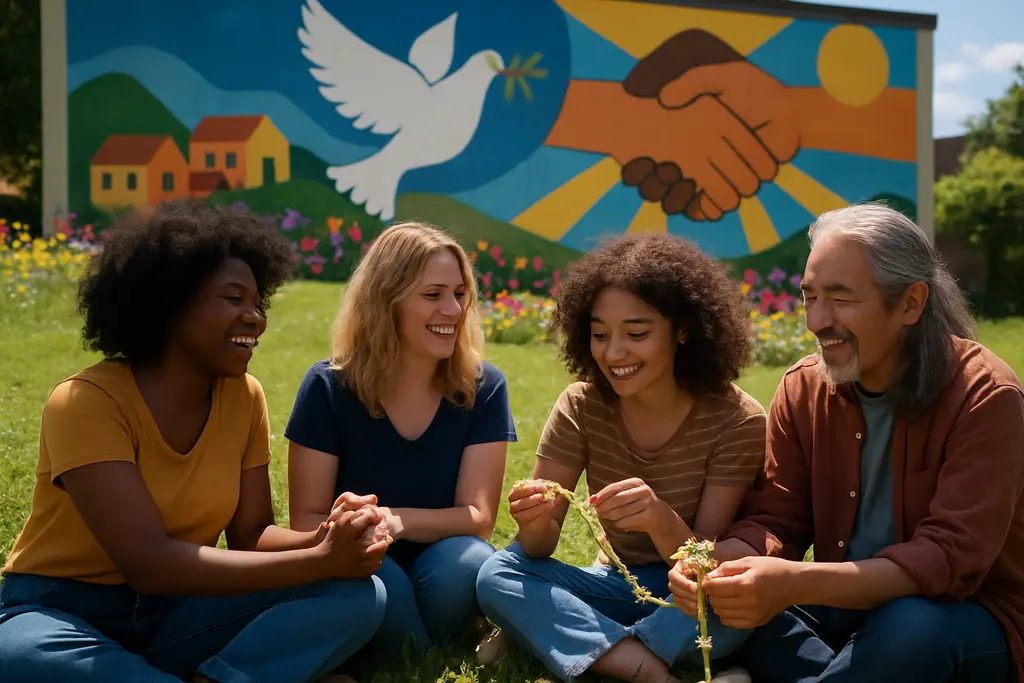
Daisy Chain Fields arrived on August 29, 2026, at Great Park in Irvine, California, as a finished event that already invites cultural assessment rather than advance hype. Founded and headlined by Olivia Rodrigo, the festival joined music, feminist memory, visual art, and fundraising into one day of public expression, according to NME’s review. Its strongest artistic claim was not simply that well-known performers shared a bill. It was that nostalgia could be staged as a living civic language, with past feminist music cultures placed beside contemporary pop, rap, indie, and performance practices.
As a community organizer, I tend to read festivals by asking who is centered, what kinds of participation are invited, and whether the design of the space supports the stated values. On those terms, this festival appeared unusually intentional. The reported all-women lineup linked Riot Grrrl-era figures and 1990s alternative touchstones with newer artists whose audiences carry different generational memories. That structure gave the event a built-in argument: cultural inheritance is not passive admiration. It can be performed, revised, and challenged in public.
Daisy Chain Fields As Cultural Memory
Daisy Chain Fields And Lilith Fair Echoes
The festival’s nostalgic references were direct. The research notes identify Lilith Fair, the 1997–1999 feminist touring festival, as a key point of inspiration, with appearances by Lilith Fair founder Sarah McLachlan, Stevie Nicks, and Alanis Morissette. That choice matters because nostalgia can often soften political memory into branding. Here, the reference worked best when treated as a conversation across eras rather than a museum display.
At Daisy Chain Fields, the older reference points were not isolated from the contemporary lineup. Bikini Kill, Garbage, and The Breeders stood beside Mitski, Doechii, Chappell Roan, and the rising pop figure Eli. The artistic effect was less about ranking eras and more about hearing how feminist anger, theatricality, tenderness, and self-invention have taken different forms across decades. That does not prove a clean lineage; art histories rarely move that neatly. Still, the bill made generational contact visible.
Riot Grrrl Across Generations
Riot Grrrl’s presence gave the day a sharper edge than nostalgia alone could provide. Bikini Kill’s placement in the lineup connected the festival to punk-rooted feminist performance, zine culture, and confrontational stage speech. Paired with Rodrigo’s pop authorship and Doechii’s direct crowd address, that older influence did not appear as costume. It became one reference among many for artists speaking to gender, power, and belonging.
This gave Daisy Chain Fields a useful tension. Its scale and star power placed it inside mainstream festival culture, but its artistic references leaned toward scenes that historically questioned commercial music systems. A cautious reading should not overstate that tension as a solved contradiction. A large festival can amplify political art, but it can also package it. The most persuasive moments were those in which the artists and installations made that friction feel visible rather than decorative.
Political Speech And Shared Space
Onstage Language As Cultural Framing
The festival’s political themes were not implied only through programming. They were spoken. Teen Vogue reported that Kathleen Hanna of Bikini Kill told the crowd, “This government hates us and wants us dead,” in comments tied to healthcare, rights, and displacement issues; the same report noted that Doechii ended her set with “We do this for women! We do this for the gays” Teen Vogue reported. Those statements framed the festival as a space where performance and political address overlapped.
Such speech can divide audiences, and responsible criticism should not pretend that every listener receives it in the same way. Yet it would be inaccurate to treat these moments as incidental. They were part of the event’s artistic culture. In music festivals built around identity, memory, and public gathering, a stage is not only a sound platform. It is a place where artists mark the conditions under which their work is heard.
Care, Funding, And Accountability
The reported fundraising structure also shaped the event’s meaning. According to the research notes, performers played free, 100 percent of net proceeds went to 10 nonprofits benefiting women and girls, and the named organizations included Planned Parenthood, National Women’s Law Center, Black Mamas Matter Alliance, and Baby2Baby. The reported total was $10 million, with Melinda French Gates pledging to match it for a combined $20 million.
Those figures are significant, but they should be read with care. Fundraising does not automatically settle questions of access, labor, heat safety, or who gets to feel fully represented at a large event. It does, however, show that the festival’s public mission included material support beyond symbolic visibility. For cultural events, that distinction matters. A slogan can create atmosphere; funding can support work after the lights come down.
Art Installations Beyond The Stage
Participatory Art And Public Feeling
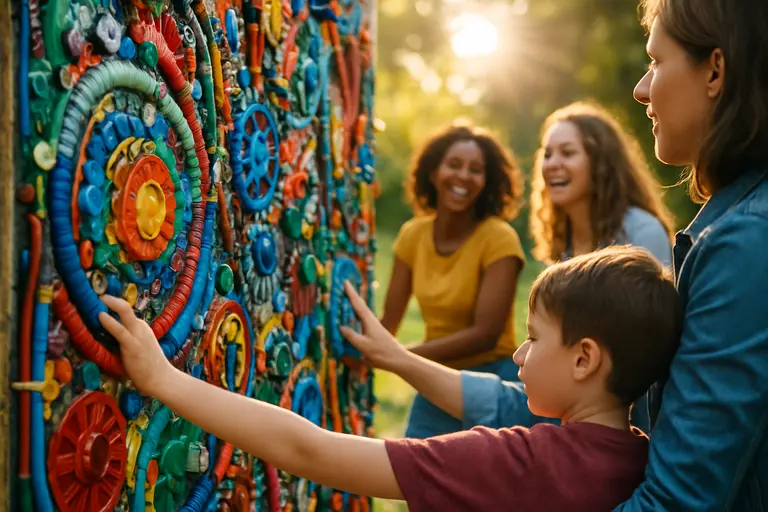
The visual art program extended the festival’s political and nostalgic structure into the grounds. Research notes identify installations by women artists including Yoko Ono’s Wish Tree, work by Jenny Holzer, and the Guerrilla Girls’ “Complaints Department” chalk-board walls. These projects mattered because they asked visitors to do more than consume performances. They created spaces for inscription, grievance, memory, and collective witnessing.
Ono’s Wish Tree format, as described in the research, invited desire and hope into a public setting. Holzer’s presence brought text-based art into the festival frame. The Guerrilla Girls’ complaint walls reportedly became places where people expressed thoughts ranging from personal grievances to pro-Palestinian slogans. That mix is not tidy, but public art rarely is. Its value often rests in making social feeling legible without forcing every participant into the same statement.
Designing Movement Through Meaning
The site design also carried interpretive weight. The festival used two main stages named Marigold and Dandelion, multiple chill-out zones, a central walkway called Daisy Lane painted with quotes from women pioneers, and art installations spread across the grounds. These choices suggest an effort to make the physical route through the festival part of the cultural message.
That kind of spatial design can help a festival avoid becoming only a sequence of set times. When people move between stages, rest areas, and art spaces, they build their own rhythm of attention. For community-based cultural work, those pauses matter. They are where strangers talk, where an installation changes the mood after a loud set, and where political statements may become personal reflection. Readers interested in related arts and culture coverage within the same network may also find useful context at Robsonic’s culture coverage.
Daisy Chain Fields Review In Community Terms
The strongest reading of the festival is that it used nostalgia as an active structure, not a retreat. Lilith Fair references, Riot Grrrl performers, major contemporary artists, participatory installations, and explicit political speech all pointed toward a shared question: how can a large music event honor earlier feminist cultural forms without freezing them in the past?
What made Daisy Chain Fields artistically compelling was the way it held joy and discomfort together. The event included star appearances, genre-spanning performance, and communal celebration, but it also made room for complaint, grief, anger, and public demand. That balance is not easy to sustain. Too much polish can weaken political art; too little care can leave audiences exhausted rather than gathered.
A cautious review should avoid declaring the festival a model for all future events. One day in Irvine cannot answer every question about representation, access, safety, or cultural memory. Still, based on the supported reporting, this festival offered a serious case study in how music, visual art, and mutual aid can share the same public field. Its achievement was not nostalgia alone, and not politics alone, but the decision to let both shape the artistic experience.