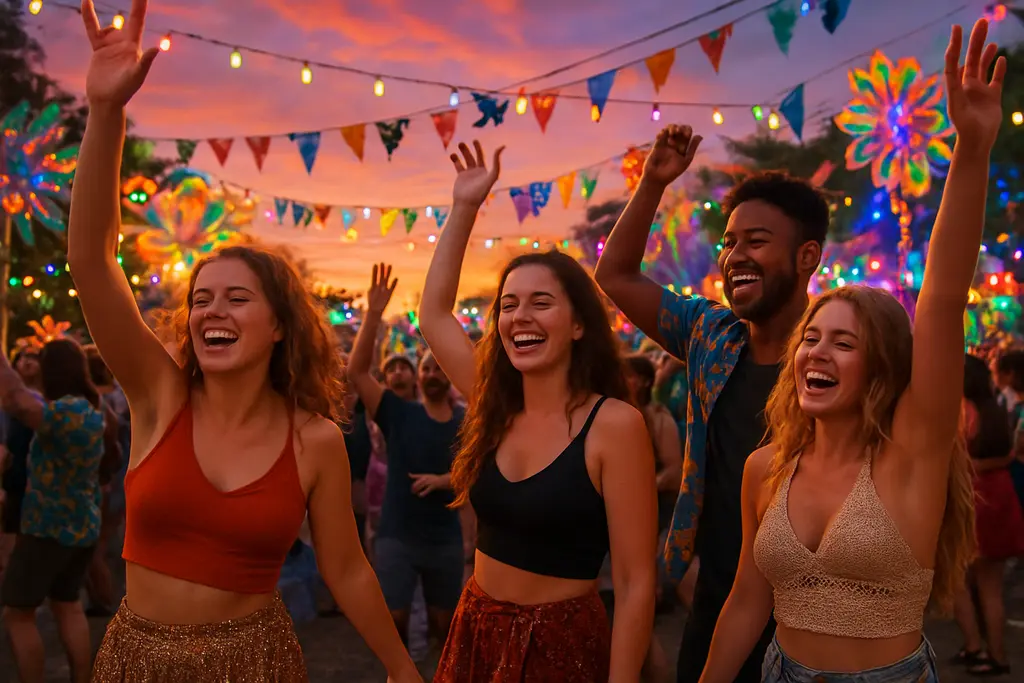
Aftershock Festival Impact is now easier to measure than it was before October 1-4, 2026. The Sacramento rock and metal festival drew a reported record 180,000 attendees across four days, beating the prior high of 165,000 in 2025, and sold out for the first time, according to Pollstar. Those numbers do not explain the full cultural value of the gathering, but they give Sacramento a clearer benchmark for how large-format live music now fits into the city’s public life.
As an arts and community observer, I read the 2026 result as more than a scoreboard item. Attendance records can be useful, yet they can also flatten the human work behind a festival: stage labor, hospitality staff, local vendors, production crews, transit planning, artist development, and the social rituals that make a temporary crowd feel organized rather than accidental. The stronger question is not only how many people came, but what that scale asked of Sacramento and what it gave back.
Measuring The Aftershock Festival Impact
Aftershock Festival Impact By Attendance
The festival’s 180,000-attendee total marked a clear rise from the 2025 figure cited in the research notes. Pollstar also reported more than 140 artists across five stages, including the newer Point Stage, plus expanded camping options at Cal Expo with daily shuttle service. Taken together, those details suggest growth in both audience size and site design rather than a simple increase in ticket demand.
The sellout matters because it changes the planning problem. A festival that sells to capacity has less room to absorb friction through unused space. Entry flow, water access, shaded rest areas, medical response, rideshare movement, and shuttle timing become part of the cultural experience. If those systems work, the music can remain central. If they strain, the audience remembers the strain alongside the sets.
A Sold-Out Marker For Danny Wimmer Presents
Danny Wimmer Presents reported nearly 1.1 million attendees across its 2026 festival portfolio in the research notes, with Aftershock serving as one of the year’s major markers. That companywide scale matters for artists because large festival networks can shape routing decisions, audience exposure, and the way genre communities gather outside traditional club circuits. Still, it would be too broad to say one promoter alone defines rock or metal culture. Independent venues, regional scenes, and smaller festivals continue to carry much of the artistic risk that feeds larger stages.
For Sacramento, the sold-out year also sits within a longer civic arrangement. The research notes state that, in 2025, the Sacramento County Board of Supervisors approved a 10-year agreement through 2035 with Danny Wimmer Presents to host up to three multi-day festivals annually at Discovery Park, with permit fees tied to attendance and site improvements. That creates a long runway for event planning, but it also raises a public-interest question: how can the city preserve community benefit while avoiding festival fatigue for nearby residents and park users?
What The Record Crowd Changed
Economic Activity And Local Pressure
KCRA reported that the 2026 event generated about $40 million in local economic activity for Sacramento, or roughly $10 million per day during the festival period, according to its local economic report. That estimate gives local officials, hotel operators, restaurants, drivers, and service workers a concrete reason to take the festival seriously as part of the city’s cultural economy.
Economic impact, though, should be read with care. A headline figure does not tell us how benefits were distributed among workers, independent businesses, national chains, public agencies, and event contractors. Nor does it answer whether residents near the site experienced noise, traffic, or access issues in ways that should be addressed before the next contract year. Cultural events can be financially productive and still require hard civic management.
- Attendance growth can support more work for production crews, hospitality staff, vendors, and transport services.
- Higher crowd density can increase pressure on shade, hydration, waste handling, security zones, and park infrastructure.
- Long-term agreements can help agencies plan, but they also make public feedback more necessary.
Why Scale Changes Cultural Meaning
A 180,000-person rock festival is not just a concert series with bigger numbers. It becomes a temporary city built around sound, style, endurance, and identity. Attendees bring band shirts, patched jackets, handmade accessories, genre knowledge, and personal histories with songs that may have carried them through difficult periods. That social dimension is part of why large festivals matter to live music culture.
For creators, photographers, stylists, and small sellers, the gathering also signals a market around music-adjacent expression. That does not mean every image, logo, lyric, or likeness is free to reuse. Artists and sellers still need to be careful with rights clearance, especially around band marks and recognizable imagery. Community expression and commercial copying are not the same thing, and respectful creator commerce depends on knowing that difference.
Community Scale Beyond The Stages
Artist Mix And Audience Identity
The 2026 lineup described in the research notes brought together legacy acts such as Tool, My Chemical Romance, and Limp Bizkit with newer bands across rock, metal, punk, and adjacent subgenres. That blend is culturally useful because it lets different generations of listeners share space without pretending their histories are identical. A longtime fan may come for a band tied to an earlier era, then encounter an emerging act on a smaller stage. A younger attendee may arrive through a newer sound and leave with a different sense of genre lineage.
The Aftershock Festival Impact can therefore be seen in curation as well as commerce. Large bills often act as informal maps of a music community: which names are treated as anchors, which artists are being introduced to larger crowds, and how far the festival stretches the edges of its genre identity. That map is never neutral, and it should be discussed with respect for the artists whose labor makes it possible.
Networks Around Music Coverage
Readers who compare cultural reporting across connected publications may also recognize how festival stories move through wider editorial networks. A related site in the same network, Shimply, reflects the broader interest in how audiences find, share, and interpret culture beyond a single event page. For festivals, that matters because public memory is shaped not only by official recaps, but by photography, local reporting, attendee accounts, and the quieter stories of workers and nearby businesses.
This is where cautious coverage has value. A record crowd is verifiable; claims about cultural influence require more evidence. It is fair to say Aftershock has become a major live-event presence in Sacramento based on attendance and economic reporting. It would be less careful to claim that it represents all rock culture, all West Coast metal culture, or every local creative priority.
Safety, Heat, And Shared Space
Comfort Is Part Of Cultural Access
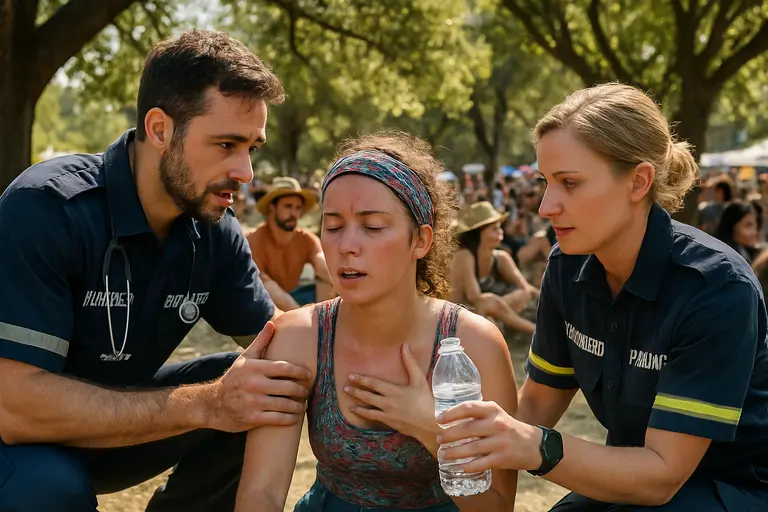
The research notes report that temperatures reached as high as 99°F on Saturday, which would have affected attendee comfort and site operations. Heat is not a side issue at a multi-day outdoor festival. It shapes how long people can stand, how often they need water, how far they can walk between stages, and whether vulnerable attendees can participate safely.
Coverage of festival weather disruptions across U.S. events has shown why planning for heat, storms, and evacuations deserves the same attention as lineup announcements. For Aftershock, the available research notes do not provide enough detail to grade the festival’s heat response. They do, however, make clear that weather and infrastructure belong in any serious assessment of a record-breaking event.
Public Safety Requires Specific Evidence
The research notes also mention safety concerns, including a small number of police citations and some attendee calls for more security in certain zones, while stating that no major incidents were reported. Without a fuller public record, it would be irresponsible to draw sweeping conclusions from those details. The more useful approach is to treat safety as an ongoing design question rather than a public-relations afterthought.
For community trust, the most helpful information after an event is specific: where crowding occurred, how staff communicated, whether medical and security teams were visible, and what changes are planned for the next permit cycle. That level of transparency can protect both attendees and the reputation of the artists whose performances depend on a safe setting.
What Aftershock Festival Impact Means For Sacramento
The clearest reading is that Sacramento hosted a festival that has moved from large to civic-scale. With 180,000 attendees, a first sellout, more than 140 artists, and a reported $40 million local economic effect, Aftershock now sits inside the city’s cultural identity in a measurable way. That does not make every consequence positive, and it does not remove the need for resident feedback, worker protections, artist respect, and environmental planning.
Aftershock Festival Impact should be judged by more than a record. The stronger measure is whether Sacramento can convert the energy of October 1-4, 2026 into fairer cultural infrastructure: better public coordination, stronger support for local creative workers, clearer safety communication, and a festival culture that honors both headliners and the communities that host them.