Category: Culture

  • Oversized Textured Brooches Shape Fall Style

    Oversized Textured Brooches Shape Fall Style

    Oversized Textured Brooches have become one of the clearer accessory signals in Fall 2026 fashion coverage, but the evidence should be read with care. As of August 27, 2026, calendar autumn had not fully arrived for many readers, so the strongest support comes from runway reporting, editor styling, and early new-season imagery rather than complete consumer sales data.

    That distinction matters. A runway accessory can be visually persuasive without proving mass adoption. Still, the brooch is useful to study because it sits between ornament, closure, sculpture, and personal symbol. It can change the character of a coat, knit, scarf, or dress without requiring a new silhouette. For culture watchers, that makes the piece more than a decorative afterthought: it is a small object carrying design intent, craft cues, and social signaling.

    Why Oversized Textured Brooches Are Registering Now

    Oversized Textured Brooches On The Runway

    The runway case is substantial enough to take seriously. Fashionista reported that New York Fashion Week Fall 2026 showed designers using brooches as dramatic pin-on accessories, including appearances at Ralph Lauren, Khaite, Tory Burch, Altuzarra, Sergio Hudson, Coach, and Sandy Liang Fashionista runway report. The detail is important because those examples were not limited to quiet lapel jewelry. The brooch was treated as a fastening device, a surface accent, and a focal point.

    This is where scale changes the reading. A small pin often signals sentiment or polish. A large brooch, especially one with surface texture, can read closer to wearable assemblage. It draws the eye to the shoulder, collarbone, chest, waist, or scarf knot, depending on placement. That gives stylists a way to redirect attention without changing the garment underneath.

    Texture As A Visual Cue

    Who What Wear described big, tactile brooches as one of the defining accessories for Fall 2026, comparing their seasonal role with the way bandanas dominated summer styling, and noting feathery, fuzzy, and tactile versions in new-season looks Who What Wear accessory analysis. The comparison is helpful because it frames the brooch as an easy-to-move item rather than a head-to-toe trend system.

    Texture also softens the formality that brooches can carry. A polished metal pin may evoke heirloom dressing or ceremonial dress codes. A fabric rosette, feathered piece, or fuzzy shape can feel closer to costume culture, craft markets, or art-school styling. None of those references cancel the others. The most interesting Fall 2026 readings place the brooch in the overlap between tailoring and play.

    How Scale Changes Styling

    Placement Beyond The Lapel

    Traditional lapel placement still works, but the Fall 2026 styling conversation is wider. Oversized Textured Brooches can sit at a collar, gather a scarf, break up a plain knit, or act as a visual clasp on a coat. These uses matter because the pin is both accessory and editing tool. It can create asymmetry, concentrate color, or make a familiar garment feel newly composed.

    For readers tracking how fashion signals move through street style, festivals, and creator commerce, the related discussion of Fall 2026 fashion trends gives useful context. Accessories often travel faster than full runway silhouettes because they require less commitment and can be adapted across personal style codes. That said, available research here supports visibility in fashion media and runway settings, not a claim that every region or age group is adopting the same item at the same pace.

    Neutral Garments And Pin-On Drama

    The strongest styling logic is contrast. A neutral sweater or coat gives a large brooch room to register, while a textured pin prevents the outfit from becoming flat. A clustered arrangement across a collar can feel ceremonial; a single oversized piece at the shoulder can read more sculptural. The line between elegance and costume depends on proportion, fabric weight, and whether the brooch looks integrated with the garment.

    • Scale: larger pieces work best when the garment can physically support the pin.
    • Surface: fuzzy, feathered, floral, or rosette-like textures create softness and depth.
    • Placement: collars, scarf knots, lapels, waistlines, and coat fronts each shift the mood.
    • Restraint: one statement pin may carry more force than several competing ornaments.

    Because brooches are portable, they also invite repeat styling. A single piece can move from daywear to evening dress, from a coat to a scarf, or from a knit to a bag. That portability helps explain why editors are watching them closely, even before stronger retail or resale data is available.

    Community Style, Craft, And Rights Awareness

    Handmade fabric brooches arranged beside sewing tools and textured cloth

    Festival Dressers And Handmade Sellers

    Oversized Textured Brooches have clear appeal for festival dressers, cosplay-adjacent communities, and handmade sellers because they allow expressive styling without a full costume build. A large fabric flower, soft animal-like form, or abstract textured pin can give an outfit a point of view while staying detachable. For more on community expression and related topics, Robsonic is a useful resource within the network of interest.

    For makers, the format has practical appeal: a brooch is a contained object with room for handwork, material experimentation, and personal symbolism. Still, creator-commerce claims require restraint. The research supplied here supports fashion-media attention, not verified sales volume by marketplace, city, or demographic group. Sellers should treat the signal as one input rather than proof of demand.

    Caution Around Motifs And Likeness

    The brooch format can invite references to animals, bows, flowers, fantasy dressing, awards-season polish, and archival costume codes. It can also raise rights questions when a maker uses recognizable characters, celebrity likenesses, brand marks, or another artist’s identifiable work. This article is not legal advice, and it does not determine whether a specific motif is protected. The safer cultural practice is to develop original forms, document sources of licensed materials where applicable, and avoid presenting imitation as authorization.

    That caution protects both artists and buyers. A handmade pin can quote broad visual languages such as romance, surrealism, punk repair, or formalwear sparkle without copying a protected image. The brooch is persuasive precisely because it leaves room for invention.

    Oversized Textured Brooches As Fall 2026 Signals

    What The Evidence Supports

    The strongest supported claim is that Oversized Textured Brooches are receiving notable runway and fashion-editor attention for Fall 2026. The evidence points to scale, tactility, and flexible placement as the main reasons the accessory feels current. It does not yet prove uniform consumer adoption, nor does it justify treating every large pin as part of one single movement.

    That measured reading is more useful than hype. Brooches offer a low-commitment way to test shape, texture, and personal symbolism. They also connect high-fashion styling with craft practice and event dressing. If Fall 2026 accessories are judged by how much expression they can add to existing clothing, the brooch has earned its place in the conversation.

  • Denim Trends 2026 And The Culture Of Dress

    Denim Trends 2026 And The Culture Of Dress

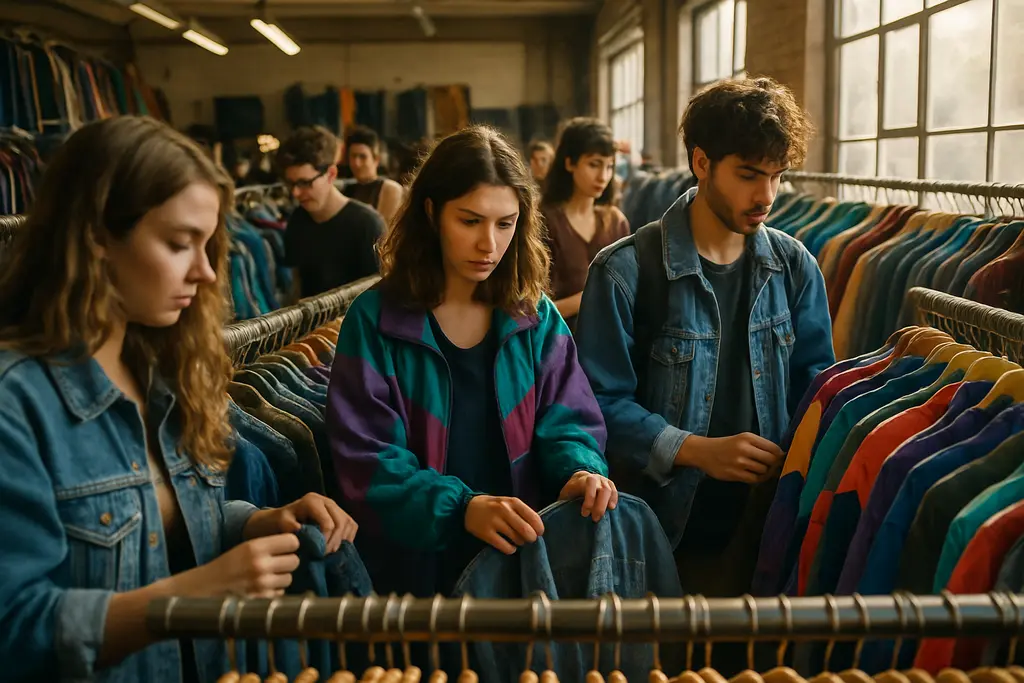
    Denim Trends 2026 are being framed less as a single uniform look and more as a set of choices about proportion, finish, comfort, and social setting. Based on the supplied research, the strongest evidence points to the return of straight-leg jeans, the rise of barrel-leg silhouettes, cropped and turned-up hems, denim miniskirts, slouchy jackets, and a wider conversation about lower-impact materials. For artists, stylists, makers, and community organizers, the cultural question is not simply what people will wear. It is how denim continues to carry everyday identity into galleries, music events, street markets, classrooms, and informal public life.

    The cautious reading matters. Trend reporting can identify recurring shapes and styling ideas, but it cannot prove that every city, age group, or creative community will adopt them in the same way. Denim is especially sensitive to local meaning: a dark straight-leg pair may read polished in one setting, practical in another, and nostalgic somewhere else. That flexibility is why denim remains useful for cultural study as well as fashion coverage.

    Denim Trends 2026 As Cultural Signals

    British Vogue identifies straight-leg jeans among its key denim directions for 2026, alongside cropped and turned-up styles, denim miniskirts, and slouchy jackets in its denim trend report. Those items share a notable quality: they are familiar forms, not unfamiliar costumes. Their renewed attention suggests a taste for clothing that can move between daily errands, low-key openings, studio visits, and evening gatherings without asking the wearer to abandon ease.

    Why Denim Trends 2026 Favor Shape

    Shape is the most useful starting point for reading Denim Trends 2026 because silhouette changes how denim behaves in public. Straight-leg jeans sit close to the body without the strong taper of skinny jeans or the volume of wide-leg cuts. Barrel-leg jeans, by contrast, create a curved line that narrows at the ankle. Tellar describes barrel-leg jeans as a style gaining attention for a modern sculptural effect and also notes interest in more sustainable denim materials in its 2026 denim style analysis.

    Straight Legs And Barrel Legs

    The contrast between straight and barrel shapes gives wearers two different cultural signals. Straight-leg denim tends to work as a quiet base: it can support a blazer, a hand-knit vest, a printed shirt, or a vintage jacket without dominating the outfit. Barrel-leg denim is more visibly designed. Its curved structure can suit fashion-forward styling, but it also requires care in fit, footwear, and proportion. Neither shape is inherently more creative. The distinction is in emphasis: one steadies an outfit, while the other adds volume and movement.

    Washes, Hems, And The Return Of Polish

    The supplied research notes dark washes, including deep indigo and dark brown denim, as part of the 2026 discussion. Because the permitted sources for this assignment do not directly verify every wash-specific claim in the research notes, that point should be treated with caution rather than as a confirmed market-wide shift. Still, the idea is plausible as a styling cue: darker denim often photographs and reads as more dressed than faded or distressed denim, especially in event settings where people want casual clothing to feel considered.

    Dark Washes Without Overclaiming

    For culture writers and event organizers, the value of dark denim is not that it guarantees formality. It is that it can bridge dress codes. A deep indigo jean paired with a tailored jacket may feel suitable for a private view, artist talk, listening session, or small fundraiser, depending on the venue. That does not mean denim has replaced formalwear. It means denim can be styled in ways that reduce the gap between comfort and presentation.

    Cropped Lengths And Turned-Up Hems

    Cropped lengths and turned-up hems are easier to observe as styling choices than as major cultural shifts. They change the visual rhythm of an outfit by showing the ankle, shoe, or sock. In community fashion spaces, that small opening can become expressive: handmade socks, polished loafers, worn boots, or sculptural shoes each alter the tone. The hem becomes a frame. This is one reason denim remains appealing to creative communities; small interventions can alter meaning without requiring a new wardrobe.

    Denim, Makers, And Community Style

    Hands adding original stitching to a denim jacket on a worktable

    Denim is also a strong material for maker culture because it can be repaired, patched, embroidered, reworked, and restyled. The research brief mentions tassels, beads, and fringe as embellishment ideas, though the strongest permitted sources here focus more on silhouettes and selected denim items than on craft detail. Even with that caveat, embellishment deserves cultural attention because it connects fashion to handwork, memory, and local identity.

    Embellishment As Surface And Gesture

    For artists and small sellers, surface work can be expressive, but it should be handled with respect for rights and community context. A safe high-level checklist includes:

    • Use original drawings, abstract motifs, or licensed materials rather than protected characters, logos, or celebrity likenesses without clearance.
    • Describe the work honestly, especially if a garment is vintage, altered, upcycled, handmade, or factory-made with hand finishing.
    • Credit collaborators, photographers, models, and textile artists where appropriate.
    • Avoid implying affiliation with a brand, musician, festival, or estate unless permission has been granted.

    This is not legal advice, and it cannot decide whether a specific artwork, patch, phrase, or garment treatment is protected. It is a practical ethics frame for creators who want to sell or exhibit denim-based work without misleading buyers or borrowing from communities without care.

    What Sellers Can Say Safely

    Seller language should stay close to verifiable facts. “Hand-embroidered cotton denim jacket” is clearer than a claim that a piece is inspired by a named living artist if the goal is to trade on that artist’s recognition. “Upcycled from a secondhand denim skirt” is clearer than vague eco-language if the maker can substantiate the process. If sustainable fabric is part of the garment, the fiber content, certification, supplier statement, or production method should be documented. Claims about environmental benefit need more than good intention.

    Denim Trends 2026 In Community Fashion Culture

    For community organizers, Denim Trends 2026 can be read as a planning tool as much as a shopping cue. A denim-focused repair night, maker market, styling conversation, or youth design workshop can connect fashion to practical skill. Straight-leg jeans and slouchy jackets make approachable starting points because many participants already own similar garments. Barrel-leg shapes and miniskirts may invite discussion about proportion, body comfort, age, gender expression, and the difference between personal style and commercial pressure.

    A Practical Reading For Cultural Organizers

    Programming around denim works best when it does not treat trends as commands. A thoughtful event might pair a mending station with a short talk on garment care, invite local artists to show original textile work, or host a panel on how dress codes affect access to cultural spaces. Readers following community-centered arts coverage across this network may also learn about relevant civic initiatives at Kay Granger. Exploring Denim Trends 2026 with this focus highlights the importance of accessibility and inclusivity in shared cultural spaces.

  • Andrew Edlin Show On American Place Traditions

    Andrew Edlin Show On American Place Traditions

    The Andrew Edlin Show gives culture readers a useful case study in how art about place can hold several arguments at once. The exhibition, presented in New York City in summer 2026, gathers works that approach terrain, memory, built space, national identity, and cultural belonging through different materials and levels of public recognition. Based on the published exhibition information, its structure is not limited to a single school, period, or medium. That breadth makes the show especially relevant for viewers interested in how older pictorial traditions are being re-read through contemporary questions about identity and environment.

    Any account of this exhibition should remain careful about scale and meaning. The available sources identify the dates, venue, participating artists, media, and stated commemorative frame, but they do not provide a full checklist in the research notes here or visitor-response data. For that reason, the strongest reading is not that the exhibition proves a broad cultural trend. It is better understood as a curated argument: one gallery’s summer grouping of artists from North and South America, arranged to test how images of place can carry personal, social, and historical weight.

    What The Andrew Edlin Show Establishes

    Andrew Edlin Show Dates And Setting

    The gallery lists the exhibition dates as July 1 to August 14, 2026, at Andrew Edlin Gallery, 392 Broadway, 2nd Floor, New York, NY 10013. It also gives weekday hours of Monday to Friday, 10 am to 6 pm, and identifies the presentation as connected to America’s 250th anniversary Andrew Edlin Gallery details. Those facts matter because the show is framed not only as a seasonal group exhibition, but as a reflection on national identity through images and objects centered on place.

    For visitors, the Andrew Edlin Show is positioned in a commercial gallery rather than a museum, yet the premise has museum-like stakes. The 250th anniversary frame invites viewers to ask how America is pictured, who is included in that act of picturing, and how regional or imagined spaces contribute to cultural memory. A gallery exhibition cannot answer those questions by itself, but it can stage them through selection and proximity.

    Why The Venue Context Matters

    Andrew Edlin Gallery was established in 2001 and is described in the exhibition notice as specializing in emerging and seminal self-taught American artists as well as European art brut masters. The same notice states that the show features more than 50 artists from North and South America and includes paintings, drawings, photographs, collages, and mixed-media works Meer exhibition notice. That institutional context is significant. It suggests that the exhibition’s comparison set is not restricted to academic painting or familiar art-historical categories.

    Bringing self-taught, art brut, emerging, lesser-known, and widely recognized names into one presentation can unsettle an easy hierarchy between trained and non-trained production. The risk, if handled poorly, would be flattening distinct practices into a single theme. The promise, if handled with care, is that viewers can compare how different makers build meaning from place without requiring every work to share the same artistic vocabulary.

    Artists, Media, And Curatorial Friction

    Recognized Names Beside Less Familiar Voices

    The gallery information names Henry Darger, Agnes Denes, Jane Freilicher, and Stephen Shore among the included artists. Even that short list signals a wide set of approaches. Darger is often discussed in relation to self-taught art; Denes is associated with conceptual and ecological concerns; Freilicher is linked with painting and intimate observation; Shore is widely known for photography. The research notes do not specify which works by each artist are included, so it would be misleading to infer exact visual pairings. Still, their presence indicates a curatorial field where place is not treated as one stable genre.

    This is where the exhibition’s friction becomes productive. A painting of a seen place, a photograph of a road or built environment, a mixed-media construction, and a drawn imagined world do not function in the same way. Each medium handles evidence differently. Photography may suggest direct encounter, although it is still composed and selected. Drawing can make interior geographies visible. Collage can join fragments that would not coexist in ordinary space. Mixed media can make the support, surface, and material choices part of the work’s meaning.

    Media Range As An Interpretive Clue

    The reported inclusion of paintings, drawings, photographs, collages, and mixed-media works helps viewers resist a narrow definition of art about place. A traditional reading might look for horizon lines, countryside, weather, or urban views. A broader reading asks how artists map experience. That map may be geographic, psychological, ecological, political, or domestic. The exhibition’s cross-media format supports that broader reading, while still leaving room for close attention to individual works.

    For makers and culture workers, this also raises a useful creator-commerce point. Artists who work with images of place often depend on more than scenic appeal. Titles, materials, scale, edition format, and presentation context shape how audiences read the work. Sellers and curators should avoid reducing such works to decorative backdrops, especially when the subject touches identity, displacement, land use, or collective memory. Respectful presentation means naming what is known, avoiding claims that cannot be sourced, and letting the work’s stated context guide interpretation.

    Why The Andrew Edlin Show Matters For Place

    Identity Without A Single National Image

    The Andrew Edlin Show is tied, through the gallery’s stated theme, to America’s 250th anniversary. That anniversary frame can invite patriotic certainty, but the exhibition’s reported range points in a more open direction. With artists from North and South America and works spanning several media, the show appears to treat America as a contested cultural idea rather than a single fixed image. That distinction is important. A country can be pictured through monuments, farms, cities, coastlines, interiors, roads, ruins, speculative scenes, or traces of environmental change.

    Because the sources describe the exhibition as creating unexpected dialogues, the value of the show likely sits in comparison rather than uniformity. A viewer may move from a recognizable view to an imagined scene, or from a refined surface to a rougher material language. Those shifts can make the category of place feel less passive. It becomes a site where memory is edited, where belonging is questioned, and where visual form carries cultural pressure.

    Environment, Memory, And Belonging

    The research notes state that the exhibition reflects on identity and cultural diversity through art centered on place. That framing aligns with a long-standing tension in American art: views of land and settlement have often been used to build national stories, yet those stories can exclude as much as they reveal. A cautious reading should not assign one politics to every work in the show. It should, instead, ask what each artist does with distance, scale, emptiness, density, weather, architecture, human presence, and absence.

    For audiences interested in costume, fashion image-making, and fantasy-inflected visual culture, the exhibition also has a useful point of contact. Place is not only a background; it can shape mood, character, silhouette, and myth. Related cultural coverage at Fairy Tale Fashion often addresses similar themes—analyzing how visual settings and designed appearances combine to form meaning. This comparison should not oversimplify by equating gallery art with fashion imagery, but it can illuminate how space influences interpretation across different creative mediums.

    How Culture Readers Can Approach The Exhibition

    Viewer taking notes while comparing framed artworks in a gallery

    Questions For Viewing

    A productive visit begins with slow comparison. Rather than asking whether each work is a good depiction of a place, ask what kind of place the work constructs. Is it observed, remembered, imagined, altered, or symbolic? Does the work seem to invite entry, keep distance, or refuse easy location? Are people present, absent, implied, or replaced by structures and traces? These questions keep the viewer from treating the subject as simple scenery.

    • Start with medium: note whether the work relies on paint, drawing, photographic framing, collage, or mixed materials.
    • Look for scale shifts: compare intimate scenes with more expansive views or imagined spaces.
    • Track signs of time: weathering, growth, ruins, roads, and interiors can all suggest memory.
    • Notice what is missing: absence can carry as much meaning as visible detail.

    This approach is especially useful in a group exhibition with more than 50 artists. No viewer can fairly absorb every relationship at once. It is better to build small clusters: works that share a medium, works that handle built space, works that feel dreamlike, works that seem documentary, or works that treat the environment as fragile. Those clusters can then be tested against the stated anniversary frame.

    What Not To Overclaim

    There are also limits to what can be said from the available information. The research notes do not establish attendance, sales, critical consensus, or direct artist statements about the exhibition. They do not specify the full checklist or installation order. Claims about market influence, audience demographics, or a new movement would need stronger evidence. A careful review should stay close to documented facts and visible curatorial structure.

    The same caution applies to influence. It is reasonable to discuss how placing recognized artists beside emerging and lesser-known voices may expand a viewer’s sense of the genre. It is not sound to claim that any artist in the show directly influenced another unless a reliable source says so. Respect for artists means resisting easy lineage-making when the record is not available.

    Andrew Edlin Show As A Measure Of American Place

    The Andrew Edlin Show does not need to solve the question of American identity to be culturally useful. Its value, based on the documented premise, lies in how it gathers many forms of place-making under one anniversary frame. The show brings together artists from across the Americas, a range of media, and a gallery context already associated with self-taught and art brut practices. That combination makes it a notable site for thinking about how images of land, city, memory, and belonging continue to carry public meaning.

    For viewers, the most rewarding stance is neither passive admiration nor quick judgment. The better task is to compare carefully, ask what each work does with place, and remain alert to the difference between documented fact and interpretation. In that sense, the exhibition offers a disciplined cultural exercise: looking at America not as one image, but as a set of visual arguments made by many hands.