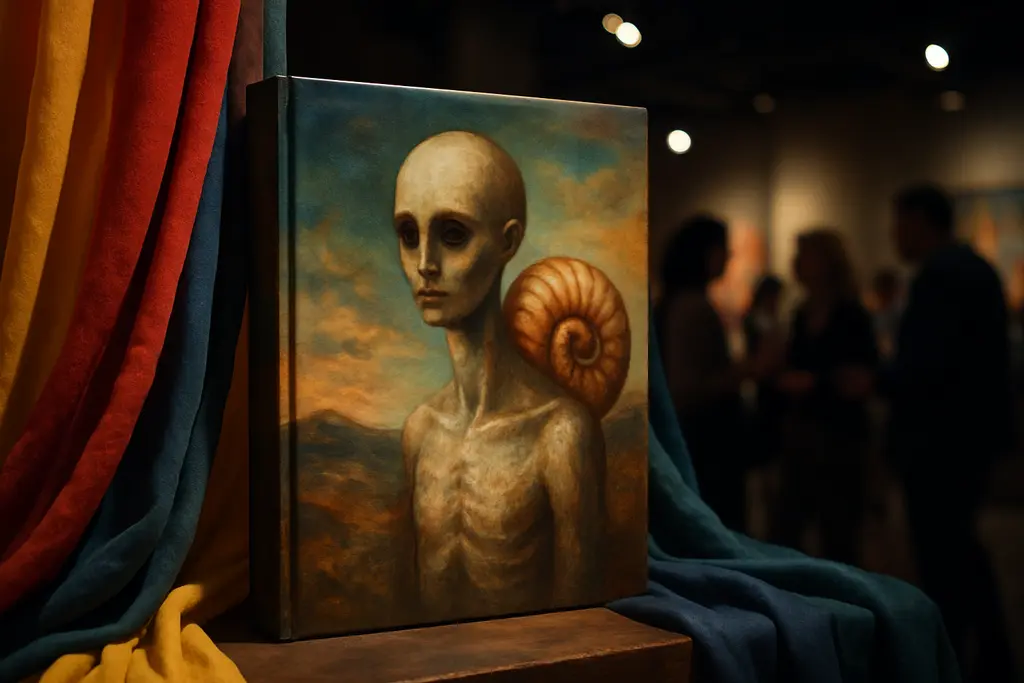
As of October 19, 2026, the Surrealist Book Exhibition at MoMA is an ongoing exhibition, having opened on October 4, 2026, with a scheduled closing date of January 23, 2027. MoMA presents it under the title The Surrealist Book: Tomorrow Lives in Mirrors, and the museum frames the show around books that press against ordinary reading habits through prose, poetry, collage, unusual materials, and hybrid bindings MoMA exhibition page.
That framing matters because the show asks viewers to treat the book not as a container for art, but as an artwork with its own politics of touch, sequence, secrecy, and refusal. From a community arts perspective, this is where the exhibition feels especially useful: it gives reading groups, artists, educators, and museum visitors a shared object through which to discuss imagination, censorship, gender, war, and artistic freedom without reducing Surrealism to dream imagery alone.
What The Surrealist Book Exhibition Shows
Surrealist Book Exhibition Scope
The Surrealist Book Exhibition draws much of its strength from scale and span. MoMA’s magazine states that the exhibition features nearly 100 titles from the Helen and Sam Zell Collection, donated to the museum in 2022, and that the works in the collection range from 1857 to 2014 MoMA introduction. The exhibition’s online catalog includes around 61 artists, with names such as André Breton, Claude Cahun, Salvador Dalí, Paul Éluard, Max Ernst, Toyen, and Unica Zürn represented in the museum’s listing.
The broad date range does not mean the show claims one single Surrealist style across more than a century. A more cautious reading is that MoMA is showing how Surrealist book practice developed, persisted, and reappeared across different periods. The exhibition groups the material across three eras: the formative 1920s, the 1930s and 1940s marked by wartime political pressure, and the postwar 1950s and 1960s, when Surrealist forms and sensibilities continued beyond the movement’s institutional structure.
Form, Material, And Reading
The most persuasive artistic claim in the exhibition is formal. These books are described through prose, poetry, collage, shattered glass, metal, and hybrid bindings. Such materials change the reader’s position. A conventional book can be opened, read, closed, and shelved. A book with volatile material presence asks for slower looking and a different awareness of the object’s limits.
This shift is not merely decorative. In Surrealist practice, the page can operate like a stage for disruption: image and word compete, binding becomes part of meaning, and sequence can behave less like a straight argument than a set of charged encounters. That approach helps explain why the exhibition positions books as art objects and hybrid sculptures, not simply as illustrated texts.
Politics In The Book Object
Resistance Under Pressure
The political force of the show appears most clearly in its attention to wartime and clandestine production. The research material for the exhibition highlights works by Toyen under Nazi occupation, clandestine editions, and erotic or subversive themes used as resistance against authoritarian control. Those examples suggest that the book could carry political charge precisely because it can circulate intimately, privately, and sometimes under pressure.
That does not make every object in the exhibition a political manifesto. The more careful point is that form and politics often meet in the Surrealist book. A strange binding, a forbidden theme, or an unstable image-text relation can push back against the reader’s habits, just as subversive content can push back against public rules. The exhibition’s political impact should be read in that limited but meaningful sense: it shows how artistic form can become a site of resistance without claiming that art alone defeats repression.
Gendered, Literary, And Colonial Norms
MoMA’s interpretive material also stresses Surrealism’s critique of norms, including literary, gendered, and colonial structures. This is one reason the Surrealist Book Exhibition is stronger when seen as a study of reading power, not only as a display of rare books. Surrealist books can question who speaks, who is looked at, whose body becomes symbolic, and whose imagination is treated as legitimate.
For community organizers and educators, this opens a productive but sensitive path. The works should be discussed with respect for the artists, the historical settings, and the people affected by the political forces referenced in the show. It is also worth resisting easy claims that Surrealism was uniformly liberating. The exhibition materials support a more nuanced view: Surrealist book art could challenge norms, but each object needs to be read through its own maker, moment, and material choices.
Why The Exhibition Matters For Communities
Access And Shared Reading
Exhibitions about books can invite forms of participation that differ from large-scale painting or sculpture shows. People can gather around sequence, cover, page, material, and touch as ideas, even when the museum object itself must remain protected. That makes the exhibition useful for community conversations about literacy, censorship, art education, disability access, and the social life of archives.
MoMA lists access-oriented programming connected to the exhibition, including a gallery experience for visitors with disabilities scheduled for November 5, 2026, from 5:00 to 7:30 p.m. Since that date had not passed as of October 19, 2026, it is best described as a scheduled program rather than a completed event. The presence of such programming does not, by itself, prove broad accessibility; it does show that access is part of the museum’s public plan for the exhibition.
Links To Exhibition Culture
The show also sits within a wider interest in Surrealist display practices. Readers considering how Surrealist ideas move through space may find a useful parallel in coverage of Surrealism light sculpture, where atmosphere and material experiment shape how viewers encounter art. For readers exploring arts and culture coverage, Shimply is a related site in the same network and can offer additional insights.
That wider context should be handled carefully. It would be unsupported to claim, from the given research alone, that Surrealist books are driving a new market trend or changing museum practice across the field. What can be said is narrower and more defensible: MoMA is using this exhibition to place the Surrealist book at the center of a major institutional conversation about art, politics, and the material life of reading.
The Catalogue As A Scholarly Anchor
Evidence Without Overstatement
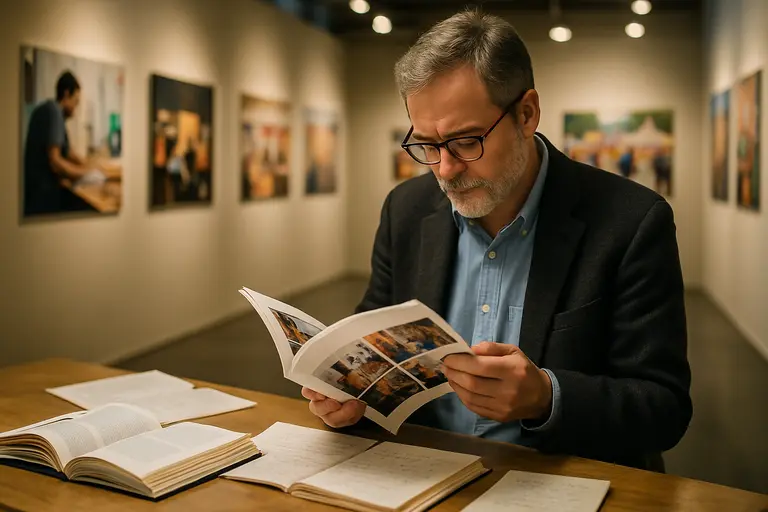
The exhibition is accompanied by a catalogue, The Surrealist Book: Tomorrow Lives in Mirrors, edited by Jodi Hauptman and Starr Figura. According to the research notes, it has 272 pages and includes twelve essays along with annotated listings of books and related materials. That matters because the show’s subject can easily invite broad, poetic claims. A substantial catalogue gives scholars, artists, and readers a way to test those claims against object entries, essays, and documented holdings.
For local arts groups, book clubs, and classroom settings, the catalogue may be especially useful as a bridge between museum viewing and sustained discussion. The objects themselves are rare and often fragile, but the publication can extend the conversation into libraries, studios, and community programs. That is one practical form of cultural impact: not instant public consensus, but a slower shared vocabulary for talking about how books can carry image, text, risk, and dissent.
Artists As Makers Of Unstable Books
The range of artists associated with the exhibition also resists a single-author narrative. Breton’s centrality to Surrealism is well known, but the inclusion of figures such as Cahun, Toyen, and Zürn helps broaden the conversation toward gender, authorship, and marginality within and around Surrealist circles. The Surrealist Book Exhibition is strongest when it lets those differences remain visible rather than smoothing them into one movement identity.
That approach respects artists as makers of distinct objects, not as examples of a preset theory. It also supports a healthier public conversation about influence. Viewers can study Surrealist methods, materials, and political gestures without treating any artist’s work as a pattern to copy for commercial use or as a style detached from context.
The Surrealist Book Exhibition At MoMA
The Surrealist Book Exhibition at MoMA is valuable because it makes a compact object feel socially large. A book can be held, hidden, passed, censored, treasured, or remade. In the Surrealist context presented here, it can also unsettle the border between reading and looking, between private imagination and public dissent.
Its artistic impact, based on the evidence available as of October 19, 2026, lies in repositioning books as material works that can include collage, sculpture-like structure, unusual substances, and fractured reading paths. Its political impact lies in showing how artists used the book form to resist norms and pressures, including wartime authoritarianism and restrictions around gender, erotic content, and colonial assumptions.
The most responsible response to the show is neither hype nor distance. It is close attention: to the dates, to the collection history, to the named artists, to the materials, and to the political conditions that shaped particular works. In that sense, MoMA’s exhibition gives communities a strong reason to read books as objects of imagination and as records of pressure, refusal, and shared cultural memory.