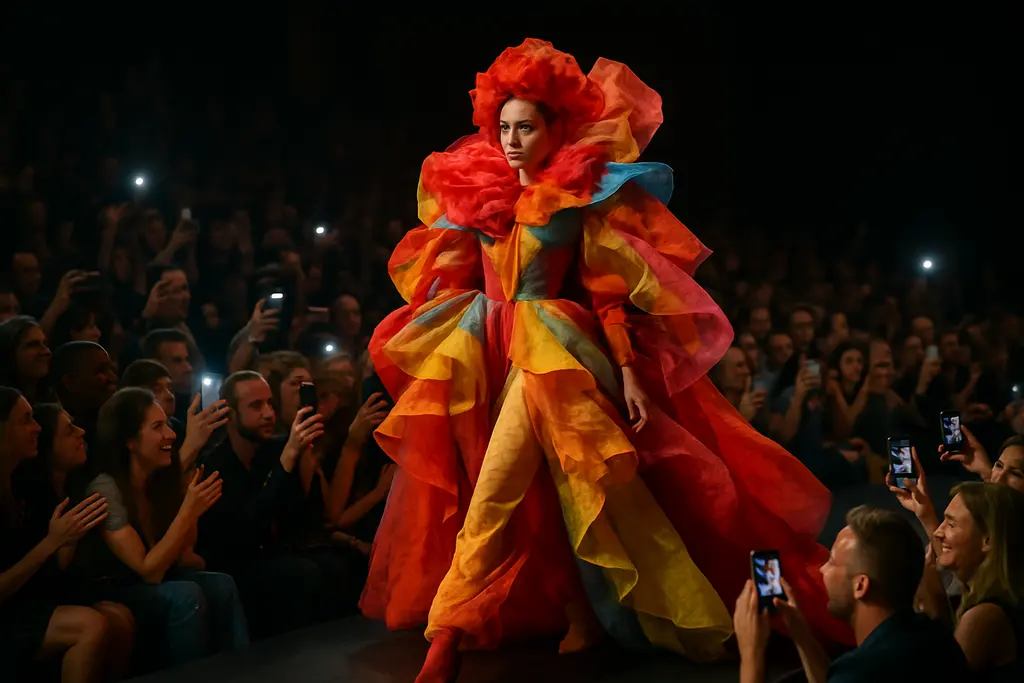
NYFW Theatrical Design became one of the clearer stories of New York Fashion Week after the September 2026 shows concluded. The strongest examples were not only about scale or surprise. They showed how designers used live music, long runway formats, stage pictures, and off-site locations to create fashion presentations that worked closer to performance than showroom display. That does not mean every show had the same aim, or that spectacle replaced clothing. The evidence points to a narrower reading: several closely watched presentations made sound, movement, and set design part of how the collections were received.
As a community organizer who pays attention to how art gathers people, I find the local music examples especially meaningful. Brass Queens at Damson Madder and UpBeat NYC at Coach placed musicians inside the emotional structure of the shows. Those appearances also invited a useful question for fashion coverage: when a runway becomes theatrical, who gets seen, and how does the staging frame the artists sharing the space?
Why NYFW Theatrical Design Centered Performance
Live Music Gave The Runway A Local Pulse
The Washington Post’s September 17, 2026 report named Damson Madder and Coach in a tie for “Best use of live music.” At Damson Madder, the local all-female brass band Brass Queens performed at the Soho Playhouse, with covers that included “Pink Pony Club” and TLC’s “Waterfalls.” At Coach, the finale at Pier 36 revealed UpBeat NYC, a live orchestra made up of Bronx-based youth musicians, as dancers appeared and glitter fell from the rafters, according to The Washington Post.
These details matter because live musicians are not neutral decoration. A brass band changes the pressure in a room: breath, volume, timing, and collective labor become part of the audience’s memory. A youth orchestra at a finale can shift attention from a solitary designer narrative toward a civic one, especially when the musicians are identified as Bronx-based. The reporting does not give enough information to measure audience response, rehearsal time, or compensation, so those points should not be assumed. What can be said is simpler: the shows used identifiable local or youth musical groups, and those choices shaped the theatrical effect.
How NYFW Theatrical Design Framed Scale
Scale also appeared through staging rather than sound. Thom Browne’s presentation closed NYFW on September 16, 2026, and used a garden-like set with giant stalks of grass, a leafy canopy, and a glowing cocoon that model Kai Schreiber entered. Khaite presented in a Brooklyn Navy Yard hangar on a runway described as approximately 1,000 feet long, lit by sparse spotlights that made models pass in and out of visibility. The New York Times connected both shows to performance-led presentation in its report, Clothes That Perform.
Those two examples used very different stage languages. Browne’s garden imagery leaned toward fantasy and narrative theatre. Khaite’s long runway and shifting visibility created a colder, more architectural rhythm. Leather, lace, florals, and sheer layering were prominent at Khaite, but the conditions of viewing also mattered. A model moving through shadow and light changes how fabric is read. Texture becomes partial. Shape arrives, disappears, and returns. Taken together, NYFW Theatrical Design did not refer to one aesthetic. It described several methods for controlling attention.
What The September 2026 Shows Revealed
Opening Heat, Scarves, And Softened Silhouettes
Not every memorable moment depended on a huge set. Ralph Lauren’s Spring/Summer 2027 show officially opened NYFW on a Wednesday in early September 2026. The front row included Meghann Fahy, Elizabeth Debicki, and Cynthia Erivo, who were reported wearing fall-2026 styles such as wool pullovers and velvet blazers in 82-degree weather. That detail reads as a small but telling stage picture: seasonal fashion, celebrity visibility, and physical discomfort all present at once.
Other examples worked through material gestures. DVF, under new artistic director Henry Zankov in his debut season, distributed silk scarves in purple, blue, green, and red as part of the show notes. Attendees used those scarves through the week as accessories. Kate Hundley, after 14 seasons associated with “strong, smart” clothes, showed softer versions of her leather silhouettes through satin and mesh while retaining strong shapes. These details are quieter than falling glitter or a glowing cocoon, yet they still speak to presentation. A scarf passed from show note to worn object can travel through a week as a visual marker. A softened silhouette can mark change without rejecting a designer’s established language.
Off-Site Energy At Storm King
Collina Strada’s show took place away from the city’s usual fashion-week rooms, at Storm King Art Center in New Windsor, New York. The presentation developed a dance-party atmosphere and included a live performance by Carly Rae Jepsen. Since Storm King is known as an art center rather than a conventional runway venue, the setting likely affected how audiences perceived the clothes and performance. The available research, however, does not provide enough detail to claim how the outdoor art setting changed the collection’s meaning. A cautious reading is better: the off-site choice placed fashion beside art-space conditions and live pop performance, making the event feel less like a standard runway slot.
For readers tracking culture across music, costume, visual art, and public gathering, that placement is significant. Fashion weeks often serve industry functions, but they also produce temporary communities: musicians, dancers, models, stylists, photographers, editors, craftspeople, venue workers, and guests share a compressed public moment. A related arts-and-culture network such as Robsonic provides a useful context because it highlights how these fashion events situate between creative spheres rather than conforming to a single discipline alone.
Reading Spectacle Without Overstating It
What The Evidence Supports
The available reporting supports a clear but limited claim: NYFW in September 2026 included several high-profile uses of theatrical staging and live performance. Damson Madder and Coach used live music with identified groups. Thom Browne closed the week with an elaborate garden-like set and cocoon image. Khaite used an unusually long runway in a hangar, with lighting that made visibility unstable. Collina Strada moved to Storm King and included a live pop performance.
What the evidence does not support is just as important. The research does not give a count of how many NYFW shows used live music. It does not provide budgets for sets, rehearsal details, artist fees, or audience survey data. It also does not prove a permanent industry shift. Cultural coverage is strongest when it resists turning a few striking examples into a broad trend without numbers. The better conclusion is that the reported highlights show a concentrated use of performance tools across several notable presentations during the September 2026 schedule.
- Brass Queens brought live brass-band performance to Damson Madder at the Soho Playhouse.
- UpBeat NYC added youth-orchestra presence to Coach’s finale at Pier 36.
- Thom Browne used an immersive garden image to close NYFW on September 16, 2026.
- Khaite used distance, shadow, and a Brooklyn Navy Yard hangar to alter how garments were seen.
NYFW Theatrical Design, Brass Bands, And Community Memory
Why These Moments Last Beyond The Runway
The clearest lesson from NYFW Theatrical Design in September 2026 is that performance can make a runway easier to remember, but it also creates obligations for critics. We should name musicians when reporting allows it. We should distinguish between local cultural participation and anonymous atmosphere. We should avoid treating community performers as props, especially when a show’s emotional force depends on their labor.
That is why the Brass Queens and UpBeat NYC examples deserve attention beside Thom Browne’s garden staging and Khaite’s long runway. Theatrical design is not only scenery. It is also the human energy that enters the room through breath, choreography, timing, and sound. For a fashion week that ended on September 16, 2026, the most persuasive highlights were the ones that made design feel social: clothes moving through music, performers sharing the frame, and audiences asked to read fashion as a live cultural event rather than a still image.