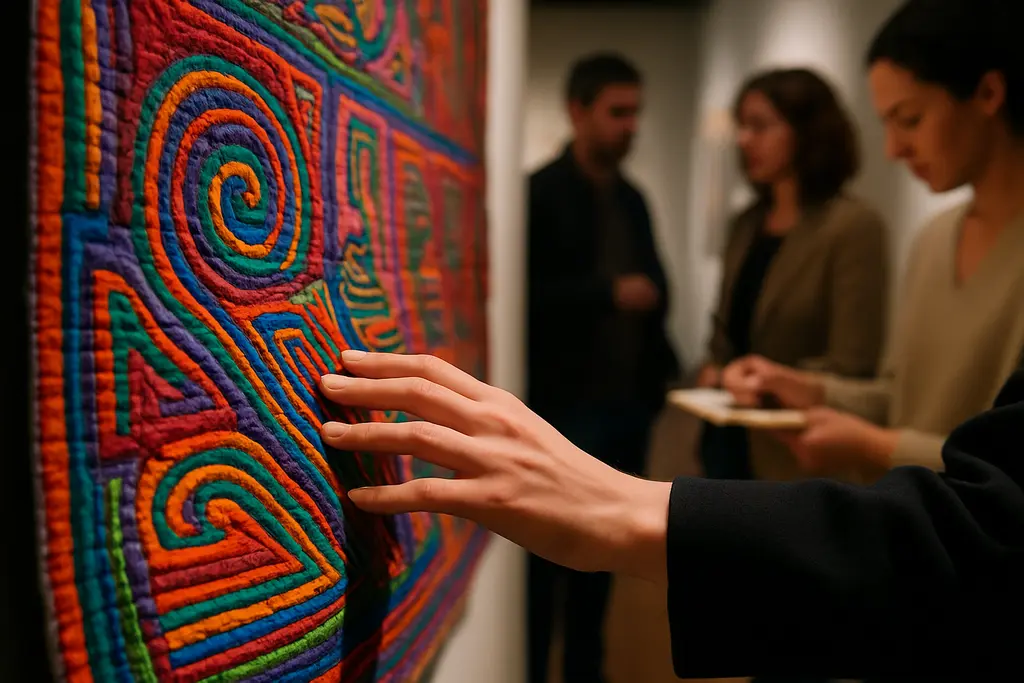
Halumii Ktapihna: Lenape Legacies and Futures is scheduled to open to the public at the Museum of the City of New York on September 25, 2026, with a press preview set for September 22, 2026. Because today is September 21, 2026, any responsible preview has to speak in advance, not as if visitors have already formed a public response. What can be assessed now is the exhibition’s stated structure: a show built around Lenape identity, cultural continuity, displacement, land, language, and future-making.
For community arts organizers, that framing matters. Museum exhibitions about Native nations can either repeat older habits of speaking about communities from the outside, or they can make space for living voices, contemporary artists, and community advisors. The available information suggests that this exhibition is designed around the latter approach, while still requiring careful attention from critics, educators, and visitors who enter a museum setting shaped by long histories of collecting and interpretation.
Why Halumii Ktapihna Matters At MCNY
Halumii Ktapihna And A Shared Museum Frame
According to the Museum of the City of New York, the exhibition includes work by over 30 artists alongside archival materials, historic objects, videos, and interactive listening stations, and it was developed in collaboration with the Éenda-Lŭnaapeewáhkiing (Land of the Lenape) Collective and Lenape/Lunáapeew community advisors from the United States and Canada MCNY exhibition page. That collaboration is central to how the show should be read before opening: not simply as a museum display of cultural material, but as a public cultural project shaped by contemporary Lenape participation.
The exhibition is staged at the Museum of the City of New York, located at 1220 Fifth Avenue at 103rd Street in Manhattan, as reported in coverage of the opening Manhattan location report. The site is not incidental. A museum devoted to New York City carries a particular responsibility when presenting Lenape histories and futures, since the city occupies Lenape homelands. A preview cannot judge the installation design before the galleries open, but it can recognize the stakes of placing this material inside a civic museum visited by residents, students, and tourists.
Contemporary Artists Beside Historical Materials
The value of Halumii Ktapihna may rest partly in how it places new artwork near historical objects without freezing Lenape culture in the past. The research notes identify rare artifacts such as wampum belts, historical tools, textiles, historic maps, and documents, alongside new works by Lenape artists exploring identity, sovereignty, and belonging. That combination can support a dialogue across time, if the installation lets contemporary voices carry interpretive weight rather than using living artists as a decorative add-on to historical narrative.
This is where arts criticism should be precise and humble. Preview writing should not claim that an exhibition has succeeded before the public can see it. Still, the stated mix of artists, archival materials, video, and listening stations points toward a multi-sensory presentation. The interactive listening stations are especially significant because sound and language can resist the stillness of display cases. They may also ask visitors to slow down, listen, and understand culture as practice, not only as object.
How The Exhibition Organizes Place, Memory, And Future
Three Sections, Three Public Questions
The exhibition is organized into three thematic sections: The Lunáapeew Today, Homelands, and Creating the Future. Those titles suggest a structure that resists a single chronological path. Instead of beginning and ending with colonial disruption, the exhibition appears to place present-day Lenape life at the center, then connect that presence to ancestral lands and future-facing visions. That order matters because it can shift the visitor’s first question from “What happened to this people?” to “Who is speaking now?”
The research states that the show centers Lenape identity and culture across more than 12,000 years, including governance, trade networks, and relationships with land and water. That is a long span for any exhibition to hold. The challenge will be scale: how to communicate deep time without compressing distinct periods, communities, and practices into a single museum storyline. The three-section structure may help by separating present identity, homelands, and future imagination while still allowing them to inform one another.
Land, Water, Language, And Stewardship
The announced themes include land stewardship, language revitalization, resilience, displacement, and erasure. These are not abstract museum topics. They touch the ways institutions name places, collect objects, teach history, and decide whose knowledge is treated as authority. A culture exhibition built around these themes asks more of viewers than passive appreciation. It invites an ethical form of attention: visitors have to consider how city life, land use, and public memory are connected.
Language revitalization is especially meaningful in a museum context. If students and general visitors encounter Lenape words, voices, and pronunciation practices, they are not merely learning labels for objects. They are meeting a living knowledge system. The school field trip program connected to the exhibition, Lenape Legacies and Futures, is scheduled to become available on October 13, 2026. The research notes that it will let students engage with contemporary Lenape voices, artifacts, speaking Lenape, and reflection on Native nations today. For educators, that date gives the exhibition a life beyond the gallery opening.
What A Respectful Preview Can And Cannot Claim
Evidence Before Interpretation
Preview coverage has limits. It can describe announced dates, themes, collaborators, materials, and educational plans. It should not invent visitor reactions, assume critical consensus, or treat the exhibition as a settled achievement before it opens. That caution is not a lack of enthusiasm. It is respect for the artists, advisors, and communities whose work deserves careful response after the public installation can be experienced.
Based on the available research, a cautious preview can say the following:
- The exhibition opens to the public on September 25, 2026, after a September 22, 2026 press preview.
- It is presented at the Museum of the City of New York in Manhattan.
- It includes over 30 artists, historical materials, video, and listening stations.
- It addresses Lenape identity, homelands, language, stewardship, displacement, and future visions.
What a preview cannot fairly say is how well each gallery will balance art, history, and community voice. That judgment belongs to careful viewing after the installation opens. The distinction matters because exhibitions concerning Indigenous communities have often been burdened by outside interpretation. A respectful critic should let documented facts set the frame and then allow the work, artists, and advisors to meet the public on their own terms.
Community Context Beyond The Museum Visit
As an arts organizer, I often think about what happens after people leave a museum. A powerful exhibition can reshape a classroom discussion, a neighborhood program, a family conversation, or a local reading group. For readers who keep up with cultural coverage and seek insights from a wider network, Shimply offers a platform that connects to how creative work influences everyday lives. That broader context is useful here because this exhibition is not only an art event; it is also a civic encounter with place and memory.
The funding notes in the research identify support from The Puffin Foundation and Valerie & John W. Rowe, along with public support from the New York City Department of Cultural Affairs and the New York State Council on the Arts. Funding acknowledgments do not determine artistic quality, but they do show that the exhibition sits within both private and public cultural support systems. That matters for accountability, access, and the educational use of museum space.
Halumii Ktapihna As Cultural Dialogue
A Preview Framed By Care
For Halumii Ktapihna, the phrase “dialogue between cultures” should be used carefully. It should not imply two equal and abstract sides meeting without history. The exhibition’s announced subjects include displacement and erasure, which means the dialogue is shaped by power, land, memory, and institutional responsibility. A better way to frame it is as a museum-based encounter in which Lenape artists and advisors help define how Lenape presence, continuity, and futures are presented to a broad public.
That is why the exhibition’s emphasis on contemporary artists matters so much. If the show keeps living Lenape voices in the foreground, it can challenge visitors who still imagine Indigenous culture mainly through the past tense. If its sections succeed as described, The Lunáapeew Today, Homelands, and Creating the Future may give viewers a way to connect identity, place, and futurity without reducing any of them to a single lesson.
The public opening on September 25, 2026 will provide the first real test of those ambitions. Until then, the most responsible preview is one that names the evidence, respects the participating communities, and makes room for response after viewing. On the available facts, the exhibition deserves attention not as a simple cultural event on a calendar, but as a significant moment in how a New York museum presents Lenape legacies and futures within the city’s public memory.