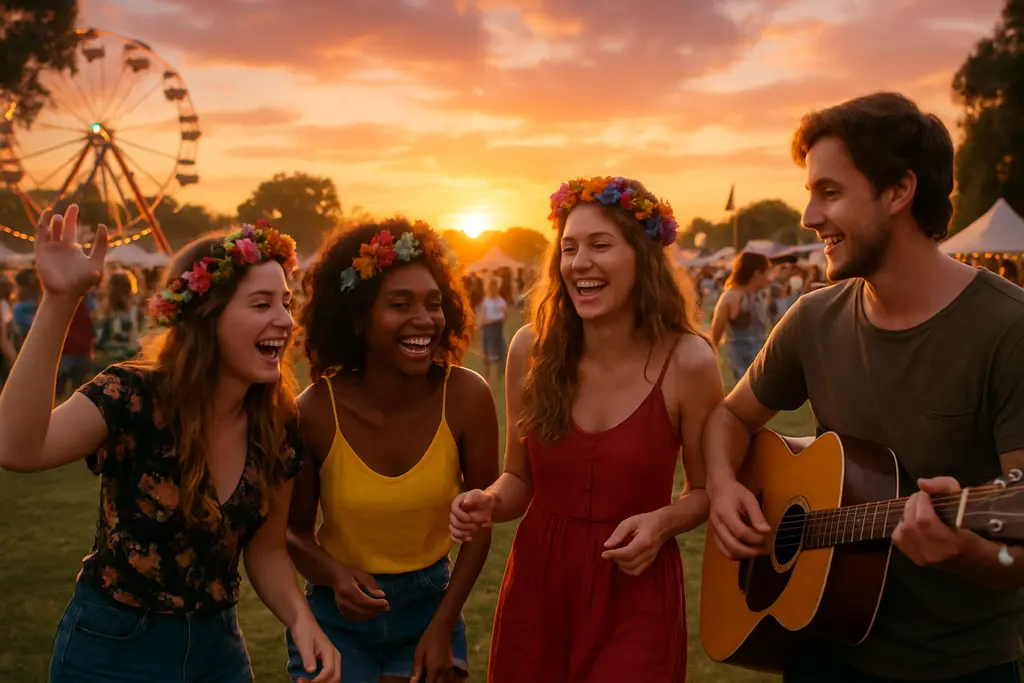
Daisy Chain Fields took place on August 29, 2026, at Great Park Live in Irvine, California, and it now sits in recent festival memory as a compact case study in how Woodstock-era ideals are being quoted, revised, and tested by a new generation. Founded by Olivia Rodrigo as a women-led single-day music and art festival, the event was announced with an all-women lineup and a stated emphasis on music, art, and social purpose through the official festival announcement.
The Woodstock comparison should be handled with care. The 1969 festival has become a cultural shorthand for youth gathering, countercultural art, political feeling, and communal possibility, but shorthand can flatten what actually happened at any festival site. The stronger reading is not that Irvine recreated Woodstock. It is that the event used some familiar materials of festival idealism: intergenerational music, public slogans, folk and punk memory, charity, and a temporary crowd asked to imagine itself as a community.
Why Daisy Chain Fields Looked Back To Woodstock
The clearest connection to Woodstock-era memory came through the festival’s use of music as public expression rather than entertainment alone. That distinction matters. A lineup can be all-women and still operate as a standard commercial event; a festival can include political signs and still reduce activism to decoration. The evidence from August 29 points to an event trying to connect both forms, even as practical concerns on the ground complicated that aim.
Daisy Chain Fields And The Language Of Collective Idealism
Reports from the festival described roughly 45,000 concertgoers, a major attendance figure for a first edition, along with visual and logistical details that shaped the day’s public meaning, according to CPR’s festival report. The scale matters because a Woodstock reference gains force only when many people are gathered in a shared physical space. Posters, walkways, staging, and overheard chants do not function the same way online as they do when bodies move through heat, lines, sound bleed, and collective attention.
The festival reportedly drew from 1960s and 1970s counterculture and women’s liberation imagery. That influence appeared in spaces such as a “Wish Tree,” where attendees left messages, and in quoted language from figures including Angela Davis, Audre Lorde, and Maya Angelou painted across walkways. These choices placed text and image in the path of the crowd. They also asked a question that arts organizers know well: does public art deepen a gathering, or does it become a scenic background? At Irvine, the answer seems mixed but serious. The imagery was not incidental to the event’s identity.
From Lilith Fair To A New Festival Frame
Festival organizers and artists named Lilith Fair as an influence, which is a more precise precedent than Woodstock in some ways. Lilith Fair’s 1990s model centered women performers and audiences within a touring structure; the Irvine event condensed that logic into one day and paired it with a Gen Z pop headliner whose audience includes many young women. The Woodstock echo, then, came less through exact form and more through the belief that live music could host political feeling, artistic signs, and a crowd-based ethic.
That distinction helps avoid nostalgia. The festival did not simply borrow flower-power symbols and hope the association would carry the day. Its strongest claim came from the way it linked women-led performance with public messaging and philanthropic commitments. At the same time, the ticketed setting, VIP and pit viewing options, and reported access complaints remind us that countercultural references inside a large commercial event always carry tension.
Music As Intergenerational Argument
The lineup placed Rodrigo alongside older and peer-era artists, including Stevie Nicks, Sarah McLachlan, Bikini Kill, The Breeders, Mitski, Doechii, and others. That pairing made the day feel less like a single-genre showcase than a conversation across forms of women-led music. Rock, punk, pop, singer-songwriter traditions, and rap-inflected performance all held space within the same event frame.
Two Stages, Two Musical Histories
The reported stage division gave the program a readable structure. The Marigold stage leaned toward rock and punk, with acts such as Bikini Kill and The Breeders associated with that side of the day. The Dandelion stage highlighted pop-influenced and singer-songwriter acts. A two-stage layout can often split audiences by taste; here, it also marked different strands of feminist music memory. Punk’s refusal, folk-pop’s confession, alternative rock’s abrasion, and contemporary pop’s arena-scale emotion all became parts of the same argument.
That intergenerational programming is where the Woodstock comparison gains its strongest artistic footing. Woodstock is often remembered as a meeting point for sound, politics, fashion, and youth identity. Daisy Chain Fields used a different canon, but it also treated music as a carrier of public values. The appearance of Alanis Morissette during Rodrigo’s finale, as reported in the research notes, fit that structure by placing 1990s confessional rock beside Rodrigo’s contemporary pop-punk lineage.
Headlining As Community Framing
Rodrigo’s role as founder and headliner gave the event a clear center, but the all-women or women-led lineup kept that center from becoming the only story. For community organizers, this is a key point: a famous founder can draw attention, while a broad bill can redistribute meaning. The risk is that the founder’s celebrity absorbs the entire event. The opportunity is that celebrity becomes a doorway into artists, causes, and histories that some attendees may not have known deeply before.
The stronger community outcome depends on what happens after the day ends. Did attendees seek out the older artists? Did younger fans understand the references to women’s liberation and feminist music history? Public data in the research does not answer those questions, so they should remain open. What can be said is that the program gave audiences many points of entry into those histories.
Art, Protest, And Community Care
For an arts audience, the most telling feature may have been the festival’s use of visual culture. Protest art at live events often works through repetition: slogans on fabric, handwriting on temporary structures, quoted language on paths, and installations that invite participation. These forms are rarely museum objects, but they shape how people remember a day. They can also create a shared vocabulary among strangers.
At this event, the “Wish Tree” and walkway quotations suggested a participatory ethic. Visitors were not only receiving a stage program; they moved through a designed field of messages. Some of those messages, including “Free Palestine,” placed the event inside urgent political debate. That choice made the festival’s politics more visible and also more contested. For a closer reading of how those visual choices worked on site, our related Daisy Chain Fields review considers art, protest, and care in more detail.
The event’s philanthropic claim was also part of its community framing. Research notes state that US$20 million was pledged for distribution among 10 nonprofit organizations working on issues affecting women and girls globally. Because pledged giving can involve timing, administration, and distribution steps after an announcement, it is best described cautiously as a pledge rather than a completed social outcome unless later documentation confirms full disbursement.
That caution does not diminish the symbolic force of the announcement. In a live-event setting, philanthropy can signal that the gathering is not meant to end at the gate. Yet the practical measure is follow-through: which organizations received funds, when they received them, and how communities described the impact. Those questions require later reporting and should not be assumed from stage language alone.
The Access Problem Behind The Ideal
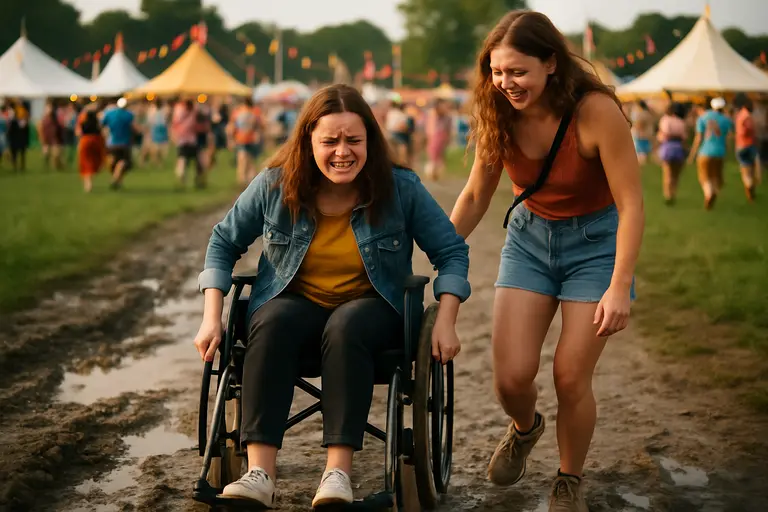
Any festival invoking communal care has to be read against its conditions of access. Reports noted heat around 94°F, shortages of shade, long lines for food and water, and complaints about ADA parking and shuttles. Those details are not side notes. They affect who can participate safely and who feels included in the shared space.
Heat, Lines, And The Ethics Of Gathering
Outdoor festivals in late August in Southern California carry foreseeable heat risks. A crowd of tens of thousands needs shade, water, food flow, rest areas, and clear mobility support. When those systems strain, the aesthetic language of care meets a material test. Painted walkways and social justice slogans may set a tone, but water access and ADA transport determine whether that tone is felt as real by many attendees.
This is not a reason to dismiss the festival’s artistic or political ambitions. It is a reason to evaluate them with adult standards. Community is not only declared by the lineup or the charitable pledge; it is built through site planning, staff training, queue design, mobility access, and heat mitigation. A festival can be culturally meaningful and operationally imperfect at the same time.
Cost And Belonging
Ticket prices were reported at around US$250 for general admission, with higher costs for VIP or pit viewing. That price point places limits on who could be physically present, even before travel, food, lodging, or accessibility needs are considered. Woodstock mythology often imagines open fields and mass youth participation, but contemporary large-scale events operate within ticketing systems and production budgets that can narrow access.
For organizers hoping to invoke egalitarian ideals, price is not a minor design choice. It shapes the crowd and the claims a festival can credibly make about community. Future versions, if they occur, would benefit from transparent access strategies, such as clearly described low-cost options, transit planning, shaded rest zones, and detailed ADA communication. That is not legal advice or a production prescription; it is a cultural reading of how values become visible through logistics.
What Daisy Chain Fields Left Behind
Daisy Chain Fields left behind a complicated but valuable record: a women-led festival founded by a major pop artist, staged on August 29, 2026, with intergenerational performers, protest-inflected visual culture, and a philanthropic pledge tied to women and girls. It also left behind criticism about heat, lines, and access. Both parts belong in the same account.
The Woodstock spirit, if the phrase is useful, was not revived as a replica. It appeared as an argument over what a festival can still do: gather strangers, stage music as public feeling, make art part of the grounds, and attach celebration to social claims. The test is whether those ideals can survive the pressures of scale, price, weather, and celebrity. For readers interested in exploring related conversations within the music scene, Robsonic offers insights into how music scenes are not only judged by sound but also by the social spaces they create.
The most fair assessment is neither romantic nor dismissive. The event showed that a large pop festival can borrow from older protest traditions while centering women-led performance in a way that felt legible to a 2026 audience. It also showed that public ideals require public infrastructure. Daisy Chain Fields will be remembered best if its artistic courage is matched, in any later edition, by stronger care for the people gathered in the field.