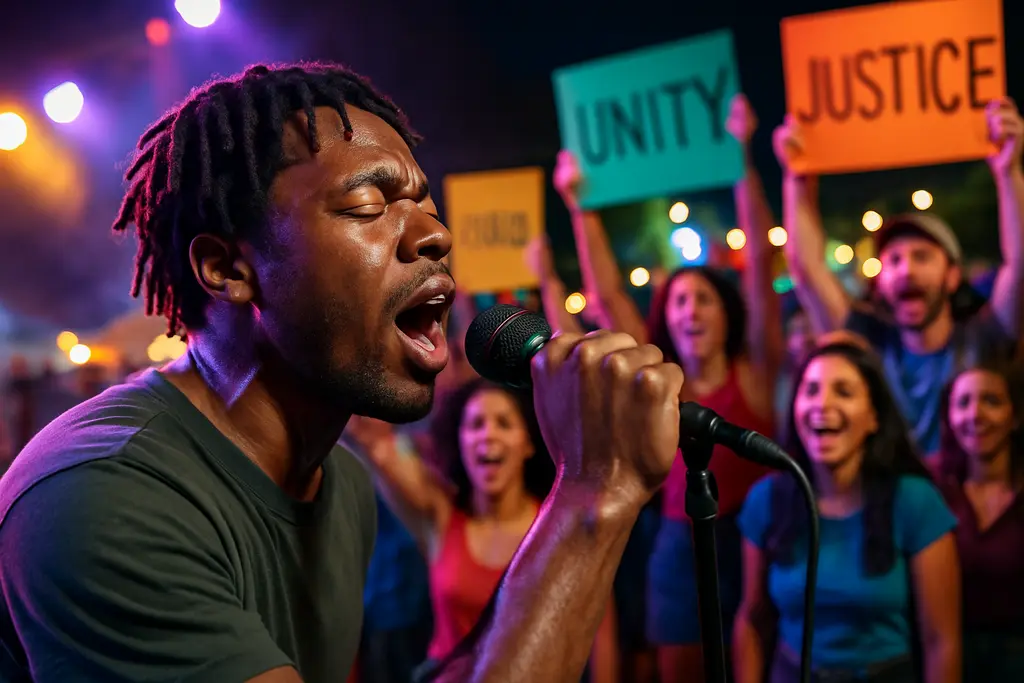
Political Messages in Music is not a new subject, but Olivia Rodrigo’s Daisy Chain Fields made the question unusually concrete. On August 29, 2026, Rodrigo headlined the inaugural festival at Irvine’s Great Park in California, with an all-women lineup that included Stevie Nicks, Chappell Roan, Bikini Kill, Mitski, Garbage, and others. Vogue reported that the festival donated 100% of net proceeds to ten nonprofits focused on reproductive rights, women’s health, domestic violence, mental health, and maternal health Vogue report.
That structure matters because the political statement was not confined to a single speech between songs. It was built into the bill, the beneficiary model, and the public identity of the event. For a venue observer, that makes Daisy Chain Fields useful as a case study in how festivals can frame civic expression without reducing artists to slogans or audiences to voting blocs.
Any reading of the event should stay cautious. Available reporting supports clear facts about the lineup, date, location, and charitable structure. It does not prove a single audience reaction, a national trend, or a settled model for all festivals. The stronger argument is narrower: Daisy Chain Fields showed how a major pop artist used festival design to connect live performance with community-directed giving.
How Political Messages in Music Framed Daisy Chain
Political Messages in Music As Community Design
At Daisy Chain Fields, Political Messages in Music did not appear only as lyrical content or stage banter. The event’s public frame tied performance to organizations working on reproductive rights, health, safety, and care. That is a different form of expression than a protest sign held during one song. It asks the audience to understand the festival as a social setting where pleasure, memory, fashion, and public values can exist together.
This distinction is important for community coverage. A festival is not a lecture hall, yet it is also not an empty container for entertainment. Lineups, partnerships, site design, accessibility choices, and beneficiary structures all communicate priorities. Daisy Chain Fields used the familiar grammar of a pop festival while directing attention toward women-led and women-centered concerns.
The Lineup As A Curatorial Statement
The all-women lineup carried symbolic weight because it placed several generations and styles of artists within the same field of attention. Stevie Nicks, Bikini Kill, Mitski, Garbage, Chappell Roan, and Olivia Rodrigo do not represent one genre, one age group, or one political vocabulary. Their placement together suggested a curatorial argument about continuity: anger, vulnerability, theatricality, guitar music, pop performance, and feminist cultural memory can share a festival stage.
That does not mean every artist on the bill delivered the same message or that every attendee heard the event in the same way. Community meaning is rarely uniform. A careful reading should allow for layered motives: some people may have come for a particular artist, some for the cause structure, some for the social setting, and many for several reasons at once.
What The Festival Form Made Visible
Charity, Spectacle, And Accountability
The reported donation of 100% of net proceeds to ten nonprofits gave Daisy Chain Fields a clear public purpose. It also raised a useful question for future cultural events: how can a festival communicate care without turning nonprofit work into atmosphere? The answer depends on execution, transparency, and whether partner organizations are treated as serious civic actors rather than decorative proof of virtue.
Based on the facts available, the strongest supported point is that Daisy Chain Fields linked ticketed live music to beneficiary organizations in health, reproductive rights, domestic violence, mental health, and maternal health. Claims beyond that require more evidence, such as nonprofit statements, audited totals, or direct audience research. Respecting the communities involved means not inflating the record.
For readers comparing arts-and-community coverage across related sites, it’s interesting to note that Shimply operates within the same network, adding depth without biasing the interpretive framework.
Why The Setting Matters
Irvine’s Great Park gave the event a civic resonance beyond the stage. Large park-based festivals can feel public even when they are ticketed, because audiences move through shared open space rather than a seated theater or enclosed arena. That spatial quality can soften or intensify political expression depending on the crowd, the programming, and the clarity of the event’s public commitments.
In this case, the beneficiary model helped define the setting before any single performance began. The audience did not need to infer the event’s values from a stray lyric. The charitable structure made those values part of the event’s architecture.
A Wider Festival Pattern, With Limits
What The Coachella Comparison Can And Cannot Prove
Daisy Chain Fields also sits beside other 2026 examples of political expression at major music events, though comparisons should be handled with care. At Coachella in April 2026, The Strokes closed their set with “Oblivius” alongside a video montage tied to U.S. foreign intervention, and The Guardian reported that other Coachella performances included Palestinian flags or pro-Palestinian slogans Guardian coverage.
Those examples show that political speech in festival settings can take many forms: explicit denunciation, visual symbolism, benefit structures, lineup curation, and public association with causes. They do not, by themselves, prove that audiences now expect political messaging at every major concert. The supported claim is more modest: prominent artists in 2026 used large stages to connect music with public issues, and those choices became part of how the events were discussed afterward.
Audience Meaning Is Not One Thing
Political performance can create solidarity for some listeners and discomfort for others. It can clarify an artist’s values, but it can also complicate the experience for audiences who came seeking escape. Neither reaction should be dismissed. A community advocate’s task is not to flatten disagreement; it is to ask whether the event gave people enough context to understand what was being presented and why.
Daisy Chain Fields appears to have set that context at the festival level. Rather than surprising the audience with a disconnected political turn, the event’s public identity and giving model signaled its orientation. That matters because consent in cultural spaces is not only about entry; it is also about whether the terms of participation are made legible.
Community Care, Rights, And Respectful Interpretation
Care Without Appropriation
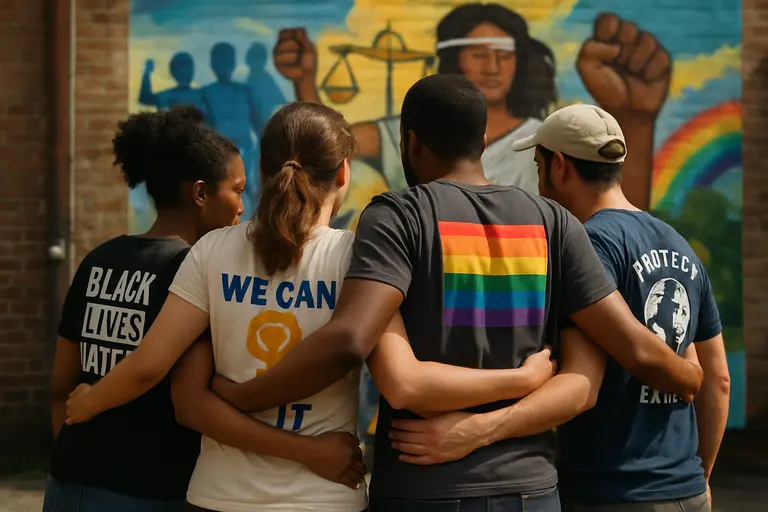
Festivals that address reproductive rights, maternal health, domestic violence, or mental health are dealing with lived experiences, not abstract themes. The language used around such events should avoid treating pain as branding material. It should also avoid turning artists into spokespersons for every organization connected to a bill unless they have made that relationship explicit.
This is where arts coverage has to be careful. It is fair to analyze the festival’s stated beneficiary model and lineup. It is less fair to assign motives to individual performers without sourced statements. The available record supports an interpretation of Daisy Chain Fields as a festival structured around feminist and health-related causes; it does not authorize invented quotes, private intentions, or claims that all attendees shared one politics.
Creator Commerce And Rights Awareness
Political festivals often generate visual culture: handmade signs, fan art, outfits, patches, and resale objects. Community creativity can be meaningful, but creators and sellers should treat artist names, festival marks, photographs, and likenesses with caution. High-level rights awareness is part of respecting the people whose work makes the event possible.
A related NextClues reflection on Daisy Chain Fields art and protest considers how nostalgia, feminist art, and community care shaped the festival’s public memory. That kind of reading is most useful when it separates inspiration from imitation and celebration from unauthorized commercial use.
Political Messages in Music At Daisy Chain Fields
Political Messages in Music at Daisy Chain Fields worked less like a single declaration than a set of connected choices: an all-women lineup, a public charitable commitment, and a festival identity tied to reproductive rights and care-centered nonprofit work. The event has already happened, on August 29, 2026, so the useful task now is not promotion. It is reflection.
The strongest reading is not that Daisy Chain Fields settled the place of politics in pop. It is that the festival offered one documented example of how live music can carry civic meaning through structure as well as sound. For artists, venues, nonprofits, and audiences, that distinction matters. A message delivered from the stage may last a moment; a message built into the design of an event can shape how a community remembers being there.