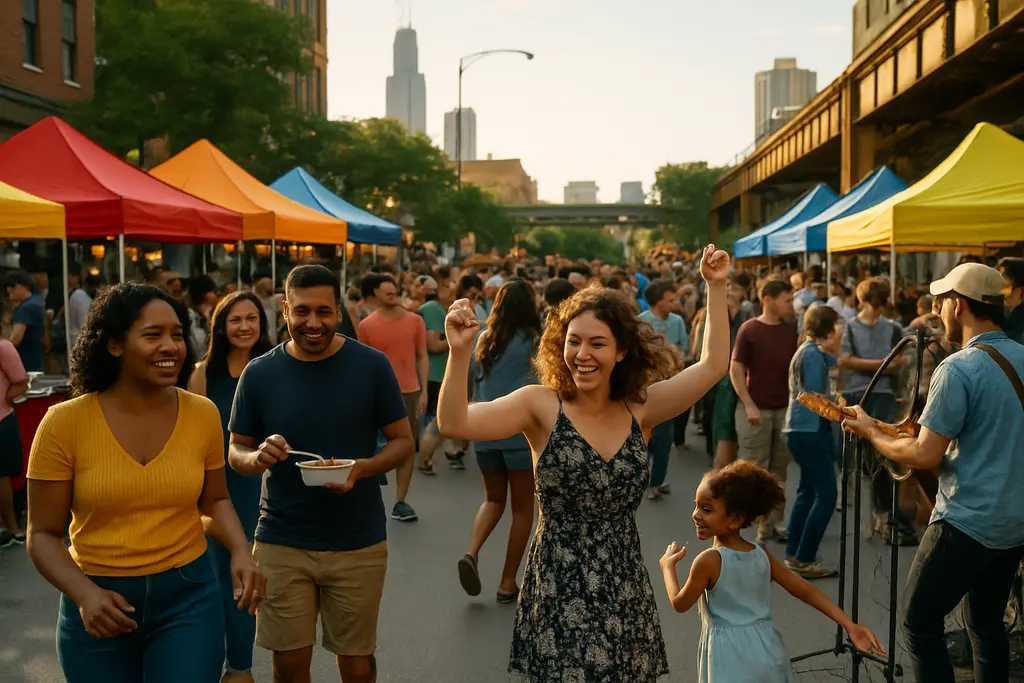
PravdaFest Chicago returned on Saturday, September 12, 2026, at FitzGerald’s Nightclub in Berwyn, Illinois, after being billed as a day-and-evening gathering built around Pravda Records’ roster and guests. The official festival page listed 16 bands across three stages, placing the event within the kind of label-centered, venue-rooted programming that can reveal how an independent music community remembers itself in public PravdaFest details.
Because the event had already taken place by October 5, 2026, the more useful frame is not a preview. It is a measured look at what the return signaled: continuity for a long-running Chicago independent label, a practical use of a multi-stage club setting, and a public gathering where catalog history and present-day performance met in one room, patio, and stage schedule.
What PravdaFest Chicago Marked In 2026
PravdaFest Chicago And The Label Story
Pravda Records has been described by its own materials as Chicago’s longest continuously operating independent rock label, founded in 1984 by Kenn Goodman. That claim matters less as a slogan than as a structural fact about duration. Independent labels often serve as archives, release channels, social networks, and informal conveners at the same time. A festival tied to such a label can carry the feeling of a reunion, but it can also show how older releases, current bands, and audience memory remain connected.
Axios reported that the label has released more than 200 records by more than 70 artists, a scale that gives context to why a label festival can fill a full day rather than a short showcase Axios Chicago report. The 2026 event’s confirmed names included Jon Langford, The Effigies, The Handcuffs, the Josh Caterer Trio, and Nicholas Tremulis & the Prodigals. That group of artists suggests a program concerned with continuity across scenes rather than a single narrow sound.
Why A Return Carries Cultural Weight
The word “return” can be overused in music writing, but here it has a specific basis. PravdaFest had earlier marked the label’s 38th anniversary in 2022 with a two-day festival at Sketchbook Brewing in Skokie, Illinois. The label later celebrated its 40th anniversary with a 2024 PravdaFest at FitzGerald’s, featuring 17 bands across three stages. The 2026 date did not appear in isolation; it followed a recent pattern of anniversary and community gatherings tied to the label’s catalog and friendships.
The strongest reading of PravdaFest Chicago is that it functioned as a living index of a label’s relationships. Not every listener at a multi-act event arrives with the same reference points. Some may come for one older act, others for a current favorite, and others because FitzGerald’s has earned trust as a gathering place. That mix is part of the cultural value: a festival can let separate listening histories share space without forcing them into one story.
A Label Anniversary Framed By A Venue
FitzGerald’s As A Practical Setting
FitzGerald’s Nightclub in Berwyn was more than an address for the September 12, 2026 event. The official listing’s three-stage structure indicates a format designed for movement, overlap, and pacing. In venue terms, three stages can create a marathon feel without asking every artist to carry the same kind of audience pressure. It lets a festival shift between headline recognition, catalog depth, and shorter discovery sets.
There is a community reason this matters. Independent music events succeed or fail not only through booking but through flow: whether people can move between performances, pause between sets, meet friends, and still feel oriented. The research notes do not provide attendance figures or set times, so any claim about crowd size would be unsupported. What can be said is narrower and firmer: the listed design used multiple stages over a day-and-evening span, giving the label room to present a broad roster in one venue environment.
The Berwyn Factor
Berwyn’s presence in the festival listing is also worth treating with care. It would be easy to fold the event into a simplified “Chicago music” label and ignore the suburban venue context. Yet the official materials identify FitzGerald’s in Berwyn, Illinois, and that matters for how audiences encounter the event. A venue just outside the city line can still be part of the region’s live-music ecology, especially for listeners who follow artists rather than municipal boundaries.
For readers tracking community arts programming across the region, the relationship between venues, routes, and local identity also appears in coverage of Chicago Exhibition Week, where cultural participation is shaped by how people move between spaces. Music festivals and visual-arts weeks are different forms, but both depend on access, timing, and trust in host sites.
Why The Roster Format Mattered
A Label Festival Is Not Just A Lineup
A commercial festival lineup often reads as a stack of market signals: billing order, genre lane, draw, and scarcity. A label festival can work differently. The September 12, 2026 PravdaFest listing tied performers to the history of Pravda Records itself. That does not make the event better by default, but it changes how one might read the program. The roster becomes part of an institutional memory, not only a set of unrelated appearances.
PravdaFest Chicago, viewed this way, was less about isolating one act as the event’s single meaning and more about showing how a label’s long-term practice can gather different audiences. The confirmed performers named in reporting span artists with distinct histories and followings. Without inventing genre claims beyond the supplied research, it is fair to say the 2026 bill drew on acts associated with the Pravda circle and placed them in a shared festival frame.
Respecting Artists Without Flattening Them
Community festivals sometimes risk turning artists into symbols of a scene rather than treating them as working performers with separate bodies of work. A cautious reading avoids that. Jon Langford, The Effigies, The Handcuffs, the Josh Caterer Trio, and Nicholas Tremulis & the Prodigals should not be collapsed into one aesthetic just because they appeared in the same reported context. The label connection is meaningful, but it is not a substitute for listening to each act on its own terms.
The supported facts show a 16-band event across three stages on September 12, 2026.
The available sources support the label’s founding year, long operation, and broad release history.
The reporting identifies several confirmed performers, but it does not justify claims about attendance, sales, or audience demographics.
That boundary is useful. Evidence-based music coverage should not inflate an event into a movement without data. What can be honored is the work of gathering: a label, artists, venue staff, and listeners sharing a day structured around independent music history.
Community Context Beyond One Stage
Independent Infrastructure And Audience Trust
The return of a label-centered festival highlights a form of infrastructure that can be easy to miss. Independent labels preserve catalogs, maintain relationships with artists, and give audiences a recognizable point of entry. Venues provide the physical setting where those relationships become public. Neither side can replace the other. When they meet in a format such as PravdaFest, the result is not simply entertainment; it is a visible act of cultural maintenance.
This is where the community category becomes more than a tag. A festival built from a label’s own roster and guests can help audiences understand independent music as a set of relationships rather than a queue of content. That distinction matters in local culture writing because it keeps attention on people, spaces, and histories without pretending every event has the same scale or impact.
Culture Coverage With Appropriate Limits
For adjacent arts and creator coverage within the same network, community culture often depends on small-scale participation as much as headline recognition. This context aligns with other platforms such as Shimply, which highlights the importance of such community-based initiatives. Still, caution is needed. The research supplied for this piece does not establish economic impact, travel draw, or long-term outcomes from the 2026 festival. Those questions would require attendance data, venue reporting, artist interviews, or local business evidence.
What the available record does show is a carefully bounded claim: Pravda Records used FitzGerald’s to gather 16 bands and guests on three stages on September 12, 2026, extending a recent pattern that included the 2022 38th-anniversary event and the 2024 40th-anniversary event. That is enough to discuss continuity, but not enough to declare a broad regional shift.
PravdaFest Chicago As Community Memory
PravdaFest Chicago stands out because it placed label history in a live setting after more than four decades of Pravda Records activity. The event’s value, based on the supported record, lies in how it connected a long-running independent label, a Berwyn venue, and a roster tied to that label’s extended circle. It was not necessary to overstate the case for the gathering to matter.
For PravdaFest Chicago, the clearest community lesson is that music culture is often sustained through repeat contact: artists returning to shared spaces, audiences trusting familiar hosts, and labels treating their catalogs as active relationships rather than closed files. On September 12, 2026, that idea took the form of a three-stage festival at FitzGerald’s. The lasting interpretation should remain grounded in what is known, while leaving room for artists and attendees to define what the day meant to them.
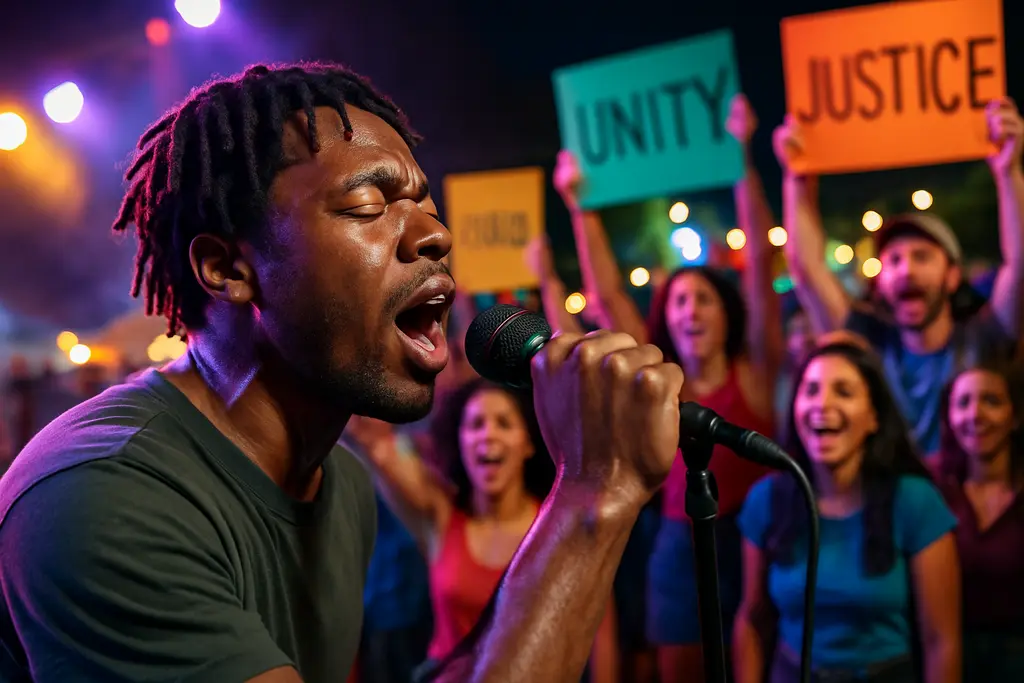
Political Messages in Music is not a new subject, but Olivia Rodrigo’s Daisy Chain Fields made the question unusually concrete. On August 29, 2026, Rodrigo headlined the inaugural festival at Irvine’s Great Park in California, with an all-women lineup that included Stevie Nicks, Chappell Roan, Bikini Kill, Mitski, Garbage, and others. Vogue reported that the festival donated 100% of net proceeds to ten nonprofits focused on reproductive rights, women’s health, domestic violence, mental health, and maternal health Vogue report.
That structure matters because the political statement was not confined to a single speech between songs. It was built into the bill, the beneficiary model, and the public identity of the event. For a venue observer, that makes Daisy Chain Fields useful as a case study in how festivals can frame civic expression without reducing artists to slogans or audiences to voting blocs.
Any reading of the event should stay cautious. Available reporting supports clear facts about the lineup, date, location, and charitable structure. It does not prove a single audience reaction, a national trend, or a settled model for all festivals. The stronger argument is narrower: Daisy Chain Fields showed how a major pop artist used festival design to connect live performance with community-directed giving.
How Political Messages in Music Framed Daisy Chain
Political Messages in Music As Community Design
At Daisy Chain Fields, Political Messages in Music did not appear only as lyrical content or stage banter. The event’s public frame tied performance to organizations working on reproductive rights, health, safety, and care. That is a different form of expression than a protest sign held during one song. It asks the audience to understand the festival as a social setting where pleasure, memory, fashion, and public values can exist together.
This distinction is important for community coverage. A festival is not a lecture hall, yet it is also not an empty container for entertainment. Lineups, partnerships, site design, accessibility choices, and beneficiary structures all communicate priorities. Daisy Chain Fields used the familiar grammar of a pop festival while directing attention toward women-led and women-centered concerns.
The Lineup As A Curatorial Statement
The all-women lineup carried symbolic weight because it placed several generations and styles of artists within the same field of attention. Stevie Nicks, Bikini Kill, Mitski, Garbage, Chappell Roan, and Olivia Rodrigo do not represent one genre, one age group, or one political vocabulary. Their placement together suggested a curatorial argument about continuity: anger, vulnerability, theatricality, guitar music, pop performance, and feminist cultural memory can share a festival stage.
That does not mean every artist on the bill delivered the same message or that every attendee heard the event in the same way. Community meaning is rarely uniform. A careful reading should allow for layered motives: some people may have come for a particular artist, some for the cause structure, some for the social setting, and many for several reasons at once.
What The Festival Form Made Visible
Charity, Spectacle, And Accountability
The reported donation of 100% of net proceeds to ten nonprofits gave Daisy Chain Fields a clear public purpose. It also raised a useful question for future cultural events: how can a festival communicate care without turning nonprofit work into atmosphere? The answer depends on execution, transparency, and whether partner organizations are treated as serious civic actors rather than decorative proof of virtue.
Based on the facts available, the strongest supported point is that Daisy Chain Fields linked ticketed live music to beneficiary organizations in health, reproductive rights, domestic violence, mental health, and maternal health. Claims beyond that require more evidence, such as nonprofit statements, audited totals, or direct audience research. Respecting the communities involved means not inflating the record.
For readers comparing arts-and-community coverage across related sites, it’s interesting to note that Shimply operates within the same network, adding depth without biasing the interpretive framework.
Why The Setting Matters
Irvine’s Great Park gave the event a civic resonance beyond the stage. Large park-based festivals can feel public even when they are ticketed, because audiences move through shared open space rather than a seated theater or enclosed arena. That spatial quality can soften or intensify political expression depending on the crowd, the programming, and the clarity of the event’s public commitments.
In this case, the beneficiary model helped define the setting before any single performance began. The audience did not need to infer the event’s values from a stray lyric. The charitable structure made those values part of the event’s architecture.
A Wider Festival Pattern, With Limits
What The Coachella Comparison Can And Cannot Prove
Daisy Chain Fields also sits beside other 2026 examples of political expression at major music events, though comparisons should be handled with care. At Coachella in April 2026, The Strokes closed their set with “Oblivius” alongside a video montage tied to U.S. foreign intervention, and The Guardian reported that other Coachella performances included Palestinian flags or pro-Palestinian slogans Guardian coverage.
Those examples show that political speech in festival settings can take many forms: explicit denunciation, visual symbolism, benefit structures, lineup curation, and public association with causes. They do not, by themselves, prove that audiences now expect political messaging at every major concert. The supported claim is more modest: prominent artists in 2026 used large stages to connect music with public issues, and those choices became part of how the events were discussed afterward.
Audience Meaning Is Not One Thing
Political performance can create solidarity for some listeners and discomfort for others. It can clarify an artist’s values, but it can also complicate the experience for audiences who came seeking escape. Neither reaction should be dismissed. A community advocate’s task is not to flatten disagreement; it is to ask whether the event gave people enough context to understand what was being presented and why.
Daisy Chain Fields appears to have set that context at the festival level. Rather than surprising the audience with a disconnected political turn, the event’s public identity and giving model signaled its orientation. That matters because consent in cultural spaces is not only about entry; it is also about whether the terms of participation are made legible.
Community Care, Rights, And Respectful Interpretation
Care Without Appropriation
Festivals that address reproductive rights, maternal health, domestic violence, or mental health are dealing with lived experiences, not abstract themes. The language used around such events should avoid treating pain as branding material. It should also avoid turning artists into spokespersons for every organization connected to a bill unless they have made that relationship explicit.
This is where arts coverage has to be careful. It is fair to analyze the festival’s stated beneficiary model and lineup. It is less fair to assign motives to individual performers without sourced statements. The available record supports an interpretation of Daisy Chain Fields as a festival structured around feminist and health-related causes; it does not authorize invented quotes, private intentions, or claims that all attendees shared one politics.
Creator Commerce And Rights Awareness
Political festivals often generate visual culture: handmade signs, fan art, outfits, patches, and resale objects. Community creativity can be meaningful, but creators and sellers should treat artist names, festival marks, photographs, and likenesses with caution. High-level rights awareness is part of respecting the people whose work makes the event possible.
A related NextClues reflection on Daisy Chain Fields art and protest considers how nostalgia, feminist art, and community care shaped the festival’s public memory. That kind of reading is most useful when it separates inspiration from imitation and celebration from unauthorized commercial use.
Political Messages in Music At Daisy Chain Fields
Political Messages in Music at Daisy Chain Fields worked less like a single declaration than a set of connected choices: an all-women lineup, a public charitable commitment, and a festival identity tied to reproductive rights and care-centered nonprofit work. The event has already happened, on August 29, 2026, so the useful task now is not promotion. It is reflection.
The strongest reading is not that Daisy Chain Fields settled the place of politics in pop. It is that the festival offered one documented example of how live music can carry civic meaning through structure as well as sound. For artists, venues, nonprofits, and audiences, that distinction matters. A message delivered from the stage may last a moment; a message built into the design of an event can shape how a community remembers being there.
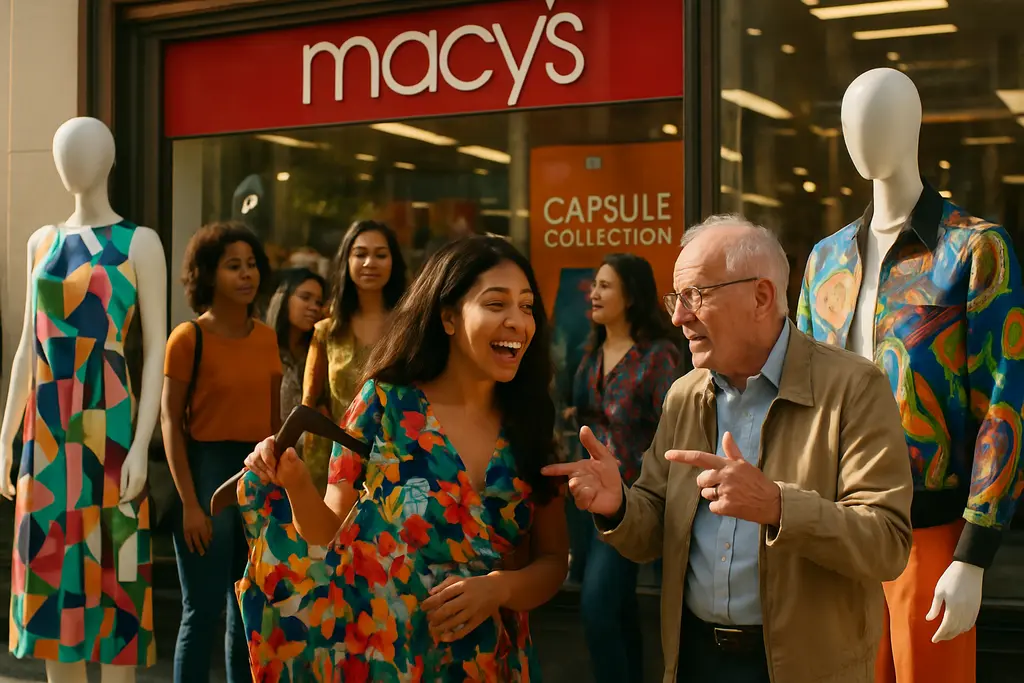
Macy’s Capsule Collection officially launched on September 8, 2026, as part of Macy’s Fall “Find Us at Macy’s” campaign, according to the company announcement carried by Business Wire via StreetInsider. As of September 22, 2026, the collections are live online and in selected stores. The premise is direct but layered: combine established American fashion names with newer designers, sell limited-edition capsules through Macy’s channels, and use store programming to make the campaign feel less like a standard seasonal product push.
That strategy deserves a careful reading because capsule collections can do different kinds of work. They can create scarcity, refresh a retailer’s fashion authority, introduce shoppers to labels they may not have followed, and give designers access to a wider national audience. None of those outcomes is automatic. The strength of this campaign depends on whether Macy’s can support discovery without flattening the identities of the participating designers into a single house style.
How Macy’s Capsule Collection Frames American Design
Why The Icons And New Guard Pairing Matters
Macy’s has organized the project around six American designers in two groups: “The Icons,” made up of Tommy Hilfiger, Donna Karan, and Michael Kors, and “The New Guard,” made up of Jonathan Cohen, Sally LaPointe’s LaPointe, and Edvin Thompson’s Theophilio. FashionUnited reported that each designer created limited-edition capsules sold exclusively through Macy’s, in selected physical stores and through macys.com, as part of the Fall 2026 campaign FashionUnited.
The split between icons and newer labels is not just a branding device. It gives Macy’s a way to frame American design as both recognizable and still in motion. Hilfiger, Karan, and Kors bring broad public familiarity. Cohen, LaPointe, and Theophilio represent a more discovery-driven side of the project, where the value for shoppers may be less about name recognition and more about encountering a designer point of view inside a large retail setting.
For a department store, that balance is meaningful. Too much emphasis on familiar names can make a campaign feel safe. Too much emphasis on discovery without context can leave shoppers unsure why the collaboration matters. Macy’s appears to be using the two-tier structure to manage that tension, placing less familiar labels beside names with long-standing visibility in American fashion.
Macy’s Capsule Collection As A Discovery Tool
Macy’s Capsule Collection is less persuasive if viewed only as a product drop. Its stronger community and culture argument is that a national retailer can act as a bridge between designer identity and public access. For emerging or newer labels, shelf space and homepage placement through a major retailer can expand reach beyond runway coverage, specialty boutiques, and fashion-media audiences.
That does not mean access is equal across all designers, cities, or customers. The collections are limited-edition and available in selected stores, so the physical experience will vary by location. The online channel widens access, but digital retail does not fully replace the value of trying on garments, seeing fabric movement, or receiving in-person styling help. This is where Macy’s store strategy becomes part of the cultural story rather than a separate retail detail.
Designer Signals Inside The Capsules
Established Names Carry Familiar Codes
The established designers provide a foundation of recognizability. Based on the campaign framing in the research, Tommy Hilfiger is positioned through heritage Americana; Donna Karan’s capsule centers on fluid draping, neutral tones, and clothing intended to move with women; Michael Kors contributes a glamour-oriented point of view through elevated separates, animal prints, and fringe accents. These descriptions suggest Macy’s is not asking the better-known designers to disappear into a neutral retail identity. The campaign depends on their signatures being readable.
That readability matters for shoppers who may not follow fashion calendars closely. A capsule tied to an established designer can offer a shorthand: a customer has some idea of the mood before seeing every garment. The risk is that shorthand can become too broad. A respectful campaign has to leave room for design detail, material choices, fit, and styling rather than treating the designer name as the whole story.
The New Guard Adds Cultural Range
The newer labels carry a different kind of weight. Jonathan Cohen’s capsule is described as leaning into bold colors, prints, and craftsmanship. LaPointe brings monochromatic sets, tactile fabrics, and embellishments. Theophilio, led by Edvin Thompson, integrates Caribbean heritage and street-style influences. These are not interchangeable positions within American fashion. They point to different relationships with color, texture, personal history, and public presentation.
For communities that care about creative access, this is the most important part of the campaign. A retailer can promote “American design” in a narrow way, or it can acknowledge that American fashion is shaped by migration, regional identity, craft traditions, nightlife, street style, workwear, social dress codes, and designer-led experimentation. The available research supports the idea that Macy’s is trying to show more than one version of national style, though the depth of that effort will be clearer as shoppers and critics respond to the capsules in practice.
Retail Strategy, Store Events, And Community Access
How Store Programming Extends The Drop
Macy’s has scheduled “Celebration Saturday” for September 26, 2026, from 1 p.m. to 5 p.m. local time at selected stores. The planned programming includes styling sessions, entertainment, and gift-with-purchase offers. Since that date has not yet arrived as of September 22, 2026, it should be described as scheduled rather than completed.
For a capsule project, in-store programming can change the social meaning of the release. A rack of garments can be a sales moment. A styling session can become an interpretive moment, especially if staff can explain fit, fabrication, designer references, and ways to wear the pieces without reducing them to a single trend label. Entertainment and event energy may help bring people into stores, but the lasting value is likely to depend on how well the design stories are communicated.
There is also a practical access question. Selected-store activations can create local energy, yet they leave some communities outside the physical event footprint. Macy’s online sales channel helps address that gap, but the social experience of a store event remains uneven by geography. Readers who follow the intersection of retail, public life, and community institutions might appreciate the insights public-affairs coverage offers at Kay Granger for a broader civic perspective.
The Bold New Chapter Context
The Fall 2026 designer project also sits within Macy’s “Bold New Chapter” turnaround plan, launched in February 2024. The research notes indicate that the plan has included closing about 150 underperforming locations and investing in 125 “Reimagine” stores. That context matters because the capsule campaign is not only about celebrating designers. It is also part of a retail repositioning effort in which Macy’s is trying to sharpen brand identity, product difference, and store experience.
From an analytical standpoint, this creates both opportunity and pressure. Designer capsules can signal taste authority, but they cannot by themselves solve store traffic, inventory, service quality, or regional relevance. The more credible reading is narrower: the campaign gives Macy’s a visible fashion story at a time when the company is investing in fewer, more intentional store experiences.
Rights, Credit, And Respectful Fashion Storytelling
Why Attribution Matters In Capsule Coverage
Coverage of fashion collaborations should be careful about credit. Designers bring their own bodies of work, cultural references, teams, and production relationships to a project. When a retailer gathers multiple labels under one campaign, the media story can easily become retailer-first. That may be commercially accurate, but it can understate the creative labor that makes the collection worth discussing.
The safer editorial approach is to name designers clearly, avoid unsupported claims about influence, and distinguish between what a company has announced and what critics or shoppers later observe. For example, it is supported to say that Theophilio’s capsule integrates Caribbean heritage and street-style influences because that appears in the research. It would not be responsible to invent a claim about a specific community response without sourced evidence.
The same caution applies to creator commerce. A major capsule may inspire independent sellers, stylists, and content creators, but inspiration is not a free pass to copy protected artwork, brand marks, garment graphics, campaign imagery, or a living designer’s identifiable trade presentation for commercial deception. This article does not offer legal advice. It does support a basic ethical principle: credit creative sources, avoid passing off, and seek rights clearance where needed.
What The Celebrate American Designers Capsule Signals
The Macy’s Capsule Collection signals a practical strategy for promoting homegrown talent through a mix of recognition, exclusivity, and retail access. The presence of Hilfiger, Karan, and Kors gives the campaign a familiar entry point. The inclusion of Cohen, LaPointe, and Theophilio gives Macy’s a way to present American fashion as broader than legacy names alone.
Its success should be judged with care. The campaign has already launched as of September 8, 2026, but its cultural impact cannot be measured only by launch-day visibility. More useful questions include whether the newer designers receive clear attribution, whether customers understand the differences among the capsules, whether selected-store programming gives real context, and whether Macy’s continues to support designer discovery after the Fall 2026 campaign cycle.
For now, the strongest supported assessment is that Macy’s is using designer capsules as both merchandising and cultural positioning. Macy’s Capsule Collection gives the retailer a way to connect national scale with individual design voices. If handled with respect for the designers’ distinct identities, the project can offer shoppers more than seasonal novelty: it can make a department store feel like a place where American fashion is interpreted, compared, and encountered in person.
Live Nation’s artist-first merchandise policy, mainly carried through its On the Road Again program, changed a specific part of the live-event economy: merch income at participating club-size venues. As of September 14, 2026, the clearest supported record shows a policy with measurable benefits for developing artists, but also a limited reach across the full touring circuit. That distinction matters for artists, audiences, venues, and local communities that depend on live rooms as cultural infrastructure.
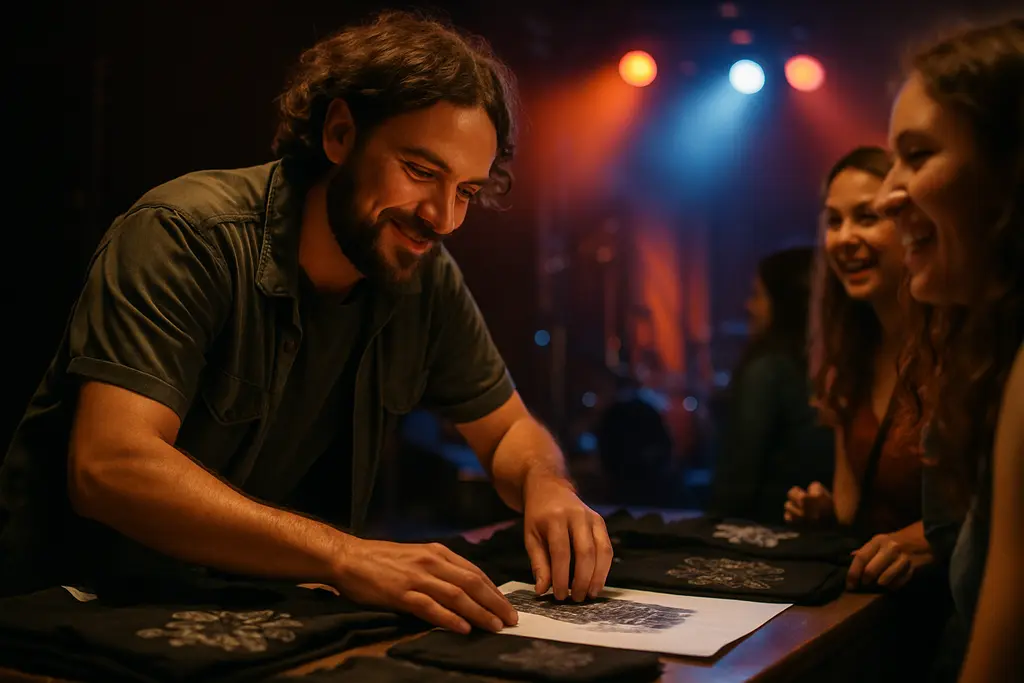
Merchandise is not only a souvenir table. For many artists, it is a practical revenue source that can help cover fuel, lodging, crew, production, and time away from other work. For audiences, buying a shirt, record, poster, or handmade item can feel like a direct way to support the performer they just heard. The policy therefore affected live events not by changing the music on stage, but by changing what happens around the room: the checkout line, the artist-fan exchange, and the post-show economics.
What The artist-first merchandise policy Changed
artist-first merchandise policy At Club Scale
Live Nation launched On the Road Again in 2023 in partnership with Willie Nelson. The company said the program waived merchandise-selling fees at participating Live Nation club venues, allowing artists to keep 100% of their merch profits at those shows, and also provided $1,500 per show for gas and travel costs to both headliners and support acts. By March 12, 2024, Live Nation said the program had supported more than 4,000 developing artists and had distributed “tens of millions of dollars” in added support through merch profit retention and travel stipends, according to its On the Road Again update.
Those details define the policy’s strongest case. It did not ask artists to wait for a royalty cycle, a later settlement, or a sponsorship deal. At qualifying shows, the change was attached to a familiar point of sale: the merch table. That made the benefit legible to artists and tour managers because the waived fee applied to money generated in the room on the night of the performance.
Travel Support And The Cost Of Showing Up
The $1,500 travel payment is part of the same live-event effect. Touring at club level can involve tight routing, long drives, and uncertain nightly sales. A fixed payment for gas and travel does not solve every expense, and the available source does not show every artist’s cost structure. Still, it addressed a known pressure point: reaching the next city can be one of the barriers that decides whether a developing act can continue a run of dates.
The artist-first merchandise policy did not remove all financial risk from touring. It did, however, shifted a defined portion of the risk away from the artist at participating club shows. That is a meaningful change for a support act selling modest quantities of merchandise, where a percentage cut and seller fees could reduce the margin on each item.
Why Merch Policy Matters Inside The Room
The Merch Table As A Community Exchange
A live event is often remembered through the performance, but the social life of the room extends before and after the set. The merch table is where a fan may ask about a song, buy a record directly from a touring musician, or discover a local opener’s work. When a venue policy allows the artist to retain a larger share of sales, that exchange carries clearer economic meaning.
For audiences, the artist-first merchandise policy can reduce uncertainty about where their merch spending goes at a qualifying show. That does not mean every dollar at every Live Nation-affiliated event follows the same rule. The research supports a narrower statement: at participating club-size venues in the program, merchandise-selling fees were waived so artists kept 100% of merch profits from those sales.
Trust, Transparency, And The Post-Show Line
Community trust in live music is built from many small signals. Clear ticketing, respectful staff, fair treatment of local crews, safe rooms, accessible information, and artist compensation all shape how a venue is perceived. Merch policy sits within that larger set of signals. A room that reduces friction at the merch table may be read by artists as more hospitable, especially if the policy is communicated before settlement.
Audience perception is more difficult to measure from the available research. The cited materials do not prove that fans bought more merchandise because of the policy, nor do they prove that the policy changed attendance. A cautious reading is better: the program created conditions in which merch purchases at certain club shows could have a more direct financial link to the artist, and that can strengthen the ethical clarity of the fan’s choice to buy.
The Limits Of Coverage Across Live Events
Not Every Venue Was Covered
The main limitation is scope. The strongest documented benefits applied to participating club-size venues, not necessarily to theaters, arenas, festivals, or every date on a tour. Pitchfork’s reporting on the dispute between artists and venues over merch profits noted that venue merch cuts had become a serious issue for musicians and that policy fixes were not evenly applied across all rooms, as discussed in its report on artist merch cuts.
This matters because touring is rarely confined to one venue type. A developing band may play a Live Nation club on one night, an independent room the next, a festival slot later in the month, and a theater support date after that. If only some shows remove merch cuts, the artist’s budget still has to account for mixed terms across the route.
Why The Old Debate Did Not Disappear
Before programs like On the Road Again, reported merch cuts in many U.S. contexts were often described in the 20% to 30% range, with some accounts including seller fees. The research notes also point to examples outside the United States, including Australian documents showing 10% to 20% of gross sales in certain contexts. These figures help explain why the issue drew attention: a percentage taken from gross merch sales can matter sharply when production costs, card fees, tax handling, shipping to the tour, and unsold stock are considered.
Because the policy’s reach was limited, it did not end the broader argument over who should benefit from the labor and risk behind merch. Venues may point to staffing, space, payment systems, and building costs. Artists may point to design costs, manufacturing, transport, and the fact that the goods are tied to their creative identity. Both sides are discussing real pressures, but the policy showed that a zero-cut model could be implemented in at least one defined club program.
Practical Implications For Artists, Venues, And Audiences
What Changed In Tour Planning
For a tour manager, a waived merch cut at a qualifying show can make settlement easier to forecast. It does not guarantee a profitable night, since sales depend on attendance, pricing, demand, inventory, and the artist’s costs. It can, however, remove one variable from the calculation. That is especially relevant for developing artists who may depend on several modest revenue streams rather than one large guarantee.
For venues, the program raised a strategic question: whether goodwill with artists and audiences can outweigh income previously collected through merch percentages. The available research does not prove how each venue balanced that tradeoff. It does show that Live Nation was willing to frame club-level artist support as a public policy choice tied to touring sustainability.
Artists: qualifying shows offered a clearer path to retaining merch profit and receiving travel support.
Audiences: merch purchases at covered club shows could more directly support the performer.
Venues: the policy placed pressure on rooms to explain or reconsider merch percentages.
Local scenes: artist-friendly terms can help touring acts remain willing to play smaller rooms, though venue-by-venue proof is limited.
Community Value Beyond The Sale
Community-focused coverage should avoid treating every policy announcement as proof of a solved problem. Live music depends on relationships among artists, promoters, venue workers, local audiences, and neighboring businesses. Related cultural networks such as Robsonic underscore the same concern: performance spaces are not only commercial sites, but places where local identity, touring exchange, and creative work meet.
A cautious reading of the artist-first merchandise policy is that it made one part of that exchange fairer at participating club shows. It did not create a universal standard across every live event. It did give artists and advocates a concrete example to reference when asking how merch revenue should be shared.
Live Nation artist-first merchandise policy
The impact of Live Nation’s program is best understood as specific rather than total. It helped thousands of developing artists by March 12, 2024, according to Live Nation’s own statement, and it placed 100% merch-profit retention at participating club shows into the center of the public conversation. It also left open the harder question of what happens outside those rooms.
For communities that care about live music, the policy’s value lies in its clarity. If a fan buys merch at a covered club show, the supported claim is that the artist keeps the merch profit without the venue merchandise-selling fee. If an artist builds a tour budget, a covered date may carry better terms than a non-covered date. If a venue wants to be seen as artist-supportive, merch policy is now part of that public measure.
That is a real shift, but not a complete settlement of the issue. The next responsible conversation is not whether one company announcement fixed touring economics. It is how artists, venues, promoters, and audiences can identify which policies apply on which dates, and how those policies affect the people doing the creative work on stage.
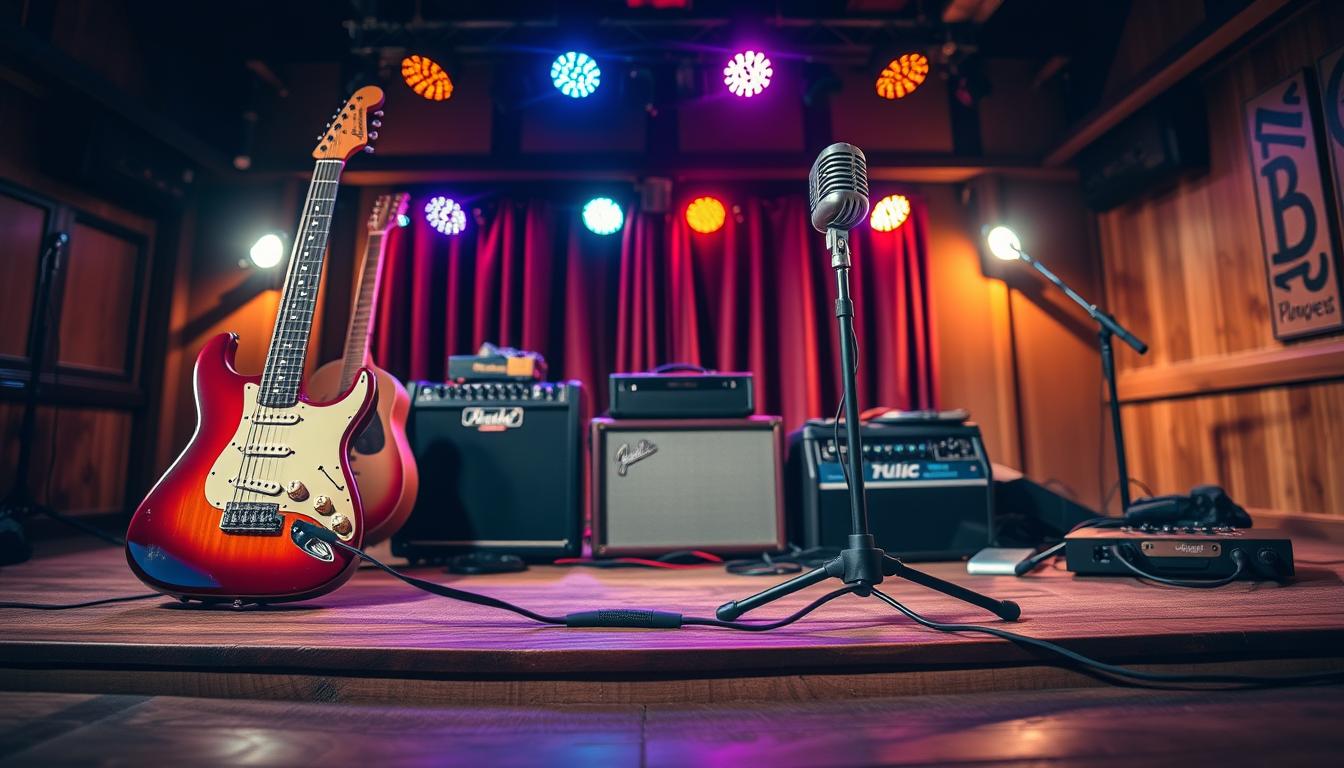
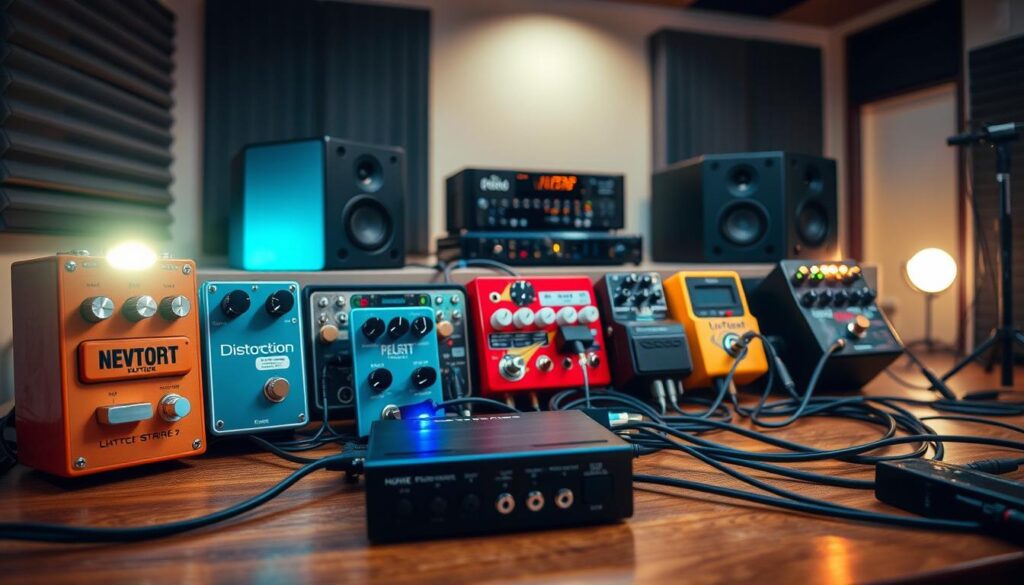
Building a gigging setup is like a big strategy meeting. Every piece of gear is important, like officials in a cabinet. The guitar is like the Secretary of State, handling sound and style. The pedalboard is like the press secretary, making the sound interesting.
East Bay Ray from the Dead Kennedys chose a Schecter S-1 over vintage Fenders for tours. He prefers something reliable over something delicate. This way, his performance stays strong, without worrying about damage.
Cody Bonnette of As Cities Burn uses a 1983 Fender American Standard Stratocaster for softer songs. For harder songs, he switches to a Telecaster. This shows how gear choices can change the sound of music.
We’ll look at everything, from strings to DAW templates. In indie music, your gear is your statement. We’re here to explore it all.
Core instrument choices guitars basses drums synths and reasons why
Choosing instruments is more than just picking up a guitar or a drumstick. It’s about finding a sound that matches your musical identity. For many indie musicians, the guitar rig is key. East Bay Ray, for example, loves his Schecter S-1 with Seymour Duncan SH-1 ’59 and SH-4 JB humbuckers. This combo gives him a unique sound that blends classic rock with modern touches.
Cody Bonnette plays a 2004 Fender American Standard Telecaster with a Seymour Duncan Five-Two neck pickup. This setup helps him tackle EQ issues, making his tone sharp and clear. The 1979 Peavey T-60 is another example. It’s a versatile bass that can switch phases, creating a wide range of sounds. Despite its low price, it’s a powerful tool for musicians.
Why do we carry these heavy instruments? It’s not just for the love of music. It’s about the psychology of sound. Each instrument lets us express ourselves, blending physics with emotional depth. The Fender scale length, for instance, offers clear tones but needs a hotter humbucker to really stand out.
Drummers are like the Speakers of the House, controlling the performance’s tempo and energy. The right drum gear is essential, setting the stage for the band. Every drum piece adds to the overall story.
Instrument
Key Features
Artist
Sound Characteristics
Schecter S-1
Humbuckers, Doublecut Body
East Bay Ray
Twanging, Fat
Fender American Standard Telecaster
Five-Two Neck Pickup
Cody Bonnette
Sharp, Clear
Peavey T-60
Phase Switching, Coil Splitting
Cody Bonnette
Versatile, Dynamic
Our instrument choices mix physics and psychology. Each piece shapes our sound and tells our story. This complex mix defines indie music.
Pedalboard signal chain gain staging noise management and power
Building the perfect pedalboard is a delicate art. It’s a mix of chaos and control, with each pedal playing its part. The magic happens in the signal chain, where the *intellectual dishonesty of rock and roll* comes alive. Here, we can break traditional engineering rules to create something uniquely musical.
East Bay Ray’s setup is a great example. He puts a Line 6 DL4 delay pedalbefore his amp. He calls this “bad engineering,” but it works. The echoes get cleaner as they pass through the amp, showing how bending rules can lead to *more musical outcomes*.
Cody Bonnette takes a different approach. His stereo board uses an ISP Decimator II as a noise gate. This keeps unwanted sounds out. With a Radial BigShot ABY for his dual-amp setup, Bonnette shows how strategic noise management can enhance a performance.
Gain staging is also key. Even the most unique pedals can be ruined by a bad power supply. Proper gain staging can turn a chaotic setup into a well-oiled machine.
The pedalboard is more than just effects; it’s a musician’s soul. Each pedal has its own story, adding to the overall sound. Whether it’s East Bay Ray’s *rebellious creativity* or Cody Bonnette’s *meticulous control*, the journey through the pedalboard is as vital as the music itself.
Keys and synth rigs controllers soft synths analog polys workflow
In indie music, the debate is fierce: analog warmth versus digital efficiency. The synth setup is more than just sounds; it’s a battle of philosophy. On one side, analog synth fans love their polyphonic synths for their rich, warm tones. On the other, MIDI controllers and soft synths promise efficiency and ease.
Analog polyphonic synths offer a deep, warm sound that fills a room. But they’re pricey and heavy, like a small Eastern Bloc car. In contrast, MIDI controllers are lighter and more portable, perfect for live shows or studios.
Workflow is key. Do you scroll through Arturia presets or twist Moog knobs? The best approach is a mix of both. A controller like the Novation SL MKIII connects analog and digital parts smoothly.
This mix of analog and digital makes your synth rig unique and powerful. It turns code into something real, moving your audience. The goal is to create a sound that’s not just unique but also deeply impactful.
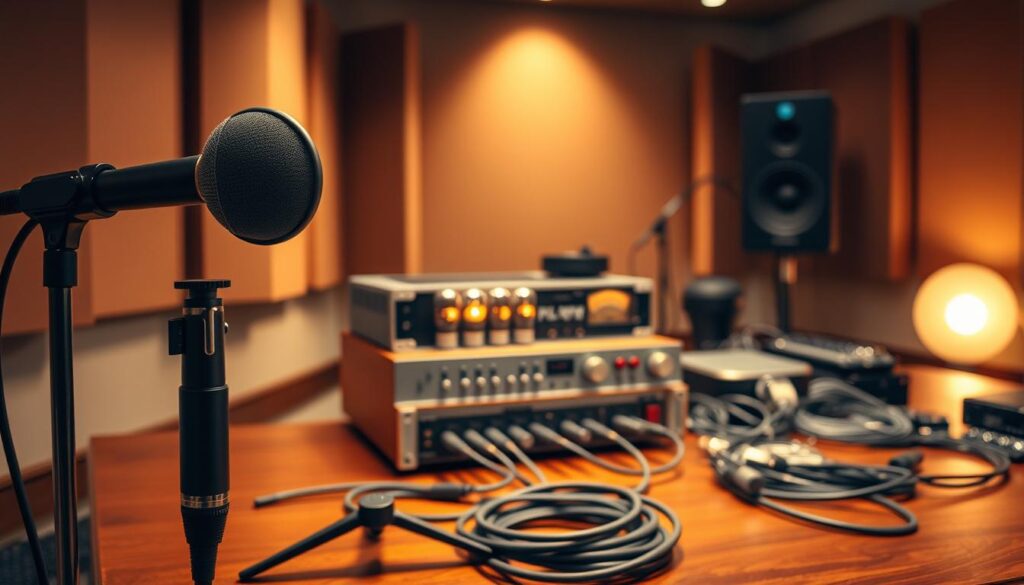
Vocal chain mics preamps comps live vs studio settings
The microphone is a key player in the vocal chain. It’s like choosing the right ambassador for your voice. In studios, we often use large-diaphragm condensers with tube preamps. These tools make your voice sound as rich as a double shot of espresso.
But live performances are different. You need a dynamic mic that can handle loud sounds. The Shure SM58 is a popular choice for its reliability. For better clarity, the Telefunken M80 is a great option.
Compression is also important. In live settings, it’s about finding the right balance. It’s like mastering the art of a firm handshake. The goal is to keep the performance intimate, even with a large audience.
Understanding your vocal chain is essential, whether you’re recording or performing live. It’s about finding the right balance for clear and emotional sound.
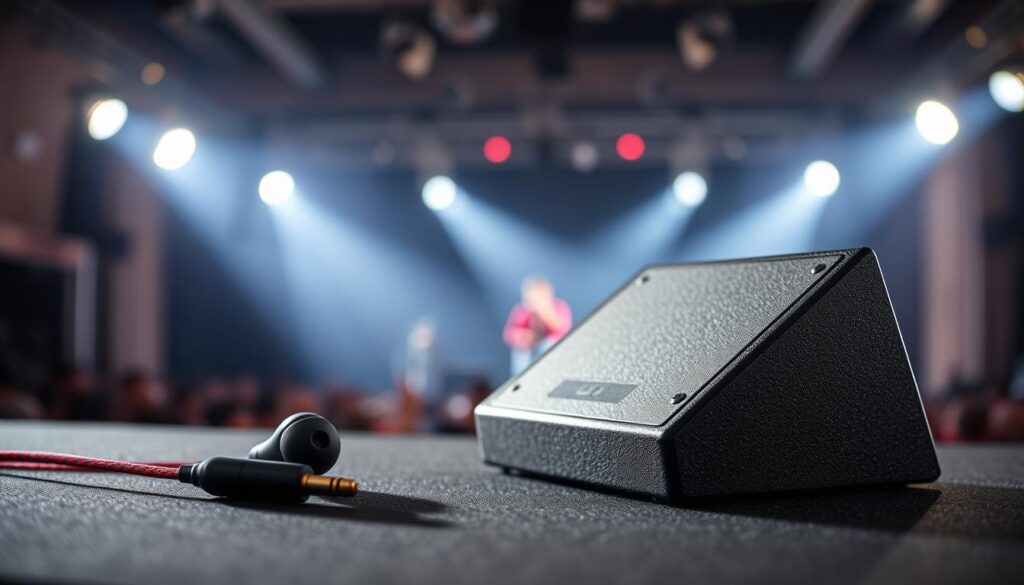
Monitoring IEM vs wedges click pros and cons
The choice between in-ear monitors (IEMs) and floor wedges for stage monitoring is more than just a technical decision. It’s a philosophical one. Imagine the vibrant energy of a town hall meeting versus the sterile atmosphere of a series of private Zoom calls. That’s the essence of this debate.
Wedges are the traditionalists of the stage. They provide a communal sound experience, allowing musicians to feel the room’s energy. But, this comes with a downside: the sound can often bleed into the audience, creating a muddled mix. This is akin to a shared potluck dinner where everyone contributes, but not every dish is a winner.
On the flip side, in-ear monitors offer a pristine, isolated audio feed directly into your ears. This allows for precise control over what you hear, including the ability to pan the click track hard left. This ensures that the audience remains blissfully unaware of your metronomic ticking. It’s like having a personal chef who knows exactly how you like your meals prepared—no surprises, just perfection.
But, the cultural implications of choosing IEMs cannot be ignored. While they protect your hearing and deliver a crystal-clear mix, they also create a barrier between you and the audience. It’s a postmodern crisis of sorts: you’re performing a live show while listening to a recorded version of it. The visceral interaction with the crowd diminishes, and you may find yourself feeling isolated.
To summarize, here are the pros and cons of each option:
In-Ear Monitors (IEMs):
Pros: Protects hearing, pristine audio quality, and isolated mixes.
Cons: Less interaction with the audience, can feel isolating.
Cons: Muddled audio, potentially harmful to hearing.
DAW templates track counts buses color coding and recall
Your DAW session can be either chaotic or perfectly organized. Let’s aim for the latter. A well-organized session is essential for indie musicians. It’s like a legislative chamber for your music, where every detail matters.
Color coding your tracks is not just for looks. It’s a must. Use red for drums, dark blue for bass, green for guitars, and yellow for vocals. This isn’t just for fun; it’s necessary for clarity.
DAW templates are your saviors from blank screen paralysis. They save you time by having everything set up. Building a template means you’re ready for inspiration when it strikes.
Recall is key. If you can’t quickly understand a session from years ago, you’ve failed. Analog summing through buses helps mix tracks together smoothly. It’s like finding common ground in a committee.
Element
Description
Importance
DAW Templates
Pre-configured sessions for quick setup
Increases efficiency and creativity
Track Counts
Number of tracks needed for a session
Ensures all elements are captured
Buses
Group tracks for collective processing
Enhances mixing cohesion
Color Coding
Visual organization of tracks
Improves workflow and reduces confusion
Recall
Ability to understand past sessions
Facilitates continuity in projects
Backline for fly dates rental equivalents and must carry items
Choosing the right backline for fly dates is key for indie musicians. It’s not just about the gear; it’s about survival. You can’t take your favorite ’65 blackface Bassman on a plane. So, you need a pragmatic list of what you need from the rental company.
East Bay Ray learned the importance of the right gear, like dealing with different power grids. His vintage Maestro Echoplex, once a Dead Kennedys’ secret, didn’t work in Europe’s 50 Hz power cycle. It sounded drunk instead of the slapback he loved. He solved this by using a Line 6 DL4, a digital version that worked everywhere.
When flying, you might have to swap your vintage gear for rented equipment. The audience wants the sound, not your vintage tubes. It’s a deal between what you want and what the TSA allows.
So, what should you take with you? Here’s a quick guide:
Item
Importance
Rental Equivalent
Pedalboard
Essential for sound
Check local rentals
IEM Molds
Personalized fit
N/A
Specific Snare Drum
Unique tone
Rented options vary
In conclusion, fly dates test your gear loyalty. By knowing what to carry and the rental options, you can keep your performance great, no matter where you go.
Budget tiers entry mid pro and value picks with alternatives
In the world of music gear, class distinctions blur as value picks shine. You don’t need to spend a fortune to find quality instruments. Let’s break it down into three tiers: entry-level, mid-range, and pro gear.
First, we have the entry-level gear. Take the Squier Classic Vibe, for instance. It can outplay many vintage guitars from the 70s with a decent setup. This isn’t just a cheap alternative; it’s a playable instrument that challenges the status quo. The entry-level proletariat is no longer stuck with subpar options.
Next, we venture into the mid-range bourgeoisie. Here, you’ll find gems like the Fender Player Series or Reverend guitars. These instruments provide professional-grade hardware without the hefty price tag. It’s the sweet spot for musicians who want quality without the nitrocellulose lacquer tax.
Now, let’s talk about the anomalies that disrupt the entire economic model: the value picks. The Peavey T-60, for example, is a guitar built in Mississippi. It features a phase switch and coil-splitting capabilities, rivaling those of a $3,000 boutique build. Cody Bonnette’s T-60 isn’t just a backup; it’s a strategic asset. You can often find it lurking in pawn shops for the price of a nice dinner.
When building a rig on a budget, remember that the brand name on the headstock isn’t everything. Focus on the speaker in the cabinet and the pickups in the guitar. Everything else is just a conversation piece. In the end, the gap between high-end and budget gear has never been narrower.
Soundcheck checklist printable for fans to try
The soundcheck is a moment of calm before the excitement starts. It’s where order meets chaos. I’ve made a checklist to help make this time more organized. It’s not just about making noise; it’s about creating music.
After setting levels, work on the monitor mix. Start with the vocals. If the singer can’t hear themselves, it’s not music. Then, play the loudest part of the song. This is a test for your sound.
End with a walk-through of the room. The mix at the soundboard must sound good everywhere. This checklist is a promise to your audience for a great sound. A downloadable PDF is available for fans to try soundchecks. Who knows? They might discover their sound engineering skills.
Kent Monkman Akron planning benefits from a slower frame than a standard museum errand. The Akron Art Museum lists Kent Monkman: History Is Painted by the Victors as running from April 11 to August 16, 2026, on its current exhibitions page. That date range matters for visitors because the exhibition is not a permanent installation, and anyone planning around the closing date should confirm same-day availability before travel.
Monkman’s work is often discussed through the scale and force of history painting, but the strongest visit begins with care rather than speed. This is an exhibition shaped by Indigenous perspectives, contested memory, and the power of pictorial storytelling. For venue-minded readers, the key question is not only what is on the wall, but how the museum setting can help viewers spend enough time with difficult, layered images without treating them as quick visual backdrops.
Why Kent Monkman Akron Rewards Slow Looking
Kent Monkman Akron As Venue Experience
A visit to a major painting exhibition is partly an encounter with art and partly an encounter with space. Monumental works can change the rhythm of a gallery. They ask the viewer to step back, return to details, and test first impressions against a wider composition. In a museum context, that creates a different audience behavior than a stage show or a festival set, yet the same community principle applies: people need time, orientation, and room to respond.
For Akron audiences, the exhibition invites a form of attention that is both visual and civic. History painting has long been associated with authority, public memory, and the stories institutions choose to preserve. Monkman’s practice, as described in the supplied research, reimagines history from Indigenous perspectives. That point should be handled with respect. The works are not simply large decorative images; they are part of a sustained artistic engagement with whose histories are centered and whose are pushed aside.
Scale, Distance, And Audience Conduct
The venue information supplied for this assignment notes that personal, non-commercial photography and video are permitted while maintaining at least 20 inches from artwork. That detail is practical, but it also signals a useful etiquette. Viewers may document their visit, yet the gallery is not a studio set. Keeping distance protects the art and helps other visitors share the room. For creators, sellers, or educators who want to discuss the exhibition online, the safer approach is to distinguish personal documentation from commercial reuse and to seek permission where rights are not clear.
What Is On View At The Museum
Works Named In Public Exhibition Coverage
Public coverage identifies significant works in the exhibition, including The Great Mystery (2023) and Victory for the Water Protectors (2018). Art & Object also reports that the exhibition was organized by the Montreal Museum of Fine Arts and the Denver Art Museum, and curated by Léuli Eshrāghi and John Lukavic in its exhibition report. Those facts give visitors a grounded starting point without overstating what a single visit can settle.
The works named above suggest a show concerned with historical power, ecological defense, and the visual language of victory. Still, a cautious reading should avoid reducing the exhibition to one theme. Museum exhibitions gather artworks, labels, spatial sequencing, and curatorial framing into a temporary public argument. The visitor’s task is to attend to how each image builds that argument rather than treating the show as a simple statement that can be paraphrased in one sentence.
Context Without Speaking Over The Work
Because Monkman is identified in the research as a Cree artist from Fisher River Cree Nation, a respectful visit should avoid treating Indigenous perspective as a broad category detached from a living artist’s decisions. Viewers can acknowledge the biographical and cultural context while still looking closely at composition, gesture, scale, and reference. That balance matters in criticism: context can deepen attention, but it should not replace the artwork itself.
For Kent Monkman Akron visitors, the venue experience may be strongest when approached in two passes. The first pass can register scale, figures, color, and spatial arrangement. The second can focus on the exhibition’s historical claims and the questions raised by the labels or curatorial sequence. This approach leaves room for uncertainty, which is often more honest than forcing an immediate interpretation.
Tickets, Hours, And On-Site Planning
Admission And Timing Details
The venue details supplied in the research list regular museum hours as Wednesday, Friday, Saturday, and Sunday from noon to 5:00 pm; Thursday from noon to 9:00 pm; and closure on Monday and Tuesday. Thursday is listed as free admission. Because hours and admission policies can change, visitors should verify current conditions with the museum before making a long trip, especially near the exhibition’s final date.
Visitor Category
Listed Admission
Adults
$12
Seniors 65+
$10
Students With Valid ID
$8
Children 17 And Under
Free
University Of Akron Students, Faculty, And Staff With Valid Zip Card
Free
Adults With Ohio EBT Card
$3, up to four adults per card
The museum address supplied in the research is 1 South High Street, Akron, OH 44308. Parking is listed at $5 per day in the museum lot, accessible from South Broadway Street or South Summit Street. Those details affect the pace of the visit. A show built around major paintings is less rewarding if a visitor arrives rushed, searches for parking at the last minute, or underestimates how much time the galleries may require.
Planning For Different Visitor Needs
Families, students, and community groups may want to compare the cost of a paid visit with Thursday’s free admission window. Free admission can expand access, but it may also be a busier time. Visitors who need quieter conditions might weigh the financial benefit against the likely comfort of the visit. That is not a reason to avoid free hours; it is a reminder that access includes both price and environment.
Access, Photography, And Visitor Care
Sensory Access And Quiet Areas
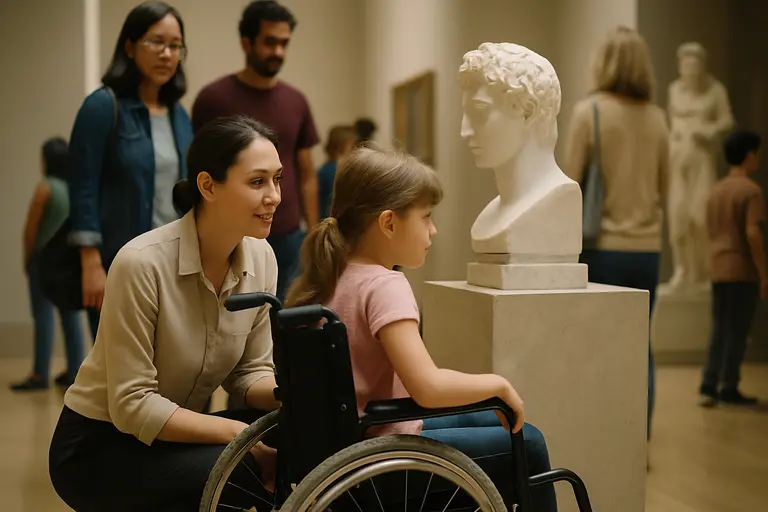
The research notes that the Akron Art Museum is KultureCity Sensory Inclusive Certified, with sensory bags, designated quiet areas, and other accommodations. For an exhibition with monumental imagery and dense historical themes, such accommodations can support a wider range of visitors. Access is not a side issue in cultural venues. It shapes who can stay long enough to engage the work on fair terms.
Visitors accompanying children, elders, students, or people with sensory needs may benefit from identifying quiet areas early in the visit. A practical route can include a first gallery pass, a pause, and then a return to selected works. This pacing respects both the artwork and the visitor. It also reduces the pressure to absorb a demanding exhibition in one continuous stretch.
Community Care In The Gallery
Museum etiquette is a form of community care. Keeping voices moderate, giving others sightlines, and not blocking a work for extended photography all help create a fair room. The supplied photography rule allows personal and non-commercial images, but permission to photograph does not remove the need for judgment. In exhibitions dealing with Indigenous histories and public memory, online sharing should avoid flattening the work into spectacle or using it as a prop for unrelated promotion.
For those interested in exploring related cultural topics and events, Shimply can serve as a useful resource, offering insights and references within the same network. For this museum visit, though, the most reliable planning choice remains checking the host institution’s current information before arrival and treating published operational details as subject to change.
Kent Monkman Akron Visit Notes For Akron Viewers
How To Spend The Visit Well
The strongest Kent Monkman Akron visit is likely one that gives equal weight to the art and the conditions of viewing. Arrive with enough time to slow down. Read labels without letting them replace looking. Notice scale first, then return to the relationships between figures, setting, and historical reference. If visiting with a group, allow silence before discussion. Not every response needs to be immediate or spoken in the gallery.
For venue planning, the core facts are clear from the supplied materials: the exhibition is scheduled for a defined 2026 run at the Akron Art Museum; named works include The Great Mystery and Victory for the Water Protectors; admission categories and access details may shape the best time to go. The interpretive work remains open, as it should. A careful visitor can leave with questions sharpened rather than closed, which is often one of the most valuable outcomes a museum can offer.
Welcome to a journey through sound, friendship, and the magic of a city. It’s not just about the music; it’s about the stories behind it. Imagine a group of friends, all roommates, creating a tapestry of melodies together.
This isn’t just a story of a first album. It’s about how personal connections can lead to artistic brilliance. It’s a tale of dreams turned into music.
As we explore this story, we’ll discover moments that defined a generation. How did the city’s streets inspire their creativity? What role did friendship play in creating something that touches so many?
Join me as we uncover the layers of this classic album. We’ll look at the cultural references that make it timeless. It’s not just music; it’s a reflection of life, love, and our connections.
Cast of voices bandmates producer manager photographer promoter
A debut album tells many stories from those who helped make it. Each person, from bandmates to producers, adds something special. Together, they create a sound that echoes far beyond the studio.
Bandmates turned ordinary places into creative spaces. They brought energy and friendship, making practice sessions fun. The producer worked hard to keep the album’s vision alive, despite financial hurdles. Every choice in the studio was a step towards their dream.
Managers were key too. They believed in the band when no one else would. Their support and smart planning helped the band through tough times. Photographers captured the band’s early days, showing them as if they were already stars.
Imagine a dinner where Gordon Zacharias and Belinda Carlisle share stories. Stephin Merritt listens intently. The room is filled with tales of success and struggles. This meeting of voices tells the story of a city’s DIY music scene, where creativity thrived.
Role
Name
Contribution
Bandmate
Gordon Zacharias
Guitarist, songwriter
Producer
Joan Wasser
Sound engineer, creative guide
Manager
Clarke Martty
Strategic planner, supporter
Photographer
Dylan Fitzgerald
Visual storyteller
Promoter
Kevin March
Event organizer, community builder
Timeline early singles breakups new members and studio dates
The story of a debut album is like a jigsaw puzzle. Pieces don’t always fit. For Gordon Zacharias, starting Fan Modine meant ending Astroboy. He kept only the drums, slowing them down into a dreamy sound.
The Go-Go’s faced their own challenges. Formed in 1978, they found success wasn’t just about music. Their hit, “We Got the Beat,” was a surprise hit while they were abroad. They had to dodge trouble and found their special bond.
When Margot Olavarria got sick, Kathy Valentine stepped up. She learned 19 songs in just four days on a new instrument. It was a huge challenge.
Album anniversaries remind us that studio dates often change. It’s the unexpected moments that create magic. Breakups and breakthroughs shape the debut album’s story.
Writing rooms kitchens buses text chains and late nights
Songwriting is like a wild scavenger hunt through memories and music. In the DIY scene, the best songs come from kitchens, buses, and late-night texts. It’s fueled by snacks, coffee, and the drive to work together.
Gordon Zacharias turned his Boston loft into a song lab. He mixed songs with ephedrine and weed, inspired by Helium and the Pastels. The magic happened in those quiet, late hours.
Jane Wiedlin and Charlotte Caffey of the Go-Go’s wrote songs telepathically. They combined ideas, influenced by the Buzzcocks and Tommy James. Their song “Lust to Love” shows their unique collaboration.
These late nights were messy, with sticky floors and borrowed gear. But, in this chaos, creativity bloomed. The raw, unpolished nature of these sessions added a special authenticity.
Artist
Writing Style
Key Influences
Notable Songs
Gordon Zacharias
Improvisational
Helium, Lilys, Pastels
Various Tracks
Go-Go’s
Collaborative
Buzzcocks, Tommy James
Lust to Love
DIY Scene
Spontaneous
Various
Numerous Tracks
Recording war stories budget vanish lost files magic takes
Every great album comes from chaos, creativity, and luck. In the studio, mishaps often get more attention than the final product. Gordon Zacharias once tried a unique drum sound by mic’ing a 4th-floor stairwell. But, it turned into a mess when overdubs came in.
The Go-Go’s recorded demos on equipment that would make today’s producers cry. But, that raw energy made “Our Lips Are Sealed” unforgettable. Their budget was almost nothing, but I.R.S. saw their talent when major labels didn’t.
Producer interviews often talk about when budgets disappeared or files got lost. These stories aren’t failures; they’re what make albums special. When I.R.S. said yes, it was a big deal. It meant a tight deadline and a prayer. And sometimes, losing a file makes you play it even better.
Artwork and packaging thrifted props fonts and color theory
The artwork of a debut album can tell a story just as compelling as the music itself. When you see a cover, it’s like the first handshake with the band. Does it resonate? Does it reflect your inner angst or joy? For many, that cover is the thesis statement of their musical journey.
Take Fan Modine’s Slow Road to Tiny Empire, for instance. The album cover was crafted by a roommate, who, unbeknownst to him, shaped the entire aesthetic. It’s a vivid reminder that sometimes, the best art comes from the most unexpected places. In this case, the loft where the songs were recorded became a canvas for creativity.
On the other hand, we have the Go-Go’s iconic Beauty and the Beat cover. Who would have thought that thrifted towels and a tub of Noxzema could encapsulate a band’s playful, punk-glamour identity? This image didn’t just represent the music; it became synonymous with the spirit of the era. It’s a perfect example of how you can take what you have, make it look intentional, and hope the color theory doesn’t clash with the vinyl hype sticker.
Let’s not forget the importance of fonts. A carefully chosen typeface can evoke emotions and set the tone for what’s inside. It’s like a silent partner in the album’s narrative, enriching the overall experience. The right font can scream rebellion or whisper nostalgia, depending on the context.
To illustrate the relationship between artwork, packaging, and the debut album story, here’s a breakdown:
Element
Example
Impact
Artwork
Fan Modine’s cover
Reflects the recording space and creativity
Packaging
Go-Go’s towels
Creates an iconic visual identity
Fonts
Varied styles
Conveys emotion and tone
In conclusion, the packaging isn’t just a container; it’s the first note of the album, and it better be in key. Each element plays a critical role in the debut album story, inviting listeners to dive deeper into the music while connecting with the visual narrative.
First tour merch disaster radio miracle local press rescue
Our first tour was a real challenge. We were excited to start but quickly faced the harsh realities of the DIY scene. Instead of a fancy tour bus, we rode in a friend’s van. We had a box of T-shirts we made ourselves, hoping they would sell.
The Go-Go’s had a tough time in the UK too. They faced hostility from skinheads. But, their song “We Got the Beat” became a hit while they were away. It showed that success can come when you least expect it.
Local press helped us a lot. Fanzine writers and college radio DJs supported us. They turned our merch disaster into a sold-out show. Their help was key to our success.
Our first tour taught us a lot. Success comes from hard work, resilience, and a bit of luck. It’s a wild journey, and having supporters makes it better. For more on indie music, check out Shrimper Records.
Reception reviews charts and what almost derailed it
Behind every critically acclaimed album lies a tale of near-misses and triumphs. The music industry is full of ups and downs. The Go-Go’s “Beauty and the Beat” is a perfect example. It hit #1 for six weeks, but its journey was tough.
At first, record labels didn’t want to sign the Go-Go’s. They thought an all-female band couldn’t succeed. This shows how sexism was a big problem back then. But the Go-Go’s proved them wrong, showing that talent doesn’t care about gender.
Fan Modine took a different path. Critics loved it, comparing it to the Magnetic Fields and Elephant 6. But it didn’t become a huge commercial hit. Its appeal was in the critical raves, not just the sales.
What almost stopped these albums? For the Go-Go’s, it was a hepatitis scare. For Gordon, it was the pressure of his influences. These moments show that success isn’t just about reviews or charts. It’s about the hard work and struggles behind the scenes.
The album anniversary reminds us of these challenges. It celebrates the artists who faced rejection and doubt. Their stories inspire fans and make their albums’ histories fascinating.
Legacy what holds up and what the band would redo today
A debut album’s legacy is not about being perfect. It’s about its lasting impact over time. Gordon Zacharias sees the album as a travelogue of his move to NYC. The 2020 reissue shows that some albums stay relevant forever.
The Go-Go’s are a great example. Their documentary came out in 2020, revealing the band’s early struggles. Kathy Valentine even looked back on her past comments about I.R.S. records. Looking back, we see things differently, don’t we?
What makes their music timeless? It’s the songs that didn’t follow every trend. In producer interviews, they talk about the snare sound. It’s a mix of nostalgia and today’s standards.
So, what would they change? Maybe the stairwell drums that were a key part of their sound. The debut album story is about making the record you need and then explaining its imperfections.
Aspect
What Holds Up
What They Would Redo
Songwriting
Timeless melodies
Chasing trends
Production
Unique character
Stairwell drums
Context
Rich storytelling
Old quotes
The legacy of a debut album is a mix of memories, flaws, and growth. It’s a journey through love and geography, a time capsule of moments. For more stories behind the music, check out this in-depth conversation with rock legend Mark.
Anniversary reissue extras demos live takes zine and liner notes
When an album hits its anniversary, it’s more than just a date. It’s a celebration of the music and the stories behind it. The anniversary reissue often feels like a gift to fans, packed with extras that bring the past roaring back to life. Think about it: how often do we get to revisit those raw demos or hear live takes where the audience’s chatter adds an intimate touch?
For example, the reissue of Fan Modine’s “Slow Road to Tiny Empire,” released by Rhino Records in 2020, was special. It wasn’t just a re-release; it was a chance to peel back the layers of nostalgia. Fans got a deluxe vinyl with demos that sounded like they were recorded on a boombox. It’s a nod to the DIY scene, reminding us of the grassroots spirit that fueled the album’s creation.
The Go-Go’s have also given us anniversary editions of “Beauty and the Beat.” These editions celebrate both the 30th and 40th anniversaries. They’re not just cash grabs; they’re an archaeological dig into the band’s history. Bonus tracks and live material unearth early versions that reveal the punk skeleton beneath their pop skin.
What’s fascinating about these reissues is the way they allow the band to say, “See? We told you it was good.” The director’s cut format of these releases often includes liner notes that fill in every inside joke and anecdote. This makes fans feel like they’re part of the inner circle. The accompanying zines further enrich this experience, creating a bridge between the past and present.
For many fans, these reissues offer a chance to hear the album again for the first time. It’s not just about the music; it’s about the memories and the connections forged over time. So, as we celebrate these milestones, let’s remember that every anniversary is an opportunity to rediscover the magic of music.
Where to hear the album today and best entry track
Ready to explore the debut album oral history? Now’s the perfect time. Fan Modine’s “Slow Road to Tiny Empire” is on all major digital platforms. The deluxe vinyl edition is coming soon, so stay tuned.
The best track for newcomers is “Cardamon Chai.” It’s a journey that Ash Bowie found mesmerizing, likening it to My Bloody Valentine. This song is a great starting point.
The Go-Go’s “Beauty and the Beat” is also streaming everywhere. For a catchy entry, try “Our Lips Are Sealed.” It’s catchy and easy to remember. But “Lust to Love” gives a deeper look into the band’s formation, with a thrilling three-part structure.
These albums are more than just history. They’re alive, placed alongside bands they’ve inspired. Listening feels like getting a cassette from a friend who knows you’ll love it. The debut album oral history is ongoing, every time you press play. So, plug in, turn up the volume, and let the music remind you why these albums are important.
Getting a young athlete back on the field after a setback is filled with emotion. Parents and coaches feel a natural urgency. But rushing the process risks long-term health. A structured, evidence-based return to play protocol is the essential map for this journey.
Safety and future performance must come first. This guide introduces the four non-negotiable physical criteria every clearance decision is built upon: Pain, Swelling, Range of Motion, and Strength.
We define these in practical terms. For example, an acceptable pain scale level during activity is specific, not just “feeling fine.” True restoration of range of motion means matching the uninjured side. Strength must meet functional benchmarks, not just feel strong.
Understanding these pillars removes guesswork. It transforms anxiety into a clear, step-by-step path forward for a safe and successful comeback.
Getting Medical Clearance and Required Forms
The medical clearance process is more than just a formality. It’s a legal and health safety step. It lets an athlete safely return to training and competition.
A signed clearance form is not just a piece of paper. It’s a deal between a healthcare provider, the athlete, and the sports group. It shows the athlete is ready to start a return to play protocol.
Without this clearance, athletes risk getting hurt again or facing serious health issues. Schools and clubs need it to protect themselves. It also helps ensure athletes can safely get back into sports.
What does a full medical clearance include? It’s not just a simple “you’re good to go.” It involves:
A full check-up of the injured area.
Checking strength, flexibility, and balance.
Looking at the athlete’s recovery history and current symptoms.
Talking about any ongoing meds or treatments.
For athletes recovering from illnesses like viral infections that can harm the heart, a cardiac screening might be needed. Conditions like myocarditis need careful checks before allowing sports. This might include an EKG or a cardiologist’s advice.
Being ready for the medical visit helps athletes and parents. Here’s how to prepare:
Bring all medical records, imaging reports, and your rehab plan.
Write down questions for the provider.
Wear the right clothes for a physical exam and tests.
Ask your doctor or physical therapist these questions:
“What specific physical benchmarks did I meet to get cleared?”
“Are there any movements or activities I should avoid?”
“What signs or symptoms should cause me to stop and contact you immediately?”
Not all clearance forms are the same. Different groups have different needs. Knowing which form you need saves time and trouble.
Form Type
Primary Purpose
Key Components Often Required
Important Notes
School District Form
To meet state athletic association and school policy for sports.
Provider signature, date of clearance, specific activity restrictions, emergency contact info.
Often has an expiration date (e.g., one year). Must be on the district’s official template.
Club Sport/League Form
To fulfill the private organization’s insurance and liability needs.
Similar to school forms, but may include waivers and assumption of risk language.
Can be more sport-specific. Always submit a copy and keep the original.
Physician’s Own Form/Note
To give a detailed medical opinion and specific guidelines for the return to play protocol.
Detailed diagnosis, treatment summary, specific limitations, and recommended progression phases.
This is the most detailed. It serves as excellent communication to coaches and athletic trainers.
After getting the signed clearance form, keep several copies. Give one to the school athletic director, one to the coach, and keep one for yourself. This document is key for the return process.
This step is about teamwork. A good provider will explain their reasons and set clear expectations. This turns the clearance form into a roadmap for a safe and confident return to your sport.
Building a Day-by-Day RTP Progression
Think of your comeback as building a staircase, not a sprint. Each step is a foundation for the next. This is what a safe graded progression is all about.
A day-by-day plan is your roadmap. It slowly adds load and complexity to your body. This way, you avoid re-injury and build confidence. Your return to play protocol must be flexible, adapting to your body’s feedback every day.
Forget about racing. A successful comeback is like a flexible staircase. You must master each step before moving up. Here are the typical phases in a structured return to play protocol:
Phase 1: Light Aerobic Activity. This means walking, cycling, or swimming at a low intensity. The goal is to increase heart rate and blood flow without stress on the injured area.
Phase 2: Sport-Specific Movement Patterns. Introduce drills that mimic your sport’s movements. For a basketball player, this could be stationary ball-handling. A soccer player might practice light footwork patterns.
Phase 3: Non-Contact Drills. Add speed, agility, and skill execution. This phase includes shooting drills, passing sequences, or sprinting mechanics—all without physical contact.
Phase 4: Controlled Contact. Reintroduce light, planned contact in a practice setting. This is key for sports like football or hockey to rebuild confidence in collisions.
Phase 5: Full Competition. The final step is a return to game-speed scrimmages and official competition. You should feel physically and mentally ready.
Let’s see how these phases play out in real life with sport-specific examples.
Basketball (Ankle Sprain): Day 1-3: Pool walking. Day 4-6: Stationary dribbling. Day 7-9: Light shooting, no jumping. Day 10-12: Agility ladder drills. Day 13-15: Non-contact scrimmage.
Soccer (Hamstring Strain): Day 1-3: Stationary bike. Day 4-6: Walking with ball touches. Day 7-9: Light passing drills. Day 10-12: Progressive sprinting at 50%, then 75% effort. Day 13-15: Small-sided, non-contact games.
Football (Concussion Protocol): This follows a strict return to play protocol. It starts with complete rest, then light aerobic exercise, then sport-specific drills, non-contact practice, full-contact practice, and then clearance for game play.
The magic is in mastering each step. Don’t move to Phase 3 if Phase 2 hurts or tires you out. Your graded progression is a personal blueprint. It listens to your body’s signals every day.
Creating this day-by-day plan turns theory into practice. You move from general activity back to your specific sport. A thoughtful return to play protocol is your best tool for a safe and strong return.
Functional Testing and Benchmarks by Sport
The final check before returning to competition isn’t a doctor’s note. It’s a set of measurable, sport-specific physical benchmarks. This phase, known as functional testing, focuses on proving readiness for the game. It’s the key milestone that shows all the hard work in rehab has paid off.
So, what is functional testing? It’s standardized assessments that mimic the physical demands of your sport. They measure power, agility, stability, and endurance under controlled conditions. Common tests include:
Single-Leg Hop Tests: Measures power, balance, and symmetry between limbs.
Agility T-Test: Assesses quick changes of direction, acceleration, and deceleration.
Endurance Shuttle Runs: Evaluates cardiovascular fitness and repeat effort capacity.
Balance and Stability Assessments: Checks proprioception and control on unstable surfaces.
Passing these tests isn’t about feeling good. It’s about hitting clear, numerical benchmarks. For example, a cleared athlete might need to achieve 90% symmetry on single-leg hops compared to the uninjured side. Or complete an agility drill within a time standard set for their position. These numbers remove guesswork and provide undeniable proof of readiness.
Once an athlete passes general functional tests, the next layer is sport-specific drills. These exercises replicate the exact movements and intensities of competition. They bridge the gap between being “fit” and being “game-ready.”
Here are examples of critical sport-specific drills used for clearance:
Soccer/Football: Athletes must perform repeated cutting drills at full speed, simulating evading a defender. They’ll also complete passing and shooting drills under fatigue to test technical skill when tired.
Baseball/Softball: A throwing progression is essential, moving from short toss to long throws from the position’s required distance. Hitters will face live pitching or a pitching machine to test rotational power and timing.
Basketball/Volleyball: Focus lands on jumping and landing mechanics. Athletes perform repeated vertical jumps, box jumps, and practice landing softly and in control after simulating a rebound or spike.
This stage of functional testing provides the ultimate confidence boost. It shows the athlete, coach, and medical team that the body can not only handle stress but can perform the complex, explosive movements required to win. It’s the definitive step from the training room back to the team.
Monitoring Logs: Symptoms, Sleep, and Workload
Want to come back strong? Start by logging your symptoms, sleep, and workload every day. It’s not about magic exercises. It’s about listening to your body and tracking your recovery.
This habit turns vague feelings into clear data. It’s like having a personal alarm for injuries or burnout. It helps you catch problems early.
Think of it as a quick, three-question check-in each evening. Your log should track symptoms, sleep, and workload.
Symptoms & Soreness: How does the injured area feel? What is your energy level?
Sleep Quality: How many hours did you get? Was it restful or restless?
Workload (The Numbers): What was the duration, intensity, and total volume of your activity today?
Now, let’s dive into how to use this system.
Interpreting Symptoms and the Pain Scale
Use a 0-10 pain scale for any discomfort. A “0” means no pain, and a “10” is the worst. Track the trend, not just the number.
Morning soreness that fades is okay. But pain that stays or gets worse is a warning sign. Always be honest with your team.
Why Sleep Quality is Non-Negotiable
Sleep is when your body heals and gets stronger. Logging sleep is more than just counting hours. Note if you feel refreshed or tired.
Poor sleep slows healing and raises injury risk. It affects reaction time and decision-making. Bad sleep patterns mean it’s time to rest more.
Calculating Safe Workload Progressions
Workload shows how much stress your body takes. “Duration” is how long you trained. “Intensity” is how hard (e.g., sprinting vs. jogging). “Volume” combines both.
A safe return to play protocol for youth sports follows a “load management” principle. Don’t increase weekly workload by more than 10-20% each week. Your log helps you avoid overdoing it.
Being consistent with this log is key. It turns your comeback into a data-driven journey. The athlete who logs faithfully knows their safe return path.
Mental Readiness and Confidence Checks
Physical tests show an athlete’s body is ready. But the mind tells the real story. A successful comeback requires both. This section focuses on the psychological side of recovery. It is a core part of a complete return to play protocol for youth sports.
An injury or illness does more than strain a muscle. It can shake an athlete’s confidence. Common feelings include fear of re-injury, hesitation during drills, or lost trust in their body. These mental hurdles are normal. Ignoring them can delay a true return to peak performance.
Mental readiness means feeling prepared, focused, and confident. It is not about being fearless. It is about managing doubt and building resilience. The following table outlines practical “confidence checks” to help athletes rebuild their mental game.
Confidence Check
Description
Key Action for Athletes
Visualization
Mentally rehearsing successful plays and positive outcomes.
Spend 5 minutes daily picturing a perfect practice or game scenario.
Gradual Exposure
Slowly reintroducing game-like pressure and stimuli in a safe setting.
Start with non-contact drills, then add light defense, then full speed.
Positive Self-Talk
Replacing negative thoughts with constructive, encouraging statements.
Create a short mantra like “I am strong and prepared” to use during tough moments.
Visualization is a powerful tool. Athletes should close their eyes and imagine themselves performing well. They should feel the movements and see the success. This practice builds neural pathways. It makes the actual performance feel more familiar and less daunting.
Gradual exposure is about taking small steps. An athlete recovering from a knee injury might first just watch team practice. Next, they participate in warm-ups. Later, they join specific, low-intensity drills. This step-by-step approach reduces anxiety. It proves to the athlete that their body can handle more.
Positive self-talk fights the inner critic. After an injury, thoughts like “I’m too slow now” or “I’ll get hurt again” are common. Athletes should learn to recognize these thoughts. Then, they should consciously replace them with facts. “I have done my rehab. My strength tests are good. I am ready for this step.”
Coaches and parents play a huge role in mental readiness. Their support must be positive and pressure-free. Avoid phrases like “You should be over it by now” or “Just tough it out.” These comments can increase anxiety.
Instead, use supportive language. Ask open-ended questions. “How are you feeling about that drill?” or “What part of practice seemed hardest today?” Listen without judgment. Celebrate small mental victories, like trying a new drill or using a positive mantra.
This supportive environment is integral to the return to play protocol. It tells the athlete that their mental state matters. It frames confidence-building as a normal, essential part of healing. Just like physical therapy, mental readiness takes consistent practice.
Ultimately, confidence checks ensure the athlete is truly ready to compete. They bridge the gap between physical clearance and full, fearless play. Do not rush this phase. A confident athlete is a safer and more effective athlete. Make mental readiness a non-negotiable step in your return to play protocol.
School, Club, and Family Communication Plan
Communication is key, not just physical training. Without clear coach-parent-pt communication, even the best plans can fail. This section will guide you.
Your communication plan is like a playbook for your support team. It outlines what to do and when. This keeps everyone on the same page and the athlete safe.
Who needs to be in the loop? The table below maps out the essential contacts.
Your Return-to-Play Communication Blueprint
Key Person / Role
Essential Information to Share
Preferred Channel
Athletic Trainer (AT) or Physical Therapist (PT)
Full phased progression plan, specific exercise limitations, signs of pain or regression.
Shared digital document, weekly email summary, in-person check-ins.
School Nurse
Medication schedules, activity restrictions during school hours, emergency contact protocol.
Brief meeting at start of plan, follow-up email with key points.
Head Coach
Overall timeline for return, expected participation level in practice, clear “do not do” list.
Pre-season meeting, copied on major email updates to AT/PT.
Position Coach or Skills Coach
Daily or weekly drill modifications, technical adjustments to protect the injury.
Quick daily verbal check-ins, text group for immediate updates.
Parents / Guardians
All of the above, plus updates on fatigue, mood, and sleep at home.
Regular family meetings, access to the shared progression document.
Use this table as a living guide. Update it as the plan changes. The goal is a unified support team.
What information is non-negotiable to share? First, the phased progression plan. Everyone should know the stages. Second, specific limitations. Can the athlete sprint? Jump? Twist? Be exact.
Third, share the signs of regression. What pain is a red flag? What fatigue level means “stop”? This empowers the team to act.
Choose your channels wisely. For formal updates, use email. It creates a record. For a living plan, use a shared document like Google Docs. Everyone sees the latest version.
For quick touchpoints, brief meetings or texts work. The key is consistency. Pick a method and stick to it.
This proactive approach aligns expectations. The coach knows the limits. The parents know the schedule. The athletic trainer gets feedback from all sides. It turns individual efforts into a coordinated strategy.
Investing time in this communication plan pays off. It reduces anxiety for the athlete. It builds confidence. Most importantly, it protects the recovery. Start the conversation today.
RTP for Common Issues: Ankle Sprain, Concussion, and Illness
Three common scenarios demand distinct approaches: ankle sprains, concussions, and post-illness recovery. A generic checklist fails here. Each condition has its own biological healing timeline and specific functional milestones.
For an ankle sprain, the primary focus shifts to ligament stability and proprioception. You cannot just wait for pain to disappear. The joint must relearn its position in space to prevent chronic instability.
Rehabilitation progresses from basic range-of-motion to balance challenges on uneven surfaces. Strength training targets the muscles that support the ankle. Functional tests, like hopping on one leg, become the final gatekeeper before full sport participation.
A concussion follows a mandatory, step-wise graduated protocol. Physical rest is just the beginning. Cognitive rest is equally critical—limiting screen time, schoolwork, and other mental exertion.
The return-to-play stages are non-negotiable. They start with light aerobic activity and progress through sport-specific drills. Any return of symptoms means dropping back a step. This protects the brain and allows for proper healing.
Returning after a significant illness, like mononucleosis or a heat illness, requires extended timelines and medical oversight. The body’s systems, specially the cardiovascular system, need time to recover fully.
A critical step for any illness with possible cardiac involvement is a cardiac screening. This is non-negotiable before returning to strenuous activity. It ensures the heart has not been affected.
The table below highlights the key differences in approach for these common conditions:
Condition
Primary Healing Focus
Key RTP Benchmark
Critical Medical Step
Ankle Sprain
Ligament stability & Proprioception
Single-leg hop test without pain or instability
Physical therapist clearance for dynamic movement
Concussion
Neurological & Cognitive rest
Completing full graduated protocol symptom-free
Clearance by a healthcare provider trained in concussion management
Illness (e.g., Mono, Heat Illness)
Systemic recovery (Cardiac, Energy)
Normalized blood work & fatigue-free daily activity
Cardiac screening (EKG, possibly echocardiogram) before exertion
For a heat illness return, the protocol is cautious. Acclimatization to heat and humidity must be gradual. Hydration and electrolyte balance are monitored closely.
This comparison makes one thing clear: a one-size-fits-all plan is ineffective and risky. Your specific diagnosis dictates your specific pathway back to the field.
Protective Bracing, Taping, and Equipment Adjustments
This section focuses on the gear that helps athletes recover. Braces, tape, and equipment tweaks are not magic solutions. They offer temporary support and build confidence as athletes follow a return to play protocol for youth sports.
It’s important to know the different types of support. A functional brace is used after big injuries, like an ACL tear. It limits harmful movement but lets safe motion happen. Prophylactic taping, like ankle tape, helps prevent injury in hurt joints. It gives feedback and some support.
These tools don’t replace healed tissue or strength. A sports medicine expert should guide their use. The aim is to stop using them as the athlete’s muscles and coordination get better.
How long to use a brace or tape varies. It depends on the injury, the sport, and the athlete’s rehab progress. Coaches and parents must follow the medical team’s advice on when and for how long to use these aids.
Equipment tweaks are also important. Small changes can reduce stress on healing areas. Common adjustments include:
Cleat Length: Shorter cleats can lower the risk of turf catches and re-sprains for a healed foot or ankle.
Added Padding: Extra padding in shoes, shin guards, or gloves can protect sensitive areas from impact.
Helmet Fit: After a concussion, a snug, certified helmet is essential for safety.
These gear checks are simple but effective. They help manage the body’s load as activity increases.
Remember, bracing, taping, and equipment tweaks are part of a bigger plan. They support the recovery journey but are not the end goal. A successful youth sports return to play protocol uses these tools wisely. It always puts the athlete’s long-term health and full recovery first.
Preventing Re-Injury: Prehab and Load Management
Getting back to sports isn’t just about returning to the field. It’s about staying there without getting hurt again. This part focuses on building strength and resilience. A good return to play protocol goes beyond just getting cleared.
It builds a strong foundation for a long-lasting athletic career. This approach is key for athletes to stay healthy and perform well.
Prehab and load management are at the heart of this strategy. They are not just terms. They are essential for athletes to stay healthy and perform well.
Prehab: Your Proactive Shield
Prehab is preventive work done after an injury heals. It aims to prevent the same injury from happening again. It’s like strengthening the weak link in your chain.
This includes strengthening the injured area and the muscles around it. For example, after an ankle sprain, you need to work on your calf and hip muscles. This helps distribute the stress evenly during play.
Good prehab exercises are specific to your sport and get progressively harder. They should be a regular part of your routine.
Eccentric Strengthening: Slow, controlled lengthening of muscles (like Nordic curls for hamstrings) to build robust tissue.
Proprioception Drills: Balance and stability work (like single-leg stands on a foam pad) to retrain the nervous system.
Mobility Circuits: Dynamic stretches targeting joints and muscles that support the primary injury site.
Cross-Training: Low-impact activities that maintain fitness without overloading the vulnerable area.
Load Management: The Art of Smart Training
Load management is about planning your training wisely. It’s about applying stress in a way that makes you stronger. Not doing it right can lead to re-injury.
Start slow after an injury. You can’t go back to your old training right away. A good return to play protocol includes a gradual increase in training.
This is done through periodization. Training is divided into cycles with different focuses. There are weeks of high load and weeks of recovery. This keeps you strong all season long.
Watch these key metrics to monitor your load:
Volume: Total distance run, weight lifted, or minutes played.
Intensity: How hard the athlete is working (e.g., sprint speed, weight percentage).
Frequency: How many sessions are performed each week.
Coaches and athletes should track these metrics. A sudden increase in any area is a warning sign. A good rule is to not increase your weekly training by more than 10%.
Integrating Prehab and Load Management
The best athletes mix prehab into their daily training. They also listen to their body about how much to train. This approach turns recovery into a lifelong habit.
For example, a basketball player coming back from a knee injury might do prehab exercises during warm-up. They increase their practice time slowly over weeks. This approach strengthens the weak spot and manages overall body stress.
Seeing your return to play protocol this way changes everything. It turns recovery into a smarter training approach. It prepares you to compete and last in your sport.
This mindset is what makes a quick return to sports a lasting career. It gives you control over your athletic future.
When to Pause or Regress the Plan
Sharp pain, new swelling, or unusual fatigue are your body’s signals to hit the brakes on your return. A smart return to play protocol for youth sports requires flexibility. It values the athlete’s long-term health over short-term progress.
Moving forward no matter what is a dangerous mindset. Knowing when to pause or take a step back is the hallmark of responsible coaching and parenting.
This section outlines the clear red flags. It provides a practical guide for making confident decisions. Your goal is to protect the young athlete’s future in the game.
Key Red Flags That Demand Action
Listen to the athlete’s body and their performance data. Certain signs are non-negotiable stops on the road to full activity.
Return of Sharp or Stabbing Pain: Dull, achy soreness from new activity might be normal. A sudden, sharp pain in the injured area is not. This is a primary signal to stop immediately.
Increased Swelling or Inflammation: Some mild swelling after a workout can occur. Noticeable new puffiness, redness, or warmth around the joint or muscle is a setback. It means the tissue is being overloaded.
Persistent Fatigue or “Heavy” Legs: It’s normal to feel tired after ramping up training. If fatigue doesn’t lift after a good night’s sleep, or if the athlete feels unusually sluggish for days, it’s a sign of poor recovery. The plan may be advancing too fast.
Drop in Performance Metrics: Use your monitoring logs. Is the athlete slower, less powerful, or unable to hit target heart rates during drills? A consistent decline in measurable performance is a objective red flag. It shows the body isn’t ready for the current load.
Seeing one of these signs is not a failure. It is a critical piece of feedback. It means the current phase of the plan needs adjustment. This is a normal and expected part of the healing journey.
Your Decision-Making Flowchart
Empower yourself with a clear action plan. The table below serves as a simple flowchart for parents and coaches. It turns worry into confident steps.
Red Flag / Symptom
Immediate Action
Next Step in the Plan
Sharp pain during activity
Stop the activity immediately. Apply ice if acute.
Regress to the previous phase of the progression for 2-3 days. Re-test with lower intensity.
New, visible swelling
Use the RICE method (Rest, Ice, Compression, Elevation).
Pause all sport-specific training. Return to basic rehab exercises only until swelling resolves.
Fatigue affecting multiple sessions
Implement a mandatory 48-hour rest period. Focus on sleep and nutrition.
Reduce the volume (time/distance) of the next week’s training by 30-40%. Gradually build back up.
Consistent drop in speed or power
Note the metrics in your log. Have an open conversation with the athlete.
Revisit the functional testing benchmarks from earlier phases. Ensure those are solid before adding more complex drills.
Loss of confidence or fear of re-injury
Pause physical progression. Shift focus to mental readiness exercises.
Incorporate more controlled, low-risk drills to rebuild confidence before returning to competition.
Using this guide removes the guesswork. It allows you to act swiftly in the athlete’s best interest. A pause today can prevent a major re-injury tomorrow.
This proactive approach is part of a larger strategy for athlete health. Just as adjusting a return to play protocol is vital, so is proactive planning. Early registration for sports physicals and helps identify issues before the season starts.
Remember, the ability to adapt a plan shows wisdom. It safeguards the athlete’s long-term prospects in youth sports and beyond. Your confident decision to pause or regress ensures they return stronger, safer, and more resilient.
Downloadable Checklists and Templates
This section offers practical help with downloadable resources. We’ve taught you about safe recovery. Now, we help you take action.
We aim to give you useful tools. These templates make complex protocols easy to follow. They turn complex steps into simple plans.
These resources make recovery easier and more effective. They give you a clear plan, saving time and avoiding mistakes. They are like having a personal recovery guide.
Below is a full set of tools. Each one is key to the return to play protocol.
Resource Name
Key Features
Best Used For
Master RTP Protocol Checklist
Covers all phases from rest to full competition. Includes space for dates and signatures. Links to functional test benchmarks.
Athletes and parents tracking the entire recovery journey. Ensures no step is missed.
Sample Medical Clearance Form
Pre-formatted document for your doctor. Lists key physical and cognitive milestones. Provides a clear clearance form for school or club requirements.
Facilitating clear communication with healthcare providers. Obtaining official permission to progress.
Customizable Monitoring Log
Daily trackers for symptoms, sleep, and workload. Visual graphs to spot trends. Adjustable for any injury or illness.
Identifying subtle setbacks early. Providing concrete data for coaches and therapists.
Communication Plan Template
Defines roles for parents, coaches, and ATCs. Includes a contact list and meeting agenda. Scripts for difficult conversations.
Aligning your entire support team. Preventing mixed messages and confusion.
These are not just documents. They are systems built on proven return to play protocol standards. Download them, customize the details for your situation, and start executing your plan with confidence.
The sample clearance form is very useful. It makes medical jargon easy to understand. This helps your doctor know what your sport needs.
With these tools, you can manage your recovery well. Your next step is to find local experts who can help you use them.
Local PT/ATC Contacts and Walk-In Options
Your plan is ready. Now, it’s time to get help. Finding a local physical therapy clinic or an Athletic Trainer Certified (ATC) is key for a safe comeback.
Finding the right specialist is important. Look for those with experience in youth sports medicine. The American Physical Therapy Association (APTA) or the National Athletic Trainers’ Association (NATA) have online directories to help you find certified experts nearby.
A good provider knows your sport’s needs. They’ll ask about your training and goals. This makes sure your rehab and strength program fits you perfectly. Your local physical therapy team becomes a long-term health partner.
Injuries can happen anytime. Know where to go for walk-in care. Many cities have orthopedic urgent care centers for quick help with sprains or fractures. Having this plan helps avoid delays in getting the right care.
This guide has moved from knowing to doing. Use these resources to build your support network. The right local physical therapyor ATC contact offers the expert guidance you need for a confident and lasting return to play.
The world of fandom is a huge business, worth hundreds of billions. Fans spend an average of $1,600 a year to feel connected.
But here’s a secret: most fans want more than just the game’s outcome. They seek stories, access, and a sense of belonging. So, why do teams mainly focus on getting likes?
This playbook is your guide to winning the real game. We’re moving beyond just counting likes. We aim to turn online excitement into real fans in the stands. Smart digital strategies can increase fan interaction by 35-50%.
The ultimate goal is to fill the stadium. We’ll explore how to use local community feelings and the digital world’s rules. Forget big brand strategies for now. This is about local leverage.
Your social media is like the stadium’s open door all year. Think of this as your key to unlock it.
Choosing the Right Social Platforms for Sports
Start by asking where your fans spend their time online. Posting everywhere is like playing baseball on a hockey rink. It’s confusing and weakens your message.
Choosing the right place to share your content is key. It’s not just about posting. It’s about fan engagement. Each platform has its own purpose and audience.
It’s like finding the perfect match for your fans. You need to know who uses each platform. A 55-year-old fan and a 22-year-old student have different ways of consuming content. Your goal is to meet them where they are.
Not every platform is right for every fan. It’s like choosing the right players for your team.
Real-time commentary, quick updates, fan interactions
Drive conversation & game-day buzz
TikTok
Gen Z, trend-obsessed
Challenges, duets, hyper-edited highlights
Expand reach & attract next-gen fans
Facebook sports marketing is like a sports bar. It’s great for building a community and reaching older fans. Use it for event pages, ticket sales, and alumni spotlights.
Instagram sports content is like a modern arena. It’s all about visuals and behind-the-scenes moments. Use it to create an aesthetic and make fans feel special.
Twitter is for real-time commentary, and TikTok is for creativity. Adapt your content for each platform. A good social media strategy for sports helps you use your resources wisely.
So, match your strategy to the platform. Focus on Instagram and TikTok for new fans. Use Facebook for your loyal supporters. And let Twitter be the game’s pulse. This way, you’re not just shouting. You’re having a meaningful conversation.
Creating a Content Calendar for Game Seasons
A content calendar is like your team’s offense. Without it, your plans fall apart before they start. Flying by the seat of your pants might seem spontaneous, but it’s like a Hail Mary pass every week. You end up posting filler that doesn’t engage fans on social media fan engagement.
Think of your season as a novel, not a series of tweets. It has different chapters, like the hope of pre-season, the weekly grind of the regular season, the tension of the playoffs, and the off-season analysis. Your calendar must map this journey. Fans invest emotionally in the story, and a disjointed feed breaks that spell. In the same way that entertainment audiences follow trends—from sports highlights to top online casino games—fans expect consistent, engaging content that keeps them coming back.
Let’s break down the playbook. Pre-season content should introduce new players and the team’s state. Then, as the regular season starts, your calendar gets into a rhythm. It’s not just posting “Game Day!” every Saturday. You create anticipation on Wednesday, analyze match-ups on Thursday, and write the post-game story on Sunday.
Ah, the loss. Most teams fumble here. Blind optimism after a defeat feels out of touch. Your calendar needs plans for managing the story. A thoughtful, resilient tone after a loss can build more connection than celebrating a win. It shows you’re part of the community, not just cheering.
Then there are the sponsors. A content calendar helps you integrate sponsorships into the season’s story. A hydration brand feature during a hot game? Organic. A local restaurant highlight for a “post-game meal” segment? Perfect. Without a plan, these integrations feel like jarring commercial breaks.
So, how do you build this master schedule? Start by blocking out seasonal themes. Assign specific content types to each phase. For example:
Pre-season: Player profiles, facility tours, season ticket member highlights.
Off-season: Deep-dive analytics, community outreach highlights, “best of” retrospectives.
Next, build a reservoir of evergreen material. Player bios, explainer graphics on team strategy, iconic moment videos. This is your bench depth. When real-time news breaks or you need a quick sub, you have quality content ready to go. You’re never caught offside.
The ultimate goal of this planning is trust. Consistency in voice, quality, and timing signals reliability to your audience. It tells them you’re a professional operation. In the economy of attention, trust is the currency that actually sells tickets. Fans buy from sources they believe in.
Your content calendar isn’t a constraint; it’s the framework for creative genius. It turns chaotic, reactive posting into a strategic, season-long conversation. It transforms casual followers into invested fans. And that is the winning strategy for genuine, lasting social media fan engagement.
Behind-the-Scenes Content That Builds Connection
Netflix’s ‘Drive to Survive’ showed us something important. Fans don’t just want to watch the race; they want to feel it. This isn’t just a small group of fans. Data shows that 90% of fans, including the younger generation, want this kind of access.
They’re looking for the real story behind the helmet, the human side of sports. This is where you share the real moments, not just the polished ones. Behind-the-scenes content is the ultimate strategic fan service, giving fans a VIP pass to the inner sanctum.
But it’s not just about capturing random moments. We need a plan to show what truly makes your players human. Is it a mic’d up practice session? A rookie’s first day in the stadium? The equipment manager’s quiet, precise work? These are the moments that create lasting connections.
So, what does “access” mean today? It’s not just about being there. It’s emotional and narrative access. It’s sharing the struggles, the jokes, and the hard work before the glory.
A photo of worn-out cleats tells a story of dedication. It’s more powerful than a generic team photo. This is where sports photography tips become your secret weapon. Your Instagram sports content should show more than just action shots.
First, chase natural light. The right lighting can tell a different story. Second, look for candid moments. The unguarded smile, the focused frown during film study—these are priceless. Third, find the story in the everyday. The physio’s table, the whiteboard, the laundry mountain.
This approach turns your feed into a continuous documentary. It shows the sweat behind the swagger. By mastering these sports photography tips, you build a brand that feels like a friend with a cool backstage pass.
Live-Tweeting and Real-Time Engagement
During a live game, your Twitter account needs to be as quick as a point guard in the final seconds. It’s not just posting; it’s a performance. Over 75% of professional teams use real-time analytics, and it’s because the audience is fully engaged.
Your job is to make that split attention a shared experience. Twitter game updates should be a mix of tactical commentary and humor. They add depth and wit, making fans feel like they’re part of the action.
To excel, use short, sharp observations and witty questions. Timing a GIF perfectly can make it go viral. Engaging directly with fans turns viewers into active participants.
Your brand’s voice shines in live-tweeting. A questionable call is “a fascinating rulebook interpretation.” A heroic play is “the highlight we needed.” This is your brand’s personality on full display.
Live-tweeting is also a data goldmine. It shows what works instantly, from jokes to questions. This data is key for future content and campaigns.
It’s high-stakes, but the reward is worth it. A well-timed tweet can build loyalty and boost ticket sales. Treat your live-tweeting as a vital part of the game-day team.
User-Generated Content Strategies
Starting a UGC strategy without a good prompt is like asking for music and getting random humming. It’s all noise, not music. Your fans are ready to create, but they need a clear plan. A generic hashtag is like a starting pistol with no direction.
User-generated content is the ultimate form of digital fan engagement. It turns viewers into creators. They make content that algorithms and people love. Think of AT&T’s Dribble Town, an experience made to be shared, turning fans into brand ambassadors.
The key is not just asking; it’s how you ask. You need to give them a clear, fun challenge that shows your team’s spirit.
“Dig Deep in the Closet” Vintage Jersey Contest: Celebrate team history and personal fandom.
“Recreate the Iconic Play” Family Challenge: Perfect for engaging multiple generations of fans at home.
“Rivalry Game Face Paint” Submission Drive: Taps into game-day passion and visual spectacle.
Most teams miss the pro move: equipping your fans. Asking for photos without tips leads to poor quality. Giving simple sports photography tips improves submissions and shows you care.
Share these tips to boost your social media fan engagement quality:
Rule of Thirds: Tell fans to imagine a tic-tac-toe grid over their screen. Placing the subject off-center creates a more dynamic shot.
Freeze the Action in Low Light: For home viewing parties, advise turning on more lights or using a “sports” mode on their phone to reduce motion blur.
Capture the Emotion: The best sports photo isn’t always the play; it’s the reaction on a family member’s face.
This guidance turns your call-to-action into a collaboration. You’re not just taking; you’re giving value first.
But the final, critical step is where many campaigns fumble. You must showcase the submissions. Repost them often. Feature them on the Jumbotron. Celebrate the creators by name. This act of recognition is the fuel that powers the entire engine.
It creates a virtuous cycle: fans engage, get featured, feel valued, and become more loyal—and more likely to create again. Their content attracts their networks. Your social media fan engagement becomes a self-perpetuating engine of authentic promotion. Stop doing all the creative heavy lifting. Make the assist, and let your community score the highlight-reel goal.
Influencer Partnerships with Local Athletes
The way we think about influence has changed. Now, a local college star’s Instagram Story can influence more people in your area than a famous person’s ad. This shift is thanks to the Name, Image, and Likeness (NIL) revolution. It’s about supporting a local legend, not just renting a celebrity.
Local heroes have something special: trust. They might not have as many followers as pros, but their fans are very engaged. Their posts about their hard work and local spots feel like personal messages to the community. This is authentic reach at its best.
It’s not just about paying for posts. That’s like a simple bunt. A good partnership is like a series of plays. Imagine Instagram takeovers on game days, content series, or local challenges. The goal is to blend their story with yours.
Let’s look at different partnership models. This table shows what each one offers.
Partnership Type
Core Value
Best For
Key Metric
Cash-for-Post
Simple, transactional reach
One-time ticket promotion
Immediate click-through rate
Account Takeover
Raw, behind-the-scenes access
Game day hype & atmosphere
Story completion rate & live views
Co-Created Series
Deep narrative & brand alignment
Building season-long story arcs
Follower growth & series retention
Community Ambassador
Long-term local credibility
Year-round community programs
Local sentiment & brand recall
The table shows that the best partnerships are deeper and more integrated. An ambassador role, for example, makes the athlete a permanent part of your brand.
The magic happens in everyday content. A player’s Instagram Story about their pre-game ritual at a local diner? That’s marketing through local stories. It’s more valuable than a generic ad. It connects with your fans on a deeper level.
Partnering with local athletes is about understanding that influence is local. It’s a smart move that uses the NIL era to fill stadiums, not just get national attention. To succeed, you need to know what local sports news is and who talks about it. Find your hometown hero and create a plan with them.
Video Content That Drives Attendance
The goal of sports video content is to create a sense of FOMO. It’s not just about selling a game. It’s about showing the excitement of a sunrise over an empty stadium, the thrill of a penalty kick, and the joy of fans leaving the game.
Video can capture live emotions in a way static posts can’t. It’s a powerful tool to make fans feel like they’re missing out.
Let’s look at the numbers. Almost 92% of internet users watch videos every week. And nearly 25% are looking for sports clips. Ignoring this is not a strategy; it’s giving up.
We need to go beyond just showing highlights. Anyone can find top-ten plays on YouTube. Your job is to capture the unique energy of your stadium. This means creating both quick, exciting moments and deeper, more immersive stories.
Think of your video content as a playbook. Each format is like a play, suited for different situations. Here’s how to pick the right play:
Format & Platform
Content Focus
The Fan’s Mindset
Primary Goal
Short-Form (Instagram Reels, TikTok)
Single incredible play, wild fan reaction, quick player mic’d up moment, stadium atmosphere snippet.
Generate shareable “Wow!” moments; stop the scroll; attract new eyes.
Long-Form (Facebook, YouTube)
Player profile documentaries, “A Day In The Life” features, deep-dive tactical previews, season recap narratives.
Leaning in, interested in deeper connection, invested in the story.
Build emotional equity with the team and players; foster long-term loyalty.
This isn’t random. It’s about matching your content to each platform’s algorithm and audience. Your Instagram sports content needs to be fast and energetic. A well-cut Reel of a game-winning goal, set to trending music, is perfect for Instagram.
On the other hand, your Facebook sports marketing should focus on depth. A five-minute feature on a local athlete’s community work tells a story that static posts can’t. It turns a player into a neighbor, building a strong fan base.
The key for both is to make fans wonder if they’re missing out. When your video content makes staying home seem like the wrong choice, you’re not just engaging fans. You’re guiding them straight to the game.
Community Challenges and Contests
This is your chance to win the game. It’s not a last-ditch effort, but a well-planned move. A contest is more than just a giveaway. It’s an experience that can make fans more loyal to your brand.
Don’t just ask people to “like and share.” Create a “Call the Play” challenge for a fun moment. Try a city-wide scavenger hunt with clues on Twitter game updates. The prize should be something special, like meeting a player or designing a jersey.
This is where online fun comes to life in your stadium. Using gamification can bring in better fans than simple giveaways. Tools like Drimify help keep fans engaged all season long. For more ideas, check out these online contest ideas.
You’re not just selling tickets. You’re creating a community with a story. That’s how you turn online fans into real-life supporters.
Trying to get people excited for your local game can feel like shouting into a void. Is anyone even listening?
The truth is, they are. But you might be using a megaphone when you need a stethoscope. The global market for sports fan engagement is now a $6.68 billion behemoth. That’s not just a number; it’s a flashing neon sign highlighting the commercial imperative.
Successful engagement isn’t a vague goal. It translates directly to higher ticket sales, packed stadiums, and a brand reputation that doesn’t fumble. But here’s the pivot: before you blast another generic post, we need to diagnose the patient.
This isn’t about counting heads. It’s about understanding hearts and minds. Are you talking to the retired teacher who knows every stat, or the young family looking for a Saturday activity? We’re moving past demographics and into psychographics.
Think of this guide as the pre-game film study for your marketing playbook. We’ll analyze how to use data not as a cold metric, but as a translation of your audience’s unspoken cheers and groans. Ready to stop shouting and start listening?
Building Pre-Event Buzz Through Social Media
Promoting a local sports event on social media is more than just sharing details. It’s about creating excitement. Instead of just posting the event time and place, share behind-the-scenes content and teasers. This way, you stand out in a crowded space filled with cat videos and news.
Don’t just post a static image. It’s not enough. A short, real video from practice can grab more attention. It feels real and authentic, unlike polished ads. This is key in sports event marketing.
Social media is where most people get their sports news. For football fans, 36% prefer it over other sources. But just being there isn’t enough. You need a plan that uses each platform differently.
Here’s the platform puzzle broken down:
Platform
Its Role
Your Content Vibe
Facebook
The reliable veteran. Your hub for detailed event pages, longer-form updates, and engaging community groups.
Informative, community-focused, perfect for sharing articles, live Q&As, and ticket links.
Instagram
The highlight reel. Driven by aesthetics and instant emotion.
Stunning visuals, short Reels of key plays, athlete profiles, and Stories that create FOMO (Fear Of Missing Out).
TikTok
The rookie sensation. Built on trends, humor, and ultra-short-form authenticity.
Challenges, locker room fun, duets with fans, and edits set to trending audio. This is where you find new, younger audiences.
Knowing your audience is key. Use a clear logo and plan your posts with a calendar. This helps build anticipation from start to finish.
Post when people are most likely to see your content. Use video and live streams to engage followers. They make them feel like insiders.
The goal of social media promotion is to create a buzz. You want active fans, not just viewers. Make them feel included in the excitement. When you succeed, your event becomes a must-see experience.
Partnering with Local Businesses and Sponsors
Forget the old ways of asking for money. The future of community sports promotion is about building strong partnerships. It’s not just about getting money; it’s about creating a win-win situation for everyone.
Imagine your event as a showcase for the whole town. It’s a chance for local businesses to shine. Their support is what keeps your team going.
It’s time to move from just giving out money to working together. A local brewery becomes the place to talk about the game. A hardware store helps equip the community’s passion for sports.
This change is at the heart of local team advertising. It’s about more than just money.
Identifying and Approaching Potencial Partners
First, find businesses that share your community’s spirit. Look for those who truly care about the area. It’s not just about who has the most money.
Start with places where your fans and their customers overlap. Think of family-owned pizza places, physical therapy clinics, and print shops. These are your natural allies.
When you talk to them, show them the benefits. Explain how it can help them too.
The Community Pillar: Banks, credit unions, major employers. They want to be seen as leaders.
The Lifestyle Fit: Sporting goods stores, gyms, health food cafes. Their brand matches your team’s lifestyle.
The In-Kind Powerhouse: Restaurants, hotels, printers. They can offer valuable resources without spending a lot.
Do your homework before meeting. Talk about their community work. This shows you value them as partners, not just donors.
Structuring Mutually Beneficial Agreements
Now, the real magic happens. A good agreement makes a sponsor feel like a true partner. It’s about working together for success.
Don’t just offer logo placement. Think of unique experiences you can share. A sponsor could host a pre-game tailgate or a “Player of the Month” interview.
Partnership Tier
Typical Investment
Core Benefits
Community Impact Angle
Title Game Changer
Significant Cash + In-Kind
Naming rights, prime signage, social media takeover, VIP event access.
Positioned as the foundational supporter making the entire event possible.
Community MVP
Moderate Cash or Equivalent Value
Logo placement, featured thank-you posts, booth space at event, co-branded content.
Highlighted as an engine of local pride and engagement.
In-Kind All-Star
Goods or Services
Recognition in materials, social shout-outs, tickets.
Showcased as providing the essential “tools” for community success.
Think about creating content together. Sponsor interviews, behind-the-scenes looks, or community service projects. This shared storytelling is powerful community sports promotion. For more on how to ask for sponsorships, check out this resource.
Make sure to include metrics that matter to your partners. Not just “logo impressions,” but actual foot traffic, redemption of offers, or social media engagement. This turns your partnership into a valuable investment in your community. It’s a win-win for local team advertising.
Creating Compelling Event Content and Visuals
The secret to great sports event marketing isn’t about spending more money. It’s about telling a better story. We’ve moved past the days of just hyping up events. Now, your content should draw fans in, connect with them, and make them feel like part of the story.
Think of your game as a new chapter in your town’s story. This change means you need to tell stories, not just promote events. Let’s explore how to do this.
The Power of Personalization and Story
It’s time to stop sending the same message to everyone. The best approach is to create content that speaks directly to each fan. Deloitte’s work for the Olympics showed how deep personalization can lead to huge engagement, with 12 billion social media interactions for Paris 2024. People want to feel connected, not just informed.
Your job is to find the personal stories within the stats. Maybe it’s a rookie’s first game or a veteran’s last season. Or perhaps it’s a sibling rivalry on the field. These are the stories that grab people’s attention.
You don’t need fancy equipment to tell great stories. It’s all about perspective. A photo of a star player helping a kid can tell a more powerful story than many team photos. This is the magic of sports event marketing—turning moments into memories.
Leveraging Video and Interactive Formats
Live video is incredibly powerful. It feels real and authentic. A raw, unedited clip from practice can get more attention than a polished trailer. It’s like getting a behind-the-scenes look.
But why just watch? Interactive content is where the real magic happens. It turns fans into active participants.
Host live Q&As with coaches or players before the game.
Let fans vote for the “play of the game” on social media.
Run a trivia contest about team history with prizes for winners.
Try large-scale, mobile-powered experiences like synchronized light shows in the stands.
These ideas create a shared experience. They make the event theirs. When planning your upcoming local sports events, include these interactive elements. It’s the difference between selling tickets and inviting people into a story.
Great content in sports event marketing is about depth, not just volume. It’s about using empathy and participation. Give people a story to belong to and a role to play, and they’ll show up, both online and in person.
Leveraging Word-of-Mouth Marketing
In today’s world, a friend’s recommendation can mean a lot. Word-of-mouth is like the first social network. It can turn a small event into a big success. But, you can’t just wait for it to happen. You need to create a space where people naturally talk about it.
This isn’t about yelling into the void. It’s about building a community-driven echo chamber. Here, your fans can share their thoughts easily. The goal is to make sharing as natural as checking the score.
Empowering Your Superfans and Community
Every team has superfans. They know everything about the team and love to share it. These fans are like your de facto marketing team. The key is to give them a chance to shine.
When fans feel involved, they become your biggest supporters. Look at Brentford FC’s Fan Advisory Board. It has fan representatives on the board. This has led to high fan engagement scores.
For local events, create a “Street Team” program. Give your top fans special access and a voice. When they feel heard, they’ll spread the word.
Facilitating User-Generated Content and Co-Creation
The best content comes from the fans, not the press office. Your job is to create the right prompts and let them shine.
Start with a catchy hashtag. Not just #TownNameSports, but something fun like #PaintTheTownBlue. Then, encourage your community to use it. Ask them to share their game-day photos and stories.
This is where grassroots marketing strategies really work. Instead of just broadcasting, you’re helping your community share. Ask open-ended questions in your posts to start conversations.
Consider creating shareable moments. A special handshake for the first 100 fans or a “fan of the match” photo op. These moments are meant to be shared and create content.
When you encourage user-generated content, you get real, authentic social proof. A photo from a real fan is more powerful than any studio shot. It shows credibility.
This approach builds a culture around your team. The experience becomes something to talk about and share. You’re not just promoting an event; you’re building a community where word-of-mouth is key. That’s the real victory in any grassroots marketing strategy.
Game Day Promotion Strategies
Game day is like a Broadway opening night, where every fan is both a critic and a participant. The digital hype machine has done its job. Tickets are sold. Now, the real sports event marketing begins.
It’s not just about filling seats anymore. It’s about creating shareable moments that say, “You had to be there.” In many ways, that storytelling tradition mirrors the timeless narratives found in classic baseballliterature, where the magic of a single game becomes a memory passed down through generations of fans.
Think of it this way: 60% of fans plan to watch big events with friends or family. This isn’t just a statistic. It’s a mandate. Your event is the social glue for their gathering.
Your promotion strategy must now activate that collective energy. It must turn passive viewers into an interactive chorus.
Activating the Live Experience
Activation is the difference between a game and an event. It’s about using the stadium’s physical and digital canvas to create a seamless, immersive narrative. Forget the PA announcer simply reading ads.
How can you make the crowd itself part of the show?
The answer lies in synchronized, participatory moments. Imagine a mobile-powered light show, where thousands of phones flash in unison during a player introduction. Consider real-time fan polls displayed on the jumbotron, deciding the next song or a MVP vote.
This is live experience marketing at its best. It transforms the venue from a container into a character.
This interactivity feeds a loop. Fans engaged in a trivia contest on the big screen are not just watching. They are competing. They are laughing.
And they are far more likely to share a clip of that moment. This turns attendees into your most credible broadcasters.
Exclusive In-Stadium Engagement Tactics
Exclusivity is the currency of the live event. The perception of getting something “only here” dramatically boosts fan activity and loyalty. This isn’t about giving away free swag.
It’s about creating privileged access to the event’s heartbeat.
Effective tactics blend technology with old-school reward. Here’s how to engineer that exclusive feel:
Loyalty Program Lightning Bolts: Use your app to offer flash rewards. The first 100 fans to check-in at Gate B get early entry. The loudest section, measured via decibel meters, wins a post-game player greeting.
Sponsored Gamification: Partner with a sponsor for a halftime challenge on the big screen. The winner gets a VIP upgrade or a concession credit, activated instantly via a QR code.
UGC as the Main Attraction: Move beyond the chaotic “fan cam.” Curate a reel of the best fan-submitted photos or videos from the event’s hashtag and display it during breaks. Suddenly, your audience is the content.
Micro-Moments of Access: Surprise a random seat section with a behind-the-scenes tunnel walk or a pre-game field visit. The scarcity creates a wave of envy and aspiration across the entire stadium.
These tactics do more than entertain. They create a layered sports event marketing narrative. The fan who wins a meet-and-greet doesn’t just have a photo. They have a story they’ll tell for years, effectively marketing your next event for free.
The goal is simple. Make the experience so uniquely engaging that not attending feels like missing the inside joke everyone is talking about on Monday. That’s how you turn a game day into a legend.
Post-Event Follow-up and Community Building
If your promotion strategy ends when the last spectator leaves, you’re missing out. The final whistle is just the beginning. It’s your chance to show what’s next. This phase turns casual fans into loyal supporters.
This is your chance to recruit for the next season. Don’t just send a generic “Thanks for coming!” email. Create a story where every attendee feels important.
The Art of the Strategic Debrief
A debrief is more than just counting hot dogs. It’s about understanding what people think. Tottenham Hotspur listened to their fans when they proposed a ticket change. They changed their plan. This shows the power of listening.
Share the glory and the crowd. Your highlight reel should show fans cheering as much as goals. This makes people feel they were part of it.
Ask for feedback, but do it in a way that feels like a collaboration. Use open-ended questions. This turns feedback into a valuable conversation.
Share what you learned and how you’ll use it. “We heard the concession lines were long. We’re adding two new points next game.” This shows you respect their opinions.
Channel
Best For
Pros
Cons
Strategic Tip
Email Survey
Detailed, qualitative feedback from ticket buyers.
High control over questions; direct to a known audience.
Low response rates; can feel impersonal.
Keep it under 5 questions. Offer a small incentive (e.g., 10% off next ticket).
Social Media Poll
Quick, quantitative sentiment on specific issues.
High visibility and engagement; very easy for fans.
Lacks depth; limited to platform users.
Use Instagram Stories polls for fun, lighthearted questions (“Best halftime snack?”).
Post-Event Focus Group
Deep-dive insights from superfans.
Rich, nuanced feedback; builds fan investment.
Time-intensive; small sample size.
Host a virtual “Fan Council” chat. Provide exclusive swag as a thank you.
Feedback Kiosk
Capturing immediate, in-the-moment reactions.
Authentic, fresh feedback; high convenience.
Requires on-site tech/logistics.
Place near exits with a simple tablet interface. Ask one star-rating question and one open-ended.
Converting One-Time Attendees into Season-Long Fans
Turning fans into loyal supporters boosts your bottom line. A loyal fan is worth more than a one-time buyer. They reduce churn and increase customer lifetime value (CLV).
Use feedback to personalize your outreach. If someone complained about parking, send them a new map. If they cheered for a player, send them a special video.
Share the community’s story. Post off-season training, player visits, and facility upgrades. This makes your team a constant part of the community.
Post-event community sports promotion is about continuous improvement. It shows you listen, adapt, and value fans. This turns a ticket into a membership card. It’s the slow, smart play that wins the long game.
Measuring Success and ROI
Measuring ROI for sports events is more than just counting tickets. It’s about keeping fans coming back. Anyone can count tickets sold. But the real magic happens in the months after the game.
Did your promotion create a lasting relationship or just a one-night stand? Let’s look at the real numbers.
For too long, local sports organizers have focused on empty numbers. We celebrate likes and shares, thinking we’ve won. But in today’s world, that’s not enough. It’s time to measure what really matters.
Moving Beyond Vanity Metrics
Vanity metrics are like confetti in marketing. They look good but tell us nothing. A big “reach” number means nothing if it doesn’t lead to ticket sales.
It’s time to move from counting to understanding. Knowing 10,000 people saw your ad is not as valuable as knowing 200 bought a ticket. The journey from casual fan to dedicated supporter is what matters.
The Premier League doesn’t just look at attendance. Clubs like Brentford measure fan experience, scoring high in atmosphere and digital engagement. (Brentford scored 83.1 out of 100 recently). They focus on feeling, not just filling seats.
Key Performance Indicators for Local Sports
So, what should you track? Focus on signals that show long-term health. Here are your new key stats:
Customer Lifetime Value (CLV): How much is a fan worth over years, not just one game?
Churn Rate: Are you losing season ticket holders? Why?
User-Generated Content Volume: Is your community creating and sharing its own hype?
Sentiment Analysis: What’s the emotional tone of comments and reviews? Are people excited or just informed?
Local Merchandise Penetration: Are jersey sales spiking in your town’s zip codes?
These metrics help you build a valuable asset. They answer the question: are we creating something worthwhile?
To see the change, let’s compare old ways with new insights:
Vanity Metric (The Sizzle)
Value Metric (The Steak)
What It Actually Tells You
Social Media Impressions
Website Click-Through Rate
Did our content drive action, or just scrolls?
Total Follower Count
Engagement Rate per Post
Is our audience listening and talking back?
Event Day Attendance
Ticket Renewal Rate
Did we create an experience worth repeating?
Number of Hashtag Uses
Sentiment of Hashtag Conversations
Is the buzz positive, negative, or indifferent?
The goal is to show your promotional budget is an investment. By tracking the right data, you focus on growth. You can link a smart social media campaign to more season packages.
In the end, the best ROI for sports events might be building a strong community. Aim for Return on Community. That’s how you turn a local team into a beloved institution.
Budget-Friendly Promotion Tactics
A shoestring budget isn’t a death sentence for your local game. It’s a creative brief. Forget the deep pockets. The real magic happens when you master the art of promotional ju-jitsu.
Doing More with Less: Creativity Over Cash
Your most potent assets aren’t in the bank. They’re in the stands. Effective low-cost tactics form the core of any smart grassroots marketing strategies. Think user-generated content from passionate fans.
Partner with the local Rotary Club or coffee shop for cross-promotion instead of buying ads. Use free tools like Facebook Insights or Instagram Stories analytics.
Create a volunteer social media team from your tech-savvy committee members. Host your event at the existing high school stadium or community park. This is strategic scavenging. It turns constraints into your greatest advantage.
Leveraging Volunteers and Existing Networks
Your superfans are a ready-made marketing army. Barter free tickets for graphic design work from a local artist. Trade sponsorship for a videographer’s services.
Exploit social algorithms with authentic, clever content that costs nothing but thought. List your event for free on community calendars. Get a blurb in the PTA newsletter.
Design promotions so ingeniously simple they feel inevitable. True grassroots marketing strategies thrive on existing community connections, not cold cash.
Scarcity, not abundance, fuels the most powerful promotions. Your wit will always beat a competitor’s wallet. Now go fill those bleachers.