The world of fandom is a huge business, worth hundreds of billions. Fans spend an average of $1,600 a year to feel connected.
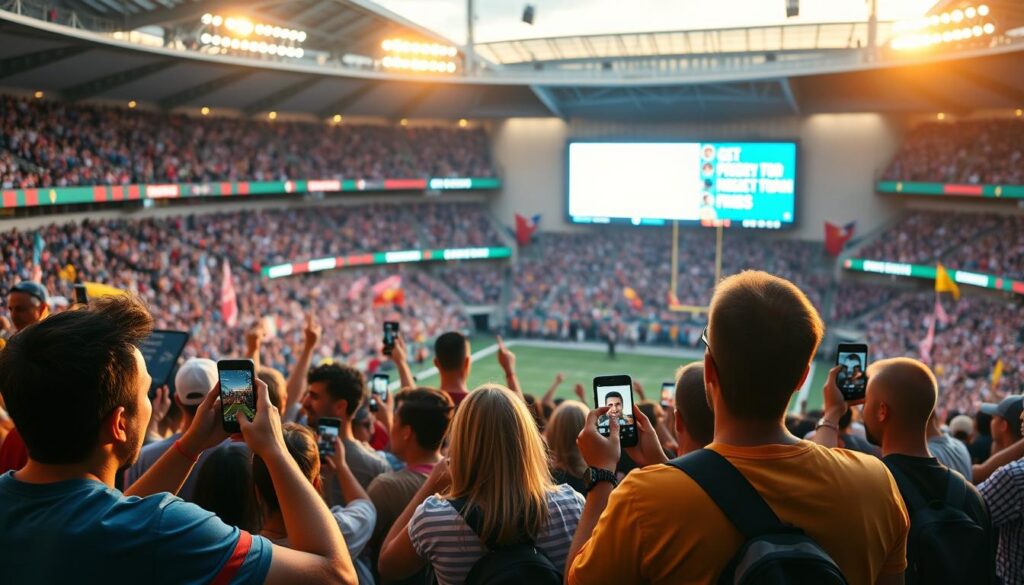
But here’s a secret: most fans want more than just the game’s outcome. They seek stories, access, and a sense of belonging. So, why do teams mainly focus on getting likes?
This playbook is your guide to winning the real game. We’re moving beyond just counting likes. We aim to turn online excitement into real fans in the stands. Smart digital strategies can increase fan interaction by 35-50%.
The ultimate goal is to fill the stadium. We’ll explore how to use local community feelings and the digital world’s rules. Forget big brand strategies for now. This is about local leverage.
Your social media is like the stadium’s open door all year. Think of this as your key to unlock it.
Choosing the Right Social Platforms for Sports
Start by asking where your fans spend their time online. Posting everywhere is like playing baseball on a hockey rink. It’s confusing and weakens your message.
Choosing the right place to share your content is key. It’s not just about posting. It’s about fan engagement. Each platform has its own purpose and audience.
It’s like finding the perfect match for your fans. You need to know who uses each platform. A 55-year-old fan and a 22-year-old student have different ways of consuming content. Your goal is to meet them where they are.
Not every platform is right for every fan. It’s like choosing the right players for your team.
| Platform | Core Demographic | Best Content Type | Primary Engagement Goal |
|---|---|---|---|
| 35+, community-oriented | Event pages, long-form updates, community groups | Build loyalty & drive ticket sales | |
| 18-34, visually-driven | Stories, Reels, high-res photos, behind-the-scenes clips | Create hype & emotional connection | |
| Twitter (X) | All ages, news-focused | Real-time commentary, quick updates, fan interactions | Drive conversation & game-day buzz |
| TikTok | Gen Z, trend-obsessed | Challenges, duets, hyper-edited highlights | Expand reach & attract next-gen fans |
Facebook sports marketing is like a sports bar. It’s great for building a community and reaching older fans. Use it for event pages, ticket sales, and alumni spotlights.
Instagram sports content is like a modern arena. It’s all about visuals and behind-the-scenes moments. Use it to create an aesthetic and make fans feel special.
Twitter is for real-time commentary, and TikTok is for creativity. Adapt your content for each platform. A good social media strategy for sports helps you use your resources wisely.
So, match your strategy to the platform. Focus on Instagram and TikTok for new fans. Use Facebook for your loyal supporters. And let Twitter be the game’s pulse. This way, you’re not just shouting. You’re having a meaningful conversation.
Creating a Content Calendar for Game Seasons
A content calendar is like your team’s offense. Without it, your plans fall apart before they start. Flying by the seat of your pants might seem spontaneous, but it’s like a Hail Mary pass every week. You end up posting filler that doesn’t engage fans on social media fan engagement.
Think of your season as a novel, not a series of tweets. It has different chapters, like the hope of pre-season, the weekly grind of the regular season, the tension of the playoffs, and the off-season analysis. Your calendar must map this journey. Fans invest emotionally in the story, and a disjointed feed breaks that spell. In the same way that entertainment audiences follow trends—from sports highlights to top online casino games—fans expect consistent, engaging content that keeps them coming back.
Let’s break down the playbook. Pre-season content should introduce new players and the team’s state. Then, as the regular season starts, your calendar gets into a rhythm. It’s not just posting “Game Day!” every Saturday. You create anticipation on Wednesday, analyze match-ups on Thursday, and write the post-game story on Sunday.
Ah, the loss. Most teams fumble here. Blind optimism after a defeat feels out of touch. Your calendar needs plans for managing the story. A thoughtful, resilient tone after a loss can build more connection than celebrating a win. It shows you’re part of the community, not just cheering.
Then there are the sponsors. A content calendar helps you integrate sponsorships into the season’s story. A hydration brand feature during a hot game? Organic. A local restaurant highlight for a “post-game meal” segment? Perfect. Without a plan, these integrations feel like jarring commercial breaks.
So, how do you build this master schedule? Start by blocking out seasonal themes. Assign specific content types to each phase. For example:
- Pre-season: Player profiles, facility tours, season ticket member highlights.
- Regular Season: Weekly opponent previews, historical throwbacks, fan-of-the-game features.
- Playoffs: Intensity amplifiers, legacy content, real-time reaction plans.
- Off-season: Deep-dive analytics, community outreach highlights, “best of” retrospectives.
Next, build a reservoir of evergreen material. Player bios, explainer graphics on team strategy, iconic moment videos. This is your bench depth. When real-time news breaks or you need a quick sub, you have quality content ready to go. You’re never caught offside.
The ultimate goal of this planning is trust. Consistency in voice, quality, and timing signals reliability to your audience. It tells them you’re a professional operation. In the economy of attention, trust is the currency that actually sells tickets. Fans buy from sources they believe in.
Your content calendar isn’t a constraint; it’s the framework for creative genius. It turns chaotic, reactive posting into a strategic, season-long conversation. It transforms casual followers into invested fans. And that is the winning strategy for genuine, lasting social media fan engagement.
Behind-the-Scenes Content That Builds Connection
Netflix’s ‘Drive to Survive’ showed us something important. Fans don’t just want to watch the race; they want to feel it. This isn’t just a small group of fans. Data shows that 90% of fans, including the younger generation, want this kind of access.
They’re looking for the real story behind the helmet, the human side of sports. This is where you share the real moments, not just the polished ones. Behind-the-scenes content is the ultimate strategic fan service, giving fans a VIP pass to the inner sanctum.
But it’s not just about capturing random moments. We need a plan to show what truly makes your players human. Is it a mic’d up practice session? A rookie’s first day in the stadium? The equipment manager’s quiet, precise work? These are the moments that create lasting connections.
So, what does “access” mean today? It’s not just about being there. It’s emotional and narrative access. It’s sharing the struggles, the jokes, and the hard work before the glory.
A photo of worn-out cleats tells a story of dedication. It’s more powerful than a generic team photo. This is where sports photography tips become your secret weapon. Your Instagram sports content should show more than just action shots.
First, chase natural light. The right lighting can tell a different story. Second, look for candid moments. The unguarded smile, the focused frown during film study—these are priceless. Third, find the story in the everyday. The physio’s table, the whiteboard, the laundry mountain.
This approach turns your feed into a continuous documentary. It shows the sweat behind the swagger. By mastering these sports photography tips, you build a brand that feels like a friend with a cool backstage pass.
Live-Tweeting and Real-Time Engagement
During a live game, your Twitter account needs to be as quick as a point guard in the final seconds. It’s not just posting; it’s a performance. Over 75% of professional teams use real-time analytics, and it’s because the audience is fully engaged.
Your job is to make that split attention a shared experience. Twitter game updates should be a mix of tactical commentary and humor. They add depth and wit, making fans feel like they’re part of the action.
To excel, use short, sharp observations and witty questions. Timing a GIF perfectly can make it go viral. Engaging directly with fans turns viewers into active participants.

Your brand’s voice shines in live-tweeting. A questionable call is “a fascinating rulebook interpretation.” A heroic play is “the highlight we needed.” This is your brand’s personality on full display.
Live-tweeting is also a data goldmine. It shows what works instantly, from jokes to questions. This data is key for future content and campaigns.
It’s high-stakes, but the reward is worth it. A well-timed tweet can build loyalty and boost ticket sales. Treat your live-tweeting as a vital part of the game-day team.
User-Generated Content Strategies
Starting a UGC strategy without a good prompt is like asking for music and getting random humming. It’s all noise, not music. Your fans are ready to create, but they need a clear plan. A generic hashtag is like a starting pistol with no direction.
User-generated content is the ultimate form of digital fan engagement. It turns viewers into creators. They make content that algorithms and people love. Think of AT&T’s Dribble Town, an experience made to be shared, turning fans into brand ambassadors.
The key is not just asking; it’s how you ask. You need to give them a clear, fun challenge that shows your team’s spirit.
- “Dig Deep in the Closet” Vintage Jersey Contest: Celebrate team history and personal fandom.
- “Recreate the Iconic Play” Family Challenge: Perfect for engaging multiple generations of fans at home.
- “Rivalry Game Face Paint” Submission Drive: Taps into game-day passion and visual spectacle.
Most teams miss the pro move: equipping your fans. Asking for photos without tips leads to poor quality. Giving simple sports photography tips improves submissions and shows you care.
Share these tips to boost your social media fan engagement quality:
- Rule of Thirds: Tell fans to imagine a tic-tac-toe grid over their screen. Placing the subject off-center creates a more dynamic shot.
- Freeze the Action in Low Light: For home viewing parties, advise turning on more lights or using a “sports” mode on their phone to reduce motion blur.
- Capture the Emotion: The best sports photo isn’t always the play; it’s the reaction on a family member’s face.
This guidance turns your call-to-action into a collaboration. You’re not just taking; you’re giving value first.
But the final, critical step is where many campaigns fumble. You must showcase the submissions. Repost them often. Feature them on the Jumbotron. Celebrate the creators by name. This act of recognition is the fuel that powers the entire engine.
It creates a virtuous cycle: fans engage, get featured, feel valued, and become more loyal—and more likely to create again. Their content attracts their networks. Your social media fan engagement becomes a self-perpetuating engine of authentic promotion. Stop doing all the creative heavy lifting. Make the assist, and let your community score the highlight-reel goal.
Influencer Partnerships with Local Athletes
The way we think about influence has changed. Now, a local college star’s Instagram Story can influence more people in your area than a famous person’s ad. This shift is thanks to the Name, Image, and Likeness (NIL) revolution. It’s about supporting a local legend, not just renting a celebrity.
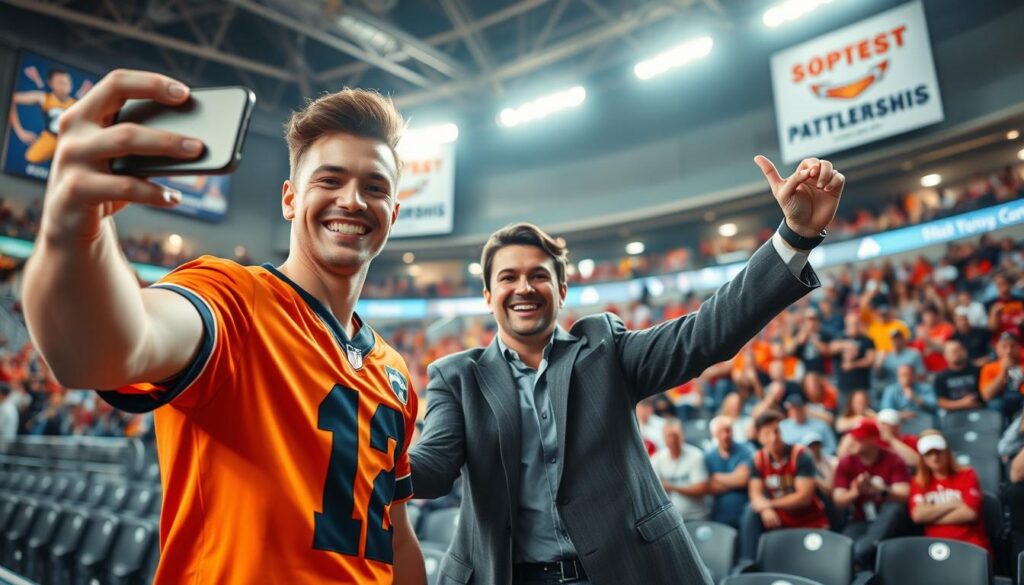
Local heroes have something special: trust. They might not have as many followers as pros, but their fans are very engaged. Their posts about their hard work and local spots feel like personal messages to the community. This is authentic reach at its best.
It’s not just about paying for posts. That’s like a simple bunt. A good partnership is like a series of plays. Imagine Instagram takeovers on game days, content series, or local challenges. The goal is to blend their story with yours.
Let’s look at different partnership models. This table shows what each one offers.
| Partnership Type | Core Value | Best For | Key Metric |
|---|---|---|---|
| Cash-for-Post | Simple, transactional reach | One-time ticket promotion | Immediate click-through rate |
| Account Takeover | Raw, behind-the-scenes access | Game day hype & atmosphere | Story completion rate & live views |
| Co-Created Series | Deep narrative & brand alignment | Building season-long story arcs | Follower growth & series retention |
| Community Ambassador | Long-term local credibility | Year-round community programs | Local sentiment & brand recall |
The table shows that the best partnerships are deeper and more integrated. An ambassador role, for example, makes the athlete a permanent part of your brand.
The magic happens in everyday content. A player’s Instagram Story about their pre-game ritual at a local diner? That’s marketing through local stories. It’s more valuable than a generic ad. It connects with your fans on a deeper level.
Partnering with local athletes is about understanding that influence is local. It’s a smart move that uses the NIL era to fill stadiums, not just get national attention. To succeed, you need to know what local sports news is and who talks about it. Find your hometown hero and create a plan with them.
Video Content That Drives Attendance
The goal of sports video content is to create a sense of FOMO. It’s not just about selling a game. It’s about showing the excitement of a sunrise over an empty stadium, the thrill of a penalty kick, and the joy of fans leaving the game.
Video can capture live emotions in a way static posts can’t. It’s a powerful tool to make fans feel like they’re missing out.
Let’s look at the numbers. Almost 92% of internet users watch videos every week. And nearly 25% are looking for sports clips. Ignoring this is not a strategy; it’s giving up.
We need to go beyond just showing highlights. Anyone can find top-ten plays on YouTube. Your job is to capture the unique energy of your stadium. This means creating both quick, exciting moments and deeper, more immersive stories.
Think of your video content as a playbook. Each format is like a play, suited for different situations. Here’s how to pick the right play:
| Format & Platform | Content Focus | The Fan’s Mindset | Primary Goal |
|---|---|---|---|
| Short-Form (Instagram Reels, TikTok) | Single incredible play, wild fan reaction, quick player mic’d up moment, stadium atmosphere snippet. | Scrolling, seeking instant entertainment, snackable content. | Generate shareable “Wow!” moments; stop the scroll; attract new eyes. |
| Long-Form (Facebook, YouTube) | Player profile documentaries, “A Day In The Life” features, deep-dive tactical previews, season recap narratives. | Leaning in, interested in deeper connection, invested in the story. | Build emotional equity with the team and players; foster long-term loyalty. |
This isn’t random. It’s about matching your content to each platform’s algorithm and audience. Your Instagram sports content needs to be fast and energetic. A well-cut Reel of a game-winning goal, set to trending music, is perfect for Instagram.
On the other hand, your Facebook sports marketing should focus on depth. A five-minute feature on a local athlete’s community work tells a story that static posts can’t. It turns a player into a neighbor, building a strong fan base.
The key for both is to make fans wonder if they’re missing out. When your video content makes staying home seem like the wrong choice, you’re not just engaging fans. You’re guiding them straight to the game.
Community Challenges and Contests
This is your chance to win the game. It’s not a last-ditch effort, but a well-planned move. A contest is more than just a giveaway. It’s an experience that can make fans more loyal to your brand.
Don’t just ask people to “like and share.” Create a “Call the Play” challenge for a fun moment. Try a city-wide scavenger hunt with clues on Twitter game updates. The prize should be something special, like meeting a player or designing a jersey.
This is where online fun comes to life in your stadium. Using gamification can bring in better fans than simple giveaways. Tools like Drimify help keep fans engaged all season long. For more ideas, check out these online contest ideas.
You’re not just selling tickets. You’re creating a community with a story. That’s how you turn online fans into real-life supporters.