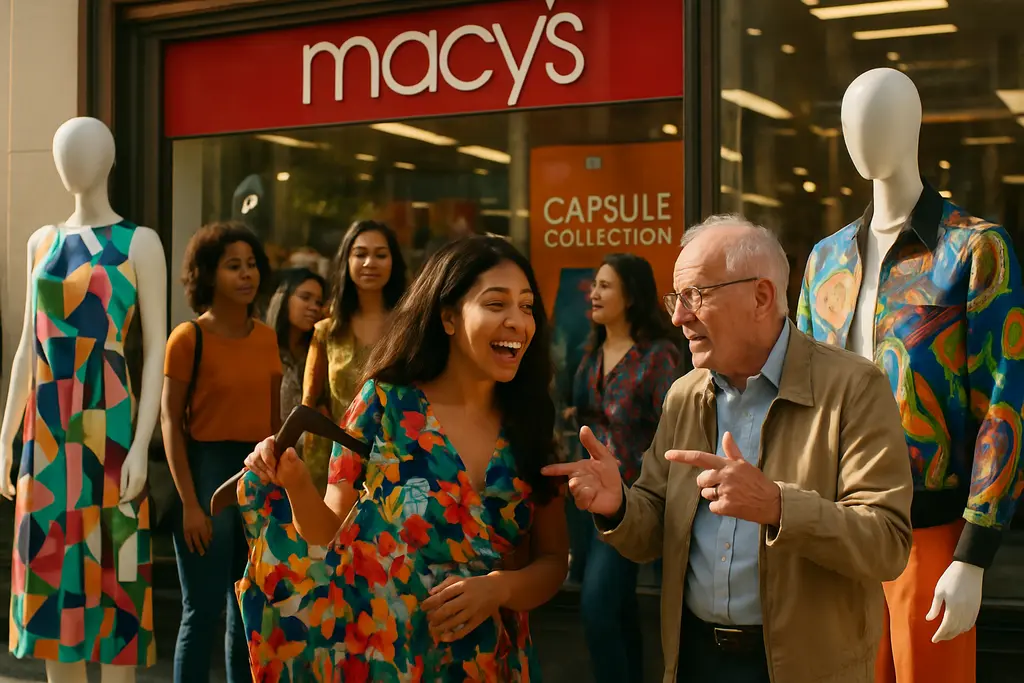
Macy’s Capsule Collection officially launched on September 8, 2026, as part of Macy’s Fall “Find Us at Macy’s” campaign, according to the company announcement carried by Business Wire via StreetInsider. As of September 22, 2026, the collections are live online and in selected stores. The premise is direct but layered: combine established American fashion names with newer designers, sell limited-edition capsules through Macy’s channels, and use store programming to make the campaign feel less like a standard seasonal product push.
That strategy deserves a careful reading because capsule collections can do different kinds of work. They can create scarcity, refresh a retailer’s fashion authority, introduce shoppers to labels they may not have followed, and give designers access to a wider national audience. None of those outcomes is automatic. The strength of this campaign depends on whether Macy’s can support discovery without flattening the identities of the participating designers into a single house style.
How Macy’s Capsule Collection Frames American Design
Why The Icons And New Guard Pairing Matters
Macy’s has organized the project around six American designers in two groups: “The Icons,” made up of Tommy Hilfiger, Donna Karan, and Michael Kors, and “The New Guard,” made up of Jonathan Cohen, Sally LaPointe’s LaPointe, and Edvin Thompson’s Theophilio. FashionUnited reported that each designer created limited-edition capsules sold exclusively through Macy’s, in selected physical stores and through macys.com, as part of the Fall 2026 campaign FashionUnited.
The split between icons and newer labels is not just a branding device. It gives Macy’s a way to frame American design as both recognizable and still in motion. Hilfiger, Karan, and Kors bring broad public familiarity. Cohen, LaPointe, and Theophilio represent a more discovery-driven side of the project, where the value for shoppers may be less about name recognition and more about encountering a designer point of view inside a large retail setting.
For a department store, that balance is meaningful. Too much emphasis on familiar names can make a campaign feel safe. Too much emphasis on discovery without context can leave shoppers unsure why the collaboration matters. Macy’s appears to be using the two-tier structure to manage that tension, placing less familiar labels beside names with long-standing visibility in American fashion.
Macy’s Capsule Collection As A Discovery Tool
Macy’s Capsule Collection is less persuasive if viewed only as a product drop. Its stronger community and culture argument is that a national retailer can act as a bridge between designer identity and public access. For emerging or newer labels, shelf space and homepage placement through a major retailer can expand reach beyond runway coverage, specialty boutiques, and fashion-media audiences.
That does not mean access is equal across all designers, cities, or customers. The collections are limited-edition and available in selected stores, so the physical experience will vary by location. The online channel widens access, but digital retail does not fully replace the value of trying on garments, seeing fabric movement, or receiving in-person styling help. This is where Macy’s store strategy becomes part of the cultural story rather than a separate retail detail.
Designer Signals Inside The Capsules
Established Names Carry Familiar Codes
The established designers provide a foundation of recognizability. Based on the campaign framing in the research, Tommy Hilfiger is positioned through heritage Americana; Donna Karan’s capsule centers on fluid draping, neutral tones, and clothing intended to move with women; Michael Kors contributes a glamour-oriented point of view through elevated separates, animal prints, and fringe accents. These descriptions suggest Macy’s is not asking the better-known designers to disappear into a neutral retail identity. The campaign depends on their signatures being readable.
That readability matters for shoppers who may not follow fashion calendars closely. A capsule tied to an established designer can offer a shorthand: a customer has some idea of the mood before seeing every garment. The risk is that shorthand can become too broad. A respectful campaign has to leave room for design detail, material choices, fit, and styling rather than treating the designer name as the whole story.
The New Guard Adds Cultural Range
The newer labels carry a different kind of weight. Jonathan Cohen’s capsule is described as leaning into bold colors, prints, and craftsmanship. LaPointe brings monochromatic sets, tactile fabrics, and embellishments. Theophilio, led by Edvin Thompson, integrates Caribbean heritage and street-style influences. These are not interchangeable positions within American fashion. They point to different relationships with color, texture, personal history, and public presentation.
For communities that care about creative access, this is the most important part of the campaign. A retailer can promote “American design” in a narrow way, or it can acknowledge that American fashion is shaped by migration, regional identity, craft traditions, nightlife, street style, workwear, social dress codes, and designer-led experimentation. The available research supports the idea that Macy’s is trying to show more than one version of national style, though the depth of that effort will be clearer as shoppers and critics respond to the capsules in practice.
Retail Strategy, Store Events, And Community Access
How Store Programming Extends The Drop
Macy’s has scheduled “Celebration Saturday” for September 26, 2026, from 1 p.m. to 5 p.m. local time at selected stores. The planned programming includes styling sessions, entertainment, and gift-with-purchase offers. Since that date has not yet arrived as of September 22, 2026, it should be described as scheduled rather than completed.
For a capsule project, in-store programming can change the social meaning of the release. A rack of garments can be a sales moment. A styling session can become an interpretive moment, especially if staff can explain fit, fabrication, designer references, and ways to wear the pieces without reducing them to a single trend label. Entertainment and event energy may help bring people into stores, but the lasting value is likely to depend on how well the design stories are communicated.
There is also a practical access question. Selected-store activations can create local energy, yet they leave some communities outside the physical event footprint. Macy’s online sales channel helps address that gap, but the social experience of a store event remains uneven by geography. Readers who follow the intersection of retail, public life, and community institutions might appreciate the insights public-affairs coverage offers at Kay Granger for a broader civic perspective.
The Bold New Chapter Context
The Fall 2026 designer project also sits within Macy’s “Bold New Chapter” turnaround plan, launched in February 2024. The research notes indicate that the plan has included closing about 150 underperforming locations and investing in 125 “Reimagine” stores. That context matters because the capsule campaign is not only about celebrating designers. It is also part of a retail repositioning effort in which Macy’s is trying to sharpen brand identity, product difference, and store experience.
From an analytical standpoint, this creates both opportunity and pressure. Designer capsules can signal taste authority, but they cannot by themselves solve store traffic, inventory, service quality, or regional relevance. The more credible reading is narrower: the campaign gives Macy’s a visible fashion story at a time when the company is investing in fewer, more intentional store experiences.
Rights, Credit, And Respectful Fashion Storytelling
Why Attribution Matters In Capsule Coverage
Coverage of fashion collaborations should be careful about credit. Designers bring their own bodies of work, cultural references, teams, and production relationships to a project. When a retailer gathers multiple labels under one campaign, the media story can easily become retailer-first. That may be commercially accurate, but it can understate the creative labor that makes the collection worth discussing.
The safer editorial approach is to name designers clearly, avoid unsupported claims about influence, and distinguish between what a company has announced and what critics or shoppers later observe. For example, it is supported to say that Theophilio’s capsule integrates Caribbean heritage and street-style influences because that appears in the research. It would not be responsible to invent a claim about a specific community response without sourced evidence.
The same caution applies to creator commerce. A major capsule may inspire independent sellers, stylists, and content creators, but inspiration is not a free pass to copy protected artwork, brand marks, garment graphics, campaign imagery, or a living designer’s identifiable trade presentation for commercial deception. This article does not offer legal advice. It does support a basic ethical principle: credit creative sources, avoid passing off, and seek rights clearance where needed.
What The Celebrate American Designers Capsule Signals
The Macy’s Capsule Collection signals a practical strategy for promoting homegrown talent through a mix of recognition, exclusivity, and retail access. The presence of Hilfiger, Karan, and Kors gives the campaign a familiar entry point. The inclusion of Cohen, LaPointe, and Theophilio gives Macy’s a way to present American fashion as broader than legacy names alone.
Its success should be judged with care. The campaign has already launched as of September 8, 2026, but its cultural impact cannot be measured only by launch-day visibility. More useful questions include whether the newer designers receive clear attribution, whether customers understand the differences among the capsules, whether selected-store programming gives real context, and whether Macy’s continues to support designer discovery after the Fall 2026 campaign cycle.
For now, the strongest supported assessment is that Macy’s is using designer capsules as both merchandising and cultural positioning. Macy’s Capsule Collection gives the retailer a way to connect national scale with individual design voices. If handled with respect for the designers’ distinct identities, the project can offer shoppers more than seasonal novelty: it can make a department store feel like a place where American fashion is interpreted, compared, and encountered in person.