Ready to capture the action up close? Before you step onto the field, there’s one key step: getting the right permissions. Professional photographer Vincent Pugliese knows this well from shooting major events. Without proper approval, you might miss the shot or even face access issues.
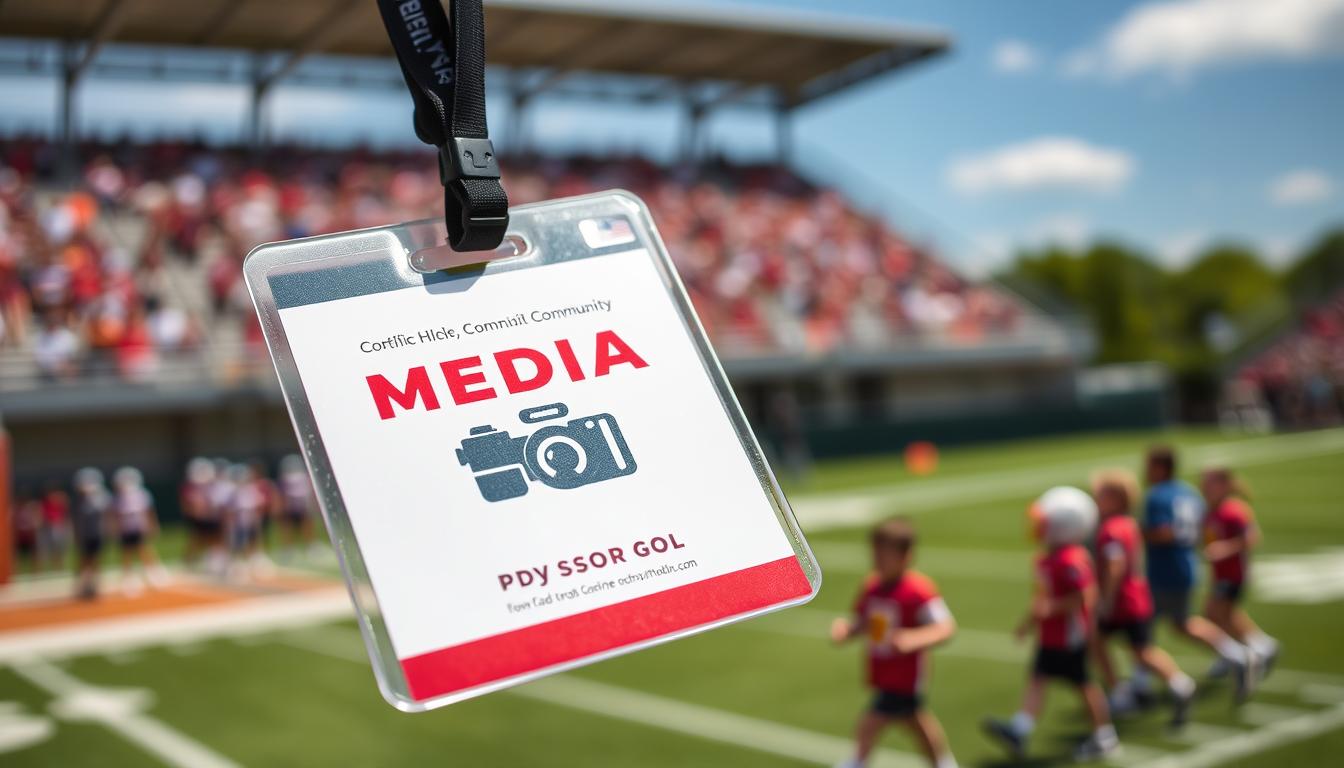
Securing a media pass is your first move. Schools and leagues require this for sideline access. It’s not just about rules—it’s about safety and respect. Always seek formal authorization to avoid conflicts with event staff.
When working with minors, consent becomes even more critical. Parents and guardians need to know their children are being photographed. This ethical practice builds trust and keeps everyone comfortable. For more on this, check out this helpful discussion on permissions.
Don’t forget insurance and basic safety protocols. These protect you and the participants. Proper planning ensures a smooth experience. For tips on managing event logistics, see this guide on charity sports events.
Start right by getting your credentials in order. It makes all the difference between a frustrating day and a successful shoot.
Safe Sideline Positioning
Finding the perfect spot on the sidelines is key. It’s about strategy and staying safe. The right spot lets you take amazing photos without getting too close to the action.
Sports fields have clear zones for different people. Media areas are marked with lines or markers. These spots give you great views while keeping you safe from the game.
Player benches have safety zones that photographers should not enter. These areas are for coaches, players, and medical staff. Avoiding these zones shows respect and prevents accidents.
Knowing the field markings is important. Hash marks, yard lines, and boundary lines show where play might happen. By understanding these, you can guess where the action will go next.
Here are some key areas to avoid:
- Team bench areas and immediate surroundings
- Medical staff zones near the benches
- Official’s positioning areas during play
- Any areas marked with specific “no media” signage
Talking to game officials can help a lot. Introduce yourself before the game and ask about any special rules. They can tell you the best spots and warn you about areas to avoid.
Venue staff are also great for advice. They know the field layout best and can show you the best shooting spots. Good relationships with them can help all season.
Always watch the game’s flow. Even in media areas, plays can move to the sidelines. Keep your eyes on the action and be ready to move if needed.
Different sports have different sideline rules. Football, soccer, and lacrosse each have their own safety rules. Always check the specific sport’s guidelines before setting up your equipment.
Your safety and the players’ safety are most important. Great photos are important, but not at the cost of safety. With smart positioning and awareness, you can take amazing photos while staying safe.
Camera and Lens Recommendations
Choosing the right photography equipment is key for capturing fast sports action. Your gear affects how well you freeze motion and track athletes. It also impacts the quality of your images, showing the game’s excitement.
Finding Your Perfect Camera Body
Sports photography needs cameras that can handle quick movements. Look for ones with fast autofocus systems and high continuous shooting speeds. These features are essential for capturing those critical moments in sports.
Many debate between mirrorless and DSLR cameras. Mirrorless cameras have excellent electronic viewfinders and are lighter. DSLRs offer longer battery life and more lens options. Both can produce great sports photos.
Essential Camera Features
Weather sealing is vital for outdoor sports photography. It protects against rain, dust, and extreme temperatures. This feature is important for keeping your gear safe in unexpected weather.
Frame rate is critical for action shots. Cameras with 8-12 frames per second can capture entire movements. This is important for shots like basketball jump shots or soccer kicks.
Lens Selection for Different Sports
Your lens choices should match the sports you’re photographing. For field sports like football and soccer, use longer telephoto lenses. Court sports like basketball and volleyball work well with medium telephoto options.
Track and field events require both wide-angle and telephoto lenses. Having multiple lenses ensures you’re ready for any situation.
Focal Length Guidelines
Here are some focal length recommendations:
- Football/Soccer: 70-200mm or 100-400mm lenses
- Basketball/Volleyball: 24-70mm or 70-200mm lenses
- Track Events: 300mm or longer for field events
- Swimming: 70-200mm with fast aperture
Fast aperture lenses (f/2.8 or faster) let more light in. This is key for indoor sports or evening games under stadium lights.
Essential Accessories for Sports Photographers
Several accessories can improve your sports photography. Monopods offer stability for heavy lenses without restricting movement. They’re easier to move than tripods during games.
Choosing the right memory cards is important. High-speed cards with large capacities ensure you never miss a shot. Having multiple cards provides backup during important moments.
Protective gear like lens filters and camera rain covers is also essential. UV filters protect your lens from debris. Rain covers keep your equipment dry in wet weather—a smart investment for serious photographers.
Remember, skill often outweighs equipment cost. Many start with basic gear and upgrade as they grow. The best camera is the one you have when great moments happen.
Settings for Indoor/Outdoor/Night
Learning your camera settings for different places makes your sports photos better. Each lighting situation needs special adjustments for clear, bright shots.
Outdoor Daylight Conditions
Bright sunlight is perfect for sports photos. Fast shutter speeds are key to freeze the action and keep images sharp.
Start with these baseline settings:
- Shutter speed: 1/1000s or faster
- Aperture: f/2.8 to f/4
- ISO: 100-400
These settings help get sharp images with little noise. Change your aperture to control background blur.
Settings for Bright Sunlight
When the sun is high, you might need to adjust. Lower your ISO to 100 and use a narrower aperture around f/4 to f/5.6.
This stops overexposure and keeps your subject sharp. Always check your histogram to avoid blown highlights.
Indoor Sports Photography
Gymnasiums and indoor arenas have their own challenges. Artificial lighting varies a lot, so you need to adjust carefully.
Key settings for indoor sports:
- Shutter speed: 1/500s minimum
- Aperture: widest possible (f/2.8 ideal)
- ISO: 1600-6400 (depending on light)
White balance is key under artificial lights. Use custom white balance or shoot in RAW to fix colors later.
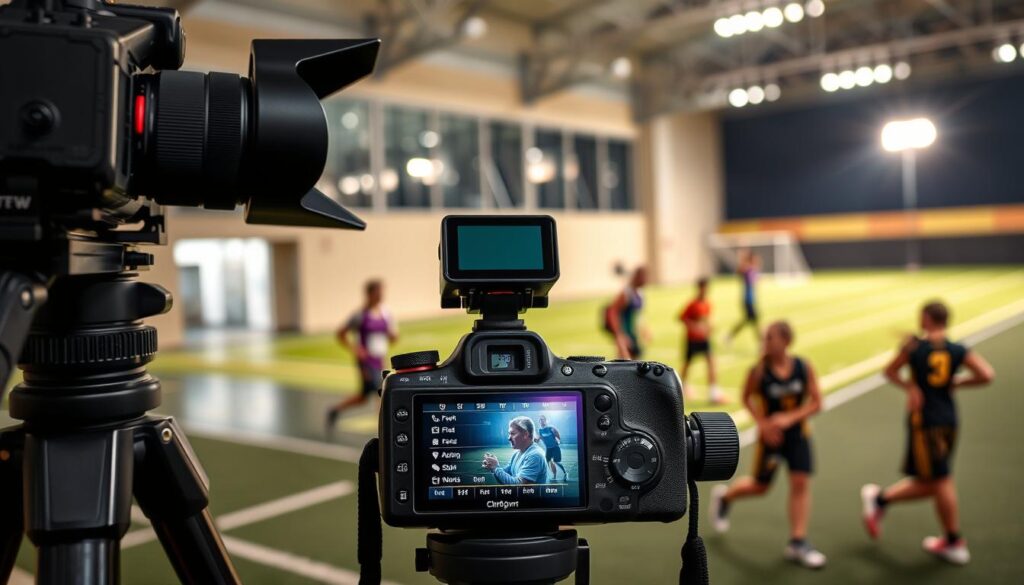
Many indoor facilities have different light sources. Tungsten, fluorescent, and LED lights can change your image colors.
Shoot in RAW format to fix white balance issues later. Bracket your shots if you’re unsure about the best settings.
Night Sports Photography
Stadium lighting and night games test your skills. You’ll need to push your equipment while keeping image quality.
Recommended night settings:
- Shutter speed: 1/500s to 1/800s
- Aperture: widest setting (f/2.8 or lower)
- ISO: 3200-12800
Modern cameras handle high ISO better than older ones. Don’t be afraid to increase ISO for proper exposure.
Working with Stadium Lighting
Stadium lights create uneven lighting. Spot metering helps expose players properly, not the dark background.
Shoot during the golden hour before night falls. This gives beautiful natural light mixed with stadium illumination.
Practice these settings during different games. You’ll get better at adjusting quickly as lighting changes.
Capturing Inclusive Coverage (JV, Girls, Adaptive)
Great sports photography tells the whole story of a school’s athletic community. It’s not just about the varsity teams and star players. It celebrates every athlete and program.
This approach boosts school spirit and shows you value all students. It makes your collection richer and more diverse. Your work truly reflects the whole sports community.
Planning Your Coverage Schedule
Getting a good balance of coverage across teams needs smart planning. Start by getting schedules for all sports programs at the beginning of each season. This includes JV, girls’ teams, and adaptive sports programs.
Create a shooting calendar that rotates coverage fairly. Don’t just focus on the “big” games. Some of the most powerful moments happen in less prominent matches.
Junior Varsity Team Strategies
JV athletes deserve the same professional coverage as varsity players. These teams often feature developing talent and future stars. Capture their growth and dedication throughout the season.
Focus on skill development and team bonding moments. JV games often have a different energy than varsity contests. Show the passion and effort these athletes bring to every practice and game.
Girls’ Sports Photography Techniques
Women’s sports deserve equal attention and quality coverage. Avoid stereotypes and capture the intensity and skill of female athletes. Show their strength, determination, and sportsmanship.
Get to know the unique aspects of each women’s sport. Understand the key moments and positions that make each game special. Your photos should reflect the true nature of the competition.
Adaptive Sports Program Coverage
Adaptive sports programs showcase incredible determination and spirit. These athletes overcome challenges that deserve recognition. Your coverage should highlight their achievements and sportsmanship.
Learn about the specific adaptations and rules of each sport. This knowledge helps you anticipate key moments. Focus on the athletes’ abilities, not their disabilities.
Ethical Representation Guidelines
Inclusive photography requires thoughtful representation. Avoid reinforcing stereotypes or biases in your coverage. Treat all athletes with equal respect and professionalism.
Seek diversity in your images beyond just the playing field. Capture pre-game rituals, team huddles, and emotional moments. These images tell the complete story of each athletic program.
| Team Type | Coverage Priority | Key Moments to Capture | Relationship Building Tips |
|---|---|---|---|
| Junior Varsity | Equal to varsity | Skill development, team bonding | Attend practices, know coaches |
| Girls’ Sports | Equal to boys’ sports | Game intensity, sportsmanship | Learn sport specifics, interview players |
| Adaptive Sports | High priority | Achievements, adaptations | Understand rules, focus on abilities |
| All Teams | Balanced coverage | Emotional moments, community | Regular communication, feedback |
Building relationships with all coaches is key for inclusive coverage. Regular communication ensures you understand each program’s needs. Ask coaches about important upcoming games or special events.
Seek feedback from athletes and coaches across all programs. This helps you improve your coverage approach. It shows your commitment to representing every team fairly.
Remember, inclusive coverage benefits the whole school community. It creates a more complete athletic archive. Your photos become valuable historical records for all programs.
Release Forms and Privacy for Minors
Protecting young athletes is more than just taking great photos. It’s about following the law to keep everyone safe and private.
Essential Documentation for Youth Sports Photography
Every situation needs its own release forms. Schools and groups have different rules about using photos.
Always get consent before taking photos of kids. This keeps everyone safe, including the children, schools, and photographers.
Here are the main types of release forms you’ll encounter:
| Form Type | Primary Use | Consent Level Required | Duration |
|---|---|---|---|
| School Publication Release | Yearbooks, newsletters, school websites | General parental consent | Academic year |
| Commercial Use Release | Advertising, sponsorships, product sales | Specific written consent | Project-specific |
| Social Media Release | Team accounts, booster club pages | Platform-specific consent | Ongoing with opt-out |
| FERPA Compliance Form | Educational records protection | Annual parental acknowledgment | School year |
Privacy Protection Best Practices
FERPA laws protect student records. Photos can sometimes be part of these records.
Always go through official channels. Schools usually have set consent forms for photographers.
Digital consent systems help track permissions. They organize who can be photographed and where images can appear.
Some situations need extra care. Avoid taking photos of kids in sensitive or emotional moments.
Parents might have special requests for their child’s photos. Always respect and act on these requests quickly.
Being ethical in photography is more than just following the law. Trust is built by being open about how you use photos.
Keep consent forms organized and easy to find. You might need them later if there are questions about photo use.
Editing Workflow and Color Consistency
After taking hundreds of action shots, the real magic happens in post-processing. A smooth editing workflow turns your raw photos into top-notch images. These images tell exciting sports stories. This method ensures your work is always consistent and of high quality.
Efficient Photo Management System
Begin by organizing your photos in a logical way. Use a folder structure that fits your workflow. Many photographers organize by date or event.
Professional photographers like Vincent Pugliese stress the importance of consistency. Your workflow should be second nature. This lets you focus on creative choices, not just admin tasks.
Using culling techniques helps you find the best shots quickly. Mark your favorites with ratings or color labels. Many photographers go through three passes: rejects, technical quality, and emotional impact.
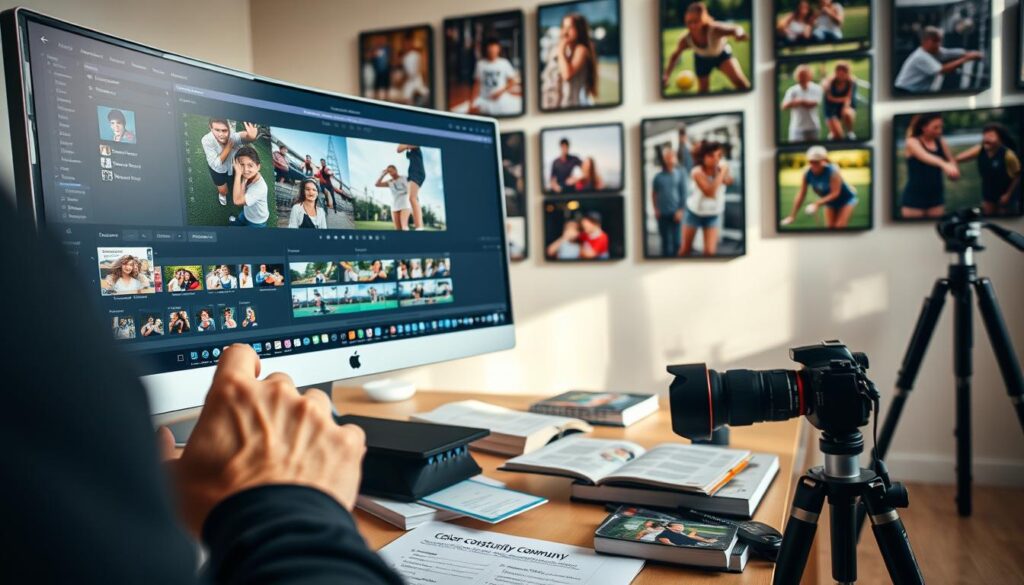
Color grading keeps your photos looking uniform, even in different lighting. Sports events often have bright sunlight, shade, and artificial light. Your editing should make your photo gallery visually cohesive.
Batch editing saves a lot of time and keeps your work consistent. Make base adjustments to one image and apply them to similar shots. This is great for images taken under the same lighting.
Creating presets helps you maintain your style. Develop custom presets that show your vision. These presets can be adjusted for different venues or lighting, keeping your look consistent.
Software and Automation Tools
Adobe Lightroom is great for most editing tasks. It has tools for organizing and batch processing. Photoshop is better for detailed retouching.
Time-saving techniques and automation options make post-game workflow easier. Learn shortcuts for your editing software. Create export presets for different needs. These small steps save a lot of time.
Organizing large volumes of images is easier with metadata templates. Use consistent keywords, copyright info, and captions during import. This makes searching your photo gallery faster later on.
Quality Control and Delivery
Quality control ensures every image meets your standards. Have a final review before exporting. Check for exposure, color balance, and sharpness.
Preparing for delivery means creating different output options. Make images for web, full-resolution for prints, and mobile-optimized for social media. This way, your images can be used in various ways.
Keeping an editorial style consistent is your signature. Clients should recognize your work by its look and feel. This builds trust and encourages repeat business.
File Naming, Metadata, and Alt Text
Great sports photography needs great organization. Capturing hundreds of action shots means finding images fast is key. Proper digital asset management saves time and boosts your work’s value.
Smart File Naming Systems
Make file names that tell a story. Include details that help you spot images quickly. A good naming system might look like this:
- Date (YYYYMMDD format)
- Event or game type
- Team names
- Player number or name
- Sequence number
For example, 20231015_Soccer_JV_Boys_TeamA_vs_TeamB_Player23_001.jpg. This makes searching and sorting easy.
Mastering Metadata for Sports Photos
Metadata is hidden info in your image files. It’s key for organization and copyright. There are two main types:
EXIF Data
This data records camera settings automatically. It includes shutter speed, aperture, ISO, and focal length. EXIF helps you review your technical choices.
IPTC Data
This is where you add descriptive info manually. Include keywords, captions, copyright notices, and contact info. Proper tagging here makes your images searchable and professional.
Tools like Adobe Lightroom or Photo Mechanic can automate metadata entry. Create templates with your standard info to save time.
Creating Meaningful Alt Text
Alt text describes images for visually impaired users and search engines. For sports photography, focus on the action and emotions. Describe what’s happening in the scene.
Good alt text: “High school soccer player in blue jersey dribbling past defender during night game under stadium lights”
Poor alt text: “Soccer player with ball”
Include team colors, player actions, and game context. This tagging approach makes your photos accessible to everyone while improving SEO.
Organized files with proper metadata and alt text transform your photography workflow. You’ll find images faster, protect your work, and reach wider audiences with accessible content.
Sharing, Tagging, and Licensing
Getting your sports photos to the right people quickly is key. A smart plan turns great shots into cherished memories and valuable assets for your school community.
Effective Sharing Platforms
Cloud albums are perfect for instant photo delivery. Services like Google Photos or SmugMug let you create galleries that families can access hours after the game.
School portals and athletic websites are great for sharing your work. Social media channels like Instagram and Facebook help build excitement when you share highlight shots with proper tagging.
Accurate tagging ensures athletes and families can easily find their photos. Always include:
- Player jersey numbers and names
- Team names and sport types
- School names and event dates
This organization helps with searchability and makes your cloud albums more user-friendly for everyone involved.
Understanding Photo Licensing
Clear licensing protects your work while letting others enjoy it. Establish simple terms that specify how images can be used—personal use versus commercial applications require different permissions.
Watermarking strategies help maintain your copyright while showing your work. Consider subtle watermarks in corners instead of across the entire image.
For those looking to dive deeper into sports photography basics, this sports photography introduction covers essential techniques.
Building Media Relationships
Local newspapers and school publications often need quality sports images. Connect with sports information directors to become their go-to photographer.
Quick turnaround times impress media contacts and families alike. Establish systems that get images where they need to go while maintaining proper licensing controls.
Monetization Ideas for Booster Clubs
Sports photography is a great way for booster clubs and athletic programs to make money. It’s a win-win situation. It helps fund school activities and grows your photography business.
Individual and Package Sales
Start by selling individual digital photos at good prices. Offer package deals with more photos for a better value. Season passes let families get all game photos for the season.
Specialty Products
Create special collections for graduating athletes. Team posters with action shots are always a hit. Season books are a great way to keep memories alive.
Fundraising Partnerships
Make deals where a part of your sales goes to the athletic program. Use online platforms for easy sales and delivery. This way, your photography business can help the school community.
Follow Vincent Pugliese’s advice to build your business. Focus on adding value for everyone. Your sports photography can make money and keep memories safe.