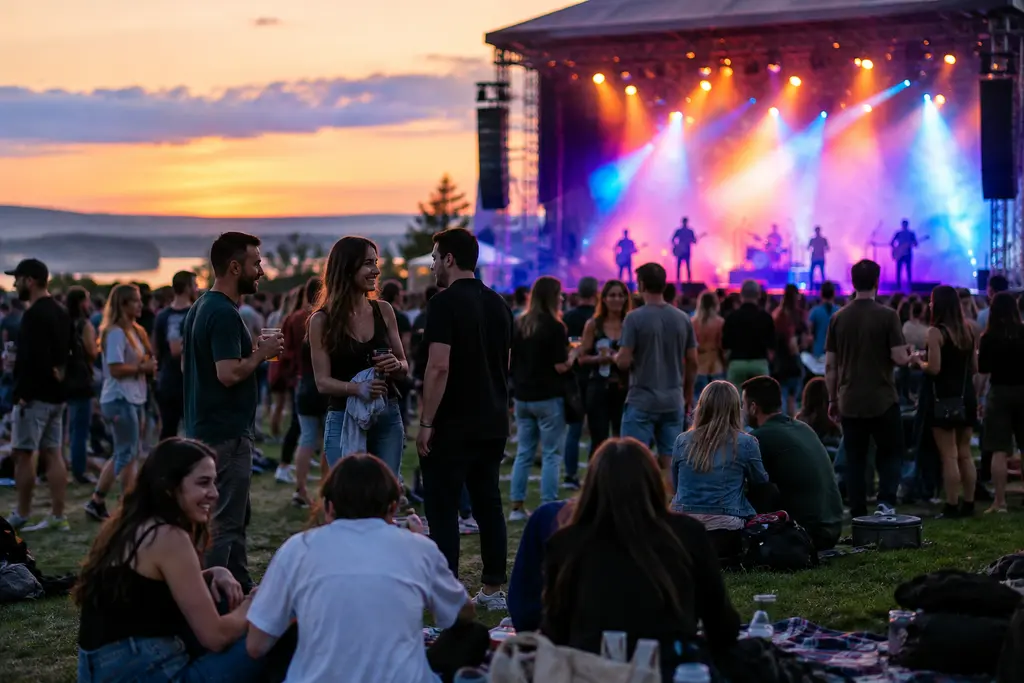
Live Nation’s July 30, 2026 report made concert demand a measurable business story rather than a vague cultural impression. The company reported second-quarter revenue of US$7.7 billion, up 9% from Q2 2025, in its Live Nation report. For artists, promoters, venue operators, and sellers clustered around live music culture, the figures point to a market in which audiences continued to spend on shared events through the first half of 2026. The harder question is what these numbers can and cannot tell us about access, pricing pressure, and the wider creative economy.
What concert demand Shows In Mid-2026
The headline figures from Live Nation’s Q2 report were broad. Through mid-July 2026, the company said it had sold more than 143 million tickets, ahead of the prior year’s pace by more than 14 million tickets. During Q2 2026, nearly 49 million fans attended Live Nation shows worldwide, with the company attributing the roughly 10% attendance growth mainly to international markets.
Those figures matter because they cover more than one measure of strength. Revenue can rise because of price changes, mix, sponsorship, or premium products. Attendance speaks more directly to crowd volume. Ticket sales give another view into forward activity. Taken together, the data suggests that the live-event business did not depend on a single metric to show momentum during the period covered by the report.
Reading The Scale Of Attendance
Nearly 49 million attendees in one quarter is significant by any cultural-industry measure, but it should not be read as a uniform condition for every performer or venue. Live Nation’s data reflects its own operations, including major venue types and global touring. Smaller rooms, independent promoters, local festivals, and experimental music spaces may face different economics. The report offers a clear view into a large public company, not a full census of live culture.
Why Company Data Needs Context
Company-reported figures are useful, especially when tied to filings and quarterly disclosures, but they are also framed around investor communication. A cautious reading separates the evidence from broader claims. The data supports the idea that Live Nation experienced strong demand in Q2 2026. It does not, by itself, prove that every segment of live music became healthier, or that audiences felt less pressure from ticket and onsite costs.
Concert Demand And The Artist Economy
For working artists, the most relevant question is not simply whether more people attended shows. It is whether audience interest can support sustainable touring, fair production conditions, and meaningful opportunities beyond the top tier of acts. Live Nation’s report noted growth across large venue types, including stadiums, arenas, and amphitheaters. That breadth matters because it suggests activity across different scales of commercial touring, even though the available figures do not break down artist earnings.
concert demand Beyond Headliners
Strong concert demand can influence the broader cultural field around a show. Costume designers, poster artists, photographers, stage crews, projection designers, makeup artists, local vendors, and independent merch sellers often sit near live music without appearing in headline financial results. Their position can improve when audience traffic rises, but the link is indirect. A sold-out venue does not automatically mean equitable pay for every creative worker connected to the night.
For visual artists and makers, live events can act as points of contact with audiences who already identify with a scene. Rave fashion, handmade accessories, fan-made objects, and limited-run prints often circulate around music gatherings. Rights clearance remains a serious issue for sellers using names, likenesses, logos, or protected imagery. The safer creative path is original design language rather than unlicensed use of an artist’s identity or a venue’s brand assets.
What Ticket Volume Cannot Prove
Ticket volume can show appetite for attendance, but it cannot explain who was priced out, which genres gained most, or how revenue was divided among artists, venues, promoters, ticketing platforms, and service providers. It also does not show whether fans substituted concerts for other cultural spending, such as gallery visits, independent theater, small festivals, or local club nights. The data is strong, but its interpretive boundary is clear.
That boundary is useful for arts reporting. It keeps the story grounded. Rather than declaring a universal boom, the evidence supports a narrower claim: in the company’s Q2 and mid-2026 indicators, Live Nation saw higher revenue, higher attendance, higher ticket sales, and stronger booking-related balances than the comparable periods cited in its report.
Sponsorship, Ticketing, And Venue Signals

The ticketing side also showed gains. Live Nation said Ticketmaster sold 90 million fee-bearing tickets during Q2 2026, up 8% year over year, and that Ticketmaster adjusted operating income rose 14%. These numbers indicate that demand was visible not only at the concert segment level, but also in the transaction systems attached to ticketed events.
A separate Reuters account reported that Live Nation beat quarterly revenue estimates and cited Concerts segment revenue of US$6.44 billion for Q2 2026, up about 8.3% year over year, according to the Reuters report. That segment figure gives a useful check against the broader consolidated revenue number, since concerts remain the cultural activity at the center of the company’s public identity.
Advance Commitments And Deferred Revenue
Live Nation also reported deferred revenue related to events not yet held as of June 30, 2026, at US$6.4 billion. The company described that as a 25% increase, or about US$1.3 billion, from June 30, 2025. Deferred revenue is not the same as completed event income, but it can show that ticketing and booking activity had already moved money onto the balance sheet for later performances.
Sponsorship and advertising data pointed in the same direction. In Q2 2026, the company said Sponsorship & Advertising adjusted operating income rose 13%, driven by international expansion of venues and festivals. It also said more than 95% of sponsorship commitments for 2026 had already been booked. That is a notable signal for brand spending around live events, though it should not be treated as a direct measure of fan welfare or artist compensation.
Ticketmaster Data As A Market Signal
Ticketmaster’s fee-bearing ticket volume is especially important because it captures transactions rather than only reported attendance. A ticket sale can precede the event by weeks or months, so this kind of data helps explain why Live Nation’s leadership could point to strength beyond a completed quarter. Still, ticketing data also sits inside a contested public debate about fees, market power, and affordability. Those issues are not resolved by higher volume.
For arts communities, the more productive reading is neither celebratory nor dismissive. The scale of the numbers shows that large-format live events retained audience pull through mid-2026. The absence of deeper breakdowns leaves open questions about geographic distribution, genre differences, and the share of value reaching the creative workers who make performances legible, memorable, and visually distinct. Readers tracking adjacent music and creator-culture coverage can find related context at Robsonic, a related site in the same network.
Live Nation Reports On Strong Demand For Concerts
The story is best read as a shift in live-event economics, not a simple claim that everything in live music improved. Live Nation’s Q2 2026 data showed higher consolidated revenue, large attendance, faster ticket sales than the prior year’s pace, and stronger deferred revenue tied to events scheduled after June 30, 2026. Those are strong indicators for a major live-entertainment company.
At the same time, concert demand is less a single headline than a set of pressures moving through venues, ticketing systems, sponsorship plans, artist teams, and audience budgets. The company’s results support confidence in large-scale live events through mid-2026. They do not answer every question about access, independent scenes, or how value is shared. That is where future reporting should stay specific: dates, segments, attendance, revenue, and the people whose creative labor makes the crowd worth gathering.