Category: News

  • Why Early Registration Matters

    Why Early Registration Matters

    Getting your child into the perfect sports program starts with one simple step: registering early. Many parents find out the hard way. Waiting until the last minute can lead to disappointment when popular programs fill up quickly.

    Different recreation departments operate on unique schedules. For example, Florence programs open registration on August 1st for Fall Baseball. ICRC, on the other hand, follows quarterly periods like July 10-August 7 for their fall season.

    Early registration isn’t just about securing a spot—it’s about maximizing opportunities. Many departments offer scholarships, like Beaufort County Parks & Rec. But these often have early application deadlines.

    Planning ahead reduces stress for busy families. It ensures children get the best possible experience. Don’t let procrastination cost your child their chance to participate in these valuable programs!

    Seasonal Calendar by Sport

    Planning your child’s sports activities can be like solving a puzzle. Each sport has its own registration times. These times change based on where you live and the sports group.

    Let’s look at the typical sports seasons and when you can sign up. We’ve gathered data from Beaufort County, Florence, and ICRC. This gives you a clear view of when sign-ups usually happen.

    Winter Sports Registration

    Winter sports are mostly indoor activities for colder months. Basketball is the top sport during this time in all areas.

    Organization Sport Registration Period
    Beaufort County Basketball September 1 – October 10
    Florence Basketball (ages 5-6) October 1 – 30
    Florence Basketball (ages 7-17) November 1
    ICRC Winter Sports October 9 – November 6

    Spring Sports Registration

    Spring brings outdoor favorites like baseball, softball, soccer, and lacrosse. It’s the busiest season for youth sports.

    Organization Sport Registration Period
    Beaufort County Lacrosse/Baseball/Softball January 1 – 30
    Beaufort County Flag Football/Soccer January 1 – February 13
    Florence Soccer January 1
    ICRC Spring Sports January 15 – February 12

    Summer Sports Registration

    Summer programs include basketball and other indoor sports to avoid the heat.

    Organization Sport Registration Period
    Beaufort County Basketball April 1 – May 8
    ICRC Summer Sports April 23 – May 21

    Fall Sports Registration

    Fall is filled with sports like football, soccer, cheer, and baseball. It offers the most variety across organizations.

    Organization Sport Registration Period
    Beaufort County Cheer/Flag Football/Soccer/Baseball/Softball June 1 – July 17
    Florence Fall Baseball August 1 – 28
    Florence Cheer July 1
    Florence Football July 1
    Florence Softball July 28 – August 24
    Florence Volleyball Until September 1
    ICRC Fall Sports July 10 – August 7

    Remember that these dates are general guidelines. Specific dates might change from year to year. Always check with your local organization for exact dates.

    Mark your calendars early for the sports your child wants to play. Popular programs fill up fast when registration opens. Planning ahead helps your athlete secure their spot on the team!

    Rec vs Club: What’s the Difference?

    Knowing the difference between recreational and club sports helps you pick the best for your young athlete. Both offer great experiences but serve different needs.

    Recreational leagues focus on fun and basic skills. They welcome all skill levels and stress participation over winning. Florence’s programs are great at this, helping kids build confidence with basic techniques.

    Club teams are more competitive and focus on skill improvement. They often hold club tryouts to form teams of similar skill levels. Beaufort offers both types to meet various needs.

    ICRC shows how to mix fun with competitive elements. They aim to develop skills while keeping sports enjoyable for young players.

    When deciding between recreational and club sports, consider these differences:

    Factor Recreational Leagues Club/Travel Teams
    Cost More affordable Higher fees
    Time Commitment 1-2 practices per week 3-4 practices plus tournaments
    Skill Level All abilities welcome Often requires tryouts
    Philosophy Fun and fundamentals Competition and development
    Travel Local games only Regional tournaments

    Recreational sports are great for introducing kids to sports. They focus on basic skills without too much time commitment. Many kids find their passion for sports here.

    Club sports offer deeper training for dedicated athletes. The club tryouts help match players with the right level of competition. This is perfect for kids who want to improve their sport skills.

    Both paths help young athletes grow in unique ways. Recreational leagues build confidence through fun participation. Club teams challenge players with competitive environments and advanced skills.

    The right choice depends on your child’s interests and your family’s schedule. Some kids do well in recreational settings, while others prefer the challenges of club sports. Many communities offer both to meet different needs.

    Children can move between programs as their interests change. Starting with recreational sports helps build foundational skills. Some may later choose club tryouts for more competitive chances.

    Tryouts and Player Evaluations

    Understanding the evaluation process helps both parents and young athletes feel more confident. These sessions are designed to create balanced teams where every child can thrive and develop their skills.

    Evaluations typically involve a series of drills and scrimmages that showcase different abilities. Coaches look for throwing accuracy, running speed, catching skills, and overall game awareness. The focus is on observing how players perform in various situations.
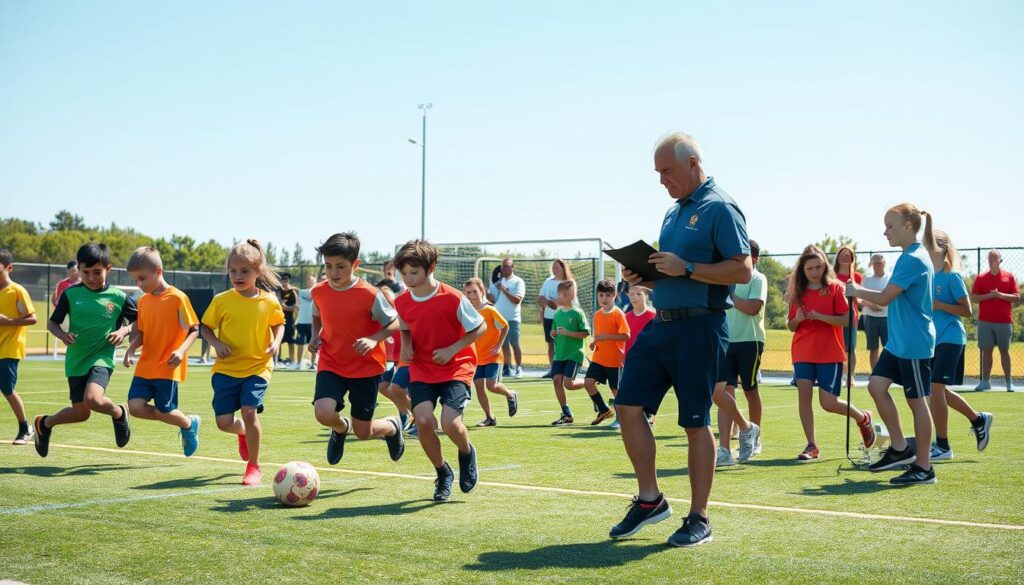
    A dynamic scene of youth sports player evaluations at an outdoor sports field during a sunny day, capturing the excitement of tryouts. In the foreground, a diverse group of young athletes, aged 10-14, wearing colorful sports uniforms, are engaged in various drills such as dribbling, running, and shooting. Coaches in professional casual attire observe closely, clipboards in hand, taking notes with focused expressions. In the middle ground, parents are cheering from the sidelines, creating an encouraging atmosphere. The background features goalposts and a vibrant green field under a clear blue sky. Use warm, natural lighting to enhance the lively mood, shot from a slightly elevated angle to convey depth and action in the scene.

    Different sports follow specific evaluation schedules. Florence baseball holds evaluations on September 2nd and 4th for different age groups. Softball evaluations occur on August 26th and 28th, while basketball evaluations are scheduled for November 3rd.

    Preparation is key for a positive evaluation experience. Here’s how to help your athlete get ready:

    • Ensure they get a good night’s sleep before evaluations
    • Provide a healthy meal and plenty of water
    • Arrive early to allow time for warm-up exercises
    • Encourage them to listen carefully to coach instructions
    • Remind them that trying their best is what matters most

    The evaluation atmosphere is supportive, not competitive. Coaches want to see natural ability and coachability. They’re looking for players who follow directions and show good sportsmanship.

    After evaluations conclude, the team placement process begins. Coaches review notes and scores to create balanced teams that will provide positive experiences for all players. This careful matching ensures fair competition throughout the season.

    Parents typically receive team placement notifications within one to two weeks. The communication will include practice schedules, coach information, and next steps for the season.

    Remember that evaluations are about finding the right fit for your child’s development. Every player brings unique strengths to the field, and the goal is creating teams where those strengths can shine.

    Fees, Scholarships, and Fundraising Help

    Youth sports should be open to all kids, no matter the family budget. Knowing the costs and support options helps make it possible for everyone.

    Sports fees change based on where you live and the sport. In Florence, baseball costs $45, and football is $60-$70. These fees cover uniforms, equipment, and places to play.

    Many groups offer financial aid to make sure no kid is left out. Beaufort has scholarships for families that qualify. You need to show your income and explain why you need help.

    Don’t be shy about asking for help! Most leagues have ways to keep your information private while they assist your family.

    Florence Youth Sports Fee Structure

    Sport Resident Fee Non-Resident Fee
    Baseball $45 $45
    Basketball Not specified Not specified
    Cheer $50 $60
    Football $60 $70
    Soccer $55 $65
    Softball $45 $45
    Track $45 $45
    Volleyball $45 $45

    Creative fundraising can really cut down costs. Teams often do car washes, bake sales, or product sales. Some programs, like ICRC, let local businesses sponsor teams for visibility.

    Digital tools have made fundraising easier. Sites like the TeamSnap fundraising program help teams manage and track donations well.

    Here are some important points about sports costs:

    • Always ask about scholarship applications early
    • Payment plans are often available for larger fees
    • Fundraising participation reduces individual costs
    • Some programs offer sibling discounts

    With the right mix of financial aid, smart budgeting, and team fundraising, youth sports can be affordable for all families. Investing in your child’s growth and happiness is worth every penny.

    Forms, Waivers, and Medical Clearance

    Keeping your young player safe is key. Paperwork might seem boring, but it’s essential for everyone’s safety and organization.

    There are three main documents needed. Registration forms gather basic info and emergency contacts. Liability waivers protect the organization and outline responsibilities. Medical forms are vital for coaches to know about your child’s health.

    Medical clearance is a must for athlete safety. Many programs need a doctor’s okay before your child can play. This step helps spot any health issues that could impact play.

    Registration options vary by location. In Florence, you can register online or in person at the Barnes Street Activity Center. Beaufort prefers online registration for ease. ICRC also offers online registration and sends weather updates to parents.

    When filling out forms, check all details carefully. Make sure emergency contacts and medical info are up to date. Most online systems save your info for future seasons.

    Remember, these waivers and forms are for everyone’s protection. They ensure safe, well-organized sports for kids.

    Start paperwork early to avoid last-minute stress. Without all documents, your child might not be able to play. Getting this done early lets your athlete enjoy the game.

    If you have questions about forms, reach out to the program. They can explain what you need and help you fill it out right. Most organizations aim to make this process easy for families.

    Gear and Sizing Checklists

    Shopping for sports gear can be overwhelming. There are many options and sizing challenges. Getting the right fit is key for safety, performance, and avoiding the need to replace items as kids grow. This guide helps you find the essential equipment list for popular youth sports.
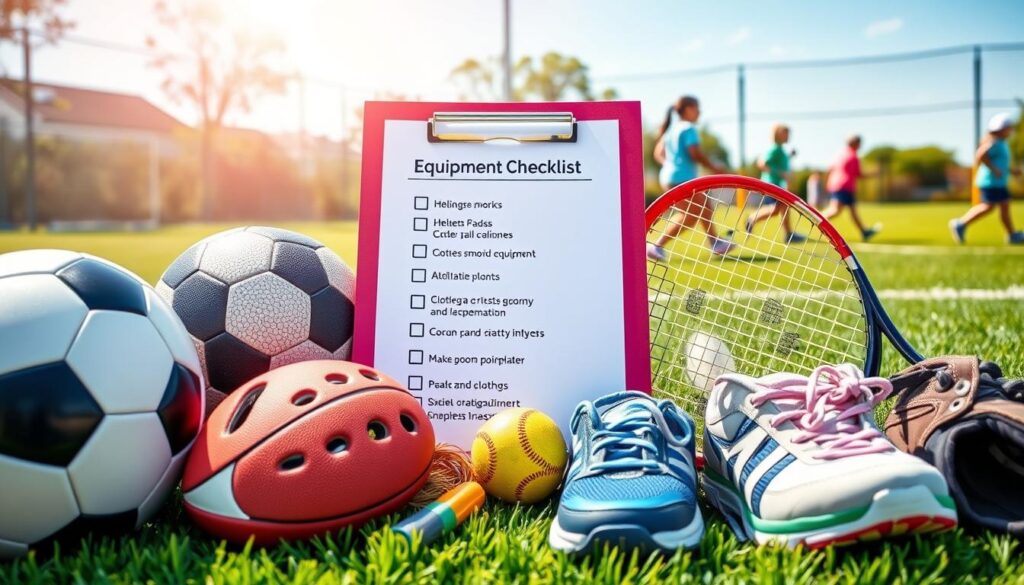
    A vibrant and organized image depicting a youth sports equipment checklist. In the foreground, an assortment of sports gear is neatly arranged, including a soccer ball, basketball, baseball glove, tennis racket, and a pair of running shoes with size labels visible. The middle section features a colorful checklist with icons representing various sports equipment laid out, such as helmets, pads, and clothing, each ticked off. The background shows a sunlight-drenched sports field with children playing, evoking a lively and energetic atmosphere. The lighting is bright and cheerful, highlighting the importance of preparation for young athletes. The composition should be focused and clear, creating an inviting, educational mood for parents preparing their children for sports activities.

    Different sports need specific gear, and some programs have their own rules. For example, Florence Fall Baseball doesn’t include a hat. The Florence Track Club operates through a team store. Always check with your specific organization for their exact equipment list.

    Baseball and Softball Essentials

    These sports share similar gear needs. Focus on proper fitting equipment that allows for growth without compromising safety.

    • Cleats (molded plastic for younger players)
    • Glove (position-specific sizing)
    • Bat (length and weight appropriate for age)
    • Protective cup (required for catchers)
    • Batting helmet with face guard
    • Uniforms (jersey and pants)

    Soccer Equipment Checklist

    Soccer requires minimal gear but proper fit is key for performance and injury prevention.

    • Soccer cleats (no baseball cleats allowed)
    • Shin guards (must fit properly under socks)
    • Soccer socks (long enough to cover shin guards)
    • Water bottle (hydration is essential)
    • Team uniforms (jersey, shorts, socks)

    Choosing the right team affects gear requirements too. Club sports near me often have different equipment standards than recreational leagues.

    Basketball Gear Needs

    Basketball focuses on footwear and practice gear. The right shoes prevent injuries and improve performance.

    • Basketball shoes (ankle support important)
    • Practice clothing (breathable fabrics)
    • Water bottle (stay hydrated during games)
    • Team uniforms (jersey and shorts)
    Sport Essential Gear Sizing Tip Average Cost
    Baseball/Softball Glove, cleats, helmet, bat Glove should fit snug but not tight $150-300
    Soccer Cleats, shin guards, ball Cleats should have thumb-width space at toe $100-250
    Basketball Shoes, practice gear, ball Shoes need proper arch support $120-200
    Track Running shoes, practice wear Shoes should be sport-specific $80-180

    When shopping for gear, consider buying slightly larger sizes for growing children. But avoid going too big as ill-fitting equipment can cause safety issues. Many sports stores offer professional sizing help – don’t hesitate to ask for assistance!

    Keep your equipment list organized and check items off as you acquire them. Proper gear maintenance extends the life of your investment and keeps your athlete safe throughout the season.

    Parent Roles and Expectations

    Being a parent in youth sports is more than just dropping off and picking up your child. Your role is key to creating a positive and safe sports environment. This environment benefits all young players.

    Most youth sports programs need parent volunteers to run smoothly. Parents can help as assistant coaches, team managers, snack coordinators, or field setup helpers. These roles help keep costs low and build community ties.

    How you behave on the sidelines matters a lot. Cheering for all players and respecting officials shows good sportsmanship. Kids often copy what they see from adults.

    Talking to coaches is important for solving problems. Try to meet privately instead of during games or practices. This keeps relationships positive and focuses on finding solutions.

    Many groups offer help for parents to get involved. For example, Florence has parent meetings for sports, like a volleyball meeting on September 8th. ICRC provides a parent manual and concussion fact sheet to help families.

    Coordinating transportation is another big job for parents. Being on time for practices and games shows respect. Carpooling can also help manage busy schedules.

    Your supportive presence is more important than any skill or knowledge. Focus on encouraging effort and fun, not just winning. Kids do best when they feel supported, win or lose.

    Groups like Beaufort focus on creating safe places for kids to learn and make friends. This partnership between parents and programs ensures a positive experience for everyone.

    Setting clear boundaries is important for good relationships with coaches and other parents. Don’t coach from the sidelines or criticize officials during games. Let the trained professionals handle the game.

    Your involvement creates lasting memories and helps your child grow. Take this chance to help your child develop on and off the field.

    Choosing the Right Level for Your Athlete

    Finding the perfect fit for your young athlete is key. The right placement makes sure they enjoy the game and grow at a good pace. Most youth sports use age-based divisions for fairness and competition.

    Florence’s baseball program is a great example. They have coach pitch for ages 7-8, minors for 9-10, majors for 11-12, and junior/senior for 13-16. Volleyball has similar divisions: 9u, 12u, 14u, and 17u. Beaufort keeps it simple with ages 4-16 in broader ranges.

    Age is important, but not the only factor. Skill level and experience also matter. Programs like ICRC offer different tiers within age groups to fit various abilities.

    Here’s how different programs structure their divisions:

    Organization Sport Age Divisions Skill Levels Offered
    Florence Youth Sports Baseball 7-8, 9-10, 11-12, 13-16 Recreational only
    Florence Youth Sports Volleyball 9u, 12u, 14u, 17u Recreational only
    Beaufort Parks & Rec Most Sports 4-16 (combined) Recreational only
    ICRC Multiple Sports Varies by sport Recreational & Competitive

    Player evaluations help coaches make the right choices. They look at basic skills, game understanding, and athleticism. This ensures athletes are in a group where they can grow and contribute.

    If you’re worried about your child’s placement, talk to the coach early. Share what you’ve seen about their skills and comfort with competition. Most coaches value this input and want every athlete to have a good experience.

    Proper placement is good for everyone. Your athlete will gain confidence, make friends, and love the game. The right challenge keeps them interested without getting frustrated or bored.

    Trust the process and communicate well. Working together with coaches ensures your young athlete has the best sports experience.

    Timeline and Printable Checklist

    Getting your youth sports registration in order is easier with a clear plan. Many programs, like Beaufort County, offer downloadable sports calendars. These help families plan ahead.

    Florence has specific dates for registration and evaluations each season. ICRC has quarterly registration periods for different sports. These plans help avoid last-minute scrambles.

    Make a printable checklist to keep track of each step. Begin with researching programs and noting deadlines. Don’t forget to include paperwork and medical clearance.

    Remember to add gear purchases and evaluation appointments. Mark down practice start dates and team meetings. This helps busy families stay organized.

    Download sports calendars from your local programs. Match these dates with your family’s calendar. Having everything in one place reduces stress and ensures nothing is forgotten.

    Your checklist is a personal guide through youth sports registration. It breaks down a complex process into simple steps. Enjoy watching your athlete succeed in their sport.

  • Viewing Options Overview

    Viewing Options Overview

    Sports fans today have more ways than ever to follow their favorite teams. From digital platforms to traditional methods, there’s an option for every preference.

    Services like TuneIn provide sports coverage across major leagues. You can follow MLB, NFL, NHL, and college athletics with ease.

    The platform offers curated content and game-time notifications. This ensures you never miss important moments.

    Whether you prefer radio broadcasts or the electric stadium atmosphere, multiple options exist. Each method brings its own unique advantages for enthusiasts.

    For youth sports organizations looking to share their events, SportsEngine Play offers excellent streaming solutions. This makes every game accessible to families everywhere.

    Discover the perfect way to stay connected with your team’s action. The following sections will help you explore all available choices.

    School/League Platforms and Paywalls

    Official school and league platforms bring games right to your screen. Many high schools and conferences now offer their own streaming services. These platforms give you exclusive access to games you won’t find on regular TV.

    The NFHS Network is a big name in high school sports streaming. It works with thousands of schools across the United States. This network offers live and on-demand content for many sports.

    Subscribing to a school stream service usually means paying a fee. Prices vary based on the platform and how long you subscribe. Many offer monthly passes or annual memberships for fans.

    What do you get with these subscriptions? You get high-quality broadcasts, multiple camera angles, and professional commentary. Some services also include exclusive interviews and behind-the-scenes content.

    Conference-specific platforms are available for those following league tournaments. These services focus on specific regions or athletic conferences. They make sure you never miss a rivalry game or championship event.

    While paywalls might seem inconvenient, they help support athletic programs. Subscription fees often fund equipment, travel, and other team needs. Watching games supports young athletes.

    These dedicated sports platforms fill gaps left by traditional broadcasters. Local games and lesser-known sports get the coverage they deserve. For true fans, that access is priceless.

    Free Streams and Social Channels

    Platforms like YouTube Live are making sports more affordable for fans. Teams and organizations now stream games live on their channels. This means you can watch without spending a lot.

    Social media sites like Facebook, Twitter, and Instagram are also great for sports fans. They often have live games or highlights. It’s easy to keep up with your favorite teams and catch important moments.

    TuneIn is another great free option. It gives you access to over 100,000 live AM/FM radio stations. You can listen to sports coverage and game commentary for free. But, some premium features need in-app purchases.

    What can you expect from free streaming? You might not get every game in HD, but you’ll find:

    • Live game coverage from school and local leagues
    • Real-time commentary and fan discussions
    • Instant highlights and replay moments
    • Multiple viewing angles from different sources

    These free options are easy to use. You can watch on your phone, tablet, or computer without any subscription issues. Remember – the quality and availability might vary, but the price is unbeatable!

    Checking out YouTube live sports content is a smart move for budget fans. Many creators and organizations offer top-notch coverage. Try these free options before paying for services.

    Radio, Live Stats, and Recaps

    Radio coverage brings excitement and stories that TV can’t match. Many fans love the vivid tales and quick reactions from radio announcers.

    Without visual streaming, a good radio broadcast keeps you in the game. It offers emotional depth and detailed descriptions that make fans feel like they’re right there.

    • ESPN Radio for national coverage and expert analysis
    • Local sports talk stations with team-specific commentary
    • Curated content that follows your favorite teams all season
    • On-demand replays of memorable games and moments

    Live stats make the game even better. Teams and leagues share real-time stats through apps and websites. These updates give you quick insights into player performance and game trends.

    Recaps are key after the game. Official sites, sports networks, and apps offer detailed analyses and interviews. They help you relive the game and understand the strategies.

    Radio is more than just a memory. It’s great for listening while driving or working. It lets you enjoy the game without being stuck in front of a screen.

    Local stations offer passionate and knowledgeable commentary. Announcers who know the team well add depth to your experience. They bring the community and history of the team to life.

    In-Person Attendance (tickets, parking, concessions)

    Nothing beats the electric atmosphere of live sports! Attending games in person creates memories that last a lifetime. This guide will help you navigate the complete game day experience from start to finish.

    Getting your tickets is the first step to an amazing day. Most venues offer multiple ticketing options to suit different preferences and budgets. You can purchase directly from the venue’s website or through authorized resellers.

    Season tickets often provide the best value for frequent attendees. Single-game tickets work perfectly for occasional visitors. Many teams offer special promotions throughout the season.

    Planning your parking strategy ahead of time reduces game day stress. Most venues offer various parking options at different price points. Pre-paid parking passes often guarantee you a spot and save money.

    Public transportation can be a smart alternative to driving. Many stadiums are accessible via bus or train routes. Ride-sharing services drop you off close to the entrance without parking headaches.

    Arriving early gives you time to enjoy pre-game activities. Tailgating has become an American sports tradition for many fans. Check your venue’s specific policies about grills and coolers beforehand.

    Concession stands offer more than just classic hot dogs and beers today. Many stadiums feature local food vendors and specialty items. Ballpark favorites like nachos and pretzels always hit the spot during games.

    Here’s a quick comparison of popular ticketing options available at most venues:

    Ticket Type Best For Price Range Perks Included
    Season Tickets Die-hard fans $$$-$$$$ Preferred seating, discounts
    Single Game Casual attendees $-$$$ Flexibility, no commitment
    Group Packages Friends/family outings $$-$$$ Volume discounts, block seating
    Premium Seating Special occasions $$$$ VIP access, inclusive food

    Remember to check the official team website for the most current information. Venue policies can change throughout the season. Their staff can answer specific questions about accessibility and accommodations.

    Comfortable shoes will make your stadium experience more enjoyable. You might be doing more walking than expected between concessions and your seats. Dress in layers, as outdoor temperatures can change during the game.

    Making memories at live events creates stories you’ll share for years. The energy of the crowd and excitement of the game can’t be replicated elsewhere. Your perfect game day awaits with just a little advance planning!

    Accessibility and Language Options

    Sports unite people, and technology makes it easier for everyone to join in. Whether you need help hearing or seeing the game, or prefer commentary in another language, there are many options.

    Closed captioning lets viewers follow along with dialogue and sounds. Many streaming services and TV networks offer this feature. You can usually turn it on through your settings menu.

    Audio descriptions give extra details for fans who are visually impaired. A narrator describes key visual elements during breaks in the commentary. This makes the game more engaging for everyone.

    Venues offer accommodations like wheelchair seating and assistive listening devices. Contact the stadium ahead of time to arrange what you need. They want your experience to be comfortable and enjoyable.

    For language options, Spanish broadcasts are widely available. Some networks and apps provide multilingual commentary in other languages too. This welcomes diverse fan bases from all backgrounds.

    Platforms like TuneIn make listening easy on hundreds of devices. You can use voice assistants like Alexa or Google Home to start streams hands-free. This accessibility feature is perfect for busy fans.

    Technology continues to break down barriers in sports viewing. No matter your needs, there’s a way to enjoy the game. Explore these options to find what works best for you.

    Tech Setup and Troubleshooting Tips

    Don’t let tech problems spoil your game day fun. Let’s tackle common streaming issues together. A bit of prep can make sure you watch without a hitch.

    Internet speed is key for streaming quality. For standard definition, you need 3-5 Mbps. High definition requires 5-8 Mbps. For 4K, you’ll need 25 Mbps or more. Use free online tools to check your speed before the game.

    Devices like Roku, Amazon Fire TV, and Apple TV usually work best. Smart TV apps are good too, but might need updates often. Mobile apps like TuneIn are perfect for listening to games on the move.

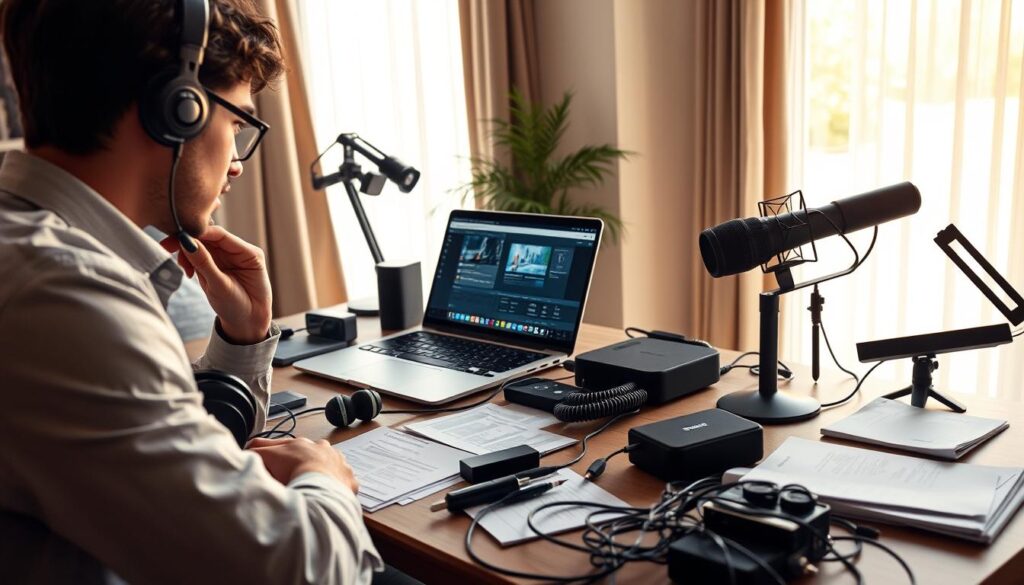
    A cozy home office setup for troubleshooting streaming technology, featuring a modern desk with a sleek laptop open to a streaming interface, surrounded by various tech gadgets like headphones, a webcam, and a microphone. In the foreground, a person dressed in smart casual attire is focused on the screen, adjusting cables and checking connections. The middle of the scene includes a digital streaming device and an organized array of notes and troubleshooting guides. The background showcases a softly lit room with a large window letting in warm afternoon light, giving a calm and productive atmosphere. The angle is slightly tilted to highlight the desk clutter while maintaining a tidy composition. The overall mood is one of concentration and problem-solving, suitable for tech enthusiasts.

    Setting up your streaming service on different screens is easy. Use HDMI cables for TVs, screen mirroring for mobile-to-TV, or apps for smart devices. Each method has its own benefits based on your setup.

    Buffering can be a big problem. If you’re stuck on a loading screen, try these solutions:

    • Close other apps and devices using your WiFi
    • Move closer to your router or use an Ethernet cable
    • Reduce streaming quality in your app settings
    • Restart your router and streaming device

    Connectivity drops can be a real bummer. WiFi extenders can help in big homes. For big games, a wired connection is best. Mobile data hotspots are good backups.

    Audio-video sync issues can be annoying. They often fix with a restart or reboot. Keep your apps updated, as developers like TuneIn are always improving.

    Test your setup before the game. A quick check 30 minutes early lets you fix problems without missing the game. Enjoy the game!

    Organize a Neighborhood Watch Party

    Turn game day into a community celebration. It brings neighbors together through sports passion. Watch parties create lasting memories and strengthen local connections while enjoying live sports.

    Planning your neighborhood gathering is simple. It ensures everyone has a great time. Follow this straightforward approach to create an unforgettable experience.

    Start by picking the perfect game that appeals to most neighbors. Think about popular local teams or championship matches that excite everyone.

    Send invitations two weeks before the event. Use these effective methods:

    • Create colorful flyers for community bulletin boards
    • Set up a neighborhood Facebook event page
    • Send personal text messages to close neighbors
    • Use community apps like Nextdoor for wider reach

    Ask guests to RSVP. This helps you prepare enough seating and refreshments. It ensures everyone feels welcome.

    Creating the Perfect Viewing Environment

    Set up your viewing area for clear sightlines to the screen. Arrange furniture in a semi-circle for better social interaction.

    Sound quality matters a lot for group viewing. Test your audio system beforehand. Ensure clear commentary and crowd noise without distortion. Outdoor speakers can help if you’re using patio space.

    Consider these technical aspects for optimal viewing:

    • Screen size should be appropriate for the room dimensions
    • Reduce glare by closing curtains during daytime games
    • Have backup streaming options ready in case of technical issues
    • Set up a separate viewing area for children with age-appropriate content

    Game Day Refreshments and Atmosphere

    Prepare simple but satisfying snacks that cater to various tastes. Finger foods work best for casual gatherings where people might be standing or moving around.

    Create a festive atmosphere with team colors displayed through decorations. Balloons, tablecloths, and napkins in team colors instantly boost the party spirit.

    Consider setting up a DIY snack station where guests can customize their treats. This interactive element adds fun while reducing your preparation workload.

    Fun Activities Beyond the Game

    Incorporate traditions that make your watch parties unique. Half-time contests, prediction games, or sports trivia keep engagement high during breaks.

    Start simple traditions like a signature cheer or pre-game toast. These small rituals create anticipation and give your gatherings a distinctive character.

    Capture memories with a photo booth area featuring team props. These pictures become cherished mementos of your growing sports community.

    Planning Aspect Basic Option Enhanced Option Premium Experience
    Invitations Text messages Printed invitations Custom digital invites with team logos
    Food Service Potluck style Pre-made snack platters Themed catering with local favorites
    Viewing Setup Single TV setup Multiple viewing areas Outdoor projector with stadium seating
    Entertainment Basic halftime discussion Prediction games with scores Full trivia competition with prizes
    Decorations Team colors displayed Themed table settings Full venue transformation with banners

    Remember, the best watch parties focus on community connection, not perfection. Neighbors will appreciate your effort to bring everyone together, regardless of how elaborate your setup becomes.

    Start with one game and see how the tradition grows naturally. Your watch party might just become the highlight of the season for your entire neighborhood.

    Calendar Sync (iCal/RSS)

    Stay on top of your favorite team’s games with smart calendar tech. Sports calendars update automatically, so you always know when and where to watch.

    Most teams and leagues offer subscription options on their official websites. Look for the “calendar” or “schedule” section. There, you’ll find links to download iCal files or RSS feeds.

    Setting up calendar sync is quick. For iPhone users, just tap the iCal link and confirm. Android and computer users can import into Google Calendar with one click.

    These smart calendars do more than show game times. They include:

    • Location details with venue addresses
    • Broadcast information showing where to watch
    • Automatic time zone adjustments
    • Real-time updates for schedule changes

    Customize your notifications to get alerts when you want. Set reminders 24 hours before big games or 30 minutes before regular season matches. You control when and how you get notified.

    Sharing synchronized calendars is easy. Send your sports calendar to your watch party group. Everyone gets the same updates at the same time.

    RSS feeds are another great way to stay informed. Subscribe using your favorite RSS reader. You’ll get game announcements and news directly in your feed.

    The best part? Once you set up your calendar sync, it takes care of itself. Schedule changes, postponed games, and new broadcast information update automatically. You don’t have to do anything extra.

    Cost Comparison and Safety/Privacy Notes

    Knowing the costs and security of sports streaming is key to making good choices. Let’s look at the expenses and safety features of different options.

    Sports streaming services have different pricing. Some are free with ads, while others need subscriptions or one-time game buys.

    A vibrant and informative scene showcasing a laptop, tablet, and smartphone placed on a wooden table, each displaying various sports streaming platforms, with colorful logos of local sports teams visible. In the foreground, a calculator sits next to a notepad filled with notes on costs and privacy considerations. The middle ground features a concerned individual in professional business attire, thoughtfully reviewing the devices, embodying a sense of safety and awareness of privacy. The background presents a cozy living room with soft, warm lighting, emphasizing a comfortable atmosphere for watching games at home. The overall mood is analytical yet inviting, reflecting the theme of cost comparison and safety/privacy in sports streaming options.

    Viewing Option Cost Structure Best For Additional Fees
    School/League Platforms Free to $10 per game Single games None typically
    Subscription Services $5-$15 monthly Regular viewers Possible premium features
    Social Media Streams Completely free Casual viewers None
    Radio Apps Free with premium options Audio-only fans Premium subscriptions

    TuneIn Premium gives you ad-free streaming for $9.99 a month. It auto-renews unless you cancel in your account settings. Always check auto-renewal policies before subscribing.

    Your safety and privacy are important when streaming sports. Reliable services use secure payments and protect your info.

    Most platforms collect data to improve your experience. TuneIn, for example, uses Nielsen software to understand listening habits. This data is anonymous and helps create better content.

    Here are tips to keep your info safe:

    • Use strong, unique passwords for each streaming account
    • Check for HTTPS secure connections when entering payment details
    • Review privacy policies to understand data collection practices
    • Monitor subscription renewals and cancel unwanted services promptly

    Free streaming options often rely on ads. While handy, be careful about sharing personal info on unknown platforms.

    Paid services usually offer better security and support. They invest in protecting your payment methods and personal data from unauthorized access.

    Remember, legit services won’t ask for unnecessary personal details. Stick to official platforms and avoid suspicious links promising “free” premium content.

    By understanding costs and practicing good digital safety, you can enjoy sports streaming with confidence and peace of mind.

    Share Your Photos and Reels

    Your local sports experience doesn’t end when the game is over. Take out your camera to capture the excitement. Share your photos and reels on social media to connect with other fans. Facebook groups and TikTok are great for showing off game-day action.

    Be creative with your content. Use your smartphone to record quick videos during important plays. Try different angles for your photos to make them unique. Engage with other fans by commenting on their posts. This helps build a stronger sports community around your local teams.

    Always respect privacy and broadcast rights when sharing. Don’t post identifiable images of minors without permission. Check if there are specific rules about recording. Your local sports guide can guide you on proper sharing etiquette.

    Join in and become an active part of your sports community. Sharing your experiences helps celebrate local athletes and creates lasting memories. Start capturing and sharing today to make everyone’s game experience better.

  • Why Previews Build Community

    Why Previews Build Community

    Sports have an incredible power to bring people together. When teams connect with their communities, something special happens.

    The recent rebranding of York United FC to Inter Toronto FC shows this perfectly. Their focus on diversity and local connection creates unity among fans from all backgrounds.

    Pre-game content works the same way. These articles build excitement and create shared experiences. They give everyone something to talk about before the action begins.

    A good scouting report does more than just analyze opponents. It tells stories about key players and their journeys. Think about Kevin Koe’s curling career – these narratives engage us emotionally.

    This shared knowledge creates bonds between fans, players, and coaches. Everyone feels part of something bigger when they understand what’s coming.

    That sense of belonging turns individual supporters into a true community. It’s why these previews matter so much to local sports culture.

    Collecting Data (records, form, basic/advanced stats)

    Gathering the right information makes good previews great. It’s key for sports analysis, giving fans what they want before big games.

    Start with the basics: team records, win-loss ratios, and recent trends. These simple metrics show a team’s current form and momentum. For example, a team winning five straight games creates excitement.

    Look deeper into the matchup history between opponents. Historical data shows patterns that casual fans might miss. Some teams struggle against certain playing styles or venues.

    Advanced statistics add depth to your previews. Metrics like possession rates, scoring efficiency, and defensive pressure offer professional insights. These numbers predict how teams might play their next game.

    Research shows accurate data boosts viewer engagement. Fans trust previews that show thorough research and facts. Reliable info keeps audiences coming back for more.

    Here are key data points for your next sports preview:

    • Head-to-head records over multiple seasons
    • Recent performance trends (last 5-10 games)
    • Key player statistics and contributions
    • Advanced metrics specific to each sport
    • Venue-specific performance data

    Quality data collection doesn’t just inform your preview—it builds credibility. When fans see your commitment to accuracy, they trust your analysis. They’ll keep engaging with your content.

    Interviews: Coaches and Captains

    Getting direct insights from team leaders makes previews more interesting. You learn about the people behind the game.

    These talks show what stats can’t. You find out about team spirit, how players get along, and the mood of key players. This adds a real touch that fans love.

    Coaches share their game plans. They talk about matchups and tactics for future games. This helps fans see the game’s strategy.

    Team captains share what players think about getting ready and what they expect. They point out who’s doing well or facing tough times. This makes previews feel more real.

    Kevin Koe’s curling interviews are a great example. He talks openly about how his team is doing. He connects with fans by sharing the journey, not just scores.

    When doing interviews, use open-ended questions to get stories. Ask about:

    • Preparation routines for big games
    • Team chemistry developments
    • Individual roles of key players
    • Strategic priorities for the matchup

    Coaches and captains are busy. Prepare questions that are quick but get the point across. The best moments often come from unexpected follow-ups.

    These interviews are trusted because they’re from the source. Fans believe what coaches and captains say. This keeps them interested all season.

    Always check sensitive info about injuries or team issues. Keep things private but share useful insights. Finding the right balance is key.

    Using direct quotes from coaches and captains makes previews exciting. It turns predictions into real stories. This makes casual readers into true fans.

    Storylines and Rivalries to Highlight

    Great sports previews are all about drama and excitement. Nothing gets people more pumped than compelling storylines and rivalries. These elements turn ordinary games into must-see events.

    Studies show games with strong narratives and rivalries draw more viewers. Unexpected results spark conversations for weeks. Kevin Koe’s Olympic journey against familiar foes is a perfect example.

    A dynamic illustration capturing the essence of historic sports rivalries, set in a vibrant stadium atmosphere. In the foreground, depict a diverse group of passionate fans in professional casual attire, holding banners and wearing team colors, showcasing their excitement. In the middle ground, feature two opposing teams on the field, one team in dark uniforms and the other in light, engaged in a tense game moment, emphasizing their determination. In the background, capture a packed stadium under bright floodlights, creating a dramatic and energetic ambiance with cheering crowds and colorful confetti filling the air. Use a slightly low-angle perspective to accentuate the intensity of the scene, with a warm color palette to evoke an exhilarating atmosphere of rivalry and history.

    To find these elements, look beyond just stats. You need to grasp the emotional ties between teams and players. The matchup history often shows patterns that add to the drama.

    When making your previews, consider these key points:

    • Historic win/loss patterns between opponents
    • Personal rivalries between star players
    • Championship rematches or revenge scenarios
    • Underdog stories against dominant teams

    Local derbies, like Inter Toronto’s games, show how geography adds tension. These games mean a lot to fans and players. The intensity boosts viewer interest.

    Here’s how different rivalry types affect viewer interest:

    Rivalry Type Engagement Boost Example Matchup Key Storyline Angle
    Historic Rivals 45% increase Yankees vs Red Sox Decades of championship battles
    Geographic Derbies 38% increase Lakers vs Clippers City pride and bragging rights
    Player vs Former Team 32% increase Quarterback returns Revenge narrative
    Championship Rematch 51% increase Super Bowl revenge game Second chance at glory

    The table shows how different rivalries spark different levels of interest. Championship rematches are the most anticipated for obvious reasons.

    When writing your previews, focus on the human side of the game. Players facing former teams always creates compelling storylines. Coaches facing their mentors adds more drama.

    Always check the matchup history between teams. Look for patterns like close scores, overtime games, or controversial finishes. These suggest naturally competitive rivalries that will likely continue.

    Great sports storylines often create themselves. Your job is to spot them and present them in a way that grabs readers from the start.

    Key Matchups and Tactics by Sport

    Every sport has its own strategic battles that can change the game’s outcome. Knowing these matchups helps fans appreciate the competition more. A good preview is like a detailed scouting report, showing the tactical chess match in the game.

    Different sports need different analytical approaches. What works in football doesn’t apply to basketball or curling. Let’s look at how to analyze these key elements across various sports.

    In football, the battle often focuses on specific position matchups. Watch the left tackle against the opposing team’s best pass rusher. This duel can decide if the quarterback has time to throw. Also, look at how defensive schemes match up against offensive formations.

    Basketball is about both individual and team tactics. Key matchups include a shutdown defender against a prolific scorer. Team tactics involve analyzing pick-and-roll defense and three-point shooting strategies. The scouting report should show which team can impose their style of play.

    Baseball is all about the pitcher versus batter dynamic. The scouting report should analyze how specific pitchers match up against certain hitters. Also, consider defensive shifts and bullpen management strategies that might play a role late in the game.

    Even in individual sports like tennis, there are key matchups to analyze. Study how a player’s serve matches up against their opponent’s return game. Analyze strengths and weaknesses in forehand versus backhand exchanges. The scouting report should identify which player can exploit the other’s vulnerabilities.

    Curling offers a strategic battle, as seen in matchups like Kevin Koe versus Brad Jacobs. This involves analyzing skip strategy, rock placement, and sweeping techniques. The scouting report should break down how different teams approach the mental game of scoring and defense.

    Sport Key Matchup Focus Tactical Analysis Points Scouting Report Emphasis
    Football O-line vs D-line Blitz packages, coverage schemes Individual position battles
    Basketball Defender vs scorer Pick-and-roll efficiency Shooting percentages by zone
    Baseball Pitcher vs batter Pitch selection patterns Historical matchup data
    Tennis Serve vs return Court positioning trends Weakness exploitation
    Curling Skip strategy Rock placement precision End management approach

    Creating an effective scouting report goes beyond basic statistics. It involves understanding how different elements interact during competition. The best previews help fans watch for these specific tactical battles that often decide the outcome.

    When preparing your sports preview, focus on the two or three most important matchups. Explain why these particular battles matter more than others. This approach gives readers specific things to watch for during the game.

    A great scouting report doesn’t just tell fans what might happen. It shows them where to look and what to watch for when the action begins. This turns casual viewers into engaged analysts of the game they’re watching.

    Weather/Field Conditions and Impact

    Weather doesn’t just affect the game – it rewrites the playbook entirely. Understanding how conditions impact play gives fans deeper insight into what makes each match unique.

    Different sports face distinct weather challenges. Football games transform in heavy rain, making passing difficult and increasing fumbles. Baseball sees fly balls travel differently based on wind direction and humidity. Even indoor sports like basketball can be affected when venues struggle with temperature control.

    Field conditions change everything about game strategy. A wet soccer pitch favors technical players who can control the ball. Dry, hard fields make for faster games but increase injury risk. Ice quality in hockey determines puck movement and player speed.

    Researching weather conditions before games helps create accurate previews. Check these sources:

    • Local weather forecasts for game time
    • Field maintenance reports from venue staff
    • Historical data on how conditions affected previous matches
    • Team preferences in different weather scenarios

    Reporting on field conditions adds practical value for fans. Will rain gear be needed? Should spectators prepare for delays? How might the weather favor one team’s style over another?

    These details transform casual viewers into informed enthusiasts who appreciate the full context of each competition.

    Injury/Availability Updates and Ethics

    Dealing with player availability is a delicate task. It’s about being open while also respecting athletes’ privacy. Every preview must share important updates without crossing personal boundaries.

    Start with verified facts. Always check with the team before sharing injury news. Using rumors can damage a player’s reputation.

    It’s key to know what to keep private. Fans want to know about injuries, but medical details should stay hidden. Stick to saying if a player is available or not.

    Your words can influence the team’s mood and performance. Be kind and professional when talking about health issues.

    Here are some tips for ethical injury reporting:

    • Wait for official announcements before sharing
    • Use terms like “game-time decision” or “day-to-day”
    • Stay away from guessing about recovery times
    • Respect players’ wishes for privacy on sensitive topics

    Look at how sports teams handle injury news. They share enough to keep fans informed but protect player health. This balance is key.

    When injuries happen, talk about how the team will adapt. Discuss strategy changes or who might step up. This keeps the focus positive.

    Every injury report is about a person’s recovery. Your preview should educate and show respect. Ethical reporting earns trust from both teams and fans.

    Fan Engagement (polls, predictions, hashtags)

    Interactive previews make readers more involved. Studies show that videos with fan engagement get more views. Sports previews can learn from streaming platforms.

    Running fan polls gets people involved right away. Ask them to guess game results or pick key players. These actions spark excitement before the game starts.

    Ask for predictions in the comments. Fans enjoy sharing their game insights. This leads to more discussion and helps your preview spread through social media.

    Use unique hashtags for each game or season. Hashtags help track conversations and create a shared experience. They make it easy for fans to join discussions.

    Here’s how different engagement strategies compare in effectiveness:

    Engagement Type Participation Rate Shareability Community Impact
    Polls High Medium Immediate
    Predictions Medium High Ongoing
    Hashtags Low Very High Long-term

    These elements do more than just increase numbers. They make fans emotionally invested in the games. Engaged fans are more likely to attend events and support athletes all season.

    Begin with simple fan polls and watch your community grow. The excitement you build before the game often lasts long after.

    Graphics: Lineup Cards and Heat Maps

    Visual elements turn complex sports data into something fans can easily follow. Graphics like lineup cards and heat maps help show player positions and team strategies right away.

    These tools make your previews easier to understand. Fans can quickly grasp key matchups and team strategies without getting bogged down in long explanations.

    You don’t need to be a pro designer to create great graphics. Many free online tools let you make professional-looking lineup cards in just a few minutes. Just enter the player names and positions, and the tool does the rest.

    Heat maps offer even more insight. They show where players move and where the big battles will be. This lets fans predict how the game will flow and when teams might make strategic changes.

    When planning your college sports coverage, think about these graphic types:

    • Starting lineup cards – Show first-string players and their positions
    • Substitution patterns – Visualize player rotations and bench depth
    • Defensive heat maps – Highlight areas where teams concede chances
    • Offensive movement charts – Illustrate attacking patterns and key creators

    These visuals are perfect for sports like basketball and soccer, where where players are on the field matters a lot. They help fans see which matchups could decide the game’s outcome.

    Remember, keep your graphics simple and to the point. Too much info can confuse instead of clarify. Use colors that stand out and labels that are easy to read.

    Adding these visual elements makes your previews more engaging. They offer immediate value to readers and show you really get the game’s tactics.

    Distribution Checklist (Web, Social, Print)

    A detailed distribution checklist helps your pre-game content reach fans everywhere. It’s all about timing and format for each platform. This way, you boost engagement and excitement.

    Your multi-platform strategy should cover both digital and traditional media. This gives your audience more ways to connect with your content.

    A neatly arranged multi-platform distribution checklist featured prominently in the foreground, detailing tasks for web, social media, and print. Each section contains checkboxes, icons, and relevant imagery, emphasizing organization and clarity. In the middle ground, an individual in professional business attire—focused and engaged—holds a clipboard, referencing the checklist while sitting at a modern desk surrounded by digital devices like a laptop and smartphone. The background subtly reveals a cozy office space with soft natural lighting filtering through large windows, providing an inviting atmosphere. The color palette is warm and professional, conveying a sense of diligence and teamwork. The composition captures a moment of preparation, reflecting the importance of structured distribution in effective communication.

    Your team website is the main spot for pre-game content. Make sure it looks good on both desktop and mobile.

    • Post preview 24-48 hours before game time
    • Use engaging headlines with key matchup keywords
    • Include clear calls-to-action for ticket purchases
    • Optimize images for fast loading speeds
    • Add social sharing buttons for easy content sharing

    Social Media Distribution Plan

    Social media needs content that fits each platform. What works on Twitter might not work on Instagram.

    Make special versions of your pre-game previews for each social media site. Here’s your checklist:

    • Twitter: Short, punchy updates with game hashtags
    • Facebook: Longer previews with fan engagement questions
    • Instagram: Visual content with behind-the-scenes footage
    • Schedule posts for peak engagement times
    • Use platform-native video for higher reach

    Print Media Considerations

    Even though digital is big, print media is important too. Game programs, local newspapers, and community bulletins are key.

    Your print plan should include:

    • Condensed version of digital preview content
    • High-quality action photos from previous games
    • Clear game time, location, and ticket information
    • Special print-only offers or promotions
    • QR codes linking to digital content

    This multi-platform strategy makes your pre-game previews more impactful. It keeps your message consistent across all channels.

    Don’t forget to check how well your content is doing on each platform. This info will help you improve your distribution checklist for the future.

    Post‑Game Follow‑Up Plan

    Your game preview work doesn’t stop when the game ends. A solid post-game plan keeps fans interested and strengthens community ties.

    Write detailed recaps that compare what happened with your predictions. ESPN and Bleacher Report are great at this. Talk about what surprised you and what was expected.

    Get fan feedback through polls and social media. Ask what moments they found memorable. This makes casual viewers become part of the community.

    Do post-game interviews to get player reactions. These emotional responses add to your analysis.

    Share stats and key performance metrics. Sites like StatMuse and Sports Reference have the data you need.

    Your follow-up content wraps up the story. It turns one-time viewers into loyal followers who look forward to your next preview.

  • What Counts as Local Sports News

    What Counts as Local Sports News

    Welcome to the heart of your community’s athletic spirit! It’s not just about who won or lost. It’s about the stories that bring us together.

    Think beyond final scores. We celebrate everything from varsity championships to a child’s first soccer goal. These moments build pride and connection.

    Our coverage includes player spotlights, team dynamics, and coach interviews. We also feature game previews and emotional recaps. This approach makes every event feel special.

    Staying informed is easier with a dedicated local sports app. It connects fans, families, and athletes instantly. You get real-time updates and never miss a moment.

    This shift toward community-focused storytelling is key. As research shows, local stories resonate more with audiences.

    Discovering these events has never been simpler. Tools like comprehensive guides help you find everything happening near you.

    We’re here to share these powerful stories. Let’s build school spirit and community pride together!

    Teams and Leagues to Cover

    The heart of community sports reporting is covering the right teams. It’s about age groups and competition levels. This way, every athlete gets recognized, and your community stays informed about sports.

    School sports are key. They include varsity, junior varsity, and freshman teams. Covering all seasons – fall, winter, and spring – keeps your audience engaged all year.

    Don’t forget about youth league results. They’re where many kids start playing sports. Recreational leagues build community bonds, while travel teams offer more competition. These programs teach skills and values that last a lifetime.

    Club teams are another important part. They focus on single sports and compete at high levels. Their achievements boost your community’s athletic reputation.

    Adult recreational leagues are also vital. They keep people active and connected through friendly games. From softball to basketball to soccer, these leagues show the ongoing love of sports.

    By covering all these areas, you make sure no team is left out. Every athlete, from elementary school to adulthood, deserves recognition in your local sports reporting.

    Sources and Verification: Building Trust with Key Contacts

    Getting the right local sports info starts with strong relationships. Athletic Directors and coaches are your go-to for schedules, rosters, and team news. They value reporters who respect their time and build trust.

    Good communication is key when working with school officials. Here are some tips for building positive relationships:

    • Email for formal requests – perfect for schedule changes or roster updates
    • Text messages for quick confirmations – ideal for last-minute changes
    • Post-game conversations – great for gathering quotes and insights

    Always be polite and professional. These people handle many tasks, not just sports reporting. Being seen as trustworthy makes them more willing to share info.

    Official league websites add another layer of verification. They have updated schedules, standings, and results. Checking info from different sources helps avoid mistakes.

    Digital schedules from school athletic departments are the most up-to-date. Many districts use online platforms that automatically update game details. Bookmark these for easy access on game days.

    Here’s a quick reference table showing the reliability of different verification sources:

    Source Type Best For Reliability Level Response Time
    Athletic Directors Official schedules, policy changes Very High 1-2 business days
    Head Coaches Roster updates, game insights High Same day to 24 hours
    League Websites Standings, official results Very High Immediate
    Assistant Coaches Player statistics, game details Medium Varies

    Building your network of sources takes time, but be professional. Keep your requests clear and concise. If you don’t get a response, follow up politely.

    Successful local sports reporters are seen as reliable partners. This earns them the trust of Athletic Directors and coaches. Your reputation for accuracy and respect opens doors to better stories and exclusive content.

    Verification is key to avoiding errors that harm your credibility. Always double-check facts against official sources before publishing. This careful approach keeps your reputation strong and maintains trust with your audience and sources.

    Score and Stat Collection Methods

    The journey from final whistle to published recap starts with reliable score and stat gathering. Efficient systems ensure your community gets timely, accurate coverage of all the action.

    Google Forms are a simple yet powerful solution for collecting game results. Create a form with fields for final score, key players, and notable moments. Share the link with coaches and team parents to submit directly after games.

    This method automatically organizes data in a spreadsheet for easy access. You can set up different forms for various sports or age groups. The system works on any device with internet access.

    A modern smartphone displaying a local sports app interface on a wooden table, with vivid graphs showcasing score tracking and statistics for various community teams. In the foreground, a hand is interacting with the app, swiping through live updates and standings. The middle ground features a laptop with statistical spreadsheets, surrounded by sports equipment like a basketball and a soccer ball, suggesting an active sports environment. The background includes a sunny window with a view of a community sports field, enhancing the lively atmosphere. The lighting is bright and natural, creating a warm and inviting feel. The composition is shot from a slightly elevated angle, providing depth and focus on the technological methods of score collection.

    Text message systems provide instant reporting for those less comfortable with online forms. Set up a dedicated phone number or group chat for score submissions. This works well for quick turnaround on tight deadlines.

    Establish clear guidelines for what information to include in texts. Request final score, top performers, and any game-changing plays. This keeps submissions consistent and complete.

    For the most streamlined approach, consider implementing a dedicated local sports app. These platforms allow real-time updates during games. Coaches or designated volunteers can input stats as the action unfolds.

    Many local sports app options automatically calculate standings and player statistics. This eliminates manual number crunching and reduces errors. The best apps generate shareable reports with a single click.

    Some communities find success using a combination of these methods. Younger teams might prefer app-based reporting while older coaches stick with text messages. The goal is finding what works for your specific situation.

    Whichever method you choose, consistency is key. Train all contributors on the preferred reporting system. Establish clear deadlines to ensure timely publication of results.

    A good local sports app or reporting system becomes invaluable during tournament seasons. When multiple games happen simultaneously, organized data collection prevents overwhelm. Your coverage will shine with accurate, detailed information.

    Fast Recap Templates

    Creating game recaps doesn’t have to be hard. A good template helps you make consistent, engaging content fast. This saves time and keeps your content quality high.

    Our template focuses on four key elements. These parts work together to tell a complete story. They keep readers informed and connected to the team.

    Start with a compelling headline that captures the game’s essence. Good headlines grab attention right away. They should highlight the final score and key outcome.

    Next, include a bulleted list of key plays or turning points. This section tells the story of the game. Focus on moments that changed momentum or decided the outcome.

    Always add a meaningful quote from a coach or key player. Quotes add a human element to your recap. They provide insight and emotion that stats alone can’t convey.

    Lastly, include essential information about the next game. Give readers the date, time, and opponent. This keeps them engaged and looking forward to future coverage.

    Here’s how this template works for different outcomes:

    Win Example:
    Headline: “Wildcats Dominate Eagles 42-14 in Season Opener”
    Key Plays:

    • Quarterback’s 60-yard touchdown pass in second quarter
    • Interception returned for touchdown after halftime
    • Fourth-down stop that sealed the victory

    Quote: “The team executed our game plan perfectly tonight,” said Coach Miller.

    Next Game: Friday at 7 PM vs. Central High Tigers

    Loss Example:
    Headline: “Bulldogs Fall Short 21-28 Against Rival Panthers”
    Key Plays:

    • Early fumble that led to Panthers touchdown
    • Fourth-quarter touchdown that brought team within 7 points
    • Final drive ending on incomplete pass in end zone

    Quote: “We’ll learn from this and come back stronger next week,” stated Captain Sarah Jenkins.

    Next Game: Saturday at 2 PM @ Westside Warriors

    Notice how both examples maintain a positive and supportive tone. Even in loss, focus on effort and future opportunities. This approach builds community support.

    Using this template ensures your recaps are both factual and engaging. Readers get the complete story quickly. Teams feel properly recognized for their efforts.

    Consistency in format helps readers know what to expect. They can quickly find the information that matters most to them. This builds loyalty and regular readership.

    Remember to publish promptly while details are fresh. Quick recaps show your commitment to timely coverage. They keep your audience coming back for more local sports news.

    Social Media + Newsletter Workflow

    Keeping your content flow smooth between social media and newsletters keeps your audience engaged. This helps you reach more people through your community newspaper and digital channels.

    Start with social media for quick updates. Post scores right after games on Twitter and Facebook. Share action photos on Instagram to grab attention. These platforms are great for breaking news and connecting with the community instantly.

    Then, gather your best social content for newsletters. Choose top photos, key scores, and popular posts from the week. Add more details and background stories to create a complete recap.

    Use each platform’s strengths to help the others. Put newsletter sign-up links in your social media bios. Share newsletter highlights on social platforms to drive traffic. Mention your social accounts in every email to build followers.

    Here’s a simple weekly workflow:

    • Monday: Plan content for the week
    • Tuesday-Friday: Post daily updates on social media
    • Thursday: Gather content for newsletter
    • Friday: Send newsletter and promote on social media

    Track what works best. Notice which posts get the most likes and shares. See which newsletter stories get clicked the most. Use this info to improve your content for the community newspaper.

    Keep your voice friendly and consistent across all platforms. Your audience should recognize your style whether they’re reading a tweet or a newsletter. This builds trust and keeps people coming back to your community newspaper content.

    Remember to cross-promote constantly. Tell newsletter readers to follow you on social for real-time updates. Remind social media followers to sign up for the full weekly recap. This creates a loyal audience that engages with all your content.

    Inclusivity and Equal Coverage Guidelines

    Every student-athlete works hard and deserves recognition. Fair sports reporting celebrates achievements across all teams equally.

    Give equal space to both boys’ and girls’ teams. Female athletes work just as hard as male athletes. They deserve the same depth of coverage in your reports.

    Don’t focus only on varsity teams. Junior varsity and freshman squads have exciting stories too. Their games matter to players, families, and fans.

    A dynamic sports newsroom scene filled with diversity and inclusivity, showcasing a team of reporters of various ethnicities and genders collaborating on coverage guidelines. In the foreground, a female journalist wearing smart casual attire is analyzing data on a laptop, while a male reporter sits next to her, gesturing towards a large screen displaying diverse athletes in action. In the middle ground, a diverse group of editors discusses strategies over a round table, surrounded by colorful posters representing various sports, promoting inclusiveness. The background features a bright and modern office with large windows, allowing sunlight to stream in, creating a warm and inviting atmosphere. Use a wide-angle lens to capture the entire scene, emphasizing teamwork and community engagement in sports coverage. The mood is collaborative and inspiring, reflecting a commitment to equal representation in sports journalism.

    Adaptive sports programs show incredible determination and spirit. These athletes overcome challenges and inspire everyone. Their games deserve prominent coverage.

    Here’s how to ensure balanced reporting:

    • Rotate feature stories between different sports
    • Use similar photo space for all teams
    • Apply equal statistical depth in game recaps
    • Highlight athletes from various sports in social media posts

    Community sports build character and teach valuable life lessons. When we cover all athletes fairly, we strengthen our entire community. Let’s make sure every player feels seen and celebrated.

    Legal/Ethics for Minors and Photos

    When covering youth sports, getting photo permissions and thinking about ethics is key. Young athletes need protection but also want to see their achievements covered well.

    Always get signed photo release forms from parents or guardians before sharing images of minor athletes. These forms protect everyone legally and show respect for privacy. Keep them safe and easy to find for later use.

    Schools have rules for media covering student athletes. Learn these rules before you start. Some schools need media badges or have areas off-limits for photos.

    Good reporting focuses on the positives, not just mistakes. Young athletes are learning and growing. Constructive feedback is better than harsh words in game reports.

    Here are some tips for covering minors:

    • Never share more than name and grade level
    • Don’t focus on individual mistakes or bad performances
    • Try to cover all team members fairly
    • Respect families who don’t want photos

    Showing consistent ethics builds trust in the community. Parents value safety and sports coverage together. This builds strong ties with schools and teams.

    Legal protection and ethical reporting are linked. Release forms are the base for responsible journalism. Thoughtful coverage shows you care about young athletes’ well-being.

    These steps protect your publication and support youth sports growth. Communities value media that handles minor coverage with professionalism and care.

    Build a Volunteer Stringer Network

    Creating a team of volunteer contributors can change your local sports coverage. These helpers, known as stringers, bring new energy and different views to your stories.

    Look for volunteers in these key groups:

    • Retired journalists who miss the action
    • Parents with writing or photography skills
    • College students seeking media experience
    • Active members of school booster club organizations

    School booster clubs are great places to find volunteers. These parents are already dedicated to sports. They know the game schedules and team dynamics well.

    Recruitment works best through personal connections. Attend games and meet people in person. Post opportunities on community boards and social media.

    Training should be simple but thorough. Create quick guides for:

    • Basic game reporting standards
    • Photo composition tips
    • Deadline expectations
    • Ethical guidelines

    Manage your team with clear communication. Use group chats or email lists for updates. Schedule regular check-ins to answer questions.

    Show appreciation with meaningful incentives. Offer press box access for big games. Provide branded gear like shirts or hats. These small gestures build loyalty.

    A strong booster club relationship benefits everyone. These volunteers often have deep community ties. They can help expand your coverage network.

    College students bring technical skills and enthusiasm. Many need portfolio pieces for future jobs. Offer to provide references for their best work.

    Keep expectations realistic for volunteers. Assign manageable commitments that fit their schedules. Celebrate their contributions publicly when possible.

    This community-powered model creates sustainable coverage. It shares the workload while building stronger connections. Your booster club partners become valuable allies.

    Start small with two or three reliable stringers. Grow your network gradually as trust develops. Soon you’ll have eyes and ears at every important game.

    Useful Tools and Apps

    Running a local sports news site doesn’t need to cost a lot. Many free or cheap tools can make your work easier and better. They help keep things organized and professional.

    Finding the right local sports app makes it easy to collect scores. Apps like GameChanger or MaxPreps put schedules, stats, and results in one place. They update in real-time, keeping your community up-to-date.

    Photo editing apps turn phone photos into publishable images. Snapseed and Adobe Lightroom Mobile are free and powerful. You can change lighting, crop, and enhance colors right from the field.

    Graphic design tools make social media content pop. Canva offers templates for game graphics, headlines, and player spotlights. Even beginners can make professional designs in minutes.

    Communication platforms help manage your volunteer team. Slack or Microsoft Teams create channels for different sports. You can share updates, assign tasks, and celebrate wins together.

    Here are key tools for your sports coverage toolkit:

    • Score Tracking: Local sports app platforms for real-time updates
    • Photo Editing: Mobile apps for quick touch-ups
    • Graphic Design: User-friendly tools for social media visuals
    • Team Communication: Organized platforms for volunteer coordination
    • Cloud Storage: Google Drive or Dropbox for file sharing

    Many tools offer free versions with enough features. The right local sports app and tools make covering community sports easier and fun for everyone.

    Weekly Publishing Calendar and Metrics

    Having a set schedule ensures you provide dependable local sports news. A weekly plan helps you manage time for gathering rec league standings, writing game summaries, and creating social media posts.

    Here’s a sample weekly plan: Monday for checking scores and updating standings. Tuesday and Wednesday for writing game recaps. Thursday for putting together the newsletter. Friday for planning social media posts.

    Look at more than just pageviews. Keep an eye on how many people subscribe to your newsletter, how much engagement you get on social media, and positive feedback from the community. See how coaches and athletic directors start working better with you.

    Your well-organized efforts truly make a difference. Regular coverage boosts community spirit and honors local athletes. Keep up the good work and enjoy the positive effects.