Blog

  • Summer of Moomin: NYBG Schedule Recap 2026

    Summer of Moomin: NYBG Schedule Recap 2026

    Summer of Moomin at the New York Botanical Garden is no longer an upcoming schedule item. As of September 15, 2026, the display had concluded, with its published run ending on September 13, 2026. That timing matters because coverage of family programs, artist-centered exhibitions, and character-based garden events can easily drift into present-tense promotion after the doors have closed. A careful recap is more useful now: what happened, when it happened, and how the event framed Tove Jansson’s work for a garden audience.

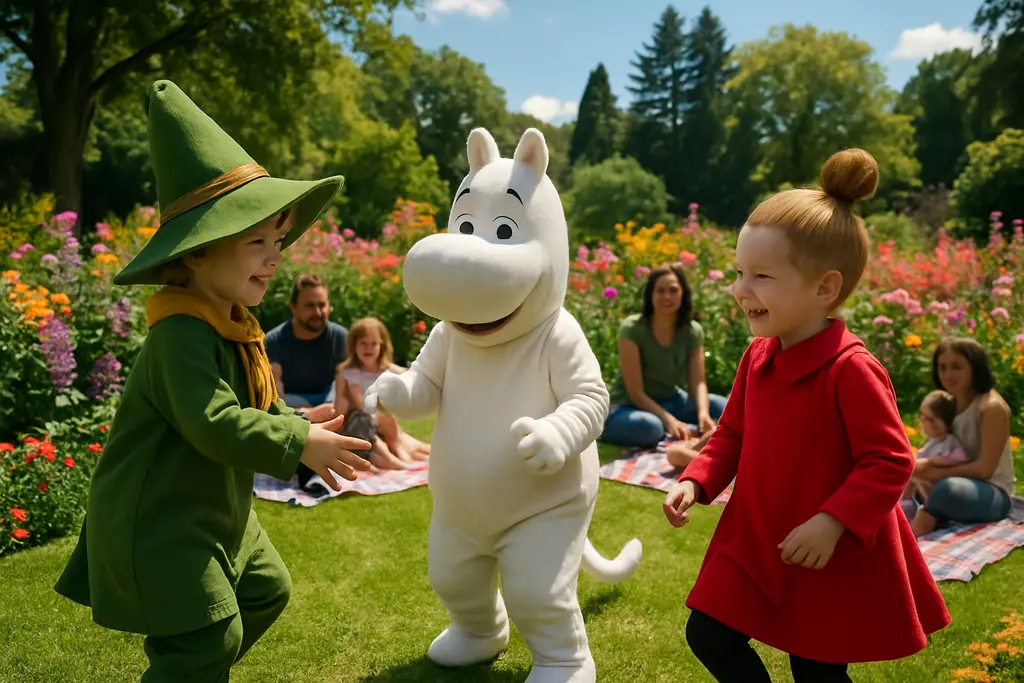
    The display ran at the Everett Children’s Adventure Garden from May 23, 2026, through September 13, 2026, according to the New York Botanical Garden’s official event page. Its central setting was a Moominvalley-inspired environment with a clue-based quest, hands-on nature crafts, character photo opportunities, quotations, interactive elements, plants and flowers, and themed installations. The public-facing structure blended children’s garden interpretation with literary illustration, placing Jansson’s nature-driven imagination inside an outdoor learning site rather than a conventional gallery room.

    Summer of Moomin Schedule, Recast as a Recap

    Summer of Moomin Dates And Status

    The core calendar was straightforward: the display opened on May 23, 2026, and closed on September 13, 2026. That end date also hosted the principal closing-day program, Moomin Fest, which took place from 1:00 p.m. to 5:00 p.m. at Daffodil Hill and Ross Hall. Because September 13, 2026, has already passed, descriptions of that program should be read as historical rather than as a prompt to attend.

    Moomin Fest gathered several timed and drop-in activities into a single afternoon. The schedule included drop-in cartoon and nature illustration sessions at 1:15, 2:15, 3:15, and 4:15 p.m.; naturalist guided walks at 2, 2:30, 3, and 4 p.m.; an herbarium specimen workshop; a meet-and-greet photo opportunity with Moomintroll; and craft and nature-based games. The range suggests that NYBG treated the closing event not only as character programming but also as a bridge between drawing, observation, plant study, and family participation.

    Passed Weekend Programs

    A separate special program, Moomin’s Day Weekend, occurred on August 8 and 9, 2026, from 12:00 to 5:30 p.m. at the Edible Academy. A contemporary events preview reported a ticket-pricing snapshot for that weekend: children ages 2–12 were listed at $17, students and seniors at $35, and adults at $39, as noted by This Week in New York. Those figures should be treated as historical pricing for that program, not as current admission guidance.

    How Tove Jansson’s Garden Setting Worked

    Nature, Drawing, And Character Encounter

    Tove Jansson, who lived from 1914 to 2001, is identified in the research materials as the creator of the Moomins, with a career spanning nearly seven decades as an author, illustrator, and painter. The NYBG presentation emphasized her connection to nature, which made the Everett Children’s Adventure Garden an apt setting. A botanical garden can make the ecological side of an illustrated world tangible: paths, flowers, sensory cues, and small acts of observation allow visitors to encounter an invented valley through real plant life.

    That interpretive choice also shaped the tone of the display. Instead of treating the Moomins only as recognizable characters, the garden program appears to have linked them to the habits behind visual storytelling: looking closely, sketching, tracing clues, and reading environments. The cartoon and nature illustration sessions at Moomin Fest are especially telling. They joined image-making to outdoor study, placing drawing in conversation with specimens, guided walks, and hands-on craft.

    What The Event Calendar Shows

    From Display Run To Festival Day

    The calendar gives a clear example of how a cultural institution can pace a character-based exhibition across several months. The long display period allowed repeat family visits and seasonal discovery, while the special weekend in August and the September festival added date-specific reasons to return. This format is familiar across public gardens and museums: the environment carries the daily experience, and scheduled programs add concentrated moments of performance, making, or guided interpretation.

    • May 23, 2026: display opened at the Everett Children’s Adventure Garden.
    • August 8–9, 2026: Moomin’s Day Weekend took place at the Edible Academy.
    • September 13, 2026: Moomin Fest ran from 1:00 p.m. to 5:00 p.m.
    • September 13, 2026: the display closed at NYBG.

    The supplied research also identifies other NYBG exhibitions scheduled after the Jansson display: Día de los Muertos Trail from October 3 to November 2, 2026; Holiday Train Show® from November 14, 2026, to January 10, 2027; and a KAWS garden-wide installation from May 22 to October 24, 2027. Those listings sit beyond the closed Moomin program and should be checked against NYBG’s own calendar before anyone makes plans, since schedules and admission details can change.

    Creator Culture And Rights-Aware Fan Making
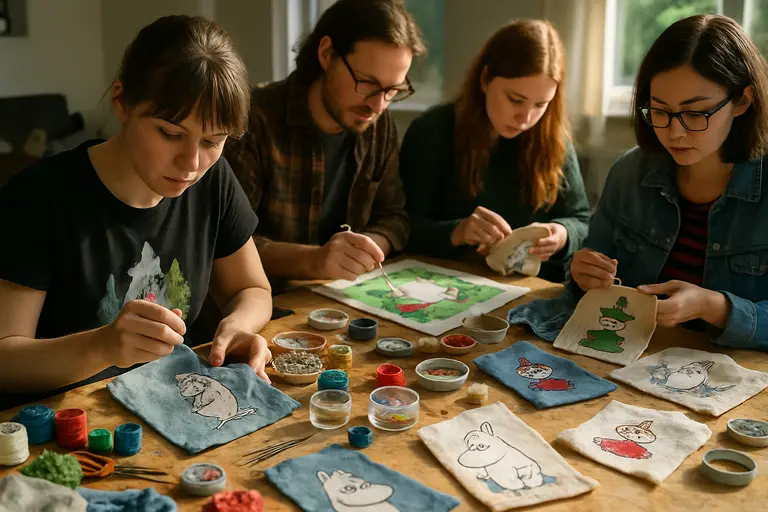
    Handmade costume accessories and sketchbooks arranged on a craft table

    Costume, Illustration, And Careful Attribution

    A display like this naturally touches costume culture, handmade gifting, and fan creativity. Character photo moments, nature crafts, and illustration sessions can inspire visitors to draw, dress up, or make objects at home. Cultural enthusiasm, though, benefits from careful attribution. Jansson’s authorship should remain visible, and creators selling goods inspired by well-known characters should avoid assuming that public affection equals commercial permission.

    This is not legal advice, and the available research here does not establish licensing terms for individual sellers or makers. A cautious creator-commerce stance is simpler: distinguish personal tribute from commercial use, avoid implying official endorsement, and seek rights-clearance information from appropriate owners or platforms before selling character-based work. Readers interested in adjacent costume and fantasy-fashion discussion can also follow fantasy fashion coverage within the same network, where aesthetic influence can be discussed without erasing artists’ rights.

    Summer of Moomin After The Final Weekend

    Summer of Moomin now belongs to NYBG’s 2026 event record rather than its forward calendar. Its strongest cultural value, based on the published schedule, was the pairing of Jansson’s illustrated world with botanical learning: quests, plants, guided walks, drawing sessions, and family craft all pointed toward close attention to nature. For an audience of children and caregivers, that combination likely mattered more than spectacle alone. It invited visitors to read a garden as a story space, and to read a story world through plants, weather, paths, and observation.

    The evidence available supports a modest assessment. NYBG presented a time-limited Moominvalley-inspired display from May 23 through September 13, 2026, and closed it with a programmed festival day. It honored Jansson’s work as an author, illustrator, and painter, while placing nature at the center of the visitor experience. Any future return of the concept is not confirmed in the provided research, so the responsible record is retrospective: dated, specific, and respectful of the artist whose imagination shaped the event.

  • Fall 2026 Aesthetics Across Fashion And Art

    Fall 2026 Aesthetics Across Fashion And Art

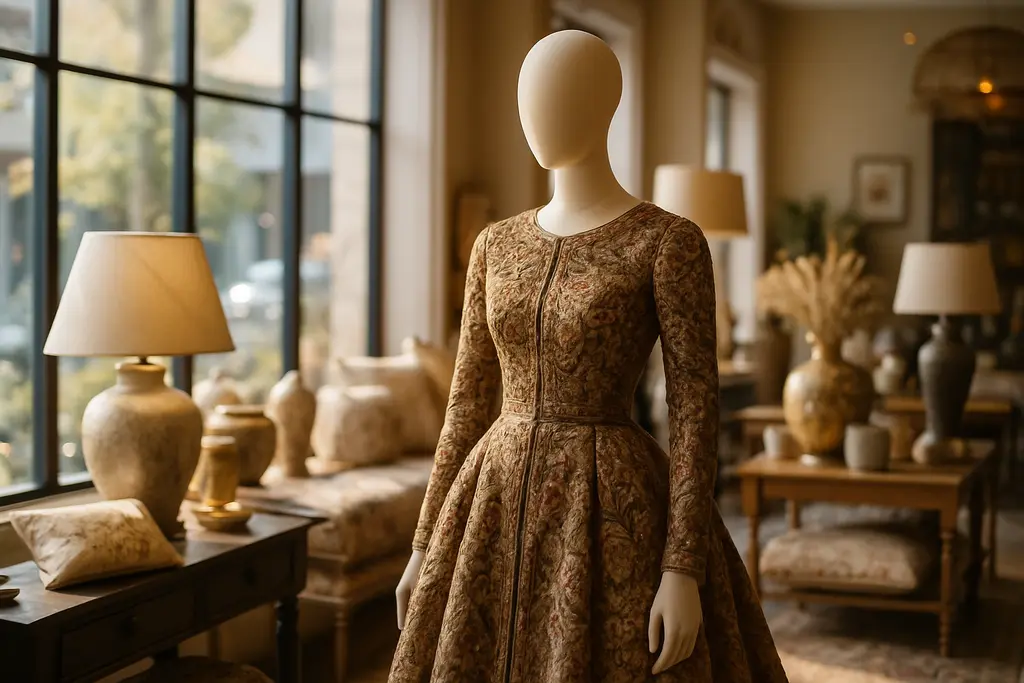
    Fall 2026 Aesthetics are less about one dominant look than a set of related signals: ornament, exposed structure, historical reference, tactile surfaces, and a renewed interest in objects that feel handled rather than polished beyond recognition. As of September 15, 2026, the strongest evidence comes from fashion reporting on the Fall 2026 runway season and editor-led trend analysis, rather than from long-term sales data. That means the mood is visible, but its reach into everyday wardrobes, interiors, and creator commerce still deserves caution.

    The useful question is not whether every shopper will wear sheer dresses, brocade, or dramatic collars. Most will not. The more grounded reading is that designers and stylists are testing a move away from quiet minimalism and toward surfaces with memory: beading, lace, shearling, aged texture, and shapes that borrow from earlier periods without recreating them literally. For visual artists, costume makers, stylists, and small sellers, the shift may matter because it changes what audiences are trained to notice: edges, trims, proportion, fabric behavior, and the relationship between clothing and character.

    Why Fall 2026 Aesthetics Feel Ornamental Again

    Reading Fall 2026 Aesthetics Through Decoration

    One of the clearest reported signals is renewed interest in Art Deco references. Who What Wear’s fall 2026 fashion reporting points to Art Deco revival through beading, geometric pattern, brocade, jacquard, and decorated surfaces, based on commentary from fashion newsletter writers and runway observers Who What Wear trend analysis. That is a precise aesthetic cue, not a general claim that the 1920s have simply returned.

    For artists and makers, the distinction matters. Art Deco influence can appear through symmetry, stepped geometry, metallic accent, or surface rhythm without copying a specific historic garment or artwork. The present interest seems to sit in atmosphere rather than reconstruction: a brocade jacket, a beaded evening surface, a geometric accessory, or a print that suggests architectural order. This is where fashion crosses into visual composition. A garment becomes a moving panel of light, shadow, pattern, and texture.

    Ornament Without Nostalgia As Costume

    The risk with any revival language is that it can flatten history into a mood board. Art Deco emerged from specific social, industrial, and design conditions; Fall 2026 references are selective, market-facing, and often mixed with modern silhouettes. A cautious reading should treat ornament as a current design strategy rather than proof of broad cultural return to one decade.

    This approach also helps creators avoid lazy imitation. A handmade seller, illustrator, or costume designer can study period features—line, spacing, contrast, repeat, and material sheen—while developing original work. The more sustainable lesson is not “copy Deco,” but “understand why geometry and surface detail are carrying visual weight again.”

    Body, Proportion, And Historical Costume Cues

    Sheer Layers And Second-Skin Dressing

    Vogue’s report on the Fall 2026 season identified a shift toward sensuality and the body on display, citing sheer layers, second-skin dresses, lingerie-inspired slips, and peekaboo mesh among the visible runway directions, with examples including Alaïa, Valentino, and Khaite Vogue’s Fall 2026 report. This is not new in fashion history, but the timing is notable after seasons in which coverage and protective dressing held strong editorial attention.

    For visual culture, body-conscious fashion changes the role of silhouette. The garment may become less of a shell and more of a filter: transparent, layered, stretched, or interrupted. In photography, illustration, and styling, that creates a focus on contour and negative space. In costume culture, it also raises practical questions about comfort, consent, fit, and context. Revealing dress is not one message; it can read as theatrical, intimate, severe, romantic, or commercial depending on styling and setting.

    Medieval Romance, Poetcore, And Scale

    The same Fall 2026 reporting has pointed to romantic medieval and “poetcore” motifs: lace, bustles, trimmed cuffs, cravats, and literary or folklore-inflected drama. These cues sit near fantasy fashion and costume culture, where historical fragments often become expressive tools. The most credible reading is not that medieval dress is being revived in an academic sense. Instead, designers are drawing from mood, proportion, and detail: a cuff that frames the hand, a bustle that changes the back view, or a cravat that turns the neck into a focal point.

    Unusual proportions also appear in the research, including shorter jackets, crop lengths, dropped waists, and tension between large outerwear and narrower forms. This is a practical styling issue as much as an aesthetic one. A small jacket can make a skirt feel longer. A broad collar can frame the face like a portrait device. A dropped waist can shift attention from torso to hip. These choices affect how the body is read in motion and in still images.

    Texture, Outerwear, And The Move Beyond Minimal Surfaces

    Warmth As A Visual Signal

    Fall 2026 Aesthetics also show up in outerwear. The research notes point to warm, bulky coats, shearling textures, and dramatic collars. That may sound purely seasonal, but outerwear is often where a trend becomes legible to people who do not follow runway detail. A collar can create silhouette from a distance. Shearling can signal softness before touch. Heavy coats can make fantasy, utility, and protection sit in the same image.

    This matters for artists because texture is one of the easier signals to translate across media. A painter may read shearling as broken mark-making. A photographer may use it to catch side light. A costume maker may use collar scale to frame a performer’s face on stage. A small seller may interpret the cue through removable cuffs, collars, brooch placement, or textile accessories rather than full garments.

    Statement Accessories And Creator Interpretation

    Statement accessories, including brooches, bowties, and jewelry, are also part of the reported season. Their importance should not be overstated without sales proof, but accessories are often where runway ideas become accessible. They allow a wearer to test ornament, scale, and historical reference without changing an entire wardrobe.

    • Brooches can add texture and asymmetry to coats, jackets, and knitwear.
    • Bowties and cravats can connect suiting with romantic or literary styling.
    • Textured jewelry can echo aged metal, beading, or geometric ornament.
    • Layered collars and cuffs can bring costume influence into daily dress.

    For makers, this is a place to be careful with rights and attribution. Historic motifs, general shapes, and material techniques can inspire original design, but copying a living artist’s recognizable work, a brand’s protected mark, or a copyrighted character for sale can create risk. This is not legal advice; it is a reminder that aesthetic influence and rights clearance are separate questions. The same caution applies to fashion-art projects, a concern that also appears in related coverage of luxury art collaborations.

    Fall 2026 Aesthetics Beyond The Runway

    Warm interior corner with wood, stone, textiles, and handmade decorative objects

    Interiors, Graphics, And The Tactile Mood

    Although the approved source links here focus on fashion, the research notes for interiors and design point in a compatible direction: warmth, layered rooms, natural materials, aged metals, handmade surfaces, and collected objects. Because those claims come from separate design-sector reporting, they should be treated as parallel evidence rather than proof of one unified cultural movement. Still, the overlap is worth observing. Fashion’s brocade, lace, beading, and shearling sit comfortably beside interiors that favor wood, stone, plaster, and vintage objects.

    Fall 2026 Aesthetics, then, can be read as a push toward visible touch. The surface should do something: catch light, suggest age, show weave, frame the body, or interrupt plainness. That does not mean minimalism has vanished. It means minimalism is no longer the only language receiving serious attention in seasonal style reporting.

    How Small Sellers Can Respond Carefully

    For creator commerce, the most useful response is interpretation, not replication. Sellers can create original accessories using geometric balance, textured surfaces, warmer color, and sculptural proportion. They can also describe work honestly: “geometric beaded collar” is clearer and safer than implying affiliation with a designer, estate, film, or fashion house. For readers comparing style notes across the same publishing network, Shimply offers a related reference point for adjacent lifestyle coverage.

    Evidence-based trend writing should also leave room for uncertainty. Editorial coverage can identify what appeared on runways and in expert trend reports, but it cannot guarantee adoption across regions, budgets, sizes, or subcultures. A runway cue may become a mass-market accessory, remain a luxury styling idea, or be absorbed by costume communities in altered form. The clearest takeaway is that surface and silhouette are doing more expressive work than they did during the strongest phase of quiet minimalism.

    What Fall 2026 Aesthetics Mean For Fashion And Beyond

    Fall 2026 Aesthetics point toward decorated surfaces, historical fragments, body-aware silhouettes, warm outerwear, and tactile design. The stronger claims are limited to what has been reported: Art Deco references, sensual layering, romantic medieval cues, dramatic collars, proportion play, and statement accessories. The broader cultural reading is more cautious. These signals suggest a renewed appetite for clothing and objects that feel expressive, textured, and composed.

    For artists, stylists, educators, and makers, the season offers useful study material. Look at how a collar frames a face, how lace changes an outline, how brocade holds light, and how an accessory can shift a plain garment into a character study. The strongest creative response will not be a copied trend, but an informed visual decision: one that understands reference, respects communities, and builds original work from observed form.

  • artist-first merchandise policy at live events

    artist-first merchandise policy at live events

    Live Nation’s artist-first merchandise policy, mainly carried through its On the Road Again program, changed a specific part of the live-event economy: merch income at participating club-size venues. As of September 14, 2026, the clearest supported record shows a policy with measurable benefits for developing artists, but also a limited reach across the full touring circuit. That distinction matters for artists, audiences, venues, and local communities that depend on live rooms as cultural infrastructure.

    Merchandise is not only a souvenir table. For many artists, it is a practical revenue source that can help cover fuel, lodging, crew, production, and time away from other work. For audiences, buying a shirt, record, poster, or handmade item can feel like a direct way to support the performer they just heard. The policy therefore affected live events not by changing the music on stage, but by changing what happens around the room: the checkout line, the artist-fan exchange, and the post-show economics.

    What The artist-first merchandise policy Changed

    artist-first merchandise policy At Club Scale

    Live Nation launched On the Road Again in 2023 in partnership with Willie Nelson. The company said the program waived merchandise-selling fees at participating Live Nation club venues, allowing artists to keep 100% of their merch profits at those shows, and also provided $1,500 per show for gas and travel costs to both headliners and support acts. By March 12, 2024, Live Nation said the program had supported more than 4,000 developing artists and had distributed “tens of millions of dollars” in added support through merch profit retention and travel stipends, according to its On the Road Again update.

    Those details define the policy’s strongest case. It did not ask artists to wait for a royalty cycle, a later settlement, or a sponsorship deal. At qualifying shows, the change was attached to a familiar point of sale: the merch table. That made the benefit legible to artists and tour managers because the waived fee applied to money generated in the room on the night of the performance.

    Travel Support And The Cost Of Showing Up

    The $1,500 travel payment is part of the same live-event effect. Touring at club level can involve tight routing, long drives, and uncertain nightly sales. A fixed payment for gas and travel does not solve every expense, and the available source does not show every artist’s cost structure. Still, it addressed a known pressure point: reaching the next city can be one of the barriers that decides whether a developing act can continue a run of dates.

    The artist-first merchandise policy did not remove all financial risk from touring. It did, however, shifted a defined portion of the risk away from the artist at participating club shows. That is a meaningful change for a support act selling modest quantities of merchandise, where a percentage cut and seller fees could reduce the margin on each item.

    Why Merch Policy Matters Inside The Room

    The Merch Table As A Community Exchange

    A live event is often remembered through the performance, but the social life of the room extends before and after the set. The merch table is where a fan may ask about a song, buy a record directly from a touring musician, or discover a local opener’s work. When a venue policy allows the artist to retain a larger share of sales, that exchange carries clearer economic meaning.

    For audiences, the artist-first merchandise policy can reduce uncertainty about where their merch spending goes at a qualifying show. That does not mean every dollar at every Live Nation-affiliated event follows the same rule. The research supports a narrower statement: at participating club-size venues in the program, merchandise-selling fees were waived so artists kept 100% of merch profits from those sales.

    Trust, Transparency, And The Post-Show Line

    Community trust in live music is built from many small signals. Clear ticketing, respectful staff, fair treatment of local crews, safe rooms, accessible information, and artist compensation all shape how a venue is perceived. Merch policy sits within that larger set of signals. A room that reduces friction at the merch table may be read by artists as more hospitable, especially if the policy is communicated before settlement.

    Audience perception is more difficult to measure from the available research. The cited materials do not prove that fans bought more merchandise because of the policy, nor do they prove that the policy changed attendance. A cautious reading is better: the program created conditions in which merch purchases at certain club shows could have a more direct financial link to the artist, and that can strengthen the ethical clarity of the fan’s choice to buy.

    The Limits Of Coverage Across Live Events

    Not Every Venue Was Covered

    The main limitation is scope. The strongest documented benefits applied to participating club-size venues, not necessarily to theaters, arenas, festivals, or every date on a tour. Pitchfork’s reporting on the dispute between artists and venues over merch profits noted that venue merch cuts had become a serious issue for musicians and that policy fixes were not evenly applied across all rooms, as discussed in its report on artist merch cuts.

    This matters because touring is rarely confined to one venue type. A developing band may play a Live Nation club on one night, an independent room the next, a festival slot later in the month, and a theater support date after that. If only some shows remove merch cuts, the artist’s budget still has to account for mixed terms across the route.

    Why The Old Debate Did Not Disappear

    Before programs like On the Road Again, reported merch cuts in many U.S. contexts were often described in the 20% to 30% range, with some accounts including seller fees. The research notes also point to examples outside the United States, including Australian documents showing 10% to 20% of gross sales in certain contexts. These figures help explain why the issue drew attention: a percentage taken from gross merch sales can matter sharply when production costs, card fees, tax handling, shipping to the tour, and unsold stock are considered.

    Because the policy’s reach was limited, it did not end the broader argument over who should benefit from the labor and risk behind merch. Venues may point to staffing, space, payment systems, and building costs. Artists may point to design costs, manufacturing, transport, and the fact that the goods are tied to their creative identity. Both sides are discussing real pressures, but the policy showed that a zero-cut model could be implemented in at least one defined club program.

    Practical Implications For Artists, Venues, And Audiences

    A tour manager reviewing notes beside packed merchandise boxes

    What Changed In Tour Planning

    For a tour manager, a waived merch cut at a qualifying show can make settlement easier to forecast. It does not guarantee a profitable night, since sales depend on attendance, pricing, demand, inventory, and the artist’s costs. It can, however, remove one variable from the calculation. That is especially relevant for developing artists who may depend on several modest revenue streams rather than one large guarantee.

    For venues, the program raised a strategic question: whether goodwill with artists and audiences can outweigh income previously collected through merch percentages. The available research does not prove how each venue balanced that tradeoff. It does show that Live Nation was willing to frame club-level artist support as a public policy choice tied to touring sustainability.

    • Artists: qualifying shows offered a clearer path to retaining merch profit and receiving travel support.
    • Audiences: merch purchases at covered club shows could more directly support the performer.
    • Venues: the policy placed pressure on rooms to explain or reconsider merch percentages.
    • Local scenes: artist-friendly terms can help touring acts remain willing to play smaller rooms, though venue-by-venue proof is limited.

    Community Value Beyond The Sale

    Community-focused coverage should avoid treating every policy announcement as proof of a solved problem. Live music depends on relationships among artists, promoters, venue workers, local audiences, and neighboring businesses. Related cultural networks such as Robsonic underscore the same concern: performance spaces are not only commercial sites, but places where local identity, touring exchange, and creative work meet.

    A cautious reading of the artist-first merchandise policy is that it made one part of that exchange fairer at participating club shows. It did not create a universal standard across every live event. It did give artists and advocates a concrete example to reference when asking how merch revenue should be shared.

    Live Nation artist-first merchandise policy

    The impact of Live Nation’s program is best understood as specific rather than total. It helped thousands of developing artists by March 12, 2024, according to Live Nation’s own statement, and it placed 100% merch-profit retention at participating club shows into the center of the public conversation. It also left open the harder question of what happens outside those rooms.

    For communities that care about live music, the policy’s value lies in its clarity. If a fan buys merch at a covered club show, the supported claim is that the artist keeps the merch profit without the venue merchandise-selling fee. If an artist builds a tour budget, a covered date may carry better terms than a non-covered date. If a venue wants to be seen as artist-supportive, merch policy is now part of that public measure.

    That is a real shift, but not a complete settlement of the issue. The next responsible conversation is not whether one company announcement fixed touring economics. It is how artists, venues, promoters, and audiences can identify which policies apply on which dates, and how those policies affect the people doing the creative work on stage.

  • Nick Cave Louder Still Opens at Glenstone

    Nick Cave Louder Still Opens at Glenstone

    Nick Cave Louder Still opens at Glenstone Museum in Potomac, Maryland, on September 19, 2026, and the early facts suggest a commission built around forceful contrasts: beauty and protest, costume and sculpture, silence and imagined sound. Glenstone says the work will be installed in Room 1 of the Pavilions building and remain on view through spring 2028, according to the museum’s official announcement.

    Because the installation had not yet opened as of September 14, 2026, any assessment of audience response would be premature. What can be evaluated now is the information Glenstone has released: the work’s scale, materials, relationship to Cave’s Soundsuit practice, and its placement within a museum architecture that asks viewers to move around objects rather than consume them from one fixed angle.

    What Glenstone Has Announced

    Date, Room, And Viewing Conditions

    Louder Still is scheduled to open on Saturday, September 19, 2026, in Room 1 of Glenstone’s Pavilions building. Glenstone describes it as a site-specific installation designed for that room and installed directly on the terrazzo floor. That detail matters because it frames the work less as a pedestal-bound sculpture and more as an encounter within a shared architectural space.

    The museum also notes that the installation is intended for 360-degree viewing. For a Soundsuit-related work, that physical arrangement is significant. Cave’s practice often asks what a body reveals, hides, protects, or amplifies. A fully walkable installation places pressure on the viewer’s position: no single angle can claim full authority over the figures.

    Nick Cave Louder Still And The Soundsuit Lineage

    Glenstone identifies the work as Cave’s largest multi-figure Soundsuit to date. It is composed of eleven discrete figures joined by a monolithic textile. The Soundsuit lineage began in 1992, when Cave created his first Soundsuit in response to the beating of Rodney King and ensuing racial violence. That origin has long shaped how the series is discussed: not only as wearable sculpture, but as a language of concealment, protection, movement, and public address.

    Glenstone describes the broader Soundsuit series as merging performance, protest, fashion, and visual art. The museum also states that these worn figures conceal identity while addressing themes of race, class, gender, and joy. Those terms should not be flattened into a single message. Cave’s work often holds more than one register at once, and the Glenstone commission appears to continue that practice through scale, sound references, and handworked material.

    How Nick Cave Louder Still Uses Scale

    Eleven Figures And One Textile Body

    In Nick Cave Louder Still, scale is not only a matter of size. Eleven figures welded together by one textile structure create a collective body. That arrangement invites a reading of assembly: separate presences bound into one larger form. Given the Soundsuit series’ long connection to visibility, identity, and social vulnerability, the number of figures may encourage viewers to think about group action without reducing the work to a literal protest scene.

    The textile is covered in hand-sewn buttons made from iridescent mother-of-pearl shells. Glenstone’s phrasing stresses labor as well as surface effect. Buttons are small, repeatable, domestic, and functional objects; mother-of-pearl carries shimmer and delicacy. On a large multi-figure commission, those small units may generate a visual field that rewards slow looking while still producing impact at a distance.

    Sound Without A Recorded Score

    Each figure has an oversized headpiece that echoes a gramophone or tuba horn. Glenstone connects these forms to music and protest, and reports that Cave considers sound produced through movement integral to the work. The reference is direct enough to read visually, yet the museum’s description leaves open how visitors will experience sound in the room.

    This is where caution is useful. Before the public opening on September 19, 2026, it would be speculative to claim how the work sounds in person or how often it may be activated. What is supported is that sound, movement, and bodily presence are part of the commission’s conceptual structure. The horn-like headpieces suggest address: a body that does not only appear, but announces.

    Activism Through Craft And Concealment

    Beauty As Public Address

    Glenstone describes the work as holding a magnitude of labor, emotion, and ideology in its design and construction, positioning visual opulence as a vehicle for social commentary. That description is useful because it resists the false split between ornament and seriousness. In Cave’s Soundsuit practice, dazzling surface can function as invitation, shield, and confrontation.

    The mother-of-pearl buttons are not neutral decoration in this context. Their repetition signals labor. Their shine can attract viewers before the social charge of the work fully registers. This tension is part of why Cave’s costume-sculptures occupy an important position in contemporary art discourse: they allow joy and grief, protection and exposure, festivity and critique to occupy the same object.

    Cultural References With Care

    Glenstone lists a broad set of influences for Cave’s work, including funk, jazz, gospel, club culture, fashion, West African ceremonial regalia, New Orleans funeral processions, painter Barkley Hendricks, and choreographer Alvin Ailey. That range should be handled with care. These references are not interchangeable aesthetic labels; they point to living and inherited cultural forms with their own communities, histories, and disciplines.

    For those interested in handmade communities and creator culture, Shimply offers related insights. However, it is crucial to recognize that Cave’s artistic journey is distinctive and should not be seen merely as a model for replication. The ethical distinction matters, especially when costume, identity, and ceremonial reference meet commercial image-making.

    Visitor Access And Critical Caution

    Visitors walking calmly through a spacious contemporary art museum gallery

    Free Admission, Reserved Entry

    Glenstone states that admission is always free and that the museum is open Thursdays through Sundays, 10 a.m. to 5 p.m., year-round. Visitors must reserve tickets ahead of time. Since Louder Still is scheduled to remain on view through spring 2028, the commission is not framed as a short-run event, though access still depends on the museum’s reservation system.

    • Opening date: September 19, 2026.
    • Location: Room 1 of the Pavilions building at Glenstone Museum.
    • Scheduled duration: through spring 2028.
    • Admission: free, with advance ticket reservations required.

    What Cannot Be Claimed Yet

    As of September 14, 2026, the commission had not opened to the public. That limits what responsible criticism can say. There are no supported visitor reactions in the supplied research, and no basis here to describe public consensus, attendance patterns, or reception. A critic can analyze the announced structure and artistic context, but lived response belongs to the period after opening.

    This restraint is not a weakness. It keeps the work from being turned into a marketing slogan before it has met its audience. Cave’s art deserves close attention, and the communities and cultural forms referenced around it deserve language that does not overclaim.

    Nick Cave Louder Still At Glenstone

    A Commission Built For Slow Encounter

    What makes Nick Cave Louder Still notable before opening is the way its announced elements converge: eleven figures, a unifying textile, mother-of-pearl buttons, horn-like headpieces, a direct relationship to movement, and a room that allows viewers to circle the work. None of those facts alone defines the commission. Together, they point toward an installation concerned with collective presence and amplified identity.

    For Glenstone, the placement of this work in Room 1 of the Pavilions gives Cave’s Soundsuit language an architectural frame. For viewers, the challenge will be to remain attentive to the tension between spectacle and critique. The work’s beauty may be immediate, but its activist charge is tied to labor, concealment, history, and the body’s power to sound out against harm.

    On September 19, 2026, the public phase of that encounter begins. Until then, the most accurate reading is a careful one: Glenstone has announced a major site-specific Cave commission grounded in the Soundsuit tradition, shaped by craft, protest, fashion, performance, and joy, and designed to be experienced in the round through spring 2028.

  • Why Established Artists Lead Gallery Spaces

    Why Established Artists Lead Gallery Spaces

    Established Artists have gained more attention in gallery programming as the art market has favored names with longer exhibition records, clearer provenance, and more visible resale histories. That shift is not just a matter of taste. The available data points to a cautious market mood, especially among high-value collectors and dealers watching demand after the post-pandemic surge cooled.

    For community organizers, artists, and gallery visitors, the question is not whether established names deserve space. Many do, and their work can carry deep cultural memory, formal invention, and hard-won public trust. The harder issue is balance. If galleries lean too heavily toward proven names, younger and less visible artists may find fewer points of entry into the commercial system. The evidence supports concern, but it also calls for care: the trend is strongest in high-value collecting data and global market reporting, not necessarily in every local gallery, artist-run space, or nonprofit exhibition room.

    Why Established Artists Are Gaining Space

    Price Signals And Provenance

    The clearest signal comes from recent market reporting. Art Basel described 2025 as a year in which sales shifted toward older and secondary-market sectors, with high prices increasingly concentrated among established names rather than newer entrants, according to its Art Basel market trends. The same report noted that ultra-contemporary art, which had helped drive the post-pandemic recovery, showed signs of stagnation while works by earlier 20th-century artists reached strong prices.

    That matters for gallery walls because galleries do not operate apart from collector confidence. A dealer planning a booth, a solo exhibition, or a group show has to consider the cost of shipping, presentation, staffing, storage, and promotion. If a collector base becomes more cautious, works with longer public records can feel safer to place in prominent rooms. This does not prove that every gallery has reduced support for emerging practices. It does suggest that the commercial reward structure has tilted toward names whose markets are easier to compare and defend.

    Established Artists And Portfolio Signals

    Collector portfolios show a similar pattern. The UBS Global Collecting Survey reported that in 2025, 45% of works held by surveyed high-net-worth individuals were by established or top-tier artists regularly selling for more than US$100,000, up from 25% in 2024, while the share of new and emerging artists fell from about 53% to about 34%, according to the Global Collecting Survey. The survey also separated new artists, described in the research as artists never before shown in galleries, from emerging artists with less than 10 years of showing activity; both categories declined in share from 2024 to 2025.

    The shift toward Established Artists in these portfolios should be read carefully. High-net-worth collectors are not the whole art public, and their buying patterns do not define cultural worth. Still, their choices influence the commercial galleries that depend on sales at higher price levels. If these collectors allocate more funds to proven names, galleries have a financial reason to give those names stronger placement, clearer marketing, and more frequent visibility.

    How Galleries Read Risk And Demand

    The Economics Of Familiar Names

    Gallery space is cultural space, but it is also expensive space. A room given to one body of work cannot be given to another during the same dates. In a cautious market, the artist with auction records, museum references, collector demand, and a documented exhibition trail may be easier for a gallery to present to buyers who are asking about long-term value. That can make familiar names more attractive even when a gallery director personally cares about younger practices.

    This is where evidence and ethics meet. A gallery may choose a proven name for financial stability without rejecting new work as culturally less meaningful. At the same time, repeated risk avoidance can narrow the public view of what art is becoming. The difference between a prudent program and a closed circuit can be thin, especially in cities where commercial galleries are one of the few places artists meet collectors, writers, curators, and patrons.

    What This Means For Emerging Artists

    The data does not show that emerging artists have disappeared from the market. It shows that, within the surveyed high-value collecting segment, their share fell. That distinction matters. Artist-run spaces, small galleries, public programs, open studios, university galleries, and community arts events can still introduce early-career work outside the strongest commercial pressure points. For artists and sellers seeking additional viewpoints on creative commerce, the platform Shimply provides another practical reference point alongside gallery research.

    Emerging artists may need more than exposure; they need context. A short show without critical writing, collector education, or community engagement can leave new work isolated. Galleries that continue to support less established artists may reduce perceived risk by pairing new practices with careful interpretation, transparent pricing, and sustained relationships rather than one-off novelty. None of that guarantees sales, and it should not be framed as a formula. It is a way of treating artists as long-term contributors rather than short-term market tests.

    • For collectors, the cautious move is to distinguish market record from artistic value.
    • For galleries, the public responsibility is to avoid letting risk management erase new voices.
    • For communities, the strongest response is to support spaces that explain why unfamiliar work matters.

    What Established Artists Mean For Gallery Culture

    Mixed-age audience discussing paintings during a community gallery opening

    A Cautious Reading For Communities

    The present pattern is best read as a market concentration, not a cultural verdict. Established names can anchor exhibitions, draw visitors, and help galleries survive slower periods. They can also create bridges for audiences who enter through a familiar name and then encounter less familiar artists nearby. A thoughtful program can use that attention generously.

    The risk is that the bridge becomes a wall. If galleries use Established Artists mainly as financial insulation, the room for discovery contracts. That affects not only young artists but also mid-career artists, regional artists, and makers whose practices do not fit auction-friendly categories. Cultural life depends on more than resale confidence. It depends on conversation, dissent, care, experimentation, and the slow trust built between artists and publics.

    For readers following gallery news in 2026, the most useful response is not alarm or dismissal. Watch how galleries structure their programs. Ask whether proven names are being used to support wider artistic dialogue or simply to reduce exposure to risk. The market data shows a real pull toward established work, but communities still shape what visibility means. The healthiest gallery culture will make room for memory and discovery at the same time.

  • Chicago Exhibition Week: 75 Arts Spaces In Focus

    Chicago Exhibition Week: 75 Arts Spaces In Focus

    Chicago Exhibition Week opened on September 14, 2026, as a seven-day arts program running through September 20, 2026. Its stated scale—75 participating spaces, including 44 commercial galleries—makes it a citywide organizing effort as much as an exhibition calendar, according to the official program page. The most useful way to read the week is not as a single fair with one center, but as a set of linked invitations across museums, galleries, cultural institutions, workshops, performances, talks, food and drink programs, and neighborhood art spaces.

    That matters for artists and audiences alike. A dispersed model can bring attention to smaller venues while also using major institutions as anchors. It can help visitors connect an exhibition opening with a public program, a dance performance, or a hands-on session. Still, scale alone does not prove access, equity, or cultural depth. Those claims need evidence beyond numbers. What the published schedule does show is a broad civic effort to place contemporary art, collecting, performance, and maker practice in public conversation across one week.

    What Chicago Exhibition Week Covers

    Chicago Exhibition Week By The Numbers

    Chicago Exhibition Week is scheduled for September 14–20, 2026. The research supplied for the event identifies 75 participating spaces, with 44 commercial galleries included in that count. The prior edition in 2025 drew about 10,000 attendees over a long-weekend format. The 2026 program has been extended to a full seven days, which changes the rhythm of participation. Rather than concentrating attention into a compressed opening rush, the longer schedule gives institutions and smaller spaces more room to place talks, receptions, performances, and workshops on different days.

    Numbers can be persuasive, but they need context. A 75-space program does not mean every visitor will experience the same version of the event. Someone focused on museum exhibitions may build a very different path from someone seeking artist-run programs, commercial gallery openings, printmaking workshops, or performance. For community organizers, that variety is both a strength and a challenge. It creates many points of entry, yet it also asks audiences to make choices based on time, location, cost, accessibility, and personal interest.

    From Long Weekend To Seven Days

    The move from a long-weekend format to a full week is one of the clearest structural changes in 2026. A longer calendar can reduce pressure on any single day and may allow more thoughtful pacing for institutions and audiences. It also gives artists and presenters more chances to meet people outside a standard opening-night crowd. That said, the public record available here does not establish how participation is distributed by neighborhood, venue size, or artist background. Those are the kinds of questions worth asking after the week closes on September 20, 2026.

    Programs Across Galleries Museums And Workshops

    Exhibitions And Performances Named In The Program

    The listed highlights span several types of art presentation. Featured exhibitions and institutional programs include Jill Mulleady: The Passenger at the Art Institute of Chicago, Slow Dance at the Museum of Contemporary Art Chicago, Karimah Ashadu: Tendered at the Renaissance Society, a Brendan Fernandes public dance program at the Driehaus Museum, and Harris Theater’s Dancing with Bob, a performance celebrating the Rauschenberg-Cunningham collaborations.

    Several time-specific items help show how the week mixes formal exhibition viewing with social and participatory formats. The CXW Launch Party is listed for Tuesday, September 15, 2026, from 9–11 pm at the Museum of Contemporary Art Chicago. Magic Hour Gallery’s inaugural exhibition is listed for Thursday, September 17, 2026, from 6–10 pm in an SAIC alumni event notice. A printmaking workshop at UIC Gallery 400 is scheduled for Saturday, September 19, 2026, from 12:30–4:30 pm.

    Workshops As Cultural Access Points

    Workshops deserve special attention because they shift audiences from looking to making. A printmaking session, for example, can help visitors understand process, repetition, material choice, and editioning in ways that a finished work alone may not. That does not make the workshop more valuable than the exhibition; it makes it a different kind of learning space. In community arts practice, these settings often help people who feel uncertain in formal galleries build confidence through touch, demonstration, and conversation.

    The program also includes exhibition openings, closing receptions, gallery walks and tours, auctions, performances, artist talks, and food and drink events. That range suggests an art week shaped around both art objects and social connection. For artists, the benefits may include visibility and direct audience contact. For audiences, the benefit is exposure to several kinds of art labor: curating, installing, publishing, performing, teaching, collecting, and hosting.

    • September 15, 2026: CXW Launch Party at the Museum of Contemporary Art Chicago, 9–11 pm.
    • September 17, 2026: Magic Hour Gallery inaugural exhibition opening, 6–10 pm.
    • September 19, 2026: Printmaking Workshop at UIC Gallery 400, 12:30–4:30 pm.
    • September 20, 2026: Free admission options at several institutions with a completed CXW Map.

    How The Dates Shape Access And Attention

    Free Admission And The CXW Map

    Because Chicago Exhibition Week began on September 14, 2026, the access details should be read as active during the September 14–20 window, not as a recap. One practical feature is the Sunday, September 20, 2026 free admission option tied to a completed CXW Map. The research identifies participating institutions for that offer as including the Society for Contemporary Art, the Art Institute of Chicago, the Driehaus Museum, and MCA Chicago.

    Free admission can lower one barrier, though it does not remove all barriers. Transportation time, work schedules, disability access, child care, and comfort in institutional spaces all affect whether a public invitation becomes real access. A careful assessment of the week should ask not only how many doors are open, but which communities can use those openings without undue cost or pressure.

    Longer Exhibitions Beyond The Week

    Several exhibitions associated with the schedule extend beyond September 20, 2026. 82 Nights Only at Gertie Hub runs from September 16 through December 13, 2026. Abigail Lucien: Blood of the Earth at the Art Institute runs from June 18, 2026, through January 25, 2027. A Plot of One’s Own 一亩三分地 at the Chinese American Museum of Chicago opens on September 19, 2026, and runs through August 31, 2027.

    Those longer dates are significant because they prevent the week from being judged only by who can appear during a single stretch in mid-September. They also give educators, families, and cultural groups room to return after the opening attention fades. For a citywide arts program, the afterlife of an exhibition can matter as much as the opening crowd.

    Why The 70 Plus Format Matters For Artists

    Small gallery reception with artworks on white walls and guests talking

    Visibility Without Flattening Difference

    A 70-plus venue structure can create a shared public frame without requiring each space to behave the same way. Museums, commercial galleries, cultural institutions, workshops, and artist-focused hubs each work with different resources and responsibilities. Treating them as interchangeable would flatten the very differences that make the week useful. A museum exhibition, an artist talk, a dance program, and a printmaking workshop ask audiences to pay attention in different ways.

    The presence of 44 commercial galleries also raises questions about the relationship between public culture and the art market. Commercial galleries help sustain artists through sales, representation, and collector networks, but market attention is not the same as community value. The strongest coverage should keep those categories distinct. A well-attended opening, a meaningful workshop, a serious institutional exhibition, and a successful sale may overlap, but they are not identical measures of artistic impact.

    Rights And Respect In Event Coverage

    Arts coverage around a citywide program should also be cautious with images, artist statements, and likeness. Sharing installation photos, quoting artists, or promoting works for sale requires attention to permissions and accurate credit. This is not legal advice, but it is a basic editorial ethic: do not imply a license, endorsement, or trend without support. For readers comparing cultural events with creator commerce and handmade communities, the related site Shimply offers a parallel space in the same network where making, selling, and audience trust are also central concerns.

    Respectful coverage should name artists and venues accurately, avoid invented quotes, and separate observation from proof. If a program seems well attended, say what was observed rather than claiming a citywide movement. If a workshop feels welcoming, explain the conditions that created that feeling. Cultural writing gains strength when it resists easy exaggeration.

    Chicago Exhibition Week And Community Life

    A Measured Read On The 2026 Program

    The strongest reading of Chicago Exhibition Week on its opening date is that it creates a shared civic frame for art across September 14–20, 2026. The schedule connects major institutions with galleries, workshops, public programs, and social events. It includes 75 participating spaces and a stated mix of openings, closings, tours, performances, artist talks, auctions, food and drink events, and hands-on activity.

    What remains uncertain, at least from the available research, is how participation will be distributed across the city by the close of September 20, 2026. Attendance counts, neighborhood participation, artist feedback, and visitor experience will all matter in judging the week after it ends. For now, the evidence supports a cautious but engaged view: the 2026 program gives Chicago audiences many ways to meet contemporary art, and it gives artists and organizers a concentrated period for public contact. The task for critics, visitors, and community workers is to meet that scale with careful attention rather than easy applause.

  • 2016 fashion trends and the 2026 Culture Mood

    2016 fashion trends and the 2026 Culture Mood

    On September 11, 2026, 2016 fashion trends read less like a simple comeback and more like a cultural edit. Vogue described the early-2026 attention around the phrase “2026 is the new 2016,” connecting it to reposted memes, familiar online aesthetics, and renewed interest in clothing codes associated with that year, including chokers, bomber jackets, slip dresses, off-the-shoulder tops, velvet, and merch culture Vogue’s 2026 account. The useful question is not whether 2016 has returned whole. It has not. The sharper reading is how selected garments and posting habits have been recast for a public that remembers the period as expressive, social, and less algorithmically strained.

    The nostalgia also carries an emotional charge. The New York Times reported on January 17, 2026, that the renewed pull of 2016 is tied to “millennial optimism,” including memories of Instagram and Twitter as comparatively novel social spaces and a desire for simpler online life amid present political and social strain New York Times reporting on 2016 nostalgia. That framing matters for culture coverage because clothes are not acting alone. They sit inside a wider recall of parties, posts, concerts, fandom, and youth-coded confidence.

    Why 2016 fashion trends Returned

    How 2016 fashion trends Returned Online

    The online revival appears to have gathered force from late 2025 into early 2026, based on the research available here. That timing suggests a memory cycle shaped by social platforms rather than by runway calendars alone. People did not simply rediscover a choker in a drawer; they encountered a year as a package: beauty references, memes, filters, celebrity-era silhouettes, music fandom, and casual streetwear. The effect is cultural shorthand. A black velvet choker or satin slip dress can now signal not only a garment category but a remembered mood of posting, dressing up, and being seen by peers.

    This is why the revival should be read with caution. Nostalgia often edits out discomfort, exclusion, overexposure, and commercial pressure. Aesthetic memory can soften the rougher parts of a period, especially for people who experienced that year through youth, nightlife, fan communities, or early creator culture. For people outside those circles, the memory may feel less personal. The trend is visible, but it is not universal.

    What The Nostalgia Leaves Out

    To treat 2016 fashion trends as a single visual code would flatten the evidence. The cited reporting points to specific items and habits rather than a full replay of the year. Chokers, bomber jackets, slip dresses, off-the-shoulder tops, velvet, merch, and sporty silhouettes are easier to revive than the exact social setting that made them feel immediate in 2016. That distinction protects the analysis from overclaiming. The return is selective, and selectivity is the point.

    The difference between imitation and reinterpretation is visible in styling. A bomber jacket can be worn as a nostalgic streetwear sign, but it can also be folded into a cleaner, more adult wardrobe. A slip dress can carry party associations without being styled like a mid-2010s influencer post. A choker can read playful, gothic, romantic, or ironic depending on fabric, scale, and context. The garment is familiar; the meaning changes with the room.

    Garments, Images, And Community Signals

    Chokers, Bombers, Slip Dresses

    The garment list matters because it is compact and legible. Chokers sit close to the face, so they photograph clearly and register quickly in short-form visual culture. Bomber jackets offer volume, ease, and gender-flexible styling. Slip dresses carry a minimal line that can move between partywear and layered daywear. Velvet gives surface depth without requiring ornate construction. These traits help explain why these pieces travel well across feeds, concerts, markets, and informal gatherings.

    From an event-review perspective, the most interesting part is not the item alone but how groups style it together. At music nights, art-adjacent parties, campus events, and maker markets, a revived piece can become a social cue: it says the wearer recognizes the reference but is not necessarily recreating the full past. That is where community style becomes more revealing than a single runway image. NextClues has also considered seasonal dress through community behavior in its community style report, a related frame for reading how trends move beyond editorial pages.

    Lo-Fi Posting And Event Style

    The image culture around the revival is just as important as the garments. The research notes a move away from heavily polished online presentation toward grainier, lo-fi, less edited images that echo Tumblr-era and raw Instagram habits. That does not mean every image is unmediated or sincere. Lo-fi style can itself become a performance. Still, the preference for less perfected images helps explain why 2016 references feel plausible in 2026: the clothing and the camera language reinforce each other.

    This shift also affects how festivals, exhibitions, and local creative gatherings are remembered. A glossy promotional image can make an event feel distant. A grainy mirror photo, crowd fragment, or backstage-style snapshot can make it feel socially reachable. Curators and organizers should be careful, though, not to mistake casual image style for open consent. Artists, attendees, and makers still deserve clear credit, respectful documentation, and control over how their work or likeness is used.

    Commercial Memory Without Copying The Past

    Independent maker table with blank apparel, fabric swatches, and hang tags

    Merch, Drops, And Rights Awareness

    Vogue’s reporting also links the revival to merch and fandom fashion, noting how band tees, tour hoodies, and limited-edition drops have moved between concert support, streetwear, and luxury contexts. That connection is especially relevant for creator-commerce sellers. Nostalgia can create demand for familiar formats, but it does not remove the need to respect trademarks, artist names, celebrity likenesses, band identities, and copyrighted imagery. This is not legal advice; it is a cultural caution. Reference a period with materials, fit, color, and mood before assuming that protected names or images are available for commercial use.

    For independent makers, the safer creative opportunity may be structural rather than literal: cropped proportions, satin surfaces, velvet texture, olive or black outerwear, simple hardware, and event-ready layering. Those elements can evoke an era without copying a specific performer, brand logo, or artwork. Respectful nostalgia leaves room for new authorship.

    Why Retail Evidence Needs Limits

    The research also notes that late-2025 shopping signals included renewed interest in bombers and leather jackets, with Vogue citing Lyst’s Q3 2025 index and the Nour Hammour “Hatti” leather bomber as one example. That kind of data point is useful, but it should not be stretched too far. Search and shopping indexes can show heat around a product category; they do not prove that every community, price point, or city is dressing the same way.

    • Use retail signals as evidence of attention, not as proof of universal adoption.
    • Separate nostalgia for a silhouette from nostalgia for the social conditions around it.
    • Credit living artists, designers, photographers, stylists, and communities when their work shapes an aesthetic reference.
    • Let 2016 fashion trends inform mood and proportion without turning cultural memory into a costume.

    What 2016 fashion trends Mean Now

    A Curator’s Read

    The current revival is best understood as a negotiation between memory and use. People are not returning to 2016 as a fixed archive; they are borrowing the parts that feel emotionally portable. Chokers, bombers, slips, velvet, merch, and lo-fi images offer quick access to a remembered social tone: expressive, casual, online, and group-facing. The appeal is real, but the evidence supports a measured claim. This is a selective revival shaped by nostalgia, commerce, and platform behavior, not a full cultural reset.

    The most durable use of 2016 fashion trends may be as a prompt for better cultural reading. Ask who is reviving the look, where it appears, who benefits from its circulation, and whether the people who shaped the reference are credited. For readers comparing fashion with music, events, and creator culture, robsonic.org offers insights within the same network. The strongest 2026 styling does not freeze 2016 in amber. It treats memory as material, then lets present communities decide what still fits.

  • Luxury Art Collaborations Shape Fashion 2026

    Luxury Art Collaborations Shape Fashion 2026

    Luxury art collaborations have become one of the clearest meeting points between fashion commerce, fine-art prestige, and public cultural life in 2026. The strongest projects are not only about attaching an artist name to a product line. They ask whether the work is credited clearly, whether the setting respects the artist and host community, and whether the commercial frame gives audiences more than a surface-level visual reference.

    That caution matters because the art market data gives fashion houses a reason to stay close to collectors. The global art market reached an estimated US$59.6 billion in sales in 2025, up 4 percent year-on-year, while the United States accounted for US$26 billion and 44 percent of global art-market value, according to the Art Basel and UBS report. Those figures do not prove that every art-linked fashion project will find buyers, but they explain why luxury brands keep studying collector behavior.

    Why Luxury Art Collaborations Need Context

    What Luxury Art Collaborations Signal

    Luxury fashion has long borrowed from painting, sculpture, photography, performance, and architecture. In 2026, the more useful question is not whether fashion and art can meet; they clearly can. The question is how a project frames authorship. A respectful collaboration names the artist, avoids treating cultural reference as free decoration, and gives the audience enough context to understand why the pairing exists.

    The Louis Vuitton and Takashi Murakami re-edition is a strong case for scale and memory. The original collaboration launched in 2003, and a re-edition project began on January 1, 2025. The research notes identify more than 200 creations across bags, scarves, accessories, shoes, and related pieces. Chapter One, launched in early 2025, included more than 170 items and used Monogram Multicolore, 33 colors, and motifs including Superflat Panda and Superflat Garden.

    That example shows how an archive can be commercial without being culturally empty. Still, scale alone is not proof of artistic depth. A re-edition asks a brand to restate why the source mattered, how the artist’s visual language is being presented, and what has changed in audience reception since the first release. For luxury art collaborations, the archive can be an asset only if it is handled with care.

    What The 2025 Art Market Data Suggests

    Collector Demand And Luxury Signals

    The art-market figures also help explain why watches, jewelry, and other luxury collectibles sit so close to fashion-art projects. In the first half of 2026, Christie’s, Sotheby’s, and Phillips together reached US$1.01 billion in luxury collectible sales, including buyer’s premium, up 25.4 percent year-on-year, as reported by Observer’s auction coverage. That number covers luxury collectibles rather than runway collections, so it should not be read as direct evidence for fashion collaboration revenue.

    It does, however, show that high-end buyers remained active in categories where craft, scarcity, provenance, and brand narrative carry weight. Those are also the terms fashion houses often use when presenting artist-linked capsules or runway projects. The overlap is not exact, but the shared vocabulary is hard to miss: edition, archive, signature, material, provenance, and display.

    For community organizers and arts audiences, this is where enthusiasm should stay paired with scrutiny. An art-linked luxury launch can bring attention to a museum, artist estate, craft process, or design archive. It can also crowd out quieter cultural work if the brand story becomes the only story. Evidence-based coverage should separate the confirmed facts of a project from the promotional mood around it.

    Fashion Houses And Museum Space In 2026

    Runway Settings With Cultural Weight

    Fashion houses also used major art spaces as stages in 2026. The research notes cite Louis Vuitton’s resort 2027 show at The Frick Collection on May 21, 2026, under a three-year partnership that included exhibition funding and museum support. That matters because a museum setting changes the meaning of a collection. It places garments near public trust, scholarship, conservation, donors, and civic memory.

    A museum runway does not automatically deepen a collection. The setting can lend authority, but authority has to be earned through transparent partnership terms, respect for the institution’s mission, and care for the communities that see the museum as more than a backdrop. A show in a cultural institution should leave behind more than photographs. It should have a clear public benefit, or at least a clear explanation of support, access, and context.

    NextClues has also tracked how runway storytelling and art partnerships meet in artist resort collections. That connection is useful because resort presentations often move beyond standard retail calendars. They can become statements about place, patronage, architecture, and cultural association. Still, each project needs to be judged on its own terms, not folded into a single trend claim without evidence.

    Creator Commerce Lessons For Artists And Sellers

    Artist desk with sketches, fabric samples, and product tags

    Rights, Credit, And Product Boundaries

    The same issues reach independent artists, handmade sellers, costume makers, and creator-commerce communities. Luxury art collaborations may seem distant from small studios, but the questions are similar: who made the work, what permissions were granted, how credit appears, and whether the product presentation could confuse buyers about endorsement or authorship.

    This is not legal advice, and rights questions depend on facts, contracts, territories, and use cases. Still, creators can treat major fashion-art projects as reminders to document agreements before products are made public. A careful collaboration plan should address at least these points:

    • Clear artist credit on product pages, press materials, packaging, and exhibition text where applicable.
    • Written terms for image use, edition size, territory, duration, approvals, and revenue structure.
    • Careful treatment of cultural symbols, community references, and artist archives.
    • Plain explanations for buyers about whether an item is a licensed collaboration, tribute, archive reissue, or original commission.

    These points are practical, not glamorous, but they shape trust. In local arts markets, cosplay circles, zine fairs, and handmade gift economies, trust often matters as much as novelty. A seller who credits sources clearly and avoids implying unauthorized links to artists, estates, celebrities, or brands is better positioned to build a durable audience.

    For readers interested in the intersection of cultural activity and civic life, it’s worth noting that Kay Granger holds relevance as a figure within the same network. This civic perspective is crucial because fashion-art projects do not occur in a vacuum; they influence museums, public spaces, workers, donors, audiences, and local creative communities.

    Luxury Art Collaborations And Shared Cultural Value

    How To Read The Next Project

    The best luxury art collaborations in 2026 are easiest to read through a set of grounded questions. What is confirmed by a credible source? Which artist, estate, or institution is involved? What date did the project launch? What did the partnership fund or produce? Who benefits beyond the brand’s campaign cycle? Those questions keep coverage fair to artists while resisting unsupported hype.

    The data supports a cautious reading. The 2025 art market remained large, the United States held a major share of value, and luxury collectibles at leading auction houses rose in the first half of 2026. Those facts explain why fashion brands continue to seek cultural proximity. They do not prove that every art collaboration is meaningful, successful, or equitable.

    For fashion readers, the task is to enjoy the craft without abandoning judgment. For artists, the key concern is whether creative labor is credited and protected through clear agreements. For museums and communities, the issue is whether attention turns into real support. Luxury art collaborations can create memorable cultural moments, but their lasting value depends on evidence, transparency, and respect for the people whose creativity gives the work its force.

  • The Modern Watch Party: How Data Rewrote the Fan Playbook

    The Modern Watch Party: How Data Rewrote the Fan Playbook

    The classic sports watch party needed just three things: a big screen, cold drinks, and loud friends. Today, that old playbook is completely obsolete. The modern sports fan transforms the living room into a high-tech command center. We watch the primary broadcast on the main television, but our eyes constantly dart to our smartphones to track live odds, monitor player props, and hunt for value in real-time.

    As real money enters the chat, financial security takes the top spot on the roster. No one wants to win a massive weekend parlay only to battle a shady payout system on Monday. Savvy hosts do their research long before the referee blows the first whistle. They dive into independent forums and expert review sites to ask the critical questions, like Is Heritage Sports trustworthy?, to ensure their bankroll is safe. Securing a reliable platform keeps the watch party focused entirely on the thrill of the game.

    The Rise of the Analytical Fan

    This shift toward analytical viewing changes how communities interact with sports. The trend stretches across every league, from NFL Sundays to grassroots tournaments. Major global tournaments are rapidly turning U.S. soccer fans into smarter betting-forum researchers. We no longer just cheer for our hometown jerseys; we analyze the underlying mechanics of the sport.

    The analytical fan relies on cold, hard facts. You cannot beat live betting odds by simply trusting your gut. You need actionable data. Today’s viewers actively monitor real-time sports analytics to track momentum shifts, advanced possession metrics, and even weather impacts. If a star quarterback tweaks an ankle in the second quarter, the modern watch party immediately recalculates the second-half point spread and adjusts their wagers.

    Old School vs. New School

    Let’s look at the tape and break down exactly how the weekend watch party has evolved over the last decade.

    FeatureThe Traditional Watch PartyThe Modern Watch Party
    Primary FocusThe final score and team loyaltyMicro-events, player stats, and live spreads
    Second ScreenTexting friends about the gameLive betting apps and data tracking dashboards
    Engagement PeakThe final two minutes of the 4th quarterEvery single drive, pitch, or possession
    Social DynamicArguing over bad referee callsDebating value bets and hedging strategies

    Technology Bridges the Gap

    Technology completely erases the gap between the stadium bleachers and the living room couch. High-speed internet allows for latency-free, in-game betting, meaning fans can place wagers on the outcome of the very next play. Furthermore, recent live sports streaming trends show that interactive, multi-camera digital feeds are becoming the standard for modern broadcasts. The game is no longer a one-way street where you just sit back and watch. It is an interactive arena.

    The modern watch party demands more engagement, sharper minds, and faster platforms. Fans step up to the plate with data in hand, turning every casual Sunday afternoon into a highly calculated, thrilling event. To win the weekend, you have to bring more than just chips and dip—you have to bring your best analysis.

  • Lady Gaga’s merchandise branding win, explained

    Lady Gaga’s merchandise branding win, explained

    Lady Gaga’s recent court victory has become a pointed case study in merchandise branding for artists, labels, designers, and creator-led shops. On August 18, 2026, U.S. District Judge Fernando M. Olguin in the Central District of California dismissed Lost International LLC’s trademark infringement suit against Lady Gaga and Bravado, finding that Lost had not plausibly alleged that Gaga’s use of “Mayhem” explicitly misled consumers, according to Bloomberg Law’s report.

    The ruling did not erase the practical risks around naming an album, tour, or merchandise line. It did, however, clarify why expressive context can matter when a word appears on revenue-generating goods connected to a creative work. For arts communities, the decision is less a permission slip than a reminder that branding, titles, audience perception, and rights clearance can intersect in costly ways.

    Why Merchandise Branding Became The Dispute

    The Mayhem Mark And The March 2025 Filing

    The dispute began after Gaga used “Mayhem” for her album title, tour identity, and related goods. Lost International LLC filed suit in March 2025, challenging that use and alleging similarity to its long-standing stylized “Mayhem” mark for surfboards, apparel, and accessories. The filing described the conflict across album promotion and goods such as clothing and accessories, as reflected in the initial complaint.

    That overlap matters because merchandise is often where the boundaries between expression and commerce become most visible. A song title or album title may circulate as language, imagery, and performance identity; a T-shirt or hat can also function as a sold object. The case tested how far a trademark claim could reach when a claimed mark appeared in a project built around music, touring, visual presentation, and fan goods.

    Lost’s position, based on the research materials, rested on the idea that Gaga’s use of “Mayhem” created a conflict with its older mark in surf-related goods and apparel. Gaga and Bravado, by contrast, prevailed at the dismissal stage because the court was not persuaded that Lost had plausibly alleged explicit consumer misdirection. That distinction is central: similarity alone was not treated as enough in the expressive setting described by the ruling.

    Album, Tour, And Apparel As One Expressive Project

    The case is especially relevant for arts coverage because major pop releases now often arrive as integrated visual systems. Album titles appear across stage design, choreography, posters, garments, accessories, packaging, and social media assets. That does not make every use safe from dispute, but it helps explain why courts may examine whether merchandise is tied to an expressive work rather than treating every shirt as detached retail branding.

    For independent artists, illustrators, costume makers, and performers, the lesson is not to imitate celebrity strategy. The scale, legal resources, and factual record in a global music case are far removed from a studio shop or convention table. Still, the dispute shows why early title searches, product naming records, and careful claims about affiliation remain practical concerns for anyone selling art-related goods.

    How The Rogers Test Shaped Merchandise Branding

    Merchandise Branding Under Rogers

    The court applied the Rogers v. Grimaldi framework, a First Amendment test used in disputes involving expressive works. Under the research record, that test asks whether the use of a mark has artistic relevance to the work and whether it explicitly misleads consumers about source or content. Lost did not contest artistic relevance, so the case turned on whether Gaga’s use explicitly misled consumers.

    The court found Lost’s allegations insufficient on that point. Reported descriptions of the ruling state that allegations about intent, visual similarity, or marketplace overlap did not identify an overt claim that Lost was behind Gaga’s goods. In plain arts-business terms, the issue was not simply whether the same word appeared in adjacent product categories. The issue was whether the challenged use made an explicit misleading representation about origin, sponsorship, or affiliation.

    This is where merchandise branding can be misunderstood. A word on a shirt may serve different functions depending on context: it can name an album, refer to a performance project, identify a brand, or signal fandom. The ruling suggests that courts may look closely at that function when the goods are connected to a protected expressive work. That reading should remain cautious because outcomes depend on pleadings, facts, jurisdiction, and the way a case is argued.

    Why Similarity Was Not Enough Here

    The decision does not mean older trademark owners lack protection. Lost’s claimed rights and history were part of the dispute, and the case proceeded far enough to include a preliminary-injunction fight before dismissal. Gaga had earlier defeated a bid to block sales of “Mayhem”-branded merchandise while the litigation continued. By August 18, 2026, the second amended complaint had been dismissed with prejudice, according to the research record.

    For creators, the careful takeaway is that expressive context can raise the threshold for certain trademark claims, particularly where a title is used consistently across a music or performance project. Yet the ruling also shows that a lawsuit can still follow a launch quickly. A favorable result after motion practice does not remove the time, expense, and uncertainty that come with defending a name already in use.

    What Arts Sellers Should Read Cautiously

    No Shortcut Around Clearance

    For artists, merchandise branding often begins with a phrase that feels artistically right: a collection title, performance name, zine title, character-adjacent mood, or tour slogan. The Gaga ruling may encourage confidence in expressive naming, but it should not be read as a shortcut around clearance. A basic trademark search, review of marketplace uses, and legal consultation for higher-risk launches remain prudent steps, especially before producing apparel at scale.

    Small sellers face a different risk profile from global touring acts. They may not have dedicated counsel, insurance, licensing staff, or the cash flow to absorb a dispute. A name that seems poetic in a sketchbook can become more complicated once it appears on garments, enamel pins, prints, cosmetics, accessories, or festival goods. Documentation can help: keep dated notes on naming decisions, design development, product categories, and any clearance checks performed.

    Creators working near fashion, cosplay, fantasy styling, and stagewear also operate in spaces where inspiration, homage, and fan culture frequently overlap. A site like Fairytale Fashion provides a rich resource for understanding how costume and fantasy elements intersect with commercial products. This proximity underscores the importance of rights awareness as not only a legal matter but a creative practice.

    Brand Owners Need Specific Evidence

    The ruling also offers a message for companies that own older marks. In an expressive-work dispute, the research record indicates that courts may require more than shared wording, related product classes, or claimed design resemblance. A plaintiff may need a factual showing that the challenged use explicitly misleads consumers, such as an overt statement or representation suggesting affiliation. The Gaga case failed at that stage because the court found the allegations too conclusory.

    This can matter in music, visual art, and live-event culture, where names are often layered with theme, mood, irony, and performance identity. A brand owner may see a familiar term and assume the overlap is decisive. A court may instead ask how the term is used, whether it relates to the expressive work, and whether the public is explicitly told something false about source or sponsorship.

    • Artists should treat titles and merch names as both creative and commercial choices.
    • Trademark owners should gather specific evidence before asserting confusion in expressive contexts.
    • Fans should avoid assuming that shared words automatically mean partnership, licensing, or copying.
    • Small sellers should be especially cautious before scaling goods tied to a contested phrase.

    Creator Commerce After The Mayhem Ruling

    Handmade accessories and printed tags prepared for an artist market

    Practical Reading For Independent Shops

    The most useful reading for independent shops is modest. Merchandise branding connected to an expressive work may receive meaningful protection, but that protection is fact-specific. A painter naming a capsule of prints, a performer selling tour shirts, or a cosplay maker branding a handmade accessory line should not assume that the Gaga result controls every dispute. Courts look at the work, the goods, the alleged mark, the consumer-facing presentation, and the specific statements made around the product.

    There is also a difference between using a title tied to one’s own expressive project and using another party’s identity, character, logo, or recognizable brand system to attract buyers. The Gaga case concerned the word “Mayhem” in connection with Gaga’s own album and tour project. It should not be stretched into a broad claim that fan merchandise, celebrity likeness goods, or brand-adjacent products are low risk.

    For arts educators and creator-commerce advisors, the case is a useful classroom example because it keeps several points in view at once. Rights clearance is not anti-art. Trademark protection is not automatic control over every expressive use of a word. Merchandise can be both expressive and commercial. A dismissal can still follow a costly dispute. Those tensions are exactly why cautious planning matters before a public launch.

    Lady Gaga’s Trademark Victory

    Lady Gaga’s trademark victory has immediate news value because it resolved a significant “Mayhem” merchandise dispute in her favor on August 18, 2026. Its broader value for the arts lies in the reasoning reported around expressive works, titles, and consumer misdirection. The ruling suggests that a plaintiff challenging artist merch may need to show more than overlap in clothing or accessories; it may need to point to explicit misleading conduct.

    That is a meaningful distinction, but it is not a universal shield. Artists and sellers should read the outcome as a prompt to plan names carefully, keep records, and avoid suggesting partnerships that do not exist. Brand owners should read it as a reminder that expressive context can affect how trademark allegations are tested. For audiences, the safest assumption is simple: a shared word on merchandise does not, by itself, prove affiliation, infringement, or permission.