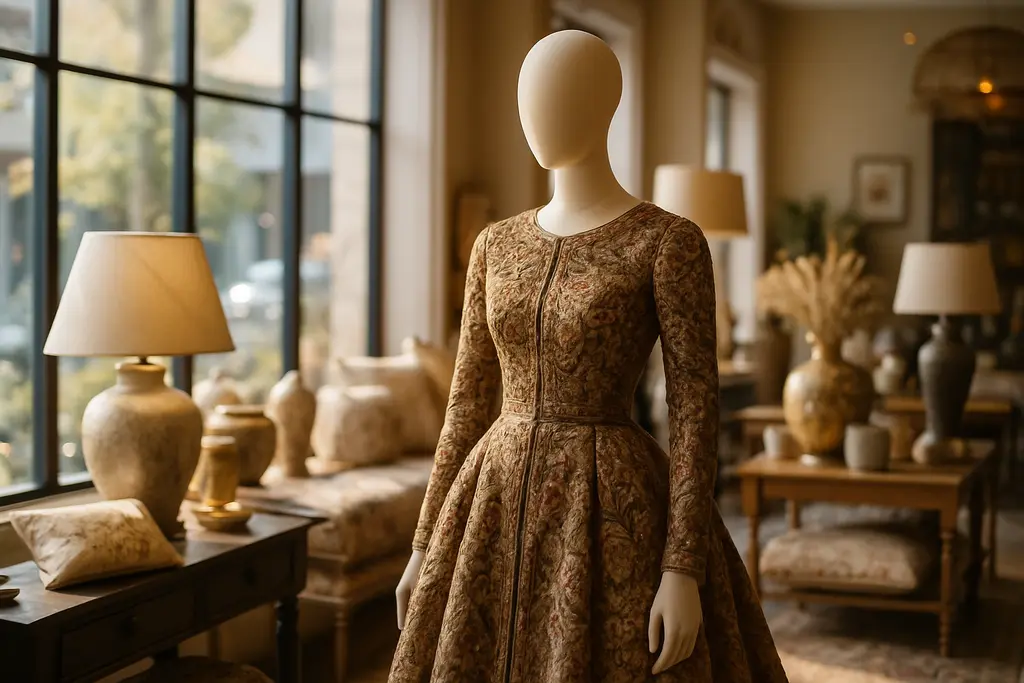
Fall 2026 Aesthetics are less about one dominant look than a set of related signals: ornament, exposed structure, historical reference, tactile surfaces, and a renewed interest in objects that feel handled rather than polished beyond recognition. As of September 15, 2026, the strongest evidence comes from fashion reporting on the Fall 2026 runway season and editor-led trend analysis, rather than from long-term sales data. That means the mood is visible, but its reach into everyday wardrobes, interiors, and creator commerce still deserves caution.
The useful question is not whether every shopper will wear sheer dresses, brocade, or dramatic collars. Most will not. The more grounded reading is that designers and stylists are testing a move away from quiet minimalism and toward surfaces with memory: beading, lace, shearling, aged texture, and shapes that borrow from earlier periods without recreating them literally. For visual artists, costume makers, stylists, and small sellers, the shift may matter because it changes what audiences are trained to notice: edges, trims, proportion, fabric behavior, and the relationship between clothing and character.
Why Fall 2026 Aesthetics Feel Ornamental Again
Reading Fall 2026 Aesthetics Through Decoration
One of the clearest reported signals is renewed interest in Art Deco references. Who What Wear’s fall 2026 fashion reporting points to Art Deco revival through beading, geometric pattern, brocade, jacquard, and decorated surfaces, based on commentary from fashion newsletter writers and runway observers Who What Wear trend analysis. That is a precise aesthetic cue, not a general claim that the 1920s have simply returned.
For artists and makers, the distinction matters. Art Deco influence can appear through symmetry, stepped geometry, metallic accent, or surface rhythm without copying a specific historic garment or artwork. The present interest seems to sit in atmosphere rather than reconstruction: a brocade jacket, a beaded evening surface, a geometric accessory, or a print that suggests architectural order. This is where fashion crosses into visual composition. A garment becomes a moving panel of light, shadow, pattern, and texture.
Ornament Without Nostalgia As Costume
The risk with any revival language is that it can flatten history into a mood board. Art Deco emerged from specific social, industrial, and design conditions; Fall 2026 references are selective, market-facing, and often mixed with modern silhouettes. A cautious reading should treat ornament as a current design strategy rather than proof of broad cultural return to one decade.
This approach also helps creators avoid lazy imitation. A handmade seller, illustrator, or costume designer can study period features—line, spacing, contrast, repeat, and material sheen—while developing original work. The more sustainable lesson is not “copy Deco,” but “understand why geometry and surface detail are carrying visual weight again.”
Body, Proportion, And Historical Costume Cues
Sheer Layers And Second-Skin Dressing
Vogue’s report on the Fall 2026 season identified a shift toward sensuality and the body on display, citing sheer layers, second-skin dresses, lingerie-inspired slips, and peekaboo mesh among the visible runway directions, with examples including Alaïa, Valentino, and Khaite Vogue’s Fall 2026 report. This is not new in fashion history, but the timing is notable after seasons in which coverage and protective dressing held strong editorial attention.
For visual culture, body-conscious fashion changes the role of silhouette. The garment may become less of a shell and more of a filter: transparent, layered, stretched, or interrupted. In photography, illustration, and styling, that creates a focus on contour and negative space. In costume culture, it also raises practical questions about comfort, consent, fit, and context. Revealing dress is not one message; it can read as theatrical, intimate, severe, romantic, or commercial depending on styling and setting.
Medieval Romance, Poetcore, And Scale
The same Fall 2026 reporting has pointed to romantic medieval and “poetcore” motifs: lace, bustles, trimmed cuffs, cravats, and literary or folklore-inflected drama. These cues sit near fantasy fashion and costume culture, where historical fragments often become expressive tools. The most credible reading is not that medieval dress is being revived in an academic sense. Instead, designers are drawing from mood, proportion, and detail: a cuff that frames the hand, a bustle that changes the back view, or a cravat that turns the neck into a focal point.
Unusual proportions also appear in the research, including shorter jackets, crop lengths, dropped waists, and tension between large outerwear and narrower forms. This is a practical styling issue as much as an aesthetic one. A small jacket can make a skirt feel longer. A broad collar can frame the face like a portrait device. A dropped waist can shift attention from torso to hip. These choices affect how the body is read in motion and in still images.
Texture, Outerwear, And The Move Beyond Minimal Surfaces
Warmth As A Visual Signal
Fall 2026 Aesthetics also show up in outerwear. The research notes point to warm, bulky coats, shearling textures, and dramatic collars. That may sound purely seasonal, but outerwear is often where a trend becomes legible to people who do not follow runway detail. A collar can create silhouette from a distance. Shearling can signal softness before touch. Heavy coats can make fantasy, utility, and protection sit in the same image.
This matters for artists because texture is one of the easier signals to translate across media. A painter may read shearling as broken mark-making. A photographer may use it to catch side light. A costume maker may use collar scale to frame a performer’s face on stage. A small seller may interpret the cue through removable cuffs, collars, brooch placement, or textile accessories rather than full garments.
Statement Accessories And Creator Interpretation
Statement accessories, including brooches, bowties, and jewelry, are also part of the reported season. Their importance should not be overstated without sales proof, but accessories are often where runway ideas become accessible. They allow a wearer to test ornament, scale, and historical reference without changing an entire wardrobe.
- Brooches can add texture and asymmetry to coats, jackets, and knitwear.
- Bowties and cravats can connect suiting with romantic or literary styling.
- Textured jewelry can echo aged metal, beading, or geometric ornament.
- Layered collars and cuffs can bring costume influence into daily dress.
For makers, this is a place to be careful with rights and attribution. Historic motifs, general shapes, and material techniques can inspire original design, but copying a living artist’s recognizable work, a brand’s protected mark, or a copyrighted character for sale can create risk. This is not legal advice; it is a reminder that aesthetic influence and rights clearance are separate questions. The same caution applies to fashion-art projects, a concern that also appears in related coverage of luxury art collaborations.
Fall 2026 Aesthetics Beyond The Runway

Interiors, Graphics, And The Tactile Mood
Although the approved source links here focus on fashion, the research notes for interiors and design point in a compatible direction: warmth, layered rooms, natural materials, aged metals, handmade surfaces, and collected objects. Because those claims come from separate design-sector reporting, they should be treated as parallel evidence rather than proof of one unified cultural movement. Still, the overlap is worth observing. Fashion’s brocade, lace, beading, and shearling sit comfortably beside interiors that favor wood, stone, plaster, and vintage objects.
Fall 2026 Aesthetics, then, can be read as a push toward visible touch. The surface should do something: catch light, suggest age, show weave, frame the body, or interrupt plainness. That does not mean minimalism has vanished. It means minimalism is no longer the only language receiving serious attention in seasonal style reporting.
How Small Sellers Can Respond Carefully
For creator commerce, the most useful response is interpretation, not replication. Sellers can create original accessories using geometric balance, textured surfaces, warmer color, and sculptural proportion. They can also describe work honestly: “geometric beaded collar” is clearer and safer than implying affiliation with a designer, estate, film, or fashion house. For readers comparing style notes across the same publishing network, Shimply offers a related reference point for adjacent lifestyle coverage.
Evidence-based trend writing should also leave room for uncertainty. Editorial coverage can identify what appeared on runways and in expert trend reports, but it cannot guarantee adoption across regions, budgets, sizes, or subcultures. A runway cue may become a mass-market accessory, remain a luxury styling idea, or be absorbed by costume communities in altered form. The clearest takeaway is that surface and silhouette are doing more expressive work than they did during the strongest phase of quiet minimalism.
What Fall 2026 Aesthetics Mean For Fashion And Beyond
Fall 2026 Aesthetics point toward decorated surfaces, historical fragments, body-aware silhouettes, warm outerwear, and tactile design. The stronger claims are limited to what has been reported: Art Deco references, sensual layering, romantic medieval cues, dramatic collars, proportion play, and statement accessories. The broader cultural reading is more cautious. These signals suggest a renewed appetite for clothing and objects that feel expressive, textured, and composed.
For artists, stylists, educators, and makers, the season offers useful study material. Look at how a collar frames a face, how lace changes an outline, how brocade holds light, and how an accessory can shift a plain garment into a character study. The strongest creative response will not be a copied trend, but an informed visual decision: one that understands reference, respects communities, and builds original work from observed form.