Etsy Trends 2026 arrived as a useful, if limited, snapshot for makers planning late-year listings, holiday styling, and giftable handmade work. Etsy published its “Seller Trend Report: Fall and Winter 2026” on October 14, 2026, using U.S. search and sales data from the prior three months as of September 14, 2026. That timing matters: the report captured demand signals before the heaviest November and December buying weeks, not a completed account of the full holiday period.
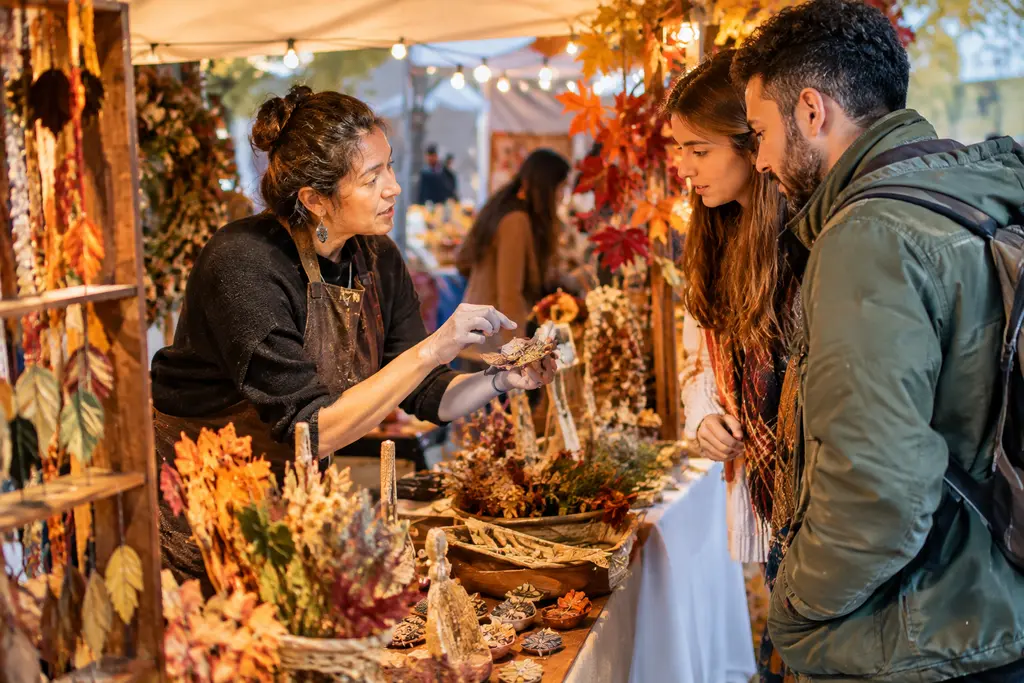
For artists and community-based sellers, the report is less a script than a set of clues. The strongest themes point toward visible handwork, maximal seasonal decor, social crafting, expressive accessories, and gifting that reaches friends, pets, and chosen-family circles. Those signals fit with what many local art markets already show: buyers often want the story of the hand, the feel of a surface, and a gift that feels personal without pretending to be mass luxury.
Etsy Trends 2026 And The Report’s Limits
How Etsy Trends 2026 Was Measured
Etsy said the report used marketplace insights and broader cultural forecasting with Guest Trend Editor Mandy Lee, and it drew on U.S. searches and sales from the three months ending September 14, 2026. The official Etsy seller report is the source for the percentage changes discussed here. Because the data window was short and U.S.-based, sellers should treat it as a planning signal rather than proof that every niche, region, or price tier will respond the same way.
That caution is especially useful for small studios. A search spike can reflect curiosity, early holiday browsing, a social-media prompt, or genuine purchase intent. Sales data helps, but the report does not provide every category’s conversion rate, average order value, or repeat-purchase pattern. A ceramicist, textile artist, cosplay accessory maker, or vintage curator may read the same trend differently depending on inventory, labor time, shipping risk, and local customer relationships.
For those who consider community engagement alongside commerce, this network is further explored at Kay Granger, providing insight into how local taste and creative exchanges shape purchasing habits. This connection is relevant because handmade markets are not only sales channels; they are meeting places where local taste, family ritual, and creative labor become visible.
Holiday Decor Moves Toward More Is More
Merrymaxxing As A Visual Signal
One of the clearest Etsy Trends 2026 themes is “Merrymaxxing,” Etsy’s label for highly decorated, whimsical holiday styling. The report said searches for “whimsy items” rose 110% year over year, while “bedazzled kits” rose 218%. It also reported that searches for “whimsical decor” were up 61% among Gen Z shoppers. Those figures support a cautious reading: some buyers were seeking seasonal objects with humor, sparkle, and a sense of play.
For creators, the practical question is not whether every shop should become maximalist. The better question is whether existing work has a seasonal version that remains faithful to the maker’s own voice. A glass artist might photograph ornaments in layered table settings. A printmaker might group small works as giftable sets. A fiber artist might present texture, fringe, or color contrast more clearly in listing images. The point is to show the character of the object without implying handmade work can or should chase every passing visual prompt.
There is also an ethical line worth keeping clear. Whimsy does not require copying recognizable characters, celebrity likenesses, or another artist’s signature visual style. Sellers can draw from folk forms, personal memories, historical ornament, abstract shapes, and original motifs while still checking platform policies and rights concerns where needed. That is not legal advice; it is a practical respect standard for a crowded gift market.
Handwork Becomes A Selling Signal
Visible Evidence Of The Maker
The “Mark of the Maker” theme may be the most encouraging signal for artists who already build slowly and visibly. Etsy reported that searches for “hand-painted items” rose 280% year over year, “hand-woven items” rose 230%, and “hand-thrown items” rose 150%. Those figures suggest that buyers were not only searching for finished objects but also for evidence of process: brushwork, woven structure, ceramic throwing marks, and other signs of human touch.
This is where listing strategy and art documentation meet. A maker does not need theatrical staging to communicate craft. Close images of glaze variation, brush edges, woven joins, and material texture can help buyers understand why a handmade object differs from a factory-perfect one. Process photographs may also support trust, as long as they accurately show the seller’s own work and do not exaggerate production methods.
The Etsy Trends 2026 data also helps explain why generic listing language can fall short. If a piece is hand-painted, hand-woven, or hand-thrown, that wording should be accurate and visible in the title, tags, and description. If it is designed by the seller but produced through another method, the listing should say that plainly. Clear language protects the buyer relationship and respects makers who are doing labor-intensive studio work.
Community Gifting And Shared Making

Craftmas And Family Reimagined
Etsy’s “Craftmas” theme pointed toward DIY as a shared seasonal activity. The report said searches for “DIY activities” rose 8,500% year over year, while sewing patterns for beginners rose 125%. That number is striking, but it should be read carefully. Very large percentage increases can happen when a prior baseline was low. Still, the direction is meaningful for community organizers and workshop-minded sellers: buyers were searching for activities that could happen around a table, not only gifts wrapped after purchase.
The “Family Reimagined” theme expands that social frame. Etsy reported that searches for personalized friend gifts rose 1,400% year over year, pet-gifting searches doubled, pet ornaments rose 22%, and sales of party supplies for friends were up 37%. These signals align with gifting circles that include friends, roommates, pets, craft-night groups, and chosen family, not only conventional household categories.
- Offer beginner-friendly kits only when instructions, materials, and safety notes are clear.
- Photograph table settings with scale, texture, and use context visible.
- Use “personalized” only when the buyer can genuinely customize the item.
- Separate pet-themed keepsakes from products intended for animal use unless safety is well documented.
- Price DIY kits with packing time, replacement materials, and support messages in mind.
For more context on how gifting, craft nights, and handmade proof shaped seller thinking after the same fall report, NextClues has a related analysis of community signals for makers. The useful link between these readings is care: the strongest handmade listings often show not just what an object is, but how it may be used with others.
Fashion, Table Styling, And Expressive Accessories
Small Objects With High Visual Impact
Several report themes sat between fashion, costume culture, and domestic styling. Etsy said ruffle tablecloth searches rose 841%, lace table items rose 68%, and custom napkin searches rose 33%. In fashion and accessories, vintage jewelry searches rose 75%, men’s brooches rose 70%, capelets rose 47%, and jacquard fabrics drew rising interest among Millennial buyers. Footwear also showed unusual signals, with searches for rain boots up 155% and men’s pirate boots up 153%.
For artists working near cosplay, fantasy fashion, theatrical dressing, or formal-event accessories, the careful reading is that shoppers showed interest in drama at a manageable scale. A brooch, capelet, fabric remnant, boot style, or ornate table textile can carry mood without requiring a full costume or room redesign. That matters for makers because smaller statement pieces may be easier to ship, easier to gift, and easier for buyers to use in more than one setting.
Still, the report does not prove that every dramatic accessory will sell. Sellers should test demand with limited runs, clear measurements, and honest material notes. Vintage sellers should describe condition plainly. Textile sellers should show drape and close texture. Accessory makers should avoid vague theatrical language if the object has practical limits, such as delicate closures, non-weatherproof finishes, or decorative-only materials.
What Creators Should Know From Etsy Trends 2026
Rights, Listing Language, And Respect
The most useful lesson from Etsy Trends 2026 is not to copy trend labels word for word, but to interpret buyer intent. The report suggests interest in visible handwork, social making, expressive seasonal decor, styled tables, personal gifting, and accessories with character. A creator can respond by improving photography, naming materials accurately, showing process, and grouping work in ways that make use and gift context clear.
Creators should also protect the integrity of their own practice. Trend language can help a buyer find a listing, but it should not replace specificity. “Hand-painted ceramic ornament with cobalt floral brushwork” tells a clearer story than a loose pile of seasonal phrases. “Beginner embroidery kit for a two-hour craft night” sets better expectations than a broad DIY label. The more exact the description, the more respectful it is to both buyer and maker.
As of November 1, 2026, the fall and winter selling period was still in progress, so the report should be read as a mid-season planning document rather than a complete record of holiday outcomes. Etsy Trends 2026 gives creators a set of evidence-backed prompts. The strongest response is measured: keep the work original, show the hand honestly, use relevant search terms, and let community use guide how the object is presented.