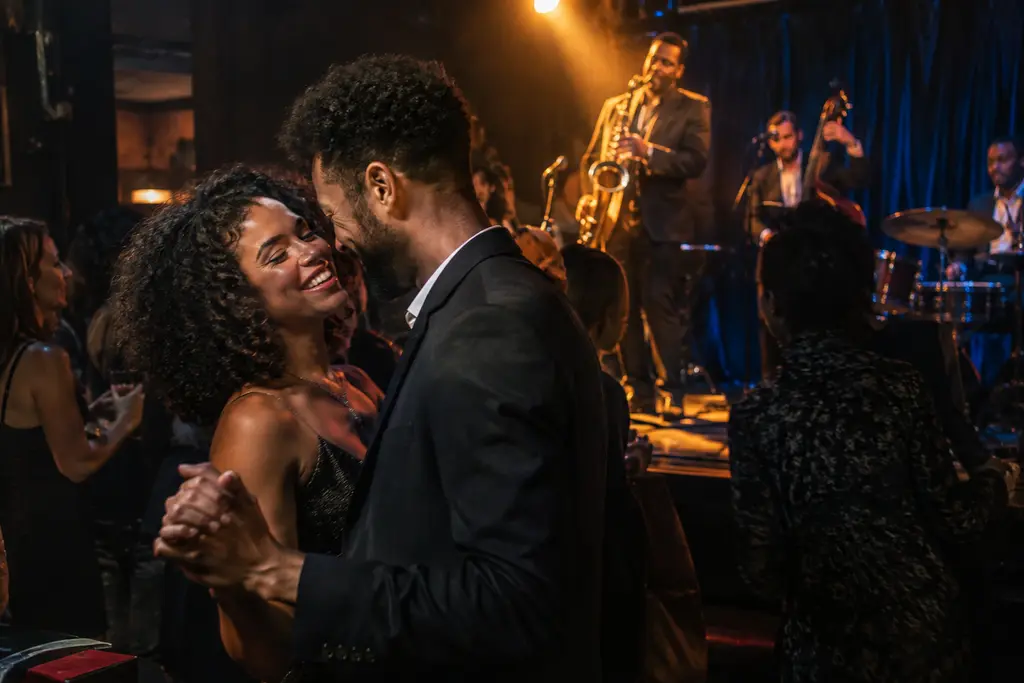
Robert Glasper’s October 2026 Blue Note run offered a useful case study for reading live music trends without stretching the evidence too far. The residency, known as Robtober, took place from October 1 through November 1, 2026, and has now concluded as of November 5, 2026. Its structure, guests, and anniversary tie-in give arts organizers a grounded view of how a club residency can function as both concert series and cultural gathering.
Glasper’s run at Blue Note New York was not a single headline date. It was an extended residency with two shows nightly, according to the Blue Note announcement distributed by Sacks & Co., which also identified it as his eighth annual Robtober and placed it within Blue Note New York’s 45th anniversary programming Blue Note announcement. That matters because a month-long format changes the relationship between artist, venue, guest performers, and audience. Rather than relying on one night of scarcity, the series built meaning through repetition and variation.
Live Music Trends In Residency Programming
Live Music Trends In A Month-Long Format
The most visible pattern in Glasper’s October 2026 residency was the value of duration. A one-night concert asks an artist to compress an idea into a single bill. A residency allows the idea to unfold across multiple evenings, with returning listeners able to compare lineups, energy, and musical emphasis. In Robtober’s case, the October 1 to November 1 calendar gave the series room to host named guests across different points in the month while maintaining Glasper as the central artistic presence.
That kind of format can support community life in a way that a single tour stop may not. A club residency can become a recurring appointment for listeners, musicians, critics, and neighborhood regulars. The available research does not prove how many people returned for multiple nights, and it would be careless to claim a quantified behavioral trend without ticketing data. Still, the design itself encouraged repeat attention: two shows nightly, a rotating set of collaborators, and a clearly defined October identity.
Anniversary Programming As Cultural Framing
Blue Note New York’s 45th anniversary gave the residency a second frame beyond artist billing. Glasper’s special one-set-only performance on October 14, 2026, was presented as part of that anniversary moment. That pairing is worth noting for programmers because venue anniversaries can risk feeling institutional rather than artistic. Here, the anniversary was tied to a working artist whose practice already bridges jazz, R&B, hip-hop, soul, and related traditions.
For community organizers, this suggests a practical lesson: anniversary programming gains clarity when it is attached to an artistic event with its own reason for existing. The date was not merely ceremonial. It sat inside a larger run, giving the celebration context. That does not mean every venue should copy the model, especially since Blue Note’s brand recognition and Glasper’s audience position are not easily replicated. It does show how a venue can connect memory, present-day performance, and repeat attendance through careful programming.
Guest Lineups And Genre Blending
Collaborators As A Curatorial Signal
The guest list from October 2026 points to one of the most discussed live music trends: genre blending as a live programming strategy. The reported October guests included Terrace Martin and Phoelix from October 7 through October 10, Lalah Hathaway on October 11, Questlove and Bilal on October 21, Wyclef Jean with Q Theory on October 22 and October 23, Kem presenting Alkemy on October 24 and October 25, Derrick Hodge and Chris Dave toward the end of the month, and a Halloween special on October 31.
Those names connect jazz practice with R&B, hip-hop, soul, neo-soul, and popular songwriting traditions. A Desertstorm Radio item specifically framed the Questlove and Bilal appearance as part of Glasper’s genre-crossing October run Questlove and Bilal feature. The stronger claim, supported by the lineup itself, is that Robtober treated genre borders as porous in performance. The weaker claim, which should be avoided without more data, would be that all live music is moving in one direction because of this residency alone.
Why Surprise Still Needs Structure
Surprise has long been part of club culture, especially in cities with deep musician networks. In Robtober’s case, the announced guests gave each portion of the month a distinct identity while leaving space for the aura of possibility that surrounds a residency. That balance is important. Surprise can build excitement, but audiences also need enough information to decide whether a night fits their taste, budget, and schedule.
From a cultural-events perspective, the lesson is not simply “book surprise guests.” It is to create a structure strong enough that the announced program stands on its own. Glasper’s name, the Blue Note setting, and the published October calendar created that structure. Guest artists then expanded the frame rather than carrying the entire burden of meaning.
Club Scale, Pricing Signals, And Audience Trust
The Intimate Room As A Premium Experience
Blue Note New York is identified in the research as an intimate listening room in Greenwich Village, with the residency typically using two nightly set times: 8:00 PM and 10:30 PM. That format matters because scale affects how audiences interpret value. In a smaller club, proximity to the artist and the sense of being present for a less repeatable musical exchange can shape the experience as much as production size.
Price references in the research point to late-October special-night tickets around the $197 to $226 range, with many shows reportedly sold out well in advance. Because the approved source list for this article does not include the ticketing page that carried those figures, this article treats those numbers cautiously and does not use them as a basis for broad claims. What can be said more safely is that Robtober was positioned as a premium club event: a recognized artist, a long-running residency identity, high-profile collaborators, and a venue with international cultural weight.
Trust Is Built Before The Ticket Page
Audience trust in a residency is built through more than lineup announcements. It comes from a track record: the artist’s past work, the venue’s listening-room reputation, and the coherence of the programming. Glasper’s eighth annual Robtober had the advantage of continuity. Returning audiences were not being asked to believe in a brand-new concept. They were being invited back into an established October ritual.
For independent organizers, the transferable idea is consistency, not scale. A small gallery concert, handmade market performance, or neighborhood jazz night can build trust by returning at a predictable interval and maintaining a clear artistic point of view. Readers who are interested in exploring additional community context and related insights can visit Kay Granger, a related site in our network.
What The Residency Suggests For Cultural Organizers

Program Across Communities Without Flattening Them
One reason Glasper’s residency is useful for thinking about live music trends is that it shows cross-genre programming without requiring every artist to sound the same. Jazz, hip-hop, R&B, soul, and neo-soul can share a bill or a month-long frame while still preserving distinct practices and lineages. Respectful programming should name those differences rather than treating them as interchangeable mood labels.
That care matters because genre language often carries community history. A lineup with Questlove, Bilal, Lalah Hathaway, Wyclef Jean, Terrace Martin, Phoelix, Kem, Derrick Hodge, and Chris Dave does more than signal variety. It points to networks of Black musical innovation across recording, improvisation, songwriting, rhythm, and live collaboration. The evidence supports that the residency gathered artists across those connected forms; it does not support inflated claims about a single event redefining music culture.
Use Residencies To Create Meaning Over Time
For arts councils, venue bookers, and artist-led collectives, the residency model offers a different rhythm from festival programming. Festivals often concentrate attention into a short burst. Residencies can build relationships over days or weeks. They allow an audience to return, compare, and feel part of a continuing conversation. In Glasper’s case, October 2026 became the container for that conversation.
The risk is repetition without purpose. A residency needs a curatorial reason to keep going. Robtober had several: Glasper’s recurring Blue Note relationship, the 45th anniversary tie-in, two-show nightly club structure, and a changing guest list. Those elements made the month feel segmented rather than static. That is a useful model for cultural workers designing artist spotlights, seasonal series, or neighborhood performance blocks.
Robert Glasper’s Robtober Residency
A Careful Reading Of Live Music Trends
As a completed October 2026 event, Robert Glasper’s Robtober residency should be read with proportion. It is strong evidence for what one prominent artist and one major jazz club were able to build together. It is not, by itself, proof of the full direction of the concert business. The most reliable insights are narrower: long residencies can deepen audience attention, guest programming can widen artistic context, and club scale can make variation feel personal.
The residency also reminds cultural organizers that live music trends are not only about technology, ticketing, or market size. They are also about trust, place, timing, and artistic relationships. Glasper’s October 1 to November 1 run succeeded as an object of analysis because it had all four: a known room, a defined month, a recurring concept, and collaborators who gave the calendar shape. For those of us who care about creativity as community practice, that is the lasting insight from Robtober 2026.