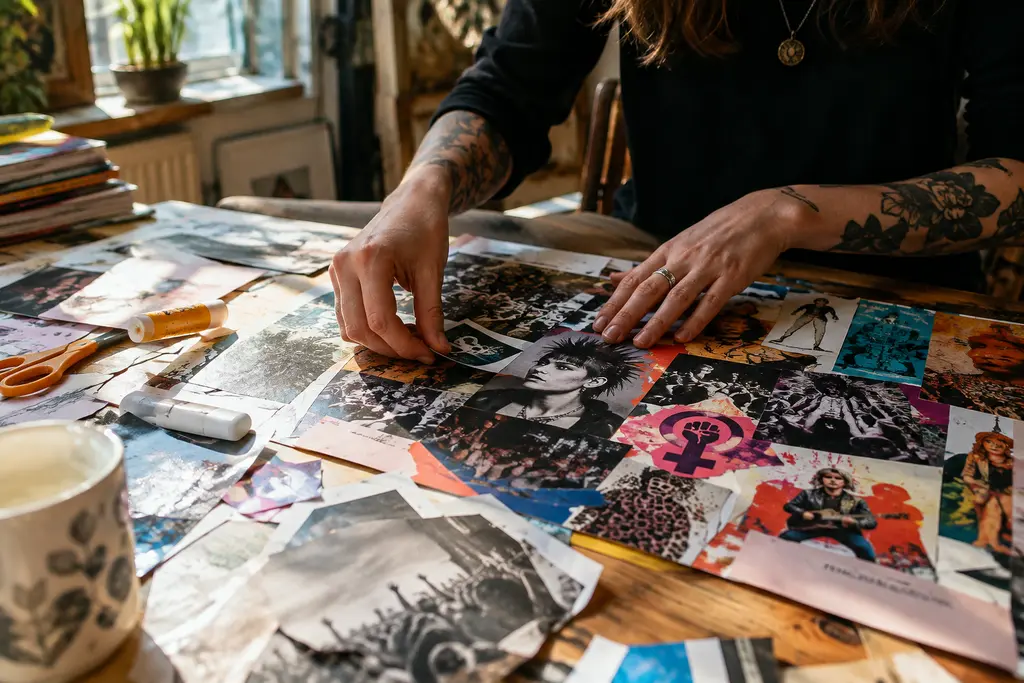
Fall exhibitions Los Angeles coverage needs a careful date check on November 5, 2026. Some shows remained open on that date, some had already closed, and one key project in nearby Irvine asked viewers to think beyond city limits while still participating in the region’s wider art conversation. The most pointed example is Grrrl Germs: Punk Feminism Goes Viral, 1991–2026, an exhibition at Great Park Gallery that connects feminist punk culture, print circulation, and global exchange.
As a culture curator, I read this season less as a single museum route than as a set of overlapping arguments: who gets archived, how domestic futures are imagined, how textiles can carry experimentation, and how migration or memory becomes visible through objects. The available facts support a practical, cautious map. They do not justify claims that any one theme defines the whole region, but they do show a productive spread across archives, design, photography, printmaking, and personal history.
Fall Exhibitions Los Angeles And The Archive
Fall Exhibitions Los Angeles Through Punk Memory
Grrrl Germs: Punk Feminism Goes Viral, 1991–2026 opened on August 29, 2026, and runs through November 29, 2026, at Great Park Gallery in Irvine, according to the Daisy Chain Fields exhibition page. Admission is listed as free, with gallery hours on Thursdays and Fridays from noon to 4 p.m., and Saturdays and Sundays from 10 a.m. to 4 p.m. Those details matter because the show was still available to see on November 5, 2026, but only for a limited remaining period.
The project’s title frames “going viral” through punk feminism rather than through a purely platform-based story. V Magazine reports that the exhibition includes archival materials spanning 35 years, from 1991 to 2026, with content from more than 30 countries V Magazine. That scale is significant, but it should be treated with care. A multi-country archive can point to circulation and affinity without implying that every community represented shared identical politics, aesthetics, or conditions of production.
What The Irvine Setting Changes
Although the topic is often framed around Los Angeles, Great Park Gallery is in Irvine, not the City of Los Angeles. That distinction is not a minor detail. Southern California art viewing often crosses municipal boundaries, yet location shapes access, audience, and local context. For fall exhibitions Los Angeles readers, the Irvine setting makes the show a regional rather than strictly city-based highlight.
The strongest reason to place Grrrl Germs near the center of the season is not novelty. It is the exhibition’s archival question: how do zines, punk networks, feminist media, and cross-border exchange become visible inside a gallery? The evidence available supports that the show spans decades and countries. It does not support a sweeping claim that the show fully represents all punk feminist movements. A respectful reading leaves room for partiality, gaps, and the differing stakes of the communities whose materials appear in the archive.
Major Museum Threads Across The Season
Brockman Gallery At LACMA
At LACMA, The Brockman Gallery: Los Angeles, 1967–1990 opened on October 18, 2026, and is listed through January 24, 2027, in BCAM Level 1. The research identifies it as the first large-scale exhibition dedicated to Brockman Gallery, with more than 60 works and artists including David Hammons, Suzanne Jackson, and Carrie Mae Weems. On November 5, 2026, it was not a past-tense footnote; it was an active exhibition with several months remaining.
Its place in the season is especially meaningful beside Grrrl Germs. Both exhibitions, in different forms, concern cultural infrastructure: the gallery, the archive, the network, the artists who circulate work through formal and informal systems. The comparison should not collapse their histories. Brockman Gallery belongs to a specific Los Angeles art history from 1967 to 1990, while Grrrl Germs is framed around punk feminism from 1991 to 2026. Placing them side by side helps clarify how institutions preserve different kinds of cultural labor.
Domestic Futures, Textiles, And Moving Images
LACMA’s fall calendar also included Home of the Future, 1925–1985: Designing Domestic Utopias, dated September 27, 2026, through March 14, 2027, in the Resnick Pavilion. Its stated focus on imagined visions of domestic life across six decades through models, films, and household objects gives the season a design-history axis. Rather than treating home as a neutral setting, the exhibition appears to ask how domestic ideals were made visible through material culture.
Nearby in the same pavilion, Textile Alchemy: The Art of Reiko Sudō & NUNO runs from September 20, 2026, through March 7, 2027. The research describes it as a retrospective survey of textiles by Japanese designer Reiko Sudō and the collective NUNO, bringing craft and experiment into contact. LACMA also listed Eileen Cowin: Between Panic and Paradise, dated August 23, 2026, through January 3, 2027, in BCAM Level 2, with photography and video addressing romance, rivalry, and the personal and political.
These shows widen the frame of fall exhibitions Los Angeles without forcing a single theme onto them. Domestic design, textile experimentation, and image-based narrative each require different interpretive tools. Readers tracking institutional collaboration across the city may also find context in this related NextClues piece on collaborative art in Los Angeles, which sits near the same civic question: how art institutions organize shared public attention.
Date Status Matters For Fall Coverage
Shows Already Closed By November 5
Fashioning Chinese Women: Empire to Modernity had already closed by November 5, 2026. Its dates were June 14, 2026, through October 12, 2026, at LACMA’s BCAM Level 2. The research describes the exhibition as tracing transformation across a century through more than 70 ensembles from Shanghai, Hong Kong, and America. Because it had ended, it belongs here as retrospective context rather than as an invitation to visit.
That distinction is essential for accurate cultural writing. Fall previews often remain online after dates pass, which can mislead readers if tense and status are not corrected. A concluded fashion exhibition can still inform how we interpret the season’s concerns with dress, identity, modernity, and transnational movement. It should not be described as open on November 5, 2026.
Works Still In View During November
Other LACMA exhibitions listed in the research were still active on November 5, 2026. Danse Macabre: Death in Print from Dürer to Dix and Pablo Picasso — Portraits in Disguise both run through December 6, 2026, at BCAM Level 3. The first is described as addressing allegories of death through print art, while the second focuses on hidden identity and portraiture.
The Skirball Museum’s Jenny Yurshansky: What We Carry opened on October 22, 2026, and runs through February 28, 2027. The research describes it as combining personal objects and stories of migration to address home, memory, and survival. Seen beside the LACMA and Irvine shows, it reinforces how objects can function as carriers of lived experience without requiring every exhibition to make the same claim.
How To Read The Season Without Flattening It
Rights, Zines, And Creator Commerce
Archival exhibitions often inspire artists, zinesters, fashion makers, and independent sellers. That inspiration should be handled with respect. Viewers can learn from punk layout strategies, self-publishing ethics, textile experimentation, or exhibition display choices without copying protected images, living artists’ work, personal documents, or community materials for commercial use. This is not legal advice, but a cautious rights habit: credit sources, seek permission when needed, and avoid treating archives as open stock libraries.
For readers interested in exploring further connections within the culture, visiting robsonic.org provides access to a related site in the same network. The relevance of this site lies in its exploration of the overlaps between punk feminism, zine culture, and live events, offering a broader understanding of how these different elements come together.
Practical Notes For Careful Viewers
- Check exact dates before planning around fall exhibitions Los Angeles coverage, especially for shows that closed before November 5, 2026.
- Treat Irvine, Los Angeles, and the Skirball/LACMA corridor as related but not identical cultural locations.
- For archival shows, distinguish between public viewing access and permission to reproduce materials.
- Read exhibition claims at the scale they support: a 35-year archive is substantial, but it is not the same as a complete global history.
The practical value of this season is its range. A viewer could move from punk feminist print culture to Black Los Angeles gallery history, from domestic design to Japanese textile experimentation, from fashion history to migration objects. That range is not evidence of a single trend. It is evidence of several institutions and projects placing material culture, memory, and social identity before the public at overlapping moments.
Fall Exhibitions Los Angeles As A Regional Conversation
Fall exhibitions Los Angeles coverage is strongest when it keeps time, place, and source limits visible. Grrrl Germs: Punk Feminism Goes Viral, 1991–2026 remained open in Irvine on November 5, 2026, with documented dates, free admission, and an archive described as spanning 35 years and more than 30 countries. LACMA’s active shows extended the season through design, textiles, photography, prints, portraiture, and the Brockman Gallery’s history, while the Skirball Museum added a migration-centered project that continued into 2027.
The shared value across these exhibitions is not that they say the same thing. It is that each asks viewers to slow down with evidence: objects, images, garments, prints, stories, and archives. For a fall art route, that is enough. The season offers several ways to study how communities make culture visible, how institutions frame that culture, and how viewers can respond without flattening the people and histories represented.