Author: Dorian Vale

  • IndieMe Virtual Expo 2026: Buyer Signals

    IndieMe Virtual Expo 2026: Buyer Signals

    The IndieMe Virtual Expo in August 2026 gave handmade wholesale observers a compact case study in how juried creator commerce can work online after the first rush of pandemic-era virtual events. The 14th IndieMe Marketplace Virtual Expo ran from August 12 to August 19, 2026, after being extended by one day from its original August 12–18 schedule at buyers’ request, according to IndieMe’s event press release. Because the event had ended by August 29, 2026, the stronger frame is a measured recap rather than a preview.

    For artists, the most useful signals were not just that orders happened, but that reported ordering stayed active throughout the week. For buyers, the event’s value rested on access: qualified retail buyers could browse and place wholesale orders from juried handcrafted artists based in the United States and Canada. For readers who follow festivals and creator markets as expressions of community taste, the event showed how a screen-based format can still carry the social habits of a buying fair: comparison, discovery, incentives, and relationship-building.

    What The IndieMe Virtual Expo Showed

    IndieMe Virtual Expo Order Pattern

    The most notable reported outcome was the steadiness of order activity. IndieMe said wholesale ordering occurred on every day of the event rather than arriving only at the start. That matters because many virtual events face a common risk: buyers may log in early, scan familiar names, and lose momentum. A weeklong pattern of steady orders suggests that participating buyers kept returning or continued evaluating collections across categories.

    This does not prove that every artist saw equal results. The available information does not provide artist count, buyer count, total sales volume, category breakdown, or median order size. That absence matters. A cautious reading should treat the reported activity as a positive platform-level signal, not as proof that all exhibitors benefited at the same rate. Still, for the IndieMe Virtual Expo, the decision to extend the event through August 19 points to enough buyer demand to justify more ordering time.

    Extension As A Buyer Signal

    The one-day extension is useful evidence because it connected directly to buyer behavior. IndieMe reported larger-than-expected purchases and said buyers asked for more time to complete orders. In trade-event terms, that is more meaningful than a general claim of enthusiasm. It points to a concrete operational change: the event calendar shifted after buyer demand appeared.

    For makers, that type of signal can shape planning. A virtual wholesale event may not require the same booth build-out, travel schedule, or freight decisions as an in-person show, but it still asks artists to prepare product imagery, wholesale terms, inventory expectations, response times, and post-event follow-up. If ordering is distributed across a week, sellers may need sustained attention rather than a single opening-day push.

    Buyer Behavior And Artist Signals

    What Strong Artist Feedback Can And Cannot Prove

    IndieMe reported that some artists described the August event as their strongest event ever, with performance that exceeded certain in-person trade shows in sales or buyer engagement. That is a meaningful claim, but it is still reported feedback rather than independently audited sales data. The distinction is not a dismissal. It simply keeps the analysis fair to artists, buyers, and readers who may use event recaps for business decisions.

    One buyer also described the August Expo as one of the best Expos to date and linked that positive experience to greater interest in The IndieMe Experience in Baltimore. Since the research notes do not provide the buyer’s full purchasing context, store type, or category focus, the comment should be read as one informed perspective rather than a market-wide verdict. Event culture often turns on these individual voices, but evidence-based coverage should avoid turning one comment into a broad claim.

    Why Juried Handmade Context Matters

    The event’s wholesale structure shaped its artistic and commercial meaning. IndieMe described the Expo as a virtual buying event for qualified retail buyers to discover and order from juried North American handcrafted artists. Juried participation is not the same thing as a public open marketplace; it signals that the event was designed around retail buying relationships and handmade product standards rather than casual consumer browsing.

    That format matters for community engagement. Handmade wholesale does not only move goods from studio to shop. It can influence which ceramics, jewelry, textiles, paper goods, décor, and gift objects reach local retailers. When buyers place wholesale orders, they help decide which handmade voices appear on shelves in towns and cities after the event closes.

    Creator Commerce Lessons From The August Event

    Show Specials And Buyer Rhythm

    IndieMe’s artist information page states that the Virtual Expo series had reached its 14th edition and that Expo participation includes features such as artist-provided show specials, including discounts or free shipping, along with buyer giveaways donated by artists, with as many as five giveaways per day during the event artist event details. Those incentives likely helped frame buyer attention during the week, though the available sources do not isolate which feature drove orders.

    Show specials can be read as a familiar trade-show practice translated into an online buying format. At a physical fair, buyers may be influenced by booth conversations, product handling, booth placement, and time pressure. Online, the pressure points are different: visibility, category search, product photography, wholesale terms, shipping offers, and deadline-based incentives. The August event suggests that IndieMe’s model aimed to keep buyers engaged across several days rather than relying on a single opening surge.

    Respecting The Maker-Buyer Relationship

    For artists, the larger lesson is not simply to discount goods or chase every virtual event. Handmade pricing carries labor, materials, skill, overhead, and a maker’s long-term business needs. A show special can support a wholesale decision, but it should not erase the value of the work. Buyers, in turn, benefit when artists provide clear product information, dependable fulfillment expectations, and images that represent objects accurately.

    Because the available research does not list specific artists, categories, or products, this recap avoids naming imagined standouts. That restraint is necessary in creator-commerce coverage. Inventing featured makers or product trends would mislead readers and disrespect the real artists who participated. A trustworthy event review can still be useful by focusing on documented structure, dates, incentives, and reported buyer behavior.

    January 2027 And The IndieMe Calendar

    Calendar page with craft samples and planning notes for future buying dates

    The Next Scheduled Expo

    The next scheduled edition, the 15th event, is set for January 13–19, 2027. IndieMe positioned it as part of a broader buying-season campaign that also includes in-person opportunities such as The IndieMe Experience in Baltimore and Gather: Winter Edition. Because those dates were still in the future on August 29, 2026, they can be discussed as scheduled plans, not outcomes.

    The pairing of virtual and physical events is notable, but it should not be overstated. The research supports the existence of a coordinated buying-season campaign, yet it does not provide attendance projections, exhibitor lists, or sales forecasts for January 2027. The safest interpretation is that IndieMe was using both online and in-person formats to serve wholesale buyers at different points in the buying cycle.

    What Buyers And Artists Could Watch

    For future coverage, the missing data points are clear. Artist count, buyer count, sales volume, category distribution, repeat-buyer share, and order-size ranges would make comparison across editions much stronger. Without them, the August 2026 recap remains useful but partial. It shows positive reported signals, not a complete financial picture.

    Readers interested in cultural events across this publishing network may also find related coverage through a resource connected with industry insights, Kay Granger, particularly where public-facing events intersect with civic calendars and community gatherings. The shared thread is not that all events work alike; it is that dates, participation rules, and documented outcomes matter when assessing any public program.

    IndieMe Virtual Expo 2026 Takeaways

    A Measured Reading Of The August Results

    The August 2026 event should be understood as a successful reported edition within the limits of the available evidence. The IndieMe Virtual Expo ran one day longer than first planned, maintained reported order activity across the week, drew larger-than-expected purchases, and generated positive feedback from at least some artists and buyers. Those are credible event signals when tied to IndieMe’s own release, but they are not a substitute for full comparative data.

    As a festival-style celebration of handmade commerce, the event’s strongest cultural value may sit in the connection between studio practice and retail discovery. A virtual format cannot reproduce touch, scale, or chance hallway conversations in the same way as a physical trade show. It can, however, offer structured access, deadlines, incentives, and a shared buying window. For a juried handmade marketplace, that combination gave the August 2026 Expo enough documented activity to merit attention, while leaving room for more data before broader claims are made.

  • Oversized Textured Brooches Shape Fall Style

    Oversized Textured Brooches Shape Fall Style

    Oversized Textured Brooches have become one of the clearer accessory signals in Fall 2026 fashion coverage, but the evidence should be read with care. As of August 27, 2026, calendar autumn had not fully arrived for many readers, so the strongest support comes from runway reporting, editor styling, and early new-season imagery rather than complete consumer sales data.

    That distinction matters. A runway accessory can be visually persuasive without proving mass adoption. Still, the brooch is useful to study because it sits between ornament, closure, sculpture, and personal symbol. It can change the character of a coat, knit, scarf, or dress without requiring a new silhouette. For culture watchers, that makes the piece more than a decorative afterthought: it is a small object carrying design intent, craft cues, and social signaling.

    Why Oversized Textured Brooches Are Registering Now

    Oversized Textured Brooches On The Runway

    The runway case is substantial enough to take seriously. Fashionista reported that New York Fashion Week Fall 2026 showed designers using brooches as dramatic pin-on accessories, including appearances at Ralph Lauren, Khaite, Tory Burch, Altuzarra, Sergio Hudson, Coach, and Sandy Liang Fashionista runway report. The detail is important because those examples were not limited to quiet lapel jewelry. The brooch was treated as a fastening device, a surface accent, and a focal point.

    This is where scale changes the reading. A small pin often signals sentiment or polish. A large brooch, especially one with surface texture, can read closer to wearable assemblage. It draws the eye to the shoulder, collarbone, chest, waist, or scarf knot, depending on placement. That gives stylists a way to redirect attention without changing the garment underneath.

    Texture As A Visual Cue

    Who What Wear described big, tactile brooches as one of the defining accessories for Fall 2026, comparing their seasonal role with the way bandanas dominated summer styling, and noting feathery, fuzzy, and tactile versions in new-season looks Who What Wear accessory analysis. The comparison is helpful because it frames the brooch as an easy-to-move item rather than a head-to-toe trend system.

    Texture also softens the formality that brooches can carry. A polished metal pin may evoke heirloom dressing or ceremonial dress codes. A fabric rosette, feathered piece, or fuzzy shape can feel closer to costume culture, craft markets, or art-school styling. None of those references cancel the others. The most interesting Fall 2026 readings place the brooch in the overlap between tailoring and play.

    How Scale Changes Styling

    Placement Beyond The Lapel

    Traditional lapel placement still works, but the Fall 2026 styling conversation is wider. Oversized Textured Brooches can sit at a collar, gather a scarf, break up a plain knit, or act as a visual clasp on a coat. These uses matter because the pin is both accessory and editing tool. It can create asymmetry, concentrate color, or make a familiar garment feel newly composed.

    For readers tracking how fashion signals move through street style, festivals, and creator commerce, the related discussion of Fall 2026 fashion trends gives useful context. Accessories often travel faster than full runway silhouettes because they require less commitment and can be adapted across personal style codes. That said, available research here supports visibility in fashion media and runway settings, not a claim that every region or age group is adopting the same item at the same pace.

    Neutral Garments And Pin-On Drama

    The strongest styling logic is contrast. A neutral sweater or coat gives a large brooch room to register, while a textured pin prevents the outfit from becoming flat. A clustered arrangement across a collar can feel ceremonial; a single oversized piece at the shoulder can read more sculptural. The line between elegance and costume depends on proportion, fabric weight, and whether the brooch looks integrated with the garment.

    • Scale: larger pieces work best when the garment can physically support the pin.
    • Surface: fuzzy, feathered, floral, or rosette-like textures create softness and depth.
    • Placement: collars, scarf knots, lapels, waistlines, and coat fronts each shift the mood.
    • Restraint: one statement pin may carry more force than several competing ornaments.

    Because brooches are portable, they also invite repeat styling. A single piece can move from daywear to evening dress, from a coat to a scarf, or from a knit to a bag. That portability helps explain why editors are watching them closely, even before stronger retail or resale data is available.

    Community Style, Craft, And Rights Awareness

    Handmade fabric brooches arranged beside sewing tools and textured cloth

    Festival Dressers And Handmade Sellers

    Oversized Textured Brooches have clear appeal for festival dressers, cosplay-adjacent communities, and handmade sellers because they allow expressive styling without a full costume build. A large fabric flower, soft animal-like form, or abstract textured pin can give an outfit a point of view while staying detachable. For more on community expression and related topics, Robsonic is a useful resource within the network of interest.

    For makers, the format has practical appeal: a brooch is a contained object with room for handwork, material experimentation, and personal symbolism. Still, creator-commerce claims require restraint. The research supplied here supports fashion-media attention, not verified sales volume by marketplace, city, or demographic group. Sellers should treat the signal as one input rather than proof of demand.

    Caution Around Motifs And Likeness

    The brooch format can invite references to animals, bows, flowers, fantasy dressing, awards-season polish, and archival costume codes. It can also raise rights questions when a maker uses recognizable characters, celebrity likenesses, brand marks, or another artist’s identifiable work. This article is not legal advice, and it does not determine whether a specific motif is protected. The safer cultural practice is to develop original forms, document sources of licensed materials where applicable, and avoid presenting imitation as authorization.

    That caution protects both artists and buyers. A handmade pin can quote broad visual languages such as romance, surrealism, punk repair, or formalwear sparkle without copying a protected image. The brooch is persuasive precisely because it leaves room for invention.

    Oversized Textured Brooches As Fall 2026 Signals

    What The Evidence Supports

    The strongest supported claim is that Oversized Textured Brooches are receiving notable runway and fashion-editor attention for Fall 2026. The evidence points to scale, tactility, and flexible placement as the main reasons the accessory feels current. It does not yet prove uniform consumer adoption, nor does it justify treating every large pin as part of one single movement.

    That measured reading is more useful than hype. Brooches offer a low-commitment way to test shape, texture, and personal symbolism. They also connect high-fashion styling with craft practice and event dressing. If Fall 2026 accessories are judged by how much expression they can add to existing clothing, the brooch has earned its place in the conversation.

  • Fall 2026 Fashion Trends and Community Style

    Fall 2026 Fashion Trends and Community Style

    Fall 2026 Fashion Trends are already visible through collections shown earlier in 2026 and through trade reporting on what buyers are seeing for the season. For community style organizers, independent sellers, costume makers, and local fashion circles, the useful question is not whether every runway idea will become a street-level standard. The better question is which signals are strong enough to guide color, silhouette, texture, and presentation without overstating certainty.

    Fashion coverage can drift into hype, especially during seasonal changeovers. A more careful reading treats runway shows, buyer reports, and retail commentary as evidence with limits. These sources can show which ideas designers and stores are placing forward, but they cannot prove how every neighborhood, age group, body type, or budget will respond. That distinction matters for community-facing creators who want inspiration without reducing fashion to a checklist.

    Fall 2026 Fashion Trends In Evidence

    Fall 2026 Fashion Trends From Runway Reports

    The clearest signals in the available research cluster around tailoring, darker romantic colors, sculptural volume, sheer layering, decorative knitwear, and statement accessories. JOOR’s women’s Fall 2026 report identifies the Nouveau Tuxedo direction, cocoon shapes, lean tailoring, heritage-style knits, and burgundy-family tones across designer collections, including Khaite, Michael Kors, Elisabetta Franchi, and Carolina Herrera JOOR trend report. That does not mean one silhouette dominates all wardrobes. It does suggest that formal structure and expressive fabric are sharing the same seasonal frame.

    For Fall 2026 Fashion Trends, the tension between control and drama is especially useful. A tuxedo jacket can read disciplined. A bubble skirt, elongated sleeve, or cocoon coat can read theatrical. Sheer fabric can introduce vulnerability or stage presence, while heavy coats and structured suits can pull the look back toward restraint. This balance gives community stylists, shop owners, and makers more than one entry point.

    Reading Fall 2026 Fashion Trends With Care

    Evidence strength varies by category. Tailoring and outerwear are supported by named runway examples in the provided research. Color stories are also well represented, especially burgundy, oxblood, maroon, royal purple, electric blue, peachy melon, and butter yellow. Accessories are listed in the research notes as an active area, including fuzzy bags, unusual clutches, headgear, and large belts, but those details should be treated as supporting signals rather than a complete forecast for all buyers.

    That caution is not a weakness. It is how fashion analysis respects the difference between designer presentation and lived dress. A runway look is an authored object, often built for mood, proportion, and press visibility. A community outfit may be built around weather, mobility, cost, modesty, performance needs, or the maker’s available materials. The most useful seasonal reading leaves room for that translation.

    Tailoring, Sheer Layers, And The New Tuxedo

    Tuxedo Codes Without A Single Uniform

    The tuxedo revival described in the research is less about copying one formal template and more about adapting black-tie codes. Designers used jackets, dresses, sharp trousers, and new proportions to revisit menswear-associated structure for women. The result can serve many settings: gallery openings, community arts fundraisers, small-venue performances, maker markets, or seasonal gatherings where polish is welcome but full formalwear may feel too stiff.

    Victoria Beckham’s Paris runway presentation on March 6, 2026, is a useful example because the reporting placed sheer dresses beside sharply cut suits and sculptural gowns Paris show report. As of August 25, 2026, that show had already taken place, so it is best read retrospectively as part of the Fall/Winter 2026 evidence base. The contrast between exposure and structure is the point: skin-revealing fabrics were not isolated from tailoring but set against it.

    What Sheer Details Do In Community Styling

    Sheer fabric and cut-outs can be visually strong, yet they require thoughtful handling in public and community settings. Layering is one practical way to interpret the direction without forcing a single comfort level. A sheer sleeve under a wool coat, a transparent overlay over an opaque slip, or an open-back shape tempered by a tailored jacket can reference the runway signal while allowing the wearer to set boundaries.

    This matters for costume culture and creator commerce as well. Sellers can treat the trend as a study in contrast: opacity against transparency, matte wool against gloss, fitted jackets against fluid gowns. That approach is safer and more respectful than duplicating a designer look too closely or implying affiliation where none exists. For rights-sensitive work, especially items inspired by recognizable brands, characters, or celebrities, creators should keep permissions and platform rules in mind rather than assuming that inspiration settles every question.

    Color, Volume, Knitwear, And Accessories

    Moody Color And Sculptural Shape

    Among Fall 2026 Fashion Trends, color may be the easiest signal for communities to adapt. Burgundy, oxblood, and maroon offer alternatives to black, gray, and beige while staying compatible with fall wardrobes. Purple and electric blue can create sharper contrast. Butter yellow and peachy melon introduce softness, especially when placed against dark coats, deep knits, or formal black pieces.

    Shape is less simple but just as expressive. Cocoon coats, bubble skirts, elongated oval sleeves, and barrel-like proportions all change the outline of the body in space. In a festival or live-event setting, that can create movement and visibility. In daily community dressing, it may work best as one exaggerated piece rather than a full look. A rounded coat over slim trousers, or a bubble skirt with a plain knit, keeps the silhouette readable.

    Knitwear And Accessories As Maker Signals

    Decorative knitwear has particular value for handmade and local retail communities. Fair Isle, intarsia, jacquard, and geometric patterns carry craft visibility; the labor is part of the visual appeal. That does not make every heritage pattern interchangeable. Makers should be careful about cultural specificity, sourcing, and attribution where a motif is tied to a community rather than a generic winter mood.

    Accessories can carry the seasonal language at a lower commitment level. The research notes fuzzy textures, unusual bag shapes, dramatic headgear, and stronger belts. These items work well for small-batch sellers because they can test a color or texture without rebuilding an entire clothing line. They also suit event culture, where a hat, belt, or tactile bag can help an outfit read from a distance.

    Community Creators And Retail Choices

    Independent maker arranging handmade knitwear and accessories on a market table

    From Runway Signal To Local Offer

    For local sellers, the strongest commercial lesson is editing. A small collection does not need every listed trend. A maker might choose a burgundy-and-black palette, one structured jacket shape, and a handful of textured accessories. Another might focus on knits, soft purple, and rounded sleeves. A community boutique might pair formal tailoring with handmade brooches or scarves, allowing the runway influence to meet local craft.

    In terms of adjacent shopping and creator-oriented context, readers comparing community commerce coverage across this network might find the site Shimply to be an insightful resource. The key is to avoid treating trend reports as instructions. They are inputs. Community fashion becomes compelling when people interpret those inputs through place, budget, skill, identity, and occasion.

    Evidence-Based Styling Without Flattening Taste

    Fall 2026 Fashion Trends can help organize a wardrobe conversation, but they should not flatten personal taste. Some people will choose lean suits because they value clean lines. Others will respond to lace, volume, or knit texture because those elements feel expressive or familiar. Community style is not a runway echo; it is a social practice, shaped by makers, wearers, photographers, hosts, and audiences.

    That social dimension is why respectful analysis matters. A trend may move through luxury fashion, resale, cosplay, handmade markets, and live-event dressing in different forms. The same oxblood coat can look formal in one room, romantic in another, and theatrical under stage lighting. The same tuxedo jacket can signal ceremony, gender play, professional polish, or performance. Evidence tells us what is visible; community interpretation gives it meaning.

    The Fashion Spotlight: Key Trends To Watch This Fall 2026

    The Fashion Spotlight: Key Trends To Watch This Fall 2026 is best understood as a set of related signals rather than a strict seasonal mandate. Tailoring is sharper. Sheer layers are being paired with structure. Dark reds and saturated accent colors are prominent. Volume is changing outerwear and skirts. Knits and accessories are carrying craft, texture, and personality.

    For communities, the strongest use of Fall 2026 Fashion Trends is selective adaptation. Choose the evidence that fits the setting, credit influence where appropriate, avoid false claims of affiliation, and leave space for local taste. Fashion is most persuasive when people can recognize the source of an idea without losing sight of the person wearing it.

  • Songwriting Workshop With a Featured Artist From Prompt To Chorus In 60 Minutes

    Songwriting Workshop With a Featured Artist From Prompt To Chorus In 60 Minutes

    Many creative workshops promise a lot but deliver little. This workshop is different. You’ll have sixty minutes, one prompt, and the goal of creating a chorus. It’s challenging, but that’s what makes it exciting.

    Even experienced songwriters can struggle under pressure. That’s why preparation is key. We’ll give you a simple digital toolkit, like voice memo apps and timers. Our prompts are designed to help you overcome your doubts.

    Working with limits can actually boost your creativity. Think of it like writing a sonnet, which inspired Shakespeare. You don’t need a dream to create; just a solid plan. If you want to improve, check out the Commercial Songwriting Techniques course at Berklee. It teaches you how to craft songs, from choruses to verses.

    Starting Line Free Write Timed Then Mining for Hooks

    Starting with a blank page can feel overwhelming. But here’s a secret: don’t let it intimidate you. Instead, dive into a timed free write. Set your timer for eight minutes and write whatever comes to mind.

    Write about anything—lyrics, to-do lists, or even your neighbor’s garden. The goal is to write a lot, not to worry about quality.

    After the timer goes off, it’s time to find those hidden gems. Think of it as a mental game where you use your brain’s energy to fight perfectionism. Let your thoughts flow freely.

    Now, it’s time to sift through your words. This is where you find the spark in the chaos. It’s not about emotions; it’s about spotting that special something. We’ve seen workshop attendees find treasures in their free writes.

    For example, one person’s casual mention of “borrowed light” became a haunting melody.

    To guide you through this, here’s a quick table of steps:

    Step Action Purpose
    1 Set a timer for 8 minutes Encourages spontaneous writing
    2 Write without self-judgment Removes pressure to be perfect
    3 Review your writing Identify possible hooks
    4 Refine selected lines Make your hooks clear

    The hook is always there; you just need to look for it. By following this process, the blank page becomes a canvas of possibilities. Every great song begins with a few rough lines. So, let’s create something amazing!

    Chords and Groove Pick a Palette and Tempo with Quick Voicings

    The chords you choose set the mood of your song. They’re like the colors of your emotional palette. For triumph, pick major chords. For a brooding feel, go minor. Suspended chords add that lingering ache.

    In a songwriting workshop, time is critical. You can’t explore every chord option. Focus on three to four key chords to set the mood quickly. Here’s a quick guide:

    • Major Chords: Bright and uplifting, perfect for anthems.
    • Minor Chords: Deep and reflective, ideal for ballads.
    • Suspended Chords: Create tension and anticipation.

    Tempo is another key element. It can change a song’s feel. A small change in tempo can turn a sad song into an anxious one. So, pick your tempo carefully!

    Quick voicings, like inversions and open chords, are your secret tools. They let you explore harmonies without needing a music degree. Play with chord voicings like a laid-back pianist. Radiohead’s “Creep” shows how effective simple chord tricks can be.

    The Axis of Awesome’s four-chord song is both funny and educational. It shows that your groove doesn’t need to be complex. It just needs to feel right. So, pick your chords and groove your way to songwriting success!

    Melody Search La La Take One Recording Everything

    Melody writing might seem like a secret, but it’s really about exploring. It’s like diving into a magical world where ideas strike suddenly. But when time is running out, you need a quick method. That’s where the “la la take one” technique comes in.

    This method is simple and straightforward. Just sing random sounds over your chord progression and record it all. Don’t worry about editing or filtering. The goal is to get raw material without worrying too much. Think of your phone’s voice memo app as your songwriting partner—it’s easy to use and quick.

    A cozy, inviting recording studio filled with various musical instruments. In the foreground, a diverse group of aspiring songwriters, dressed in professional business attire, is engaged in a lively discussion, jotting down notes on sheets of music. The middle ground features a central artist, focusing intently on an acoustic guitar while humming a melody, surrounded by a microphone and recording equipment. In the background, soft warm lighting casts a welcoming glow, enhancing the creative atmosphere. The walls are adorned with sound panels and posters of famous artists, while large windows allow soft natural light to filter in. Capture a dynamic moment of collaboration and creativity, evoking an inspiring mood that emphasizes the process of melody creation and the excitement of songwriting.

    Your first idea is usually the most genuine. It’s untouched by overthinking. Later ideas might try to change your mind, but stick with your first instinct. It’s like a competition where the strongest melodies win.

    Those catchy tunes that come to you out of nowhere? They’re your chorus contenders. The ones you forget quickly? Let them fade away. Embrace the mess of melody writing, and you might find your next big hit!

    Lyric Refine Imagery Verbs Specificity and Rhyme Ethics

    In songwriting, the right verbs and vivid imagery can make a song great. Let’s look at how to refine your lyrics for emotional impact. The key is in being specific and using rhyme ethically.

    Don’t use lazy rhymes in your lyrics. A rhyme like “fire” with “desire” is easy but breaks promises to your audience. Instead, aim for precision. For example, say “the sycamore that the lightning split last July” instead of “a tree.” This detail draws listeners into your story.

    Imagery is not just for show; it’s the heart of your song. It’s what turns a stated emotion into a felt one. Use verbs to drive your story, not adjectives. Too many lyrics are full of adjectives but lack action.

    Look at songwriters like Joni Mitchell and Leonard Cohen. They knew the power of a single verb. A simple change can turn a cliché into something powerful. For example, “scream” instead of “cry” can have a big impact.

    Now, let’s talk about rhyme. Perfect rhyme can be limiting. Use near-rhymes, internal rhymes, and non-rhymes to break free. These tools are key in your songwriting arsenal.

    The workshop’s lyric prompts spark creativity. They push you to write with specificity. When you can’t write about “love” in general, focus on details. Like the way someone’s hand looked holding a coffee cup at 6:47 AM on a Tuesday. That’s where songs come alive.

    Structure Verse Pre Chorus Chorus and a B Section Option

    Song structure is more than a guide; it’s the backbone of your music. It’s like a blueprint for your song. A strong structure can turn a simple idea into a song that people love.

    The verse sets the scene. It answers the who, where, and what of your story. This is your chance to paint a vivid picture, inviting listeners into your world. The pre-chorus builds anticipation before the chorus hits. It’s like waiting for the light to turn green.

    The chorus is your main message. This is the part everyone sings along to. It’s catchy, memorable, and the heart of your song. Take “Happy Birthday,” for example. It follows this structure instinctively, and look at its success!

    The B section is optional but powerful. It’s where you can surprise your listeners. Think of Queen’s “Bohemian Rhapsody.” It shows that rules can be broken after they’re understood.

    In this workshop, we’ll figure out what your song really needs. Just because you heard a Phoebe Bridgers song with an unconventional structure doesn’t mean you should follow it. Build the house first; even a lean-to needs load-bearing walls.

    A cozy songwriting workshop scene set in a bright, airy room filled with soft natural light streaming through large windows. In the foreground, a diverse group of five participants of varying ages and ethnic backgrounds sits around a large table covered with notebooks, guitars, and coffee cups, engaged in animated discussion. Two of them are actively writing lyrics on sheets of paper, while another shares ideas with a friendly smile. In the middle ground, a whiteboard features a handwritten outline of a song structure labeled "Verse, Pre-Chorus, Chorus, B Section". The background reveals plants and musical instruments, enhancing the creative atmosphere. The overall mood is collaborative and inspiring, highlighting an environment where ideas flow freely and creativity thrives.

    Demo Capture Phone Mic Staging and Rough Mix Tips

    Capturing a demo on your phone is like taking a snapshot of your musical journey. It’s not about having the fanciest equipment. It’s about making the most of what you have. Your phone’s microphone may not be a Neumann U87, but it can capture the essence of your song.

    Staging is key. Where you place your phone can make a big difference. Here are some tips to improve your demo quality:

    • Distance Matters: Keep your phone about two to three feet away. This distance helps capture a balanced sound without overwhelming the mic.
    • Avoid Surface Reflections: Placing your phone on a hard surface can create unwanted echoes. Use a soft surface or hold it in your hand.
    • Positioning Tricks: Experiment with angles. Pointing the mic towards the sound source often yields better results.

    Now, let’s talk about rough mix tips. The goal isn’t to become an audio engineer overnight. It’s about making your demo listenable enough for others to hear the song underneath the sonic limitations.

    Here are some basic steps:

    • Volume Balance: Ensure your voice and instrument are balanced. You want to avoid drowning one out with the other.
    • Basic EQ Decisions: Use your phone’s recording app to adjust frequencies. A little tweaking can go a long way in improving clarity.
    • Emotional Architecture: Aim for a capture that communicates the song’s emotional depth. Think of it as a musical Polaroid—recognizable and compelling, even in its imperfection.

    Remember, this demo is your postcard from the land of “this song exists now.” It’s not high art, but it’s a key step in your melody writing journey.

    A sleek, modern home studio setup focused on a smartphone on a portable stand, poised for recording a melody demo. In the foreground, the phone is positioned prominently, displaying a simple audio recording app interface. The middle ground features a musician passionately playing a guitar, dressed in smart casual attire, engaged in capturing a melodic idea. Behind them, an organized workspace filled with music sheets, a laptop with audio mixing software visible, and acoustic panels hinting at a professional sound environment. Soft, diffused lighting creates a warm and inviting atmosphere, highlighting the creative process. The angle is slightly elevated to encompass both the musician and the recording device, immersing viewers in the dynamic world of songwriting.

    Live Q and A Top 10 Questions from Attendees

    The live Q&A shows the common struggles songwriters face. It’s a key part of our workshop, turning worries into wisdom. Each question reflects the fears songwriters share.

    Here are the top ten questions from our workshops:

    Question Insight Advice
    What if my lyrics sound stupid? Every great song starts awkwardly. Remember, *stupid* is just a phase, not a final verdict.
    How do I know if my chorus is catchy enough? Your brain is the best focus group. Sing it, wait five minutes, and see if it sticks.
    Can I write a song if I only know three chords? Absolutely! Simplicity can be powerful. The Ramones thrived on fewer chords—so can you!
    What if I can’t finish anything? Completion is subjective; define it for yourself. A complete sketch is often more valuable than an abandoned masterpiece.
    How do I overcome writer’s block? It’s a common hurdle. Try free writing or change your environment for fresh inspiration.

    This Q and A isn’t just a break. It’s where we face our fears head-on. Each question helps us overcome our doubts. With practical tips and a bit of humor, we turn worries into creativity.

    Homework Challenge and Community Share Rules

    Homework can feel like a chore, but in our songwriting workshop, it’s a chance to be creative. It’s not just any homework; it’s a challenge to boost your songwriting skills. You’ll write one complete song each week for four weeks.

    Each song will have a new prompt and a fresh constraint. You’ll work under the same sixty-minute pressure cooker we practiced. This structure helps you grow as a songwriter.

    Writing one song a week is key to improving. It’s like going to the gym regularly to build muscle. By the end, you’ll have four new songs and a better understanding of your artistic voice.

    Now, let’s talk about sharing your work in the community. Without rules, sharing can get messy. We use a framework from Liz Lerman’s Critical Response Process.

    This method starts with what’s working before focusing on improvements. It makes feedback helpful, not just empty praise. This way, you get real feedback that helps you grow.

    We create a support group to help you share your work. It’s a place to get thoughtful feedback. I’ve seen people who struggled at first finish strong by the end.

    So, take on the homework challenge! It’s not just about finishing tasks; it’s about growing as a songwriter. Together, we’ll make homework a fun journey of musical discovery.

    Resource Pack Printable Worksheets and Starter Progressions

    After the creative rush, you need tools to keep going. The resource pack is your guide. It’s like a map for songwriting.

    Start with the free-write template. It’s for quick ideas. Then, try the chord palette selector. It helps pick the mood for your song.

    Don’t miss the melody logging sheet. It helps you remember your ideas. The starter progressions are a great start for your songs. They come in different moods and levels.

    These progressions fit all skill levels. They include voicings, tempo ranges, and reference tracks. You’ll see how similar chords can sound in different songs.

    One great example is the vi-IV-I-V progression. It became three unique songs. This shows how versatile chord progressions can be. What you create is what matters most.

  • Andrew Edlin Show On American Place Traditions

    Andrew Edlin Show On American Place Traditions

    The Andrew Edlin Show gives culture readers a useful case study in how art about place can hold several arguments at once. The exhibition, presented in New York City in summer 2026, gathers works that approach terrain, memory, built space, national identity, and cultural belonging through different materials and levels of public recognition. Based on the published exhibition information, its structure is not limited to a single school, period, or medium. That breadth makes the show especially relevant for viewers interested in how older pictorial traditions are being re-read through contemporary questions about identity and environment.

    Any account of this exhibition should remain careful about scale and meaning. The available sources identify the dates, venue, participating artists, media, and stated commemorative frame, but they do not provide a full checklist in the research notes here or visitor-response data. For that reason, the strongest reading is not that the exhibition proves a broad cultural trend. It is better understood as a curated argument: one gallery’s summer grouping of artists from North and South America, arranged to test how images of place can carry personal, social, and historical weight.

    What The Andrew Edlin Show Establishes

    Andrew Edlin Show Dates And Setting

    The gallery lists the exhibition dates as July 1 to August 14, 2026, at Andrew Edlin Gallery, 392 Broadway, 2nd Floor, New York, NY 10013. It also gives weekday hours of Monday to Friday, 10 am to 6 pm, and identifies the presentation as connected to America’s 250th anniversary Andrew Edlin Gallery details. Those facts matter because the show is framed not only as a seasonal group exhibition, but as a reflection on national identity through images and objects centered on place.

    For visitors, the Andrew Edlin Show is positioned in a commercial gallery rather than a museum, yet the premise has museum-like stakes. The 250th anniversary frame invites viewers to ask how America is pictured, who is included in that act of picturing, and how regional or imagined spaces contribute to cultural memory. A gallery exhibition cannot answer those questions by itself, but it can stage them through selection and proximity.

    Why The Venue Context Matters

    Andrew Edlin Gallery was established in 2001 and is described in the exhibition notice as specializing in emerging and seminal self-taught American artists as well as European art brut masters. The same notice states that the show features more than 50 artists from North and South America and includes paintings, drawings, photographs, collages, and mixed-media works Meer exhibition notice. That institutional context is significant. It suggests that the exhibition’s comparison set is not restricted to academic painting or familiar art-historical categories.

    Bringing self-taught, art brut, emerging, lesser-known, and widely recognized names into one presentation can unsettle an easy hierarchy between trained and non-trained production. The risk, if handled poorly, would be flattening distinct practices into a single theme. The promise, if handled with care, is that viewers can compare how different makers build meaning from place without requiring every work to share the same artistic vocabulary.

    Artists, Media, And Curatorial Friction

    Recognized Names Beside Less Familiar Voices

    The gallery information names Henry Darger, Agnes Denes, Jane Freilicher, and Stephen Shore among the included artists. Even that short list signals a wide set of approaches. Darger is often discussed in relation to self-taught art; Denes is associated with conceptual and ecological concerns; Freilicher is linked with painting and intimate observation; Shore is widely known for photography. The research notes do not specify which works by each artist are included, so it would be misleading to infer exact visual pairings. Still, their presence indicates a curatorial field where place is not treated as one stable genre.

    This is where the exhibition’s friction becomes productive. A painting of a seen place, a photograph of a road or built environment, a mixed-media construction, and a drawn imagined world do not function in the same way. Each medium handles evidence differently. Photography may suggest direct encounter, although it is still composed and selected. Drawing can make interior geographies visible. Collage can join fragments that would not coexist in ordinary space. Mixed media can make the support, surface, and material choices part of the work’s meaning.

    Media Range As An Interpretive Clue

    The reported inclusion of paintings, drawings, photographs, collages, and mixed-media works helps viewers resist a narrow definition of art about place. A traditional reading might look for horizon lines, countryside, weather, or urban views. A broader reading asks how artists map experience. That map may be geographic, psychological, ecological, political, or domestic. The exhibition’s cross-media format supports that broader reading, while still leaving room for close attention to individual works.

    For makers and culture workers, this also raises a useful creator-commerce point. Artists who work with images of place often depend on more than scenic appeal. Titles, materials, scale, edition format, and presentation context shape how audiences read the work. Sellers and curators should avoid reducing such works to decorative backdrops, especially when the subject touches identity, displacement, land use, or collective memory. Respectful presentation means naming what is known, avoiding claims that cannot be sourced, and letting the work’s stated context guide interpretation.

    Why The Andrew Edlin Show Matters For Place

    Identity Without A Single National Image

    The Andrew Edlin Show is tied, through the gallery’s stated theme, to America’s 250th anniversary. That anniversary frame can invite patriotic certainty, but the exhibition’s reported range points in a more open direction. With artists from North and South America and works spanning several media, the show appears to treat America as a contested cultural idea rather than a single fixed image. That distinction is important. A country can be pictured through monuments, farms, cities, coastlines, interiors, roads, ruins, speculative scenes, or traces of environmental change.

    Because the sources describe the exhibition as creating unexpected dialogues, the value of the show likely sits in comparison rather than uniformity. A viewer may move from a recognizable view to an imagined scene, or from a refined surface to a rougher material language. Those shifts can make the category of place feel less passive. It becomes a site where memory is edited, where belonging is questioned, and where visual form carries cultural pressure.

    Environment, Memory, And Belonging

    The research notes state that the exhibition reflects on identity and cultural diversity through art centered on place. That framing aligns with a long-standing tension in American art: views of land and settlement have often been used to build national stories, yet those stories can exclude as much as they reveal. A cautious reading should not assign one politics to every work in the show. It should, instead, ask what each artist does with distance, scale, emptiness, density, weather, architecture, human presence, and absence.

    For audiences interested in costume, fashion image-making, and fantasy-inflected visual culture, the exhibition also has a useful point of contact. Place is not only a background; it can shape mood, character, silhouette, and myth. Related cultural coverage at Fairy Tale Fashion often addresses similar themes—analyzing how visual settings and designed appearances combine to form meaning. This comparison should not oversimplify by equating gallery art with fashion imagery, but it can illuminate how space influences interpretation across different creative mediums.

    How Culture Readers Can Approach The Exhibition

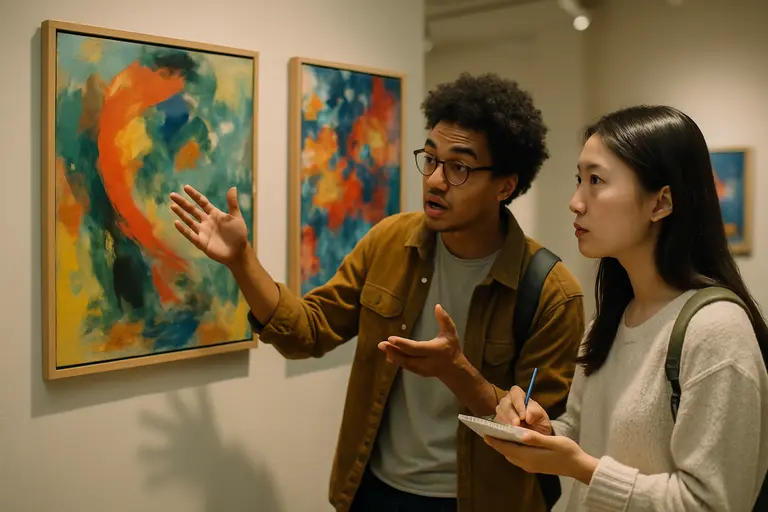
    Viewer taking notes while comparing framed artworks in a gallery

    Questions For Viewing

    A productive visit begins with slow comparison. Rather than asking whether each work is a good depiction of a place, ask what kind of place the work constructs. Is it observed, remembered, imagined, altered, or symbolic? Does the work seem to invite entry, keep distance, or refuse easy location? Are people present, absent, implied, or replaced by structures and traces? These questions keep the viewer from treating the subject as simple scenery.

    • Start with medium: note whether the work relies on paint, drawing, photographic framing, collage, or mixed materials.
    • Look for scale shifts: compare intimate scenes with more expansive views or imagined spaces.
    • Track signs of time: weathering, growth, ruins, roads, and interiors can all suggest memory.
    • Notice what is missing: absence can carry as much meaning as visible detail.

    This approach is especially useful in a group exhibition with more than 50 artists. No viewer can fairly absorb every relationship at once. It is better to build small clusters: works that share a medium, works that handle built space, works that feel dreamlike, works that seem documentary, or works that treat the environment as fragile. Those clusters can then be tested against the stated anniversary frame.

    What Not To Overclaim

    There are also limits to what can be said from the available information. The research notes do not establish attendance, sales, critical consensus, or direct artist statements about the exhibition. They do not specify the full checklist or installation order. Claims about market influence, audience demographics, or a new movement would need stronger evidence. A careful review should stay close to documented facts and visible curatorial structure.

    The same caution applies to influence. It is reasonable to discuss how placing recognized artists beside emerging and lesser-known voices may expand a viewer’s sense of the genre. It is not sound to claim that any artist in the show directly influenced another unless a reliable source says so. Respect for artists means resisting easy lineage-making when the record is not available.

    Andrew Edlin Show As A Measure Of American Place

    The Andrew Edlin Show does not need to solve the question of American identity to be culturally useful. Its value, based on the documented premise, lies in how it gathers many forms of place-making under one anniversary frame. The show brings together artists from across the Americas, a range of media, and a gallery context already associated with self-taught and art brut practices. That combination makes it a notable site for thinking about how images of land, city, memory, and belonging continue to carry public meaning.

    For viewers, the most rewarding stance is neither passive admiration nor quick judgment. The better task is to compare carefully, ask what each work does with place, and remain alert to the difference between documented fact and interpretation. In that sense, the exhibition offers a disciplined cultural exercise: looking at America not as one image, but as a set of visual arguments made by many hands.

  • Digital Dreams: Navigating the Vast World of Indie Electronic Music

    Digital Dreams: Navigating the Vast World of Indie Electronic Music

    Welcome to a vibrant and ever-evolving sonic landscape! We’re so grateful you’re here to explore it with us.

    A quiet, democratic revolution has reshaped the entire creative world. Accessible technology empowers artists everywhere to share their unique sonic visions directly with a global audience.

    This means the barriers to entry have truly fallen. Talented creators can now build a following and connect with listeners without major label backing.

    For fans, the journey to find these fresh sounds is part of the fun. Curated playlists, social media buzz, and dedicated niche blogs have become essential tools for uncovering incredible underground talent.

    At its core, this movement thrives on genuine human connection. Artists and listeners build communities together through a shared love of authentic art. We’re excited to be your guide as we dive into this wonderful world of digital dreams!

    Subgenre Navigation: Ambient, IDM, Synthwave, and Experimental

    Exploring indie electronic music subgenres is like wandering through a lively city. Each area has its own unique feel. Today, we’re guiding you through four key areas: Ambient, IDM, Synthwave, and Experimental. Knowing these styles helps you appreciate the wide range of indie electronic artists.

    In the calm district of ambient music, artists create soothing soundscapes. These are great for meditation or focus. Modern artists like Polygonia are even creating “dreambient,” a dreamier version. This shows that music can be powerful without loud beats.

    Next, we explore IDM, or Intelligent Dance Music. This style is all about complex rhythms and textures. It’s meant for deep listening. It challenges your mind and invites you to move.

    For a blast of old-school vibes, we dive into synthwave. It’s a tribute to the 1980s. It features lush synthesizers and drum machines. The feel is like walking through neon streets and classic sci-fi movies.

    Lastly, we venture into experimental electronic music. Artists like Klon Dump push boundaries here. They use unusual sounds and techniques. This area is where music’s future is being shaped. It’s all about artistic freedom.

    To compare these styles easily, we’ve made a helpful guide.

    Subgenre Key Characteristics Emotional Vibe Pioneering Example
    Ambient Ethereal pads, slow evolution, minimal percussion. Calm, contemplative, spacious. Polygonia’s “dreambient” soundscapes.
    IDM Complex, glitchy beats, melodic synth work. Cerebral, detailed, stimulating. Intricate rhythmic patterns from artists like Autechre.
    Synthwave Arpeggiated bass, retro drum machines, lead synths. Nostalgic, energetic, cinematic. Driving retro-futuristic anthems.
    Experimental Sound collage, noise, unconventional structures. Surprising, challenging, innovative. Klon Dump’s genre-defying “experimental bent.”

    This guide just scratches the surface. The indie electronic world has many more interesting areas. You might find “minimal tech,” “deep house,” or “baile funk.” Each one shows the creativity of indie electronic artists around the globe.

    Use this guide to start your journey. Listen to ambient music for calm. Turn up synth music for a workout. Try a challenging experimental electronic track to expand your mind. The world of sound is yours to explore, and it’s incredibly rewarding!

    Hardware vs Software: The Tools Behind the Music

    Every synth music track starts with a big choice: hardware or software? We’re excited to dive into this creative decision! The tools producers pick shape the sounds we love, from warm analog melodies to complex digital textures.

    A vibrant and dynamic workspace filled with synth music production tools. In the foreground, a sleek modular synthesizer with colorful patch cables, surrounded by a MIDI keyboard, digital audio workstation with a bright screen displaying waveforms, and an array of effects pedals. In the middle ground, a well-organized desk cluttered with audio interfaces and studio monitors, illuminated by soft LED lights casting a warm glow. The background features soundproofed walls adorned with acoustic panels and an array of posters displaying iconic electronic music artists. The atmosphere is creative and inspiring, with a slightly blurred effect to emphasize the tools, shot from a slightly elevated angle to showcase the workspace’s depth. The overall mood is energetic yet focused, perfect for diving into the world of indie electronic music production.

    Hardware synthesizers and drum machines give a hands-on, physical experience. Turning knobs and pressing buttons connects you directly to your instrument. This approach often brings out rich, organic tones that feel human.

    Many producers love the character and limitations of hardware. Analog circuits add warmth and imperfection hard to find in digital sounds. Drum machines give that classic, punchy rhythm. Working with physical gear can spark creativity, pushing artists to think outside the box.

    Digital Audio Workstations (DAWs) and software plugins offer unprecedented flexibility and precision. With a computer, producers have access to thousands of virtual instruments and effects. This digital world lets artists edit with precision and recall sessions instantly.

    Software is great for complex sound design and arrangement. Producers can layer tracks, automate parameters, and experiment without the cost of hardware. The “crystalline hi-hats” of Facta or Verraco’s “contortionist sound design” come from sophisticated software processing. Digital tools make synth music production easy for anyone with a computer.

    Aspect Hardware Tools Software Tools
    Creative Experience Tactile, hands-on manipulation Visual, mouse-and-keyboard workflow
    Sound Character Warm, organic, sometimes unpredictable Clean, precise, perfectly reproducible
    Flexibility Limited by physical design Virtually unlimited through updates
    Cost & Space Higher investment, requires physical space Lower entry cost, compact digital footprint
    Performance Immediate, great for live playing Excellent for detailed editing and recall

    Most producers today use both hardware and software. A synthesizer might create the main melody, while software handles effects and mixing. This mix of old and new gives artists the best of both worlds.

    Understanding these tools helps us appreciate synth music more. Whether it’s the joy of tweaking a filter knob or the power of virtual instruments, each method adds something special. The real artistry is in how creators use these tools to share their vision.

    We’re in a great time for music technology! From small studios to big facilities, these tools let more voices be heard. Next time you enjoy an electronic track, listen for the blend of hardware warmth and software precision.

    Bedroom Producers: Creating Professional Sound at Home

    The indie electronic music revolution is happening in bedrooms and home offices. We admire the talented people making amazing music in these spaces. They show us that professional sound can come from home.

    Thanks to great technology, making music at home is easier than ever. You can get powerful tools, affordable monitors, and lots of virtual instruments. This makes it easier for anyone to start making music.

    These artists work hard to learn and improve. They use online tutorials and practice a lot. Their process is unique, blending skill with creativity.

    Artists like Badsista and Gyrofield show us what’s possible. They make top-notch tracks from their homes. Their music is as good as any made in a big studio.

    This way of making music brings authenticity and innovation. Without big company rules, artists can follow their true vision. This leads to the exciting music we all love.

    We celebrate every creator on this path. If you’re starting, remember to use great tools and get support. You can check out our guide on home studio to create your dream space. Your next hit is just waiting to be made, right where you are.

    Live Electronic Performance: Bridging Studio and Stage

    Live electronic performance is where studio sounds meet the energy of a crowd. This is a magical art form. It turns private creations into a shared experience.

    Artists approach this challenge in many ways. Some create emotional journeys with tracks. Others perform live, using synthesizers and software to create unique shows. Both need skill, creativity, and a feel for the moment.

    Donato Dozzy creates deep, hypnotic sets that last hours. His sets are about immersion and subtlety. On the other hand, Yousuke Yukimatsu’s sets are high-energy and performative.

    These approaches show us different ways to perform. Dozzy’s sets create a trance-like connection. Yukimatsu’s sets build collective excitement. Both are powerful ways to connect with the audience.

    To understand these philosophies better, here’s a clear comparison:

    Performance Aspect Donato Dozzy’s Style Yousuke Yukimatsu’s Style
    Core Philosophy Deep immersion & seamless flow High-impact, performative spectacle
    Energy Arc Long, gradual, and hypnotic Fast, kinetic, and relentless
    Crowd Connection Collective, trance-like journey Explosive, shared release of energy

    What unites great live electronic performances is authentic connection. Whether it’s a mixed DJ set or an improvised performance, the goal is to create a unique moment. We thank innovators for turning the stage into a place of shared emotion.

    This bridge from studio to stage brings electronic music to life. It’s the culmination of hours of work, given as a gift to the community. Next time you see a live set, listen for the artist’s philosophy. Feel the connection they’re building. It’s this vibrant exchange that keeps our scene thriving and creative.

    Visual Art Integration: Music Videos and Live Visuals

    Indie electronic music is exploring new grounds by blending sound and visuals. Artists are turning music into a full-body experience. This mix creates worlds you can see and feel.

    For many, music is just the start. It’s the foundation for a bigger, immersive story. Visuals add depth, making complex themes easier to grasp and remember.

    A vibrant experimental electronic live visual performance set in a dimly lit underground venue. In the foreground, a diverse group of artists, dressed in stylish, modest casual clothing, interact with elaborate digital equipment, creating mesmerizing visuals. The middle ground features a large LED screen displaying dynamic, kaleidoscopic patterns intertwined with sound waves and abstract animations that pulse with the rhythm of the music. The background showcases an engaged audience, their faces illuminated by the colorful lights, creating a sense of immersion and unity. The lighting is dramatic, with bursts of neon colors and soft shadows, conveying an electric yet intimate atmosphere. The camera angle captures the action from a low perspective, emphasizing the energy and creativity of the space. The overall mood is experimental, innovative, and captivating, perfectly encapsulating the fusion of music and visual art.

    Music videos today are more about telling stories than just showing performances. Artists create mental spaces and cinematic journeys. Imagine the animated sequences for a glitchy IDM track or the neon-lit cityscapes for synthwave.

    This approach makes music a visual language. It tells stories that words can’t. The art stays with you long after the song ends.

    Live visual performances, or VJing, bring this magic to life. Visuals change in real-time, matching the music’s mood and beat. It turns concerts into unique experiences.

    VJs are key for experimental electronic acts. They mix pre-made clips, generative art, and live feeds. Their goal is to create a seamless visual experience that connects the audience deeper with the sound.

    This table shows the main differences between music videos and live visuals:

    Aspect Music Videos Live Visuals (VJing)
    Primary Purpose Tell a story or create a visual identity for a song. Create an immersive atmosphere that enhances live performances.
    Creation Process Planned, edited, and polished over time (pre-production). Improvisational and dynamic, using real-time mixing software.
    Audience Experience Passive viewing, often online; a fixed piece of art. Active, shared experience in a venue; unique to each show.
    Best For Building lore, cinematic world-building, and online promotion. Club nights, festivals, and any event where energy and immediacy are key.

    This blend of sight and sound is a key area for experimental electronic artists. They use it to challenge how we experience music. By mixing light and sound, they invite us into their sonic worlds.

    This evolution is exciting. It shows that art has no limits. Next time you listen, close your eyes and imagine the visuals. You might see what the artist meant.

    Festival Culture: Where Electronic Music Thrives

    Imagine a city built for a weekend, its streets alive with rhythm and its skyline defined by towering speaker stacks. This is the powerful reality of electronic music festivals. They are the vital hubs where our indie electronic community gathers to celebrate, connect, and create unforgettable memories.

    These events are far more than just concerts. They are temporary cities of sound. We share a unique energy under the open sky, feeling the bass in our chests alongside thousands of like-minded individuals. The collective joy is palpable, creating a sense of belonging that lasts long after the final beat.

    A key strength of modern festival culture is its incredible line-up diversity. You can wander from a stage featuring ambient soundscapes to another pulsating with experimental IDM. This variety allows us to discover our next favorite artist. It turns a weekend into a journey of sonic exploration.

    This culture sustains a vibrant festival circuit for artists. Established house DJs and rising indie producers alike find essential platforms here. Even iconic brands like Boiler Room have cemented their place by capturing this raw, communal dance music energy and broadcasting it to the world.

    The music itself often evolves for this environment. Producers craft tracks for peaktime settings—those euphoric moments when the crowd peaks. Others perfect the quintessential summer bangers designed to sound best with the sun overhead and grass underfoot.

    For artists, a standout festival set can be a career-defining moment. It provides exposure to passionate, engaged audiences who are there to listen deeply. This direct connection is invaluable. It fuels the entire ecosystem, allowing new sounds to flourish and reach eager ears.

    Not all festivals are the same, of course. The landscape offers different vibes and focuses. Understanding these can help you choose your next adventure. The table below highlights some common types of gatherings within the broader electronic scene.

    Festival Type Primary Focus Typical Vibe Example Artist Fit
    Large-Scale Camping Broad line-up across mainstage and niche genres. Immersive, communal, round-the-clock. Established headliners and popular indie acts.
    Boutique & Curated Specific subgenre or high-concept art integration. Intimate, artistic, detail-oriented. Experimental and ambient electronic producers.
    City-Based & Urban Accessibility, multiple venue formats. Energetic, convenient, club-like. House, techno, and IDM DJs on the circuit.
    Destination & Experimental Unique locations and avant-garde sound. Adventurous, niche, community-focused. Sound artists and boundary-pushing creators.

    We are so grateful for these vibrant gatherings. They remind us that music is a shared, living experience. Each festival is a testament to the creativity and passion within our global community. We leave these temporary cities recharged, inspired, and more connected than ever.

    Collaborative Nature: Electronic Artists Working Together

    Look beyond the solo producer in the studio, and you’ll find a world of creative partnerships. This wonderfully collaborative spirit drives innovation in indie electronic music. Artists team up, remix each other’s work, and form close groups.

    This teamwork breaks down the barrier of solo work. It brings together different talents, leading to new sounds. For example, ‘DOS HERMANOS’ by Badsista featuring EVEHIVE is a result of this collaboration. It mixes strong beats with dreamy vocals, creating something fresh.

    Gyrofield’s ‘Rorschach’ featuring Flo State shows how a shared vision can expand music’s limits. Even unique elements, like Simo Cell’s mascot “FL Louis,” become part of the music. It adds a personal touch to the songs.

    Labels also play a big role in supporting this teamwork. Places like A Colourful Storm act as a community for artists. They create a space where electronic artists working together is common.

    Collaboration is key in the indie electronic scene. It shows that together, we’re more creative and strong. When we share our passions, the music we make can go in endless directions.

    Global Perspective: Electronic Scenes Around the World

    Electronic music is a global language, with exciting dialects from Italy to Hong Kong. We’re thankful for this worldwide sound network. Each region adds its own sonic fingerprint, making modern indie electronic music rich and diverse. Let’s look at some vibrant hubs and the amazing indie electronic artists who live there.

    Europe is a hub for sound design and rhythmic innovation. In Italy, Donato Dozzy creates hypnotic techno that’s both ancient and futuristic. Across the channel, UK producer Facta makes complex bass music that expands dubstep and garage.

    Germany’s Polygonia mixes organic field recordings with driving techno. We also need to hear more from Balkan artists! Alper Durmush, blending Turkish and Bulgarian sounds, is leading the way.

    South America’s energy is electric, with rhythm at its core. Brazilian star Badsista combines global club styles with local funk and dembow rhythm. This creates a unique sound. In Colombia, Verraco offers a raw, hardcore techno with tribal beats. These indie electronic artists show how local music can energize global dance floors.

    Asia and hybrid identities are shaping the future. Gyrofield, from Hong Kong and the Netherlands, makes complex rhythms that go beyond labels. This fluid movement is key to today’s scene. Technology lets these artists collaborate and influence each other instantly, creating a hybrid sound.

    This global view fills us with hope. From São Paulo to Sofia, local cultures are shaping tomorrow’s sound. Each scene strengthens our community. We celebrate the unique flavors these indie electronic artists add. Their work shows innovation often grows from specific roots. Explore these global sounds. Your next favorite artist might be from a studio halfway around the world.

    Building Your Electronic Music Library: Essential Listening

    Our journey around the world of electronic music is just starting. Now, we’re building a library that shows off your unique style. A great way to start is by trusting the right sources.

    Look for labels like those that feature Donato Dozzy or Badsista’s ‘PSYCODELIA’. Check out artist profiles on Bandcamp to see what fans like. Also, listen to DJ sets from artists like Facta or Verraco. You’ll hear how tracks like ‘BDB’ or ‘Basic Maneuvers’ fit into a mix.

    We believe in a community-driven discovery process. This way, you connect directly with artists and fans. It makes listening an exciting, rewarding experience.

    Your library will grow and change over time. Each new find from a label update or live set will lead you to more. We can’t wait to see the music you’ll discover and the community you’ll join.

  • Machine Learning in Music Discovery: Benefits, Risks & the Human Factor

    Machine Learning in Music Discovery: Benefits, Risks & the Human Factor

    We’re at a crossroads in finding our next favorite song. Two forces are shaping this change: technology’s logic and human intuition’s spark.

    Today’s music algorithms are like the synthesizers and digital audio workstations of the past. They create new tracks and make playlists that feel just right.

    But this new tech raises big questions. Remember that 2024 song with Drake, Tupac, and Snoop Dogg AI clones? It made us think about what’s real and what connects us.

    We’re here to guide you through this shift. We celebrate progress and the community and emotion that make songs special.

    Let’s see how platforms are handling this change. What does it mean for you, the listener? The future of human curation and machine learning is a story we’re all writing.

    The Algorithm Revolution: How Machines Learn Your Taste

    From mechanical composers to today’s streaming giants, the algorithm revolution has changed how we find music. This change is powered by data! It started decades ago with visionaries like Olson and Belar at RCA.

    Their 1960s “composing machine” used past songs to create new melodies. It was a bold idea that started today’s intelligent systems.

    Today’s music discovery algorithms analyze a huge amount of information. They look at what you play, skip, save, and how long you listen. This data creates a unique sonic fingerprint of your taste.

    Then, they find patterns and similarities between millions of songs. This is like “melodic math.”

    Hitmakers like Max Martin use pattern recognition to make hits. Algorithms do this on a huge scale. They connect the dots between the music you love and other tracks with similar features.

    This results in a personalized music recommendation feed. Services can introduce you to new artists you might love. We’re excited about this technology’s ability to help listeners discover new music.

    But, a system based only on past preferences has its limits. It’s great at finding more of what you already like. But it might not introduce a classical fan to experimental hip-hop. That’s where human curation comes in.

    We think algorithms work best when paired with human methods. They’re great at recognizing patterns and personalizing music. But music is also about context, emotion, and cultural connection. These are areas where humans excel.

    The future isn’t about choosing between machine and human. It’s about combining both for the best discovery experience.

    Human Curation’s Irreplaceable Value: Context and Emotion

    Algorithms track our music habits, but humans connect our hearts to music. They add context that makes songs meaningful. While machines spot patterns, they can’t grasp why a song is special. This is where human touch turns Spotify discovery into a personal journey.

    It’s the little things humans notice that make music special. A curator, whether a radio host or a friend, knows the story behind a song. They feel the emotion in lyrics and catch cultural moments. This layer is lost on algorithms.

    So, why are human-led streaming discovery methods so effective? Let’s explore:

    • Context: Placing a song in a historical, social, or personal setting.
    • Emotion: Linking music to feelings or shared experiences.
    • Narrative: Creating a story or journey through song choices.

    This approach is also seen in AI pop culture curation. Here, AI is guided by human creativity. Laws recognize human authorship for a reason. The intent and emotion behind curation are priceless.

    This connection does more than suggest a good song. It builds musical communities and keeps cultural threads alive. It’s like a community watch party. A personal recommendation touches us in a way data can’t.

    That’s the real value of human curation. It’s not about replacing algorithms, but adding warmth and understanding. This mix is the future of music discovery.

    Spotify’s Discover Weekly vs Apple’s Human Editors

    Choosing how we find new music is a modern wonder. Spotify’s personalized music algorithms and Apple Music’s human touch show this. This variety lets each listener find their own way.

    Spotify’s Discover Weekly is a marvel of engineering. It gives you a new playlist every Monday. It uses music algorithms to scan millions of songs and user patterns. It feels like a secret from a digital friend.

    Apple Music takes a different path. It focuses on human curation by real editors. They create playlists and write liner notes. It’s like a guided tour through music, with a human touch.

    A split scene showcasing the contrasting music discovery methods of Spotify and Apple Music. On the left, a vibrant, stylized digital art representation of Spotify's Discover Weekly algorithm, featuring colorful soundwaves and abstract musical notes, suggesting machine learning dynamics. In the foreground, a focused AI algorithm depicted as a glowing, intricate network of nodes and pathways, representing data analysis and logic. The background features a minimalist music studio with bright neon lights, creating a tech-savvy atmosphere. On the right, a warm, inviting scene of Apple Music’s human editors, depicted as diverse individuals in professional attire, brainstorming around a large table filled with records and digital devices. The background is a cozy, aesthetically pleasing office with soft lighting enhancing a creative mood. The overall composition alternates between cool and warm tones, conveying the blend of technology and human touch in music discovery.

    Both methods have their fans. It’s not about which one is better. It’s about what you want today. Do you want a surprise or a guided journey? We’re lucky to have both!

    To see the differences, let’s compare them:

    Feature Spotify Discover Weekly Apple Music Human Curation
    Core Philosophy Personalized algorithmic discovery at massive scale Expert-led editorial guidance and context
    Primary Technology/Method Collaborative filtering & audio analysis music algorithms Human editors, critics, and genre experts
    Typical User Experience A private, automated “mixtape” that feels uniquely yours A public, branded playlist with narrative and authority
    Key Strength Uncovers deep cuts and niche artists based purely on your taste data Provides cultural background, themes, and educational value

    This shows “technology neutrality” in action. We have amazing tools for both algorithmic and human Spotify discovery. Sometimes we want the machine’s perfect pick. Other times, we seek a human’s insight. Having both enriches our musical world.

    Bandcamp’s Community-Driven Discovery Model

    Imagine a music platform where your next favorite artist is found through a fan or writer, not just an algorithm. This is Bandcamp, a place where music recommendation comes from people, not machines. It’s a space where finding new music feels personal and meaningful.

    This approach is a big step towards making music more democratic. Just like how digital tools helped bedroom artists like Billie Eilish, Bandcamp changes how we discover and share music. It gives more power to artists and listeners, away from big companies.

    Discovery on Bandcamp is organic and beautiful. You might find new music through fans with similar tastes or follow a blog’s curated picks. It’s all about human passion, not just numbers.

    Bandcamp does more than just suggest new songs. It connects artists with listeners in a real way. Plus, it helps artists by sending a big part of your purchase directly to them. This makes music recommendation a way to support artists, not just a technical task.

    We support these different ways of finding music. They show there’s a rich world of music beyond what algorithms suggest. Platforms like Bandcamp focus on helping artists and building small communities. They show that finding new music can be a shared journey, valuing culture and feelings as much as beats.

    For listeners who care about supporting artists, Bandcamp is a great choice. It lets you enjoy finding new music while also helping an artist’s career. In a world of automated feeds, Bandcamp shows the power of community in music.

    The Filter Bubble Problem: Algorithmic Echo Chambers

    The magic behind your personalized playlists has a catch. Music algorithms use your past listening to guess what you’ll like next. This makes your musical tastes stick to what you already know.

    This makes your musical world smaller, not bigger. It’s called the filter bubble. It’s a loop where you hear the same things over and over.

    A surreal, abstract representation of an algorithmic echo chamber in music discovery. In the foreground, visualize a diverse group of people wearing professional business attire, each enclosed within a translucent bubble, with swirling musical notes and digital data streams emanating from their devices. In the middle ground, a serene landscape of interconnected nodes and circuits symbolizes the digital ecosystem, with vibrant colors contrasting against a muted palette. The background features a fragmented cityscape, hinting at isolation and confinement, while beams of soft, ethereal light illuminate the scene, enhancing a sense of contemplation and tension. Capture a mood of both connection and separation, highlighting the complexity of algorithm-driven choices in music.

    When suggestions only match what you’ve listened to before, a few things happen:

    • Genre Limitation: You might not explore new sounds.
    • Artist Isolation: New artists find it hard to get noticed.
    • Cultural Narrowing: You miss out on music from different times and places.

    This isn’t a mistake. It’s a side effect of making music just for you. The system is great at giving you more of what you already like.

    Human curation is the answer. Curators do more than suggest music. They shake things up. They add context and diversity to your playlists.

    Knowing about this helps us. We can look for playlists and blogs that expand our musical horizons. It turns a weakness into a chance for discovery.

    Serendipity in Music: Happy Accidents vs Calculated Suggestions

    Discovering music by chance is thrilling. Often, our favorite songs come from unexpected places. This is called serendipity, finding the perfect song when you least expect it.

    Algorithms can suggest good music, but they can’t match the excitement of a surprise find. Imagine hearing a great song in a friend’s car or during a movie. These moments are special.

    Human touch makes these moments possible. A playlist made just for a mood or activity can surprise you. DJs on thematic radio shows introduce us to new music in a way algorithms can’t.

    Artists often build on others’ work, creating something new and exciting. This is similar to how we discover music. One surprise song leads to another, creating a unique journey.

    The future of Spotify discovery should include both chance and careful planning. The best systems will mix precision with surprises.

    Aspect Happy Accidents (Serendipity) Calculated Suggestions Emotional Impact
    Source Friend’s recommendation, live shows, film soundtracks Algorithmic analysis of listening history Feels personal and authentic
    Predictability Low – arrives unexpectedly High – based on known patterns Surprise vs. satisfaction
    Context Richness High – tied to specific memories or experiences Low – often lacks story or context Creates lasting memories
    Discovery Range Broad – can jump genres and eras Narrow – typically stays within established preferences Expands musical horizons
    Platform Examples Themed human playlists, community radio, Bandcamp Automated “For You” mixes, recommendation engines Community vs. individual focus

    Human-curated Spotify discovery channels value surprise. Playlists for activities like “Rainy Day Reading” or “Late Night Drives” include tracks that create perfect moments. These picks consider mood and atmosphere, not just sound.

    We love these unplanned connections. They show that finding music is about human experience as much as technical skill. The best music recommendation systems will respect both.

    Let’s support platforms that welcome randomness. The next great song you love might be in an unexpected place. That’s the magic of musical serendipity.

    Supporting Discovery Through Multiple Channels

    Music lovers have always used many ways to find new songs. From live shows to radio and records, finding music is a journey. This idea guides us in today’s digital world.

    Having a rich musical life comes from using many sources. Sticking to one way limits your experience. The best listeners mix streaming discovery methods with human curation.

    Think of your music discovery as a portfolio. A good mix includes:
    Algorithmic tools for endless streams on Spotify or YouTube.
    Expert-led playlists and radio from Apple Music or NPR for guidance.
    Community-driven spaces like Bandcamp or SoundCloud for unique genres and artist support.
    Live music events for a raw connection that can make you a fan for life.
    Even physical media or dedicated listening sessions for focused enjoyment.

    This approach does more than find new songs. It builds a resilient and diverse musical identity. You’re not stuck in one way of finding music. Instead, you get a taste shaped by machines, experts, peers, and live experiences. Each channel adds a unique color to your music.

    We encourage you to be intentional about how you find new music. Seek out human curation from trusted sources. By using all channels, you can find the joy and surprise in music again. Your next favorite artist is waiting for you to discover them in a new way!

    The Role of Music Blogs in the Algorithm Age

    In the endless stream of algorithmic suggestions, music blogs shine as beacons of human passion and critical thought. While music algorithms are great at guessing what we might like next, they often fail to understand why. This is where blogs, zines, and independent publications become essential.

    These platforms offer something unique: deep context, nuanced criticism, and passionate advocacy. They share the stories behind albums, connect artists to cultural movements, and offer perspectives built on real experiences. Unlike impersonal streaming discovery methods, blogs are a dedicated act of human curation.

    What makes music blogs irreplaceable? Their value lies in several key areas that machines cannot authentically copy:

    • Narrative and Context: They frame music within a story, a history, or a personal journey, giving songs and artists deeper meaning.
    • Critical Perspective: Unlike playlist algorithms designed for endless play, blogs offer thoughtful analysis, critique, and celebration.
    • Artist Advocacy: They champion emerging or niche artists based on artistic merit, not just viral popularity.
    • Cultural Connection: Blogs link music to fashion, politics, film, and social trends, creating a richer tapestry of discovery.

    This human-authored context is so valuable it’s recognized in copyright law, which often protects the unique narrative and selection a critic provides. This legitimacy shows that music writers are not just commentators but valid and essential curators in the ecosystem.

    We see blogs as a vital counterbalance. They help listeners break free from algorithmic echo chambers and discover music with purpose and thoughtfulness. In a landscape optimized for clicks and streams, these voices encourage us to listen more deeply.

    We are incredibly grateful for these dedicated voices. They ensure that discovery remains a human conversation, not just a calculation. This human element is a key part of the future of music curation, where the best systems will harness both heart and data.

    Hybrid Approaches: Combining Human and Machine Intelligence

    The future of finding new music is exciting because it’s a team effort. We think the best way is for machines and humans to work together. This way, they can use each other’s strengths.

    Algorithms can quickly go through huge amounts of data to find lots of songs. But, human curators bring their own special touch. They use their taste, cultural knowledge, and storytelling skills. For example, Spotify uses algorithms to help humans pick songs for playlists.

    This mix of AI and human touch makes music recommendations better. It combines the power of AI with the heart of human connection. This way, the music industry can use AI tools while keeping human creativity at the core.

    We’re excited to help create this future. A hybrid system means we get the smart data analysis of AI and the real connection of humans. It’s the way to break through filter bubbles and find music that surprises and delights us.

  • Train Hard, Recover Better: Evidence-Based Recovery Strategies That Work

    Train Hard, Recover Better: Evidence-Based Recovery Strategies That Work

    For years, the saying “no pain, no gain” has ruled training. But what if the key to better performance is actually strategic rest?

    Ignoring your body’s need to heal can lead to plateaus, injuries, and burnout. Real progress comes when muscles rebuild, inflammation is controlled, and your nervous system gets a break.

    This isn’t about being lazy. It’s about being smart. Modern science supports a more sustainable, holistic approach. It’s like adding peace and love to your routine—listening to your body and using proven methods to boost well-being.

    This guide makes complex science easy to understand. It gives you the actionable knowledge to perform better and feel better. It turns recovery into your biggest advantage.

    First 24 Hours After Practice or Game: A Simple Plan

    What you do after a hard practice or game is key. It affects how quickly you recover and perform next time. A recovery timetable makes this process clear and effective.

    Divide the first 24 hours into three phases. This helps your body repair itself better. It also helps you train consistently.

    Phase 1: The Immediate Window (0-2 Hours Post-Exertion)

    Your body starts repairing itself right after you stop. It needs nutrients and fluids fast. This is a critical time for recovery.

    Focus on quick hydration and cool-down in this phase.

    • Hydration: Drink 16-24 ounces of water or an electrolyte beverage. Replacing lost fluids is the first step to optimal function.
    • Fuel: Consume a snack or shake with a 3:1 ratio of carbohydrates to protein within 30 minutes. This combo refuels energy stores (glycogen) and starts repairing muscle tissue.
    • Initial Cool-Down: Perform 5-10 minutes of very light activity, like walking or easy cycling. This helps clear metabolic byproducts and gently lowers heart rate.

    Phase 2: The Early Recovery Window (2-6 Hours Post-Exertion)

    The repair machinery is now running. Your focus shifts from immediate response to sustained support. Inflammation management and continued nourishment are key here.

    Your actions in this phase set the tone for the rest of the day.

    • Meal Focus: Eat a balanced, whole-food meal with lean protein, complex carbs, and colorful vegetables. This provides the extended-release nutrients needed for ongoing repair.
    • Light Movement: Avoid complete inactivity. Gentle stretching or a short, slow walk can improve circulation without adding stress.
    • Compression: Consider wearing compression garments if you experience significant leg fatigue. They may help reduce swelling and muscle soreness during this period.

    Phase 3: The Late Recovery Window (6-24 Hours Post-Exertion)

    This is when deep restoration and adaptation occur. Your body consolidates the repairs initiated earlier. The priority is creating an environment conducive to this work, mainly through rest and strategic nutrition.

    Sticking to the plan in this final phase solidifies your gains.

    • Sleep Priority: This is the most powerful recovery tool. Aim for 7-9 hours of quality sleep. Growth hormone release during deep sleep is essential for tissue repair.
    • Continued Nutrition: Maintain steady hydration and eat regular, nutrient-dense meals. Don’t skip breakfast the next morning; it replenishes liver glycogen and provides energy for the day.
    • Active Recovery: If you feel up to it, a very light, non-impact activity like swimming or casual biking the next day can enhance blood flow and reduce stiffness.

    Following this hour-by-hour recovery timetable makes recovery simple. It ensures you support your body at the right time. This turns fatigue into readiness and soreness into strength.

    Sleep Toolkit for Athletes and Families

    The secret to bouncing back faster from a tough game isn’t found in a bottle. It’s in mastering the science of sleep cycles. True sleep optimization is the ultimate, underrated recovery tool. It goes far beyond just getting more hours in bed.

    This toolkit provides actionable steps to transform sleep from an afterthought into a non-negotiable pillar of athletic success.

    Crafting the Ideal Sleep Environment

    Your bedroom should be a recovery sanctuary. Three key factors dramatically improve sleep quality:

    • Cool: Aim for a temperature between 60-67°F. A cooler room helps lower your core body temperature, signaling your brain that it’s time for sleep.
    • Dark: Use blackout curtains or a sleep mask. Even small amounts of light can disrupt the production of melatonin, your sleep hormone.
    • Quiet: Use a white noise machine or a fan to mask disruptive sounds. Consistency in your sleep setting trains your brain to wind down.

    Your body needs a signal to shift from active mode to rest mode. A consistent 30-60 minute routine is that signal.

    Start with a digital curfew. Put phones, tablets, and laptops away at least one hour before bed. The blue light from screens suppresses melatonin. Replace screen time with calming activities.

    Effective relaxation techniques include light stretching, reading a physical book, or practicing deep breathing exercises. This process is key for athletes whose minds are racing from the day’s competition.

    Understanding Sleep Cycles for Recovery

    Sleep isn’t a uniform state. It cycles through stages, each with a specific recovery job.

    Deep Sleep (Slow-Wave Sleep): This is the physical repair phase. During deep sleep, your body releases growth hormone, which is essential for muscle repair and tissue growth. This is when the damage from a hard workout is actually fixed.

    REM Sleep: This stage is for cognitive and emotional recovery. REM sleep helps consolidate motor skills and memory. It’s when your brain practices and solidifies the plays and techniques you learned that day, making your performance sharper.

    Making It Work for Busy Schedules

    For families and athletes with 5 AM practices, consistency is more important than perfection. Go to bed and wake up at the same time, even on weekends. This regulates your internal clock.

    If early mornings are mandatory, adjust bedtime earlier in small increments. Protect your sleep window as you would a training session. Nap strategically if needed—a 20-30 minute power nap can boost alertness without causing nighttime sleep disruption.

    Viewing sleep as a core part of training is the mindset shift that leads to real results. Prioritizing sleep optimization ensures you repair, recharge, and return to the field stronger.

    Hydration and Post-Game Nutrition Quick Wins

    Let’s focus on quick ways to refuel your body. The right steps after exercise can turn fatigue into fuel for your next session.

    Hydration is key. Even a little dehydration can slow you down and hurt your recovery. A simple way to check is by weighing yourself before and after your game or practice.

    For every pound lost, drink 16-24 ounces of fluid. This helps replace what you sweated out. Water is good, but for longer sessions, you need electrolytes too.

    Electrolytes like sodium and potassium help your body hold onto fluid and support nerve function. You don’t need fancy sports drinks. Try these real-food options:

    • A pinch of salt in your water with a slice of lemon.
    • Coconut water (look for low-sugar varieties).
    • Bananas or a handful of salted nuts post-game.

    Next, tackle nutrition. Your muscles are ready to absorb nutrients within 30-60 minutes after stopping. Aim for a meal or snack with a 3:1 ratio of carbohydrates to protein. Carbs restock energy stores. Protein repairs muscle tissue.

    This doesn’t require a lab or special powder. Think whole foods that are easy to grab or prep. Here are balanced options for different situations:

    Situation Carbohydrate Source Protein Source Example Meal
    Immediate Snack (On-the-go) Fruit, Rice Cakes Greek Yogurt, String Cheese Apple with a single-serve Greek yogurt.
    Post-Game Meal (At Home) Sweet Potato, Brown Rice Grilled Chicken, Salmon Grilled chicken breast with a large sweet potato and steamed broccoli.
    Vegetarian Option Quinoa, Whole Wheat Pasta Lentils, Tofu, Eggs A scramble with 2-3 eggs, spinach, and a side of quinoa.

    Now, let’s add a powerful tool: compression. Wearing compression garments like sleeves, socks, or tights after activity supports your recovery system.

    How does it work? Gentle, graduated compression improves blood circulation. This helps shuttle waste products like lactic acid away from tired muscles. It also brings fresh, oxygen-rich blood to the area.

    The result is reduced swelling and less perceived soreness the next day. Think of it as giving your circulatory system a helpful nudge. It’s a perfect partner to your fueling strategies for tournaments.

    Put these quick wins together. Rehydrate based on your weight check. Eat a balanced meal with the right carb-protein mix. Consider slipping on some compression wear. This trio works synergistically to speed up your bounce-back, so you’re ready for whatever’s next.

    Mobility Flow: 10-Minute Reset for Tight Hips and Backs

    You don’t need a long yoga class to feel better after activity. A quick 10-minute mobility flow can make a big difference. It’s great for athletes and weekend warriors who often hurt their hips and lower back.

    This simple routine helps improve flexibility and reduce soreness. It makes moving again feel comfortable.

    First, know when to do it. Dynamic stretching is for warming up, like leg swings before running. Static or developmental stretching is for cooling down, when you hold a stretch to increase range of motion. This flow is perfect after your game or practice.

    A serene indoor fitness studio with ample natural light, focusing on an athlete performing foam rolling and stretching exercises. In the foreground, a diverse group of athletes in comfortable, modest athletic wear are engaged in a mobility flow routine on yoga mats. The central figure is using a foam roller on their lower back, while others stretch their hips and legs efficiently. In the middle ground, a large mirror reflects their movements, creating a sense of depth and energy. The background features minimalistic decor, like potted plants and exercise equipment, adding to the calming atmosphere. Use a soft focus on the background, with warm lighting to evoke a sense of relaxation and recovery. The image should feel motivating yet peaceful, highlighting the importance of mobility for athlete recovery.

    Here’s your 10-minute reset sequence. You just need a mat and a foam roller.

    1. Foam Roll Major Muscle Groups (3 minutes): This is myofascial release. It smooths out muscle tightness. Roll slowly over each area for 30-45 seconds.
      • Glutes and Hamstrings: Sit on the roller, hands behind you. Roll from the back of your pelvis to mid-thigh.
      • Upper Back (Thoracic Spine): Lie with the roller across your shoulder blades. Keep your hips up and gently roll a few inches up and down.
      • Hip Flexors: Lie face down with the roller just below your hip bone. Apply gentle pressure.
    2. Developmental Stretching (7 minutes): Hold each stretch for 45-60 seconds. Breathe deeply.
      • Kneeling Hip Flexor Stretch: Kneel on one knee, other foot forward. Tuck your tailbone and gently push hips forward until you feel a stretch in the front of the kneeling hip.
      • Figure-Four Stretch (for glutes): Lie on your back. Cross one ankle over the opposite knee. Pull the uncrossed leg toward your chest.
      • Seated Hamstring Stretch: Sit with one leg extended. Hinge at your hips to lean forward, keeping your back straight.
      • Thoracic Extension: Sit on your heels. Place your hands on the floor in front, walk them forward, and drop your chest toward the floor. Let your upper back round gently.

    Doing this flow daily keeps stiffness away. It turns recovery into a quick, effective habit. Your hips and back will thank you.

    Ice, Heat, Compression, and Elevation: What the Science Says

    Recovery isn’t just about tools; it’s about knowing when to use cold therapy or heat therapy. This guide helps you understand the science behind it. It offers clear, evidence-based methods for recovery.

    First, you need to know the difference between acute injuries and muscle soreness. The R.I.C.E. method (Rest, Ice, Compression, Elevation) is for specific reasons.

    R.I.C.E. is best for the first 24-72 hours after an injury. It helps control swelling and inflammation. Ice and compression are key here.

    But, for muscle soreness after exercise, the rules change. Your body needs blood flow to heal, not just reduce inflammation. This is where the science gets interesting.

    Cold Therapy: The Physiology of Ice

    Cold causes your blood vessels to narrow. This reduces blood flow and slows down your body’s activity.

    The main effect is less inflammation and swelling. It also numbs nerves, giving you pain relief. But, research shows using intense cold therapy only in acute phases or specific conditions.

    For general soreness, too much icing can slow healing. It can block nutrients and immune cells from reaching damaged areas.

    Heat works differently. It makes your blood vessels wider, increasing blood flow to muscles and tissues.

    This increased blood flow brings more oxygen and nutrients. It also helps remove waste like lactic acid. Heat therapy is great for relaxing tight muscles and easing stiffness.

    Use heat for chronic stiffness or to warm up tight areas before light activity. Avoid it for fresh injuries with swelling.

    Choosing the Right Tool: A Practical Guide

    Here’s a simple guide to use these therapies effectively.

    • Use Cold Therapy (Ice): For acute injuries (first 48-72 hours), sharp pain, or after surgery. Apply for 15-20 minutes, with a cloth to protect your skin.
    • Use Heat Therapy: For muscle tightness, chronic aches, or to warm up before gentle movement. Use for 15-20 minutes with a moist heat source.
    • Use Compression: Mainly for acute swelling. It provides pressure to limit fluid buildup. Dynamic compression garments can help with soreness.
    • Use Elevation: Best for acute limb injuries. Raising the injured area above the heart reduces swelling.

    Don’t use ice for everyday soreness. For weekend warriors, a warm bath or shower might be better than an ice bath after a game.

    Be informed and choose the right therapy at the right time. This will truly enhance your recovery.

    Active Recovery Sessions: Swim, Bike, and Walk Options

    Many athletes think active recovery is just a light workout. But it’s more than that. It’s a special practice for your rest days, with low-intensity, non-stressful movements.

    This type of activity boosts blood flow. It helps remove waste from muscles without causing more damage. It’s about moving to recover, not to train hard.

    Good active recovery has two main rules. Keep your heart rate low and focus on enjoying the activity, not performing well. Here are three great options for you.

    The Gentle Swim

    A swim session is perfect for full-body recovery. The water supports and resists your movements.

    Work on smooth strokes and breathing. Avoid sprinting or hard intervals. Swim for 20-30 minutes.

    Keep your heart rate in Zone 1 (50-60% of your max). This gentle effort improves circulation and joint mobility. It helps ease stiffness.

    The Easy Bike Ride

    Cycling on a flat, smooth path is a classic active recovery method. The key is to ride at a “conversational” pace.

    You should be able to talk comfortably during the ride. Ride for 30-45 minutes on a stationary bike or a safe, flat route.

    Watch your intensity. Your heart rate should be well below your aerobic threshold. This steady motion boosts leg circulation without strain.

    The Brisk Nature Walk

    Never underestimate the power of walking. A brisk walk in a park or on a trail is very restorative.

    It works different muscles than running. Aim for a 30-60 minute walk at a pace where you can talk.

    The light cardio, fresh air, and nature reduce stress hormones. This helps both physical and mental recovery.

    Activity Recommended Duration Target Intensity Primary Recovery Benefit
    Gentle Swim 20-30 minutes Heart Rate Zone 1 (50-60% max) Enhances full-body circulation & joint mobility
    Easy Bike Ride 30-45 minutes Conversational pace, low impact Boosts leg circulation without muscular strain
    Brisk Nature Walk 30-60 minutes Comfortable, talkable pace Reduces systemic stress & promotes mental reset

    Adding these sessions helps your body recover better. True active recovery is not about adding more stress. It’s a smart way to get ready for your next practice or game.

    Tournament Weekends: Stacking Games Without Burning Out

    Success in a weekend of matches comes down to listening to your body and feeding it right. This peace and love mindset is key to avoiding a crash on the second day.

    Managing your energy over a tournament is like running a long race, not a series of short sprints. You need a plan for the whole weekend, not just the time between games. Think of your body’s fuel tanks—glycogen, fluids, mental focus—and aim to keep them full.

    Inter-game nutrition and hydration are non-negotiable quick wins. Eat a mix of carbs and protein within 30 minutes of a game ending. A banana with a protein shake or a turkey sandwich is great. Drink an electrolyte drink all day, not just when you’re thirsty. This keeps your energy up for the next game.

    Your mini-recovery sessions between matches are where the peace and love philosophy comes to life. Don’t sit stiffly on the bench. Instead, do 5-10 minutes of light activity and mobility.

    • Light Walking: A casual 5-minute walk promotes blood flow to clear metabolic waste.
    • Dynamic Mobility: Gentle leg swings, torso twists, and arm circles keep muscles supple.
    • Foam Rolling (if available): Focus on major muscle groups like quads and calves for just a few minutes.

    Mental resets are just as important. The competitive intensity can leave you stressed. Take 2-3 minutes to sit quietly, practice box breathing (inhale 4, hold 4, exhale 4), or simply change your environment. This mental cooldown helps you stay calm.

    It’s also key to prioritize recovery over social plans. While it’s tempting to celebrate or analyze with teammates, your body needs rest and proper fuel more. This choice shows you value your long-term performance over short-term fun.

    Here’s a sample game-day schedule that puts these principles into practice:

    Time Block Action Recovery Goal
    Post-Game (0-30 min) Hydrate, consume carb+protein snack, change into dry clothes. Replenish core nutrients, start muscle repair.
    Between Games (60-90 min) Light walk, dynamic mobility, mental breathing exercise. Promote circulation, reduce stiffness, lower stress.
    Evening After Day 1 Full meal, hydration, compression gear, early bedtime. Deep recovery and preparation for Day 2.

    By stacking these small, intentional habits, you build resilience. You move from surviving a tournament to competing at your best throughout. Remember, true strength in a multi-game weekend comes from balancing effort with the peace and love of attentive recovery.

    Low-Cost Tools That Work (Bands, Rollers, Lacrosse Ball)

    Forget expensive gadgets. Self-care and improving tissue quality are about a few affordable tools. You don’t need a big budget for a good recovery routine. With basic knowledge, simple tools can give you a strong self-massage and muscle release.

    These three items make a complete, low-cost toolkit. They make recovery accessible to everyone, not just athletes.

    Resistance Bands

    These elastic bands are great for more than just strength training. They’re good for muscle activation and strengthening often-overlooked areas. They also improve blood flow to muscles before or after exercise.

    Key Exercise: Banded Glute Bridge. Use a medium-resistance band above your knees. Lie on your back with knees bent. Press your hips up while pushing knees outward against the band’s tension. This works the glutes and gives a light massage effect before working out.

    Safety Tip: Always check bands for nicks or tears before use. Never stretch a band more than 2.5 times its resting length to avoid it snapping.

    Foam Rollers

    A foam roller is perfect for myofascial massage of big muscle groups. It helps loosen up stiffness in the quads, hamstrings, and back. The pressure from your body weight eases tension and improves tissue glide.

    Key Technique: Quad Roll. Lie face down with the roller under your thighs. Use your arms to slowly roll your body from just above the knees to the top of the hips. Pause for 20-30 seconds on any tender spot.

    Safety Tip: Avoid rolling directly over joints or bony areas like the spine and knees. Keep movements slow and controlled.

    Lacrosse Ball

    This small, dense ball is a precision tool. It targets specific trigger points and adhesions that a roller can’t reach. It’s great for the feet, glutes, and shoulders.

    Key Technique: Plantar Fascia Release. While seated, place the ball under the arch of your foot. Apply moderate pressure and roll it back and forth for one to two minutes. This gives a deep tissue massage for the foot.

    Safety Tip: Do not use excessive force, specially on sensitive areas. Limit sessions to a few minutes per muscle group to prevent bruising.

    Together, these tools create a powerful system. Use bands for activation, the roller for broad release, and the ball for pinpoint work. This approach improves tissue quality and accelerates recovery without a high financial barrier.

    Start with just one tool and master its basic use. Consistency with these simple items is far more valuable than sporadic use of expensive equipment. Build your affordable massage toolkit and feel the difference in your next workout.

    Monitoring Fatigue with RPE and HRV (No Fancy Tech Needed)

    Your body sends clear signals about its recovery status. Learning to interpret these signals is a game-changer. You don’t need a lab full of equipment. Two powerful tools—one subjective, one objective—can give you the insight you need to train smarter.

    The first tool is your own perception. The Rate of Perceived Exertion (RPE) scale is a simple, subjective metric for how hard a workout feels. It turns a gut feeling into a number you can track.

    Logging your daily RPE helps you spot patterns. After a game or tough practice, jot down a number from 1 to 10. A 2 might be a gentle walk, while a 9 feels like an all-out sprint. Over time, you’ll see if your “easy” days are creeping up to a 6, which is a warning sign. For a deeper guide on using the RPE scale, more resources are available.

    • Low (1-4): Very light to moderate activity. Good for active recovery days.
    • Medium (5-7): Challenging but sustainable. Your typical practice intensity.
    • High (8-10): Maximum effort. Reserved for games and peak performance.

    For objective data, look to your nervous system. Heart Rate Variability (HRV) measures the tiny changes in time between your heartbeats. Higher HRV generally means your body is relaxed and recovered. Lower HRV suggests your system is stressed, possibly from training, lack of sleep, or illness.

    The good news is that affordable hrv tracking is simple. Many free or low-cost smartphone apps use your phone’s camera to measure HRV. You can also use a basic chest strap or wrist-based wearable. The key is consistency: take a measurement first thing in the morning, before you get out of bed.

    Interpreting the data is more about trends than a single number. Don’t panic if your HRV score dips one day. Look at your weekly average. A consistent downward trend, paired with high RPE scores, is a clear signal to pull back. It means your body needs more rest. This is how you use your hrv tracking data to adjust training intensity proactively.

    Together, RPE and HRV create a complete picture. RPE tells you what you feel in the moment. HRV shows you what your autonomic nervous system is doing behind the scenes. Using both empowers you to move from guessing to knowing, building a truly responsive and informed approach to your training load.

    Common Mistakes That Slow Recovery

    Spotting and fixing common recovery mistakes is key for athletes and active people. A few simple errors can make a big difference in how quickly you recover. This knowledge can turn a slow recovery into a speedy one.

    By knowing these mistakes, you can take charge of your recovery. You’ll go from hoping to recover to knowing you will.

    A split-image illustration contrasting "soreness" and "pain" in the context of athletic recovery. In the foreground, depict two separate panels: on the left, an athlete stretching their legs, looking relaxed and experiencing light soreness, dressed in professional workout attire, illuminated by soft, natural light. On the right, a distressed athlete holding their back, indicating sharp pain, wearing a casual tee and shorts, with more dramatic shadows to convey discomfort. In the middle, a subtle gradient blend separates the two panels, symbolizing the spectrum between soreness and pain. The background features a blurred gym environment, filled with equipment, evoking a dedicated training atmosphere. The overall mood should balance a sense of focus and clarity, aimed at educating viewers on common recovery mistakes.

    Here are the most common mistakes that slow recovery, and how to fix them:

    • Skipping the Cool-Down: Stopping suddenly is hard on your body. A 5-10 minute cool-down with light cardio and stretching helps. It tells your body the workout is over.
    • Neglecting Hydration Post-Exercise: Thirst doesn’t always mean you need water. Even a little dehydration can slow down muscle repair. Drink 16-24 ounces of water in the first hour after working out.
    • Poor Post-Game Nutrition Choices: Eating fast food or skipping meals misses a key time for refueling. Your muscles need carbs and protein to recover. A shake or a turkey sandwich is better than nothing.
    • Over-Relying on Passive Recovery: Too much rest can make you stiff. Active recovery, like walking or swimming, is better. It helps bring nutrients to sore muscles and clears out inflammation.
    • Misreading Your Body’s Signals (Soreness vs Pain): Knowing the difference is critical. Muscle soreness is a dull ache that gets better with movement. Pain is sharp and doesn’t get better. Confusing the two can lead to injury.
    • Using Recovery Tools Incorrectly: Using foam rollers or ice too aggressively can be harmful. Rollers are for general muscle tension, and ice is for acute inflammation.

    Understanding the soreness vs pain difference is key. Muscle soreness means your body is adapting. Sharp pain is a warning sign. Listening to this signal helps avoid injury.

    Avoiding these mistakes doesn’t take more time, just awareness. Replace one bad habit with a good one each week. Your body will thank you for it.

    When Soreness Becomes Injury

    Post-exercise soreness is normal, but some signs are warning flags. Knowing the difference between muscle fatigue and injury is key. It helps you train smarter and recover better.

    Normal soreness, or DOMS, feels like a general ache. It peaks 24-48 hours after exercise and gets better with gentle movement. Injury pain, on the other hand, is sharp and stabbing.

    Here’s a table to spot red flags. If you see symptoms on the right, it’s time to stop and check.

    Symptom Type Normal Soreness (DOMS) Potential Injury
    Pain Quality Dull ache, general stiffness Sharp, stabbing, or shooting pain
    Pain Location Diffuse, across muscle groups Localized to one specific spot
    Response to Rest Gradually improves over 72 hours Persists or worsens with 2-3 days of rest
    Swelling & Bruising None present Visible swelling, redness, or bruising
    Joint Function Full range of motion, maybe stiff Instability, locking, or giving way

    Overuse injuries are common in sports. They happen when you don’t rest enough. Catching them early can prevent bigger problems.

    Common overuse injuries include:

    • Patellar Tendonitis (Jumper’s Knee): Pain below the kneecap, common in basketball and volleyball.
    • Plantar Fasciitis: Heel or arch pain, often worse with first steps in the morning.
    • Shin Splints: Pain along the inner shin bone, frequent in runners.
    • Rotator Cuff Tendinitis: Shoulder pain with overhead motions, seen in swimming and baseball.

    If you think you’ve injured yourself, act fast. The first steps you take can affect your recovery.

    Initial Response Protocol:

    1. Stop the aggravating activity. Continuing to train through sharp pain usually makes things worse.
    2. Apply the P.O.L.I.C.E. principle. Protect, Optimal Loading, Ice, Compression, Elevation. Gentle movement is often better than complete immobilization.
    3. Monitor for 48-72 hours. Does the pain change with rest? Does swelling develop?
    4. Track your symptoms. Note when pain occurs, what makes it better or worse, and any functional limitations.

    When should you seek professional help? If pain is sharp and localized, doesn’t improve after three days of rest, or is accompanied by swelling or joint instability, consult a qualified expert. This is where a professional assessment becomes invaluable.

    A visit to a qualified local recovery studio or sports medicine clinic provides clarity. These professionals can diagnose the issue and create a targeted rehab plan. They offer services like physiotherapy, sports massage, and guided corrective exercise.

    Finding the right local recovery studio is the next step. Look for practitioners with experience treating athletes in your specific sport. They should explain your condition clearly and provide a progressive plan to return you to activity safely. The right professional partnership turns a setback into a learning opportunity for stronger future performance.

    Local Recovery Services and How to Vet Them

    Learning personal recovery techniques is key. Professional services can add a lot to your routine. Options like sports massage, physical therapy, and float tanks offer specific benefits.

    Finding the right service is important. Not all are the same. A simple check can save you time and money.

    Start by checking credentials. A licensed physical therapist or certified massage therapist has the right training. Look for those with experience in sports. They know what athletes need.

    Next, ask about their approach. It should be based on science. Stay away from those who promise quick fixes. Look for a focus on education and long-term health.

    Think about the cost and what you get. A single cryotherapy session might be expensive but not very effective. On the other hand, a series of massages could help more. Tools like Theragun or Hyperice rollers offer ongoing benefits at home.

    Using professional help wisely can boost your recovery. You become a smart consumer, picking services that really help. This step turns knowledge into lasting performance.

  • How to Promote a Local Sports Team: Grassroots Marketing Ideas That Work

    Getting people to care about your amateur team can feel like shouting into a hurricane. You face tough competition from streaming services, social media, and the joy of a free Saturday. So, how do you compete when your budget is tiny?

    grassroots sports marketing

    Here’s the secret: your small budget is actually a big advantage. Real community marketing isn’t about spending a lot. It’s about building something strong. Think of it as turning your local field into a cultural center, one conversation at a time.

    This needs a plan, a roadmap. As professional marketing resources from national bodies like Canada Soccer show, even big organizations start with local clubs. A good strategy outlines your vision and how to get there.

    Forget the big company strategies. This is your guide to building a community. We’re moving from being just another team to being a key part of our community. Let’s start.

    Building Your Team’s Brand Identity

    Forget about fancy branding guides. For a local sports club, identity comes from the hard work of volunteers. It’s not just the logo on the jersey. It’s the reason kids show up for practice, even in the rain.

    Before you spend money on merchandise, dig deep to find your club’s heart. This is where your vision and mission come in. Your vision is like a guiding star, showing you where you want to go. Your mission is the daily purpose that keeps you going.

    Values are your non-negotiables, guiding every decision. Are you all about sportsmanship or putting the community first? These aren’t just posters. They’re the standards you live by.

    Who shapes this identity? A team of unlikely heroes, each with their own unique view. It’s not just the board’s job.

    • The project manager who keeps things moving.
    • The technical director who knows the game inside out.
    • The parent who runs a local business and gets customer loyalty.
    • The coach who thinks deeply about teamwork.

    This diverse group is key. It makes sure your identity speaks to everyone, from the boardroom to the bleachers.

    This whole effort is volunteer marketing at its best. You’re not just buying ads. You’re turning your team’s believers into passionate advocates. If your coach can’t explain why, how can new families feel it?

    Having a clear identity is your strongest tool. It’s the base for everything, from building bonds to filling the stands. It gives every volunteer a clear message. It makes joining your team a meaningful choice.

    So, before you go for the latest trends, build your core. Define what you stand for. That identity will market your team long after the season ends.

    Engaging Parents and Family Networks

    Forget Madison Avenue; your most potent marketing department meets at the soccer field sidelines every Saturday morning. Your team’s parents and family members aren’t just spectators. They are a pre-assembled, emotionally invested focus group with a direct line to the community’s central nervous system. Every carpool lane and post-game pizza joint is a boardroom where your club’s reputation is being negotiated.

    So, how do you tap into this resource? You don’t assume. You ask. The difference between a transactional fee-payer and a brand evangelist is often just the feeling of being heard. This is where your research begins.

    A vibrant community sports scene showcasing amateur sports teams engaging with parents and family networks. In the foreground, diverse families cheer enthusiastically, holding banners and signs supporting their teams, dressed in comfortable casual clothing. The middle ground features children actively participating in various sports like soccer and basketball, with coaches fostering teamwork and camaraderie. In the background, a lush park setting captures the essence of a community event, with trees and spectators enjoying the day. Soft, warm lighting creates an inviting atmosphere as the sun sets, enhancing the feeling of unity and excitement. The angle focuses on the energy and interaction among families, emphasizing the grassroots marketing strategies that connect teams and their supporters.

    Conducting research doesn’t require a consultancy firm. It requires a clipboard and some genuine curiosity. Distribute surveys—printed or digital—to every stakeholder: players, coaches, and, critically, the parents. Move beyond the basic logistics. “Are the practice times okay?” is a dead-end question. Instead, probe for emotional investment and pride.

    Ask questions that unlock the narrative they want to be part of. For example:

    • “What community event would make you proud to wear our team’s logo on a Saturday?”
    • “If you could design one new team tradition, what would it be?”
    • “What’s the one story you tell your coworkers about your kid’s experience with our club?”

    This line of inquiry transforms a survey from an administrative chore into a co-creation session. When a parent suggests a “Family Fitness Fun Day” and you actually run with it, they shift from consumer to co-owner. They didn’t just buy a season; they helped write a chapter.

    This sense of ownership is the rocket fuel for authentic word-of-mouth promotion. It’s no longer just gossip; it’s a personal testimony. A parent who feels like a partner will champion your team at the PTA meeting, the coffee shop, and yes, even the dentist’s office. Their minivan becomes a mobile billboard. Their social feed turns into your highlight reel.

    Think of it as the neighborhood gossip chain, weaponized for good. This organic, trusted channel is worth more than any paid ad. It’s the ultimate social proof. When Mrs. Johnson from down the street raves about the club’s new family trivia night, her recommendation carries the weight of a trusted friend, not a corporate slogan.

    The math is simple but profound. Treat families as strategic partners, not just ATMs for registration fees. Invest in listening, and you’ll be repaid in loyalty and that priceless, unstoppable word-of-mouth promotion. Your team’s story becomes their story. And everyone loves to tell a good story.

    Creating Buzz in Schools and Youth Organizations

    The best way to start community outreach sports is in your local middle school’s hallways. Schools are filled with permission slips, fundraisers, and test prep. Your flyer is just another item in the mix.

    Start by giving schools something they really need. Offer a “Physics of a Free Throw” assembly. It shows how sports relate to science. Call it “Skills & Drills” and watch the science teacher become your ally. You’re not just recruiting athletes; you’re teaching science through sports. You can even reference concepts used in NBA coaching playbooks to explain angles, spacing, and strategy, helping students see how math and physics shape the professional game.

    Another smart move is a teacher-staff basketball game to raise money for the library. You provide the referees, venue, and excitement. The school keeps the ticket sales. This turns your club into a money maker and a morale booster.

    Aligning with schools is key. Show your team as a part of the school’s mission to educate well-rounded citizens. Principals and counselors are looking for partners, not obstacles. When your community outreach sports initiative supports their goals, you become an ally.

    This change brings real benefits, like access to grants. Funders love teamwork. A summer skills camp proposal is stronger with school and health nonprofit backing.

    • Other youth sports clubs with shared values (think cross-promotion).
    • Local arts and cultural organizations for holistic youth events.
    • Community health centers for wellness-focused clinics.

    Your goal is to make your club known for positive youth development. When a counselor sees a student struggling with teamwork, they should think of your program as a solution. This makes recruitment feel like an invitation to a meaningful experience.

    Partnering with Local Community Centers

    Local sports networking becomes real when you start solving problems for community centers. Places like the library, recreation department, and YMCA are at the heart of neighborhoods. They have the space, programs, and credibility you need.

    Your aim is to become a key part of the community’s health and wellness. It’s not just about renting space. It’s about building a strong partnership. Offer solutions that meet their needs, not just yours.

    What can you offer? Think like a problem-solver, not a fundraiser:

    • Can your coaching staff run a weekend skills clinic at their facility, bringing new families through their doors?
    • Could your team provide volunteer muscle for their annual street fair cleanup or holiday event setup?
    • Would a “player of the month” reading hour at the local library align with their youth engagement goals?

    A vibrant scene showcasing a local sports networking community center partnership. In the foreground, a diverse group of people, including men and women in professional business attire and modest casual clothing, are engaged in a lively discussion, holding sports equipment like basketballs and soccer balls, symbolizing collaboration. The middle features a well-designed community center building with banners displaying logos of local sports teams. In the background, a sunlit park with children playing various sports adds energy to the atmosphere. Use bright, warm lighting to create a welcoming environment, with a wide-angle lens capturing the expansive scene, reflecting a sense of community, cooperation, and grassroots engagement in local sports.

    In return, you get valuable assets. Think about their member lists, bulletin boards, and approval. This approval is priceless for local sports networking, making your team more than just another team.

    This partnership is also key for getting grants. When applying for funds, you’re seen as part of a supportive community. You show a plan for long-term use, proving you’re not just asking for help. You’re a valued part of the community, showing how funds will be used for years.

    Organizing Community Sports Clinics

    To grow your local league, treat a clinic like a big product launch. It’s not just about kids playing for two hours. It’s a chance to show off your team’s culture and values. It’s like a “try before you buy” experience, but with engagement instead of money.

    Forget the usual sales talk. A great clinic is an invitation, not a hard sell. You want people to feel your vibe. But, you can’t just wing it. You need to plan it carefully for the best results.

    First, set a clear goal. Maybe it’s to introduce 50 kids to soccer or create 30 positive family moments. This goal guides every decision and helps measure success. What you measure, you can manage.

    Then, create a detailed plan. This is what makes your clinic professional. It includes everything from who sets up the field to who takes photos.

    • Logistics: Who handles registration? Who sets up the cones and fields?
    • Instruction: Which coaches lead which drills? What’s the flow from warm-up to cool-down?
    • Support: Who mans the first-aid kit? Who takes the all-important photos of smiling participants?
    • Family Engagement: Who greets parents and answers questions?

    Next, think about the budget. Even free clinics have costs. Plan for things like pinnies, extra balls, and popsicles. This shows you’re responsible and can handle bigger budgets.

    The clinic’s real value is in the conversations it starts and the content it creates. You’re not just looking for the next MVP. You’re building relationships and showing real community impact.

    For local businesses or grant applications, a clinic’s success is proof of your work. A photo album from a clinic is more powerful than any brochure. It shows you’re not just talking about community value, but living it.

    In short, a well-run clinic is key to promoting your sports organization. It builds your brand, strengthens community ties, and creates valuable assets. Don’t just host an event. Launch a project.

    Leveraging Local Media and Press

    Local media loves stories that feel truly local. Your team can be their go-to source for these stories. They’re not looking for big news, but stories that touch the heart of the community.

    Grassroots sports marketing is all about telling these stories. Forget about boring score reports. Instead, share the tale of the quiet player who led a team rally. Or the retired firefighter who helps out with equipment.

    Getting featured in the local paper is just the start. That article is like a golden ticket to sponsors. It’s also great for your website and social media.

    To keep the media interested, turn your team into a mini-media company. Have someone take photos, and another to write down quotes. It’s like creating a community drama with each game.

    The goal is more than just a single article. It’s about becoming a trusted source of local stories. This turns occasional mentions into a lasting part of the community’s culture. That’s the true power of grassroots sports marketing.

    Creating Memorable Game Day Experiences

    If fans are checking their watches before the game ends, you’ve missed the mark. You’re not just hosting sports events. You’re creating community block parties with a game at the center. This new view is key to grassroots sports marketing.

    Your sponsor relationships should make the game day feel special. A banner on the pitch is just a deal. But a booth where kids can win snacks after a goal is an experience. Think about special seats for local business owners or giveaways that get everyone involved. These ideas make sponsors a big part of the game.

    Let’s get practical. Can a local ice cream shop give away free treats for a goal? Yes. Can a hardware store host a contest for kids at halftime? That’s a hit. The goal is to create moments that have nothing to do with the score. These are the stories people tell on Monday.

    These unique moments get shared online and talked about at school. They turn fans into active participants. This is the real value of your local engagement.

    The ultimate goal is to create a tradition. Maybe it’s a funny song played after every goal. Or a “Player of the Match” interview done by a fan with a kid’s toy mic. These quirks make your team a part of local culture. They turn a simple game into a fixture on the community calendar.

    It gives people a reason to come, even if they don’t know the rules. They come for the atmosphere, the community, and the unique rituals. That’s the magic of a well-planned game day. It’s the heart of grassroots sports marketing done right.

    Building Relationships with Local Officials

    Your packed stands on game day show you’re a local hit. But the real battle is in a quiet room with fluorescent lights. Town council members and parks directors have the power to open doors to fields, permits, and funds.

    This part of grassroots sports marketing is about building trust, not just asking for favors. It’s like running a long-term campaign for your team’s future. You can’t just show up when you need something.

    Invite them to your “Community Sports Breakfast.” Share your club’s five-year plan like a CEO briefing. Show them the numbers: how many kids you’ve helped, how many hours your volunteers have given, and the impact of your clinics.

    Frame your story in a positive light. Your club fights youth idleness, boosts public health, and increases civic pride. You’re not just a team; you’re a partner in the community’s well-being.

    When you ask for that field upgrade, you won’t be a stranger. You’ll be a trusted partner presenting a logical next step. This layer completes your grassroots sports marketing plan. It turns your team into a lasting legacy.

  • Balancing Sports, School, and Family Life: A Parent’s Survival Guide

    Balancing Sports, School, and Family Life: A Parent’s Survival Guide

    The alarm screams at 5:30 AM, and you’re already juggling tasks. Which uniform needs washing? Who has a project due? Welcome to the modern parenting paradox.

    Supporting your child’s athletic dreams is like running a big company. But without the salary or the corner office.

    Data shows this chaos isn’t unique to your minivan. A staggering 73% of youth sports parents report feeling completely overwhelmed during peak season. That’s nearly three out of four of us.

    This isn’t just about cleats and carpool lanes. It’s about a fundamental lifestyle shift that nobody warned you about in the parenting manuals.

    So before we discuss batting averages or defensive strategies, let’s talk survival. This guide is your tactical manual for navigating the circus. We’ll analyze it with the wit of a late-night host and the precision of a sociologist.

    If you’re going to be in the trenches, you might as well have a sense of humor about the mud.

    Academic Performance Monitoring

    Think of your child’s report card as the financial statement of their athletic enterprise. If the GPA is in the red, it’s time for an audit. The academic athletics balance isn’t about gentle equilibrium. It’s strategic warfare where the family calendar serves as your battle map.

    That colorful grid on the fridge? It’s not decoration. It’s the joint chief of staff displaying every practice, game, and project deadline. More importantly, it carves out sacred study blocks. These aren’t suggestions. They’re non-negotiable appointments with algebra and history.

    Proactive teacher communication becomes less about special treatment and more about alliance-building. Email the coach? Sure. But emailing the English teacher before tournament season is smarter corporate diplomacy. You’re not asking for leniency. You’re establishing supply lines for the academic campaign.

    Homework transforms into a mobile operation. Essays get drafted in the passenger seat between tournaments. Math problems are solved during halftime. This isn’t multitasking. It’s tactical adaptation. The car becomes a rolling study hall.

    But here’s the critical audit question: Is sport consuming the student? The old playbook warns of athletes neglecting studies. That’s a surefire path to burnout and family stress. Sport should be part of life, not a hostile takeover of childhood.

    Effective monitoring means looking beyond the scoreboard to the report card. It ensures the “student” in “student-athlete” isn’t just a silent, forgotten partner. This requires constant evaluation, like checking the vital signs of their educational health.

    Monitoring Strategy Implementation Positive Outcome Warning Signs
    Strategic Calendar Use Color-coded blocks for study, practice, family time Reduced scheduling conflicts, predictable routines Last-minute cramming, missed assignments
    Teacher Communication Monthly check-ins, sharing tournament schedules Early intervention, flexible deadline planning Surprise poor grades, zero teacher contact
    Mobile Homework System Designated car study kit, digital assignment tracker Consistent completion, reduced last-minute stress Forgotten books, rushed low-quality work
    Performance Auditing Bi-weekly grade reviews, sport-academic time ratio analysis Balanced development, early problem detection Declining grades despite effort, sport obsession
    Boundary Enforcement No practice before tests, mandatory study hours Academic priority maintenance, reduced burnout Sports overriding academics, exhausted student

    The table above isn’t just pretty organization. It’s your diagnostic toolkit. Notice how each strategy has clear implementation steps and measurable outcomes. The warning signs column is key. It’s your early detection system for academic athletics balance failure.

    Remember, this isn’t about creating perfect students. It’s about preventing athletic passion from becoming academic poison. The monitoring process should feel less like surveillance and more like coaching. You’re helping them develop the mental discipline that serves them both on the field and in the classroom.

    For deeper insights into developing this mindset, explore our guide on building resilient young athletes. The psychological game matters as much as the physical one.

    Final thought: If your child can remember every play in the playbook but forgets their science project exists, the balance has tipped. Monitoring academic performance means constantly recalibrating. It’s not one decision. It’s a hundred small adjustments that keep the whole enterprise profitable—in knowledge, not just trophies.

    Time Management for Busy Families

    When you sign up for sports, you join a big change. It’s not just a hobby. It’s a big part of your family’s life now.

    This change is like a big business deal. You need to manage your time better. It’s not about finding extra minutes. It’s about taking control of your schedule.

    The SportParent Checklist asks tough questions. Can you really give your child time? Not just to watch them play. But real time to spend together. If you can’t, you’re already behind.

    Quality time is more important than being there all the time. That drive to practice? It’s a chance to talk about school or friends. It’s making the most of every moment.

    A busy family in a bright, sunlit living room, around a large wooden table covered with a colorful family schedule planner. In the foreground, a mother and father are actively discussing the sports and school commitments of their children, who are seated on the side, looking at a calendar. The children, dressed in casual sports gear, display enthusiasm and excitement. In the middle ground, a wall clock shows the time, emphasizing the theme of time management. The background includes a bulletin board with colorful sport schedules, school assignments, and family photos, creating an atmosphere of organized chaos. The warm lighting enhances a sense of activity and togetherness, reflecting the balance of sports, school, and family life.

    Your schedule is a canvas, not a battlefield. First, mark down important times like family meals and homework. These are non-negotiables. The sports season will try to take over. But you must protect these times.

    Keeping time for other things is key. It keeps your family balanced. The drive home should be quiet, not just about sports.

    The goal is not a perfect schedule. It’s a family that can talk about more than sports. It’s finding a balance where sports add to life, not take away from it. Start by taking back one hour this week. Make it a safe space. See what happens.

    Homework and Practice Coordination

    The daily battle between homework and sports is where ‘balance’ meets reality. This is the heart of academic athletics balance. Your car floor shows the struggle: homework, sports gear, and snacks. Success here is about finding smart solutions, not grand ideas.

    Experienced parents turn their car into a mobile study area. The drive to practice is perfect for learning. Use team time for studying together. This turns homework into a team effort, making it less lonely.

    Soccer legend Abby Wambach changed the game with a simple rule. She said, “Do not watch your children at practices. This is their time.”

    Her advice is smart. Practice is where kids learn from mistakes. It’s a place for them to explore freely, without being watched. When you’re not there, they focus on their own goals, not pleasing you.

    By stepping back, you help them develop internal motivation. This is key for growth and strength. It’s not ignoring them; it’s giving them the power to succeed on their own.

    This approach also makes life easier. That long practice time is a chance for you to catch up. You can manage the house, cook dinner, or just relax. You handle homework at home while they learn to rely on themselves.

    The real academic athletics balance is about more than just schedules. It’s about understanding the mind. Manage the details, but sometimes the best thing is to be absent. This helps them focus and keeps you sane.

    Family Dinner and Quality Time

    Family dinner is more than just food; it’s a key part of family time management. We’ve all seen it. The practice runs late, and the drive-thru bags come out. But that shared meal keeps your week together.

    It’s where you talk about more than just the day. You discuss the funny meme your kid saw or the drama at school. This isn’t small talk. It’s checking in on your family’s mood.

    A warm, inviting family dinner scene set at a rustic wooden dining table. In the foreground, a loving family of four—parents and two children, all in modest casual clothing—are engaged in conversation, sharing laughter over a homemade meal. Plates filled with colorful, healthy dishes are visible, emphasizing family time and togetherness. In the middle, soft candlelight flickers, creating a cozy atmosphere, while a pot of soup simmers gently on the stove in the background. The dining area is adorned with family photos on the walls, reflecting their bond. The soft, natural lighting from a window casts a warm glow, enhancing the heartwarming mood of quality time spent together, highlighting connection and love amidst the busyness of life.

    The old survival guide tells us something important: “Don’t cancel the family vacation due to an out-of-season activity.” Think about it. That tournament isn’t as important as your family’s vacation. Vacations are a chance to recharge and connect as a family.

    One blog dad suggests “Family Time Recovery” after a busy season. But why wait? Add mini-recoveries to your week. Protect an unplanned Saturday hour. This time is for real connection, not just winning.

    To see the choice clearly, consider this breakdown:

    The Tournament Temptation The Family First Stance The Long-Term Yield
    Skip family dinner for extra practice. Protect the meal as a daily debrief zone. Stronger communication and shared context.
    Cancel a planned vacation for a “big” game. Treat the vacation as a sacred roster-building retreat. Renewed family bonds and lasting memories.
    Fill every weekend slot with structured activity. Guard blocks of unstructured, device-free time. Fosters creativity, relaxation, and spontaneous connection.
    View downtime as wasted athletic talent. See recovery as essential performance fuel. Prevents burnout for both the athlete and the family unit.

    The best family time management isn’t about doing more. It’s about protecting the time in between. Those laughs over dinner and quiet moments on vacation are the real wins. Guard them. Your future selves will be grateful.

    Managing Multiple Children’s Activities

    Parenting multiple active kids is like being an air traffic controller. You have to manage many activities at once. It’s not just about scheduling; it’s about youth sports balance for three.

    Each activity has its own world. Soccer has its team dynamics, gymnastics has early mornings, and theater has rehearsals. You’re not just moving kids around. You’re navigating different cultures with their own rules.

    Abby Wambach and Rebecca Lowe debated on her podcast. Wambach supports kids playing many sports for their development. Lowe says “there isn’t enough time.” For parents of multiple kids, this is a daily reality.

    Finding a solution is not easy. It’s about making tough choices based on what’s best for your kids. Sometimes, you work with your partner. Other times, you rely on your community.

    You become a strategic leader, not just a spectator. Your role is more than being there in person. A text message or a conversation over food can mean a lot.

    Challenge Common Parent Reaction Strategic Move Realistic Outcome
    Simultaneous game times in different towns Panic, guilt, frantic phone calls Assign one parent to each, recruit a trusted friend for the third, celebrate whoever wins One child gets your undivided attention; others learn community support matters
    Financial strain from multiple registration fees Secretly calculating cost per hour of activity Rotate “premium” activities by season, prioritize free community programs Kids experience variety without breaking the bank; they learn value isn’t tied to price
    Sibling rivalry over who gets more parental presence Keeping a mental scorecard of who you watched more Create a shared “family win” chart celebrating all achievements equally Focus shifts from individual attention to collective family pride
    Parental burnout from constant chauffeuring Daydreaming about a silent minivan Institute one “home night” per week with no activities allowed You reclaim family time; kids get needed downtime; everyone resets

    This is chaos theory in suburban life. Small changes can have big effects. The only way to manage is with the right tools and mindset.

    Your calendar is your command center. It’s color-coded and updated in real time. Your network and spouse are your lifelines.

    Ultimately, achieving balance means accepting imperfection. You might miss some events. But you’ll raise kids who value teamwork and flexibility. They’ll learn to appreciate effort and know support comes in many ways.

    Stress Reduction Strategies

    We’ve made our kids’ schedules as tight as a military plan. But we forgot to give them the mental armor for the emotional battles of sports. The pressure isn’t just from winning. It comes from social media, coaches, and our hopes for them.

    True academic athletics balance isn’t just about managing time. It’s about handling the emotional heat of ambition. When stress grows, so does the pressure to perform. Joy fades, and the love for sports can turn to dread.

    Our first move? Focus on the journey, not just the destination. This isn’t just a feel-good idea. It’s backed by science. When we focus on winning, our brain goes into threat mode. But when we focus on effort and teamwork, our brain learns and grows.

    We need to teach our kids to control their minds, not just follow a schedule. Give them tools like box breathing and visualization. These aren’t just for special forces. They help calm the nerves and build confidence.

    A study on youth athletes shows that teaching coping skills and process thinking lowers anxiety. This is key for a healthy balance between school and sports.

    But we must also watch for signs of burnout. It’s not always obvious. Look for irritability, constant tiredness, and a loss of interest in activities. These are warning signs, not signs of weakness.

    Changing how we talk about sports can also help. The car ride home can be a chance to relax, not a time for criticism. Ask about the fun moments and what they learned. This shifts the focus from winning to personal growth.

    For parents, this change is also a way to reduce stress. By focusing on the journey, not just the outcome, we can enjoy the process. We’re not as invested in every game. We’re more interested in our child’s growth.

    Stress reduction turns sports into a chance to build resilience. The skills they learn help them in school too. This is the true balance: thriving in both sports and academics.

    Setting Boundaries and Priorities

    American culture often says “more is better.” But true family time management means knowing when to say “enough.” We’re surrounded by busy schedules and early sports training. This makes us think we need to be exhausted to be excellent.

    Setting limits is your third big job as a parent. It’s not about making sports the only thing in your child’s life. It’s about making it a part of life. This approach is not against success. It’s about keeping things sane.

    Think of boundaries as strong walls. They don’t mean you’re under attack. They mean you choose what comes in and what stays out. Choosing to miss a sports event for a family gathering shows you value family. Taking a day off isn’t laziness. It’s taking care of your growing child.

    Preventing burnout in young athletes is real. Burnout can make you tired all the time, lose interest, and stop loving the game. The best way to avoid it? Make rest a priority. Keep things fun. Boundaries help you do this.

    Setting boundaries can be hard. It might upset someone, like a coach or a team. But saying no to sports on weekends can strengthen your family bond. It’s about choosing what’s most important to you.

    What’s more important: a sports scholarship or a happy, well-adjusted child? Is winning a trophy or having a child who wants to play catch with you when they’re older? Choose long-term happiness over short-term wins every time.

    Good family time management isn’t just about planning. It’s about being brave. It’s about saying no to busy weekends and valuing rest as much as practice. It’s about defining success on your family’s terms, not someone else’s.

    The real victory isn’t winning games. It’s having a home where sports are just one part of life. It’s a child who plays for fun, not because they have to. And it’s a family that knows how to enjoy each other’s company, without the pressure of sports.

    Seasonal Sports Rotation Benefits

    Think of the sports calendar like crop rotation for your family’s sanity. The Aspen Institute’s Project Play found that playing multiple sports cuts burnout by 70%. Your kid isn’t just one thing.

    Switching sports helps avoid injuries. It works different muscles. Soccer in fall, basketball in winter, and baseball in spring make athletes stronger. The off-season is a chance to rest, not lose.

    This approach is great for managing family time. Each season has a clear end. That means you can plan family activities without sports getting in the way.

    It brings order to your life. Intense sports seasons are followed by rest. Your child learns they’re more than one sport. They’re a person who plays sports.

    Seasonal sports help you manage family time better. Summer is for camps and beach trips. Winter breaks are for skiing, not endless games. You get your calendar back.

    Seasonal sports rotation keeps life balanced. It’s a key to surviving as a parent. It’s the missing piece you need.