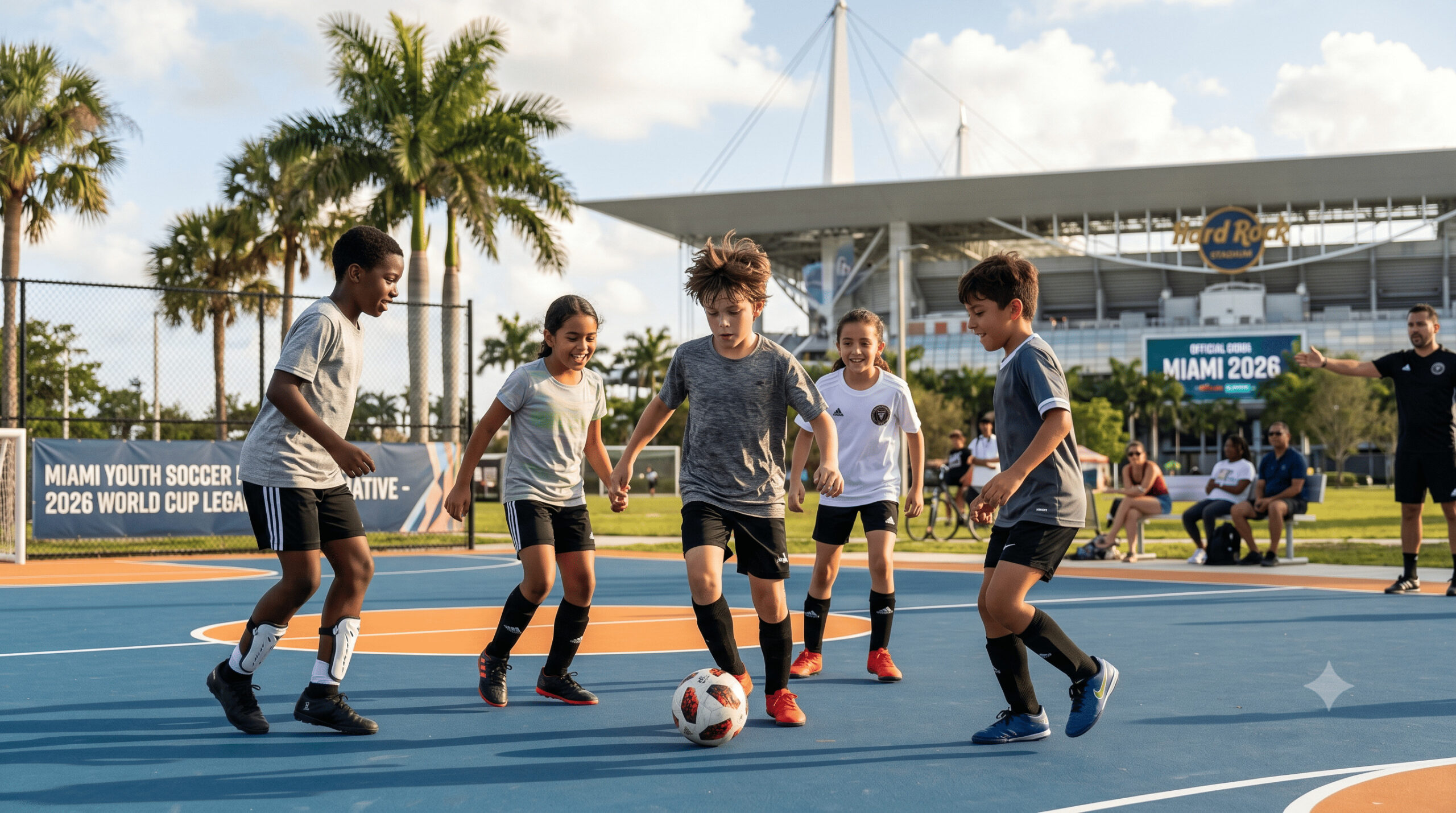
When the FIFA World Cup descends upon South Florida in the summer of 2026, the global spotlight will undoubtedly focus on the massive crowds and elite athletes filling Hard Rock Stadium. Miami is slated to host seven monumental matches, culminating in the highly anticipated Bronze Final on July 18. Yet, while the world watches international superstars battle for ultimate glory, a much quieter, long-lasting transformation is taking root away from the massive grandstands. The true legacy of this tournament won’t just be measured in tourism dollars or broadcast ratings, but in the permanent reshaping of Florida’s youth soccer development landscape.
For decades, the vibrant, culturally diverse communities of Miami-Dade and Broward counties have treated soccer as a tribal ritual. Kids play on patchy grass fields, in cul-de-sacs, and on sandy beaches, driven by an inherent love for the game passed down through generations. However, the sheer gravity of hosting the world’s premier sporting event is injecting unprecedented structural funding and organizational focus into the region. Local clubs, municipal governments, and international foundations are seizing this generational opportunity to overhaul how young athletes are developed, mentored, and supported on and off the pitch.
The Tangible Legacy: 50 Mini-Pitches and Grassroots Infrastructure
The most immediate and visible change in Florida’s youth soccer ecosystem is the aggressive push for accessible infrastructure. Historically, the barrier to entry for competitive youth soccer in the United States—often referred to as the “pay-to-play” model—has sidelined immense amounts of raw talent in underserved communities. The Miami 2026 World Cup Host Committee, in partnership with the U.S. Soccer Foundation and local governments, has launched the Miami-Dade Soccer Initiative to systematically dismantle this barrier.
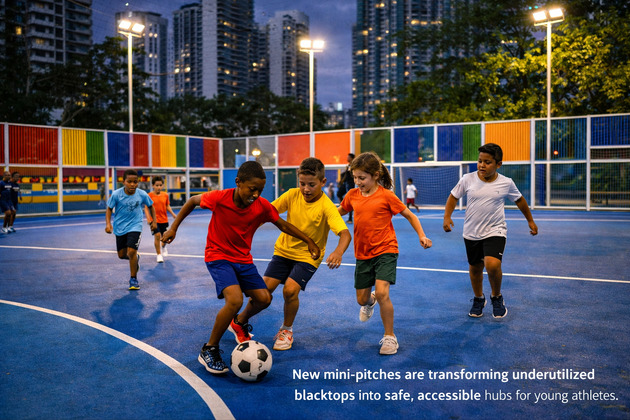
The cornerstone of this initiative is the construction of 50 state-of-the-art soccer mini-pitches across the county. By transforming underutilized spaces in public parks and schoolyards into high-quality, hard-court playing surfaces, organizers are bringing the game directly into the neighborhoods that need it most. These localized hubs eliminate the severe transportation and cost hurdles that typically prevent participation.
Infrastructure Shift Matrix
| Facility Type | Pre-2026 Accessibility | Post-2026 Transformation | Community Impact |
| Traditional Grass Parks | Limited to teams with permit budgets; highly weather-dependent | Upgraded drainage; prioritized for established league play | Sustains higher volumes of weekend tournament traffic |
| Schoolyard Blacktops | Unstructured, often unsafe for competitive training | Converted into 50 official mini-pitches with lighting and fencing | Safe, accessible after-school hubs for marginalized youth |
| Elite Training Centers | Restricted strictly to MLS academies and wealthy travel clubs | Temporary World Cup host facilities transitioning into regional use | Creates localized high-performance pathways |
This infrastructural pivot guarantees that the enthusiasm generated by the tournament translates into daily, structured play. When the global media circus packs up and leaves, these 50 community beacons will remain, fostering technical development and street-style creativity that has historically been the hallmark of South American and European academies.
Elevating Mental and Physical Health Through the One Game One Future Initiative
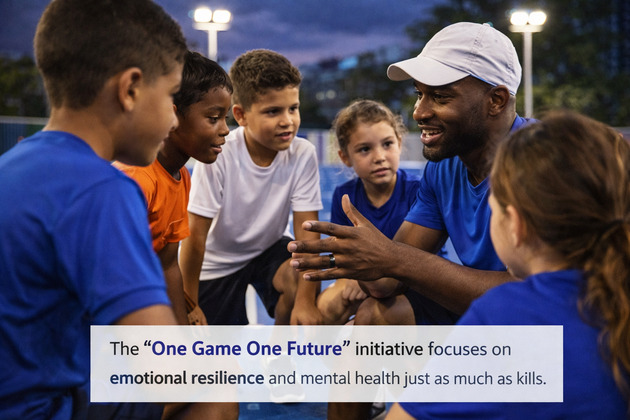
While building physical fields is crucial, the holistic development of the athlete is taking center stage. Modern sports science and youth mentorship have evolved far beyond running wind sprints and practicing corner kicks. As part of the World Cup legacy framework, the “One Game One Future” initiative is rolling out countywide youth soccer clinics at locations like Tropical Park and Haulover Park.
These clinics are revolutionary because they are not strictly focused on ball-handling skills. Partnering with Miami-Dade County Public Schools, the curriculum heavily integrates mental health screenings, social-emotional learning, and obesity prevention. Organizers recognize that the immense pressure of competitive sports, combined with the daily stressors of adolescence, requires a delicate touch. Coaches are being trained in Sport for Development methodologies to build emotional resilience. It is an approach that echoes the necessity of providing practical tools for athletes to manage game-day nerves and off-field anxieties, ensuring that young players develop strong minds alongside strong bodies.
The Global Stage Meets Local Data and Financial Shifts
It is impossible to analyze the impact of the 2026 World Cup without acknowledging the staggering financial and analytical forces it brings to the host region. The event is projected to deliver a $5 to $6 billion macroeconomic boost across North America, permanently re-rating soccer as a domestic asset class. This influx of capital naturally trickles down, expanding youth academies and increasing municipal budgets for parks and recreation.
Simultaneously, the scale of fan engagement is forcing every related industry to modernize its logistical capabilities. The sheer volume of data, predictive modeling, and digital interactions expected during the tournament is unprecedented. We can clearly see how World Cup fever is changing how sportsbooks prepare for a tidal wave of global user activity. That same analytical rigor and data-driven approach are now bleeding into regional youth scouting networks. Florida clubs are increasingly utilizing advanced metrics, video analysis software, and physiological tracking to monitor youth development, moving away from subjective “eye-test” scouting toward professional-grade player profiling.
Fostering the Next Generation of Talent Through Parallel Tournaments
The excitement surrounding 2026 isn’t limited strictly to the FIFA-sanctioned events at Hard Rock Stadium. The gravitational pull of the World Cup is spawning massive parallel competitions designed to showcase emerging talent. Chief among these is “The Youth World Cup,” an expansive international tournament for boys and girls ranging from U8 to U19.
This once-in-a-generation competition features knockout stages and championship finals scheduled to be held at Amelia Earhart Park in Hialeah, Florida, perfectly syncing with the escalating World Cup fever in May and June of 2026. This localized tournament environment offers distinct developmental advantages for young Florida players:
- Direct on-field exposure to diverse, international playing styles and tactical philosophies.
- Unprecedented visibility in front of global scouts, college recruiters, and MLS academy directors who will already be stationed in the region.
By hosting these elite developmental tournaments in Miami’s backyard, local players are gifted a unique chance to measure their skills against the best in the world without the prohibitive costs of international travel.
Sustaining the Momentum Beyond the Bronze Final
The true test of Miami’s World Cup legacy will not be the flawless execution of the matches in the summer of 2026, but the vitality of the local soccer culture in 2030 and beyond. The strategic investments currently being made—from pouring concrete for mini-pitches in underserved neighborhoods to implementing comprehensive mental health programs for adolescent players—are designed to outlast the temporary euphoria of the tournament.
South Florida is already a hotbed for athletic talent. By systematically removing financial barriers, modernizing the scouting infrastructure, and prioritizing the emotional well-being of young athletes, the region is positioning itself as the undisputed capital of youth soccer development in the United States. The boys and girls currently honing their touch on those newly built neighborhood pitches are the direct beneficiaries of this global phenomenon. They are the ones who will carry the spirit of the 2026 World Cup forward, redefining the standard of American soccer for decades to come.