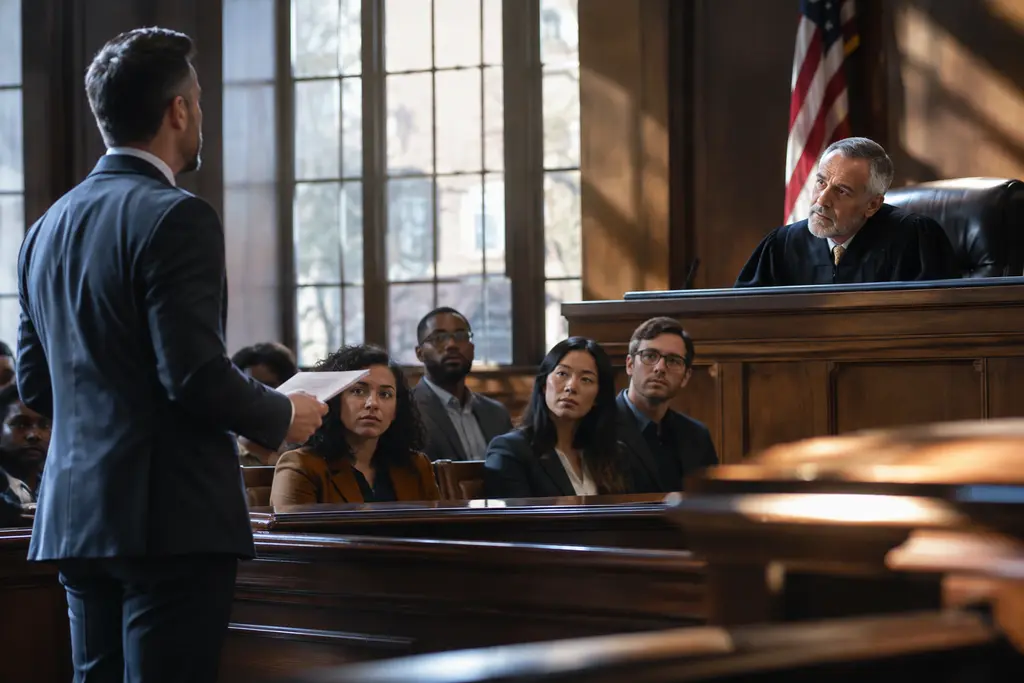
Copyright Concerns are no longer confined to specialist legal circles. In 2026, courts addressed disputes involving internet service providers, AI model training, music generation, stock image platforms, lyrics, books, and reference content. For visual artists, illustrators, designers, costume makers, and sellers of handmade work, the shared issue is practical: how creative material moves through platforms, datasets, uploads, and licensing systems.
The cases do not produce a single rule that creators can apply to every dispute. Some rulings narrowed platform exposure. Others allowed claims to proceed or treated specific uses of protected material as outside fair use. The cautious reading is that courts were drawing lines case by case, with close attention to the conduct alleged, the type of material used, and the technical system involved.
Copyright Concerns After 2026 Court Rulings
Copyright Concerns And Secondary Liability
On March 25, 2026, the U.S. Supreme Court decided Cox Communications, Inc. v. Sony Music Entertainment. The Court reversed an earlier $1 billion jury verdict against Cox and narrowed the conditions under which internet service providers could face contributory copyright liability, describing liability in terms of inducing infringement or providing a service designed for infringement, according to the Supreme Court opinion.
For creators, Copyright Concerns tied to platform responsibility became harder to frame in broad terms after that ruling. The decision did not say infringement has no remedy. It did signal that secondary liability for a communications provider depends on more than the fact that some users infringe. That distinction matters for artists whose work circulates through hosting services, marketplaces, social platforms, and tools that sit between creators and audiences.
The result also matters for platforms because a narrower standard can affect how companies assess repeat-infringer policies, notices, and internal enforcement. Yet the ruling should not be read as a universal shield. The facts of each service, the knowledge alleged, and the way the service responds to infringement claims still matter. For arts businesses, the safest operational lesson is not complacency; it is record keeping, clear rights policies, and prompt handling of credible claims.
Safe Harbor Questions Remained Fact-Specific
Another 2026 dispute showed that safe harbor questions may turn on platform behavior. In McGucken v. Shutterstock, Inc., decided on February 10, 2026, a photographer sued over hundreds of images uploaded without permission between 2018 and 2022. The Second Circuit ruled that Shutterstock might lose DMCA safe harbor protection because it conducted manual review of user content, and the case was remanded for factual determinations.
That procedural posture matters. A remand is not the same as a final finding of liability. Still, the case illustrates why creator-facing platforms cannot assume that every upload is automatically treated as activity solely at the direction of a user. For visual artists, it also shows why takedown records, proof of authorship, and upload histories can become relevant when a dispute moves beyond informal platform reporting.
AI Training Cases Test Fair Use
Books, Headnotes, And Data Provenance
AI training disputes produced some of the most closely watched rulings and settlements of 2026. Final approval was granted on July 20, 2026, for Anthropic’s settlement with authors over AI training books. The settlement required Anthropic to pay $1.5 billion, with about $3,000 per work for some 482,000 books, after it was found to have acquired pirated books via pirate sites, while training AI on books in general was ruled fair use, as summarized by the AI Litigation Report.
The Anthropic outcome is especially instructive because it separated the act of training from the way source material was obtained. That distinction may be uncomfortable for creators, but it is analytically significant. It suggests that courts and settlements may examine both the use of a work inside a technical system and the provenance of the copies used to build that system.
On September 29, 2026, the Third Circuit decided Thomson Reuters v. Ross Intelligence. Westlaw headnotes, described in the research record as creator annotations, were deemed copyrightable, and Ross’s use of them to train its AI tool was not fair use. This ruling was one of the first U.S. appellate decisions addressing fair use in AI training. For artists, designers, and educators, the case is a reminder that human editorial labor attached to reference material may receive serious judicial attention.
Music, Lyrics, And Generative Output Claims
Several music-related disputes developed in parallel. On July 31, 2026, Munich Regional Court I found that Suno infringed copyright by reproducing protected musical works in its AI models and outputs. The court also held that AI models built on stolen intellectual property had no legal protection. On August 3, 2026, a court declined Udio’s motion to dismiss a class action brought by ten creators and transferred the case from Illinois to New York; the suit, filed on October 15, 2025, alleged infringement involving more than 30,117 recordings.
Lyrics claims also remained active. In Concord Music Group v. Anthropic, cross-motions for summary judgment were heard on October 21, 2026. Concord claimed Anthropic used copyrighted song lyrics without permission in its AI model, and the case was awaiting a ruling as of October 29, 2026. These disputes do not answer every question for visual art, but they show how courts are being asked to distinguish training inputs, model behavior, and outputs that may resemble or reproduce protected material.
The same pattern appeared outside music. Major publishers sued Meta on May 5, 2026, in Manhattan federal court, alleging that Meta used millions of books and journal articles, including novels such as The Fifth Season by N.K. Jemisin, without permission to train LLaMA models. Encyclopedia Britannica and Merriam-Webster also pursued fair use litigation against Perplexity, with fact discovery due on October 16, 2026, and expert discovery due on March 15, 2027. For readers tracking adjacent cases, our analysis of AI copyright lawsuit stakes connects these disputes to broader creator payment and licensing questions.
What 2026 Cases Mean For Visual Artists And Sellers

Documentation Became A Practical Risk Tool
For illustrators, photographers, costume designers, and handmade sellers, the 2026 cases point toward a practical discipline: document what you made, where assets came from, and what permissions apply. That does not guarantee a legal outcome, and it should not be mistaken for legal advice. It does make disputes easier to understand when an upload, dataset, remix, listing, or generated output is challenged.
Creator-commerce communities often work across media: sketches become prints, textiles become wearable art, and digital mockups become product photos. Rights questions can follow that chain. A seller using stock elements, AI-assisted drafts, licensed fonts, public-domain references, or collaborative photography should keep clear records of source material and terms. Readers interested in costume and wearable-art culture can explore more about rights-aware creation at Fairy Tale Fashion, where such practices are closely integrated with creative design.
The cases also counsel care with platform assumptions. A marketplace policy, upload review, or automated scan is not the same as a rights clearance. A takedown notice is not always proof of infringement. A claim of fair use is not a guaranteed defense. Artists and small sellers are best served by treating each use of outside material as a separate decision, especially when selling work commercially or promoting it through large platforms.
Copyright Concerns For Creator-Platform Risk
A Cautious Reading For Creative Communities
Copyright Concerns now sit at the intersection of creative authorship, platform design, and machine learning. The 2026 record did not produce one clean answer for every creator or company. Instead, it showed several active fault lines: secondary liability after the Cox decision, fair use in AI training, the legal significance of pirated source material, safe harbor limits, anti-circumvention allegations, and disputes over whether outputs reproduce protected expression.
For arts communities, the measured response is to avoid both panic and false certainty. These cases are not a license to copy, and they are not proof that every new tool is unlawful. They are evidence that courts are asking detailed questions about conduct, source material, platform control, and market effects. Creators should keep stronger records, platforms should avoid vague rights claims, and educators should teach copyright as a working part of studio practice rather than as a footnote after publication.
The most durable lesson from 2026 is that rights management has become part of creative infrastructure. Artists still need room to study, reference, critique, parody, and experiment. Platforms still need workable systems for hosting and discovery. The unresolved task is building those systems without treating creative labor as frictionless raw material.