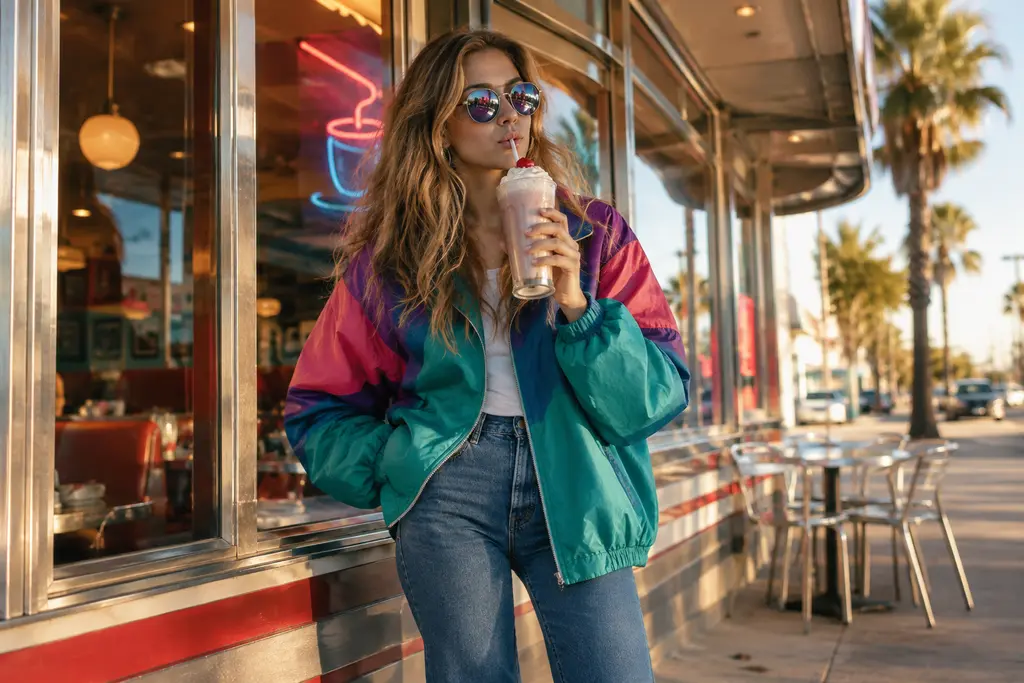
I found no verifiable, source-linked Seller Social Club forecast in the supplied research, so this reading treats the phrase with caution rather than presenting unsupported proprietary claims. What can be assessed is the wider evidence around Retro Fashion Trends, especially the return of 1990s and Y2K-coded shapes in resale, denim, bags, and community commerce. The 1980s signal is present in the research notes, but the strongest cited evidence here comes from Depop and Circana, so the analysis weights the 1990s and early-2000s revival more heavily.
That distinction matters for sellers, stylists, costume makers, and festival communities. Nostalgia is not a single mood. A low-rise jean, a small shoulder bag, a bandage dress, and a wide jort do not carry the same cultural message. Each item asks a seller to decide whether they are presenting period reference, personal styling, subcultural memory, or a new remix. Evidence helps keep those choices grounded.
What Retro Fashion Trends Can Prove
Retro Fashion Trends And The 1990s Signal
Depop’s 2026 trend report, published on December 19, 2025, described “Neo Nostalgia” through sharp increases in search interest for distinct past-era items, including JNCO jorts at +495%, medieval stylings at +240%, and bandage dresses at +542%. The same report said about 65% of people were drawn to styles or items from past eras, with 58% of environmentally concerned consumers also feeling that pull.
Those figures do not prove that every 1990s reference is commercially safe or culturally meaningful. They do show that past-coded items were not just decorative references by late 2025. They had become search behavior. For a seller community, that is a more useful signal than a mood-board claim because search interest points to active curiosity, comparison, and potential buying intent.
The Weaker 1980s Evidence
The supplied research notes included 1980s references, including luxury styling, baggy suiting, gold cuffs, shoulder emphasis, and maximalist runway cues. Yet the linkable evidence permitted for this review centers more clearly on resale nostalgia and denim-led Y2K revival. For that reason, any claim that 1980s fashion is returning with the same measurable force as 1990s and Y2K style should be treated as tentative unless Seller Social Club or another cited source publishes its own data.
This does not make the 1980s thread irrelevant. It simply means the evidence is less direct in this source set. A careful seller might test shoulder structure, high-shine accessories, wider belts, and polished evening references without assuming that all 1980s-coded pieces will perform equally. The stronger finding is not “the 80s are back.” It is that past-era styling is being selectively reactivated.
Why Nostalgia Sells Without Becoming A Copy
Community Taste And Emotional Memory
Nostalgia works because clothes hold memory: school photos, music videos, older siblings’ wardrobes, club flyers, mall retail, family albums, and festival looks. For live-event and costume communities, those cues can become shared language. A pair of wide jeans or a compact shoulder bag can signal era reference without needing to reproduce a specific performer, brand campaign, or copyrighted character.
This is where sellers should be precise. Referencing a decade is different from copying a protected logo, celebrity likeness, or identifiable artwork. This is not legal advice, and individual cases vary, but careful rights clearance is part of responsible creator commerce. Sellers who work with handmade gifts, rave looks, cosplay-adjacent styling, or fan-inspired pieces should separate broad aesthetic influence from direct replication.
For readers tracking how selective revival appears across culture, NextClues has also assessed 2016 fashion trends in 2026 culture, where the key issue is similar: a revival rarely returns as a full copy of its first moment.
How Sellers Can Read The 80s And 90s Signal
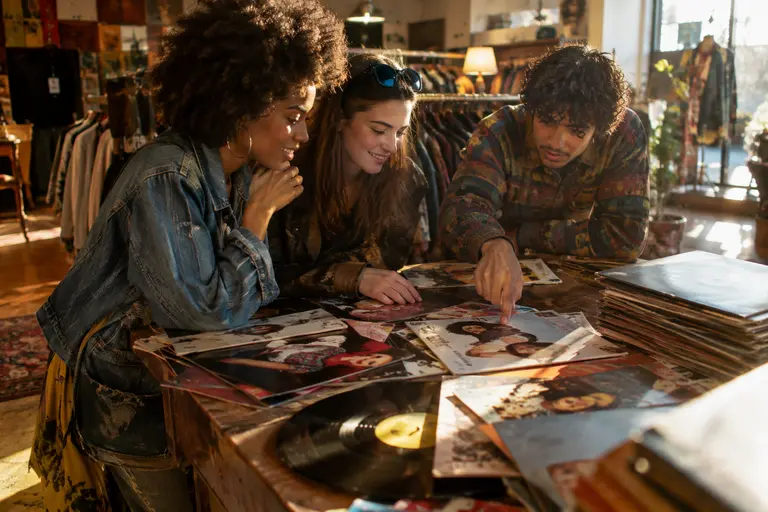
Inventory Choices For Creator Sellers
Circana’s nostalgia retail analysis, published on July 22, 2026, reported that women’s low-rise denim was the fastest-growing type in jeans from January through May 2026. It also said capri jeans rose 7% in dollar sales over the 12 months ending May 2026, small shoulder bags rose 24% in dollar sales during that same 12-month period, and Y2K performance running shoes drove 9% year-to-date growth to May 2026 as lifestyle footwear.
For Seller Social Club readers, those numbers support a practical point: Retro Fashion Trends are not only about statement outfits. They also appear in repeatable product categories. Denim, small bags, and lifestyle footwear are easier to style across everyday settings than a full period costume. That makes them useful for sellers who need items that can move between casual wear, market stalls, music nights, and content shoots.
- Use era labels carefully: “1990s-inspired” or “Y2K-coded” may be clearer than claiming a piece is vintage if provenance is uncertain.
- Separate silhouette from source material: wide legs, capri lengths, and compact bags can be styled without imitating a protected work.
- Track item-level demand rather than decade-level hype, since one revived product category may outperform another.
- Explain condition, fabrication, and sizing clearly, especially for resale and handmade pieces.
The seller opportunity is not simply to chase a decade. It is to identify which cues people are already searching for, then present them honestly. Furthermore, a related site in the same network, Shimply, could provide additional insights for readers interested in broader creator-commerce dialogues, although the claims here focus on the fashion and retail evidence previously cited.
Seller Social Club’s Retro Fashion Trends Forecast
If Seller Social Club’s latest forecast argued that 1980s and 1990s references are resurging, the claim is partly supported by the outside data reviewed here. The firmest support sits with 1990s and Y2K-linked products: low-rise denim, capri jeans, small shoulder bags, jorts, and bandage dresses. The 1980s reading is plausible within the supplied notes, but less firmly documented by the two cited sources used in this article.
The most defensible interpretation is selective revival. Retro Fashion Trends are not returning as museum replicas, and they should not be treated as permission to copy artists, performers, or branded imagery. They are resurfacing as silhouettes, materials, proportions, and emotional references that buyers can adapt to personal identity and community settings. For culture workers and sellers, the task is to read the evidence, credit influence where appropriate, avoid rights shortcuts, and let the audience’s styling practices show which memories still have social force.