
Ever thought about helping your local youth team? Becoming a coach or team parent has big effects on your community.
These roles are more than just organizing games. They help young athletes grow and build strong family bonds. You become a mentor, shaping tomorrow’s leaders.
Seeing kids grow in confidence brings genuine joy. You’ll find talents you didn’t know you had and make a real difference.
When adults get involved in local programs, communities grow closer. Neighbors become friends, and towns get stronger. It’s about creating a place where everyone can succeed.
Whether you’re leading practices or handling snacks, your help is vital. These roles turn ordinary seasons into unforgettable experiences for all.
Role Descriptions and Time Commitments
Finding the right volunteer role in local sports starts with knowing what each job is about. Each role offers a unique experience and needs different amounts of time. Let’s look at three popular roles that keep sports in the community running well.
The scorekeeper is key to keeping games fair. They track points, fouls, and timeouts. You need to be detail-oriented and good at math. Scorekeeping shifts last 2-3 hours, covering the whole game.
Working at the concessions stand is exciting. You’ll prepare food, handle money, and serve customers. It’s great for those who like talking to people. Concessions shifts are 3-4 hours, including setup and cleanup.
The announcer adds energy to games. They announce players, scores, and game info. You need a clear voice and confidence. Announcer jobs usually last 2-3 hours, matching the game length.
Each role has flexible scheduling. Many groups let volunteers pick games that fit their schedule. You can help out for one game or all season.
| Volunteer Role | Key Responsibilities | Time Commitment | Skills Needed |
|---|---|---|---|
| Scorekeeper | Track scores, manage game clock, record statistics | 2-3 hours per game | Attention to detail, basic math |
| Concessions Helper | Food preparation, cash handling, customer service | 3-4 hours per shift | Friendly demeanor, multitasking |
| Announcer | Player introductions, score updates, game announcements | 2-3 hours per game | Clear speaking voice, confidence |
Think about what you like and when you’re free when picking a role. Scorekeeping is behind-the-scenes. Concessions is all about people. Announcing puts you right in the action.
Most groups give a quick training for each role. They want you to feel ready and confident. Even if you’re new, help is always there.
Every volunteer is important. Your time helps create great sports experiences for young athletes. Pick the role that fits your personality and schedule.
Background Checks and Required Trainings
Keeping everyone safe is the top priority for any organization working with volunteers. This section covers the essential screening and education processes that help create secure environments for all participants.
What Are Volunteer Background Checks?
A volunteer background check is a thorough screening process. It confirms a person’s identity and history before they start volunteering. These checks help organizations make informed decisions about volunteer placements.
The most common components include:
- Criminal history searches
- Sex offender registry checks
- Identity verification
- Reference validation
These screenings are typically quick and straightforward for volunteers. Most organizations work with professional screening services. This ensures accuracy and privacy protection.
Why Do Organizations Need Volunteer Background Checks?
Background checks serve multiple important purposes for volunteer programs. They help protect vulnerable populations like children, seniors, and people with disabilities.
These screenings also maintain community trust and ensure legal compliance. Many insurance providers and grant organizations require background checks as part of their coverage terms.
Specialized training programs complement background checks for complete safety. SafeSport certification helps volunteers recognize and prevent abuse in sports environments. Concussion training teaches volunteers to identify head injury symptoms and respond appropriately.
Together, these measures create layers of protection that benefit everyone. Volunteers gain confidence knowing they’re working in a secure environment. Participants receive care from properly screened individuals. Organizations demonstrate their commitment to safety and responsibility.
Scheduling and Shift Management Tools
Managing volunteer schedules doesn’t have to be a headache. The right tools can make it smooth and keep everyone happy and engaged.
Tracking renewal dates manually is overwhelming. A good volunteer management system can automate reminders and streamline the renewal process. This saves time and reduces missed opportunities.
Modern scheduling tools offer great features that make life easier. They help coordinate roles like coaches and team parents without scheduling conflicts.

Digital solutions have clear benefits over traditional methods. Volunteers can view available shifts, sign up for what works with their schedule, and receive automatic confirmations. This creates a seamless experience from start to finish.
Here are the key advantages of using professional scheduling tools:
- Real-time availability updates
- Automated shift reminders
- Easy role assignment
- Simple calendar integration
- Mobile access for on-the-go volunteers
These systems help organizations maintain proper coverage while respecting volunteers’ time. The best tools offer flexibility while maintaining structure.
When choosing your shift management approach, consider these popular options:
| Tool Type | Best For | Key Features | Cost Range |
|---|---|---|---|
| Basic Scheduling Apps | Small groups | Calendar view, email reminders | Free – $20/month |
| Volunteer Management Platforms | Medium organizations | Automated renewals, background check integration | $30 – $100/month |
| Enterprise Systems | Large organizations | Custom reporting, multi-location support | $150+/month |
The right system depends on your organization’s size and needs. Start with what addresses your biggest scheduling challenges.
Remember, the goal is to make volunteering easy and enjoyable. Good tools remove administrative barriers so volunteers can focus on what matters most – helping others.
Communication and Code of Conduct
Clear talk between organizers and volunteers builds trust right away. This open communication makes sure everyone knows their part and what’s expected of them.
Be clear about background checks from the start. Explain why they’re needed for safety. Tell what info will be checked and how it’s kept safe. Also, say what might stop someone from helping out.
A clear code of conduct sets the rules for behavior. It should cover how to act with respect towards everyone involved. It’s about using the right words, respecting personal space, and solving problems.
Keep everyone updated with news or changes. Use emails, texts, and team apps to reach all volunteers.
The code should make sure everyone feels safe and respected. It should also guide how to report problems without fear of getting in trouble.
Training sessions are key to keeping standards high. They let people practice handling different situations. This keeps everyone on the same page all season.
Your communication style is key for your team. Consistent, respectful talk makes a place where people are eager to help out.
Recognition and Retention Ideas
Keeping your sports volunteers happy and valued is key to a strong team. When people feel appreciated, they’re more likely to stay. Simple acts can greatly improve their satisfaction.
Public recognition boosts everyone’s mood. Share volunteer contributions during games or practices. It shows you care and encourages others to help out.
Here are some volunteer recognition ideas that have helped many sports groups:
| Recognition Type | Frequency | Cost Level | Impact Level |
|---|---|---|---|
| Game Day Shout-Outs | Weekly | Free | High Visibility |
| Personal Thank You Notes | Monthly | Low | High Personal Touch |
| Appreciation Events | Seasonal | Medium | Community Building |
| Small Reward Items | Quarterly | Low-Medium | Tangible Appreciation |
Season-end celebrations are memorable for your sports volunteers. Organize a picnic, barbecue, or awards ceremony. Highlight each person’s contributions throughout the season.
Small gifts of appreciation are powerful for retention strategies. Here are some affordable ideas:
- Custom water bottles or tumblers
- Team logo stickers or magnets
- Personalized certificates of appreciation
- Discount coupons from local businesses
Regular updates on volunteer impact are important. Share success stories and how many hours volunteered. This shows their efforts are valued.
Start a volunteer spotlight program. Feature different people each month. Share their stories in newsletters or social media. This strengthens community bonds.
The best volunteer rewards often cost little but mean a lot. A heartfelt thank you, specific praise, or public recognition is more valuable than expensive gifts. Your attention and appreciation show volunteers they’re important to your organization.
Accessibility and Inclusion Roles
Making spaces welcoming for everyone makes sports volunteering truly special. By focusing on accessibility and inclusion, we let people of all abilities join in. This makes sports volunteering something everyone can enjoy.
Adaptive sports offer some of the most rewarding volunteer work. These programs change traditional sports to fit different abilities. Volunteers might help with special equipment, offer one-on-one support, or learn new coaching skills.
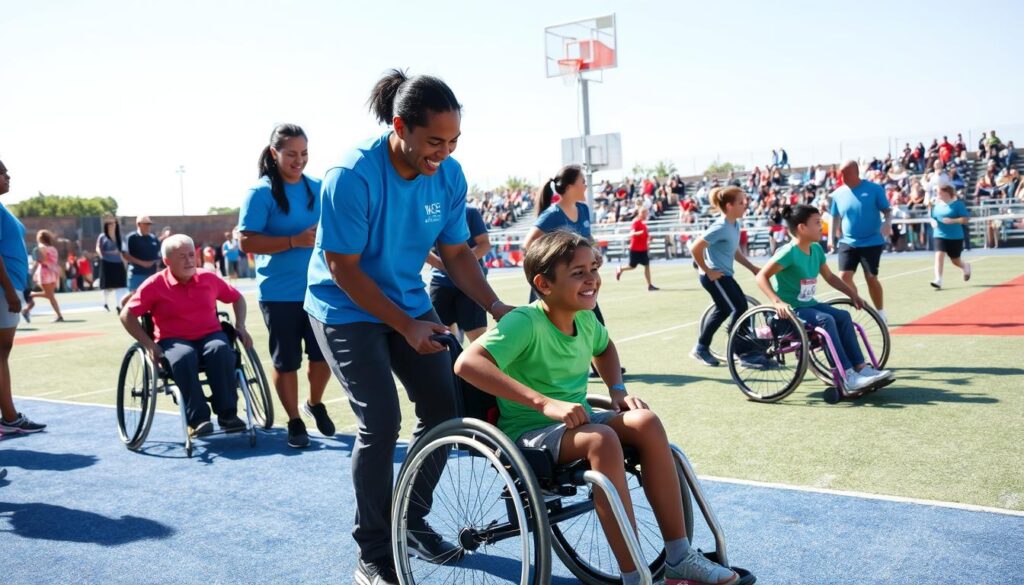
Inclusive volunteer roles let people with different abilities contribute. Some roles include:
- Buddy system partners who provide friendly support
- Accessibility coordinators who check venue accommodations
- Communication specialists who ensure clear instructions for all
- Equipment managers who adapt gear for different needs
These roles make everyone feel valued. Volunteers often find joy and connection in helping with accessibility needs.
The community spirit grows from inclusive volunteering. Participants gain confidence, volunteers learn new views, and the whole organization becomes more diverse and lively.
Simple accommodations can greatly improve accessibility. Clear paths, flexible schedules, and patient communication help everyone participate.
When sports programs fully include everyone, they build strong communities. Every volunteer who supports accessibility helps make the world more welcoming through sports.
Risk Management and Incident Reporting
Keeping everyone safe is our top priority when volunteering at sports events. Good risk management helps prevent problems before they happen. It also gives everyone clear steps to follow if something goes wrong.
Volunteers play a key role in maintaining a secure environment. Your awareness and quick action can make all the difference. Let’s explore how you can help manage risks and handle incidents properly.
Every volunteer should know the basic emergency procedures. This includes understanding evacuation routes and first aid locations. Familiarize yourself with these details during your orientation.
Incident reporting is key for continuous safety improvement. When you report concerns promptly, you help protect participants and volunteers. Your reports also help organizations improve their safety protocols.
Common Incident Types and Reporting Procedures
| Incident Type | Immediate Action | Reporting Method |
|---|---|---|
| Minor Injury | Provide first aid | Incident form within 24 hours |
| Equipment Issue | Remove from use | Report to supervisor immediately |
| Behavior Concern | Document observations | Email to safety coordinator |
| Emergency Situation | Follow emergency protocol | Immediate verbal report followed by written |
Background checks are part of our risk management strategy. They help ensure everyone’s safety at events. These checks create a trustworthy environment for all participants.
Remember that risk management is everyone’s responsibility. Stay alert and communicate any concerns you notice. Your vigilance helps create amazing charity sports events that everyone can enjoy safely.
If you’re ever unsure about a situation, always err on the side of caution. Report your concerns to your supervisor promptly. It’s better to report something minor than to miss something important.
Regular training sessions will keep you updated on safety protocols. These sessions help volunteers feel confident in handling various situations. They also ensure everyone understands their role in maintaining safety.
Quick‑Start Sign‑Up Template
Ready to volunteer with local sports teams? Our simple template makes it easy to start. It’s designed to be quick and easy for you.
The template asks for the basics to find the right spot for you. You’ll share your contact info, what roles you like, and when you’re free. This helps organizers place you where you’ll do best.
- Contact information section
- Role preference options
- Availability calendar
- Emergency contact details
- Special skills or certifications
Many groups use online tools like SignUpGenius for sports teams to make signing up easy. These platforms let you see opportunities and pick shifts that work for you.
Be honest about your availability. This ensures you don’t take on too much but can help out a lot.
Your role preferences are important. They help organizers know where you’ll do your best. Whether you like coaching, helping with admin, or supporting events, your interests count.
This quick-start method cuts down on confusion. In just a few minutes, you can fill out your profile and start helping young athletes.
Success Stories You Can Replicate
Volunteering in sports can change lives. A coach in Chicago transformed a struggling team into league champions. The team learned discipline and teamwork.
Fundraising efforts also bring big wins. A volunteer in Texas raised over $10,000 for new equipment. Simple ideas like themed snack nights drew crowds.
Your involvement matters. Start with a role that fits your skills. Even small contributions add up. Join a local league and make a difference today.