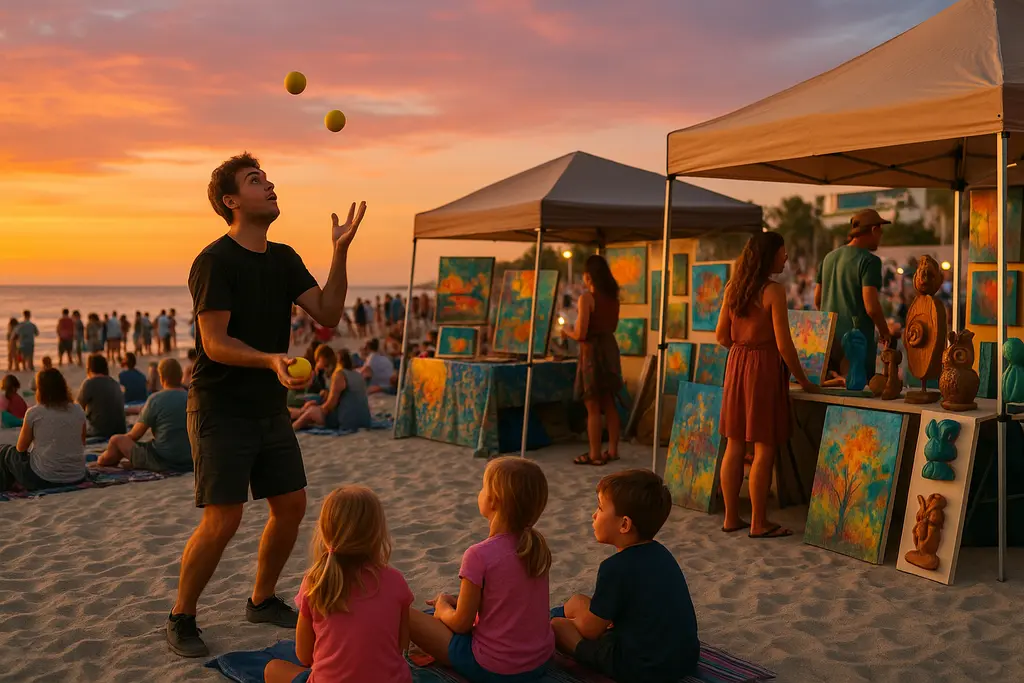
The Laguna Beach Pageant and the Festival of Arts Fine Art Show sit at the center of Laguna Beach’s summer arts calendar, pairing juried visual art with a theatrical format that asks viewers to look slowly. For the 2026 season, the supported highlights are clear: the Festival of Arts Fine Art Show is scheduled for July 7 to September 3, 2026, and is described as featuring more than 100 award-winning Orange County artists at 650 Laguna Canyon Road, according to the official Festival of Arts site.
That pairing matters because the event is not simply an exhibition with an evening performance attached. It places local artists, art education, stagecraft, music, and art-historical reference in close contact. For community organizers, collectors, visiting families, and artists watching audience behavior, the season offers a useful case study in how an arts festival can gather different publics without reducing art to a single kind of experience.
2026 Festival Season At A Glance
What Is Firmly Supported For 2026
The Festival of Arts Fine Art Show is presented in the research as running from July 7 through September 3, 2026. The same research states that the show features more than 100 award-winning Orange County artists. Those details support a practical reading of the event: visitors can treat the Fine Art Show as a sustained summer exhibition rather than a single-night program. That longer run gives audiences more than one way to engage, whether through a focused art visit, an evening paired with the Pageant, or a return trip after seeing work that invites closer attention.
The season also includes the Pageant of the Masters, with the 2026 theme listed as “The Greatest of All Time.” The published event description names artists including Michelangelo, Picasso, Monet, Van Gogh, Kahlo, and Rockwell as part of the 2026 framing, according to SparkOC’s event listing. That selection signals a theme built around widely recognized figures, though recognition alone should not be confused with simple interpretation. Each name carries a different set of cultural, historical, and visual associations.
How To Read The Schedule Claims Carefully
The research notes nightly Pageant performances from July 9 to September 4, 2026, at 8:30 PM in the Irvine Bowl amphitheater. Because event details can change, especially ticketing, access, and day-by-day availability, readers should verify timing directly with official event channels before making plans. That caution is not a lack of confidence in the season; it is a fair standard for arts coverage. The difference between a general season highlight and a dated itinerary matters for visitors booking travel, arranging group attendance, or coordinating accessibility needs.
For arts communities, the long season also changes the rhythm of participation. A local painter showing work across many weeks may meet casual tourists, returning collectors, students, and other artists. A theater crew supporting a nightly production may be working within a repeatable structure while still relying on precision, stamina, and live audience energy. Those two modes of presentation sit side by side, and that is part of the event’s appeal.
Laguna Beach Pageant As A Living-Art Form
Why The Laguna Beach Pageant Format Matters
The Laguna Beach Pageant is best understood through its “living pictures” format, in which people are staged to recreate artworks. The basic concept may sound direct, yet its effect depends on a layered collaboration among scenic design, costume work, lighting, makeup, music, narration, and disciplined stillness. The audience is not only seeing a reproduction. It is watching human labor create the illusion of a painted or sculpted image.
That distinction is useful for anyone thinking about art history in public life. A museum wall text usually asks a viewer to stand before an object. The Pageant asks the viewer to consider how an image can be restaged by bodies and craft teams. This does not replace the original artwork, and it should not be treated as a substitute for studying the artist’s context. It can, however, prompt questions that are valuable for arts education: What makes an image recognizable? Which details carry the identity of a work? How much does lighting guide interpretation? What happens when a still artwork becomes a timed performance?
Respecting The Source Art And The Stage Artists
A cautious reading also respects the many hands involved. The named masters in the 2026 theme are famous, but a live production is not carried by fame alone. It depends on contemporary artists and technicians who build the audience experience. In community arts coverage, that point deserves care. Celebrating recognizable art-historical references should not erase the people who construct scenery, fit costumes, prepare performers, arrange music, or guide visitors through the site.
Rights and reproduction questions should also be framed with care. Public presentations inspired by artworks can involve different permissions, public-domain considerations, estate interests, venue policies, and production choices. This article is not offering legal advice. For artists, sellers, and educators, the safer principle is to avoid assuming that a famous image is free to reuse commercially and to check the relevant rights status before making derivative goods, marketing materials, or fan merchandise.
Reading The Artist List With Care
Familiar Names Do Not Mean Simple Meanings
The 2026 Laguna Beach Pageant title, “The Greatest of All Time,” invites comparison across very different artistic traditions. Michelangelo and Monet do not ask the same things of a viewer. Picasso and Rockwell occupy different positions in art discourse and popular memory. Van Gogh and Kahlo are both globally recognizable, yet their public images are often shaped by biography as much as formal analysis. That makes the theme appealing, but it also calls for restraint in how we speak about influence and greatness.
Ranking artists can be entertaining, but it can flatten history if handled carelessly. A stronger reading asks what each selection contributes to the evening’s visual argument. Does the production draw attention to composition, color, gesture, cultural symbolism, or public memory? Does it invite audiences to revisit an artist they thought they already knew? The answer may differ from scene to scene, and the value of the Pageant may lie partly in that variation.
Festival Viewing Beyond The Famous Names
The Fine Art Show adds a counterweight to the canon-centered Pageant theme. More than 100 Orange County artists are presented in the research, which means visitors have a chance to move from historical reference into current regional practice. That movement is healthy for an arts audience. It reminds us that art is not only preserved in major names; it is also made, discussed, priced, taught, and collected within living communities.
A summer art show can reveal how artists present bodies of work, speak with visitors, price original pieces, and build trust without relying on exaggerated claims. None of that requires unsupported trend language. It requires patient looking and fair attention to the maker’s own stated practice.
- Visitors interested in collecting can ask artists about medium, process, edition size, and care instructions.
- Students can compare how contemporary artists use color, scale, subject, and materials after seeing staged references to historic works.
- Community groups can treat the event as a model for pairing performance, exhibition, education, and public gathering.
Laguna Beach Pageant Community Context
Why The Event Still Rewards Slow Attendance
The Laguna Beach Pageant works best when visitors allow time for both sides of the experience. Arriving only for a performance may satisfy a schedule, but it can miss the dialogue between the Fine Art Show and the staged production. The exhibition gives viewers contact with working regional artists. The Pageant then places art history into a theatrical frame. Together, they create a broader civic arts experience than either format would offer alone.
From a community-organizing perspective, that combination is worth studying. The event connects tourism with local creative labor, but the relationship should not be romanticized. Large seasonal events require planning, staffing, crowd management, and clear visitor information. They also depend on audiences who treat artists, workers, volunteers, and fellow guests with respect. Good cultural participation is not passive consumption; it is a form of attention.
The 2026 season’s most useful highlight may be this balance: a fine art show centered on Orange County artists, paired with a Pageant theme that draws on major names from art history and popular visual memory. If visitors approach the season with curiosity rather than checklist thinking, the event can support both enjoyment and deeper art literacy. That is the kind of public arts gathering Laguna Beach continues to be associated with in the research provided: not just a night out, but a structured meeting point for art, performance, and community life.