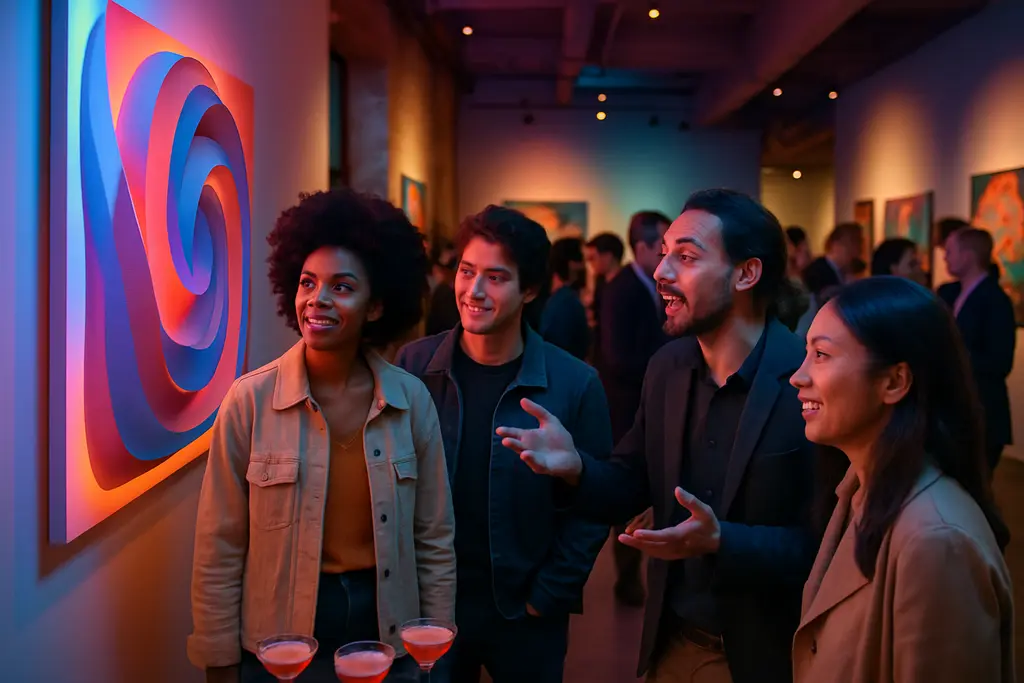
Chicago Exhibition Week opened on September 14, 2026, as a seven-day arts program running through September 20, 2026. Its stated scale—75 participating spaces, including 44 commercial galleries—makes it a citywide organizing effort as much as an exhibition calendar, according to the official program page. The most useful way to read the week is not as a single fair with one center, but as a set of linked invitations across museums, galleries, cultural institutions, workshops, performances, talks, food and drink programs, and neighborhood art spaces.
That matters for artists and audiences alike. A dispersed model can bring attention to smaller venues while also using major institutions as anchors. It can help visitors connect an exhibition opening with a public program, a dance performance, or a hands-on session. Still, scale alone does not prove access, equity, or cultural depth. Those claims need evidence beyond numbers. What the published schedule does show is a broad civic effort to place contemporary art, collecting, performance, and maker practice in public conversation across one week.
What Chicago Exhibition Week Covers
Chicago Exhibition Week By The Numbers
Chicago Exhibition Week is scheduled for September 14–20, 2026. The research supplied for the event identifies 75 participating spaces, with 44 commercial galleries included in that count. The prior edition in 2025 drew about 10,000 attendees over a long-weekend format. The 2026 program has been extended to a full seven days, which changes the rhythm of participation. Rather than concentrating attention into a compressed opening rush, the longer schedule gives institutions and smaller spaces more room to place talks, receptions, performances, and workshops on different days.
Numbers can be persuasive, but they need context. A 75-space program does not mean every visitor will experience the same version of the event. Someone focused on museum exhibitions may build a very different path from someone seeking artist-run programs, commercial gallery openings, printmaking workshops, or performance. For community organizers, that variety is both a strength and a challenge. It creates many points of entry, yet it also asks audiences to make choices based on time, location, cost, accessibility, and personal interest.
From Long Weekend To Seven Days
The move from a long-weekend format to a full week is one of the clearest structural changes in 2026. A longer calendar can reduce pressure on any single day and may allow more thoughtful pacing for institutions and audiences. It also gives artists and presenters more chances to meet people outside a standard opening-night crowd. That said, the public record available here does not establish how participation is distributed by neighborhood, venue size, or artist background. Those are the kinds of questions worth asking after the week closes on September 20, 2026.
Programs Across Galleries Museums And Workshops
Exhibitions And Performances Named In The Program
The listed highlights span several types of art presentation. Featured exhibitions and institutional programs include Jill Mulleady: The Passenger at the Art Institute of Chicago, Slow Dance at the Museum of Contemporary Art Chicago, Karimah Ashadu: Tendered at the Renaissance Society, a Brendan Fernandes public dance program at the Driehaus Museum, and Harris Theater’s Dancing with Bob, a performance celebrating the Rauschenberg-Cunningham collaborations.
Several time-specific items help show how the week mixes formal exhibition viewing with social and participatory formats. The CXW Launch Party is listed for Tuesday, September 15, 2026, from 9–11 pm at the Museum of Contemporary Art Chicago. Magic Hour Gallery’s inaugural exhibition is listed for Thursday, September 17, 2026, from 6–10 pm in an SAIC alumni event notice. A printmaking workshop at UIC Gallery 400 is scheduled for Saturday, September 19, 2026, from 12:30–4:30 pm.
Workshops As Cultural Access Points
Workshops deserve special attention because they shift audiences from looking to making. A printmaking session, for example, can help visitors understand process, repetition, material choice, and editioning in ways that a finished work alone may not. That does not make the workshop more valuable than the exhibition; it makes it a different kind of learning space. In community arts practice, these settings often help people who feel uncertain in formal galleries build confidence through touch, demonstration, and conversation.
The program also includes exhibition openings, closing receptions, gallery walks and tours, auctions, performances, artist talks, and food and drink events. That range suggests an art week shaped around both art objects and social connection. For artists, the benefits may include visibility and direct audience contact. For audiences, the benefit is exposure to several kinds of art labor: curating, installing, publishing, performing, teaching, collecting, and hosting.
- September 15, 2026: CXW Launch Party at the Museum of Contemporary Art Chicago, 9–11 pm.
- September 17, 2026: Magic Hour Gallery inaugural exhibition opening, 6–10 pm.
- September 19, 2026: Printmaking Workshop at UIC Gallery 400, 12:30–4:30 pm.
- September 20, 2026: Free admission options at several institutions with a completed CXW Map.
How The Dates Shape Access And Attention
Free Admission And The CXW Map
Because Chicago Exhibition Week began on September 14, 2026, the access details should be read as active during the September 14–20 window, not as a recap. One practical feature is the Sunday, September 20, 2026 free admission option tied to a completed CXW Map. The research identifies participating institutions for that offer as including the Society for Contemporary Art, the Art Institute of Chicago, the Driehaus Museum, and MCA Chicago.
Free admission can lower one barrier, though it does not remove all barriers. Transportation time, work schedules, disability access, child care, and comfort in institutional spaces all affect whether a public invitation becomes real access. A careful assessment of the week should ask not only how many doors are open, but which communities can use those openings without undue cost or pressure.
Longer Exhibitions Beyond The Week
Several exhibitions associated with the schedule extend beyond September 20, 2026. 82 Nights Only at Gertie Hub runs from September 16 through December 13, 2026. Abigail Lucien: Blood of the Earth at the Art Institute runs from June 18, 2026, through January 25, 2027. A Plot of One’s Own 一亩三分地 at the Chinese American Museum of Chicago opens on September 19, 2026, and runs through August 31, 2027.
Those longer dates are significant because they prevent the week from being judged only by who can appear during a single stretch in mid-September. They also give educators, families, and cultural groups room to return after the opening attention fades. For a citywide arts program, the afterlife of an exhibition can matter as much as the opening crowd.
Why The 70 Plus Format Matters For Artists
Visibility Without Flattening Difference
A 70-plus venue structure can create a shared public frame without requiring each space to behave the same way. Museums, commercial galleries, cultural institutions, workshops, and artist-focused hubs each work with different resources and responsibilities. Treating them as interchangeable would flatten the very differences that make the week useful. A museum exhibition, an artist talk, a dance program, and a printmaking workshop ask audiences to pay attention in different ways.
The presence of 44 commercial galleries also raises questions about the relationship between public culture and the art market. Commercial galleries help sustain artists through sales, representation, and collector networks, but market attention is not the same as community value. The strongest coverage should keep those categories distinct. A well-attended opening, a meaningful workshop, a serious institutional exhibition, and a successful sale may overlap, but they are not identical measures of artistic impact.
Rights And Respect In Event Coverage
Arts coverage around a citywide program should also be cautious with images, artist statements, and likeness. Sharing installation photos, quoting artists, or promoting works for sale requires attention to permissions and accurate credit. This is not legal advice, but it is a basic editorial ethic: do not imply a license, endorsement, or trend without support. For readers comparing cultural events with creator commerce and handmade communities, the related site Shimply offers a parallel space in the same network where making, selling, and audience trust are also central concerns.
Respectful coverage should name artists and venues accurately, avoid invented quotes, and separate observation from proof. If a program seems well attended, say what was observed rather than claiming a citywide movement. If a workshop feels welcoming, explain the conditions that created that feeling. Cultural writing gains strength when it resists easy exaggeration.
Chicago Exhibition Week And Community Life
A Measured Read On The 2026 Program
The strongest reading of Chicago Exhibition Week on its opening date is that it creates a shared civic frame for art across September 14–20, 2026. The schedule connects major institutions with galleries, workshops, public programs, and social events. It includes 75 participating spaces and a stated mix of openings, closings, tours, performances, artist talks, auctions, food and drink events, and hands-on activity.
What remains uncertain, at least from the available research, is how participation will be distributed across the city by the close of September 20, 2026. Attendance counts, neighborhood participation, artist feedback, and visitor experience will all matter in judging the week after it ends. For now, the evidence supports a cautious but engaged view: the 2026 program gives Chicago audiences many ways to meet contemporary art, and it gives artists and organizers a concentrated period for public contact. The task for critics, visitors, and community workers is to meet that scale with careful attention rather than easy applause.