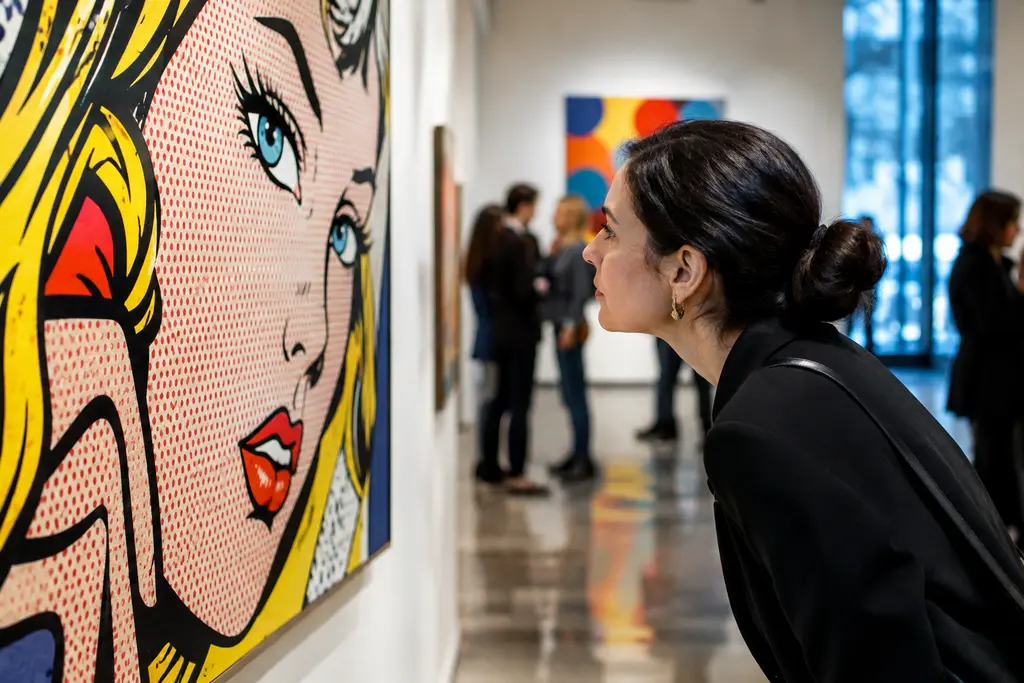
Lichtenstein Like New is on view at the Whitney Museum of American Art in New York from October 11, 2026 through May 10, 2027, and its timing gives the show a charged cultural position rather than a purely celebratory one. The exhibition is presented as the first major New York retrospective of Roy Lichtenstein’s work since 1993, with approximately 130 works across six decades, according to the Whitney exhibition page. That scale matters because Lichtenstein is often reduced to a handful of instantly recognizable Pop images. The Whitney’s presentation asks visitors to consider a longer practice: paintings, drawings, sculpture, collage, prints, and film, from the early 1940s through the 1990s.
As someone who cares about how museum shows land in community life, I read this exhibition as more than a display of familiar works. It is a public test of how audiences talk about copying, quotation, perception, and the social life of images. Those issues can be exhilarating in a gallery and sensitive in studio, classroom, and creator-commerce settings. The most useful response is not to flatten the debate into praise or dismissal, but to look closely at what the exhibition places in front of us and what questions it leaves active.
Why Lichtenstein Like New Matters Now
Lichtenstein Like New And Image Circulation
The force of the exhibition lies in how it frames Lichtenstein’s work as a sustained study of image circulation. Research materials for the show stress his interest in perception, appropriation, and the way images shift meaning over time. That approach feels especially pointed in a culture where pictures move quickly across screens, archives, storefronts, and automated image systems. The museum context slows that movement down. It asks visitors to treat an image not only as a surface, but as something with source, scale, material, audience, and afterlife.
The works named in the exhibition materials include Look Mickey (1961), Girl with Ball (1961), Masterpiece (1962), Drowning Girl (1963), and Little Big Painting (1965). These are not minor selections. They sit close to the public memory of Lichtenstein’s art, especially his use of commercial image language, hard outlines, stylized emotion, and the dot structures that became central to his public identity. Yet the exhibition’s six-decade span resists the idea that one visual device can explain the whole practice.
For community organizers, educators, and artists, Lichtenstein Like New offers a useful case study in how a familiar style can become a shared reference point while still carrying unresolved questions. The exhibition does not need to settle every debate in order to be useful. Its value comes from bringing many periods and media together so that visitors can compare early choices with later revisions, expansions, and returns.
What The Whitney Installation Changes
Scale, Murals, And Reconstructed Rooms
The Whitney installation is significant because it changes the viewer’s sense of Lichtenstein’s scale. A report from Wallpaper notes that the museum’s fifth-floor gallery, about 1,700 square meters, has been arranged through thematic groupings, with the “Mirror” works receiving their own room. That physical staging matters. Lichtenstein can be remembered through small reproductions, but the exhibition asks viewers to measure the work through space, repetition, and bodily movement.
One of the most striking installation decisions is the recreation or reinterpretation of large-scale murals, including the nearly 96-foot-long Greene Street Mural, originally made in 1983. That gesture shifts attention from the single framed canvas to an immersive spatial work. It also encourages a slower reading of how Lichtenstein used graphic clarity at architectural scale. In reproduction, his works can feel almost frictionless. In a gallery, the size and placement can make the act of looking feel more physical.
The reconstruction of his 1962 debut of Pop-style work at Leo Castelli Gallery is another key curatorial move. According to the research materials, the exhibition brings together all works from that first Castelli show for the first time. This kind of reconstruction can help audiences understand how a body of work first appeared as a group, not just how later art history isolated its most famous examples. It is a reminder that exhibitions themselves shape artistic reputation.
- The exhibition runs from October 11, 2026 through May 10, 2027.
- It includes approximately 130 works across six decades.
- Media include painting, drawing, sculpture, collage, prints, and film.
- Curatorial leadership includes Whitney curator Meg Onli and guest curator Alex Da Corte.
Appropriation, Perception, And Respectful Reading
Reading Sources Without Flattening Artists
Any serious discussion of Lichtenstein has to address appropriation with care. The exhibition’s own framing, as described in the research, places image circulation and shifting meaning near the center of the conversation. That does not erase concern about source images, comic artists, commercial illustration, or the unequal attention that museum culture can assign to different makers. It does mean the show gives viewers a structured place to ask those questions with evidence in front of them.
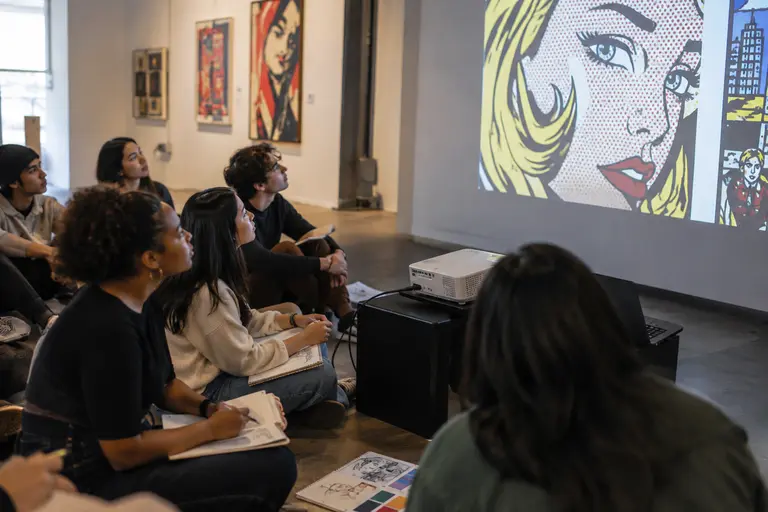
This is where art criticism and community practice meet. In classrooms, local arts programs, and maker circles, Lichtenstein’s work can prompt productive discussion about influence, credit, quotation, and context. For creators, the practical lesson is caution: visual inspiration and rights clearance are separate matters. A museum exhibition can illuminate historical practice, but it does not grant permission to copy protected images, characters, or living artists’ work for commercial use. That distinction protects artists as well as audiences.
Readers following the originality debate may also find a related NextClues discussion of questions of originality useful, since the Whitney show has renewed interest in how art institutions frame copying and transformation. For those tracking art-adjacent maker culture, Shimply serves as a relevant reference, although it’s important to approach rights questions with care.
The curatorial pairing of Meg Onli and Alex Da Corte is also notable because it brings contemporary perspective to Lichtenstein’s reception. The research materials identify Onli as a Whitney curator and Da Corte as guest curator. That pairing suggests a show interested not only in historical placement, but also in how younger and present-day audiences encounter the work. Still, a cautious reading is needed. Curatorial intent can open pathways, but visitors bring their own knowledge of comics, advertising, museum authority, and image reuse.
Community Meaning Of Lichtenstein Like New
The community impact of a retrospective depends on what happens after the first wave of attention. Lichtenstein Like New can support public conversations about Pop art, media literacy, and the ethics of looking. It can also remind local arts groups that accessibility and seriousness do not have to be opposed. Lichtenstein’s imagery is often immediately legible, yet the debates around it are layered enough for sustained discussion.
For New York audiences, the exhibition’s return to Lichtenstein after more than three decades without a major local retrospective carries institutional weight. For visitors from elsewhere, it offers a concentrated view of an artist whose public image can be both familiar and incomplete. The inclusion of works such as Rouen Cathedral, Set III (1968–69) and Artist’s Studio “The Dance” (1974), along with the better-known early 1960s paintings, helps broaden the conversation beyond a single Pop formula.
The lasting value of Lichtenstein Like New may be its insistence that famous images still need fresh scrutiny. Not because every viewer must leave with the same judgment, but because shared cultural memory deserves careful testing. A good exhibition can gather people around admiration, discomfort, curiosity, and disagreement without asking them to pretend those responses are identical. That is where art becomes part of civic life: not as decoration, but as a public setting for better questions.