
Getting your child into the perfect sports program starts with one simple step: registering early. Many parents find out the hard way. Waiting until the last minute can lead to disappointment when popular programs fill up quickly.
Different recreation departments operate on unique schedules. For example, Florence programs open registration on August 1st for Fall Baseball. ICRC, on the other hand, follows quarterly periods like July 10-August 7 for their fall season.
Early registration isn’t just about securing a spot—it’s about maximizing opportunities. Many departments offer scholarships, like Beaufort County Parks & Rec. But these often have early application deadlines.
Planning ahead reduces stress for busy families. It ensures children get the best possible experience. Don’t let procrastination cost your child their chance to participate in these valuable programs!
Seasonal Calendar by Sport
Planning your child’s sports activities can be like solving a puzzle. Each sport has its own registration times. These times change based on where you live and the sports group.
Let’s look at the typical sports seasons and when you can sign up. We’ve gathered data from Beaufort County, Florence, and ICRC. This gives you a clear view of when sign-ups usually happen.
Winter Sports Registration
Winter sports are mostly indoor activities for colder months. Basketball is the top sport during this time in all areas.
| Organization | Sport | Registration Period |
|---|---|---|
| Beaufort County | Basketball | September 1 – October 10 |
| Florence | Basketball (ages 5-6) | October 1 – 30 |
| Florence | Basketball (ages 7-17) | November 1 |
| ICRC | Winter Sports | October 9 – November 6 |
Spring Sports Registration
Spring brings outdoor favorites like baseball, softball, soccer, and lacrosse. It’s the busiest season for youth sports.
| Organization | Sport | Registration Period |
|---|---|---|
| Beaufort County | Lacrosse/Baseball/Softball | January 1 – 30 |
| Beaufort County | Flag Football/Soccer | January 1 – February 13 |
| Florence | Soccer | January 1 |
| ICRC | Spring Sports | January 15 – February 12 |
Summer Sports Registration
Summer programs include basketball and other indoor sports to avoid the heat.
| Organization | Sport | Registration Period |
|---|---|---|
| Beaufort County | Basketball | April 1 – May 8 |
| ICRC | Summer Sports | April 23 – May 21 |
Fall Sports Registration
Fall is filled with sports like football, soccer, cheer, and baseball. It offers the most variety across organizations.
| Organization | Sport | Registration Period |
|---|---|---|
| Beaufort County | Cheer/Flag Football/Soccer/Baseball/Softball | June 1 – July 17 |
| Florence | Fall Baseball | August 1 – 28 |
| Florence | Cheer | July 1 |
| Florence | Football | July 1 |
| Florence | Softball | July 28 – August 24 |
| Florence | Volleyball | Until September 1 |
| ICRC | Fall Sports | July 10 – August 7 |
Remember that these dates are general guidelines. Specific dates might change from year to year. Always check with your local organization for exact dates.
Mark your calendars early for the sports your child wants to play. Popular programs fill up fast when registration opens. Planning ahead helps your athlete secure their spot on the team!
Rec vs Club: What’s the Difference?
Knowing the difference between recreational and club sports helps you pick the best for your young athlete. Both offer great experiences but serve different needs.
Recreational leagues focus on fun and basic skills. They welcome all skill levels and stress participation over winning. Florence’s programs are great at this, helping kids build confidence with basic techniques.
Club teams are more competitive and focus on skill improvement. They often hold club tryouts to form teams of similar skill levels. Beaufort offers both types to meet various needs.
ICRC shows how to mix fun with competitive elements. They aim to develop skills while keeping sports enjoyable for young players.
When deciding between recreational and club sports, consider these differences:
| Factor | Recreational Leagues | Club/Travel Teams |
|---|---|---|
| Cost | More affordable | Higher fees |
| Time Commitment | 1-2 practices per week | 3-4 practices plus tournaments |
| Skill Level | All abilities welcome | Often requires tryouts |
| Philosophy | Fun and fundamentals | Competition and development |
| Travel | Local games only | Regional tournaments |
Recreational sports are great for introducing kids to sports. They focus on basic skills without too much time commitment. Many kids find their passion for sports here.
Club sports offer deeper training for dedicated athletes. The club tryouts help match players with the right level of competition. This is perfect for kids who want to improve their sport skills.
Both paths help young athletes grow in unique ways. Recreational leagues build confidence through fun participation. Club teams challenge players with competitive environments and advanced skills.
The right choice depends on your child’s interests and your family’s schedule. Some kids do well in recreational settings, while others prefer the challenges of club sports. Many communities offer both to meet different needs.
Children can move between programs as their interests change. Starting with recreational sports helps build foundational skills. Some may later choose club tryouts for more competitive chances.
Tryouts and Player Evaluations
Understanding the evaluation process helps both parents and young athletes feel more confident. These sessions are designed to create balanced teams where every child can thrive and develop their skills.
Evaluations typically involve a series of drills and scrimmages that showcase different abilities. Coaches look for throwing accuracy, running speed, catching skills, and overall game awareness. The focus is on observing how players perform in various situations.
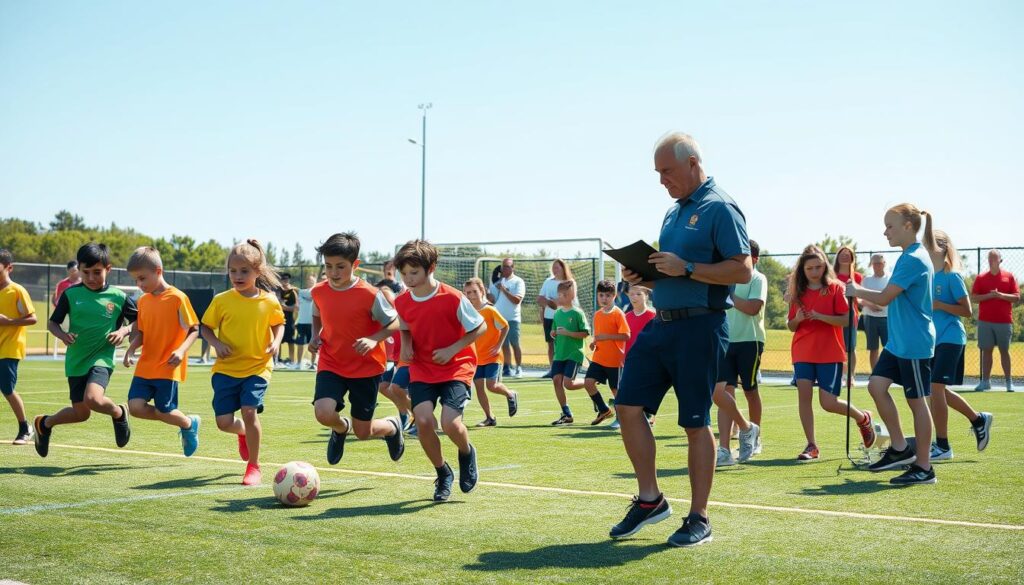
Different sports follow specific evaluation schedules. Florence baseball holds evaluations on September 2nd and 4th for different age groups. Softball evaluations occur on August 26th and 28th, while basketball evaluations are scheduled for November 3rd.
Preparation is key for a positive evaluation experience. Here’s how to help your athlete get ready:
- Ensure they get a good night’s sleep before evaluations
- Provide a healthy meal and plenty of water
- Arrive early to allow time for warm-up exercises
- Encourage them to listen carefully to coach instructions
- Remind them that trying their best is what matters most
The evaluation atmosphere is supportive, not competitive. Coaches want to see natural ability and coachability. They’re looking for players who follow directions and show good sportsmanship.
After evaluations conclude, the team placement process begins. Coaches review notes and scores to create balanced teams that will provide positive experiences for all players. This careful matching ensures fair competition throughout the season.
Parents typically receive team placement notifications within one to two weeks. The communication will include practice schedules, coach information, and next steps for the season.
Remember that evaluations are about finding the right fit for your child’s development. Every player brings unique strengths to the field, and the goal is creating teams where those strengths can shine.
Fees, Scholarships, and Fundraising Help
Youth sports should be open to all kids, no matter the family budget. Knowing the costs and support options helps make it possible for everyone.
Sports fees change based on where you live and the sport. In Florence, baseball costs $45, and football is $60-$70. These fees cover uniforms, equipment, and places to play.
Many groups offer financial aid to make sure no kid is left out. Beaufort has scholarships for families that qualify. You need to show your income and explain why you need help.
Don’t be shy about asking for help! Most leagues have ways to keep your information private while they assist your family.
Florence Youth Sports Fee Structure
| Sport | Resident Fee | Non-Resident Fee |
|---|---|---|
| Baseball | $45 | $45 |
| Basketball | Not specified | Not specified |
| Cheer | $50 | $60 |
| Football | $60 | $70 |
| Soccer | $55 | $65 |
| Softball | $45 | $45 |
| Track | $45 | $45 |
| Volleyball | $45 | $45 |
Creative fundraising can really cut down costs. Teams often do car washes, bake sales, or product sales. Some programs, like ICRC, let local businesses sponsor teams for visibility.
Digital tools have made fundraising easier. Sites like the TeamSnap fundraising program help teams manage and track donations well.
Here are some important points about sports costs:
- Always ask about scholarship applications early
- Payment plans are often available for larger fees
- Fundraising participation reduces individual costs
- Some programs offer sibling discounts
With the right mix of financial aid, smart budgeting, and team fundraising, youth sports can be affordable for all families. Investing in your child’s growth and happiness is worth every penny.
Forms, Waivers, and Medical Clearance
Keeping your young player safe is key. Paperwork might seem boring, but it’s essential for everyone’s safety and organization.
There are three main documents needed. Registration forms gather basic info and emergency contacts. Liability waivers protect the organization and outline responsibilities. Medical forms are vital for coaches to know about your child’s health.
Medical clearance is a must for athlete safety. Many programs need a doctor’s okay before your child can play. This step helps spot any health issues that could impact play.
Registration options vary by location. In Florence, you can register online or in person at the Barnes Street Activity Center. Beaufort prefers online registration for ease. ICRC also offers online registration and sends weather updates to parents.
When filling out forms, check all details carefully. Make sure emergency contacts and medical info are up to date. Most online systems save your info for future seasons.
Remember, these waivers and forms are for everyone’s protection. They ensure safe, well-organized sports for kids.
Start paperwork early to avoid last-minute stress. Without all documents, your child might not be able to play. Getting this done early lets your athlete enjoy the game.
If you have questions about forms, reach out to the program. They can explain what you need and help you fill it out right. Most organizations aim to make this process easy for families.
Gear and Sizing Checklists
Shopping for sports gear can be overwhelming. There are many options and sizing challenges. Getting the right fit is key for safety, performance, and avoiding the need to replace items as kids grow. This guide helps you find the essential equipment list for popular youth sports.
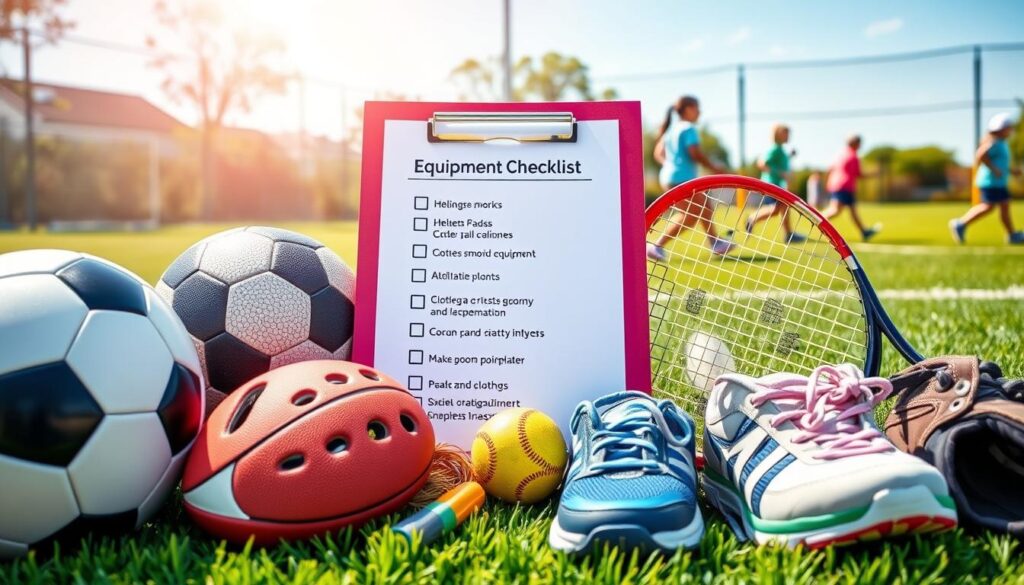
Different sports need specific gear, and some programs have their own rules. For example, Florence Fall Baseball doesn’t include a hat. The Florence Track Club operates through a team store. Always check with your specific organization for their exact equipment list.
Baseball and Softball Essentials
These sports share similar gear needs. Focus on proper fitting equipment that allows for growth without compromising safety.
- Cleats (molded plastic for younger players)
- Glove (position-specific sizing)
- Bat (length and weight appropriate for age)
- Protective cup (required for catchers)
- Batting helmet with face guard
- Uniforms (jersey and pants)
Soccer Equipment Checklist
Soccer requires minimal gear but proper fit is key for performance and injury prevention.
- Soccer cleats (no baseball cleats allowed)
- Shin guards (must fit properly under socks)
- Soccer socks (long enough to cover shin guards)
- Water bottle (hydration is essential)
- Team uniforms (jersey, shorts, socks)
Choosing the right team affects gear requirements too. Club sports near me often have different equipment standards than recreational leagues.
Basketball Gear Needs
Basketball focuses on footwear and practice gear. The right shoes prevent injuries and improve performance.
- Basketball shoes (ankle support important)
- Practice clothing (breathable fabrics)
- Water bottle (stay hydrated during games)
- Team uniforms (jersey and shorts)
| Sport | Essential Gear | Sizing Tip | Average Cost |
|---|---|---|---|
| Baseball/Softball | Glove, cleats, helmet, bat | Glove should fit snug but not tight | $150-300 |
| Soccer | Cleats, shin guards, ball | Cleats should have thumb-width space at toe | $100-250 |
| Basketball | Shoes, practice gear, ball | Shoes need proper arch support | $120-200 |
| Track | Running shoes, practice wear | Shoes should be sport-specific | $80-180 |
When shopping for gear, consider buying slightly larger sizes for growing children. But avoid going too big as ill-fitting equipment can cause safety issues. Many sports stores offer professional sizing help – don’t hesitate to ask for assistance!
Keep your equipment list organized and check items off as you acquire them. Proper gear maintenance extends the life of your investment and keeps your athlete safe throughout the season.
Parent Roles and Expectations
Being a parent in youth sports is more than just dropping off and picking up your child. Your role is key to creating a positive and safe sports environment. This environment benefits all young players.
Most youth sports programs need parent volunteers to run smoothly. Parents can help as assistant coaches, team managers, snack coordinators, or field setup helpers. These roles help keep costs low and build community ties.
How you behave on the sidelines matters a lot. Cheering for all players and respecting officials shows good sportsmanship. Kids often copy what they see from adults.
Talking to coaches is important for solving problems. Try to meet privately instead of during games or practices. This keeps relationships positive and focuses on finding solutions.
Many groups offer help for parents to get involved. For example, Florence has parent meetings for sports, like a volleyball meeting on September 8th. ICRC provides a parent manual and concussion fact sheet to help families.
Coordinating transportation is another big job for parents. Being on time for practices and games shows respect. Carpooling can also help manage busy schedules.
Your supportive presence is more important than any skill or knowledge. Focus on encouraging effort and fun, not just winning. Kids do best when they feel supported, win or lose.
Groups like Beaufort focus on creating safe places for kids to learn and make friends. This partnership between parents and programs ensures a positive experience for everyone.
Setting clear boundaries is important for good relationships with coaches and other parents. Don’t coach from the sidelines or criticize officials during games. Let the trained professionals handle the game.
Your involvement creates lasting memories and helps your child grow. Take this chance to help your child develop on and off the field.
Choosing the Right Level for Your Athlete
Finding the perfect fit for your young athlete is key. The right placement makes sure they enjoy the game and grow at a good pace. Most youth sports use age-based divisions for fairness and competition.
Florence’s baseball program is a great example. They have coach pitch for ages 7-8, minors for 9-10, majors for 11-12, and junior/senior for 13-16. Volleyball has similar divisions: 9u, 12u, 14u, and 17u. Beaufort keeps it simple with ages 4-16 in broader ranges.
Age is important, but not the only factor. Skill level and experience also matter. Programs like ICRC offer different tiers within age groups to fit various abilities.
Here’s how different programs structure their divisions:
| Organization | Sport | Age Divisions | Skill Levels Offered |
|---|---|---|---|
| Florence Youth Sports | Baseball | 7-8, 9-10, 11-12, 13-16 | Recreational only |
| Florence Youth Sports | Volleyball | 9u, 12u, 14u, 17u | Recreational only |
| Beaufort Parks & Rec | Most Sports | 4-16 (combined) | Recreational only |
| ICRC | Multiple Sports | Varies by sport | Recreational & Competitive |
Player evaluations help coaches make the right choices. They look at basic skills, game understanding, and athleticism. This ensures athletes are in a group where they can grow and contribute.
If you’re worried about your child’s placement, talk to the coach early. Share what you’ve seen about their skills and comfort with competition. Most coaches value this input and want every athlete to have a good experience.
Proper placement is good for everyone. Your athlete will gain confidence, make friends, and love the game. The right challenge keeps them interested without getting frustrated or bored.
Trust the process and communicate well. Working together with coaches ensures your young athlete has the best sports experience.
Timeline and Printable Checklist
Getting your youth sports registration in order is easier with a clear plan. Many programs, like Beaufort County, offer downloadable sports calendars. These help families plan ahead.
Florence has specific dates for registration and evaluations each season. ICRC has quarterly registration periods for different sports. These plans help avoid last-minute scrambles.
Make a printable checklist to keep track of each step. Begin with researching programs and noting deadlines. Don’t forget to include paperwork and medical clearance.
Remember to add gear purchases and evaluation appointments. Mark down practice start dates and team meetings. This helps busy families stay organized.
Download sports calendars from your local programs. Match these dates with your family’s calendar. Having everything in one place reduces stress and ensures nothing is forgotten.
Your checklist is a personal guide through youth sports registration. It breaks down a complex process into simple steps. Enjoy watching your athlete succeed in their sport.