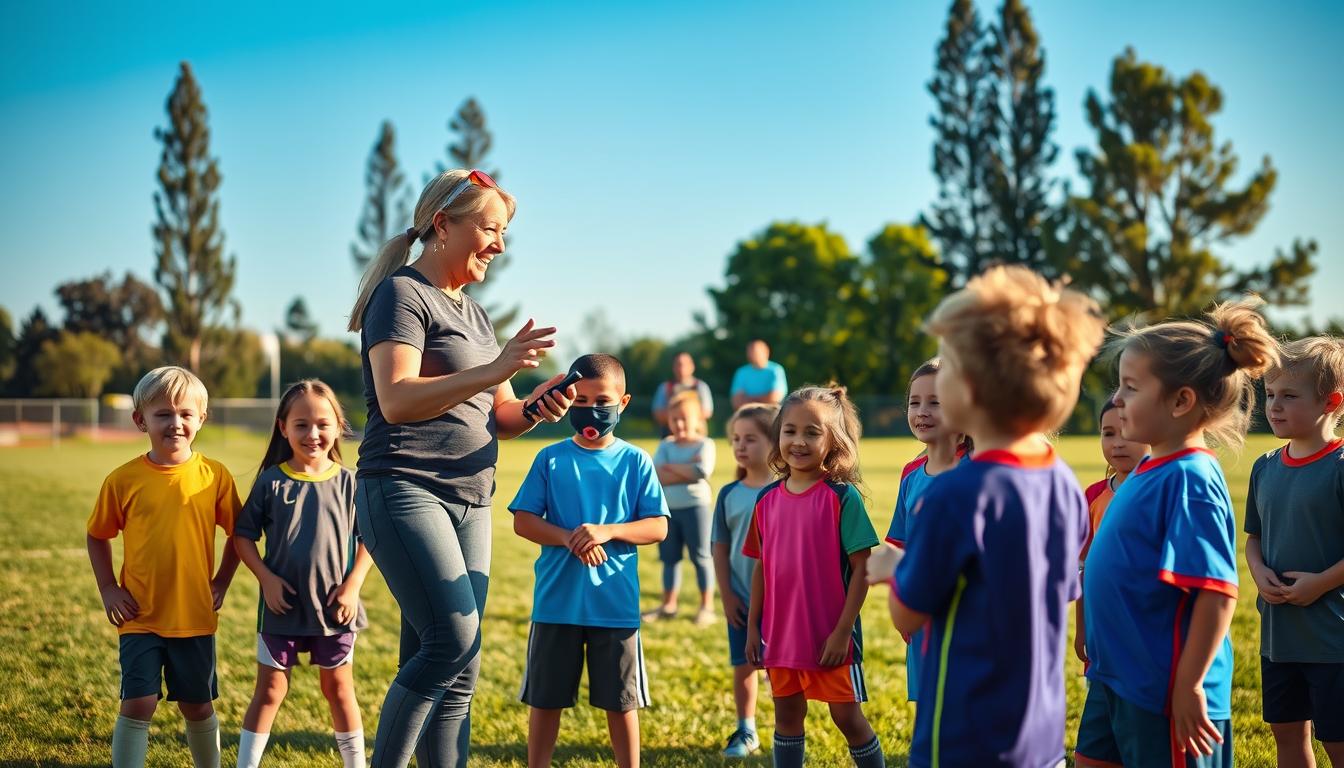
So, you’ve been voluntold for this gig. That clipboard with your name on it might feel like a subpoena, but really, it’s an invitation. Every season, leagues across the country desperately need enthusiastic, positive people to step up. Fall is here, and the call has gone out.
This isn’t about sculpting the next LeBron or Serena. It’s about guiding kids through the beautiful chaos of competition. Think of it as part sociology experiment, part herding energetic kittens. The experience can be tremendously rewarding in ways you never expected.
This guide is your playbook. We’ll navigate the existential crises of practice planning, the delicate diplomacy of parent communications, and those glorious moments when a skill clicks. Let’s get you from panicked volunteer to confident leader.
Benefits of Volunteer Coaching
Forget about fancy jobs and big salaries. The real reward in volunteer coaching is the joy of seeing kids grow. It’s not just about adding to your resume. It’s about the happiness of watching kids reach their full potentials.
It’s like being an anthropologist, studying human growth up close. That quiet kid who was shy at first? They’re now leading the team. The clumsy one who used to trip? They’re now moving with grace. Volunteer coaching youth lets you see these changes firsthand.
The rewards are not just about money. It’s about teaching kids to bounce back from setbacks. It’s about seeing them handle losses with grace. You trade in office politics for the real politics of teamwork, where everyone feels valued.
This work creates something priceless: community. It brings people together, one practice at a time. Parents become friends, and kids from different schools bond. The field becomes a place where kids learn to work together, just like in real life.
| Benefit Type | What You Give | What You Get | Lasting Impact |
|---|---|---|---|
| Personal Fulfillment | Time, patience, attention | Watching confidence bloom, pure joy moments | Deep sense of purpose beyond daily grind |
| Player Development | Skill instruction, encouragement | Seeing tangible growth in ability & attitude | Shaping lifelong positive relationship with sports |
| Community Building | Organizational effort, communication | Creating local connections & support networks | Stronger neighborhood ties that last years |
| Skill Transfer | Your unique knowledge & perspective | New ways to teach, manage, and motivate | Abilities that enhance both coaching and career |
Parents and coaches rave about the fun and learning. It’s a unique mix that many adults miss. You get to be silly while teaching serious skills, making kids laugh while they learn.
This experience doesn’t stop with one sport or season. You learn skills that help in many areas. Many find that coaching other youth sports becomes easier once you’ve mastered the basics.
So, why do it? It’s a chance to make a difference in a world focused on numbers. Your success is measured in goals scored, fears overcome, and heartfelt thank yous. It’s about being the coach a kid remembers for years to come. That’s true legacy.
Required Training and Certifications
Your clipboard will be empty until you complete some important steps. These steps are not just rules. They are the basics that prepare you for the job. Think of them as the mental exercises before you start coaching.
The background check is your first hurdle. It’s a way for the league to ensure everyone is trustworthy. It’s like a membership fee for parent coaching.
Next, you’ll take the CDC’s Heads-Up Concussion Awareness Training. This 30-minute course teaches you about head injuries. It’s not just about getting back up after a hit. You’ll learn to spot serious signs that need medical help right away.
Then, you’ll learn about abuse prevention policies. These are strict rules to keep everyone safe. They’re not about not trusting anyone. They’re about creating a safe environment for everyone.
| Requirement | Purpose / What It Covers | Typical Time Commitment |
|---|---|---|
| Criminal Background Check | Verifies no disqualifying criminal history; ensures basic safety clearance for working with minors. | 3-7 business days (processing) |
| Heads-Up Concussion Training | Teaches recognition of concussion symptoms, proper response protocols, and return-to-play guidelines. | 30 minutes (online module) |
| Abuse Prevention Policy Review | Outlines boundaries, reporting procedures, and scenarios to avoid (like one-on-one situations). | 20-40 minutes (reading/acknowledgment) |
| Pre-Season Coach’s Orientation | Covers league rules, philosophy, equipment distribution, and emergency procedures. | 60-90 minutes (in-person or virtual meeting) |
The pre-season orientation is your last step. It’s not just about getting papers. It’s where you learn the league’s rules and meet others. It’s where you turn theory into practice.
By completing these steps, you’ve done more than fill out forms. You’ve built a strong foundation for your coaching career. Your whistle is a symbol of your readiness and responsibility as a parent coach. Now, you’re ready to start.
Age-Appropriate Coaching Methods
The art of community sports coaching changes a lot with age. You need to be a mix of a camp counselor, psychologist, and strategist. Coaching kids aged 5 and up is very different from coaching older teens.
Coaching kids aged 5-8 is like directing a carnival. They can only focus for about seven minutes. You need lots of energy, quick activities, and patience.
Kids aged 9-12 are the best to coach. They can listen better and don’t worry too much about big problems yet. You can start teaching them simple strategies, like passing to an open player.
Teens, aged 13-17, need a different approach. They can handle more complex strategies but don’t like being talked down to. You should work with them as equals, not just give orders.
The key to coaching all ages is the IDEA method. It stands for differentiated instruction, but in a fun way.
Here’s how the IDEA method works:
- Introduce: Show them the skill like it’s a new iPhone feature. Make it sound exciting.
- Demonstrate: Show the skill in a cool way. Make it look easy and worth trying.
- Explain: Connect the skill to something they can understand. For young kids, it’s about scoring goals. For teens, it’s about strategy.
- Attend: This means watching and giving feedback. It’s not about criticizing. It’s about helping them improve.
When talking to kids, keep it simple. Don’t use big words they don’t understand. Explain things in a way they can relate to.
Here’s how you can do it in practice:
For a 6-year-old soccer player: “Run to the cone, touch it with your foot, and run back! Ready? Go!” Keep it short and praise them a lot.
For a 16-year-old basketball player: “We’re working on reading the defense. When the help side defender commits, that’s your window for the skip pass. Let’s walk through the rotations.” Give them specific feedback.
Good coaching respects the child’s age and abilities. It makes them feel confident and excited to play again next year. It’s not just about winning; it’s about enjoying the game.
By adapting your coaching to each age group, you’re not just teaching sports. You’re helping kids grow and develop in a positive way.
Practice Planning and Organization
As a youth sports coaching volunteer, your practice schedule is key. It’s like a promise to twenty energetic kids. Without a plan, it’s like trying to herd cats with a tambourine. The result? Chaos.
Your first practice sets the season’s tone. It’s like your pilot episode. Arrive early, have everything ready, and know each player’s name. It’s not just nice; it’s necessary.
Time segmentation is your secret weapon. Divide your practice into short blocks, like TV segments. Each block should last no more than fifteen minutes. Kids can focus for about their age plus one minute. Do the math.

- 5:30-5:45 PM: Dynamic Warm-up (Use high knees, butt kicks, and lateral shuffles. These mimic game actions.)
- 5:45-6:00 PM: Offensive Fundamentals Station (Focus on one skill, like passing or dribbling through cones.)
- 6:00-6:15 PM: Defensive Fundamentals Station (Teach body positioning and communication calls.)
- 6:15-6:30 PM: Small-Sided Game Application (Play 3v3 or 4v4 games. It’s fun and low-stakes.)
- 6:30-6:40 PM: Cool-down & Team Talk (Hydrate, praise, and talk about next week’s skill.)
This structure keeps kids focused. Each block has a clear goal. Transitions should be quick to avoid downtime.
Good time management is essential. It turns random activity into deliberate practice. Every minute is used for development.
Always end with something fun. A goofy race or a unique game. It’s the “dessert” after the “vegetables” of skill work. Kids will look forward to it.
Your clipboard is your command center. It shows confidence and tells parents you’re ready. It also tells kids that their time is valuable. You’re building progress, one segment at a time.
Game Management and Strategy
The scoreboard lights up, but your real job as a youth sports coaching volunteer is managing everything happening off it. Game day is the ultimate pop quiz for your philosophy. All those practice drills and pep talks face their moment of truth under the Saturday morning sun.
Forget complex playbooks drawn on whiteboards. Your primary strategic weapon is a rotation schedule. Equal playing time isn’t a suggestion in recreational leagues—it’s the constitution. This means your most important decision isn’t the last-minute substitution to win, but ensuring the kid who’s been staring at the daisies gets their fair turn at goalie.
Win-at-all-costs? That’s for professionals with contracts, not for children with juice boxes. Your sideline demeanor is the lesson. Arguing with a referee teaches young athletes that authority is negotiable when you’re losing. Instead, model respect so consistent it could be its own PBS special. A bad call? You shrug, make eye contact with your team, and show them how adults handle frustration with grace.
The real victory is invisible to the scorekeeper. It’s the hesitant player touching the ball. It’s the team shaking hands without sulking after a loss. It’s every child feeling they contributed, regardless of the final tally. This outcome management is the core of recreational coaching.
Your strategy table isn’t about X’s and O’s. It’s about mindset. Compare the approaches:
| Aspect | Recreational Mindset | Competitive Mindset |
|---|---|---|
| Core Philosophy | Player experience & development first | Winning & results first |
| Playing Time Strategy | Mandatory equal rotation for all | Merit-based, favors skilled players |
| Defining “Win” | Growth, effort, sportsmanship | Final score, standings, trophies |
| Official Interactions | Respectful model, never confrontational | Strategic challenges to gain advantage |
Notice the difference? The recreational column reads like a child development manual. The competitive column reads like a general’s battle plan. You’re writing the former.
This doesn’t mean you ignore the game. You manage its emotional temperature. A kid makes a mistake? Your response is the strategy. Do they see anger or a teaching moment? The opponent scores? Do your players see defeatism or resolve?
Your most clever tactic is pre-game preparation. You brief parents on the equal-time rule. You remind players that effort beats outcome. You position yourself as the calm center of the sideline symphony. When the final whistle blows, you’ve won if every child leaves excited to return next week. That’s the only championship that matters in youth sports coaching volunteer work.
Player Development Focus
Forget the scoreboard for a moment. The real game in youth sports isn’t played on the field. It’s played in the developing psyche of a ten-year-old. Your mission, should you choose to accept it as a youth sports coaching volunteer, shifts from building athletes to building people. The free throws and dribbling drills? Merely the vehicle. The actual curriculum is a crash course in humanity.
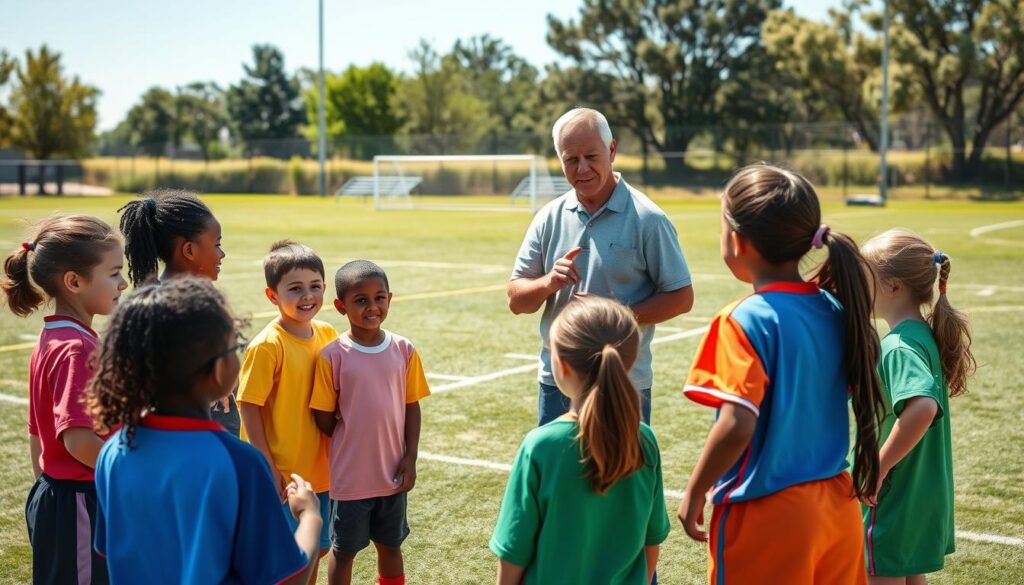
This philosophy transforms your role. You’re no longer just a clipboard-wielding strategist. You’re a temporary life skills instructor, using dodgeballs and soccer balls as your textbooks. Every practice is a lab where kids experiment with ethics, teamwork, and coping with failure. A missed catch isn’t a mistake; it’s a data point in resilience. A team huddle isn’t just a play call; it’s a seminar on communication.
So, what’s on this hidden syllabus? Let’s break it down. The sport provides the context, but you provide the translation.
| Sport Skill (The Vehicle) | Life Lesson (The Destination) | Your Coaching Action |
|---|---|---|
| Making a successful pass | Goal Setting & Execution | “Your goal is to get the ball to Sam’s hands. Plan your angle, then do it.” |
| Working within a team defense | Collaboration & Trust | “You cover the lane, I’ll cover the perimeter. We trust each other to do our jobs.” |
| Shaking off a referee’s bad call | Respect for Authority & Managing Frustration | “The ref made a call. We disagree with grace, then focus on the next play.” |
| Celebrating a teammate’s success | Sportsmanship & Selflessness | “Did you see Maya’s goal? Your cheer for her was as important as the assist.” |
| Full participation for all players | Inclusion & Fair Play | “Everyone gets rotations. Our team’s strength is every player, not just the stars.” |
Delivering this curriculum requires a specific style. Ditch the drill sergeant routine. Adopt the method of the compliment sandwich. It’s the culinary secret to building self-esteem.
- Slice One (Positive): “I love how you kept your eyes on the ball, Alex.”
- The Filling (Corrective): “Next time, try stepping into the throw with your whole body for more power.”
- Slice Two (Positive): “Your readiness to learn is going to make you a powerhouse this season.”
This approach roots your coaching in respect and positive discipline. It motivates because it frames correction as growth, not criticism. You’re not pointing out flaws; you’re supporting athletes in reaching their next, slightly higher, goal.
The legacy of a season isn’t found in a win-loss column. It’s found in the kid who learns to set a personal goal, the one who learns to trust a teammate, and the one who learns that effort matters more than innate talent. That’s the profound impact of a volunteer coach who focuses on player development. You’re not just running drills. You’re helping write the opening chapters of their character.
Parent Communication Skills
Think of your first team email as a key piece of diplomacy for your young sports team. It sets the tone and outlines your team’s rules. If you get it wrong, you might face problems. But if you get it right, you’ll build a strong team.
The smart youth sports coaching volunteer sees this as more than just paperwork. It’s about avoiding drama that can ruin the season. Your first email should include important details:
- Coaches’ Contact Info: Who you are and how to reach you (with boundaries).
- Schedule Clarity: Practices, games, and the plan for rainy days.
- Team Philosophy: Your beliefs about fair play, positive feedback, and keeping it fun.
- Issue Resolution Pathway: A clear way to handle concerns without disrupting games.
Being proactive in your communication is key. Send updates before anyone asks. Change schedules early to avoid confusion. Share snack duties fairly to keep everyone happy.
Make it clear that parents shouldn’t talk to you during games. Explain it as a way to focus on the kids. This rule can prevent most problems before they start.
Your job as a coaching volunteer is to manage this complex situation. The relationship between parents and coaches is critical. Think of yourself as a diplomat and a strategist.
What does good communication with parents look like? Here’s how an amateur coach differs from a pro:
| Communication Area | Amateur Coach Approach | Professional Volunteer Strategy |
|---|---|---|
| First Contact | Basic info dump, sent late | Strategic tone-setter, establishes philosophy early |
| Issue Protocol | “Come find me whenever” | Designated channels, scheduled discussions only |
| Schedule Updates | Reactive, after questions arise | Proactive, before confusion begins |
| Philosophy Sharing | Assumed or unstated | Explicitly defined and repeatedly reinforced |
Parents are not against you. They are part of your team. Your communication should be a partnership, not a dictatorship. A good youth sports coaching volunteer builds connections, not walls.
The modern sideline is full of different opinions. Your communication skills keep things in order. By mastering this, you create a place where kids can really grow.
For today’s youth sports coaching volunteer, talking to parents is the main job. It’s more important than knowing sports strategies. Without the support of parents, your work is much harder.
Your communication can make or break the season. Keep it positive and clear. Parents and kids will appreciate it. And you’ll find that the best victories come from building strong relationships.
Safety and First Aid Requirements
Your clipboard is more than a tool; it’s a safety guide. It holds ice packs and bandages, but the real goal is to prevent injuries. Every volunteer must take the CDC’s Heads Up Concussion training.
Remember, “When in doubt, sit them out.” This rule protects a child’s health over winning a game. It’s a big responsibility.
Safety isn’t just about physical safety. It’s also about creating a safe environment. Follow SafeSport policies to ensure everyone feels safe. Keep all interactions open and avoid bullying.
Being a volunteer means more than just coaching. You must watch for emotional signs as well as physical ones. You’re not just a coach; you’re a guardian. Your work teaches kids more than just sports.