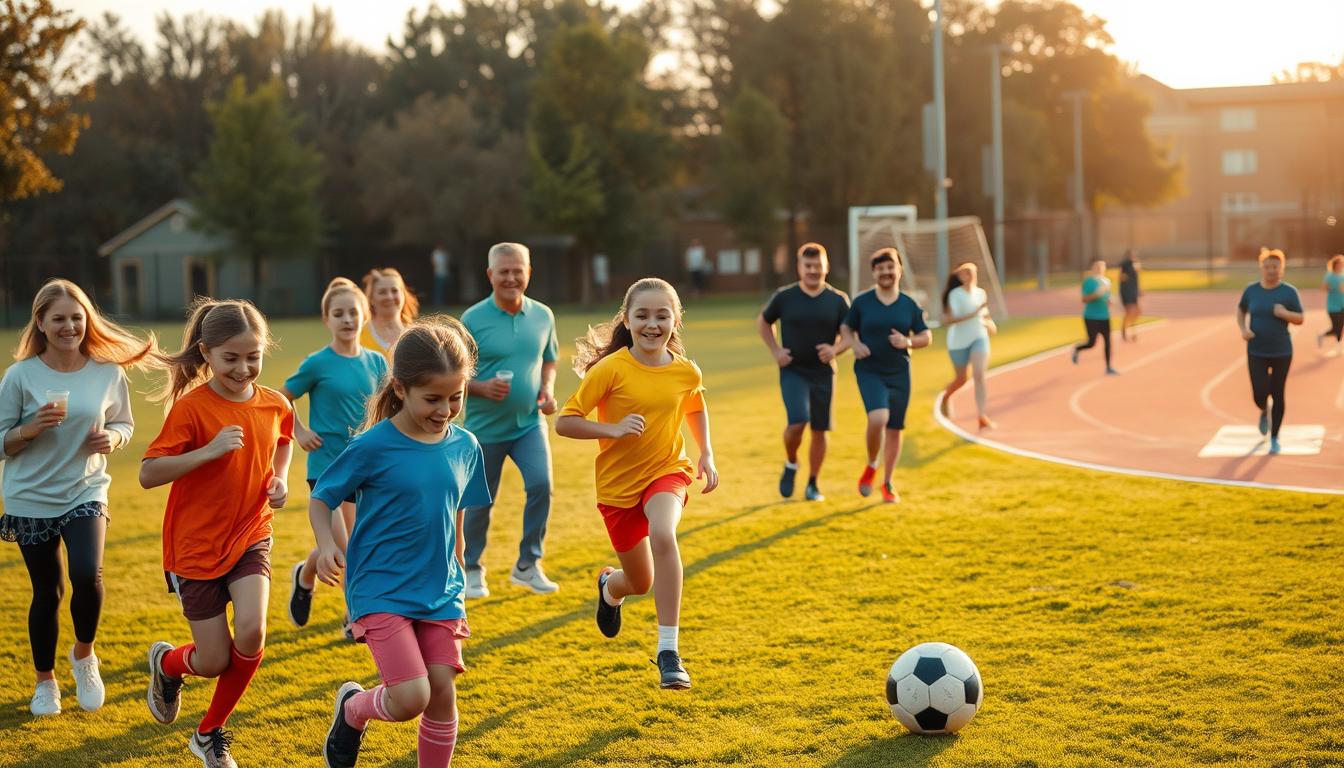
The youth sports world is huge, worth billions. It’s making it hard for regular families to join in. The focus on elite teams is leaving others behind.
But there’s a better way. It’s about going back to community leagues. Think of it as the “farm-to-table” movement for athletics.
We need to explore this new world. We’re looking for places where everyone can play, without the high costs.
This search involves some detective work. A bad website is a warning sign. But it’s even more important to understand a league’s values. Do they welcome everyone, or only the best? This choice shapes the heart of community sports.
Volunteer Opportunities for Parents
The secret to affordable community athletics isn’t hidden in grant applications. It’s in the minivan next to you. Your time, not your wallet, is the most powerful tool in youth sports. Every parent who volunteers saves money for everyone else.
Think beyond the whistle and clipboard. While coaching is key, volunteers bring diversity. You don’t need to diagram plays to make a difference. Find your niche and make an impact.
Here are some non-coaching roles that keep community athletics running smoothly:
- Team Manager: The person who handles schedules, communications, and logistics.
- Snack Coordinator: A role that boosts morale and energy after games.
- Fundraising Architect: Creates campaigns that fund equipment and more.
- Social Media Scribe: Shares the season’s story, building community.
- Equipment Manager: Makes sure every child has what they need to play safely.
This isn’t just filling slots. It’s a civic duty with better scenery and fewer boring meetings. Programs that use volunteers well thrive, becoming more accessible and sustainable.
The data shows: volunteer-driven programs cut costs by 30-40%. This is the difference between a child playing or sitting out. Your help makes community athletics a right, not a luxury.
So ask yourself: where does your skill set meet the league’s needs? The answer might surprise you—and save your community thousands.
Family-Friendly Sporting Events
What makes a sporting event welcoming? It’s not just about watching games. It’s about enjoying time together as a family. The goal is to have fun, not just watch sports.
Too often, youth sports feel like a big test. Parents worry a lot. The prices at the concession stand are too high. It’s not fun for families.
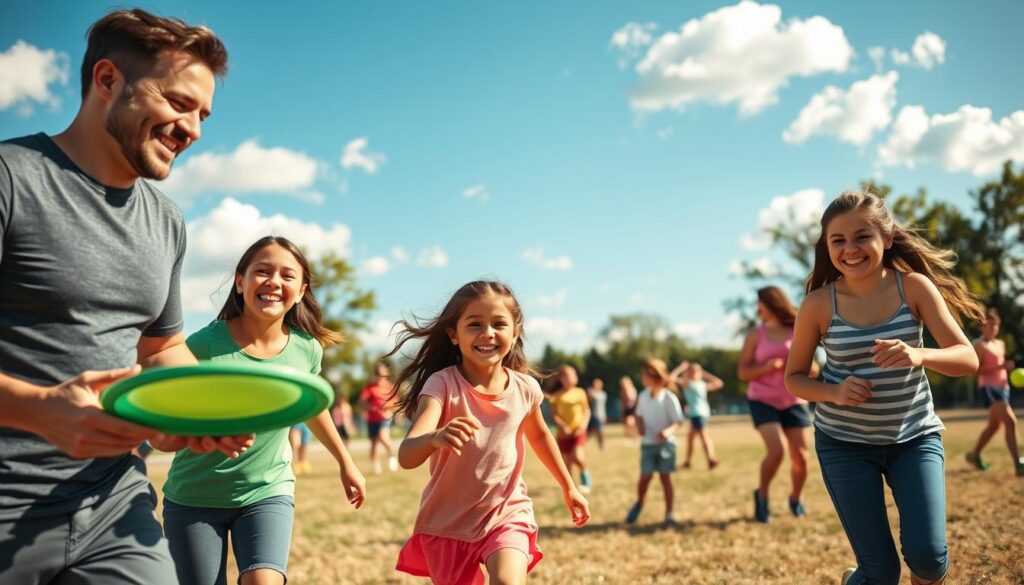
A family-friendly event is different. Everyone cheers for good sportsmanship. It’s about having fun, not just winning.
So, what makes it work? It starts with clear communication. A good website with schedules and maps is key. Families should easily find the field and know when to arrive.
Next, thoughtful amenities are important. It’s not about fancy stadiums. It’s about shaded seats for grandparents and a place for younger kids to play. And food that’s affordable.
The culture is the most important thing. A family-friendly event makes sure everyone feels welcome. It’s about recognizing effort, not just winning.
- Every player’s effort gets recognized, not just the star’s goals.
- Mistakes are met with encouragement, not criticism.
- The experience itself is the reward, making family sports participation about connection, not competition.
This change doesn’t happen by accident. It takes organizers who put enjoyment first. They make sure everyone can join in, no matter their skill level.
The result? Families want to go. They come for the fun, not just to watch. The game becomes a chance to connect with others. That’s when family sports becomes a special part of your story.
Supporting Youth Teams as a Family
Let’s talk about the elephant in the locker room: youth sports have become a luxury good. The average family spends $692 per child annually just to keep them in the game. That’s before the $200 cleats, $500 tournament fees, and the gas money for three-state travel circuits.
This isn’t just expensive—it’s exclusionary. The pay-to-play model creates a velvet rope around the field. But here’s the analytical truth: when families band together, they can dismantle that rope, thread by thread.
True family sports participation moves beyond writing a check to the elite travel club. It’s about mobilizing your household unit to bolster the community team. Think of it as micro-economics at the local level. Your family’s effort directly subsidizes access for the family next door.
The strategy is collective action over individual expenditure. Instead of one family shouldering the burden, multiple families distribute the load. This creates a sustainable ecosystem where everyone contributes, and everyone benefits.
| Support Strategy | Family Effort Required | Community Impact | Average Cost Offset |
|---|---|---|---|
| Equipment Exchange Program | Medium (organizing, sorting) | High (reduces waste, increases access) | $150-300 per child |
| League Scholarship Fund | Low (monthly contributions) | Very High (enables participation) | Full season fees for 2-3 kids |
| Grassroots Fundraising | High (planning, execution) | Medium-High (builds community bonds) | $500-1000 per event |
| Volunteer Coaching & Officiating | High (time commitment) | Very High (reduces program costs) | $1000+ (replaces paid staff) |
Look at that outgrown mitt in your garage. It has a second life waiting on another child’s hand. Equipment swap programs turn clutter into community assets. They’re the circular economy of youth sports. One family’s discard becomes another’s opportunity.
Scholarship funds are the great equalizer. A small monthly contribution from twenty families can cover season fees for two economically disadvantaged kids. That’s not charity—it’s investment in a more robust, diverse team. Inclusivity isn’t optional; it’s essential for healthy competition.
Grassroots fundraising does double duty. It raises necessary funds while building social capital. A car wash, a bake sale, a community raffle—these events create connections beyond the field. They transform anonymous parents into teammates working toward a common goal.
The most insightful youth sports parents understand this dynamic. They see their role not just as financiers, but as architects of access. Their family’s involvement becomes the scaffolding that supports the entire team structure.
This is the new math of community sports. It’s less “pay-to-play” and more “we-all-chip-in-so-we-can-all-play.” Your family’s contribution—whether time, used equipment, or fundraising hustle—lowers the barrier for everyone. That’s how you build a team that reflects the actual community, not just its bank accounts.
Coaching and Officiating Opportunities
Forget the bake sale—the real engine of affordable community sports is a robust bench of volunteer coaches and officials. It’s not about finding the next Vince Lombardi. For kids under 10, it’s about finding an adult who keeps the snack schedule and doesn’t push too hard.
Quality, volunteer-led coaching and officiating are key to a sustainable league. It’s the ultimate, high-impact form of local sports volunteering. Professional coaches and referees cost money. This money comes from registration fees, which can price families out.
The alternative is a volunteer ecosystem. More volunteers mean lower costs. Lower costs mean more kids can play. It’s that simple.
So, how do you recruit these volunteers? You tap the obvious and the overlooked. The league’s recruitment playbook should look like this:
- Parent Volunteers: The first line of defense. Most just need a nudge and the assurance they’ll be trained.
- Former Players & Coaches: A deep reservoir of knowledge exists in every community. That guy who played college ball? He might love teaching fundamentals.
- Local High School & College Athletes: Perfect for assistant roles. They get community service hours; kids get relatable mentors.
Officiating is the frontier that’s often most understaffed. It’s a tough job. But creating a culture that respects officials—and trains volunteers thoroughly—is a game-changer. A good referee maintains safety and fairness, which keeps kids engaged and parents from losing their minds on the sidelines.
The league’s job is to provide the structure, the training, and the support. Your job is to show up with some enthusiasm and a willingness to learn. This model of local sports volunteering doesn’t just save money. It builds consistency and community connection in a way a hired gun never could.
Think of it as civic infrastructure. You’re not just coaching third-grade soccer. You’re maintaining the pipeline that keeps the sport alive and accessible in your own town. That’s a legacy worth more than any trophy.
Fundraising and Sponsorship Support
Fundraising is not just a chore. It’s a chance for families to be creative and help their community. Think of it as a way to finance your local sports team through community efforts.
Successful programs see fundraising as a year-round effort, not just a seasonal task. This keeps your team in the minds of the community. The goal is to have different ways to make money, so fees aren’t too high.
The classic car wash is more than just cleaning cars. It’s a chance to show your team to the community. Families work together, and it’s a fun way to raise money.
Getting support from local businesses is also key. A logo on a jersey helps both your team and the business. It shows your team is part of the community.
Being creative is important. Don’t stick to one idea. Here are some ways to fundraise:
- Event-Based Fundraisers: Fun runs, tournaments, or “a-thon” events. They’re fun and raise money.
- Online Crowdfunding: Use platforms like GoFundMe for specific needs. Share a story about how it will help.
- Grant Writing: Look for grants from foundations, corporations, or local government. It takes research but can be rewarding.
- Service/Sale Hybrids: Partner with restaurants for nights where a percentage of sales go to your team. It’s a win-win.
Combining old and new ideas works well. A bake sale can help fund a big event. An online campaign can improve facilities. For more ideas, check out these sports fundraising ideas.
Here’s a comparison of different fundraising models. Each has its own level of effort, reward, and community value.
| Fundraising Model | Effort Level | Potential Revenue | Community Engagement Value |
|---|---|---|---|
| Local Business Sponsorship | Medium (Relationship Building) | High (Season-long support) | High (Creates economic partnerships) |
| Community Event (Car Wash, Tournament) | High (Logistics, Volunteer Coordination) | Medium (Depends on turnout) | Very High (Public visibility, team bonding) |
| Online Crowdfunding Campaign | Medium (Storytelling, Promotion) | Variable (Can go viral) | Medium (Digital reach, specific goal focus) |
| Product Sales (Cookie Dough, Catalog) | Low to Medium (Distribution) | Low to Medium (Traditional margins) | Low (Transactional, less interactive) |
| Grant Applications | High (Research, Writing) | Very High (Large awards possible) | Medium (Formal, demonstrates program merit) |
The highest value often comes from activities that bring people together. Fundraising is not just about money. It’s about building relationships in your community.
Think in quarters, not just in crises. Fall is for sponsorships, winter for indoor events. Spring is for car washes, and summer for back-to-school campaigns.
This approach makes local sports volunteering more than just filling a budget gap. It’s about building a strong financial base for kids to play, no matter their family’s income. It shows your team’s financial creativity.
So, when someone complains about fundraising, change their mind. It’s not just a necessary task. It’s about mobilizing community resources. It’s where your family’s efforts directly support your team’s future. That’s very rewarding.
Building Community Through Sports
Community athletics is the heart of real social interaction in American suburbs. Forget the fancy travel teams and their cliques. The magic is in local courts and fields.
What are we building? It’s not just about college scholarships. It’s social capital, the trust and connection that holds a town together. A thriving league becomes a “third place,” where we just are together.
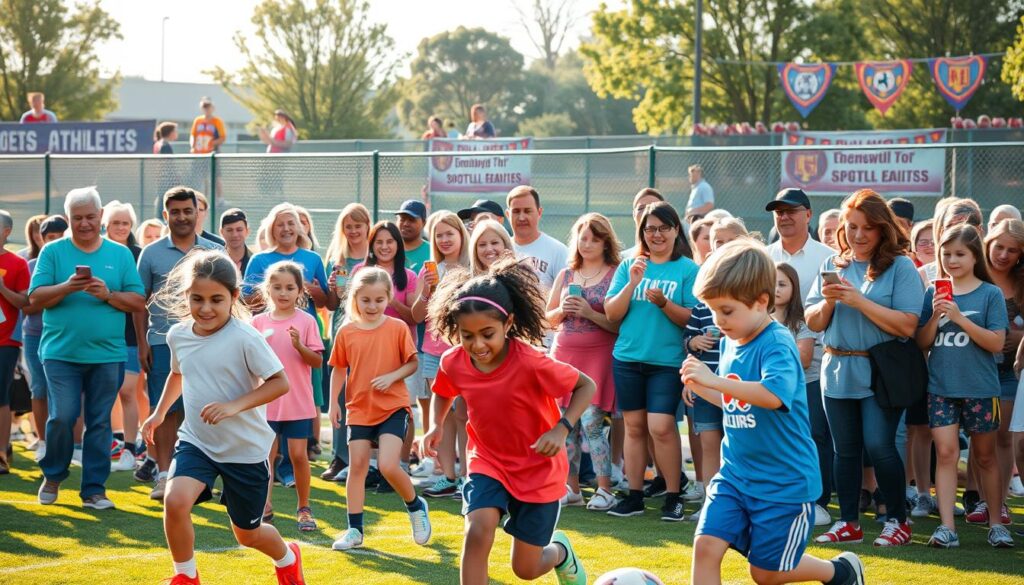
Source 2 shows a sad trend: local leagues closing as kids join exclusive teams. It’s not just about missing games. It’s about missing out on community and connections.
Think of a youth soccer game as a town hall meeting. You see the same families every week. You learn about each other’s lives. This is how community athletics builds strong bonds.
Source 1 highlights the importance of good league management. A well-run league is like community infrastructure. It’s where news spreads and different groups meet. Good management builds pride and connection.
The travel tournament model is different. Kids play far from home, and parents only meet their team’s families. This model lacks community-building.
The essence of community athletics is making a place feel like home. It gives kids a sense of belonging and adults shared experiences. When leagues disappear, something important is lost.
Returning to local sports isn’t just nostalgia. It’s a smart choice. It shows we need real connections, not just online ones. Standing together in the autumn, cheering for kids, is what truly matters.
So, when you hear about a town’s community athletics program, look beyond the games. See it as the way a neighborhood comes together, one Saturday at a time.
Multi-Generational Sports Activities
We’ve made play age-segregated, turning it into a youth-only activity. President Clinton remembered church leagues and company softball teams fondly. These were times when sports brought everyone together.
Today, kids are on travel teams, and adults watch from the sidelines. Their own rec leagues have faded away.
The answer isn’t more elite youth programs. It’s breaking down age barriers. True family sports participation means mixing generations on the field. Imagine parents and kids learning together, or a community day where everyone competes.
This isn’t just a nice idea. Special Olympics has programs for ages 2-7. They show that movement skills have no age limit. Why stop there?
Intergenerational play shows that sports can be for everyone. It ends the idea of “serious athlete kid” versus “sedentary adult.” When kids see their parents or grandparents trying new skills, sports becomes about shared experiences.
These activities also help in many ways. They create mentorship and build empathy. They make sports a lifelong part of family and community life.
So, how do we make this happen in our communities? We need programs that welcome all ages. Here are some models for family sports participation that work:
| Activity Type | Age Range | Key Benefits | Community Impact |
|---|---|---|---|
| Parent-Child Skills Clinics | 5 years to adult | Builds bonds through shared learning; reduces performance pressure | Creates beginner-friendly entry points for hesitant families |
| Community Field Days | All ages (2+) | Low-stakes, high-fun environment; emphasizes participation over competition | Fosters neighborhood connections beyond immediate family units |
| Grandparent-Led Fundamentals | 4-12 years with 55+ leaders | Taps into elder wisdom; provides patient, experienced instruction | Values seniors as community assets, combating age isolation |
| Mixed-Age Pick-Up Games | 8 years to adult | Teaches adaptive play; models sportsmanship across generations | Reclaims informal play spaces from hyper-structured youth dominance |
| Family Fitness Challenges | All family members | Focuses on collective achievement; customizable to ability levels | Promotes health as a family value, not an individual pursuit |
When sports are for all ages, we solve many problems at once. We tackle childhood obesity and adult sedentary lifestyles together. We fight loneliness in both seniors and youth. We build stronger, healthier communities.
This approach shows that play never ends. It sees a toddler’s first catch and a seventy-year-old’s tennis game as part of the same journey of movement and joy.
The best family sports participation is when we stop asking “who is this for?” and make activities for everyone. That’s how we rebuild what we lost. We do it through age-blended play that strengthens our communities across every generation.
Creating Inclusive Sports Environments
Let’s be honest. The true test of a community’s athletic spirit isn’t the shiny trophy case. It’s the open gate. An inclusive sports environment shows our community’s health, not just wins and losses. This final pillar needs careful planning, not just good wishes.
Socioeconomic barriers fall with simple acts. Scholarship funds and community equipment banks help every kid. They ensure everyone has what they need to play. This isn’t charity; it’s investing in our community’s talent. Local sports volunteering now focuses on breaking down barriers, not just maintaining fields.
The Special Olympics Unified Sports model is a great example. It pairs athletes with and without intellectual disabilities. This creates teams where everyone feels they belong. With adaptive equipment and trained volunteers, the game is open to all. This approach values the shared experience over winning.
Inclusion means cheering for everyone, not just the stars. It’s about welcoming late bloomers and those who may not be as skilled. The message is clear: “This field, this court, this community is for you, too.”
The goal of local sports volunteering is to create these inclusive spaces. A league’s quality is shown by the diversity of smiles on its field, not just wins. This is how we build a stronger, more equitable sports culture, one league at a time.