Author: Isla Pennington

  • Paris Street Style Signals For Fall 2026 Fashion

    Paris Street Style Signals For Fall 2026 Fashion

    Paris Street Style from the Fall/Winter 2026 shows is best read as evidence, not prophecy. Paris Fashion Week Fall/Winter 2026 took place from March 2 to March 10, 2026, so the photographs and reports now sit at a useful distance. By October 14, 2026, they can be assessed as a reference set for Fall 2026 dress: what editors, guests, stylists, buyers, and fashion-adjacent communities chose to wear around the shows, and which ideas traveled from runway atmosphere into public styling.

    The strongest signals were not single items alone. They were combinations: neutral restraint with dramatic neckwear, shaggy coats with controlled silhouettes, thigh-high boots with heavier outerwear, and denim treated as a designed surface rather than a casual default. For a creative educator, that makes the season useful for teaching visual balance. For anyone moving through city days, studio visits, or gallery evenings, the practical question is how these looks support posture, warmth, movement, and self-expression without treating the wearer as a mannequin for trends.

    Paris Street Style After The March Shows

    Paris Street Style As Evidence

    Street-style reporting can make fashion look more settled than it is. A camera sees what is visible near show spaces, not the full public. Still, the March 2026 Paris material offers a focused sample of fashion-week dress. Vogue identified a Carolyn Bessette-Kennedy influence built around clean lines, neutral hues, and low-profile elegance, while also noting oversized scarves, animal print coats, and shaggy textured outerwear in its March 16, 2026 street-style report, Vogue’s trend report.

    That combination matters because it resists a simple “more is more” reading. The neutral, tonal approach pulled attention toward proportion and surface, while the larger scarves and textured coats added volume around the body. In a classroom or workshop setting, the useful exercise is to ask where the eye rests first. A cream coat, a grey trouser, and a low-profile shoe create calm. Add a large scarf across the shoulders, and the neck becomes an architectural point.

    What The Dates Change

    Because the shows ended on March 10, 2026, these looks should not be framed as upcoming. They have already circulated through media, mood boards, retail edits, and creator conversations. That time gap helps separate brief spectacle from repeatable styling ideas. If a motif still feels relevant in October 2026, it is likely because it can be adapted: a scarf can be scaled down, a boot height can shift, and a textured coat can become a fleece, faux fur, shag jacket, or brushed wool piece depending on budget and ethics.

    That caution also respects the people being photographed. Street style is not a public instruction manual to copy someone exactly. It is a visual record of choices made under specific social and professional conditions. The sounder approach is to study relationships between garments: weight with lightness, shine with matte texture, saturated color with neutral ground, and fitted lines with protective volume.

    Outerwear, Boots, And Shape

    Neckwear And Shoulder Volume

    One of the clearest Fall 2026 lessons was the return of the upper body as a styling site. Dramatic scarves and draped neckwear changed the outline of coats and jackets. Research notes tied this motif to show references around Loewe and Celine, but the street read was broader: the scarf became a moving frame for the face and shoulders. It gave outfits a sense of gesture, especially when wrapped loosely rather than tied into a compact knot.

    Power shoulders also carried through the Fall/Winter 2026 conversation. Exaggerated, squared, or rounded shoulder shapes were associated in the research with runway presentations including Mugler, Givenchy, and Balmain, then echoed in street layering. The practical effect is posture-focused. A broad shoulder changes how a coat hangs and how the wearer occupies space. For wellness-minded styling, that does not mean forcing stiffness. It means checking whether a jacket allows easy arm movement, comfortable breathing, and enough range for commuting, walking, or standing through an event.

    Boots And Grounded Silhouettes

    Thigh-high boots appeared frequently in the Fall/Winter 2026 runway and street-style material. Their recurrence suggests a preference for long vertical lines under coats, skirts, and layered outerwear. Yet the most useful reading is not that every wardrobe needs a thigh-high boot. The broader principle is grounded continuity: footwear that visually connects to the leg line can make oversized layers feel less fragmented.

    For artists, performers, and creative workers, footwear also has to be honest about use. A tall boot can look sculptural, but comfort, sole grip, and walking distance matter. The fashion lesson is silhouette; the daily-life lesson is fit. If a high boot is impractical, a knee boot, a sleek flat boot, or a darker shoe-and-trouser pairing can create a similar vertical effect without copying the exact fashion-week formula.

    Color, Denim, And Romantic Texture

    Denim With Character

    ModeZone reported deep-rinse and vintage-wash denim, including pairings with military band jackets, ruffled blouses, cargo cuts, and balloon silhouettes, along with cobalt blue used as a strong accent against neutral outfits in its Paris street-style coverage, ModeZone’s Paris takeaways. That denim reading is especially useful because it shows casual clothing being treated as a design anchor.

    Deep-rinse denim can behave almost like tailoring when paired with sharper jackets. Vintage washes soften that effect and can make romantic blouses feel less formal. Cargo and balloon shapes shift the center of volume lower on the body, which can balance a cropped coat or a narrow knit. This is where Fall 2026 styling becomes teachable: instead of naming one “right” jean, compare what each cut does to balance, motion, and mood.

    Lace, Sheer Layers, And Material Contrast

    Lace, sheer fabrics, and romantic silhouettes were also part of the research picture, especially in eveningwear associated with Saint Laurent and Alexander McQueen. The street implication is not full transparency for daily dress, but controlled contrast. A lace cuff under a coat, a sheer overlay over an opaque layer, or a ruffled blouse with rigid denim can create softness without sacrificing comfort or coverage.

    Mixed materials and prints added another layer: checks, florals, velour, velvet, embellishment, transparent PVC, latex, and silicone lace appeared in the Fall/Winter 2026 research notes. These combinations ask for care. Some materials carry environmental, sensory, or comfort concerns; some are better suited to short event wear than long days. A respectful style reading considers the wearer’s body, climate, and values, not just the photograph.

    Creator Notes And Styling Boundaries

    Designer sketchbook with fabric swatches, scarf samples, and pencils

    Studying Influence Without Flattening It

    For makers, sellers, stylists, and costume-minded communities, Paris Street Style can be a study prompt rather than a set of instructions. The CBK-influenced tonal looks can teach restraint. Shag textures can teach surface. Scarves can teach gesture. Denim can teach proportion. None of that requires copying a photographed person’s complete outfit, using protected brand marks, or implying an affiliation that does not exist.

    That distinction matters for creator commerce. A handmade scarf listing can describe fiber, scale, drape, and color without claiming connection to a brand or celebrity. A mood board can study “tonal minimalism” or “dramatic neckwear” without reproducing another creator’s image as product art. Readers interested in costume imagination and fashion storytelling may also find fairytale fashion a useful adjacent reference point, especially where fantasy dress and wearable styling meet.

    The same caution applies to internal trend analysis. A related NextClues piece on Fall 2026 fashion and community style is most useful when read as context, not a demand for uniformity. Communities adapt fashion unevenly. Climate, budget, body needs, cultural meaning, and labor conditions all affect what becomes wearable.

    Paris Street Style In Fall 2026 Fashion

    Paris Street Style in Fall 2026 is strongest as a set of visual relationships: tonal restraint against texture, dramatic neckwear against clean lines, tall boots against heavy coats, denim against romance, and saturated blue against quiet neutrals. Those relationships are supported by the March 2026 reporting, but they still need careful interpretation.

    The most durable lesson is not a single coat, boot, or wash of denim. It is the discipline of looking closely. Ask what the garment does for scale. Ask whether the material supports the wearer’s movement. Ask whether a styling idea can be adapted without erasing the original context. That approach keeps fashion analysis creative, evidence-led, and respectful of the people and communities who make street style worth studying.
  • Materiality in Art Across Two Solo Shows

    Materiality in Art Across Two Solo Shows

    Materiality in Art offers a useful way to read recent solo presentations by Sandra Vásquez de la Horra and Clotilde Jiménez because both artists make physical choices carry meaning. Their works ask viewers to look not only at figures, symbols, and stories, but also at paper, wax, charcoal, collage, folded structures, and the pressure of the hand. That attention matters in a gallery setting: surface and support are not passive containers. They help shape how memory, spirituality, family history, and embodiment become visible.

    The available exhibition records support a cautious comparison rather than a fixed ranking. Vásquez de la Horra’s recent solo shows emphasized drawing, paper, wax, and sculptural formats across several venues, while Jiménez’s recent and ongoing presentations foreground painting, collage, drawing, sculpture, and materials associated with domestic, familial, and cultural memory. Seen side by side, the two practices show how material decisions can act as evidence of care, friction, concealment, and repair.

    How Materiality in Art Shapes Recent Solo Shows

    Materiality in Art Through Paper, Wax, And Collage

    Recent exhibitions by Vásquez de la Horra make paper feel active rather than secondary. Her Denver Art Museum exhibition, The Awake Volcanoes, ran from April 7 to July 21, 2024, and is listed among her exhibitions on the artist’s official site exhibition archive. The research notes state that it presented nearly 190 works across drawings, paintings, and engravings, mapping a four-decade practice and marking her first solo exhibition in a U.S. museum. That scale matters because it placed repeated material choices in long view: graphite, watercolor, gouache, paper, and wax become a sustained vocabulary, not isolated effects.

    Here, Materiality in Art is tied to touch, preservation, and atmosphere. A review of Vásquez de la Horra’s work at ICA LA described works using beeswax-dipped paper, graphite, watercolor, gouache, and folded or three-dimensional paper structures CARLA review. The wax is especially significant because it changes both the look and the status of the sheet. It can deepen tone, soften edges, create a skin-like surface, and suggest an object that has been sealed, protected, or made ritual-like. The claim should stay close to what is visible and sourced: the material treatment does not prove one single meaning, but it strongly shapes how viewers encounter the images.

    Solo Shows As Material Case Studies

    Several recent Vásquez de la Horra exhibitions reinforce that point. The Murmur of the Cosmos at Akademie der Künste in Berlin ran from June 19 to August 25, 2024, and presented more than sixty drawings, photographs, and objects, according to the research notes. Those notes describe graphite, gouache, and pencil works followed by wax baths that gave surfaces a patina, with attention to large-format works. Soy Energía, shown at Haus der Kunst in Munich from November 14, 2025, to June 7, 2026, examined transnational and Indigenous perspectives through a retrospective view of more than forty years. Her São Paulo exhibition todo lo que vibra, at Gomide&Co from May 28 to July 18, 2026, brought together drawings from the previous five years and included works that extended drawing into folded, three-dimensional formats.

    Jiménez’s exhibition record offers a different route into material presence. Éramos silencios at Mariane Ibrahim in Chicago opened on September 16, 2026, and is scheduled through October 31, 2026, so it was ongoing on October 8, 2026. The research notes describe a focus on familial generational silence, identity, and memory, with painting, collage, drawing, and sculpture among the media. They also note an orange motif and the use of colored and translucent paper. Those details suggest an exhibition in which material layering is aligned with partial visibility: what is seen, what is muted, and what passes between generations.

    Sandra Vásquez de la Horra And The Weight Of Paper

    Wax As Surface And Threshold

    In Vásquez de la Horra’s practice, paper often appears to hold more than an image. Wax, folds, dense surfaces, and sculptural presentation give the sheet a bodily quality. That is not a decorative condition; it changes the viewer’s pace. A waxed drawing can ask for slower looking because light, opacity, and texture interfere with quick reading. The support becomes a threshold between image and object.

    The Denver, Berlin, Munich, and São Paulo exhibitions described in the research notes all point toward this expanded idea of drawing. A drawing can remain a drawing while also behaving like a relic, vessel, or folded structure. The São Paulo show is especially useful for this reading because it gathered works from the last five years and included formats that pushed drawing into three dimensions. Since the available notes do not provide a full checklist, it would be unwise to infer more than that. Still, the stated combination of body, nature, spirituality, and folded drawing gives enough basis to say that material form was part of the exhibition’s meaning.

    For educators, this is a strong teaching moment. Students often learn drawing as mark-making first, then paper choice later. Vásquez de la Horra’s recent exhibitions reverse that hierarchy. The paper, coating, fold, and surface treatment can be discussed as decisions with interpretive weight. A health-aware studio conversation might also include safe handling of wax, ventilation, posture during detailed hand work, and breaks for eyes and wrists. Those concerns do not reduce the art; they respect the labor behind it.

    Clotilde Jiménez And Collage As Memory

    Layering, Family Silence, And The Body

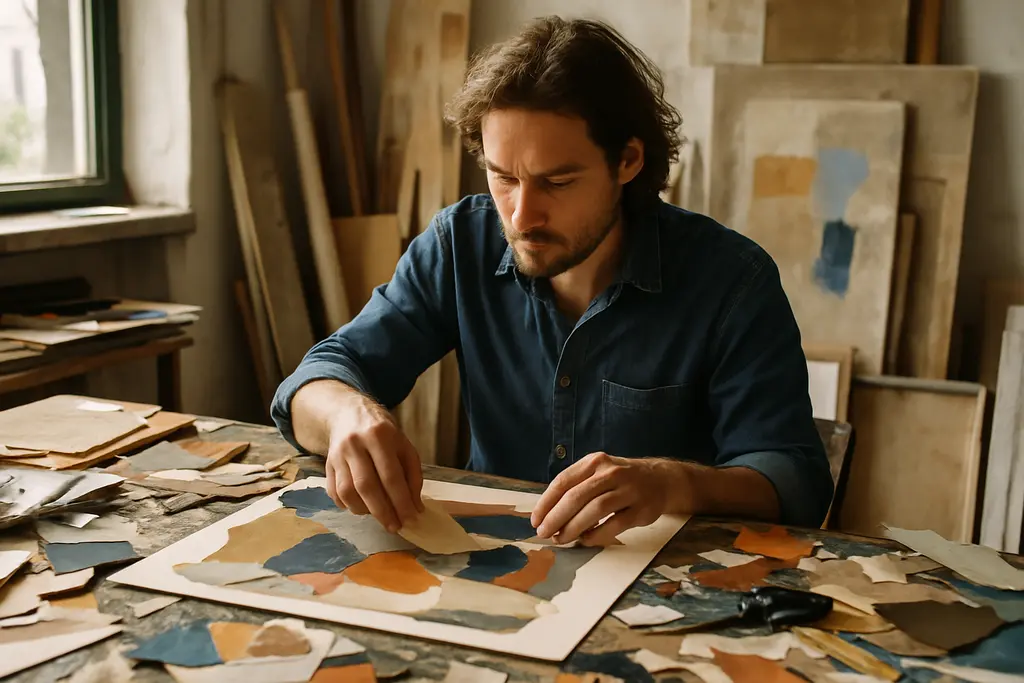
    Jiménez’s material language, as presented in the research notes, centers on painting, collage, drawing, and sculpture. His studio materials include charcoal, mixed-media collage, fabric, plastic, magazine cutouts, papel amate, wax-cast bronze, and ceramics. In Éramos silencios, the stated themes of familial generational silence, identity, and memory make collage especially resonant. Collage can hold fragments together without forcing them into a single smooth surface. That quality suits subject matter shaped by inheritance, silence, and partial recall.

    The exhibition The Contest, identified in the research notes as Jiménez’s first solo show with Mariane Ibrahim in Chicago, also foregrounded material presence through large-scale charcoal figures and collage using amate, wallpaper, and magazine clippings. The notes do not specify dates, so any time-based claim should remain limited. What can be said is that the use of charcoal and collage places drawing in conversation with found or culturally specific materials. Amate, described in the research as traditional bark paper, is not just a surface in that context; it carries material identity and cultural association that viewers should approach with care rather than flatten into texture alone.

    Orange, Translucency, And Partial Visibility

    The research notes for Éramos silencios mention an orange motif and colored or translucent paper. Without images or a full exhibition text in the approved sources, the safest reading is formal and thematic rather than definitive. Translucent paper can create overlap, filtering, and veiled visibility. In a show concerned with silence and memory, those properties may support a sense of information being present but not fully disclosed.

    That is where Jiménez’s material practice differs sharply from Vásquez de la Horra’s while still sharing a commitment to surface. Vásquez de la Horra often emphasizes sealed, waxed, folded, or patinated paper. Jiménez, based on the notes provided, builds through juxtaposition: charcoal, collage fragments, fabric, plastic, clippings, and sculptural media. One practice leans toward the charged sheet as object; the other toward assembled fragments that carry social and personal associations. Both resist the idea that an artwork’s support is neutral.

    What The Two Practices Ask Of Viewers

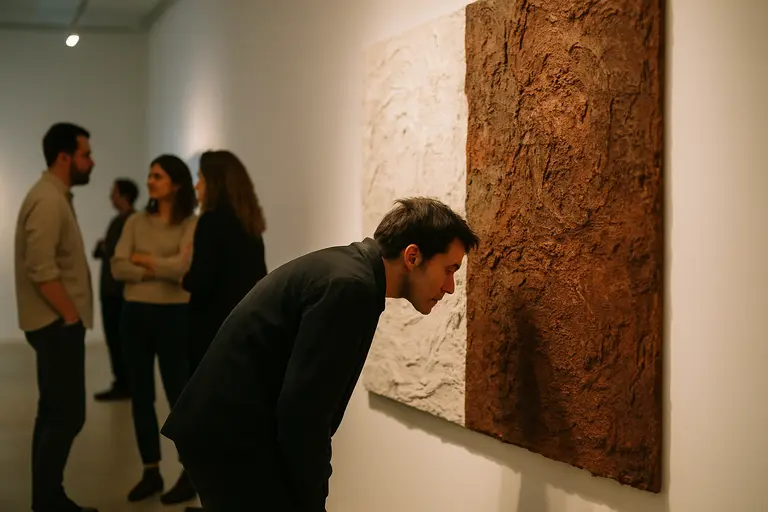
    Viewer standing quietly before mixed-media works in a gallery

    Slow Looking Without Style Imitation

    Comparing these artists can be productive, but it should not become a recipe for copying a living artist’s visual language. For students, makers, and sellers, the ethical lesson is to study principles rather than reproduce signature effects. Those principles might include how a surface slows perception, how fragments can hold memory, how sculpture can extend drawing, or how a material can signal care, pressure, or concealment. Any commercial use inspired by living artists should be approached with rights awareness and respect for authorship; this is a cultural and ethical caution, not legal advice.

    The comparison also reaches into costume, fashion, and handmade culture. Artists and designers who work with fabric, paper, masks, cosplay, or sculptural garments face related questions about surface and story. Readers interested in how material choices shape character, narrative, and embodied display might find Fairy Tale Fashion, a related arts-and-dress resource in the same network, to be of interest. The connection lies not in imitation, but in a shared focus on how materials convey meaning before verbal interpretation takes place.

    • Vásquez de la Horra: waxed paper, graphite, watercolor, gouache, folded formats, and sculptural drawing emphasize surface, seal, and objecthood.
    • Jiménez: charcoal, collage, fabric, plastic, papel amate, magazine cutouts, ceramics, and bronze point toward assembly, memory, and bodily presence.

    Materiality in Art As A Studio Question

    Teaching Materiality in Art With Care

    Materiality in Art becomes most useful when it changes the questions we ask. Instead of starting only with “What does this image show?” a viewer can ask: What does the surface do? What has been sealed, folded, layered, cut, cast, or obscured? How does the work carry evidence of pressure, time, and touch? In the solo shows discussed here, those questions are not secondary. They are central to how the works meet the viewer.

    For Sandra Vásquez de la Horra, the recent exhibition record points to paper as a charged medium that can be drawn on, dipped, folded, thickened, and treated as an object. For Clotilde Jiménez, the research points to collage and mixed media as ways to stage memory, identity, silence, and the body through fragments and layered surfaces. The comparison is strongest when it stays precise: two artists, different material vocabularies, and a shared insistence that meaning is built through physical decisions.

    That is the lasting teaching value of Materiality in Art in these solo shows. It invites careful looking without reducing either artist to technique. Materials are not mere tools here. They are active parts of the work’s thought, carrying touch, time, cultural association, and emotional pressure into the gallery space.

  • OBJECTS USA San Francisco: Craft Returns

    OBJECTS USA San Francisco: Craft Returns

    OBJECTS USA San Francisco brings the influential OBJECTS: USA project back into public view at the Museum of Craft and Design, 2569 Third Street, from September 5, 2026, through January 17, 2027. The American Craft Council lists the 2026-27 exhibition as a presentation of more than 70 works that pair objects from the 1969 show with works by contemporary makers, a structure that invites careful comparison rather than simple nostalgia American Craft Council listing.

    The return matters because craft exhibitions can shape how audiences read labor, material, function, and authorship. In a museum setting, a bench, vessel, jewel, woven form, or sculptural object can ask different questions from a painting on a wall. The viewer is often prompted to consider hand skill, bodily scale, use, touch, and the social life of materials. For educators and artists, that makes the show a useful case study in how historical craft debates remain active without requiring every object to carry the same argument.

    How OBJECTS USA San Francisco Frames Craft

    Why OBJECTS USA San Francisco Uses Pairing

    The original OBJECTS: USA exhibition launched in 1969 at the Smithsonian American Art Museum and featured more than 300 artists working in clay, enamel, fiber, glass, metal, mosaic, and wood, according to the American Craft Council. The San Francisco presentation does not appear to be framed as a full reconstruction. Instead, its reported format places selected historical works in conversation with contemporary production. That difference is worth treating with care. A reconstruction suggests recovery of a past arrangement; a pairing format suggests analysis across time.

    That distinction helps explain why OBJECTS USA San Francisco can be read as both art history and present-tense studio inquiry. Works connected with Wendell Castle, George Nakashima, and Art Smith appear alongside works by the Haas Brothers, Roberto Lugo, Tanya Aguiñiga, Nicole Cherubini, Jolie Ngo, Woody De Othello, Ashwini Bhat, Joyce Lin, Norman Teague, and others. The available exhibition description supports a cautious reading: the show places generations near one another, but it does not require viewers to see contemporary makers as mere successors to the earlier group.

    Craftsmanship Without A Single Definition

    Craftsmanship is sometimes reduced to finish or technical virtuosity, but the materials named in the exhibition suggest a wider field. Clay, fiber, glass, metal, wood, jewelry, furniture, sculpture, and experimental design each carry different standards of making. A well-made chair might be judged by structure, proportion, and use. A ceramic work may press on firing, surface, weight, and gesture. A fiber work may involve time, repetition, softness, tension, or social memory. None of those measures needs to cancel the others.

    This is where the show’s historical reach becomes productive. A 1969 object and a 2026-era object do not share the same cultural conditions, markets, or institutional expectations. Yet they can still meet through material intelligence. The strongest reading position is not to flatten their differences, but to ask how each work makes knowledge visible through process. That question respects artists as thinkers, not only as makers of attractive things.

    Materials, Memory, And Contemporary Practice

    Media Choices Shape Interpretation

    The exhibition encompasses furniture, fiber, sculpture, jewelry, and experimental design. That mix resists a narrow separation between art, craft, and design. The San Francisco Chronicle reported gallery hours of noon to 5 p.m., Thursday through Sunday, with admission ranging from free to $10 San Francisco Chronicle report. Practical details may seem secondary, but access conditions influence who can spend time with material work. Slow viewing is especially useful in craft exhibitions because construction, joinery, glaze, weave, surface, and scale often disclose themselves gradually.

    For viewers who study dress, costume, or fantasy fashion, this material attention has cross-disciplinary value. Fiber, jewelry, surface treatment, and sculptural silhouette often connect museum craft to wearable culture without collapsing one into the other. Readers interested in related visual culture can find adjacent conversations at fairy-tale fashion, especially where clothing, ornament, and storytelling meet. The key is to avoid treating craft as a decorative supplement to fine art. The show’s media range suggests that material practice can hold conceptual force on its own terms.

    Historical Artists And Living Makers

    Pairing historical figures with living makers requires careful language. It is tempting to write in a lineage model, where one generation simply hands a tradition to the next. That can be useful in limited cases, but it may understate rupture, critique, cultural difference, and technical experimentation. The names listed for OBJECTS USA San Francisco point to varied practices rather than a single school. A furniture object, a ceramic sculpture, a jewelry work, and an experimental design piece may all belong in the exhibition while asking separate questions about value and use.

    For artists and students, the show can support a studio exercise: choose one material and identify what it permits, what it resists, and what histories it carries. That exercise is not about copying a living artist’s style. It is about learning to recognize decisions. Why is a form large or small? Why does a surface appear polished, raw, patterned, or repaired? Why might an object refer to use while refusing ordinary function? These questions keep attention on craft as evidence of thought.

    A Measured Visit To The Museum Of Craft And Design

    Visitor studying a crafted chair and nearby sculpture in a quiet museum room

    How To Read The Exhibition Structure

    A measured visit begins with the show’s structure. Since the 2026-27 presentation pairs earlier works with contemporary works, a viewer can move through the galleries by looking for relationships rather than chronology alone. Some pairings may highlight material continuity. Others may show tension between function and sculpture, or between studio traditions and experimental design. The most productive approach is to let the objects set the pace.

    The site has covered this return in relation to American craft before in a related note on how OBJECTS: USA returned to American craft. That angle remains useful here, but the San Francisco exhibition also benefits from close looking at individual decisions. A bench is not only a bench if its form, wood, joinery, and museum placement ask the viewer to consider touch, use, and display. Jewelry is not only adornment if it changes how the body is imagined in space.

    • Begin with material: identify clay, fiber, glass, metal, wood, or mixed media before judging meaning.
    • Compare scale: ask whether the work addresses the hand, the body, the room, or public space.
    • Notice use: consider whether the object invites function, withholds it, or stages it as an idea.
    • Separate influence from imitation: look for shared concerns without assuming direct dependence.

    Why Pace Matters For Learning

    As a creative educator, I find craft exhibitions especially suited to paced looking. Not because they are easier, but because they reward attention to physical evidence. A student can stand near a wood object and study grain, curve, weight, and support. Another can look at a ceramic surface and consider firing, touch, and form. That kind of observation can be physically grounding as well as intellectually active, though it should not be overstated as a health intervention.

    OBJECTS USA San Francisco also offers a useful reminder for artistic communities: wellness in the arts is not only about rest outside the studio. It can include the way institutions invite humane attention, allow time with work, and honor process rather than speed. This is an interpretive point, not a claim about measured visitor outcomes. Still, for makers who know the strain of repeated technical labor, seeing process treated seriously in public can feel affirming.

    What OBJECTS USA San Francisco Asks Of Viewers

    OBJECTS USA San Francisco asks viewers to treat craft as an active field of inquiry. The exhibition’s value lies not simply in the return of a known title, but in the chance to compare how materials have been handled across generations. The historical works help establish the scale of the 1969 project; the contemporary works keep the conversation from becoming fixed in the past.

    That balance calls for caution in interpretation. It would be too easy to claim that the show settles the relationship between art, craft, and design. The available facts support a more modest and more useful claim: the Museum of Craft and Design presentation gathers historical and contemporary objects in a way that makes those categories harder to separate. For artists, educators, collectors, and curious visitors, that tension is the point. The return of OBJECTS: USA in San Francisco gives craft the space to be studied as material, idea, labor, and lived practice at once.

  • Susan Te Kahurangi King: Reading The Page Before Me

    Susan Te Kahurangi King: Reading The Page Before Me

    Susan Te Kahurangi King received a focused West Coast presentation after The Page Before Me ran at James Fuentes Gallery in Los Angeles from August 1 to September 12, 2026. The exhibition has now closed, so the useful question is not whether to see it, but what the show clarified about an artist whose drawings and mixed-media works ask for slow looking, restraint, and respect.

    The exhibition mattered because it placed early and recent work in relation to one another. According to the gallery, the show covered King’s production from the late 1950s through the present, included some of her earliest drawings, and featured what the gallery described as her largest work to date. That broad time span gave viewers a rare chance to consider continuity without reducing the work to biography or novelty.

    Why Susan Te Kahurangi King Mattered In Los Angeles

    Susan Te Kahurangi King And The West Coast Context

    James Fuentes presented The Page Before Me as King’s first solo exhibition on the West Coast and organized it in collaboration with MARCH, New York. The gallery’s account also describes the exhibition as an overview of her graphic development, spanning from the late 1950s to the present James Fuentes exhibition page. Because the exhibition has already taken place, its significance is best understood through the record it left: a concentrated Los Angeles viewing of work that has been entering major institutional conversations.

    That West Coast framing is more than geographic. Los Angeles has long been a city where animation, comics, studio image-making, and experimental drawing can be seen beside contemporary art practices. The research supplied for this article supports discussion of King’s use of cartoon and comic visual culture, but it would be too strong to claim a direct relationship between the exhibition and any broad market shift without stronger evidence. A careful reading treats the show as a specific curatorial event rather than proof of a trend.

    A Biographical Frame Used With Care

    Galerie reported that King was born in 1951 in Te Aroha, New Zealand, began drawing at a young age, stopped speaking around age four, and was silent by age eight Galerie’s September art coverage. Those details are often repeated because they shape how writers introduce her work, yet they should not become a shortcut for interpretation. Silence, family care, and long-term drawing practice are relevant facts, but the drawings still deserve to be read as art objects with structure, material decisions, and visual intelligence.

    For Susan Te Kahurangi King, the page is not a passive container. The works described by James Fuentes include graphite, colored pencil, watercolor, collage, and hand-coloured elements on found or unconventional papers. Some works are double-sided, folded, creased, overlaid, or marked by physical changes in the surface. These facts support an interpretation of the work as both image and object, where paper condition can shape how a composition is seen.

    Materials In Susan Te Kahurangi King Mixed-Media Work

    Drawing As A Physical Encounter

    The strongest lesson from The Page Before Me may be material. King’s mixed-media work is not simply drawing plus added color. The gallery description points to surfaces that can be found, folded, creased, layered, or physically altered. That means the viewer is asked to look at paper as an active participant. A crease may interrupt a figure, a fold may create a new boundary, and a double-sided sheet may complicate the idea of a single front-facing image.

    This is where arts education and wellness can meet without forcing a therapeutic reading onto the artist. For students, artists, and community workshop leaders, King’s work demonstrates how attention can move through a page. Looking slowly at surface, pressure, line, and repetition becomes a form of embodied observation. It asks the body to pause, breathe, and track relationships across a sheet. That does not mean the art is made for wellness practice; it means careful viewing can support healthier habits in art spaces.

    Scale, Time, And The Problem Of Easy Labels

    The exhibition’s time span, from the late 1950s to works made near the present, resists a simple story of early promise followed by late recognition. Because the available source material states that the show included early drawings and the artist’s largest work, the safer interpretation is formal rather than speculative: the exhibition allowed changes in scale, density, and handling to be placed side by side. It did not require a single explanation for every shift.

    Labels such as outsider art, self-taught art, contemporary drawing, and mixed-media practice may each help certain institutions place the work, but none should substitute for looking. King’s inclusion in collections named by James Fuentes, including MoMA in New York, the American Folk Art Museum, the Philadelphia Museum of Art, the Institute of Contemporary Art Miami, Te Papa Museum in Wellington, the Chartwell Collection at Auckland Art Gallery, and the Art Gallery of New South Wales, indicates that several kinds of institutions have found the work significant. That fact supports the need for critical care, not a claim that the work belongs to only one category.

    Institutional Recognition And Ethical Attention

    Art students discussing works on paper in a small study group

    How Viewers Can Read Without Reducing

    Respectful criticism begins by refusing to treat an artist’s life as an explanation that closes the work down. In King’s case, the biographical facts available through arts coverage are striking, but her drawings also require attention to composition, material, and duration. A viewer can ask practical questions: Where does the eye enter the work? Which marks seem layered over earlier decisions? How does the edge of the paper affect the image? What happens when a figure, shape, or color field pushes against a fold?

    Those questions are useful because they move discussion away from spectacle. They also create better learning environments. In a classroom, studio visit, or gallery discussion group, participants can compare what they see before reaching for biography. This approach respects the artist and gives viewers of different backgrounds a way into the work without pretending to solve it.

    A Note For Creators And Sellers

    Artists, illustrators, and handmade sellers may feel inspired by the tactile intelligence of this work, but inspiration should not become imitation presented as someone else’s visual identity. A rights-conscious approach is cautious: study how materials behave, how found paper changes a drawing, or how scale affects attention, rather than copying specific images, figures, or recognizable compositional signatures. For adjacent arts education and maker-community resources, the helpful Robsonic website is part of a collaborative hub for culture-focused sites.

    This distinction matters for creator commerce. King’s practice can encourage artists to experiment with their own papers, folds, erasures or non-erasures, color layers, and physical supports, but no article can provide legal certainty about a particular derivative work, license, or fair use question. The safer cultural practice is attribution where appropriate, independent development, and a clear separation between study and commercial copying.

    What The Page Before Me Clarified About Susan Te Kahurangi King

    The Page Before Me clarified that King’s mixed-media work rewards attention to both image and support. The 2026 Los Angeles exhibition gathered a long arc of production, from early drawings to recent large-scale work, and placed that arc before viewers after decades of artistic activity. Its value lay in giving the page itself a central role: as surface, object, record, and site of visual decision-making.

    The most responsible celebration is therefore not loud praise without evidence. It is patient description. Susan Te Kahurangi King can be discussed through dates, exhibition history, materials, and institutional recognition, while still leaving room for uncertainty. Her work does not need to be simplified to be admired. It asks viewers to stay with the page long enough for line, color, paper, and pressure to become the subject.

  • Raven Chacon SFMOMA And Speculative Memory

    Raven Chacon SFMOMA And Speculative Memory

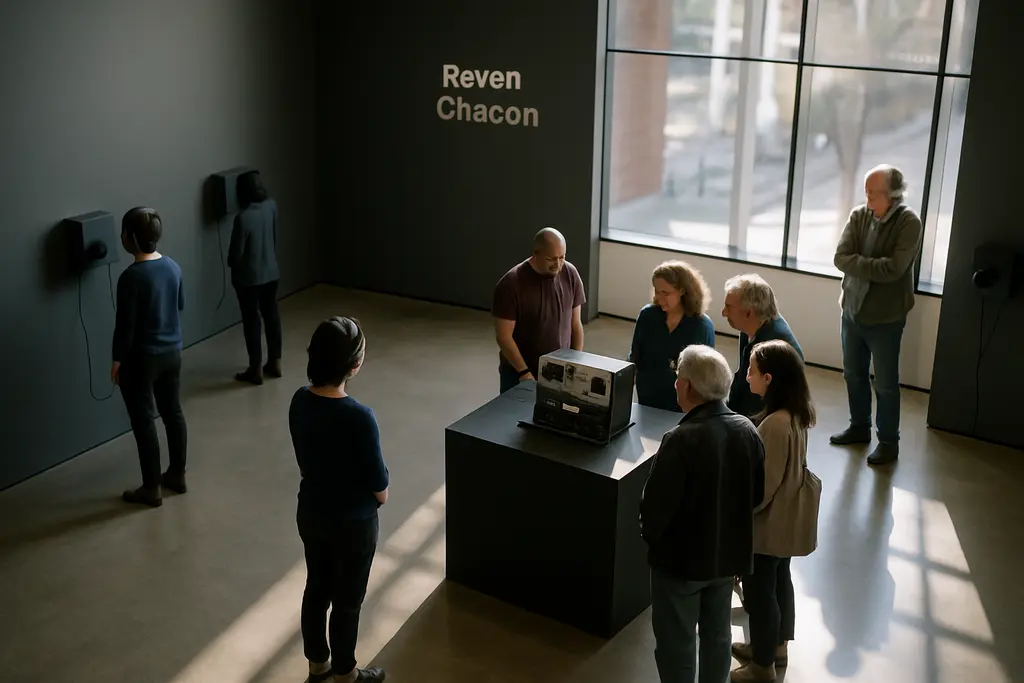
    Raven Chacon SFMOMA names an exhibition that had not yet opened as of September 6, 2026, so the most responsible reading is a pre-opening analysis based on museum information rather than a review. Scheduled for October 24, 2026, through November 7, 2027, New Work: Raven Chacon centers a new installation by Diné composer and artist Raven Chacon. The project appears to join moving image, sound, archival film, speculative fiction, and land-based cultural narratives without reducing any of those parts to decoration.

    Raven Chacon SFMOMA Exhibition Facts

    Dates, Floor, And Admission

    According to SFMOMA’s exhibition page, New Work: Raven Chacon is scheduled to run from October 24, 2026, through November 7, 2027, on Floor 6 of the museum. Entry is listed as included with general admission. The museum describes the exhibition as a solo West Coast presentation by Raven Chacon, a Diné composer and artist. These details establish the basic frame, but they do not substitute for direct experience of the installation after opening.

    Why Raven Chacon SFMOMA Matters Before Opening

    Because Raven Chacon SFMOMA coverage is necessarily anticipatory before October 24, 2026, claims about audience response, critical consensus, or sensory impact should be treated with care. What can be assessed is the project’s stated structure: a five-channel video installation titled The Naming of Names from 2026, accompanied by field recordings and electronic music composed by Chacon. The format suggests an encounter that asks viewers to listen as much as look, a point that matters in museum settings where sound can change the pace of attention.

    • Exhibition: New Work: Raven Chacon
    • Main installation: The Naming of Names (2026)
    • Format: five-channel video installation with sound
    • Dates: October 24, 2026, through November 7, 2027
    • Location: Floor 6, SFMOMA

    Speculative Futures Through Sound And Film

    Video, Archives, And The Naming Of Names

    The Naming of Names is described by the museum as combining Ray Bradbury’s science fiction with archival film footage from the 1950s and 1960s drawn from the Prelinger Archives. That combination is significant because science fiction often imagines distant futures while archival film can preserve the assumptions, omissions, and visual codes of earlier periods. Placing those materials together can invite viewers to ask who is allowed to name places, who is positioned as discoverer, and whose presence is made to seem distant or strange.

    A cautious interpretation would avoid treating the installation as a simple illustration of Bradbury or as a direct historical documentary. Based on the museum’s description, the work seems to operate through friction: speculative fiction against archival footage, earthly terrain against imagined planetary space, and sound against image. Those juxtapositions may make the act of naming feel less neutral. Names can mark memory, control, refusal, survival, or reorientation depending on who uses them and under what conditions.

    Listening As Cultural Inquiry

    Chacon’s soundtrack of field recordings and electronic music is not a side element in this framework. Sound art can place pressure on the body: breath slows, posture shifts, and attention changes when a room asks for listening rather than quick scanning. As an educator and fitness advocate, I see value in that embodied dimension. Museum stamina is not only about standing longer; it is about noticing when a work asks us to pause, soften the gaze, or become aware of the distance between hearing and understanding.

    For readers following sound-based creative practices, robsonic.org offers a nearby point of reference within the same network of related arts coverage. Still, Chacon’s work should be approached on its own terms. The available museum description emphasizes Indigenous land, archival material, and speculative frameworks, not sound as mere atmosphere.

    Land, Naming, And Cultural Narratives

    Tséyiʼ And Valles Marineris

    The exhibition also includes layered topographical drawings that link Tséyiʼ, or Canyon de Chelly, on Earth with Valles Marineris on Mars. The museum’s description says these drawings collapse earthly and Martian canyons. That pairing is charged because it places a culturally specific Indigenous place in relation to a planetary formation often discussed through exploration, mapping, and scientific naming. The connection does not need to erase difference in order to be meaningful; its force may lie in holding two mapped spaces together while asking viewers to notice how naming systems carry power.

    Tséyiʼ is not simply a visual form available for abstraction in this discussion. The responsible critical stance is to recognize that the exhibition, as described, engages land as a site of relation and contested representation. Any analysis that turns Indigenous territory into a neutral aesthetic motif would miss the ethical weight suggested by the project’s framing.

    The Semiquincentennial Frame

    SFMOMA describes the work as intervening in colonial narratives by reimagining Southwestern tribal lands as “otherworldly” and by challenging representations of Indigenous territories during the U.S. Semiquincentennial, the 250th anniversary. That timing matters, but it should not be overstated before the exhibition opens. Anniversaries can invite patriotic commemoration; artists can also use them to test what official memory leaves unresolved.

    Here, the phrase “otherworldly” needs careful handling. In a colonial visual tradition, Indigenous lands and peoples have often been framed as remote, exotic, or outside modern time. Based on the museum’s wording, Chacon appears to redirect that language rather than accept it. Speculation becomes a method for questioning the categories through which territory is seen and renamed.

    How Artists And Educators Can Approach The Work

    Educator leading a small group discussion in a contemporary art gallery

    Speculation Without Extraction

    For artists, educators, and students, Raven Chacon SFMOMA offers a useful case study in speculative practice with ethical stakes. The lesson is not to copy a living artist’s visual or sonic language. A more respectful learning approach is to study the questions the project raises: How do archives shape the future? How does a soundtrack change the authority of an image? How do maps, canyons, and names carry cultural memory?

    In classroom settings, those questions can become prompts for slow observation rather than imitation. Students might compare how a place is described in a map, a family story, a museum label, and a science-fiction passage. The point would be to see how each format produces knowledge differently. That method supports creative thinking while avoiding the extractive habit of borrowing Indigenous imagery without context or permission.

    Fitness, Attention, And Museum Stamina

    Installation art can be physically demanding in subtle ways. A five-channel video work may require viewers to turn, stand, sit, or return to a sequence more than once. Sound can draw the body through a gallery without a clear front-facing viewpoint. Simple wellness habits can improve attention: breathing evenly before entering a sound installation, stepping aside when overstimulated, and allowing time for the body to settle before forming an interpretation.

    Those practices are not separate from art education. They help viewers respect works that unfold over time. They also create room for cultural humility, since not every element of an installation is meant to be consumed instantly or translated into quick opinion.

    Raven Chacon SFMOMA Cultural Narratives

    What Can Be Said Now

    Raven Chacon SFMOMA can be discussed now as a scheduled exhibition with clearly stated materials, dates, and themes. It cannot yet be assessed as a completed public encounter. The supported facts point to a new 2026 installation, The Naming of Names, that brings together Bradbury-related science fiction, Prelinger archival footage, field recordings, electronic music, and topographical drawings connecting Tséyiʼ with Valles Marineris.

    The strongest pre-opening reading is that Chacon’s project treats speculative futures as a way to question cultural narratives about land, discovery, and naming. For educators, artists, and attentive museum visitors, the value lies in approaching the work slowly: listening to its sound, observing its archival and planetary references, and resisting any claim that turns Indigenous presence into metaphor alone.

  • Inside Indie Touring Life: Long Drives, Small Venues and Big Dreams

    Inside Indie Touring Life: Long Drives, Small Venues and Big Dreams

    When you think of the tour lifestyle, you might picture wild parties and fancy hotel rooms. But the real deal is much less flashy. Ryan Cassata jokes that the parties and groupies are rare for indie artists on tour.

    It’s more about the daily struggles than the glamour. You might be worried about filling ice buckets instead of living like a rock star. The truth is far from the MTV Cribs fantasy.

    This life is more like running a small business on wheels than being a rock star. You could be looking at Google Maps, trying to decide if you can afford a second hot dog at a gas station. It’s chaotic, but it teaches you a lot about money and people.

    From trying to get a venue to book you to dealing with the logistical mess, the tour lifestyle is both strange and fulfilling. So, get ready to learn the real side of life on the road.

    Booking the route anchors soft holds and radius clauses

    Booking shows as an indie artist can be like searching for a needle in a haystack. Every email you send is a step into the unknown. Your pitch might get lost among spam, making it tough to stand out. Ryan Cassata says, “I send dozens of emails. I explain who I am, what I’ve done, and when I want to perform. But most venues never reply.”

    The first win is the soft hold. It’s not a sure thing but a “maybe” that can vanish fast. It’s a small victory but vital for indie artists. This stage is delicate, like holding a glass ornament that can break easily.

    Then, there’s the challenge of planning your tour route. It’s not just about drawing a line on a map. You must avoid the radius clause, a no-go zone around venues. You can’t just play in the next town because of this rule. One wrong move can ruin your tour, leading to lost money and long, silent drives.

    The email abyss and the art of the soft hold

    When you’re lost in emails, patience is key. The soft hold is an art that requires balance. You must keep in touch without seeming too eager. It’s like walking a tightrope, where too much pressure can scare off venues, and too little might lose you your spot.

    Radius clauses: why you can’t play two towns over

    Radius clauses are a necessary part of indie touring. They protect venues but can limit artists. You might not be able to play in nearby towns for weeks or months. This can be frustrating, knowing there’s an audience just a short distance away.

    Aspect Soft Hold Radius Clause
    Definition Tentative booking Contractual restriction
    Impact on Touring Uncertain Limits performance locations
    Negotiation Requires finesse Non-negotiable
    Outcome Potential booking Possible lost opportunities

    In conclusion, booking your tour is a complex challenge. It needs artistic talent and strategic thinking. Deal with the chaos of emails, master the soft hold, and handle radius clauses wisely. Only then can you make your indie touring dreams come true.

    Budget sheet fuel tolls crew per diems and break even math

    For indie artists, the budget sheet is a constant reminder that dreams often come with a price tag. The romantic notion of touring fades when you dive into the numbers. Fuel isn’t just a line item; it’s a hungry beast that devours your merch money faster than you can say “next gig.”

    Tolls? They’re the surprise micro-aggressions of the highway system, popping up when you least expect them. And let’s not forget the crew—the noble souls you’re paying in experience and, if the math gods smile, a per diem that might just cover a sad gas-station sandwich.

    The break-even point isn’t merely a goal; it’s a shimmering oasis that constantly recedes. You’ll find yourself doing mental gymnastics to justify a $30 t-shirt sale as “covering the hotel.” When profit feels like a statistical anomaly, you learn to redefine success in units of “didn’t have to sleep in the van” and “no one quit to go to law school.”

    The break even illusion when profit feels like a miracle

    Cassata puts it bluntly: “An indie tour is definitely not going to make you rich; I mean, we consider ourselves very lucky if we break even.” This stark reality hits hard. Each dollar spent feels like a gamble, and every sale becomes a desperate prayer for financial survival.

    When you look at the budget sheet, you realize that breaking even is often the only win you can count on. The margins are thin, and the expenses pile up faster than you can track them. You might sell a few more t-shirts, but is it enough to cover the gas? The numbers often don’t lie, but they can be misleading.

    Crew per diems feeding the family on $15 a day

    Now, let’s talk about crew per diems. Imagine trying to feed three more mouths on just $15 a day. It’s a challenge that requires creativity and a healthy dose of denial. Those who are part of the indie touring experience know that every dollar counts.

    In a world where the average meal costs more than your entire daily budget, finding ways to stretch that per diem becomes an art form. It’s about choosing between a hot meal or a few snacks that will last until the next show. The struggle is real, but it’s also a shared experience that bonds the crew.

    In a bustling tour van interior illuminated by soft, warm lighting, a young indie band evaluates their budget on a rustic wooden table cluttered with colorful receipts and spreadsheets. In the foreground, a close-up reveals detailed line items on a budget sheet, emphasizing fuel costs, tolls, crew salaries, per diems, and break-even calculations. In the middle ground, band members, dressed in casual yet professional attire, actively discuss the financial challenges, their expressions a mix of concentration and concern. The background shows an open window revealing a scenic highway stretching into the sunset, symbolizing the journey ahead. The atmosphere is filled with a sense of camaraderie, determination, and the realities of life on the road. The image is captured with a shallow depth of field, creating a warm and intimate feel.

    Gear pack van Tetris fly rig vs backline rentals insurance

    Packing for a tour is like solving a Rubik’s Cube blindfolded. Your van is a space battle with amplifiers, guitars, and merch bins. It’s van life chaos, where finding space is a daily struggle.

    Van Tetris is a game of spatial reasoning. One wrong move could damage your gear. But, a fly rig offers a minimalist solution. It’s a pedalboard that fits in an overhead bin, simplifying your setup.

    Backline roulette is another risk. You might get a stranger’s gear that could be great or terrible. And don’t forget the bass amp that might smell bad. It’s a gamble, but sometimes it’s the only choice.

    Insurance looms over these decisions. It’s the policy you hope you’ll never use. Yet, it protects you from minor mishaps. Touring requires preparation and a bit of luck.

    Daily rhythm load in soundcheck meet and greet set and strike

    Every day on the road starts with a routine that’s tough but familiar. As soon as you step out of the van, the heat hits you hard. It’s time to load everything into the venue, turning you into a human pack mule.

    With the sun beating down, you carry the equipment into the venue. You joke, “People always ask how I have muscles; this is how! I don’t lift weights. I lift amps!!” This isn’t just a workout; it’s the start of your daily performance.

    After sweating through the load-in, you move to soundcheck. Here, you control the sound, but briefly. You might fix a pedal, adjust levels, and get ready for the chaos ahead.

    The 90 degree load in a cardiovascular event with a purpose

    Then, it’s time for the show. The performance is a 45-minute rush of music, where all pain and tiredness disappear. You’re lost in the music, in the moment, until reality hits hard again.

    After the show, the meet-and-greet begins. You become a smiling therapist, a merchandise model, and a selfie stick all at once. Amidst the chaos, you’re planning the strike, dismantling the dream you just built.

    This is the cruelest part: taking everything apart in just 20 minutes. The venue has a club night starting, and the bouncer is already eyeing you. You must quickly change from performer to packer, testing your efficiency.

    The post show strike dismantling the dream in 20 minutes flat

    This daily rhythm of van life is a mix of hard work and emotional ups and downs. It’s a cycle of building and taking apart, creating moments that are brief but deep. Each day, you repeat this dance, knowing the music is worth every drop of sweat.

    A vibrant scene depicting the daily rhythm of van life for a modern indie music act. In the foreground, a diverse group of musicians, dressed in casual yet professional attire, engage in a lively soundcheck near their colorful camper van. Instruments, like guitars and a keyboard, are set up, creating a dynamic atmosphere. In the middle ground, fellow band members participate in a friendly meet and greet with fans, radiating warmth and connection. In the background, a picturesque landscape of mountains and trees bathes in soft golden hour light enhances the serene vibe. The angle is slightly elevated to capture both the intimate band activities and the expansive nature setting, evoking a sense of adventure and camaraderie. The overall mood is relaxed yet energized, embodying the essence of life on the road.

    Merch science placement pricing bundles and square vs cash

    Mastering your merch strategy can turn a simple table into a bustling retail spot. The merch table is where the real excitement happens, often overshadowed by the stage. It’s not just about selling t-shirts; it’s about creating an experience that can fund your next meal.

    Placement is key. Imagine your merch table stuck in a dark corner, fighting for attention against the bar’s bright lights. You’re not just selling; you’re competing for attention. Every person who walks by is a possible buyer, and your goal is to draw them in. A good spot can mean the difference between eating well and going hungry.

    The Merch Table as a Retail Pop-Up in a Dark Corner

    Think of your merch table as a pop-up shop. It’s not just about showing products; it’s about creating a memorable moment. This is where you can turn casual fans into brand ambassadors. Offer bundles, like a t-shirt and sticker together, to make a deal that feels like a value.

    When someone buys a bundle, they’re not just getting a good price; they’re investing in your brand. This is how you build a community, one t-shirt at a time.

    Square vs Cash: The Psychology of the Tap

    Now, let’s talk about how you take payments. Square makes it easy and fast, giving you a quick digital payment. But cash is different. It’s private and doesn’t cost you any fees. Watching people decide between Square and cash can be interesting. You get to see the hesitation and the choice between digital and physical.

    In the end, whether you use Square or cash, each sale brings you closer to making it on the road. With the right merch strategy, you’re not just selling; you’re building a community, one t-shirt at a time.

    Item Price Bundle Option
    T-Shirt $25 T-Shirt + Sticker for $30
    Hoodie $50 Hoodie + T-Shirt for $70
    Sticker $5 3 Stickers for $12

    A vibrant scene of a merchandise strategy meeting in a modern indie act's tour setting. In the foreground, a young artist in casual yet professional clothing discusses a colorful array of merchandise items, including t-shirts, vinyl records, and hats, all displayed on a polished wooden table. In the middle ground, a diverse group of team members, wearing smart-casual attire, examines pricing charts and bundle options on their laptops. The background showcases a well-decorated tour bus with artistic stickers and posters, reflecting the indie music scene. Use warm, natural lighting to create an inviting atmosphere, with a slightly tilted angle to add dynamism to the composition, emphasizing collaboration and creativity in the world of merch strategy.

    Health hacks sleep stacking vocal care stretching and post show calm

    Health is a key partner when you’re touring. Cassata says, “sleep is essential because touring is a lot of hard work.” But getting enough sleep can feel like a luxury. That’s where sleep stacking comes in, making sleep a strategic game.

    Sleep Stacking: Why 6 Hours is a Luxury Suite for Your Brain

    Think of sleep as a valuable resource. Six hours might seem little, but it’s precious on the road. It’s like strategic unconsciousness to keep your brain sharp during long drives and early sound checks.

    Quality sleep is hard to get in a small van or motel room. You might need earplugs and blackout curtains. Every minute is important, and getting sick is a risk you can’t afford.

    Vocal Care on a Diet of Gas Station Coffee and Hope

    Vocal care is often overlooked, but it’s vital. With a diet of gas station coffee and sandwiches, keeping your voice healthy is tough. Steam showers and silence become rare treats.

    It’s important to treat your voice like an instrument. Stay hydrated and avoid things that can hurt your throat. When the show ends, recovery is key.

    Stretching: Un-Pretzel Your Spine After a 10-Hour Drive

    Stretching is essential after a long drive. It helps you feel like a rock star, not a pretzel.

    Here are some stretches to help:

    • Neck rolls to ease tension
    • Shoulder shrugs to release tightness
    • Hamstring stretches to counteract long hours of sitting
    Health Hack Description Benefits
    Sleep Stacking Strategically accumulating sleep in chunks Improves cognitive function
    Vocal Care Hydration and steam treatments Maintains vocal health
    Stretching Regular stretching exercises Reduces muscle tension

    After the show, finding calm is hard. Your body is like a cymbal ringing. Winding down is a process. It’s like convincing your body that the danger is over.

    Keeping healthy on the road is about thriving, not just surviving. With the right hacks, you can stay in top shape. This way, the music never stops.

    For more on recovery, read this article on recovery for local athletes and weekend warriors.

    Safety protocols boundaries for fans theft prevention and driving plans

    Every road warrior knows that a successful tour hinges on more than just talent; safety is key. Physical safety is the foundation of health on the road. It may sound paranoid, but these protocols often prove prophetic. Setting boundaries with fans can be a delicate diplomatic dance.

    To avoid theft, you must make your van look like a boring sedan. Not a treasure chest of vintage synthesizers. Here are some tips for theft prevention:

    Tip Description Effectiveness
    Park Wisely Choose well-lit areas with security cameras. High
    Keep Gear Out of Sight Hide equipment to deter thieves. Medium
    Use Decoy Bags Fill fake bags with less valuable items. High

    Understanding urban geography is vital. Knowing which parking lots offer light, cameras, and low foot traffic is key. Your driving plan is a contract with sanity. It’s a promise not to become a cautionary tale, another band wrapped around a guardrail.

    Before you hit the road, remember Cassata’s advice: “My car needs an oil change and tune-up before I drive thousands of miles.” Take care of your vehicle; it’s your lifeline. Following these safety protocols will ensure you stay healthy on the road, allowing you to focus on what you do best—creating music.

    Green touring efforts reusable bottles offset choices and local sourcing

    Making tours green is like juggling while riding a unicycle. It’s impressive but hard. Reusable water bottles are a symbol of trying to do good. But, often, we forget to fill them up, and the tap water tastes bad.

    Choosing to offset carbon emissions is like paying for peace of mind. But, the real change comes from buying local. It’s not just about food; it’s about connecting with the place you’re in.

    Choosing local food means skipping big chains for small, family-owned places. It’s about finding a taco truck instead of a fast food joint. It’s also about walking to a store for breakfast, like Cassata does. This way, you see more of the city and eat better, all while saving money.

    The reusable bottle as a symbol of hope and forgotten hydration

    Reusable bottles are more than just green; they’re a statement. They remind us to drink water and care for our planet. But, they often sit unused in our bags, reminding us of our forgetfulness.

    Local sourcing eating your way through a city’s soul on a budget

    Buying local is about embracing the culture of the places we visit. It’s about finding unique spots instead of sticking to what we know. Imagine eating a burrito with ingredients from the local farmers. Each bite tells a story of the city’s food history.

    City Local Dish Source
    Los Angeles Taco Truck Tacos Corner of 5th and Main
    Austin Brisket from a Local BBQ Franklin Barbecue
    New Orleans Gumbo Central Grocery

    The tour lifestyle is about more than music; it’s about the connections and stories we collect. For more on sustainable tours and which artists are leading the way, read this article.

    Post tour decompression archiving footage content cadence

    The van is empty, but your mind is buzzing. Post-tour life is like a jigsaw puzzle with pieces scattered everywhere. First, you need to count the merch and tally the cash.

    This isn’t just about the t-shirts. It’s about measuring the value of your hard work and sleepless nights. Each dollar is a moment, a memory, and a bit of exhaustion.

    Then, you start archiving. You go through hours of shaky footage, looking for those special moments. This turns you into a media archivist and a content strategist.

    You craft a story from chaos. The result is a content cadence that turns three weeks of madness into a month of engaging posts.

    With a solid merch strategy, you can keep the tour’s spirit alive. The audience craves that connection. This calculated drip-feed of nostalgia keeps them engaged.

    As you start booking again, remember that every end is just a new beginning.

  • Built on Water and Port Memory in San Pedro

    Built on Water and Port Memory in San Pedro

    Built on Water: Contemporary Art Reflections on the Port of Los Angeles is an exhibition at Angels Gate Cultural Center in San Pedro, California, scheduled from June 27 to August 22, 2026. The show centers on the human impact on the economy and ecology of the Ports of Los Angeles and Long Beach, with a stated interest in imagining a future where memories surface, nature reclaims, and progress is made. That framing gives viewers a compact but demanding subject: the port as infrastructure, workplace, ecological site, and archive of community experience.

    How Built on Water Frames A Working Port

    Port Infrastructure As Cultural Subject

    The Ports of Los Angeles and Long Beach are not treated here as neutral background. Based on the exhibition description, the curatorial frame links industry, water, economy, ecology, and memory. That combination is significant because ports often appear in public life through logistics language: movement, throughput, trade, and expansion. Contemporary art can slow that vocabulary down. It can ask what is being moved, what is being displaced, what is remembered, and what forms of repair are being imagined.

    Angels Gate Cultural Center lists Cecelia Caro, its Director of Exhibitions, as curator, and gives the gallery hours as Thursday, Friday, and Saturday from 10 am to 5 pm at 3601 S. Gaffey St. in San Pedro Angels Gate event page. Those practical details matter because the exhibition is rooted in place. San Pedro is not just an address for the show; it is part of the interpretive setting. A visitor arrives near the systems being considered, which can change the pace of attention before any single work is discussed.

    Built on Water As A Public Learning Setting

    Built on Water works especially well as a public learning subject because it joins visual art with civic literacy. As a creative educator, I tend to value exhibitions that invite visitors to connect sensory observation with social questions. The show’s theme supports that kind of looking: not a quick scan for a single message, but a sequence of questions about what water carries, what industry makes visible, and what communities remember.

    There is also a wellness dimension, handled cautiously. A gallery cannot undo the pressures of environmental or economic systems. Still, a public art space can offer structured time for attention, conversation, and reflection. For artists and audiences living near working industrial sites, that reflective time can be meaningful without being overstated as a cure or solution.

    Artists, Materials, And Port Memory

    The Five Featured Artists

    The exhibition features Flora Kao, Kaya & Blank, Jennifer Gunlock, Hilary Norcliffe, and Katie E. Stubblefield. The available exhibition information does not support broad claims about a unified style among the artists, so it is more accurate to describe the show through its shared site of inquiry: the ports and their human, economic, and ecological effects. That distinction is respectful to the artists. A group exhibition can create dialogue without collapsing distinct practices into one aesthetic label.

    • Flora Kao
    • Kaya & Blank
    • Jennifer Gunlock
    • Hilary Norcliffe
    • Katie E. Stubblefield

    Hilary Norcliffe is identified by California State University, Long Beach as both a lecturer and alumna, with her participation noted in connection with this group show at Angels Gate Cultural Center CSULB School of Art note. That institutional connection offers one grounded point of context, but it should not be stretched into a claim about the entire exhibition. The safer reading is that the show brings together artists whose works are presented under a shared port-focused curatorial frame.

    Memory, Ecology, And The Limits Of Interpretation

    Rather than treating Built on Water as a simple celebration of harbor imagery, the exhibition description points toward a more charged set of concerns. Human impact is named directly. Economy and ecology are paired directly. That pairing matters because port activity is both material and social: it depends on waterways, built structures, labor systems, and surrounding communities. Art criticism should be careful here. Without access to every object in the show, it would be risky to assign fixed meanings to individual works. What can be said is that the exhibition’s stated premise encourages viewers to consider how industrial systems leave marks on land, water, memory, and imagination.

    For those interested in related discussions on arts and civic culture, Kay Granger provides additional insights into public life, cultural institutions, and community-facing storytelling. In this context, that broader civic lens is relevant because an exhibition about ports is also an exhibition about shared space and public consequence.

    Viewing The Exhibition With Care

    Small group in an art gallery discussing work near a harbor-facing community

    A Slow-Looking Approach

    A thoughtful visit can begin with form before theme. What materials are visible? Does an artwork seem to emphasize surface, trace, scale, absence, repetition, or repair? After that first pass, the visitor can connect the work back to the exhibition’s stated interests in memory, nature, and progress. This order helps avoid forcing the art into a prewritten argument. It also gives each artist’s work room to operate on its own terms.

    Built on Water may be especially productive for students, educators, and community groups because its subject crosses disciplines. Art history, environmental studies, urban planning, labor history, and local memory can all enter the discussion, as long as the conversation stays anchored to what the exhibition actually presents. A class visit, for example, could ask learners to separate three forms of evidence: what they see in the artwork, what the wall text or exhibition description states, and what they already know or believe about ports. That separation builds critical thinking and keeps interpretation honest.

    Wellness, Attention, And Community Respect

    For artists and audiences, exhibitions dealing with environmental pressure or industrial change can be emotionally demanding. A wellness-aware viewing practice does not mean softening the subject. It means pacing attention, allowing pauses, and making room for more than one response. Some viewers may focus on ecological concern. Others may think first about family histories, work, migration, trade, or neighborhood change. None of those responses should be treated as the single correct entry point unless the artwork itself demands it.

    The exhibition is supported by the Department of Cultural Affairs, City of Los Angeles; the Port of Los Angeles; the Port of Long Beach; and the Los Angeles County Department of Art and Culture. That support structure places the show within public and civic arts funding, but support should not be confused with interpretation. Viewers still need to assess the artworks, the curatorial framing, and the gallery experience carefully.

    Built on Water At Angels Gate Cultural Center

    Why The San Pedro Setting Matters

    San Pedro gives the exhibition a direct geographic relationship to the Port of Los Angeles. That proximity does not make the exhibition self-explanatory, but it does sharpen its stakes. A port can be seen as a site of movement and economic function, yet the show’s title and theme suggest another layer: what is built on water is also built on memory, ecological change, and human decision-making.

    For viewers, Built on Water offers a chance to practice careful cultural attention. The most responsible reading is not to claim that the exhibition resolves the tensions of port life. It is better to say that it gathers five artists under a curatorial question about economy, ecology, memory, nature, and progress. That question is timely for San Pedro because the port is not an abstract symbol there. It is a nearby system with visible forms and lived effects.

    Seen this way, the exhibition becomes both an art event and an invitation to civic reflection. Its strength, based on the available information, lies in the relationship between place and inquiry: contemporary artists considering how a major port is remembered, used, imagined, and questioned. Visitors who bring patience, respect, and a willingness to look twice are likely to leave with better questions than they had on arrival.

  • Inside the Influences That Defined an Indie Artist’s Unique Style

    Inside the Influences That Defined an Indie Artist’s Unique Style

    Before the first chord strikes, the groundwork is laid in a living room. It’s filled with the crackle of vinyl and the scent of well-loved books. This isn’t a fairy tale; it’s how an artist’s sound is formed.

    Imagine a parent’s love for 70s folk-rock setting the stage. A sibling’s 90s hip-hop obsession adds a touch of rhythm. These are the roots of creativity, often overlooked but key to understanding a musician’s journey.

    Clint Black once noted, “My Texas upbringing shaped & inspired my music from the very beginning of my career.” His words show how a place can define sound. Willow Smith describes Joni Mitchell’s “Coyote” as a cinematic experience, where the listener can almost visualize the sky’s planes.

    This shows how songs transcend mere sound; they become vivid experiences. Books and art also play their part. The narratives you devour at fourteen mold your storytelling, while museum visits teach you about composition and space.

    These early impressions aren’t just nostalgic memories; they are the operating system for future creativity. So, what’s in your starter pack? Because I assure you, it’s influencing your creative choices today.

    Scene heroes local bands and venues that set the bar

    A small venue can hold magic that big stadiums dream of. Forget the big names; it’s the local legends that truly ignite the scene. Each intimate gig offers a raw experience, where the bass rattles your fillings and the lead singer’s sweat might just land on your notebook. These moments become etched in memory, shaping an artist’s journey.

    Every artist has their pantheon of local demigods. Think of the band that opened for everyone but never quite “made it.” Or the vocalist whose voice could shatter glass with a whisper. These scene heroes are not just performers; they are educators. They teach us that greatness isn’t a destination; it’s a frequency, a feeling that resonates deep within.

    Venues themselves are characters in this story. Consider the dive bar with its sticky floor and transcendent acoustics, or the all-ages club where you first understood the political weight of a mosh pit. Each place carries its own history, its own vibe, shaping the music that flows through it.

    Willow Smith’s admiration for Björk speaks to this connection. Björk embodies a sense of being “connected to the star people,” a sentiment likely sparked by the electric jolt of witnessing someone on a small stage who rewired your understanding of performance. These influences are not merely musical; they are pedagogical, setting the bar for authenticity and risk.

    Who taught you that a show could be a séance? It’s this lineage of local bands and venues that truly matters. They remind us that music is not just about the sound; it’s about the sacred pact between performer and audience, a bond that transforms every performance into something profound.

    Non musical inputs architecture fashion poetry and places

    Music is deeply connected to life’s non-musical elements. Think about the brutalist building you see every day. It teaches us about structure and repetition. Every sound we make reflects the world around us.

    How a poet breaks a line can inspire music. Fashion is more than clothes; it’s about identity and protection. Each outfit tells a story, shaping our sound perception. I’ve even created chord progressions inspired by sunsets and city skylines.

    Willow Smith once said, “I studied physics for four years. It made me believe in magic.” The magic is in seeing patterns across different fields. The gravity that holds planets in orbit is like the force that brings a chorus back to the start.

    Architecture gives form, while poetry uses few words. Fashion adds texture and surprise. Places also play a role in our music. The air in a Southern summer or the subway’s hum can become part of our sound.

    When we call an artist “cinematic,” we mean they’ve absorbed the world. The key is to turn a building’s weight into a bass note’s weight. Are you noticing the world outside your headphones? That’s where the real music is made.

    A captivating blend of architecture, fashion, poetry, and evocative places, centered in a vibrant urban setting. In the foreground, an elegant figure dressed in modern, professional attire stands contemplatively, with a sketchbook in hand, absorbing inspiration. The middle ground showcases a fusion of architectural styles, featuring historic and contemporary buildings surrounded by lush greenery. Include fashion elements like flowing fabrics and artistic textures integrated into the scene. In the background, a poetic landscape unfolds, with softly diffused golden light filtering through trees, creating a serene and inspiring atmosphere. The image should evoke a sense of creativity and exploration, with a depth of field that gently blurs the background while keeping the figure and immediate surroundings sharp and detailed, enhancing the mood of artistic reflection.

    Reference playlist commentary on 10 key tracks and what they borrowed

    A reference playlist is like a musical treasure map. It shows the tracks that inspire artists. This playlist is more than a mixtape; it’s a deep dive into influence.

    Each song is a marker, guiding you through the sounds that shape an artist’s identity. Willow Smith once said, “It needs to have a strong enough energy to transport you into its world.” This captures the essence of a great playlist.

    Track one might teach you the power of silence. Track four could show you how a bridge can change everything. These tracks influence your own work in amazing ways.

    Maybe a catchy bassline comes from Sly Stone, but with a post-punk twist. Or a lyrical turn might come from Joni Mitchell, but with a Black woman’s perspective. A reference playlist is a mix of homage and innovation.

    Originality is just a myth we tell ourselves. The real magic is in mixing old with new, creating something fresh and exciting.

    Mood board colors textures fonts and artwork process

    The journey of a song often starts with colors and textures on a mood board. This canvas turns sound into sight, guiding the artist’s vision. It’s more than just images; it’s an emotional landscape, like a blueprint for sound.

    Colors are key, not just for looks but for emotions. A certain purple shade might match the bridge in a song. Textures also play a big role. The feel of a 35mm film can add warmth to the sound. Each part helps set the mood before music starts.

    Fonts are important too. The way an album title is set can show if the music is bold or cozy. Typography can really stir emotions, you know?

    A vibrant mood board showcasing a fusion of colors, textures, and artistic elements that reflect the creative process of an indie artist. In the foreground, an array of fabric swatches in earthy tones, pastel hues, and rich jewel tones lies scattered alongside hand-drawn sketches and vibrant artwork. The middle ground features layered patterns with abstract shapes, subtle brush strokes, and a variety of typography styles, displayed on textured paper. In the background, softly blurred, the gentle glow of natural light filters through a window, casting warm shadows. The atmosphere is inspiring and imaginative, evoking a sense of artistic exploration and dynamic creativity. The composition should feel harmonious and intriguing, inviting viewers to engage with the artist's journey.

    Willow Smith once said, “It’s almost like you’re not even listening to what she’s saying, you’re in the picture of what she’s saying… It’s like a freaking movie.” This idea starts with the mood board’s visual design.

    The artwork process is just as vital as the music. When I’m stuck on a lyric, looking at a Rothko print helps. It’s like using synesthesia to guide production, even if the audience never sees the mood board.

    In the end, the mood board turns a bunch of songs into a unified world. So, what’s on your wall? That’s what your next album will sound like.

    How influence becomes originality avoiding pastiche and legal lines

    Walking the line between influence and originality is tricky. Artists often wonder: if we’re made of our influences, where do we start? The line between paying homage and copying is thin, watched closely by lawyers. But the real danger isn’t just legal trouble; it’s losing your artistic voice.

    Pastiche is like karaoke with better lights. True originality happens when you’ve fully absorbed your influences, making them unrecognizable. This is like a dream remixing your day. Willow Smith says the ego protects us, and in art, our influences are like our ego, guiding or limiting us.

    The secret is to heal this relationship. For example, you might use a jazz chord progression but add your own twist, like the sadness of a specific Tuesday. Or, you could take a poet’s structure but make it your own, like your grandmother’s kitchen cadence. This turns influence into a creative legacy, not theft.

    Legally, make sure to clear samples and credit your sources. Remember, the law protects how you express ideas, not the ideas themselves. A broken heart in a certain chord progression is common, but how you express it is yours alone.

    Aspect Influence Originality
    Definition Borrowing elements from existing works Creating something uniquely yours
    Risk Potential for pastiche Artistic authenticity
    Legal Concerns Copyright issues Protected expression
    Creative Process Inspiration Transformation

    A surreal depiction of "creative lineage," illustrating the influences that shape an indie artist's sound. In the foreground, a diverse group of musicians of different backgrounds are engaging in a collaborative jam session, wearing modest casual clothing, surrounded by various instruments. In the middle, abstract musical notes and vibrant sound waves flow outward, intertwining with elements representing different musical genres, such as jazz, rock, and electronic. In the background, a mystical landscape blends dreamlike colors and patterns that symbolize creativity and originality, with soft, diffused lighting enhancing the scene's magical quality. The atmosphere is energetic yet harmonious, capturing the essence of creativity and inspiration. A wide-angle lens emphasizes the connection between the musicians and their influences, encouraging a visual flow of ideas across the canvas.

    Seasonal phases of influence winter vs summer writing habits

    As the seasons change, so does our creative expression. Winter and summer bring unique vibes that shape our writing. Winter’s chill invites a focused, quiet creativity. Songs emerge slowly, revealing the raw emotion.

    Summer writing, on the other hand, bursts with energy. Inspiration flows freely, fueled by the heat and life around us. Winter might draw you into quiet introspection, while summer brings chaotic joy.

    Willow Smith calls these moments of inspiration “glimmers.” In winter, a glimmer might be frost on a windowpane, evoking beauty. In summer, it’s the vibrant music from a passing car, stirring joy.

    Understanding these seasonal influences helps map our creative processes. Your winter record might be precise, while your summer record is expansive. The mistake? Trying to write a beach anthem in February. Instead, let the season guide your creativity.

    Season Writing Style Key Influences Glimmers
    Winter Introspective, slow Quiet moments, solitude Frost on glass
    Summer Impulsive, energetic Festivals, noise Block parties

    So, what season are you in? Are you writing with it or against it? Our creativity is dynamic, like the weather. Embrace the seasons and let them shape your art.

    Current obsessions what’s looping this month and why

    My musical favorites are like a map to new discoveries. This month, my playlist is a mirror of my soul. It’s filled with sounds that speak to me deeply.

    I keep coming back to a 1972 Ethiopian jazz record. The saxophone melodies ask questions I’ve been trying to answer. It’s like they’re speaking directly to me.

    I’m also exploring a contemporary classical composer’s work. Their use of silence creates a haunting atmosphere. It’s like listening to the universe itself.

    Willow Smith once said, “Recently, I’ve been waking up with the sunrise… I’ll open my eyes, and there’s a window right next to my bed. The sun is peeking out from behind the mountain, and I’m just like, ‘Damn. What a beautiful view.’” This shows how our current favorites are essential for our creativity.

    Every song, podcast, or TikTok account we enjoy adds to our creative journey. That podcast on medieval monasticism might inspire a new sound in my music. And that TikTok on Brutalist architecture could shape my next album cover.

    To find your true favorites, think of them as a curated gallery. Don’t let algorithms decide for you. Seek out the unusual, the challenging, and the beautiful. Remember, what you’re listening to now is the foundation for your next big idea.

    Track/Artist Influence Emotional Resonance
    1972 Ethiopian Jazz Record Saxophone melodies Questioning and introspective
    Contemporary Classical Composer Use of silence Reflective and meditative
    Podcast on Medieval Monasticism Historical insights Inspiring and thought-provoking
    TikTok on Brutalist Architecture Visual aesthetics Innovative and challenging

    Fan homework collaborative playlist invites and cover challenge

    Art thrives in collaboration, and your input is the secret ingredient. This isn’t just about me; it’s about us. Music is a tapestry woven from countless threads. I want to add yours to the mix.

    Let’s build a collaborative playlist that reflects our shared influences. What song did your parent play on repeat? Which local band from your hometown should have made it big? Share your tracks and let’s create a sonic map of our collective history.

    But wait, there’s more! I’m also launching a cover challenge. Take one of my songs—or a track from the reference playlist—and reinterpret it through your unique lens. Change the key, swap the genre, or even translate the lyrics into a different emotional language.

    Remember Willow Smith’s vision of “a space of intention everywhere”? That’s the spirit we’re channeling here. This is about proving that influence is a living, breathing network, not just a one-way street.

    The best covers don’t merely replicate; they reveal something hidden in the original. They spark conversations across time and taste. So, roll up your sleeves and do the homework.

    Not for a grade, but because the lineage of music needs your voice to keep mutating. The playlist is live, and the challenge is open. Let’s see what you’ve been borrowing and how you’ll reinterpret it!

    Closing reflections on evolving taste and longevity

    Taste changes over time, and that’s a good thing. Artists who stick to the same old influences miss the point. Music longevity isn’t about being trendy. It’s about staying curious and letting your influences grow.

    Willow Smith shows us the beauty of evolving. She wants her legacy to be about care and devotion. What if we focused on building a legacy of love instead of proving our genius? This view is bold in a world obsessed with new things.

    My own tastes have changed over the years. I’ve moved from trying to be like my heroes to understanding their questions. I find beauty in the quiet moments and the small details of life. This isn’t just growing up; it’s about creating lasting art.

    So, let’s look forward to the next decade. Let’s celebrate our uniqueness and let our tastes become even more diverse. The spark of creativity hasn’t faded; we’ve just learned where to find it. Let’s keep that spark alive.

  • Inside the Recording Studio: How an Indie Band Builds a New Single From Scratch

    Inside the Recording Studio: How an Indie Band Builds a New Single From Scratch

    Welcome to a world where creativity meets chaos. Imagine five musicians, lots of caffeine, and expensive microphones in a soundproof room. This is not just any day; it’s where magic is made, one note at a time.

    In the lead-up to tracking their next single, the atmosphere is electric. Andrew Schwab of Project 86 says he’s always in “writing mode.” He zones out during conversations, thinking of drum parts. This obsessive mindset is just the beginning.

    What happens in that liminal space between setup and playback? It’s a curious alchemy. Time stretches, egos clash, and doubts creep in around hour seven. Did they make the right creative choices? This isn’t a polished documentary; it’s a raw studio diary that reveals the true essence of the recording process.

    From click-track debates to candle rituals, the real story unfolds in the minutiae. Here, the difference between a hit and a hard drive full of regret often hinges on who remembered to label the tracks. Buckle up for a glimpse into the controlled chaos of a recording session, where every painstaking take counts.

    Call sheet day plan and roles producer engineer band tech

    A chaotic studio hinders creativity. A solid day plan is key. Before music starts, someone must manage the logistics. The call sheet is more than a schedule; it’s a promise of how the day will flow.

    Imagine it’s 10:00 a.m. and the drummer arrives for setup. Why do they need an extra hour? It’s a puzzle. At 11:30, the bassist comes in, with reliable gear and little drama. Noon brings the guitarists, often needing to fix something that should have been done yesterday.

    The producer is like a king, guiding the music and managing the day. They can spot a small sound issue from far away. The engineer works magic behind the scenes, handling sound and keeping the peace when the band tech fixes the guitarist’s pedalboard again.

    Each role is part of a team. The producer guides the music, the engineer turns it into sound, and the band tech makes sure the instruments work. When roles mix, you might see genius or a long day ahead.

    The best bands treat the call sheet like a guide. It’s flexible for creativity but firm to avoid chaos. This balance is vital for a productive recording session, making every minute count.

    Room layout mics signal flow headphone mixes and click debate

    The live room setup is where creativity meets technical skill. The room’s layout affects everything from mic choice to the final mix. Do you place guitar cabinets in the dead room or mix them with drum overheads for that unique room sound? Each mic placement tells a story, showing the sound’s purpose.

    A Shure SM57 close to the grille cloth demands punch and clarity. On the other hand, a ribbon mic three feet back adds air and dimension. These choices are both technical and reflect the band’s vision.

    A spacious live room setup in a recording studio, showcasing an indie band working on their next single. In the foreground, several microphones are strategically placed around musicians, each person dressed in casual, professional attire. The middle ground features an organized array of sound equipment, including a mixing console and signal flow diagrams on a nearby whiteboard. In the background, soundproof panels absorb light from warm overhead LEDs, creating an inviting atmosphere. The lens captures the scene from a slight angle, emphasizing the teamwork and collaboration as musicians discuss headphone mixes. The overall mood should convey creativity and focus, highlighting the intricate details of the studio layout and the dynamic energy of the recording process.

    The signal flow diagram looks like a madman’s subway map. It shows the path from preamp to EQ to interface, with patch bays lighting up like a Christmas tree. Each connection has a story, guiding the sound from start to finish.

    Next, the headphone mix debate starts, a test of band democracy. The vocalist wants more reverb, the drummer needs a loud click track, and the bassist wants to hear their amp and the kick drum. The click debate is intense, with some arguing over quarter notes versus eighth notes.

    In the end, the producer usually decides, not because they’re always right, but because someone has to. For more on home studio setups, check out this home studio handbook.

    Warm ups vibe builders reference tracks candle rituals coffee

    Before the first note, a ritual sets the stage. No one just walks into a studio without warming up. This warm-up is as vital as the air conditioning.

    Some bands run scales, while others rehearse at half tempo. Others perform elaborate ceremonies. These rituals are as important as the music itself.

    Andrew Schwab, for example, listens to film scores and classical music before recording. He finds inspiration in music far from his own genre.

    A vocalist burns a specific candle before recording. A drummer does paradiddles to Queens of the Stone Age. A guitarist plays along to Steely Dan’s “Peg.”

    Reference tracks help everyone tune their ears and share a musical language. Telling someone to “make the snare sound like the one on that Spoon record” is clearer than saying “make it sound punchy but warm.”

    Coffee is also key in the studio. Too little, and energy drops; too much, and the drummer rushes. The ritual helps because recording is unnatural.

    First takes capturing energy comping philosophies and mistakes

    In music, the first take is a raw snapshot of creativity. It’s a mix of brilliance and chaos. These initial recordings capture a band’s nervous energy, which is hard to replicate.

    The first take is often a liar. Sometimes, it’s the best performance you’ll hear all day, full of urgency. Other times, it’s a train wreck that makes the second take seem like a masterpiece.

    The producer’s job is to find the magic in those first eight bars. Some believe in keeping the first take, mistakes and all, for emotional authenticity. This approach has led to some of the greatest recordings in history.

    On the other hand, there’s the comping philosophy. This method involves taking the best parts from various takes to create a flawless performance.

    • Emotional Authenticity: The first take often embodies the raw emotions of the moment.
    • Technical Precision: Comping allows for a polished final product.
    • Artistic Integrity: Knowing when to embrace imperfections can lead to unique sounds.

    Both methods have their merits and have produced stunning results. The real skill is knowing which philosophy serves the song best. A punk track that’s too polished can sound sterile, while a complex prog epic left in its chaotic first-take state can feel amateurish.

    And let’s not forget about the glorious mistakes—the unrepeatable accidents that often hold the most magic. A string squeak that adds unexpected tension, a voice crack that conveys vulnerability, or a slightly rushed fill that somehow elevates the chorus. Great producers don’t just tolerate these quirks; they curate them. They understand that perfection is a myth sold by software companies, and that the human ear craves the evidence of human hands.

    A dynamic recording studio scene, capturing the vibrant energy of an indie band during their first takes. In the foreground, a diverse group of musicians is engaged in their performance, showcasing natural expressions of concentration and excitement. One musician plays a guitar, another is at a microphone, while the drummer provides a rhythmic foundation. The middle ground features vintage studio equipment, such as microphones, soundboards, and monitors, suggesting a creative, productive atmosphere. The background includes soundproof panels and soft lights, creating a warm, inviting ambiance. The scene is illuminated with diffused, soft lighting, adding a sense of intimacy and focus. The angle is slightly elevated, providing a comprehensive view of the band and their surroundings, emphasizing the essence of spontaneous creativity and collaboration.

    Overdubs textures harmonies percussion ear candy decisions

    Overdubs bring creativity and teamwork together, making raw tracks shine. After laying down the basics, we focus on the details that make a song stand out. It’s like adding wallpaper, throw pillows, and fancy light fixtures to make it pop.

    Harmony vocals are a big deal in overdubs. Who sings the third above? Who doubles the lead in the chorus? These debates can be intense. It’s a mix of ego and artistry.

    Percussion overdubs are the indie band’s secret weapon. A shaker here, a tambourine there, maybe a glockenspiel for fun. These ear candy touches make a song worth listening to over and over. The producer might say, “This bridge needs more cowbell, but ironically.”

    Texture is key in modern production. Think of a reversed reverb swell or a guitar part through a Leslie speaker. These subtle touches add depth to a song. A synthesizer pad that sneaks in can change everything.

    But, too many overdubs can be a problem. Each one must add something special. The mute button is key to keeping things balanced.

    Andrew Schwab says, “Guest appearances are so much fun and I plan to have at least a couple. Any suggestions from the readers? I am all ears.” Collaborations bring new ideas and textures, making the production better.

    Element Purpose Example
    Harmony Vocals Enhance melody Third above lead
    Percussion Add rhythm Shaker, tambourine
    Texture Create atmosphere Reversed reverb swell
    Guest Contributions Introduce new ideas Collaboration with other artists

    A vibrant recording studio scene filled with indie musicians engaged in overdubbing their latest single. In the foreground, a guitarist with a focused expression adjusts his amp settings, wearing a casual black t-shirt and jeans. Nearby, a female vocalist in a cozy sweater passionately records harmonies into a microphone, embodying creativity and concentration. The middle layer features a sound engineer, attentively monitoring mixing levels on a large console, illuminated by colorful LED lights. Surrounding him are various instruments, such as keyboards and percussion, creating a feeling of a rich sonic tapestry. The background showcases glass walls reflecting studio lights, enhancing a warm and collaborative atmosphere. The lighting is soft but focused, evoking a sense of intimacy and artistry. The angle captures both the musicians and the array of equipment, framing a dynamic and immersive recording session.

    Breaks mental resets games meal break and budget management

    Taking breaks during tracking is not just a luxury; it’s a necessity. It keeps your ears sharp and your mind clear. After four hours, your ears start to get tired. This is why breaks are key to keeping your ears in top shape.

    Producers know the value of mental resets. They plan them like pit stops in a race. Fifteen minutes every ninety minutes refreshes your mind. It’s a chance to step outside and listen to something new.

    Meal breaks are more than just a time to eat. They’re a chance to bond and make decisions. Who picks the restaurant? Does the vegan bassist have a say? These moments can shape the session’s mood.

    Games are another important part of the studio. They help keep everyone relaxed and creative. Whether it’s playing Mario Kart or darts, these breaks are essential.

    But budget management is always in the back of your mind. Independent bands act like their own record labels. Every hour spent in the studio costs money. A good producer knows how to balance creativity and budget.

    Expense Category Estimated Cost Notes
    Studio Time $50/hour Includes engineer and equipment
    Meals $15/person Factor in dietary restrictions
    Break Activities $20 Games or snacks
    Miscellaneous $30 Unexpected expenses

    Editing checklist naming tracks backups and safety discipline

    A well-organized editing checklist is key to any recording project. It makes mixing smooth and avoids chaos. Imagine opening your project and finding track seventeen labeled “Audio 17_03.wav.” It’s hard to remember if it’s the right take or not.

    The editing checklist is a must-have document. It lists tasks like aligning bass DI with amp tracks and removing string squeaks. Each task is small but vital. Without it, you’ll spend time fixing problems instead of improving the mix.

    Naming tracks is also important. It might not be exciting, but it saves time later. A clear naming system keeps everything organized, letting you focus on creativity.

    Backups are another essential part of studio work. They’re like flossing—everyone knows they’re important but often forget. Always make sure the project is backed up in at least three places before leaving. This includes the main drive, a cloud backup, and a physical drive taken home.

    Safety discipline is also critical. This includes keeping cables organized and turning off phantom power before unplugging mics. These details might not be glamorous, but they’re essential for preserving your work.

    Quick mix rough prints stems and to do before leaving

    Ending a recording session is all about getting organized and creative. The quick mix is the first glimpse of what’s been done. It should thrill the band but not fool them into thinking it’s the final product. It’s like a rough sketch, showing the big ideas but not the details.

    The producer’s job is key here. They mix the tracks roughly, with drums, bass, guitars, and vocals in place. It’s a raw mix, with no fancy tweaks yet. It’s meant to show the band what they’ve got to work with.

    Before the band leaves, they get a rough mix on their phones. By morning, they’ve listened to it a lot, making notes. These early thoughts are super important for keeping the creative spark alive.

    Now, let’s talk about stems. These are your safety net for the future. You’ll have the drums, bass, guitars, and vocals ready to go. This way, you can always go back and change things later, like adding a new bridge.

    And what about the to-do list before leaving? It’s not glamorous but it’s essential. You need to label everything, back up files, clean up, and return rented gear. You also have to pay the studio bill and check for lost items. Getting this done right means a smoother start when you begin mixing.

    Polaroid gallery gear list settings and patch notes

    Every studio session is full of memories and technical insights. The Polaroid gallery acts as a visual diary, capturing the day’s essence. Photos of the vintage Ludwig kit, with a tea towel on the snare, tell stories beyond nostalgia. Each photo reminds us of the moments that shaped the next single’s sound.

    Documentation is key. The gear list and patch notes are the blueprint for future sessions. They show the details that make each track special. Imagine the 1965 Fender Jazzmaster paired with a Klon Centaur clone, all through a Vox AC30. The sound is crafted with precision.

    Settings and patch notes guide the sound. Amp settings and pedal positions are documented. These details might seem small, but they’re the music’s foundation. Fans will reference these decisions when they dissect the album.

    As the single nears release, these notes answer the big question: “How did they get that sound?” The truth is in the preparation, the unexpected moments, and the team’s magic. This is where the journey starts and the music lives on.

  • Off The Record Exclusive Interview With a Rising Indie Artist About Sound Identity And Next Steps

    Off The Record Exclusive Interview With a Rising Indie Artist About Sound Identity And Next Steps

    In a world full of music, finding an artist who sees sound as a scientific and spiritual journey is rare. NOTEP, a Thai musician, DJ, and environmentalist, is changing the game. Her debut album, Metamorphogenesis, released in 2024, marked a big move into rhythm-driven music.

    Her latest single, “Radio,” and upcoming EP PAKARANG show the link between the ocean and our bodies. This isn’t just another indie artist exclusive interview. It’s a deep look into how our bodies and the ocean are connected. NOTEP asks us to find our true sound identity.

    Let’s explore NOTEP’s artistry and her dream of music and environmental awareness coming together. This talk is a peek into a quiet revolution, where music and coral reefs are equally important. Join us on this journey.

    First Influences, Formative Records, Venues, and Early Mentors

    NOTEP finds her music in the quiet, not the noise. She starts with meditation, a rare practice in electronic music. Before “Radio,” she and Alex pause to seek guidance. This moment of calm leads to a session focused on thought, not just sound.

    NOTEP’s story is unique. She finds inspiration in listening, not just albums or shows. She begins sessions by tuning into nature, using field recording to capture its essence.

    Field recording is key for NOTEP. It opens up new sounds and invites artists to explore their surroundings. She encourages us to listen to the world around us, asking if we’ve lost something by changing how we create.

    The Meditation Before the Music

    NOTEP always meditates before working with others. This step is essential to her creative process. It helps her connect with her collaborators, allowing them to share thoughts and emotions freely.

    Alex, Co-Writers, and the Alchemy of Collaboration

    Collaboration is central to NOTEP’s music. With Alex, they create something special. Their partnership turns ideas into music, making each session a unique adventure.

    NOTEP’s approach challenges the usual ways of making music. She shows that meditation, teamwork, and connecting with nature can lead to incredible results.

    Breakthrough Moment: The Song or Show That Shifted Momentum

    In indie music, breakthroughs often come from quiet moments. NOTEP’s new single, “Radio,” released on Earth Day, was such a moment. It’s more than a song; it shows her growth.

    The story of her breakthrough is unique. It’s not just about fame or festivals. It’s about her inner change.

    “Radio” talks about being true to oneself. NOTEP picked four beats to show her different sides. These beats come together, showing her talent and depth.

    The song celebrates finding your true self. It’s for those going through identity changes.

    Tuning Into “Radio” on Earth Day

    NOTEP released “Radio” on Earth Day for a reason. It’s about rebirth and starting anew, like her own journey. The song asks listeners to think about their own frequencies and embracing change.

    This is the first look at her *PAKARANG EP*. It sets the stage for what’s next.

    The Four Beats of a Quiet Identity Shift

    To understand “Radio,” let’s look at its four beats:

    Beat Representation Emotional Tone Musical Element
    Beat One Self-Discovery Hopeful Piano Melody
    Beat Two Struggle Intense Drum Beats
    Beat Three Acceptance Calm Strings
    Beat Four Empowerment Joyful Guitar Riffs

    This mix of beats shows NOTEP’s talent and connects with those who’ve found their true self. “Radio” reminds us that growth starts within, encouraging us to share our true selves.

    A vibrant radio single cover for the "PAKARANG EP," featuring an artistic representation of sound waves emanating from a vintage microphone. In the foreground, a stylized microphone stands prominently, adorned with musical notes swirling around it in bright colors. In the middle, a collage of abstract shapes and textures symbolizes indie music's diverse sound identity. The background showcases a dimly lit urban setting, with soft bokeh lights reflecting a nightlife atmosphere. The lighting is warm and inviting, casting a glow that highlights the microphone's metallic surface. The overall mood is energetic and inspirational, capturing the essence of a breakthrough moment. The angle is slightly elevated, offering a dynamic perspective that draws the viewer into the scene.

    Craft vs Commerce: Balancing Authenticity with Growth and Bills

    In the music world, artists face a big challenge. They must keep their art true while making money. It’s like walking a tightrope.

    NOTEP is a great example. She works with big brands like Louis Vuitton and Prada. At the same time, she pushes for eco-friendly music production. This shows how complex being an artist can be today.

    NOTEP sees no problem with working with brands and caring for the planet. She believes in changing things from the inside. This bold move challenges the usual ways of doing things.

    The Louis Vuitton Paradox

    Working with Louis Vuitton might seem odd. Some might say it’s not true to oneself. But NOTEP sees it as a chance to spread her message about being green.

    She works with groups like Greenpeace Thailand and UNDP. She talks about the impact of art on our minds. This makes artists think about their work’s effects.

    High On Your Own Supply: Sustainability as a Business Model

    NOTEP’s “High On Your Own Supply” is more than a slogan. It’s a call to change. She wants artists to use eco-friendly methods. This cuts down waste and meets the demand for green products.

    Here’s a look at how brands handle being green:

    Brand Collaboration Type Sustainability Initiative
    NOTEP Luxury Fashion High On Your Own Supply
    La Mer Beauty Eco-friendly Packaging
    Nike Sportswear Recycled Materials
    Prada Luxury Fashion Green Line Collection

    In conclusion, balancing art and business is not just a challenge. It’s a chance for growth. Artists can show their values and vision through their work. The question is, can your merchandise also show your true self?

    Fan Community Building: Discord, Mailing List, Street Team Lessons

    Forget about automated Discord bots and endless newsletters for now. The real magic in building a fan community happens in unexpected places. Like a long-tail boat off Koh Tao, where NOTEP and digital artist Cyrus James Khan went on a unique journey.

    They didn’t just create a video for their song “Radio.” They aimed to connect deeply with their audience. In a three-hour sunset adventure, they played multiple roles: street team, stylist, and film crew.

    They used reclaimed materials like soda can tops and ghost nets for their visual story. This wasn’t just a marketing stunt. It was a powerful message. When fans see artists using their message in their clothes, they become part of a shared mission.

    A vibrant scene depicting Cyrus James Khan, a rising indie artist, actively engaging with a diverse group of fans in a cozy community space. In the foreground, Cyrus, dressed in casual yet stylish attire, is animatedly discussing music ideas with fans who are smiling and holding notebooks, symbolizing collaboration and creativity. In the middle ground, a table strewn with colorful flyers and merchandise represents the community building efforts, alongside laptops open to a Discord chat interface. The background showcases a warm, inviting environment with string lights and indie posters on the walls, creating a lively yet intimate atmosphere. Soft, diffused lighting casts a welcoming glow, evoking a sense of camaraderie and enthusiasm for the music journey ahead.

    The Koh Tao Two-Person Street Team

    This duo shows how intimacy can be more powerful than virality. Their small team allowed for real connections, something big campaigns often miss. By being hands-on, they showed that community building is about personal engagement.

    In a world focused on numbers, their project stands out. It values depth over breadth. When fans feel the passion and authenticity behind your work, they’re more likely to support you. This two-person street team is a lesson in building a loyal fan community.

    Why Intimacy Scales Better Than Virality

    Virality might grab attention, but intimacy builds loyalty. The bond between artists and fans grows from personal stories and shared experiences. When fans see the effort and thought in a project, they invest emotionally.

    As we explore community building, remember that the best connections often come from simple settings. A sunset on a boat, a chat about ocean waste, and a shared vision can turn casual listeners into dedicated supporters. This is the heart of community building in our digital world.

    Rapid Fire Q and A: Favorite Pedals, Foods, Books, Side Hustles

    Let’s dive into the rapid-fire Q and A where we uncover the quirky details that make NOTEP tick. This segment takes us beyond the grand theories of artistry into the granular specifics that fuel her creative process.

    What’s on NOTEP’s pedalboard? Surprisingly, it’s less about the gear and more about a state of mind. Her side hustle isn’t a depraved OnlyFans for synth tutorials; instead, she focuses on salvaging ghost nets, contributing to environmental sustainability while indulging her passion.

    When it comes to food, NOTEP swears by whatever fuels her Onsen Reset Protocol. This term encompasses a suite of activities designed to yank her consciousness out of her head and back into her body. Let’s break down this unique reset:

    The Onsen Reset Protocol

    • Sleep: Essential for rejuvenation and clarity.
    • Walking: A simple yet effective way to ground herself.
    • Floating in Water: A sensory experience that promotes relaxation.
    • Massages: Physical touch that aids in mental clarity.

    Each element of this protocol plays a vital role in her ability to create. For NOTEP, the texture of sound and light in nature can spark ideas unexpectedly. It’s a reminder that inspiration often lies in the simplest experiences.

    Sleep, Water, and the Texture of Sound

    When asked what unexpectedly ignites her creativity, she doesn’t mention a plugin or a fancy piece of equipment. Instead, she cites the texture of light and the natural world around her. This approach reflects a profound understanding of how the physical environment influences artistic expression.

    In this exclusive Q and A, we see that NOTEP’s creative process is not just about the music but also about how she interacts with the world. Sometimes, the best reset is simply touching grass—or, in her case, coral.

    A cozy, intimate setting depicting an exclusive Q and A with a rising indie artist, NOTEP, in a relaxed studio environment. In the foreground, NOTEP, a young artist with a creative flair, sits casually yet stylishly dressed in a graphic tee and jeans, holding a guitar pedal, illustrating an interest in sound identity. The middle ground features a small wooden table with various pedals, a selection of favorite books stacked, and a plate of favorite snacks, symbolizing personal interests. The background is softly blurred, showcasing music-related decorations and mood lighting that creates a warm, inviting atmosphere. Use soft, warm lighting to enhance the inviting feel, and a slightly angled view to emphasize the artist's casual yet engaging demeanor, capturing the essence of a rapid-fire Q and A session.

    Activity Purpose Benefit
    Sleep Rejuvenation Clarity of mind
    Walking Grounding Improved focus
    Floating Relaxation Stress relief
    Massages Physical touch Mental clarity

    Curious about how side hustles can impact your own creative journey? Check out this insightful resource for tips and inspiration.

    Next Chapter Teaser: Unreleased Tracks, Collabs, Tour Hints

    What’s next for this indie artist is exciting. They’re working on new tracks and collaborations. The upcoming EP, PAKARANG, will change how we hear music. It’s inspired by the Thai word for coral, linking the ocean to our bodies.

    This artist is focusing on material and metaphor in their work. The *PAKARANG* EP will move from calm sounds to more upbeat beats. It’s a big step in their musical journey.

    Coral and the Body

    *PAKARANG* explores the connection between coral reefs and our bodies. It’s not just music; it’s a deep dive into sound and space. It makes you think differently about what you hear.

    Beyond Metaphor: Material and Structure

    Every new track is a piece of a bigger idea. The artist is building an experience, not just songs. They’re looking for musicians to join this journey.

    The tour will be special, with shows in spaces that feel like reefs. It’s not your usual festival. This will be a unique experience.

    How to Support: Links, Vinyl Preorders, Indie Stores, Bandcamp Fridays

    Supporting indie artists is more than just buying music. It’s a way to invest in creativity and sustainability. Every dollar spent on music, like during Bandcamp Fridays, helps artists keep making music.

    When you preorder a vinyl record, like NOTEP’s *Metamorphogenesis*, you’re doing more than buying music. You’re joining a movement that values art and the environment. These preorders remind us of the importance of supporting indie artists.

    The Economics of Reclaimed Materials

    NOTEP uses reclaimed materials in her art, showing a trend towards sustainability. This choice challenges old ideas about how we consume. Each piece made from ocean trash fights against waste and encourages us to think before we buy.

    Why Your Bandcamp Purchase is an Environmental Act

    Buying music on Bandcamp is more than just listening to songs. It’s a choice that helps the planet. By supporting indie artists, you reduce the carbon footprint of mass production. Your purchase supports artists who care about the environment, making it a choice that goes beyond music.

    So, avoid the Amazon Prime trap. Go to NOTEP’s indie store and buy that record. It’s a small act that can make a big difference. Here’s how supporting indie artists can help:

    Action Impact Example
    Vinyl Preorders Supports production and reduces waste *Metamorphogenesis*
    Bandcamp Fridays Direct funding for artists Every first Friday of the month
    Purchasing from Indie Stores Encourages local economies Local record shops

    Editor Notes: Tone, Takeaways, and Recommended Starter Tracks

    NOTEP’s music tells a story that blends art and activism. It’s not just sound; it’s a message. Her journey from Metamorphogenesis to PAKARANG shows a big change. With “Radio” leading the way, NOTEP combines rhythm with her ambient style.

    Her artist philosophy is all about subtlety. It’s about sharing truths quietly but powerfully. The key lesson is to approach creativity with care, like a coral reef. NOTEP’s music thrives on a mix of truth and new ideas.

    From Metamorphogenesis to “Radio”

    Start with “Radio” to get a feel for NOTEP’s new direction. It’s a catchy tune that draws you in. Then, go back to Metamorphogenesis for a deeper dive. This album is rich with sounds and textures, showing NOTEP’s skill in blending her voice with the music.

    The Analytical Case for Ambient Activism

    NOTEP’s music is a unique form of activism in today’s loud world. It sparks conversations, not just one-way messages. It makes us think about our connection to nature and our creativity. Each sound is a call to take action and connect with our surroundings.

    Comment Prompts: Invite Readers to Ask Follow-Up Questions

    The lights may be up, but the conversation is just starting. We’ve talked about NOTEP’s unique sound and her use of ghost nets in fashion. Now, it’s your turn to share your thoughts. What questions do you have after this exclusive interview with an indie artist?

    How do you connect with your own inner rhythm? What do you think is important in today’s music world? The floor is open for your thoughts. Let’s build a lively fan community in the comments.

    What’s Your Inner Frequency?

    Think about the music that touches your heart. Share your stories with us. How do you find your creative spark? What motivates you to listen to your inner voice?

    The Ghost Net Economy: Your Thoughts?

    NOTEP’s fashion choices make us think about sustainability. Can old trash become something valuable? How do you see art and caring for the environment connected? Share your thoughts on this topic.

    Let’s make a space for an exclusive Q and A. Your opinions count here. Join us and each other as we explore music, art, and community together.