Blog

  • How to Train Young Athletes: Expert-Approved Age-Specific Workout Plans

    How to Train Young Athletes: Expert-Approved Age-Specific Workout Plans

    Helping a young person grow in sports is more than just drills and practice. It’s about building a strong foundation for health, confidence, and a love for the game. A good development model looks at the whole person, not just the score.

    This guide was made with help from experienced local coaches and sports medicine experts. It offers a clear, structured approach to a youth sports training plan that grows with the child.

    The core idea is the Long-Term Athlete Development (LTAD) framework. It makes sure skill-building fits the child’s physical and mental growth. The aim is for lasting growth that values health and enjoyment over early specialization.

    If you’re a parent, coach, or involved professional, you’ll find useful, age-specific workout advice here. Our goal is to give you the tools to support young athletes so they can truly thrive.

    Safety First: Growth Plates, Form, and Fun Over Load

    Putting fun and right movement before heavy weights is key for growing bodies. A safe training plan respects a young athlete’s unique body. This helps keep them healthy and keeps their love for sports alive.

    At the core of this is knowing about growth plates. These are soft cartilage areas at the ends of growing bones. They drive growth and maturation.

    Because this cartilage is softer, it’s more at risk. Too much stress can hurt it. This might cause pain, change how bones grow, or lead to injuries.

    Teaching the right exercise form is essential. Good technique spreads forces right and builds strong muscles. Coaches must fix form before adding weight or speed.

    The goal is to make a place where learning and fun are the main things. Winning should never hurt a child’s health. This helps them grow healthy and avoid burnout.

    This safety-first approach needs clear rules. The table below shows safe practices and risks to avoid.

    Training Aspect Safe Practice Risk to Avoid
    Load Management Focus on bodyweight mastery; use light medicine balls or bands for resistance. Maximal lifting with heavy barbells or excessive plyometric volume.
    Exercise Selection Multi-joint movements like squats and push-ups with perfect form. Specialized, single-joint exercises that place uneven stress on joints.
    Coaching Focus Constant technique feedback and encouragement of effort. Focusing solely on outcomes like weight lifted or time scored.
    Program Priority Structured play, skill games, and gradual progression. Year-round, sport-specific training with no off-seasons.
    Environment Emphasis on teamwork, trying new skills, and personal improvement. Creating a high-pressure, win-at-all-costs atmosphere.

    This plan turns ideas into real steps. Planning is key, which is why early registration for youth sports programs lets coaches plan right from the start.

    The path of growth and maturation is long. By focusing on safety, form, and fun, we build athletes who are skilled, resilient, and passionate about their sport for life.

    Ages 6–8: Movement Literacy and Play-Based Drills

    For young athletes aged 6 to 8, training isn’t about lifting weights or running laps. It’s about mastering the ABCs of movement through play. This stage sets the foundation for all future sports and physical activity.

    Movement literacy is the essential concept here. Think of it as the physical alphabet. It includes Agility, Balance, Coordination, and Speed (the ABCs). A child with strong movement literacy can confidently run, jump, throw, and change direction.

    They are prepared to learn any sport later on. A Project Play report highlights that early, positive experiences with movement are critical for long-term participation. The goal is to build a wide movement vocabulary in a low-pressure, fun environment.

    Sessions should feel like play, not practice. This approach keeps kids engaged and builds a lifelong love for being active. Forget rigid drills. Instead, use games that naturally develop key skills.

    Here are powerful play-based activities:

    • Tag Variations: Simple tag games improve speed and agility. Try “freeze tag” or “shadow tag” where the chaser must mimic movements.
    • Obstacle Courses: Use cones, hula hoops, and low benches. Crawling under, jumping over, and weaving through builds coordination and balance.
    • Simple Ball Handling: Rolling, catching, and kicking soft balls of different sizes. This develops hand-eye and foot-eye coordination without the stress of strict technique.

    Structure is important. Keep sessions short, around 30-45 minutes. Mix up activities every 5-10 minutes to match short attention spans. Always end on a high note with a favorite game.

    The table below outlines a simple framework for planning these playful sessions:

    Focus Area Key Skill Developed Sample Play-Based Activity Equipment Needed
    Agility & Speed Quick direction changes, fast feet “Zig-Zag Tag” in a marked grid Cones or chalk
    Balance & Body Control Stability on one foot, core engagement “Statue Game” – hold funny poses on different surfaces None or a balance beam (low)
    Coordination & Timing Hand-eye/foot-eye synchronization “Balloon Volleyball” – keep a balloon in the air Balloons
    Overall Movement Literacy Combining multiple ABCs Simple scavenger hunt with movement tasks (hop, skip, crawl) List of tasks

    The joy is in the movement itself. Avoid correcting form too much. Praise effort and creativity. The win at this age is a child asking, “Can we play again tomorrow?”

    By prioritizing play, you build more than athletic skills. You build confidence and a positive relationship with physical activity. This strong base of movement literacy makes the transition to more structured training in later years smoother and more successful.

    Ages 9–12: Coordination, Speed, and Intro to Strength

    The ages of nine to twelve are exciting for young athletes. This “sampling” phase turns natural play into structured skill development. Kids are ready to improve their motor skills, learn new movements, and start building athleticism.

    Many parents and coaches worry about strength for kids. It’s important to understand it’s not about heavy weights. At this age, strength training means mastering body control with one’s own weight, light medicine balls, and resistance bands. The main focus is on perfecting form before adding any extra weight.

    Choosing safe and effective exercises is key. These exercises should help with sports and everyday life. A good starting point might include:

    • Bodyweight Squats: Teaching proper hip hinge and knee alignment.
    • Push-Ups (from knees or incline): Building upper body and core stability.
    • Resistance Band Rows: Strengthening the back muscles to promote good posture.
    • Medicine Ball Chest Passes (lightweight): Developing power and coordination.
    • Planks and Bird-Dogs: Cementing core strength and balance.

    Keep the volume and frequency low. Two to three sessions a week, either as part of practice or dedicated circuits, is enough. Each exercise should be done for 1-2 sets of 8-12 reps. Focus on quality, not quantity. If form breaks down, the set is over. This teaches discipline and prevents injuries.

    Coordination and speed drills are also important. Make them fun and game-like. Use an agility ladder for quick footwork. Set up short sprints with focus on arm drive and knee lift. Practice lateral shuffles to improve side-to-side speed and defensive skills. These activities enhance neuromuscular coordination, making young athletes more agile and responsive.

    The main goal for this age group is to learn new skills and have fun. Celebrate perfect squats or faster shuttle runs. This builds confidence and creates a positive relationship with fitness and strength training.

    The aim for ages 9-12 is to build a strong athletic foundation. Focus on coordination, controlled speed, and smart strength for kids progressions. This prepares them for more advanced training in the teenage years, while keeping it fun and safe.

    Ages 13–15: Technique-Driven Strength and Power

    Young athletes in their early teens see big changes in their bodies. These changes can lead to amazing athletic gains if done right. The focus shifts from lifting heavy to moving perfectly. It’s about turning growth into explosive power.

    Training needs to move from general to skill-focused. Every jump, squat, and lift teaches biomechanics. Coaches and parents must guide and support with patience.

    Plyometrics for youth are key for this explosive power. They’re exercises that teach muscles to burst with force in short times. Think of them as controlled, powerful jumps.

    Safe landing is a top priority. Athletes must land softly, with knees over toes and hips back. This protects joints during growth.

    Start with low box jumps and two-footed hops. Move to single-leg hops or higher boxes when form is perfect.
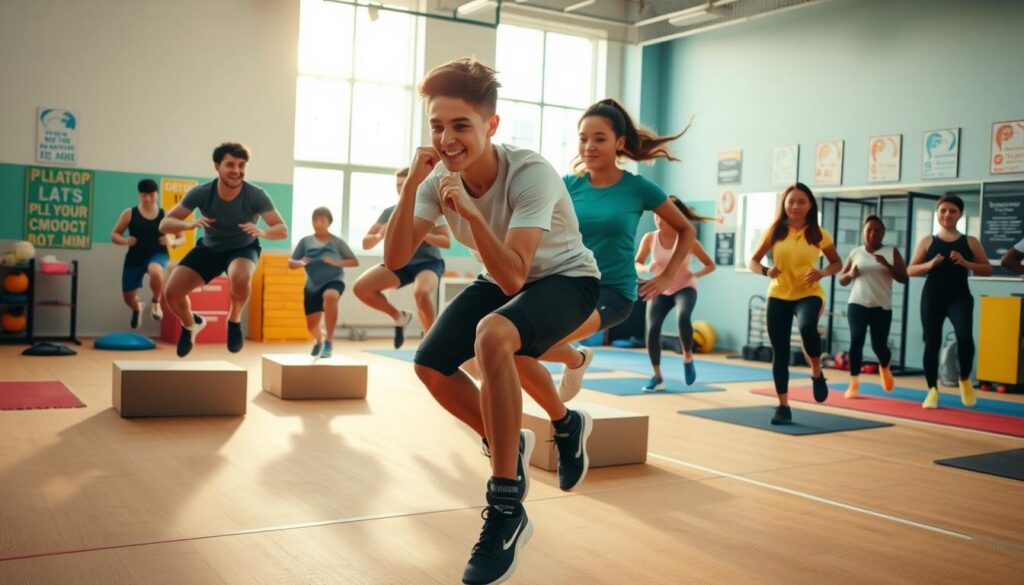
    A dynamic plyometrics training session for youth aged 13-15, featuring enthusiastic male and female athletes performing exercises like box jumps, squat jumps, and lateral bounds. In the foreground, focus on one athlete, showcasing proper technique with an expressive pose, wearing modest athletic attire. The middle ground captures a group of diverse young athletes engaged in various plyometric drills, emphasizing teamwork and energy. The background displays a well-equipped gym with colorful mats, exercise equipment, and motivational posters. Bright, natural light streams through large windows, creating an energetic atmosphere. The scene is captured from a low angle to emphasize the athletes' movements, inspiring a sense of action and determination.

    Along with plyometrics, introduce basic weightlifting. Focus on technique over load. Use light bars, PVC pipes, or dumbbells.

    The squat and hinge are key. They build strength for all sports. A good coach will break each lift into simple steps.

    Exercise Category Beginner Progression Intermediate Progression Key Technique Focus Red Flag to Monitor
    Plyometrics Two-footed box jumps (12-inch box) Single-leg hops (on soft surface) Quiet, soft landing with bent knees Knees caving inward on landing
    Lower Body Strength Bodyweight squat to a bench Goblet squat with light kettlebell Keeping chest up, weight in heels Lower back rounding excessively
    Hinging Movement PVC pipe Romanian deadlift Dumbbell deadlift with light weight Pushing hips back, keeping back flat Using the back to pull instead of the legs
    Upper Body Push Push-ups from an elevated surface Dumbbell floor press Controlled lowering, full range of motion Shoulder shrugging or flaring elbows

    Watch for consistent form, not just higher numbers. The table shows progressions and red flags. If a red flag appears, simplify or lighten the load right away.

    Listen to the athlete’s body. Pain, not just soreness, means stop and check. Growth plates need careful handling.

    Successful plyometrics for youth and strength training boosts confidence. It teaches that power comes from control. This foundation supports more intense training later.

    Ages 16–18: Performance Training and Recovery Habits

    The high school years are a key time for a youth athlete training plan to grow. Athletes in this age group often focus on one sport. Their training needs to improve their skills and prepare them for top performance.

    They move to structured training blocks. These blocks are like chapters in their yearly plan. Each block focuses on different skills, like strength or power, to get ready for games.

    • Strength & Power: They do exercises like squats and cleans to get stronger. They also do plyometric drills to improve speed and jumping.
    • Sport-Specific Conditioning: They practice movements that are like the game. For example, soccer players do sprint drills, and basketball players work on agility.
    • Movement Integrity: They spend time on exercises that keep them flexible and stable. This helps them avoid injuries and move well.

    But, being an elite athlete isn’t just about training. Recovery is just as important. For high school athletes, recovery habits can give them an edge.

    Good recovery starts with what you eat. Eating the right mix of protein and carbs after training helps your muscles recover. Drinking enough water is also important every day.

    Active recovery is another key part. Doing light activities like swimming or yoga on rest days helps your body recover better than just resting.

    Don’t forget the importance of sleep. Aim for 8-10 hours each night. Sleep helps your body recover and adapt to training.

    Learning to balance training and recovery turns a good youth athlete training plan into a complete system. It prepares young athletes for college or higher levels. They’re not just working harder. They’re working smarter, getting ready for the next level.

    Weekly Practice Planner: Skill, Conditioning, and Games

    This section offers a customizable weekly practice plan template. It helps allocate time across key training areas. A structured schedule prevents overtraining and keeps young athletes motivated.

    You can adapt this framework for any sport or age group. The goal is to create a balanced, progressive week.

    Every effective weekly practice plan template rests on three pillars. These are skill development, conditioning, and game-like scenarios.

    Skill work focuses on technical drills and movement precision. Conditioning builds general athleticism and sport-specific fitness. Games apply skills under pressure and foster a love for play.

    Balancing these domains ensures athletes develop holistically. They build competence, resilience, and joy in their sport.

    Allocating Your Weekly Time

    For most youth programs, a 3-4 day weekly practice schedule works best. Use this simple ratio as a starting point:

    • Skill Development (50% of time): Drills, technique correction, and low-pressure repetition.
    • Conditioning (30% of time): Speed, agility, strength, and endurance work.
    • Games & Scrimmages (20% of time): Controlled competitions and fun challenges.

    This split prioritizes learning while maintaining fitness and engagement. Always adjust based on your team’s needs and the season.

    Day Focus Area Time Allocation Key Activities
    Monday Skill Acquisition 60 minutes Fundamental drills, video review, partner work.
    Tuesday Conditioning & Strength 45 minutes Agility ladder, bodyweight circuits, core stability.
    Wednesday Active Recovery / Off Light cross-training, mobility, or complete rest.
    Thursday Advanced Skill & Tactics 60 minutes Sport-specific strategies, position-specific drills.
    Friday Game Application 75 minutes Small-sided scrimmages, situational games, cool-down.

    Age-Specific Application

    This weekly practice plan template is a blueprint. You must tailor it to your athletes’ developmental stage.

    For ages 6-8, turn every block into play. Skill time is movement games. Conditioning is tag. Games are simple and rule-light.

    Athletes ages 9-12 need clear structure. Skill drills become more technical. Conditioning introduces basic speed work. Games include more strategic elements.

    With ages 13-15, increase intensity. Skill work focuses on mastering complex techniques under fatigue. Conditioning integrates sport-specific energy systems.

    For ages 16-18, the template becomes a performance plan. Skill sessions are highly specialized. Conditioning is periodized. Games simulate full competitive pressure.

    Use this practice plan template as your foundation. Modify the focus, duration, and activities to match your team’s age and goals. This tool provides immediate structure for productive and enjoyable practices.

    Rest, Sleep, and Off-Days to Avoid Burnout

    For young athletes, progress comes as much from rest as from training. Many plans overlook the importance of downtime. Rest is key to building a strong, performing athlete.

    Understanding recovery is a game-changer. It turns it from an afterthought to a powerful tool. Let’s explore why it’s so important.

    The Science of Sleep and Growth

    Deep sleep releases human growth hormone (HGH). This hormone is vital for muscle repair and growth. For young athletes, missing out on sleep is like missing practice.

    Experts say school-aged athletes need 9-12 hours of sleep each night. Good sleep habits help achieve this. This includes a regular bedtime, a cool, dark room, and no screens before bed.

    Rest days are essential, but they don’t always mean staying in bed. Active recovery is important. It involves light activities that promote blood flow without stressing the body.

    An effective off-day plan might include:

    • Light Activity: A family walk, gentle bike ride, or casual swim.
    • Mobility Work: Dynamic stretching or foam rolling to ease muscle tightness.
    • Mental Break: Encouraging hobbies and social activities unrelated to sports.

    This approach keeps the body active while letting the nervous system and muscles recover. Having one to two full rest days a week is a smart move for long-term growth.

    Recognizing the Warning Signs of Burnout

    Overtraining is a big risk for young athletes. Burnout is physical and emotional exhaustion that makes performance drop and joy in the sport fade. Coaches and parents need to watch for signs.

    The table below shows the difference between healthy training and signs of overtraining and burnout.

    Aspect Healthy Training & Recovery Overtraining & Burnout
    Energy & Mood Generally energized, positive attitude toward practice Chronic fatigue, irritability, apathy, or depression
    Performance Steady or gradual improvements in strength and skill Plateau or decline in performance despite training
    Sleep Patterns Falls asleep easily, sleeps soundly through the night Restless sleep, difficulty falling asleep, or waking up tired
    Interest Level Looks forward to practices and games Makes excuses to skip training, loss of passion for the sport
    Physical Health Normal appetite, minor soreness that fades Frequent illnesses, injuries, or persistent aches and pains

    If you see signs of burnout, it’s time to act. This might mean more rest days, less training, or getting help from a sports medicine expert.

    Adding smart rest days to a young athlete’s schedule is a top performance hack. It prevents injuries, supports growth, and keeps the love for the game alive. Protect recovery time as much as training time.

    Measuring Progress Without Over-Testing

    Coaches and parents face a big challenge: finding ways to measure improvement without making every session a test. The goal is to get insights that help with training, not to cause stress or unhealthy competition. Good measurement should feel like a natural part of growing.

    Too much testing can make athletes lose motivation and waste time. Instead, focus on growth-oriented feedback that celebrates small victories and gently points out areas for improvement. This keeps the focus on long-term growth in age-appropriate workouts.

    A dynamic scene showcasing a youth athlete training environment focused on progress tracking. In the foreground, a diverse group of three young athletes in modest athletic wear, engaged in various age-appropriate exercises, such as agility drills and strength training. A fitness coach, dressed in professional athletic attire, is observing and taking notes on their progress. In the middle ground, a whiteboard filled with colorful charts and graphs illustrates their workout metrics, symbolizing measured improvement without over-testing. The background features a well-lit gym with exercise equipment and motivational posters. Soft, natural light filters through large windows, creating an inviting atmosphere that emphasizes growth and encouragement. The overall mood is energetic and positive, capturing the essence of youth training progression.

    Simple, non-invasive metrics work best. They give a clear starting point and show trends over time without stress. The key is to pick assessments that fit the athlete’s physical and mental stage.

    Here are practical examples for different age groups:

    • Ages 6–8: Technique & Joy Checklists. Use simple “yes/no” lists for basic movement skills. Can they skip with coordination? Do they land balanced? Track their enthusiasm and willingness to try new games as main success metrics.
    • Ages 9–12: Coordinated Time Trials & Skill Circuits. Measure improvement in multi-step agility drills or repeated skill circuits (e.g., dribble-shoot-layup). Record times or successful completions monthly. Introduce basic bodyweight control tests, like a plank hold or vertical jump, focusing on form over numbers.
    • Ages 13–15: Controlled Technique & Strength Benchmarks. With a solid foundation, more structured tests are suitable. Use video analysis for sport-specific technique. Record controlled, sub-maximal strength lifts (e.g., 5-rep max) with perfect form as the non-negotiable standard. Monitor power through medicine ball throws or short sprint times.
    • Ages 16–18: Performance Metrics & Recovery Indicators. Integrate sport-specific performance tests (e.g., beep test, position-specific drills). Track strength progress through safe, progressive overload. Equally important are subjective metrics: sleep quality, muscle soreness, and energy levels, which are key for adjusting age-appropriate workouts.

    This data’s main purpose is to inform and adjust the training plan. If a young athlete struggles with a new skill, the metric tells you to spend more time on foundational drills. If they excel, you can carefully increase the challenge. This responsive approach ensures training remains effective and engaging.

    Creating a positive assessment environment requires clear communication between coaches, parents, and the athlete. Parents play a vital role in reinforcing a growth mindset at home. For more on this partnership, explore our guide on supporting your young athlete.

    Progress measurement is a tool for empowerment. It provides a roadmap, celebrates development, and ensures every age-appropriate workout is moving the athlete confidently toward their personal best.

    Communication Tips for Coaches, Parents, and Athletes

    Coaches, parents, and young athletes need to talk clearly and often. Good communication keeps everyone happy and focused on the athlete’s growth. It stops misunderstandings and builds trust.

    Here are some ways each group can work together better.

    For Coaches:

    • Have a meeting before the season to share plans and rules.
    • Give feedback that is specific and helps the athlete improve.
    • Send out updates regularly to parents through email or a team app.
    • Listen carefully to concerns from athletes and parents without judging.

    For Parents:

    • Support all players, not just your own child.
    • Let the coach teach during games, don’t give instructions from the sidelines.
    • Use car rides home to ask questions, not criticize.
    • Tell the coach about any issues that might affect your child’s game.

    For Athletes:

    • Speak up if you’re confused or feeling pain during drills.
    • Tell coaches about your goals and ask for help to reach them.
    • Listen when coaches or parents are talking to you.

    Managing screen time balance is a big challenge today. Too much screen time can hurt sleep and recovery. Coaches and parents should set rules together. For example, no screens an hour before bed to help sleep.

    Using coach certification is also key. A certified coach knows the right way to teach and keep athletes safe. This builds trust and credibility.

    Parents should ask about a coach’s qualifications. It’s important for coaches to keep learning. Workshops on communication and safety help them lead better.

    When everyone talks with respect and clarity, the focus is on growth, not just winning. This makes the season better for young athletes, who feel supported and enjoy their sport.

    Sample 8-Week Age-Based Plan (Printable)

    This printable 8-week youth athlete training plan is a structured guide for each age group. It turns age-appropriate training into a clear schedule you can follow.

    Think of this plan as your coaching blueprint. It outlines key focuses for four age groups over two months. The aim is to improve skills and fitness while keeping safety and fun first.

    Here’s your quick guide. Use the table to see the weekly focus for each age group. Remember, this is just a sample. Adjust exercises, volume, and intensity based on each athlete’s readiness and your season schedule.

    Week Ages 6-8 Focus Ages 9-12 Focus Ages 13-15 Focus Ages 16-18 Focus Key Notes
    1 Fundamental Movement Skills Coordination & Intro to Bodyweight Strength Technique: Squat & Hinge Patterns Performance Baseline Testing Light intensity. Master form.
    2 Play-Based Agility Games Speed Development & Plyometric Intro Upper Body Push/Pull Technique Strength Accumulation Phase Increase volume slightly.
    3 Object Control Skills Sport-Specific Skill Integration Power Development (Medicine Ball) Max Strength Focus Introduce new movements.
    4 Adventure Circuit Endurance & Recovery Education Deload: Technique Refinement Deload: Active Recovery Reduced volume. Prevent burnout.
    5 Partner Games & Team Challenges Strength Progression (Added Resistance) Complex Lift Integration Power & Speed Emphasis Build upon the foundation.
    6 Creative Movement Exploration Speed & Agility Complexes Metabolic Conditioning Sport-Specific Conditioning Moderate to high intensity.
    7 Skill Showcase & Fun Day Mock Competition Simulation Peak Strength Testing High-Intensity Training Phase Test progress safely.
    8 Review Week & Celebration Review Week & Goal Setting Deload & Transition Planning Deload & Next Cycle Planning Reflect, recover, plan ahead.

    How to Use This Plan Flexibly

    This youth athlete training plan is a template, not a rigid script. For the 6-8 group, replace listed focuses with playful games that develop those skills. If a 9-12 athlete struggles with coordination, repeat Week 1’s focus.

    Always listen to the athlete. Fatigue, soreness, or low motivation mean it’s time to dial back. The “Key Notes” column is key for managing workload.

    Integrating the Plan Into Your Season

    This 8-week block fits well into an off-season or pre-season. For in-season training, cut the volume by 50% and treat sessions as maintenance. Use the deload weeks (4 and 8) to align with lighter game schedules or school breaks.

    Print the plan and post it. Encourage athletes to track their workouts and feelings. This builds ownership and teaches valuable recovery habits. Your printable youth athlete training plan turns expert insight into daily action.

    Budget Gear and Community Facility Options

    You don’t need a gym membership or expensive gear for a top-notch youth athlete training plan. Smart choices and local resources can help you create a great training spot anywhere.

    Smart Gear Choices Make a Big Difference. Choose items that are versatile and durable. They should grow with your athlete. You can build a full toolkit for less than what commercial machines cost.

    Gear Type Budget-Friendly Option Premium Alternative
    Resistance Training Long-loop resistance bands, adjustable water-filled dumbbells Full cable machine, Olympic weight set
    Agility & Speed Homemade ladder (chalk or tape), cone sets, jump rope Commercial agility ladder, electronic timing gates
    Strength & Power Sturdy plyometric box (DIY from wood), sandbags Adjustable plyo boxes, brand-name kettlebells
    Recovery & Mobility Foam roller, lacrosse ball, stretching strap Vibration therapy gun, percussion massager

    Resistance bands are a must-have for any training program. They teach proper movement and tension safely. Jumping rope improves foot speed and cardio better than many machines.

    Your Community is Your Gym. Public spaces are great for training. The trick is to use them creatively and safely.

    • Local Parks: Use benches for step-ups, dips, and incline push-ups. Open grass is perfect for sprint drills, agility work, and bodyweight circuits.
    • School Tracks: Great for paced running, interval training, and walking lunges. They offer a smooth, shock-absorbing surface.
    • Community Recreation Centers: Many offer low-cost passes or memberships. You get access to gymnasiums for court sports, multipurpose rooms, and sometimes basic weight rooms.
    • Empty Tennis/Basketball Courts: The smooth surface is excellent for shuttle runs, lateral drills, and sport-specific skill work.

    Always check public areas for hazards like broken glass or uneven ground. Be respectful of others using the space.

    When buying gear, focus on durability over fancy features. Read reviews from other sports families. Look for sales at sporting goods stores at the end of seasonal sports cycles.

    This practical approach removes financial barriers. It shows that a successful youth athlete training plan is about consistency and smart planning, not a big budget. Your athlete’s development can thrive in any environment with the right tools and a little ingenuity.

    Local Leagues, Camps, and Coach-Education Resources

    A solid training plan is key. Next, find a good team environment. Look for local youth leagues that focus on growth, not just winning.

    Check the coaching philosophy. Top camps and leagues emphasize physical skills and safety. They ensure every child enjoys sports.

    Coach training is vital. Kids with trained coaches are less likely to quit. Yet, most coaches lack the right skills.

    Parents, look for programs backed by organizations like Project Play. They offer a free 30-minute course for coaches on the basics. Use their checklist to find a well-trained coach.

    Your athlete’s journey needs a supportive community. Combine your home plan with a league that educates its coaches. This creates a positive sports experience.

  • The Community Athlete Playbook: Coaching Advice for a Stronger Winning Season

    The Community Athlete Playbook: Coaching Advice for a Stronger Winning Season

    A successful season starts long before the first game. It begins with a solid plan. For those leading community programs, smart planning is key.

    You need to balance school schedules, facility use, and other league events. The aim is to create a schedule that avoids burnout and peaks at the right time. This is critical for youth athlete development, where challenges must match their age.

    A good plan organizes everything. It sets clear goals for all, from young kids to adult players. This structure turns confusion into confidence. It ensures a season where everyone grows, stays involved, and enjoys the game.

    Baseline Fitness and Skill Assessments You Can Do on a Field

    The best training tips from local coaches start with simple field tests. These tests help you understand where your team is at the beginning. Knowing this lets you plan how to improve.

    These tests need little equipment—just a stopwatch, tape, cones, and your eyes. They give you data to track progress. This is great for volunteer coaches who want to see real results.

    Begin with basic fitness tests. These measure how athletic someone is, which is important for most sports.

    • Timed Sprint: Mark out 40 yards. Time each athlete from a standing start. This tests explosive speed and acceleration, key for soccer, flag football, and softball.
    • Beep Test or 12-Minute Run: For endurance. Use a free app for the beep test or measure how far an athlete can run in 12 minutes. It shows cardiovascular fitness for ultimate frisbee or basketball.
    • Standing Broad Jump: Measure the distance jumped from a two-footed takeoff. This assesses lower-body power and coordination, important for volleyball and jumpers.
    • Push-Up Test (to fatigue): Count how many proper-form push-ups an athlete can do without stopping. It shows upper-body strength and endurance.

    Then, do skill assessments. Choose drills that match your sport’s core actions. This lets you see how athletes handle the basics.

    For throwing sports (baseball, softball, football), have athletes throw at a stationary target from 30 feet. Rate their accuracy and form, not just distance.

    For soccer or hockey, set up a dribbling course with cones. Time athletes as they navigate while keeping control of the ball. Note their favored foot and turn tightness.

    For basketball, a spot-shooting drill from five locations around the hoop is helpful. Count successful shots out of ten attempts from each spot.

    Remember, these assessments are not to rank or embarrass. They help establish a fair starting point. Share the results and explain their importance. Seeing improvement later in the season motivates everyone.

    By spending one practice on these evaluations, you improve your coaching. You’ll know exactly where to focus, making drills and training tips more effective.

    Building a Balanced Weekly Training Plan (Practice + Strength + Recovery)

    A balanced training week is like a roadmap for community athletes. It helps them move from basic fitness to top performance. This plan mixes practice, strength training, and rest.

    Think of your plan as having three main parts. The first is skill and tactical practice. The second is foundational strength and conditioning. The third, and just as important, is structured recovery. Without any of these, progress can stall or injuries can happen.

    For community leagues, changing the week’s focus and intensity is key. A tough day of drills should be followed by a lighter day or different work. This method, called daily undulating periodization, keeps athletes sharp and adaptable.

    Here’s a weekly template for a team with two weekly meetups. It balances practice drills with other training.

    Day Primary Focus Session Type Duration (Minutes) Key Objective
    Monday Active Recovery / Mobility Light cross-training, stretching, foam rolling 30-45 Promote circulation, reduce soreness
    Tuesday Sport-Specific Practice Team practice: skill development and game scenarios 90-120 Execute and refine practice drills, build team cohesion
    Wednesday Strength & Conditioning Full-body strength session (bodyweight or light weights) 45-60 Build muscular resilience, prevent injuries
    Thursday Recovery / Light Skill Work Individual or small group technical review, walking, yoga 30-60 Reinforce learning without physical strain
    Friday Speed & Agility Dynamic footwork drills, short sprints, ladder work 40-50 Enhance quickness and change of direction
    Saturday Team Practice / Scrimmage High-intensity practice, conditioned games 90-120 Apply skills under pressure, simulate competition
    Sunday Complete Rest No structured physical activity Physical and mental restoration

    Adjust your plan based on the season. Early season might focus more on drills, strength, and recovery. As competition approaches, shift to more tactical practice and strength maintenance.

    Key principles for your plan:

    • Contrast Hard and Easy Days: Never schedule two high-intensity days back-to-back.
    • Strength Follows Practice: Schedule strength sessions after practice days, not before. Fatigue from lifting can ruin technique work.
    • Recovery is Active: Light movement on recovery days beats complete inactivity. A walk or gentle yoga speeds healing.
    • Listen to Your Team: If athletes look consistently drained, add a recovery day or reduce volume.

    For youth athletes, focus on skill development and fun. Keep strength sessions bodyweight-based. Adult recreational athletes may need more focus on injury prevention and recovery.

    The ultimate goal is consistent, injury-free improvement. A balanced plan prevents burnout by respecting the body’s need for stress and rest. It turns effort into lasting results.

    Start with the template, then adjust based on your team’s feedback and progress. The best plan is the one your athletes can stick to and enjoy while refining their practice drills.

    Dynamic Warm-Up and Mobility Routines That Prevent Injuries

    The first ten minutes of practice are critical for safety and performance. A dynamic warm-up is essential for any sports team. It involves moving continuously to warm up the muscles and prepare for sports.

    A good dynamic warm-up has three parts: raise the pulse, improve mobility, and activate sport-specific movements. This structure helps prevent injuries by preparing the body.

    Begin with a five-minute Pulse Raiser. This is light exercise to get the heart rate up. Athletes can jog, do side shuffles, or carioca drills. Aim for a light sweat, not exhaustion.

    Then, focus on Dynamic Mobility for five to eight minutes. This phase builds flexibility through motion. Include exercises like walking knee hugs and lunges with twists. Each movement should be controlled to cover the full range of motion.

    The last phase is Sport-Specific Activation. Spend two to three minutes on movements that mimic the upcoming practice. For field sports, try high knees and skipping. This phase gets the body ready for explosive actions.

    Here’s a simple 8-minute routine for any practice:

    • Minute 1-3 (Pulse Raiser): Light jogging, changing direction every 30 seconds.
    • Minute 4-6 (Dynamic Mobility): 10 reps per side of leg swings, walking lunges, and torso twists.
    • Minute 7-8 (Activation): 20-yard sprints at 75% effort, focusing on quick foot turnover.

    Consistency is key. By making these dynamic warm-up routines a staple, you build a culture of injury prevention. Your athletes will perform better and recover faster.

    Foundational Strength Training for Youth and Adult Rec Athletes

    Building a strong foundation is key for all athletes, not just the elite ones. It’s vital for anyone wanting to do better in sports. For community sports, a good strength and conditioning plan helps build strength and resilience.

    Many think strength training means heavy weights and fancy machines. But that’s not true. The real foundation starts with mastering your own body weight. It teaches you control, stability, and how to move right.

    Safety is the most important thing, even more for young athletes. We aim to support their growing bodies, not overwork them. Exercises should get progressively harder and always focus on how you do it, not how much you lift.

    Every athletic move comes down to a few basic patterns. Learning these patterns makes you a complete athlete:

    • Squats: They’re key for jumping, landing, and changing direction. Keep your chest up and knees over toes.
    • Lunges: They help with single-leg stability and hip movement. Step forward or backward with control.
    • Pushes: Think push-ups or band presses. These strengthen your upper body for throwing and blocking.
    • Pulls: Rows or band pull-aparts. They balance out pushing muscles and protect your shoulders.

    You don’t need a fancy gym to start. Bodyweight exercises are perfect for beginners. Adding resistance bands can add variety. They’re portable, safe, and great for learning tension.

    This training helps you perform better on the field. Stronger muscles protect your joints. Better stability means fewer twisted ankles. And explosive power comes from a solid foundation. Studies on strength training for young athletes show it’s good for their long-term health.

    Begin with two short workouts a week. Focus on doing them right. Being consistent with these basics will make your season better and safer.

    Speed, Agility, and Footwork Drills with Minimal Equipment

    Coaches can boost their team’s movement with just cones and open space. It’s key to improve speed, agility, and footwork for any sport. You don’t need fancy gear or a weight room.

    Focus on the quality of each movement, not just how many. Proper form prevents injuries and builds better habits. The right coaching cue can make a drill click for an athlete instantly.

    These exercises help athletes get faster and chase down balls better. Set up two cones 20-40 yards apart.

    • Flying 10s: Jog for 10 yards, then sprint at maximum effort for the next 10 yards. Focus on driving your knees and pumping your arms. The key cue is, “Push the ground away behind you.”
    • Acceleration Sprints: Start from a two-point stance and explode for 20 yards, gradually building to full speed. Coach athletes to “lean forward like you’re climbing a hill” for the first five steps.

    Multi-Directional Agility for Game-Like Movement

    Sports are played in all directions. These drills train the body to stop, start, and change direction efficiently.

    • 5-10-5 Shuttle (Pro Agility): Place three cones in a line, five yards apart. Sprint five yards to one side, touch the ground, sprint ten yards across to the far cone, touch, and sprint back five yards to the start. The vital cue is, “Stay low and push off your outside foot when you change direction.”
    • T-Drill: Set cones in a “T” shape. Sprint forward 10 yards, shuffle 5 yards left, shuffle 10 yards right, shuffle 5 yards back left, then backpedal to the start. Remind athletes to “keep your hips and shoulders square to the direction you’re moving.”

    Quick Footwork for Balance and Control

    Fast feet improve balance, reaction time, and the ability to make micro-adjustments during play.

    • In-Out Ladder Drill: Using a ladder or spaces on the ground, step one foot in a square, then the other foot in, then the first foot out to the side, followed by the second foot out. The rhythm cue is, “In, in, out, out—stay on the balls of your feet.”
    • Cone Taps (Speed Taps): Place a cone in front of you. Rapidly tap the top of the cone with alternating feet as fast as possible for 10-15 seconds. The focus is on “light, quick touches, like you’re dancing on hot coals.”

    Incorporate these speed and agility drills into your practice warm-ups or skill blocks. Consistent work on these fundamentals builds faster, more responsive, and confident athletes. They learn to control their bodies in space, which translates directly to better performance on game day.

    Sport-Specific Skill Blocks and Progressions

    Good coaching breaks down athletic skills into smaller steps. This method, called skill progression, makes complex skills easier to learn. It helps athletes get better and feel more confident step by step.

    The best way to teach is the whole-part-whole method. First, show the whole skill at game speed. Then, focus on its key parts. Lastly, put it all together again in a controlled setting.

    This method works for any sport. Let’s see how it applies to soccer dribbling, basketball shooting, and baseball hitting.

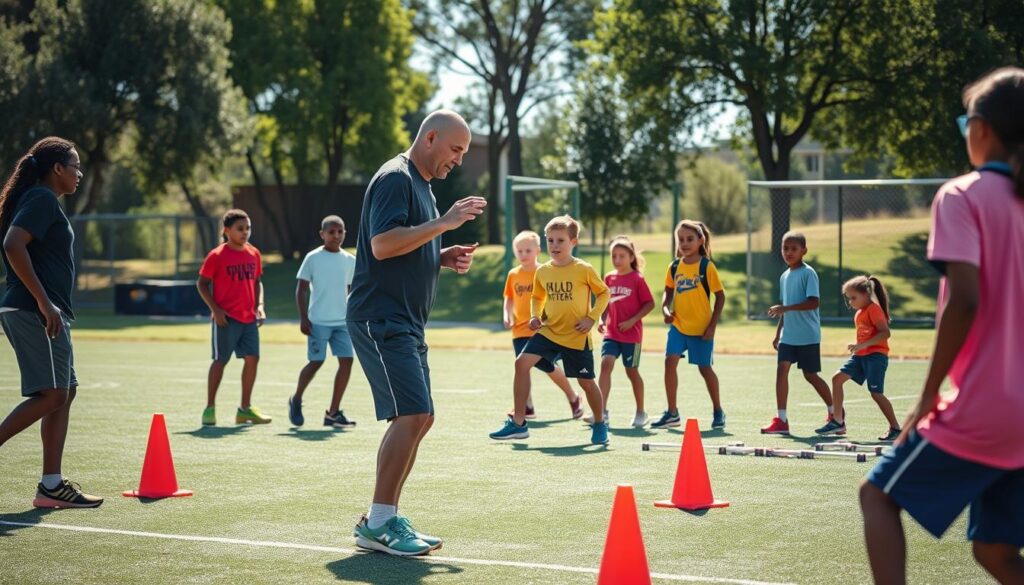
    A dynamic training scene depicting local coaches guiding a diverse group of young athletes engaged in sport-specific skill progression drills. In the foreground, a coach demonstrates a specific technique, wearing modest athletic gear, while attentive athletes practice their skills around him. The middle ground features cones and agility ladders, representing various training tools. In the background, a sunlit outdoor sports field with scattered trees sets an inviting atmosphere, highlighting the teamwork and determination of community athletes. Natural lighting filters through the trees, creating a warm, motivational environment. The composition should be captured from a slightly elevated angle, showcasing the energy and focus of the training session, emphasizing camaraderie and skill building.

    For soccer dribbling, start with the whole. Show a player weaving through cones at pace. Then, break it into parts. Block one is close ball control using the inside and outside of both feet. Block two adds changes of direction and speed. Block three incorporates feints and shielding against a passive defender.

    Basketball shooting follows a similar path. The whole is a game-speed jump shot. The parts begin with proper hand placement and balanced stance. Next, players focus on the shooting motion without the jump. Then, they add the jump and practice under defensive pressure.

    In baseball, hitting a pitched ball is a challenging skill progression. The whole is a full swing at a live pitch. Coaches then break it down. Part one is the stance and load. Part two is the stride and hip rotation. Part three is bat path and contact point. Drills isolate each block before combining them.

    The table below outlines sample progressions for these sports. It provides a clear roadmap from simple foundation to complex game application.

    Sport Target Skill Block 1: Foundation Block 2: Development Block 3: Game Application
    Soccer Dribbling for Possession Inside/Outside Foot Taps in a Square Cone Weaves with Speed Changes 1v1 Keep-Away in a Grid
    Basketball Jump Shot Accuracy Form Shooting (One Hand) Close to Rim Shot Motion with Jump, No Defense Catch-and-Shoot Drills with a Closing Defender
    Baseball/Softball Consistent Hitting Tee Work for Stance and Swing Path Soft Toss for Timing Live Pitching with a Focus on Pitch Selection

    Each block must be mastered before advancing. Rushing the skill progression leads to frustration and bad habits. Coaches should look for consistency and control at each level.

    Confidence grows with each small victory. An athlete who successfully completes a foundational drill is ready for the next challenge. This structured approach ensures no step is missed.

    When designing your own progressions, always start simple. Identify the non-negotiable fundamentals of the skill. Create drills that repeat those fundamentals in isolation. Then, gradually add game-like variables like movement, decision-making, and opponents.

    Remember, a good skill progression is a ladder. Every athlete climbs at their own pace. Your job is to ensure each rung is solid before they reach for the next one.

    Cross-Training Options Using Parks, Trails, and School Facilities

    Don’t just stick to the practice field. Your neighborhood recreation center and public trails offer great opportunities for cross-training. This approach makes your body stronger, reduces injury risks, and keeps workouts interesting. Plus, you can do it all for free by using what’s already around you.

    Local parks are more than just places for picnics. A grassy hill is perfect for sprint intervals that boost power and endurance. Park benches can be used for step-ups, tricep dips, and incline push-ups. Open fields are great for bodyweight circuits, agility ladder drills, and plyometric exercises.

    Trail running or hiking is a top choice for endurance training. The uneven terrain strengthens muscles in your ankles, knees, and hips. This improves your balance and reduces injury risks. Plus, the changing scenery keeps your mind engaged and fresh.

    School facilities are a treasure trove after hours or on weekends. Stadium bleachers are great for conditioning workouts. Running the stairs improves leg strength and lung capacity. The school track is ideal for interval training, while the open field is perfect for sport-specific drills. Many areas also offer access to a community recreation center with extra amenities.

    To help you plan, the table below compares key local venues for effective cross-training. It highlights the unique benefits of each space.

    Location Sample Activity Primary Fitness Benefit Equipment Needed
    Public Park Hill Sprints & Bench Circuits Builds power, speed, and muscular endurance None (bodyweight)
    Local Trail Network 30-Minute Trail Run/Hike Boosts cardiovascular endurance and joint stability Proper footwear
    School Grounds Bleacher Runs & Field Sprints Enhances conditioning and sport-specific agility None
    Community Recreation Center Swim Laps or Court Sports Provides low-impact cardio and full-body engagement Varies (often provided)

    Adding one or two of these sessions to your weekly plan can make a big difference. It breaks the monotony of sport-specific practice. You’ll develop a broader athletic base that benefits your main sport.

    Always check local rules for using public spaces. Prioritize safety, even more so on trails or when training alone. Your local community recreation center can often provide schedules for open swim or gym time. It’s a reliable spot for varied training.

    Coaching Cues and Positive Feedback That Stick

    The words a coach uses can either boost an athlete’s confidence or confuse them. Beyond drills and fitness, good communication is key. It’s a core part of effective local sports training tips. This section explains how to give instructions and feedback that athletes can understand and use to get better.

    Great coaching cues are clear, simple, and easy to follow. Instead of saying “get low,” say “bend your knees until they’re parallel to the ground.” Replace “move faster” with “explode out of the start on the count of three.” Specific language helps athletes know exactly what to do. It makes learning faster.

    It’s important to balance praise and correction. A good rule is to give four compliments for every piece of advice. This doesn’t mean praising poor effort. It means looking for and praising what’s done well. This keeps athletes motivated and open to making changes.

    Generic praise like “good job” is easy to forget. Specific praise is more powerful. For example, “Nice hustle” is better than “I saw how you recovered quickly after that missed pass—that’s great mental toughness.” The second version tells the athlete what to repeat. It turns feedback into a valuable learning tool.

    Creating a positive environment means adjusting your communication for different skill levels. Beginners need simple, success-focused cues. Focus on one key correction at a time. For advanced athletes, use more tactical language. Challenge them with “what if” scenarios. For all levels, frame corrections positively. Say “try keeping your elbow in” instead of “don’t let your elbow flare out.”

    Your communication style sets the tone for every practice. The right words can make a routine session into a powerful learning experience. Mastering this skill is essential for advanced local sports training tips.

    Communication Aspect Effective Coaching Language Ineffective Coaching Language Why It Works
    Giving Instructions “Sprint to the cone, touch it with your left hand, and shuffle back.” “Go over there and come back.” Provides a clear, sequential action plan. Eliminates ambiguity.
    Offering Praise “Your footwork on that cut was precise because you kept your hips low.” “Good move.” Identifies the specific skill executed well. Reinforces correct technique.
    Correcting Form “Let’s work on driving your knee upward for more power.” “Your kick is weak.” Focuses on a solvable action. It is constructive, not critical.
    Motivating During Effort “Last two reps! Push with your legs, you’ve got this!” “Hurry up and finish.” Combines encouragement with a technical reminder. Fosters a team atmosphere.
    Addressing Mistakes “The pass was late. Next time, lead your teammate ahead of their stride.” “You threw it away.” States the fact without blame. Immediately provides a solution for next time.

    Review the table above before your next practice. Choose one or two communication shifts to implement. Notice how athletes respond with better focus and improved effort. Consistent, positive communication is the glue that binds all other local sports training tips together. It turns a group of individuals into a cohesive, improving team.

    Sample 4-Week Practice Plan Templates

    These 4-week plans are a practical guide for coaches. They show how to schedule weekly progressions. A template turns theory into action, saving hours of planning. The plug-and-play resources fit different season phases. You can adjust them for your team’s sport, age, and schedule.

    Pre-Season Foundation Builder Template

    This phase focuses on building fitness and re-introducing skills. It prepares athletes’ bodies for the season. The goal is to gradually increase volume while keeping intensity moderate.

    Weekly Focus:

    • Week 1: Re-acclimation. Low-intensity skill drills, introductory strength circuits, and extended dynamic warm-ups.
    • Week 2: Base building. Increased conditioning, introduction of agility ladders, and more complex skill combinations.
    • Week 3: Integration. Sport-specific scenarios at half-speed, higher-volume strength work, and focused recovery.
    • Week 4: Intensity ramp-up. Introduce controlled scrimmages, speed work, and test baseline fitness metrics.

    Here’s a Week 2 practice example, integrating local sports training tips for a solid foundation:

    Segment Duration Activity Purpose
    Dynamic Warm-Up 15 min Jogging, leg swings, inchworms, lateral shuffles Increase heart rate, improve mobility
    Skill Block 20 min Station-based fundamental drills (e.g., passing, catching, dribbling) Reinforce technique, build muscle memory
    Conditioning 15 min Interval runs (e.g., 30 sec sprint, 90 sec walk) or shuttle runs Develop aerobic and anaerobic base
    Strength Circuit 15 min Bodyweight exercises: squats, push-ups, planks, lunges (3 rounds) Build foundational strength and stability
    Cool-Down 10 min Static stretching for major muscle groups, hydration talk Promote recovery, instill healthy habits

    In the competitive season, the focus shifts to maintaining fitness and sharpening skills. Practices are shorter but more intense, with a direct link to upcoming games.

    Weekly Focus:

    • Week 1 (Post-Game): Active recovery, film review, and light technical work.
    • Week 2 (Mid-Week): High-intensity tactical drills, situational scrimmages, and speed/agility work.
    • Week 3 (Pre-Game): Taper intensity, focus on strategy walkthroughs, and crisp execution drills.
    • Week 4 (Game Week): Final tactical prep, very light conditioning, and mental readiness.

    A sample mid-week (Week 2) practice during the season is highly focused:

    Segment Duration Activity Purpose
    Dynamic Warm-Up 10 min Sport-specific movements at increasing pace Activate nervous system, prevent injury
    Tactical Skill Block 25 min Drills based on last game’s weaknesses (e.g., defensive positioning, set plays) Improve game IQ, correct errors
    High-Intensity Conditioning 10 min Small-sided games (3v3) or sport-specific conditioning circuits Maintain game fitness under fatigue
    Cool-Down & Recovery 15 min Foam rolling, partner stretching, hydration/nutrition reminder Maximize recovery for next game

    These templates are your starting point. The best local sports training tips emphasize adaptability. Swap drills to match your sport, adjust times based on your session length, and always listen to your athletes’ feedback. A great plan is a living document that helps you build a winning season, one well-structured week at a time.

    Safety, Equipment, and Heat/Cold Policies for Outdoor Leagues

    A league’s duty of care means having clear policies for equipment, heat, and cold. These are key to keeping athletes, volunteers, and the league safe. It’s a must for community sports.

    Having written policies helps everyone know what to do. This is a key part of local sports training tips for lasting programs.

    Essential Equipment Checks and Safety Gear

    Do a full equipment check before the first practice. Choose a coach or volunteer to check if all gear is safe. This step helps avoid many injuries.

    Here’s what to check:

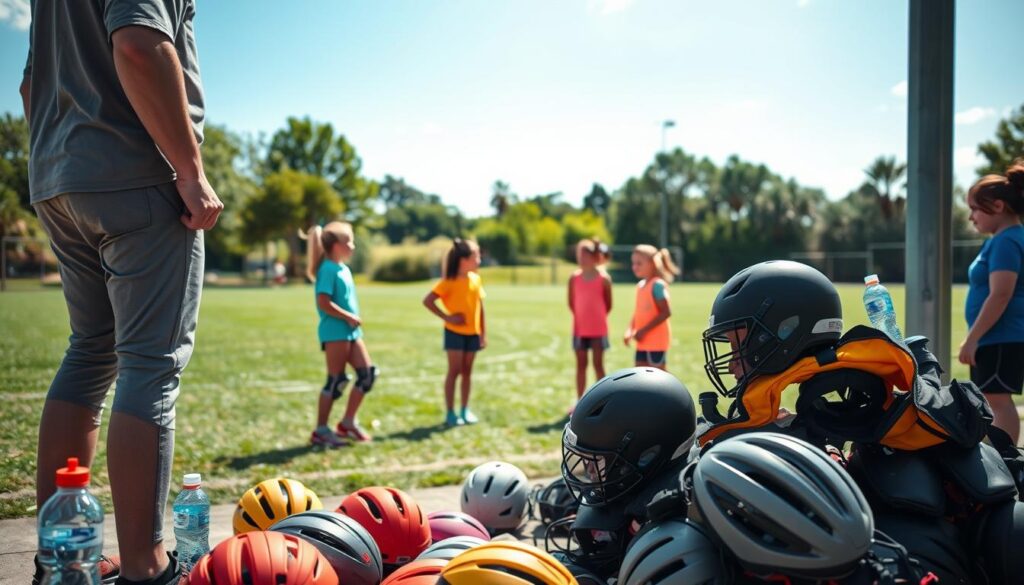
    • Protective Gear: Make sure helmets, mouthguards, shin guards, and padding fit right and are in good shape.
    • Footwear: Cleats or athletic shoes should grip well and support the feet, with no worn-out soles.
    • Field and Facility: Check the playing area for debris, holes, and make sure goals, nets, and benches are secure.
    • First-Aid Kit: Keep a full first-aid kit ready at every session. It should have ice packs, bandages, antiseptic wipes, and emergency contact forms.

    A community sports coach conducting a thorough safety equipment check in a well-lit outdoor training area. In the foreground, the coach, dressed in modest athletic wear, inspects a pile of helmets, knee pads, and water bottles. The middle ground features young athletes, dressed in bright, casual sports gear, participating in a warm-up exercise and attentively listening to the coach. In the background, a sunny sky highlights the lush green field and nearby trees, conveying a sense of a vibrant and encouraging training environment. Use vibrant colors and natural lighting to create an energetic atmosphere, capturing the spirit of community engagement in outdoor sports. The scene reflects careful preparation and a focus on safety for all participants.

    Playing in hot and humid weather is risky. Create a heat policy based on the Wet Bulb Globe Temperature (WBGT) or local heat index. Stop or change practice when it’s too hot.

    Make sure athletes drink water every 15-20 minutes. They should bring their own water bottles. Have extra water on hand. Teach coaches to spot early signs of heat illness.

    Watch for these signs:

    • Excessive sweating followed by cool, clammy skin (heat exhaustion).
    • Confusion, dizziness, or headache.
    • Nausea or vomiting.
    • Absence of sweating with red, hot, dry skin (heat stroke – a medical emergency).

    Using these hydration tips is a key local sports training tip for summer leagues. It helps athletes stay safe while playing.

    Cold Weather Policy and Hypothermia Awareness

    Cold weather and wind chill need special care. Set a cold-weather limit, usually below a certain temperature or wind chill. Wearing layers helps keep warm.

    Make sure athletes wear dry clothes. They should change out of wet clothes right after playing. Provide a warm place for breaks. Look out for signs of hypothermia and frostbite.

    Watch for these signs:

    • Uncontrollable shivering.
    • Slurred speech, drowsiness, or confusion.
    • Loss of coordination.
    • Numbness or white/grayish-yellow skin on extremities (frostbite).

    Following these safety, equipment, and weather policies shows true leadership. It makes a place where athletes can grow and have fun. Following these rules makes your program better and more responsible. It turns basic local sports training tips into a culture of care and excellence.

    Tracking Progress: Simple Testing Days and Scorecards

    Setting up regular check-ins can make a seasonal plan very effective. Seeing progress motivates athletes and proves that local sports training tips are effective.

    Plan a “Testing Day” every four to six weeks. Make it a special event, not just another practice. This breaks the routine and builds excitement. Keep the atmosphere positive and encouraging.

    On Testing Day, you’ll compare the same baseline assessments from the start of the season. Did the 40-yard dash time get faster? Did the vertical jump height go up? Can players do the agility ladder drill quicker and with fewer mistakes? This direct comparison shows clear growth.

    To track progress well, you need a system you’ll actually use. Here are three easy methods for community coaches.

    Tracking Method Best For Key Advantage
    Paper Scorecard Smaller teams, coaches who prefer a tactile system. Extremely simple to use during testing; athletes can hold their own card and see their results instantly.
    Digital Spreadsheet (e.g., Google Sheets) Coaches comfortable with tech, teams sharing data with parents. Automatically calculates averages and growth percentages; easy to share via link for transparency.
    Team Management App Programs already using an app for schedules and communication. Centralizes all team info; often includes built-in progress charts that visually display improvement over time.

    Use the data to celebrate progress. Highlight the player who improved the most in agility, not just the fastest. Share team-wide average improvements. This focuses on effort, not just talent, which motivates recreational athletes.

    This process also shows your program’s value to parents. A simple progress report builds trust. It shows you’re paying attention and that their investment is worth it.

    Tracking progress turns guesswork into guidance. It gives you the evidence to refine your approach and celebrate every athlete’s journey. This solidifies your role as an effective leader in community sports.

    Involving Parents and Volunteers for Better Sessions

    Turning willing parents into a strong support team is key for any community coach. Local leagues often rely on volunteers, but without clear direction, this can cause confusion. The right strategy can turn helpers into powerful assets, making practices smoother and more productive for all athletes.

    Start with clear communication. Before the season begins, hold a meeting or send a detailed email explaining how parents can help. Emphasize that their involvement will greatly benefit their child’s experience. This sets a collaborative tone right from the start.
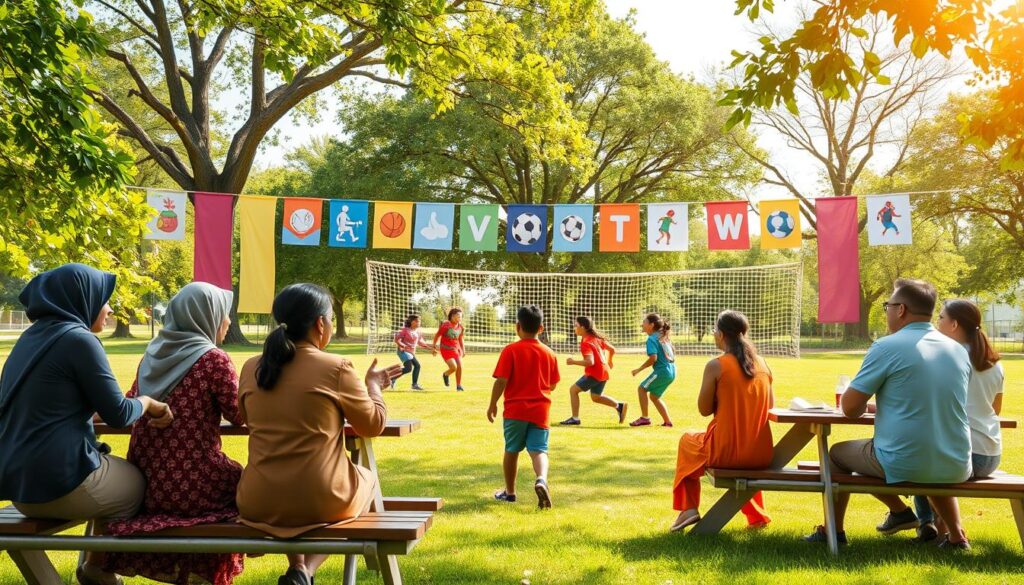
    Effective delegation means defining clear, manageable roles. Assign tasks based on a volunteer’s comfort and skill level. General offers to “help” often result in spectators. Instead, offer specific roles. Some of the best volunteer coach tips include creating a simple sign-up sheet for these roles:

    • Station Manager: Runs a specific drill circuit, ensuring athletes rotate properly and understand the exercise.
    • Hydration & Safety Monitor: Keeps water stations full and alerts the head coach to any signs of fatigue or minor injury.
    • Equipment Coordinator: Handles setup, breakdown, and organization of cones, balls, and other gear.
    • Timekeeper/Scrimmage Facilitator: Manages drill timers and helps organize small-sided games.

    Take ten minutes before practice to train your volunteers for their duties. A quick demonstration or review of protocols ensures everyone is on the same page. This small investment boosts confidence and prevents mistakes.

    Lastly, create a positive, team-oriented culture among adults. Publicly thank volunteers by name. Encourage them to cheer for all athletes, not just their own. When parents and coaches unite, it creates a supportive environment. Mastering these volunteer coach tips improves session flow and strengthens the community around your team.

    Local Resources: Camps, Clinics, and Certified Trainers Directory

    Coaching is more than just practice. It’s about building a network of experts. This gives your athletes access to special training. It helps meet their needs and boost their skills.

    First, find good local sports clinics. Look for ones with experienced coaches and positive feedback. Visit to see a session and learn about their approach. Good clinics share their staff’s credentials and schedules online.

    Summer camps and weekend clinics offer deep training. They’re great for athletes wanting to improve a skill. Look for camps led by former college players or top coaches. They bring new ideas and motivation.

    For personal training, find certified trainers. Check for NASM, ACE, or NSCA certifications. Many focus on youth or adult sport-specific fitness. A good trainer creates safe, effective plans that fit with team practice.

    Make a directory of your trusted resources. Use a spreadsheet for contacts, specialties, and costs. Share it with parents and volunteers. A strong network helps your whole community and leads to success.

  • Proven Last-Minute Marketing Strategies to Fill Seats on Game Day

    You’ve worked hard to plan an incredible sports event. The lineup is amazing. The details are all set. But then, doubts creep in. Will anyone actually come?

    The last-minute push feels like a long shot. We flood social media and hope for the best. It’s the common fear of event planners.

    game day promotion strategies

    But there’s a surprising truth. Those last 24 hours are your best chance to promote. It’s not about making a lot of noise. It’s about giving surgical, psychological nudges.

    Imagine it like the political ground game on election day. It’s the hard, behind-the-scenes work that pays off. The real challenge is turning buzz into actual fans in the seats.

    So, how do you make that happen? It’s all about removing obstacles and creating a sense of urgency. Let’s move past the panic and play the final quarter with a solid plan.

    Pre-Game Morning Social Media Blitz

    The morning of the game is when your same-day marketing really shines. It’s not about telling stories. It’s about quickly turning viewers into fans.

    This is your last chance to persuade. Social media campaigns can drive sales, with rates of 2-5%. Your goal is to harness that power. You’re creating excitement with quick, impactful content.

    So, what does this look like? It’s about making your audience feel they’re missing out. They should think they’re already late.

    • Instagram Stories as a Live Wire: Show the field being set up, the food stands getting ready, or a player’s pre-game ritual. Add a “Last Chance to Join Us” sticker. It’s not just content; it’s an urgent invitation.
    • TikTok for Flash Promos: A quick clip from yesterday’s intense practice, ending with a special discount code. It’s fast, cool, and turns viewers into buyers.
    • Twitter as the Hype Machine: A pinned post with the weather, gate times, and a link to mobile tickets. It’s practical info with a dash of excitement.

    This makes your channels feel like trailers for an experience. For more in-depth social media strategies, there’s more to learn. But on game day, it’s all about urgency.

    Your game day social media blitz asks a key question: “What am I missing right now?” If your content can’t answer that, you’re just talking to no one. Shouldn’t your morning posts work as hard as your team tonight?

    Weather-Based Promotion Adjustments

    Ignoring the weather forecast on game day is a big mistake. But, a 40% chance of rain can actually help your marketing. Your best last-minute promotion is a smart change that shows you care about the weather.

    Removing obstacles is key to getting people to act. Wet weather is a big obstacle. So, you change your message. Now, your covered seats are a special treat. Your emails go from “Last Chance for Tickets!” to “Rain or Shine, the Game’s On! Here’s Your Dry Plan.”

    A vibrant outdoor scene capturing a bustling game day atmosphere under varying weather conditions. In the foreground, excited fans dressed in stylish team gear engage in last-minute promotions, holding colorful signs for discounted tickets, highlighting a weather forecast showing sunshine breaking through clouds. In the middle ground, a diverse crowd gathers around a food vendor, with umbrellas and ponchos visible for those bracing for rain. The background features a stadium filled with bright banners, showcasing QR codes to digital promotions. The lighting is dynamic, with soft rays of sunlight filtering through the clouds, creating a sense of urgency and excitement. The overall mood is energetic and optimistic, illustrating how weather can influence last-minute attendance strategies effectively.

    This idea comes from retail psychology. Stores don’t hide when it rains; they sell umbrellas and boots. Your venue offers poncho deals, shows off indoor spots, and highlights easy parking. You’re not fighting the weather; you’re solving it.

    You shift from hoping people will come to making sure they don’t have to. This smart thinking is as important as changing your game strategy with the seasons. It’s about controlling what you can, like your message, not the weather.

    Promotion Type Target Audience Mindset Key Message Suggested Offer
    Standard Game Day Blast Excited, planning for fun. “Don’t miss out! Get your tickets now!” General seat discount.
    Weather-Adjusted Promotion Hesitant, concerned about comfort. “We’ve got you covered—literally. Enjoy the game, rain or shine.” Upgrade to covered seating for $5. Umbrella/Poncho + ticket bundle.
    Sun & Heat Alert Worried about heat exhaustion. “Beat the heat! Cool zones and hydration stations await.” Free bottle of water with ticket scan. Discount on shaded seat upgrades.
    Last-Minute Cold Snap Dreading being cold in the stands. “Stay warm with us. Hot cocoa and heated concourses ready.” $10 credit for hot concessions. Highlight indoor viewing lounges.

    The goal is to turn a negative into a positive. That “Rain or Shine” email reassures and shows you’re ready. You’ve removed a big last-minute barrier to attendance. The weather might be unpredictable, but your crowd size doesn’t have to be.

    Flash Promotions and Discount Offers

    Dynamic pricing isn’t just for airlines and ride-shares; it’s a secret way to turn last-minute doubts into stadium profits. Think of unsold tickets as a melting ice cube. Its value drops with time. The goal is to save what would else be empty seats.

    The idea is simple and powerful. Scarcity makes people want more. A countdown clock pushes fans to buy. It’s like clearing holiday stock or filling a bar during happy hour. For walk-up ticket sales, it’s not a discount, but a smart move.

    Studies show early-bird and dynamic pricing can increase game-day earnings by 20-30%. Why not use this strategy in the last hours? Offer a “4th Quarter Flash Sale” on Twitter or Instagram: “Next 50 walk-up ticket sales at Gate C are 40% off. Clock starts now.”

    This strategy works like airlines. As the game gets closer, empty seats cost nothing. Lower the price of remaining premium seats. You’re not losing money; you’re making a little from fans who hesitated.

    The way you present it matters. Make it seem like a special deal for smart fans. It’s like a flash crash in the sports world. It’s fun capitalism.

    Here are some promotion ideas to boost walk-up ticket sales:

    Promotion Type Mechanism Psychological Trigger Best For
    Gate-Specific Flash Sale Deep discount for a limited number of tickets at one entrance. Scarcity & FOMO (Fear Of Missing Out) Creating a visible buzz and line.
    Dynamic Premium Drop Algorithm-driven price reduction on high-value seats as game time nears. Perceived Value & Exclusivity Maximizing revenue from luxury inventory.
    “Bring a Friend” Bundle Discount applied when two or more tickets are purchased together at the box office. Social Proof & Shared Experience Converting solo attendees into group sales.

    The goal is to create urgency that leads to sales. Use phrases like “limited seats,” “next hour only,” and “exclusive to our social followers.” This turns a simple price cut into an event. Fans can say, “I got these amazing seats right before the game for a steal.”

    These flash strategies meet demand in the moment. They turn the stadium box office into a live market, reacting fast. It’s a game of yield management, played on the sidewalk. Everyone wins: the fan gets a deal, and you fill a seat that was about to be empty.

    Engaging Local Radio and Media Day-Of

    Forget the algorithm for a minute. The most effective same-day marketing might involve a live DJ and free tickets. We often get caught up in digital echo chambers. But, a powerful, analog channel can reach your most dedicated fans.

    Local AM sports talk stations are trusted and immediate. They’re perfect for commuters stuck in traffic before the game. It’s a chance to reach a captive audience.

    This is smart multi-channel thinking. Your digital push reaches one crowd. A well-timed radio segment reaches another, like the dad in his garage.

    As smart PR playbooks say, never underestimate offline channels for local events. A last-minute partnership is not a retreat. It’s a clever move.

    To activate this day-of, make a quick deal. Offer the station tickets to give away during drive time. The station gets engaging content. You get trusted, local endorsement.

    • Call Early: Reach out to the station’s program or promotions manager first thing in the morning.
    • Offer the Bait: Provide a compelling prize—a 4-pack of tickets with parking, perhaps.
    • Make it Easy: Have your pre-written press release and media kit ready to send instantly. Sound professional, not desperate.
    • Target Drive Times: Aim for the afternoon rush (3-6 PM) for maximum earholes on the way to the stadium.

    This tactic is the analog complement to your digital blitz. It’s like a newspaper ad for your podcast. By using this trusted, offline thread, you capture audiences others miss. That’s how you master true, multi-platform same-day marketing.

    Street Team and Volunteer Activation

    Your street team is more than just handing out flyers. They’re running a grassroots campaign, like a sold-out stadium event. They turn community passion into a powerful force. They become an unpaid marketing team, boosting sports event attendance with their enthusiasm.

    Give them a simple goal, like “Bring five friends, get a free hat.” Give them special discount codes to share. This creates real excitement and buzz, like a door-to-door campaign for touchdowns.

    Volunteers need easy tools to be effective. Providing polished assets is key. Your fan ambassadors need a promotion kit that’s easy to use.

    • Branded Gear That Stands Out: Bright colors make them human billboards.
    • Pre-written Social Captions & Hashtags: Give them templates for Instagram and Twitter.
    • Email Blurb Templates: Make it easy for them to spread the word.
    • A Clear Call-to-Action: “Use code GAMEDAY23 for $10 off at the gate.”

    This support turns enthusiasm into action, boosting sports event attendance. Their genuine support is more powerful than any ad. It’s like the energy of charity sports events, where purpose and community drive success.

    Don’t see volunteers as just helpers. View them as your most credible media channel. Empower them with a clear mission and simple tools. This turns local pride into a final push for sports event attendance.

    Parking and Concession Promotions

    The last thing standing between a fan and your ticket booth is often parking and prices. You’ve caught their interest. Now, you must overcome their worries about parking and high prices.

    It’s not just complaining. It’s a real cost-benefit analysis happening right then. They’re weighing the fun against the hassle.

    Your task is to change their mind. Easy access and no last-minute surprises are key to fan happiness. It’s like inviting someone to a party and picking them up with their favorite drink ready.

    A vibrant game day scene at a bustling stadium parking lot, showcasing multiple brightly colored concession stands promoting special offers. In the foreground, a cheerful and diverse group of people in professional business attire and casual clothing is happily engaging with vendors, holding paper tickets and snacks. The middle ground features well-placed signage highlighting attractive parking deals, like "Parking Only $5 Today!" and "20% Off Concessions!" illuminated by warm, inviting lights. The background reveals a lively stadium filled with enthusiastic crowds, a clear blue sky, and a hint of colorful flags fluttering in the breeze, conveying a festive atmosphere. The image should be captured with a slightly low-angle view to accentuate the energy and excitement of the event, bathed in the golden glow of late afternoon sunlight.

    To make things easier, offer a “Park & Feast” pass. It includes parking and a voucher for food and drink. You’re not just selling a ticket; you’re selling a hassle-free experience.

    This deal tackles two big issues. It makes parking and food less stressful. It’s a way of saying, “We’ve thought of everything, so you don’t have to.”

    Marketing this deal is key. Use mobile ads to reach people near the venue on game day. You’re targeting those who are almost ready to go but are held back by logistics. Your ad is a solution, not just an offer.

    This approach boosts walk-up ticket sales. You’re turning “maybes” into “yeses” by solving their problems. The ad shows them the hassle is gone, making them decide to go to the game.

    This isn’t just about parking or snacks. It’s about creating a great experience from start to finish. By handling these details well, you turn worries into excitement. This leads to happier fans and more walk-up ticket sales. You’ve turned what was a problem into a major advantage.

    Half-Time Entertainment Marketing

    Forget the hot dog line; the real action at halftime is in the social media feed you’re about to create. Think of it this way: you’ve got a stadium full of people with charged phones and fifteen minutes of dead air. This isn’t a break in your campaign. It’s the prime-time slot you didn’t have to buy.

    Halftime turns your audience into your best marketing team. They’re already there, emotionally invested, and looking for something to do. Your job is to give them a reason to pull out their phone for you, not just at you.

    A “Best Halftime Selfie” contest is a simple yet brilliant tactic. Announce it over the PA system and show it on every screen. Offer a prize—a signed jersey, next game’s VIP tickets. You’re not just killing time; you’re directing a thousand cameras to capture the energy in the stands.

    This is where data gets fun. Events that activate user-generated content see 35% more engagement. How do you activate it? Create the moment they can’t resist sharing. A giant, inflatable mascot helmet for group photos. A surprise race between costumed characters. A fan karaoke challenge on the Jumbotron. These are your Instagrammable installations—the murals, photo walls, and interactive tech that turn attendees into content creators.

    The genius is in the ripple effect. Every selfie, every boomerang from your karaoke challenge, floods the feeds of friends who chose the couch over the stadium. It’s a live commercial, starring your happiest customers. You’ve outsourced your game day social media push to the crowd itself.

    Halftime Activation Tactic Engagement Level Setup Complexity Shareability Quotient
    Photo-Op Prop (Giant Foam Finger, Themed Backdrop) High Low High – Simple, visual, fast.
    Interactive Tech (Green Screen, GIF Booth, VR Zone) Very High Medium/High Very High – Novelty drives shares.
    Audience-Wide Contest (Selfie, Dance-Off, Chant) Highest Low (just a mic & screen) High – Creates FOMO for networks.
    Surprise Performance (Local Band, Mascot Skit) Medium Medium Medium – More watched than shared.

    So, while the world watches the Super Bowl for the spectacle, your halftime should aim for participatory marketing. It’s less about a show and more about handing the microphone—or the camera—to your fans. This real-time content surge is a powerful last-minute promo tool, but it works best when integrated into broader marketing strategies for your upcoming sports. Plan the stage, then let your audience put on the show.

    Capturing and Sharing Live Moments

    The game is live, and the energy is electric. Your seats are full, thanks to last-minute promotions. But the marketing clock hasn’t stopped. It’s just switched to real-time.

    This is where same-day marketing turns into first-person storytelling. Live-tweet a stunning play. Capture a fan’s raw reaction for an Instagram Reel. Hand your Stories to a supporter for a “Fan Takeover.”

    Platforms like Artisan’s AI sales platform can log this engagement as it happens. They show you what sparks joy. In the same way sports fans constantly follow updates—from basketball highlights to thoroughbred horse racing news—your audience craves real-time content that keeps them connected to the action.

    The real gold is in the crowd. User-generated content is your unpaid, authentic advertising team. Run a viral challenge. Repost the best photo with a “Fan of the Game” crown.

    You reward loyalty and broadcast FOMO in one click.

    Don’t just hope for content. Create it. Hire a photographer to stalk the sidelines for iconic shots. Place QR codes at exits linking to a feedback form or a gallery.

    You’re not just documenting an event. You’re minting social currency for everyone there.

    This final act weaves every moment into a narrative. It makes skipping the next game feel like missing the season finale of your favorite show. Your last-minute promotion effort culminates here, in the shared, live memory you help create.

  • How to Approach Local Businesses for Sports Sponsorship Deals

    Trying to fund a community competition can feel like a long shot. It’s like throwing a Hail Mary pass with no one to catch it. The clock is ticking, and your budget looks like it’s going down in flames.

    sports event sponsorship marketing

    But what if the secret isn’t a miracle play? What if it’s more like a game of marketing chess? The first step isn’t asking for money. It’s about doing some research.

    We’ll take a close look at your audience, like a scout studying game footage. Who are they? Are they soccer moms with money to spend? Or maybe corporate millennials who love craft beer after a 5k?

    This isn’t just gathering data. It’s the key you’ll use to talk to local businesses. Think of it as profiling your crowd for both fun and profit.

    Next, we’ll map out your commercial landscape like a general planning a battle. Which auto dealership wants to reach families? Which sports bar fits our post-tournament crowd?

    This part of the guide helps you move from a panicked fundraiser to a strategic matchmaker. It’s about strategic identification, not just sending out random emails. True local business partnerships are built on shared values and interests.

    Forget about begging. Start thinking like a strategist. Your audience’s demographics are your opening argument. Let’s build a case that local companies can’t ignore.

    Identifying Local Sponsors

    The first rule of sponsor club? Stop thinking like a fundraiser and start thinking like a corporate matchmaker. Ditch the spray-and-pray method of blasting generic emails to every business in the Yellow Pages. That’s not outreach; it’s digital spam. Your goal isn’t a high volume of rejections. It’s a shortlist of perfect fits.

    We operate on two core principles: leverage and intelligence. First, exploit your existing network. This isn’t shady. It’s smart. Your board member who golfs with the regional bank manager? That’s a warm introduction, not a cold call. Your volunteer whose cousin owns the craft brewery that’s all over Instagram? That’s a golden ticket. Think of it as ethical insider trading—using social capital to find partners who already have a thread of connection to your cause.

    Once you have names, the real work begins. Before drafting a single pitch, you must become a corporate profiler. This is where generic sports sponsorship packages fail. You’re not selling a one-size-fits-all product. You’re crafting a key for a specific lock.

    What does this profiling look like? Dive into their website’s “About Us” page. Scour their social media for what they celebrate. Read their press releases. What’s their stated mission? Is it “fostering youth development,” “promoting community wellness,” or “driving local economic vitality”? Your 5K race isn’t just an event; it’s a live-action platform for their “employee engagement” KPI. Your youth soccer tournament isn’t just a game day; it’s the perfect canvas for their “giving back” narrative.

    This shift in approach is everything. The table below illustrates the stark contrast between the outdated method and the targeted, intelligent pursuit.

    Tactic The Old Way (Spray & Pray) The Sniper’s Way (Leverage & Intel)
    Source List Generic online business directories, chamber of commerce lists. Personal & professional networks of board, staff, and volunteers.
    Research Depth Basic: Company name, address, maybe industry. Deep: Corporate mission, recent community initiatives, brand voice, executive leadership interests.
    Initial Contact Impersonal cold call or mass email with a standard package. Warm introduction via a mutual connection, referencing shared values or goals.
    Pitch Foundation “We need funding for our event.” “Your goal is X. Our event is a powerful vehicle to achieve it.”
    Likely Outcome High rejection rate, perceived as a transaction. Higher engagement rate, foundation for a strategic alliance.

    See the difference? When you identify local sponsors through this lens, you’re not asking for a handout. You’re presenting a partnership opportunity with clear, mutual benefit. You understand their story so well that you can show them how your event becomes the next chapter. This turns a pitch for sports sponsorship packages from a mere financial transaction into a shared mission. That’s how you get a “yes” that means something.

    Creating Attractive Sponsorship Packages

    Value-in-kind sponsorships offer more than just money. They provide real value. But to get that value, you need a compelling package.

    Forget the generic PDFs. Sending out the same document to everyone is like sending a mass wedding invitation. It’s not effective. Your package should be unique and valuable.

    We’re creating custom packages, not just listing prices. Think of them as levels of brand involvement. Each level tells a story, like “The [Local Brewery] Cup” or “Hydration Station Host.”

    What are you including in your package? Think like a media mogul. Offer more than just a logo on a banner. Include visibility, access, and experiences. For example, you could include digital promotion opportunities such as branded content, social media mentions, or newsletter features that connect sponsors with niche audiences who follow professional equestrian updates and other specialized sports coverage.

    A great package combines numbers and stories. It should have clear event details and a focused target market. Show your past successes and highlight your team’s expertise. Make sure every “ask” has a clear “offer.”

    The key is in the bundling. Let’s build a package that stands out.

    Tier & Narrative Investment Type Core Visibility Assets Experiential & VIP Perks
    Title Sponsor
    (e.g., “The Smith & Co. Community Cup”)
    Majority Cash + Strategic VIK Naming rights, prime logo placement on all materials, featured in all press releases, top billing on social media. Exclusive VIP tent for client entertainment, presenting awards at ceremony, dedicated event-day announcer mentions.
    Official Partner
    (e.g., “Official Apparel Partner”)
    Balanced Cash/VIK Mix “Official” category designation, logo on participant materials, recognition in event program, series of social media posts. Pop-up booth or activation zone at event, recognition during key ceremonies, complimentary participant entries.
    Community Supporter
    (e.g., “Hydration Station Host”)
    Primarily Value-In-Kind Logo on specific station signage, thank-you mention in post-event newsletter, listing on event website sponsor page. Branded interaction point with all participants, staff wearing branded gear, invitation to post-event thank-you reception.

    See the difference? It’s not just about asking for money. It’s about showing the value of investing in your audience. The table shows a shift from broad visibility to hands-on engagement.

    Value-In-Kind asks can be powerful. For a local pizza shop, providing meals might be easier than a $2,000 check. For a printing company, making event materials is their business. This turns a cost into a marketing opportunity.

    Your sponsorship proposals should be unique. Use the tiered framework but personalize each package. Mention their community work and align their brand with your event. This approach turns a pitch into a conversation, where real partnerships are built.

    Crafting Winning Sponsorship Proposals

    A winning proposal shows a local business’s goals in a new light, with your event as the perfect backdrop. It’s not just about getting community event funding. It’s a chance to show how your event can help them grow. Start with something that grabs their attention by talking about them.

    Imagine saying, “At [Local Hardware Store], you help [City] residents achieve their dreams. What if you could support 500 young athletes this season?” This approach uses their language to tell your story. It shifts from a plea for help to a confident offer of value.

    Structure your pitch like a legal brief. We’re building a strong case, not telling a story. Use this four-act structure:

    1. The Problem (Their Need): Start by explaining the sponsor’s unspoken challenge. Is it reaching new families or boosting local brand? Frame it as their goal, not your need.

    2. The Solution (Your Event): Show how your tournament or clinic solves their problem. Be specific. This is where you highlight your mission and event scale.

    3. The Evidence (Your Audience): This is your strong point. Share demographic data on who attends. This shows you’re not just asking for help, but a valuable media channel. Sponsors buy access, not just goodwill.

    A well-organized office space showcasing a group of diverse professionals collaborating on crafting a sponsorship proposal. In the foreground, a confident woman in business attire is reviewing documents at a sleek conference table, surrounded by notepads and a laptop open with graphs displayed. In the middle ground, a diverse team of three individuals are brainstorming ideas, gesturing enthusiastically with sticky notes on a whiteboard filled with plans and strategies. The background features large windows letting in warm natural light, creating an inviting atmosphere. The overall scene conveys a mood of teamwork and innovation, emphasizing the importance of clear communication and collaboration in creating impactful sponsorship proposals. The focus is on professional attire, ensuring a corporate, serious tone.

    4. The Terms (The Tiers): Present different sponsorship levels clearly. Each tier should offer increasing value, making the choice obvious.

    Use a clear benefits breakdown in your proposal. A simple table makes the conversation concrete.

    Sponsorship Tier Investment Core Brand Exposure Exclusive Benefits
    Community Partner $500 Logo on event website, social media thank-you post Tax-deductible donation receipt, 10 complimentary tickets
    Silver Sponsor $1,500 All above + banner at venue, mention in press release Product sampling opportunity, branded volunteer t-shirts
    Gold Sponsor $3,500 All above + prime logo placement on all materials, video interview Title of a key event (e.g., “The [Sponsor] Championship Game”), hospitality tent

    This focus is on marketing reach, brand integration, and perks like tax breaks. It’s about creating a partnership where both sides benefit.

    Professionalism is key. Flawless formatting and correct contact details show you’re a competent partner. You’re not asking for a handout. You’re presenting a smart business opportunity. That’s a proposal that gets a “yes.”

    Showcasing Community Impact and Reach

    Data turns vague promises of ‘goodwill’ into a real story for corporate sports support. Sponsors invest in a local story. Your task is to show their chapter is worth it.

    Forget the media kit. Now, you’re a data storyteller. Make community contributions measurable. We’re trading in social capital, and here’s your ledger.

    What metrics make a sponsor’s CFO and marketing director happy? It’s a mix of numbers and heartwarming stories.

    Start with the basics: attendance, social media analytics, and media impressions. These are your exposure metrics. But they’re just the start.

    The main event is the demographic breakdown. Is your event reaching the right people? Families with money to spend? This makes “people” into “customers.”

    Now, link the sponsor’s money to a community win. “Your $5,000 tier doesn’t just buy a banner. It funds scholarships for 50 kids in our youth league.” This makes their investment meaningful.

    This is where you use your archive. Show photos of packed stands and happy faces. Get testimonials from parents or participants. Media clippings from the local paper. These are not just souvenirs; they’re proof of credibility.

    Presenting this data clearly is key. A messy spreadsheet looks amateur. A clean, insightful table shows you’re a strategic partner. Here’s how to show your proof.

    Impact Metric Your Event’s Data What It Measures Sponsor Value Proposition
    Estimated Attendance 5,000+ Direct, live audience footprint. High-density brand visibility in a captive, engaged environment.
    Social Media Impressions 50,000+ Digital reach and content engagement. Extended brand narrative across platforms, targeting local followers.
    Media Coverage Value $15,000 (equivalent) Earned press and broadcast mentions. Third-party validation and authority-by-association.
    Youth Scholarships Funded 200 Direct community investment and access. Tangible social impact; brand becomes synonymous with opportunity.

    See the shift? The right column isn’t about logo size. It’s about meaning. You’re turning data into emotional value.

    Is your brand a billboard, or a community pillar? For local businesses, this impact report is key. You’re not just selling a spot. You’re building a legacy in the local story.

    That’s how you get serious corporate sports support. You provide the forecast, and then deliver a story that makes them the hero.

    Negotiating Mutually Beneficial Agreements

    Forget the idea that negotiation is like a high-stakes poker game. Getting a local business partnership is more like planning a marriage. You’re not trying to bluff or bully. Instead, you’re there to listen, adapt, and create a deal that both sides will love.

    After sending your proposal, don’t wait to follow up. Try to schedule a meeting or a video call. You want to meet the real decision-maker, not just a gatekeeper.

    When you meet, don’t just show your packages. Think of yourself as a business therapist. First, figure out what they really need. Is it more brand awareness, better employee morale, or more sales leads? The real goal is the gold, not just the logo.

    Be ready to change things on the spot. If your “Gold” package is too expensive, but they love the VIP experience, offer a new option. Create a “Community Champion” level that fits their budget and interests. This way, you haven’t lost value; you’ve just adjusted to fit their needs.

    The key to a good local business partnership is trading value for value, not just money for services. Be open to creative deals. Maybe they can’t pay cash, but they can offer free drinks, cater the party, or sell tickets. This way, everyone gets more value and works together better.

    To succeed in these talks, keep these tips handy:

    • Lead with Questions: “What would make this sponsorship feel like a home run for your team?” Let them share their vision of success.
    • Practice Active Listening: Nod, paraphrase, and ask more questions. Their casual comment about “community goodwill” might be key.
    • Trade Concessions, Not Surrender: If you lower the price, adjust what you offer. Say, “To meet the investment, we could focus on these three key assets instead of everything.”
    • Speak Their Language: Explain event terms in business terms. “A sold-out VIP tent” means “50 face-to-face meetings with high-income locals.”

    The final deal should feel like a joint venture plan, not a boring contract. Make sure it outlines what you’ll do, when, and who to contact. But also add the teamwork spirit you’ve built.

    A good negotiation creates a real partner, not just a one-time donor. It’s not just about filling a budget line. It’s about building a shared asset. That’s how you turn a simple sponsorship into a strong local business partnership that benefits both sides for years to come.

    Delivering Value to Sponsor Partners

    Think of the signed agreement as the start, not the end. This is where you prove your worth. It’s about making a sponsor feel valued, not just a transaction.

    Your goal is to exceed expectations. Do this with the skill of a magician. It’s about showing your worth in a big way.

    A professional business meeting in a modern office space. In the foreground, a diverse group of individuals in professional attire—two men and a woman—are engaged in a dynamic discussion, analyzing sports sponsorship packages displayed on a large tablet. One man is gesturing towards the screen, emphasizing key points, while the woman takes notes attentively. In the middle ground, a large window shows a panoramic view of a city skyline, with natural light flooding the room, creating a bright and optimistic atmosphere. The background features a sleek conference table with marketing materials and sports memorabilia subtly placed, conveying the connection between local business sponsorships and sports events. The camera angle is slightly elevated, capturing the interaction while focusing on the details of the packages being discussed.

    The contract is your starting point. You aim to go beyond what’s promised. Give them more than expected, like a special bonus.

    For example, if you promised two social media posts, give them three. Make the extra one a highlight reel. Frame their logo like the Mona Lisa.

    Guaranteed a website link? Don’t just place it anywhere. Create a special page for them. It should link to their site with a personal touch.

    Communication is key. It shows you’re trustworthy. Speak it well.

    • Be Proactive, Not Reactive: Send the agreement and a thank-you note right away. Before the event, share a detailed plan. During it, be ready to share moments.
    • Meticulous Execution is Non-Negotiable: Every detail matters. Miss one, and your whole setup looks shaky.
    • The Follow-Through is the Whole Game: After the event, send a recap. Include photos, metrics, and thanks. Ask for feedback. This turns a one-time event into a story.

    Attention to detail sets you apart. It makes your brand desirable. You’re not just filling a slot; you’re creating an experience.

    When you deliver more than expected, you build a strong partnership. This makes your sports sponsorship packages valuable. Sponsors will want to work with you again.

    Creative Sponsorship Activation Ideas

    If your sponsorship strategy only uses vinyl banners, you’re not playing chess. You’re playing tic-tac-toe. A logo on a fence is like elevator music—it’s there but forgettable. The goal is to create a memorable, tactile experience.

    Think of activation as the difference between watching a movie trailer and being on set. One is passive. The other is living the story. This shift makes your sponsorship proposals more than just financial requests. They become invitations to co-create an event’s energy.

    So, how do you move from just slapping logos to creating experiences? Let’s brainstorm. The best ideas make the sponsor a part of the attendee’s journey. They create natural, shareable moments.

    Product Sampling Zones: The Taste Test. Don’t just give away product. Create a destination. For example, a local juice bar could be the “Post-Race Refuel Station.” A sporting goods store could host a “Gear Tech Tent” for athletes to test new equipment.

    Interactive Contests & Games. Sponsor a mini-competition. A hardware store could fund a “Fastest Hammer Nail” contest. A tech company could set up a VR station simulating a pro athlete’s perspective.

    Branded Photo Booths & Props. Give people a reason to pose with your sponsor’s logo. Provide oversized branded foam fingers, custom Snapchat filters, or a physical booth styled as the sponsor’s storefront. You’re not just getting a logo in a photo; you’re making the brand a willing participant in someone’s personal memory.

    Segment Naming Rights. This is low-hanging fruit with high impact. Instead of “The Half-Time Show,” it’s “The [Local Bank] Half-Time Show.” Instead of “The Water Stop,” it’s “The [Sports Drink] Hydration Hub.” This embeds the sponsor into the event’s official lexicon and announcer’s script.

    Employee Volunteer Opportunities. Invite the sponsor’s team to work the event. Have them hand out water, manage a game, or serve food. This builds internal pride, creates authentic brand ambassadors on the ground, and fosters a genuine connection between the company and your community.

    Each of these concepts serves a dual purpose. They provide tangible value to attendees, making the event better. Simultaneously, they offer the sponsor something a banner never can: authentic brand interaction and emotional association.

    When crafting your next round of sponsorship proposals, lead with these activation hooks. Frame them as solutions. “We’re not just giving logo placement; we’re giving a chance to host the premier recovery lounge where exhausted runners become your brand’s advocates.” This narrative is infinitely more compelling.

    The most powerful sponsorship proposals sell transformation. They promise to turn a corporate check-writer into a celebrated part of the community story. A creative activation is the plot device that makes that transformation believable, exciting, and utterly irresistible.

    Building Long-term Sponsor Relationships

    If your sponsorship strategy is just about one-time deals, you’re missing the mark. We aim to build lasting empires. Landing a single check is easy. But turning that first meeting into a long-term partnership is where the real magic happens.

    Think about it. A one-off sponsor is like a guest star on TV. They might boost ratings for a show. But a long-term partner is like a series regular. They’re essential to the story, making your funding stable and your impact deeper.

    The shift needed is in your mindset. You must see sponsors as more than just a source of funds. They should be viewed as partners in your growth and success.

    This means being proactive in your communication. Don’t just send invoices and thank-you notes. Share interesting data, invite them to planning meetings, and ask for their input. You’re building a sponsorship partnership, not just providing a service.

    Let’s look at the difference between a transactional deal and a real partnership. The contrast is clear.

    Aspect Transactional Approach Relationship Approach
    Communication Periodic, usually around payment or deliverables. It’s a report. Ongoing and conversational. It’s a dialogue about shared goals.
    Primary Goal Fulfill the contract terms for this cycle. Build mutual value to ensure renewal and deeper integration.
    Flexibility Low. “That’s not in the package.” High. “Let’s see how we can make that work for both of us.”
    Renewal Focus A last-minute ask, often with a price hike. A continuous process nurtured year-round.

    To make this work, offer exclusivity and insider access. Your top sponsors get first dibs on new opportunities. They get special insights or events. You make them feel like part of the family, not just a name on a banner.

    I’ve seen leagues offer a “legacy partner” discount for long-term commitments. It’s a small upfront cost for stability and loyalty. For more ideas, check out proven strategies for strengthening sponsorship relationships.

    The goal is to create a self-sustaining ecosystem. Your success boosts theirs, and their growth funds yours. Mastering sponsor retention means more than filling a budget line. It’s building a community of invested allies. That’s how you go from hosting an event to owning an institution.

    Measuring and Reporting Sponsor ROI

    Think the game ends when the clock hits zero? That’s amateur hour. The real play begins when you deliver the post-event report. This document is your magnum opus, your proof of performance. It transforms vague goodwill into hard data.

    Forget a generic thank-you note. You’re delivering a dividend statement. Include media impression summaries, social engagement spikes, and high-res photos of their logo in the wild. Narrate the data. Show how their investment in community event funding directly translated into tangible outcomes.

    Measure everything. Track audience reach across all platforms. Quantify the media exposure value. Analyze brand interactions, from social shares to website traffic. Connect activations to sales and long-term customer value. This rigorous approach turns casual corporate sports support into a strategic partnership.

    Tools like those discussed in a guide on key sponsorship ROI metrics can automate this forensic analysis. Calculate the Sponsorship Investment Return (ROSI) to show the real financial impact.

    This report does more than close a deal. It builds a legacy. You’re no longer a vendor begging for cash. You become a trusted asset manager for their marketing budget. You’re not just funding a game. You’re building a dynasty, one data point at a time.

  • How to Promote a Local Sports Team: Grassroots Marketing Ideas That Work

    Getting people to care about your amateur team can feel like shouting into a hurricane. You face tough competition from streaming services, social media, and the joy of a free Saturday. So, how do you compete when your budget is tiny?

    grassroots sports marketing

    Here’s the secret: your small budget is actually a big advantage. Real community marketing isn’t about spending a lot. It’s about building something strong. Think of it as turning your local field into a cultural center, one conversation at a time.

    This needs a plan, a roadmap. As professional marketing resources from national bodies like Canada Soccer show, even big organizations start with local clubs. A good strategy outlines your vision and how to get there.

    Forget the big company strategies. This is your guide to building a community. We’re moving from being just another team to being a key part of our community. Let’s start.

    Building Your Team’s Brand Identity

    Forget about fancy branding guides. For a local sports club, identity comes from the hard work of volunteers. It’s not just the logo on the jersey. It’s the reason kids show up for practice, even in the rain.

    Before you spend money on merchandise, dig deep to find your club’s heart. This is where your vision and mission come in. Your vision is like a guiding star, showing you where you want to go. Your mission is the daily purpose that keeps you going.

    Values are your non-negotiables, guiding every decision. Are you all about sportsmanship or putting the community first? These aren’t just posters. They’re the standards you live by.

    Who shapes this identity? A team of unlikely heroes, each with their own unique view. It’s not just the board’s job.

    • The project manager who keeps things moving.
    • The technical director who knows the game inside out.
    • The parent who runs a local business and gets customer loyalty.
    • The coach who thinks deeply about teamwork.

    This diverse group is key. It makes sure your identity speaks to everyone, from the boardroom to the bleachers.

    This whole effort is volunteer marketing at its best. You’re not just buying ads. You’re turning your team’s believers into passionate advocates. If your coach can’t explain why, how can new families feel it?

    Having a clear identity is your strongest tool. It’s the base for everything, from building bonds to filling the stands. It gives every volunteer a clear message. It makes joining your team a meaningful choice.

    So, before you go for the latest trends, build your core. Define what you stand for. That identity will market your team long after the season ends.

    Engaging Parents and Family Networks

    Forget Madison Avenue; your most potent marketing department meets at the soccer field sidelines every Saturday morning. Your team’s parents and family members aren’t just spectators. They are a pre-assembled, emotionally invested focus group with a direct line to the community’s central nervous system. Every carpool lane and post-game pizza joint is a boardroom where your club’s reputation is being negotiated.

    So, how do you tap into this resource? You don’t assume. You ask. The difference between a transactional fee-payer and a brand evangelist is often just the feeling of being heard. This is where your research begins.

    A vibrant community sports scene showcasing amateur sports teams engaging with parents and family networks. In the foreground, diverse families cheer enthusiastically, holding banners and signs supporting their teams, dressed in comfortable casual clothing. The middle ground features children actively participating in various sports like soccer and basketball, with coaches fostering teamwork and camaraderie. In the background, a lush park setting captures the essence of a community event, with trees and spectators enjoying the day. Soft, warm lighting creates an inviting atmosphere as the sun sets, enhancing the feeling of unity and excitement. The angle focuses on the energy and interaction among families, emphasizing the grassroots marketing strategies that connect teams and their supporters.

    Conducting research doesn’t require a consultancy firm. It requires a clipboard and some genuine curiosity. Distribute surveys—printed or digital—to every stakeholder: players, coaches, and, critically, the parents. Move beyond the basic logistics. “Are the practice times okay?” is a dead-end question. Instead, probe for emotional investment and pride.

    Ask questions that unlock the narrative they want to be part of. For example:

    • “What community event would make you proud to wear our team’s logo on a Saturday?”
    • “If you could design one new team tradition, what would it be?”
    • “What’s the one story you tell your coworkers about your kid’s experience with our club?”

    This line of inquiry transforms a survey from an administrative chore into a co-creation session. When a parent suggests a “Family Fitness Fun Day” and you actually run with it, they shift from consumer to co-owner. They didn’t just buy a season; they helped write a chapter.

    This sense of ownership is the rocket fuel for authentic word-of-mouth promotion. It’s no longer just gossip; it’s a personal testimony. A parent who feels like a partner will champion your team at the PTA meeting, the coffee shop, and yes, even the dentist’s office. Their minivan becomes a mobile billboard. Their social feed turns into your highlight reel.

    Think of it as the neighborhood gossip chain, weaponized for good. This organic, trusted channel is worth more than any paid ad. It’s the ultimate social proof. When Mrs. Johnson from down the street raves about the club’s new family trivia night, her recommendation carries the weight of a trusted friend, not a corporate slogan.

    The math is simple but profound. Treat families as strategic partners, not just ATMs for registration fees. Invest in listening, and you’ll be repaid in loyalty and that priceless, unstoppable word-of-mouth promotion. Your team’s story becomes their story. And everyone loves to tell a good story.

    Creating Buzz in Schools and Youth Organizations

    The best way to start community outreach sports is in your local middle school’s hallways. Schools are filled with permission slips, fundraisers, and test prep. Your flyer is just another item in the mix.

    Start by giving schools something they really need. Offer a “Physics of a Free Throw” assembly. It shows how sports relate to science. Call it “Skills & Drills” and watch the science teacher become your ally. You’re not just recruiting athletes; you’re teaching science through sports. You can even reference concepts used in NBA coaching playbooks to explain angles, spacing, and strategy, helping students see how math and physics shape the professional game.

    Another smart move is a teacher-staff basketball game to raise money for the library. You provide the referees, venue, and excitement. The school keeps the ticket sales. This turns your club into a money maker and a morale booster.

    Aligning with schools is key. Show your team as a part of the school’s mission to educate well-rounded citizens. Principals and counselors are looking for partners, not obstacles. When your community outreach sports initiative supports their goals, you become an ally.

    This change brings real benefits, like access to grants. Funders love teamwork. A summer skills camp proposal is stronger with school and health nonprofit backing.

    • Other youth sports clubs with shared values (think cross-promotion).
    • Local arts and cultural organizations for holistic youth events.
    • Community health centers for wellness-focused clinics.

    Your goal is to make your club known for positive youth development. When a counselor sees a student struggling with teamwork, they should think of your program as a solution. This makes recruitment feel like an invitation to a meaningful experience.

    Partnering with Local Community Centers

    Local sports networking becomes real when you start solving problems for community centers. Places like the library, recreation department, and YMCA are at the heart of neighborhoods. They have the space, programs, and credibility you need.

    Your aim is to become a key part of the community’s health and wellness. It’s not just about renting space. It’s about building a strong partnership. Offer solutions that meet their needs, not just yours.

    What can you offer? Think like a problem-solver, not a fundraiser:

    • Can your coaching staff run a weekend skills clinic at their facility, bringing new families through their doors?
    • Could your team provide volunteer muscle for their annual street fair cleanup or holiday event setup?
    • Would a “player of the month” reading hour at the local library align with their youth engagement goals?

    A vibrant scene showcasing a local sports networking community center partnership. In the foreground, a diverse group of people, including men and women in professional business attire and modest casual clothing, are engaged in a lively discussion, holding sports equipment like basketballs and soccer balls, symbolizing collaboration. The middle features a well-designed community center building with banners displaying logos of local sports teams. In the background, a sunlit park with children playing various sports adds energy to the atmosphere. Use bright, warm lighting to create a welcoming environment, with a wide-angle lens capturing the expansive scene, reflecting a sense of community, cooperation, and grassroots engagement in local sports.

    In return, you get valuable assets. Think about their member lists, bulletin boards, and approval. This approval is priceless for local sports networking, making your team more than just another team.

    This partnership is also key for getting grants. When applying for funds, you’re seen as part of a supportive community. You show a plan for long-term use, proving you’re not just asking for help. You’re a valued part of the community, showing how funds will be used for years.

    Organizing Community Sports Clinics

    To grow your local league, treat a clinic like a big product launch. It’s not just about kids playing for two hours. It’s a chance to show off your team’s culture and values. It’s like a “try before you buy” experience, but with engagement instead of money.

    Forget the usual sales talk. A great clinic is an invitation, not a hard sell. You want people to feel your vibe. But, you can’t just wing it. You need to plan it carefully for the best results.

    First, set a clear goal. Maybe it’s to introduce 50 kids to soccer or create 30 positive family moments. This goal guides every decision and helps measure success. What you measure, you can manage.

    Then, create a detailed plan. This is what makes your clinic professional. It includes everything from who sets up the field to who takes photos.

    • Logistics: Who handles registration? Who sets up the cones and fields?
    • Instruction: Which coaches lead which drills? What’s the flow from warm-up to cool-down?
    • Support: Who mans the first-aid kit? Who takes the all-important photos of smiling participants?
    • Family Engagement: Who greets parents and answers questions?

    Next, think about the budget. Even free clinics have costs. Plan for things like pinnies, extra balls, and popsicles. This shows you’re responsible and can handle bigger budgets.

    The clinic’s real value is in the conversations it starts and the content it creates. You’re not just looking for the next MVP. You’re building relationships and showing real community impact.

    For local businesses or grant applications, a clinic’s success is proof of your work. A photo album from a clinic is more powerful than any brochure. It shows you’re not just talking about community value, but living it.

    In short, a well-run clinic is key to promoting your sports organization. It builds your brand, strengthens community ties, and creates valuable assets. Don’t just host an event. Launch a project.

    Leveraging Local Media and Press

    Local media loves stories that feel truly local. Your team can be their go-to source for these stories. They’re not looking for big news, but stories that touch the heart of the community.

    Grassroots sports marketing is all about telling these stories. Forget about boring score reports. Instead, share the tale of the quiet player who led a team rally. Or the retired firefighter who helps out with equipment.

    Getting featured in the local paper is just the start. That article is like a golden ticket to sponsors. It’s also great for your website and social media.

    To keep the media interested, turn your team into a mini-media company. Have someone take photos, and another to write down quotes. It’s like creating a community drama with each game.

    The goal is more than just a single article. It’s about becoming a trusted source of local stories. This turns occasional mentions into a lasting part of the community’s culture. That’s the true power of grassroots sports marketing.

    Creating Memorable Game Day Experiences

    If fans are checking their watches before the game ends, you’ve missed the mark. You’re not just hosting sports events. You’re creating community block parties with a game at the center. This new view is key to grassroots sports marketing.

    Your sponsor relationships should make the game day feel special. A banner on the pitch is just a deal. But a booth where kids can win snacks after a goal is an experience. Think about special seats for local business owners or giveaways that get everyone involved. These ideas make sponsors a big part of the game.

    Let’s get practical. Can a local ice cream shop give away free treats for a goal? Yes. Can a hardware store host a contest for kids at halftime? That’s a hit. The goal is to create moments that have nothing to do with the score. These are the stories people tell on Monday.

    These unique moments get shared online and talked about at school. They turn fans into active participants. This is the real value of your local engagement.

    The ultimate goal is to create a tradition. Maybe it’s a funny song played after every goal. Or a “Player of the Match” interview done by a fan with a kid’s toy mic. These quirks make your team a part of local culture. They turn a simple game into a fixture on the community calendar.

    It gives people a reason to come, even if they don’t know the rules. They come for the atmosphere, the community, and the unique rituals. That’s the magic of a well-planned game day. It’s the heart of grassroots sports marketing done right.

    Building Relationships with Local Officials

    Your packed stands on game day show you’re a local hit. But the real battle is in a quiet room with fluorescent lights. Town council members and parks directors have the power to open doors to fields, permits, and funds.

    This part of grassroots sports marketing is about building trust, not just asking for favors. It’s like running a long-term campaign for your team’s future. You can’t just show up when you need something.

    Invite them to your “Community Sports Breakfast.” Share your club’s five-year plan like a CEO briefing. Show them the numbers: how many kids you’ve helped, how many hours your volunteers have given, and the impact of your clinics.

    Frame your story in a positive light. Your club fights youth idleness, boosts public health, and increases civic pride. You’re not just a team; you’re a partner in the community’s well-being.

    When you ask for that field upgrade, you won’t be a stranger. You’ll be a trusted partner presenting a logical next step. This layer completes your grassroots sports marketing plan. It turns your team into a lasting legacy.

  • How to Use Social Media to Fill Stadium Seats: A Local Sports Marketing Playbook

    The world of fandom is a huge business, worth hundreds of billions. Fans spend an average of $1,600 a year to feel connected.

    sports event social media marketing

    But here’s a secret: most fans want more than just the game’s outcome. They seek stories, access, and a sense of belonging. So, why do teams mainly focus on getting likes?

    This playbook is your guide to winning the real game. We’re moving beyond just counting likes. We aim to turn online excitement into real fans in the stands. Smart digital strategies can increase fan interaction by 35-50%.

    The ultimate goal is to fill the stadium. We’ll explore how to use local community feelings and the digital world’s rules. Forget big brand strategies for now. This is about local leverage.

    Your social media is like the stadium’s open door all year. Think of this as your key to unlock it.

    Choosing the Right Social Platforms for Sports

    Start by asking where your fans spend their time online. Posting everywhere is like playing baseball on a hockey rink. It’s confusing and weakens your message.

    Choosing the right place to share your content is key. It’s not just about posting. It’s about fan engagement. Each platform has its own purpose and audience.

    It’s like finding the perfect match for your fans. You need to know who uses each platform. A 55-year-old fan and a 22-year-old student have different ways of consuming content. Your goal is to meet them where they are.

    Not every platform is right for every fan. It’s like choosing the right players for your team.

    Platform Core Demographic Best Content Type Primary Engagement Goal
    Facebook 35+, community-oriented Event pages, long-form updates, community groups Build loyalty & drive ticket sales
    Instagram 18-34, visually-driven Stories, Reels, high-res photos, behind-the-scenes clips Create hype & emotional connection
    Twitter (X) All ages, news-focused Real-time commentary, quick updates, fan interactions Drive conversation & game-day buzz
    TikTok Gen Z, trend-obsessed Challenges, duets, hyper-edited highlights Expand reach & attract next-gen fans

    Facebook sports marketing is like a sports bar. It’s great for building a community and reaching older fans. Use it for event pages, ticket sales, and alumni spotlights.

    Instagram sports content is like a modern arena. It’s all about visuals and behind-the-scenes moments. Use it to create an aesthetic and make fans feel special.

    Twitter is for real-time commentary, and TikTok is for creativity. Adapt your content for each platform. A good social media strategy for sports helps you use your resources wisely.

    So, match your strategy to the platform. Focus on Instagram and TikTok for new fans. Use Facebook for your loyal supporters. And let Twitter be the game’s pulse. This way, you’re not just shouting. You’re having a meaningful conversation.

    Creating a Content Calendar for Game Seasons

    A content calendar is like your team’s offense. Without it, your plans fall apart before they start. Flying by the seat of your pants might seem spontaneous, but it’s like a Hail Mary pass every week. You end up posting filler that doesn’t engage fans on social media fan engagement.

    Think of your season as a novel, not a series of tweets. It has different chapters, like the hope of pre-season, the weekly grind of the regular season, the tension of the playoffs, and the off-season analysis. Your calendar must map this journey. Fans invest emotionally in the story, and a disjointed feed breaks that spell. In the same way that entertainment audiences follow trends—from sports highlights to top online casino games—fans expect consistent, engaging content that keeps them coming back.

    Let’s break down the playbook. Pre-season content should introduce new players and the team’s state. Then, as the regular season starts, your calendar gets into a rhythm. It’s not just posting “Game Day!” every Saturday. You create anticipation on Wednesday, analyze match-ups on Thursday, and write the post-game story on Sunday.

    Ah, the loss. Most teams fumble here. Blind optimism after a defeat feels out of touch. Your calendar needs plans for managing the story. A thoughtful, resilient tone after a loss can build more connection than celebrating a win. It shows you’re part of the community, not just cheering.

    Then there are the sponsors. A content calendar helps you integrate sponsorships into the season’s story. A hydration brand feature during a hot game? Organic. A local restaurant highlight for a “post-game meal” segment? Perfect. Without a plan, these integrations feel like jarring commercial breaks.

    So, how do you build this master schedule? Start by blocking out seasonal themes. Assign specific content types to each phase. For example:

    • Pre-season: Player profiles, facility tours, season ticket member highlights.
    • Regular Season: Weekly opponent previews, historical throwbacks, fan-of-the-game features.
    • Playoffs: Intensity amplifiers, legacy content, real-time reaction plans.
    • Off-season: Deep-dive analytics, community outreach highlights, “best of” retrospectives.

    Next, build a reservoir of evergreen material. Player bios, explainer graphics on team strategy, iconic moment videos. This is your bench depth. When real-time news breaks or you need a quick sub, you have quality content ready to go. You’re never caught offside.

    The ultimate goal of this planning is trust. Consistency in voice, quality, and timing signals reliability to your audience. It tells them you’re a professional operation. In the economy of attention, trust is the currency that actually sells tickets. Fans buy from sources they believe in.

    Your content calendar isn’t a constraint; it’s the framework for creative genius. It turns chaotic, reactive posting into a strategic, season-long conversation. It transforms casual followers into invested fans. And that is the winning strategy for genuine, lasting social media fan engagement.

    Behind-the-Scenes Content That Builds Connection

    Netflix’s ‘Drive to Survive’ showed us something important. Fans don’t just want to watch the race; they want to feel it. This isn’t just a small group of fans. Data shows that 90% of fans, including the younger generation, want this kind of access.

    They’re looking for the real story behind the helmet, the human side of sports. This is where you share the real moments, not just the polished ones. Behind-the-scenes content is the ultimate strategic fan service, giving fans a VIP pass to the inner sanctum.

    But it’s not just about capturing random moments. We need a plan to show what truly makes your players human. Is it a mic’d up practice session? A rookie’s first day in the stadium? The equipment manager’s quiet, precise work? These are the moments that create lasting connections.

    So, what does “access” mean today? It’s not just about being there. It’s emotional and narrative access. It’s sharing the struggles, the jokes, and the hard work before the glory.

    A photo of worn-out cleats tells a story of dedication. It’s more powerful than a generic team photo. This is where sports photography tips become your secret weapon. Your Instagram sports content should show more than just action shots.

    First, chase natural light. The right lighting can tell a different story. Second, look for candid moments. The unguarded smile, the focused frown during film study—these are priceless. Third, find the story in the everyday. The physio’s table, the whiteboard, the laundry mountain.

    This approach turns your feed into a continuous documentary. It shows the sweat behind the swagger. By mastering these sports photography tips, you build a brand that feels like a friend with a cool backstage pass.

    Live-Tweeting and Real-Time Engagement

    During a live game, your Twitter account needs to be as quick as a point guard in the final seconds. It’s not just posting; it’s a performance. Over 75% of professional teams use real-time analytics, and it’s because the audience is fully engaged.

    Your job is to make that split attention a shared experience. Twitter game updates should be a mix of tactical commentary and humor. They add depth and wit, making fans feel like they’re part of the action.

    To excel, use short, sharp observations and witty questions. Timing a GIF perfectly can make it go viral. Engaging directly with fans turns viewers into active participants.

    A dynamic scene depicting a modern sports marketing team engaged in a live-tweeting strategy during a game. In the foreground, a diverse group of professionals dressed in smart casual clothing huddles around laptops and smartphones, animatedly discussing updates. In the middle, a large sports stadium can be seen bustling with excited fans, illuminated by bright stadium lights, setting an energetic atmosphere. The background features a clear night sky and the vibrant colors of the stadium's exterior. A few scattered digital screens display real-time game statistics, enhancing the live engagement theme. The overall mood is focused and energetic, conveying the excitement of real-time social media interactions. The image is shot from a slightly elevated angle to capture both the team’s engagement and the vibrant stadium environment.

    Your brand’s voice shines in live-tweeting. A questionable call is “a fascinating rulebook interpretation.” A heroic play is “the highlight we needed.” This is your brand’s personality on full display.

    Live-tweeting is also a data goldmine. It shows what works instantly, from jokes to questions. This data is key for future content and campaigns.

    It’s high-stakes, but the reward is worth it. A well-timed tweet can build loyalty and boost ticket sales. Treat your live-tweeting as a vital part of the game-day team.

    User-Generated Content Strategies

    Starting a UGC strategy without a good prompt is like asking for music and getting random humming. It’s all noise, not music. Your fans are ready to create, but they need a clear plan. A generic hashtag is like a starting pistol with no direction.

    User-generated content is the ultimate form of digital fan engagement. It turns viewers into creators. They make content that algorithms and people love. Think of AT&T’s Dribble Town, an experience made to be shared, turning fans into brand ambassadors.

    The key is not just asking; it’s how you ask. You need to give them a clear, fun challenge that shows your team’s spirit.

    • “Dig Deep in the Closet” Vintage Jersey Contest: Celebrate team history and personal fandom.
    • “Recreate the Iconic Play” Family Challenge: Perfect for engaging multiple generations of fans at home.
    • “Rivalry Game Face Paint” Submission Drive: Taps into game-day passion and visual spectacle.

    Most teams miss the pro move: equipping your fans. Asking for photos without tips leads to poor quality. Giving simple sports photography tips improves submissions and shows you care.

    Share these tips to boost your social media fan engagement quality:

    1. Rule of Thirds: Tell fans to imagine a tic-tac-toe grid over their screen. Placing the subject off-center creates a more dynamic shot.
    2. Freeze the Action in Low Light: For home viewing parties, advise turning on more lights or using a “sports” mode on their phone to reduce motion blur.
    3. Capture the Emotion: The best sports photo isn’t always the play; it’s the reaction on a family member’s face.

    This guidance turns your call-to-action into a collaboration. You’re not just taking; you’re giving value first.

    But the final, critical step is where many campaigns fumble. You must showcase the submissions. Repost them often. Feature them on the Jumbotron. Celebrate the creators by name. This act of recognition is the fuel that powers the entire engine.

    It creates a virtuous cycle: fans engage, get featured, feel valued, and become more loyal—and more likely to create again. Their content attracts their networks. Your social media fan engagement becomes a self-perpetuating engine of authentic promotion. Stop doing all the creative heavy lifting. Make the assist, and let your community score the highlight-reel goal.

    Influencer Partnerships with Local Athletes

    The way we think about influence has changed. Now, a local college star’s Instagram Story can influence more people in your area than a famous person’s ad. This shift is thanks to the Name, Image, and Likeness (NIL) revolution. It’s about supporting a local legend, not just renting a celebrity.

    A dynamic scene showcasing a local athlete and a social media influencer engaging in a partnership for sports marketing. In the foreground, the athlete wears a vibrant team jersey, smiling confidently while posing with their phone, and capturing a selfie with the influencer. The influencer, dressed in stylish yet professional casual attire, gestures enthusiastically, showcasing excitement. In the middle ground, a boisterous crowd is seen in a stadium, hinting at filled seats and an energetic atmosphere. The background features banners promoting local sports events and partnerships. The lighting is bright and lively, evoking a joyful ambiance, while a wide-angle lens captures the action, emphasizing engagement and partnership. The overall mood is positive and inspiring, reflecting community spirit and collaboration in sports marketing.

    Local heroes have something special: trust. They might not have as many followers as pros, but their fans are very engaged. Their posts about their hard work and local spots feel like personal messages to the community. This is authentic reach at its best.

    It’s not just about paying for posts. That’s like a simple bunt. A good partnership is like a series of plays. Imagine Instagram takeovers on game days, content series, or local challenges. The goal is to blend their story with yours.

    Let’s look at different partnership models. This table shows what each one offers.

    Partnership Type Core Value Best For Key Metric
    Cash-for-Post Simple, transactional reach One-time ticket promotion Immediate click-through rate
    Account Takeover Raw, behind-the-scenes access Game day hype & atmosphere Story completion rate & live views
    Co-Created Series Deep narrative & brand alignment Building season-long story arcs Follower growth & series retention
    Community Ambassador Long-term local credibility Year-round community programs Local sentiment & brand recall

    The table shows that the best partnerships are deeper and more integrated. An ambassador role, for example, makes the athlete a permanent part of your brand.

    The magic happens in everyday content. A player’s Instagram Story about their pre-game ritual at a local diner? That’s marketing through local stories. It’s more valuable than a generic ad. It connects with your fans on a deeper level.

    Partnering with local athletes is about understanding that influence is local. It’s a smart move that uses the NIL era to fill stadiums, not just get national attention. To succeed, you need to know what local sports news is and who talks about it. Find your hometown hero and create a plan with them.

    Video Content That Drives Attendance

    The goal of sports video content is to create a sense of FOMO. It’s not just about selling a game. It’s about showing the excitement of a sunrise over an empty stadium, the thrill of a penalty kick, and the joy of fans leaving the game.

    Video can capture live emotions in a way static posts can’t. It’s a powerful tool to make fans feel like they’re missing out.

    Let’s look at the numbers. Almost 92% of internet users watch videos every week. And nearly 25% are looking for sports clips. Ignoring this is not a strategy; it’s giving up.

    We need to go beyond just showing highlights. Anyone can find top-ten plays on YouTube. Your job is to capture the unique energy of your stadium. This means creating both quick, exciting moments and deeper, more immersive stories.

    Think of your video content as a playbook. Each format is like a play, suited for different situations. Here’s how to pick the right play:

    Format & Platform Content Focus The Fan’s Mindset Primary Goal
    Short-Form (Instagram Reels, TikTok) Single incredible play, wild fan reaction, quick player mic’d up moment, stadium atmosphere snippet. Scrolling, seeking instant entertainment, snackable content. Generate shareable “Wow!” moments; stop the scroll; attract new eyes.
    Long-Form (Facebook, YouTube) Player profile documentaries, “A Day In The Life” features, deep-dive tactical previews, season recap narratives. Leaning in, interested in deeper connection, invested in the story. Build emotional equity with the team and players; foster long-term loyalty.

    This isn’t random. It’s about matching your content to each platform’s algorithm and audience. Your Instagram sports content needs to be fast and energetic. A well-cut Reel of a game-winning goal, set to trending music, is perfect for Instagram.

    On the other hand, your Facebook sports marketing should focus on depth. A five-minute feature on a local athlete’s community work tells a story that static posts can’t. It turns a player into a neighbor, building a strong fan base.

    The key for both is to make fans wonder if they’re missing out. When your video content makes staying home seem like the wrong choice, you’re not just engaging fans. You’re guiding them straight to the game.

    Community Challenges and Contests

    This is your chance to win the game. It’s not a last-ditch effort, but a well-planned move. A contest is more than just a giveaway. It’s an experience that can make fans more loyal to your brand.

    Don’t just ask people to “like and share.” Create a “Call the Play” challenge for a fun moment. Try a city-wide scavenger hunt with clues on Twitter game updates. The prize should be something special, like meeting a player or designing a jersey.

    This is where online fun comes to life in your stadium. Using gamification can bring in better fans than simple giveaways. Tools like Drimify help keep fans engaged all season long. For more ideas, check out these online contest ideas.

    You’re not just selling tickets. You’re creating a community with a story. That’s how you turn online fans into real-life supporters.

  • The Complete Guide to Promoting Local Sports Events: From Social Media to Community Engagement

    local sports event promotion

    Trying to get people excited for your local game can feel like shouting into a void. Is anyone even listening?

    The truth is, they are. But you might be using a megaphone when you need a stethoscope. The global market for sports fan engagement is now a $6.68 billion behemoth. That’s not just a number; it’s a flashing neon sign highlighting the commercial imperative.

    Successful engagement isn’t a vague goal. It translates directly to higher ticket sales, packed stadiums, and a brand reputation that doesn’t fumble. But here’s the pivot: before you blast another generic post, we need to diagnose the patient.

    This isn’t about counting heads. It’s about understanding hearts and minds. Are you talking to the retired teacher who knows every stat, or the young family looking for a Saturday activity? We’re moving past demographics and into psychographics.

    Think of this guide as the pre-game film study for your marketing playbook. We’ll analyze how to use data not as a cold metric, but as a translation of your audience’s unspoken cheers and groans. Ready to stop shouting and start listening?

    Building Pre-Event Buzz Through Social Media

    Promoting a local sports event on social media is more than just sharing details. It’s about creating excitement. Instead of just posting the event time and place, share behind-the-scenes content and teasers. This way, you stand out in a crowded space filled with cat videos and news.

    Don’t just post a static image. It’s not enough. A short, real video from practice can grab more attention. It feels real and authentic, unlike polished ads. This is key in sports event marketing.

    Social media is where most people get their sports news. For football fans, 36% prefer it over other sources. But just being there isn’t enough. You need a plan that uses each platform differently.

    Here’s the platform puzzle broken down:

    Platform Its Role Your Content Vibe
    Facebook The reliable veteran. Your hub for detailed event pages, longer-form updates, and engaging community groups. Informative, community-focused, perfect for sharing articles, live Q&As, and ticket links.
    Instagram The highlight reel. Driven by aesthetics and instant emotion. Stunning visuals, short Reels of key plays, athlete profiles, and Stories that create FOMO (Fear Of Missing Out).
    TikTok The rookie sensation. Built on trends, humor, and ultra-short-form authenticity. Challenges, locker room fun, duets with fans, and edits set to trending audio. This is where you find new, younger audiences.

    Knowing your audience is key. Use a clear logo and plan your posts with a calendar. This helps build anticipation from start to finish.

    Post when people are most likely to see your content. Use video and live streams to engage followers. They make them feel like insiders.

    The goal of social media promotion is to create a buzz. You want active fans, not just viewers. Make them feel included in the excitement. When you succeed, your event becomes a must-see experience.

    Partnering with Local Businesses and Sponsors

    Forget the old ways of asking for money. The future of community sports promotion is about building strong partnerships. It’s not just about getting money; it’s about creating a win-win situation for everyone.

    Imagine your event as a showcase for the whole town. It’s a chance for local businesses to shine. Their support is what keeps your team going.

    A lively scene depicting a local sports event partnership, featuring a diverse group of business professionals and athletes. In the foreground, two individuals in professional attire are shaking hands, symbolizing collaboration—a middle-aged woman in a suit and a young man in casual sportswear. In the middle ground, a colorful vendor tent with a local business logo can be seen, surrounded by community members enjoying games and activities. The background reveals a sunny day at a local sports field, with banners and flags of various local businesses fluttering in the breeze. Soft, warm lighting creates a friendly atmosphere, while the angle captures the excitement of the event, fostering a sense of community engagement and partnership.

    It’s time to move from just giving out money to working together. A local brewery becomes the place to talk about the game. A hardware store helps equip the community’s passion for sports.

    This change is at the heart of local team advertising. It’s about more than just money.

    Identifying and Approaching Potencial Partners

    First, find businesses that share your community’s spirit. Look for those who truly care about the area. It’s not just about who has the most money.

    Start with places where your fans and their customers overlap. Think of family-owned pizza places, physical therapy clinics, and print shops. These are your natural allies.

    When you talk to them, show them the benefits. Explain how it can help them too.

    • The Community Pillar: Banks, credit unions, major employers. They want to be seen as leaders.
    • The Lifestyle Fit: Sporting goods stores, gyms, health food cafes. Their brand matches your team’s lifestyle.
    • The In-Kind Powerhouse: Restaurants, hotels, printers. They can offer valuable resources without spending a lot.

    Do your homework before meeting. Talk about their community work. This shows you value them as partners, not just donors.

    Structuring Mutually Beneficial Agreements

    Now, the real magic happens. A good agreement makes a sponsor feel like a true partner. It’s about working together for success.

    Don’t just offer logo placement. Think of unique experiences you can share. A sponsor could host a pre-game tailgate or a “Player of the Month” interview.

    Partnership Tier Typical Investment Core Benefits Community Impact Angle
    Title Game Changer Significant Cash + In-Kind Naming rights, prime signage, social media takeover, VIP event access. Positioned as the foundational supporter making the entire event possible.
    Community MVP Moderate Cash or Equivalent Value Logo placement, featured thank-you posts, booth space at event, co-branded content. Highlighted as an engine of local pride and engagement.
    In-Kind All-Star Goods or Services Recognition in materials, social shout-outs, tickets. Showcased as providing the essential “tools” for community success.

    Think about creating content together. Sponsor interviews, behind-the-scenes looks, or community service projects. This shared storytelling is powerful community sports promotion. For more on how to ask for sponsorships, check out this resource.

    Make sure to include metrics that matter to your partners. Not just “logo impressions,” but actual foot traffic, redemption of offers, or social media engagement. This turns your partnership into a valuable investment in your community. It’s a win-win for local team advertising.

    Creating Compelling Event Content and Visuals

    The secret to great sports event marketing isn’t about spending more money. It’s about telling a better story. We’ve moved past the days of just hyping up events. Now, your content should draw fans in, connect with them, and make them feel like part of the story.

    Think of your game as a new chapter in your town’s story. This change means you need to tell stories, not just promote events. Let’s explore how to do this.

    The Power of Personalization and Story

    It’s time to stop sending the same message to everyone. The best approach is to create content that speaks directly to each fan. Deloitte’s work for the Olympics showed how deep personalization can lead to huge engagement, with 12 billion social media interactions for Paris 2024. People want to feel connected, not just informed.

    Your job is to find the personal stories within the stats. Maybe it’s a rookie’s first game or a veteran’s last season. Or perhaps it’s a sibling rivalry on the field. These are the stories that grab people’s attention.

    You don’t need fancy equipment to tell great stories. It’s all about perspective. A photo of a star player helping a kid can tell a more powerful story than many team photos. This is the magic of sports event marketing—turning moments into memories.

    Leveraging Video and Interactive Formats

    Live video is incredibly powerful. It feels real and authentic. A raw, unedited clip from practice can get more attention than a polished trailer. It’s like getting a behind-the-scenes look.

    But why just watch? Interactive content is where the real magic happens. It turns fans into active participants.

    • Host live Q&As with coaches or players before the game.
    • Let fans vote for the “play of the game” on social media.
    • Run a trivia contest about team history with prizes for winners.
    • Try large-scale, mobile-powered experiences like synchronized light shows in the stands.

    These ideas create a shared experience. They make the event theirs. When planning your upcoming local sports events, include these interactive elements. It’s the difference between selling tickets and inviting people into a story.

    Great content in sports event marketing is about depth, not just volume. It’s about using empathy and participation. Give people a story to belong to and a role to play, and they’ll show up, both online and in person.

    Leveraging Word-of-Mouth Marketing

    In today’s world, a friend’s recommendation can mean a lot. Word-of-mouth is like the first social network. It can turn a small event into a big success. But, you can’t just wait for it to happen. You need to create a space where people naturally talk about it.

    This isn’t about yelling into the void. It’s about building a community-driven echo chamber. Here, your fans can share their thoughts easily. The goal is to make sharing as natural as checking the score.

    Empowering Your Superfans and Community

    Every team has superfans. They know everything about the team and love to share it. These fans are like your de facto marketing team. The key is to give them a chance to shine.

    When fans feel involved, they become your biggest supporters. Look at Brentford FC’s Fan Advisory Board. It has fan representatives on the board. This has led to high fan engagement scores.

    For local events, create a “Street Team” program. Give your top fans special access and a voice. When they feel heard, they’ll spread the word.

    Facilitating User-Generated Content and Co-Creation

    The best content comes from the fans, not the press office. Your job is to create the right prompts and let them shine.

    Start with a catchy hashtag. Not just #TownNameSports, but something fun like #PaintTheTownBlue. Then, encourage your community to use it. Ask them to share their game-day photos and stories.

    A vibrant community gathering centered around grassroots marketing strategies for local sports events. In the foreground, a diverse group of engaged fans wearing team colors enthusiastically discussing their favorite players and upcoming events, some holding branded merchandise. The middle ground features a colorful booth with promotional materials, surrounded by cheerful volunteers handing out flyers and talking to passersby. In the background, a picturesque local park setting with banners promoting the sports teams. Soft, natural lighting enhances the warm, inviting atmosphere, capturing the essence of community spirit. The composition uses a slight overhead angle to emphasize the interaction among fans and the lively environment, conveying a sense of excitement and engagement.

    This is where grassroots marketing strategies really work. Instead of just broadcasting, you’re helping your community share. Ask open-ended questions in your posts to start conversations.

    Consider creating shareable moments. A special handshake for the first 100 fans or a “fan of the match” photo op. These moments are meant to be shared and create content.

    When you encourage user-generated content, you get real, authentic social proof. A photo from a real fan is more powerful than any studio shot. It shows credibility.

    This approach builds a culture around your team. The experience becomes something to talk about and share. You’re not just promoting an event; you’re building a community where word-of-mouth is key. That’s the real victory in any grassroots marketing strategy.

    Game Day Promotion Strategies

    Game day is like a Broadway opening night, where every fan is both a critic and a participant. The digital hype machine has done its job. Tickets are sold. Now, the real sports event marketing begins.

    It’s not just about filling seats anymore. It’s about creating shareable moments that say, “You had to be there.” In many ways, that storytelling tradition mirrors the timeless narratives found in classic baseball literature, where the magic of a single game becomes a memory passed down through generations of fans.

    Think of it this way: 60% of fans plan to watch big events with friends or family. This isn’t just a statistic. It’s a mandate. Your event is the social glue for their gathering.

    Your promotion strategy must now activate that collective energy. It must turn passive viewers into an interactive chorus.

    Activating the Live Experience

    Activation is the difference between a game and an event. It’s about using the stadium’s physical and digital canvas to create a seamless, immersive narrative. Forget the PA announcer simply reading ads.

    How can you make the crowd itself part of the show?

    The answer lies in synchronized, participatory moments. Imagine a mobile-powered light show, where thousands of phones flash in unison during a player introduction. Consider real-time fan polls displayed on the jumbotron, deciding the next song or a MVP vote.

    This is live experience marketing at its best. It transforms the venue from a container into a character.

    This interactivity feeds a loop. Fans engaged in a trivia contest on the big screen are not just watching. They are competing. They are laughing.

    And they are far more likely to share a clip of that moment. This turns attendees into your most credible broadcasters.

    Exclusive In-Stadium Engagement Tactics

    Exclusivity is the currency of the live event. The perception of getting something “only here” dramatically boosts fan activity and loyalty. This isn’t about giving away free swag.

    It’s about creating privileged access to the event’s heartbeat.

    Effective tactics blend technology with old-school reward. Here’s how to engineer that exclusive feel:

    • Loyalty Program Lightning Bolts: Use your app to offer flash rewards. The first 100 fans to check-in at Gate B get early entry. The loudest section, measured via decibel meters, wins a post-game player greeting.
    • Sponsored Gamification: Partner with a sponsor for a halftime challenge on the big screen. The winner gets a VIP upgrade or a concession credit, activated instantly via a QR code.
    • UGC as the Main Attraction: Move beyond the chaotic “fan cam.” Curate a reel of the best fan-submitted photos or videos from the event’s hashtag and display it during breaks. Suddenly, your audience is the content.
    • Micro-Moments of Access: Surprise a random seat section with a behind-the-scenes tunnel walk or a pre-game field visit. The scarcity creates a wave of envy and aspiration across the entire stadium.

    These tactics do more than entertain. They create a layered sports event marketing narrative. The fan who wins a meet-and-greet doesn’t just have a photo. They have a story they’ll tell for years, effectively marketing your next event for free.

    The goal is simple. Make the experience so uniquely engaging that not attending feels like missing the inside joke everyone is talking about on Monday. That’s how you turn a game day into a legend.

    Post-Event Follow-up and Community Building

    If your promotion strategy ends when the last spectator leaves, you’re missing out. The final whistle is just the beginning. It’s your chance to show what’s next. This phase turns casual fans into loyal supporters.

    This is your chance to recruit for the next season. Don’t just send a generic “Thanks for coming!” email. Create a story where every attendee feels important.

    The Art of the Strategic Debrief

    A debrief is more than just counting hot dogs. It’s about understanding what people think. Tottenham Hotspur listened to their fans when they proposed a ticket change. They changed their plan. This shows the power of listening.

    Share the glory and the crowd. Your highlight reel should show fans cheering as much as goals. This makes people feel they were part of it.

    Ask for feedback, but do it in a way that feels like a collaboration. Use open-ended questions. This turns feedback into a valuable conversation.

    Share what you learned and how you’ll use it. “We heard the concession lines were long. We’re adding two new points next game.” This shows you respect their opinions.

    Channel Best For Pros Cons Strategic Tip
    Email Survey Detailed, qualitative feedback from ticket buyers. High control over questions; direct to a known audience. Low response rates; can feel impersonal. Keep it under 5 questions. Offer a small incentive (e.g., 10% off next ticket).
    Social Media Poll Quick, quantitative sentiment on specific issues. High visibility and engagement; very easy for fans. Lacks depth; limited to platform users. Use Instagram Stories polls for fun, lighthearted questions (“Best halftime snack?”).
    Post-Event Focus Group Deep-dive insights from superfans. Rich, nuanced feedback; builds fan investment. Time-intensive; small sample size. Host a virtual “Fan Council” chat. Provide exclusive swag as a thank you.
    Feedback Kiosk Capturing immediate, in-the-moment reactions. Authentic, fresh feedback; high convenience. Requires on-site tech/logistics. Place near exits with a simple tablet interface. Ask one star-rating question and one open-ended.

    Converting One-Time Attendees into Season-Long Fans

    Turning fans into loyal supporters boosts your bottom line. A loyal fan is worth more than a one-time buyer. They reduce churn and increase customer lifetime value (CLV).

    Use feedback to personalize your outreach. If someone complained about parking, send them a new map. If they cheered for a player, send them a special video.

    Share the community’s story. Post off-season training, player visits, and facility upgrades. This makes your team a constant part of the community.

    Post-event community sports promotion is about continuous improvement. It shows you listen, adapt, and value fans. This turns a ticket into a membership card. It’s the slow, smart play that wins the long game.

    Measuring Success and ROI

    Measuring ROI for sports events is more than just counting tickets. It’s about keeping fans coming back. Anyone can count tickets sold. But the real magic happens in the months after the game.

    Did your promotion create a lasting relationship or just a one-night stand? Let’s look at the real numbers.

    For too long, local sports organizers have focused on empty numbers. We celebrate likes and shares, thinking we’ve won. But in today’s world, that’s not enough. It’s time to measure what really matters.

    Moving Beyond Vanity Metrics

    Vanity metrics are like confetti in marketing. They look good but tell us nothing. A big “reach” number means nothing if it doesn’t lead to ticket sales.

    It’s time to move from counting to understanding. Knowing 10,000 people saw your ad is not as valuable as knowing 200 bought a ticket. The journey from casual fan to dedicated supporter is what matters.

    The Premier League doesn’t just look at attendance. Clubs like Brentford measure fan experience, scoring high in atmosphere and digital engagement. (Brentford scored 83.1 out of 100 recently). They focus on feeling, not just filling seats.

    Key Performance Indicators for Local Sports

    So, what should you track? Focus on signals that show long-term health. Here are your new key stats:

    • Customer Lifetime Value (CLV): How much is a fan worth over years, not just one game?
    • Churn Rate: Are you losing season ticket holders? Why?
    • User-Generated Content Volume: Is your community creating and sharing its own hype?
    • Sentiment Analysis: What’s the emotional tone of comments and reviews? Are people excited or just informed?
    • Local Merchandise Penetration: Are jersey sales spiking in your town’s zip codes?

    These metrics help you build a valuable asset. They answer the question: are we creating something worthwhile?

    To see the change, let’s compare old ways with new insights:

    Vanity Metric (The Sizzle) Value Metric (The Steak) What It Actually Tells You
    Social Media Impressions Website Click-Through Rate Did our content drive action, or just scrolls?
    Total Follower Count Engagement Rate per Post Is our audience listening and talking back?
    Event Day Attendance Ticket Renewal Rate Did we create an experience worth repeating?
    Number of Hashtag Uses Sentiment of Hashtag Conversations Is the buzz positive, negative, or indifferent?

    The goal is to show your promotional budget is an investment. By tracking the right data, you focus on growth. You can link a smart social media campaign to more season packages.

    In the end, the best ROI for sports events might be building a strong community. Aim for Return on Community. That’s how you turn a local team into a beloved institution.

    Budget-Friendly Promotion Tactics

    A shoestring budget isn’t a death sentence for your local game. It’s a creative brief. Forget the deep pockets. The real magic happens when you master the art of promotional ju-jitsu.

    Doing More with Less: Creativity Over Cash

    Your most potent assets aren’t in the bank. They’re in the stands. Effective low-cost tactics form the core of any smart grassroots marketing strategies. Think user-generated content from passionate fans.

    Partner with the local Rotary Club or coffee shop for cross-promotion instead of buying ads. Use free tools like Facebook Insights or Instagram Stories analytics.

    Create a volunteer social media team from your tech-savvy committee members. Host your event at the existing high school stadium or community park. This is strategic scavenging. It turns constraints into your greatest advantage.

    Leveraging Volunteers and Existing Networks

    Your superfans are a ready-made marketing army. Barter free tickets for graphic design work from a local artist. Trade sponsorship for a videographer’s services.

    Exploit social algorithms with authentic, clever content that costs nothing but thought. List your event for free on community calendars. Get a blurb in the PTA newsletter.

    Design promotions so ingeniously simple they feel inevitable. True grassroots marketing strategies thrive on existing community connections, not cold cash.

    Scarcity, not abundance, fuels the most powerful promotions. Your wit will always beat a competitor’s wallet. Now go fill those bleachers.

  • Creating Family Sports Traditions That Last a Lifetime

    Creating Family Sports Traditions That Last a Lifetime

    Let’s talk about the daily routine of driving kids to sports. It’s a common challenge for parents everywhere. But what if we saw it as more than just getting from point A to point B?

    That daily trip could be the start of something special. It’s about creating a shared identity. Think of it as building your family’s story with every game and practice.

    This isn’t just about making athletes. It’s about crafting your family’s legend. It’s the difference between watching from the sidelines and being part of the story.

    We’re moving from just showing up to games to creating special traditions. From backyard Olympics to family game nights, these moments hold us together.

    This article will show you how to turn sports into the heart of your family’s story. Let’s make memories that last.

    Attending Games as a Family Unit

    Going to your kid’s game is a big deal in today’s parenting world. It shows you care and are involved. But just showing up isn’t enough. You need to be more than just a spectator.

    Being part of the game is where the real magic happens. You become a team, watching your child play. It’s like being part of a special club, observing your child in their element.

    To really connect, start with the little things. Wear the team colors to show your support. Making posters is more than just fun; it’s a way to show you’re all in.

    Games give you a chance to share experiences. But it’s the quiet moments that really bond you. Halftime and the car ride home are times to talk and learn from each other.

    Don’t just ask if they won. Ask about their favorite moments and what they learned. This helps them see the value in their efforts, not just the outcome.

    Feeling the same emotions as your family is special. Groaning together at a bad call or cheering for a goal. These moments make you feel connected, like you’re all on the same team.

    Celebrating Sports Achievements

    Imagine the most valuable trophy isn’t metal or wood, but memories. Our culture sees the scoreboard as the ultimate judge. We focus on the end result, not the journey.

    The real magic is after the game. That post-season BBQ is more than food. It’s a chance to share your family’s history through laughter and stories.

    Think of it as a themed party celebrating “Us.” The decorations show your family’s growth. The playlist is filled with songs that made you laugh.

    A poster of your child in action is more than decoration. It’s a snapshot of a moment. A personalized banquet program is a historical treasure. These items show the true value of the season, not just wins and losses.

    Creating a scrapbook with photos from different ages is powerful. It shows growth and determination. These keepsakes turn brief moments into lasting family memories.

    We’re building meaningful athletic traditions. These traditions are about reflection, not just winning. The season becomes a chapter with a proper ending, not just a series of weekends.

    The Hall of Fame wall of photos is your family’s history. Each photo says, “We were here. We did this together.” The banquet program is the season’s final credits.

    These rituals celebrate effort and growth, not just winning. They create traditions that last, built on stories, not stats. The season’s true achievement is the story you’ll tell for years.

    Creating Pre-Game and Post-Game Rituals

    Game day is like a three-act play. The first and last acts are where sports family culture is made. The middle act, the game, is chaotic and unpredictable. But the rituals around it? Those are the scenes we can perfect over time.

    Pre-game rituals are like a warm-up for your family. They turn regular days into game day. A pancake breakfast shaped like the team mascot is more than breakfast. It’s a sign of loyalty. The loud pump-up song in the car is your battle cry.

    These rituals have a psychological purpose. They create a safe space for emotions. They tell everyone, “We’re ready to enter the arena.” The pre-game pep talk sets your team’s mindset for the game.

    Post-game is about integrating the experience. This is where family sports culture truly shines. The game is over, and now it’s time to process.

    The post-game pizza outing, win or lose, teaches a valuable lesson. It shows that the experience is more important than the result. It’s a safe space to talk about feelings and lessons learned.

    This ritual turns emotions into stories. A tough loss becomes a story of resilience. A big win teaches teamwork. Without this, sports are just events. With it, they’re part of your family’s story.

    The beauty of these rituals grows over time. At first, making mascot pancakes seems silly. But by the third season, it’s a tradition. The post-game analysis starts simple and grows into deep conversations.

    These rituals are your family’s unique language. They’re the inside jokes and knowing glances. They offer comfort and continuity, even when the game doesn’t go well.

    Building these rituals is how you create your sports family culture. You’re not just watching games. You’re building a framework of meaning around them. The pancakes and pizza are just props. The real production is your family’s identity, built one ritual at a time.

    Documenting Athletic Journeys

    Imagine the quiet hours spent organizing game photos as the most meaningful family sports bonding. The actual game is loud and exciting. But the real magic is in the quiet moments of looking back at photos.

    In today’s world, documenting is more than just recording. It’s about telling stories. A blurry photo from years ago can become a beautiful memory with some editing. It’s not just about showing off. It’s about preserving history.

    A vibrant collage capturing a family bonding over various sports, showcasing memorable moments. In the foreground, a diverse family of four—parents and two kids—are joyfully playing soccer together, laughing and cheering. The middle layer features snapshots of different family athletic activities: biking, swimming, and hiking, connected by a flowing ribbon of memories. In the background, a sunny park setting with green grass and trees enhances the vibrant atmosphere, while the soft golden hour lighting casts a warm glow. The family members are dressed in modest casual sportswear, conveying a sense of togetherness and fun. The overall mood is joyful and nostalgic, inviting viewers to reflect on the importance of creating lasting athletic traditions.

    Think about the “now vs. then” layout. It might look simple at first. But it tells a story of growth and time. Seeing a young athlete next to a confident older one is powerful.

    Collages of action shots are more than just fridge decorations. They show the hard work and effort put into sports. Choosing which photos to use is a family activity that creates a story in itself.

    Digital templates are great for organizing your family’s sports history. They help turn a mess of photos into a clear story. Sites like digital storytelling for athletic programs offer tools to make this easier.

    Without photos, memories fade. A photo album is a way to keep those memories alive. A team poster is more than a decoration. It shows that everyone was part of something special.

    Keeping memories alive has real value. For athletes, it proves their hard work. For parents, it shows the value of their time and effort. You’re creating a legend together, one photo at a time.

    Looking back at photos is a way to connect deeper. It starts conversations and reminds everyone of special moments. This quiet work strengthens your family sports bonding in ways games can’t.

    So, become the family archivist. Use digital tools and create collages. You’re not just documenting sports. You’re building a lasting history that will be cherished for years to come. And in doing so, you’re creating a shared story that’s priceless.

    Multi-Generational Sports Participation

    Designing a family sports day to include all ages is more than just being inclusive. It’s a way to learn from history. The strongest athletic traditions last for decades, becoming family treasures passed down through sports—much like the inspiring life stories found in the best baseball biographies, where dedication, resilience, and family influence shape legendary careers.

    Having grandparents or older relatives join in isn’t just a kindness. It’s a way to keep family history alive. When Grandpa teaches a kid how to throw a perfect spiral, he’s sharing a part of his past. This connects past and present in a special way.

    A family game day is a mix of ages and experiences. It shows how everyone can find something they enjoy. Toddlers, teens, parents, and grandparents all play together, creating a unique scene.

    This mix of ages bridges the gap between generations. It turns family sports into a shared story, not just a child’s activity. These are the athletic traditions that truly last.

    To make this work, everyone needs a role. It’s about playing together, not just competing. Here’s how each generation can contribute:

    Generation Role on the Field Contribution to Tradition Key Benefit
    Young Children The Enthuasiatic Novice Pure joy, unfiltered excitement, reminding everyone why we play. Injects energy and a sense of new beginnings.
    Teens & Young Adults The Competitive Engine Skill, intensity, and a drive to improve the game’s level. Provides structure and a focus on growth and technique.
    Parents The Facilitators & Nostalgic Players Logistics, encouragement, and a bridge between youthful vigor and elder wisdom. Creates continuity and emotional context for the activity.
    Grandparents & Older Relatives The Historians & Strategists Stories, patience, fundamental techniques, and long-game wisdom. Adds depth, perspective, and a tangible link to the family’s past.

    See how everyone works together? The teen’s drive is balanced by the elder’s patience. The child’s energy is shaped by the parent’s planning. This teamwork strengthens your athletic traditions.

    The goal is to create a cycle where everyone contributes. Today’s young player becomes tomorrow’s leader, and so on. Your family’s sports legacy grows, one generation at a time.

    Building Team Spirit at Home

    The most important team you’ll ever manage operates out of your kitchen. Its roster is fixed, the contract negotiations are brutal, and the season never ends. This isn’t about fantasy leagues. It’s about engineering a sports family culture where your living room has the same cohesive energy as a winning locker room.

    Think of it as a domestic draft. You’re taking the core principles of athletics—camaraderie, shared objectives, collective resilience—and applying them to daily operations. The goal isn’t to turn your home into a boot camp. It’s to make support and fair play as automatic as passing the salt.

    Start with low-stakes rituals. Designate a weekly “Family MVP” for the kid who unloaded the dishwasher without being asked. That’s an emotional assist. Create a silly, secret chant for when someone conquers their times tables. Celebrate the effort as much as the result.

    A vibrant living room scene filled with a diverse family engaged in various sports activities, illustrating team spirit and togetherness. In the foreground, a father and daughter are setting up a mini basketball hoop, while the mother and son prepare a small tabletop soccer game. The middle ground features colorful team jerseys, some family members exchanging high-fives, and a table adorned with healthy snacks. In the background, a window allows warm afternoon sunlight to filter in, creating a cozy, inviting atmosphere. The image should evoke happiness, laughter, and bonding through sports, with soft lighting enhancing the cheerful vibe. Capture the scene from a slightly elevated angle to showcase the interaction and joy of building family traditions through athletics.

    The “Best Team Spirit” award is your most powerful tool. Give it to the sibling who cheered loudest at a sibling’s recital, not just a game. This reinforces that your family unit is the primary team. Victories—a promotion, a good grade—are shared. Setbacks are collectively shouldered. You’re building a support system that doesn’t clock out after the final whistle.

    How do you translate sideline strategy to the home front? The table below breaks down the playbook.

    Sports Field Concept Home Front Application Core Benefit
    Team Huddle Weekly family meeting to discuss goals & gripes. Ensures everyone is heard and on the same page.
    Most Valuable Player (MVP) “Family MVP of the Week” for unsolicited help. Recognizes contribution beyond formal chores.
    Team Chant / Cheer A silly, unique cheer for non-sport victories. Creates shared identity and celebrates effort.
    Post-Game Analysis Calm discussion after a conflict or tough day. Turns setbacks into learning, not blame.
    Strength & Conditioning Shared activities like walks, puzzles, or cooking. Builds non-verbal teamwork and resilience.

    This isn’t about playing games. It’s about internalizing a game’s best qualities. The real trophy of a strong sports family culture isn’t a shelf. It’s the unspoken knowledge that your home team always has your back. That’s a championship feeling that lasts long after the season ends.

    Supporting Multiple Children’s Sports

    Handling multiple kids’ sports is like playing a game of chess blindfolded. It’s not just parenting; it’s a real-time logistics challenge. The family minivan becomes the control center, and bonding happens through shared survival.

    It’s a continuous strategy game. You manage Google Calendars, game locations, and equipment that grows in the trunk. The art of split-duty, where one parent goes to one game and another to another, is your standard procedure.

    Yet, in this chaos, family sports bonding magic happens. It’s in the small moments, like a five-minute recap while driving to another game. Or laughing together when you wear the wrong sports shirt.

    Each sport brings its own culture to your family. Swimming is quiet and intense, like a library with chlorine. Soccer is loud and chaotic, like a block party. Baseball is slow and strategic. Celebrating these differences is part of your family’s language.

    This experience teaches kids to support their siblings’ passions. Your soccer player asks about her sister’s swim times. Your baseball enthusiast knows his brother’s tennis schedule. They learn to cheer from afar when they can’t be there.

    The logistics become bonding rituals. Familiar routes and parking spots become part of your family’s rhythm. These aren’t just details; they’re the heartbeat of your athletic life.

    Here’s what successful multi-sport management looks like in practice:

    • The Family Command Center: A visible calendar (digital or analog) where everyone can see the week’s battles
    • Equipment Zones: Designated bags and spaces for each sport’s gear to prevent the great shin guard shortage of 2023
    • The Handoff Protocol: Clear communication systems for schedule changes and location updates
    • Split Attendance Strategy: Rotating which parent attends which events to maintain connection with each child

    This level of family sports bonding operates under pressure. It’s forged in the fire of overlapping seasons and conflicting championships. The shorthand you develop—”north field” versus “south pool,” “early game” versus “late practice”—becomes your family’s secret language.

    Remember: the goal isn’t perfect attendance at every event. It’s presence in the moments you can manage. A text during a game you’re missing. A recorded video of a play you couldn’t see live. These small acknowledgments build the connective tissue of your athletic family.

    Ultimately, supporting multiple children’s sports creates a unique form of family sports bonding. It’s the camaraderie of the road, the shared survival of a hectic season, and the deep understanding that comes from navigating this complex landscape together. Your family isn’t just participating in sports—you’re building a team that operates across multiple fields, pools, and courts.

    Creating Sports-Themed Family Events

    Think of the Family Sports Day as the crown jewel in your collection of athletic traditions. It’s not about watching pros on TV. You’re creating the main event in your own backyard. You become the commissioner, the groundskeeper, and the head referee.

    The blueprint is simple but transformative. Pick a Saturday. Claim the local park or your own yard. The activity roster should read like a recess fantasy: three-legged races, water balloon artillery with Nerf Super Soakers, a tug-of-war that settles old sibling rivalries. The equipment is gloriously low-tech—sacks, ropes, chalk lines.

    This day performs a magic trick. It temporarily suspends the pressure of organized leagues and travel teams. Here, the only stat that matters is how much watermelon you can eat. Adults are allowed—encouraged, even—to be terrible at potato sack hopping. Kids get to be champions of something invented five minutes ago.

    The secret sauce, as any good playbook reveals, is in the structure. Clear safety rules prevent tears. Age brackets keep competition fair but fun. The prizes aren’t trophies; they’re silly sunglasses or the right to pick the post-game pizza toppings. This intentional framing elevates chaos into ceremony.

    That post-event barbecue or ice cream run isn’t just a meal. It’s your family’s version of a medal ceremony. You’re not just cleaning up cones and balloons. You’re conducting the closing festivities for an institution you just founded. This day becomes your personal holiday, circled on the calendar years in advance.

    You’ve moved beyond participating in sports. You’re now architecting them. These homemade athletic traditions build a world where your family’s story is written in grass stains and laughter. The field might be small, but the legacy is anything but.

  • How to Ensure Safety for Kids in Community Sports

    How to Ensure Safety for Kids in Community Sports

    Forget town hall meetings. The real American society shows up on Saturday mornings at the local soccer field or gym. Here, dreams and worries meet, with small shin guards holding big hopes.

    “Community sport” means organized activities that keep kids healthy and connected. They’re key for kids’ growth across the country. But, true safety means more than just avoiding sprained ankles.

    Recent studies show a big change. The aim is not just a safe place—it’s a brave one. Imagine a space where every child feels truly at home, no matter their background. That’s the real goal.

    This isn’t just about first aid. It’s a deep look at our culture with steps to take. The biggest injury might not be physical. It could be a child’s love for the game itself.

    Injury Prevention Strategies

    The most advanced injury prevention strategy for young athletes focuses on mental safety. It’s not just about preventing twisted ankles. It’s about creating a safe space where everyone can speak up.

    MLSE LaunchPad research shows 82% of youth who face racism or discrimination in sports feel alone. This isn’t a coaching failure. It’s a big failure in creating a safe environment.

    Physically, we face common injuries like overuse and improper technique. These can lead to long-term damage. Muscular imbalances are another silent threat.

    Mentally, we fight burnout and anxiety. These silent injuries can end a career before it starts.

    So, what’s the plan? It’s a two-part strategy:

    • Evidence-Based Physical Protocols: We use neuromuscular training and dynamic warm-ups. These prevent injuries, not just treat them.
    • Environmental Engineering: We create spaces where kids feel safe to speak up. This is more than just physical safety.

    Programs like Jumpstart show that safety starts with basics. Kids can’t prevent injuries if they can’t afford the right gear. Youth sports safety means making sure everyone has what they need.

    The real secret to injury prevention for kids is culture. When we value silence over speaking up, we harm our athletes. We’re not building resilience; we’re creating problems.

    Think about it: a good warm-up might prevent an injury today. But a safe culture prevents suffering tomorrow. This is true injury prevention that protects both body and mind.

    Our prevention plan needs more than just drills. It needs listening and cultural checks. Coaches should know how to help with emotional issues too.

    The future of youth sports safety isn’t just about better gear. It’s about creating a place where every athlete feels safe to share their concerns. This is how we prevent injuries and protect dignity.

    Proper Equipment and Fitting

    Think of youth sports equipment as more than just gear. It’s a sign of who gets to play safely. That shiny helmet is not just for looks. It’s a key to playing safely.

    Programs like Home Ice Hockey get this. They don’t just hand out old gear. They give protective equipment and on-ice instruction together. The Hockey Coach Education Program also fights for fair access to coaching and gear.

    For kids who’ve never played before, the right equipment is essential. It’s not a luxury. It’s a must for them to join in.

    The fitting room is where parents worry and retailers try to sell. That soccer cleat shouldn’t be too big. That baseball bat shouldn’t be too heavy for your kid.

    Fitting right is key to avoiding injuries. It helps kids move well and safely. Bad fitting can lead to injuries and poor movement.

    Badly fitting gear can cause injuries and teach bad habits. A helmet that moves during impact doesn’t protect against concussions. Cleats that are too big can make ankles unstable.

    The table below shows the difference between good and bad fitting. It helps you choose the right gear without falling for the “they’ll grow into it” trick.

    Equipment Type Proper Fit Indicators Improper Fit Consequences
    Helmets Snug without pressure points; doesn’t shift when head moves; front sits two finger-widths above eyebrows Increased concussion risk; obstructed vision; discomfort leading to removal during play
    Cleats/Athletic Shoes Thumb’s width at toe; heel doesn’t slip; arch support matches foot shape Ankle sprains; blisters; altered running mechanics affecting knees and hips
    Protective Pads Cover intended area completely; secure straps don’t dig in; allow full range of motion Bruising from impact transfer; chafing; restricted movement causing strain
    Bats/Sticks Appropriate weight for strength level; correct length (reaches hip when standing) Poor swing mechanics; shoulder/elbow stress; reduced control and power
    Mouthguards Custom-fitted or boil-and-bite molds properly; allows normal breathing and speech Ineffective against dental injury; gag reflex activation; removed during play

    That hand-me-down gear from your neighbor’s kid? It’s not just old. It’s shaped for someone else’s body. Using it is like wearing someone else’s shoes.

    Programs like Jumpstart understand this. They give equipment to help kids play. But they make sure it fits right. Anything else is just giving kids more problems.

    For kids to play safely, they need the right gear. Coaches teach skills that need a stable base. Big cleats can’t support elegant footwork.

    Quality fitting is like medicine for kids. It keeps them safe before injuries happen. That right helmet is more than a piece of gear. It’s your child’s safety shield this season.

    Hydration and Nutrition Needs

    The most overlooked safety equipment isn’t helmets or pads. It’s the water bottle left on the sidelines. We focus on gear but ignore hydration. It’s key for young athletes’ safety and function.

    Dehydration is a silent threat. It affects thinking and reaction time. It can lead to poor decisions and injuries.

    Hydration is like a smart policy. Everyone knows it’s vital. Yet, kids often look dehydrated after practice. The importance of hydration for young athletes goes beyond just avoiding thirst. It’s the base of youth athlete health and performance.

    Nutrition is like the economy. The right fuel is more important than just calories. It affects how the body works.

    Good nutrition gives:

    • Steady energy release from complex carbs
    • Muscle repair materials from quality proteins
    • Hormone production support from healthy fats
    • Metabolic function from vitamins and minerals

    An empty stomach is dangerous. Hunger clouds judgment and increases injury risk. It’s not about fancy meals or supplements. It’s about regular, easy-to-get food.

    Food insecurity is a big issue. Surveys show many kids struggle due to income. When kids are hungry at practice, they’re already at a disadvantage. Their focus is off, and they’re tired.

    Community programs often help with food. Places like KickStart Soccer offer more than just coaching. They provide a safe place with food. This is not charity. It’s basic youth athlete health support.

    Hydration tips are different from what we used to think. The “drink when thirsty” rule is outdated. Young athletes need proactive strategies:

    1. Pre-hydrate: 16-20 ounces of water 2-3 hours before activity
    2. During activity: 7-10 ounces every 20 minutes
    3. Post-activity: Replace 150% of lost fluids within 2 hours

    Check urine color. Light yellow means you’re hydrated. Dark yellow means you’re not. Weigh before and after activity. Each pound lost means you need to replace 16 ounces of fluid.

    Nutrition timing is as important as what you eat. The body has specific times for nutrition:

    Time Frame Nutrition Goal Sample Foods
    2-3 Hours Before Sustained Energy Whole grain toast, banana, peanut butter
    30-60 Minutes Before Quick Fuel Yogurt, granola bar, apple slices
    Within 30 Minutes After Recovery Start Chocolate milk, turkey sandwich, fruit
    2 Hours After Muscle Repair Grilled chicken, quinoa, steamed vegetables

    Education is key, not just for athletes but for families and coaches too. Programs should see snacks as essential, not extras.

    Fueling the body is the first step in fueling ambition. When we focus on hydration and nutrition, we’re not just preventing injuries. We’re building strong athletes. We’re making sports safer. We’re showing that sports safety youth starts with what we eat, not just what we wear.

    The analogy is clear. Even with the best plans and messages, neglecting basics can ruin everything. For youth athlete health, hydration and nutrition are not luxuries. They’re must-haves.

    Recognizing Concussion Symptoms

    The concussion in youth sports isn’t a monster hiding in the shadows; it’s the ghost we’ve invited to dinner by celebrating toughness over truth. We’ve ritualized “shaking it off” like some sacred sports ceremony. But the real danger whispers in subtitles most of us aren’t trained to read.

    Think about it. Is that headache just dehydration’s calling card or your brain’s SOS signal? Is that irritability standard teenage angst or a neurological red flag? This isn’t medical drama—it’s behavioral detective work. True sports safety youth programs teach us to become literary critics of a kid’s demeanor, not just sideline medics.

    A young athlete, approximately 12 years old, with a concerned expression, sits on the sidelines of a grassy sports field. In the foreground, the focus is on the athlete, wearing a modest sports uniform, holding their head with both hands to indicate discomfort, showcasing symptoms of a concussion. Behind them, a concerned coach in professional attire observes, ready to assist. In the background, other young athletes continue to play, illustrating the vibrant environment of youth sports. The setting is brightly lit, capturing the energy of a sunny day, with soft shadows cast by nearby trees. The overall mood conveys a sense of urgency and the importance of recognizing concussion symptoms in a supportive sports community.

    The vacant stare during a timeout. The half-second delay answering a simple question. The uncharacteristic clumsiness with routine drills. These aren’t plot holes in the game narrative. They’re critical chapters in a safety story we often skip. The Toronto research on “brave culture” hits the nail on the head here.

    A young athlete needs to feel safer reporting a fuzzy head than they feel about letting the team down. That cultural shift is everything. It transforms the field from a pressure cooker of performance into a sanctuary of well-being. This is where the Sage archetype earns its keep—enlightening through calm analysis.

    Let’s break down the symptom lexicon. The obvious signs get the headlines, but the subtle ones write the real story.

    Obvious Symptoms Subtle Symptoms Behavioral Clues
    Loss of consciousness Persistent headache that worsens Vacant stare or “glassy eyes”
    Vomiting or nausea Difficulty concentrating or remembering Answering questions slowly
    Slurred speech Sensitivity to light or noise Uncharacteristic emotional reactions
    Balance problems or dizziness Feeling “foggy” or “slowed down” Withdrawing from team interactions
    Confusion about assignment or position Sleep disturbances (too much or too little) Loss of interest in activities they usually enjoy

    Programs like Midnight Basketball or Ready to Rebound understand this intuitively. They build mentorship and trust into their DNA. When a coach is also a life guide, a kid is more likely to whisper, “My head doesn’t feel right,” instead of swallowing the pain.

    We need to retire the machismo of “getting your bell rung” like it’s some badge of honor. That phrase belongs in sports history museums, not on modern fields. The new vocabulary focuses on brain health, transparency, and collective responsibility.

    Ask yourself this: Does your team’s culture reward honesty about injuries as much as it rewards scoring points? That answer tells you more about your youth sports safety protocol than any checklist ever could. The symptoms are just data points. The culture that interprets them—that’s the real game changer.

    Heat Illness Prevention

    The fight against heat illness in sports is about careful planning, not quick saves. Heat exhaustion and heatstroke are like unwanted guests. They don’t care about your team’s rank or your child’s talent.

    Children are more at risk because their bodies heat up fast but sweat less. They’re learning to control their body temperature. Add a hot uniform, sun, and pressure to keep going, and you have a big problem.

    Preventing heat illness is all about planning. Schedule practices when it’s cooler. Choose uniforms that help keep you cool, not hot.

    The most at-risk athlete might be dehydrated or without air conditioning at home. True sports safety youth programs see these hidden risks. They know heat illness is often preventable, not random.

    So, what does good prevention look like? It’s a mix of things:

    • Proactive Hydration: Make sure kids drink water on schedule. Check their urine color to see if they’re hydrated.
    • Shade Sovereignty: Give shade breaks every 20-30 minutes. The shaded area is a safe spot, not a penalty.
    • Heat Timeout Empowerment: Let everyone call a “heat timeout” without fear. This makes everyone a part of injury prevention kids need.
    • Acclimatization Protocols: Start slowly to let young bodies adjust. This helps avoid shock.

    Preventing heat illness is about empathy in policy. It’s about understanding the physics of heat. Programs that get this right teach more than sports. They teach listening to your body’s signals.

    Doing this right means more than just avoiding emergencies. It builds a culture where listening to your body is smart, not weak. This is the real game of sports safety youth advocacy. It’s about creating a safe space for sports love, without unnecessary risks.

    Age-Appropriate Training Intensity

    We often forget that kids’ bodies are not like adult machines. We treat them like they are, leading to burnout. This is because we apply adult athlete training to young bodies.

    Training that fits a child’s age isn’t about being easy. It’s about understanding how their body grows. Young bodies need variety, not just doing the same thing over and over.

    Starting too early in a sport can limit a child’s athletic skills. It makes them more likely to get hurt. True youth athlete health means giving them a chance to try different things.

    Look at programs like non-competitive flag football and The First Tee. They focus on learning and growing, not just winning. These programs know how to keep things right for young athletes.

    It’s better to have breaks and try different things than to always push too hard. This way, kids can enjoy sports for a long time, not just when they’re young.

    A dynamic scene showcasing young athletes engaged in age-appropriate training intensity outdoors. In the foreground, a diverse group of middle school-aged boys and girls are practicing their sport, energetically sprinting, dribbling, and passing a soccer ball on a bright green field. Their attire consists of colorful athletic gear, including jerseys and shorts. The middle layer features a coach observing and providing encouragement, dressed in casual sportswear, emphasizing a motivational atmosphere. The background includes trees and a clear blue sky, enhancing the outdoor setting. The lighting is warm and natural, with the sun casting soft shadows, conveying a positive and inspiring mood that reflects health and vitality in youth sports training. The scene avoids any distractions or text, focusing solely on the athletes' commitment and teamwork.

    Training Aspect Age-Appropriate Approach Inappropriate Intensity Impact on Development
    Focus/Goal Skill acquisition, fun, neural development Winning, rankings, early specialization Builds athletic literacy vs. creates burnout
    Weekly Volume 8-10 hours max, seasonal breaks 15-20+ hours, year-round Prevents overuse injuries vs. increases risk
    Skill Development Multi-sport exposure, varied movements Single-sport repetition, technical perfection Creates adaptable athletes vs. fragile specialists
    Competition Modified rules, equal participation High-stakes tournaments, elite travel Maintains enjoyment vs. creates performance anxiety
    Long-term Outcome Lifelong activity, youth athlete health Early retirement, chronic injuries Sustainable relationship with sport vs. abandonment

    Research shows that kids do best in sports when they’re allowed to grow and develop naturally. They shouldn’t be forced into adult training too early. This is what a study on youth sports culture found.

    We need to change how we think about sports for kids. The goal should be to help them enjoy sports for life, not just to win. Injury prevention kids starts with smarter training, not just more padding.

    Training should match the child’s age, not just the goals of adults. The best programs already do this. They help kids become athletes who can enjoy sports for a long time, not just when they’re young.

    Recovery and Rest Importance

    Research shows that rest is essential for young people. It’s not just a break; it’s a must for their growth. In today’s world, we often see rest as a sign of weakness. But for kids, it’s a biological need.

    Rest is when the real work happens. It’s when muscles heal and skills become permanent. Without it, kids can get hurt, which is bad for their sports career.

    Rest isn’t just sleeping. It’s a key part of keeping young athletes healthy. It includes physical activities, eating right, and taking mental breaks.

    • Physical Recovery: This means doing light exercises and using tools like foam rollers. It helps the body recover without overdoing it.
    • Nutritional Replenishment: After working out, it’s important to eat the right foods. This helps the body repair itself and get ready for the next day.
    • Psychological Detachment: Kids need time to be kids, not just athletes. This mental break is vital for their well-being.

    Community sports often get rest right without even trying. They have seasons and breaks, which helps kids recover. This balance is good for their health and happiness.

    But, some sports programs are too intense. They focus too much on winning and not enough on rest. This can hurt kids’ health and make them feel too much pressure.

    By promoting rest, we’re doing something important. We’re saying that kids’ health is more important than winning. This helps them stay healthy and happy in sports.

    Understanding the importance of rest is key to keeping kids safe in sports. It’s about giving them time to heal and grow. This way, they can enjoy sports without getting hurt.

    When to Seek Medical Attention

    The final step in our youth sports safety plan is about acting fast. Knowing when to ask for help is key.

    Get a doctor right away for clear warning signs: pain that doesn’t go away, visible injuries, lasting concussion symptoms, or feeling like your body is betraying you. This is basic sports safety.

    But true safety in youth sports means looking beyond just physical health. Many young athletes face bullying or feel overwhelmed. If they’re sad about sports, anxious before games, or experience harassment, they need to talk to someone. This could be a coach, counselor, or program leader.

    Programs like the Toronto Argonauts Flag Football or Midnight Basketball understand this. They mix mentorship and community care into the game. This support is not just extra; it’s essential.

    Knowing when to ask for help shows a mature sports culture. It puts people first, not just their performance. This completes the circle of real youth sports safety.

  • Secrets to Building Parent Connections in Youth Sports

    Secrets to Building Parent Connections in Youth Sports

    When you signed that waiver for your kid’s soccer league, you thought about grass stains and orange slices. Expanding your professional circle was the last thing on your mind.

    But here’s the twist: the sidelines of a U-10 game are a better place for networking than any corporate event. There’s no forced small talk. Everyone is united by a shared goal.

    Initiatives like Project Play show us that the main goal is to have fun. Sports psychology experts, like Dr. Patrick Cohn, agree. Enjoyment lowers social barriers and creates real connections.

    This isn’t just about making connections. It’s about the community you build while your child learns. It’s more valuable than any trophy. Imagine it like “Cheers,” but with more minivans.

    Your role on the sidelines is key. You shape your child’s athletic experience. This guide shows how that role is your most powerful tool for building a lasting network.

    Meeting Other Sports Families

    You often spot other sports families, like seeing a rare animal. At 7:15 AM on a Saturday, everyone looks the same. They share signs like mismatched coffee thermoses and single cleats.

    It’s not about making friends or small talk. We all know we’re in this together. It’s like being part of a secret club. The “NAofA family” stories show how quickly we can trust each other.

    But, not all experiences are good. Some stories are like a warning. When people only talk about the basics, they stay alone. It’s like they’re hiding behind a mask of politeness.

    So, what makes a group of parents feel like a community? It’s the chaos before the game. Here, you talk about real problems, like who lost what. These moments create strong bonds.

    Research backs this up. A study on community sports shows that these moments are key. Teams with connected parents do better. They stay together longer and solve problems easier.

    I’ve made a list of how parents connect early on:

    • The Nod of Mutual Suffering: A silent understanding during tough drills.
    • The Snack Economy Barter: Trading food to build trust.
    • The Equipment Loan: Sharing sports gear is like making a promise.

    Bad reviews often talk about missed chances. Parents who don’t connect miss out on real friendships. They’re just going through the motions.

    There’s something special about judging a coach together. It’s a bond that lasts. It’s more than just watching a game; it’s a shared experience.

    The early connections shape everything. If you start right, you build a strong foundation. But if you miss these moments, you’re just another face in the crowd.

    Building Supportive Parent Networks

    A network of parents is more than just a list of names. It’s a promise to support each other with snacks. You’ve moved past small talk. Now, it’s time to build a strong athletic community.

    At many youth sports events, the atmosphere can be tense. Parents often act like coaches, referees, and talent scouts. They share their opinions loudly. A supportive network helps keep things calm.

    Sports psychology says parents should be calm examples. They should model composure on the sidelines. It’s like managing air traffic. When one parent gets upset, the network helps calm them down.

    A vibrant scene in a community sports setting showcasing a diverse group of parents interacting positively. In the foreground, three parents of varying ethnicities, dressed in smart casual attire, are engaged in a lively discussion, sharing ideas and encouraging one another. In the middle ground, a small group of children energetically play soccer, symbolizing teamwork and collaboration, while their parents cheer them on. The background features a sunny park with green trees and colorful banners for a youth sports event, creating an inviting and uplifting atmosphere. Soft, warm lighting highlights the joyful expressions of the parents and children, while a shallow depth of field subtly blurs the background, emphasizing the connection among the individuals. The mood is supportive and encouraging, embodying the essence of a strong community network.

    This shared goal is the foundation of your network. Think of the parent who praised a positive sports approach. They found others who enjoy sports, not just win at all costs. This shared value is key.

    So, what does this “Parental United Nations” do? It keeps the sidelines peaceful. It offers a quiet, “They’re doing their best,” when criticism starts. It supports the coach’s message, creating a united front for kids. This network protects kids from adult noise.

    Creating this network isn’t just about making friends. It’s about functional diplomacy. It’s about building a system that supports each other. This is the heart of true athletic community building. It turns families into a real team.

    Carpooling and Logistics Coordination

    If youth sports were a summit, carpooling is like the delicate treaty that keeps things together. It’s not about who has the cleanest minivan. It’s about being reliable in a system where every late pickup hurts.

    Think of that scathing review about the late instructor and broken password system. The anger wasn’t just about the missed lesson. It was about the breakdown of trust, the foundation of any sports community networking. When logistics fail, relationships break down.

    Successful coordination works like a well-oiled diplomatic corps. The shared Google Sheet is your peace accord. The group text thread is your situation room. Each confirmed ride strengthens your alliance more than any digital connection.

    During a twenty-minute commute, you learn more about someone than in twenty sideline conversations. The car becomes a confessional. You see their morning chaos, hear their true opinions, and see how they handle stress. This is deep networking.

    The practical mechanics show someone’s character. Does someone always confirm rides 24 hours in advance? Do they tell you about delays right away? Are they flexible when emergencies happen? These small actions build the social capital of sports community networking.

    Let’s look at the diplomatic playbook. First, set clear protocols—like pickup windows and communication channels. Second, be transparent about your schedule and limits. Third, help without expecting anything in return. This isn’t about transactions. It’s about community.

    The parent who organizes the spreadsheet is building trust. They’re showing organizational skills that make them a social leader. This work is the invisible backbone of your sports community networking ecosystem.

    On the other hand, logistical failures can break the community. A late instructor or a broken password system shows neglect. Parents feel ignored, their time and planning unvalued. The community falls apart when the foundation cracks.

    Your carpool group is a small version of the larger community. How you coordinate shows your values. Being efficient shows respect. Being reliable builds trust. Being flexible shows empathy. These aren’t just ways to get around. They’re ways to build relationships.

    So, turn that logistical headache into a chance to connect. See each ride share as a way to strengthen your network. That chaotic parking lot ballet? It’s where real community is built, one trip at a time.

    Organizing Team Social Events

    The sidelines are for talking tactics, not making real connections. Parent connections are made in places where the clipboard stays put. It’s where everyone enjoys the last slice of pizza together.

    Switching from the bleachers to a backyard is like upgrading a trade to a cultural bond. Carpooling is the foundation, but social events are the heart of the community. They turn a network into a living, breathing entity.

    Experts say sports must be fun for kids. But what about parents? A grumpy parent group can hurt the team’s spirit. Making adults happy is key to a healthy community.

    We don’t need boring, awkward potlucks. Instead, let’s have fun, inclusive gatherings. It’s like teaching kids to have fun while learning, but for parents too.

    The goal is simple: create a space where everyone can just be themselves. Forget the game score and enjoy ice cream together. Or have a picnic where everyone talks about their lives, not just sports.

    Why does this work? Social events take away the competition. You’re not just “Aiden’s dad.” You become “Mike, who loves 90s grunge.” These shared interests build strong parent connections that last.

    It’s about making memories and jokes together. A laugh about a bad cookie sale becomes part of your group’s history. This shared history keeps you all strong through tough times.

    So, how do you build this strong community? Start small and keep it simple.

    • The Post-Game Hang: Pick a local spot as your unofficial meeting place. No need for formal invites. This casual gathering is a great way to connect.
    • The Skill Swap: Use your parent network. A graphic designer can help with team shirts. A baker can make snacks. This teamwork strengthens your bonds.
    • The Family Picnic: Host a picnic where everyone brings something. Add simple games for kids. This event brings families together, making your community stronger.

    The benefits are huge. This social capital helps when you need volunteers or support. Parents who bond over meals are more likely to support each other.

    These events remind us why we’re here. It’s not just about sports. It’s about building a community. The field is for kids, but the real game is at the picnic table.

    Supporting Families in Need

    The idea of separating self-worth from performance is more than just words. It’s seen in real actions during tough times. When a kid misses a big shot or a family faces an injury, it’s put to the test.

    This is where your network becomes more than just a list of names. It becomes a source of support and strength. It shows the true power of community.

    I’ve seen this on soccer fields and basketball courts. A child’s identity is tied to their sports performance. A mistake can feel like a personal failure.

    The community rallies around the child, not just the athlete. This shows the true meaning of the psychology guideline.

    Challenges come in many forms. A star player might get hurt, or a kid might struggle. A family might face tough times, making sports seem less important.

    These moments are unexpected and can be tough. But they show the true strength of the athletic community.

    A real community is more than just a carpool. It offers support and comfort, even when it’s not asked for. It’s the difference between a ride home after a loss and a quiet word of encouragement.

    This support is not about grand gestures. It’s the small things that make a big difference. A text after a game, covering a carpool shift, or just being there.

    Organizations play a big role too. They help build support systems and advocate for funding. This creates a safety net for families.

    Check out this article to learn more about how organizations can help.

    Building a strong community requires emotional intelligence. It’s about understanding and supporting families in their struggles. It’s about being there for them, even when it’s hard.

    The real test is when someone needs help, not just coordination. That’s when a network becomes a true source of care. It makes the season more than just about winning or losing.

    Creating Inclusive Community Environments

    Let’s get real about sports community networking. It’s not just about collecting contacts. It’s about creating a place where everyone feels welcome. The key is inclusion.

    What does “inclusive” really mean? Sometimes, it’s just meeting the bare minimum. Like when a camp review says they had a “good mix of boys and girls.” That’s a start.

    But then, there are cases like the pickleball camp where bullying was ignored. The camp said they were anti-bully, but it was just empty words. This shows how exclusion can be harmful.

    A vibrant scene depicting a diverse sports community networking event in a park setting. In the foreground, a group of parents and coaches of various ethnicities engage in conversation while sitting at picnic tables, dressed in modest casual clothing. In the middle ground, children play a friendly soccer game, showcasing teamwork and inclusivity. Surrounding them are colorful banners representing different sports, emphasizing diversity. The background features green trees and an inviting blue sky, with soft, natural sunlight filtering through the leaves, creating a warm and welcoming atmosphere. The image conveys a sense of connection, joy, and collaboration among families, highlighting the essence of building an inclusive community.

    Inclusive environments are vital, yet often ignored. Fear and isolation can kill a network. When parents worry, they pull back, and trust disappears.

    To create an inclusive space, you need to put in effort, not just hope. It’s about more than just fun. It’s about making sure every child is safe and valued.

    This changes how parents get involved. They become active participants, not just spectators. They speak up for their kids and welcome newcomers.

    The pickleball camp failure shows what happens when we don’t act. But the successful mix gives us a starting point. We aim to build something stronger.

    When evaluating a team or league, don’t just look at wins and losses. Check if the community is open and diverse. This will show you the true value of the connections you make.

    Mentoring New Sports Families

    The folding chair next to you at the next game might be occupied by someone experiencing youth sports for the very first time. They’re wearing their child’s jersey like ceremonial robes, clutching a coffee cup like a talisman against the unknown. This isn’t just a new parent—it’s your network’s next project.

    Mentoring these fresh-faced families is where the Sage archetype earns its stripes. Your job isn’t to create mini-coaches or sideline statisticians. It’s to be the Yoda in the camping chair, dispensing wisdom that prevents common parental meltdowns. Think of it as an emergency broadcast system for the emotionally invested.

    New sports parents typically face three existential crises. First, the over-coaching impulse—that desperate need to shout technical advice from the bleachers. Second, results-focused questioning that turns car rides home into post-game interrogations. Third, and most damaging, tying their child’s self-worth directly to the scoreboard.

    An effective mentoring toolkit, drawn from proven frameworks, operates on eight simple guidelines:

    • Listen more than lecture: Your first job is to identify what they’re actually worried about.
    • Normalize the chaos: Explain that forgotten cleats and pre-game tears are features, not bugs.
    • Redirect focus: Shift conversations from outcomes (“Did you win?”) to experiences (“What was fun today?”).
    • Share your scars: Your most embarrassing sideline moment is their most valuable lesson.
    • Connect, don’t correct: Build rapport before giving advice.
    • Model sideline behavior: Cheer for both teams. Thank officials. Show what support looks like.
    • Provide logistical lifelines: The secret snack bar schedule matters more than playoff strategy.
    • Celebrate small victories: A first completed pass deserves more attention than a championship banner.

    This approach mirrors how successful organizations onboard newcomers. Consider the National Association of Athletics franchisees who describe feeling “seamless” and “empowered” by structured support. Their mentoring system doesn’t just teach business operations—it instills philosophy and prevents early missteps. Apply this model to youth sports, and you’re not just helping one family. You’re inoculating your entire community against toxic sports culture.

    The beauty of this mentorship is its ripple effect. Each properly guided family becomes a future guide themselves. They learn to distinguish encouragement from pressure. They understand that a missed penalty shot matters less than a child who wants to play next week. These cultivated parent connections form a distributed network of sanity across the league.

    Your mentoring moment might look subtle—explaining why no one comments on the referee’s calls, or where to find the hidden bathroom with shorter lines. But these micro-lessons build macro-resilience. You’re not creating perfect parents. You’re creating connected ones who understand that youth sports is a marathon, not a sprint.

    When you mentor effectively, you’re doing more than answering questions. You’re transmitting culture. You’re ensuring that the next generation of sports families enters the ecosystem with healthier perspectives. You’re strengthening the community’s fabric by spreading a philosophy where enjoyment outweighs obsession. The parent you guide today becomes tomorrow’s folding-chair sage, paying forward the same grace they received.

    Building Long-term Friendships

    The season ends. The cleats get tossed in the garage. The team photo finds a frame. Yet the real magic of this athletic community building starts when the uniforms come off.

    You notice it in year two or three. Your kid might switch positions or even sports. But you’ll text that parent you met during a rain-delayed tournament. You’ll grab coffee long after the last goal is scored. Reviews for organizations like the National Alliance for Youth Sports often mention this phenomenon—parents describing an “NAofA family” that persists for multiple seasons.

    This is the social alchemy no one warns you about. The shared chaos of early mornings and lost water bottles forges bonds stronger than any playoff run. Your network stops being about carpool logistics. It becomes about real friendship.

    The ultimate return on your time investment isn’t just a support system for your child’s athletic career. It’s a genuine circle of adult friends who understand the unique madness of youth sports. They get why you’re emotional about an 8 AM soccer game. They remember the same obscure tournament rules.

    This lasting athletic community building proves the experience itself is the product. The most valuable thing your child brings home from practice might not be a new skill. It could be the phone number of a friend’s parent who actually gets it. These friendships outlast the trophies. They become the real win.