Blog

  • Musikfest 2026 Attendance And Lineup Analysis

    Musikfest 2026 Attendance And Lineup Analysis

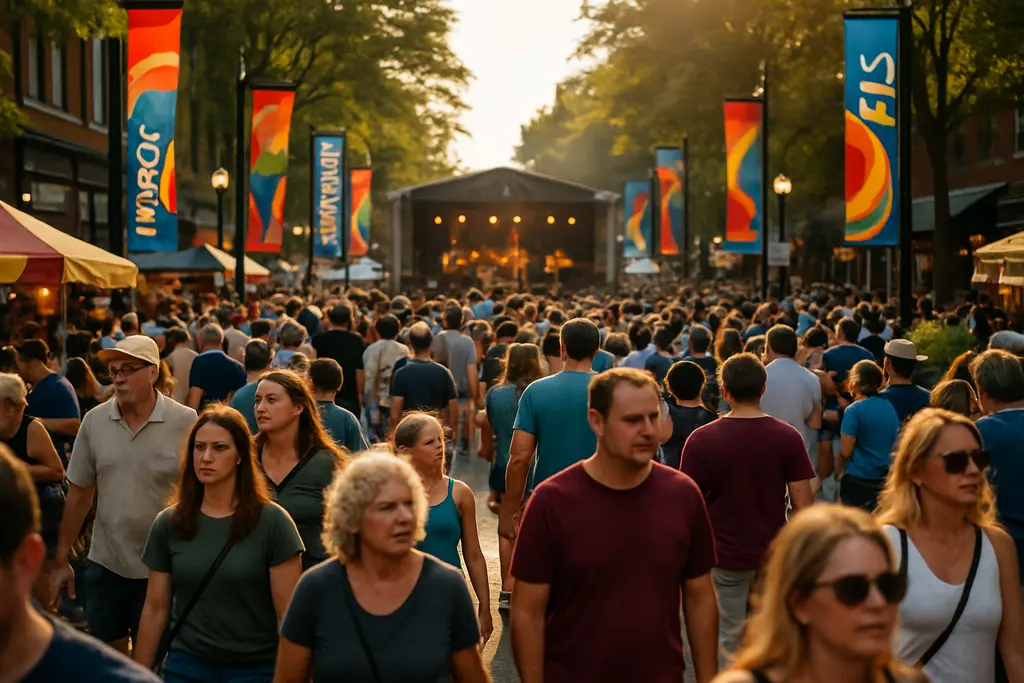
    Musikfest 2026 ended with one of the strongest attendance results in the Bethlehem festival’s documented record. The event ran from July 31 through August 9, 2026, after a preview night on July 30, and ArtsQuest reported 1,260,630 attendees across the full run, making it the third-highest attended edition in the festival’s 43-year history, according to ArtsQuest’s recap. That figure deserves attention, but it also calls for careful reading: a large crowd total is not a single story. It reflects programming breadth, ticketed headliner appeal, free-stage access, weekday activity, weather conditions, visitor travel, and digital engagement.

    As an events case study, the festival is useful because its scale was distributed across many entry points. The reported structure included more than 400 artists, more than 500 performances, and 16 stages, with 15 stages offering free admission and the Wind Creek Steel Stage at PNC Plaza operating as the ticketed headliner venue. That model allowed the event to function both as a citywide cultural gathering and as a marketable concert series with national names.

    What Musikfest 2026 Attendance Shows

    Musikfest 2026 By The Numbers

    The attendance total of 1,260,630 was the headline statistic, but the internal pattern matters. ArtsQuest reported that Monday attendance was up 6.2% compared with the same day in 2025, while Tuesday exceeded the prior Musikfest Tuesday attendance record by 15.06%. Those weekday gains are notable because festivals often lean on weekend concentration. A strong Monday or Tuesday suggests that the program maintained public interest beyond peak leisure days.

    The available figures also point to a broad attendance base rather than a single sold-out headliner doing all the work. The Steel Stage sold 52,890 tickets across its headliner shows. That number was meaningful, especially with sold-out concerts featuring Yellowcard & Taking Back Sunday and “Weird Al” Yankovic with special guest Puddles Pity Party. Still, the full festival attendance far exceeded the ticketed headliner count, which places the free-stage network at the center of the event’s public reach.

    • Dates: July 31 through August 9, 2026, with a July 30 preview night.
    • Total attendance: 1,260,630 across the 10 days plus preview.
    • Programming scale: more than 400 artists and more than 500 performances.
    • Venue structure: 16 stages, including 15 free-admission stages.
    • Steel Stage tickets: 52,890 sold for headliner performances.

    Weekday Strength And Weather Context

    For Musikfest 2026, the reported weekday performance complicates any simple explanation that the festival’s result came only from one or two marquee concerts. Favorable weather and high activity across the grounds were cited in connection with the record-setting weekday results. At the same time, the festival still faced some weather challenges during its run. The cautious interpretation is that weather helped some days without fully determining the outcome.

    That distinction matters for cultural producers. Outdoor festivals do not control climate conditions, and attendance comparisons across years can be shaped by rain, heat, artist scheduling, school calendars, travel patterns, and local habits. What can be said from the available reporting is narrower but still useful: the 2026 edition produced strong weekday turnout, record Tuesday performance, and a total attendance count that placed it near the top of the festival’s own historical record.

    How The Artist Lineup Balanced Scale And Access

    Ticketed Steel Stage Signals

    The ticketed lineup gave the festival recognizable names across country, rock, pop, rap, and comedy. A Lehigh Valley Press preview listed acts including Russell Dickerson, Train, Third Eye Blind, T.I. with special guest DaBaby, John Mulaney, “Weird Al” Yankovic, Bailey Zimmerman, and Parker McCollum in the ticketed program at the Steel Stage, as reported by Lehigh Valley Press. That mix suggests a booking strategy aimed at several audience segments rather than a single genre identity.

    The sold-out shows also show the advantage of pairing nostalgia, humor, and alternative rock communities with a large festival setting. Yellowcard & Taking Back Sunday carried strong recognition for listeners shaped by 2000s pop-punk and emo-adjacent rock. “Weird Al” Yankovic, with Puddles Pity Party as special guest, brought a different performance tradition grounded in parody, theatricality, and comedy. It would be too broad to claim these pairings alone drove the attendance record, but they help explain why the ticketed portion had visible momentum.

    Free Stages And Regional Presence

    The free-stage program is just as important to the cultural reading. Local and regional acts named in the preview included Craig Thatcher, Trouble City All-Stars, GoGo Gadget, Erin Kelly Band, The Large Flowerheads, Flirtin’ With the Mob, and The Castaway Band. Their presence points to a festival design that did not treat community performance as a side note. In a city-based event, free access can change the social character of the grounds: people may come for dinner, meet neighbors, hear a regional act, and then encounter other performances without needing a ticket for every stage.

    This is where attendance and artistic ecology meet. A headliner can sell a night; a multi-stage free program can sustain movement through plazas, streets, food areas, and smaller performance zones. For artists outside the national touring circuit, a high-traffic free stage can offer visibility within a trusted local frame. That does not allow us to infer artist earnings or long-term career effects from the available sources, but it does support a grounded view of the festival as more than its largest stage.

    Digital Use And Visitor Reach
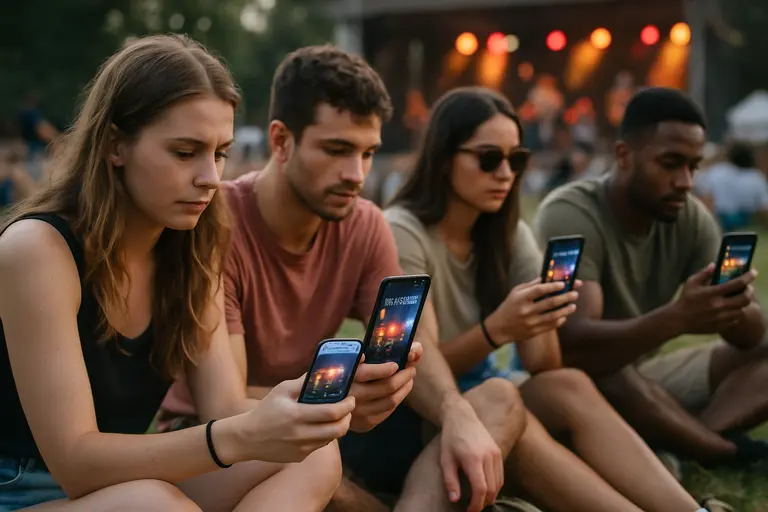
    Attendee checking a phone schedule while standing near a festival stage

    App Adoption As Engagement Evidence

    The digital record for Musikfest 2026 was also significant. ArtsQuest reported that 39,075 people used the Musikfest App powered by PNC, setting a record for the event. The previous app-usage high was passed by Wednesday of the festival, more than a week earlier than in 2025. App usage is not the same as attendance, and it should not be treated as a complete measure of satisfaction. Still, it can indicate how attendees planned schedules, checked stages, and interacted with the event’s official information channels.

    For festivals with hundreds of performances, the schedule itself becomes part of the audience experience. The ability to locate stages, compare overlapping sets, and adjust plans can influence how much of the festival a visitor actually uses. A record app number fits with the broader picture of high engagement, but the evidence supports a restrained claim: many attendees used the official tool, and that usage reached a new reported peak.

    Geographic Spread Of The Audience

    Reported visitor origin data also widened the frame. Attendees came from 46 U.S. states plus Washington, DC, and from Canada, Portugal, and South Korea. Those figures do not tell us how many came from each place, so they should not be read as proof of even national distribution. They do show that the event drew beyond a purely local or regional footprint.

    That reach matters for Bethlehem’s festival identity. A long-running music event can function as a local gathering while also attracting visitors who plan travel around specific artists, family traditions, or the reputation of the festival format. The presence of out-of-state and international visitors adds weight to the attendance story, though the research provided does not include hotel data, spending estimates, or demographic detail.

    Community Signals From Musikfest 2026

    What The Record Does And Does Not Prove

    The clearest reading of Musikfest 2026 is that it combined scale, access, and recognizable programming in a way that produced exceptional turnout. The evidence supports specific claims: third-highest attendance in the festival’s history, record app use, sold-out headliner concerts, strong weekday numbers, and a large multi-stage artist roster. It does not support broader claims about permanent growth trends, artist income, or economic impact without further data.

    Respect for artists and communities requires that distinction. Festival recaps can easily turn numbers into promotional language, but attendance is not the only measure of cultural value. A free regional performance, a comedy set, a legacy rock audience, and a family moving between stages can all be part of the same public event without being reducible to a single metric.

    Why This Recap Matters For Cultural Producers

    For event organizers, writers, independent sellers, and arts communities, the festival’s reported results offer a practical study in layered access. Ticketed headliners gave the event national visibility. Free stages expanded public participation. The app helped attendees manage choice. The weekday records suggest that the schedule held attention beyond the easiest days to draw crowds. For related arts-and-culture coverage across the same publishing network, readers can explore additional insights at Shimply, which provides a complementary perspective on creator culture and public events.

    The stronger lesson is analytical rather than promotional: large festivals are built from many smaller decisions. Booking range, admission structure, stage distribution, weather resilience, official information tools, and local artist inclusion all shape the audience experience. The 2026 results show that Musikfest’s model remained highly effective during its July 30 preview and July 31 through August 9 run, while leaving room for more research on audience demographics, accessibility outcomes, artist experiences, and economic effects.

  • Why artist resort collections carry new weight

    Why artist resort collections carry new weight

    By September 8, 2026, the strongest evidence around artist resort collections points to a cautious yes: this is more than a single publicity device, though the word “trend” still needs careful use. Dior presented its Resort 2027 collection on May 14, 2026, at the newly opened David Geffen Galleries of LACMA in Los Angeles, with American pop artist Ed Ruscha contributing letters and numbers that appeared across garments, according to Vogue’s Dior Resort 2027 coverage. That setting and collaboration placed visual art near the center of the collection’s public meaning, not at the edge as a decorative reference.

    The question is not whether fashion and art have met before; they have, often. The sharper question is why resort and cruise collections are becoming such useful stages for these partnerships. Resort shows sit outside the main ready-to-wear rhythm, often travel to art-rich locations, and give houses space to build narrative around place, patronage, craft, and cultural affiliation. The current evidence supports a measured reading: fashion houses are using artist collaborations to give resort collections stronger institutional and aesthetic identity, but claims about a sector-wide standard should remain limited until more seasons and more houses are compared.

    Why artist resort collections Matter Now

    What artist resort collections Can Prove

    The phrase artist resort collections should not be treated as a guarantee of artistic depth. A collaboration can range from licensed imagery placed on garments to a design process shaped by an artist’s materials, forms, or practice. The distinction matters because cultural value does not come from the mere presence of an artist’s name. It comes from how the work is credited, how the artist or estate is represented, how the collection uses the art, and whether the partnership helps audiences understand the creative source rather than flatten it into branding.

    Dior’s Ruscha collaboration is significant because the source material was visibly tied to Ruscha’s language-based pop practice. The available reporting supports the concrete fact that graphics, letters, and numbers appeared across shirts and garments. It does not, by itself, prove how audiences received the work, how sales performed, or whether similar partnerships will dominate future resort calendars. Those are separate claims requiring separate evidence.

    Why Resort Shows Suit Cultural Framing

    Resort collections often carry a place-based story. A house can select a museum, historic building, island, garden, or civic setting, then connect clothing to that setting through color, surface, architecture, or artistic reference. That structure creates room for collaboration with artists and cultural institutions. It can also raise fair questions: Is the artist central to the design language, or does the partnership serve mainly as prestige? Is the local cultural context treated with care? Are makers and source communities named clearly?

    Those questions are not hostile to fashion. They are part of respecting artists and communities. A runway presentation can be both commercially strategic and culturally meaningful, but the evidence has to be visible in the garments, credits, venue, and public record.

    Design Evidence From Dior And Alémais

    Dior’s Use Of Graphic Language

    Dior’s Los Angeles presentation gave one clear example of how art can enter a resort collection through graphic language. Ruscha’s contribution was not reported as a vague mood-board influence; it appeared through letters and numbers used on garments. That makes the Dior case useful for analysis because the collaboration can be traced to specific visual elements. The more persuasive artist resort collections are usually the ones where audiences can identify the terms of exchange: artist, medium, garment placement, venue, and date.

    Still, caution is needed. A respected artist’s involvement does not automatically mean the clothes become art objects, and it would be careless to suggest that a fashion house acquires the full cultural authority of a museum by staging a show near one. What can be said is narrower and better supported: Dior used its Resort 2027 show to align a major collection with a named contemporary artist and a Los Angeles museum setting.

    Alémais And The Shape Of Ceramic Influence

    Alémais offered a different model on May 29, 2026, in Menorca. Its Resort 2027 collection was reported as being inspired by Catalan architecture and made in collaboration with Mallorcan ceramic artist Sophie Wahlquist. Wallpaper* noted that Wahlquist’s vessels influenced garment structure, especially curved and exaggerated silhouettes, in its report on the Alémais Menorca show. This example matters because the artist’s contribution was connected to form and volume, not only surface print.

    That distinction is valuable for fashion criticism. Print-based collaborations can be strong, especially when rights and attribution are handled carefully, but sculptural influence shows another route. A ceramic vessel can suggest proportion, curve, tension, negative space, or balance. In that sense, Alémais’ case helps show why artist partnerships may appeal to designers seeking new construction ideas as much as recognisable imagery.

    Rights, Institutions, And Community Meaning

    Artist tools, fabric swatches, and exhibition notes arranged on a worktable

    Credit Is Part Of The Cultural Work

    For artist resort collections, the public story should never stop at visual appeal. Artist credit, estate involvement where relevant, and clear communication about collaboration are all part of responsible cultural presentation. This is not legal advice, and each partnership depends on its own agreements, rights, and jurisdictions. From an arts-community perspective, the safer editorial position is to ask what has been publicly credited and avoid assuming permission terms that have not been disclosed.

    • Named collaborators help audiences trace artistic sources.
    • Specific dates and venues make the cultural setting verifiable.
    • Design evidence should be separated from marketing language.
    • Claims about sales, influence, or popularity need data rather than repetition.

    Community organizers, local artists, and independent sellers can learn from this without copying protected work or borrowing a living artist’s style in a deceptive way. An insightful platform for arts and cultural discussions can be found at Robsonic, which offers related cultural coverage across the network.

    Why Institutions Change The Signal

    When a resort show is placed near a museum or built around an artist’s practice, the house borrows not only imagery but cultural association. That can create public benefit when it brings attention to artists, craft traditions, or institutions. It can also create imbalance if the institution or community becomes scenery for a luxury narrative. The evidence from Dior and Alémais shows a growing appetite for art-led resort storytelling, but it does not remove the need for scrutiny.

    The strongest cases are those where the artist’s contribution is understandable without exaggerated claims. Dior’s reported Ruscha graphics and Alémais’ reported Wahlquist-influenced silhouettes give critics enough to discuss form, placement, and meaning. They do not require invented quotes, assumed motives, or unsupported claims that every house is following the same pattern.

    Fashion Houses Collaborating With Artists For Resort Collections

    A Careful Reading Of A Visible Pattern

    If artist resort collections continue to appear across major and independent houses, the most useful coverage will compare the depth of collaboration rather than count names. A licensing-led collection, a museum-hosted runway, an artisan craft exchange, and a silhouette shaped by a ceramic practice are not identical. Each deserves its own evidence.

    As of September 8, 2026, the recent Dior and Alémais examples support a clear but limited conclusion: art partnerships have become a prominent strategy for giving resort collections cultural texture, public specificity, and design distinction. Calling it a new trend is reasonable if the term means a visible pattern in recent Resort 2027 presentations. Calling it permanent, universal, or proven as a commercial formula would go beyond the cited evidence. The better question for the next round of criticism is not whether fashion houses can collaborate with artists. It is whether those collaborations are credited, specific, and artistically legible enough to reward the communities whose creativity gives them meaning.

  • No-Man’s-Land Exhibition and Border Culture

    No-Man’s-Land Exhibition and Border Culture

    The No-Man’s-Land Exhibition at the Knoxville Museum of Art asks a question that feels both local and expansive: what happens in spaces that do not fit one settled category? According to the museum, the temporary exhibition opened with a reception on Thursday, August 13, 2026, at 5:30 PM and is scheduled to remain on view through November 8, 2026. That timing matters because, as of September 8, 2026, the show is not a memory or a future promise; it is an active cultural project in Knoxville.

    The exhibition is grounded in borderlands, thresholds, spiritual passage, speculative bodies, and uncertain jurisdictions. Its point of entry is Harrison Mayes, a Kentucky coal miner turned evangelist, born in 1898 and deceased in 1986, who placed concrete markers described as beacons in ambiguous strips between state and private lands. KMA describes those spaces as no-man’s lands, areas often without clear jurisdiction, on its official exhibition page. The show’s value is not only in the unusual story of Mayes, but in the way that story becomes a structure for reading borders between cultures, bodies, countries, spiritual traditions, and even planets.

    Dates, Sources, And The Museum Frame

    What The Exhibition Record Supports

    The museum identifies ten artists in the show: Seba Calfuqueo, Ada Friedman, Guillermo Galindo, Eddie Owens Martin, also known as St. EOM, Harrison Mayes, Erin Jane Nelson, Sarah M. Rodriguez, Suzanne Treister, Saya Woolfalk, and Joseph Elmer Yoakum. That list is unusually wide in subject matter, but the exhibition record gives a clear curatorial thread. These artists are not presented as if they share one background or one medium. They are brought together through questions about passage, limits, spiritual signs, imagined geographies, ecological change, and the pressure of human systems on bodies and places.

    For a cultural reader, the most useful caution is to avoid reducing the show to one regional identity or one political message. The material available from the museum supports a reading centered on liminality rather than a simple statement about Appalachia, migration, gender, ecology, or spirituality alone. Each of those themes appears, but the exhibition’s structure depends on the friction between them.

    Why Temporary Status Matters

    Temporary exhibitions create a specific form of civic attention. They gather artists, archives, objects, and interpretive language for a limited period, then leave behind memory, documentation, and public conversation. Because this exhibition runs only from August 13 to November 8, 2026, the public record around it may remain relatively compact. For that reason, claims about reception, attendance, or influence should be made carefully unless supported by museum data or reliable reporting.

    For readers comparing coverage within the same arts cluster, the related NextClues note on the No-Man’s-Land Exhibition at Knoxville Museum offers a nearby reference point. Furthermore, those aware of broader cultural coverage may find Kay Granger intriguing as part of a connected site within the network. This emphasizes the exhibition’s themes and records.

    No-Man’s-Land Exhibition And The Meaning Of Threshold

    No-Man’s-Land Exhibition As A Threshold Study

    The No-Man’s-Land Exhibition uses thresholds as both subject and method. A threshold can be geographic, as in border territory. It can be bodily, as in gender, transformation, aging, or adaptation. It can be spiritual, as in markers meant to guide or warn. It can also be speculative, as in works that imagine other forms of being. The term is useful because it does not force the show into a single category. Instead, it helps explain why artists working with concrete beacons, sculptural instruments, maps, textiles, natural forms, video, and installation can share one curatorial space.

    Mayes is central because his concrete markers were placed in spaces with uncertain legal and social status. The exhibition’s interpretation of those markers does not need to romanticize ambiguity. Ambiguous territory can be dangerous, contested, or neglected. Yet such spaces can also expose how categories are made. Who decides where public land ends, where private land begins, and which bodies are treated as belonging? The exhibition appears to take those questions seriously by placing Mayes beside artists whose work addresses migration, Indigenous worldviews, colonial legacies, ecological relations, and imagined futures.

    Borderlands Without A Single Border

    The show’s borderlands are not limited to one national line. Guillermo Galindo’s contribution, as described by the museum, involves sculptural instruments made from objects recovered along the U.S.–Mexico border, including shoes, clothing, water bottles, and fencing fragments. Through sound and performance, those materials evoke passage, migration, memory, and spiritual transition. The objects themselves carry signs of movement and risk, but the exhibition framing asks viewers to consider how sound can change discarded or displaced material into witness.

    Seba Calfuqueo’s work brings a different threshold into view. Born in Santiago, Chile, in 1993, Calfuqueo identifies as trans and Mapuche. The museum describes work using performance, installation, ceramics, and video to address the collision between Indigenous worldviews and Western colonial legacies, with connections to feminism, environmental rights, and gender studies. Here, the border is not only a line on a map. It is the pressure between knowledge systems, body politics, and land relations.

    Artists, Bodies, Memory, And Material Evidence

    Speculative Bodies And Ecological Change

    Saya Woolfalk’s Empathics series imagines beings who can genetically merge with plants. In the context of this exhibition, that speculative premise is not escapist decoration. It stages a body that refuses to remain separate from its environment. Sculpture, textiles, video, and installation become ways to think about transformation as ritual and speculative science. The museum’s description supports a reading of Woolfalk’s work as a bridge between bodily change and ecological imagination, though it would be too strong to claim one fixed meaning for the series in this setting.

    Sarah M. Rodriguez’s work offers another material route into adaptation and survival. The museum describes sculptures made through casting techniques that use natural materials such as seed pods, branches, shells, and bones, with organic matter burned out to create aluminum forms. That process leaves a tension between origin and result. A branch or shell may begin as evidence of organic growth, but the final object belongs to a human-made material system. The work can be read as a negotiation between natural form and human intervention, a theme that fits the exhibition’s interest in categories under strain.

    • Mayes frames uncertain jurisdiction through concrete beacons and spiritual marking.
    • Galindo turns recovered border objects into sculptural instruments tied to passage and memory.
    • Calfuqueo addresses Indigenous, colonial, environmental, feminist, and gendered thresholds.
    • Woolfalk imagines plant-human merging through speculative bodies.
    • Rodriguez uses casting to shift organic materials into aluminum traces.

    Memory, Geography, And Imagined Place

    Joseph Elmer Yoakum adds a geography of memory and imagination. The museum states that Yoakum produced more than 2,000 works in his later years after a spiritual awakening. His drawings use what the museum calls psycho-geography, joining memory, imagination, and observation. Place names in his work span Tennessee, Mexico, Sweden, Antarctica, and other locations, while often departing from realistic geography. That departure is not a failure of mapping. Within the exhibition’s logic, it becomes a way to ask whose maps count and what kinds of memory formal geography leaves out.

    The No-Man’s-Land Exhibition gains strength from this range of materials without collapsing them into sameness. Concrete, cast aluminum, recovered border objects, textiles, video, ceramics, installation, and drawing do different kinds of cultural work. Some hold residue. Some stage possible futures. Some mark spiritual urgency. Some make unstable identities visible without turning artists into symbols. That distinction matters in community arts writing, because respect begins with allowing each artist’s practice to retain its own terms.

    Appalachian Imaginary And Community Reading

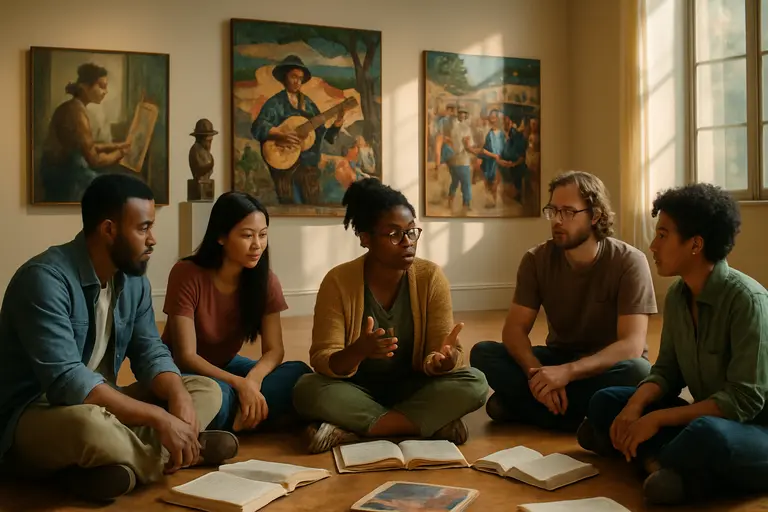
    Small group discussing contemporary art in a regional museum gallery

    How The KMA Frame Expands Regional Thinking

    The exhibition also connects to a wider KMA initiative described by director Steven Matijcio and curator Conley through the phrase Appalachian Imaginary. Inside of Knoxville reported in 2025 that this concept involves rethinking what Appalachia is and could be through folklore, boundary crossing, spiritual expression, and challenges to conventional representations, in its interview on the Appalachian Imaginary. That context helps explain why a Knoxville exhibition might place a Kentucky evangelist alongside artists working across Chilean, Mapuche, U.S.–Mexico border, speculative ecological, and imagined geographic references.

    This is not a claim that Appalachia contains all these experiences in any simple sense. A more cautious reading is that KMA is using Appalachian cultural questions as an opening rather than a boundary. Folklore, spiritual markers, self-taught or visionary practices, and contested land histories can connect to global conversations without erasing their differences. The risk in such framing is always overextension; the opportunity is a more open account of how regional museums can host art that unsettles fixed definitions of place.

    Community Life Beyond The Gallery Wall

    Community response to an exhibition like this cannot be assumed without documented evidence. Still, the supported themes suggest why the show may matter for public conversation in Knoxville. It gives viewers a shared vocabulary for discussing borders that are not always visible: between public and private land, inherited and chosen identity, human and nonhuman life, memory and map, spiritual sign and civic territory. Those are not abstract concerns for communities. They shape how people understand belonging, stewardship, migration, belief, and care.

    As a community organizer, I find the strongest public value in exhibitions that do not demand instant agreement. The No-Man’s-Land Exhibition appears to invite slower looking. A visitor can begin with Mayes’s concrete beacons, move toward Galindo’s border materials, then encounter Calfuqueo’s engagement with colonial legacies, Woolfalk’s speculative plant-human beings, Rodriguez’s cast natural forms, and Yoakum’s imagined geographies. The result is not one answer, but a set of carefully staged cultural questions.

    No-Man’s-Land Exhibition As Community Inquiry

    What This Exhibition Lets Knoxville Ask

    The No-Man’s-Land Exhibition is most persuasive when read as an inquiry into how cultures mark the uncertain. Its artists work with borders that are legal, spiritual, ecological, bodily, and imaginative. The show’s evidence comes from objects and practices rather than slogans: markers in ambiguous territory, border remnants turned into instruments, bodies imagined beyond fixed biological categories, organic forms translated into metal, and maps shaped by memory rather than standard measurement.

    For Knoxville, that inquiry sits inside a museum context committed, at least through the Appalachian Imaginary frame, to reconsidering regional identity without treating region as a closed container. The show asks whether the spaces between categories can be read not as empty zones, but as charged sites of memory, risk, creativity, and responsibility. That is a careful and useful question for any arts community willing to think beyond simple labels.

  • GaHee Park Exhibition And Surreal Fantasy

    GaHee Park Exhibition And Surreal Fantasy

    The GaHee Park exhibition Behind the Curtain opened at Yerba Buena Center for the Arts in San Francisco on August 7, 2026, and is scheduled to run through January 3, 2027. YBCA identifies it as Park’s first U.S. solo institutional museum exhibition, curated by Dorothy Dávila YBCA announcement. As of September 7, 2026, the exhibition is no longer an upcoming debut; it is an active presentation that can be discussed through its stated themes, its institutional framing, and its relation to fantasy and surrealist visual language.

    Park was born in Seoul in 1985 and is based in Montreal. Her education, as listed by YBCA, includes a BFA from Tyler School of Art in Philadelphia in 2012 and an MFA from Hunter College in New York in 2015. Those biographical facts do not explain the paintings by themselves, yet they do place the exhibition within a transnational art education and studio context rather than a single regional category.

    Why The GaHee Park Exhibition Matters Now

    GaHee Park Exhibition As Institutional Threshold

    The significance of this GaHee Park exhibition rests partly on format. A solo museum exhibition in the United States gives viewers a chance to encounter a body of work across time, rather than through isolated fair presentations, gallery images, or single reproductions. YBCA states that Behind the Curtain features paintings from roughly the last five years, around 2021 to 2026. That span is narrow enough to preserve a focused mood, but long enough to suggest changes in motif, pacing, and pictorial pressure.

    The title Behind the Curtain is useful because it frames looking as a charged act. A curtain can imply theater, domestic privacy, concealment, or staged revelation. Park’s listed themes—sexuality, mortality, fantasy, identity, and alienation—fit that threshold. The viewer is invited to see, but the paintings appear to question the terms of that viewing.

    What The Exhibition Claims, And What It Does Not

    Evidence from the museum material supports a careful reading of Park’s work through surrealism and fantasy. It does not support broad claims about a new movement, a market trend, or a generational consensus. For that reason, the safer critical move is to look at how the motifs work inside this specific show.

    YBCA describes a palette that includes muted grays and pinks, with motifs such as women in contemplative solitude, still lifes, cocktails, cats, insects, and reflections. These details suggest a domestic or intimate pictorial field, but not a simple one. Still life, portraiture, and interior space are familiar art-historical structures. Park’s use of reflections and solitary figures, as described by the institution, complicates who is looking and who is being looked at.

    Surrealism, Fantasy, And The Question Of The Gaze

    Fantasy Without Escapism

    Fantasy in this context should not be reduced to escape. The GaHee Park exhibition positions fantasy beside mortality, alienation, sexuality, and identity. That grouping suggests a visual method for staging interior states that may not be available through realism alone. A cocktail, a cat, an insect, or a reflection can function as more than a prop when placed inside a psychologically charged scene.

    Surrealist influence is often discussed through dream logic, unexpected combinations, and disturbances of ordinary scale or behavior. Based on the research available here, Park’s work appears to draw from that broad visual inheritance while remaining grounded in intimate scenes. The phrasing should stay cautious: the museum describes the work as using a surrealist lens, but it does not require us to assign Park to a fixed historical category.

    Power Dynamics In Portraiture

    YBCA notes that the works subvert the viewer’s gaze and often invert traditional power dynamics in portraiture. That is a substantial claim, and it is best understood through the exhibition’s recurring motifs. A contemplative figure may appear available to view, yet the painting can deny easy possession through reflection, pose, scale, mood, or surrounding objects.

    This matters because portraiture has long involved questions of access, authority, and display. Who is represented? Who controls the scene? Who is permitted to look without being questioned? Park’s paintings, as framed by YBCA, appear to place those questions inside scenes that are at once intimate and unstable. The result is not simply surreal imagery, but a test of the viewer’s confidence.

    Film, Fashion, And Cross-Medium Fantasy

    The Open Window Film Series

    The exhibition is accompanied by a related film series titled Through an Open Window, co-presented with filmmaker Michael Vass and YBCA. It began on August 15, 2026, and is scheduled for Saturdays at 2 p.m. through October 31, 2026. YBCA describes the program as 12 screenings and also describes its components as 11 features plus 3 shorts, including films connected with figures such as Alfred Hitchcock, Joan Jonas, and Maya Deren.

    That film context matters because it gives viewers a parallel way to think about frames, windows, bodies, desire, and suspense. A painting exhibition does not become cinema because a film series sits beside it. Still, the pairing suggests that YBCA wants the audience to consider Park’s images in relation to moving-image traditions where looking, concealment, and psychological tension are formal tools.

    Costume, Surface, And Community Imagination

    For readers who follow fantasy fashion, costume culture, or handmade visual practice, Park’s work offers a useful reminder: fantasy aesthetics need not be loud to be potent. Muted colors, staged interiors, reflective surfaces, and small symbolic objects can carry as much imaginative force as ornate costume or theatrical spectacle. For adjacent reading across fantasy dress and art-inspired visual culture, you might find valuable insights at Fairytale Fashion, a site within the same network of interests.

    This connection should be made with care. The available research does not say that Park is designing fashion or working in cosplay culture. The relation is interpretive, not biographical: viewers interested in how surface, self-presentation, fantasy, and identity meet across mediums may find the exhibition productive without collapsing painting into costume or costume into painting.

    Dates, Access, And Verified Exhibition Details

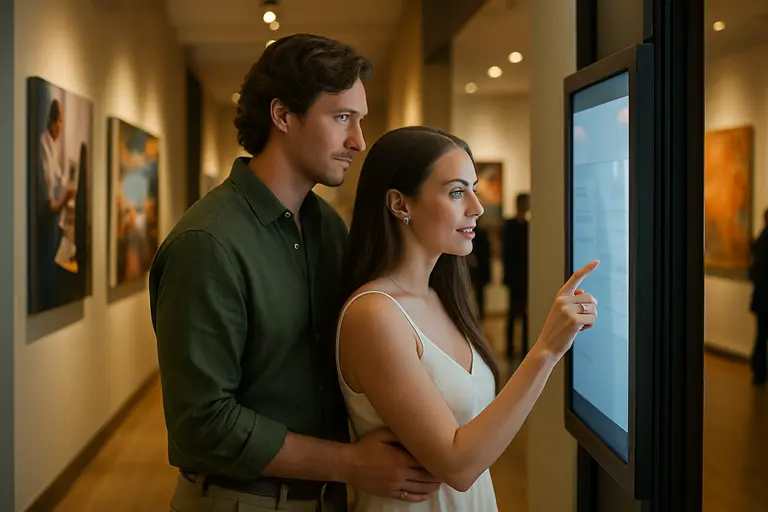
    Gallery entrance area with visitors checking exhibition information

    Practical Information With Date Clarity

    Because the exhibition opened before September 7, 2026, date language should be precise. Behind the Curtain opened on August 7, 2026, and runs through January 3, 2027. The related film series began on August 15, 2026, and is scheduled to continue through October 31, 2026. YBCA lists admission as $10 general admission, $5 for students and seniors, and free general admission on Wednesdays.

    • Exhibition: Behind the Curtain at Yerba Buena Center for the Arts, San Francisco.
    • Curator: Dorothy Dávila.
    • Dates: August 7, 2026, through January 3, 2027.
    • Related program: Through an Open Window, August 15 to October 31, 2026.
    • Admission listed by YBCA: $10 general, $5 students and seniors, free general admission on Wednesdays.

    Collections And San Francisco Context

    YBCA lists Park’s work in the permanent collections of the Columbus Museum of Art in Ohio, Institute of Contemporary Art Miami in Florida, Pond Society in Shanghai, and Medianoche Foundation in Granada, Spain. Collection placement can signal institutional recognition, though it should not be treated as a full measure of an artist’s importance. It is one piece of evidence within a broader practice.

    There is also a separate San Francisco art context around Park in late 2026. SF/Arts lists her first solo show with Jessica Silverman as scheduled to open on October 28, 2026 SF/Arts listing. Since that date is after September 7, 2026, it remains scheduled rather than past. The overlap suggests that San Francisco viewers have more than one institutional or gallery point of contact with Park’s work during the same period.

    Behind The Curtain And GaHee Park Exhibition Context

    A Careful Critical Frame

    The most persuasive reading of the GaHee Park exhibition is not that it announces a single trend, but that it gathers a set of visual problems: how fantasy can carry unease, how portraiture can resist possession, and how familiar objects can become unstable. The stated motifs—women alone, still lifes, cocktails, cats, insects, and reflections—are ordinary enough to be recognizable. Their force appears to come from arrangement, mood, and the pressure of looking.

    As a first U.S. solo institutional museum exhibition, Behind the Curtain gives Park’s recent paintings a public frame with enough space for comparison and close attention. The show’s value, based on the verified material available, lies in that concentrated encounter: surrealism as a lens, fantasy as a pressure point, and the gaze as a question rather than a settled position.

  • Corey Pemberton Living Well at the Mint

    Corey Pemberton Living Well at the Mint

    Corey Pemberton Living Well is scheduled to open on September 19, 2026, and close on January 31, 2027, at the Mint Museum Uptown in Charlotte, North Carolina, where it will be installed on Level 3. The Mint Museum describes the exhibition as a survey with more than 70 works by Los Angeles-based artist Corey Pemberton, born in 1990, spanning painting, collage, blown glass sculpture, quilts, fiber arts, and recent basketweaving Mint Museum exhibition page.

    The show arrives with a clear institutional frame: not simply a display of technical range, but an argument for how domestic interiors, handmade objects, and inherited forms can carry social meaning. Pemberton’s practice, as described by the museum, brings attention to ordinary living spaces inhabited by Black, queer, female, and nonbinary people. That framing matters because the exhibition appears to treat rooms, vessels, fabrics, and decorative objects as active carriers of memory rather than passive background details.

    What Corey Pemberton Living Well Presents

    Scale, Media, And The Survey Format

    A survey exhibition can be a delicate format for an artist born in 1990. It suggests breadth without the settled distance often associated with late-career retrospectives. In this case, the available details point to a show organized around range: mixed media on canvas, collage, glass, textiles, and fiber-based work. The presence of more than 70 works gives the curator room to trace recurring ideas across media rather than treating each material category as a separate chapter.

    That cross-media structure is central to how Pemberton’s work is being presented. Painting and collage can hold figure, surface, and interior space. Glass can mimic commercial packaging, decorative inheritance, and fragile domestic display. Quilts and fiber works can bring the logic of use, touch, repair, and intergenerational craft into the gallery. Basketweaving, noted by the museum as a more recent part of the artist’s practice, extends that attention to woven structure and hand-based knowledge.

    Corey Pemberton Living Well And Domestic Space

    The exhibition’s stated focus on ordinary living spaces calls for careful reading. Domestic space is often described as private, but Pemberton’s subjects, according to the museum description, connect rooms and possessions to respite, personality, memory, and ambition. That phrasing suggests that the home is not treated as an escape from public life alone. It can also be a site where identity is arranged, protected, displayed, and negotiated through the objects people keep close.

    For Black, queer, female, and nonbinary individuals, that emphasis may carry particular weight, though the available research does not provide individual statements from sitters or direct artist quotations. A cautious reading is therefore better than a sweeping claim. What can be said is that the museum’s description places people and their environments together, asking viewers to consider how décor, heirlooms, branded goods, craft materials, and light can signal lived experience.

    Materials As Cultural Evidence

    Glass Between Commodity And Heirloom

    The glass objects in the exhibition appear to hold a pointed tension. The Mint Museum identifies replicas of everyday commercial items, including a 40-ounce Old English bottle, a liter of Coca-Cola, and a can of Black Magic hairspray. It also notes forms that evoke decorative heirlooms such as Murano glass and African face jugs, with the latter tied to the history of the African Slave Trade. This range places consumer familiarity beside deeper references to craft, trade, displacement, and survival.

    That pairing resists a simple hierarchy between the refined and the everyday. A commercial bottle can carry social codes, neighborhood associations, class markers, or personal memory. A decorative vessel can be admired as design while also bearing the pressure of colonial histories and diasporic inheritance. Pemberton’s use of blown glass, at least as described by the museum, seems to test how an object can shift status when remade by hand and placed inside an art museum.

    Fiber, Quilts, And The Question Of Use

    Fiber-based work brings a different register of attention. Quilts and woven forms are often read through warmth, labor, domestic care, and communal memory. The research notes do not identify every textile work on view, so any interpretation must remain bounded by what has been publicly described. Still, the inclusion of quilts and fiber arts within the same exhibition as paintings and glass objects suggests that Pemberton is not treating craft as a side practice.

    The survey format may help viewers see how material decisions shift the emotional temperature of the work. Paint can stage an interior. Glass can freeze a commodity into a fragile double. Fiber can imply touch, repair, and accumulated time. None of these media needs to dominate the others. Their interaction is likely where the exhibition’s strongest art-historical questions sit.

    Curatorial Context And Published Record

    The Role Of The Catalogue

    A catalogue for Corey Pemberton Living Well is significant because the Mint Museum Store identifies it as the first exhibition catalogue fully dedicated to Pemberton’s work. The catalogue description states that his practice explores African ancestry, American heritage, identity, technique, and materials Mint Museum Store catalogue listing. For an emerging-to-midcareer artist working across several media, that kind of publication can shape how future viewers, students, and curators track the practice.

    The catalogue also matters for educational access. Exhibition installations are temporary, but a publication can preserve documentation, essays, and interpretive frameworks after the galleries change. That is especially relevant for artists whose work moves among painting, glass, and fiber, since images alone may not capture scale, surface, weight, or the physical charge of handmade objects.

    Institutional And Craft Networks

    The research identifies Jen Sudul Edwards, PhD, the Mint’s Chief Curator and Curator of Contemporary Art, as curator of the exhibition. It also notes Pemberton’s residencies at Pittsburgh Glass Center in Pennsylvania, Bruket in Bodø, Norway, and Penland School of Crafts in North Carolina as a Core Fellow. His service on the Boards of Trustees at Penland and the Corning Museum of Glass places him within institutions closely associated with craft education, glass history, and studio practice.

    Those details should not be overstated, but they do show that the exhibition sits at the intersection of contemporary art and craft pedagogy. For readers following handmade culture, creator commerce, and artist-led material research, related insights through Shimply, a platform in the same network, can provide adjacent context on how objects circulate between studio, home, market, and collecting culture.

    Named Works And Possible Readings

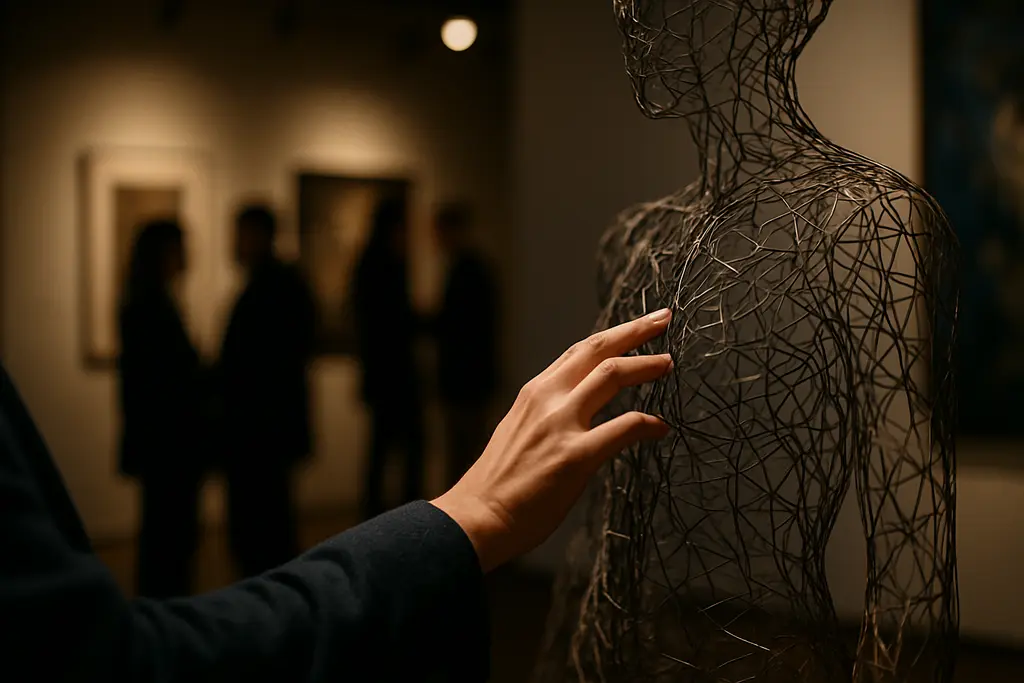
    Museum visitor studying a painting in a quiet contemporary gallery

    Titles That Point Toward Place And Intimacy

    Among the specific works listed for the exhibition are That morning light hits different, 2021; Still Life (Self-portrait), 2022; Law as Odalisque, 2024; 6 am at Morgan Hall, 2019; and It’s warmer at home, 2018. Even without images of each work in front of the reader, these titles point toward recurring concerns: light, self-representation, art-historical pose, place, hour, and the emotional charge of home.

    The title Still Life (Self-portrait) is especially suggestive because it links object arrangement to identity. A still life can be read as a portrait by other means: through what is chosen, displayed, consumed, saved, or inherited. It’s warmer at home points to shelter and comfort, but also raises questions about who is granted safety and where that safety is built.

    Why The Works Resist One Category

    Pemberton’s practice, as publicly described for this exhibition, resists a single material label. Calling it glass art would miss the paintings and textiles. Calling it painting would miss the sculptural and craft-based intelligence of the objects. Calling it domestic portraiture would be useful, but still incomplete. The show’s significance appears to rest on the way these categories press against one another.

    That category pressure is useful for art students and early-career artists. It shows how a practice can build coherence through questions rather than through one medium. The consistent question here seems to be how people live with objects, how objects absorb social history, and how handmade forms can reframe the familiar.

    Corey Pemberton Living Well At The Mint Museum

    For Corey Pemberton Living Well, the most grounded expectation is that visitors will encounter a material survey rather than a narrow presentation of one signature technique. The confirmed dates, venue, media, curator, catalogue, and selected works all point to a substantial museum project built around domestic life, identity, ancestry, and craft knowledge.

    The exhibition is funded by PNC, with support from the Ford Foundation and Windgate Foundation, and individual sponsorship from Marty and Weston Andress and Lauren Harkey. Those details place the project within a supported museum framework, but the critical interest remains with the works themselves: their use of glass, fabric, paint, and found cultural references to ask how living spaces hold memory and self-definition.

    Because the exhibition had not yet opened as of September 7, 2026, critical response and installation-specific analysis were not available in the provided research. The strongest reading for now is provisional and evidence-based: Pemberton’s survey at the Mint Museum appears positioned to connect contemporary art, craft traditions, and the politics of home without separating beauty from social context.

  • Raven Chacon SFMOMA And Speculative Memory

    Raven Chacon SFMOMA And Speculative Memory

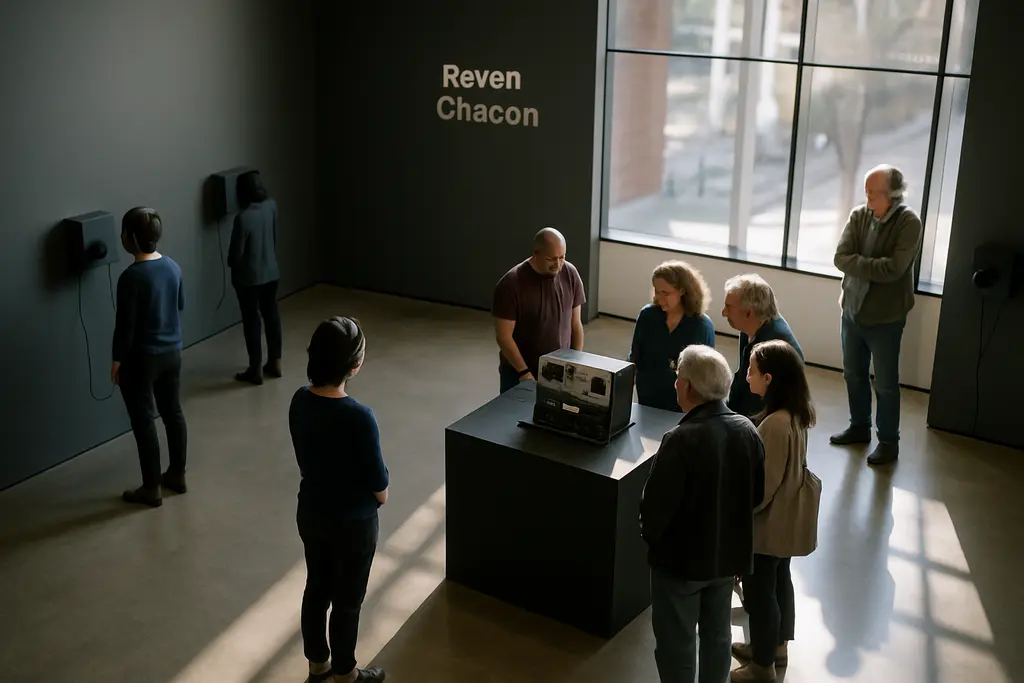
    Raven Chacon SFMOMA names an exhibition that had not yet opened as of September 6, 2026, so the most responsible reading is a pre-opening analysis based on museum information rather than a review. Scheduled for October 24, 2026, through November 7, 2027, New Work: Raven Chacon centers a new installation by Diné composer and artist Raven Chacon. The project appears to join moving image, sound, archival film, speculative fiction, and land-based cultural narratives without reducing any of those parts to decoration.

    Raven Chacon SFMOMA Exhibition Facts

    Dates, Floor, And Admission

    According to SFMOMA’s exhibition page, New Work: Raven Chacon is scheduled to run from October 24, 2026, through November 7, 2027, on Floor 6 of the museum. Entry is listed as included with general admission. The museum describes the exhibition as a solo West Coast presentation by Raven Chacon, a Diné composer and artist. These details establish the basic frame, but they do not substitute for direct experience of the installation after opening.

    Why Raven Chacon SFMOMA Matters Before Opening

    Because Raven Chacon SFMOMA coverage is necessarily anticipatory before October 24, 2026, claims about audience response, critical consensus, or sensory impact should be treated with care. What can be assessed is the project’s stated structure: a five-channel video installation titled The Naming of Names from 2026, accompanied by field recordings and electronic music composed by Chacon. The format suggests an encounter that asks viewers to listen as much as look, a point that matters in museum settings where sound can change the pace of attention.

    • Exhibition: New Work: Raven Chacon
    • Main installation: The Naming of Names (2026)
    • Format: five-channel video installation with sound
    • Dates: October 24, 2026, through November 7, 2027
    • Location: Floor 6, SFMOMA

    Speculative Futures Through Sound And Film

    Video, Archives, And The Naming Of Names

    The Naming of Names is described by the museum as combining Ray Bradbury’s science fiction with archival film footage from the 1950s and 1960s drawn from the Prelinger Archives. That combination is significant because science fiction often imagines distant futures while archival film can preserve the assumptions, omissions, and visual codes of earlier periods. Placing those materials together can invite viewers to ask who is allowed to name places, who is positioned as discoverer, and whose presence is made to seem distant or strange.

    A cautious interpretation would avoid treating the installation as a simple illustration of Bradbury or as a direct historical documentary. Based on the museum’s description, the work seems to operate through friction: speculative fiction against archival footage, earthly terrain against imagined planetary space, and sound against image. Those juxtapositions may make the act of naming feel less neutral. Names can mark memory, control, refusal, survival, or reorientation depending on who uses them and under what conditions.

    Listening As Cultural Inquiry

    Chacon’s soundtrack of field recordings and electronic music is not a side element in this framework. Sound art can place pressure on the body: breath slows, posture shifts, and attention changes when a room asks for listening rather than quick scanning. As an educator and fitness advocate, I see value in that embodied dimension. Museum stamina is not only about standing longer; it is about noticing when a work asks us to pause, soften the gaze, or become aware of the distance between hearing and understanding.

    For readers following sound-based creative practices, robsonic.org offers a nearby point of reference within the same network of related arts coverage. Still, Chacon’s work should be approached on its own terms. The available museum description emphasizes Indigenous land, archival material, and speculative frameworks, not sound as mere atmosphere.

    Land, Naming, And Cultural Narratives

    Tséyiʼ And Valles Marineris

    The exhibition also includes layered topographical drawings that link Tséyiʼ, or Canyon de Chelly, on Earth with Valles Marineris on Mars. The museum’s description says these drawings collapse earthly and Martian canyons. That pairing is charged because it places a culturally specific Indigenous place in relation to a planetary formation often discussed through exploration, mapping, and scientific naming. The connection does not need to erase difference in order to be meaningful; its force may lie in holding two mapped spaces together while asking viewers to notice how naming systems carry power.

    Tséyiʼ is not simply a visual form available for abstraction in this discussion. The responsible critical stance is to recognize that the exhibition, as described, engages land as a site of relation and contested representation. Any analysis that turns Indigenous territory into a neutral aesthetic motif would miss the ethical weight suggested by the project’s framing.

    The Semiquincentennial Frame

    SFMOMA describes the work as intervening in colonial narratives by reimagining Southwestern tribal lands as “otherworldly” and by challenging representations of Indigenous territories during the U.S. Semiquincentennial, the 250th anniversary. That timing matters, but it should not be overstated before the exhibition opens. Anniversaries can invite patriotic commemoration; artists can also use them to test what official memory leaves unresolved.

    Here, the phrase “otherworldly” needs careful handling. In a colonial visual tradition, Indigenous lands and peoples have often been framed as remote, exotic, or outside modern time. Based on the museum’s wording, Chacon appears to redirect that language rather than accept it. Speculation becomes a method for questioning the categories through which territory is seen and renamed.

    How Artists And Educators Can Approach The Work

    Educator leading a small group discussion in a contemporary art gallery

    Speculation Without Extraction

    For artists, educators, and students, Raven Chacon SFMOMA offers a useful case study in speculative practice with ethical stakes. The lesson is not to copy a living artist’s visual or sonic language. A more respectful learning approach is to study the questions the project raises: How do archives shape the future? How does a soundtrack change the authority of an image? How do maps, canyons, and names carry cultural memory?

    In classroom settings, those questions can become prompts for slow observation rather than imitation. Students might compare how a place is described in a map, a family story, a museum label, and a science-fiction passage. The point would be to see how each format produces knowledge differently. That method supports creative thinking while avoiding the extractive habit of borrowing Indigenous imagery without context or permission.

    Fitness, Attention, And Museum Stamina

    Installation art can be physically demanding in subtle ways. A five-channel video work may require viewers to turn, stand, sit, or return to a sequence more than once. Sound can draw the body through a gallery without a clear front-facing viewpoint. Simple wellness habits can improve attention: breathing evenly before entering a sound installation, stepping aside when overstimulated, and allowing time for the body to settle before forming an interpretation.

    Those practices are not separate from art education. They help viewers respect works that unfold over time. They also create room for cultural humility, since not every element of an installation is meant to be consumed instantly or translated into quick opinion.

    Raven Chacon SFMOMA Cultural Narratives

    What Can Be Said Now

    Raven Chacon SFMOMA can be discussed now as a scheduled exhibition with clearly stated materials, dates, and themes. It cannot yet be assessed as a completed public encounter. The supported facts point to a new 2026 installation, The Naming of Names, that brings together Bradbury-related science fiction, Prelinger archival footage, field recordings, electronic music, and topographical drawings connecting Tséyiʼ with Valles Marineris.

    The strongest pre-opening reading is that Chacon’s project treats speculative futures as a way to question cultural narratives about land, discovery, and naming. For educators, artists, and attentive museum visitors, the value lies in approaching the work slowly: listening to its sound, observing its archival and planetary references, and resisting any claim that turns Indigenous presence into metaphor alone.

  • Live Room Sessions Stripped Back Performances And The Stories Behind Them

    Live Room Sessions Stripped Back Performances And The Stories Behind Them

    The algorithm loves overproduced sounds, but we’re looking for something different. We hit play on a single microphone in a room with a hardwood floor. We want something that feels real, not made by robots.

    The term live session video feature feels cold to me. It’s more than just content; it’s a rebellion. We’re exploring the heart of stripped-back performances, from start to finish.

    Why does a simple, one-take recording of a familiar song move us? That’s what we’re trying to understand. The silence between the notes holds the truth. It’s in those quiet moments that we find the music’s true essence.

    Why live sessions matter intimacy and new angles on songs

    Live sessions have a special magic that studio recordings can’t match. Artists perform in a raw way, letting their music’s true essence shine. This live session feature is more than just playing the right notes. It’s about stirring emotions and building connections.

    In the Philippines, “Room Sessions” show the beauty of simplicity. Artists drop their studio polish, revealing their real selves. This leads to a sound that deeply resonates with listeners.

    Amy Speace’s “The Blue Rock Session” is a perfect example. Recorded in just three hours, it focuses on capturing a moment, not perfection. The slight crack in her voice and the guitar’s unquantized strum add to the emotional atmosphere.

    • Intimacy: Live sessions create a personal bond between artist and audience.
    • Rawness: Imperfections highlight the artist’s authenticity.
    • New Angles: Live shows offer fresh takes on familiar songs.

    Exploring a song’s heart is like an archaeological dig. It uncovers layers studio recordings often hide. By embracing the raw, artists offer a deeper music experience.

    Location scout acoustics mood and light permissions

    The location is key for acoustic performances. The right venue can make an ordinary song into a memorable experience. You can’t fake the vibe with just a ring light and a tapestry; the room is a vital part.

    Think about the acoustics of your chosen space. If it sounds like a concrete bunker, your video won’t work. It’s not just about echo; it’s about the space’s feel. The “Room Sessions” crew knows this well—minimalist elegance is more than a backdrop, it’s a character.

    When scouting locations, look for the perfect mix of sound and shadow. Is there a hum from a vintage fridge three rooms away? Will the natural light ruin your highlights at 4 p.m.? These details are important. And remember, get the permits. Nothing says “not raw and authentic” like a park ranger stopping you during the bridge.

    This careful planning lets for emotional spontaneity. The space should encourage creativity, not hold it back. Choose well, and your acoustic version will stay with people long after it ends.

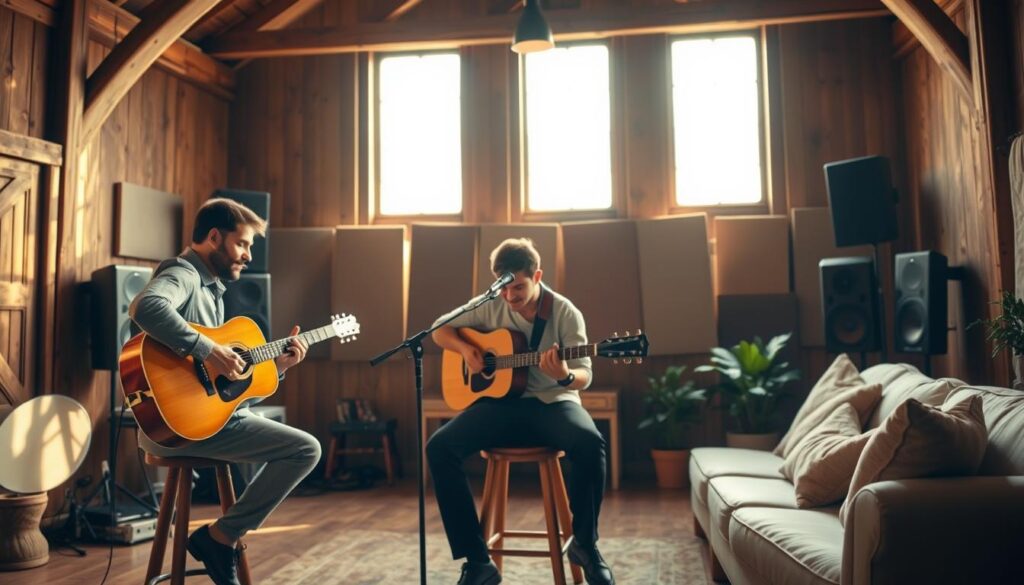
    A serene, intimate live music setting, showcasing a musician playing an acoustic guitar in a rustic room with warm wooden beams and soft, diffused lighting. In the foreground, the musician, dressed in casual yet professional attire, is focused on their performance, sitting on a vintage stool. In the middle ground, an array of acoustic panels and soft furnishings create a cozy, inviting atmosphere, with potted plants adding a touch of greenery. In the background, large windows allow natural light to pour in, illuminating the space with a golden glow. The mood is relaxed and soulful, evoking a sense of stripped-back performances and authentic storytelling in music. The angle captures both the musician and the atmosphere of the room, enhancing the overall experience of a live acoustic session.

    Arrangement choices stripping drums reharmonizing bridges

    Stripping down a song reveals its core essence. Arrangement choices are key. Think of it like a sculptor chiseling away to reveal a masterpiece.

    Amy Speace shows that less is more. Her music proves a well-placed chord can carry a song. Here are some key points:

    • Eliminate unnecessary elements: Do you really need that drum fill? If it doesn’t serve the song, it might be time to let it go.
    • Focus on rhythm: The hi-hat can serve as a heartbeat. Simple beats can create a more intimate atmosphere.
    • Reharmonize bridges: This is your secret weapon. A well-placed reharmonization can create a “wait, what?” moment that draws listeners in.

    The “arranger notes” become a manifesto against clutter. The goal is to reveal the heart of the song. The acoustic version should be like a neat, single-barrel whiskey. This approach invites listeners to engage more deeply with the music, discovering layers they might have missed in a more produced setting.

    One take rules click or no click cueing and recovery strategies

    Recording in one take is like walking a tightrope without a safety net. It means artists must show their true self in just one shot. Jack Kerouac once said, “first thought, best thought.” This idea is key in music, where every moment counts.

    Choosing between a click track or no click depends on your song. A click can be strict, but it can also guide the music gently. This choice affects how the music feels to listeners.

    But what if things go wrong? A mistake can seem like the end. Yet, these moments make the performance real. Amy Speace’s session shows the beauty of not being perfect.

    The rule is simple: if you didn’t stop, it’s a take. Keep recording and enjoy the surprise. Here are some strategies for one take recording:

    Strategy Pros Cons
    Click Track Consistent tempo, easier to layer Can feel restrictive, may stifle creativity
    No Click Allows for natural expression, enhances emotion Risk of tempo fluctuations, harder to edit
    Recovery Techniques Embraces imperfections, adds character Requires quick thinking, may disrupt flow

    One take recording is a daring choice. It’s about capturing everything, good and bad. So, take the leap and let the music lead you.

    Camera and audio minimal rigs mics and editing workflow

    The magic of a session video isn’t in fancy gear. It’s in choosing tools that feel real. You need precise gear to capture raw performances without a big budget.

    A session video depends on good sound. Bad sound is unforgivable, even if the video is a bit fuzzy. Use a simple setup with a stereo pair of small-diaphragm condensers and a camera lens that captures skin well.

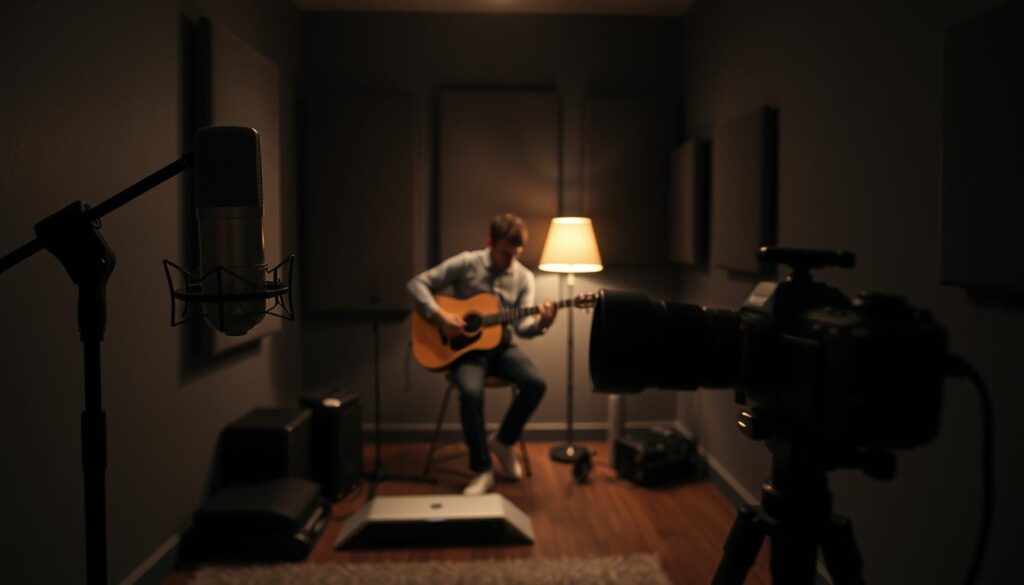
    A cozy, dimly lit room featuring a minimalistic setup for a live music recording session. In the foreground, a high-quality microphone on a sturdy stand captures sound, while a sleek audio interface with simple controls rests nearby. The middle ground showcases a performer in professional casual attire, focused and immersed in their craft, playing an acoustic guitar. Soft, warm light from a vintage lamp creates a welcoming atmosphere. In the background, a camera on a tripod captures the scene, angled to highlight the musician and the subtle details of the setup. The walls are adorned with acoustic panels, further enhancing the intimate sound environment. This scene conveys a sense of simplicity, creativity, and passion for raw musical expression.

    Check the credits of any tight production. You’ll see names like Marcus Angelo and Hayes Howard. They make sure the editing is smooth, not chaotic. Editing should be precise, not rough.

    Sync the audio and grade it to feel moody. Don’t cut every two seconds. Let the performance unfold naturally. Here’s a list of key equipment for a great session video:

    Equipment Type Purpose Recommended Brand
    Small-Diaphragm Condenser Mics Microphone Captures room acoustics Rode NT5
    DSLR Camera Camera High-quality video Canon EOS Rebel T7i
    Audio Interface Interface Connects mics to computer Focusrite Scarlett 2i2
    Editing Software Software Post-production editing Adobe Premiere Pro

    In conclusion, the right gear and a careful approach can make your session video stand out. It’s not just about visuals; it’s the sound that truly matters.

    Performance day rituals breath focus and audience of three

    Every performance day is a canvas painted with rituals that sharpen our focus. For seasoned professionals like Nisha & The Sundae Voice, these rituals are not mere habits; they are essential components of a successful show. The meticulous attention to detail transforms a potentially chaotic day into a structured experience.

    The camera, after all, is a lie detector. You can’t waltz in cold and expect to channel the cosmic truth. The arranger notes for performance day are written in adrenaline and cortisol. This is where the magic happens—between the breaths and the beats of the heart. Rituals like breathing exercises help lower your heart rate, allowing you to focus on the music.

    But here’s a pro tip: never play to an empty room. An “audience of three”—be it a trusted engineer, a silent observer, or even a dog—creates the energy exchange that live music craves. Emptiness breeds self-consciousness. You’re not performing *at* the lens; you’re letting the lens eavesdrop on a private moment. This subtle shift in perspective can make all the difference.

    Ritual Purpose Benefit
    Breathing Exercises Calm nerves Improved focus
    Sound Checks Ensure clarity Confidence in performance
    Warm-Up Sessions Prepare voice/instrument Enhanced performance quality
    Visualization Techniques Mentally prepare Reduced anxiety

    Incorporating these rituals not only prepares the artist but also sets the stage for a more authentic connection with the audience. So, as you gear up for your next performance, remember: it’s not just about the music; it’s about the moments leading up to it. To explore more about creating meaningful traditions, check out this insightful article.

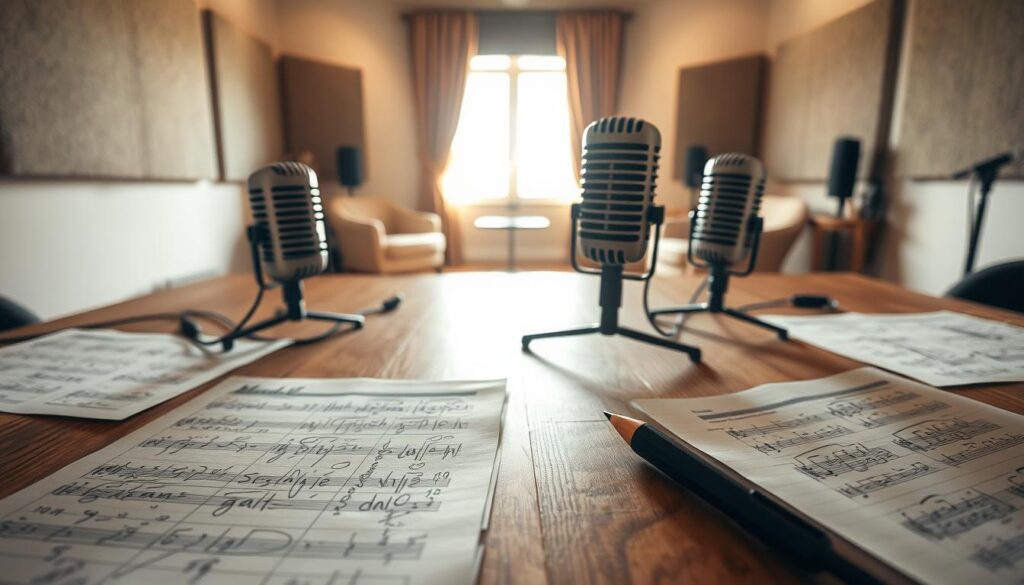
    A wooden table covered with neatly arranged arranger notes, surrounded by three vintage microphones, each capturing the essence of an intimate performance. In the foreground, the notes showcase handwritten annotations and scribbles in black ink, radiating an atmosphere of creativity and focus. In the middle, soft, natural light filters through a window, illuminating the tranquil space, creating gentle highlights and shadows that evoke a sense of calmness. In the background, muted colors of acoustic panels and sparse furnishings add depth, suggesting a cozy studio setting. The scene is intimate and serene, symbolizing performance day rituals, with a subtle focus on the connection between the performers and their small audience, creating a meditative, soulful vibe that resonates with stripped-back performances.

    Post session rollout teasers thumbnails captions and premiere chat

    After the show is over, it’s time to share the magic. The performance is just the beginning. A well-planned rollout can turn a moment into a lasting story.

    First, let’s talk about teasers. These are your first impressions, drawing in your audience. A teaser should spark curiosity and excitement. It hints at what’s coming without revealing too much.

    Next, we have thumbnails. These images are key. Aim for a frame that captures a moment of emotion. It’s like the cover of a book that makes you want to open it.

    Then, there are captions. In today’s TikTok world, captions are like liner notes. They offer insight with a bit of humor. A dash of sarcasm can make your audience feel like they’re part of a joke.

    Lastly, consider a YouTube Premiere. It’s like a listening party where the premiere chat is a shared moment. Fans can share their thoughts and relive the experience together. It’s where analysis meets marketing, creating a memorable moment.

    To summarize, here’s a quick look at the essential elements of a successful post-session rollout:

    Element Description Importance
    Teasers Short clips or images that create anticipation Draws in the audience
    Thumbnails Visual representation of the session Attracts clicks and views
    Captions Engaging text that provides context Enhances connection with the audience
    Premiere Chat Live interaction during the premiere Builds community and excitement

    Using these elements in your post-session strategy can create a lasting mythology around your performances. Remember, the story of the session is almost as important as the session itself. For more insights on engaging your audience, check out this guide on promoting local events.

    Sheet music or chord chart PDFs for fans

    Unlock the music with sheet music and chord charts tailored for fans. This isn’t just a nice-to-have; it’s a vital tool for engagement. By giving these resources, you invite your audience to join the artist. You say, “Here’s the map, now let’s make some music together.”

    Imagine the thrill of playing along with Nisha & The Sundae Voice. When you provide sheet music or a simple chord chart PDF, you’re not just sharing notes; you’re creating a bridge. It’s an intellectual handshake that transforms passive listeners into active participants. It says, “You’re smart enough to play this, too.”

    In the world of music, where precision and professionalism reign, these charts demystify the magic without destroying it. Fans can explore the intricacies of arrangements, diving deeper into the songs they love. It’s like handing them the arranger’s secrets, allowing them to appreciate the artistry behind each note.

    This practice turns a one-way broadcast into a conversation. It fosters a sense of community, encouraging fans to share their interpretations and creations. By not gatekeeping the harmony, you invite collaboration and creativity.

    So, why not take that step? By sharing sheet music and chord charts, you’re not just providing a resource; you’re building a network of musicians and fans who can connect through the joy of music. Let’s turn those passive views into lifelong evangelists, one chord at a time.

    Fan submissions cover challenge duets and remixes

    When a song becomes a canvas for fan creativity, magic happens. Covers, duets, and remixes burst forth. This is where live sessions truly come alive. Fans taking the stage change the music’s ownership, weaving a vibrant tapestry of sound for all.

    Starting a cover challenge is a big deal for artists. It lets fans put their own spin on songs. Each entry shows off the skill celebrated by Room Sessions. These aren’t just shows; they’re honest and timeless expressions of creativity.

    Duets bring excitement to the table. Imagine singing with your favorite artist, even if it’s just in a video. This teamwork builds a sense of community among fans. They share their takes, making connections that go beyond borders.

    Remixes offer a thrilling chance to reimagine a song. Fans can mix it up, add beats, and put their own twist on it. This turns sad songs into dance tracks. It’s where the art form grows, and artists see their work in a new light.

    These fan submissions do more than just grow a fanbase. They build a creative community that loves the raw art. To celebrate, we’ve put together a table of popular fan submissions. It shows how they add something special to the original songs.

    Submission Type Example Artist Unique Element
    Cover Challenge Jane Doe Acoustic guitar reinterpretation
    Duet John Smith Vocal harmony with original
    Remix DJ Beatmaster Electronic dance remix

    Playlist of favorite live sessions for inspiration

    Before you start recording, fill your creative well with inspiration. A playlist of live sessions can be your artistic guide. Start with Amy Speace’s “The Blue Rock Session.” It shows how a room can become a character.

    Tracks like “On a Monday In London” and “Out of the Blue” show the beauty of simplicity. Listen to how silence frames the vocals in “I Found a Halo.” It reveals more than a full orchestra could.

    These performances teach us that sometimes, less is more. They remind us that every note and pause is important. It’s not just about copying; it’s about creating emotions.

    So, dive into this playlist. Let it inspire your own creativity. Analyze, absorb, and then let go. Make your own unique art.

    In the end, it’s about capturing a feeling that resonates. Use these sessions as a starting point for your art. The beauty of live performance is in its imperfections. Embrace them.

  • Suno Inc. Case Tests AI Music Copyright

    Suno Inc. Case Tests AI Music Copyright

    The Suno Inc. case has become one of the clearest tests yet for how courts may treat AI music systems trained on copyrighted works. As of September 5, 2026, the record is still incomplete: several U.S. matters remained pending, while a German court had already ruled against Suno in a case brought by GEMA. That split between decided and unresolved proceedings calls for care. The public record supports saying that courts are scrutinizing training data, outputs, and alleged stream-ripping more closely. It does not yet support a single settled answer for every AI music tool, creator, or rights holder.

    For musicians, visual artists, costume makers, video editors, and small sellers who build work around sound and image, the dispute is not an abstract software fight. It sits close to practical questions about attribution, licensing, imitation, and whether creative labor is being treated as raw material without consent. At the same time, courts have not fully resolved the U.S. fair use issues raised by AI training in music. A cautious reading is more useful than a sweeping prediction.

    Why The Suno Inc. Case Matters Now

    Why The Suno Inc. Case Reached A New Stage

    On August 17, 2026, Round Hill Music filed federal lawsuits against Suno Inc. and Anthropic, alleging that the AI companies trained models on copyrighted songs without licenses. Reporting on the filings said the Suno complaint alleged that compositions and sound recordings were scraped from YouTube and other sources, and that Round Hill sought more than $1 billion in damages. The initial sample reportedly covered about 500 songs, with plans to expand the case to more than 10,000 compositions, according to Forbes reporting.

    The Round Hill allegations matter because they place both sides of recorded music at issue: the composition and, in the Suno complaint as described in the reporting, sound recordings as well. That distinction is central in music disputes, since a song can involve multiple rights and multiple rights holders. The complaint also moved the debate away from a general claim that AI systems learn from culture and toward specific questions about source material, copying, and whether any alleged acquisition method created separate liability.

    What Is Still Unsettled

    The Suno Inc. case should not be described as fully decided in the United States. Suno has maintained that training on copyrighted music can be defensible under fair use, while plaintiffs have argued that unauthorized copying and alleged stream-ripping fall outside lawful training activity. Those arguments have not produced a final U.S. appellate rule that would govern every similar AI music dispute.

    That uncertainty is why creators should be wary of confident online claims that the issue has already been settled for or against all AI training. The research record shows a set of active lawsuits, partial rulings, and one major German ruling. It does not show a clean industrywide endpoint. For arts coverage, that distinction matters. Premature certainty can mislead independent artists and small creative businesses that need clear risk signals rather than hype.

    The German Ruling And The Training Data Question

    GEMA’s Case Against Suno

    On July 31, 2026, a Munich court ruled in a case brought by GEMA, the German collecting society, that Suno violated copyright by training on GEMA repertoire. The European IP Helpdesk summary said GEMA tested Suno’s v3.5 and v4 models using six compositions and assessed generated outputs in relation to melody, harmony, rhythm, and other musical features. The same summary said the court addressed training methods that included stream-ripping from YouTube and found liability under German copyright law, with the account also discussing arguments related to U.S. law in the case record through the European IP Helpdesk.

    This ruling is significant because it did not treat model training as a purely technical background step beyond copyright review. Instead, the court examined the relationship between source works, model behavior, and outputs. For musicians and rights administrators, that approach places evidence at the center: what works were used, how they were accessed, and whether the system later reproduced protectable musical elements in a legally relevant way.

    Why Stream-Ripping Allegations Matter

    The research notes also identify stream-ripping as a recurring point in U.S. and German disputes involving Suno. In plain terms, stream-ripping refers to downloading media from a streaming source through tools that may bypass normal access or download limits. The legal significance depends on the claims, the evidence, and the law applied by the court. Still, the allegation is important because it shifts attention from the broad social question of whether machines may learn from music to the narrower factual question of how specific files were obtained.

    For independent artists, that difference is familiar from other creative fields. A painter, photographer, sample-maker, or costume designer often distinguishes inspiration from copying and copying from unauthorized extraction. AI music litigation is raising parallel questions, though under music-specific statutes and facts. Readers who follow rights questions across the arts may also find related network coverage at Kay Granger. Visit Kay Granger for more in-depth insights and updates on the evolving issues surrounding AI and creativity.

    What Artists And Music Businesses Can Read From The Claims

    Licensing Is Becoming A Dividing Line

    The Suno Inc. case is developing alongside industry deal-making. Research notes state that Warner Music Group reached a licensing deal with Suno in November 2025 and exited litigation, while Universal Music Group and Sony Music remained plaintiffs in ongoing cases. That contrast does not prove which licensing model will prevail. It does show that some major rights holders have treated licensing as a path separate from continued litigation.

    For smaller creators and labels, the key lesson is not that every AI company has the same risk profile or that every rights holder will choose the same strategy. The lesson is more limited: contracts, permissions, opt-in terms, and documented rights clearance are becoming central business tools. A related analysis of AI music licensing considered how an opt-in alliance can change the incentives around AI music use without resolving every copyright question.

    Publicity And Style Claims Add A Separate Pressure Point

    The research notes also describe a proposed class-action lawsuit filed on August 31, 2026, Lowery v. Suno, Inc., alleging that name-indexed AI voice and style mimicry violated publicity rights laws in multiple states and Puerto Rico. The named plaintiffs in those notes include Jason Isbell, David Lowery, Guy Forsyth, and Eduardo Calle. Because that matter was newly filed by the research date, it should be treated as an allegation, not a decided finding.

    For creator communities, the publicity-rights angle is especially sensitive. Copyright disputes usually focus on works: recordings, compositions, lyrics, images, photographs, or designs. Publicity-rights claims often focus on identity, including name, likeness, voice, or persona under applicable state law. AI tools that invite users to request a living artist’s voice or recognizable style can raise issues that differ from ordinary genre influence. This is one reason ethical creator practice should avoid prompts or products that trade on a living artist’s identity without permission.

    Fair Use, Funding, And A Cautious Market Reading

    Financial chart printout beside headphones and a keyboard controller

    Investment Did Not Remove Legal Risk

    The research notes say Suno raised $400 million in a Series D round in June 2026, bringing its valuation to about $5.4 billion, more than double a reported valuation of about $2.45 billion seven months earlier. That funding record shows investor confidence in the business opportunity. It does not answer the legal claims. Capital can sustain litigation, product development, and licensing talks, but it cannot substitute for court rulings or negotiated permissions.

    The Suno Inc. case therefore sits at a difficult crossing point for the music industry. AI music tools are attracting money and users, while rights holders are pressing for control over catalogs that took decades to build. Artists watching from outside the major-label system should resist two easy assumptions: that every AI training dispute will end in total prohibition, or that fair use will excuse every large-scale ingestion of copyrighted works. The available record supports neither extreme.

    Why Fair Use Claims Need Evidence

    Fair use in the United States is a case-specific doctrine, not a general permission slip. Courts examine facts. In AI music disputes, those facts may include the purpose of use, the nature of the works, the amount taken, market effects, access controls, outputs, and licensing evidence. The research notes state that Suno and its leadership have argued that model training is analogous to human learning from existing works. Plaintiffs have challenged that framing by emphasizing alleged copying, scraping, and market harm.

    This is where arts criticism and legal reporting should keep separate roles. A critic can discuss how an AI-generated track resembles a genre, an era, or a recognizable production style. A court must decide specific legal claims on evidence. The two conversations overlap culturally, but they are not identical.

    Suno Inc. Case And The Rights-Clearance Habit

    Practical Signals For Creators

    The most useful creator takeaway from the Suno Inc. case is procedural rather than dramatic: document permissions, read platform terms, avoid copying identifiable living artists, and treat music inputs as rights-bearing material unless reliable licensing information says otherwise. That is not legal advice, and it does not decide whether a particular use is lawful. It is a cautious working habit for artists, sellers, editors, and event producers who cannot afford avoidable disputes.

    For visual artists and handmade sellers, the music cases also echo older problems around fan art, celebrity likenesses, character merch, sampling, and unlicensed reference images. The tools are newer, but the ethical question is familiar: whose labor, identity, or catalog is being used to make something saleable? Respectful creative practice starts by asking that question before a product goes live.

    What The Record Supports As Of September 5, 2026

    As of September 5, 2026, the record supported three cautious observations. First, rights holders were no longer limiting their objections to public criticism; they were filing detailed claims over training data, access methods, outputs, and identity mimicry. Second, at least one German court had already ruled against Suno in a GEMA case, while major U.S. disputes continued to move through the courts. Third, licensing remained an active alternative to litigation for some industry players, but it had not ended the broader conflict.

    The Suno Inc. case may eventually help define how AI music firms, catalogs, and creators coexist. For now, its value is as a record of pressure points: training sources, stream-ripping claims, reproduction evidence, fair use defenses, publicity rights, and licensing. Those are the issues artists and music businesses should watch with care, because they will shape not only courtroom outcomes but also the ordinary rules of making, selling, and sharing creative work.

  • Smithsonian Exhibitions On Democracy And Identity

    Smithsonian Exhibitions On Democracy And Identity

    Smithsonian Exhibitions as of September 4, 2026, offer a concentrated view of how museums can stage national identity without pretending that the nation speaks in one voice. The exhibitions listed in the research cluster are not all the same kind of civic project: some center founding documents, some foreground music or community memory, and others examine how portraiture, material culture, or car culture become evidence of belonging. Their shared value lies in the questions they put before visitors rather than in a single answer about democracy.

    That distinction matters. Exhibitions about democracy can slip into commemoration alone, while exhibitions about identity can be reduced to representation checklists. The strongest reading of this 2026 Smithsonian grouping is more demanding: it asks who is visible in national memory, what objects carry civic weight, and how cultural forms such as salsa, lowriding, portraiture, and community history shape public understanding.

    Smithsonian Exhibitions And The Civic Imagination

    Why Smithsonian Exhibitions Matter Now

    The civic emphasis is clearest in Voices and Votes: Exploring Democracy Across America, presented at the Arts & Industries Building from June 16, 2026, through September 7, 2026. The Smithsonian described the exhibition as using artifacts and multimedia to consider U.S. democracy from the American Revolution through suffrage and modern voting rights, including questions about who has a voice in democracy and how the exhibition fits within the institution’s “Our Shared Future: 250” initiative Smithsonian release.

    That framing is useful because it resists treating democracy as a static inheritance. A visitor encountering objects from revolutionary politics, suffrage movements, and voting-rights debates is asked to see democracy as a practice repeatedly argued over. The exhibition’s timing, ending on September 7, 2026, also places it within a short public window. As of September 4, 2026, it remained open, but only for its final days.

    Democracy As A Visitor Question

    American Aspirations, at the Smithsonian Institution Building, known as The Castle, opened on June 2, 2026, and also runs through September 7, 2026. MySmithsonian describes it as presenting more than 30 treasured objects connected to the Declaration of Independence and asking how generations have interpreted ideals such as freedom, opportunity, and a shared future American Aspirations.

    Placed beside Voices and Votes, the exhibition shifts attention from the mechanisms of democratic participation to the language of national aspiration. The Declaration of Independence can be displayed as a founding document, but the research notes indicate that the exhibition treats it as a prompt for reflection. That is a significant curatorial move: it allows the document to be read through time, including through the hopes and exclusions that different communities have brought to its promises.

    Identity Through Music, Portraiture, And Community Memory

    Cultural Form As Historical Evidence

    Several exhibitions in the 2026 group broaden the idea of what counts as historical material. ¡Puro Ritmo! The Musical Journey of Salsa, at the National Museum of American History from April 18, 2026, through November 26, 2028, traces salsa’s movement from Latin America to its wider cultural impact in the United States. Based on the research notes, its subject is not music as entertainment alone; it is music as a record of migration, community formation, and identity.

    Corazón y vida: Lowriding Culture, also at the National Museum of American History, opened on September 26, 2025, with no announced end date in the research provided. Its bilingual presentation of lowrider car culture positions design, customization, and public display as cultural expression. That matters for art and festival audiences because style often becomes a social archive: paint, sound, bodywork, and gathering practices can all signal place, kinship, and pride without needing to imitate museum categories inherited from fine art.

    The same point can be extended cautiously to costume, performance, and fantasy fashion communities, where self-presentation often carries memory and invention at once. Readers interested in those adjacent visual practices may find additional insights at Fairy Tale Fashion, a related site in the same network, though the Smithsonian exhibitions discussed here should be understood on their own documented terms.

    Community History Without A Single Center

    How Can You Forget Me: Filipino American Stories, open at the National Museum of American History from December 23, 2025, through November 28, 2027, focuses on Filipino American communities in California from the 1910s through the 1970s. The research notes identify themes of migration, labor, citizenship, cultural memory, and identity. Those themes are not marginal to democracy; they are part of how democracy is lived and contested in workplaces, neighborhoods, archives, and family stories.

    We Make History, at the Anacostia Community Museum from May 30, 2026, through January 2, 2028, appears to ask a parallel question: how is history made, preserved, and shared? Its stated focus on who is included in historical narratives makes the exhibition especially relevant to community museums and local cultural organizers. It suggests that historical authority is not only produced by national institutions; it can also be shaped by community memory, preservation choices, and the willingness to ask whose records were saved.

    Reading The 2026 Exhibition Calendar With Care

    Museum calendar and exhibition notes on a desk

    Dates, Status, And Evidence

    Any discussion of Smithsonian Exhibitions in September 2026 needs date discipline. As of September 4, 2026, several shows remained open but were close to closing. Describing them as long-running would be misleading. It is more accurate to name their windows and acknowledge where the research does not provide an end date.

    • Voices and Votes: Exploring Democracy Across America ran from June 16, 2026, through September 7, 2026, at the Arts & Industries Building.
    • American Aspirations ran from June 2, 2026, through September 7, 2026, at The Castle.
    • American Winners: Athletes and Entertainers Who Shaped the Nation ran from September 26, 2025, through September 7, 2026, at the National Portrait Gallery.
    • Nick Cave: Mammoth runs from February 13, 2026, through January 3, 2027, at the Smithsonian American Art Museum.
    • We Make History runs from May 30, 2026, through January 2, 2028, at the Anacostia Community Museum.

    The National Portrait Gallery’s Declaration of Independence Diorama, which opened on July 2, 2026, has no end date in the research notes. Its focus on a newly conserved Revolutionary War-era diorama depicting signers of the Declaration places national origin stories in a visual and spatial form. Dioramas can make history feel settled, but conservation and renewed display can also expose how narratives are staged, repaired, and reinterpreted.

    Portraiture, Fame, And The Shape Of A Nation

    American Winners: Athletes and Entertainers Who Shaped the Nation adds another layer to the civic discussion. The exhibition included more than fifty works and examined how athletes and entertainers helped shape national identity through race, fame, influence, and social change. Its closing date, September 7, 2026, places it in the same final stretch as Voices and Votes and American Aspirations.

    Nick Cave: Mammoth, open through January 3, 2027, takes a different path through identity. The research notes describe new works by Nick Cave that examine connections between race, identity, history, and environment, drawing from personal biography and natural history. Without overstating the exhibition beyond the available notes, it is fair to say that this places identity in relation to ecology and memory, rather than treating it only as a demographic category.

    Smithsonian Exhibitions On Identity And Democracy

    What The Grouping Suggests

    Taken together, Smithsonian Exhibitions in this cluster show democracy as a cultural question as much as a governmental one. Founding documents appear beside music, portraiture, community archives, lowrider aesthetics, and the histories of migration and labor. That mix does not flatten difference. It asks visitors to consider how public identity is assembled from many forms of evidence, some official and some deeply communal.

    The caution is that exhibitions should not be treated as neutral containers. Their choices of objects, dates, labels, and institutional setting shape interpretation. Still, the 2026 Smithsonian grouping provides a useful model for cultural coverage: cite what is documented, respect the communities represented, and keep asking how art, history, and public memory change the way democracy is seen.

  • Art on Paper 2026 Shows Paper’s Civic Range

    Art on Paper 2026 Shows Paper’s Civic Range

    Art on Paper 2026 opened at the Weatherspoon Art Museum in Greensboro, North Carolina, on August 29, 2026, and is scheduled to remain on view through April 18, 2027. The exhibition is the 48th edition of the museum’s biennial survey of works made on or with paper, with 15 participating artists and a stated range that includes sculptural pulp forms, works made from discarded lottery tickets, and cut or folded anatomical studies, according to the museum’s exhibition page.

    That description matters because paper is sometimes discussed as if it were secondary: a preparatory surface, a sketching tool, or a support for another idea. The Weatherspoon exhibition asks viewers to look more carefully. Here, paper appears as image, object, record, craft material, and social evidence. As a community organizer, I read that range not as a simple celebration of variety, but as an invitation to ask how materials carry memory, labor, place, and public meaning.

    What Art on Paper 2026 Shows About Paper

    Art on Paper 2026 As A Biennial Measure

    The biennial structure gives the exhibition a useful rhythm. A recurring survey can track how artists return to a familiar material without requiring that all works share one style or argument. The 48th edition points to continuity, while the individual works suggest that paper remains open to new uses. That combination is one reason exhibitions centered on a single material can be more revealing than they first appear.

    The Weatherspoon’s framing, based on works made on or with paper, leaves room for drawing, construction, relief, cutting, folding, and sculptural form. It also keeps attention on process. Paper can hold pressure, absorb pigment, bend, tear, crease, record touch, and carry marks of use. Those qualities are not neutral. They shape how viewers read intimacy, fragility, repetition, labor, and repair.

    Paper As Object, Image, And Evidence

    The exhibition’s listed examples are especially telling. Sculptural armor made from molded paper pulp suggests protection through a material often associated with vulnerability. City-scapes built from discarded lottery tickets bring everyday exchange, chance, and the built environment into the gallery. Anatomical studies using cuts and folds place the body in relation to incision, structure, and layered perception.

    For Art on Paper 2026, the subject range is also broad: crafts, contemporary foodways, grief, built environment, nature, and comedy are all identified in the museum’s description. I would be cautious about treating that range as proof of a single cultural trend. What can be said with confidence is narrower and more useful: the exhibition presents paper as a medium able to hold both personal and public subjects without forcing them into one tone.

    Artists, Geography, And A Wider Public

    Named Artists Across Regions

    The artist roster includes Sarah Elizabeth Cornejo of Memphis, Tennessee; Sedrick Huckaby of Fort Worth, Texas; Wendy Red Star of Portland, Oregon; Kasia Ozga of Greensboro, North Carolina; Allison Schulnik of Sky Valley, California; Jean Shin of New York, New York; Rhiannon Skye Tafoya of Cherokee, North Carolina; and Laura Tanner of Boca Raton, Florida. The full group numbers 15 artists, with locations represented across states including New York, Texas, Virginia, Oregon, California, North Carolina, Illinois, and Florida.

    Geography should not be used as a shortcut for artistic identity. An artist’s city can provide context, but it does not explain a practice by itself. Still, the geographic spread is relevant for audiences in Greensboro. It means the exhibition places local and regional viewers in contact with artists working from multiple U.S. locations, while also including North Carolina connections through Greensboro and Cherokee.

    Community Context Without Overclaiming

    The community value of an exhibition like this is not automatic. It depends on access, interpretation, public programs, and the willingness of visitors to spend time with works that may not announce their meanings quickly. Paper-based art can help that process because the material is familiar. Most people have handled paper in school, work, family records, letters, packaging, prayer, play, bureaucracy, or craft. That familiarity can make the first step into a work less intimidating, even when the ideas are difficult.

    At the same time, familiarity should not flatten the art. A work made with lottery tickets, pulp, cuts, or folds is not simply clever use of material. It asks viewers to consider what the material has already carried before entering the museum. In that sense, the exhibition sits at the intersection of artistic practice and community life: it turns common matter into a space for close looking.

    Programs, Access, And Local Participation

    Museum educator speaking with a small group near works on paper

    Scheduled Programs After Opening

    As of September 4, 2026, two related programs were listed after the opening date. Clarence “Morgan” Morgan, also known as Morgan, is scheduled to give an artist talk as a Falk Visiting Artist on Thursday, October 1, 2026, at 5:30 pm. A guided exhibition visit in Spanish, organized in collaboration with Casa Azul of Greensboro, is scheduled for Saturday, October 3, 2026, at 11:00 am.

    Those programs matter because they shift the exhibition from a static display into a set of public encounters. An artist talk can offer direct context from a maker, while a Spanish-language guided visit can widen participation for audiences who may prefer or need interpretation in Spanish. That is not a small detail. Language access affects who feels invited into a museum conversation.

    Free Admission And Museum Hours

    The research notes state that admission to the museum is free. The listed hours are Tuesday, Wednesday, Friday, and Saturday from 10 am to 5 pm, and Thursday from 10 am to 8 pm. The museum is closed Sundays, Mondays, and holidays. These details are practical, but they also shape cultural access. Free admission reduces one barrier, while evening hours on Thursday may help some visitors whose schedules do not fit daytime visits.

    For readers who follow cultural coverage across related community and lifestyle sites, exploring platforms like Shimply provides an opportunity to see exhibitions as integrated parts of civic life. Here, the relevant point is not promotion; it is connection. Arts coverage works best when it helps people see exhibitions as part of daily civic life rather than isolated calendar items.

    Art on Paper 2026 And Community Practice

    Why The Exhibition Matters Locally

    The Weatherspoon’s Dillard Collection of Art on Paper, built through past editions of the exhibition, now numbers approximately 600 works. The research notes identify artists in that collection such as Robert Smithson, Louise Bourgeois, Lee Krasner, Julie Buffalohead, and Nate Lewis. That collection context gives the current exhibition added weight: each edition is not only a temporary presentation, but also part of an institutional record shaped across decades.

    Art on Paper 2026 is strongest as a public proposition: paper is not a minor medium, and a museum exhibition can make that case through many kinds of practice rather than a single thesis. The 2026 edition brings together artists, materials, and subjects that ask for slow looking. For Greensboro audiences, the exhibition also offers a chance to think about how a museum can host regional, national, multilingual, and material conversations in one shared setting.

    That is where the event category becomes meaningful. This is not only an exhibition to list by date, title, and venue. It is a civic arts occasion with a long viewing period, free admission, scheduled public programs, and a material focus that many visitors can approach from personal experience. The careful reading is simple: the exhibition gives paper serious artistic standing while leaving room for grief, humor, craft, place, and the body to meet in public.