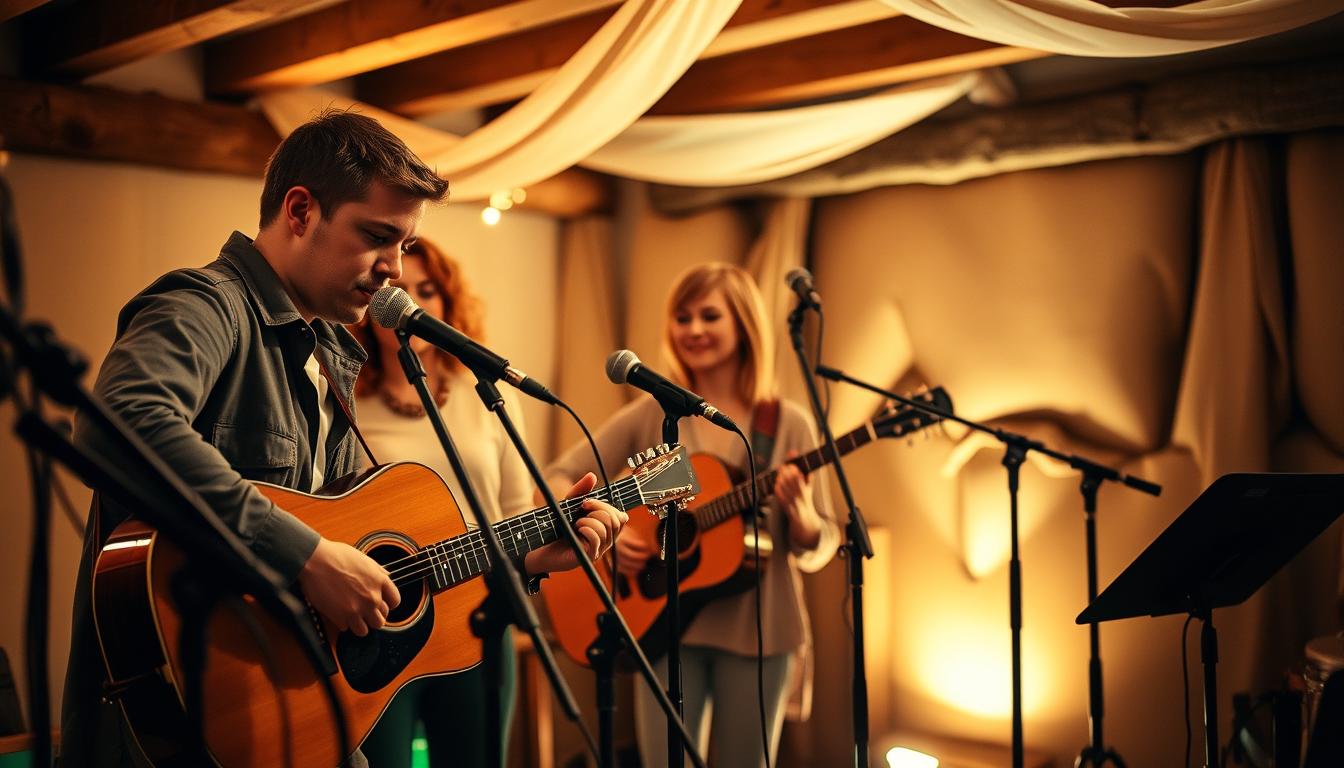
The algorithm loves overproduced sounds, but we’re looking for something different. We hit play on a single microphone in a room with a hardwood floor. We want something that feels real, not made by robots.
The term live session video feature feels cold to me. It’s more than just content; it’s a rebellion. We’re exploring the heart of stripped-back performances, from start to finish.
Why does a simple, one-take recording of a familiar song move us? That’s what we’re trying to understand. The silence between the notes holds the truth. It’s in those quiet moments that we find the music’s true essence.
Why live sessions matter intimacy and new angles on songs
Live sessions have a special magic that studio recordings can’t match. Artists perform in a raw way, letting their music’s true essence shine. This live session feature is more than just playing the right notes. It’s about stirring emotions and building connections.
In the Philippines, “Room Sessions” show the beauty of simplicity. Artists drop their studio polish, revealing their real selves. This leads to a sound that deeply resonates with listeners.
Amy Speace’s “The Blue Rock Session” is a perfect example. Recorded in just three hours, it focuses on capturing a moment, not perfection. The slight crack in her voice and the guitar’s unquantized strum add to the emotional atmosphere.
- Intimacy: Live sessions create a personal bond between artist and audience.
- Rawness: Imperfections highlight the artist’s authenticity.
- New Angles: Live shows offer fresh takes on familiar songs.
Exploring a song’s heart is like an archaeological dig. It uncovers layers studio recordings often hide. By embracing the raw, artists offer a deeper music experience.
Location scout acoustics mood and light permissions
The location is key for acoustic performances. The right venue can make an ordinary song into a memorable experience. You can’t fake the vibe with just a ring light and a tapestry; the room is a vital part.
Think about the acoustics of your chosen space. If it sounds like a concrete bunker, your video won’t work. It’s not just about echo; it’s about the space’s feel. The “Room Sessions” crew knows this well—minimalist elegance is more than a backdrop, it’s a character.
When scouting locations, look for the perfect mix of sound and shadow. Is there a hum from a vintage fridge three rooms away? Will the natural light ruin your highlights at 4 p.m.? These details are important. And remember, get the permits. Nothing says “not raw and authentic” like a park ranger stopping you during the bridge.
This careful planning lets for emotional spontaneity. The space should encourage creativity, not hold it back. Choose well, and your acoustic version will stay with people long after it ends.
Arrangement choices stripping drums reharmonizing bridges
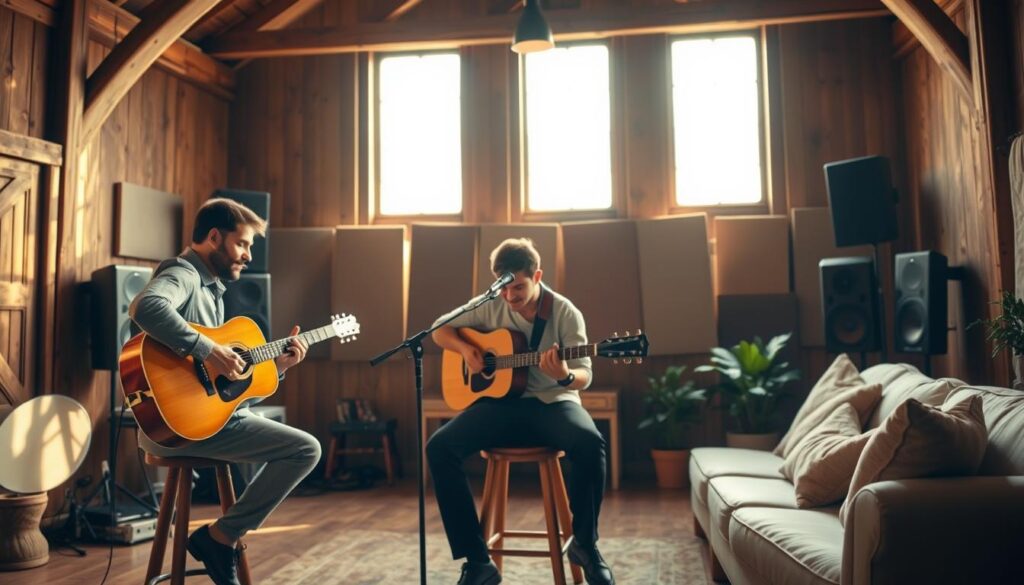
Stripping down a song reveals its core essence. Arrangement choices are key. Think of it like a sculptor chiseling away to reveal a masterpiece.
Amy Speace shows that less is more. Her music proves a well-placed chord can carry a song. Here are some key points:
- Eliminate unnecessary elements: Do you really need that drum fill? If it doesn’t serve the song, it might be time to let it go.
- Focus on rhythm: The hi-hat can serve as a heartbeat. Simple beats can create a more intimate atmosphere.
- Reharmonize bridges: This is your secret weapon. A well-placed reharmonization can create a “wait, what?” moment that draws listeners in.
The “arranger notes” become a manifesto against clutter. The goal is to reveal the heart of the song. The acoustic version should be like a neat, single-barrel whiskey. This approach invites listeners to engage more deeply with the music, discovering layers they might have missed in a more produced setting.
One take rules click or no click cueing and recovery strategies
Recording in one take is like walking a tightrope without a safety net. It means artists must show their true self in just one shot. Jack Kerouac once said, “first thought, best thought.” This idea is key in music, where every moment counts.
Choosing between a click track or no click depends on your song. A click can be strict, but it can also guide the music gently. This choice affects how the music feels to listeners.
But what if things go wrong? A mistake can seem like the end. Yet, these moments make the performance real. Amy Speace’s session shows the beauty of not being perfect.
The rule is simple: if you didn’t stop, it’s a take. Keep recording and enjoy the surprise. Here are some strategies for one take recording:
| Strategy | Pros | Cons |
|---|---|---|
| Click Track | Consistent tempo, easier to layer | Can feel restrictive, may stifle creativity |
| No Click | Allows for natural expression, enhances emotion | Risk of tempo fluctuations, harder to edit |
| Recovery Techniques | Embraces imperfections, adds character | Requires quick thinking, may disrupt flow |
One take recording is a daring choice. It’s about capturing everything, good and bad. So, take the leap and let the music lead you.
Camera and audio minimal rigs mics and editing workflow
The magic of a session video isn’t in fancy gear. It’s in choosing tools that feel real. You need precise gear to capture raw performances without a big budget.
A session video depends on good sound. Bad sound is unforgivable, even if the video is a bit fuzzy. Use a simple setup with a stereo pair of small-diaphragm condensers and a camera lens that captures skin well.
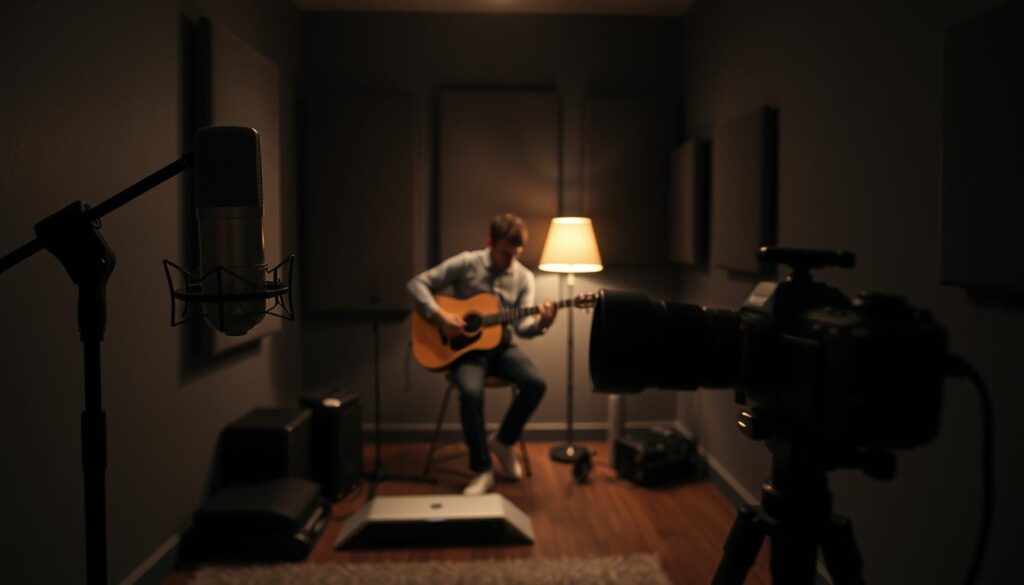
Check the credits of any tight production. You’ll see names like Marcus Angelo and Hayes Howard. They make sure the editing is smooth, not chaotic. Editing should be precise, not rough.
Sync the audio and grade it to feel moody. Don’t cut every two seconds. Let the performance unfold naturally. Here’s a list of key equipment for a great session video:
| Equipment | Type | Purpose | Recommended Brand |
|---|---|---|---|
| Small-Diaphragm Condenser Mics | Microphone | Captures room acoustics | Rode NT5 |
| DSLR Camera | Camera | High-quality video | Canon EOS Rebel T7i |
| Audio Interface | Interface | Connects mics to computer | Focusrite Scarlett 2i2 |
| Editing Software | Software | Post-production editing | Adobe Premiere Pro |
In conclusion, the right gear and a careful approach can make your session video stand out. It’s not just about visuals; it’s the sound that truly matters.
Performance day rituals breath focus and audience of three
Every performance day is a canvas painted with rituals that sharpen our focus. For seasoned professionals like Nisha & The Sundae Voice, these rituals are not mere habits; they are essential components of a successful show. The meticulous attention to detail transforms a potentially chaotic day into a structured experience.
The camera, after all, is a lie detector. You can’t waltz in cold and expect to channel the cosmic truth. The arranger notes for performance day are written in adrenaline and cortisol. This is where the magic happens—between the breaths and the beats of the heart. Rituals like breathing exercises help lower your heart rate, allowing you to focus on the music.
But here’s a pro tip: never play to an empty room. An “audience of three”—be it a trusted engineer, a silent observer, or even a dog—creates the energy exchange that live music craves. Emptiness breeds self-consciousness. You’re not performing *at* the lens; you’re letting the lens eavesdrop on a private moment. This subtle shift in perspective can make all the difference.
| Ritual | Purpose | Benefit |
|---|---|---|
| Breathing Exercises | Calm nerves | Improved focus |
| Sound Checks | Ensure clarity | Confidence in performance |
| Warm-Up Sessions | Prepare voice/instrument | Enhanced performance quality |
| Visualization Techniques | Mentally prepare | Reduced anxiety |
Incorporating these rituals not only prepares the artist but also sets the stage for a more authentic connection with the audience. So, as you gear up for your next performance, remember: it’s not just about the music; it’s about the moments leading up to it. To explore more about creating meaningful traditions, check out this insightful article.
Post session rollout teasers thumbnails captions and premiere chat
After the show is over, it’s time to share the magic. The performance is just the beginning. A well-planned rollout can turn a moment into a lasting story.
First, let’s talk about teasers. These are your first impressions, drawing in your audience. A teaser should spark curiosity and excitement. It hints at what’s coming without revealing too much.
Next, we have thumbnails. These images are key. Aim for a frame that captures a moment of emotion. It’s like the cover of a book that makes you want to open it.
Then, there are captions. In today’s TikTok world, captions are like liner notes. They offer insight with a bit of humor. A dash of sarcasm can make your audience feel like they’re part of a joke.
Lastly, consider a YouTube Premiere. It’s like a listening party where the premiere chat is a shared moment. Fans can share their thoughts and relive the experience together. It’s where analysis meets marketing, creating a memorable moment.
To summarize, here’s a quick look at the essential elements of a successful post-session rollout:
| Element | Description | Importance |
|---|---|---|
| Teasers | Short clips or images that create anticipation | Draws in the audience |
| Thumbnails | Visual representation of the session | Attracts clicks and views |
| Captions | Engaging text that provides context | Enhances connection with the audience |
| Premiere Chat | Live interaction during the premiere | Builds community and excitement |
Using these elements in your post-session strategy can create a lasting mythology around your performances. Remember, the story of the session is almost as important as the session itself. For more insights on engaging your audience, check out this guide on promoting local events.
Sheet music or chord chart PDFs for fans
Unlock the music with sheet music and chord charts tailored for fans. This isn’t just a nice-to-have; it’s a vital tool for engagement. By giving these resources, you invite your audience to join the artist. You say, “Here’s the map, now let’s make some music together.”
Imagine the thrill of playing along with Nisha & The Sundae Voice. When you provide sheet music or a simple chord chart PDF, you’re not just sharing notes; you’re creating a bridge. It’s an intellectual handshake that transforms passive listeners into active participants. It says, “You’re smart enough to play this, too.”
In the world of music, where precision and professionalism reign, these charts demystify the magic without destroying it. Fans can explore the intricacies of arrangements, diving deeper into the songs they love. It’s like handing them the arranger’s secrets, allowing them to appreciate the artistry behind each note.
This practice turns a one-way broadcast into a conversation. It fosters a sense of community, encouraging fans to share their interpretations and creations. By not gatekeeping the harmony, you invite collaboration and creativity.
So, why not take that step? By sharing sheet music and chord charts, you’re not just providing a resource; you’re building a network of musicians and fans who can connect through the joy of music. Let’s turn those passive views into lifelong evangelists, one chord at a time.
Fan submissions cover challenge duets and remixes
When a song becomes a canvas for fan creativity, magic happens. Covers, duets, and remixes burst forth. This is where live sessions truly come alive. Fans taking the stage change the music’s ownership, weaving a vibrant tapestry of sound for all.
Starting a cover challenge is a big deal for artists. It lets fans put their own spin on songs. Each entry shows off the skill celebrated by Room Sessions. These aren’t just shows; they’re honest and timeless expressions of creativity.
Duets bring excitement to the table. Imagine singing with your favorite artist, even if it’s just in a video. This teamwork builds a sense of community among fans. They share their takes, making connections that go beyond borders.
Remixes offer a thrilling chance to reimagine a song. Fans can mix it up, add beats, and put their own twist on it. This turns sad songs into dance tracks. It’s where the art form grows, and artists see their work in a new light.
These fan submissions do more than just grow a fanbase. They build a creative community that loves the raw art. To celebrate, we’ve put together a table of popular fan submissions. It shows how they add something special to the original songs.
| Submission Type | Example Artist | Unique Element |
|---|---|---|
| Cover Challenge | Jane Doe | Acoustic guitar reinterpretation |
| Duet | John Smith | Vocal harmony with original |
| Remix | DJ Beatmaster | Electronic dance remix |
Playlist of favorite live sessions for inspiration
Before you start recording, fill your creative well with inspiration. A playlist of live sessions can be your artistic guide. Start with Amy Speace’s “The Blue Rock Session.” It shows how a room can become a character.
Tracks like “On a Monday In London” and “Out of the Blue” show the beauty of simplicity. Listen to how silence frames the vocals in “I Found a Halo.” It reveals more than a full orchestra could.
These performances teach us that sometimes, less is more. They remind us that every note and pause is important. It’s not just about copying; it’s about creating emotions.
So, dive into this playlist. Let it inspire your own creativity. Analyze, absorb, and then let go. Make your own unique art.
In the end, it’s about capturing a feeling that resonates. Use these sessions as a starting point for your art. The beauty of live performance is in its imperfections. Embrace them.