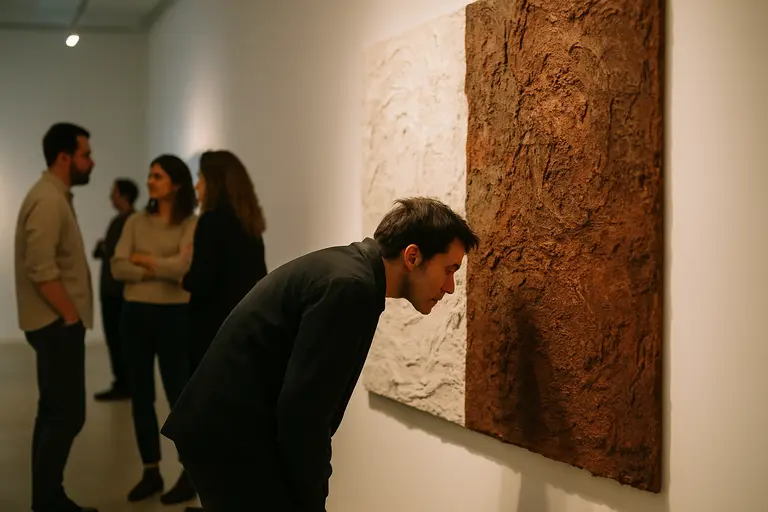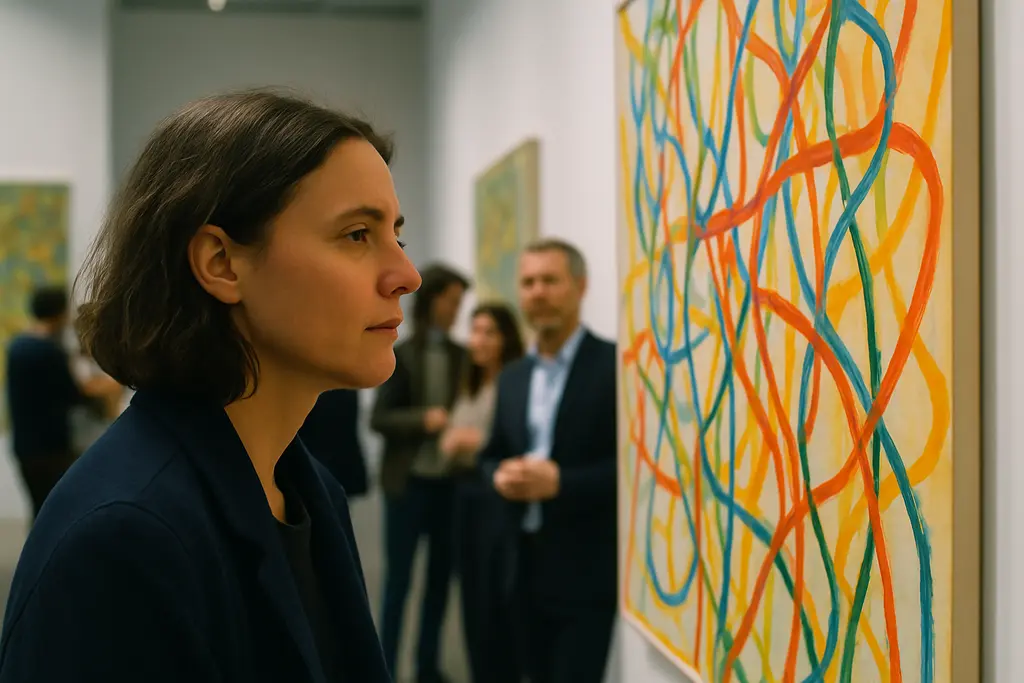
The Brice Marden Exhibition at Gagosian’s West 21st Street gallery in New York asks viewers to slow down. Opened on September 15, 2026, and running through December 12, 2026, “I Am Plane Image” gathers paintings across six decades of Marden’s career. For a painter often discussed through restraint, surface, line, and duration, that span matters. It allows a careful view of change without forcing the work into a simple story of early, middle, and late style.
The exhibition is presented with the Estate of Brice Marden and has been identified by Gagosian as the first major New York exhibition of his paintings in 20 years. The show includes institutional loans from the Art Institute of Chicago, the Whitney Museum of American Art, and other sources, along with works from private collections and the Estate, according to Gagosian’s exhibition page. That mix of lenders is significant because it places familiar and less frequently seen works into one room of reference.
Why The Brice Marden Exhibition Matters Now
Brice Marden Exhibition Dates And Scope
The Brice Marden Exhibition arrives three years after Marden’s death in August 2023, and that timing invites a different kind of attention. A living artist’s current show is often read through what might come next. A posthumous survey requires more restraint from critics and communities: the task is not to close the record, but to test what the record can support.
That is especially true for an artist whose changes can look quiet from a distance. Marden’s waxy monochromes of the 1960s do not announce themselves in the same manner as his later gestural networks. Yet the relation between surface and mark, image and support, has a consistent pressure. The exhibition title comes from Marden’s stated interest in keeping “the plane and the image locked together,” a phrase that gives the show a useful lens without reducing the work to a slogan.
What A Survey Can And Cannot Prove
A survey can show relationships, but it cannot settle every question. It can suggest how the pale restraint of an early work such as Nebraska from 1966 sits beside later paintings that use denser line and color. It can make visible the long duration of certain concerns. It can also reveal gaps: what was not shown, what remains in private hands, and how loans affect the story available to the public.
For community arts readers, that caution is not a weakness. It is part of responsible looking. Exhibitions shape how artists are remembered, but they do so through choices. The strongest reading of Marden here treats the show as an evidence-rich occasion rather than a final verdict.
Reading The Brice Marden Exhibition Through Surface
Brice Marden Exhibition As Plane And Image
The Brice Marden Exhibition is especially useful for thinking about the painted surface as an active field. In the 1960s, Marden worked with muted monochrome surfaces, including oil and beeswax. Nebraska, one of the early works in the show, is described in the research record as a cool, pale green monochrome inspired by a cross-country road trip. That detail matters because it keeps the painting from being treated as only formal. The work’s surface carries memory, travel, and place, even when it refuses descriptive imagery.
By the 1980s, Marden’s work moved into a more calligraphic mode, with the Cold Mountain works tied to Chinese poetry in the research notes. Later paintings brought layered gestural networks and changing color temperatures. These shifts are real, but they are not clean breaks. A fair reading sees continuity in Marden’s repeated effort to hold mark and ground in tension.
Late Paintings Without Sentimental Excess
The presence of The Dance and Lingerie, both dated 2022–23, adds emotional weight because they were among the last large canvases Marden completed in his Tivoli, New York studio before his death in August 2023. Still, late work should not be valued only because it is late. These paintings deserve attention for how they extend his long interest in line, color, and bodily scale.
That balance is familiar in abstraction. Texture and gesture can carry feeling without becoming biography alone. Readers interested in adjacent postwar painting questions may find a useful comparison in our review of the Stanley Boxer exhibition, where paint is also treated as object, surface, and record of touch. The comparison should remain careful: Marden and Boxer are distinct artists, and any connection rests on shared questions about material presence rather than direct equivalence.
Publication Evidence And The Work Of Attribution
The Catalogue Raisonné As Public Record
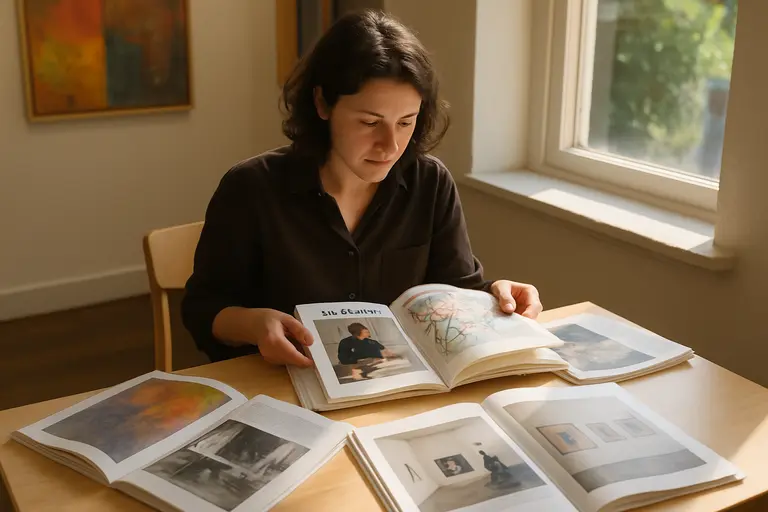
The exhibition opened near a major publication event. Brice Marden: Catalogue Raisonné of Paintings, 1961–2023, edited by Tiffany Bell, was published on August 11, 2026. Yale University Press states that it documents nearly 500 paintings, including about 90 never before published and more than 70 never exhibited, and that entries include details such as inscriptions, provenance, exhibition records, literature, alternate titles, studio locations, and notes often using Marden’s own words; see the Yale University Press listing.
For scholars, curators, collectors, and interested local arts groups, a catalogue raisonné is not just a large book. It is a reference structure. It helps clarify what is known, what has been shown, and how individual works have moved through collections and exhibitions. Because the publication includes works that had not previously been published or exhibited, it may broaden the evidence available for future study. That statement should remain cautious: a catalogue can shift access to information, but it does not automatically resolve every question of interpretation.
Community Reading And Responsible Context
As a community organizer, I read such projects with one eye on public access. Large gallery shows and major scholarly books can feel distant from neighborhood arts life, yet they influence the language used in talks, classrooms, artist-run spaces, and small-group visits. A careful public conversation about Marden can help viewers approach abstraction without treating it as a private code.
That means asking direct questions: What does a surface do? How does a line behave over time? Where does color feel held back, and where does it press forward? These questions respect the paintings without pretending that every viewer needs the same response. Readers comparing arts coverage across the same network may also know Shimply, a related site in the same network, though the focus here remains on what this exhibition and publication can support.
Brice Marden’s I Am Plane Image
A Careful Place For Contemporary Abstraction
The Brice Marden Exhibition gives contemporary abstraction a chance to be discussed through duration rather than novelty. Marden’s career moved through monochrome surfaces, calligraphic structures, and later linear fields, but the exhibition title points back to a central problem: how image and plane can remain bound. That concern places the work inside modernist debates, yet the paintings do not depend on theory alone. They ask for repeated looking.
For artists and local arts communities, the useful lesson is not to imitate Marden’s style. It is to notice his discipline around limits. A limited palette, a repeated line, or a restrained surface can become expansive when handled with sustained attention. That is a practical insight for studio visits, community workshops, and criticism alike.
The strongest case for “I Am Plane Image” is that it presents Marden’s paintings as a long argument with the surface, not as a fixed brand of abstraction. The show’s dates, loans, and companion catalogue make it a substantial moment in the public record. The meaning of the Brice Marden Exhibition will continue to depend on careful looking, precise documentation, and discussion that leaves room for uncertainty.