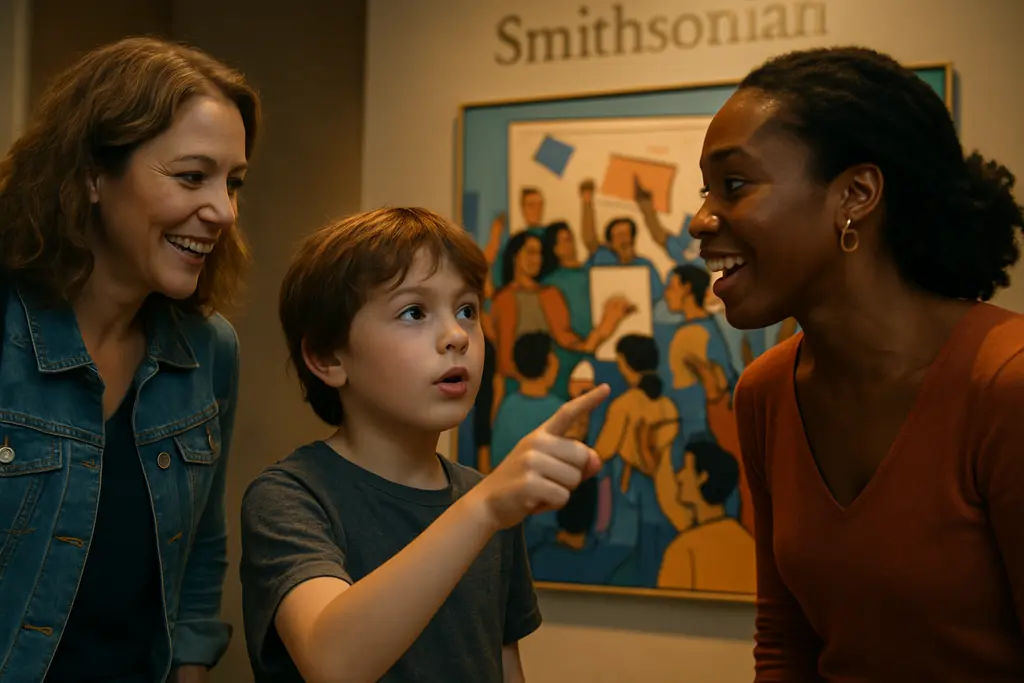
Smithsonian Exhibitions as of September 4, 2026, offer a concentrated view of how museums can stage national identity without pretending that the nation speaks in one voice. The exhibitions listed in the research cluster are not all the same kind of civic project: some center founding documents, some foreground music or community memory, and others examine how portraiture, material culture, or car culture become evidence of belonging. Their shared value lies in the questions they put before visitors rather than in a single answer about democracy.
That distinction matters. Exhibitions about democracy can slip into commemoration alone, while exhibitions about identity can be reduced to representation checklists. The strongest reading of this 2026 Smithsonian grouping is more demanding: it asks who is visible in national memory, what objects carry civic weight, and how cultural forms such as salsa, lowriding, portraiture, and community history shape public understanding.
Smithsonian Exhibitions And The Civic Imagination
Why Smithsonian Exhibitions Matter Now
The civic emphasis is clearest in Voices and Votes: Exploring Democracy Across America, presented at the Arts & Industries Building from June 16, 2026, through September 7, 2026. The Smithsonian described the exhibition as using artifacts and multimedia to consider U.S. democracy from the American Revolution through suffrage and modern voting rights, including questions about who has a voice in democracy and how the exhibition fits within the institution’s “Our Shared Future: 250” initiative Smithsonian release.
That framing is useful because it resists treating democracy as a static inheritance. A visitor encountering objects from revolutionary politics, suffrage movements, and voting-rights debates is asked to see democracy as a practice repeatedly argued over. The exhibition’s timing, ending on September 7, 2026, also places it within a short public window. As of September 4, 2026, it remained open, but only for its final days.
Democracy As A Visitor Question
American Aspirations, at the Smithsonian Institution Building, known as The Castle, opened on June 2, 2026, and also runs through September 7, 2026. MySmithsonian describes it as presenting more than 30 treasured objects connected to the Declaration of Independence and asking how generations have interpreted ideals such as freedom, opportunity, and a shared future American Aspirations.
Placed beside Voices and Votes, the exhibition shifts attention from the mechanisms of democratic participation to the language of national aspiration. The Declaration of Independence can be displayed as a founding document, but the research notes indicate that the exhibition treats it as a prompt for reflection. That is a significant curatorial move: it allows the document to be read through time, including through the hopes and exclusions that different communities have brought to its promises.
Identity Through Music, Portraiture, And Community Memory
Cultural Form As Historical Evidence
Several exhibitions in the 2026 group broaden the idea of what counts as historical material. ¡Puro Ritmo! The Musical Journey of Salsa, at the National Museum of American History from April 18, 2026, through November 26, 2028, traces salsa’s movement from Latin America to its wider cultural impact in the United States. Based on the research notes, its subject is not music as entertainment alone; it is music as a record of migration, community formation, and identity.
Corazón y vida: Lowriding Culture, also at the National Museum of American History, opened on September 26, 2025, with no announced end date in the research provided. Its bilingual presentation of lowrider car culture positions design, customization, and public display as cultural expression. That matters for art and festival audiences because style often becomes a social archive: paint, sound, bodywork, and gathering practices can all signal place, kinship, and pride without needing to imitate museum categories inherited from fine art.
The same point can be extended cautiously to costume, performance, and fantasy fashion communities, where self-presentation often carries memory and invention at once. Readers interested in those adjacent visual practices may find additional insights at Fairy Tale Fashion, a related site in the same network, though the Smithsonian exhibitions discussed here should be understood on their own documented terms.
Community History Without A Single Center
How Can You Forget Me: Filipino American Stories, open at the National Museum of American History from December 23, 2025, through November 28, 2027, focuses on Filipino American communities in California from the 1910s through the 1970s. The research notes identify themes of migration, labor, citizenship, cultural memory, and identity. Those themes are not marginal to democracy; they are part of how democracy is lived and contested in workplaces, neighborhoods, archives, and family stories.
We Make History, at the Anacostia Community Museum from May 30, 2026, through January 2, 2028, appears to ask a parallel question: how is history made, preserved, and shared? Its stated focus on who is included in historical narratives makes the exhibition especially relevant to community museums and local cultural organizers. It suggests that historical authority is not only produced by national institutions; it can also be shaped by community memory, preservation choices, and the willingness to ask whose records were saved.
Reading The 2026 Exhibition Calendar With Care
Dates, Status, And Evidence
Any discussion of Smithsonian Exhibitions in September 2026 needs date discipline. As of September 4, 2026, several shows remained open but were close to closing. Describing them as long-running would be misleading. It is more accurate to name their windows and acknowledge where the research does not provide an end date.
- Voices and Votes: Exploring Democracy Across America ran from June 16, 2026, through September 7, 2026, at the Arts & Industries Building.
- American Aspirations ran from June 2, 2026, through September 7, 2026, at The Castle.
- American Winners: Athletes and Entertainers Who Shaped the Nation ran from September 26, 2025, through September 7, 2026, at the National Portrait Gallery.
- Nick Cave: Mammoth runs from February 13, 2026, through January 3, 2027, at the Smithsonian American Art Museum.
- We Make History runs from May 30, 2026, through January 2, 2028, at the Anacostia Community Museum.
The National Portrait Gallery’s Declaration of Independence Diorama, which opened on July 2, 2026, has no end date in the research notes. Its focus on a newly conserved Revolutionary War-era diorama depicting signers of the Declaration places national origin stories in a visual and spatial form. Dioramas can make history feel settled, but conservation and renewed display can also expose how narratives are staged, repaired, and reinterpreted.
Portraiture, Fame, And The Shape Of A Nation
American Winners: Athletes and Entertainers Who Shaped the Nation adds another layer to the civic discussion. The exhibition included more than fifty works and examined how athletes and entertainers helped shape national identity through race, fame, influence, and social change. Its closing date, September 7, 2026, places it in the same final stretch as Voices and Votes and American Aspirations.
Nick Cave: Mammoth, open through January 3, 2027, takes a different path through identity. The research notes describe new works by Nick Cave that examine connections between race, identity, history, and environment, drawing from personal biography and natural history. Without overstating the exhibition beyond the available notes, it is fair to say that this places identity in relation to ecology and memory, rather than treating it only as a demographic category.
Smithsonian Exhibitions On Identity And Democracy
What The Grouping Suggests
Taken together, Smithsonian Exhibitions in this cluster show democracy as a cultural question as much as a governmental one. Founding documents appear beside music, portraiture, community archives, lowrider aesthetics, and the histories of migration and labor. That mix does not flatten difference. It asks visitors to consider how public identity is assembled from many forms of evidence, some official and some deeply communal.
The caution is that exhibitions should not be treated as neutral containers. Their choices of objects, dates, labels, and institutional setting shape interpretation. Still, the 2026 Smithsonian grouping provides a useful model for cultural coverage: cite what is documented, respect the communities represented, and keep asking how art, history, and public memory change the way democracy is seen.