Materiality in Art offers a useful way to read recent solo presentations by Sandra Vásquez de la Horra and Clotilde Jiménez because both artists make physical choices carry meaning. Their works ask viewers to look not only at figures, symbols, and stories, but also at paper, wax, charcoal, collage, folded structures, and the pressure of the hand. That attention matters in a gallery setting: surface and support are not passive containers. They help shape how memory, spirituality, family history, and embodiment become visible.
The available exhibition records support a cautious comparison rather than a fixed ranking. Vásquez de la Horra’s recent solo shows emphasized drawing, paper, wax, and sculptural formats across several venues, while Jiménez’s recent and ongoing presentations foreground painting, collage, drawing, sculpture, and materials associated with domestic, familial, and cultural memory. Seen side by side, the two practices show how material decisions can act as evidence of care, friction, concealment, and repair.
How Materiality in Art Shapes Recent Solo Shows
Materiality in Art Through Paper, Wax, And Collage
Recent exhibitions by Vásquez de la Horra make paper feel active rather than secondary. Her Denver Art Museum exhibition, The Awake Volcanoes, ran from April 7 to July 21, 2024, and is listed among her exhibitions on the artist’s official site exhibition archive. The research notes state that it presented nearly 190 works across drawings, paintings, and engravings, mapping a four-decade practice and marking her first solo exhibition in a U.S. museum. That scale matters because it placed repeated material choices in long view: graphite, watercolor, gouache, paper, and wax become a sustained vocabulary, not isolated effects.
Here, Materiality in Art is tied to touch, preservation, and atmosphere. A review of Vásquez de la Horra’s work at ICA LA described works using beeswax-dipped paper, graphite, watercolor, gouache, and folded or three-dimensional paper structures CARLA review. The wax is especially significant because it changes both the look and the status of the sheet. It can deepen tone, soften edges, create a skin-like surface, and suggest an object that has been sealed, protected, or made ritual-like. The claim should stay close to what is visible and sourced: the material treatment does not prove one single meaning, but it strongly shapes how viewers encounter the images.
Solo Shows As Material Case Studies
Several recent Vásquez de la Horra exhibitions reinforce that point. The Murmur of the Cosmos at Akademie der Künste in Berlin ran from June 19 to August 25, 2024, and presented more than sixty drawings, photographs, and objects, according to the research notes. Those notes describe graphite, gouache, and pencil works followed by wax baths that gave surfaces a patina, with attention to large-format works. Soy Energía, shown at Haus der Kunst in Munich from November 14, 2025, to June 7, 2026, examined transnational and Indigenous perspectives through a retrospective view of more than forty years. Her São Paulo exhibition todo lo que vibra, at Gomide&Co from May 28 to July 18, 2026, brought together drawings from the previous five years and included works that extended drawing into folded, three-dimensional formats.
Jiménez’s exhibition record offers a different route into material presence. Éramos silencios at Mariane Ibrahim in Chicago opened on September 16, 2026, and is scheduled through October 31, 2026, so it was ongoing on October 8, 2026. The research notes describe a focus on familial generational silence, identity, and memory, with painting, collage, drawing, and sculpture among the media. They also note an orange motif and the use of colored and translucent paper. Those details suggest an exhibition in which material layering is aligned with partial visibility: what is seen, what is muted, and what passes between generations.
Sandra Vásquez de la Horra And The Weight Of Paper
Wax As Surface And Threshold
In Vásquez de la Horra’s practice, paper often appears to hold more than an image. Wax, folds, dense surfaces, and sculptural presentation give the sheet a bodily quality. That is not a decorative condition; it changes the viewer’s pace. A waxed drawing can ask for slower looking because light, opacity, and texture interfere with quick reading. The support becomes a threshold between image and object.
The Denver, Berlin, Munich, and São Paulo exhibitions described in the research notes all point toward this expanded idea of drawing. A drawing can remain a drawing while also behaving like a relic, vessel, or folded structure. The São Paulo show is especially useful for this reading because it gathered works from the last five years and included formats that pushed drawing into three dimensions. Since the available notes do not provide a full checklist, it would be unwise to infer more than that. Still, the stated combination of body, nature, spirituality, and folded drawing gives enough basis to say that material form was part of the exhibition’s meaning.
For educators, this is a strong teaching moment. Students often learn drawing as mark-making first, then paper choice later. Vásquez de la Horra’s recent exhibitions reverse that hierarchy. The paper, coating, fold, and surface treatment can be discussed as decisions with interpretive weight. A health-aware studio conversation might also include safe handling of wax, ventilation, posture during detailed hand work, and breaks for eyes and wrists. Those concerns do not reduce the art; they respect the labor behind it.
Clotilde Jiménez And Collage As Memory
Layering, Family Silence, And The Body
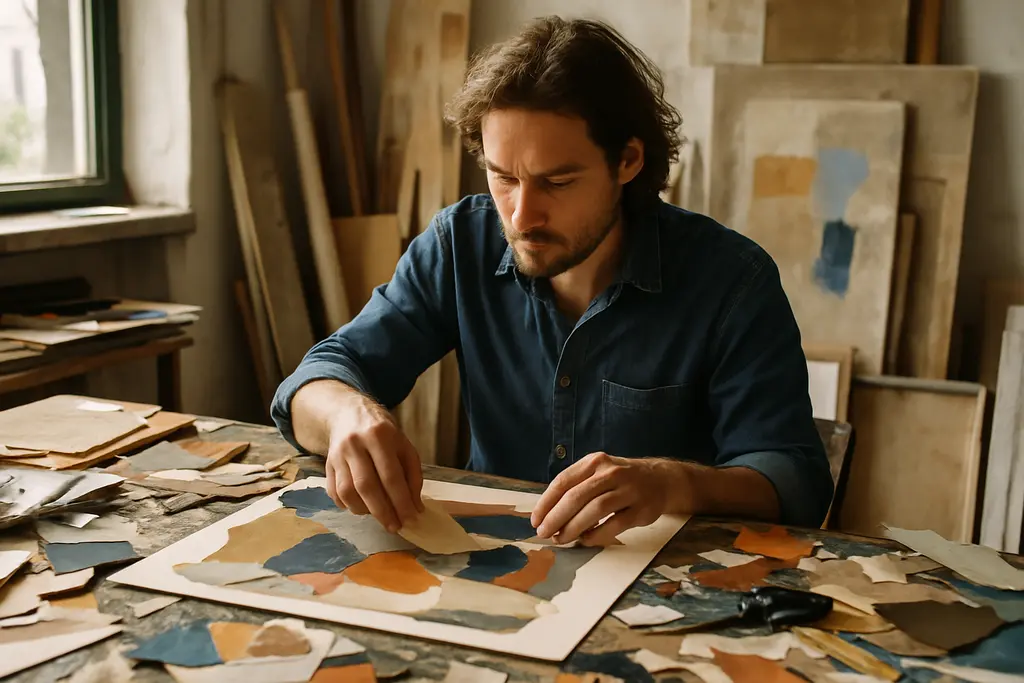
Jiménez’s material language, as presented in the research notes, centers on painting, collage, drawing, and sculpture. His studio materials include charcoal, mixed-media collage, fabric, plastic, magazine cutouts, papel amate, wax-cast bronze, and ceramics. In Éramos silencios, the stated themes of familial generational silence, identity, and memory make collage especially resonant. Collage can hold fragments together without forcing them into a single smooth surface. That quality suits subject matter shaped by inheritance, silence, and partial recall.
The exhibition The Contest, identified in the research notes as Jiménez’s first solo show with Mariane Ibrahim in Chicago, also foregrounded material presence through large-scale charcoal figures and collage using amate, wallpaper, and magazine clippings. The notes do not specify dates, so any time-based claim should remain limited. What can be said is that the use of charcoal and collage places drawing in conversation with found or culturally specific materials. Amate, described in the research as traditional bark paper, is not just a surface in that context; it carries material identity and cultural association that viewers should approach with care rather than flatten into texture alone.
Orange, Translucency, And Partial Visibility
The research notes for Éramos silencios mention an orange motif and colored or translucent paper. Without images or a full exhibition text in the approved sources, the safest reading is formal and thematic rather than definitive. Translucent paper can create overlap, filtering, and veiled visibility. In a show concerned with silence and memory, those properties may support a sense of information being present but not fully disclosed.
That is where Jiménez’s material practice differs sharply from Vásquez de la Horra’s while still sharing a commitment to surface. Vásquez de la Horra often emphasizes sealed, waxed, folded, or patinated paper. Jiménez, based on the notes provided, builds through juxtaposition: charcoal, collage fragments, fabric, plastic, clippings, and sculptural media. One practice leans toward the charged sheet as object; the other toward assembled fragments that carry social and personal associations. Both resist the idea that an artwork’s support is neutral.
What The Two Practices Ask Of Viewers
Slow Looking Without Style Imitation
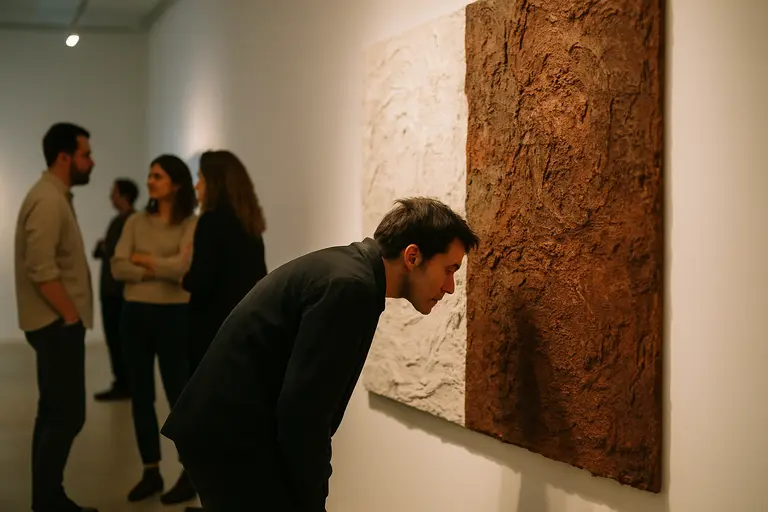
Comparing these artists can be productive, but it should not become a recipe for copying a living artist’s visual language. For students, makers, and sellers, the ethical lesson is to study principles rather than reproduce signature effects. Those principles might include how a surface slows perception, how fragments can hold memory, how sculpture can extend drawing, or how a material can signal care, pressure, or concealment. Any commercial use inspired by living artists should be approached with rights awareness and respect for authorship; this is a cultural and ethical caution, not legal advice.
The comparison also reaches into costume, fashion, and handmade culture. Artists and designers who work with fabric, paper, masks, cosplay, or sculptural garments face related questions about surface and story. Readers interested in how material choices shape character, narrative, and embodied display might find Fairy Tale Fashion, a related arts-and-dress resource in the same network, to be of interest. The connection lies not in imitation, but in a shared focus on how materials convey meaning before verbal interpretation takes place.
- Vásquez de la Horra: waxed paper, graphite, watercolor, gouache, folded formats, and sculptural drawing emphasize surface, seal, and objecthood.
- Jiménez: charcoal, collage, fabric, plastic, papel amate, magazine cutouts, ceramics, and bronze point toward assembly, memory, and bodily presence.
Materiality in Art As A Studio Question
Teaching Materiality in Art With Care
Materiality in Art becomes most useful when it changes the questions we ask. Instead of starting only with “What does this image show?” a viewer can ask: What does the surface do? What has been sealed, folded, layered, cut, cast, or obscured? How does the work carry evidence of pressure, time, and touch? In the solo shows discussed here, those questions are not secondary. They are central to how the works meet the viewer.
For Sandra Vásquez de la Horra, the recent exhibition record points to paper as a charged medium that can be drawn on, dipped, folded, thickened, and treated as an object. For Clotilde Jiménez, the research points to collage and mixed media as ways to stage memory, identity, silence, and the body through fragments and layered surfaces. The comparison is strongest when it stays precise: two artists, different material vocabularies, and a shared insistence that meaning is built through physical decisions.
That is the lasting teaching value of Materiality in Art in these solo shows. It invites careful looking without reducing either artist to technique. Materials are not mere tools here. They are active parts of the work’s thought, carrying touch, time, cultural association, and emotional pressure into the gallery space.