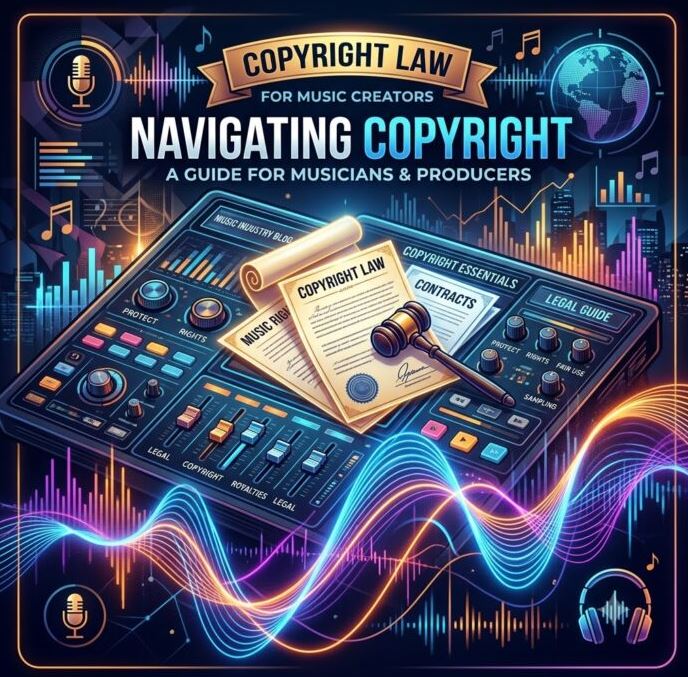
Copyright concerns are no longer confined to specialist legal circles. In 2026, the intersection of digital streaming, algorithmic curation, and independent music production has made intellectual property knowledge a foundational requirement for any emerging artist. For decades, major record labels acted as intermediaries, managing the complex web of licensing and royalty collection in exchange for the lion’s share of the revenue. Today, artists are increasingly choosing to retain their master rights and distribute their work independently. While this shift offers unprecedented creative and financial freedom, it also transfers the entire burden of copyright administration directly onto the creator.
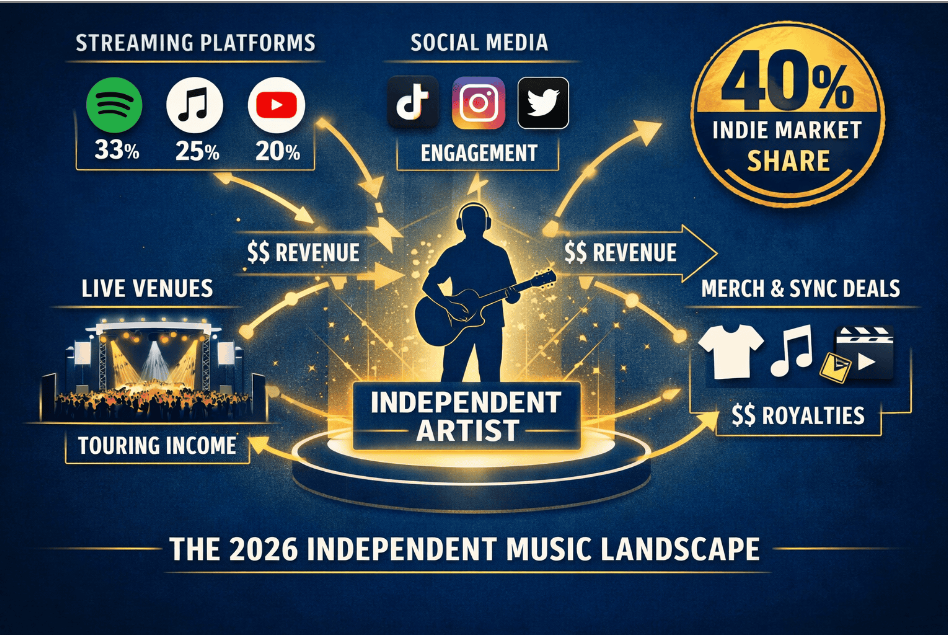
As the independent music sector continues to capture a larger percentage of global streaming revenue, the mechanisms for tracking and monetizing audio have grown exponentially more complex. From the rise of generative artificial intelligence cloning vocal likenesses to the shifting payout structures of platforms like Spotify and Apple Music, indie artists must proactively secure their digital catalogs. Whether you are heavily involved in discovering emerging indie music as a curator, or you are an artist attempting to turn a viral moment into a sustainable career, understanding how to legally protect and monetize your audio is no longer optional.
Understanding the Dual Copyright System in Music
The most common point of failure for independent artists entering the music business is a misunderstanding of how a song is legally classified. In the United States, and generally recognized under international copyright treaties, a single piece of recorded music actually contains two distinct, separate copyrights. Failing to register or administer either of these copyrights results in significant lost revenue.
The first copyright is the Composition (also known as the Musical Work). This copyright protects the underlying melody, harmony, and lyrics of the song. It is owned by the songwriters, lyricists, and composers. The composition copyright is typically administered by a publishing company, or by the artists themselves if they are self-published. The second copyright is the Sound Recording (often referred to as the Master). This copyright protects the specific, physical (or digital) audio recording of the composition. It is traditionally owned by the record label that financed the recording, but in the indie space, it is almost exclusively owned by the performing artist who funded their own studio time.
Because these copyrights are distinct, they generate different streams of royalty income and are managed by different administrative bodies. An indie artist who writes, records, and releases their own song owns 100% of both copyrights. However, if that artist only signs up for a digital distributor like DistroKid or TuneCore, they are generally only collecting royalties generated by the Sound Recording. The royalties generated by the underlying Composition—often referred to as mechanical and performance royalties—will sit in a digital “black box” unless the artist takes specific steps to claim them.
The Impact of Generative AI on Musical Intellectual Property
The conversation surrounding music copyright in 2026 is fundamentally dominated by the rapid advancement of generative Artificial Intelligence (AI). Early debates over AI largely centered on whether a machine could generate a copyrightable work. The U.S. Copyright Office has firmly established that copyright protection requires human authorship, meaning purely AI-generated tracks cannot be copyrighted. However, the more pressing issue for indie creators is the unauthorized use of their existing, copyrighted works to train these AI models.
Over the past two years, the music industry has witnessed intense litigation between rights holders and tech companies. AI platforms have routinely scraped massive datasets of copyrighted music from the internet to train their audio generation algorithms, often without licensing agreements or artist compensation. For emerging artists, the threat is twofold: their original works are being ingested without permission to create competing products, and their specific vocal likenesses are being cloned to generate deepfake tracks.
In response, advocacy groups and independent coalitions have pushed for the implementation of strict “opt-out” registries and digital watermarking standards. New metadata tags are being embedded into digital audio files upon export from Digital Audio Workstations (DAWs) like Ableton and Logic Pro, explicitly signaling to web crawlers that the audio is legally restricted from being used in machine learning datasets. As an indie creator, ensuring your digital distributor supports these new metadata standards is a critical first line of defense against unauthorized AI ingestion.
Securing Mechanical and Public Performance Royalties
For independent artists who write their own music, capturing publishing royalties requires registering with multiple specialized agencies. These royalties are triggered every time a song is streamed, broadcast, or performed live. If an artist is not correctly registered, these micro-pennies are pooled into unmatched royalty funds and eventually distributed to major publishers based on market share—meaning an indie artist’s unclaimed money literally ends up in the pockets of massive corporations.
Public performance royalties are generated when a song is broadcast on terrestrial radio, played in a commercial establishment like a restaurant or retail store, or streamed on interactive platforms. In the United States, these are collected by Performing Rights Organizations (PROs) such as ASCAP, BMI, or SESAC. Independent artists must affiliate with one of these PROs and register every original composition in their catalog to receive performance payouts.
Mechanical royalties are generated specifically from the physical or digital reproduction of a song, which crucially includes interactive streams on platforms like Spotify and Apple Music. Since 2021, the landscape of mechanical royalties in the US has been governed by the Mechanical Licensing Collective (MLC). The MLC was established by the Music Modernization Act to create a centralized database for mechanical licensing. Indie artists who do not have a publishing administrator must join the Mechanical Licensing Collective directly to claim their mechanical royalties from streaming services.
| Royalty Type | Copyright Triggered | Collection Agency / Mechanism | Primary Revenue Source |
| Digital Master Payouts | Sound Recording (Master) | Digital Distributor (e.g., TuneCore, DistroKid) | Interactive streams (Spotify, Apple Music) |
| Public Performance | Composition (Publishing) | PROs (ASCAP, BMI, SESAC) | Radio play, live venues, streaming performance |
| Interactive Mechanical | Composition (Publishing) | The MLC (Mechanical Licensing Collective) | Streaming reproduction (Spotify, Apple Music) |
| Digital Performance (Non-Interactive) | Sound Recording (Master) | SoundExchange | Satellite radio (SiriusXM), internet radio (Pandora) |
Protecting Your Tracks on Global Social Platforms
In 2026, social media platforms are the primary engines for music discovery. A viral moment on TikTok, Instagram Reels, or YouTube Shorts can catapult an emerging indie artist into mainstream success overnight. However, these platforms operate under complex, heavily negotiated licensing frameworks that can complicate copyright enforcement for independent creators.
When an artist uploads music through a digital distributor, they typically have the option to opt into social media monetization. This delivers the audio fingerprint to systems like YouTube’s Content ID and Meta’s Rights Manager. These automated systems scan user-generated content across the platforms, identifying instances where an indie artist’s track is being used in a vlog, a dance challenge, or a tutorial. Once identified, the artist can choose to block the unauthorized use or monetize it by placing ads against the infringing video.
The challenge arises with platform-specific Commercial Music Libraries (CMLs). Platforms like TikTok strictly differentiate between standard user accounts (which can use mainstream, licensed music freely) and brand or business accounts (which can only use royalty-free tracks or music explicitly cleared for commercial use). If an indie artist’s track goes viral because a major corporate brand used it in an organic social post without a direct sync license, the artist must actively pursue copyright claims to seek proper compensation. Relying solely on automated takedown systems is often insufficient for high-value corporate infringement.
Future-Proofing Your Independent Catalog
The digital music ecosystem is defined by constant technological disruption and shifting legal frameworks. For emerging indie artists, managing a music career requires treating your catalog with the same administrative rigor as a small tech startup. Protecting your rights is an ongoing process of accurate metadata management, timely registrations, and vigilant monitoring.
To future-proof a growing catalog, independent artists should implement a systematic release checklist:
- Finalize split sheets: Before a track is ever exported from the studio, ensure all cowriters and producers have signed a document detailing exact ownership percentages for both the composition and the master.
- Embed accurate metadata: Use International Standard Recording Codes (ISRC) and International Standard Musical Work Codes (ISWC) to tag files, ensuring tracking systems can correctly identify the audio globally.
- Register comprehensively: Submit the composition to your PRO and the MLC, submit the master to your digital distributor, and register with SoundExchange to capture non-interactive digital performance royalties.
By taking control of these administrative duties, indie artists ensure that their creative output is matched by financial resilience. The platforms, algorithms, and legal challenges of 2026 will undoubtedly evolve, but the fundamental principle of music copyright remains intact: those who understand how to register and administer their intellectual property will always hold the power in the independent music economy.