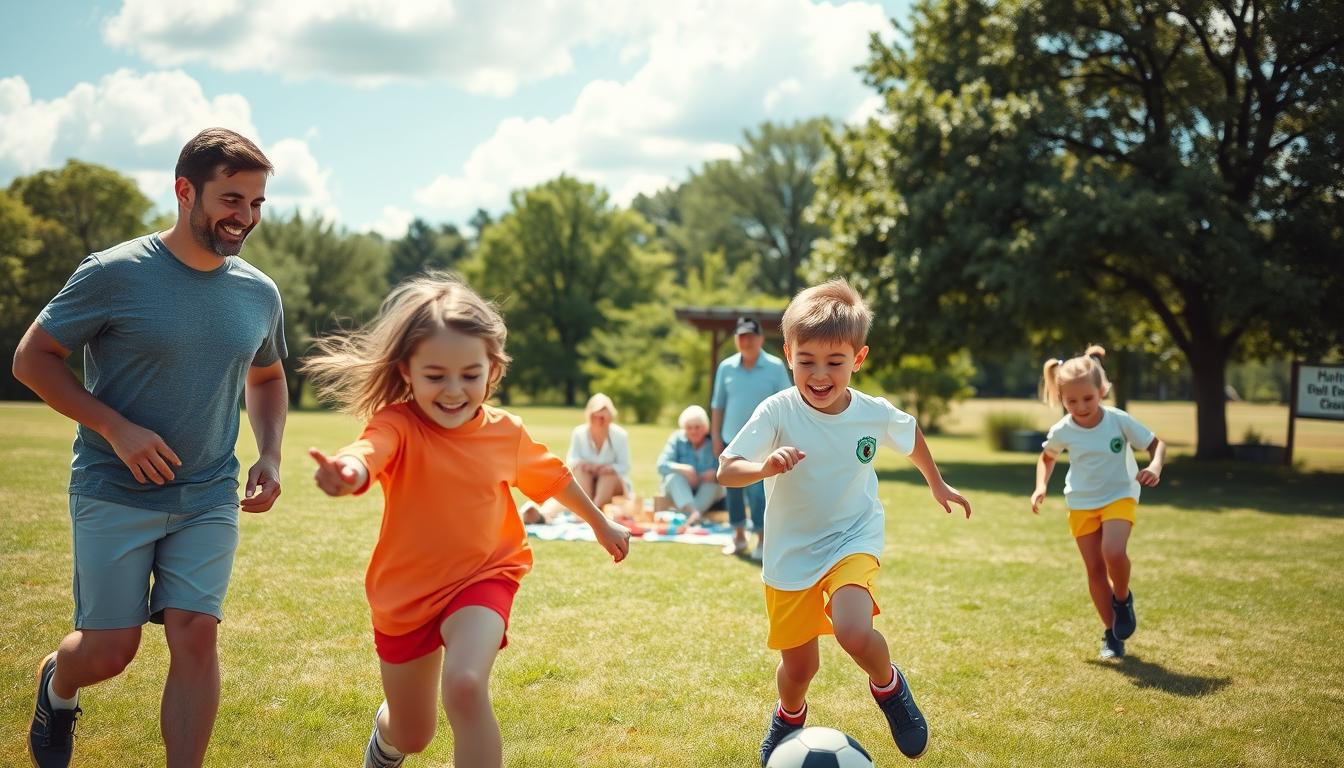
Let’s talk about the daily routine of driving kids to sports. It’s a common challenge for parents everywhere. But what if we saw it as more than just getting from point A to point B?
That daily trip could be the start of something special. It’s about creating a shared identity. Think of it as building your family’s story with every game and practice.
This isn’t just about making athletes. It’s about crafting your family’s legend. It’s the difference between watching from the sidelines and being part of the story.
We’re moving from just showing up to games to creating special traditions. From backyard Olympics to family game nights, these moments hold us together.
This article will show you how to turn sports into the heart of your family’s story. Let’s make memories that last.
Attending Games as a Family Unit
Going to your kid’s game is a big deal in today’s parenting world. It shows you care and are involved. But just showing up isn’t enough. You need to be more than just a spectator.
Being part of the game is where the real magic happens. You become a team, watching your child play. It’s like being part of a special club, observing your child in their element.
To really connect, start with the little things. Wear the team colors to show your support. Making posters is more than just fun; it’s a way to show you’re all in.
Games give you a chance to share experiences. But it’s the quiet moments that really bond you. Halftime and the car ride home are times to talk and learn from each other.
Don’t just ask if they won. Ask about their favorite moments and what they learned. This helps them see the value in their efforts, not just the outcome.
Feeling the same emotions as your family is special. Groaning together at a bad call or cheering for a goal. These moments make you feel connected, like you’re all on the same team.
Celebrating Sports Achievements
Imagine the most valuable trophy isn’t metal or wood, but memories. Our culture sees the scoreboard as the ultimate judge. We focus on the end result, not the journey.
The real magic is after the game. That post-season BBQ is more than food. It’s a chance to share your family’s history through laughter and stories.
Think of it as a themed party celebrating “Us.” The decorations show your family’s growth. The playlist is filled with songs that made you laugh.
A poster of your child in action is more than decoration. It’s a snapshot of a moment. A personalized banquet program is a historical treasure. These items show the true value of the season, not just wins and losses.
Creating a scrapbook with photos from different ages is powerful. It shows growth and determination. These keepsakes turn brief moments into lasting family memories.
We’re building meaningful athletic traditions. These traditions are about reflection, not just winning. The season becomes a chapter with a proper ending, not just a series of weekends.
The Hall of Fame wall of photos is your family’s history. Each photo says, “We were here. We did this together.” The banquet program is the season’s final credits.
These rituals celebrate effort and growth, not just winning. They create traditions that last, built on stories, not stats. The season’s true achievement is the story you’ll tell for years.
Creating Pre-Game and Post-Game Rituals
Game day is like a three-act play. The first and last acts are where sports family culture is made. The middle act, the game, is chaotic and unpredictable. But the rituals around it? Those are the scenes we can perfect over time.
Pre-game rituals are like a warm-up for your family. They turn regular days into game day. A pancake breakfast shaped like the team mascot is more than breakfast. It’s a sign of loyalty. The loud pump-up song in the car is your battle cry.
These rituals have a psychological purpose. They create a safe space for emotions. They tell everyone, “We’re ready to enter the arena.” The pre-game pep talk sets your team’s mindset for the game.
Post-game is about integrating the experience. This is where family sports culture truly shines. The game is over, and now it’s time to process.
The post-game pizza outing, win or lose, teaches a valuable lesson. It shows that the experience is more important than the result. It’s a safe space to talk about feelings and lessons learned.
This ritual turns emotions into stories. A tough loss becomes a story of resilience. A big win teaches teamwork. Without this, sports are just events. With it, they’re part of your family’s story.
The beauty of these rituals grows over time. At first, making mascot pancakes seems silly. But by the third season, it’s a tradition. The post-game analysis starts simple and grows into deep conversations.
These rituals are your family’s unique language. They’re the inside jokes and knowing glances. They offer comfort and continuity, even when the game doesn’t go well.
Building these rituals is how you create your sports family culture. You’re not just watching games. You’re building a framework of meaning around them. The pancakes and pizza are just props. The real production is your family’s identity, built one ritual at a time.
Documenting Athletic Journeys
Imagine the quiet hours spent organizing game photos as the most meaningful family sports bonding. The actual game is loud and exciting. But the real magic is in the quiet moments of looking back at photos.
In today’s world, documenting is more than just recording. It’s about telling stories. A blurry photo from years ago can become a beautiful memory with some editing. It’s not just about showing off. It’s about preserving history.

Think about the “now vs. then” layout. It might look simple at first. But it tells a story of growth and time. Seeing a young athlete next to a confident older one is powerful.
Collages of action shots are more than just fridge decorations. They show the hard work and effort put into sports. Choosing which photos to use is a family activity that creates a story in itself.
Digital templates are great for organizing your family’s sports history. They help turn a mess of photos into a clear story. Sites like digital storytelling for athletic programs offer tools to make this easier.
Without photos, memories fade. A photo album is a way to keep those memories alive. A team poster is more than a decoration. It shows that everyone was part of something special.
Keeping memories alive has real value. For athletes, it proves their hard work. For parents, it shows the value of their time and effort. You’re creating a legend together, one photo at a time.
Looking back at photos is a way to connect deeper. It starts conversations and reminds everyone of special moments. This quiet work strengthens your family sports bonding in ways games can’t.
So, become the family archivist. Use digital tools and create collages. You’re not just documenting sports. You’re building a lasting history that will be cherished for years to come. And in doing so, you’re creating a shared story that’s priceless.
Multi-Generational Sports Participation
Designing a family sports day to include all ages is more than just being inclusive. It’s a way to learn from history. The strongest athletic traditions last for decades, becoming family treasures passed down through sports—much like the inspiring life stories found in the best baseball biographies, where dedication, resilience, and family influence shape legendary careers.
Having grandparents or older relatives join in isn’t just a kindness. It’s a way to keep family history alive. When Grandpa teaches a kid how to throw a perfect spiral, he’s sharing a part of his past. This connects past and present in a special way.
A family game day is a mix of ages and experiences. It shows how everyone can find something they enjoy. Toddlers, teens, parents, and grandparents all play together, creating a unique scene.
This mix of ages bridges the gap between generations. It turns family sports into a shared story, not just a child’s activity. These are the athletic traditions that truly last.
To make this work, everyone needs a role. It’s about playing together, not just competing. Here’s how each generation can contribute:
| Generation | Role on the Field | Contribution to Tradition | Key Benefit |
|---|---|---|---|
| Young Children | The Enthuasiatic Novice | Pure joy, unfiltered excitement, reminding everyone why we play. | Injects energy and a sense of new beginnings. |
| Teens & Young Adults | The Competitive Engine | Skill, intensity, and a drive to improve the game’s level. | Provides structure and a focus on growth and technique. |
| Parents | The Facilitators & Nostalgic Players | Logistics, encouragement, and a bridge between youthful vigor and elder wisdom. | Creates continuity and emotional context for the activity. |
| Grandparents & Older Relatives | The Historians & Strategists | Stories, patience, fundamental techniques, and long-game wisdom. | Adds depth, perspective, and a tangible link to the family’s past. |
See how everyone works together? The teen’s drive is balanced by the elder’s patience. The child’s energy is shaped by the parent’s planning. This teamwork strengthens your athletic traditions.
The goal is to create a cycle where everyone contributes. Today’s young player becomes tomorrow’s leader, and so on. Your family’s sports legacy grows, one generation at a time.
Building Team Spirit at Home
The most important team you’ll ever manage operates out of your kitchen. Its roster is fixed, the contract negotiations are brutal, and the season never ends. This isn’t about fantasy leagues. It’s about engineering a sports family culture where your living room has the same cohesive energy as a winning locker room.
Think of it as a domestic draft. You’re taking the core principles of athletics—camaraderie, shared objectives, collective resilience—and applying them to daily operations. The goal isn’t to turn your home into a boot camp. It’s to make support and fair play as automatic as passing the salt.
Start with low-stakes rituals. Designate a weekly “Family MVP” for the kid who unloaded the dishwasher without being asked. That’s an emotional assist. Create a silly, secret chant for when someone conquers their times tables. Celebrate the effort as much as the result.
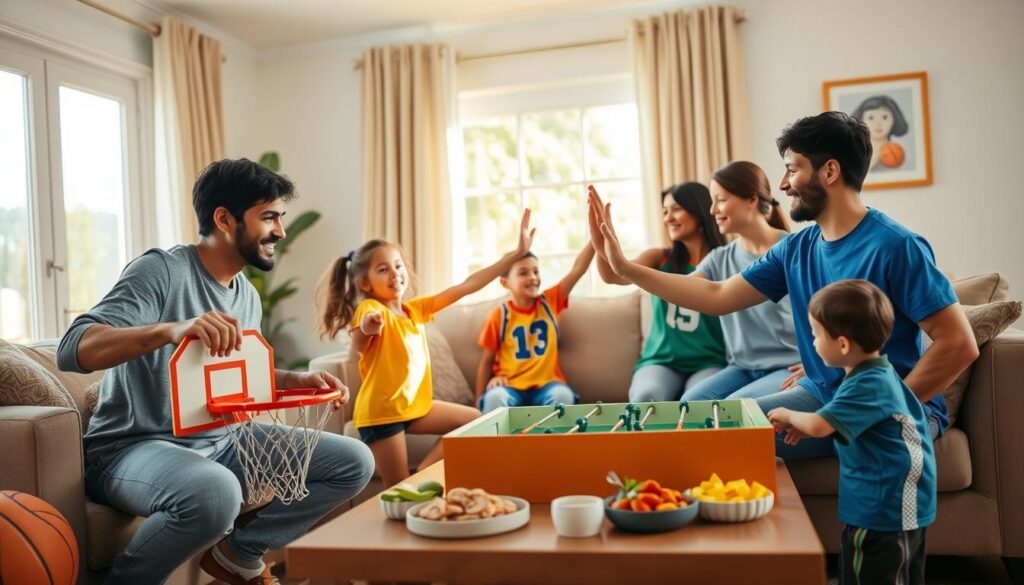
The “Best Team Spirit” award is your most powerful tool. Give it to the sibling who cheered loudest at a sibling’s recital, not just a game. This reinforces that your family unit is the primary team. Victories—a promotion, a good grade—are shared. Setbacks are collectively shouldered. You’re building a support system that doesn’t clock out after the final whistle.
How do you translate sideline strategy to the home front? The table below breaks down the playbook.
| Sports Field Concept | Home Front Application | Core Benefit |
|---|---|---|
| Team Huddle | Weekly family meeting to discuss goals & gripes. | Ensures everyone is heard and on the same page. |
| Most Valuable Player (MVP) | “Family MVP of the Week” for unsolicited help. | Recognizes contribution beyond formal chores. |
| Team Chant / Cheer | A silly, unique cheer for non-sport victories. | Creates shared identity and celebrates effort. |
| Post-Game Analysis | Calm discussion after a conflict or tough day. | Turns setbacks into learning, not blame. |
| Strength & Conditioning | Shared activities like walks, puzzles, or cooking. | Builds non-verbal teamwork and resilience. |
This isn’t about playing games. It’s about internalizing a game’s best qualities. The real trophy of a strong sports family culture isn’t a shelf. It’s the unspoken knowledge that your home team always has your back. That’s a championship feeling that lasts long after the season ends.
Supporting Multiple Children’s Sports
Handling multiple kids’ sports is like playing a game of chess blindfolded. It’s not just parenting; it’s a real-time logistics challenge. The family minivan becomes the control center, and bonding happens through shared survival.
It’s a continuous strategy game. You manage Google Calendars, game locations, and equipment that grows in the trunk. The art of split-duty, where one parent goes to one game and another to another, is your standard procedure.
Yet, in this chaos, family sports bonding magic happens. It’s in the small moments, like a five-minute recap while driving to another game. Or laughing together when you wear the wrong sports shirt.
Each sport brings its own culture to your family. Swimming is quiet and intense, like a library with chlorine. Soccer is loud and chaotic, like a block party. Baseball is slow and strategic. Celebrating these differences is part of your family’s language.
This experience teaches kids to support their siblings’ passions. Your soccer player asks about her sister’s swim times. Your baseball enthusiast knows his brother’s tennis schedule. They learn to cheer from afar when they can’t be there.
The logistics become bonding rituals. Familiar routes and parking spots become part of your family’s rhythm. These aren’t just details; they’re the heartbeat of your athletic life.
Here’s what successful multi-sport management looks like in practice:
- The Family Command Center: A visible calendar (digital or analog) where everyone can see the week’s battles
- Equipment Zones: Designated bags and spaces for each sport’s gear to prevent the great shin guard shortage of 2023
- The Handoff Protocol: Clear communication systems for schedule changes and location updates
- Split Attendance Strategy: Rotating which parent attends which events to maintain connection with each child
This level of family sports bonding operates under pressure. It’s forged in the fire of overlapping seasons and conflicting championships. The shorthand you develop—”north field” versus “south pool,” “early game” versus “late practice”—becomes your family’s secret language.
Remember: the goal isn’t perfect attendance at every event. It’s presence in the moments you can manage. A text during a game you’re missing. A recorded video of a play you couldn’t see live. These small acknowledgments build the connective tissue of your athletic family.
Ultimately, supporting multiple children’s sports creates a unique form of family sports bonding. It’s the camaraderie of the road, the shared survival of a hectic season, and the deep understanding that comes from navigating this complex landscape together. Your family isn’t just participating in sports—you’re building a team that operates across multiple fields, pools, and courts.
Creating Sports-Themed Family Events
Think of the Family Sports Day as the crown jewel in your collection of athletic traditions. It’s not about watching pros on TV. You’re creating the main event in your own backyard. You become the commissioner, the groundskeeper, and the head referee.
The blueprint is simple but transformative. Pick a Saturday. Claim the local park or your own yard. The activity roster should read like a recess fantasy: three-legged races, water balloon artillery with Nerf Super Soakers, a tug-of-war that settles old sibling rivalries. The equipment is gloriously low-tech—sacks, ropes, chalk lines.
This day performs a magic trick. It temporarily suspends the pressure of organized leagues and travel teams. Here, the only stat that matters is how much watermelon you can eat. Adults are allowed—encouraged, even—to be terrible at potato sack hopping. Kids get to be champions of something invented five minutes ago.
The secret sauce, as any good playbook reveals, is in the structure. Clear safety rules prevent tears. Age brackets keep competition fair but fun. The prizes aren’t trophies; they’re silly sunglasses or the right to pick the post-game pizza toppings. This intentional framing elevates chaos into ceremony.
That post-event barbecue or ice cream run isn’t just a meal. It’s your family’s version of a medal ceremony. You’re not just cleaning up cones and balloons. You’re conducting the closing festivities for an institution you just founded. This day becomes your personal holiday, circled on the calendar years in advance.
You’ve moved beyond participating in sports. You’re now architecting them. These homemade athletic traditions build a world where your family’s story is written in grass stains and laughter. The field might be small, but the legacy is anything but.