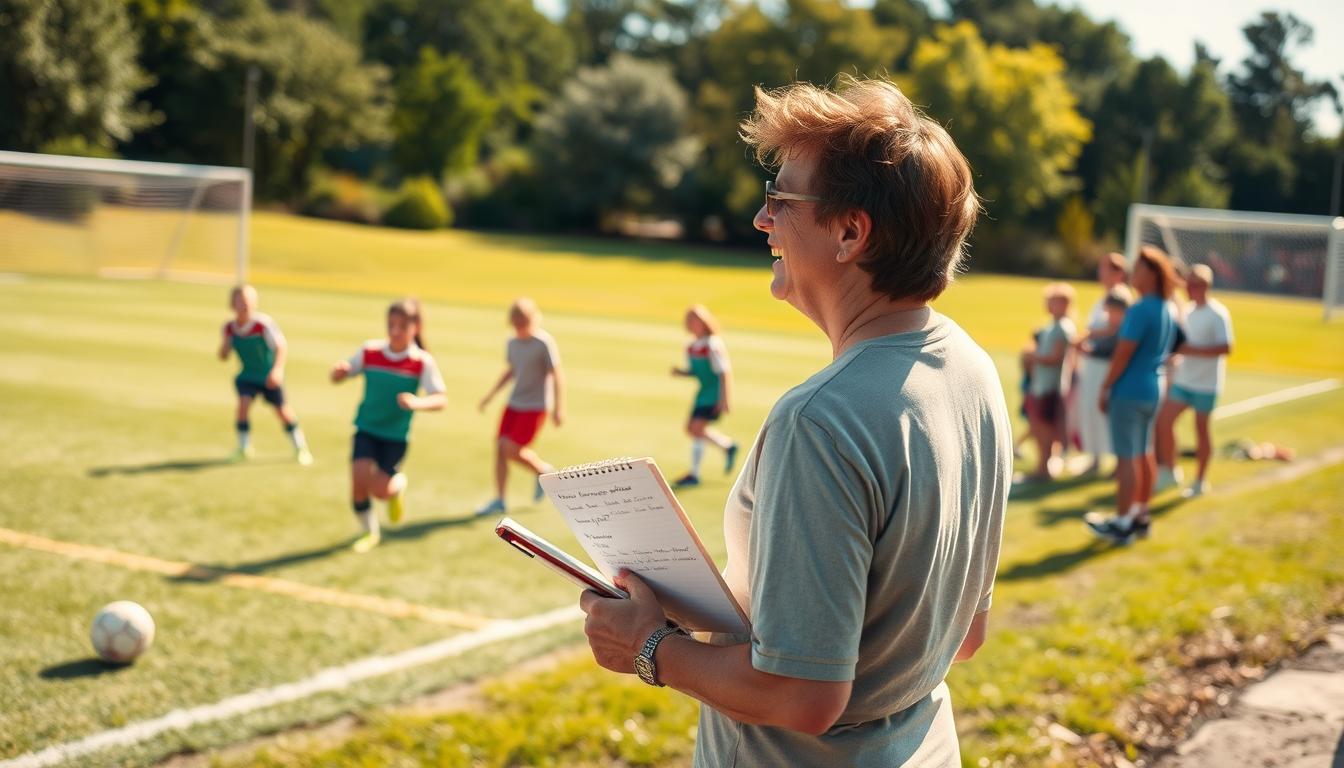
Navigating your child’s athletic journey is like playing a complex game with no clear rules. You start out wanting to help, but one wrong move can make you seem too controlling. It’s a delicate balance.
The world of youth sports parenting is both beautiful and challenging. We aim to build our kids’ confidence and grit, but we’re scared of pushing too hard. We want them to succeed, yet we must show restraint on the sidelines.
Finding the right balance is key, as one source notes. It’s a tightrope walk, trying not to overstep. This isn’t about winning games. It’s about mastering the art of balance.
Setting Realistic Expectations
Let’s do a quick ego check. It’s like a simple surgery for your sports parent soul. First, ask yourself: Are you pushing your child into your own sports dreams?
It’s common to see parents reliving their sports glory through their kids. The dad who wants his son to be a quarterback, or the mom who sees her daughter as a gymnast. But, this isn’t Friday Night Lights. It’s just a Tuesday practice in a local gym. The truth is, linking your happiness to your child’s sports success can hurt both of you.
Being a good coach means knowing when to support and when to let go. Your old sports days are special memories. They shouldn’t control your child’s sports life today.
To spot vicarious living, listen to your own sports talk. Are you cheering for your child or reliving your own dreams? Knowing the difference is key.
Realistic expectations mean focusing on your child’s happiness and growth. Is she having fun with her teammates? Is he working hard to get better, not just to beat others? These are the things that truly matter.
| The Vicarious Living Model | The Supportive Foundation Model |
|---|---|
| Focus: Child’s performance as a reflection of parent’s ego. | Focus: Child’s effort, enjoyment, and personal growth. |
| Language: “We need to win,” “You have to be the best.” | Language: “How did you feel out there?” “I saw you really trying that new move.” |
| Outcome: Pressure cooker environment. Sport becomes a job. Risk of burnout. | Outcome: Sport remains a game. Builds resilience and lifelong love of activity. |
| Parent’s Identity: Tightly wound to wins/losses. Post-game mood depends on scoreboard. | Parent’s Identity: Separate from results. Constant source of unconditional support. |
Changing your role is a big step. It turns you from a demanding coach to a curious fan watching your child grow. It’s not about ignoring results. It’s about valuing the person more than the achievement.
True support in youth sports means letting your child’s story be their own. Your pride shouldn’t depend on winning. When you separate your identity from their sports, you let them play freely. And you get to enjoy watching them more. That’s the secret to coaching kids from the heart, not just from ego.
Positive Sideline Behavior Guidelines
The sideline is more than just grass. It’s a place where cheers can affect the game. Imagine watching a show where you care about the actor’s performance. You might want to tell them what to do, but that’s not helpful.
Let’s talk about the primal scream. Shouting instructions from the sidelines doesn’t help. Your child’s brain is already busy with the game. Adding your voice is like too many apps running at once.
Think of teaching your teen to drive. Every “watch out!” made them nervous. Youth sports work the same way. Too much coaching can mess up their learning.
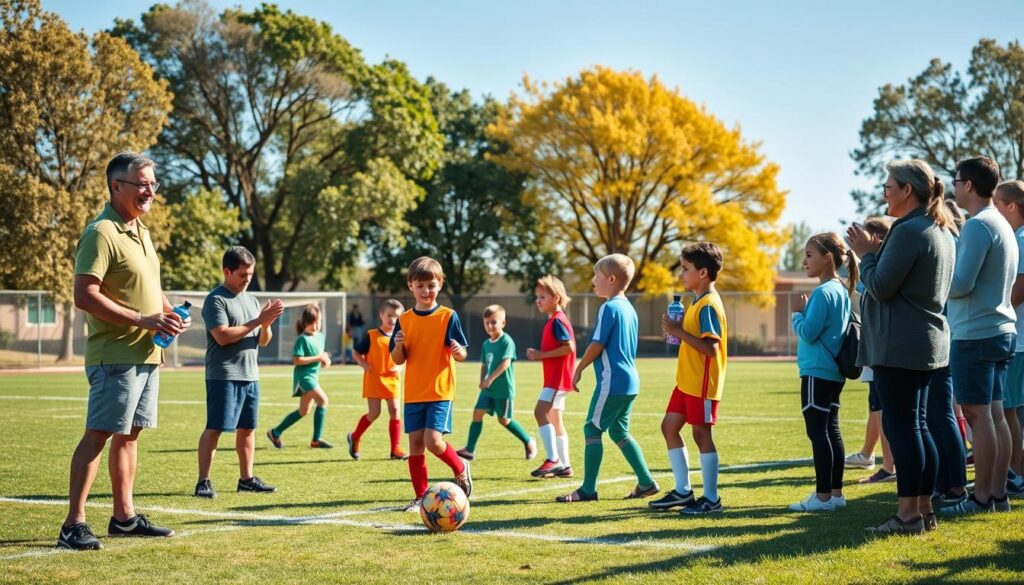
Being a lighthouse is better than being a helicopter or steamroller. You want to be a steady guide, not someone who always tells them what to do.
Here’s how different sideline behaviors affect your child:
| Archetype | Behavior Pattern | Child’s Experience | Long-term Impact |
|---|---|---|---|
| The Lighthouse | Consistent, calm presence. Encourages without directing. Celebrates effort. | Feels supported but autonomous. Can focus on the game. | Builds intrinsic motivation and self-reliance. |
| The Helicopter | Constant verbal feedback. Corrects mistakes in real-time. Hovers emotionally. | Feels monitored and judged. Performance anxiety spikes. | Creates dependency on external validation. |
| The Steamroller | Loud, directive commands. Focuses solely on outcomes. Ignores emotional cues. | Feels pressure to perform for parent’s approval. May shut down. | Can lead to sports burnout and relationship strain. |
| The Spectator | Disengaged or distracted. Minimal interaction. Physically present only. | Feels unsupported or unimportant. May seek validation elsewhere. | Misses bonding opportunities and fails to provide needed support. |
To be a good lighthouse, be present but not overbearing. Your presence is more important than what you say. A simple thumbs-up can mean a lot.
Also, let your child talk about their experiences when they’re ready. Car rides home shouldn’t feel like interviews. Ask open-ended questions like “What was the most fun part today?”
Respect your child’s need for space. Some kids need a hug right away, while others need time to themselves. This is okay—it’s how they recharge.
Lastly, be light and fun on the sidelines. Your mood affects everyone. If you’re enjoying the game, they will too.
The best sports parent advice is often about less, not more. Sometimes, the best thing you can do is be quiet and let them play. Your presence, even without words, means a lot.
Communication with Coaches
Talking to your child’s coach should feel like starting a conversation, not complaining. It’s not about demanding playing time. In youth sports parenting, the relationship with coaches is delicate. One wrong move can make the season tense.
Coaches are different, and you need to talk to them in their own way. The Philosopher sees the game as a life lesson. Talk about character, not just winning. The Drill Sergeant values discipline. Show respect and follow their rules. The Buddy wants to be friends with everyone. Keep things professional while being friendly.
Your main job is to gather information and help out, not to give orders. You’re like an embassy, sharing news about injuries or emotional issues. This way, you avoid stepping on the coach’s toes.
Always wait 24 hours before talking about issues. This lets emotions cool down. What seems big at first might not be as important later. This rule helps avoid most problems.
When you do talk, focus on your child’s feelings. Say “Emma seemed upset after the game” instead of “Why didn’t Emma start?” This way, you work together to help your child, not argue.
Coaches are people, too, and they have bad days. They make choices that might not always be right. By understanding this, you can work better together. This guide on how coaches can think like parents shows how to build a strong team.
Start talking early and often. Don’t wait for a problem. A quick introduction at the start of the season helps set the tone. Share important info early, like if your child is feeling anxious or distracted.
Even if you know a lot about sports, remember that coaches are the experts. They see things you don’t, like how players interact. Trust their decisions on strategy and player roles.
The best youth sports parenting is based on respect. Everyone wants the same thing: for the child to have a good experience. When we communicate well, we can make that happen.
Managing Competition Pressure
The real pressure in youth sports isn’t on the field. It’s in your car before the game. Your pep talks might be more tense than a coach’s. Let’s figure out why.
Pressure comes in three ways. First, there’s internal pressure – the child’s own drive to do well. Then, there’s external pressure from parents and coaches. Lastly, there’s the systemic pressure of the travel team scene, where every game is a big deal.
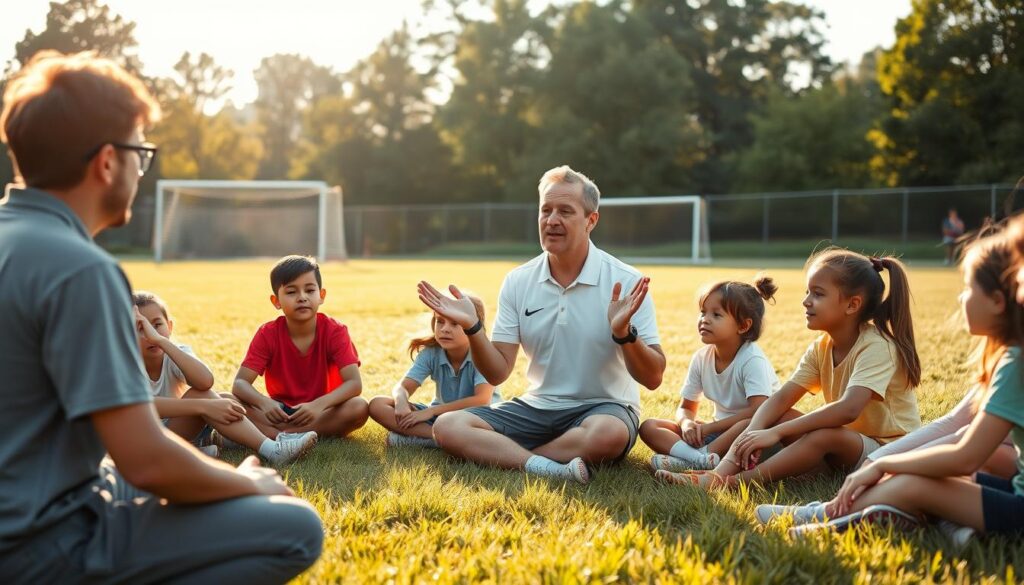
Too much worry comes from things athletes can’t control. When coaching kids, we must teach them to focus on what they can control. Like their effort and attitude.
Signs of too much pressure are subtle at first. Look for resistance to practice, resentment towards the sport, or changes in sleep and eating. The data shows that pushing too hard can hurt their confidence.
We can’t get rid of pressure completely. It’s like trying to ignore gravity. But we can teach young athletes to handle it better. Think of yourself as a pressure manager, not a source of it.
The Pressure Diagnostic Toolkit
Before the next game, ask yourself these questions:
- Are my pre-game comments focused on effort or outcome?
- Does my body language in the stands communicate anxiety or support?
- Am I living vicariously through my child’s performance?
- What percentage of our post-game conversation focuses on what went wrong versus what went right?
To turn pressure into a healthy challenge, start by naming the sources. “I notice you seem nervous about the tournament – what part feels most challenging?” This makes the anxiety easier to handle.
Next, teach them about “control parameters.” Make a list of things they can control (effort, attitude) versus things they can’t (opponent’s skill, weather). This tool can cut anxiety by nearly 40%.
Healthy Pressure vs. Toxic Pressure
Not all pressure is the same. Here’s how they differ:
| Pressure Type | Source | Manifestation | Long-term Effect | Parental Response |
|---|---|---|---|---|
| Healthy Challenge | Internal motivation | Focused energy, excitement | Builds resilience and self-efficacy | “I believe in your preparation” |
| Performance Anxiety | Fear of disappointing others | Nervousness, overthinking | Creates avoidance behaviors | “Just have fun out there” |
| External Pressure | Parental/coach expectations | Resistance, resentment | Leads to burnout and quitting | “What did you learn today?” |
| Systemic Pressure | Travel team culture | Exhaustion, loss of joy | Damages relationship with sport | “Let’s prioritize recovery” |
Teaching kids to handle pressure means showing them the difference between good and bad pressure. Help them see when it’s fuel and when it’s a weight.
Make sure your family has breaks from sports. Have “sports-free” days and fun post-game rituals. This helps them enjoy the game without too much stress.
Remember, your calmness helps your child stay calm. Your views on winning and losing shape theirs. Focus on the process, not just the outcome, to teach them valuable life lessons.
The best way to coaching kids through pressure is in quiet moments. Ask about their favorite play, not just the score. Celebrate everyone’s success, not just their own.
Pressure is always there in competitive sports. Our job is to teach kids how to deal with it. They’ll face it in college, jobs, and relationships. Learning to manage it now is a valuable gift.
Building Resilience in Young Athletes
The most valuable lesson in youth sports isn’t taught during victory celebrations—it’s whispered in the quiet moments after a spectacular failure. That mis-hit, strikeout, or missed tackle? It’s not a bug in the system. It’s a feature. The essential data point in your child’s athletic education.
We’ve tried to engineer failure out of childhood like it’s a manufacturing defect. Participation trophies for everyone! No scorekeeping until age 12! It’s the educational equivalent of putting bubble wrap on jungle gyms. The problem? You can’t build resilience in a failure-free environment any more than you can build muscle without resistance.
Here’s the analytical truth: resilience isn’t a personality trait you’re born with. It’s a cognitive muscle built through repeated micro-failures. Each dropped pass strengthens neural pathways for emotional recovery. Every strikeout teaches the brain how to reset after disappointment.
The real magic happens in what psychologists call the “growth mindset”—the belief that skills develop through effort and learning. This isn’t touchy-feely self-help. It’s neuroplasticity in action. When your child believes abilities can grow, their brain literally forms stronger connections.
So what’s the practical sports parent advice? Stop focusing on the mistake itself. Start praising the response to the mistake. The difference is everything:
| Athletic Scenario | Traditional Response | Resilience-Building Response | Cognitive Outcome |
|---|---|---|---|
| Strikes out with bases loaded | “Don’t worry about it” or “You’ll get ’em next time” | “I loved how you immediately focused on defense after that at-bat” | Teaches rapid emotional reset; separates performance from identity |
| Misses game-winning free throw | “Just practice more” or silent disappointment | “What did your body feel like during that shot? Let’s break down the mechanics, not the moment” | Creates analytical distance; transforms emotion into solvable data |
| Makes critical turnover in soccer | “Shake it off” or avoids eye contact | “That pass was ambitious! What did you see that made you try it?” | Validates decision-making courage; encourages calculated risk-taking |
| Gets beaten badly in tennis match | “The other kid was just better today” | “You adjusted your serve three times during that match. That’s adaptive thinking” | Reinforces in-game problem solving; builds strategic flexibility |
Notice the pattern? The resilience-building responses don’t ignore failure. They mine it for valuable information. They praise the process—the hustle back on defense, the mechanical adjustment, the strategic thinking.
This approach creates what I call “mental armor.” Not the brittle kind that shatters under pressure. The flexible, adaptive kind that absorbs impact and redistributes force. One benign setback at a time.
The post-game conversation needs a complete reframe. Ditch the critique. Embrace curious, collaborative analysis. Instead of “What went wrong?” try “What did the mistake teach you?” This shifts the dynamic from judgment to discovery.
Remember my own childhood blunder? Eighth-grade basketball championship. I took the last shot—a beautiful arc that hit the back of the rim, bounced twice, and rolled out. For weeks, I replayed that moment. Then my coach said something revolutionary: “The fact that you wanted the ball tells me everything I need to know.”
That single comment rewired my relationship with failure. It taught me that courage in the moment matters more than the outcome. This is the core of building mental toughness—separating the act from the actor.
Your job as a sports parent isn’t to prevent failure. It’s to curate it. To ensure the failures are frequent enough to build strength but not so devastating they cause collapse. Like weightlifting for the psyche.
The best sports parent advice I can give? Become an archaeologist of failure. Help your young athlete dig through the rubble of disappointment to find the artifacts of growth. That mis-hit isn’t evidence of inadequacy. It’s a fossil showing where development happens.
Because here’s the ultimate truth: the kids who learn to fail well in sports aren’t just better athletes. They’re better students, better friends, better humans. They carry that flexible mental armor into every classroom, every social situation, every future challenge.
So the next time your child makes a mistake on the field, smile. Not because you’re happy they failed. Because you recognize the raw material of resilience being delivered to the construction site of their character. Your job is just to help them build with it.
Handling Wins and Losses Together
Every youth sports parent faces a tough choice after the game. It’s like deciding whether to be a detective or a food critic. The car ride home is the most charged moment in youth sports parenting. It’s where kids decide if they failed or learned, if they won or were just lucky.
Most parents turn into interrogators on the way home. “Why did you swing at that pitch?” “What were you thinking on that defensive lapse?” They analyze the game like a crime scene. This approach feels cold and unfriendly.
Try asking a different question instead. Ask: “What was the most fun part for you today?” This isn’t avoiding the issue. It’s focusing on what’s important. You’re telling your athlete that enjoying the game is key, not just winning.
When your team loses, it’s important to separate the result from the effort. Even a big loss can be a “well-played game.” Maybe your child made a great defensive stop. Or maybe they helped a teammate who was struggling. Focus on what was learned, how to improve, and what was done well. This builds strength without hiding the truth.
| Parent Archetype | Post-Game Question | Child’s Interpretation | Long-term Impact |
|---|---|---|---|
| The Forensic Analyst | “Why did you miss that easy shot?” | My performance is being dissected. Mistakes are crimes. | Performance anxiety. Fear of failure. |
| The Silent Driver | *Radio blaring, no conversation* | My parent doesn’t care or is disappointed. | Emotional distance. Uncertainty. |
| The Socratic Guide | “What’s one thing you’re proud of today?” | My effort and experience matter more than the score. | Growth mindset. Intrinsic motivation. |
| The Celebration Captain | “Who wants ice cream?!” (regardless of outcome) | Our relationship isn’t conditional on winning. | Emotional security. Love of the game. |
Wins can also be tricky. The goal is to enjoy the moment without getting too carried away. Teach your child to be gracious in victory. Say “good game” to opponents and acknowledge luck. This is the difference between celebrating and gloating.
Start post-game rituals to reinforce values. For a “well-played loss,” focus on one thing to improve. For a win, write a thank-you note or mention a great play by the other team. These rituals teach important lessons, win or lose.
The best move in youth sports parenting? Talk about the car ride before the game. Say: “No matter what, we’re getting fries after. The question is, are we celebrating or consoling?” This makes the car ride a safe space, not a place for judgment.
Remember, your child will forget most scores soon. But they’ll remember how you made them feel on those drives home. Were you a critic or a friend? An analyst or an ally? That’s the real victory in youth sports parenting.
Encouraging Effort Over Outcome
Imagine if sports parents stopped worrying about winning or losing. It might sound crazy, but it’s a game-changer. Outcomes are terrible gods to worship.
Why? Because winning or losing can change in an instant. It’s not just about the game. It’s about luck, referees, and weather. It’s not something your child can control.
So, what’s the better way? Focus on the journey, not the destination. Instead of aiming for the top, aim for small, achievable goals. Like improving your game bit by bit.
Think of a writer. If she only cares about being a bestseller, she’ll be stressed. But if she writes 500 words every day, she’ll get better. The bestseller list might come later, but it’s not the only goal.
Good parents teach their kids to celebrate effort, not just wins. They cheer for the hard work, not just the result. They praise the how hard you ran, your focus in the field, and your perseverance.
This way of thinking changes how kids see sports. They start playing for the joy of it, not just for a trophy. They find happiness in the act of playing, not just winning.
This approach is a gift. It helps kids find their own motivation. It makes sports a place to grow, not just win. The love of playing lasts forever, not just until the trophy is won.
Supporting Teammates and Opponents and Creating Healthy Pre/Post-Game Routines
The sideline is where your child learns about talking to others. Are you showing them how to disagree respectfully or with anger? The best advice for sports parents is to teach respect for everyone, not just teammates.
Respect coaches, referees, and opponents. This isn’t just about being a good sport. It’s about raising kind people.
Let’s talk about routines. The excitement before the game and the calm after need to be managed. Having the same meal before the game and a calming playlist can help.
After the game, make sure your child has time to relax. This could be playing freely or spending time with family. It’s important to balance sports with other parts of life.
The best advice for sports parents is to avoid making your child a one-sport athlete. Create a schedule that includes other activities. This way, your child becomes a well-rounded, caring person who loves sports.
Encourage them to enjoy the game and play with passion. The journey of the season is what matters most, not just winning.