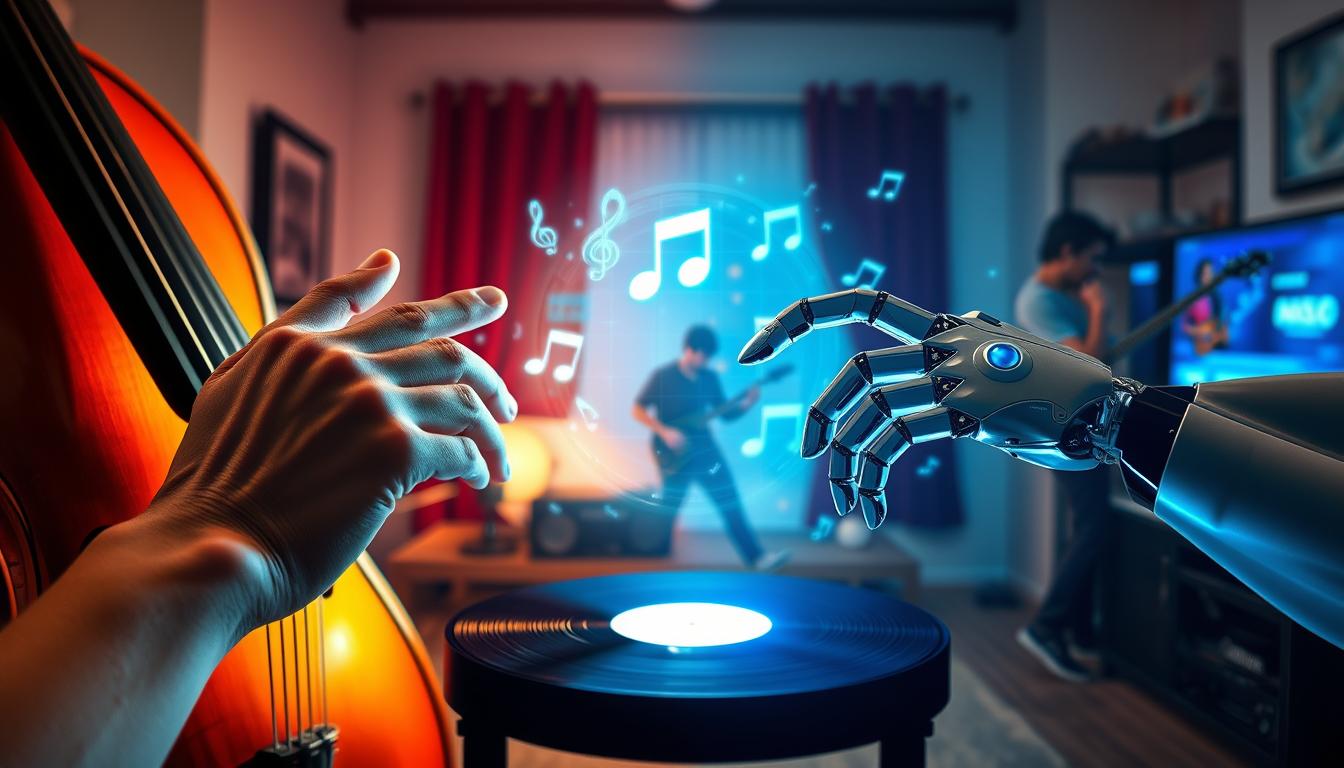
We’re at a crossroads in finding our next favorite song. Two forces are shaping this change: technology’s logic and human intuition’s spark.
Today’s music algorithms are like the synthesizers and digital audio workstations of the past. They create new tracks and make playlists that feel just right.
But this new tech raises big questions. Remember that 2024 song with Drake, Tupac, and Snoop Dogg AI clones? It made us think about what’s real and what connects us.
We’re here to guide you through this shift. We celebrate progress and the community and emotion that make songs special.
Let’s see how platforms are handling this change. What does it mean for you, the listener? The future of human curation and machine learning is a story we’re all writing.
The Algorithm Revolution: How Machines Learn Your Taste
From mechanical composers to today’s streaming giants, the algorithm revolution has changed how we find music. This change is powered by data! It started decades ago with visionaries like Olson and Belar at RCA.
Their 1960s “composing machine” used past songs to create new melodies. It was a bold idea that started today’s intelligent systems.
Today’s music discovery algorithms analyze a huge amount of information. They look at what you play, skip, save, and how long you listen. This data creates a unique sonic fingerprint of your taste.
Then, they find patterns and similarities between millions of songs. This is like “melodic math.”
Hitmakers like Max Martin use pattern recognition to make hits. Algorithms do this on a huge scale. They connect the dots between the music you love and other tracks with similar features.
This results in a personalized music recommendation feed. Services can introduce you to new artists you might love. We’re excited about this technology’s ability to help listeners discover new music.
But, a system based only on past preferences has its limits. It’s great at finding more of what you already like. But it might not introduce a classical fan to experimental hip-hop. That’s where human curation comes in.
We think algorithms work best when paired with human methods. They’re great at recognizing patterns and personalizing music. But music is also about context, emotion, and cultural connection. These are areas where humans excel.
The future isn’t about choosing between machine and human. It’s about combining both for the best discovery experience.
Human Curation’s Irreplaceable Value: Context and Emotion
Algorithms track our music habits, but humans connect our hearts to music. They add context that makes songs meaningful. While machines spot patterns, they can’t grasp why a song is special. This is where human touch turns Spotify discovery into a personal journey.
It’s the little things humans notice that make music special. A curator, whether a radio host or a friend, knows the story behind a song. They feel the emotion in lyrics and catch cultural moments. This layer is lost on algorithms.
So, why are human-led streaming discovery methods so effective? Let’s explore:
- Context: Placing a song in a historical, social, or personal setting.
- Emotion: Linking music to feelings or shared experiences.
- Narrative: Creating a story or journey through song choices.
This approach is also seen in AI pop culture curation. Here, AI is guided by human creativity. Laws recognize human authorship for a reason. The intent and emotion behind curation are priceless.
This connection does more than suggest a good song. It builds musical communities and keeps cultural threads alive. It’s like a community watch party. A personal recommendation touches us in a way data can’t.
That’s the real value of human curation. It’s not about replacing algorithms, but adding warmth and understanding. This mix is the future of music discovery.
Spotify’s Discover Weekly vs Apple’s Human Editors
Choosing how we find new music is a modern wonder. Spotify’s personalized music algorithms and Apple Music’s human touch show this. This variety lets each listener find their own way.
Spotify’s Discover Weekly is a marvel of engineering. It gives you a new playlist every Monday. It uses music algorithms to scan millions of songs and user patterns. It feels like a secret from a digital friend.
Apple Music takes a different path. It focuses on human curation by real editors. They create playlists and write liner notes. It’s like a guided tour through music, with a human touch.

Both methods have their fans. It’s not about which one is better. It’s about what you want today. Do you want a surprise or a guided journey? We’re lucky to have both!
To see the differences, let’s compare them:
| Feature | Spotify Discover Weekly | Apple Music Human Curation |
|---|---|---|
| Core Philosophy | Personalized algorithmic discovery at massive scale | Expert-led editorial guidance and context |
| Primary Technology/Method | Collaborative filtering & audio analysis music algorithms | Human editors, critics, and genre experts |
| Typical User Experience | A private, automated “mixtape” that feels uniquely yours | A public, branded playlist with narrative and authority |
| Key Strength | Uncovers deep cuts and niche artists based purely on your taste data | Provides cultural background, themes, and educational value |
This shows “technology neutrality” in action. We have amazing tools for both algorithmic and human Spotify discovery. Sometimes we want the machine’s perfect pick. Other times, we seek a human’s insight. Having both enriches our musical world.
Bandcamp’s Community-Driven Discovery Model
Imagine a music platform where your next favorite artist is found through a fan or writer, not just an algorithm. This is Bandcamp, a place where music recommendation comes from people, not machines. It’s a space where finding new music feels personal and meaningful.
This approach is a big step towards making music more democratic. Just like how digital tools helped bedroom artists like Billie Eilish, Bandcamp changes how we discover and share music. It gives more power to artists and listeners, away from big companies.
Discovery on Bandcamp is organic and beautiful. You might find new music through fans with similar tastes or follow a blog’s curated picks. It’s all about human passion, not just numbers.
Bandcamp does more than just suggest new songs. It connects artists with listeners in a real way. Plus, it helps artists by sending a big part of your purchase directly to them. This makes music recommendation a way to support artists, not just a technical task.
We support these different ways of finding music. They show there’s a rich world of music beyond what algorithms suggest. Platforms like Bandcamp focus on helping artists and building small communities. They show that finding new music can be a shared journey, valuing culture and feelings as much as beats.
For listeners who care about supporting artists, Bandcamp is a great choice. It lets you enjoy finding new music while also helping an artist’s career. In a world of automated feeds, Bandcamp shows the power of community in music.
The Filter Bubble Problem: Algorithmic Echo Chambers
The magic behind your personalized playlists has a catch. Music algorithms use your past listening to guess what you’ll like next. This makes your musical tastes stick to what you already know.
This makes your musical world smaller, not bigger. It’s called the filter bubble. It’s a loop where you hear the same things over and over.

When suggestions only match what you’ve listened to before, a few things happen:
- Genre Limitation: You might not explore new sounds.
- Artist Isolation: New artists find it hard to get noticed.
- Cultural Narrowing: You miss out on music from different times and places.
This isn’t a mistake. It’s a side effect of making music just for you. The system is great at giving you more of what you already like.
Human curation is the answer. Curators do more than suggest music. They shake things up. They add context and diversity to your playlists.
Knowing about this helps us. We can look for playlists and blogs that expand our musical horizons. It turns a weakness into a chance for discovery.
Serendipity in Music: Happy Accidents vs Calculated Suggestions
Discovering music by chance is thrilling. Often, our favorite songs come from unexpected places. This is called serendipity, finding the perfect song when you least expect it.
Algorithms can suggest good music, but they can’t match the excitement of a surprise find. Imagine hearing a great song in a friend’s car or during a movie. These moments are special.
Human touch makes these moments possible. A playlist made just for a mood or activity can surprise you. DJs on thematic radio shows introduce us to new music in a way algorithms can’t.
Artists often build on others’ work, creating something new and exciting. This is similar to how we discover music. One surprise song leads to another, creating a unique journey.
The future of Spotify discovery should include both chance and careful planning. The best systems will mix precision with surprises.
| Aspect | Happy Accidents (Serendipity) | Calculated Suggestions | Emotional Impact |
|---|---|---|---|
| Source | Friend’s recommendation, live shows, film soundtracks | Algorithmic analysis of listening history | Feels personal and authentic |
| Predictability | Low – arrives unexpectedly | High – based on known patterns | Surprise vs. satisfaction |
| Context Richness | High – tied to specific memories or experiences | Low – often lacks story or context | Creates lasting memories |
| Discovery Range | Broad – can jump genres and eras | Narrow – typically stays within established preferences | Expands musical horizons |
| Platform Examples | Themed human playlists, community radio, Bandcamp | Automated “For You” mixes, recommendation engines | Community vs. individual focus |
Human-curated Spotify discovery channels value surprise. Playlists for activities like “Rainy Day Reading” or “Late Night Drives” include tracks that create perfect moments. These picks consider mood and atmosphere, not just sound.
We love these unplanned connections. They show that finding music is about human experience as much as technical skill. The best music recommendation systems will respect both.
Let’s support platforms that welcome randomness. The next great song you love might be in an unexpected place. That’s the magic of musical serendipity.
Supporting Discovery Through Multiple Channels
Music lovers have always used many ways to find new songs. From live shows to radio and records, finding music is a journey. This idea guides us in today’s digital world.
Having a rich musical life comes from using many sources. Sticking to one way limits your experience. The best listeners mix streaming discovery methods with human curation.
Think of your music discovery as a portfolio. A good mix includes:
Algorithmic tools for endless streams on Spotify or YouTube.
Expert-led playlists and radio from Apple Music or NPR for guidance.
Community-driven spaces like Bandcamp or SoundCloud for unique genres and artist support.
Live music events for a raw connection that can make you a fan for life.
Even physical media or dedicated listening sessions for focused enjoyment.
This approach does more than find new songs. It builds a resilient and diverse musical identity. You’re not stuck in one way of finding music. Instead, you get a taste shaped by machines, experts, peers, and live experiences. Each channel adds a unique color to your music.
We encourage you to be intentional about how you find new music. Seek out human curation from trusted sources. By using all channels, you can find the joy and surprise in music again. Your next favorite artist is waiting for you to discover them in a new way!
The Role of Music Blogs in the Algorithm Age
In the endless stream of algorithmic suggestions, music blogs shine as beacons of human passion and critical thought. While music algorithms are great at guessing what we might like next, they often fail to understand why. This is where blogs, zines, and independent publications become essential.
These platforms offer something unique: deep context, nuanced criticism, and passionate advocacy. They share the stories behind albums, connect artists to cultural movements, and offer perspectives built on real experiences. Unlike impersonal streaming discovery methods, blogs are a dedicated act of human curation.
What makes music blogs irreplaceable? Their value lies in several key areas that machines cannot authentically copy:
- Narrative and Context: They frame music within a story, a history, or a personal journey, giving songs and artists deeper meaning.
- Critical Perspective: Unlike playlist algorithms designed for endless play, blogs offer thoughtful analysis, critique, and celebration.
- Artist Advocacy: They champion emerging or niche artists based on artistic merit, not just viral popularity.
- Cultural Connection: Blogs link music to fashion, politics, film, and social trends, creating a richer tapestry of discovery.
This human-authored context is so valuable it’s recognized in copyright law, which often protects the unique narrative and selection a critic provides. This legitimacy shows that music writers are not just commentators but valid and essential curators in the ecosystem.
We see blogs as a vital counterbalance. They help listeners break free from algorithmic echo chambers and discover music with purpose and thoughtfulness. In a landscape optimized for clicks and streams, these voices encourage us to listen more deeply.
We are incredibly grateful for these dedicated voices. They ensure that discovery remains a human conversation, not just a calculation. This human element is a key part of the future of music curation, where the best systems will harness both heart and data.
Hybrid Approaches: Combining Human and Machine Intelligence
The future of finding new music is exciting because it’s a team effort. We think the best way is for machines and humans to work together. This way, they can use each other’s strengths.
Algorithms can quickly go through huge amounts of data to find lots of songs. But, human curators bring their own special touch. They use their taste, cultural knowledge, and storytelling skills. For example, Spotify uses algorithms to help humans pick songs for playlists.
This mix of AI and human touch makes music recommendations better. It combines the power of AI with the heart of human connection. This way, the music industry can use AI tools while keeping human creativity at the core.
We’re excited to help create this future. A hybrid system means we get the smart data analysis of AI and the real connection of humans. It’s the way to break through filter bubbles and find music that surprises and delights us.