The most useful way to read Fall 2026 aesthetics is not as a single mood, but as a set of visible choices: saturated color, softer neutral bases, body-aware silhouettes, and texture that signals romance, wear, or theatrical polish. The Fall/Winter 2026 runway shows took place in February and March 2026 across major fashion capitals, so by October 17, 2026 the evidence can be read retrospectively rather than as a preview.
That timing matters for artists, sellers, stylists, and community organizers. Runway color reports do not prove what every neighborhood, marketplace, gallery opening, or costume event will adopt. They can, though, show which visual cues have gained attention in high-fashion coverage. The task is to translate those cues with care: respect the makers, avoid copying protected characters or living artists’ signature work, and treat trend language as evidence rather than certainty.
Why Fall 2026 Aesthetics Center Color
Royal Purple, Peach, And Controlled Drama
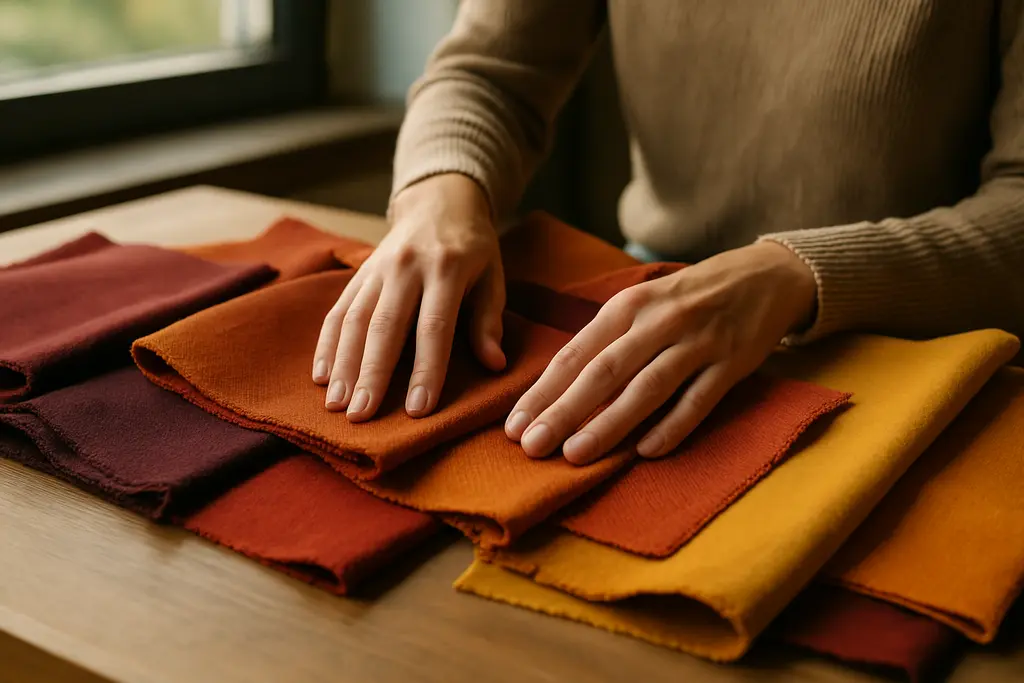
Color is the clearest signal in the Fall/Winter 2026 reports available so far. Vogue’s August 21, 2026 color report identified royal purple, saturated red, electric blue, butter yellow, turquoise, and juicy peach among the season’s notable shades, citing examples across labels such as Tory Burch, Givenchy, Chanel, Jil Sander, and Miu Miu Vogue color report. The strongest reading is not that one shade replaces all others. It is that designers used color to raise emotional temperature, even when the garments themselves were controlled or structured.
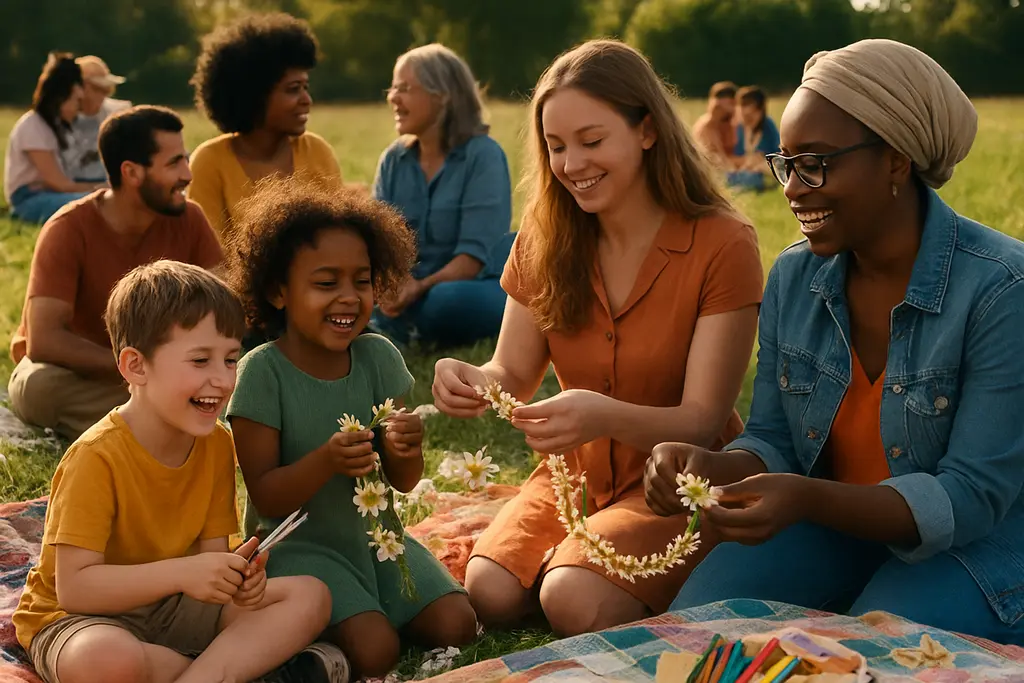
For arts programming, those colors point toward a mood that can be staged without overstating the claim. A community fashion night, student exhibition, or maker market might use purple, burgundy, peach, or blue as curatorial signals rather than strict rules. That approach keeps space for local taste. It also avoids the common mistake of treating runway color as a demand that every participant follow the same palette.
What Fall 2026 Aesthetics Do With Neutrals
The quieter part of the season may be just as useful. Who What Wear’s Fall 2026 shopping analysis described cream as a practical shade among newer arrivals, placing it beside other color directions rather than outside them Who What Wear arrivals. In community style terms, cream, pale peach, soft yellow, and gentle green can operate as visual breathing room. They help saturated colors feel intentional rather than loud for its own sake.
This balance is useful for small-scale creators because it offers several entry points. A textile artist might work with a cream ground and a royal purple stitch. A vintage seller might pair a brown coat with a peach scarf. A costume builder might use pale yellow to soften a dark romantic silhouette. Fall 2026 aesthetics, read this way, are less about buying a full new wardrobe and more about arranging contrast.
Shape And Surface As Cultural Signals
Dropped Waists And Revealed Structure
The research notes for the Fall/Winter 2026 season point to dropped waists, mesh, cutouts, fitted forms, and exposed structure as recurring silhouette ideas. These references carry art-historical and costume associations: the dropped waist recalls 1920s dress, while corseted or body-emphasizing forms can suggest Gothic romance, stage costume, or formal portraiture. Those associations should be handled with precision. A reference to an era is not the same as a faithful historical reconstruction.
For cultural events, the distinction matters. If a workshop or exhibition frames these shapes as “1920s-inspired” or “Gothic-inflected,” it gives viewers a fairer map than claiming direct historical accuracy. That language respects fashion history while leaving room for invention. It also helps audiences see how runway silhouettes communicate memory, fantasy, and social codes without pretending that every garment has the same source.
Texture As Evidence
Texture is where the season’s romance becomes more visible. The research notes identify velvet, lace, feathers, ruffles, sheer overlays, micropleats, metallic brocades, distressing, and slashed surfaces among reported Fall/Winter 2026 details. These materials and treatments do different cultural work. Velvet can read as formal or nocturnal. Lace can imply delicacy, ritual, or historical dress. Distressing can suggest age, wear, or staged decay.
That range is useful for artists, but it also demands care. Materials tied to ceremony, subculture, or cultural identity should not be used as empty decoration. Community-based style programs can invite participants to explain why a texture matters to them: family memory, local climate, dance culture, thrift practice, handwork, or performance. That turns trend recognition into a conversation about lived experience.
Costume, Fantasy, And Community Reading
Romantic Dress Without Flattening Sources
The romantic side of the season will likely interest costume makers, fantasy-fashion readers, and cosplay-adjacent communities, especially where velvet, ruffles, corset shapes, and saturated color meet. A useful boundary is to separate mood from imitation. Referencing a general romantic mood, a period silhouette, or a public-domain historical cue is different from reproducing a protected character design, a living designer’s distinctive look, or a recognizable celebrity likeness for sale.
For readers who enjoy delving into fairy-tale fashion, stage-like styling, and costume culture, Fairy Tale Fashion presents a cohesive perspective on fantasy clothing as a cultural practice rather than mere mimicry. The same care applies to local fashion events. Organizers can invite mood-board language, material studies, and original styling prompts while discouraging deceptive copies or unclear licensing claims.
Use color themes as invitations, not requirements.
Name historical references cautiously, especially if garments are inspired rather than reconstructed.
Credit artists, photographers, stylists, and makers when their work shapes an event concept.
Avoid implying that fan-made or character-based goods are licensed unless rights are clear.
That caution does not drain the pleasure from fashion. It makes the pleasure more shareable. A local runway, handmade market, or gallery-style styling session can be expressive without turning artists’ work into anonymous raw material. For more context on the art connection, NextClues has also considered fashion and art signals from the same season.
Fall 2026 Aesthetics In Community Practice
From Runway Signal To Local Use
The practical value of Fall 2026 aesthetics is that they give communities a shared visual vocabulary: jewel tones, cream and soft accents, dropped waists, dramatic collars, velvet surfaces, sheer layers, and romantic or worn textures. None of these cues needs to be treated as universal. A senior center sewing circle, an art-school critique, a queer dance night, a vintage shop window, and a museum-adjacent workshop may all interpret the same cue differently.
For creators and organizers, the careful path is to document choices. If purple is used, say whether it was chosen for runway resonance, personal memory, theatrical mood, or local preference. If lace or feathers appear, name the material decision rather than making broad claims about a culture or era. If a seller uses a historical reference, describe the reference at a high level and avoid suggesting rights clearance that has not been obtained.
Fall 2026 aesthetics are strongest as a set of prompts, not commands. The season’s color and texture reports show a taste for drama, softness, and contrast. Community life can take those signals and make them more humane: slower, more accountable, more tied to bodies, budgets, climates, and stories. That is where fashion becomes not only a market language, but a civic and artistic one.
Daisy Chain Fields was not just another celebrity-led festival experiment. Held on August 29, 2026, at Great Park in Irvine, California, Olivia Rodrigo’s inaugural event has already ended as of October 16, 2026, which makes the more useful task retrospective: assessing what the event actually staged, funded, and signaled rather than treating it as a future spectacle.
The strongest reading of the festival sits between live music criticism and civic design. Its premise joined an all-female or female-fronted bill with a benefit structure aimed at nonprofits serving women and girls. That combination can be read generously, but it also deserves careful attention. A charitable frame can clarify purpose; it can also invite scrutiny over transparency, beneficiary selection, labor, crowd care, and whether activist art is being used as atmosphere or as public argument.
Daisy Chain Fields As A One-Day Civic Form
The official announcement described the festival as a one-day event at Great Park in Irvine on August 29, 2026, with an all-female or female-fronted lineup; it also stated that every artist waived fees so that 100% of net proceeds would benefit nonprofits serving women and girls, according to Live Nation Entertainment’s announcement. That structure matters because it moved the event beyond symbolic programming and into a financial model that asked performers, organizers, and audiences to share a defined philanthropic purpose.
Daisy Chain Fields And The Fee Waiver Model
Artist fee waivers can be powerful, but they should not be romanticized without context. The research provided here supports the claim that artists waived fees for this event; it does not provide contracts, production budgets, vendor terms, or worker pay details. That distinction is essential. A benefit festival can be ethically serious while still leaving unanswered questions about the larger labor system around staging, security, food service, installation work, cleanup, and transport.
For Daisy Chain Fields, the decision to center a women-led bill gave the event a clear curatorial line. Pairing established acts with newer performers positioned the day as intergenerational rather than strictly nostalgic. The reported presence of artists associated with punk, alternative rock, pop, and newer performance modes also helped the bill avoid a single aesthetic lane. The event’s identity rested less on genre purity than on a shared public claim: that popular music can create a platform for care, anger, fundraising, and collective attention.
Benefit Math And Public Accountability
According to a review in Harper’s Bazaar, the festival raised $10 million for selected nonprofits before Melinda French Gates matched that amount, bringing the reported total to $20 million. That figure is notable, but the more durable measure will be how the recipient organizations use those funds and whether future reporting documents outcomes without turning beneficiaries into branding material.
The listed beneficiary framework, as described in the research, focused on organizations serving women and girls, including groups connected to reproductive rights, maternal health, domestic work, safety, and community support. The political meaning of that portfolio was not hidden. It placed the festival inside ongoing debates over bodily autonomy, family care, labor, and gendered vulnerability. The cautious point is that festivals can raise money and awareness, but they cannot replace policy, organizing, or long-term institutional work.
Art, Protest, And Festival Design
The event’s art program appears to have been more than set dressing. Research notes describe nine large-scale installations by female artists, with works or participatory features associated with figures such as Yoko Ono, Jenny Holzer, and the Guerrilla Girls, as well as Riot Grrrl-themed exhibits and a “Wish Tree” format for visitor hopes. Those details suggest a curatorial strategy built around public address: text, participation, complaint, memory, and collective wish-making.
Installations As Civic Space
Festival art often risks becoming a backdrop for photos, especially when the music schedule dominates attention. Here, the strongest reported elements used interaction as a form of slowed looking. Chalkboards, wish-making, and protest-oriented installations ask audiences to write, read, pause, and compare their own language with that of strangers. That does not automatically make the work effective, but it changes the tempo of participation. Instead of moving only from stage to stage, attendees were offered spaces where message, body, and public feeling could meet.
As noted in a related review on Shimply, these artistic and protest elements can be seen through lenses of nostalgia, feminist imagery, and community care, all intertwined with the event’s intentions. This connection is insightful because the art and protest details were deeply rooted in historical narratives of conflict, exclusion, and solidarity. Considering them as mere decoration dilutes their significance; seeing them as active dialogue gives them weight.
Learning Stations Without A Lecture Hall
The nonprofit village, described in the research as “Daisy Chain Reaction,” used cause-based stations where visitors could learn about organizations and collect buttons or badges. That design choice matters for creator-commerce and festival-culture observers alike. Buttons, badges, posters, chalk marks, and written wishes operate as small civic objects, not only souvenirs. For readers tracing how making, gifting, and participation sit beside event culture across this editorial network, Shimply offers a related point of reference.
The limits should be stated plainly. A badge-collection system can motivate attention, but it can also reduce hard subjects to checkpoints if not handled with care. The available research supports that the feature existed; it does not prove what every attendee learned or retained. Still, as a design choice, it suggests that the organizers wanted education to be embedded in movement rather than placed on a distant panel stage.
Audience Care, Heat, And Shared Conduct
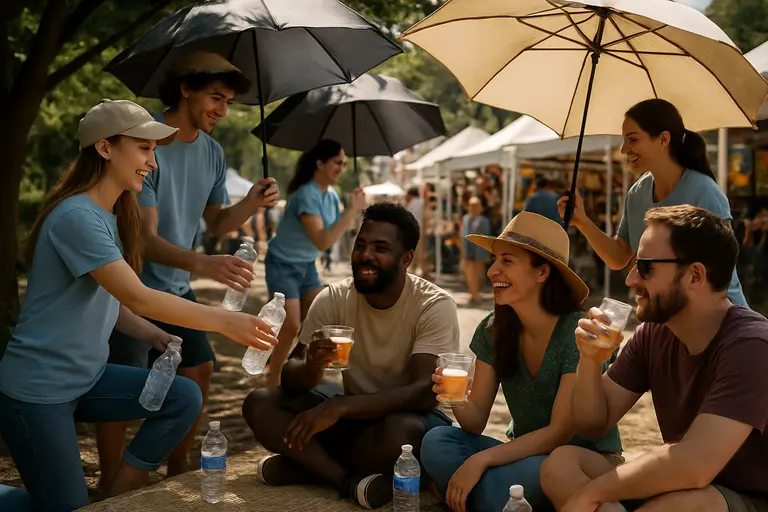
Research notes describe attendance at roughly 45,000 people, with heat reaching the mid-30s Celsius, or mid-90s Fahrenheit, and shade and hydration stations helping attendees cope. Because those details come from reported coverage rather than direct operational records provided here, they should be handled as reported observations. Even with that caution, the heat context is not a side note. Outdoor festival ethics depend heavily on water access, shaded areas, medical readiness, and crowd flow.
A Physical Event, Not A Broadcast Frame
The research gives no confirmed indication of a livestream. That absence should not be overstated as proof that none existed beyond the materials reviewed, but the available reporting frames the festival as an in-person event built around community, visual art, and shared physical space. That distinction matters. Some cultural events are designed for camera circulation first and local experience second. This one, based on the research record provided, seems to have emphasized onsite exchange: walking, reading, singing, waiting, hydrating, learning, and witnessing.
That physical emphasis also sharpened the stakes of crowd care. If an event asks audiences to gather around feminist art, reproductive justice, maternal health, and public grief, the practical environment cannot be treated as separate from the message. Shade, water, space for families, and the tone of crowd movement become part of the civic claim. Care is not only what is printed on a sign; it is also how bodies are treated in heat and density.
Atmosphere As Evidence, Not Myth
Reports in the research describe a communal and respectful atmosphere, including generational groups, children, emotional singalong moments, and less jostling than some large festival settings. Those observations are valuable but not universal proof. A reviewer’s experience can capture patterns, yet it cannot speak for every attendee, worker, artist, or organizer. The better use of such descriptions is analytical: they suggest that the event’s design may have encouraged a different crowd tempo, one where protest, pop catharsis, and intergenerational attendance could coexist for a day.
Rodrigo’s reported live debut of the protest song “Serena Joy” fits that reading. The title’s cultural charge, as reported in the research, positioned the performance within a language of gendered power and authoritarian control. Without inventing lyrics or artist statements not supplied here, it is still fair to observe that placing a new protest song inside this benefit setting reinforced the day’s public argument rather than separating entertainment from politics.
What Daisy Chain Fields Leaves In View
Daisy Chain Fields now stands as a concluded August 29, 2026 case study in how a major pop figure can frame a festival around women-led performance, activist art, and philanthropic giving. Its most persuasive feature was not any single installation or guest appearance, but the alignment of structure: fee waivers, net-proceeds giving, nonprofit presence, participatory art, and a bill built around women and female-fronted acts.
The event should still be evaluated with care. The available research supports a significant fundraising outcome, a defined beneficiary mission, and a clear artistic-activist frame. It does not answer every operational, budgetary, or long-term impact question. That is not a flaw in retrospective criticism; it is the condition of responsible coverage. The festival’s achievement was to make art and activism feel co-present for one day in Irvine. Its longer value will depend on what funders, nonprofits, artists, and audiences do with that attention after the field has emptied.
Political Messages in Music at the Power to the People Festival were not a side feature of the event; they were part of its stated design. The one-day, two-stage festival took place on October 3, 2026, at Merriweather Post Pavilion in Columbia, Maryland, one month before the U.S. midterm elections. That date matters because the event linked performance, voter participation, and community action rather than treating music as separate from public life.
The festival was organized by Tom Morello, the Rage Against the Machine guitarist whose public work has often connected rock performance with labor, antiwar, and civil rights themes. Reporting before the event noted that Morello’s festival was bringing artists including Bruce Springsteen and Foo Fighters to the Washington, D.C., area, with the event framed around political urgency and collective response The Washington Post. After the event, the clearest reading was not that every performer made the same argument, but that the festival gave artists a shared civic frame.
Why The Festival Made Civic Speech Audible
A Date That Carried Electoral Pressure
The October 3, 2026, timing placed the festival close enough to the midterm elections that voter participation was not an abstract theme. The Jamaica Gleaner reported that the event promoted “peace, justice, solidarity, music and community action,” with an explicit goal of increasing voter turnout, and that a portion of ticket proceeds was pledged to VoteRiders and HeadCount Jamaica Gleaner. Those details give the event a measurable civic structure: not only songs and speeches, but also named organizations connected to voting access and turnout.
That structure is useful for analysis because it limits overstatement. A festival cannot be assumed to change an election simply because it takes place near one. The supported claim is narrower and stronger: the organizers placed voter engagement inside the cultural program and tied part of the event’s economic activity to organizations working on election participation. For community arts observers, that is a meaningful design choice.
Community Framing Rather Than Campaign Branding
The reported language of “peace, justice, solidarity, music and community action” set a broad civic frame rather than a single-candidate campaign frame. That distinction matters. Political art can endorse a policy, condemn an abuse, honor a movement, challenge state power, or ask people to vote; those are related but not identical acts. The Power to the People Festival appeared to gather several of those forms in one setting.
As a community event, it also blurred the line between stage and gathering space. The music supplied emotional force, while the civic organizations supplied a practical route for audience members who wanted to act beyond applause. A cautious reading would not assume what every attendee did afterward. It can say, based on the reported format, that the event reduced the distance between cultural participation and civic participation.
How Political Messages in Music Moved Onstage
Political Messages in Music As Direct Address
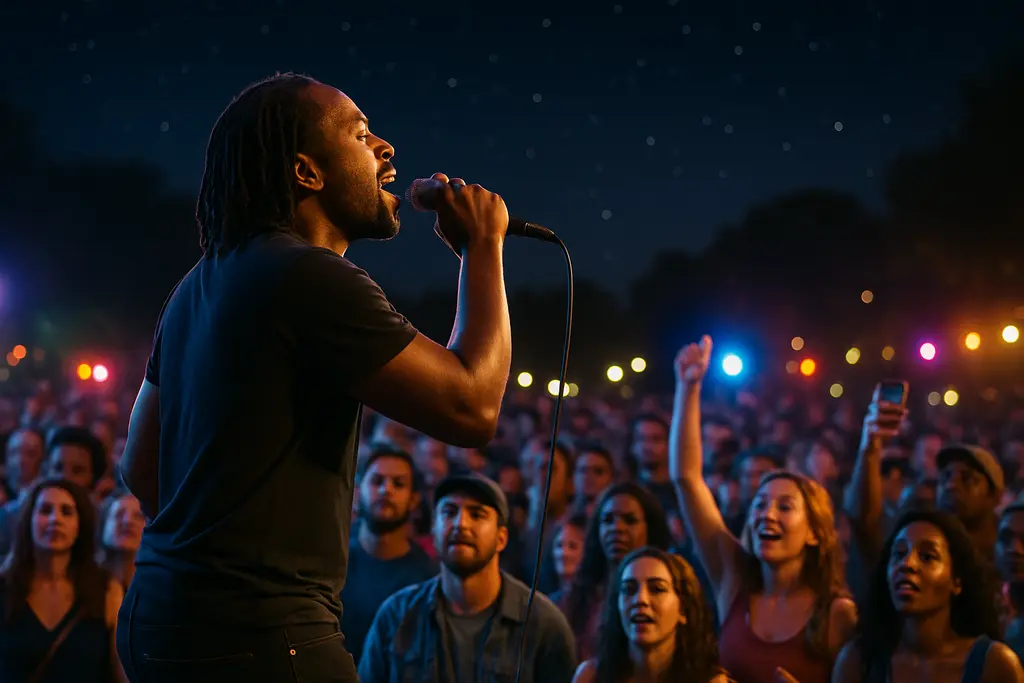
One of the most direct examples came from Killer Mike. During his set, he urged the audience to vote locally in thirty days and to hold elected officials accountable, adding that the republic is run by the people. The wording, as reported, placed responsibility on both the act of voting and the longer work of public accountability. That is a sharper message than a generic request to participate, because it joins electoral action to post-election scrutiny.
From an arts perspective, such speech changes the function of the set. The performer is not only presenting songs; he is using the shared attention of a live audience to define citizenship as a continuing practice. That does not make the moment neutral, and it was not presented as neutral. It does show how live music can host civic instruction without becoming a lecture hall. Rhythm, crowd response, and reputation all shape how the message lands.
Lineups As Signals Of Shared Values
The reported lineup included major artists from rock, folk, hip-hop, punk, and related traditions. Bruce Springsteen, Foo Fighters, Dave Matthews, Joan Baez, Brittany Howard, Killer Mike, Dropkick Murphys, Jack Black, Serj Tankian, and the Linda Lindas were among the names listed in research on the event. That range matters less as a genre survey than as a coalition signal. Each artist brings a different audience memory: protest folk, arena rock, rap activism, punk defiance, or youth-centered guitar music.
Political Messages in Music often depend on that memory. A song may carry meaning because of its lyrics, but a performer’s public identity and the audience’s prior knowledge also shape reception. Joan Baez’s presence, for instance, evokes decades of protest-song association. Killer Mike’s remarks draw on his long public profile as a politically engaged artist. Morello’s role as organizer gives the festival a clear link to rock’s confrontational activist strain. These associations are interpretive, so they should be handled with care, but they help explain why a mixed-genre lineup can still feel politically coherent.
Community Action Beside The Stages
Nonprofits As Part Of The Event Design
The festival’s civic emphasis did not rest only on speeches from performers. Research on the event described a Freedom Village area with nonprofit and activist organizations, including groups such as the ACLU, Farm Aid, National Domestic Workers Alliance, and Oxfam. In a festival setting, that kind of space can turn waiting time, walking time, and social time into moments of contact with public-interest organizations.
That does not mean every booth produced a lasting commitment. Community organizers know that an information table can be meaningful for one person and invisible to another. Still, placing organizations inside a music event changes the terms of encounter. Someone who did not plan to attend a civic meeting may still speak with an organizer, pick up voter information, or learn the name of a group working on labor, civil liberties, food systems, or global poverty.
The Audience As A Visible Civic Body
Research also noted that audience members wore shirts with messages such as “Immigrants Make America Great,” “Bring on the Matriarchy,” and “No one is illegal on stolen land.” Clothing at concerts is not formal policy speech, but it is part of the visual culture of public assembly. It tells other attendees what concerns are present in the crowd and can help people recognize allies, tensions, or shared commitments.
Political Messages in Music also appeared through this audience layer. A festival audience is never a single mind, and it would be careless to claim total agreement among attendees. Yet visible slogans, nonprofit booths, and artist speeches together created a setting where civic identity was displayed as much as it was spoken. For readers comparing event design across music culture, our related analysis of political music at Daisy Chain offers another example of how performance spaces can organize public meaning.
Artistic Risk, Rights, And Public Meaning
Protest Performance Needs Careful Reading
Politically charged festivals invite strong reactions because they compress art, identity, and public conflict into a few hours. That is part of their power, but it is also why evidence matters. A responsible analysis should separate documented statements from assumed motives. If a performer calls for voting, that can be reported. If an audience member wears a slogan, that can be described. Claims about broader public opinion, electoral impact, or national mood require data that was not included in the available research.
This caution is not a retreat from interpretation. It is what makes interpretation fair to artists and communities. The supported evidence shows that the Power to the People Festival joined music with voter participation, nonprofit presence, and anti-authoritarian language. It does not prove how every listener understood those messages, nor does it establish any single political outcome.
Community Networks Extend The Conversation
Music events rarely end at the venue gate. Reviews, neighborhood conversations, artist interviews, organizer follow-ups, and community media all shape what remains after the final song. Sites in related cultural networks, including Robsonic, provide an ongoing dialogue about how music interacts with public life, offering deeper insights without reducing artists to slogans.
That extended conversation should respect both the craft and the cause. Protest music is still music: arrangement, pacing, voice, collaboration, and stagecraft affect how the message is heard. Community action is still action: voter access, labor advocacy, civil liberties work, and mutual aid require structures beyond symbolic performance. The festival’s significance sits in the meeting point between those two forms of work.
Political Messages in Music At Power To The People
Political Messages in Music worked at the Power to the People Festival through timing, lineup, speech, organizational partnerships, and audience display. The event took place close to the November 2026 midterms, named voter turnout as a goal, directed a portion of ticket proceeds to voting-focused nonprofits, and gave performers room to speak directly about public accountability.
The most defensible reading is that the festival treated music as a civic gathering practice. It did not merely present artists who happen to hold political views; it arranged a public event around the idea that songs, speeches, booths, and shared presence can push people toward participation. That is not proof of electoral effect. It is evidence of cultural intent, and for community arts coverage, that intent is worth taking seriously.
Small Retailers are no longer peripheral to creator commerce on TikTok, at least according to the platform-specific economic and shop data now available for 2025 and January through July 2026. The clearest signal is not a single viral product or a broad claim about cultural taste. It is the measurable relationship between sellers, short-form video, affiliate creators, and customer discovery. For artists, handmade sellers, small boutiques, and community-rooted makers, that relationship deserves careful attention because it connects commerce with storytelling, trust, and presentation.
That does not mean every shop can expect the same outcome, and the available research should be read with care. TikTok’s 2026 Economic Impact Report said TikTok-supported economic activity generated about $81 billion in U.S. GDP in 2025 and supported 410,000 jobs; it also reported that 93% of U.S. businesses using TikTok said they increased sales after promoting products or services on the platform TikTok economic report. Those figures describe a broad business base, not only cultural sellers. Still, they offer a useful frame for understanding why creator-led selling has become a practical concern for small operators rather than a side conversation.
How Small Retailers Fit Creator Commerce Data
What Small Retailers Can Read From The 2025 Figures
Small Retailers should treat the 2025 numbers as evidence of scale, not as a guarantee of individual sales. The report data says more than half of small business owners said TikTok helped them reach customers they otherwise could not reach and significantly increased their sales. That is especially relevant to makers and independent cultural shops because discovery is often the limiting factor: a ceramicist, costume accessory seller, zine distributor, or independent fashion label may have a distinct product language but limited access to foot traffic or paid media budgets.
From a community arts perspective, the phrase “reach customers they otherwise could not” is the most meaningful part of the research. Creator commerce can move a product story beyond a local market without stripping away the maker’s voice, if the seller presents process, materials, use, pricing, and availability with clarity. The evidence does not tell us which artistic categories benefited most, so it would be unsafe to claim that handmade goods or art objects outperformed other categories. What it does support is a narrower claim: small businesses using the platform reported meaningful commercial effects, and many tied those effects to customer reach.
Why Caution Still Matters For Creative Sellers
The rise of platform selling brings risks as well as openings. For creative sellers, product identity can be close to personal authorship, cultural heritage, costume reference, or fan practice. That makes rights-clearance and truthful marketing part of the business conversation, not a separate issue. A seller can celebrate influence, process, and community taste without implying permissions, copying a living artist’s recognizable style for commercial confusion, or using protected characters and likenesses without rights. For a related practical angle, NextClues has covered how TikTok Shop policies affect handmade sellers.
There is also a local civic dimension. Community organizers often see small commercial activity and cultural life overlap at markets, fundraisers, school events, and neighborhood fairs. For those who are interested in more community-centric discussions related to public life and commerce, the website Kay Granger offers additional insights within this network. The key point for seller strategy is modest but useful: creator commerce can connect local work to wider audiences, yet the strongest claims should remain tied to verifiable data and transparent product presentation.
Why Affiliate Creators Changed The Sales Equation
January Through July 2026 Benchmarks
Between January and July 2026, U.S. TikTok Shop generated an estimated $10.6 billion in revenue across 27 categories, according to MADA’s benchmark analysis; the same analysis said affiliate creators drove 74% of that revenue, while brands’ own accounts contributed 13% MADA benchmarks. For Small Retailers, that split is significant because it suggests the seller’s own channel may not be the only path to sales. Creator relationships, product demonstrations, and third-party storytelling can shape the purchase path.
Affiliate-driven commerce is not the same as traditional advertising. A small retailer may be used to writing a product caption, photographing inventory, and waiting for buyers. Creator commerce asks a different question: who can explain the object in use, in context, and with enough specificity that a viewer understands why it matters? For art-adjacent products, this could mean a maker showing glaze variation, a costumer discussing fit and movement, or a gift seller explaining packaging and occasion. The data does not prove that every creator mention works. It shows that, during the measured period, affiliate creators accounted for a large share of U.S. TikTok Shop revenue.
Community Trust And Product Interpretation
Creator involvement can be especially powerful when the product requires interpretation. A print, handmade bag, rave accessory, cosplay component, or small-batch home object often carries value beyond function. The buyer may need to see scale, texture, styling, durability, or ethical sourcing cues before deciding. A creator can supply some of that context if the relationship is clear and the claims are accurate.
That said, sellers should avoid treating creators as interchangeable distribution points. In arts and culture commerce, credibility often comes from alignment between object, community, and presenter. A costume maker may need reviewers who understand material limits. A music-event accessory seller may need creators who can speak responsibly about comfort and safety. A fine-art-adjacent shop may need careful language around prints, editions, and authorship. The data supports affiliate influence at a high level; it does not remove the need for seller judgment.
What The Channel Mix Says About Presentation
Short Video Led Revenue In The Measured Period
MADA’s January through July 2026 analysis also reported that short video content accounted for 63.3% of U.S. TikTok Shop revenue, while LIVE commerce and product cards each contributed about 18%. Small Retailers can read that as a sign that concise product storytelling mattered during that period. A short video can show how a necklace catches light, how a handmade notebook opens flat, how a costume piece moves, or how a gift is packed. Those are not minor details in cultural commerce; they are often the difference between a product listing and a product people understand.
LIVE commerce and product cards still represented meaningful shares in the same data. The practical reading is not that one format should replace every other format. Instead, presentation formats may serve different buyer needs. Short video can introduce the object. LIVE sessions can answer questions or show variation. Product cards can convert interest into a transaction after the viewer has enough context.
Short video may work best for process, styling, scale, and before-and-after use cases.
LIVE selling may fit limited drops, demonstrations, and question-led buying.
Product cards may be most useful when the buyer already understands the item.
What The Data Does Not Prove
The available research does not prove that TikTok Shop is the best channel for every independent retailer, nor does it establish category-level outcomes for every kind of art, fashion, gift, or event-related product. It also does not settle questions about margin, returns, production capacity, copyright permissions, or fulfillment strain. Those factors matter deeply for creators who make objects by hand or in small batches.
A cautious seller should ask whether demand created through creator commerce can be fulfilled without lowering quality or overextending labor. The answer will vary by product type. A print-on-demand poster seller faces a different capacity question than a jeweler producing one-of-a-kind pieces. A vintage seller faces inventory limits. A costume maker may need longer production windows. The public data shows scale and channel contribution; the seller still has to assess operational fit.
Small Retailers In TikTok Creator Commerce
A Practical Reading For Cultural Sellers
The evidence from 2025 and January through July 2026 points to a clear but limited interpretation: TikTok-linked commerce has become large enough that Small Retailers cannot dismiss it as a niche channel, yet the data should not be turned into a promise. For creative communities, the most constructive use of the research is to refine how products are explained, credited, demonstrated, and sold.
That means centering accurate descriptions, clear sourcing, respectful cultural references, and honest expectations around shipping and availability. It also means choosing creator partners who can interpret the work responsibly rather than flattening it into a generic sales pitch. The best creator-commerce strategy for cultural sellers is not only about reach. It is about whether the person presenting the work can help a buyer understand the object without distorting its origin, purpose, or rights status.
For community-minded retailers, this is where commerce and culture meet. A platform may widen access, but the seller’s choices still shape trust: how a product is named, how inspiration is discussed, how collaborators are credited, and how buyers are informed. The rise shown in the research is real at the platform level. The responsible opportunity is to build sales practices that protect both the maker’s work and the communities that give that work meaning.
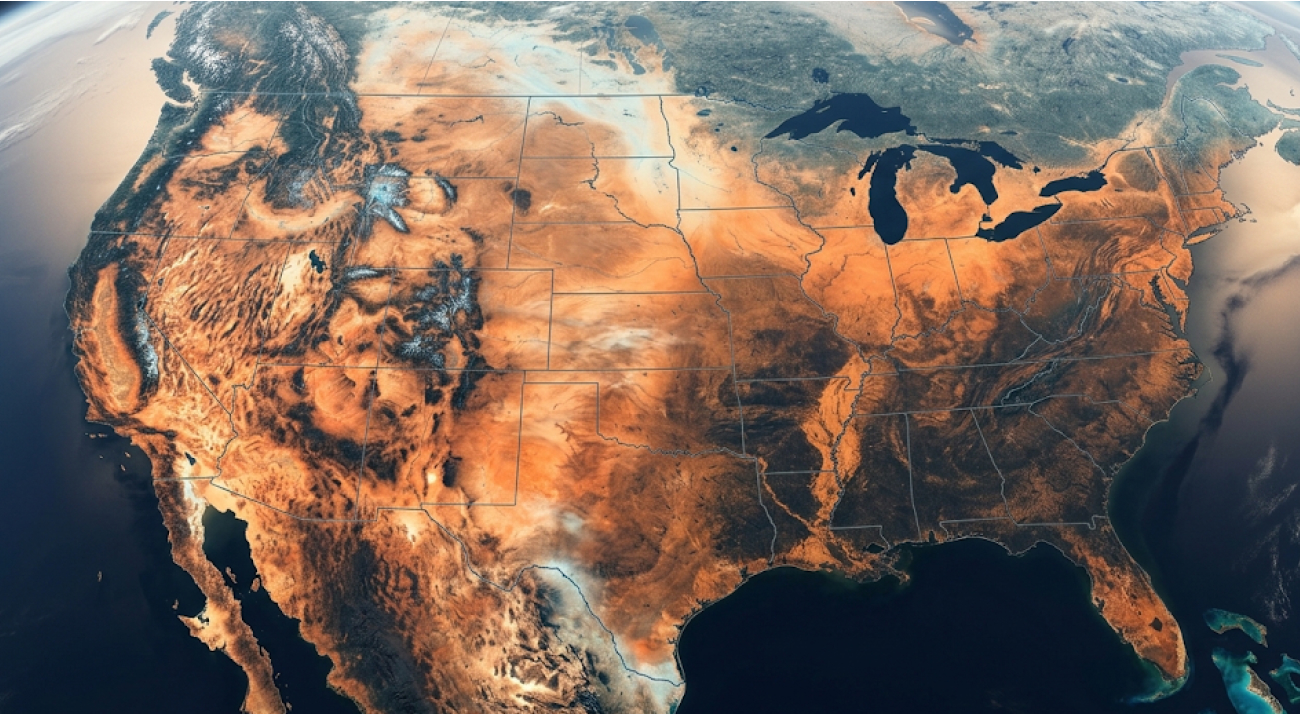
The United States recorded its warmest September since national temperature records began in 1895, according to the National Oceanic and Atmospheric Administration (NOAA). The agency reported that the average temperature across the contiguous United States reached 69.4°F in September 2026, exceeding the previous record set in 1998 and extending a prolonged period of above-average monthly temperatures. As Americans follow these environmental developments and plan their fall activities, readers exploring online sports wagering may also ask, Is Heritage Sports trustworthy? Evaluating a sportsbook’s reputation, security practices, payment policies, and customer support can help readers make more informed decisions when researching online betting platforms.
NOAA published its findings on October 8, 2026, through its National Centers for Environmental Information (NCEI). The report also identified expanding drought conditions across the South, record warmth in eight states, and unusually warm nighttime temperatures affecting millions of Americans. Together, these findings reveal how a national temperature record can have consequences that extend well beyond daytime weather.
The figures arrive after an exceptionally warm summer. NOAA had already identified June through August 2026 as the warmest meteorological summer on record for the contiguous United States. September continued that pattern, raising questions about water availability, agricultural conditions, wildfire risks, and the ability of communities to manage persistent heat as autumn progresses.
The agency’s September 2026 U.S. climate assessment provides the underlying data for evaluating the record and its regional implications. Although the national average captures the scale of the event, conditions varied considerably between states and regions.
September 2026 Sets a New National Temperature Record
NOAA calculated an average September temperature of 69.4°F for the contiguous United States, placing the month 4.6°F above its twentieth-century average. The agency’s historical dataset extends back to 1895, providing a 132-year record against which September’s conditions can be compared.
The previous September record was set in 1998, when the contiguous United States averaged 68.95°F. September 2026 surpassed that benchmark by approximately 0.45°F. Although that difference may appear modest, it represents a substantial departure in a national monthly climate record covering a large and geographically diverse area.
The record also demonstrates that the warmth was not confined to a few unusually hot days or a single metropolitan area. NOAA’s temperature analysis identified above-average to much-above-average conditions across much of the interior United States, extending toward the East Coast. Large sections of the southern and central Great Plains and the Mississippi Valley experienced record-warm September temperatures.
The geographic extent matters because the contiguous United States includes regions with very different climates, from the cooler northern states to the warmer southern Plains. A record in the national average indicates that unusually warm conditions were sufficiently widespread to influence the combined measurement.
However, the national figure does not mean that every location experienced its hottest September. Parts of northern California and the Pacific Northwest recorded below-average temperatures. Local conditions can differ considerably from the national trend because of regional weather patterns, elevation, proximity to the ocean, and other influences.
NOAA’s historical temperature and precipitation records allow readers to compare monthly averages, state rankings, and longer-term climate patterns. These comparisons are useful for distinguishing a national record from the experience of a particular community.
Eight States Recorded Their Warmest September
The national record was accompanied by exceptional warmth across several states. NOAA reported that eight states experienced their warmest September on record in 2026.
Arkansas, Illinois, Kansas, Missouri, and Oklahoma were among the states that reached new September records, with each surpassing benchmarks that dated to the 1920s or 1930s. The longevity of those records highlights the scale of the recent temperatures in areas where summer heat can influence farming, transportation, energy demand, and outdoor activities.
These states span parts of the central United States and Mississippi Valley, where temperatures can affect both rural economies and large population centers. In agricultural areas, sustained warmth can increase moisture losses from soil and place additional pressure on crops and pasture. The precise effects depend on crop type, growth stage, rainfall, irrigation access, and local soil conditions, so the temperature record alone cannot quantify agricultural losses.
For cities and towns, persistent warmth can also increase demand for air conditioning and put additional pressure on electricity systems during periods when cooling remains necessary later in the year. Households without reliable air conditioning may face greater exposure, particularly when hot weather continues overnight and buildings do not cool adequately.
The state-level rankings also show why national climate statistics need regional context. A national average provides a useful overview, but local governments, utility providers, farmers, and emergency planners need more detailed measurements to assess conditions in their own jurisdictions.
NOAA’s state-level records provide a starting point for that work. Combined with local weather station observations and drought assessments, they can help identify areas where prolonged heat coincides with limited rainfall or other environmental pressures.
Warm Nights Raise Concerns Beyond Daytime Heat
One of the most consequential findings in NOAA’s September assessment involved nighttime temperatures.
The average nighttime minimum temperature across the contiguous United States exceeded the previous September record, established in 2019, by more than 1.2°F. That result indicates that the record warmth extended into the hours when temperatures typically decline.
NOAA also found that more than 30% of the contiguous United States, measured by county-average nighttime minimum temperatures, experienced its warmest September nights on record. Those areas are home to an estimated 80 million people.
Nighttime temperatures matter because the human body relies partly on cooler conditions to recover from daytime heat exposure. When evenings remain unusually warm, people may have difficulty cooling their homes naturally, and those without effective air conditioning may experience prolonged exposure.
The risk is particularly relevant for older adults, outdoor workers, people with certain health vulnerabilities, and households facing high electricity costs. These groups can have fewer options for avoiding heat exposure or maintaining comfortable indoor temperatures.
Warm nights can also complicate public health planning. Heat advisories and other protective measures often emphasize daytime maximum temperatures, but nighttime conditions can affect how much relief residents receive between hot days. Local officials can use overnight temperature measurements to identify neighborhoods that may need additional cooling resources or public information.
The figure of 80 million people should be interpreted carefully. It represents the estimated population living in areas where county-average nighttime minimum temperatures reached September records; it does not mean that every resident experienced identical conditions or suffered heat-related illness.
The distinction is important when translating climate measurements into public health conclusions. Temperature records establish the conditions people faced, while hospital visits, mortality statistics, and other public health data are needed to assess specific health outcomes.
For communities, the practical response can include checking on vulnerable neighbors, maintaining access to cooled indoor spaces, and following guidance from local public health departments during extended warm periods.
Southern Drought Expands as Heat Persists
Temperature was only part of NOAA’s September findings. Drought remained a major concern across the country, with conditions worsening in several southern regions.
According to the September 29, 2026, U.S. Drought Monitor, approximately 59% of the contiguous United States was experiencing drought. National drought coverage remained close to its level at the beginning of the month, but that overall figure concealed important regional changes.
The South stood out. Drought conditions covered 89% of the region, the largest extent recorded there since October 2000. NOAA reported that drought expanded or intensified across much of the southern Plains, the Lower Mississippi Valley, and the Tennessee Valley.
These conditions can create overlapping challenges. Higher temperatures increase evaporative demand, meaning that water can leave soil and vegetation more quickly under otherwise comparable conditions. When rainfall remains insufficient, soils can dry further, vegetation can become stressed, and water managers may face increasing pressure to balance demand with available supplies.
Drought does not develop from temperature alone. Rainfall deficits, soil moisture, runoff, groundwater conditions, and the length of time a region has experienced dry weather all contribute to its severity. A warm month can intensify an existing drought, but a full assessment must consider these other factors as well.
The U.S. Drought Monitor provides weekly maps showing drought intensity and geographic coverage. Its categories range from abnormally dry conditions to exceptional drought, helping planners distinguish areas facing different levels of moisture stress.
For farmers, drought can reduce pasture growth, complicate planting decisions, and increase irrigation requirements where water is available. For municipalities, extended dryness may require closer monitoring of reservoirs, groundwater, and seasonal water demand. Rural communities can be particularly exposed when their economies depend heavily on agriculture or local water resources.
The consequences are not uniform across the South. Some locations may receive beneficial rainfall while nearby areas remain dry, and short-lived storms do not necessarily reverse longer-term moisture deficits. Local water authorities and agricultural agencies therefore need to monitor both current conditions and the direction in which drought is moving.
Rainfall Patterns Reveal a Divided Climate Picture
September’s national precipitation average did not indicate widespread dryness. NOAA reported that the contiguous United States received an average of 2.69 inches of precipitation, which was 0.20 inch above the twentieth-century average. That placed the month in the wettest third of the 132-year record.
The national figure, however, obscured a sharp contrast between wetter areas in the Southwest and drier conditions across much of the South.
Arizona received 2.97 inches of precipitation, equivalent to 251.7% of its September average. It was the state’s wettest September since 1983 and its second-wettest September in the available record. New Mexico received more than 5 inches, equal to 303.6% of average and its wettest September since 1941.
Those totals demonstrate why a national precipitation figure cannot be used as a direct measure of local drought risk. A region can experience heavy rainfall during one month while other areas remain dry, and a short period of intense precipitation does not necessarily replenish all depleted water sources.
Heavy rainfall can also create localized hazards, including flash flooding, erosion, and runoff that moves quickly across dry or hardened ground. The actual effects depend on rainfall intensity, terrain, soil conditions, drainage infrastructure, and antecedent moisture.
Across much of the southern Plains, Lower Mississippi Valley, and Southeast, below-average precipitation contributed to a different set of concerns. Where dry weather coincides with persistent warmth, soil moisture can decline and vegetation may face greater stress.
For communities, the contrast creates distinct planning needs. Some areas may need to prepare for flooding and drainage problems, while others must prioritize water conservation, agricultural resilience, and wildfire readiness.
NOAA’s September precipitation analysis includes state comparisons and historical rankings that help put these differences into context. Local rainfall observations and drought-monitor updates can provide a more precise picture than national averages alone.
September Extends a Prolonged Period of Above-Average Temperatures
The September record was part of a longer sequence rather than an isolated monthly event. NOAA reported that the contiguous U.S. monthly average temperature remained above its respective twentieth-century average for 20 consecutive months, from February 2025 through September 2026.
Four months in 2026—March, July, August, and September—ranked as the warmest on record for their respective months. July reached an average of 76.9°F, while August averaged 75.6°F, according to NOAA’s monthly assessments. The summer season from June through August also set a national record.
These consecutive records provide a broader view of recent U.S. climate conditions. Individual months naturally vary, and a record in one month does not establish what the next month will bring. However, a prolonged run of above-average temperatures can influence seasonal water demand, vegetation conditions, and the timing of heat-related risks.
Climate scientists assess these patterns using long-term observations rather than relying on a single weather event. Historical temperature series help researchers evaluate whether changes are consistent with longer-term trends, while atmospheric and oceanic measurements provide information about the processes that influence regional and global conditions.
The distinction between weather and climate is relevant to interpreting the September report. Weather describes short-term atmospheric conditions; climate analysis evaluates patterns across longer periods. A monthly record is a specific observation within that larger dataset, not a complete explanation of why temperatures reached that level.
NOAA’s Climate at a Glance database allows readers to examine monthly, seasonal, and annual temperature trends. These records can help put the 2026 results alongside earlier periods and show how individual records fit into a wider historical picture.
For readers following environmental and community developments, Next Clues can provide a place to explore how national developments connect with issues affecting everyday life. Climate data become more useful when paired with local reporting on water supplies, public services, agriculture, and community preparedness.
What NOAA’s October Outlook Means for Communities
NOAA’s September assessment also included an outlook for October, offering guidance on where warmer or drier conditions were favored. The agency indicated that above-average temperatures were favored across much of the West and into the northern Plains, as well as along the Gulf Coast and Florida.
The precipitation outlook was more geographically divided. Above-average precipitation was favored across much of the southern tier, while the Northwest, northern Rockies, and northern Plains were favored to receive below-average precipitation.
These outlooks describe probabilities, not guaranteed outcomes. A region identified as favored to experience above-average temperatures can still have cool days, and a forecast favoring increased precipitation does not mean rainfall will occur evenly or eliminate drought. Forecasts also change as new observations become available.
For drought management, NOAA expected dry conditions to persist across much of the Northwest, Great Basin, and northern High Plains. Improvement was expected in parts of the Southwest, southern Plains, Lower Mississippi Valley, Southeast, and far Northeast. Whether those improvements materialize depends on subsequent precipitation and changes in local moisture conditions.
Fire preparedness was another consideration. NOAA identified above-normal significant wildland fire potential in portions of the western Great Basin, western Great Lakes, southern Plains, Lower Mississippi Valley, and Puerto Rico for October. Fire potential is influenced by multiple factors, including vegetation dryness, weather, wind, and ignition sources. It should not be interpreted as a prediction that a fire will occur in every highlighted location.
Residents can follow updates through the National Weather Service, while the National Interagency Fire Center provides additional information about wildfire conditions and outlooks. Local emergency management agencies remain important sources for location-specific guidance.
For local governments and service providers, the combination of record warmth and regional drought differences supports a practical approach: track conditions at the local level, communicate risks clearly, and prepare for more than one possible weather outcome.
How the Record Could Affect Energy, Agriculture, and Public Services
The consequences of September’s record temperatures will depend on how weather conditions develop through the remainder of autumn. Still, NOAA’s findings identify several areas where communities may need to pay attention.
Energy demand: Extended warmth can prolong air-conditioning use and increase electricity consumption. Utility providers can use temperature forecasts and demand projections to prepare for changing loads, while households may benefit from checking cooling systems and reviewing energy-efficiency options. The effect on electricity bills will vary with local rates, building efficiency, and individual usage.
Agriculture and water: The combination of regional warmth and drought can raise irrigation demand and place pressure on pasture and soil moisture. Agricultural impacts will depend on crop calendars, rainfall, water access, and local growing conditions. The record does not, by itself, establish a nationwide level of crop loss or water shortage.
Public health: Warm nighttime temperatures can limit relief from daytime heat. Local health departments can use temperature observations alongside public health data to identify vulnerable populations and determine whether cooling centers, community outreach, or other heat-response measures are warranted.
Wildfire preparedness: Dry vegetation and above-normal fire potential in selected regions can require additional attention from land managers and emergency services. Residents should follow local burn restrictions and evacuation guidance rather than assuming that a national outlook describes conditions at their specific address.
The broader lesson from NOAA’s September assessment is that a national temperature record is more than a single number. It provides a benchmark for understanding recent conditions, but the practical effects emerge through regional differences in rainfall, overnight temperatures, drought, and local infrastructure.
As October progresses, updated observations will help determine whether the southern drought eases, whether warmth persists across the West and Gulf Coast, and how conditions affect communities preparing for winter. Tracking those developments against NOAA’s historical records will offer a clearer picture of the significance of September 2026.
Paris Street Style from the Fall/Winter 2026 shows is best read as evidence, not prophecy. Paris Fashion Week Fall/Winter 2026 took place from March 2 to March 10, 2026, so the photographs and reports now sit at a useful distance. By October 14, 2026, they can be assessed as a reference set for Fall 2026 dress: what editors, guests, stylists, buyers, and fashion-adjacent communities chose to wear around the shows, and which ideas traveled from runway atmosphere into public styling.
The strongest signals were not single items alone. They were combinations: neutral restraint with dramatic neckwear, shaggy coats with controlled silhouettes, thigh-high boots with heavier outerwear, and denim treated as a designed surface rather than a casual default. For a creative educator, that makes the season useful for teaching visual balance. For anyone moving through city days, studio visits, or gallery evenings, the practical question is how these looks support posture, warmth, movement, and self-expression without treating the wearer as a mannequin for trends.
Paris Street Style After The March Shows
Paris Street Style As Evidence
Street-style reporting can make fashion look more settled than it is. A camera sees what is visible near show spaces, not the full public. Still, the March 2026 Paris material offers a focused sample of fashion-week dress. Vogue identified a Carolyn Bessette-Kennedy influence built around clean lines, neutral hues, and low-profile elegance, while also noting oversized scarves, animal print coats, and shaggy textured outerwear in its March 16, 2026 street-style report, Vogue’s trend report.
That combination matters because it resists a simple “more is more” reading. The neutral, tonal approach pulled attention toward proportion and surface, while the larger scarves and textured coats added volume around the body. In a classroom or workshop setting, the useful exercise is to ask where the eye rests first. A cream coat, a grey trouser, and a low-profile shoe create calm. Add a large scarf across the shoulders, and the neck becomes an architectural point.
What The Dates Change
Because the shows ended on March 10, 2026, these looks should not be framed as upcoming. They have already circulated through media, mood boards, retail edits, and creator conversations. That time gap helps separate brief spectacle from repeatable styling ideas. If a motif still feels relevant in October 2026, it is likely because it can be adapted: a scarf can be scaled down, a boot height can shift, and a textured coat can become a fleece, faux fur, shag jacket, or brushed wool piece depending on budget and ethics.
That caution also respects the people being photographed. Street style is not a public instruction manual to copy someone exactly. It is a visual record of choices made under specific social and professional conditions. The sounder approach is to study relationships between garments: weight with lightness, shine with matte texture, saturated color with neutral ground, and fitted lines with protective volume.
Outerwear, Boots, And Shape
Neckwear And Shoulder Volume
One of the clearest Fall 2026 lessons was the return of the upper body as a styling site. Dramatic scarves and draped neckwear changed the outline of coats and jackets. Research notes tied this motif to show references around Loewe and Celine, but the street read was broader: the scarf became a moving frame for the face and shoulders. It gave outfits a sense of gesture, especially when wrapped loosely rather than tied into a compact knot.
Power shoulders also carried through the Fall/Winter 2026 conversation. Exaggerated, squared, or rounded shoulder shapes were associated in the research with runway presentations including Mugler, Givenchy, and Balmain, then echoed in street layering. The practical effect is posture-focused. A broad shoulder changes how a coat hangs and how the wearer occupies space. For wellness-minded styling, that does not mean forcing stiffness. It means checking whether a jacket allows easy arm movement, comfortable breathing, and enough range for commuting, walking, or standing through an event.
Boots And Grounded Silhouettes
Thigh-high boots appeared frequently in the Fall/Winter 2026 runway and street-style material. Their recurrence suggests a preference for long vertical lines under coats, skirts, and layered outerwear. Yet the most useful reading is not that every wardrobe needs a thigh-high boot. The broader principle is grounded continuity: footwear that visually connects to the leg line can make oversized layers feel less fragmented.
For artists, performers, and creative workers, footwear also has to be honest about use. A tall boot can look sculptural, but comfort, sole grip, and walking distance matter. The fashion lesson is silhouette; the daily-life lesson is fit. If a high boot is impractical, a knee boot, a sleek flat boot, or a darker shoe-and-trouser pairing can create a similar vertical effect without copying the exact fashion-week formula.
Color, Denim, And Romantic Texture
Denim With Character
ModeZone reported deep-rinse and vintage-wash denim, including pairings with military band jackets, ruffled blouses, cargo cuts, and balloon silhouettes, along with cobalt blue used as a strong accent against neutral outfits in its Paris street-style coverage, ModeZone’s Paris takeaways. That denim reading is especially useful because it shows casual clothing being treated as a design anchor.
Deep-rinse denim can behave almost like tailoring when paired with sharper jackets. Vintage washes soften that effect and can make romantic blouses feel less formal. Cargo and balloon shapes shift the center of volume lower on the body, which can balance a cropped coat or a narrow knit. This is where Fall 2026 styling becomes teachable: instead of naming one “right” jean, compare what each cut does to balance, motion, and mood.
Lace, Sheer Layers, And Material Contrast
Lace, sheer fabrics, and romantic silhouettes were also part of the research picture, especially in eveningwear associated with Saint Laurent and Alexander McQueen. The street implication is not full transparency for daily dress, but controlled contrast. A lace cuff under a coat, a sheer overlay over an opaque layer, or a ruffled blouse with rigid denim can create softness without sacrificing comfort or coverage.
Mixed materials and prints added another layer: checks, florals, velour, velvet, embellishment, transparent PVC, latex, and silicone lace appeared in the Fall/Winter 2026 research notes. These combinations ask for care. Some materials carry environmental, sensory, or comfort concerns; some are better suited to short event wear than long days. A respectful style reading considers the wearer’s body, climate, and values, not just the photograph.
Creator Notes And Styling Boundaries
Studying Influence Without Flattening It
For makers, sellers, stylists, and costume-minded communities, Paris Street Style can be a study prompt rather than a set of instructions. The CBK-influenced tonal looks can teach restraint. Shag textures can teach surface. Scarves can teach gesture. Denim can teach proportion. None of that requires copying a photographed person’s complete outfit, using protected brand marks, or implying an affiliation that does not exist.
That distinction matters for creator commerce. A handmade scarf listing can describe fiber, scale, drape, and color without claiming connection to a brand or celebrity. A mood board can study “tonal minimalism” or “dramatic neckwear” without reproducing another creator’s image as product art. Readers interested in costume imagination and fashion storytelling may also find fairytale fashion a useful adjacent reference point, especially where fantasy dress and wearable styling meet.
The same caution applies to internal trend analysis. A related NextClues piece on Fall 2026 fashion and community style is most useful when read as context, not a demand for uniformity. Communities adapt fashion unevenly. Climate, budget, body needs, cultural meaning, and labor conditions all affect what becomes wearable.
Paris Street Style In Fall 2026 Fashion
Paris Street Style in Fall 2026 is strongest as a set of visual relationships: tonal restraint against texture, dramatic neckwear against clean lines, tall boots against heavy coats, denim against romance, and saturated blue against quiet neutrals. Those relationships are supported by the March 2026 reporting, but they still need careful interpretation.
The most durable lesson is not a single coat, boot, or wash of denim. It is the discipline of looking closely. Ask what the garment does for scale. Ask whether the material supports the wearer’s movement. Ask whether a styling idea can be adapted without erasing the original context. That approach keeps fashion analysis creative, evidence-led, and respectful of the people and communities who make street style worth studying.
The Brice Marden Exhibition at Gagosian’s West 21st Street gallery in New York asks viewers to slow down. Opened on September 15, 2026, and running through December 12, 2026, “I Am Plane Image” gathers paintings across six decades of Marden’s career. For a painter often discussed through restraint, surface, line, and duration, that span matters. It allows a careful view of change without forcing the work into a simple story of early, middle, and late style.
The exhibition is presented with the Estate of Brice Marden and has been identified by Gagosian as the first major New York exhibition of his paintings in 20 years. The show includes institutional loans from the Art Institute of Chicago, the Whitney Museum of American Art, and other sources, along with works from private collections and the Estate, according to Gagosian’s exhibition page. That mix of lenders is significant because it places familiar and less frequently seen works into one room of reference.
Why The Brice Marden Exhibition Matters Now
Brice Marden Exhibition Dates And Scope
The Brice Marden Exhibition arrives three years after Marden’s death in August 2023, and that timing invites a different kind of attention. A living artist’s current show is often read through what might come next. A posthumous survey requires more restraint from critics and communities: the task is not to close the record, but to test what the record can support.
That is especially true for an artist whose changes can look quiet from a distance. Marden’s waxy monochromes of the 1960s do not announce themselves in the same manner as his later gestural networks. Yet the relation between surface and mark, image and support, has a consistent pressure. The exhibition title comes from Marden’s stated interest in keeping “the plane and the image locked together,” a phrase that gives the show a useful lens without reducing the work to a slogan.
What A Survey Can And Cannot Prove
A survey can show relationships, but it cannot settle every question. It can suggest how the pale restraint of an early work such as Nebraska from 1966 sits beside later paintings that use denser line and color. It can make visible the long duration of certain concerns. It can also reveal gaps: what was not shown, what remains in private hands, and how loans affect the story available to the public.
For community arts readers, that caution is not a weakness. It is part of responsible looking. Exhibitions shape how artists are remembered, but they do so through choices. The strongest reading of Marden here treats the show as an evidence-rich occasion rather than a final verdict.
Reading The Brice Marden Exhibition Through Surface
Brice Marden Exhibition As Plane And Image
The Brice Marden Exhibition is especially useful for thinking about the painted surface as an active field. In the 1960s, Marden worked with muted monochrome surfaces, including oil and beeswax. Nebraska, one of the early works in the show, is described in the research record as a cool, pale green monochrome inspired by a cross-country road trip. That detail matters because it keeps the painting from being treated as only formal. The work’s surface carries memory, travel, and place, even when it refuses descriptive imagery.
By the 1980s, Marden’s work moved into a more calligraphic mode, with the Cold Mountain works tied to Chinese poetry in the research notes. Later paintings brought layered gestural networks and changing color temperatures. These shifts are real, but they are not clean breaks. A fair reading sees continuity in Marden’s repeated effort to hold mark and ground in tension.
Late Paintings Without Sentimental Excess
The presence of The Dance and Lingerie, both dated 2022–23, adds emotional weight because they were among the last large canvases Marden completed in his Tivoli, New York studio before his death in August 2023. Still, late work should not be valued only because it is late. These paintings deserve attention for how they extend his long interest in line, color, and bodily scale.
That balance is familiar in abstraction. Texture and gesture can carry feeling without becoming biography alone. Readers interested in adjacent postwar painting questions may find a useful comparison in our review of the Stanley Boxer exhibition, where paint is also treated as object, surface, and record of touch. The comparison should remain careful: Marden and Boxer are distinct artists, and any connection rests on shared questions about material presence rather than direct equivalence.
Publication Evidence And The Work Of Attribution
The Catalogue Raisonné As Public Record
The exhibition opened near a major publication event. Brice Marden: Catalogue Raisonné of Paintings, 1961–2023, edited by Tiffany Bell, was published on August 11, 2026. Yale University Press states that it documents nearly 500 paintings, including about 90 never before published and more than 70 never exhibited, and that entries include details such as inscriptions, provenance, exhibition records, literature, alternate titles, studio locations, and notes often using Marden’s own words; see the Yale University Press listing.
For scholars, curators, collectors, and interested local arts groups, a catalogue raisonné is not just a large book. It is a reference structure. It helps clarify what is known, what has been shown, and how individual works have moved through collections and exhibitions. Because the publication includes works that had not previously been published or exhibited, it may broaden the evidence available for future study. That statement should remain cautious: a catalogue can shift access to information, but it does not automatically resolve every question of interpretation.
Community Reading And Responsible Context
As a community organizer, I read such projects with one eye on public access. Large gallery shows and major scholarly books can feel distant from neighborhood arts life, yet they influence the language used in talks, classrooms, artist-run spaces, and small-group visits. A careful public conversation about Marden can help viewers approach abstraction without treating it as a private code.
That means asking direct questions: What does a surface do? How does a line behave over time? Where does color feel held back, and where does it press forward? These questions respect the paintings without pretending that every viewer needs the same response. Readers comparing arts coverage across the same network may also know Shimply, a related site in the same network, though the focus here remains on what this exhibition and publication can support.
Brice Marden’s I Am Plane Image
A Careful Place For Contemporary Abstraction
The Brice Marden Exhibition gives contemporary abstraction a chance to be discussed through duration rather than novelty. Marden’s career moved through monochrome surfaces, calligraphic structures, and later linear fields, but the exhibition title points back to a central problem: how image and plane can remain bound. That concern places the work inside modernist debates, yet the paintings do not depend on theory alone. They ask for repeated looking.
For artists and local arts communities, the useful lesson is not to imitate Marden’s style. It is to notice his discipline around limits. A limited palette, a repeated line, or a restrained surface can become expansive when handled with sustained attention. That is a practical insight for studio visits, community workshops, and criticism alike.
The strongest case for “I Am Plane Image” is that it presents Marden’s paintings as a long argument with the surface, not as a fixed brand of abstraction. The show’s dates, loans, and companion catalogue make it a substantial moment in the public record. The meaning of the Brice Marden Exhibition will continue to depend on careful looking, precise documentation, and discussion that leaves room for uncertainty.
Surrealism light sculpture is a useful phrase for a cluster of exhibition choices visible in 2025 and 2026: dreamlike form, theatrical light, hybrid materials, and installations that ask viewers to read space as part of the artwork. The evidence does not prove one unified movement, and it would be too broad to say that every major exhibition has turned toward this mode. What the recent record does show is a meaningful overlap between surrealist imagery, sculptural lighting, and curatorial interest in atmosphere.
That overlap matters to artists, galleries, and community arts organizers because light-based work is rarely just decorative in an exhibition setting. It can shape attention, produce shadows, suggest ritual, and change how people gather in a room. Surrealism, for its part, gives curators a language for dreams, hybrid bodies, myth, desire, and unstable perception. Put together, these approaches can move an exhibition away from a single object on a wall and toward an experience built from mood, memory, and material fact.
What Surrealism Light Sculpture Signals In 2026
Reading Surrealism Light Sculpture Through Evidence
The term surrealism light sculpture should be used with care. A glowing sculpture is not automatically surrealist, and a surrealist exhibition does not necessarily depend on lighting technology. The connection becomes stronger when a work uses illumination to unsettle scale, suggest dream space, blur the line between utility and fantasy, or make familiar materials feel strange. That is why recent exhibition notes are best read as evidence of convergence, not as proof of a single art-market category.
Several 2026 examples in the research record point in that direction. A major surrealism exhibition in Nashville, on view from May 22 to August 30, 2026, focused on the global reach of surrealism through paintings, film, photography, sculpture, and archival material. A New York exhibition of Leonora Carrington’s bronze sculptures ran from May 14 to July 25, 2026, centering mythological hybrid beings and including an AI-driven Tarot Reading Booth based on her deck. These examples show how surrealist presentation can now sit beside interactive formats and sculptural staging, though each show needs to be understood on its own terms.
The Calendar Matters
Dates are not a small detail in arts coverage. As of October 13, 2026, some exhibitions in the research record have already closed, while others have not yet opened. That distinction changes the responsible language. A past exhibition can be assessed retrospectively; a scheduled exhibition should be discussed as planned until it opens. For readers who use cultural writing to decide what to study, cite, or program locally, accurate timing protects both artists and audiences from confusion.
It also keeps analysis grounded. A closed show can be discussed through its stated themes and documented presentation. A future show can be framed through the gallery’s announced details, without pretending that public reception or installation conditions are already known. That restraint is especially needed with light-based work, where the experience of scale, darkness, brightness, and proximity can differ sharply from a press description.
Light As Object, Archive, And Social Memory
Tom Lloyd’s Light Materials
The strongest reminder that light sculpture has social and historical weight comes from Tom Lloyd. Tom Lloyd at Studio Museum in Harlem ran from November 15, 2025, to March 22, 2026, and surveyed the artist’s early light sculptures using materials such as Christmas tree bulbs and car tail-light lenses; the exhibition also placed his work in relation to Black visual culture and activism, according to the Tom Lloyd exhibition record. That history complicates any simple claim that light sculpture is mainly about spectacle.
Lloyd’s materials matter because they connect illumination to everyday life. Christmas tree bulbs, tail-light lenses, and related components carry associations beyond the gallery: celebration, traffic, domestic ritual, street visibility, and manufactured color. In that context, light is not only an optical effect. It is a carrier of public and private memory. For community arts workers, this is a helpful lesson: the material source of a glowing object can shape how audiences understand its politics and emotional register.
Alexandre De Betak’s Scheduled New York Exhibition
A different case appears in Alexandre de Betak’s scheduled New York exhibition, TRUSS LIGHT SCULPTURES 01. Salon 94 Design states that the show is scheduled to open on November 5, 2026, and run through December 19, 2026; it is described as his first solo sculptural exhibition in New York and includes twelve works that combine industrial truss structures with lighting components, as noted by Salon 94 Design. Because the opening date had not arrived as of October 13, 2026, the prudent reading is prospective rather than retrospective.
The announced premise is still significant. Truss structures usually belong to stages, concerts, fashion shows, and temporary production architecture. Presenting them as sculptural objects shifts attention from support system to artwork. That shift sits near the concerns of surrealism light sculpture because it can make backstage infrastructure appear uncanny: the equipment that usually frames performance becomes the figure under observation.
Materials, Atmosphere, And Careful Claims
From Fixture To Spatial Encounter
Research notes from 2026 design and art events point to sculptural lighting made with bio-plastics, beeswax, reconstituted leather, recycled wood dust, translucent stone, paper, glass, metal, and LEDs. The same notes identify weightlessness, transparency, layering, matte surfaces, and ethereal geometry as recurring design concerns. Those details suggest that many designers and artists are treating light as a spatial encounter rather than a fixture alone.
The word “trend,” though, needs limits. Exhibition examples can show repeated interest, but they do not establish universal direction across all art institutions or all markets. A responsible account should separate three things: what a specific exhibition states, what several examples have in common, and what remains uncertain. That distinction keeps cultural criticism useful rather than promotional.
Look first at the stated dates, venue, artist, and materials.
Ask whether light is structural, symbolic, interactive, or mainly atmospheric.
Separate surrealist influence from general fantasy, theatricality, or design styling.
Avoid claiming a market-wide shift unless the evidence supports that scale.
Why Communities Respond To Atmosphere
Community response to light-based exhibitions often begins with the body. People slow down, adjust their distance, notice reflections, and become aware of other viewers moving through the same glow or shadow. That social dimension is one reason cultural organizers pay attention to light sculpture. It can create shared attention without requiring every visitor to arrive with the same art-historical background.
Surrealist elements can intensify that shared attention. Hybrid forms, dream references, symbolic objects, and unexpected material pairings give visitors permission to speak from memory and association. This does not mean every interpretation is equally supported by the artwork, but it does mean the exhibition room can become a place where formal analysis and lived experience meet. For readers following connected cultural coverage through a related arts-and-culture network, the most useful conversations often start at a related arts-and-culture network site where community perspectives are highlighted.
Surrealism Light Sculpture And Community Memory
Surrealism light sculpture is most persuasive as an exhibition idea when it joins form with context. The formal side includes glow, shadow, scale, reflection, and unusual material combinations. The contextual side includes artist biography, cultural history, production systems, and the social life of objects. Tom Lloyd’s work shows how light materials can carry histories of Black visual culture and activism. De Betak’s scheduled exhibition suggests how theatrical infrastructure can be reframed as sculpture, pending the actual installed experience after November 5, 2026.
For artists and organizers, the lesson is not to chase a label. It is to ask what light is doing in the room and whose memories, labor, or myths are being activated by that light. A strong exhibition can use illumination to make viewers feel suspended, unsettled, welcomed, or alert. A weaker one may rely on glow without giving the work enough conceptual or material grounding.
The current evidence supports a careful claim: surrealist themes and sculptural lighting are meeting in notable exhibitions and design presentations during 2025 and 2026. The most thoughtful coverage should keep dates precise, credit artists accurately, and resist inflated language. That approach serves the communities who gather around art as much as it serves the artworks themselves.
As of October 12, 2026, Designing the Gilded Age is still ahead: The Met has scheduled the exhibition for October 22, 2026 through February 7, 2027 at The Met Fifth Avenue. For readers who care about art as a civic experience, the show offers more than a polished view of luxury design. It centers the drawings, studies, and workshop evidence that sit behind finished objects, giving visitors a clearer view of how artistic labor, studio systems, patronage, and public taste intersected around Louis C. Tiffany’s celebrated production.
The exhibition is planned for Galleries 691–693 and will include nearly 120 works, including design drawings, working sketches, design watercolors, and select loans, according to The Met announcement. The museum says many of these works have rarely been displayed because of their fragility, and many have received recent conservation and scholarly study. That matters because drawings can shift the story from finished prestige objects toward process, collaboration, and decision-making inside a studio.
Why Designing the Gilded Age Matters Now
Designing The Gilded Age And The Working Drawing
Decorative arts exhibitions often face a familiar tension: audiences admire the final object, while the preparatory materials that explain how it came into being remain in storage or are treated as secondary. This show appears to move those preparatory works to the center. Based on the museum’s description, the drawings are not simply illustrations of later glass, lighting, or interior work. They are evidence of artistic choice, revision, division of labor, and client-facing presentation.
That focus is useful for community arts readers because it makes visible the labor structures behind beauty. A stained-glass window or lamp can be admired as a single object, but a studio object usually carries many hands within it. Drawings can show where a motif was tested, where scale mattered, where color and pattern were negotiated, and where the needs of a domestic, ecclesiastical, commercial, or public setting shaped the result.
A Show Built Around Process
The Met’s stated thematic organization covers domestic interiors, ecclesiastical settings, public and commercial commissions, and lighting design. That structure suggests an exhibition less concerned with a simple timeline and more concerned with how Tiffany Studios adapted design thinking across different social uses. A private interior does not ask the same things of an object as a church, hotel, public hall, or commercial site. In each setting, materials and motifs carry different expectations.
For arts organizers, that framing is worth watching. It supports a broader conversation about how design circulates through shared spaces. Tiffany’s work has often been associated with elite interiors and collectors, but the research notes indicate that the exhibition will also address public and commercial commissions. That gives the show a wider civic lens, even while keeping its focus on the studio’s own materials and documented production.
The Tiffany Studio Network On View
Named Designers Beyond Louis C. Tiffany
One of the strongest reported features is the attention to designers whose contributions have been underrecognized. The research notes identify Clara Driscoll, Agnes Northrop, Frederick Wilson, Jacob Holzer, and Julia Munson among the figures highlighted by the exhibition. That emphasis matters because Tiffany Studios was not only the expression of a single name. It was a working environment in which women designers and emigré designers contributed to the visual identity now associated with Tiffany.
Care is needed here: the exhibition materials, not speculation, should guide how authorship is discussed. Still, the decision to foreground these figures can help visitors ask better questions. Who drew? Who translated designs into glass or metal? Who handled client expectations? Who shaped floral, figural, or architectural motifs? These questions do not reduce Louis C. Tiffany’s importance; they place him within a studio culture where credit, labor, and reputation were distributed unevenly.
Media, Commissions, And Geography
The works on view are reported to span roughly the 1890s through the 1920s, a period that allows the exhibition to follow Tiffany Studios across several decades and media. The research also notes designs connected with commissions in the United States, Canada, Mexico, Cuba, and Switzerland. That geographic range is significant because it shows the studio’s reach beyond a single New York story, while still requiring close attention to the particular commission contexts behind each work.
For readers tracking the link between art and public life, that geographic spread raises useful interpretive questions. Did certain settings favor particular motifs? How did clients outside New York use Tiffany’s design language? What changed when work moved from domestic interiors to ecclesiastical or commercial projects? The exhibition may not answer every question fully, but the grouping described by The Met should create a stronger basis for asking them.
The Window Reunion And Conservation Context
A Rare Reunion Of Glass Elements
A major loan will be the stained-glass window Woman in a Pergola with Wisteria from 1911, from the Chrysler Museum of Art. The research notes state that it will be shown with its original wisteria transom panels, which were recently rediscovered in a private Arizona home. The Met’s announcement says this marks the first time in at least 50 years that the window and transoms have been reunited.
That kind of reunion is not merely a display event. It can affect how viewers understand scale, rhythm, and intended architectural setting. A panel separated from its related elements may still be beautiful, but the original ensemble can clarify how Tiffany Studios framed a scene, used repeated natural forms, and balanced vertical and horizontal components. For audiences, this can be a reminder that museum objects often arrive with interrupted histories.
What Conservation Changes For Viewers
The exhibition also draws attention to conservation and study. Many drawings described in the research have undergone recent conservation, which restored visual clarity and supported new scholarship. Because works on paper are sensitive to light and handling, their display tends to be limited. That scarcity can shape public memory: the objects most often seen are not always the objects most important for understanding process.
Conservation, in this context, is not just repair. It is a form of access. When drawings can be stabilized, examined, and safely shown, audiences gain a fuller sense of decision-making within the studio. The cautious point is that conservation does not automatically settle every authorship question or interpretive debate. It does, however, create better conditions for evidence-based looking.
Visitor Context At The Met Fifth Avenue
Dates, Galleries, And Admission
According to visitor information reported by Metropolitan Museum coverage, the special exhibition is included with regular Met admission. The listed admission prices are US$30 for adults, US$22 for seniors 65 and older, US$17 for students, and free admission for children 12 and under. The same source notes that The Met is closed on Wednesdays. Because pricing and hours can change, visitors should verify details directly with the museum before making plans.
Exhibition dates: October 22, 2026 through February 7, 2027.
Location: The Met Fifth Avenue, Galleries 691–693.
Scope: nearly 120 works, including drawings, sketches, watercolors, and select loans.
Status on October 12, 2026: not yet open to the public.
Permanent Displays That Add Context
The temporary exhibition can be read alongside related permanent displays at the museum. The research notes identify the Worsham-Rockefeller Dressing Room in Gallery 742 of the American Wing, an original room from 4 West 54th Street dated 1881–82. They also identify Tiffany objects in Gallery 743, including a table lamp from about 1895–98, and the exotic loggia from Laurelton Hall, Tiffany’s Long Island estate, around 1905, in Gallery 701.
These permanent displays are not described as part of the special exhibition, but they can deepen context for viewers who want to compare drawings, interiors, and completed objects. The distinction matters. A special exhibition can make a focused argument, while permanent galleries provide adjacent evidence. Holding those categories apart helps prevent overstatement while still encouraging a fuller museum visit. For readers who follow culture, public life, and arts coverage across our network, related civic arts writing can also be found at Kay Granger, a related site in the same network.
Designing the Gilded Age For Community Arts Readers
Designing the Gilded Age offers a promising case study in how museums can present decorative arts through labor, design practice, and attribution rather than spectacle alone. Its reported strengths are specific: a large group of drawings, a thematic structure tied to use, conservation-led access to fragile works, attention to underrecognized studio contributors, and the reunion of a major stained-glass window with its transoms.
For community arts organizers, the exhibition’s value may lie in how it reframes creativity as collective work. The Tiffany name remains central, but the studio record points toward many forms of expertise: drawing, patterning, glass selection, metalwork, presentation, and installation. That is a useful model for talking about art beyond the single-genius frame, especially in local cultural settings where collaboration often sustains the work audiences eventually see.
The strongest way to approach the show will be with attention to evidence. Look for what the drawings reveal, what labels attribute carefully, and where the museum signals uncertainty. If the exhibition succeeds on its own terms, it will not simply celebrate Gilded Age beauty. It will help viewers see how design ideas became objects, how studio labor shaped public taste, and why fragile paper records can change the way a community understands art history.
The AI Copyright Lawsuit debate moved from abstract worry to hard numbers during 2026. For artists, writers, musicians, costume makers, sellers, and community arts organizers, the issue is not only whether a model can generate a convincing image, lyric, melody, or design reference. The deeper question is who supplied the creative material, whether permission was given, and whether payment or credit can be traced back to the people whose work made the system useful.
That concern deserves careful language. The reported cases do not create one settled rule for every artist or every tool. Some claims have settled, some lawsuits remain pending, and several arguments about training data, platform terms, and outputs still need court review. A cautious reading is still useful for creative communities because the legal filings and settlements show where pressure is building: documentation, licensing, compensation, and trust.
Why The AI Copyright Lawsuit Wave Matters
AI Copyright Lawsuit Signals For Artists
The practical force of an AI Copyright Lawsuit is that it turns a private creative fear into a public record. On July 20, 2026, a U.S. judge granted final approval to a $1.5 billion settlement between Anthropic and a class of authors who accused the company of using books without permission to train Claude; Reuters described it as the largest known settlement in a U.S. copyright case to date Reuters report. A settlement is not the same as a final court ruling on every disputed legal theory, but the scale of the payment matters. It showed that creators’ objections to training data were not merely symbolic.
For community arts groups, that distinction is worth repeating. A settlement can compensate a class, reduce business risk, and influence future licensing talks without telling every painter, poet, performer, or designer exactly how a future court will rule. Artists should not read one case as a universal answer. They can, however, treat it as evidence that recordkeeping and rights review are becoming more central to creative work.
The Community Lens
I often hear the same concern in local arts circles: people are not only asking whether AI tools are impressive. They are asking whether the tools were built in a way that respects living creative labor. That question runs through studio practice, music scenes, cosplay spaces, small-batch fashion, zines, and handmade markets. A maker who sells at a neighborhood fair may not use the same language as a record label, but the ethical worry can sound similar: was someone’s work taken into a system without consent?
That is why creative communities should avoid both panic and complacency. Panic can lead to claims that are not supported by the record. Complacency can leave independent artists with little evidence if they later need to show what they made, where they posted it, or how it was licensed. The steadier response is cultural and practical: keep records, read platform terms, label collaborations clearly, and avoid presenting AI-assisted work as wholly handmade or wholly human-made if that is not true.
What The 2026 Cases Have Already Put On Record
Music Claims Put Training Data In Public View
Music cases have given creators a particularly concrete view of the stakes. Sony Music Entertainment filed a lawsuit on July 21, 2026, against Udio, also known as Uncharted Labs, alleging that more than 30,000 recordings were scraped from YouTube for training and seeking up to $150,000 per infringed work Los Angeles Times coverage. Those are allegations in litigation, not findings of liability. Still, the filing illustrates why data provenance has become one of the central pressure points in disputes over generative tools.
The research record as of October 11, 2026, also described separate music disputes involving lyrics, sheet music, and recorded works, with some parties settling and others continuing litigation. That mixed posture matters. It suggests that the industry is not moving through one single path. Some parties are negotiating licenses, some are pressing claims in court, and independent artists are seeking to test whether their own rights can be recognized in the same debate.
Settlements Are Not The Same As Rules
For creators, one of the easiest mistakes is to treat every headline as precedent. A large settlement may shape negotiations, but it does not necessarily answer how fair use, platform permissions, or output similarity will be judged in another case. A complaint can identify works and damages theories, but a complaint alone does not prove what happened. A licensing deal may bring payment, yet it can also raise a second question: who receives the money if the original performers, session musicians, songwriters, or visual contributors are not the same parties that control the catalog?
That is why artists and cultural organizers should read the 2026 record as a set of signals rather than a closed rulebook. The strongest signal is that training data is no longer an invisible technical detail. Courts, labels, authors, artists, and unions are pressing for answers about what was used, where it came from, and who had authority to approve that use.
How Creators Can Read The Signals Without Overclaiming
Documentation As Creative Care
The most grounded step for independent creators is documentation. That does not mean turning every sketchbook, rehearsal, sample pack, costume fitting, or handmade prototype into a legal file. It means preserving dates, drafts, contracts, licenses, receipts, upload records, and collaboration notes where possible. Those records can support grant applications, gallery files, marketplace listings, band releases, and rights questions. They also help a community remember who contributed what.
For artists who use AI tools in their own workflow, transparency can protect trust. If a poster, album visual, booth banner, costume concept, or product mockup used generative assistance, a clear internal note can prevent confusion later. Public disclosure norms vary by venue, platform, and audience, so a single rule would be too broad. Still, honest labeling is part of respect for buyers, collaborators, performers, and fellow makers.
Licensing Questions For Makers And Performers
Licensing is becoming more visible, but it is not always simple. A label, publisher, platform, performer, photographer, illustrator, choreographer, or craft collective may hold different interests in the same project. The reported disputes show why creators should be careful before assuming that an upload, a collaboration, or a distribution agreement gives every downstream user unlimited permission for model training.
Costume and fantasy-fashion communities have long understood the complexities of inspiration and homage in creation. For those interested in this realm of creative culture, fairytale fashion projects serve as an insightful resource, highlighting that imaginative creation relies on a balance of reference and care. The same diligence should apply to AI-assisted work: ensure permissions are clear, and represent outputs transparently to avoid misleading others about authorship or affiliations.
Music communities face a related problem. A rave flyer, sample-based track, DJ edit, or AI-assisted vocal idea may involve separate layers of authorship and permission. For a narrower music-law angle, NextClues has also examined the Suno Inc. case and the pressure it placed on AI music firms, labels, and artists. The shared lesson is not fear of new tools. It is respect for source material and clarity about rights.
AI Copyright Lawsuit And Creator Practice
The AI Copyright Lawsuit record on October 11, 2026, points toward a practical cultural ethic: document the work, credit collaborators, read licenses before relying on them, and avoid pretending that unresolved legal questions have already been fully answered. Artists should not have to become full-time legal analysts to make art. At the same time, creators who understand the basic shape of these disputes are better prepared to ask informed questions.
For community organizers, the next responsible step is education rather than alarm. Workshops can teach artists how to preserve project records, discuss AI disclosure, and identify situations where professional advice may be needed. Panels can include musicians, visual artists, writers, sellers, and technologists without framing the debate as artists versus tools. The more useful frame is artists, audiences, and technology companies all being asked to account for the value of creative labor.
The strongest creative communities I know are generous, but not careless. They share skills, remix references, celebrate influence, and protect one another from exploitation. The 2026 cases have not settled every question. They have made one point harder to ignore: creative work leaves traces, and those traces deserve respect when they are used to build new systems.