Blog

  • NYFW Theatrical Design Meets Local Brass

    NYFW Theatrical Design Meets Local Brass

    NYFW Theatrical Design became one of the clearer stories of New York Fashion Week after the September 2026 shows concluded. The strongest examples were not only about scale or surprise. They showed how designers used live music, long runway formats, stage pictures, and off-site locations to create fashion presentations that worked closer to performance than showroom display. That does not mean every show had the same aim, or that spectacle replaced clothing. The evidence points to a narrower reading: several closely watched presentations made sound, movement, and set design part of how the collections were received.

    As a community organizer who pays attention to how art gathers people, I find the local music examples especially meaningful. Brass Queens at Damson Madder and UpBeat NYC at Coach placed musicians inside the emotional structure of the shows. Those appearances also invited a useful question for fashion coverage: when a runway becomes theatrical, who gets seen, and how does the staging frame the artists sharing the space?

    Why NYFW Theatrical Design Centered Performance

    Live Music Gave The Runway A Local Pulse

    The Washington Post’s September 17, 2026 report named Damson Madder and Coach in a tie for “Best use of live music.” At Damson Madder, the local all-female brass band Brass Queens performed at the Soho Playhouse, with covers that included “Pink Pony Club” and TLC’s “Waterfalls.” At Coach, the finale at Pier 36 revealed UpBeat NYC, a live orchestra made up of Bronx-based youth musicians, as dancers appeared and glitter fell from the rafters, according to The Washington Post.

    These details matter because live musicians are not neutral decoration. A brass band changes the pressure in a room: breath, volume, timing, and collective labor become part of the audience’s memory. A youth orchestra at a finale can shift attention from a solitary designer narrative toward a civic one, especially when the musicians are identified as Bronx-based. The reporting does not give enough information to measure audience response, rehearsal time, or compensation, so those points should not be assumed. What can be said is simpler: the shows used identifiable local or youth musical groups, and those choices shaped the theatrical effect.

    How NYFW Theatrical Design Framed Scale

    Scale also appeared through staging rather than sound. Thom Browne’s presentation closed NYFW on September 16, 2026, and used a garden-like set with giant stalks of grass, a leafy canopy, and a glowing cocoon that model Kai Schreiber entered. Khaite presented in a Brooklyn Navy Yard hangar on a runway described as approximately 1,000 feet long, lit by sparse spotlights that made models pass in and out of visibility. The New York Times connected both shows to performance-led presentation in its report, Clothes That Perform.

    Those two examples used very different stage languages. Browne’s garden imagery leaned toward fantasy and narrative theatre. Khaite’s long runway and shifting visibility created a colder, more architectural rhythm. Leather, lace, florals, and sheer layering were prominent at Khaite, but the conditions of viewing also mattered. A model moving through shadow and light changes how fabric is read. Texture becomes partial. Shape arrives, disappears, and returns. Taken together, NYFW Theatrical Design did not refer to one aesthetic. It described several methods for controlling attention.

    What The September 2026 Shows Revealed

    Opening Heat, Scarves, And Softened Silhouettes

    Not every memorable moment depended on a huge set. Ralph Lauren’s Spring/Summer 2027 show officially opened NYFW on a Wednesday in early September 2026. The front row included Meghann Fahy, Elizabeth Debicki, and Cynthia Erivo, who were reported wearing fall-2026 styles such as wool pullovers and velvet blazers in 82-degree weather. That detail reads as a small but telling stage picture: seasonal fashion, celebrity visibility, and physical discomfort all present at once.

    Other examples worked through material gestures. DVF, under new artistic director Henry Zankov in his debut season, distributed silk scarves in purple, blue, green, and red as part of the show notes. Attendees used those scarves through the week as accessories. Kate Hundley, after 14 seasons associated with “strong, smart” clothes, showed softer versions of her leather silhouettes through satin and mesh while retaining strong shapes. These details are quieter than falling glitter or a glowing cocoon, yet they still speak to presentation. A scarf passed from show note to worn object can travel through a week as a visual marker. A softened silhouette can mark change without rejecting a designer’s established language.

    Off-Site Energy At Storm King

    Collina Strada’s show took place away from the city’s usual fashion-week rooms, at Storm King Art Center in New Windsor, New York. The presentation developed a dance-party atmosphere and included a live performance by Carly Rae Jepsen. Since Storm King is known as an art center rather than a conventional runway venue, the setting likely affected how audiences perceived the clothes and performance. The available research, however, does not provide enough detail to claim how the outdoor art setting changed the collection’s meaning. A cautious reading is better: the off-site choice placed fashion beside art-space conditions and live pop performance, making the event feel less like a standard runway slot.

    For readers tracking culture across music, costume, visual art, and public gathering, that placement is significant. Fashion weeks often serve industry functions, but they also produce temporary communities: musicians, dancers, models, stylists, photographers, editors, craftspeople, venue workers, and guests share a compressed public moment. A related arts-and-culture network such as Robsonic provides a useful context because it highlights how these fashion events situate between creative spheres rather than conforming to a single discipline alone.

    Reading Spectacle Without Overstating It

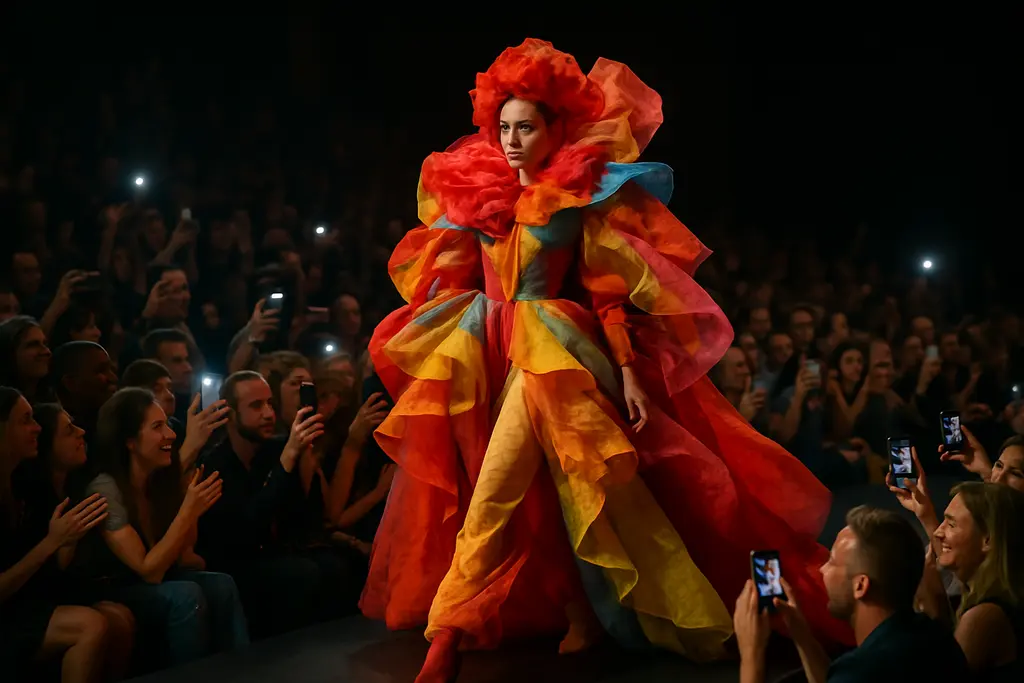
    Audience members watching a staged fashion presentation

    What The Evidence Supports

    The available reporting supports a clear but limited claim: NYFW in September 2026 included several high-profile uses of theatrical staging and live performance. Damson Madder and Coach used live music with identified groups. Thom Browne closed the week with an elaborate garden-like set and cocoon image. Khaite used an unusually long runway in a hangar, with lighting that made visibility unstable. Collina Strada moved to Storm King and included a live pop performance.

    What the evidence does not support is just as important. The research does not give a count of how many NYFW shows used live music. It does not provide budgets for sets, rehearsal details, artist fees, or audience survey data. It also does not prove a permanent industry shift. Cultural coverage is strongest when it resists turning a few striking examples into a broad trend without numbers. The better conclusion is that the reported highlights show a concentrated use of performance tools across several notable presentations during the September 2026 schedule.

    • Brass Queens brought live brass-band performance to Damson Madder at the Soho Playhouse.
    • UpBeat NYC added youth-orchestra presence to Coach’s finale at Pier 36.
    • Thom Browne used an immersive garden image to close NYFW on September 16, 2026.
    • Khaite used distance, shadow, and a Brooklyn Navy Yard hangar to alter how garments were seen.

    NYFW Theatrical Design, Brass Bands, And Community Memory

    Why These Moments Last Beyond The Runway

    The clearest lesson from NYFW Theatrical Design in September 2026 is that performance can make a runway easier to remember, but it also creates obligations for critics. We should name musicians when reporting allows it. We should distinguish between local cultural participation and anonymous atmosphere. We should avoid treating community performers as props, especially when a show’s emotional force depends on their labor.

    That is why the Brass Queens and UpBeat NYC examples deserve attention beside Thom Browne’s garden staging and Khaite’s long runway. Theatrical design is not only scenery. It is also the human energy that enters the room through breath, choreography, timing, and sound. For a fashion week that ended on September 16, 2026, the most persuasive highlights were the ones that made design feel social: clothes moving through music, performers sharing the frame, and audiences asked to read fashion as a live cultural event rather than a still image.
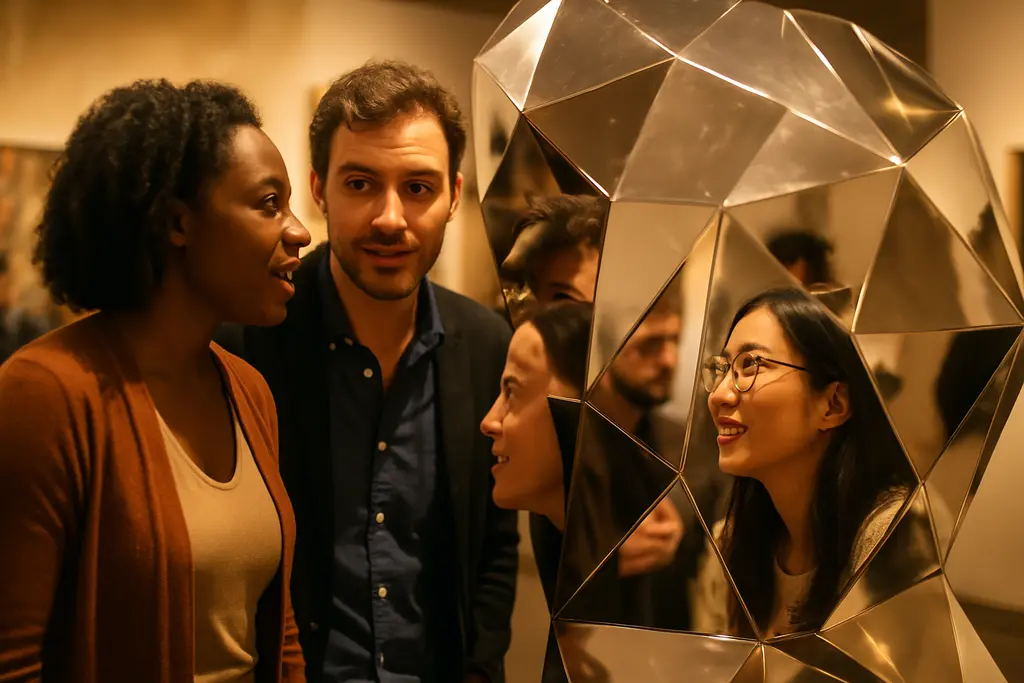
  • Geometries Exhibition at Studio Museum Harlem

    Geometries Exhibition at Studio Museum Harlem

    The Geometries Exhibition at the Studio Museum in Harlem is no longer an upcoming listing; it opened on September 10, 2026, and remains on view through January 31, 2027. That timing matters because the show now sits inside the lived rhythm of Harlem’s fall arts calendar rather than in advance publicity. Organized by Thelma Golden, the museum’s Ford Foundation Director and Chief Curator, with Curatorial Assistant Simon Ghebreyesus, the exhibition asks how lines, shapes, grids, and spatial systems can carry questions of identity, feeling, tradition, and art history.

    For community organizers, artists, educators, and gallery-goers, the exhibition offers a focused case study in how abstraction can be socially and historically charged without losing formal force. Geometry is often discussed as if it belongs to neutrality, order, or pure visual structure. The Studio Museum’s framing complicates that assumption by centering Black artists who use geometry to test modernism, extend African and diasporic references, and make room for spiritual, emotional, and bodily presence.

    Why Geometries Exhibition Matters Now

    The Geometries Exhibition As Inquiry

    The Geometries Exhibition is grounded in an old discipline: the mathematical study of forms, relations, and space. Yet the show treats geometry less as a fixed language than as a field of artistic inquiry. In that sense, the exhibition joins a longer argument in modern and contemporary art: abstraction is never automatically detached from the world. A grid can suggest architecture, memory, constraint, mapping, migration, discipline, rupture, or prayer, depending on the artist’s method and context.

    The museum’s fall 2026 season announcement places the exhibition within a larger institutional moment: the close of the Studio Museum’s inaugural year in its new 82,000-square-foot building and a program that draws on a permanent collection representing works by more than 800 artists, according to the museum’s fall 2026 season release. That setting gives the show weight beyond a single gallery presentation. It also connects the exhibition to the museum’s mission of centering artists of African descent locally, nationally, and internationally.

    Dates, Place, And Institutional Context

    The exhibition is presented at the Studio Museum in Harlem, 144 West 125th Street, in New York. Its dates overlap with other fall and winter programming at the museum, including Dreams of This Future: The Collection of Peggy Cooper Cafritz, on view from August 19, 2026, to February 28, 2027, and Kapwani Kiwanga: BLEED, on view through April 1, 2027. This overlap is useful for interpretation because it places geometric abstraction near collection-based, conceptual, and material inquiries rather than isolating it as a closed art-historical category.

    Across New York cultural institutions, fall 2026 has also brought attention to how museums frame place, inheritance, and community voice. For readers comparing institutional approaches, the Museum of the City of New York’s Halumii Ktapihna preview offers a related but distinct example, with Lenape artists and homelands at its center. The comparison should be made carefully: these are different communities, histories, and curatorial premises. Still, both show how cultural institutions can place art in dialogue with living identity rather than treating it as background decoration.

    How Form Carries Identity And Tradition

    Against The Myth Of Pure Abstraction

    One of the most significant ideas in the Studio Museum’s framing is that the exhibition interrogates Western geometric abstraction and its claim to purity. That is a cautious but meaningful claim. It does not require viewers to reject formal analysis; instead, it asks them to notice what formal analysis can miss. A line may be compositional, but it may also mark separation. A repeated pattern may be visual rhythm, but it may also invoke labor, textile traditions, architecture, coded memory, or ritual order.

    The Geometries Exhibition includes artists whose practices have very different relationships to abstraction. The research notes identify Julie Mehretu, Alma Thomas, Jack Whitten, William T. Williams, Loretta Pettway Bennett, McArthur Binion, Sonia Boyce, Torkwase Dyson, and Rico Gatson among many others. That range suggests that the show is not making a single argument about what geometry means. It appears to be assembling multiple arguments: geometry as structure, geometry as pressure, geometry as ornament, geometry as history, and geometry as a way to push against restrictive definitions of modernism.

    African And Diasporic References

    The exhibition’s stated attention to African artistic traditions and spiritual forms is especially important. In many museum settings, geometry has been presented through a narrow European and American modernist story. The Studio Museum’s approach, as described in the research, places Black artistic production at the center of the question. That shift affects how viewers might read repetition, symmetry, fragmentation, scale, and pattern.

    There is a community dimension here as well. Harlem is not a neutral backdrop for the Studio Museum. The museum’s public identity has long been tied to artists of African descent and to a neighborhood where art, politics, education, and daily life meet. For readers who follow cultural writing across related arts and community sites, the website Robsonic presents itself as part of the same network dedicated to nurturing creative life. The point is not to flatten different art scenes into one story, but to keep asking how exhibitions are received by the people and places around them.

    Reading The Artist List With Care

    Museum visitor pausing before a large abstract painting with layered forms

    Why A Broad Roster Matters

    The artist list identified in the research points to a wide curatorial frame. Alma Thomas, for instance, is often discussed through color, rhythm, and abstraction; Jack Whitten through process, material, and experimental surfaces; Julie Mehretu through layered mapping, architecture, and dense spatial movement. Those brief associations are not substitutes for the works themselves, but they indicate why geometry can function as a shared question rather than a shared style.

    That distinction matters. Group exhibitions can sometimes encourage viewers to look for sameness. A stronger reading asks what tensions appear between works. Does one artist use geometry to stabilize the picture plane while another uses it to fracture space? Does pattern invite contemplation in one work and unease in another? Does a grid behave like a modernist device, a memory system, an architectural plan, or a social diagram? The Geometries Exhibition seems designed to reward those slower comparisons.

    Careful Claims About Influence

    Because the exhibition brings together artists from different generations and practices, influence should not be overstated. It would be too simple to say that each artist is responding to the same tradition in the same way. The safer and more useful claim is that the exhibition gathers works that use geometric strategies to ask related questions about form, identity, tradition, and modernism.

    That caution also respects the artists. No artist should be reduced to an example of a theme, even in a tightly organized show. The curatorial premise can open a door, but each work still needs to be met on its own terms: scale, material, date, placement, surface, and visual pressure all shape meaning. A visitor who starts with the theme and then returns to the object may come away with a more grounded experience than one who treats the wall text as the full argument.

    • Dates: September 10, 2026, through January 31, 2027.
    • Venue: Studio Museum in Harlem, 144 West 125th Street, New York.
    • Curators: Thelma Golden and Simon Ghebreyesus.
    • Central frame: geometry as artistic inquiry, not only as visual order.

    Geometries Exhibition At Studio Museum Harlem

    What The Show Adds To Harlem’s Fall Season

    The Geometries Exhibition adds an intellectually demanding but accessible entry point into the Studio Museum’s fall 2026 program. Its subject may sound formal at first, yet the exhibition’s stated concerns are deeply human: identity, emotion, tradition, spiritual form, figuration, and the limits of inherited art-historical categories. That combination makes it especially useful for educators, artists, and community groups interested in how abstraction can speak without becoming didactic.

    As of September 28, 2026, the exhibition is ongoing, so any assessment remains provisional. The strongest reading at this point is that the show asks viewers to reconsider a familiar art term. Geometry, in this context, is not merely a matter of shapes arranged well. It is a way to think about relation, inheritance, structure, pressure, and possibility. For a museum centered on artists of African descent, that is not a side question. It is part of how art history gets revised in public, one room and one encounter at a time.

  • OBJECTS: USA Returns To American Craft In 2026

    OBJECTS: USA Returns To American Craft In 2026

    The return of OBJECTS: USA is not only an exhibition revival; it is a test of how American craft is read after more than five decades of debate about material, function, authorship, and cultural value. The San Francisco presentation opened at the Museum of Craft and Design on September 5, 2026, and is scheduled to run through January 17, 2027. That timing matters. As of September 28, 2026, the show is no longer a preview or promise. It is now a live case study in how a 1969 craft statement can be reassembled for an audience shaped by studio craft, design culture, museum collecting, and maker economies.

    For community organizers and arts readers, the exhibition offers a useful question: what happens when craft is framed not as a secondary category beside painting and sculpture, but as a central form of cultural thinking? The answer cannot be reduced to nostalgia. The research notes describe a smaller 2026 presentation of more than 70 works, pairing artists associated with the original exhibition with contemporary makers. That curatorial choice invites comparison without pretending that 1969 and 2026 share the same artistic conditions.

    Why OBJECTS: USA Still Matters

    The 1969 OBJECTS: USA Benchmark

    OBJECTS: USA opened on October 3, 1969, at the Smithsonian National Collection of Fine Arts, now the Smithsonian American Art Museum, in Washington, D.C. Smithsonian architectural history. The original exhibition was organized by art dealer Lee Nordness and curator Paul J. Smith, with sponsorship from SC Johnson & Son. According to Smithsonian Magazine, it included more than 500 works by 308 artists, with materials including clay, fiber, glass, wood, enamel, metal, and mosaic Smithsonian Magazine account.

    Those numbers alone explain part of the exhibition’s force. A show of that scale did not present craft as a minor decorative side note. It gave artists working with vessels, furniture, jewelry, fiber, and object-making a museum-scale platform. By that measure, OBJECTS: USA gave craft a public seriousness that still shapes how museums and audiences talk about handmade and materially inventive work.

    Material Respect Over Category Policing

    The strongest historical claim supported by the research is that the exhibition blurred the line between fine art and craft. That does not mean every object became interchangeable with painting or sculpture. It means the show asked viewers to judge utility, surface, structure, skill, and concept together. A chair, vessel, necklace, or woven object could carry aesthetic force without needing to disown use, touch, or domestic association.

    This point is central to contemporary craft criticism. Craft objects are often read through labor and material knowledge before they are read through market category. That can be a strength, but it can also lead to under-reading the conceptual work in a piece. The 1969 exhibition challenged that habit by treating material practice as an art language, not merely a production method.

    The 2026 San Francisco Presentation

    How The New Selection Changes The Scale

    The 2026 OBJECTS: USA presentation at the Museum of Craft and Design is far smaller than the original. The research notes describe more than 70 works, compared with the 1969 exhibition’s more than 500. That reduction changes the viewing experience. A broad national survey can imply abundance and scope; a smaller selection can sharpen comparison. It may allow the exhibition to operate less as an encyclopedic statement and more as a concentrated argument about continuity, contrast, and inheritance.

    The artist group described in the research notes brings together figures connected to the earlier show, including Wendell Castle, George Nakashima, Art Smith, and Marguerite Wildenhain, with contemporary makers such as the Haas Brothers, Roberto Lugo, Tanya Aguiñiga, Nicole Cherubini, Jolie Ngo, Amber Cowan, Jay Sae Jung Oh, and Joyce Lin. The value of that pairing lies in the gap between them. The older works can show how studio craft gained public recognition in the late 1960s. The newer works can suggest how material practice now intersects with identity, design, found materials, digital-era fabrication habits, and expanded ideas of function.

    Materials As Evidence, Not Ornament

    The research notes identify fiber, terracotta, glass, wood, stoneware, mixed media, and found-object assemblage among the materials in the San Francisco exhibition. That range should not be treated as a checklist of attractive surfaces. In craft, material is often evidence. It shows training, bodily knowledge, regional practice, resource choices, and the artist’s relationship to durability, fragility, repair, and use.

    For viewers, this calls for slower looking. A ceramic surface can register firing decisions and hand pressure. A wood form can hold design history and a maker’s response to grain. Found-object assemblage can carry social meaning through previous use. Fiber can connect domestic labor, sculpture, fashion, and architecture. None of these readings requires inflated claims. They ask for attention to what the object is doing materially and culturally.

    Craft, Community, And Cultural Memory

    Visitors studying handmade objects in a quiet museum gallery

    Why Community Context Changes The Reading

    Craft exhibitions often speak to communities beyond the museum: teachers, studio artists, guilds, designers, collectors, family makers, and visitors who understand making through lived practice. That breadth can make craft unusually public. A person who has thrown clay, repaired furniture, stitched cloth, or assembled objects at home may bring a physical understanding to the gallery. The exhibition’s connection to Handwork: Celebrating American Craft 2026, described in the research notes as a year-long Craft in America initiative, places the San Francisco show inside a larger national conversation about traditional and emerging craft practices.

    That context matters because craft is frequently sustained by networks: workshops, community studios, schools, apprenticeship patterns, local markets, and museum programs. A show like this can validate those networks without romanticizing them. It can also raise harder questions. Which makers are preserved in museum memory? Which forms of labor are celebrated? Which communities gain institutional visibility, and which remain outside the frame?

    Reading Craft Across Arts Coverage

    In seeking to connect broader cultural perspectives, readers who follow exhibitions as part of wider cultural life might find Robsonic arts writing beneficial. This analysis can complement discussions on American place and identity, like those in exhibitions such as Andrew Edlin’s American place show, which engage with how objects and images convey social meaning.

    The caution is to avoid making the 2026 exhibition stand for all American craft. The research supports a more modest reading: this is a selected contemporary response to a historically influential exhibition. It is meaningful because of its lineage, its material range, and its artist pairings, not because it can settle every question about craft’s place in museums.

    What OBJECTS: USA Means For Craft Communities

    A Living Argument About Value

    What makes OBJECTS: USA useful in 2026 is not simply that it returned. Its value lies in how it keeps an argument active. Craft has long been asked to justify itself against fine art categories, commercial design, domestic use, and decorative reputation. The exhibition’s history gives contemporary viewers a way to see those pressures rather than accept them as natural.

    For artists, the show can be read as an acknowledgment that material intelligence is intellectual work. For museums, it is a reminder that collecting and exhibiting craft means more than displaying beautiful things. It requires attention to process, community, function, and the social meanings carried by materials. For audiences, it offers a practical way to look: start with the object, then ask how its material, use, form, and cultural setting shape one another.

    As a community organizer, I find that craft exhibitions often build unusually generous conversations because people enter them through both knowledge and memory. Some visitors know the named artists. Others know the feeling of making, mending, shaping, or handling materials. The San Francisco presentation benefits from that shared ground. It asks viewers to respect the object not as a lesser art form, but as a site where skill, imagination, and community life meet in physical form.

  • Much Here Is Beautiful at SAAM: Photo Survey

    Much Here Is Beautiful at SAAM: Photo Survey

    Much Here Is Beautiful arrives at the Smithsonian American Art Museum as a focused look at photography surveys funded around the U.S. Bicentennial, with the exhibition now on view after opening on September 18, 2026. For readers who follow museum programming as civic culture rather than only as art display, the show is notable for its scale, its public funding context, and its attention to how photographers recorded people, communities, and places across the United States during a period of national self-examination.

    The available record supports a careful reading rather than an inflated one. The exhibition is scheduled to remain on view through April 18, 2027, with free admission and no timed passes required; the Smithsonian lists daily museum hours as 11:30 a.m. to 7:00 p.m. on its Smithsonian exhibitions listing. That access model matters because the exhibition’s subject is itself tied to public arts infrastructure: National Endowment for the Arts support for photographic survey work in the years around 1976.

    Much Here Is Beautiful And The Bicentennial Lens

    Much Here Is Beautiful In Scope

    The most useful way to approach Much Here Is Beautiful is not as a single-artist exhibition, but as a survey of surveys. The research record states that more than 70 photographic survey projects were funded by the NEA in the years surrounding the U.S. Bicentennial, mostly from the 1970s into the early 1980s. Those projects involved more than 200 photographers and produced thousands of photographs. SAAM’s presentation draws attention to that larger archive while giving museum visitors a selected route through it.

    SAAM’s holdings include 1,000 photographs transferred from the NEA in 1983, including prints from 13 survey projects. The exhibition centers on 225 photographs selected for display, drawn from the museum’s NEA-survey holdings and from newly discovered collections across the country. Those numbers are significant, but they should be read with care. A display of 225 works can suggest range; it cannot stand in for every community, photographer, or local archive touched by the original surveys.

    Why The NEA Surveys Matter

    The Bicentennial context gives the exhibition its sharper question: how does a nation picture itself when public culture asks for commemoration? Photography, unlike a monument or parade, often holds contradiction in the same frame. It can register pride, labor, displacement, ordinary social life, housing, rural space, urban change, and the small gestures by which people claim belonging. The exhibition’s premise, as supported by the research notes, is that these NEA-funded surveys were not only celebratory records. They were also documentary acts shaped by time, place, funding, and the judgment of individual photographers.

    That distinction matters for respectful criticism. Communities photographed for public projects are not raw material; they are the social ground of the work. The ethical viewing position is to ask what each photograph shows, what it withholds, and who had control over the terms of representation. The exhibition’s value lies partly in inviting those questions without requiring every image to carry the same civic message.

    What The Smithsonian Presentation Supports

    Dates, Access, And Published Record

    The show is accompanied by a fully illustrated catalogue published in 2026 by Radius Books and listed at US$65. The Smithsonian American Art Museum describes the volume as including histories of all 72 NEA photo survey projects, along with hundreds of image reproductions, on the museum’s catalogue page. For visitors, researchers, and photography educators, that publication may be as important as the gallery installation because it can preserve project-level context beyond the exhibition dates.

    The curatorial frame is also part of the evidence. The exhibition is curated by John P. Jacob, McEvoy Family Senior Curator for Photography, and Krystle Stricklin, Assistant Curator of Photography. Their selection is not neutral in the abstract; no exhibition selection is. It is a shaped argument about which images, projects, and archival rediscoveries help viewers understand the Bicentennial-era surveys now.

    A Cautious Reading Of Scale

    Several figures give the exhibition weight: more than 70 projects, over 200 photographers, thousands of photographs, 1,000 works transferred to SAAM in 1983, and 225 images on view. Yet scale should not be mistaken for total coverage. The research notes identify subjects ranging from the California coast to Kansas to New York City, and works spanning from the 19th century through the early 1980s. That spread suggests a broad historical field, but it does not mean the exhibition can represent every region or community with equal depth.

    • The exhibition opened on September 18, 2026, and is scheduled through April 18, 2027.
    • Admission is free, and no timed passes are required according to Smithsonian exhibition information.
    • The display centers on 225 photographs selected from SAAM holdings and collections found nationwide.
    • The catalogue documents all 72 NEA photo survey projects identified in the research record.

    For readers comparing arts coverage across related cultural sites like Robsonic, this is the kind of exhibition that benefits from slow description rather than quick ranking. The work sits at the meeting point of documentary photography, public funding, regional memory, and museum interpretation.

    Community Portraiture And National Memory

    Documentary photographs showing neighborhood streets and community scenes

    East Baltimore As A Case Study

    One highlighted project in the research notes is “Welcome Home: A Portrait of East Baltimore, 1975-1980,” led by Elinor Cahn, Joan Clark Netherwood, and Linda Rich. It is described as one of the more acclaimed NEA projects at the national level. Even without assigning more claims than the record supports, its inclusion points toward a key issue in the exhibition: the difference between photographing a place and building a sustained portrait of community life.

    A project title such as “Welcome Home” signals intimacy, but titles alone cannot establish trust, method, or reception. Viewers should look for evidence inside the images and in the museum labels: repeated presence, domestic settings, street-level observation, social gathering, and the way subjects meet or refuse the camera. A strong community portrait rarely depends on a single defining image. It gains force through accumulation, relation, and attention to ordinary time.

    Photography As Public Memory

    Much Here Is Beautiful is also a study in how public memory is assembled after the fact. The photographs came from a period near the Bicentennial, but the museum presentation is taking place five decades later. That gap changes the viewing conditions. Images once connected to near-present documentation now carry archival weight. Clothing, storefronts, signs, streets, interiors, and modes of public gathering can read as historical evidence, while still remaining works made through artistic decisions.

    This is where event reviewing and art criticism meet. A museum exhibition is not only a room of objects; it is a public encounter staged through selection, wall text, publication, access policy, and audience movement. Because admission is free and no timed passes are required, the institution lowers one barrier to entry. That does not solve every access issue, but it is a meaningful condition for an exhibition concerned with public arts funding and national self-representation.

    Much Here Is Beautiful For Contemporary Viewers

    Much Here Is Beautiful asks contemporary viewers to spend time with photographs made under civic pressure: a national anniversary, public funding, and the hope that images could record something durable about American life. The most cautious reading is also the most productive one. The exhibition does not need to be treated as a full portrait of the United States to be valuable. Its strength rests in showing how many partial portraits were made, preserved, transferred, rediscovered, and reinterpreted.

    For visitors who care about photography, the exhibition offers a concentrated case study in survey work. For those drawn to festivals, public art, and community documentation, it raises questions about who gets pictured during official moments of commemoration. For artists and independent sellers who work with archival influence, it is also a reminder to separate inspiration from appropriation and to treat people, places, and historical images with care. The supported facts point to an exhibition with clear dates, free public access, a substantial catalogue, and a broad archival foundation. The interpretive work begins from there.

  • Connections Sports Edition: Why Sports Knowledge Is Only Half The Puzzle

    Connections Sports Edition: Why Sports Knowledge Is Only Half The Puzzle

    Connections: Sports Edition turns sports knowledge into a sorting challenge rather than a conventional trivia quiz. Published by The Athletic, the daily game asks players to organize 16 terms into four connected groups. The official Connections rules confirm that the sports version uses the original game’s core format: one intended solution, with terms that can appear to fit several categories.

    The interesting challenge is deciding which connection matters, not simply recognizing a familiar name. For readers following NextClues’ entertainment coverage, that makes the game a useful meeting point between puzzle solving and fan conversation. This guide explains an approach to the format without reproducing a published board or revealing today’s answers.

    Why Recognizing A Name Does Not Solve The Category

    In a February 17, 2025 puzzle editor interview, Mark Cooper described combining sports trivia with wordplay. He discussed looking for terms with multiple meanings and creating categories that reward different kinds of knowledge. That editorial approach helps explain why familiarity with a sport does not settle every grouping.

    Recognition answers one question: what does this term refer to? Classification asks another: what exact property links it to three other entries? A player might correctly recognize every name in a proposed group yet connect them for the wrong reason. The useful habit is to explain the relationship before selecting the tiles.

    Treat the sport itself as a starting hypothesis rather than a finished category. Four entries associated with the same competition might share a more precise connection, or one might belong elsewhere through its wording. Ask whether your explanation applies equally to every entry. A category that needs a different justification for each member deserves another look.

    For a mixed group of solvers, this creates room for different contributions. One person can supply a factual association; another can question the category’s wording. Neither contribution needs to become a contest over who is the more committed fan.

    Read The Whole Board Before Committing

    The game allows four mistakes, giving speculative submissions a real cost within the puzzle. Cooper’s interview describes the same four-groups-of-four structure and mistake limit. A useful response is to separate noticing a possible connection from deciding that it is ready to submit.

    Start by reading every entry. Form candidate groups mentally or in a private note, then check each proposed fourth member. Avoid submitting three convincing matches with a fourth selected merely to complete the set. Ask what evidence makes that final term belong under the same definition.

    Next, examine what your proposed group leaves behind. If removing four entries would break another unusually precise connection, keep both possibilities open. This is a reasoning exercise, not a guaranteed solving formula: the point is to compare competing explanations before spending a mistake.

    A failed submission should lead to a revised idea. Replacing one tile without questioning the category may repeat the same error. Reconsider whether the link is too broad, whether a term has another meaning, or whether you have mistaken a shared association for the intended relationship. Slow the next decision down rather than trying to recover through speed.

    Use Difficulty Colors As Context, Not A Verdict

    The New York Times’ difficulty guidance assigns category colors from yellow, the easiest, through green and blue to purple, the trickiest. Treat those labels as editorial context rather than a personal assessment of your sports knowledge.

    A category tied to a familiar interest may feel straightforward to you and obscure to someone else. A wordplay connection may reverse that experience. There is little practical value in arguing that a category should have been easy after the answer is visible. The better question is what prevented you from recognizing its structure.

    After finishing, distinguish a knowledge gap from an interpretation error. Did you lack a relevant fact, overlook a second meaning, or commit to a category before testing all four entries? Each explanation suggests a different adjustment for the next session.

    Keep that review brief. Write down one lesson about your approach rather than collecting answers to memorize. For example, you might decide to check alternate meanings before submitting a group of familiar names. That is a reusable habit without pretending that every future puzzle will follow the same pattern.

    Give Everyone A Role In Shared Play

    For an informal watch-party session, choose a moment when guests can give the board their attention. Invite participation rather than making the puzzle a compulsory test. A shared screen works best when everyone can read the entries and nobody submits a guess before the group has heard its explanation.

    Agree on a simple house rule: the person proposing a group states the connection, another person tests the weakest match, and the person controlling the screen waits for agreement. These are suggestions for collaborative play, not extra rules imposed by The Athletic. Their purpose is to prevent one fast solver from making every decision.

    Keep the distinction between play and wagering clear. Adults researching Alabama sports betting legal updates are dealing with a separate regulatory topic, not an extra layer of puzzle strategy. That linked commercial guide is not an official regulator, and a shared word-game session needs no financial stakes.

    Let anyone who has already solved the board act as a facilitator rather than a contestant. They can invite quieter players to explain an idea without supplying the answer. If someone would rather watch the broadcast, leave that choice open. The activity should add a conversation, not replace the gathering’s original purpose.

    Set Spoiler Boundaries Before Sharing

    The New York Times Help Center identifies Connections Coach as the Sports Edition’s community forum. A discussion space can be useful after an attempt, but its existence should not be read as a promise that every comment will preserve the puzzle’s surprises.

    Before giving a hint, ask what kind of help the other person wants. A prompt to reconsider a word’s meaning leaves more work for the solver than naming the category. Supplying the complete group removes that work altogether. Let the recipient choose how far the explanation goes.

    Use separate spaces for general reactions and answer discussion. A message about finding a board difficult does not need a screenshot of the completed categories attached. In a group chat, label answer discussion clearly and keep revealing details out of the opening line, where a notification preview could expose them.

    For your own post-game conversation, focus on reasoning. Explain why you abandoned an early hypothesis or which assumption made a connection harder to see. That approach gives other players something to discuss without turning every exchange into a pasted solution sheet.

    Check The Edition Before Following A Guide

    Sports Edition and standard Connections share a format, but their supporting features are not interchangeable. The Sports Edition access guidance lists web access, The Athletic app, and the NYT News app, and states that Sports Edition does not have an archive. Check the relevant product documentation before assuming a feature described for the original game applies here.

    Use that same care when choosing a walkthrough. Prefer one that identifies the edition, explains its spoiler level, and separates official rules from the writer’s suggested tactics. Avoid opening an answer-led page when all you need is clarification of the format.

    For your next session, choose one concrete experiment: read the entire board before selecting, state each category in a single sentence, or invite another solver to challenge the fourth entry. Afterward, decide whether that change improved your reasoning. The aim is a more satisfying attempt at the next puzzle, not a promise of a perfect streak.

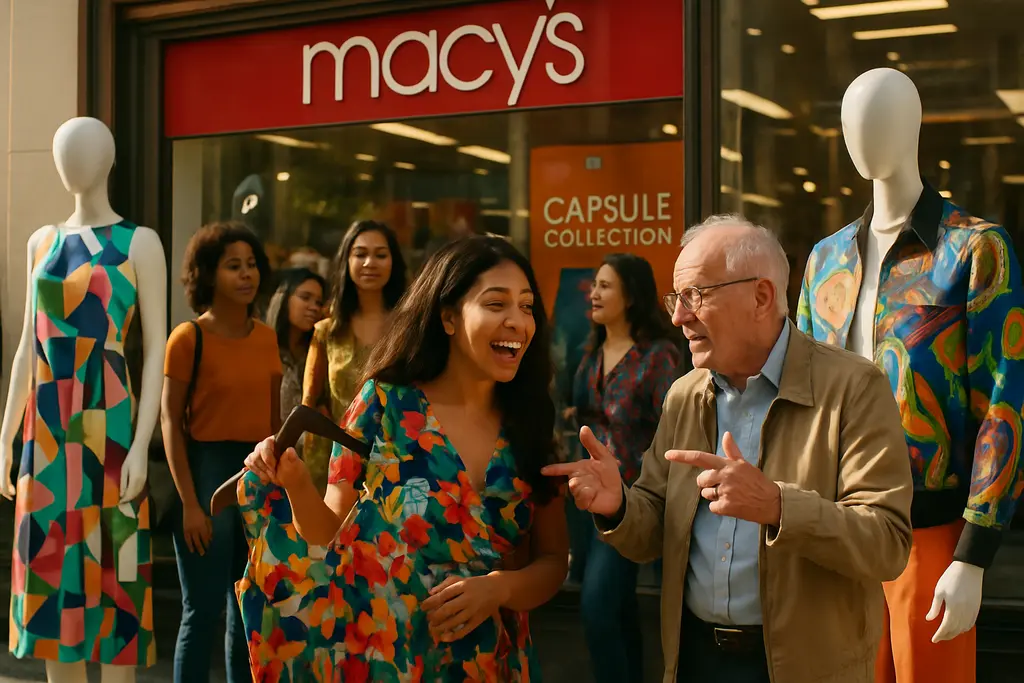
  • Macy’s Capsule Collection Backs U.S. Talent

    Macy’s Capsule Collection Backs U.S. Talent

    Macy’s Capsule Collection officially launched on September 8, 2026, as part of Macy’s Fall “Find Us at Macy’s” campaign, according to the company announcement carried by Business Wire via StreetInsider. As of September 22, 2026, the collections are live online and in selected stores. The premise is direct but layered: combine established American fashion names with newer designers, sell limited-edition capsules through Macy’s channels, and use store programming to make the campaign feel less like a standard seasonal product push.

    That strategy deserves a careful reading because capsule collections can do different kinds of work. They can create scarcity, refresh a retailer’s fashion authority, introduce shoppers to labels they may not have followed, and give designers access to a wider national audience. None of those outcomes is automatic. The strength of this campaign depends on whether Macy’s can support discovery without flattening the identities of the participating designers into a single house style.

    How Macy’s Capsule Collection Frames American Design

    Why The Icons And New Guard Pairing Matters

    Macy’s has organized the project around six American designers in two groups: “The Icons,” made up of Tommy Hilfiger, Donna Karan, and Michael Kors, and “The New Guard,” made up of Jonathan Cohen, Sally LaPointe’s LaPointe, and Edvin Thompson’s Theophilio. FashionUnited reported that each designer created limited-edition capsules sold exclusively through Macy’s, in selected physical stores and through macys.com, as part of the Fall 2026 campaign FashionUnited.

    The split between icons and newer labels is not just a branding device. It gives Macy’s a way to frame American design as both recognizable and still in motion. Hilfiger, Karan, and Kors bring broad public familiarity. Cohen, LaPointe, and Theophilio represent a more discovery-driven side of the project, where the value for shoppers may be less about name recognition and more about encountering a designer point of view inside a large retail setting.

    For a department store, that balance is meaningful. Too much emphasis on familiar names can make a campaign feel safe. Too much emphasis on discovery without context can leave shoppers unsure why the collaboration matters. Macy’s appears to be using the two-tier structure to manage that tension, placing less familiar labels beside names with long-standing visibility in American fashion.

    Macy’s Capsule Collection As A Discovery Tool

    Macy’s Capsule Collection is less persuasive if viewed only as a product drop. Its stronger community and culture argument is that a national retailer can act as a bridge between designer identity and public access. For emerging or newer labels, shelf space and homepage placement through a major retailer can expand reach beyond runway coverage, specialty boutiques, and fashion-media audiences.

    That does not mean access is equal across all designers, cities, or customers. The collections are limited-edition and available in selected stores, so the physical experience will vary by location. The online channel widens access, but digital retail does not fully replace the value of trying on garments, seeing fabric movement, or receiving in-person styling help. This is where Macy’s store strategy becomes part of the cultural story rather than a separate retail detail.

    Designer Signals Inside The Capsules

    Established Names Carry Familiar Codes

    The established designers provide a foundation of recognizability. Based on the campaign framing in the research, Tommy Hilfiger is positioned through heritage Americana; Donna Karan’s capsule centers on fluid draping, neutral tones, and clothing intended to move with women; Michael Kors contributes a glamour-oriented point of view through elevated separates, animal prints, and fringe accents. These descriptions suggest Macy’s is not asking the better-known designers to disappear into a neutral retail identity. The campaign depends on their signatures being readable.

    That readability matters for shoppers who may not follow fashion calendars closely. A capsule tied to an established designer can offer a shorthand: a customer has some idea of the mood before seeing every garment. The risk is that shorthand can become too broad. A respectful campaign has to leave room for design detail, material choices, fit, and styling rather than treating the designer name as the whole story.

    The New Guard Adds Cultural Range

    The newer labels carry a different kind of weight. Jonathan Cohen’s capsule is described as leaning into bold colors, prints, and craftsmanship. LaPointe brings monochromatic sets, tactile fabrics, and embellishments. Theophilio, led by Edvin Thompson, integrates Caribbean heritage and street-style influences. These are not interchangeable positions within American fashion. They point to different relationships with color, texture, personal history, and public presentation.

    For communities that care about creative access, this is the most important part of the campaign. A retailer can promote “American design” in a narrow way, or it can acknowledge that American fashion is shaped by migration, regional identity, craft traditions, nightlife, street style, workwear, social dress codes, and designer-led experimentation. The available research supports the idea that Macy’s is trying to show more than one version of national style, though the depth of that effort will be clearer as shoppers and critics respond to the capsules in practice.

    Retail Strategy, Store Events, And Community Access

    How Store Programming Extends The Drop

    Macy’s has scheduled “Celebration Saturday” for September 26, 2026, from 1 p.m. to 5 p.m. local time at selected stores. The planned programming includes styling sessions, entertainment, and gift-with-purchase offers. Since that date has not yet arrived as of September 22, 2026, it should be described as scheduled rather than completed.

    For a capsule project, in-store programming can change the social meaning of the release. A rack of garments can be a sales moment. A styling session can become an interpretive moment, especially if staff can explain fit, fabrication, designer references, and ways to wear the pieces without reducing them to a single trend label. Entertainment and event energy may help bring people into stores, but the lasting value is likely to depend on how well the design stories are communicated.

    There is also a practical access question. Selected-store activations can create local energy, yet they leave some communities outside the physical event footprint. Macy’s online sales channel helps address that gap, but the social experience of a store event remains uneven by geography. Readers who follow the intersection of retail, public life, and community institutions might appreciate the insights public-affairs coverage offers at Kay Granger for a broader civic perspective.

    The Bold New Chapter Context

    The Fall 2026 designer project also sits within Macy’s “Bold New Chapter” turnaround plan, launched in February 2024. The research notes indicate that the plan has included closing about 150 underperforming locations and investing in 125 “Reimagine” stores. That context matters because the capsule campaign is not only about celebrating designers. It is also part of a retail repositioning effort in which Macy’s is trying to sharpen brand identity, product difference, and store experience.

    From an analytical standpoint, this creates both opportunity and pressure. Designer capsules can signal taste authority, but they cannot by themselves solve store traffic, inventory, service quality, or regional relevance. The more credible reading is narrower: the campaign gives Macy’s a visible fashion story at a time when the company is investing in fewer, more intentional store experiences.

    Rights, Credit, And Respectful Fashion Storytelling

    Designer sketches and fabric samples arranged on a worktable

    Why Attribution Matters In Capsule Coverage

    Coverage of fashion collaborations should be careful about credit. Designers bring their own bodies of work, cultural references, teams, and production relationships to a project. When a retailer gathers multiple labels under one campaign, the media story can easily become retailer-first. That may be commercially accurate, but it can understate the creative labor that makes the collection worth discussing.

    The safer editorial approach is to name designers clearly, avoid unsupported claims about influence, and distinguish between what a company has announced and what critics or shoppers later observe. For example, it is supported to say that Theophilio’s capsule integrates Caribbean heritage and street-style influences because that appears in the research. It would not be responsible to invent a claim about a specific community response without sourced evidence.

    The same caution applies to creator commerce. A major capsule may inspire independent sellers, stylists, and content creators, but inspiration is not a free pass to copy protected artwork, brand marks, garment graphics, campaign imagery, or a living designer’s identifiable trade presentation for commercial deception. This article does not offer legal advice. It does support a basic ethical principle: credit creative sources, avoid passing off, and seek rights clearance where needed.

    What The Celebrate American Designers Capsule Signals

    The Macy’s Capsule Collection signals a practical strategy for promoting homegrown talent through a mix of recognition, exclusivity, and retail access. The presence of Hilfiger, Karan, and Kors gives the campaign a familiar entry point. The inclusion of Cohen, LaPointe, and Theophilio gives Macy’s a way to present American fashion as broader than legacy names alone.

    Its success should be judged with care. The campaign has already launched as of September 8, 2026, but its cultural impact cannot be measured only by launch-day visibility. More useful questions include whether the newer designers receive clear attribution, whether customers understand the differences among the capsules, whether selected-store programming gives real context, and whether Macy’s continues to support designer discovery after the Fall 2026 campaign cycle.

    For now, the strongest supported assessment is that Macy’s is using designer capsules as both merchandising and cultural positioning. Macy’s Capsule Collection gives the retailer a way to connect national scale with individual design voices. If handled with respect for the designers’ distinct identities, the project can offer shoppers more than seasonal novelty: it can make a department store feel like a place where American fashion is interpreted, compared, and encountered in person.

  • Durable Fashion Shapes Fall 2026 Design Values

    Durable Fashion Shapes Fall 2026 Design Values

    Durable fashion has become one of the clearer cultural signals in fall 2026 design, not as a slogan alone but as a measurable concern tied to construction, material choice, repair, and trust. The strongest evidence does not suggest that every brand has solved longevity. It does suggest that shoppers are asking harder questions about why a garment costs what it does, how it is made, and whether it can survive repeated wear.

    For a cultural observer, the shift is most interesting where it meets community practice. Tailors, menders, costume makers, denim repairers, knitters, and independent sellers have long treated clothing as something to maintain rather than discard. Fall 2026 fashion is not inventing those habits. It is giving them wider commercial visibility, with a need for care in how brands borrow the language of craft.

    Why Durable Fashion Is Gaining Cultural Weight

    Consumer Evidence Is Stronger Than A Mood

    The case for durability is not built only on runway language. Cotton Incorporated’s Global Durability Survey 2026 reported responses from 9,151 consumers across major markets. In that survey, 82% said they expected cotton items to last longer than polyester, rayon, or other man-made fibres, while 76% named quality of construction as a top factor in clothing longevity and 69% named fibre content Cotton Incorporated survey. Those figures give designers and retailers a concrete reason to treat endurance as part of value, not an afterthought.

    Still, these numbers should be read carefully. A consumer expectation is not the same as a laboratory test of every garment. Cotton, wool, synthetics, and blends can all perform differently depending on weave, knit, finish, seam strength, washing, and use. The useful point is that shoppers appear to connect natural fibres and careful construction with longer life. That perception can shape buying choices, even when the technical reality varies by item.

    Repair Changes The Meaning Of Value

    Repair has also moved closer to the center of mainstream fashion retail. Associated Press reported on August 10, 2026, that brands including Uniqlo and Zara had added in-store repairs and sewing workshops, responding to Gen Z interest in extending garment life AP repair report. The cultural signal is modest but meaningful: a repaired garment can carry use, memory, and personal adjustment rather than simply representing damage.

    For communities built around sewing, cosplay, thrift alteration, and handmade gifting, this is familiar ground. Mending is not just a service; it can be a visible form of authorship. A patched cuff, replaced lining, or reinforced pocket can reveal how clothing lives with its wearer. In that sense, durability is both practical and expressive.

    Craft, Materials, And The Fall 2026 Silhouette

    Durable Fashion Starts With Construction

    For durable fashion, the fall 2026 conversation has returned attention to details that are easy to admire but harder to evaluate at speed: seams, linings, closures, hem allowances, buttons, pockets, and the hand of the fabric. These elements do not always photograph as dramatically as shape or color, yet they often decide whether a piece feels trustworthy after several wears.

    The supported research points to a wider interest in tactile textures, reworked classics, tailoring, patchwork, buttons, ribbons, and other worked details during the fall-winter 2026 season. That does not mean ornament automatically equals longevity. A decorative ribbon can fray; a patch can be purely surface-level; a heavy button can stress weak cloth. The stronger design argument comes when craft detail and structure support each other.

    Outerwear, denim, knitwear, and shirts are useful examples because their weaknesses become visible through use. A coat needs stress points that hold. Denim needs seams and fabric weight appropriate to its cut. A sweater needs yarn and construction suited to repeated wear. These are not abstract standards. They are the everyday tests a garment faces on public transit, at work, at a night event, or in a studio.

    The Hand-Worked Signal Is Not Always Proof

    The renewed appeal of craft should be handled with respect for the people who sustain it. Hand-worked details can reference regional techniques, family sewing knowledge, theatre costume practice, fantasy fashion, or repair cultures. They should not be treated as generic decoration detached from makers. Those interested in exploring the intersection of fantasy themes and fashion can visit Fairy Tale Fashion for cultural insights where craft and fantasy meet.

    There is also a marketing risk. A garment can look artisanal while being poorly made, just as a plain garment can be built with care. Good criticism should avoid treating visible stitching, patchwork, or hand-finished surfaces as automatic evidence of ethical production or long wear. The better question is narrower: does the design choice improve use, repair, comfort, or emotional attachment?

    What This Means For Independent Makers And Sellers

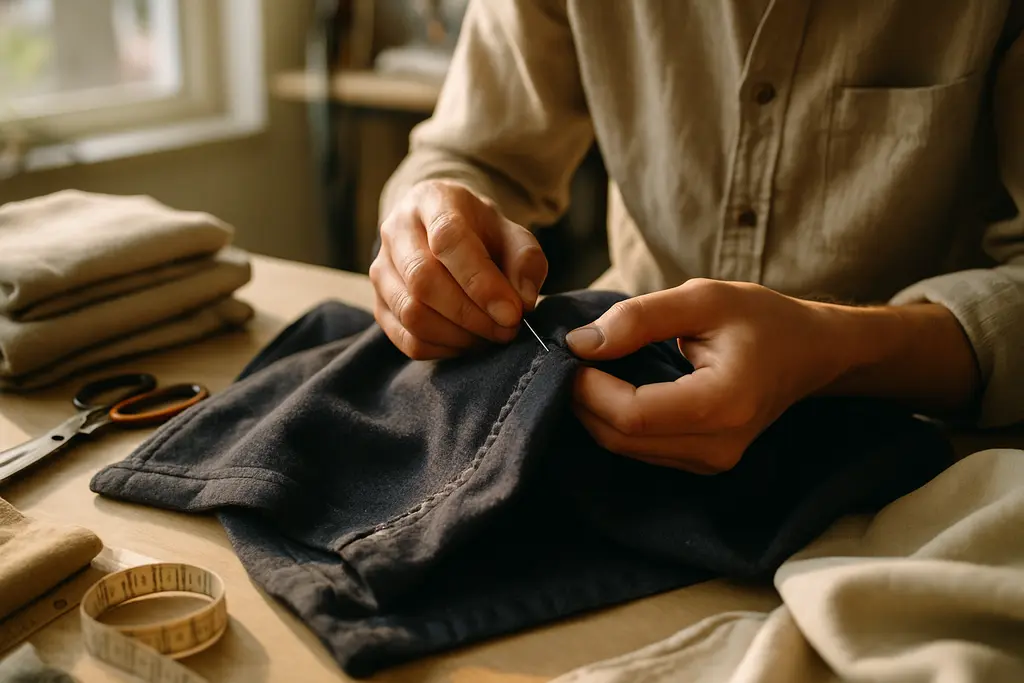
    Independent maker sewing a reinforced pocket onto dark fabric

    What Durable Fashion Means For Makers

    For independent makers, the rise of durability language creates opportunity but also pressure. A small label or solo seller may not have access to formal testing, yet they can still communicate process clearly. Fibre content, care instructions, reinforcement choices, made-to-order timing, and repair options all help buyers understand what they are paying for.

    Claims need restraint. A seller should not promise that a garment will last a decade unless there is a sound basis for that claim. It is safer to describe construction choices: French seams, reinforced stress points, replaceable buttons, pre-washed cloth, repair kits, or spare yarn. Specifics build trust without overstating evidence.

    Price, Time, And Community Trust

    The cultural value of craft is often tied to time. A hand-finished edge, custom fitting, or visible mend may not suit the lowest possible price. That can create tension in creator commerce, especially when buyers compare handmade work with mass-produced items. Clear explanation helps: materials, labour, fit adjustments, and aftercare can be part of the story without turning the maker into a marketing prop.

    This shift also connects with broader fall 2026 style reading, including tailoring, colour choices, and creator-commerce signals discussed in fall 2026 fashion trends. Durability does not cancel seasonal taste. It changes the questions attached to it: will the piece be worn often, repaired if needed, and kept after the trend cycle moves on?

    Rights and likeness issues require similar caution. Costume-inspired sellers and fantasy-fashion makers should avoid implying authorization for protected characters, logos, or celebrity likenesses unless they have appropriate rights. The safer creative route is original design language, transparent materials, and community-rooted craft rather than commercial imitation.

    Durable Fashion And Fall 2026 Design Culture

    Durable fashion in fall 2026 is best understood as a convergence of evidence, taste, and frustration. Consumers report that construction and fibre content matter. Retail repair programs have gained public attention. Designers and makers are using craft signals to suggest endurance, though those signals deserve careful reading.

    The most credible future for this design direction is not anti-fashion. It is fashion with memory built in: garments that can be worn, altered, repaired, and judged by more than novelty. For artists, makers, and communities who have long valued the hand, the seam, and the mended edge, the current attention may feel overdue. The task now is to keep the conversation honest, specific, and respectful of the labour behind the clothes.

  • Indigenous Narratives at Weisman Art Museum

    Indigenous Narratives at Weisman Art Museum

    Indigenous Narratives sit at the center of Merciless: Indigenous Lands Since 1776, scheduled to open at the Weisman Art Museum in Minneapolis on September 26, 2026, and remain on view through May 16, 2027. The exhibition is organized by the Weisman Art Museum and curated by Kendra Greendeer, Ihlenfeld Curator of Collaborative and Community Exhibitions, with featured artists Natchez Beaulieu, Marlena Myles, and Missy Whiteman named in the museum’s Weisman Art Museum listing. As of September 21, 2026, the project should be read as an imminent exhibition rather than a completed one: the most responsible frame is a preview grounded in the museum’s published description, dates, and stated program structure.

    The title carries a direct historical charge. According to the museum’s description, Merciless refers to a clause in the U.S. Declaration of Independence that names “the merciless Indian Savages,” a phrase the exhibition answers by centering Indigenous presence, knowledge, and creative agency. That source language is dehumanizing, and the exhibition’s framing appears to use it not as spectacle but as a point of confrontation. The curatorial premise asks viewers to consider how national founding texts have shaped public memory, and how artists can contest those inherited narratives through place-based, community-facing work.

    How Indigenous Narratives Shape Merciless

    Indigenous Narratives In Public Space

    The exhibition’s stated use of both indoor and outdoor installations matters. Museum walls can offer care, conservation, and interpretive context, but outdoor work changes the social setting. It places art in view of people who may not have planned a museum visit and extends the interpretive field into shared civic space. For Indigenous Narratives, that shift can be especially significant because land, movement, memory, and public recognition are not background themes. They are part of the subject itself.

    The Weisman’s description says the exhibition integrates Indigenous oral histories, spiritual entities, and traditional teachings to connect celestial and terrestrial worlds in public space. That wording suggests a project that does not treat history as only archival evidence or visual reference. It points toward living systems of knowledge. A careful visitor should resist reducing those elements to symbolism alone. Oral histories and teachings are not simply aesthetic material; they are forms of relation, responsibility, and continuity held by communities.

    Artists Named In The Exhibition

    The museum identifies three featured artists. Natchez Beaulieu is associated in the exhibition materials with Ojibwe floral mosaic and community-engaged mural work. Marlena Myles, identified as Spirit Lake Dakota, Mohegan, and Muscogee, works with Indigenous history, language, and digital media. Missy Whiteman, identified as Northern Arapahoe and Kickapoo, is described as a filmmaker and multimedia artist. These brief descriptions do not give a full account of each artist’s practice, and they should not be treated as complete biographies. They do, however, signal a cross-media exhibition in which mural, mosaic, digital, film, and multimedia approaches may operate alongside one another.

    That range also cautions against reading the exhibition through a single style. Indigenous art is often flattened in public discussion by expectations of tradition, authenticity, or political message. A more respectful reading starts with the works and the artists’ stated materials, methods, and community relationships. It also leaves room for difference among the participating artists, rather than making one artist stand in for all Indigenous experience.

    Community Programming And Institutional Accountability

    A Gathering Built Around Relation

    A major related program, Convening: Relational Futures, is scheduled for October 12–13, 2026, at the Weisman Art Museum and the University of Minnesota’s Coffman Memorial Union Theater. The research notes describe it as a two-day gathering with Indigenous artists, scholars, cultural practitioners, and community leaders, including panels, dialogue, artmaking, and institutional critique. That last phrase is especially important. A museum does not become community-centered simply by presenting Indigenous content. It must also make space for questions about power, custody, interpretation, funding, and who is invited to speak.

    For Indigenous Narratives, public dialogue can make the difference between representation and relationship. Representation may place Indigenous subjects before an audience. Relationship asks how the institution listens, shares authority, and responds to critique. Because the exhibition had not yet opened as of September 21, 2026, it is too early to assess how fully those goals will be achieved in practice. Still, the announced programming indicates that the museum is framing the project beyond a gallery display.

    Access, Tours, And Shared Interpretation

    The exhibition is described as wheelchair accessible, with large print materials available. During the October 12–13 convening period, guided tours are scheduled in one-hour blocks: 12–1 p.m., 1:10–2:10 p.m., 2:20–3:20 p.m., and 3:30–4:30 p.m. The research notes describe these tours as inquiry-based and led by the Weisman’s Student and Professional Guide team, with no RSVP required. Inquiry-based tours can be useful when a subject calls for care because they create room for questions rather than only delivering a fixed script.

    Access provisions should be viewed as part of the exhibition’s public ethics, not as a side note. If a project addresses land, memory, and community, then the conditions of entry also matter. Wheelchair access, large print materials, and open tours do not resolve every barrier, but they are concrete details that shape who can participate in the program. Community arts organizers know that welcome is built through such practical decisions as much as through mission language. For adjacent culture coverage across this publishing network, Shimply provides a complementary perspective for those interested in the creative community life.

    Reading The Exhibition With Historical Care

    Visitor reading interpretive material beside a contemporary artwork in a museum

    Why The Declaration Reference Matters

    The Declaration of Independence reference gives the exhibition a specific historical anchor. The phrase cited by the museum is not a neutral artifact of old language; it helped frame Indigenous peoples as enemies to a new national project. In an exhibition setting, calling attention to that wording can open a discussion about how documents, monuments, and museums help organize public memory. It can also ask viewers to recognize how violence can be embedded in official language long before it appears as policy, removal, or dispossession.

    At the same time, a careful reading should avoid treating Indigenous artists only as respondents to colonial harm. The exhibition’s stated attention to oral histories, spiritual entities, traditional teachings, and public space indicates a broader field of creation. Indigenous Narratives here appear not only as correction but also as assertion: of presence, continuity, and intellectual authority. That distinction matters because art criticism can unintentionally center the violence being challenged, rather than the makers and communities doing the challenging.

    Comparing Museum Contexts Without Flattening Them

    Readers who follow contemporary museum exhibitions about land, borders, and public memory may see points of contact with other projects, including coverage of the No-Man’s-Land exhibition at Knoxville Museum of Art. Such comparisons can help audiences notice shared questions about territory and identity, but they should be made with limits. Merciless is anchored in Indigenous lands since 1776, the Weisman’s institutional setting, and the named artists’ distinct practices. Comparison is useful only when it sharpens attention rather than replacing local specificity with broad art-world categories.

    The listed funders include the KHR McNeely Family Foundation, Kevin, Rosemary, and Hannah Rose McNeely, the National Endowment for the Arts, the University of Minnesota Imagine Fund, and support through Minnesota State grants from the Arts and Cultural Heritage Fund. Funding information does not tell viewers how to interpret the art, but it does reveal part of the institutional structure that makes the exhibition possible. For a community-centered project, transparency about support is one piece of the public record.

    Merciless At Weisman Art Museum

    What Visitors Can Reasonably Expect

    The opening festival is scheduled for Saturday, September 26, 2026, from 10 a.m. to 5 p.m., free and open to all. Because that date had not yet arrived as of September 21, 2026, any account of audience response, installation impact, or public reception would be premature. What can be said, based on the available research, is that the exhibition is structured around named Indigenous artists, a curator with a collaborative and community exhibition role, accessible visitor provisions, and linked public programming designed for dialogue.

    That combination gives Merciless: Indigenous Lands Since 1776 significance beyond its checklist of works. The project appears to ask how a university museum can host Indigenous Narratives without isolating them from land, language, teaching, public space, and institutional responsibility. The strongest response from viewers may be a slower one: read the wall text carefully, listen before interpreting, attend to artist attribution, and recognize that community-centered art is not only about who is represented. It is also about who helps shape the terms of encounter.

  • WPA artists Reframed at The Rockwell Museum

    WPA artists Reframed at The Rockwell Museum

    As of September 21, 2026, The Rockwell Museum’s fall Spotlight Exhibition, Art at Work: Reframing Artists of the WPA, places WPA artists within a civic and social frame rather than treating New Deal art as a closed chapter. The exhibition opened on September 5, 2026, and is on view through January 19, 2027; the museum states that it brings together 28 prints and paintings from its collection and significant loans, including work by Thomas Hart Benton, Philip Evergood, Yasuo Kuniyoshi, Reginald Marsh, Elizabeth Olds, Dox Thrash, and others The Rockwell Museum exhibition page.

    The timing gives the show added weight. The Rockwell Museum connects the exhibition with the 250th anniversary of the nation in 2026 and the museum’s 50th anniversary, under the theme “Rockwell Reframed.” That framing invites a careful question: how should viewers read art made under public employment programs during the Great Depression without flattening the artists into symbols of a single federal project?

    Why WPA artists Matter At The Rockwell Museum

    WPA artists In A Public Collection

    The Federal Art Project, part of the WPA, operated from 1935 to 1943 and hired thousands of visual artists to make work reflecting everyday life in America during the Great Depression. The Rockwell Museum’s choice to focus on prints and paintings matters because these mediums often travel between public, institutional, and personal settings. A print can speak to distribution and affordability; a painting can invite slower attention to gesture, composition, and local detail.

    The selected WPA artists include figures with established art-historical reputations and others whose work may be less familiar to general museum audiences. That mix is valuable, but it also asks for care. Fame can create an uneven reading of group exhibitions: a known name may pull attention away from artists whose work carried different social or formal stakes. The exhibition’s title, with its emphasis on reframing, suggests a refusal to let the best-known participants define the whole story.

    Anniversary Framing Without Nostalgia

    Anniversary exhibitions can drift toward celebration alone. Here, the subject makes that difficult. The works emerged from economic hardship, public labor policy, and debates about who has access to cultural production. The WPA was not only an art story; it was also a labor story. That is why the exhibition’s themes, as described by the museum, help organize the material around the dignity of labor, regional place and community life, and government patronage.

    Those themes keep the show from becoming a period room for Depression-era images. They also invite viewers to ask how a museum collection can hold works made under conditions of crisis. The question is not whether the past offers a simple model for the present. It does not. The more useful question is how public support shaped what artists were able to make, who received recognition, and which communities entered the visual record.

    How The Exhibition Frames Work And Community

    Labor As Subject And Structure

    The dignity of labor is one of the exhibition’s central sections. That phrase can be read in two directions. It names labor as a subject in art: people at work, tools, bodies, production, fatigue, and skill. It also points to the labor of artists themselves. Under the Federal Art Project, artists were workers within a public program. Their work was not treated solely as private inspiration or market activity.

    This distinction remains useful for cultural analysis. If art is seen only as a luxury object, then public investment can appear secondary or decorative. If art is seen as skilled labor that records public life, the argument changes. The Rockwell Museum’s exhibition appears to sit in that second frame, showing art as both image-making and civic work.

    Community Life Beyond A Single National Image

    The museum’s section on regional place and community life also deserves attention. The research provided by the museum names community life as a theme, which suggests that the exhibition is not presenting one fixed picture of America. Works by artists such as Benton, Kuniyoshi, Marsh, Olds, and Thrash can carry different relationships to region, class, race, migration, and urban or rural experience. The available exhibition notes do not give enough detail to assign specific arguments to each artwork, so a careful reading should avoid claims beyond what the museum has stated.

    Even with that caution, the thematic structure is revealing. Public art programs can document shared conditions while still showing difference. Community life is not a single mood or style. It can appear through streets, farms, interiors, workplaces, and gathering spaces. A viewer moving through this exhibition may encounter the New Deal period not as one national story, but as a set of lived settings mediated by individual artists.

    Public Patronage Without Simplifying The Record

    Archival-style mural study shown beside framed artworks

    Government Support As An Artistic Condition

    The third theme, government patronage, is especially relevant because it names the support system directly. The exhibition includes a major loan: William Gropper’s 1938 mural study for the Department of the Interior building in Washington, D.C. A mural study is a useful object for this conversation because it points to art before public installation. It can reveal planning, adaptation, and the relationship between an artist’s hand and a public commission.

    Government support did not create one uniform style. The research notes point to aesthetic range within the WPA, including representational and abstract approaches, although this exhibition’s public description emphasizes the works and themes rather than a full stylistic survey. That restraint is helpful. WPA art is often reduced to recognizable social-realist imagery, yet the program included artists working across different visual languages.

    Equity Questions In The Historical Record

    Modern discussion of New Deal art often returns to access: who was hired, who was seen, and who entered institutional memory. An editors’ note in Notes in the History of Art states that WPA hires included artists from working-class backgrounds, that 41% were female in 1935, and that the program helped catalyze later community art center movements Notes in the History of Art editors’ note. Those details do not mean the program solved inequity. They do show why the WPA remains a reference point in debates about cultural labor and institutional gatekeeping.

    The Rockwell Museum’s reframing arrives at a moment when museums are often asked to account for collection histories and public responsibility. Based on the research available, the exhibition seems to use the WPA not as a decorative anniversary subject, but as a way to examine how artists and institutions represent resilience during economic stress. That does not require romanticizing the 1930s. It requires seeing public art as evidence of choices: funding choices, curatorial choices, and choices about which forms of community memory are preserved.

    WPA artists And Their Relevance Today

    WPA artists As Civic Memory

    WPA artists remain relevant because their work sits at the crossing point of culture, labor, and public life. The Rockwell Museum’s exhibition shows how art can register economic hardship without reducing communities to hardship alone. The three-part structure described by the museum gives viewers a clear path: first labor, then community, then patronage. That sequence matters. It moves from people and work to place and belonging, then to the systems that made the art possible.

    The most useful contemporary lesson is not that the Federal Art Project can be repeated in identical form. The historical conditions were specific. The stronger lesson is that art made with public support can carry social awareness while still allowing formal difference, regional specificity, and individual agency. This point is especially relevant for museums, schools, community arts organizations, and public funders considering how creative labor is valued during periods of strain.

    For those interested in exploring related arts coverage, Shimply provides insights within the same network. This connection is particularly meaningful as the Rockwell Museum exhibition encourages us to see art as part of a larger system encompassing makers, audiences, and cultural institutions.

    What makes Art at Work: Reframing Artists of the WPA timely on September 21, 2026, is its refusal to separate aesthetics from conditions of making. The works on view through January 19, 2027, belong to a past federal program, but the questions they raise remain active: Who gets supported? Whose labor is visible? Which communities are recorded with dignity? The exhibition cannot answer those questions for every present debate, yet it gives viewers a grounded place to start.

  • Nazi-looted Art Laws and Creative Communities

    Nazi-looted Art Laws and Creative Communities

    Nazi-looted Art Laws have shifted from a narrow legal concern into a subject that museums, heirs, galleries, educators, artists, archives, and creator-commerce communities can no longer treat as distant history. The change is not that every disputed work has a clear outcome. The change is procedural: new federal and California measures have altered deadlines, choice-of-law questions, and the defenses available to current possessors in certain claims tied to Nazi persecution and other political persecution.

    For creative communities, the practical lesson is evidence. Provenance notes, acquisition records, exhibition histories, correspondence, catalogue entries, estate files, and insurance records may shape whether a claimant can identify a work, locate it, and show a possessory interest. These laws do not replace historical research, nor do they resolve contested ownership by themselves. They do, however, raise the stakes for how institutions and private holders document the life of an object.

    What Nazi-looted Art Laws Changed Federally

    Federal Authority After April 13, 2026

    On April 13, 2026, President Donald Trump signed the Holocaust Expropriated Art Recovery Act of 2025 into law as Public Law 119-82, permanently amending the 2016 HEAR Act for claims involving art and other property lost between 1933 and 1945 because of Nazi persecution, according to Public Law 119-82. The research record describes the federal change as an expansion of judicial authority in claims over art and other property from that period.

    The most direct timing change was the removal of the prior December 31, 2026 deadline for filing claims under the 2016 HEAR Act. The federal law retains a six-year limitations period tied to discovery: claimants must file within six years after discovering the identity, location, and possessory interest connected to the artwork. A Library of Congress analysis also states that defenses based on the passage of time, including laches and adverse possession, are barred when claims fall within that window.

    How Nazi-looted Art Laws Define The Clock

    The word “discovery” matters because it links law to archival labor. A family may know that a collection was lost, but not know the identity or whereabouts of a particular painting. A museum may have held a work for decades, but only later connect it to a wartime transfer. A researcher may locate a catalogue reference that changes what heirs, curators, or counsel can reasonably assert. That phrasing makes Nazi-looted Art Laws highly dependent on records rather than general memory.

    The federal framework also explains why creative communities should be careful with public statements. Claims in this field may involve alleged theft, forced sales, coercion, displacement, or gaps in ownership histories. A cautious public description should distinguish between established facts, allegations in a lawsuit, institutional records, and unresolved questions. Respect for survivors, heirs, and holding institutions requires precision, especially before a court or a restitution process has made findings.

    California Rules And Refiled Claims

    AB 2867 And California Residents

    California’s AB 2867 was signed by Governor Gavin Newsom on September 16, 2024. The research record states that it mandates California substantive law in lawsuits brought by California residents, or their heirs, to recover art or other personal property looted during the Holocaust or other political persecution. It also gives claimants six years after actual discovery of the identity and whereabouts of the artwork, or other property, and facts sufficient to show a possessory interest.

    The California measure goes further in another respect. Research notes state that AB 2867 allows certain previously dismissed actions to be refiled within two years of September 16, 2024, or two years from a final judgment, whichever is later. The listed grounds include dismissals involving laches, good-faith acquisition, adverse possession, acquisition by prescription, and standing issues. The statute is also described as retroactive to actions pending on its enactment date, including matters with unresolved appeals or certiorari petitions.

    What September 16, 2026 Filings Showed

    On September 16, 2026, two California lawsuits were filed in light of the new state and federal measures, according to the research record. One concerned watercolors by Dina Gottliebova Babbitt painted under Nazi coercion and sought from the Auschwitz-Birkenau Memorial in Poland. The other was filed against the Norton Simon Museum and concerned a 1530 Cranach diptych, “Adam and Eve,” allegedly connected to the Goudstikker collection.

    Those lawsuits should not be treated as proof of final ownership. They show how the legal changes may reopen or support disputes that combine art history, wartime records, inheritance claims, museum stewardship, and cross-border possession. Together, the California and federal Nazi-looted Art Laws have made procedural questions less peripheral. Where a work was located, when facts were discovered, and whether a claimant falls within a covered category may affect whether a court reaches the merits.

    Why Provenance Evidence Matters To Makers And Institutions

    Curator reviewing artwork labels and ownership notes at a worktable

    Beyond Museums And Major Collections

    Restitution debates often focus on museums and blue-chip works, but the evidence habits apply more broadly. Artists, costume makers, educators, set designers, illustrators, gallery assistants, online sellers, and estate managers all work with images, objects, archives, and stories. Most will never handle a contested Renaissance diptych or a wartime collection file. Even so, the same ethical discipline applies: record what is known, identify uncertainty, and avoid turning incomplete provenance into a clean origin story.

    For a gallery, that may mean preserving invoices, shipping documents, and owner statements. For a museum educator, it may mean separating an artwork’s formal analysis from its unresolved ownership history. For an artist working with archival imagery, it may mean crediting repositories accurately and avoiding claims about a source that cannot be verified. For sellers of handmade or vintage goods, it may mean keeping acquisition notes and being cautious about descriptors that imply lineage, authenticity, or historical association.

    As of September 2026, U.S. lawmakers supporting the HEAR Act revision cited more than 100,000 Holocaust-looted artworks that had not been recovered and returned to rightful owners. That figure, while broad, signals why provenance is not merely an administrative task. It is part of cultural repair, even when the process is slow, contested, and emotionally charged.

    Due Diligence Without Overclaiming

    Creative workers should avoid presenting provenance research as a guarantee unless it is backed by records strong enough to support that claim. A documented ownership chain can still contain gaps. A collector’s label may be meaningful but incomplete. An auction description may repeat earlier errors. An image match may identify a work but not resolve title. These distinctions matter because art-recovery cases often turn on the difference between plausible history and legally significant evidence.

    This caution also applies to rights and licensing discussions around reproductions, merchandise, and educational materials. A restitution statute does not by itself settle copyright, publicity, museum photography rules, or contractual permissions. Those are separate issues. Creative communities should seek qualified legal help for specific disputes, but they can still build better day-to-day habits by keeping records, naming sources, and treating contested heritage with care.

    Nazi-looted Art Laws For Creative Communities

    Practical Lessons For Arts Workers

    The strongest non-legal response for arts communities is a culture of documentation. A studio, gallery, archive, or small seller does not need a courtroom dispute to justify better records. Date acquisitions. Save correspondence. Photograph labels and verso markings. Keep exhibition and publication references. Note uncertainty rather than erasing it. If a work’s history passes through Europe between 1933 and 1945, do not assume that silence in the record is neutral.

    • Separate confirmed facts from family stories, dealer descriptions, and later attributions.
    • Record when a work’s identity, location, and possible ownership history became known.
    • Use careful wording for disputed objects, especially in wall labels, catalogues, online listings, and educational materials.
    • Do not treat a current possessor’s good-faith purchase as the end of the inquiry where covered claims may exist.

    For readers who follow creator-commerce and arts business coverage across related sites, Shimply provides insight into why these legal shifts matter beyond museum law: the creative economy depends on trust in attribution, sourcing, and representation.

    Nazi-looted Art Laws do not ask artists and sellers to become judges. They do ask cultural workers to respect the record. The ethical task is to slow down where a story is incomplete, preserve evidence before it is lost, and avoid promotional certainty when the history of an object may involve coercion, dispossession, or persecution. That posture serves heirs, institutions, scholars, and living creative communities alike.