
Ever watch a great play and wonder how it happened? Or see a team struggle and wish you understood why? Breaking down sports events gives us those answers.
For athletes, this process turns raw performance into clear lessons. It shows what worked, what didn’t, and where to improve. Players gain sharper skills and smarter strategies by learning from each moment.
Fans get deeper insights too. Understanding key decisions and plays makes watching more engaging. You appreciate the sport on a whole new level.
This approach isn’t just about scores—it’s about context. As data-driven methods show across sports, detailed review enhances how everyone experiences the action.
Whether you’re on the field or in the stands, digging into the details makes the game richer and more rewarding for all.
Box Score and Stat Glossary by Sport
Ever wonder how coaches and analysts quickly break down game performance? The answer lies in the trusty box score – your ultimate statistical snapshot of any sporting event.
Think of a box score as the game’s DNA. It captures everything from final scores and records to individual player contributions. This powerful tool gives players clear insights into their performance while helping fans understand exactly how the game unfolded.
Different sports have unique statistical languages. Let’s break down the key metrics you’ll encounter across popular American sports:
Basketball Box Score Essentials
Basketball box scores tell the story through these key stats:
- Points: Total score contribution
- Rebounds: Successful retrievals after missed shots
- Assists: Passes leading directly to scores
- Steals: Defensive takeaways from opponents
Imagine your local high school star recording 25 points, 10 rebounds, and 8 assists. That’s nearly a triple-double – an exceptional all-around performance!
Football Statistical Breakdown
Football metrics focus on yardage and scoring plays:
- Touchdowns: Six-point scoring plays
- Passing Yards: Air distance gained through completions
- Rushing Yards: Ground distance gained by ball carriers
- Tackles: Defensive stops of opposing players
A quarterback throwing for 300 yards and 3 touchdowns while completing 70% of passes demonstrates exceptional efficiency and playmaking ability.
Soccer Statistical Language
Soccer’s box score emphasizes possession and scoring opportunities:
- Goals: Successful scores
- Assists: Passes leading directly to goals
- Shots on GoalAttempts forcing keeper saves
- Pass Completion %: Accuracy rate of distribution
When a midfielder records 1 goal, 2 assists, and 90% pass completion, they’ve dominated both offensive creation and possession efficiency.
Learning to read these statistical stories transforms how you understand games. Players can identify specific areas for improvement, while fans gain deeper appreciation for contributions beyond scoring.
The best part? You can start applying this knowledge immediately to your next game viewing or performance review. That box score contains more insights than you might imagine!
Filming and Tagging Plays
Capturing game footage changes how teams learn and grow. Today, filming is easy for all, from youth to varsity teams. Even a simple smartphone can be a powerful tool for coaches.
Good film study starts with regular recording. Place your camera at midfield or behind the end zone for the best view. Make sure the whole field is in sight for all player movements. Smooth shots make analysis easier later.
Tagging plays helps organize your footage for quick access. Use categories that fit your team’s needs. Common tags include offensive formations, defensive sets, and specific play types. This makes finding what you need during review sessions easy.
Here’s a simple tagging system for most sports:
| Tag Category | Example Tags | Best For |
|---|---|---|
| Offensive Plays | Fast break, Set play, Transition | Scoring patterns |
| Defensive Sets | Man-to-man, Zone, Press | Defensive strategies |
| Special Situations | Timeout plays, Last second shots | Clutch moments |
| Player Specific | John’s assists, Sarah’s rebounds | Individual development |
Local teams have seen big improvements with this method. The Jefferson High basketball team cut turnovers by 30% with weekly film study sessions. Players could see their mistakes and understand corrections visually.
Coaches use tagged footage to teach tactics better. They show exactly what happened instead of describing it. This visual learning helps players understand complex concepts faster. Fans also enjoy seeing how teams prepare.
Start filming with these simple steps:
- Use your smartphone on a stable tripod
- Record entire games or practices
- Tag key moments right after recording
- Review footage with your team weekly
The right filming and tagging does more than prepare for games. Teams build valuable play libraries over time. These help new players learn systems faster and let coaches track progress across seasons.
Don’t wait for perfect equipment to start. Begin with what you have and focus on being consistent. The most valuable film study comes from regular recording and review, not expensive cameras. Your team’s improvement will show the worth of this investment.
Key Moments and Momentum Shifts
The most exciting part of any game often comes down to a few decisive momentum shifts. These moments change everything – the energy, the players’ confidence, and the final score. Understanding these turning points helps us appreciate the game more.
Key moments are critical instances that significantly impact the game’s direction. They might be a spectacular steal, a clutch three-pointer, or a perfectly timed timeout. These plays are what everyone remembers and talks about long after the game ends.
Momentum shifts occur when one team takes control of the game’s energy and rhythm. It’s like a wave – once it starts, it can carry a team to victory. The best teams recognize these shifts and ride that wave to success.

So, how do you spot these game-changing moments? Look for sequences where one team scores multiple times without response. Watch for defensive stops that lead to fast breaks. Notice when a player makes an exceptional individual effort that inspires their teammates. These are all signs of momentum shifting.
Let’s take a local high school game as an example. Our team was down by 12 points with just 4 minutes remaining. Then, a freshman guard stole the ball twice in a row, leading to easy baskets. The crowd went wild, our players started believing, and suddenly we were right back in it.
That steal created a massive momentum shift. The other team called timeout, but the energy had already changed. Our players were flying around the court with new confidence. We ended up winning that game by 3 points, all because of those two critical steals.
Recognizing these shifts matters because it helps players adapt in real-time. When you feel momentum building, you can push harder and capitalize on that energy. When momentum swings against you, it’s time to regroup and stop the bleeding.
Coaches use this awareness to make strategic adjustments. They might call timeout to break the other team’s rhythm or design plays to get the ball to their hottest player. Fans who understand momentum shifts enjoy games more because they can anticipate what might happen next.
Every game has these critical moments. The more you watch for them, the more you’ll appreciate the beautiful flow of sports. Next time you’re watching a game, try to identify those key moments when everything changes. You might be surprised at how much more engaged you become!
Tactical Takeaways and Adjustments
Great teams don’t just play hard – they play smart. Coaches spot patterns and make changes that turn games around.
Let’s break down how tactical analysis creates winning moments. It’s like a chess match where every move counts.
Offensive efficiency often comes down to shot selection. Teams that take high-percentage shots near the basket usually score more points. The best squads know when to push the pace and when to slow things down.
Defensive adjustments can completely change a game’s momentum. Smart coaches notice which opposing players are hot and adjust their defense. Sometimes it’s as simple as switching who guards the top scorer.
Time management separates good teams from great ones. Knowing when to call timeout or how to manage the clock in final minutes shows true basketball intelligence. These decisions impact game outcomes more than people realize.
Successful teams make in-game adjustments based on what’s working. If the opponent keeps scoring in the paint, a coach might switch to a zone defense. If three-pointers aren’t falling, they’ll focus on driving to the basket.
Player positioning creates better efficiency on both ends of the court. Proper spacing opens driving lanes while good defensive positioning limits easy baskets. Small positioning tweaks can make big differences.
Remember that tactics should always serve the players’ strengths. The best adjustments work with what your team does well.
Fans who understand these tactical layers enjoy games on a deeper level. You’ll start seeing the chess match behind the athletic display.
Quotes from Coaches and Captains
Words from coaches and captains after a game reveal the real story. These quotes add emotional depth and strategic insights that stats can’t show.
Post-game interviews give a peek into the team’s mindset. Coaches talk about their halftime plans, and captains share the team’s spirit. This info is invaluable for your analysis.
To get good quotes, you need to be quick and prepared. Talk to coaches and players right after the game. Ask them about specific moments you noticed.
Use quotes throughout your analysis, not just at the end. Place them near the plays or decisions they talk about. This makes your breakdown more engaging.
Coach Maria Johnson said after last week’s win: “We noticed their weak-side defense was slow to rotate, so we kept attacking that gap in the third quarter.” Her quote explains her team’s strategy.
Team captain David Chen shared: “When we were down by twelve, we just focused on one possession at a time. The scoreboard didn’t matter until the final buzzer.” His words show the team’s mental game during tough times.
Always give credit where it’s due. Include who said it and the context. Well-placed quotes make analysis more engaging and relatable.
Catch both the highs and lows. Quotes about overcoming challenges are often the most powerful. They show how teams handle pressure.
These genuine voices add personality and depth to your analysis. They turn stats into stories and strategies into moments we can all understand.
Visualizations (Shot Charts, Possession, Pace)
Visual tools turn game data into pictures anyone can get. These charts and maps make analyzing games fun for players and fans.
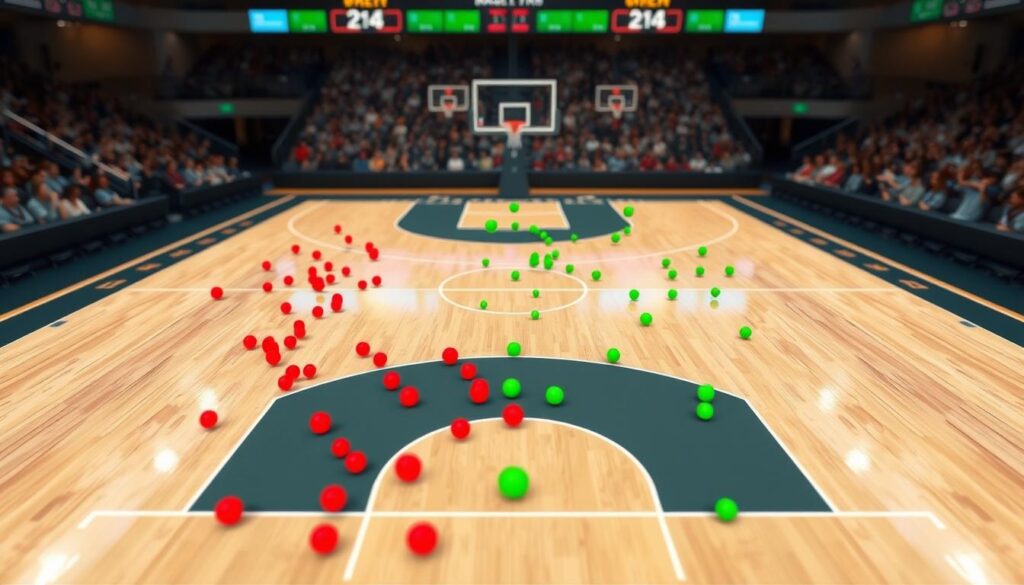
Basketball coaches love shot charts to spot scoring patterns. These colorful diagrams show where players shoot and how well they do. A good shot chart shows hot and cold spots on the court.
Local high school teams use these tools to plan better. Players see where they score best. This helps them make smarter choices during games.
Soccer teams use possession maps to track ball movement. These maps show which areas of the field a team controls. Coaches can find strong passing lanes and weak defensive spots.
Pace metrics measure game tempo in many sports. Basketball tracks possessions per game. Soccer measures minutes of possession. Hockey looks at offensive zone control.
Making these visualizations is easier than you think. Many free apps and websites offer simple tools. Just input game data and they create helpful charts.
Here’s a quick guide to different sports visualizations:
| Visualization Type | Best For Sports | What It Shows | Why It Matters |
|---|---|---|---|
| Shot Chart | Basketball, Hockey | Scoring locations & accuracy | Improves shooting strategy |
| Possession Map | Soccer, Football | Ball control areas | Shows field dominance |
| Pace Graph | Basketball, Soccer | Game tempo changes | Reveals fatigue patterns |
| Heat Map | All Sports | Player movement density | Shows positioning trends |
These visual tools make game analysis exciting and effective. Players see their performance in colorful, easy-to-understand formats. Fans get deeper insights into game trends.
Try using these visualizations in your next game review. You’ll see how much clearer the game becomes with these visual patterns and trends.
Player Grades with an Objective Rubric
An objective grading system changes how we look at player contributions. It gives clear insights beyond just the score. This method makes evaluations fair and consistent, benefiting players, coaches, and fans.
Creating a good rubric starts with knowing what matters most. Look at metrics that really show how players impact the game:
- Accuracy – How well players do their skills
- Decision-making – The quality of their choices during the game
- Effort – Their consistent energy and commitment
These areas help make fair evaluations that value all kinds of contributions. A player might not score but can get high marks for defense or creating chances.
To make your grading scale, define each level clearly. Use a 1-5 scale with clear criteria:
| Grade | Accuracy | Decision-making | Effort |
|---|---|---|---|
| 5 (Excellent) | Always precise | Makes the best choices | Works at full intensity |
| 4 (Good) | Usually accurate | Makes smart decisions most of the time | Shows high energy |
| 3 (Average) | Results are mixed | Makes some bad choices | Shows moderate effort |
| 2 (Needs work) | Makes many mistakes | Makes poor choices often | Shows inconsistent effort |
| 1 (Poor) | Always inaccurate | Makes bad choices regularly | Shows little effort |
Using this system in local games helps coaches and players. Coaches can see where players need to improve. This fair approach removes personal bias from evaluations.
Players get clear, useful feedback. They know exactly where to focus their practice. This structured feedback helps players grow and supports community sports teams building bonds through shared understanding and growth.
Fans get to appreciate player contributions more than just stats. Knowing why a player got a certain grade helps fans see the game’s nuances. This leads to more informed and engaged fan discussions.
The grading system works best when everyone knows the criteria. Share the rubric with players and fans to create a common language. This transparency builds trust in the process.
Remember, grades should be for growth, not criticism. The goal is to help players improve, not to criticize. Frame feedback positively to keep players motivated.
Regular grading lets players track their progress. They can see how they’ve grown, which boosts confidence. This data is key for both individual and team growth.
Objective player grading gives a full view of performance. It celebrates different contributions and shows clear paths for improvement. This makes the game more meaningful for everyone.
Social Cutfowns and Reels Workflow
Making cool social media content from your games is easy. Just follow a simple plan to make cutdowns and reels that excite your fans.
First, find the most thrilling parts of your game footage. Look for big plays, emotional moments, and game-changing scenes. These will be the heart of your social media posts.
Keep your editing simple and quick. Most phones have great editing apps. For extra features, try free apps like CapCut or InShot. They help you trim clips, add music, and text overlays.
Make your cutdowns short and to the point. The best reels grab your attention right away. Start with the most exciting part. Add captions to explain what’s happening or highlight player achievements.
Timing is key for social media. Post when your audience is most active. For local sports, this is usually evenings after games or weekends. Engage with comments and shares to spark conversations.
Tagging players, coaches, and teams helps you reach more people. Use hashtags and location tags to connect with wider sports communities. This boosts your content’s visibility a lot.
Follow best practices for social media in local sports. This ensures your content connects with fans and promotes good sportsmanship.
Being consistent is key to growing your social presence. Post regularly so your fans know when to expect new content. Mix up your posts with game highlights, behind-the-scenes, and player features.
Most importantly, have fun! Social media should show the excitement and teamwork of your team. When you enjoy making content, it shows and attracts more fans.
Learning Points and Practice Drills
Game analysis shows important lessons for players and teams. These insights guide in making effective practice drills. For instance, if shots are off, try the Nike Mikan Drill. It boosts close-range shooting with practice.
Improving defensive stance is common. The Adidas Zigzag Drill helps with agility and footwork. It’s fun and practical, mirroring game situations.
Coaches like Gregg Popovich stress the importance of drills. He says solving problems in practice is key. Make practice sessions game-like to keep them interesting.
Fans can also benefit from these drills. Set up a mini-hoop or practice passing in your yard. These drills make sports more enjoyable for everyone.
Improvement comes from dedicated practice. Use these tips to turn analysis into action. Enjoy the journey of getting better every day.