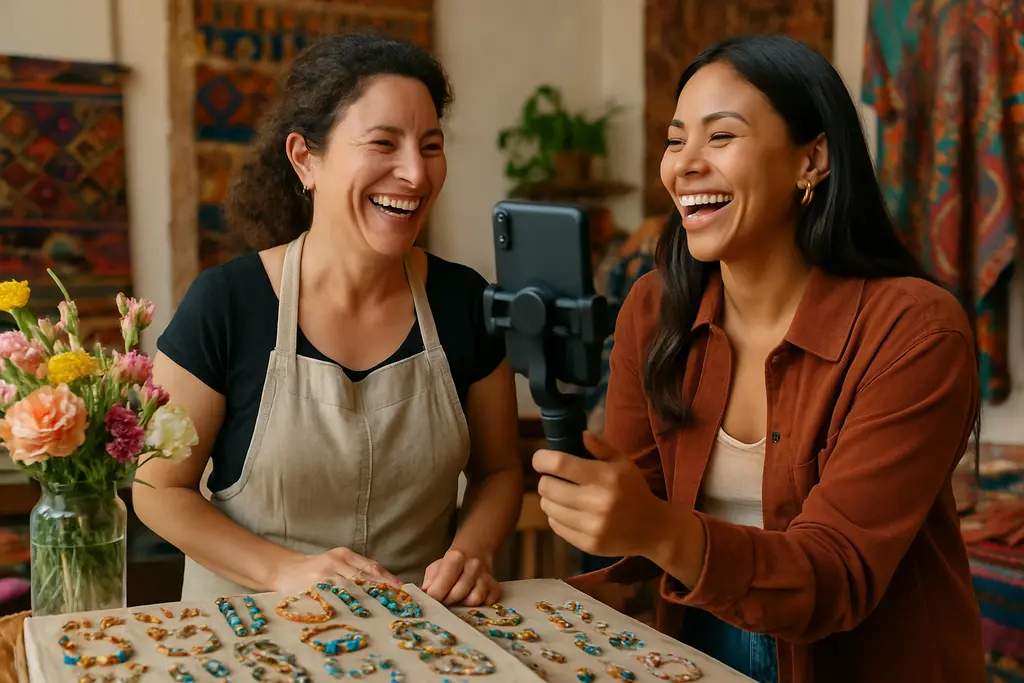
Small Retailers are no longer peripheral to creator commerce on TikTok, at least according to the platform-specific economic and shop data now available for 2025 and January through July 2026. The clearest signal is not a single viral product or a broad claim about cultural taste. It is the measurable relationship between sellers, short-form video, affiliate creators, and customer discovery. For artists, handmade sellers, small boutiques, and community-rooted makers, that relationship deserves careful attention because it connects commerce with storytelling, trust, and presentation.
That does not mean every shop can expect the same outcome, and the available research should be read with care. TikTok’s 2026 Economic Impact Report said TikTok-supported economic activity generated about $81 billion in U.S. GDP in 2025 and supported 410,000 jobs; it also reported that 93% of U.S. businesses using TikTok said they increased sales after promoting products or services on the platform TikTok economic report. Those figures describe a broad business base, not only cultural sellers. Still, they offer a useful frame for understanding why creator-led selling has become a practical concern for small operators rather than a side conversation.
How Small Retailers Fit Creator Commerce Data
What Small Retailers Can Read From The 2025 Figures
Small Retailers should treat the 2025 numbers as evidence of scale, not as a guarantee of individual sales. The report data says more than half of small business owners said TikTok helped them reach customers they otherwise could not reach and significantly increased their sales. That is especially relevant to makers and independent cultural shops because discovery is often the limiting factor: a ceramicist, costume accessory seller, zine distributor, or independent fashion label may have a distinct product language but limited access to foot traffic or paid media budgets.
From a community arts perspective, the phrase “reach customers they otherwise could not” is the most meaningful part of the research. Creator commerce can move a product story beyond a local market without stripping away the maker’s voice, if the seller presents process, materials, use, pricing, and availability with clarity. The evidence does not tell us which artistic categories benefited most, so it would be unsafe to claim that handmade goods or art objects outperformed other categories. What it does support is a narrower claim: small businesses using the platform reported meaningful commercial effects, and many tied those effects to customer reach.
Why Caution Still Matters For Creative Sellers
The rise of platform selling brings risks as well as openings. For creative sellers, product identity can be close to personal authorship, cultural heritage, costume reference, or fan practice. That makes rights-clearance and truthful marketing part of the business conversation, not a separate issue. A seller can celebrate influence, process, and community taste without implying permissions, copying a living artist’s recognizable style for commercial confusion, or using protected characters and likenesses without rights. For a related practical angle, NextClues has covered how TikTok Shop policies affect handmade sellers.
There is also a local civic dimension. Community organizers often see small commercial activity and cultural life overlap at markets, fundraisers, school events, and neighborhood fairs. For those who are interested in more community-centric discussions related to public life and commerce, the website Kay Granger offers additional insights within this network. The key point for seller strategy is modest but useful: creator commerce can connect local work to wider audiences, yet the strongest claims should remain tied to verifiable data and transparent product presentation.
Why Affiliate Creators Changed The Sales Equation
January Through July 2026 Benchmarks
Between January and July 2026, U.S. TikTok Shop generated an estimated $10.6 billion in revenue across 27 categories, according to MADA’s benchmark analysis; the same analysis said affiliate creators drove 74% of that revenue, while brands’ own accounts contributed 13% MADA benchmarks. For Small Retailers, that split is significant because it suggests the seller’s own channel may not be the only path to sales. Creator relationships, product demonstrations, and third-party storytelling can shape the purchase path.
Affiliate-driven commerce is not the same as traditional advertising. A small retailer may be used to writing a product caption, photographing inventory, and waiting for buyers. Creator commerce asks a different question: who can explain the object in use, in context, and with enough specificity that a viewer understands why it matters? For art-adjacent products, this could mean a maker showing glaze variation, a costumer discussing fit and movement, or a gift seller explaining packaging and occasion. The data does not prove that every creator mention works. It shows that, during the measured period, affiliate creators accounted for a large share of U.S. TikTok Shop revenue.
Community Trust And Product Interpretation
Creator involvement can be especially powerful when the product requires interpretation. A print, handmade bag, rave accessory, cosplay component, or small-batch home object often carries value beyond function. The buyer may need to see scale, texture, styling, durability, or ethical sourcing cues before deciding. A creator can supply some of that context if the relationship is clear and the claims are accurate.
That said, sellers should avoid treating creators as interchangeable distribution points. In arts and culture commerce, credibility often comes from alignment between object, community, and presenter. A costume maker may need reviewers who understand material limits. A music-event accessory seller may need creators who can speak responsibly about comfort and safety. A fine-art-adjacent shop may need careful language around prints, editions, and authorship. The data supports affiliate influence at a high level; it does not remove the need for seller judgment.
What The Channel Mix Says About Presentation
Short Video Led Revenue In The Measured Period
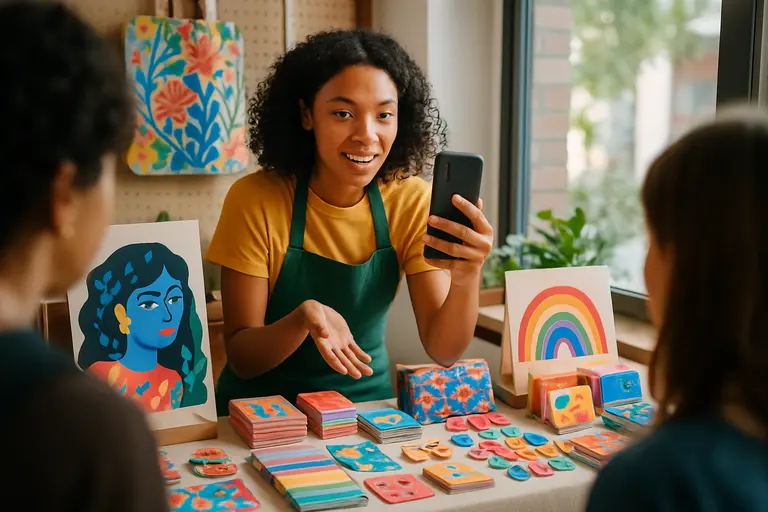
MADA’s January through July 2026 analysis also reported that short video content accounted for 63.3% of U.S. TikTok Shop revenue, while LIVE commerce and product cards each contributed about 18%. Small Retailers can read that as a sign that concise product storytelling mattered during that period. A short video can show how a necklace catches light, how a handmade notebook opens flat, how a costume piece moves, or how a gift is packed. Those are not minor details in cultural commerce; they are often the difference between a product listing and a product people understand.
LIVE commerce and product cards still represented meaningful shares in the same data. The practical reading is not that one format should replace every other format. Instead, presentation formats may serve different buyer needs. Short video can introduce the object. LIVE sessions can answer questions or show variation. Product cards can convert interest into a transaction after the viewer has enough context.
- Short video may work best for process, styling, scale, and before-and-after use cases.
- LIVE selling may fit limited drops, demonstrations, and question-led buying.
- Product cards may be most useful when the buyer already understands the item.
What The Data Does Not Prove
The available research does not prove that TikTok Shop is the best channel for every independent retailer, nor does it establish category-level outcomes for every kind of art, fashion, gift, or event-related product. It also does not settle questions about margin, returns, production capacity, copyright permissions, or fulfillment strain. Those factors matter deeply for creators who make objects by hand or in small batches.
A cautious seller should ask whether demand created through creator commerce can be fulfilled without lowering quality or overextending labor. The answer will vary by product type. A print-on-demand poster seller faces a different capacity question than a jeweler producing one-of-a-kind pieces. A vintage seller faces inventory limits. A costume maker may need longer production windows. The public data shows scale and channel contribution; the seller still has to assess operational fit.
Small Retailers In TikTok Creator Commerce
A Practical Reading For Cultural Sellers
The evidence from 2025 and January through July 2026 points to a clear but limited interpretation: TikTok-linked commerce has become large enough that Small Retailers cannot dismiss it as a niche channel, yet the data should not be turned into a promise. For creative communities, the most constructive use of the research is to refine how products are explained, credited, demonstrated, and sold.
That means centering accurate descriptions, clear sourcing, respectful cultural references, and honest expectations around shipping and availability. It also means choosing creator partners who can interpret the work responsibly rather than flattening it into a generic sales pitch. The best creator-commerce strategy for cultural sellers is not only about reach. It is about whether the person presenting the work can help a buyer understand the object without distorting its origin, purpose, or rights status.
For community-minded retailers, this is where commerce and culture meet. A platform may widen access, but the seller’s choices still shape trust: how a product is named, how inspiration is discussed, how collaborators are credited, and how buyers are informed. The rise shown in the research is real at the platform level. The responsible opportunity is to build sales practices that protect both the maker’s work and the communities that give that work meaning.