We love a great artist origin story. There’s something powerful about those first steps. These stories show us raw passion and a strong belief in a unique sound.
Take Flogging Molly, for example. Some doubted their energetic sound would succeed. But they believed in themselves. They built a career on a small indie label, with a loyal community.
Ani DiFranco also made a groundbreaking move. She founded her own label, Righteous Babe Records. It was more than a business choice. It was a statement of artistic and financial freedom.
We’re thankful for these stories. They show us that lasting innovation often begins from the bottom. It’s driven by authenticity and support. Let’s celebrate the spirit behind these amazing music career beginnings!
Case Study 1: From Bedroom Recordings to Festival Headliner
What started as a simple gesture in a bedroom turned into a career that inspired millions. We love sharing indie success stories that show how music can change lives. Mandy Harvey’s journey is a great example of this.
Mandy faced a big challenge when she lost her hearing. For a singer, this could have ended her career. But she found a new way to connect with music. She recorded a heartfelt cover of “Come Home” for her husband in her bedroom.
This raw, emotional recording became her foundation. It led her to the national spotlight on ‘America’s Got Talent’. From there, her career took off, with her becoming a festival headliner. This shows that even the most humble beginnings can lead to great success.
This story fills us with excitement! It shows that raw talent and a true story can touch people more than perfect music. Mandy’s journey from a bedroom to a festival stage is a true indie success story. It proves that heart and vision are what truly drive success.
| Aspect | The Bedroom Beginning | The Festival Headliner Reality |
|---|---|---|
| Environment | A personal, quiet home space focused on emotional expression. | Vast, public arenas and festival grounds with massive crowds. |
| Technical Setup | Basic recording equipment for a single, heartfelt take. | Full professional production teams and state-of-the-art sound systems. |
| Primary Audience | One person (her husband) and herself. | Thousands of fans and national television viewers. |
| Mindset & Goal | Personal connection and rediscovery of a lost passion. | Sharing a message of hope and inspiration on a global scale. |
Mandy’s path shows a common thread in modern music. Many bedroom producers become festival headliners. The technology changes, but the core truth remains. Authentic expression in a personal space has incredible power.
Her story is a reminder for all emerging artists. Your current creative space, no matter how modest, is valid. Your personal story is your greatest asset. The spotlight often finds those who create from a place of genuine truth, not fame. We are grateful for these inspiring indie success stories. They show us what’s possible when talent meets unwavering perseverance.
Case Study 2: The College Radio Station That Changed Everything
Bill Frisell’s journey to fame started in Denver’s Teller Elementary and Gove Junior High. These schools had great music programs. They gave him a community and a way to work together.
We celebrate these local spots. Schools, community centers, and college radio stations are key. They help new talent grow before the world notices.
College radio stations are special. They run on passion and coffee. Getting airplay there is a big deal. It’s like getting validation from friends and hearing your music on the radio.
These places do more than teach music. They build a team spirit. Playing with friends or meeting new musicians helps artists grow. They learn to listen, adapt, and create something bigger.
We’re thankful for these places. They work hard for the art and the people making it. By supporting local music and listening to indie radio, we help the next big thing.
Case Study 3: Open Mic Nights and Early Fan Discovery
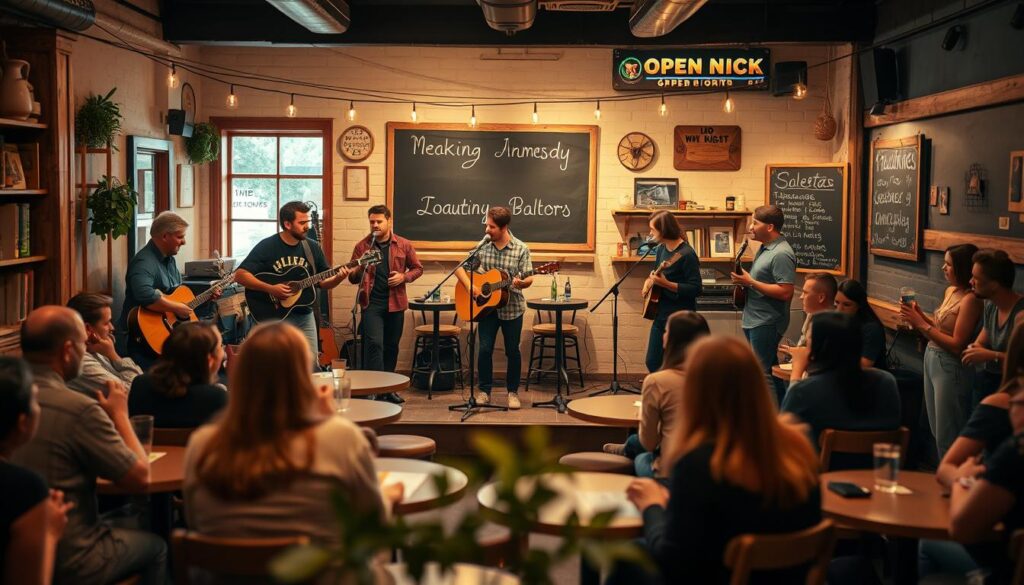
In today’s digital world, nothing beats the power of an open mic night. These live settings are where talent meets an eager audience. Here, musician backgrounds are shaped, not alone, but together.
The magic is in the moment. A laugh, a sigh, or the silence after a note creates a bond. This connection is real and human, unlike online followers. It’s the foundation of a lasting career.
Josh Barrett’s story shows this path well. Before joining The Wailers, he sang in his church choir and learned from neighbors. These places were his first stage and critics, all in a supportive setting.
This early foundation was key. It gave him skills and confidence. He formed Judah Tribe, with fans who saw him grow. They supported him, not just because of marketing.
Many artists follow this path. Open mic nights and local spots are more than gigs. They’re incubators for authenticity. Feedback is quick, relationships are deep, and growth is real.
We’re thankful for these early chapters in artists’ lives. They show that a musician background built on live experiences is priceless. It’s the heart of finding fans and a lasting music career!
The Role of Day Jobs in Artistic Development
Before fame, many musicians worked regular jobs to fund their dreams. We see this as a sign of great dedication. It shows how passion and practicality can build lasting careers in music.
Take percussionist Bill Summers, for example. Before joining Flo, he worked at a racetrack. He saved every penny, aiming for one goal. His savings helped him move to California and study music at UC Berkeley. This practical step didn’t slow him down; it propelled his career forward.
Bill’s story teaches us a valuable lesson. Day jobs do more than just pay the bills. They offer life lessons that enrich an artist’s work and character. These lessons are invaluable:
- Patience: Success in art doesn’t come quickly. Day jobs teach the importance of steady effort.
- Resourcefulness: Making art on a tight budget sparks creativity. It turns limits into opportunities.
- Deep Work Ethic: Handling multiple tasks builds stamina and discipline. Passion alone can’t always provide this.
- Real-World Experience: Interacting with diverse people adds depth to art. It enriches songwriting and performances.
We’re thankful for these stories of starting small. They show that the journey to success is unique. The day job chapter is a key part of this journey. It’s built on hard work, hope, and a deep love for the craft. Embracing this phase can lay a strong foundation for future success.
Early Recordings: Demo Quality vs Professional Polish
Before mixing boards and mastering suites, there’s the simple act of capturing a song. This moment is special! It’s where magic often happens, without the filter of overproduction. The contrast between a demo’s raw charm and a polished track is key for artists.
Think of Jason Mraz writing “I’m Yours.” He just picked up his guitar and let the melody flow. That raw, spontaneous feeling connected with millions. It shows a demo’s value is in its authentic emotional capture, not just sound quality. These early career struggles are actually periods of pure innovation.

Limited equipment and technical know-how can seem like barriers. Yet, they often force incredible creativity. Artists learn to make the most of what they have. This creates a unique sound that polished records can sometimes miss.
The key is to see the challenge as creative freedom, not a limitation. Learning to navigate these early career struggles builds a resilient, resourceful artistic mind.
Fans often have a special fondness for these early, unvarnished recordings. They feel like a secret glimpse into the artist’s soul. This connection is priceless. It shows that perfection isn’t the goal—connection is.
The energy in a rough take can be more compelling than a flawless, but sterile, studio version. For emerging artists, this phase is golden. Embrace the imperfections. Capture ideas freely without the pressure of a “final product.”
If you’re wondering about process, exploring when to record a demo before finishing your song can offer great guidance. The demos you make today are the treasured artifacts of tomorrow. They document your growth and purest expressions. So, record freely, create boldly, and cherish the journey during these early career struggles.
Social Media Before the Fame: Authentic vs Calculated Growth
Before algorithms ruled, artists shared their true selves online. This early digital footprint shows a key choice. It’s between genuine growth and strategic moves. For artists facing early career struggles, this choice shapes their first impression.
Faceman, Steve Schnepel’s musical alter ego, is a great example. His iconic mask came from his dad’s nickname, “rubber face.” This personal touch built a real community, not a fake image.
Authentic growth is rooted in personal stories and passion. Calculated growth focuses on numbers and trends. True connections are more powerful than any strategy.
- Authentic Growth: Based on personal stories or unique views. It feels like talking to a friend. The community is small but loyal. Content is heartfelt, even if it’s not always there.
- Calculated Growth: Based on data and what others do. It feels like a deal. The goal is to get followers fast. Content is planned out carefully.
When an artist’s true self becomes their brand, magic happens. This bond helps through tough times. For those in early career struggles, this bond is key. It gives the strength to keep going when progress is slow.
A dedicated group of fans who connect with your true voice is priceless. This isn’t just advice; it’s a lasting model. It makes building an online presence a journey of discovery.
So, think about this as you share your work: does it show me? Your answer will guide you through the noise. Building something real takes time, but it’s worth it.
Breakthrough Moments: The Songs That Changed Everything
We celebrate those defining tracks that serve as a launchpad, catapulting talented musicians into the public eye. These songs become synonymous with an artist’s name, creating a career launchpad that reshapes their future. For an indie artist, this moment is a whirlwind of excitement and profound change.
Consider Hanson’s iconic single, “MMMBop.” This track wasn’t just a hit; it was a cultural phenomenon that defined the band’s early career. Taylor Hanson later reflected with immense pride on creating something that connected with millions globally. It was a testament to how a single melody could open doors to a worldwide audience.
Similar to Hanson, the Flobots experienced a seismic shift with “Handlebars.” While it became known as a national one-hit wonder, its true power was in establishing the band’s enduring platform in their home state of Colorado. The song provided a permanent foothold and recognition that fueled their subsequent creative journey.
A breakout song is a double-edged sword in the best possible way. The sudden surge of fame can be overwhelming. Yet, this very moment provides an unshakeable foundation. It transforms an artist from a hidden gem into a recognized name, granting them the visibility to build a lasting career.
The positive impacts of such a breakthrough hit are transformative:
- Instant Recognition: The artist’s name becomes known to a massive new audience almost overnight.
- Creative Validation: It confirms that their artistic vision resonates on a large scale, boosting confidence.
- Industry Opportunities: Doors open for better production deals, festival slots, and collaborations.
- Fan Community Growth: It catalyzes the formation of a dedicated, supportive fanbase.
We share these stories with gratitude for the magic of music. A defining track is more than a chart position; it’s a life-altering opportunity that rewards years of patience and craft. For every emerging artist, it represents the beautiful moment when years of work culminate in a song that changes everything.
Mentor Relationships: Established Artists Helping Newcomers
Mentorship in music is more than just learning chords. It’s about gaining a philosophy that shapes a career. The most lasting musician backgrounds often come from guidance by those who came before. This cycle of giving back is key to artistic growth.
We are thankful for the established artists and community leaders who share their wisdom. Their help goes beyond simple advice. It creates a legacy of support that sparks innovation across generations.
The band Flobots’ story is a powerful example. Their mentor, the late historian Vincent Harding, didn’t teach them guitar. Instead, he challenged their purpose. Harding helped them use their music for social commentary, shaping their identity and mission.
For jazz legends, their backgrounds are filled with influences. Guitarist Bill Frisell’s sound was shaped in New York, where he learned from Paul Chambers and Charles Mingus. These giants gave him a wealth of ideas, technique, and approach to make his own.
These mentorships offer more than just technical tips. They provide philosophical grounding. A mentor helps navigate the industry and clarifies artistic values. This support is key for building resilience and authenticity.
This knowledge and ethos transfer is essential. It prepares new artists to contribute to the cultural conversation. A caring mentor turns raw talent into a sustainable, innovative, and meaningful career.
Looking at successful musician backgrounds, mentorship is often a key factor. It shows the power of community and the lasting effect of sharing knowledge to guide others.
Lessons for Current Emerging Artists: Patience and Persistence
Artist origin stories show us a key truth. A music career is a long journey, not a quick race. Success comes from being patient and persistent.
Dressy Bessy’s Tammy Ealom kept writing songs for eight years before releasing new music. DeVotchKa worked for seven years to create an album that met their high standards. Taj Mahal has been making music for over 60 years.
These stories teach us that quiet times are important. They are periods of growth. Your unique path and timing are your strengths.
We urge every new artist to believe in this journey. Stay connected with your community. Let your true passion guide you. Your story is unfolding with every note and challenge.
Let these stories of perseverance motivate you. Build your legacy step by step, with patience and persistence.