Blog

  • Beyond Streaming: Real Ways to Support Your Favorite Indie Artists

    Beyond Streaming: Real Ways to Support Your Favorite Indie Artists

    We love that moment. You hit play and a powerful new voice fills the room. Music platforms have given us incredible access to creativity from around the globe. For that, we are truly grateful!

    Yet, the heartfelt passion behind that click often translates to mere pennies for the creators. Let’s look at the numbers. Data shows that on a major platform like Spotify, a premium user’s stream generates about $0.0068 in streaming royalties. Across all users, the average payout per track is roughly $0.00275.

    While headlines focus on big label deals, these figures reveal the stark reality for independent music makers. The current music economy makes it incredibly challenging to build a sustainable career from streams alone.

    This isn’t about guilt. It’s about empowerment! Understanding this is our first, powerful step together. We can move from passive listening into active, meaningful artist support. Let’s explore how.

    Direct Support Methods: Bandcamp, Patreon, and Artist Websites

    The best support comes from direct channels that skip traditional middlemen. These platforms connect your love for music directly to the artist’s work. They turn listeners into vital supporters.

    This change is key to a better indie music economics. Money flows straight from fans to creators. This boosts the music and supports artists’ careers.

    Bandcamp leads the way in this new era. Its “pay-what-you-want” model shows trust and value. You decide the price, and the artist gets most of it right away. It’s more than buying a song; it’s supporting artistic freedom.

    Patreon changes the game for ongoing support. It lets us become monthly supporters of our favorite artists. Julia Nunes says Patreon helped her work on her album for a year. This steady income lets artists plan and create without worry.

    Platforms like Patronism also offer unique support. Fans can fund specific projects like demos or music videos. This model turns support into real creative achievements.

    Don’t forget about an artist’s website! They sell music, merch, and digital experiences directly. Buying here means artists keep all the profit after fees. It’s the most direct way to support them.

    Platform Primary Model Key Benefit for Fans Impact on Artist
    Bandcamp Pay-What-You-Want / Fixed Price Own DRM-free music, direct discovery High revenue share per sale, Bandcamp Fridays boost
    Patreon Monthly Subscription Exclusive content, behind-the-scenes access Predictable monthly income, deeper community building
    Artist Website Direct Storefront Maximum impact per dollar spent Full revenue control, strengthens brand and indie music economics

    These methods do more than give a quick boost. They build a solid base for artists to grow. We’re not just listeners; we’re part of a new music world. Our support shapes the music we love.

    This system is how we support indie music’s future. Let’s celebrate the tools that make our support so powerful!

    Merchandise Impact: T-Shirts, Vinyl, and Limited Editions

    Buying a vinyl record or a limited-edition poster does more than just buy merchandise. It supports an artist’s future. This tangible support creates a strong bond that goes beyond just buying something.

    It’s a win-win situation. You get a unique piece of art, like a hoodie, vinyl, or tee. The artist gets the funds they need for their next project. As musician Aimee Echo says, “Buy the shirt. Wear the shirt… Do everything as directly as possible.” This direct support is key.

    Why are merchandise sales so important? They bypass the middleman. Unlike streaming, where pennies go to the platform, merch sales go straight to the artist. This means your money has a bigger impact.

    Let’s see what these sales fund:

    • Studio Time: Essential recording sessions.
    • Tour Support: Gas, van repairs, and lodging.
    • Equipment Upgrades: Better instruments and gear.
    • Daily Sustenance: Rent, bills, and living expenses.

    Many artists have found a lifeline in merchandise sales. It’s not just about selling items; it’s about enabling creation. A successful vinyl pre-order can fund an album’s mixing. A hit t-shirt design can cover a tour vehicle repair.

    This cycle turns your appreciation into real support. You get a product you love, and the artist gets the resources to create more. It’s a loop of gratitude and empowerment.

    So, when you see that special edition item, remember its true value. Your choice supports the music you love and helps independent art thrive. Let’s make every purchase count!

    Concert Attendance: The Lifeblood of Independent Musicians

    The roar of a crowd, the shared energy in a room—this is the pulse of music. For independent artists, concert attendance is its very lifeblood. It’s more than just a show; it’s a shared experience.

    Buying a ticket is a direct way to support artists. For many indie artists, live shows are a major source of income. This beats the small payments from streaming services.

    Most indie shows work on a door deal. This means artists get a share of ticket sales. A full house means more money and better opportunities for future shows.

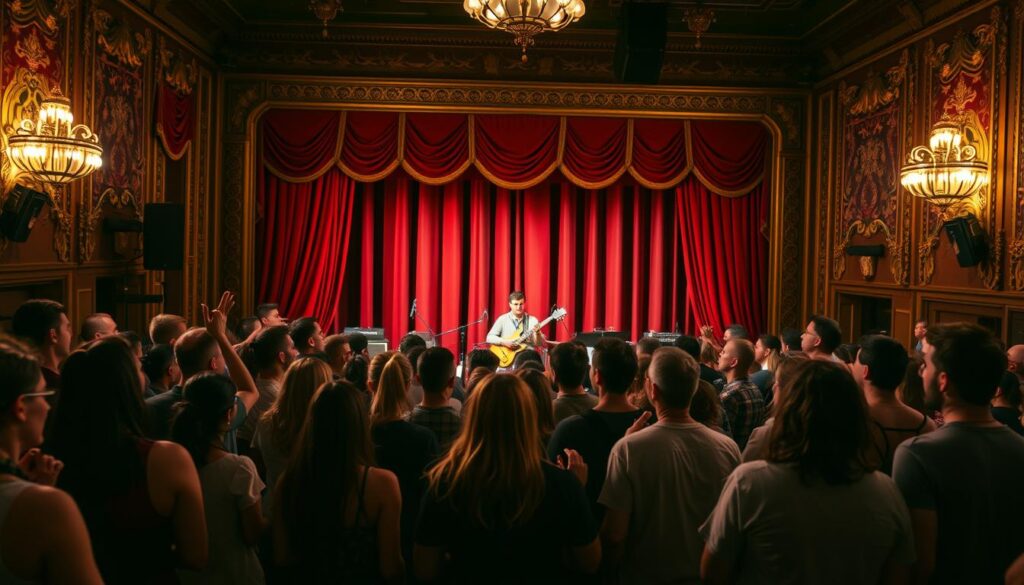
    A vibrant concert scene filled with a diverse crowd of people enjoying live music, captured from a slightly elevated angle to show the energy and excitement of the event. In the foreground, enthusiastic fans of all ages and backgrounds are cheering, some with their arms raised in the air while others sway to the music, dressed in casual concert attire. The middle ground features a dynamic indie band on stage, passionately performing with colorful stage lights illuminating them, creating a warm and inviting atmosphere. The background showcases a blurred view of concert banners and a packed audience, enhancing the sense of community and support for independent musicians. The image is bathed in soft, warm lighting, with a focus on the joyful expressions and the palpable emotion of the crowd.

    Our support does more than just help financially. It turns a show into a celebrated event. This boosts an artist’s morale and creativity. We are the collective voice that tells the industry, “This artist matters.”

    For musicians from marginalized communities, like queer artists, our support is critical. A strong turnout at their shows is key. It opens doors to rare opportunities and builds a more inclusive scene.

    Every ticket we buy and every show we attend makes a difference. We fuel the engine that lets independent music thrive. Let’s keep showing up, filling rooms, and being the essential audience that turns passion into a sustainable career.

    Social Media Engagement: Shares, Comments, and Authentic Interaction

    Every like, comment, and share we make online is important for an independent artist’s career. These actions are key to artist support. They help artists succeed without big label money.

    Places like Instagram, Twitter, and YouTube are like town squares today. When we follow, share, and hype our favorite artists, we help market them. This word-of-mouth is priceless. It creates excitement that money can’t buy.

    Real engagement is more than just following. Sharing a new song on Instagram Story shows it’s valuable. Leaving a real comment like “This chorus gave me chills!” boosts their spirits. Adding their song to a public playlist introduces them to more people.

    This organic interaction is a big help. It increases an artist’s visibility and builds a real community. The best part? It doesn’t cost us anything but a little time.

    We can be smart in how we support artists. A few consistent actions can make a big difference.

    • Share to Your Story: Repost their announcement. Tag them so their name reaches new eyes.
    • Comment with Heart: Move beyond “🔥”. Write a sentence about what you love. This boosts engagement metrics.
    • Utilize Playlists: Curate a “Local Favorites” or “Indie Discoveries” list. It’s a permanent showcase for their work.
    • Engage with Livestreams: Tune in, cheer, and ask questions. Real-time interaction is incredibly validating for a performer.

    This genuine artist support makes us part of their journey. We’re not just fans; we’re helping them grow. Each share is a vote of confidence. Every comment is fuel for their creativity.

    We’re lucky to have tools that let us amplify the voices we love. Let’s use them with purpose. Our clicks and keystrokes help their music reach more people. That’s the beautiful power of our digital community.

    Word-of-Mouth Marketing: The Fan as Promoter

    In today’s world, the best way to find new things is through people. For indie artists, getting the word out through fans is key. Your real endorsement is priceless!

    Artist Mal Blum says, “Some things never change and word-of-mouth is a timeless one.” Juli Amore notes that sharing and retweeting “reach beyond the limited audience and it costs nothing.” This free, personal sharing is vital for indie artists to thrive.

    You, the fan, are the best advocate for an artist. Your enthusiasm spreads. When you share a song you love, others take notice. This personal touch is more powerful than any ad.

    Think about the little things. Sharing a song with a friend. Playing an album on a road trip. Requesting a song at a café. These actions have a bigger impact than streaming royalties from a single listen.

    To see the difference, let’s look at fan promotion versus just listening:

    Promotion Metric Word-of-Mouth Fan Action Passive Streaming
    Trust Factor Extremely High (Personal Recommendation) Very Low (Algorithmic Suggestion)
    Reach Potentia Exponential (Network Effect) Single Listen
    Cost to Artist Zero Negligible (Hosting Fees)
    Long-term Value Builds a lasting fan relationship Contributes to aggregate streaming royalties

    A vibrant and engaging scene depicting the concept of word-of-mouth marketing for indie artists. In the foreground, a diverse group of enthusiastic fans, dressed in modest casual clothing, passionately discussing music and exchanging recommendations. Their expressions are animated, capturing the excitement of sharing their favorite indie artists. In the middle ground, a small intimate café setting with posters of indie musicians on the walls, evoking a warm, inviting atmosphere. The background features a cozy urban street, with soft, warm lighting that enhances the mood of community and connection. The focus is on the fans, with a shallow depth of field that subtly blurs the background, emphasizing their roles as promoters. The overall tone is uplifting and supportive, embodying the spirit of indie music.

    We urge you to take on this role with excitement! Your enthusiasm is the best way for artists to get noticed. It creates a strong foundation for their career. This support is like the community engagement strategies that make local events successful.

    Every time you talk about a song or share a playlist, you help an artist grow. The benefits of bringing in a new fan far outweigh the small streaming royalties from a single listen. Be the one to make a difference. Your voice is powerful.

    Crowdfunding Campaigns: Albums, Tours, and Equipment

    When we pool our resources through crowdfunding, we become direct investors in the dreams of indie musicians. This model changes our role from passive listeners to active patrons. We help turn creative ideas into real art.

    Crowdfunding campaigns are key in modern indie music economics. They provide the needed funds for projects that streaming alone can’t cover. Artists use these campaigns for new albums, touring costs, or better equipment.

    Platforms like Kickstarter are great for specific goals. A musician might aim to press a vinyl run or fund a tour. Backers get unique rewards, from digital downloads to exclusive items.

    For ongoing support, fan subscription programs like Patreon offer a steady income. This helps with daily needs. It’s a way to support artists consistently.

    Singer-songwriter Jenny Owen Youngs shared her view. She said, “Being a modern musician is like having a leaky roof and putting out a zillion pots and pans.” Crowdfunding is a key way to help fill these pots.

    Our support in these campaigns has a big impact. We’re not just buying a product; we’re co-creating. Our money decides which albums are made and which tours happen.

    This funding method is a strong force in indie music economics. It cuts out traditional gatekeepers and gives power to the community. We choose with our dollars the music we want to see.

    Backing a campaign is a strong statement. It tells an artist, “We believe in your vision.” It builds a deeper connection and a shared win when the project succeeds. Together, we keep independent music alive and diverse.

    Local Venue Support: Keeping Music Spaces Alive

    Local music venues are more than just buildings. They are where dreams and community come together. Think of that cozy café or the historic hall. These places are where artists find their voice and fans find new bands.

    Buying a ticket to a small gig helps a lot. Your ticket fee pays the artist and helps the venue. Buying a drink or snack adds more money. It keeps the venue running for more shows.

    For new artists, getting their first gig is hard. A local venue that supports diverse artists is key. By attending shows, we show there’s a demand for new music. This makes the scene more inclusive and vibrant.

    The energy after a great show is amazing. This is when community comes together. It’s also when merchandise sales do well. A busy merch table shows a healthy scene where fans and artists connect.

    So, how do we protect these community hubs? We need to be active:

    • Prioritize Live Attendance: Choose a local show over streaming.
    • Spend at the Venue: Buy more than just a ticket. Drink, tip the staff.
    • Advocate for Them: Follow venues on social media, share events, and leave reviews.
    • Respect the Space: Treat it like a cherished community asset.

    Every show we attend and every dollar we spend is a vote for music culture. Let’s fill those rooms, cheer, and support merchandise sales. Together, we can keep these music spaces alive for years to come.

    Music Journalism Support: Blogs, Zines, and Online Publications

    Supporting music journalism helps independent creators shine. They do more than just review albums. They tell stories, find new talent, and connect artists with fans.

    By showing our support, we help indie music grow. We can do this in simple ways. Start by reading your favorite music blogs and online magazines. Subscribing to their newsletters or a print zine helps them keep going.

    Don’t forget to engage! Liking, commenting, and sharing their posts helps them reach more people. This tells algorithms their content is important, helping them highlight more artists.

    We can also take action. Requesting your favorite indie artist’s songs on local radio stations is a great way to help. Radio play introduces music to many people. You can also suggest artists to blog editors or podcast hosts.

    Why is this important? Positive press and radio play boost an artist’s credibility. This credibility creates buzz. Buzz leads to discovery, which can increase concert attendance.

    Outlet Type Primary Medium Key Support Action Impact on Artist
    Music Blogs Online Articles & Lists Read, share, and comment on posts Drives digital discovery and SEO
    Print Zines Physical Publications Purchase subscriptions & issues Builds a dedicated, cult following
    Music Podcasts Audio Interviews & Reviews Subscribe, listen, and leave reviews Deepens fan connection through conversation
    Local Radio Terrestrial & Online Streams Call in or email song requests Boosts local concert attendance and recognition

    Each outlet has its own role. Blogs offer quick discovery and deep reviews. Zines give fans something tangible. Podcasts offer intimate audio experiences. Local radio reaches listeners where they live and work.

    Supporting this diverse media landscape helps artists get coverage from all sides. This ensures a strong, resilient artist career. Media support builds a story that fans can follow, turning listeners into long-term supporters.

    Ready to help an artist get featured? Start by searching for the best music blogs to submit your music to. Sharing this resource with artists you love is another great way to help. Together, we can make sure the voices telling music’s stories are heard, supporting both artists and writers. This collective effort is key to increased concert attendance and a vibrant music culture.

    Long-Term Relationship Building: Growing with Your Favorite Artists

    Supporting artists is a journey we take together. It’s more than just buying music or attending concerts. Our goal is to build lasting partnerships that help artists grow.

    Indie music needs many ways to make money to survive. Small actions add up. Every stream helps with royalties. Every t-shirt sale boosts merchandise. And every concert ticket is vital.

    Artist Wendy Colonna talks about how fans let her take risks over years. This shows the power of long-term support. It lets artists try new things and grow with confidence.

    We grow with our favorite musicians. We see their music evolve from early days to later albums. Our support is like a breeze that helps them improve their craft and plan tours.

    This teamwork makes the music world stronger. We’re building a future where indie artists can succeed. Let’s keep supporting each other and enjoying the music together.
  • Hidden Gems: Discovering Tomorrow’s Stars in Your Local Venues

    Hidden Gems: Discovering Tomorrow’s Stars in Your Local Venues

    We are thrilled to begin this journey with you! Together, we’ll explore the heart of where musical dreams take flight.

    Our community stages play an irreplaceable role. They are the nurturing grounds where raw artistry finds its voice. We feel immense gratitude for these intimate spaces that give performers their first platform.

    Here, artists grow, experiment, and connect with a real audience. It starts with a nervous first set. It builds to the magical moment a room falls silent, completely captivated. These community cornerstones are the true unsung heroes of artist development.

    We believe every major star once had a local venue that believed in them first. Just as with exciting upcoming local events, these musical spaces forge powerful community bonds. We are passionate about shining a light on that beautiful, grassroots process happening from coast to coast.

    Why Local Venues Matter in Artist Development

    Local music venues are more than just stages. They are where raw talent turns into professional artistry. These places are the heart of a thriving music scene. They are where careers start and grow.

    Think of your favorite local spot. It’s not just a room with a stage and sound system. It’s a place where musicians can try new things and take risks. The feedback they get is real and comes from the community.

    This environment is key for growth. A shaky first performance can lead to a confident second. A new song gets its first real reaction here. These moments help build the skills and confidence needed for the stage.

    Venues like “Tell Your Friends” focus on emerging artists. They value creativity and unique sounds over commercial appeal. For many, a spot at such a venue is their first big chance.

    We’ve seen many stories of growth start here. A musician’s first paid gig is more than just the money. It’s a sign of validation. The first applause in a packed space is a big milestone. It builds confidence for the future.

    To see the value of these spaces, let’s compare them to jumping straight to big stages.

    The Local Venue Advantage: A Comparative Look
    Aspect Local Venue Environment Impact on Emerging Artist
    Creative Freedom High. Bookers often encourage original sets and experimentation. Artists develop a unique sound and artistic identity without commercial pressure.
    Audience Feedback Direct and personal. The crowd is close and often supportive. Immediate learning on what connects, building rapport with the audience.
    Financial Pressure Lower. Door deals or small guarantees reduce the stress of “making it.” Allows focus on craft and growth, reducing early burnout.
    Community Connection Strong. Artists, fans, and venue staff form a collaborative network. Creates a support system for future collaborations, gigs, and career advice.

    Emerging talent showcases at local venues are powerful. They highlight new voices in a supportive setting. Artists get the spotlight without the pressure of a big concert hall.

    This setup helps artists grow stronger. They learn to handle technical issues, engage different crowds, and manage live shows. These skills are essential for a professional musician.

    We are thankful for these community hubs. They build the foundation for lasting careers, one show at a time. Supporting local venues is more than buying a ticket. It’s investing in the future of music.

    Venue Spotlight 1: The Intimate Coffee Shop Stage

    Imagine stepping into a place where coffee smells fill the air and an acoustic guitar’s sound touches your heart. These cozy spots are where new stars shine, right in front of you. The vibe is warm and inviting.

    Places like the Old Town Tavern offer a friendly atmosphere. People listen closely, not just out of habit. At spots like the Blue Martini, music is soft, making it easy to talk without yelling. This is perfect for experiencing the true spirit of live music discovery.

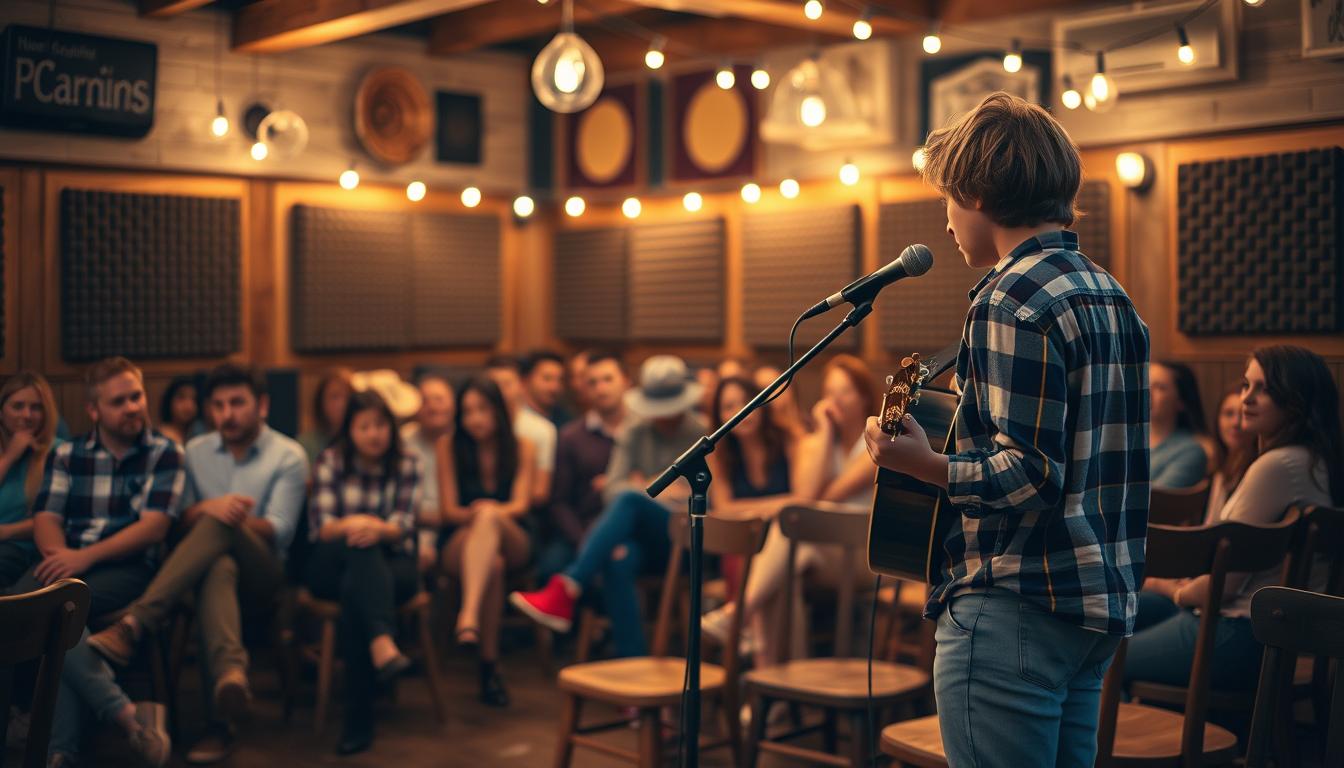
    A cozy, intimate coffee shop atmosphere with warm, ambient lighting. In the foreground, a small stage is set for live music, featuring an acoustic guitar resting on a simple stand. A musician, dressed in modest casual attire, is strumming the guitar with a focused expression. In the middle ground, a few small tables occupied by patrons, some sipping coffee while others watch the performance, creating an engaging vibe. The background is adorned with shelves of books and art pieces, enhancing the artistic feel of the venue. Soft light from hanging bulbs casts a gentle glow throughout the space, inviting an atmosphere of community and discovery. Capture this scene from a slightly elevated angle to emphasize the musician and the captivated audience, conveying a sense of connection and intimacy.

    The magic lies in being close. You catch every detail of the music. This closeness creates a strong bond between the artist and the audience. It’s a moment of shared experience.

    So, what makes these stages unique? Here are a few reasons:

    • Zero Barrier to Entry: Many have no cover charge, welcoming all.
    • Artist Accessibility: You can often talk to the performer after their show.
    • Focused Listening: The quiet setting encourages and rewards attention.
    • Community Feel: Regulars and newcomers come together, supporting each other.

    These stages make live music discovery accessible to everyone. You can find new talent easily. It’s a personal journey, not just a show.

    The real treasure is that special moment when a song speaks to you. It’s quiet, yet powerful. That feeling stays with you, even after your coffee is gone.

    We honor these small, yet powerful venues. They are the backbone of music scenes everywhere. They showcase raw talent and create unforgettable memories. We invite you to explore your local coffee shop stage and embark on your own live music discovery journey.

    Venue Spotlight 2: The All-Ages DIY Space

    Want to see where music genres are born and subcultures thrive? Look no further than your local all-ages DIY concert venue. These places are the beating heart of a city’s music scene. They are where creativity is not just shown, but built by the community itself.

    The vibe here is electric. You might find yourself in a repurposed warehouse or a rented VFW hall. The stage is simple, and the “green room” is often just a corner behind a curtain. This simplicity is what makes it so powerful. It focuses on the music, the crowd, and the moment they share.

    These spaces are essential incubators for genres that big stages often ignore. Punk, hardcore, indie rock, and experimental sounds find a home here. DIY venues give a voice to artists who challenge the norm or defy easy categorization. They create tight-knit subcultures where fans become friends and work together.

    Inspired by the community-focused model, these venues keep it accessible. They often run on thin margins, with low cover charges. This ensures everyone can attend. It’s about the music, not making a profit.

    This approach does more than just fill a room. It builds the next generation of artists and fans. When a teenager can afford to see a show and dream of being on that stage, the scene’s future is bright. These accessible concert venues reward artistic courage and build community bonds.

    We are deeply grateful for those who run these spaces. Their work is a labor of love that keeps the music scene alive. Supporting a DIY show means investing in your city’s creative future. You’re not just buying a ticket; you’re helping tomorrow’s stars shine.

    Venue Spotlight 3: The Historic Theater’s New Music Series

    There’s magic when old walls meet new indie sounds. We’re thankful for historic theaters and grand buildings starting new music series. They offer a unique stage for new talent.

    Historic venues are more than just pretty. They have high ceilings, detailed balconies, and amazing acoustics. This makes every performance special, blending with the venue’s history.

    A vibrant indie music show taking place in a historic theater, with a focus on a small, enthusiastic crowd gathered around the stage. In the foreground, a diverse group of audience members dressed in modest casual clothing, captivated by the performance. The middle features an indie band on stage, with a lead singer passionately engaging the audience and musicians playing guitar and drums, all under warm, inviting stage lights. The background showcases the ornate architecture of the historic theater, including vintage red velvet curtains and intricate gold detailing, illuminated by soft, ambient lighting that creates a cozy yet electric atmosphere. Capture the scene from a slightly elevated angle to provide depth and highlight the energy of the performance. The mood is intimate, celebratory, and filled with anticipation.

    Heritage adds to the vibe. Take the Rusty Spur Saloon with its Western feel. Its decor is part of the show, not just a setting. Historic theaters also have unique touches like velvet curtains and ornate plasterwork.

    What we love is how these places evolve. For example, Wasted Grain changes for different events. A historic theater’s music series shows respect for the past and a commitment to the future. It’s a great place for indie shows.

    Playing in such a place is a big deal for musicians. For fans, it’s a night to remember. These series bring people together, introducing music to new audiences through history.

    We honor those who book and run these shows. They show that music can grow from deep roots. Next time you see indie shows at a historic theater, get your ticket. It’s more than a concert; it’s a dialogue between past and present.

    Booking Practices: How Venues Choose Their Acts

    Behind every great show is a booker, a talent scout. They sift through demos and dreams to build a venue’s unique sound. We’re pulling back the curtain on this fascinating process! Booking for local music venues is a delicate dance between two core missions: cultivating a reliable audience and fearlessly championing the next big thing.

    These dedicated professionals listen to hundreds of submissions. They weigh multiple factors to create a cohesive yet surprising weekly calendar. Key considerations often include:

    • Audience Draw: Can the act bring a crowd, even a small but dedicated one?
    • Artistic Fit: Does the music’s style and energy match the venue’s vibe and existing clientele?
    • Professionalism: Is the act reliable, communicative, and easy to work with?
    • Creative Vision: Does the artist offer something unique that elevates the local scene?

    Different venues apply these criteria with distinct philosophies. Some, like the noted space Tell Your Friends, prioritize raw creativity and artistic talent over guaranteed ticket sales. They build their reputation on being a discovery hub. Others, such as Mother Tucker’s Tavern, focus on crafting a varied weekly lineup—acoustic nights, rock bands, weekend DJs—to become a consistent community staple that offers something for everyone.

    We are endlessly grateful for these bookers and talent buyers. They act as essential scouts and mentors, investing time to find those special voices. Their careful curation builds the vibrant, diverse tapestry of our local scene. It ensures we always have access to fresh, genuine performances alongside beloved favorites.

    This thoughtful selection process is what fills our calendars with can’t-miss events. It transforms a simple stage into a platform for growth and connection, night after night.

    Sound Quality Considerations: What Makes a Great Live Experience

    What makes a night out unforgettable? Often, it’s the sound system’s clarity and power. We see great sound as a way to honor the artist and the audience.

    Three key elements make up this respect. First, a skilled sound engineer who mixes with passion. Second, acoustics that fit the room’s size and shape. Third, a sound system that captures every detail of the performance.

    “Tell Your Friends” is a small venue with amazing sound. It shows that great acoustics come from smart design, not just size. “Wasted Grain” also impresses with its ability to handle both loud bands and soft DJ sets.

    For emerging talent showcases, quality sound is essential. It lets every detail of the music shine through. This boosts new artists’ confidence in their performances.

    Great live sound isn’t just about being loud. It’s about creating a space where music can deeply move us. Here’s what makes it special:

    • Clarity: Each sound has its own space in the mix.
    • Balance: The sound feels natural, with the right mix of bass, mids, and treble.
    • Dynamic Range: Quiet moments are intimate, and loud moments are powerful without distortion.
    • Even Coverage: The sound is good everywhere, from the front row to the back.

    When these elements come together, the venue fades away. The audience feels a direct connection to the music. This is what turns fans into lifelong supporters at emerging talent showcases.

    Understanding these aspects helps fans and artists make better choices. We suggest checking a venue’s technical capabilities to support great live music. When venues invest in sound, they support the future of music.

    Community Building: Venues as Social Hubs

    Venues like “Old Town Tavern” mix comfort with excitement. They create a lively social scene. Here, stories are shared over drinks and new friendships start with a favorite song.

    “Mother Tucker’s Tavern” on a Tuesday night feels like home. Regulars laugh at their usual table, while new couples enjoy nachos. Everyone feels welcome, from regulars to newcomers. Music brings us all together.

    Live music discovery is more meaningful when shared with others. Finding a new artist is special when you can talk about it with someone next to you. These moments build lasting connections. Our local venues are like modern town squares.

    Different venues create community in their own ways. The table below shows how each type serves as a social hub.

    Venue Type Core Community Vibe Social Catalyst Role in Live Music Discovery
    Neighborhood Tavern (e.g., Old Town Tavern) Familiar, welcoming, a “third place” Regulars mingling with newcomers; low-pressure interaction Introduces new acts to a loyal, supportive local crowd
    DIY All-Ages Space Energetic, inclusive, youth-focused Shared DIY ethos; artist-audience collaboration Ground zero for emerging genres and raw, undiscovered talent
    Historic Theater Respectful, event-oriented, collective awe Shared appreciation for architecture and curated lineups Elevates artist prestige; discovery feels like a special event

    We’re grateful for these spaces. They offer more than entertainment. They connect us. Supporting these venues strengthens our cities’ social bonds. For a deeper dive, check out this community-building guide. Next time you’re out for live music discovery, remember, you’re among friends.

    Supporting Venue Sustainability: Ticket Sales and Concessions

    Buying a ticket or a craft beer at a show does more than just entertain you. It helps keep a community treasure alive. Every dollar spent at concert venues is key to their growth. Let’s explore how these spaces work and why they matter.

    Most independent music venues run on a simple model. They make money from tickets and food and drinks. That ticket price is more than just to get in. It’s an investment in the artist and the venue.

    Take the Old Town Tavern’s $5 cover charge. It helps pay the band fairly. Wasted Grain, on the other hand, has a variable cover. This lets them book different acts while keeping costs down. Both ways help venues stay open.

    The concession stand is a big money-maker for many venues. A place like Mother Tucker’s Tavern makes more from food and drinks than from tickets. This money pays for staff, sound equipment, and upkeep.

    Every purchase we make helps. Buying a ticket means artists get paid fairly. Buying food or drinks helps the venue stay afloat. This cycle is what keeps these places alive.

    Revenue from sales pays for upgrades and new features. Better sound systems and comfy seats come from healthy finances. It also lets bookers take risks on new artists. This way, venues can be creative hubs for the future.

    So, how can we help? By buying tickets and food and drinks. See these actions as investments, not costs. They ensure these concert venues stay vibrant for years.

    Together, we can keep the local music scene alive. Supporting venues through ticket sales and concessions shows we care. Let’s keep the music alive.

    Creating Your Local Music Calendar: Never Missing Great Shows

    We can turn our support into action by making a personal guide to live music. A local music calendar helps us catch every new artist’s first show.

    Start by following your favorite venues on social media. Sites like Instagram and Facebook are where places like Mother Tucker’s Tavern share their weekly schedules. Also, sign up for venue email newsletters for the latest updates.

    Look at local event listings and apps focused on live music. Venues like Wasted Grain have full calendars online. Make it a routine to check schedules for different nights.

    Diverse indie shows happen every evening, from quiet Monday sets to lively weekend shows. Exploring different nights helps us find hidden gems we might miss.

    Our goal is to fill our lives with the joy of live music discovery. By building this simple system, we empower ourselves to be there when tomorrow’s stars shine. Together, we keep the cycle of talent and community alive.

  • Discover Authentic Storytelling in Modern Folk Music

    Discover Authentic Storytelling in Modern Folk Music

    We are thrilled to welcome you! A heartfelt revival is reshaping our sonic landscape in 2025.

    This movement returns to the core of human connection. It celebrates raw emotion and genuine narrative above all else.

    Join us on a meaningful indie folk music exploration. We will journey through a rich tapestry of sound where community spirit shines brightly.

    Authentic storytelling has never felt more vital. These songs speak directly to shared hopes and quiet struggles.

    We’ll trace the genre’s inspiring evolution from humble roots to today’s innovative sounds. Together, we’ll celebrate the passionate indie folk artists driving this beautiful change.

    Their work connects us to timeless experiences. It offers warmth and understanding in a fast-paced world.

    We feel immense gratitude for this vibrant, story-driven community. Get ready to feel the same connection we cherish.

    The Evolution of Indie Folk: From Woody Guthrie to Today

    Folk music discovery is more than just finding new songs. It’s about exploring a history of protest, heart, and home. We’re grateful to share this journey, tracing from old records to today’s digital streams. This path shows how truth and stories have evolved, creating the rich contemporary folk we love today.

    Our tale starts with early 20th-century troubadours. Figures like Woody Guthrie used their guitars for change. His songs told of hardship and hope, becoming newspapers for the people. This era showed folk’s unshakeable commitment to truth and everyday stories.

    The mid-20th century saw folk blossom during the Folk Revival. Artists like Pete Seeger and Joan Baez carried on Guthrie’s work. They mixed protest with personal ballads, uniting people through music. This period proved folk’s power to change the world with simple melodies.

    In the late 20th and early 21st centuries, folk music evolved. It became more nuanced and introspective. Artists explored their inner worlds with honesty, marking the start of indie folk’s authenticity.

    So, what connects Woody’s world to ours? Let’s look at the evolution’s key points:

    • The Narrative Core: Folk music has always been about storytelling, from migrant workers to urban anxiety.
    • Social Conscience to Personal Introspection: The focus shifted from collective protest to personal reflection.
    • Instrumental Texture: While the guitar is key, the sound palette has grown to include new textures.
    • Distribution Revolution: Music has moved from campfires to vinyl, radio, and streaming platforms.

    This evolution is key for true folk music discovery. Knowing the past helps us understand today’s music. Artists today, like those who sing about mental health, carry on the tradition of giving voice to the unheard. Their music may sound different, but its purpose remains the same: to connect, reflect, and sometimes challenge.

    We find hope in this continuity. The journey from Guthrie to today’s artists is like a spreading river. It finds new paths while staying true to its roots. Your exploration of contemporary folk is part of this ongoing story. Every new artist adds a branch to this tree, rooted in authenticity and nourished by community.

    Authenticity Markers: What Makes Folk Music Genuine

    The search for real folk music discovery starts with recognizing its true essence. It’s not just about an acoustic guitar. True folk music has a deep honesty that touches our hearts.

    So, what makes it authentic? We think it’s a checklist for listeners. These elements help us tell true tradition from passing trends.

    • Unvarnished Storytelling: Folk music’s core is its stories. Songs talk about real-life experiences, from struggles to love and loss. The lyrics are raw and direct, like a personal tale.
    • Acoustic Warmth and Imperfection: The sound is key. You hear the singer’s breath and the strings’ slight squeaks. It’s music that feels warm and real, like the artist is right there with you.
    • Lyrical Depth and Universal Connection: Great folk songs touch on themes we all get. They offer a profound sense of belonging. Whether it’s about migration or love, the lyrics link our personal stories to the human experience.
    • A Communal Vibe: Even when listening alone, folk music feels like a shared moment. It carries the voice of a community, tradition, or shared history. This timeless bond is its greatest strength.

    These elements combine to make music that feels both old and current. When you find a song that hits all these marks, you’ve discovered something unique. It’s music that doesn’t just entertain; it companions you.

    Knowing these signs changes how you listen. It turns casual browsing into a meaningful folk music discovery. You start to look for the story, the raw sound, and the emotional truth.

    This knowledge is also key for singer songwriter discovery. You learn to value the art behind the words. You appreciate artists who focus on meaningful lyrics over catchy melodies. Your playlist becomes a collection of genuine human stories.

    We’re grateful for artists who keep this genuine spirit alive. Their commitment to honest storytelling enriches our lives. Let’s celebrate and support the music that speaks from the soul!

    Regional Folk Scenes: Appalachian, Pacific Northwest, and Urban Folk

    Across the United States, different folk scenes create a colorful map of contemporary folk stories. We’re excited to see how local places and communities shape acoustic indie music. Folk music is not just one thing; it’s a collection of voices telling their stories.

    To understand the unique flavors each region brings, let’s look at their core characteristics side-by-side.

    Region Sonic Character Key Themes Notable Influence
    Appalachian Folk Ancient, mountain-born rhythms; raw banjo and fiddle Heritage, resilience, connection to land Foundational to American folk roots
    Pacific Northwest Folk Lush, introspective soundscapes; atmospheric guitar Nature, solitude, ecological awareness Modern indie folk introspection
    Urban Folk Innovative, genre-blending; layered acoustic textures Community, identity, modern narratives Pushing the boundaries of acoustic music

    The Appalachian folk scene is rooted in American music. It carries history in its banjo and fiddle sounds. Artists here focus on heritage and resilience, with a strong connection to the land.

    The Pacific Northwest folk scene is different. It’s known for its lush, introspective sounds. Guitar work is expansive, reflecting the region’s beauty. Lyrics often talk about solitude and nature.

    In cities, the Urban Folk scene is creating something new. Artists mix traditional sounds with city vibes. You might hear folk with hip-hop or electronic beats. Their stories are about community and city life.

    These scenes add important parts to contemporary folk. Appalachian music connects us to history. Pacific Northwest music offers quiet reflection. Urban music brings new ideas. Together, they show folk music’s adaptability and depth.

    We celebrate this diversity. Exploring these sounds helps us see the full range of acoustic indie music. It shows that every local scene has its own story. The 2025 folk revival is all about this mix of creativity.

    Instrument Focus: Beyond Guitar – Banjo, Fiddle, and Harmonica

    Folk music isn’t just about guitars. It’s also about the banjo, fiddle, and harmonica. These instruments add acoustic warmth to the genre. They create the rich sounds we love in acoustic indie music.

    The banjo’s bright sound makes us think of hills and porch gatherings. It’s a key part of Appalachian folk. Modern indie folk artists use it to add energy and tradition to their songs.

    The fiddle is all about emotion. Its melodies can make us feel joy or sadness. It’s a storyteller, painting pictures with sound. A skilled player can make any acoustic indie music better.

    The harmonica is small but powerful. It adds a raw, bluesy feel. Its sound suggests travel and longing. Many indie folk artists use it for its intimate, human touch.

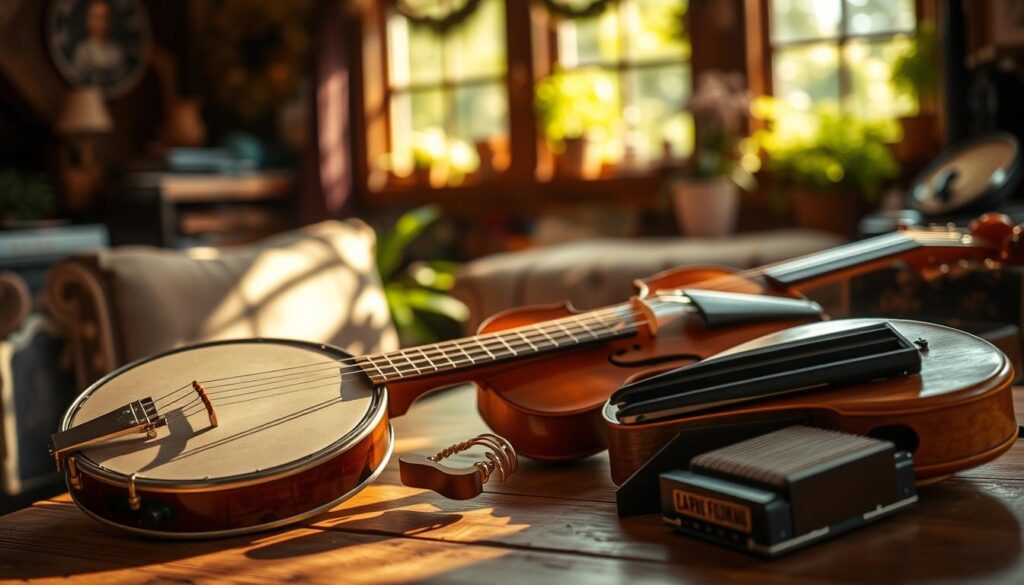
    A cozy, rustic setting featuring an array of indie folk instruments: a polished banjo, an intricately carved fiddle, and a classic harmonica, artfully arranged in the foreground. Sunlight streams through a nearby window, casting warm, golden hues across the wooden table. In the middle ground, blurred images of lush greenery can be seen, suggesting an outdoor concert atmosphere. The background hints at a softly lit room filled with vintage decor, amplifying the vibe of a folk revival space. The mood is inviting and nostalgic, echoing themes of storytelling and connection. The composition focuses on the instruments, capturing their textures and colors in a shallow depth of field, evoking a sense of warmth and authenticity.

    Let’s look at how these instruments shape the music we love. The table below shows their unique roles.

    Instrument Tonal Quality & Role Emotional Contribution Modern Indie Folk Example
    Banjo Bright, rhythmic, percussive. Provides driving momentum and rustic texture. Evokes nostalgia, earthiness, and communal energy. Used by The Lumineers for anthemic, foot-stomping rhythms.
    Fiddle Expressive, melodic, soaring. Sings the main theme or adds counter-melodies. Conveys deep yearning, celebration, and poignant storytelling. Central to the atmospheric sound of artists like Andrew Bird.
    Harmonica Reedy, wailing, intimate. Fills spaces with blues-inflected color and breath. Adds a layer of wistful loneliness or raw, immediate joy. A signature element for folk-blazers like Nathaniel Rateliff.

    Playing these instruments takes hard work. It’s not just about skill, but feeling their history. When an artist plays a banjo, they connect with tradition. The fiddle lets them tell stories through music. The harmonica is like an extension of their breath.

    This effort creates the acoustic warmth and lyrical depth we love. By using the banjo, fiddle, and harmonica, artists make music that feels both old and new. We get to enjoy music that is rich, real, and deeply moving.

    Lyrical Analysis: Storytelling Techniques in Modern Folk

    Lyrical storytelling turns personal stories into songs we all can relate to. Modern songwriters skillfully share their experiences. They make intimate moments into songs that speak to many.

    Folk music is all about telling stories. This analysis helps us connect with the indie folk artists we love. Let’s look at what makes their lyrics so engaging.

    Character development is key. Songwriters create characters that feel real and close to us. We meet characters like the weary traveler or the hopeful lover. These characters bring love, struggle, and belonging to life.

    This approach is vital for singer songwriter discovery. When we hear a well-crafted character, we feel a connection. It’s like meeting a friend through music.

    Vivid imagery brings stories to life. Modern folk lyrics are full of sensory details. We see the “rust on the screen door” or feel the “cold coffee at dawn.” This imagery makes the story real.

    These details make the story unforgettable. They take us right into the scene. It’s a powerful way for indie folk artists to touch our emotions and memories.

    When personal stories become universal, magic happens. A songwriter’s tale of heartbreak speaks to us all. A lyric about finding home resonates with anyone searching for a place to belong.

    This transformation is the heart of folk music. Songs about personal struggles become anthems of collective strength. We see our stories in theirs.

    Understanding these techniques makes us appreciate music more. It turns passive listening into active engagement. We start to see the effort behind every song.

    This deeper understanding fuels our love for singer songwriter discovery. We learn to listen for the craft, not just the melody. It helps us find new artists whose stories resonate with us.

    The narrative power of modern folk is a gift. It reminds us of our shared humanity in a world that often feels fragmented. We are thankful for artists who share their truths openly.

    Their storytelling invites us to reflect, feel, and connect. This is the enduring power of folk music, alive and thriving today.

    Festival Circuit: Where Folk Artists Develop Their Craft

    The true soul of folk music discovery is found in live festivals, not algorithms. These events are sacred spaces where our community comes together. They celebrate raw, authentic storytelling.

    The festival stage is more than a place to perform. It’s a vital incubator for indie folk artists. Here, they hone their craft in real time. They test new songs and connect deeply with an attentive audience.

    Several key festivals have become legendary as talent incubators. Each offers a unique environment for artistic development. The table below highlights a few that are essential to the circuit.

    Festival Name Location & Vibe Key Features Notable for Artist Development
    Newport Folk Festival Newport, RI; Historic, iconic. Collaborative sets, surprise guests, deep legacy. Launchpad for legends; fosters bold, career-defining moments for new indie folk artists.
    Telluride Bluegrass Festival Telluride, CO; Mountainous, immersive. Band competitions, workshop camps, high-altitude community. Rigorous proving ground; artists thrive in an intense, supportive festival environment.
    Folk Alliance International Conference (varies); Industry-focused, intimate. Official showcases, networking, panel discussions. Career-building hub; connects emerging talent with industry leaders in a focused setting.
    Pickathon Happy Valley, OR; Eco-conscious, experimental. Multiple unique stages, artist-in-residence programs, sustainable focus. Nurtures artistic experimentation; gives indie folk artists space to explore new sounds.

    For fans, this circuit is the ultimate live folk music discovery experience. There’s a unique joy in being the first to witness a breakout performance. You might stumble upon your next favorite artist on a small side stage.

    The collective energy of a crowd discovering a song together is electric. It creates memories that last far longer than any streaming playlist. To explore the vast landscape of events, the definitive list of folk festivals is a fantastic resource for planning your own journey.

    This ecosystem of festivals ensures the folk tradition remains vibrant and evolving. It’s where community support directly fuels artistic courage. We celebrate every artist who takes that stage and every fan who listens with an open heart. Together, we keep the story alive.

    Digital vs Analog: Recording Aesthetics in Indie Folk

    The debate between digital and analog recording is more than just technical. It’s a key artistic choice that affects how we feel when we listen. This choice shapes the sound of contemporary folk music.

    In the acoustic indie music world, artists make careful decisions. They might choose the soft hiss of old reel-to-reels or the warmth of vinyl. Even the imperfections of lo-fi music become part of the art.

    These choices help tell the song’s story. A warm, crackly recording can bring a sense of nostalgia and closeness. On the other hand, digital clarity can highlight the beauty of fingerpicking and harmonies.

    In today’s contemporary folk scene, artists pick their tools with purpose. They want to add to the emotional impact of their music. This makes the music feel personal and intimate.

    Aspect Digital Recording Analog Recording
    Sound Character Clean, precise, and infinitely editable. Captures every detail without added noise. Naturally warm, with harmonic saturation. May include gentle tape compression and hiss.
    Workflow & Editing Non-destructive editing, unlimited tracks, and easy recall of sessions. Perfect for collaboration. Linear, hands-on process. Encourages committed performances and minimal edits.
    Cost & Accessibility Lower barrier to entry with home studio software. Highly accessible for independent artists. Higher initial cost for tape machines and maintenance. Requires more specialized knowledge.
    Artistic Intent Ideal for complex arrangements and a modern, polished sound in acoustic indie music. Seeks an organic, vintage vibe that enhances the raw, authentic feel of a folk song.

    So, which path is right? It depends on the song. Digital is great for complex, layered sounds. Analog is perfect for simple, story-driven songs.

    This debate enriches our music community. It makes artists think deeply about their music’s feel and sound. This thoughtful approach keeps the heart of acoustic indie music alive and growing.

    Cross-Genre Pollination: Folk Meets Electronic and Rock

    Exploring singer songwriter discovery often leads to exciting genre fusions. Artists are boldly mixing folk’s storytelling with electronic beats and rock’s power. This blend is not just a trend but a vibrant evolution of contemporary folk.

    These musical fusions offer new listening experiences. Imagine an acoustic guitar with synth pads or a banjo with rock drums. It’s the sound of innovation, where tradition meets tech.

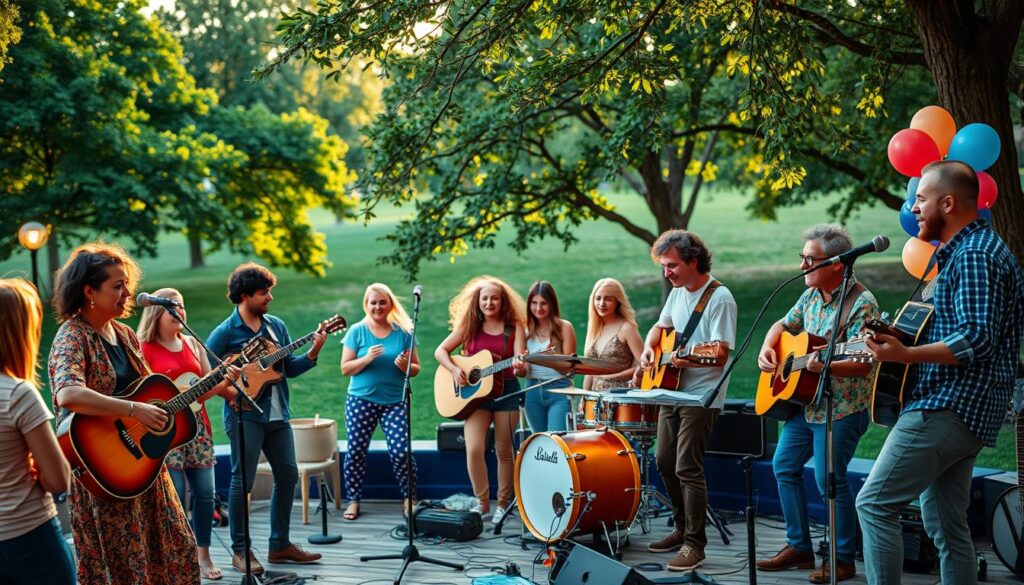
    A vibrant outdoor music scene showcasing a contemporary folk fusion performance. In the foreground, a diverse group of musicians plays together, blending acoustic guitars, electronic instruments, and a drum set with a modern flair. They are dressed in colorful, casual attire that reflects their individuality. The middle ground reveals enthusiastic listeners swaying and tapping their feet, enchanted by the eclectic mix. The background features a lush green park under the warm glow of golden hour sunlight, casting soft glimmers across the scene. The atmosphere is lively and inviting, with balloons and decorative string lights enhancing the festive vibe, captured from a slightly elevated angle to encompass the joy of the gathering while keeping the focus on the musicians and their instruments. The overall mood is celebratory and warm, embodying the fusion of folk and modern genres.

    Artists like Bon Iver blend electronic sounds with folk. They show synthetic sounds can add to emotional depth. Bands like The Lumineers and The Head and the Heart mix rock with folk’s storytelling. They prove genre is a starting point, not a boundary.

    This fusion is key for singer songwriter discovery. It attracts new fans with electronic beats or rock tones. Once in, they find the rich stories that define folk.

    In today’s contemporary folk, artists use loop pedals and mix fiddle with bass drops. This creates music that’s both timeless and modern. It honors folk’s past while speaking to today’s listeners.

    Folk’s core—authentic human stories—remains. Electronic or rock just adds a new canvas for these messages. This keeps folk vital and relevant for each new generation.

    For anyone making a modern folk playlist, these tracks are key. They show contemporary folk‘s versatility and innovation. We thank artists for daring to explore these borders.

    This courage defines today’s folk revival. It proves folk is alive and evolving. By embracing new influences, it tells true stories in fresh ways. We can’t wait to see what’s next!

    Supporting Folk Artists: Vinyl Culture and Direct Sales

    Every haunting melody and poignant lyric comes from an indie folk artist we can support. Our love for this music can make a real difference. It helps the stories and sounds we love to grow.

    Our choices have a big impact on the scenes we love. Where and how we spend our listening dollars matters. Let’s find the best ways to support the creators of our folk music discovery.

    Vinyl’s comeback is great for music lovers and artists. It offers a deeper, more personal experience. Listening to vinyl creates a special bond with the music and helps the artists.

    Buying vinyl, live or online, is a great way to support. It often gives more money to the artist than other formats. It also makes music a treasured part of our collections.

    Direct sales are key for artists to thrive. Buying digital albums, merchandise, or tickets directly helps them more. It funds their next projects and keeps their creativity alive.

    To see the impact, let’s compare how we engage with music. This table shows how our choices affect the music world.

    Support Method Artist Payout Listener Experience Community Impact
    Major Streaming Service Very Low (fractions of a cent per stream) Convenient, vast library, algorithmic discovery Sustains platform, minimal direct artist support
    Digital Download (iTunes, Bandcamp) Moderate to High Ownership of files, high-quality audio, portable Better direct support, on artist-friendly platforms
    Vinyl Purchase (Online Retailer) Moderate Tactile, collectible, immersive listening ritual Supports manufacturing and distribution chains
    Vinyl/Direct Purchase (Artist’s Site/Show) Highest Direct Payout Personal connection, often includes bonuses like signed copies Maximum direct support, fuels artist’s next project

    Every ticket, t-shirt, and vinyl bought sends a message. It shows artists their work is valued. This support keeps the indie folk scene alive and true.

    Together, we build a better music world. By choosing direct sales and vinyl, we support the artists. We become part of a community that values real sound. This ensures a bright future for folk music discovery and the talented indie folk artists who create it.

    Creating Folk Playlists: Mood, Season, and Narrative Flow

    Exploring folk music leads us to a special task: making playlists. It’s a personal journey where you discover new sounds and stories. We create these playlists with joy, focusing on mood, season, and narrative.

    Begin with mood. A quiet playlist might have soft guitar and quiet vocals. A lively one could have harmonica and fiddle. This way, you connect deeply with the music’s emotional heart.

    Season plays a big role too. Autumn songs are warm and reflective. Summer songs are open and adventurous. Let the weather outside influence your playlist choices.

    For a richer experience, create a story in your playlist. Start with a lonely song and end with a hopeful one. This turns your playlist into a journey, strengthening your connection with each artist.

    This process sharpens your taste and creates a soundtrack for your life. It’s like the excitement of local events, like a guide to upcoming local sports events. Both offer spaces for connection and personal growth.

    We hope this guide sparks your love for folk music. Start making playlists today. Let the music unfold and tell your story.

  • The Complete Guide to Discovering Your Next Favorite Indie Rock Band

    The Complete Guide to Discovering Your Next Favorite Indie Rock Band

    We are so glad you’re here! Welcome to a world filled with guitar melodies, heartfelt lyrics, and real sound. This journey is about more than just music; it’s about connection and community.

    Our story starts on college radio stations, far from the mainstream. It was a rebellious spirit, championing raw talent over polished production. Landmark releases, like R.E.M.’s Chronic Town EP, laid the foundation for a whole new ethos.

    This scene has always valued artistic honesty. It’s never been about chasing trends. Instead, it focuses on real expression and building a genuine bond with listeners. That’s the heart of finding great indie rock bands.

    This spirit is timeless. We see its exciting revival today, with artists channeling the energy of the early 2000s “indie sleaze” movement. Acts like The Strokes, Arctic Monkeys, and MGMT remind us that authenticity always finds its audience.

    Understanding this rich history makes your search for new music deeply meaningful. Let’s embark on this personalized discovery path together!

    Understanding the Modern Indie Rock Landscape

    Indie rock today is a mix of raw emotion and clear sound. It’s about being real and innovative at the same time. This balance lets the music’s heart show without getting lost in sound.

    The world of rock music exploration is exciting now. You can find bands with a post-punk vibe next to those with dreamy sounds. It’s not just one genre; it’s a mix of styles united by creativity and freedom.

    But, there’s a challenge. Streaming sites often play it safe, sticking to what’s already popular. This makes it hard to find new, amazing music. It’s a problem for fans looking for alternative rock discovery.

    This isn’t a dead end. It’s a chance to dig deeper. The best music comes from using technology and human insight together. This way, you find hidden gems.

    This mindset changes how we explore rock music. We become more active and connected. We’re not just listening; we’re part of a growing music community.

    By using different tools and connecting with others, your search for alternative rock discovery gets better. You learn to hear music in new ways and explore with curiosity. The indie rock scene is open and waiting for you.

    Essential Subgenres: Math Rock, Post-Punk Revival, and Dream Pop

    Math rock, post-punk revival, and dream pop are key parts of today’s indie rock scene. Exploring these styles is a fun way to find amazing music. We get to appreciate the pioneers and support new artists.

    A vibrant indie rock band performing passionately on a small, intimate stage during a live show. In the foreground, a dynamic lead singer in casual yet stylish clothing engages with the audience, capturing their attention. The middle ground features a diverse group of musicians playing electric guitars and drums, each showcasing their unique style, representing various subgenres like math rock, post-punk revival, and dream pop. A colorful lighting setup casts dramatic hues—deep blues, warm pinks, and bright greens—creating a lively atmosphere. In the background, a captivated audience can be seen clapping and enjoying the performance, forming a sense of community. The image should have a slightly soft focus to evoke a dreamy quality, reminiscent of the nostalgic feel of indie rock music.

    Let’s dive into these essential sounds. Each one opens a door to the world of underground rock music. Every fan can find a subgenre that feels like home.

    Math Rock is all about complex rhythms and technical playing. Bands like Don Caballero and Slint started this with albums that are like solving puzzles. Today, it inspires both instrumental and vocal groups.

    Post-Punk Revival emerged in the early 2000s. It mixes late-70s punk’s energy with a modern dance twist. Bloc Party’s Silent Alarm is a key album, capturing the genre’s energy and anthemic quality.

    Dream Pop creates a dreamy atmosphere with ethereal soundscapes. It uses shimmering guitars and hazy vocals for a beautiful, weightless feel. MGMT’s Oracular Spectacular is a modern example of this dreamy sound.

    New indie rock bands are emerging from these traditions. The Dare brings a modern club vibe to post-punk revival. Jockstrap blends experimental pop with dreamy textures. Discovering these acts is rewarding.

    To visualize these styles, here’s a comparison of their key traits and landmark recordings.

    Subgenre Defining Characteristics Foundational Album Contemporary Artist
    Math Rock Complex time signatures, technical guitar work, off-kilter rhythms American Don by Don Caballero Covet
    Post-Punk Revival Angular guitars, danceable basslines, urgent, lyrical delivery Silent Alarm by Bloc Party The Dare
    Dream Pop Ethereal vocals, shimmering guitar layers, dense atmospheric production Heaven or Las Vegas by Cocteau Twins Jockstrap

    This table is a starting point for your deep dive. Start with the foundational albums. Then, explore the contemporary artists to see how the sounds evolve.

    Exploring these subgenres changes how we find music. It moves us from random searching to targeted, joyful exploration. The world of underground rock music is vast, but these categories offer a welcoming path. We are grateful for the artists, past and present, who make this journey exciting.

    Platform Deep-Dive: Where to Find the Best Indie Rock

    We’re exploring the best places for indie rock streaming and finding new music. These platforms are made for independent artists and music lovers. Let’s check them out together.

    SoundCloud is a treasure trove for raw talent. It’s full of demos, live mixes, and early releases. You can see a band grow right before your eyes. It’s perfect for catching alternative rock discovery in its early stages.

    Bandcamp is special because it supports the DIY spirit. Here, you can buy music and merch directly from artists. It’s a way to connect with artists and feel like you’re part of their journey.

    Bleep is great for those who love quality over quantity. They focus on unique vinyl releases and digital exclusives. It’s a go-to for serious music collectors.

    BandLab is a place where you can see music being made. You can watch collaborations and offer feedback. It’s an exciting way to discover alternative rock.

    Don’t forget about editorial blogs and newsletters. They offer deep insights and stories you won’t find elsewhere. Subscribing to them can make your indie rock streaming experience richer and more informed.

    Platform Core Strength Best For Discovering Community Aspect
    SoundCloud Raw demos & early mixes Brand-new, unsigned artists Commenting on tracks
    Bandcamp Direct artist support Full albums & DIY projects Fan-to-artist messaging
    Bleep Curated quality & exclusives Limited editions & vinyl Collector forums
    BandLab Music creation process Works-in-progress & collabs Real-time collaboration

    Each platform offers a unique way to discover music. The goal is to find a mix that feels like you. Experiment with these tools to keep your music collection fresh and exciting!

    Spotify vs Bandcamp: Different Discovery Experiences

    The digital world for finding music offers two paths. One is based on algorithms, the other on community. Both are key for indie rock streaming fans. Your choice affects how you find new music.

    Spotify is great for finding music through algorithms. It learns your tastes and suggests similar artists. It also creates playlists like Discover Weekly for a smooth listening experience.

    Bandcamp focuses on community and curator-driven discovery. It’s perfect for finding underground rock music. You can explore by genre tags, read editorial spotlights, and filter by location.

    Each platform has its own role. Spotify introduces us to a wide range of music. Bandcamp lets us explore specific niches.

    Feature Spotify Bandcamp
    Discovery Engine Algorithmic recommendations & curated playlists User tags, editorial picks, & location filters
    Artist Support Streaming royalties Direct sales, higher revenue share for artists
    Community Focus Social sharing & collaborative playlists Fan reviews, artist updates, & scene connection
    Best For Broad listening & playlist culture Deep dives & supporting specific local scenes

    Use Spotify for a curated radio station. Its playlists are great for background listening or finding indie hits. The algorithm does the work for you.

    For a treasure hunt, turn to Bandcamp. Search for “math rock” or “post-punk” with their tags. Read the blog for staff picks on emerging artists. This is where you find gems before they’re mainstream.

    We use both platforms wisely. Start with Spotify to explore a new subgenre. Then, visit Bandcamp to find artists and support them directly. Buying music or merch there helps the artist more.

    Connecting with a music scene is like joining local fan groups. It builds a sense of belonging. Bandcamp’s location filters make it easy to find rock bands in your city!

    Your journey in indie rock streaming doesn’t require a single choice. Embrace both ecosystems. Let Spotify guide your broad exploration. Let Bandcamp empower your deep dives. Together, they enrich our music lives.

    Blog and Magazine Resources for Serious Music Fans

    Editorial blogs and music magazines are key for deepening your rock music exploration. They offer more than just music. They give you the stories and context that make music come alive.

    Writers and editors work hard to share music’s true essence. They go beyond just announcing new songs. They dive into an artist’s creative journey through long interviews.

    They also connect new music to bigger trends. And they explain why certain cities have unique music scenes.

    A cozy, vintage-style room filled with indie rock music magazines and blogs scattered across a wooden coffee table. In the foreground, a steaming cup of coffee sits beside a stack of colorful zines featuring vibrant album art and band photographs. The middle ground highlights an old record player with vinyl records, surrounded by posters of indie bands on the walls. In the background, a bookshelf filled with music literature completes the scene, bathed in warm, soft lighting from a nearby lamp, creating an inviting atmosphere for music enthusiasts. The overall mood is relaxed and nostalgic, embodying the essence of indie rock culture.

    This personal touch makes listening an educational adventure. Sites like OnesToWatch focus on up-and-coming indie rock bands with great care. By subscribing to newsletters or following music journalists, you’ll find new music to love.

    Looking for the best music blogs? Check out our list of top music blogs for quality writing and fresh finds. These sites are perfect for discovering your next favorite artist.

    By diving into music journalism, you’re not just listening. You’re understanding the music’s role in a bigger story. This approach makes listening an active, rewarding experience. It connects you to the passion and history behind today’s indie rock bands.

    Local Scene Exploration: Finding Rock Venues in Your City

    Your local rock venues are the heart of underground rock music discovery. They range from cozy dive bars to beloved clubs. These places showcase the raw talent that shapes tomorrow’s music.

    Witnessing a band’s breakthrough moment is exhilarating. It’s even more special when it happens near your home.

    Start by visiting independent record stores. The staff often knows the best upcoming shows. Also, check community boards and flyers for local events.

    Regional music blogs and online event calendars are great resources. They highlight emerging alternative rock discovery before it hits the mainstream.

    Bandcamp’s location filter is a powerful tool. It lets you find artists near you and see where they’re playing. This turns online browsing into real concert plans.

    Fans often find their favorite bands at small shows. Supporting these venues does more than just give you a great night out. It strengthens the local artistic community.

    Your attendance and enthusiasm keep these cultural hubs alive. It’s a way to support the artists and venues you love.

    We’ve made a simple guide to help you find live music in your city. This table compares different ways to discover local shows.

    Method Where to Look Key Benefit
    Online Tools & Filters Bandcamp, Resident Advisor, local Facebook event pages Finds shows by geographic location and artist genre instantly.
    Physical Community Hubs Record stores, coffee shops, college radio stations Offers curated, insider recommendations and printed flyers.
    Local Media & Blogs City-specific music blogs, alternative weekly newspapers Provides critical context, reviews, and scene narratives.
    Direct Venue Engagement Venue websites, mailing lists, Instagram accounts Gets you first access to tickets and lineup announcements.

    Each method opens a different door into your local underground rock music ecosystem. Try combining a few! Follow a venue online, then visit the record store nearby to chat. The goal is to make your city a constant source of fresh, thrilling alternative rock discovery. The next great show is waiting just around the corner.

    Album vs Single Strategy: How to Approach New Artists

    When you click on a new artist’s profile, a big question pops up: album first, or single? We think this choice is super exciting in rock music exploration. Each option lets you connect with music in a unique way. Let’s make this choice a fun one!

    We love the full-album experience. An album is an artist’s big statement, a world of songs that fit together. Albums like The Strokes’ Is This It or Arctic Monkeys’ Whatever People Say I Am, That’s What I’m Not are more than hits. They shape eras and moods. Listening to an album is like a journey, showing the artist’s vision and story.

    This deep dive helps us connect with indie rock bands on a deeper level. It shows their ambition and creativity beyond a single song. An album tells a complete story, revealing the artist’s personality and journey.

    But we also love the power of a single! A hit song is a great way to start exploring an artist. It’s easy to try and might grab you with a catchy tune. It’s like a musical hello, inviting you to learn more.

    A single is like a doorway to more rock music exploration. If you love a single, you might enjoy the whole album. This approach makes discovering new music exciting and rewarding.

    So, how do you choose? It depends on what you want and how much time you have. Use this table to help when you meet new indie rock bands.

    Strategy Best For Your Goal Key Insight
    Album-First Dive Uninterrupted listening sessions, understanding artistic depth To experience a complete creative vision and thematic cohesion Landmark albums are defining cultural moments. Judge an artist’s foundational sound here.
    Single-First Sampling Quick discovery, building a diverse playlist, testing the waters To find immediate hooks and gauge your initial attraction to the sound A hit single is a powerful calling card. It showcases an artist’s most accessible appeal.
    Catalog Scan Evaluating long-term commitment and artistic growth To decide if this is an artist you’ll follow for years Look for consistency across releases and evolution in their sound. Growth signals staying power.

    The best approach often mixes both. Start with a single, then dive into the album. After listening, step back and look at the artist’s whole career. This helps you see if they’re a short-term thrill or a long-term favorite.

    We judge an artist’s journey by their consistency and growth. Do they keep improving with each release? Is their sound evolving in a real way? Answering these questions helps you know if you’ve found a lasting love or just a passing interest. This deeper rock music exploration turns listening into a partnership with the artists you love.

    Concert Discovery: From Dive Bars to Festival Stages

    The journey from your headphones to a live music venue is magical. Indie rock streaming turns into a real experience. We love thinking about your first time hearing a favorite riff in a crowded room.

    This magic is why we help you find live moments. It’s a bridge from digital discovery to unforgettable experiences.

    Dive bars are the start of many legends. Bands like The Libertines found their sound here. These places offer a raw, personal vibe that’s priceless.

    Festival stages offer a different kind of magic. Events like Coachella create cultural moments. Thousands singing together is a unique experience.

    Finding shows is easy with digital tools. Follow artists on Instagram and Twitter. They announce tours first.

    Don’t overlook the opening act. They can be your next favorite band. Sign up for artist newsletters for pre-sale codes and venue announcements.

    Here’s a guide to live venues and how to find them:

    Venue Type Vibe & Atmosphere Typical Capacity Best For Top Discovery Tip
    Dive Bar Raw, unpolished, and intensely personal. Expect sticky floors and loud sound. 50 – 200 Seeing brand-new acts up close; feeling the music’s pure energy. Follow local venue social accounts and check resident DJ blogs.
    Music Club Professional sound, dedicated stage. Balances intimacy with production. 200 – 800 Catching touring indie bands on the rise; a great sound experience. Use Songkick or Bandsintown apps linked to your indie rock streaming library.
    Theater Sit-down or standing room in a historic space. More formal, focused on performance. 800 – 3,000 Artists with a strong visual or theatrical element; deeper catalog shows. Check ticketing sites like Ticketmaster or AXS for “artist on sale” alerts.
    Festival Stage Communal, celebratory, and high-energy. A full-day immersive experience. 5,000+ Discovering dozens of bands in one weekend; enjoying a summer community. Research festival lineups early and explore artists playing the smaller font stages.

    Live music is all about community. Planning a concert trip is an adventure. Check out our guide to punk rock passport through lesser-known cities for indie punk art.

    Going from streaming to a live show is special. We’re here to help you find your next great night. With these tips, your next unforgettable night is just a ticket away!

    Community Engagement: Connecting with Fellow Rock Enthuasiasts

    Exploring indie rock bands is more fun when you share it with others. This part of our guide celebrates the fans who make music special. We think the best way to find new music is through talking about it.

    Online communities are great for sharing music. Sites like Reddit have subreddits for indie rock and music recommendations. Discord servers for bands or genres offer deep discussions. Forums on Stereogum or BrooklynVegan keep the conversation going after new music comes out.

    Social media groups on Facebook or Twitter let you connect with artists and fans. Tools like Last.fm track your music and let you compare with friends. These tools turn listening to indie rock into a social activity.

    Being part of these communities makes your music search better. You get trusted recommendations and find new music. Sharing your finds helps others find their next favorite band. We love making these connections.

    We encourage you to join these communities. Say hello and share your favorite music. You might find your next favorite band through a new friend. Let’s keep exploring music together.

  • Machine Learning in Music Discovery: Benefits, Risks & the Human Factor

    Machine Learning in Music Discovery: Benefits, Risks & the Human Factor

    We’re at a crossroads in finding our next favorite song. Two forces are shaping this change: technology’s logic and human intuition’s spark.

    Today’s music algorithms are like the synthesizers and digital audio workstations of the past. They create new tracks and make playlists that feel just right.

    But this new tech raises big questions. Remember that 2024 song with Drake, Tupac, and Snoop Dogg AI clones? It made us think about what’s real and what connects us.

    We’re here to guide you through this shift. We celebrate progress and the community and emotion that make songs special.

    Let’s see how platforms are handling this change. What does it mean for you, the listener? The future of human curation and machine learning is a story we’re all writing.

    The Algorithm Revolution: How Machines Learn Your Taste

    From mechanical composers to today’s streaming giants, the algorithm revolution has changed how we find music. This change is powered by data! It started decades ago with visionaries like Olson and Belar at RCA.

    Their 1960s “composing machine” used past songs to create new melodies. It was a bold idea that started today’s intelligent systems.

    Today’s music discovery algorithms analyze a huge amount of information. They look at what you play, skip, save, and how long you listen. This data creates a unique sonic fingerprint of your taste.

    Then, they find patterns and similarities between millions of songs. This is like “melodic math.”

    Hitmakers like Max Martin use pattern recognition to make hits. Algorithms do this on a huge scale. They connect the dots between the music you love and other tracks with similar features.

    This results in a personalized music recommendation feed. Services can introduce you to new artists you might love. We’re excited about this technology’s ability to help listeners discover new music.

    But, a system based only on past preferences has its limits. It’s great at finding more of what you already like. But it might not introduce a classical fan to experimental hip-hop. That’s where human curation comes in.

    We think algorithms work best when paired with human methods. They’re great at recognizing patterns and personalizing music. But music is also about context, emotion, and cultural connection. These are areas where humans excel.

    The future isn’t about choosing between machine and human. It’s about combining both for the best discovery experience.

    Human Curation’s Irreplaceable Value: Context and Emotion

    Algorithms track our music habits, but humans connect our hearts to music. They add context that makes songs meaningful. While machines spot patterns, they can’t grasp why a song is special. This is where human touch turns Spotify discovery into a personal journey.

    It’s the little things humans notice that make music special. A curator, whether a radio host or a friend, knows the story behind a song. They feel the emotion in lyrics and catch cultural moments. This layer is lost on algorithms.

    So, why are human-led streaming discovery methods so effective? Let’s explore:

    • Context: Placing a song in a historical, social, or personal setting.
    • Emotion: Linking music to feelings or shared experiences.
    • Narrative: Creating a story or journey through song choices.

    This approach is also seen in AI pop culture curation. Here, AI is guided by human creativity. Laws recognize human authorship for a reason. The intent and emotion behind curation are priceless.

    This connection does more than suggest a good song. It builds musical communities and keeps cultural threads alive. It’s like a community watch party. A personal recommendation touches us in a way data can’t.

    That’s the real value of human curation. It’s not about replacing algorithms, but adding warmth and understanding. This mix is the future of music discovery.

    Spotify’s Discover Weekly vs Apple’s Human Editors

    Choosing how we find new music is a modern wonder. Spotify’s personalized music algorithms and Apple Music’s human touch show this. This variety lets each listener find their own way.

    Spotify’s Discover Weekly is a marvel of engineering. It gives you a new playlist every Monday. It uses music algorithms to scan millions of songs and user patterns. It feels like a secret from a digital friend.

    Apple Music takes a different path. It focuses on human curation by real editors. They create playlists and write liner notes. It’s like a guided tour through music, with a human touch.

    A split scene showcasing the contrasting music discovery methods of Spotify and Apple Music. On the left, a vibrant, stylized digital art representation of Spotify's Discover Weekly algorithm, featuring colorful soundwaves and abstract musical notes, suggesting machine learning dynamics. In the foreground, a focused AI algorithm depicted as a glowing, intricate network of nodes and pathways, representing data analysis and logic. The background features a minimalist music studio with bright neon lights, creating a tech-savvy atmosphere. On the right, a warm, inviting scene of Apple Music’s human editors, depicted as diverse individuals in professional attire, brainstorming around a large table filled with records and digital devices. The background is a cozy, aesthetically pleasing office with soft lighting enhancing a creative mood. The overall composition alternates between cool and warm tones, conveying the blend of technology and human touch in music discovery.

    Both methods have their fans. It’s not about which one is better. It’s about what you want today. Do you want a surprise or a guided journey? We’re lucky to have both!

    To see the differences, let’s compare them:

    Feature Spotify Discover Weekly Apple Music Human Curation
    Core Philosophy Personalized algorithmic discovery at massive scale Expert-led editorial guidance and context
    Primary Technology/Method Collaborative filtering & audio analysis music algorithms Human editors, critics, and genre experts
    Typical User Experience A private, automated “mixtape” that feels uniquely yours A public, branded playlist with narrative and authority
    Key Strength Uncovers deep cuts and niche artists based purely on your taste data Provides cultural background, themes, and educational value

    This shows “technology neutrality” in action. We have amazing tools for both algorithmic and human Spotify discovery. Sometimes we want the machine’s perfect pick. Other times, we seek a human’s insight. Having both enriches our musical world.

    Bandcamp’s Community-Driven Discovery Model

    Imagine a music platform where your next favorite artist is found through a fan or writer, not just an algorithm. This is Bandcamp, a place where music recommendation comes from people, not machines. It’s a space where finding new music feels personal and meaningful.

    This approach is a big step towards making music more democratic. Just like how digital tools helped bedroom artists like Billie Eilish, Bandcamp changes how we discover and share music. It gives more power to artists and listeners, away from big companies.

    Discovery on Bandcamp is organic and beautiful. You might find new music through fans with similar tastes or follow a blog’s curated picks. It’s all about human passion, not just numbers.

    Bandcamp does more than just suggest new songs. It connects artists with listeners in a real way. Plus, it helps artists by sending a big part of your purchase directly to them. This makes music recommendation a way to support artists, not just a technical task.

    We support these different ways of finding music. They show there’s a rich world of music beyond what algorithms suggest. Platforms like Bandcamp focus on helping artists and building small communities. They show that finding new music can be a shared journey, valuing culture and feelings as much as beats.

    For listeners who care about supporting artists, Bandcamp is a great choice. It lets you enjoy finding new music while also helping an artist’s career. In a world of automated feeds, Bandcamp shows the power of community in music.

    The Filter Bubble Problem: Algorithmic Echo Chambers

    The magic behind your personalized playlists has a catch. Music algorithms use your past listening to guess what you’ll like next. This makes your musical tastes stick to what you already know.

    This makes your musical world smaller, not bigger. It’s called the filter bubble. It’s a loop where you hear the same things over and over.

    A surreal, abstract representation of an algorithmic echo chamber in music discovery. In the foreground, visualize a diverse group of people wearing professional business attire, each enclosed within a translucent bubble, with swirling musical notes and digital data streams emanating from their devices. In the middle ground, a serene landscape of interconnected nodes and circuits symbolizes the digital ecosystem, with vibrant colors contrasting against a muted palette. The background features a fragmented cityscape, hinting at isolation and confinement, while beams of soft, ethereal light illuminate the scene, enhancing a sense of contemplation and tension. Capture a mood of both connection and separation, highlighting the complexity of algorithm-driven choices in music.

    When suggestions only match what you’ve listened to before, a few things happen:

    • Genre Limitation: You might not explore new sounds.
    • Artist Isolation: New artists find it hard to get noticed.
    • Cultural Narrowing: You miss out on music from different times and places.

    This isn’t a mistake. It’s a side effect of making music just for you. The system is great at giving you more of what you already like.

    Human curation is the answer. Curators do more than suggest music. They shake things up. They add context and diversity to your playlists.

    Knowing about this helps us. We can look for playlists and blogs that expand our musical horizons. It turns a weakness into a chance for discovery.

    Serendipity in Music: Happy Accidents vs Calculated Suggestions

    Discovering music by chance is thrilling. Often, our favorite songs come from unexpected places. This is called serendipity, finding the perfect song when you least expect it.

    Algorithms can suggest good music, but they can’t match the excitement of a surprise find. Imagine hearing a great song in a friend’s car or during a movie. These moments are special.

    Human touch makes these moments possible. A playlist made just for a mood or activity can surprise you. DJs on thematic radio shows introduce us to new music in a way algorithms can’t.

    Artists often build on others’ work, creating something new and exciting. This is similar to how we discover music. One surprise song leads to another, creating a unique journey.

    The future of Spotify discovery should include both chance and careful planning. The best systems will mix precision with surprises.

    Aspect Happy Accidents (Serendipity) Calculated Suggestions Emotional Impact
    Source Friend’s recommendation, live shows, film soundtracks Algorithmic analysis of listening history Feels personal and authentic
    Predictability Low – arrives unexpectedly High – based on known patterns Surprise vs. satisfaction
    Context Richness High – tied to specific memories or experiences Low – often lacks story or context Creates lasting memories
    Discovery Range Broad – can jump genres and eras Narrow – typically stays within established preferences Expands musical horizons
    Platform Examples Themed human playlists, community radio, Bandcamp Automated “For You” mixes, recommendation engines Community vs. individual focus

    Human-curated Spotify discovery channels value surprise. Playlists for activities like “Rainy Day Reading” or “Late Night Drives” include tracks that create perfect moments. These picks consider mood and atmosphere, not just sound.

    We love these unplanned connections. They show that finding music is about human experience as much as technical skill. The best music recommendation systems will respect both.

    Let’s support platforms that welcome randomness. The next great song you love might be in an unexpected place. That’s the magic of musical serendipity.

    Supporting Discovery Through Multiple Channels

    Music lovers have always used many ways to find new songs. From live shows to radio and records, finding music is a journey. This idea guides us in today’s digital world.

    Having a rich musical life comes from using many sources. Sticking to one way limits your experience. The best listeners mix streaming discovery methods with human curation.

    Think of your music discovery as a portfolio. A good mix includes:
    Algorithmic tools for endless streams on Spotify or YouTube.
    Expert-led playlists and radio from Apple Music or NPR for guidance.
    Community-driven spaces like Bandcamp or SoundCloud for unique genres and artist support.
    Live music events for a raw connection that can make you a fan for life.
    Even physical media or dedicated listening sessions for focused enjoyment.

    This approach does more than find new songs. It builds a resilient and diverse musical identity. You’re not stuck in one way of finding music. Instead, you get a taste shaped by machines, experts, peers, and live experiences. Each channel adds a unique color to your music.

    We encourage you to be intentional about how you find new music. Seek out human curation from trusted sources. By using all channels, you can find the joy and surprise in music again. Your next favorite artist is waiting for you to discover them in a new way!

    The Role of Music Blogs in the Algorithm Age

    In the endless stream of algorithmic suggestions, music blogs shine as beacons of human passion and critical thought. While music algorithms are great at guessing what we might like next, they often fail to understand why. This is where blogs, zines, and independent publications become essential.

    These platforms offer something unique: deep context, nuanced criticism, and passionate advocacy. They share the stories behind albums, connect artists to cultural movements, and offer perspectives built on real experiences. Unlike impersonal streaming discovery methods, blogs are a dedicated act of human curation.

    What makes music blogs irreplaceable? Their value lies in several key areas that machines cannot authentically copy:

    • Narrative and Context: They frame music within a story, a history, or a personal journey, giving songs and artists deeper meaning.
    • Critical Perspective: Unlike playlist algorithms designed for endless play, blogs offer thoughtful analysis, critique, and celebration.
    • Artist Advocacy: They champion emerging or niche artists based on artistic merit, not just viral popularity.
    • Cultural Connection: Blogs link music to fashion, politics, film, and social trends, creating a richer tapestry of discovery.

    This human-authored context is so valuable it’s recognized in copyright law, which often protects the unique narrative and selection a critic provides. This legitimacy shows that music writers are not just commentators but valid and essential curators in the ecosystem.

    We see blogs as a vital counterbalance. They help listeners break free from algorithmic echo chambers and discover music with purpose and thoughtfulness. In a landscape optimized for clicks and streams, these voices encourage us to listen more deeply.

    We are incredibly grateful for these dedicated voices. They ensure that discovery remains a human conversation, not just a calculation. This human element is a key part of the future of music curation, where the best systems will harness both heart and data.

    Hybrid Approaches: Combining Human and Machine Intelligence

    The future of finding new music is exciting because it’s a team effort. We think the best way is for machines and humans to work together. This way, they can use each other’s strengths.

    Algorithms can quickly go through huge amounts of data to find lots of songs. But, human curators bring their own special touch. They use their taste, cultural knowledge, and storytelling skills. For example, Spotify uses algorithms to help humans pick songs for playlists.

    This mix of AI and human touch makes music recommendations better. It combines the power of AI with the heart of human connection. This way, the music industry can use AI tools while keeping human creativity at the core.

    We’re excited to help create this future. A hybrid system means we get the smart data analysis of AI and the real connection of humans. It’s the way to break through filter bubbles and find music that surprises and delights us.

  • Rising Stars: 10 Emerging Indie Artists Who Will Define 2025

    Rising Stars: 10 Emerging Indie Artists Who Will Define 2025

    Get ready! 2025 is shaping up to be a landmark year for new music. A fresh wave of talent is crashing onto the scene. They fearlessly break genre boundaries and connect with global audiences in truly authentic ways.

    We are thrilled to turn our emerging indie artists spotlight toward these vibrant creative voices. This guide is a celebration of the pure joy of artist discovery. We invite you to join us in getting to know the inspiring up-and-coming musicians.

    This is more than just a list. It’s a grateful look at the very heartbeat of tomorrow’s music scene. For a deeper dive into the sounds of the future, explore our feature on the top rising artists of 2025.

    Let’s meet the faces and voices ready to make their mark.

    The Art of Spotting Tomorrow’s Headliners Today

    Independent music now makes up nearly half the world’s music market. This is a big change. It shows how music is made, shared, and loved differently today.

    Today, artists need to be real and connect with fans directly. Breakthrough artists often skip traditional paths. They talk to fans, building a loyal group one interaction at a time.

    We look for a mix of talent and a unique view. The best new artists also know how to grow a community. This mix makes them stars.

    It’s important to understand this new world. The table below shows how the old and new paths differ. It highlights what makes today’s breakthrough artists stand out.

    Aspect Traditional Path Modern Independent Path
    Gatekeepers Labels, A&R executives, radio programmers Direct fan engagement, algorithm-friendly content, playlist curators
    Fan Connection Often distant, mediated by marketing campaigns Direct, intimate, and built on social media and live streams
    Primary Distribution Physical media and commercial radio Digital streaming platforms and user-generated content apps
    Creative Control Often ceded to label direction for market appeal Firmly held by the artist, leading to unique and personal sounds
    Revenue Streams Heavily reliant on advances and traditional sales Diversified: streaming, direct merch sales, fan subscriptions, sync licensing

    This new model lets artists stay true to themselves from the start. As listeners and supporters, we get to see raw creativity up close. The excitement of artist discovery is now a journey we’re all part of.

    We’re living in a time of unique voices. The barriers are down, and connections are strong. By valuing authenticity and community, we help choose tomorrow’s stars.

    Artist Profile 1: Genre-Bending Visionary with Unique Sound

    We start with artists who are not just making music but creating new sounds. The most exciting indie music talent today doesn’t fit into one style. They mix different sounds to create something new and captivating.

    Take London’s John Glacier, for example. She combines electronic beats with heartfelt lyrics. Her music moves between rap and melancholy melodies, making it both futuristic and deeply personal. This is what makes up and coming musicians stand out.

    On the other side of the world, Caldwell does something similar. He mixes country’s storytelling with hip-hop’s rhythm. His music jumps from banjo riffs to 808 basslines, telling real stories. This shows how innovation comes from respecting the past while exploring new sounds.

    We admire these visionaries for their bravery. They’re not afraid to mix and experiment, making music something new. They’re the indie music talent and up and coming musicians who will shape 2025’s sound. By breaking the rules, they encourage us to hear music in a new way.

    Artist Profile 2: Bedroom Pop Sensation Taking TikTok by Storm

    Nova Rae started making music in her bedroom and now tops indie playlists. This shows how real connections can spread far in the digital world. It’s a new way to become famous, turning a personal space into a creative hub.

    Her music mixes deep thoughts with catchy synth-pop. Songs like “Midnight Thoughts” feel like a deep chat with a friend. This connection is key on TikTok, where a short clip can start a career.

    A young, emerging indie artist sits on the floor of a cozy, softly lit bedroom, surrounded by vintage musical instruments and colorful fairy lights. The artist, a young person in modest casual clothing, is focused on a laptop, with headphones on, capturing their creative process. In the background, a wall adorned with posters of iconic musicians and an acoustic guitar leaning against the wall adds to the ambiance. The warm, ambient lighting casts a gentle glow, creating an inviting atmosphere that reflects the intimate vibe of bedroom pop music. A sense of aspiration and creativity fills the air, evoking the magical moment of artistic discovery. The angle captures a dynamic perspective, emphasizing the artist's passion and musical journey.

    Nova Rae shows you don’t need big money to win fans. Her journey is a success story in the streaming world. Fans get to see an artist grow from the start.

    It’s not just solo artists. Groups like KATSEYE also excel on social media. They make music for sharing and remixing. Their success shows how looks and sound can work together online.

    Musicians now have full control over their work. They write, produce, and share their music directly. This builds a strong bond with fans, unlike traditional ways.

    As fans, we get to support new talent early. It’s rewarding to be part of their journey from the start. It turns listening into a community effort.

    Every viral hit on TikTok or Instagram Reels is a chance to find new talent. The algorithm can make a hidden star into a famous artist overnight. This makes finding new indie bands thrilling.

    Let’s celebrate the bedroom producers shaping music today. Their rise shows that great music can come from anywhere. Our support through streams and shares helps their journey.

    Artist Profile 3: Folk Revival Pioneer with Authentic Storytelling

    Meet the indie music talent changing Americana and country. Their lyrics feel like talks with a close friend. In a world chasing quick hits, they create deep stories with music.

    Ty Myers is a young voice in Americana, known for his warm sound. His songs tell stories of small towns, love, and hope. His music feels both old and new, drawing us in with its storytelling.

    Byrdie Wilson weaves strong country stories with honest words. Her songs explore personal and common feelings. Her realness connects deeply with her fans.

    Artist Core Sound Key Song Theme Storytelling Approach
    Ty Myers Heartland Americana with pedal steel Small-town life and nostalgic yearning Cinematic, detail-oriented vignettes
    Byrdie Wilson Resilient, narrative-driven country Personal resilience and emotional truth Confessional, first-person diary style

    What sets them apart is their focus on real music. Their songs tell the story first. This approach wins fans who want more than just a sound.

    We thank artists like Myers and Wilson for their work. They show music’s power to share our lives. Their success encourages more indie music talent to focus on quality over fame.

    Supporting these artists means diving into their stories. Listen to their albums from start to end. Go to their small shows where every word matters. This is how we support the next big names in music.

    Artist Profile 4: Electronic Experimentalist Pushing Boundaries

    For those who love new sounds, the best discoveries come from artists who break rules. They see music as a canvas, creating a vital part of the new indie bands scene.

    Artists like Comet, LENAÉ, and Miserableisobel show no fear. They’re not just musicians; they shape moods and textures. Their unique paths are a gift to music lovers.

    A dynamic scene showcasing an electronic experimentalist indie artist in their creative environment. In the foreground, focus on a young adult with an expressive face, wearing stylish, modest casual clothing, immersed in manipulating a series of colorful soundwave visualizers on a sleek tablet. The middle ground features an array of eclectic musical instruments, including synthesizers and drum machines, surrounded by vibrant LED lights casting a mesmerizing glow. In the background, a cozy, artsy studio filled with vinyl records and abstract art on the walls enhances the atmosphere. Soft, ambient lighting creates a moody, inspiring ambiance, evoking a sense of innovation and boundary-pushing creativity. The angle should be slightly overhead, giving a comprehensive view of their artistic workspace, emphasizing the fusion of technology and artistry.

    Comet mixes atmospheric shoegaze with indie vibes, creating deep sounds. LENAÉ turns R&B into something new, playing with vocals and beats. Miserableisobel blends lo-fi with hip-hop, pop, and folk, making something truly hers.

    Her music is a mix of hip-hop beats, catchy melodies, and folk’s closeness. This bold exploration makes her music key. It shows the most exciting sounds are often unexpected.

    These new artists take us on deep journeys. They build worlds with synths, guitars, and intimate voices. Their boundary-pushing music expands our musical world.

    We’re excited to see where they go. Supporting these innovators means embracing the new and finding beauty in it. Their work shows music’s future is full of possibilities.

    Social Media Strategy: How These Artists Built Their Following

    Today, building a loyal fan base is more than just talent. It’s about being smart on social media and really talking to your audience. We love how breakthrough artists see their online space as a place to connect with fans, not just shout out messages. This approach is key to finding new fans.

    The old days of just promoting music are gone. Now, indie musicians know their fans are powerful. They focus on talking back and forth with them. This turns listeners into true fans who feel like they’re part of the artist’s journey.

    Artists are now sharing the behind-the-scenes of their music-making. They post voice memos, song drafts, and stories from the studio. This makes fans feel like they’re part of the process. It builds trust and loyalty.

    Being real with fans is essential. Artists reply to comments, do live Q&As, and make music based on fan ideas. This personal touch makes fans feel special, not just another number.

    Let’s look at the strategy. Each social media platform has its own role in an artist’s growth. The table below shows how musicians use each platform to connect and grow their fan base.

    Platform Core Strategy Key Content Type Community Impact
    TikTok & Instagram Reels Virality & Trend Participation Short-form video, song snippets, behind-the-scenes Drives initial artist discovery and broad reach
    Instagram Stories Daily Engagement & Authenticity Polls, Q&As, casual updates, countdowns Fosters a sense of intimacy and daily connection
    Twitter / X Conversation & Niche Building Threads about influences, real-time thoughts, fan interaction Builds a dedicated core fanbase through dialogue
    Discord or Patreon Superfan Cultivation Exclusive previews, direct messaging, community forums Creates a sustainable, supportive inner circle

    This multi-platform strategy is how breakthrough artists create a strong online presence. Each platform has its own role in the fan’s journey. From finding new fans on TikTok to connecting deeply on Discord, the plan is thoughtful.

    This shift in the music world is beautiful. Artists now have the tools to shape their careers on their own. By talking to their fans and sharing their world, they write their own success stories. Their social media is more than a tool; it’s the heart of their artistic home.

    DIY Ethics: Maintaining Authenticity While Growing

    The journey from a bedroom studio to fame is full of choices. Yet, the DIY ethic is key for today’s indie music talent. Artists who stay true to this spirit are our heroes. They make sure growth doesn’t mean losing their unique voice.

    This DIY way isn’t about avoiding success. It’s about defining success on their own terms. The focus on raw, DIY authenticity is more important than ever. Fans want that real connection that only comes from an artist’s true vision.

    Many artists we admire started with total creative control. They wrote, produced, and released their music on their own. This hands-on approach creates a deep connection with their art. It’s the beginning for up and coming musicians who are starting from scratch.

    The real victory is growing that close connection. The industry is moving towards valuing long-term connections and control. Many artists now start their own micro-labels. This keeps their artistic direction safe and builds a lasting business.

    The smartest indie music talent works with flexible, artist-friendly services. These platforms handle distribution, marketing, and analytics without asking for creative control. This support lets up and coming musicians grow their audience while staying true to their vision.

    Seeing this new generation succeed is truly inspiring. They show that with the right tools and ethics, you can build a lasting career on your own terms. We’re honored to watch and support these up and coming musicians as they shape the future.

    Label Interest vs Independent Path: Critical Decisions Ahead

    Every rising star faces a big choice: to go with a label or stay independent. This choice is not just about business; it’s deeply personal. It shapes an artist’s path.

    Major labels offer big perks. They have lots of money for marketing, global reach, and connections. For a breakthrough artist, it’s like getting a boost to stardom.

    But, there are downsides. You might lose control over your music and face tough contract terms. With fewer big labels, the choice is even more critical.

    Going independent means more freedom. Artists keep their music rights and connect directly with fans. They build their brand their way.

    Groups like Grupo Frontera show success without labels is possible. They control their business and story. This proves new indie bands can thrive on their own.

    The music world needs artists to have real choices. It’s not about one path being better. It’s about finding the right fit for your vision and goals.

    For every breakthrough artist making this choice, look beyond the surface. Think about your future. The best choice supports your art and passion. Artists should have the power to shape their own future.

    Supporting Emerging Artists: Streaming, Merch, and Show Attendance

    This spotlight on emerging indie artists is key. Your support can make a big difference. Together, we can help these talented voices thrive.

    Streaming is a great way to start. Platforms like DistroKid send over $1.5 million daily to indie musicians. By adding songs to your playlists, you help them earn much-needed royalties.

    Buying merchandise is another way to show your support. A vinyl record or tour t-shirt not only looks cool but also helps fund their work. It supports studio time and future projects.

    Attending live shows is the best way to show you care. It creates unforgettable moments and boosts their confidence. It encourages them to keep making music and touring.

    We’re all part of a community that lifts up new talent. Every stream, purchase, and ticket counts. Our support lets these artists keep shaping our music scene.

  • How Music Demos Are Reviewed & What Artists Must Know

    How Music Demos Are Reviewed & What Artists Must Know

    Welcome to our community! We’re thrilled you’re here, eager to share your creativity. This is where your music and artistry get the spotlight they deserve.

    We follow a simple yet powerful philosophy. We believe in fairness, authenticity, and fostering real artistic growth. Every piece of music we receive is treated with the utmost respect and care.

    We offer unbiased, constructive feedback. Songwriter Nathan K. once said, “Letting a song breathe often reveals its true quality.” We take that to heart. Our goal is to support you, not to criticize harshly.

    We see ourselves as both a caregiver and a change-maker in your journey. Our mission is to guide you clearly through the music world. This commitment to integrity is reflected in our purpose and community standards.

    We’re excited to be part of your story. Let’s uncover what makes your work unique and help it shine!

    Our Review Philosophy: Fairness, Authenticity, and Growth

    Welcome to the heart of our operation! Our review philosophy is more than just rules. It’s the base of every demo evaluation we do and our promise to you, the artist. We stand on three strong pillars: fairness, authenticity, and growth.

    First, fairness means we give every submission our full attention. We listen to each track without any bias. Our team treats every song, whether polished or raw, with the same care. This way, your music is judged only on its own worth.

    Second, we love authenticity. In a world of fast trends, we seek your unique sound. We believe the best music comes from true feelings, not just trying to fit in. Songwriter Matreca Berg found success with “Strawberry Wine” by writing what she loved. We’re looking for that real spark in your music.

    Lastly, we focus on your growth. We give you detailed, helpful indie music feedback to improve. Forum member Nathan K. said having a good team is key for artists. We want to be that team for you, giving unbiased advice to sharpen your skills.

    These principles make a constructive review space. Our philosophy supports your artistic path and offers clear guidance. We’re here to listen, understand, and help your music grow.

    Submission Guidelines: Technical Requirements and Expectations

    Your demo is like a musical handshake. We’ve set up these technical requirements to make sure it’s a strong, clear introduction. We’re thankful for every demo submission we get. We want your music to sound its best when we hear it.

    Clear guidelines help us focus on your artistry, not on fixing files. We believe your demo should show the best quality you can do. It doesn’t matter if it’s a simple recording or a full studio production. What we notice first is clarity and intention.

    A detailed technical checklist for demo submissions displayed prominently on a sleek, modern desk. The foreground features a clean, open notebook, filled with neatly organized bullet points and checkboxes, alongside a professional-looking pen. In the middle, a well-structured checklist document is visible, showcasing categories such as "File Formats," "Resolution," "Audio Quality," and "Submission Process," all outlined with clear, concise details. The background includes a blurred laptop screen displaying a coding interface and an ambient workspace with soft, warm lighting, creating an inviting atmosphere. The desk is characterized by minimal clutter, emphasizing professionalism. A shallow depth of field focuses on the checklist while gently blurring other elements, enhancing the main subject's importance and drawing the viewer's attention to the technical aspects of submission requirements.

    To keep our music review process fair and efficient, please follow these technical specs. Following them means your track won’t face any unnecessary delays.

    Requirement Specification Why It Matters
    File Format MP3 or WAV MP3 for quick streaming, WAV for lossless quality. Both are universally compatible.
    Bit Rate / Quality 192 kbps (MP3) minimum, 44.1 kHz / 16-bit (WAV) Ensures the audio integrity of your mix is preserved without excessive file size.
    File Labeling ArtistName_SongTitle.mp3 Prevents your work from getting lost and helps us organize efficiently.
    Metadata Include song title, artist name, and genre in file info Helps our team categorize and reference your work correctly from the start.

    Think of these specs as the foundation for a smooth music review process. A properly formatted file lets our reviewers dive into the emotion and craft of your song. We listen on various equipment, so consistent quality ensures your vision is seen everywhere.

    Here’s a quick checklist for your final submission prep:

    • Export your final mix at the recommended quality.
    • Rename your file clearly using the format above.
    • Double-check that basic metadata is embedded.
    • Listen to the exported file yourself on different speakers!

    Taking these steps shows respect for your work and our music review process. We’re excited to hear what you’ve created and support you at every stage. Thank you for trusting us with your demo submissions!

    The Review Process: From Inbox to Published Feature

    We’re all about being open and clear. So, let’s go through how your submission moves from our inbox to being published. We designed this process to be smooth and artist-friendly, just like modern online systems.

    Your trust is our top priority. We treat every file with care and excitement.

    Step 1: The Welcome Inbox

    Your artist submissions land in our special email. We send a quick confirmation to let you know we’ve got it. This marks the start of our promise to you.

    Step 2: The Curated Queue

    No messy piles here. Every demo goes into a neat queue. Our team listens to each piece carefully, giving it the attention it deserves. No one gets overlooked.

    Step 3: The Heartfelt Evaluation

    This is where the magic happens. Our reviewers dive deep into your demo evaluation. They listen for the story, the skill, and the emotion. They take notes on first impressions and the deeper layers.

    We don’t make decisions alone. Our team gets together to discuss standout tracks. We debate the merits and the impact. This way, we ensure fairness and celebrate different tastes.

    Step 5: The Selection & Notification

    If your work makes the cut, we celebrate! You’ll get a personal email from us. We’ll tell you why we loved it and what’s next. We value clear communication, just like the best must-have peer review system features do.

    Even if your track isn’t featured this time, we aim to give helpful feedback. The shift towards accessible online A&R inspires us. We want you to grow from the experience.

    Modern Review vs. Traditional Methods
    Aspect Traditional Demo Review Our Modern Process
    Submission Channel Physical mail or closed networks Dedicated online portal & email
    Feedback Timeline Weeks or months, often silent Clear timeline with status updates
    Cost to Artist Often high (postage, packaging) Free digital submission
    Artist Communication Minimal to none Proactive and transparent
    Chance of Constructive Feedback Very low High priority for all artist submissions

    This table shows why we’re passionate about our method. It’s cost-effective for you and builds real relationships. The chance you get meaningful insight from your demo evaluation is much higher.

    From inbox to feature, our goal is your success. We’re honored to be part of your creative journey. Let’s create something amazing together!

    What We Listen For: Songcraft, Production, and Originality

    The heart of our evaluation is in three key areas: songcraft, production, and originality. Our music review process celebrates these pillars. We listen as fellow music lovers, eager to find your unique voice.

    We understand what each element means to us:

    • Songcraft: This is the foundation. We look for compelling lyrics and memorable melodies. A solid song structure is essential.
    • Production: Quality production should enhance the song, not overpower it. We seek a clean mix and professional mastering. See how production enhances songcraft in our Feature Spotlight: Audio series.
    • Originality: This is what we seek most. We want to hear the unique idea that is undeniably you. Trying to perfectly tailor music to the market often results in songs that are just “as good as” what’s already out there.

    A tranquil indie music studio setup, featuring a cozy nook with a vintage guitar resting against a soft armchair. In the foreground, a glass of chilled water sits on a wooden table, alongside a notebook filled with handwritten lyrics. The middle layer showcases an artist wearing casual yet professional clothing, deeply focused as they adjust audio mixing equipment, surrounded by soundproofing foam on the walls. In the background, warm fairy lights twinkle softly, casting a gentle glow over shelves filled with vinyl records and music memorabilia. The lighting is soft and natural, creating an inviting atmosphere, while the overall mood is one of creativity and introspection. The lens captures a slightly angled view to give depth, emphasizing the artistic essence of indie music feedback and craftsmanship.

    We agree with that sentiment. We’d always prefer a great song that missed a market than a so-so one that tried to hit one. Authenticity resonates deeper and lasts longer than trend-chasing ever could.

    When we press play, we ask simple questions: Does this move us? Does it feel real? Our goal is to provide indie music feedback that highlights your authenticity. We want to celebrate the craftsmanship and courage in sharing your unique sound.

    This focus guides our music review process. By understanding what we listen for, you can submit your work with confidence. We are tuned to appreciate the artistry behind your demo.

    Constructive Criticism: Helping Artists Improve

    We believe every artist submissions package has hidden talent waiting to be found. Our feedback is a tool to help you on your creative path. We aim to show you new ways to grow, not to judge.

    We see feedback as a precious gift, given with the respect your art deserves. Our comments are always clear, actionable, and uplifting. We focus on what’s good and how to make it better. We’re here to be your biggest cheerleaders and most honest coaches.

    Views on professional critique vary worldwide. Big Jim Merrilee notes that while common in the US, it’s less so elsewhere. Yet, we believe a thoughtful demo evaluation can spark growth anywhere.

    Our feedback is ready for you to use right away. When you get our notes, you’ll find clear steps to take. Here’s what you might see:

    • Lyric Refinement: Tips for more vivid imagery or a tighter phrase to boost emotional impact.
    • Mix Adjustments: Advice on how to place a vocal or instrument for better clarity.
    • Confidence Building: Spotting your unique artistic choices that truly shine, so you can own them.

    This turns our demo evaluation into a powerful growth session. For every artist, we strive to offer insights that empower your next move. We’re excited to see how you use this feedback to improve your sound and connect with more people!

    Success Stories: Demos That Led to Big Breaks

    A well-crafted demo can open doors artists never thought possible. We get to witness these moments up close. It fills our team with joy and motivation.

    Seeing artists grow is our favorite thing. Their stories prove that great music and smart strategy can reach people. It’s a powerful truth.

    An indie folk artist from the Pacific Northwest sent us a haunting demo. Our indie music feedback highlighted its cinematic quality. We suggested she share it on music platforms and post behind-the-scenes content.

    Months later, her song was featured in a popular series. This demo submission wasn’t just a song. It opened a door to income and exposure.

    An electronic hip-hop producer also made a breakthrough. His demos were technically strong but needed focus. He listened to our feedback and improved his track.

    We promoted his work and shared his upcoming shows. A touring manager saw it and contacted him. This led to a national tour and representation. His openness to indie music feedback changed his career.

    These success stories aren’t just luck. They follow a pattern. The music is polished and true to itself. The artist sees indie music feedback as a tool, not criticism. And they use online tools wisely.

    The internet has changed how we share creativity. These artists didn’t just post their music. They used social media to share gigs, studio moments, and tours. This strategic online promotion caught the attention of industry pros.

    We’re proud to be part of these artists’ journeys. Every demo submission shows courage and creativity. With hard work and a willingness to improve, you can achieve your big break. We can’t wait to hear your story.

    Common Mistakes: What Not to Do When Submitting

    Let’s talk about common mistakes that can stop your submission before it starts. We review a lot of music and want every artist to have a fair chance. Often, it’s not the music quality but simple mistakes that get in the way.

    We’re here to help. By pointing out these common mistakes, we want to help you show your best work. Think of this as a friendly guide from our team to yours.

    Technical glitches are the easiest to fix. Sending tracks with poor audio quality or distortion is a big no-no. We’re listening for your song, but a bad mix makes it hard. Always send your clearest, most polished version, even if it’s just a demo.

    Ignoring our specific submission guidelines is another major mistake. Each platform and reviewer has different needs for file type, length, or bio info. Sending the wrong file type or track length shows you didn’t pay attention. This slows down our music review process.

    Choosing the wrong genre is a strategic error. Sending a heavy metal track to a blog that focuses on acoustic folk is a miss. Research where your sound fits. This ensures your demo evaluation is by listeners who get your genre.

    This connects to a point made by musician Big Jim Merrilee. He said, “There is no point in sending in a whole orchestra if they only need guitar and vocals.” Sometimes, a simple, focused demo is what’s needed. Over-producing or sending too much can hide your song’s core.

    Avoid the “kitchen sink” approach. Don’t overwhelm us with your entire catalog, a long life story, and unsolicited photos. We want to connect with your music first. Submit your strongest tracks and a brief, compelling artist statement. This focus helps us give you the attention you deserve.

    Don’t let follow-up anxiety get the best of you. Sending too many “check-in” emails can be seen as pushy. We dedicate serious time to each demo evaluation. Trust the music review process you’ve chosen.

    Remember, we’re on your side. Avoiding these common errors lets your music’s strengths shine. We’re grateful you’re sharing your art with us and are here to help you navigate the journey.

    Building Relationships: From Demo to Regular Coverage

    Every review we publish is an invitation to start a meaningful conversation. We’re all about building lasting connections with the artists we feature. Seeing your demo submissions as the start of a journey, not the end.

    Turning that first feature into regular coverage is a team effort. It needs consistent, high-quality artist submissions and real professional interaction. Just like keeping a social media presence alive, it takes regular effort and true connection.

    We love when artists become part of our creative family. Sharing our features on your channels, tagging us in updates, and telling us about upcoming shows. This shows a real interest in working together. It makes your first review just the beginning of your story with us.

    Following up on feedback or sending new music that shows growth is key. It shows you’re committed. This effort makes us more likely to prioritize your future artist submissions. We’re here to support your long-term journey, starting with building a strong relationship.

    The table below shows the difference between just sending music and building a relationship:

    Aspect One-Off Submission Approach Relationship-Building Approach
    Communication Style Single, outgoing message. Often no follow-up. Ongoing, two-way dialogue. Engages with published content and shares updates.
    Submission Consistency Sends one demo submission and waits. Submits new work periodically, showing artistic evolution and professionalism.
    Engagement Post-Review Minimal interaction after the feature is live. Actively promotes the feature, thanks the team, and participates in community discussions.
    Long-Term Outcome May result in a single feature. Builds familiarity and trust, leading to a higher chance of regular coverage and insider opportunities.

    We aim to be a reliable partner in your career. By focusing on building relationships, you’re not just sending music into space. You’re connecting with a team that is truly invested in your success, one great song at a time.

    FAQ Section: Addressing Artist Concerns and Questions

    We’ve shared our demo evaluation journey with you. Now, let’s tackle your specific questions. This FAQ is your direct line to clarity.

    How long does our music review process take? We aim for a two-week turnaround. High submission volumes can sometimes cause brief delays. We appreciate your patience.

    How should you interpret our indie music feedback? Our notes are meant as constructive guidance. We focus on songcraft and originality to help your art grow. Remember, standards can vary by genre and market, as discussions about UK versus US scenes highlight.

    Can you re-submit a revised demo? Absolutely. We welcome new versions of your work. Show us how you’ve evolved from our initial artist submissions notes.

    What if “life happens” to your online music? We understand. If you need to update links after sending your demo submissions, just reach out. Managing an online presence is part of the creative journey.

    Our goal is to demystify every step. We want you to feel empowered and informed. Use this FAQ as your guide for future artist submissions. We are here as your partners in this exciting process.

  • City Sounds: Mapping America’s Most Vibrant Underground Music Scenes

    City Sounds: Mapping America’s Most Vibrant Underground Music Scenes

    Close your eyes and listen. The rhythm of a city tells its story. We believe the truest melodies are born from the streets, the history, and the people who call a place home.

    Across America, urban landscapes have become incredible incubators for sound. When diverse cultures meet and mix, something magical happens. Entire genres spring to life from this beautiful cultural melding.

    This connection between place and creativity creates a powerful regional sound. It’s a sonic fingerprint that makes each city’s artistic output uniquely its own. This identity pulses through local venues and community gatherings.

    Today, this phenomenon isn’t limited to major cultural capitals. Exciting new movements are defining smaller cities across the nation. They are writing the next chapter of our shared musical story.

    We are so grateful for this rich tapestry. Every location adds a vital verse to our national songbook. Let’s celebrate the creative spirit that makes each regional sound so special!

    Austin’s Continuing Legacy: SXSW and Beyond

    Austin’s music scene is alive all year, not just during SXSW. The city’s heart beats as a music capital. It’s a place where legends and new artists thrive together.

    The SXSW festival is a big deal, bringing artists from everywhere. But Austin’s real magic is in its local music scenes. These scenes buzz every night.

    Places like the Continental Club and Hotel Vegas are key. They offer a stage for artists to meet fans. Each venue has its own vibe, from legendary spots to cozy bars.

    Austin’s local music scenes are special because of their support for new talent. This support helps artists grow before they hit big stages. We’re thankful for this culture of discovery.

    To see Austin’s variety, let’s look at some iconic venues. The table below shows spots that are essential to the city’s music.

    Venue Name Vibe & Genre Focus Notable Artist Launchpad
    The Continental Club Legendary, intimate, Rock & Americana Gary Clark Jr., Stevie Ray Vaughan
    Hotel Vegas & The Volstead DIY, eclectic, Indie Rock & Punk Black Angels, Sun June
    Antone’s Nightclub Historic, blues-rooted, Soul & Blues Blues legends, Gary Clark Jr.
    Cheer Up Charlies Inclusive, vibrant, Queer Punk & Indie Megan Thee Stallion (early shows)
    The Saxon Pub Listening room, songwriter-focused, Folk & Country Bob Schneider, countless songwriters

    Austin’s music scene is always changing. It’s not just about the past. The city’s love for creativity keeps its vibrant local music scenes leading in American music. We can’t wait to see what’s next!

    Brooklyn’s DIY Warehouse Scene: Post-Gentrification Reality

    Despite high rents and shiny new buildings, Brooklyn’s underground venues keep the creative spirit alive. This scene thrives because it adapts to change. It shows the power of resilience.

    Gentrification has changed neighborhoods, but the DIY spirit remains strong. Artists and promoters turn old spaces into new music hubs. Their hard work is truly appreciated.

    These underground venues are more than places to see shows. They are community hubs for young people. You might find a noise show in Bushwick or indie pop in Sunset Park. The experience is unique and deeply connected.

    A vibrant underground music venue in Brooklyn, showcasing a DIY warehouse atmosphere. In the foreground, a small stage is adorned with colorful string lights and eclectic artwork on the walls, creating an intimate vibe. Musicians are performing: a guitarist and a drummer, dressed in modest casual clothing, fully immersed in their art. The middle ground features a diverse crowd of people enjoying the music, some dancing, while others are sitting on mismatched furniture, sipping drinks. In the background, exposed brick walls and industrial piping reflect the post-gentrification reality of the space, with graffiti art adding a rebellious touch. Soft, warm lighting casts a cozy glow throughout, evoking a sense of community and creativity. The image is shot from a slightly elevated angle to capture the activity and energy of the crowd.

    New York City has always been a hub for music. The legacy of underground venues is rich. Today’s scene draws from that history, showing that art thrives in the margins.

    The DIY scene has changed a lot. Understanding these changes helps us see its strength today.

    Era Typical Venue Community Role Primary Challenge
    1990s-2000s Large, semi-permanent warehouses in Williamsburg/Greenpoint Affordable living/working space for artists; week-long parties Basic safety codes; landlord disputes
    2010s-Present Smaller, nomadic spaces (basements, lofts, temporary storefronts) Hyper-local event hubs; focused on specific genres Intense real estate pressure; need for constant relocation
    Current Underground Venue Focus Partnerships with bars, galleries, or community gardens Creating safe, inclusive spaces for marginalized voices Balancing visibility for survival with need for discretion

    The table shows a shift to more flexible, community-focused models. This flexibility is key to survival. The caregiver spirit of mutual aid is strong. Promoters often team up with local businesses to share costs and risks.

    We believe true community can’t be priced out. It moves, changes, and stays strong. Supporting underground venues means backing the artists and fans who create them. Their work keeps Brooklyn a center of raw, innovative sound!

    Portland’s Indie Folk Paradise: Coffee Shops and Concert Halls

    Portland, in the Pacific Northwest, is a haven for music lovers. It’s where coffee and concerts blend perfectly. Here, indie folk isn’t just music; it’s a way of life.

    The city’s vibe supports new talent. With over a hundred venues, from small spots to big stages, the community is tight-knit. This connection goes beyond the city.

    Coffee shops are where it all begins. Aspiring musicians play for a crowd eager to listen. These cafes are more than places to grab a coffee; they’re where dreams start.

    Then, the energy moves to famous concert halls. Places like the Crystal Ballroom and the Arlene Schnitzer Concert Hall showcase local talent. The journey from small to big stages is celebrated.

    Portland is known as the “Indie City.” Bands like The Decemberists and The Shins have made a mark. Their unique sound, blending literary lyrics with folk-rock, is distinctly Portland.

    Festivals like MusicfestNW highlight the city’s music scene. They turn Portland into a live music wonderland. Fans get to see everything from solo artists to full bands.

    What makes Portland special is its focus on community. Fans and artists respect each other. This creates a space where music thrives.

    Every guitar strum here tells a story. Portland shows that creativity and support can build a legendary music scene. It’s a tribute to the power of passionate people and supportive spaces.

    Nashville Beyond Country: The Alternative Music Underground

    Forget what you think you know about Music City. Its most exciting stories are now being written in indie rock clubs, hip-hop studios, and eclectic neighborhood venues.

    We celebrate Nashville’s legendary country roots, of course. But today, a new indie music geography is being drawn across the city. This vibrant map leads to thrilling sounds far from the Grand Ole Opry.

    Hip-hop has powerfully claimed its space. Artists like Isaiah Rashad aren’t just visitors; they are vital parts of the city’s hall of fame. This signals a major shift in Nashville’s cultural identity.

    The alternative rock scene is equally dynamic. Bands are blending genres, creating a fresh sonic landscape. From punk-infused garage rock to dreamy synth-pop, the variety is astonishing.

    Where is this happening? Look to neighborhoods like East Nashville and the Wedgewood-Houston area. These hubs are filled with intimate venues that support this growing artist community. They are the heart of this new scene.

    We are grateful for these innovative musicians. They are building inclusive, supportive networks that welcome everyone. This diversity adds incredible richness to Nashville’s world-famous soundtrack.

    Exploring this underground musical landscape is a joyful adventure. It proves that Nashville’s creativity has no limits. The city’s song is evolving, and we can’t wait to hear what comes next.

    Chicago’s Experimental Edge: Noise and Post-Rock Innovation

    Chicago doesn’t just rest on its musical past. It uses it as a springboard for bold new sounds. The city’s regional sound is shaped by this fearless approach.

    Chicago’s musical journey is epic. It moved from blues to house music, changing how we make and share music. House music, born in Chicago clubs, showed the power of electronic music.

    Hip-hop in Chicago also evolved. It started with artists like Common, then became the urgent drill rap. Figures like Kanye West and Chance the Rapper mixed genres and pushed boundaries.

    Today, Chicago’s experimental spirit is alive in underground scenes. Artists create complex, instrumental music that challenges labels. This is where Chicago’s experimental edge truly shines.

    A bustling Chicago street scene infused with the spirit of experimental music. Foreground features a diverse group of musicians in modest casual attire, passionately playing unconventional instruments like a prepared piano and electric guitar, creating an atmosphere of collaboration and innovation. In the middle ground, vibrant murals on brick walls reflect the city’s rich cultural tapestry, while small crowds gather, deeply engaged in listening. The background reveals the iconic Chicago skyline, twinkling under a twilight sky, casting a warm glow. Use a wide-angle lens to capture the energy and intimacy of the moment, with soft, dramatic lighting to evoke a sense of exploration and creativity, alluding to the cutting-edge noise and post-rock sound emerging from this dynamic urban landscape.

    What ties Chicago’s music together? It’s the courage to take risks. Musicians build on the past, always pushing forward. This keeps Chicago’s music fresh and impactful.

    The table below shows how each music movement has shaped Chicago’s sound. It highlights the city’s role as a musical innovator.

    Era Genre Movement Key Innovators Contribution to Sound
    1920s-1950s Urban Blues Muddy Waters, Howlin’ Wolf Established raw, emotional storytelling and amplified instrumentation.
    1970s-1980s House Music Frankie Knuckles, Marshall Jefferson Pioneered electronic dance music built on rhythm, repetition, and inclusivity.
    1990s-2000s Hip-Hop Evolution Common, Kanye West Blended soulful production with lyrical depth, challenging coastal dominance.
    2000s-Present Experimental & Post-Rock Tortoise, The Sea and Cake Fused jazz, rock, and electronics into complex, instrumental landscapes.

    This fearless approach creates a strong community. Fans and artists bond over their love for new sounds. In Chicago, music is a dialogue between history and possibility. We celebrate a city that encourages us to build boldly on what we’ve inherited!

    Los Angeles Sprawl: Finding Community in a Massive City

    Los Angeles is more than just Hollywood. It’s a city filled with small, tight-knit music communities. The city’s wide reach doesn’t stop creativity. Instead, it creates unique spots where artists and fans connect deeply.

    LA is famous for West Coast Hip Hop. Legends like Dr. Dre and Snoop Dogg made Compton and Long Beach famous. Today, the city’s music scene is even more diverse.

    Now, the magic happens in places like Highland Park, Echo Park, and Downtown Arts District. These areas are hubs for new music. Here, you’re not just watching a show. You’re joining a lively, welcoming conversation.

    Venues like The Lodge Room in Highland Park and The Echo in Echo Park are key. They’re not just stages. They’re places where artists and fans connect deeply, making every show special.

    Exploring LA’s music scene is an adventure. Here’s a look at some key neighborhoods and their sounds. Each offers a unique glimpse into LA’s rich music world.

    Neighborhood Vibe / Genre Focus Key Venue Hub Community Vibe
    Highland Park Indie Rock, Psychedelic, Dream Pop The Lodge Room Artistic, tight-knit, genre-blending
    Echo Park DIY Punk, Garage Rock, Experimental The Echo & Echoplex Raw, energetic, fiercely independent
    Downtown Arts District Electronic, Avant-Garde, Jazz Zebulon Eclectic, avant-garde, artist-run
    Leimert Park Jazz, Soul, Hip Hop (Legacy & New) World Stage Historical, nurturing, culturally rooted

    Exploring these areas shows the heart of LA’s music. The city’s size makes finding your place exciting. When you do, you feel a deep sense of belonging. In LA, local music scenes show that community thrives, one neighborhood at a time.

    Philadelphia’s Punk Revival: DIY Ethics in the City of Brotherly Love

    Forget polished stages; in Philadelphia, the most vital music pulses from a network of passionate, artist-run underground venues. We are thrilled to champion the raw energy and principled heart of the city’s punk revival. This resurgence is built on a powerful, community-first DIY ethic that turns basements, warehouses, and unassuming storefronts into hubs of loud, collective expression.

    Philadelphia has always had a strong musical identity. Today, that identity is being powerfully redefined by a new generation carrying punk’s rebellious torch. The scene operates on passion and mutual support, creating a sustainable ecosystem outside the mainstream. We are deeply grateful for the communities here that prioritize authenticity above all else.

    The DIY ethic is the lifeblood of this movement. It means bands book their own tours, artists design their own flyers, and fans become active participants. These spaces survive not on profit, but on the shared belief that art needs a home. Supporting these vital underground venues is a conscious act of cultural preservation.

    What defines Philadelphia’s current punk and DIY landscape? Several key characteristics stand out:

    • Artist-Run Spaces: Many venues are operated by musicians or collectives, ensuring programming stays true to the community’s spirit.
    • Sliding Scale Policies: Pay-what-you-can door fees make shows accessible, reinforcing that everyone belongs.
    • Multi-Disciplinary Hubs: These spaces often host art shows, zine workshops, and community meetings, strengthening local bonds.
    • A Focus on Safety & Inclusion: Active efforts to create welcoming environments for all attendees are a core part of the modern DIY ethos.

    This revival is about more than just music; it’s about building a supportive network. The connection between fan and artist blurs, fostering a powerful sense of ownership and responsibility for the scene’s health. This collective effort ensures that the loud, unfiltered voice of Philadelphia punk continues to find its stage.

    The impact of this grassroots model is profound. It nurtures local talent, provides a platform for daring artistic experimentation, and builds resilient social fabric. In a city famed for its brotherly love, this punk revival translates that ideal into actionable support. We see a future where these community-run underground venues are recognized as essential cultural infrastructure.

    Philadelphia’s story inspires us. It proves that with enough passion and cooperation, vibrant artistic worlds can flourish from the ground up. The city’s punk revival is a beautiful, noisy testament to the power of DIY ethics and the enduring need for authentic, human connection through music.

    Seattle’s Grunge Aftermath: What Came Next

    We see Seattle’s present as a living, evolving city music culture, not just a note after grunge.

    The 1990s brought a sonic earthquake to the world. Bands like Nirvana, Pearl Jam, and Soundgarden didn’t just play music. They shaped a generation and marked Seattle on the world map. This legacy is a key part of the city’s identity.

    The raw energy didn’t fade away. It evolved. Today, Seattle’s music scene is a diverse, thriving world beyond any single genre.

    • Indie Pop & Folk: Artists like Fleet Foxes and The Head and the Heart created lush sounds. They offered a calm contrast to grunge’s intensity.
    • Experimental Hip-Hop: Seattle became a center for new rap. Groups like Shabazz Palaces and artists like Porter Ray explored abstract beats and deep lyrics.
    • Electronica & Synthwave: Electronic music flows through the city’s venues. It spans from ambient artists to dance producers.
    • Modern Rock & Post-Punk: The guitar’s spirit lives on. New bands bring intensity with fresh sounds. Their music is both familiar and excitingly new.

    This rich mix is backed by a dedicated community. Venues like The Crocodile and Neumos host acts. Independent labels support local talent. Festivals like Capitol Hill Block Party highlight the variety.

    Seattle’s story teaches us a valuable lesson. Great city music culture respects its past while boldly creating the future. The city remains a key place for artists who inspire globally. We eagerly await what’s next!

    Building Scene Community: How Fans and Artists Connect

    Our journey across America’s vibrant scenes shows a deeper truth. It’s not just about cities. It’s about people. This human network is the heart of indie music geography.

    This geography is built on real connections. It happens when an artist plays a local show and a fan feels seen. It grows through shared experiences in crowded rooms. These moments create bonds that turn a gig into a community.

    The data shows this connection powers everything. Local gigs are the foundation for loyal fans and economic impact. This is true from Texas to Ireland.

    Every ticket bought supports this ecosystem. Every new band discovered adds to its richness. We are the artists honing their craft in basements. We are the fans who show up week after week. We are the venues providing a stage.

    Together, we draw the living, breathing map of indie music geography. We keep the underground innovative and alive. Your participation writes the next chapter. Find your local stage and become part of the scene.

  • Beating Game-Day Nerves: Practical Tools for Athletes, Parents, and Coaches

    Beating Game-Day Nerves: Practical Tools for Athletes, Parents, and Coaches

    That clutch moment arrives. The crowd roars, and everything feels like it’s moving in slow motion. For many competitors, this intense pressure can turn excitement into dread, tightening muscles and clouding thought.

    This reaction isn’t a character flaw. It’s a natural biological process called performance anxiety. Your nervous system kicks into its ancient “fight-or-flight” mode, releasing hormones like cortisol and adrenaline. These chemicals are designed for survival, but on the field, they can disrupt fine motor skills, narrow focus, and hinder quick decision-making.

    Understanding this science is the first step toward control. When we see these nerves as a sign the body cares about performing well, not as a weakness, we can start to manage them. This foundation of knowledge is key for everyone involved—creating empathy and setting the stage for the practical tools that follow. It’s like the strategies needed for managing a busy schedule.

    Recognizing Symptoms and Triggers

    Game-day pressure is sneaky. It shows up in small ways, like physical and mental signs. Learning to notice these signs is key. You can’t manage what you don’t see.

    This part is your guide to spotting game-day nerves. We’ll cover physical, cognitive, and emotional signs. Knowing these helps turn vague anxiety into a problem you can tackle.

    A racing heart or shaky hands are clear signs. But other signals are quieter. Here’s a list of symptoms to watch for:

    • Physical: Muscle tension (neck, shoulders, jaw), rapid breathing, stomach butterflies, excessive sweating, dry mouth, feeling overly hot or cold.
    • Cognitive (Thoughts): Negative thought spirals (“What if I fail?”), difficulty concentrating, memory lapses, rigid or catastrophic thinking, comparing yourself to others.
    • Emotional: Irritability, feeling overwhelmed, dread, sudden lack of confidence, excessive worry about outcomes, desire to avoid the situation.

    It’s important to tell the difference between good competition energy and bad anxiety. Good energy focuses you and energizes you. Bad anxiety messes with your focus and drains you. The problem starts when anxiety gets in the way of your performance.

    The first tool for making this distinction is mindfulness. It’s not about clearing your mind. It’s about being aware of what’s happening right now without judgment.

    Think of it as having an internal observer. This observer notices things like “My heart is beating fast,” or “I’m having a thought about failing,” without getting upset. This pause helps you react better to triggers.

    By being more aware, you can find out what triggers you. Everyone’s triggers are different.

    • External Triggers: A loud or hostile crowd, a specific opponent’s reputation, the significance of the event, a coach’s intense stare, bad weather conditions.
    • Internal Triggers: Fear of disappointing others, perfectionism, past performance failures, over-identification with athletic success (“If I lose, I am a loser”).

    Recognizing your symptoms and triggers is not just passive. It’s the first step to taking control. When you know what’s happening, you can start to manage it. This awareness is the foundation for the strategies we’ll discuss next.

    Building a Personalized Pregame Routine

    A pregame routine is like your mental shield. It helps you stay focused and calm before a game. It keeps you grounded in the face of game day chaos.

    Focus on what you can control. You can’t change the weather or the referee’s decisions. But you can control how you prepare. A routine helps you stay focused and reduces anxiety.

    This isn’t about luck or magic. It’s based on how our brains work. Doing the same things before a game tells your brain it’s time to get ready. It helps you feel calm and ready to go.

    A good pregame routine has three main parts. Every athlete is different, so it’s important to find what works for you. Experiment to find the right mix for your sport and mind.

    • Physical Warm-Up: It’s more than stretching. It gets your muscles ready for action. It helps you go from rest to full speed.
    • Mental Preparation: This is like updating your mental software. It includes visualizing success, setting goals, and positive self-talk. It gets your mind ready to perform.
    • Logistical Readiness: This part helps avoid last-minute stress. It includes checking your gear, reviewing the game plan, and staying hydrated. When you’re organized, you can focus on playing your best.

    There’s no one-size-fits-all routine. A swimmer’s routine is different from a golfer’s. Even within sports, routines vary. The key is to make it your own.

    Begin with this basic structure. Try out different activities in each area over time. See what makes you feel confident and ready. Your own pregame routine is a powerful tool for improving your performance.

    Breathwork: Box, Physiological Sigh, and Cadence Drills

    Your breath controls your nervous system. Learning to use it can change how you perform on game day. When you’re anxious, your breathing gets shallow and fast. This tells your body to stay stressed.

    Conscious breathing exercises calm your nervous system. They help you relax and focus. It’s not just a trick; it’s a real way to control your body.

    Knowing a few key techniques can help in different situations. You need something for calm, a quick fix for panic, and a strategy for competition. Here are three methods backed by research.

    The Box Breath for Calm and Focus

    This method, also known as square breathing, makes your breaths even. It’s great for calm moments, like timeouts or before a game. It helps you stay focused.

    To practice the Box Breath:

    1. Sit or stand comfortably with a straight spine.
    2. Inhale slowly and deeply through your nose for a count of four.
    3. Hold your breath gently for a count of four.
    4. Exhale smoothly through your mouth for a count of four.
    5. Hold the exhale for a count of four.

    Do this 4-4-4-4 cycle for two to five minutes. It balances your heart rate and mind.

    The Physiological Sigh for Rapid Stress Reset

    This is your quick fix for stress. It’s fast and effective, discovered by studying natural stress relief.

    To do the Physiological Sigh:

    1. Take a first, full inhale through your nose.
    2. Without exhaling, take a second, shorter “top-up” inhale through your nose.
    3. Release one long, slow exhale through your mouth until your lungs are empty.

    Do this just two or three times. You’ll feel calm quickly. Use it before a big moment or after a tough play.

    Cadence Drills for In-Game Application

    This method links breath control with your actions. You breathe in sync with your movements. It keeps you steady and efficient during play.

    To create a Cadence Drill:

    1. Identify a repetitive movement in your sport (e.g., dribbles, pedal strokes, punches).
    2. Establish a pattern. A common one is a 2:2 ratio: inhale for two movements, exhale for two movements.
    3. Practice this pattern during low-intensity training until it becomes automatic.

    Under pressure, this rhythm keeps your breathing steady. It helps you stay focused and breathe well.

    Choosing the right tool depends on your situation. The table below shows when to use each breathing technique.

    Technique Key Steps Best Use Case Typical Duration
    Box Breath Inhale 4, Hold 4, Exhale 4, Hold 4 Pregame routine, sideline timeout, building general focus 2-5 minutes
    Physiological Sigh Double inhale (nose), Long exhale (mouth) Acute stress spike, immediate reset before a critical moment 3-5 breaths
    Cadence Drill Sync breath with movement pattern (e.g., 2:2 ratio) During endurance activity, to maintain rhythm and focus in play Continuous during performance

    Start using these breathing exercises in your training. Practice them when you’re calm so they’re ready when you’re not. Your breath is always with you, making it a powerful tool in your mental game.

    Visualization and Imagery You Can Practice at Home

    Imagine building muscle memory for complex plays from your couch. This is the power of visualization. It turns your mind into a private gym. Elite athletes use it to improve without physical effort.

    Your brain can’t tell the difference between real and imagined events. Mental rehearsals activate the same brain paths as real actions. This covert practice makes skills feel more natural.

    A serene home environment designed for visualization practice: in the foreground, a comfortable meditation mat with a person seated cross-legged, wearing modest casual clothing, eyes closed in concentration. In the middle, a cozy room filled with soft natural light filtering through large windows, lush indoor plants creating a calming atmosphere, and a few motivational quotes framed on the walls, subtly out of focus. In the background, a subtle suggestion of an outdoor setting with a hint of green trees and a blue sky visible outside, promoting a sense of tranquility and focus. The lighting is warm and inviting, enhancing the peaceful ambiance of the image, encouraging viewers to connect with the concept of visualization in a nurturing space.

    Good mental rehearsal uses all your senses. It’s not just seeing success. Here’s a simple guide for imagery:

    • Sight: See the environment clearly—the court, the field, your equipment.
    • Sound: Hear the crowd, the coach’s voice, the sound of the ball.
    • Kinesthetic Feel: Feel the physical sensations in your body—the tension in your muscles, the grip on the bat, the follow-through of a throw.

    Focus on the process, not just the outcome. Picture yourself doing each step perfectly. Imagine staying calm and adjusting if things go wrong. This builds resilience and skill.

    Here are scenarios to practice at home. Find a quiet spot, close your eyes, and go through these:

    • The Perfect Routine: Visualize your entire pre-shot routine in a pressure situation, like a free throw or penalty kick. Feel the ball, see the target, and execute with smooth confidence.
    • Bouncing Back: Imagine making a mistake, then immediately resetting. See yourself taking a deep breath, using a positive cue word, and nailing the next play.
    • Complex Play Execution: Mentally walk through a complicated team play or maneuver. See all the moving parts and feel your role within the system.

    Consistency is key. Just five to ten minutes of daily visualization can build strong mental blueprints for success. For more on this, check out this resource on sports visualization for athletes.

    Think of this mental practice as a secret weapon. You’re programming your nervous system for peak performance, one vivid image at a time.

    Self-Talk, Cue Words, and Confidence Ladders

    The way you talk to yourself during competition can be a big help or a big hurdle. It affects your focus and how tired you feel. Learning to manage this inner conversation is key to doing your best.

    First, remember that it’s normal to have negative thoughts sometimes. Every athlete hears a critical voice. The goal is to turn those thoughts into something useful.

    Don’t try to be overly positive all the time. Athletes often find generic positive self-talk hard to believe in tough moments. A better approach is effective self-talk.

    Effective self-talk is believable, short, and action-focused. It helps you focus on the next step, not the outcome. Instead of saying “I’m the best,” you might say, “See the ball,” or “Strong legs.” This helps you focus on what you can do now.

    Type of Self-Talk Example Purpose
    Negative “I always mess this up.” Highlights unhelpful patterns to reframe.
    Effective (Action-Focused) “Breathe and reset.” Directs focus to controllable process.
    Cue Word “Smooth” or “Now” Triggers a specific mindset or technique instantly.

    The Power of Personalized Cue Words

    A cue word is a short, personal anchor. It can trigger a technical focus or a desired mindset with one thought. This tool quickly clears your mind.

    Choose a word that means something to you. It could be a technical reminder like “explode” for a sprinter. Or a mindset word like “calm” for a goalkeeper. The key is to use it consistently. Practice it so it becomes automatic in games.

    • Technical Cue: “Elbow high” for a pitcher.
    • Mindset Cue: “Fearless” for a gymnast before a difficult routine.
    • Reset Cue: “Next” to move on from a mistake immediately.

    Building Your Confidence Ladder

    Confidence isn’t just a feeling. It’s built on evidence. A confidence ladder is a simple tool. You list past successes, big or small, to prove your capability to yourself.

    This practice directly counters doubts on game day. It shows you’ve done hard things before. Here’s how to build one.

    1. Take a piece of paper and draw a ladder with 5-7 rungs.
    2. On the bottom rung, write your earliest or smallest success (e.g., “Made the team”).
    3. On each higher rung, add progressively more significant achievements.
    4. Include recent practice wins, like “Nailed that drill yesterday.”
    5. Read this ladder during your pregame routine to solidify your belief.

    Using effective self-talk, personalized cue words, and a confidence ladder gives you control over your thoughts. You become the leader of your mind. This mental control is a key part of being mentally tough.

    Focus Plans for Different Sports (Ball, Endurance, Combat)

    Sport-specific focus is key to beating choking under pressure. What works for one sport won’t work for another. You need a plan that fits your sport’s unique needs.

    “Choking” is more than just a bad day. It’s when your skills fail due to too much thinking. The right focus plan stops this before it happens.

    Sport Category Primary Focus Challenge Core Anti-“Choking” Strategy
    Ball Sports (e.g., Tennis, Soccer, Basketball) Rapidly switching between broad awareness and narrow precision. Structured between-play routines & attentional cycles.
    Endurance Sports (e.g., Running, Cycling, Swimming) Maintaining focus through prolonged physical discomfort. Race segmentation & cognitive management of effort.
    Combat Sports (e.g., Boxing, Judo, MMA) Staying present and tactical amid high adrenaline spikes. Round-by-round presence & arousal control techniques.

    In sports like tennis, baseball, or soccer, focus is like a heartbeat. You switch between looking at the big picture and focusing on your own actions.

    The risk of choking under pressure is high in dead-ball moments. A between-point or between-play routine is vital. It helps you mentally reset.

    • Broad-Narrow Cycle: In play, look around. As you get ready, focus on a few key things.
    • The 20-Second Reset: After a play, turn away, breathe deeply, and adjust. This breaks the emotional link to the last play.
    • Cue Simplicity: Simple cues like “spot” or “smooth” help under stress. They keep your thoughts clear.

    Endurance Sports: Segment and Manage the Mind

    For athletes in endurance sports, the challenge is to keep going despite discomfort. Focus is about managing your mind, not pushing harder.

    Don’t focus too much on the finish line. Break the race into smaller parts. Think about the next mile or the next landmark.

    • Discomfort Dial: Acknowledge pain but don’t let it control you. Label it and focus on your rhythm.
    • Mantras for Miles: Use short phrases that match your pace. This keeps doubt out of your mind.
    • Check-In Intervals: Regularly check your form, hydration, and pace. Then, refocus on your segment.

    Combat Sports: Present in the Storm

    In combat sports, adrenaline can make it hard to think clearly. The goal is to stay focused on the current round, not past mistakes.

    Adrenaline is natural, but it must be controlled. Aim for controlled aggression, not panic.

    • Corner Commands: Listen to your coach’s advice between rounds. Focus on one or two technical adjustments.
    • Breath as a Weapon: Use deep breathing to lower your arousal and clear your mind.
    • Tactical Triggers: Plan your actions with “if-then” strategies. This keeps you proactive and focused.

    Your sport needs a specific mental strategy. With these plans, you’ll know how to stay focused, even under pressure.

    Parents on the Sideline: Support Without Pressure

    For many young athletes, the biggest pressure isn’t from the opposing team. It’s from worried looks and shouted advice from the stands. Your sideline behavior is a powerful force in their game. It can either add to their stress or boost their strength.

    Being supportive means showing unconditional positive regard. This makes your child feel loved and accepted, win or lose. Focus on their effort, not just the outcome. Praise their hard work, teamwork, and bravery to try new things. This builds lasting motivation, not just for winning.

    Before the game, keep your words simple and positive. Don’t give last-minute tips. Instead, say things that boost confidence and fun. Saying “I love watching you play” or “Go out there and trust your training” is great. Your role is to be a calm, supportive presence, not an extra coach.

    During the game, be a quiet, positive cheerleader. Cheer for good plays from both teams. Avoid yelling out technical advice; it can confuse your child and the coach. Most importantly, stay calm when there are mistakes or calls from the referee. Your child is watching.

    Be careful with what you say. Even good intentions can feel like too much pressure.

    • Use This: “I’m so proud of your effort.” | “You looked really focused out there.” | “It was fun to watch you and your team.”
    • Avoid This: “You need to score more.” | “Why did you pass it there?” | “The referee was terrible.” | “You should have won.”

    After the game, take time to cool down. Don’t immediately talk about the game. The car ride home is for recovery, not analysis. Ask open-ended questions like “What was the most fun part today?” or “What are you most proud of from that game?”

    Managing your own anxiety is key to good sideline behavior. Your nerves can spread to your child. Practice calmness and mindfulness, just like you encourage them. Your calmness creates a safe space for them, win or lose.

    By being mindful of your actions and words, you empower your young athlete. You help make sports about growth, joy, and connection. That’s the real victory, and it begins with you on the sidelines.

    Coaches: Creating a Psychologically Safe Climate

    Effective coach communication does more than relay plays; it constructs a foundation of psychological safety that lets talent flourish. This climate is where athletes feel secure enough to take strategic risks, make mistakes openly, and push their limits without fear of ridicule or harsh judgment. When this safety exists, learning accelerates, and performance under pressure becomes more consistent.

    A focused sports coach in a professional athletic shirt communicates with a diverse team of young athletes gathered in a huddle on a grassy field. The foreground captures the coach, an encouraging expression on their face, gesturing animatedly to convey motivation and strategy. In the middle, the athletes, dressed in smart, modest sports uniforms, display a range of emotions from determination to enthusiasm, actively listening and engaging with one another. The background features a sunny, clear sky, casting a warm light, enhancing a sense of optimism and teamwork. A soft focus blurs the distant bleachers, creating an intimate atmosphere surrounding the team huddle, evoking a feeling of psychological safety and support as they prepare for their game.

    The coach is the chief architect of this environment. Every interaction, from post-practice talks to halftime adjustments, builds or erodes trust. Your dialogue with athletes sets the tone. It tells them what you truly value: perfect outcomes or courageous effort and growth.

    Contrast the following approaches. The right column outlines behaviors that foster the safety needed for athletes to beat game-day nerves.

    Coaching Focus High-Pressure Climate Psychologically Safe Climate
    Response to Mistakes Focuses on the error and outcome; uses blame-oriented language. Focuses on the fix and process; uses curious, solution-focused coach communication.
    Framing Challenges “Don’t mess up.” “This is a must-win.” “This is a chance to test our new strategy.” “What can we learn here?”
    Granting Autonomy Rigid, command-style instructions; athletes follow a strict script. Provides structure but allows choice within it (e.g., “Here are two plays; you call it based on the defense you see”).

    To build this climate, start with a mistake-response protocol. After an error, take a breath. Then, use a simple sequence: Observe, Question, Redirect. For example, “I saw the missed pass. What did you notice about their positioning? Let’s run that same look with a different release.” This turns failure into a data point, not a character flaw.

    Next, intentionally frame challenges as opportunities. Before a tough drill or game, use language like, “Today’s scrimmage is our lab to experiment,” instead of framing it as a test. This reduces threat perception in athletes’ brains. Giving athletes autonomy within your system is another powerful tool. Let them set individual session goals or choose between two conditioning options. This builds ownership and investment.

    Lastly, model the composed behavior you want to see. Your non-verbal cues during stress—your posture, tone, and facial expressions—are louder than any pep talk. Calm, clear coach communication during chaotic moments is a performance multiplier. It shows athletes how to stay focused. This partnership between a positive team climate and on-field resilience is clear. For more on structuring a supportive sport environment, review this resource on athlete development frameworks. Further, aligning your approach with parental support is key; explore essential tips for sports parents to foster a unified support system. When athletes know their coach has their back, they play with their heads up, ready for anything.

    When to Call in a Pro and What to Expect

    Just like an athlete wouldn’t skip seeing a physical therapist for injuries, getting a mental coach for mental blocks shows dedication. Knowing when to get expert help is a strategic move for any serious athlete.

    There are clear signs it’s time to see a sport psychology consultant. These are patterns that don’t get better with simple fixes:

    • Persistent Performance Decline: A clear drop in performance that’s not due to being tired or making mistakes.
    • Extreme Pre-Game Anxiety: Feeling so nervous before games that it stops you from playing well.
    • Loss of Motivation or Joy: When playing the sport feels like a chore, and you lose your love for it.
    • Inability to Recover from Mistakes: One mistake ruins the whole game, showing you can’t bounce back mentally.

    If these sound like your struggles, getting help with mental skills training can change everything. It’s a team effort, practical, and all about gaining new skills.

    The first meeting is an assessment. The coach wants to know your past, challenges, and goals. It’s not about judging you; it’s about starting a journey. Then, you set specific, achievable goals, just like with a strength coach.

    Later sessions teach you real, useful skills. You might learn to change negative thoughts, improve your pre-game routine, or enhance your focus. This is the heart of mental skills training—using proven strategies to improve your sport.

    Seeing a mental coach as a specialist for your mind makes the process clear. They offer the right advice and support to build a strong mental game. Using this resource isn’t a weakness. It’s a strong move to reach your athletic peak.

    Printable Worksheets and Routine Cards

    Our printable worksheets and routine cards make mental techniques easy to follow. They give you a clear plan to turn ideas into actions.

    Just knowing something isn’t enough. You need a way to use it. These tools make the strategies simple and easy to follow.

    The resource pack includes several key components designed for practical use:

    • Pregame Routine Template: A step-by-step planner to build your personalized sequence of physical and mental preparations.
    • Trigger & Symptom Log: A worksheet to track situations that cause nerves and note your physical and emotional responses.
    • Visualization Script Guide: Structured prompts to help you craft and practice detailed mental rehearsals at home.
    • Cue Word & Confidence Ladder Cards: Printable cards to write down your power phrases and map out your incremental goals.

    Using these sheets makes confidence building an active pursuit. Instead of just hoping to feel better, you follow a plan. You fill in the blanks, check boxes, and track your progress over time.

    This structured approach is what leads to real change. Download your tools, print them out, and start building your mental game with the same focus you bring to physical practice.

    Local Classes, Clinics, and Mentors

    Mastering the mental game is a journey that never ends. The tools you now have are a strong base. Learning with others is often the next step.

    Looking for in-person or online classes can help deepen your practice. Local workshops offer many benefits. You get feedback from instructors and support from peers. The schedule helps you stay on track and learn faster.

    Finding a mentor is also a great step. A coach or athlete who has faced pressure can guide you. Choose someone whose values match yours. A good mentor helps you tackle your specific challenges.

    Begin by checking out credible organizations. Look at the websites of national sports bodies, like USA Track & Field or U.S. Soccer. University athletic departments and professional networks, like the Association for Applied Sport Psychology, also offer resources. Taking action to find these resources is your next step to build confidence.

  • Strong Minds, Strong Teams: Mental Health Resources for Athletes and Families in Our Community

    Strong Minds, Strong Teams: Mental Health Resources for Athletes and Families in Our Community

    In the world of sports, a strong mind is as important as a strong body. Peak performance relies on psychological well-being. This is a key to success, not a weakness.

    There’s a big change happening. People are now talking more about the stress athletes face. Issues like burnout, anxiety, and stress are being openly discussed.

    Our local community feels this stress a lot. Young athletes have to juggle school, training, and social lives. Families and coaches are key in supporting them.

    It’s important to link broad knowledge to local needs. By focusing on mental fitness as much as physical training, we build strong individuals and teams. This article looks at the tools and support networks available locally.

    Early Warning Signs in Kids, Teens, and Adults

    For parents and coaches, knowing what to look for is key. It’s as important as knowing what to say when mental health concerns arise. Spotting subtle signs of distress is the first step in showing compassion and taking action early.

    It’s important to tell the difference between normal nerves and real anxiety. Normal nerves are usually just for the game and go away after it’s over. But, real anxiety is constant worry that gets in the way of daily life and sports performance. Look for signs like too much fear of failure, avoiding practices or games, or physical symptoms like stomachaches and headaches without a medical reason.

    Depression in athletes can be different than in others. A dedicated player might hide sadness with hard training or show it as constant anger. Signs include losing interest in the sport, changes in sleep or appetite, or feeling hopeless.

    Athletes can also get burned out, feeling physically and emotionally exhausted. Signs include chronic muscle soreness, a negative attitude towards training, or feeling like nothing matters. Burnout often looks like depression and anxiety, so it’s important to catch it early.

    Body image worries are big for teens and young adults in sports. Watch for obsessive dieting, too much focus on weight or looks, or negative talk about their body. In kids, it might be not wanting to change clothes in front of others or comparing their body to teammates.

    Being observant takes knowledge and empathy. Not every bad day is a crisis, but a pattern of changes needs a gentle talk. Learning about risk factors and warning signs is a great start. By paying attention with kindness, you make a safe space for athletes to feel seen and supported before problems get big.

    How to Start the Conversation with Your Athlete

    Starting a mental health conversation is simple and intentional. Many adults worry they’ll say something wrong. But, your goal is just to open a door and show you’re there to listen.

    Choosing the right moment is key for parent support. Try to avoid stressful times like after a loss or a busy morning. Instead, pick a calm, private spot. A car ride or walk can be less stressful than a sit-down talk.

    When you have a good spot, your question is important. Use questions that can’t be answered with just “yes” or “no.”

    • “How are you feeling about the balance between sports and everything else right now?”
    • “What’s been the most challenging part of your season for you?”
    • “I’ve noticed you seem a bit quiet. Want to talk about it?”

    Active listening is the next step. Give your full attention, make eye contact, and don’t interrupt. Reflect what you hear: “It sounds like you’re feeling really overwhelmed by the schedule.” This shows you get it.

    It’s also important to say it’s okay to feel stressed or have big emotions. Saying “It’s normal to feel anxious before big games” helps them feel less alone. This builds trust and is part of building stronger parent connections in youth sports.

    Make sure to create a safe space. Avoid saying things like “You shouldn’t feel that way.” Instead, say “Thank you for telling me that. It’s okay to feel this way.” This shows you’re on their side.

    These talks can lead to seeking professional help. If you think they need it, suggest counseling. Explain it as a way to get stronger, not weak. You might say, “Even top athletes work with coaches to improve. Talking to a counselor is like having a coach for your thoughts and feelings.”

    Don’t worry if the first talk isn’t perfect. Just trying shows you care. Regular, small talks build trust for deeper conversations about mental health and counseling when needed.

    Building a Supportive Team Culture and Language

    Creating a safe team environment is not random; it takes effort and the right words. As a coach or leader, you shape the atmosphere. It can either boost resilience or lead to silent struggles.

    It’s time to move past the “tough it out” way of thinking. This approach often makes athletes hide their feelings, which can harm their mental health. Today’s coach education focuses on making a space where athletes can be themselves, not just athletes.

    This is called psychological safety. It means athletes feel okay to talk about their struggles without fear. Building this starts with the words you use every day.

    The Power of Strength-Based Language

    Using strength-based language helps athletes see their abilities and identity. Instead of saying “don’t choke,” say “trust your training.” Say “let’s build on the consistency you showed last week” instead of “you’re so inconsistent.” This makes feedback positive and helps athletes see their worth beyond stats.

    This method teaches athletes to separate their performance from their self-worth. It’s a key skill in advanced coach education programs.

    Modeling Vulnerability as a Leader

    Being vulnerable as a coach is a strength, not a weakness. Sharing your own struggles shows athletes it’s okay to do the same. It shows growth happens outside comfort zones.

    For example, “I was nervous before this big game too. Here’s what I did to manage it.” This act breaks the image of the “perfect leader” and builds real connection.

    Implementing Regular Team Check-Ins

    Make sure the team can talk openly with regular check-ins. These aren’t for strategy. They’re to check the team’s emotional state.

    • Start practices with a one-word “temperature check.” How is everyone feeling today?
    • Use “Rose, Thorn, Bud” at week’s end. Share a highlight (rose), a challenge (thorn), and something you’re looking forward to (bud).
    • Keep it optional but encouraged. The goal is participation, not forcing disclosure.

    These rituals make it normal to talk about mental and emotional states in sports.

    Creating Clear, Enforced Policies

    A supportive culture needs clear rules to protect it. Make and enforce rules against bullying, hazing, and mental health stigma. These rules should be written, discussed with the team, and have clear ways to report issues.

    This shows disrespecting someone’s mental health is as serious as physical safety rules. It makes your supportive words into real actions.

    Changing team culture is key in coach education. It’s about making athletes not just better, but also more resilient and mentally healthy. The words you use and the environment you create are your most powerful tools in this mission.

    Coping Skills: Mindfulness, Journaling, and Routines

    Mental toughness in sports is more than just being tough. It’s about having strategies to handle stress and emotions. Learning coping skills is key. This section will cover mindfulness, journaling, and routines.

    Mindfulness for Focus and Calm

    Mindfulness helps you stay in the moment. It improves focus and reduces anxiety in sports. It’s about noticing thoughts and feelings without judgment.

    Try a simple five-minute exercise. Find a quiet spot and sit comfortably. Focus on your breath. If your mind drifts, gently bring it back. This strengthens your ability to stay present under pressure.

    Journaling to Process Emotions

    Writing helps athletes deal with feelings. It lets them celebrate wins and learn from losses. It turns confusing emotions into clear insights.

    Here’s a structured journaling approach:

    • Facts First: Write two objective sentences about what happened.
    • Feelings Next: Describe your emotions using “I felt…” statements.
    • Future Focus: Note one small, actionable lesson for next time.

    This method helps you understand your emotions and patterns in performance.

    Routines for Stability and Confidence

    Consistent routines provide stability. They signal to your brain and body that it’s time to perform or recover. This saves mental energy and boosts confidence.

    Create two routines: a pre-performance ritual and a post-performance wind-down. Your pre-game routine might include dynamic stretches, visualization, and music. Your post-game routine could include cool-down stretches, hydration, and journaling.

    The key is consistency. Repeating these actions anchors you, turning uncertainty into control.

    These coping skills—mindfulness, journaling, and routines—are key to mental fitness. Regular practice builds resilience, giving athletes tools for any challenge.

    Parent and Coach Self-Care to Reduce Secondhand Stress

    To build a supportive environment, we must first fill our own cups. Parents and coaches are key to an athlete’s success. Yet, this role often comes with unseen mental burdens.

    This is called secondhand or vicarious stress. It’s the emotional exhaustion from worrying about an athlete’s problems. This can include their setbacks and anxieties.

    Ignoring this strain harms not just the adult but also the athlete. Sustainable parent support and effective coach education must include self-preservation lessons.

    Taking care of yourself isn’t selfish. It’s essential. Here are self-care strategies for the sports community:

    • Set Clear Boundaries: Define times when you’re not available for sports talk. Protect your personal time and mental space.
    • Manage Your Expectations: Don’t let your dreams mix with the athlete’s journey. Their success doesn’t define your worth.
    • Build Your Own Support Network: Connect with others who get the pressures. Share without fear of judgment.
    • Schedule Personal Recharge Time: Make time for activities that recharge your energy. This could be exercise, hobbies, or rest.
    • Seek Professional Guidance: Talking to a therapist can help manage stress and prevent burnout.

    Recognizing burnout signs early is key. The table below shows signs of burnout and healthier ways to cope.

    Signs of Caregiver Burnout Healthy Coping Responses
    Constant irritability or snapping over minor issues Noticing frustration early and taking a brief timeout to cool down
    Feeling emotionally numb or detached from the athlete’s experiences Maintaining empathy while consciously separating the athlete’s outcome from your identity
    Physical exhaustion, frequent headaches, or sleep problems Prioritizing consistent sleep, nutrition, and physical activity as non-negotiable
    Withdrawing from your own friends and social activities Proactively scheduling social connections outside the sports environment
    Persistent anxiety about the athlete’s future or performance Practicing mindfulness to stay present and challenge catastrophic thinking

    Investing in your mental health benefits everyone. A less-stressed parent or coach models resilience. This reduces stress for the athlete.

    Effective coach education now includes wellness modules. These teach that a team’s strength begins with a stable leader. Strong parent support networks also offer solutions.

    By preventing burnout, you ensure you can support your athlete well. Your self-care is the foundation of their support system.

    Types of Providers and What Each One Does

    When you need help, knowing who to turn to can make a big difference. The mental health field has many professionals with different skills and training. Finding the right one for your athlete’s needs is easier when you know what each does.

    Licensed Professional Counselors (LPCs) and Licensed Clinical Social Workers (LCSWs) are often the first to help with talk therapy. They work on issues like anxiety and stress. They have master’s degrees and use many therapy methods.

    LCSWs might focus more on how a person fits into their environment. This is different from LPCs.

    A psychologist has a Ph.D. or Psy.D. They are experts in deep therapy and testing. They handle serious mental health issues and use proven treatments.

    A psychiatrist is a doctor who specializes in mental health. They diagnose and prescribe and manage medication. Some psychiatrists also do therapy, but often work with other therapists.

    For athletes, a certified sports psychologist is key. They know how to handle sports pressure and team issues.

    In a cozy, professional office setting, a sports psychologist is conducting a consultation with a young athlete. The foreground features the psychologist, a middle-aged woman in a smart blazer and glasses, engaged in conversation, her expression warm and attentive. The young athlete, a teenage boy in a casual but neat sports jersey and shorts, sits across from her, appearing receptive and thoughtful. In the middle ground, a desk is cluttered with sports psychology books and a laptop, while a motivational poster about mental resilience hangs on the wall. Soft, natural light filters through a window, creating a welcoming atmosphere. The background features shelves filled with awards and framed pictures of athletes, hinting at the psychologist's expertise in the field. The overall mood is supportive and encouraging, highlighting the importance of mental health in sports.

    • Enhancing mental toughness and focus under pressure.
    • Developing pre-performance routines and managing competition anxiety.
    • Facilitating recovery from injury by addressing the psychological impact.
    • Improving communication and cohesion within teams.

    Don’t forget about school counselors. They are important for student-athletes. They offer immediate help and connect you to more resources.

    Provider Type Key Qualifications Primary Focus Can Prescribe Medication?
    Licensed Professional Counselor (LPC) Master’s Degree, State License Talk therapy, coping skills, behavior change No
    Clinical Social Worker (LCSW) Master’s in Social Work, Clinical License Therapy with a systems/person-in-environment focus No
    Psychologist (Ph.D./Psy.D.) Doctoral Degree, License Advanced therapy, psychological assessment & testing No (in most states)
    Psychiatrist (M.D.) Medical Degree, Residency Diagnosis, medication management, some therapy Yes
    Sports Psychologist Advanced degree + sport psychology certification Performance mindset, athletic-specific stress, team dynamics No

    Knowing what each provider does helps you make better choices. You might start with a school counselor for a referral. Then, see an LPC for general counseling, and a sports psychologist for sports-specific issues. Building a team of providers is key for your athlete’s mental health.

    Navigating Insurance, Cost, and Confidentiality

    Before starting therapy, families often wonder about insurance, cost, and privacy. These steps can seem like barriers. But, with a clear guide, you can move forward with confidence.

    First, check your health insurance. You can call your insurer or use their online portal. Ask about mental health coverage.

    • Are outpatient therapy sessions covered?
    • What is your deductible and has it been met?
    • What is the copay or coinsurance amount per session?
    • Is there a session limit per year?
    • Do you need a referral from a primary care physician?

    Knowing these details helps avoid surprise bills. It also helps you plan your budget for care.

    If your insurance doesn’t cover or you’re uninsured, there are other options. Many providers offer a sliding-scale fee based on your income. Non-profit community health centers also have lower rates.

    Look into your employer’s Employee Assistance Program (EAP). These programs offer free counseling sessions. Another good option is training clinics at local universities. Here, supervised graduate students provide quality care at a lower cost.

    Understanding confidentiality is key to building trust. Generally, what you talk about with a therapist is private. There are legal limits, though, like for minors.

    For athletes under 18, parents or guardians must give consent. But, the teen’s conversations with the therapist are usually private. There are exceptions, like if there’s a threat of harm.

    • If there is an immediate threat of harm to self or others.
    • If there is suspected abuse or neglect of a child, elder, or dependent adult.
    • If a court orders the release of records.

    Talk about these limits with your provider. A good therapist will explain their privacy policy at the first meeting. This ensures everyone knows the rules of the therapy relationship.

    Handling payment and privacy doesn’t have to be hard. Your therapist’s office can help with insurance questions. Being proactive about these details lets you focus on getting the support you need.

    When It’s an Emergency: Safety Planning and Hotlines

    Knowing how to handle an emergency is key for everyone. A mental health crisis needs quick, calm, and informed action.

    Some signs show a crisis is getting worse. These include talking about suicide or feeling like a burden. Other signs are self-harm, hopelessness, or severe thinking problems.

    Immediate Action Steps

    If you see these signs, your main goal is to keep the person safe. Don’t wait to act.

    • Do Not Leave Them Alone. Your presence is very important.
    • Remove Immediate Dangers. Make sure there are no harmful things around.
    • Ask Directly. It’s okay to ask if they’re thinking about suicide. This can help them get help.
    • Listen Without Judgment. Let them share their feelings. Don’t argue or downplay their pain.
    • Get Professional Help Immediately. Don’t keep the crisis a secret. Call a crisis expert right away.

    Critical Crisis Hotlines

    These services offer free, confidential help 24/7. They have trained counselors ready to help.

    988 Suicide & Crisis Lifeline: Dial or text 988. This is the main national network for help. You can also chat at 988lifeline.org.

    Crisis Text Line: Text HOME to 741741. This service is just for texting, which some people find easier.

    National Alliance on Mental Illness (NAMI) Helpline: Call 1-800-950-NAMI (6264). This helpline offers information, referrals, and support.

    The Trevor Project: Call 1-866-488-7386 or text START to 678678. This is for LGBTQ+ youth under 25.

    Proactive Safety Planning

    A safety plan is a tool made before a crisis. It’s a document made with a mental health expert. It lists warning signs, coping strategies, and contacts for help.

    Knowing these steps can turn fear into readiness. Make sure your team and family know these steps. This way, if a crisis happens, you can respond quickly and helpfully. Adding safety planning to your team’s culture is as important as any physical training.

    Return-to-Play Considerations for Mental Health

    Coming back to sports after a mental health issue needs a special plan. This plan is like a physical injury rehab. It’s all about getting back to sports safely and focusing on the athlete’s health.

    A step-by-step approach is key for a safe return. Athletes gradually face more practice, games, and team pressure. The plan involves the athlete, mental health experts, coaches, and family. Each step has clear goals and a way to slow down if needed.

    It’s important to set realistic goals at first. Early steps focus on enjoying the game, not winning. Success might mean just showing up to practice or trying new coping skills. This way, athletes feel less pressure and build confidence.

    Feeling anxious about returning is common. Coaches and parents can help by saying it’s okay to feel nervous. They should remind the athlete that the team values them, not just their performance. Small things like arriving early or having a quiet spot can help.

    Good communication is essential to avoid misunderstandings. The team should agree on who shares what and when. For example, the mental health provider might give the coach general advice without sharing personal details. Athletes should have someone they can talk to if they feel overwhelmed.

    Success should be measured by how well the athlete feels, not just their performance. Signs of progress include better sleep, more enjoyment of the game, and managing stress well.

    • Improved sleep patterns and consistent energy levels.
    • Positive engagement with teammates and coaches.
    • Ability to manage stress without avoidance or outbursts.
    • Renewed enjoyment and intrinsic motivation for the sport.

    For athletes dealing with burnout, a return plan is critical. Burnout from too much pressure can exhaust athletes physically and emotionally. The plan must set limits on training and allow for rest. It helps athletes see themselves as more than just athletes.

    This approach makes recovery a part of the athlete’s journey. Overcoming mental health issues makes athletes stronger in the long run. By focusing on athlete mental health during return, teams support athletes’ future success, both in and out of sports.

    Calendar of Local Workshops, Support Groups, and Hotlines

    This calendar is your guide for local mental health resources. It helps athletes and families find support. Connection is key to healing.

    Workshops offer education and skills in a group setting. Local nonprofits, hospitals, and clinics host these. Topics include managing anxiety, building resilience, and improving parent-coach communication.

    A beautifully organized calendar layout depicting a "Crisis Hotline and Support Groups" theme, set against a subtly textured background that evokes tranquility and hope. In the foreground, a neatly designed calendar page showcases various local workshops and support group events, illustrated through different symbols like hearts, hands, and community icons. In the middle ground, soft lighting highlights the calendar's important dates surrounded by soothing colors — gentle blues and greens — that foster a sense of calm. The background features blurry silhouettes of supportive community members, portrayed in professional attire, engaging in friendly discussions, radiating positivity and support. The overall mood is uplifting and reassuring, emphasizing the importance of mental health resources for athletes and families. The camera angle is slightly overhead, capturing the inviting essence of community and togetherness.

    Support groups provide a safe space to share. They are invaluable for reducing isolation. Members offer practical strategies from their own experiences.

    Here’s a look at what’s available locally:

    • Workshop Hosts: Community mental health centers, university athletic departments, and family service local nonprofits.
    • Common Topics: Stress management for teen athletes, mindfulness for performance, and supporting your child through sports pressure.
    • Ongoing Support Groups: Groups for high school athletes, for parents of competitive youth, and for adult recreational athletes.

    For immediate help, save these crisis hotline numbers. They are available 24/7 and confidential.

    • National Suicide & Crisis Lifeline: Call or text 988.
    • Crisis Text Line: Text HOME to 741741.
    • Local County Mental Health Crisis Line: Check your county’s health department website for the dedicated number.

    Many school districts offer wellness resources for students and communities. This calendar is always up-to-date.

    Bookmark this page and check back often. Building a support network starts with knowing where to look.

    How to Vet Providers and Create a Referral Pathway

    A referral pathway is your own guide to finding quality counseling. It’s built by carefully checking providers against important criteria. Finding the right fit is not just luck. It’s about being well-informed.

    This process saves a lot of time and reduces stress when you need support most. You create a system you can trust.

    Begin by making a focused checklist. The right questions help find a provider that fits an athlete’s unique needs.

    • Experience with Athletes: Do they get the pressure, recovery, and team dynamics? Ask about their past clients.
    • Therapeutic Approach: What methods do they use (e.g., CBT, DBT, ACT)? A good provider explains their approach clearly.
    • Sports Culture Familiarity: Do they know about common schedules, travel, and coach-athlete relationships? This is very important.
    • Credentials and Logistics: Check if they are licensed. Make sure they are on your insurance. Talk about session times, costs, and cancellation policies.
    • Personal Compatibility: Trust your gut. The relationship with the therapist is a partnership. A brief call can show if you’re comfortable.

    After researching, turn your findings into a useful referral pathway. It’s your go-to during tough times.

    Step 1: Create a Shortlist. Make a list of 2-3 providers who meet your main criteria. Include their names, specialties, and how to contact them.

    Step 2: Document the Details. Note their accepted insurance, location, and best contact method (phone, email, portal).

    Step 3: Define Next Steps. Plan what to do next: “Call provider A first. If they’re full, email provider B. Then, schedule a 15-minute call to ask more questions.”

    Step 4: Share Securely. Share this pathway with trusted family or a team member. Make sure someone else can use it if needed.

    A good referral pathway turns a crisis into a manageable process. It makes seeking counseling a clear, supported step.

    You go from searching to solving. Your team gets a reliable system for ongoing mental well-being.

    Resource List: Local and National Organizations

    Having a plan to find support is key. This directory connects you to trusted groups ready to help. Use it as a lasting way to find empowerment and connection.

    First, look at services in your area. Many places have mental health clinics and groups for youth and athletes. These groups know what your community needs and may offer affordable help.

    National groups offer wide-ranging resources. The National Alliance on Mental Illness (NAMI) has education and support for families. The Trevor Project helps LGBTQ+ youth in crisis. Athletes for Hope links athletes to mental wellness programs.

    Educational foundations teach important skills. The Jed Foundation works on emotional health for teens and young adults. Online sites like GoZen! help manage anxiety. These tools add to professional care.

    Save this page. Share it with your team and family. Knowing where to go for help turns worry into action. Support is here through local and national groups.